Leaf
Or was it the liquid blue
falling at the wrong time
leaf from the tree
which scratched my mind for an instant of the eternal night
or the sudden breaking
of a prehistoric twig
dying on the ground
that echoed down a million years?
many of my poems are available below, chiefly in the form of pdfs which should open in a new tab; they include several files in which I've assembled them according to previously published, unpublished, and early or juvenile stuff; some of the poems are accompanied by notes or comments
I wrote poems regularly not to say obsessively between the ages of thirteen and thirty-something; 27 of them were published in magazines and anthologies, some very reputable, between 1978 and 1987, though by the latter date I'd lost interest in submitting them; real life is distracting and the business of getting poems published is irksome and disheartening as well as pointless; I also grew out of the obsessive urge to be a-writing of them, but didn't long enjoy the remission (and spare time) before falling victim of the urge to write short stories instead; more recently the gathering, wordprocessing, revising etc that produced the files below was a kind of archival-stroke-editorial exercise, like rediscovering the scribblings of a different person; which is partly why it's not necessarily a qualitative selection – the unfinishable are excluded because they're unfinishable, but otherwise the curios can be sort-of interstin in their way (the 'rhymes' for instance, or the kneejerk thing about elvis) so that the bad sometimes rub shoulders with the good'ns
Mow Cop Village
The road’s coil banks up, here passing between
two rows of houses that will not relent,
gritting their square stones, a fossilised scene
from a faction fight, its old fury spent.
A pigeon loft squats among walls, tied in
to the sky by the flight-paths of its birds;
and a tree grips the edge of a garden,
bursting out of the shallow soil like words
from the millstone grit, strangely lyrical
counterpoints to the raw black crops of rock.
And above everything else the deadlock
and dissent of the towering summit,
the village wrapped like a collar round it
clinging on. It’s a kind of miracle.
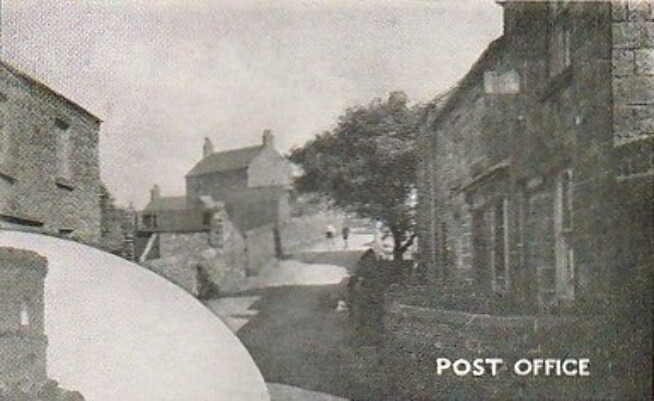
Segment of a multiview postcard of Mow Cop – the picture that inspired the poem
Published Poems
this file contains all 27 previously published poems, the texts as published except for slight variations as noted (usually correcting printing errors), plus To Vicki on her Miscellaneous Birthday which was accepted for publication but as far as I can discover never appeared; also included is "Mow Wake", a short article that formed an introduction to one group of poems, together with notes and comments on all the poems
to view the file of poems as a pdf please click the button
The Bilberry Pickers
Lammas Day on Black Bank Wood:
the stooped people, picking the blue,
and the wind, blooming across the heather.
A terrifying ceaseless hush
showers the bowing pilgrims who
gather beneath the aerials,
their fingers bleeding. I look back
aching to the hill’s edge:
mist lying below, and the sun
full, gliding towards Sandbach.
It is not for the towering silver
we reapers bend, nor for the breeze,
but for the firmament of purple black
spheres, that contain the sunset.
A Nonconformist Chapel
a previously unpublished poem-sequence, contemplating a typically plain and modest Moorland chapel from the point of view of the stone mason who built it
to view the full poem as a pdf please click below
In this quarry, he thought
is an entire chapel
not yet consecrated from chaos.
I have conceived it
he smiled, touching the rock
but God doesn’t know about it yet.
Rhymes of the Hillmen and Others
mostly written in 1973-74, starting with The Old Man of the Mountain, the ‘rhymes’ were modelled on folk verse and nursery rhymes, and seemed to develop a sort of sophisticated simplicity all their own, giving voice to the part-real part-imagined ‘Hillmen’ as well as to several other rhymey themes; of the 18 specimens assembled here, I think my personal favourites aren't the Hillmen ones but The Rhyme of Bridford Wood, and Padarn and Peris, each as it happens written in a magic wood, as far apart as Devon and Snowdonia
to view the poems as a pdf please click below
Song of the Maypole
Tree of ash now decked about
wood so sturdy, wood so stout
arms outstretching o’er the sky
turning where the birds do fly
roots set deep within the earth
serpent twined about thy girth
dragon nibbles at thy marrow
down inside his stony barrow
spring of water from thy sap
white hawks nesting in thy lap
stand thee solid in the ground
while we sing and dance around
turn thee round and yet stand still
thou’rt the spindle, we’re the mill.
The Rhyme of Bridford Wood
In Bridford Wood there lives a man
a man as small as small can be,
he has in his hand a watering can
a watering can as green as a pea;
he waters here, he waters there
from his watering can.
‘I’ve always watered everywhere,
and nobody knows who I am.’
On Shovel Down there roams a horse
a horse as wild as wild can be,
she has in her mouth a fire brand
a brand of fire as cold as the sea;
she lights the sky and she lights the land
with her fire brand.
‘I’ve always lit up everywhere,
and nobody knows who I am.’
By Fox Tor Mire there stands a girl
a girl as white as white can be,
she has for her hair a sheaf of corn
as yellow as an autumn tree;
the seeds fall here, the seeds fall there
from her silver hand.
‘I’ve always spread seeds everywhere,
and nobody knows who I am.’
At Dinger Tor there lies a stone
a stone as hard as hard can be,
it lies for ever all alone
its face as grey as the ash tree;
but it turns at sunset and it turns at dawn
and no one denies that it can.
‘I’ve always turned and I always will,
and nobody knows who I am.’
Blaenau
Fog and the molten sunlight
dust and the rain
belittle me in the slight town
make me a hero on the mountains.
Dust and the dripping peat
darkness and Sundays
smite me in the little earth
where I am obviously damned.
The grey precarious hills
brittle above Blaenau
yeild more easily when I am a quarryman
than when I am unemployed,
and yet it is the same mountain.
A Little Croft Near Flash
The stile is perfect, two small menhirs
fording the wall – up to your waist
they baptise you, a sacrament of passage.
The patriarch who parted a sea of heather,
to claim a land flowing with wind,
left us this narrow way to enter
his kingdom. He built a megalithic bridge
over the brook; but its meaning is lost:
it might as well be a burial chamber,
and the tilted croft an imperfect henge,
from which he (the inscrutable mason-farmer,
the geomancer of Quarnford) would survey the moors’
whole horizon – from Flash to Cloud End.
Haiku
two groups of haiku written many years apart, the Oxford ones (1983) somewhat on the flippant side (though ‘micro-organisms’ gets me a place in haiku heaven) in contrast to the seriousness of those in honour of the 18th-century haiku poetess Chiyo (2006); accompanied by detailed notes
to view the poems as a pdf please click the button
When Ashmole was old
he founded what we call the
Old Ashmolean
The Tower likewise
senses the stars,
a night, a cosmos
growing from its centre,
and time’s revolution
about its axis,
and this:
its stupid satellite,
its offspring, its throat,
screaming through its gravity.
The Tower and the Bat
a previously unpublished poem-sequence celebrating the relationship between the Tower and the bat that flies clockwise around it at night, which, for all it sounds out-of-this-world, is a real observed phenomenon – my original notes include drawings of it as seen on the night of August 22-23, 1977 on one of my regular nocturnal visits to the hilltop at that period; the Tower is the one on Mow Cop of course, so a glance at the photo will help clarify what's going on in the poem
)
to view the full poem as a pdf please click below
A Photographic Triptych
a previously unpublished poem-sequence referring to Lacock Abbey, Highgate Cemetery, and Stonehenge, written after visiting the three places with Bob; since he's a photographer it was a photographic trip (yes, a pun, haha); and since Lacock was where photography was invented, the poem imposes photographic meaning or metaphor on the other two places as well
to view the full poem as a pdf please click below
Such are places of great beginnings –
unassuming and quiet,
holy places,
Little Giddings of invention
poised to deny it;
yet not entirely managing to efface
for all their English breeding and greenery
the state of consecration –
their history holding a moment of grace,
a moment of discovery.
Among the meadows of the Wheelock
in a bowl of hills
thin beautiful water
moats the church-mound,
and then turns through a meander
into its exit.
Warmingham
always one of my favourite of my own poems, not least because it somehow captures the quiet beauty of the location, or the mood of the particular visit that prompted the poem; Warmingham is one of only three settlements (the others Sandbach and Wheelock) on the sixteen-mile length of the meandering River Wheelock between rising on Mow Cop and joining the Dane at Middlewich, so (the way my mind works) it's a holy place of sorts, with a timelessly primal connection to the hill
to view the full poem as a pdf please click below
One Tuesday Night
one tuesday night in 1977, listening to Radio Luxembourg, I filled a page of my poetry notebook with notes, quotations, and a draft poem about the sudden death of a pop star, or rather, about people's reaction to it; coming across the notes over forty years later, like an archival curio, I transcribed the intended poem exactly as found, made a revised and tidied-up version of it that was more presentable as a finished poem, and wrote some notes about the circumstances; the poem's rubbish but perhaps, on reflection, a document that takes you back to the very day of a historic event is more than a mere curio
)
to view the poem (etc) as a pdf please click below
Here is the news – an ominous pause.
The pop singer, Elvis
Presley has died ...
But the wind continues to blow,
the night labours on. Radio Luxembourg
plays only Presley; in between
people phone in to weep, the disc jockey
crumbles in his seat.
Dinah Morris’s Bonnet
After the Friends had grown distant
and dust lay on the Bible,
the Camp Meeting Methodists came
to Kingsley and Ramsor,
reviving the work which had faded
when she went away.
There was a baptism of joy, an awakening
on Ramsor Common:
Thomas Cotton was among them,
the Word was like fire,
and springtime erupted in Waterfall
and Wootton-under-Weaver.
And so she came back from the wilderness
to the great service;
it was a taste of Grace to see her
at Hugh Bourne’s shoulder:
hoarse, and after walking from Derby,
she gave us eternity.
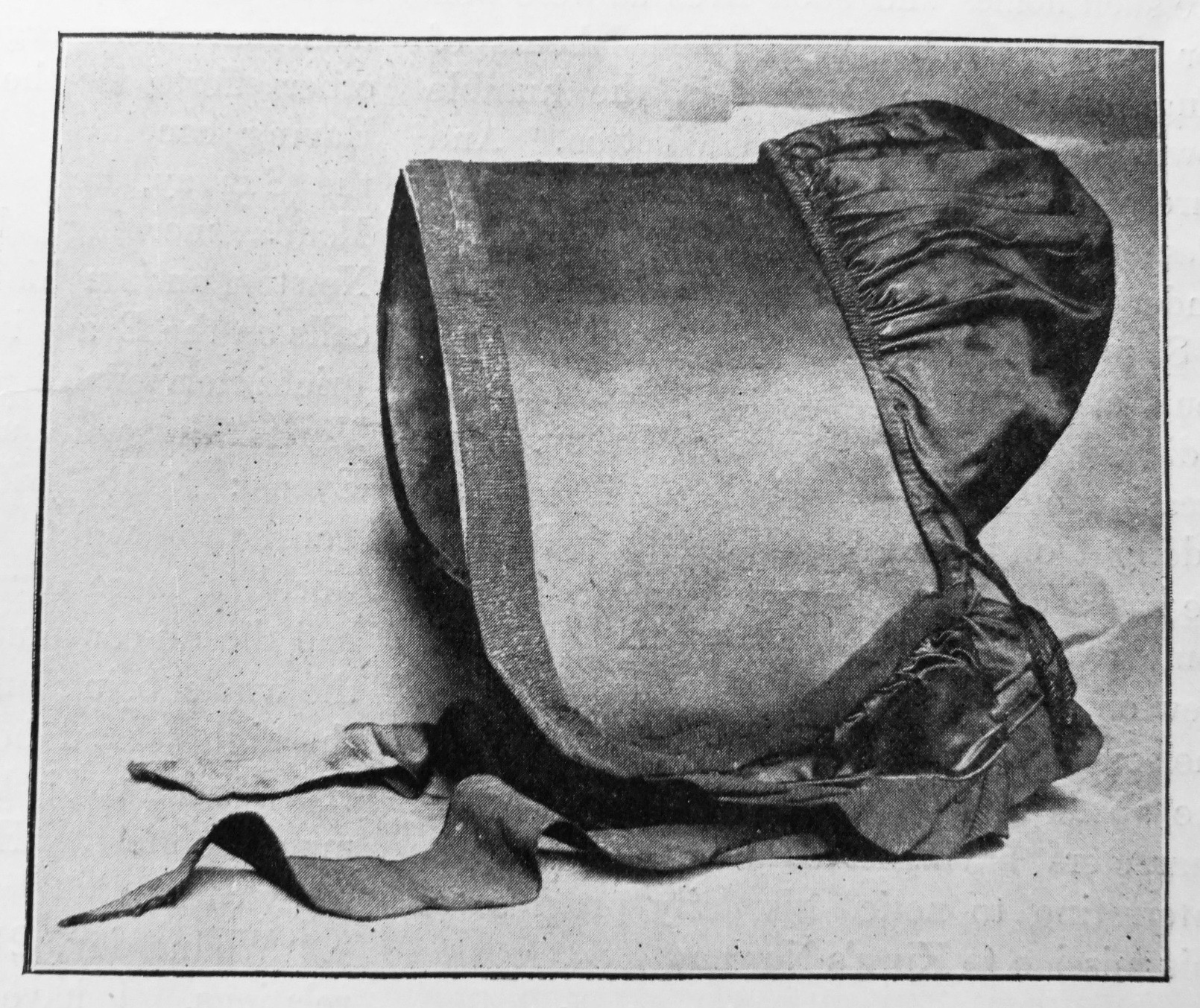
Illustration captioned 'Dinah Morris's Bonnet' from a 1907 Primitive Methodist magazine – the picture that inspired the poem
Unpublished Poems
file of previously unpublished poems (taken from handwritten or typewriter-typed originals) to be added in due course
to view the pdf please click below
Donec leo mi, fringilla ac ornare a, fringilla ac eros. Maecenas nisi. Lorem ipsum dolor sit amet, consectetur adipiscing elit. Donec leo mi, fringilla ac ornare a, fringilla ac eros. Maecenas nisi.
Early Poems
file of early or juvenile poems to be added one of these fine days
to view the pdf please click below
Donec leo mi, fringilla ac ornare a, fringilla ac eros. Maecenas nisi. Lorem ipsum dolor sit amet, consectetur adipiscing elit. Donec leo mi, fringilla ac ornare a, fringilla ac eros. Maecenas nisi.
Fragment (1971)
If only I could have written something
simple and beautiful
or the words of the first stonehewers
here on these skeleton pages.