Chronology of the History of Mow Cop from 1189 to 1939
this page is dedicated to the chronological history of Mow Cop from 1189 to 1939, an ambitious project to avoid writing a or the history of Mow Cop by instead gathering together in one huge chronological document a mountain of historical information about the hill, not devoid of comment and explanation where needed (or rather when, being a chronology) but largely liberated from the usual wordy wordyness of joined-up writing
believing it well-nigh impossible to write the history of Mow Cop (though Philip Leese may have proved me wrong, or right) I attempted a short summary history of Mow Cop, and when that went on and on (and on) without even getting beyond the intro I obeyed the whisper of providence and attempted a short introduction to the history of Mow Cop, which went on and on (and on), and so on; such approaches being discursive rather than narrative in nature, more waffle than egg, if they were to work (and they didn't of course) an appended chronology would be needed, an outline of the bare facts and events; and so it was born ... but, a simple list of dates or timeline offered too little scope for showcasing the rich info that's available, or for adding explanation and commentary, or for expansion of really important topics; ok, an expandable chronology, a chronology into which bucketfuls of facts can be poured, a Sammy-the-Shunter bumper chronology (to reference one of the formative books of my childhood); what results is inevitably a monstrous hybrid, a simple chronology that's not a bit simple, a wormhole that swallows everything and is still hungry, a bottomless pit (I know, mountain was a nicer metaphor); how usable or readable others will find it I don't know, I'm too immersed in it now; it's certainly the hugest and densest (haha) compilation of information about the history of Mow Cop ever assembled – in an ordinary wordprocessed format it stretches to nearly a thousand pages; yet it's far from finished, it's still just a work-in-progress
)
what follows is a slightly presentableised version of this monster chronology, and yes, it does, it goes on and on (and on) – scroll down at your peril, we may never see you again; or for the die-hard chronologonaut, and those whose scrolling fingers aren't up to it, there's a bunch of date-links that allow you to leap, jump, and tumble into different parts of the chronology, and alternatively a link to a separate working version in a different format – click who dares
Chronology of the History of Mow Cop from 1189 to 1939
the chronological history of Mow Cop from 1189 to 1939 is an ambitious project to avoid having to write a or the history of Mow Cop by assembling a mountain of historical information about the hill in a simple but huge chronology, doing away with the woffle of joined-up writing but not sacrificing the opportunity to comment or explain when needed • general chronological entries contain miscellaneous things that happened in (say) 1754, while thematic entries give closer attention to important occurrences that year – the building of a Tower, for instance • the chronology is an unfinished 'work in progress', with all the gaps and queries and rough edges that are to be expected • being rather long, a version in an alternative format can be viewed by clicking below
Mow Cop and the Erstwhile Realm
other Mow Cop stuff includes a series of four articles published in the Congleton Chronicle in 1980-81 looking at Revd J. E. Gordon Cartlidge's long series of articles called “From Cloud to Mow” in the Chronicle of 1939-40, with commentary and criticisms • click below to go to this page
Randle Wilbraham's Time Machine
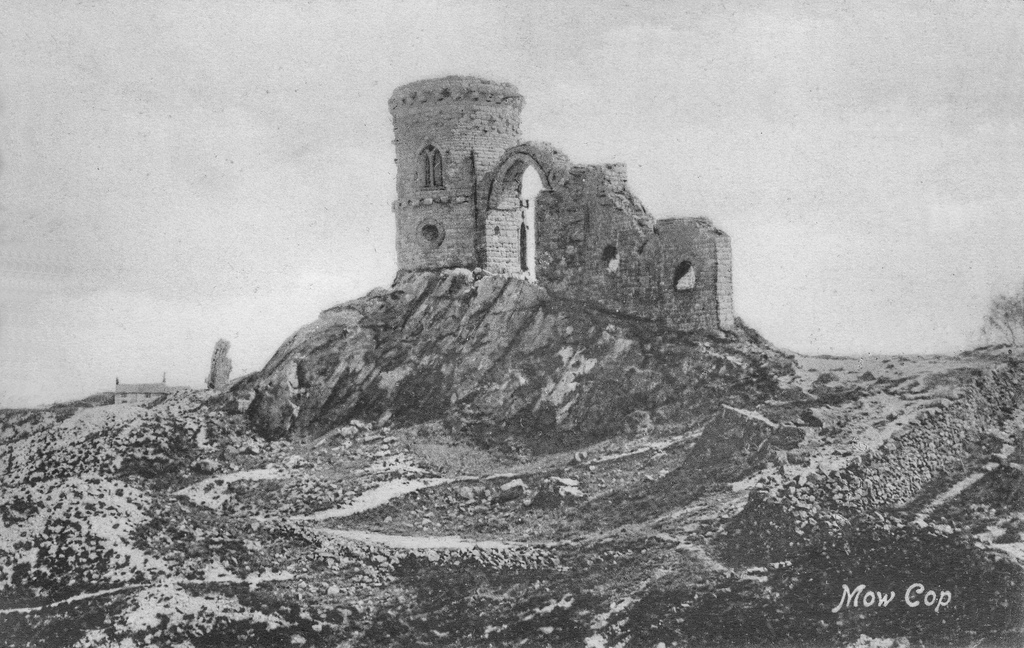
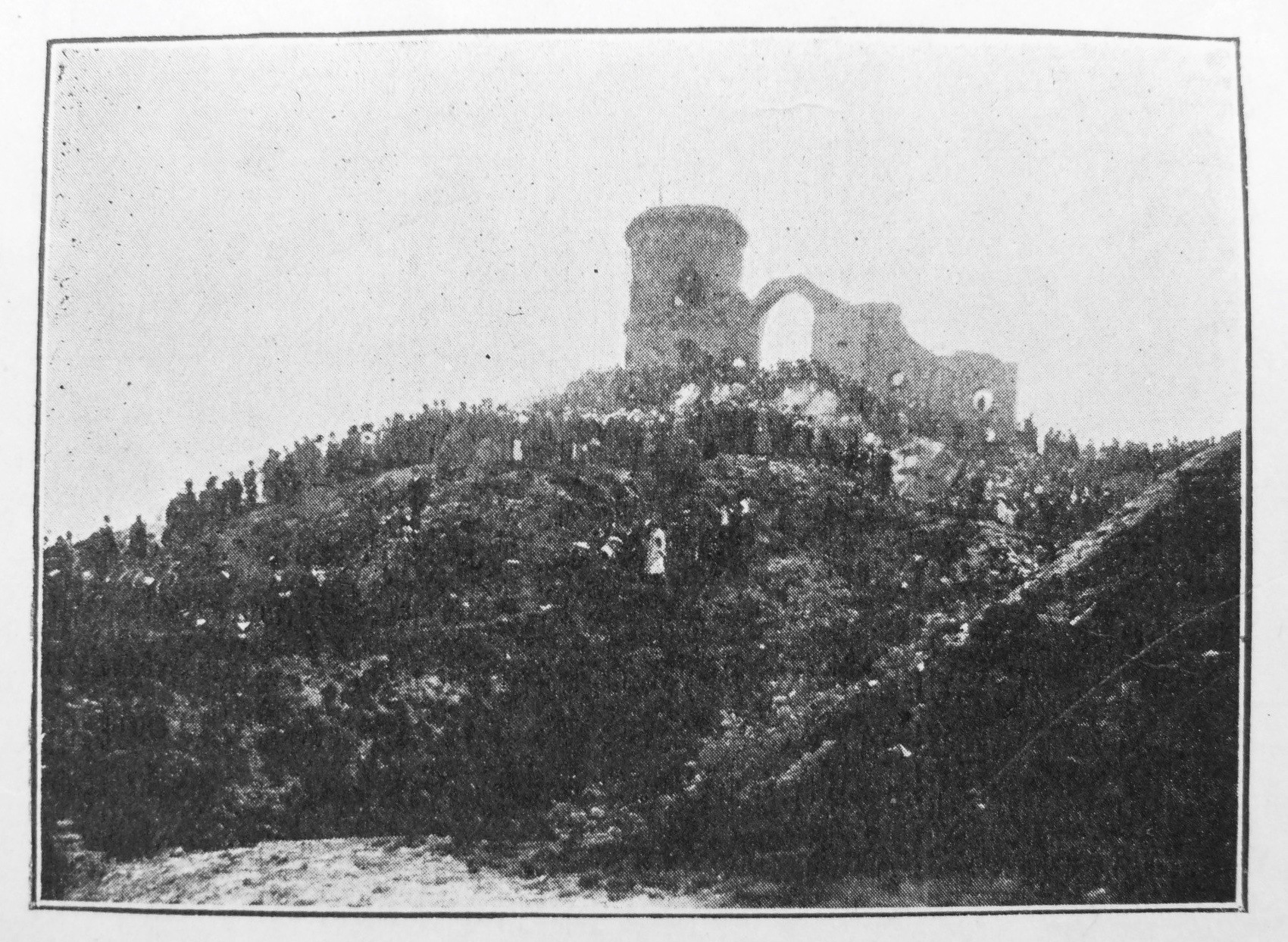
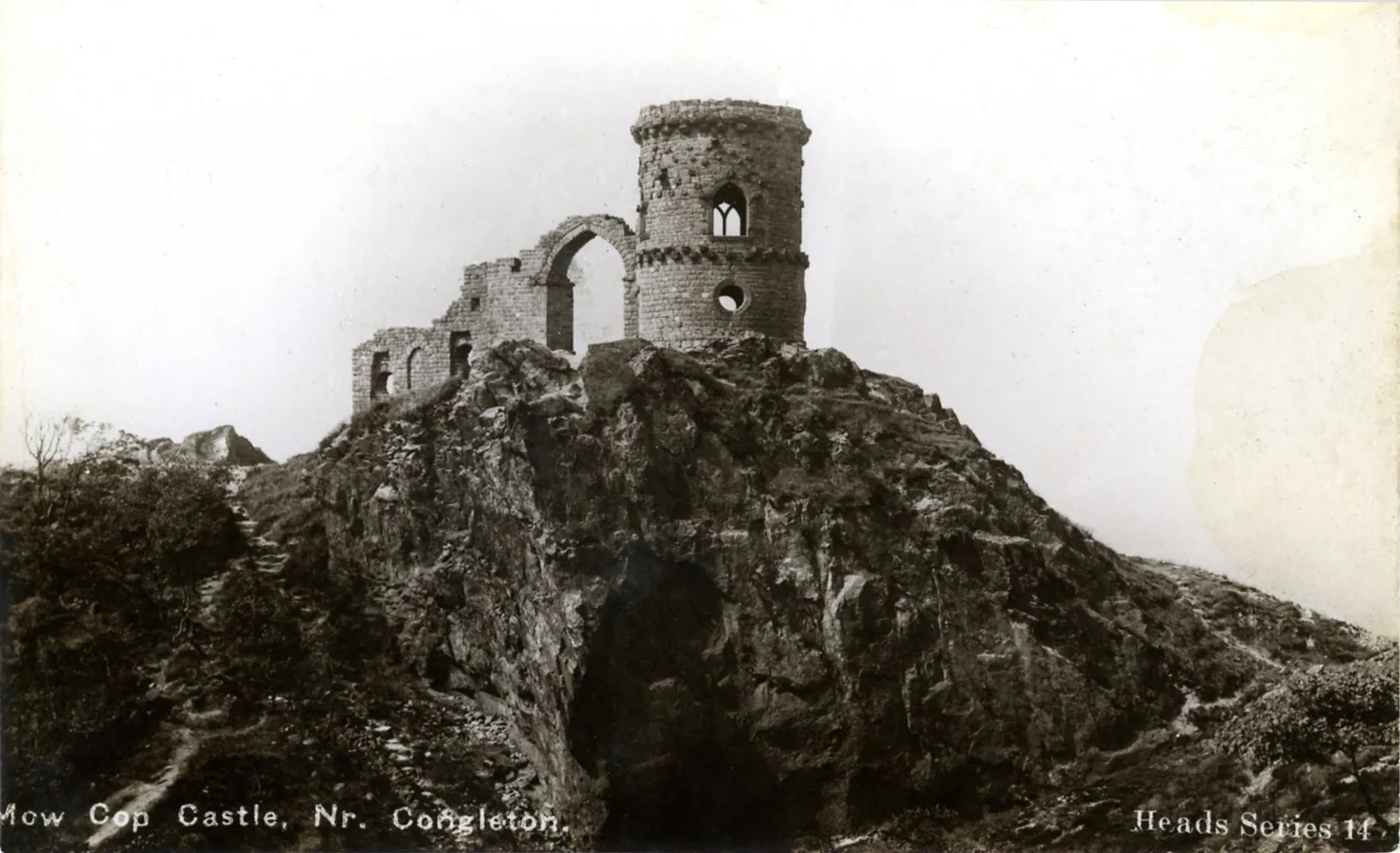
if you're wondering why there's a tower on top of the hill, or if you just prefer a good story, try my fictionalised exploration of the origins of the Tower, with (or even without) lots of true historical notes for afters • click below to go to the introductory blurb and link
Chronology tumble-dates from 1189 to 1939
the chronology that follows is divided into chunks • the dates here are all chunk start dates • scrolling's fine, it's not as scary as I pretended, but to travel in time and jump to a chunk of your choice, click any of these dates
§ centuries → 1200 • 1300 • 1400 • 1500 • 1600 • 1700 • 1800 • 1900
§ inbetweenies → 1189 • 1250 • 1348 • 1455 • 1530 • 1534 • 1570 • 1628 • 1642 • 1662 • 1686 • 1728 • 1754 • 1777
§ a busy century or so → 1800 • 1812 • 1829 • 1840 • 1844 • 1851 • 1858 • 1864 • 1870 • 1876 • 1887 • 1900 • 1914 • 1923 • 1932
§ some key dates → 1189 • 1250 • 1348 • 1455 • 1530 • 1534 • 1628 • 1642 • 1754 • 1800 • 1840 • 1851 • 1858 • 1914 • 1923
§ lucky dip → 1455 • 1534 • 1662 • 1686 • 1728 • 1777 • 1812 • 1844 • 1870 • 1932
§ untypical thematic entries aiming to set the scene → c.1200 • c.1300
§ and for backward scrollers → bottom of page
CHRONOLOGY OF THE HISTORY OF MOW COP from 1189 to 1939
multiple events under a single year make no attempt to be chronological, & are usually sequenced as important or general events + impersonal events + personal events + deaths + marriages + births • entries dedicated to a single event or topic are headed in bold & precede the general or miscellaneous entry for that year • circa entries (approximate dates) precede the entry for that year • entries for a span of years follow the entry for the first year • a series of untypical introductory thematic entries aiming to set the scene is placed for convenience under c.1200
►c.1189—The Mountain To Which The Natives Have Given The Name Mahul first mention of the name Mahul (phonetic rendering of Mowhull ie Mow Hill) in Gervase of Tilbury’s encyclopaedic work Otia Imperialia, compiled over a period of 30 years or so & completed or written up in 1215/16 § the entry is not about Mow Cop however but about the magically restorative properties of a lake – presumably the original Bath Pool – its location pinpointed by reference to the hill § ‘In Great Britain, in the diocese of Coventry & county of Stafford, at the foot of the mountain to which the natives have given the name Mahul, is a water in the form of an extensive marsh in the territory of a village which they call Maggalea. In this marsh the water is very pure ...’ § ‘ad radicem montis cui nomen Mahul indigene indiderunt’ – the phrasing re the name is unusually elaborate, though it’s not clear why, & ‘indiderunt’ has a formality closer to bestowed than merely given § Maggalea (also read as Magdalea) is probably an error for Audley – identification with Madeley leaves the mountain unexplained (Madeley is surrounded by 500-foot hills, so Plot’s identification of Mahul as Heighley robs it of its unique pinpointing quality as well as ignoring the well-evidenced ‘Mowul’ or ‘Mouhul’ as the usual medieval name for Mow Cop) § see c.1200—The Name of the Hill § Gervase (c.1160-c.1225) spends much of his life on the Continent, but his book contains items re his native country gathered from informants or personal knowledge as far back as the 1180s § xx?section on the miraculously refreshing water?xxx
►1189—Partition of the Manor of Biddulph Alina de Darlaston, lady of Biddulph, great-granddtr of Richard the Forester, partitions the ancient manor into 4 small manors, giving 3 to her uncles or their sons & retaining one for herself & her heirs § Over Biddulph or Overton goes to uncle Thomas, ancestor of the Overton family & in the female line of the Biddulphsxx, Middle Biddulph to nephew Roger, ancestor of the Biddulph familyxx, Knypersley to youngest uncle Alured or Alfred, ancestor of the Knypersley & Bowyer familiesxx, retaining Nether Biddulph (most of the Mow Cop side of the valley, centring on Gillow Heath) for herself & descendants, tho in fact it passes c.1200 to her dtr-in-law Hawise & her 2nd husband Henry de Verdon, & thus successively to the Verdon, Boughey, & Mainwaring families § § xxalso BiddCastlexx § § xx
>COPIEDfr manors section>Alina de Darlaston (great-granddaughter of the Domesday owner of Thursfield, Richard le Forester) & her husband Eugenulph de Gresley hold the manors of Nether Biddulph & Tunstall (having partitioned Biddulph manor in 1189, relinquishing Knypersley & the other 2 parts to Alina’s uncles or their heirs; Nether Biddulph is the part they retain because it contains the manor house or small castle ?built by Alina’s forebears – see 1212) [the Darlaston of Alina’s family name is the small village & manor nr Stone (nr Meaford), not the industrial town in S Staffs] § Nether Biddulph descends about this date (c.1200) to a dtr-in-law of Alina’s & through her to Henry de Verdon & a junior branch of the Verdon (or Verdun) family (see 1212)<
>MOVEDfr old abandoned chron>The original manor of Biddulph was divided into four by its owner Alina de Darlaston in 1189, nearly all the Biddulph slopes of Congleton Edge and Mow Cop falling into Nether Biddulph, and a smaller segment including Tower Hill Farm into Knypersley. It was presumably before this date that a small castle was built in the bottom of the valley, which technically falls just within Nether Biddulph (since it makes no sense to suppose it was built in or after 1189, when the division would presuppose the need for four less awkwardly-placed manor houses). Knypersley Hall and indeed Knypersley itself was probably an entirely new creation following from the 1189 partition. That year also sees the first mention of a priest and church in Biddulph<
>the small castle at Biddulph is built by Alina’s precursors sometime in the century following Domesday Book § it’s situated nr the centre of the original manor, at a point where the Biddulph Brook acts as a partial moat, on the W side of the brook & thus (just) within Nether Biddulph, the manor retained by Alina in 1189 § manor houses for the new proprietors might be assumed to date from the time of the 1189 partition or soon after, & it could be argued that this applies also to the castle, the brook & Alina’s family’s status as feudal overlords explaining the position on the very edge of the manor § however the argument that it’s pre-partition is much stronger, because it provides the reason for Alina retaining Nether Biddulph (not the largest, most fertile or most promising of the divisions), not by choice but because by taking the streams as boundaries her existing manor-house/castle falls into that division § a supporting or even clinching argument is that there’s already a church & vicar by 1189: the parish has been separated from Wolstanton, also in the 1086-1189 period, & like Church Lawton is co-terminus with the original manor, meaning it’s been created at the behest of the lord; & a lord founds a church less for his tenants than for his own use when in residence (feudal lords tend to move about between various residences) § presumably the castle is where the manorial courts are held (earliest known 1399) but there’s little reason to think the Bougheys, lords by this time, ever live there & their successors (from 1546) the Mainwarings of Whitmore certainly don’t (nor do the Biddulph family, as often incorrectly assumed – they’re lords of Middle & Over Biddulph, not of Nether Biddulph)
>‘Alina gives to this Roger, her nephew, Middle Biddulph with Fulwood, from Slidefordsich to Rutrindbrook [or Rolindbrook], descending the course of the stream in Davenhichell, and, in Ham Biddulph, the Church Furlong’ [rough trans presly] this is the central part of the BM side of the valley between the 2 hillside streams mentioned, the western boundary being the Biddulph Brook wch it’s interesting is given the name Dane-in-Shaw, while the specific ref to Fulwood (Firwood) wch stands high up on the edge of BM indicates the early importance of the place; this form of the name (rather than fir or far in later refs) suggests fowl, bird – rather than the more common meaning of ful- in place-names, foul, dirty – indicating a wood of economic & recreational importance, perhaps set aside & maintained for the purposes of fowling
►1189 population of England estimated at about 3 million § King Henry II dies (July 6), succeeded by his son King Richard the Lionheart, who towards the end of the year sets out on the Third Crusade (see 1189-92 below), his mother Queen Eleanor nominally regent (though his brother John gains influence, see 1191-94) § the common-law notion of ‘time immemorial’ (alias time out of mind, ab immemorabili, etc), important in English law for the recognition/validation of customs, common rights, boundaries, etc & the resolution of property disputes, comes to be regarded as referring to the time before the end of King Henry’s reign, at least partly because of the administration of the country for the absentee King Richard by bureaucrats & accountants, significantly boosting the rise of written records (see 1194, c.1200—Historical Records) § Henry has established efficient administrative bureaucracy, codified laws, etc, having succeeded (1154) after a period of anarchy under King Stephen § Randle de Blundeville (1170-1232) recorded as knighted (Jan 1) & married to Constance of Brittany (Feb 3, St Werburgh’s day), tho modern scholars think it’s an error for 1188 – the significance being that the king is releasing him from royal wardship to take up his position as Earl of Chester, the most powerful & independent nobleman in England, while the marriage is essentially a political alliance § partition of the manor of Biddulph, Alina Lady of Darlaston dividing the Domesday manor into 4, giving Over Biddulph (Overton), Middle Biddulph, & Knypersley to her uncles or their heirs, & retaining Nether Biddulph & the overlordship for herself & heirs (see above) § the boundaries are all formed by streams, the Congleton Edge & MC side of the valley W of the Biddulph or Dane-in-Shaw Brook falling largely in Nether Biddulph with the Tower Hill area in Knypersley § xxspecifics>egvicars of Bidd,of Ast,of ChL,of Stokexx >semiCOPIEDfr parishes section>Edward (f.1189) is the earliest known incumbent of BiddulphxxVivian de Stoke (f.1189, already rector of Stoke) appointed vicar of Wolstanton 1200, the first knownxxsome sources say an Edward (f.1180, possibly the same person as at Biddulph) is the first rector of Church Lawton xxHugh de Venables (f.1188), youngest son of the lord of the manor, is the earliest known incumbent of Astburyxx § Hugh’s father Gilbert de Venables (grandson of the Domesday Gilbert) has just died (1188), the eldest son William de Venables succeeding as lord of the manor & Baron of Kinderton; another brother is known as Richard de Neubold, suggesting either that he lives there or was born there § it may be only recently, certainly during this century, that the small parishes of Biddulph & Church Lawton have been formed, from Wolstanton & Astbury respectively, both co-terminus with manors so presumably reflecting the influence & patronage of their lords, Alina’s family in Biddulph & ??either the Earl of Chester or St Werburgh’s Abbey in Lawton, tho the latter is unusually tiny to be a parish in its own right at this period (after this time until the 19thC formation of new parishes by division of large ancient parishes is very rare)
►1189-90 ??spate of murders & massacres of Jews in London (1189) & then other trading centres, the worst at York (1190), prompted initially by rumours following the exclusion of Jews from the 1189 coronation § usually explained as connected to the new Crusade, though the ‘infidel’ of the crusaders are the Muslim Arabs, scapegoating Jews is usually symptomatic of economic grievances (cf 1193-98)
►1189-92—The Third Crusade new monarch King Richard sets out on the Third Crusade (Dec 11, 1189), prompted by the fall of Jerusalem to Saladin after several generations under Christian control (1099-1187) § Staffs magnate Bertram de Verdon or Verdun of Alton Castle accompanies him, & later dies at Jaffa (1192) § they re-capture the strategic port of Acre (July 12, 1191), of which Richard leaves Bertram in charge while he goes on to Jerusalem, but fails to take it § the Crusades are a succession of military expeditions to the Holy Land over 2 centuries, starting in 1095 when the Pope urges Christendom to reclaim Jerusalem from the Saracens, effectively ending in failure with the fall of Acre in 1291, the significant ones being the 1st 1095-99 which takes Jerusalem, 3rd 1189-92 under King Richard, 5th 1218-21 which Randle de Blundeville, Earl of Chester joins, the last effectively that of 1271-72 under the future King Edward & his wife Eleanor § invocation by crusaders of St George as patron saint of soldiers & chivalry helps establish him as patron saint of England (cf 1222, 1348, 1415) § Crusades seem to acquire a place in folk memory without there being much evidence of local relevance or involvement – though it’s likely that local gentry & their feudal retainers participate as followers of their overlords, notably the magnates Bertram de Verdon who accompanies Richard the Lionheart in 1189 (& dies there 1192), & Bertram’s former ward Randle de Blundeville, Earl of Chester who joins the Fifth Crusade (1218-21) § the main local legend is that Biddulph Moor folk are descended from ‘Saracens’, ‘Turks’, or ‘pagans’ brought back from ‘the Crusades’ by a lord of Biddulph [possibly an echo of Bertram’s involvement, & ascribed to him by modern writers, though it can’t be so as the Verdon family at the time are not yet lords of Biddulph, & anyway he didn’t come back!] § one version of the legend, evidently a back-formed origin myth for the dominant BM family of Bailey, says they are made bailiffs of the lord’s estate or castle, hence the surname § by the time a community can be identified on the Moor 5 centuries later, never mind by the time 19thC folklorists are claiming characteristics like ruddy complexions & a coarse dialect & ‘somewhat bellicose propensities’ in support of the legend, it’s too many generations removed to leave any such evidence, esp if as the legend claims they intermarry with local women, from whom their children’s language & culture will thus derive § the so-called crusaders’ tombstones at Biddulph church have no bearing on the question: they are tombstones or coffin lids for medieval gentry, with Christian & knightly symbols (not specifically to do with crusaders), surviving in Biddulph either because of its relative freedom from later iconoclasm or because of its tradition of masoncraft ie a style of monument peculiar to the locality (there are coffin lids with incised crosses at Astbury too, but mostly broken fragments &/or built into the church fabric) § Pevsner says ‘They must have been monuments to the Knipersley family’, though there’s no particular reason to discount early Biddulphs & Overtons § another version of or accretion to the legend says the Saracens are stone masons, though it’s not obvious why the 2 should be connected (unless it’s Earl Randle returning with a yen for building ‘crusader’ type castles, see 1220, 1225) § the concentration of masons latterly typical of Biddulph Moor is originally a characteristic of Biddulph parish as a whole, while associated by Plot with the Staffs Moorlands § xx
►1190 approx commencement date of the prolonged rebuilding of Lichfield Cathedral in the Early English style (virtually nothing of its Anglo-Saxon & Norman precursors remaining) which goes on throughout the 13thC & into the next (see 1325, 1669) § note that, while the overall form of the building is medieval, its present appearance & details nearly all date from Sir George Gilbert Scott’s extensive so-called restoration of 1857-1901 § approx date (1185-90) of earliest refs to the place-name Morton/Moreton, an area straddling the borders of the Domesday manors of Rode & Newbold, the name attaching both to an estate or sub-manor (alias Little Moreton) within Rode (which has joint lords in Domesday Book) & to a new manor (alias Great Moreton) formed by subdivision of Newbold about or after this time (before c.1260; see 1216, c.1260, ?1280, xxx) § (earliest explicit refs by name to Great Moreton 1289, Little Moreton 1271) § foundation charter of Croxden Abbey nr Hollington, founded (originally in 1176, dedicated 1181) by Bertram de Verdon or Verdun of nearby Alton Castle, 1st of the 3 Cistercian monasteries in North Staffs (Dieulacres 1214, Hulton 1219)
►1191-94 period of ascendancy of John, King Richard’s brother (cf 1189) § later (& modern) versions of the Robin Hood legend are set in this period, though the earliest versions mention King Edward ie 1272-1377 (see c.1377, c.1465) § a popular outlaw hero might easily become synchronised retrospectively with a period redolent in folk memory of the worst excesses of feudal oppression
►1192 Staffs magnate Bertram de Verdon or Verdun of Alton Castle dies at the port of Jaffa in the Holy Land (now part of Tel Aviv, Israel) § he had wished to be buried at Croxden Abbey, which he founded in 1176 (see 1190), but perhaps burial in the Holy Land is some consolation § his heir is son Thomas (d.1199), followed by Bertram’s younger son Nicholas (d.1231) § Henry de Verdon, later by marriage lord of Biddulph (see 1212), is of this family, probably another younger son § the Audley family are also said to originate as a branch of the Verdons (the current is Adam de Audley, d.1203, son of Lyulph) § Bertram has been guardian of Randle de Blundeville, Earl of Chester during his minority (1181-91), & the allegiance of the 2 leading N Staffs aristocratic families to the Earldom continues
►1193-98 extremely high prices esp for food reflect prolonged scarcity & (as usual) deflect its ill effects onto the poorest, giving rise to famine for some
►1194—Salt & the Famous Wich reference to Wich (DB) alias Wich Malbank as ‘Nametwihc’ meaning the famous wich, the name becoming Nantwich, influenced by its Welsh name Nant yr Heledd Wen (valley of the white salt-pit), both names indicating that it’s a widely renowned source of salt § salt is an important & valuable commodity, used mainly for preserving meat & fish § the ancient salt trade centring on the 3 Cheshire wiches & dating back at least to Roman times creates specialised salt markets & a wide network of routes sometimes called salt-ways or salter’s roads on which salt carriers, merchants, or ‘drovers’ provide significant traffic, also giving rise to place-names like Saltersford & Salter’s Brook (eg Derbyshire, on the road to Cheshire) § Nantwich, Middlewich (see 1260), Northwich are the main salt towns, other salt places inc Frodsham, Runcorn, Winsford; villages/suburbs around Northwich such as Anderton, Winnington, Leftwich; Wheelock (on the basis of which Sandbach is sometimes counted a salt town); while locally the saltworks formerly known as Lawton Wich at Lawton Heath nr Thurlwood is important & productive for at least 2 centuriesxxdatesxx (see xxx, ?earliest mention 1609) § there are also brine baths for health/medicinal purposes at Nantwich, Northwich & Runcorn § Nantwich is already (by 1194) & long remains the second most important town in Cheshire & a major agricultural & cheese market – by the 14thC the cattle market is being held weekly § the historic salt industry however (unlike at the other 2 wiches) declines after the 17thC & ends in 1856 § Nantwich is the administrative centre of one of Cheshire’s hundreds & seat of one of the Cheshire baronies, the Barony of Malbank § St Mary’s church (originally a chapel of Acton) with its unusual 14thC octagonal tower has been described as ‘a miniature cathedral’ (Joan P. Alcock, Discovering Cheshire, 1971) § the road from Newcastle to Chester (via Chesterton & Audley) passes through Nantwich § at 13 miles as the crow flies Nantwich isn’t a natural focus or destination for Mow Cop, the Cheshire half of which is in Middlewich/Northwich Hundred & the Barony of Kinderton, but its importance as Cheshire’s second town & a major market town is worth noting, especially in an era of the proliferation of market towns & their rising economic & demographic influence (& cf Bowen’s comments 1749) [by the 19thC Stockport is the largest town in Cheshire & Northwich the leading salt town] § among later personnel/demographic links the Wilbraham family come to Rode from Nantwich, the Cartwrights have connections there, & in the mid 19thC population influx to MC poor farm labourers’ families from the Nantwich, Acton & Peckforton Ridge area are a significant component (eg Armstrong, Blanton, Bowker, Ikin) § xx
►1194 King Richard ransomed & returns to England (briefly) § Randle de Blundeville attends him on his return, & later in the year joins him in France (spending much of the next few years in Normandy, where he has estates) § ordinance stipulating that records of financial transactions be kept for taxation purposes (see c.1200—Historical Records) § office of coroner established § reference to the salt town of Wich alias Wich Malbank as ‘Nametwihc’ meaning the famous wich, ie Nantwich (see above)
►1195 first ‘keepers of the peace’ appointed (precursors of magistrates) § approx date of refs to Lima nemus (Lime nemoris) ie the Lyme wood or forest (Lyme is often thought of as a forest name but seems originally to be a regional name, see c.1200) § Lucian, a monk at St Werburgh’s Abbey, Chester, writes Liber Luciani De Laude Cestrie, mostly religious moralising but inc insights into monastic life – his emphasis very strongly on the monks’ hospitality – & snippets of life in Chester, inc how St Werburgh was called upon to save the city from the fire of 1180, & the earliest local ref to bull & bear baiting § ‘Commonly you [the people of Chester] run to behold the snarling of dogs, the savagery of hounds, the ferocity with which they tear the flesh of bulls and the limbs of bears.’ (trans M. V. Taylor, 1912)
►1196 Assize of Measures establishes a standard linear measure for cloth (2 ells wide)
►1199 Odo instituted as rector of Biddulph, the 2nd incumbent known, his patrons Henry de Verdon of Darlaston & his wife Hawise (as heirs of Alina) § he is thought to remain in post until his death, about or before 1240 (see xxx) § Nicholas de Verdon or Verdun (d.1231) succeeds his brother Thomas as head of the powerful family of Staffs magnates, based at Alton Castle (Henry represents a junior branch or may be a younger brother)
c.1200
this section contains a series of untypical introductory thematic entries aiming to set the scene, placed for convenience under c.1200, after which the chronological sequence resumes
►c.1200—The Name of the Hill forms of the name go full circle from Mow to Mow via Mowhull (ie Mow Hill) & contractions such as Mowhul, Mouhul, Mowul, Mowel, Mowle, Moule, Mole § Molle, Moll, Moale & even Moole are also found, though Molt & Mould (& sometimes Moll) are usually misinterpretations of the flourishing final e § most common of the many spellings c.1200 are Mouhul & Mowul, thereafter Moule/Mowle & Mole § the inference, supported by documentary evidence (eg 1687, 1695), is that locals call it Mow all along, & pronounce it as they still do (& as implied in Gervase’s Mahul, see c.1189), rhyming with cow § Cop is stuck on by the mapmaker Saxton in 1577 & widely copied from him, but hardly ever used locally & rare even in formal documents until the 19thC § Hull (hill) almost certainly originates in a similar way, stuck on to the original name to make English speakers more comfortable with it § modern etymologists from Ekwall (1936) onwards explain the name in purely Anglo-Saxon terms as mūga+hull, the 1st element being the original of ‘mow’ as in barley-mow (rhyming with joe), meaning a heap, haystack, etc § a farmyard term with the wrong pronunciation is unconvincing, Ekwall’s attractive proposition that it might refer to a cairn finds no corroboration or analogy (the word is never used in that sense elsewhere), & it’s well-known that mountains & rivers often retain their older Celtic names § the etymology that used to be given is the common Welsh hill name Moel (meaning hill), but this has fallen out of consideration since the historical forms showed that the -l- derives from contraction of -hull § in fact however, the absurdity of mūga & the high probability of the name being more ancient reinforce a phonetic argument for Moel, considering how the -l- in similar words naturally becomes w in common parlance (eg fow for foul, owd for old, Bowton for Bolton/Boulton) § in other words, either it’s gone through the transition twice (Moel>Mole>Mow, Mowhull>Mole>Mow) or it’s evolved via an Anglo-Saxon rationalisation using -hull (Moel>Mowel>Mowhull>Mole>Mow) § the original name for the hill is thus Moel, becoming Mow, & meaning The Hill § (the name at its most fully extended eg Mowle Cop Hill thus means Hill Hill Hill Hill!) § note also that the familiar or casual colloquial way of referring to the hill locally (where outsiders might say ‘the Cop’, which makes natives cringe) is ‘the Hill’, for which there is also good documentary evidence (eg millstone makers’ wills & inventories 1593, 1599-1600, 1709 & the 1628 boundary agreement)
►c.1200—Geography, Settlement, & Population the Mow Cop ridge forms part of the natural borderland between upland & lowland England, & MC hill is the south-westernmost mountain of the Peak District: ‘The Cloud and Molecop are detached fragments of the great chain of hills termed the English Apennine’ (Ormerod, 1819), MC is the ‘last fling of the Pennine Chain’ (Brian Trueman, 1969), or as a folk saying says, the Old Man of Mow has ‘one foot i’th’ ground, Pennine Chain round his ankle bone’<ch § its silent influence in demographic, political & strategic history dates from prehistoric times, as do its natural role as a source of water & its industrial function as a source of stone (& iron, coal, lime, etc), quite apart from its more numinous importance as an object of veneration, a sacred place § whether boundaries are defined precisely or vaguely, MC is a strategic part of the borders between the Celtic tribes the Cornovii & Brigantii, & their successors the Wreocensaete & Pecsaete (Wrekin folk & Peak folk), & although tribal identity dies out with the rise of the kingdoms of Mercia & Northumbria & finally the Anglo-Saxon political & linguistic unification of England, a sense of tribalism continues to characterise the inhabitants of the differing environments on the two sides of the hill § the MC ridge divides areas of dramatically different landscape & geology, the Cheshire Plain & the Staffordshire Moorlands, though having in common that they have been largely wooded & (comparatively) remain so c.1200 § forest activities & hunting thus remain characteristic of life in the region (see 1204, c.1206, c.1260) xxforests in the jurisdictional sensexxroyalxxNew Forest (abolished 1204), ??Moorland forestxx, grt forests of Staffs Cannock & Needwood, grt forests of Mondrum & Mara (Delamere) of the Earls of ChesterxxxChes x3 grt forests=Delamere (M&M) Macc Wirralxx § settlement, clearance, agriculture, & ‘manorialisation’ are more developed on the Cheshire side (4 smallish adjacent manors in 1066, 5 by c.1200), the Staffs side having only 2 manors or villages in 1066, presumably with extensive unclaimed or wooded land between & around them § by c.1200 the lordship of Biddulph has been divided (1189) & a small castle & an open-field system established (implying greater profitability or greater population, or both), & the lordship of Thursfield has been turned (or is in process of being turned) into a larger complex manor (containing multiple estates or townships) with a new centre at Tunstall (see 1212, 1253) § settlement consists largely of scattered farmhouses or hamlets, in practice names like Biddulph, Brieryhurst, Odd Rode, Newbold designating not nodal or compact villages but areas of scattered houses, the only concentrated village being Astbury, something of an anomaly which developed late, perhaps post-Conquest, within the otherwise scattered township of Newbold § isolated medieval (& older) farmsteads on the middle & lower slopes of the MC ridge (such as Bacon House, Moody Street, Hay Hill, Tower Hill, Mow House, etc) are thus typical of this pattern of settlement, & either already exist c.1200 or soon will § the staple activity of almost everyone, even while crafts & industries flourish, is agriculture, mostly a mixture of crop cultivation & animal husbandry § the upper part of the MC ridge meanwhile is common land, an important manorial & community asset used for stone quarrying, grazing (chiefly sheep), & common rights such as turbary (taking turf for fuel) & twig gathering – virtually no settlement exists here until huge population increase & the breakdown of manorial protection of common land in the 18thC § regular resort to the common plus industrial traffic give rise to a pattern of ancient roadways radiating out from the hill – inc (clockwise from the north) Mow Lane (Gillow Heath), Tower Hill Rd (formerly also called Mow Lane), Sands Rd, Alderhay Lane, Mow Lane (The Hollow), Spring Bank, Drumber Lane, Old Mow Lane (lost), Nickabarrows Lane (Roe Park), Mow Lane (Newbold) § such lanes form a natural focus for scattered linear settlement ie farms & wayside cottages, that around Alderhay Lane (now Rookery & Dales Green) & along the edge of the common between Mow Hollow & Mow House (approx the line of Mow Cop Rd) becoming the original village of Mole by the 17thC § medieval population growth precedes dramatic decline in the 14thC, especially but not exclusively due to the 2 natural catastrophes of the Great Famine (1314-17) & the Black Death (1348-49), & the trend doesn’t reverse until the 16thC, population only returning to (& surging past) c.1300 levels in the 18thC § only then does permanent colonisation of the common by cottages & smallholdings begin, forming the hilltop village of MC
>needblurb reTHE LYMEeither here or elsewh.....noting it’s not actually a forest but a region name § Newc sub Lima 1168 subtus Lymam 1173 under Lyme ?same / Lawton subtus Lymam 1258 Magna Moreton subtus Lymam 1289 Lawton iuxta Lym’ 1305 Newbold under Lime/subtus Lynam 1350 Lima nemus (Lime nemoris) c.1195<
►c.1200—Earldoms, Shires, & Hundreds the Mow Cop ridge forms a natural boundary between the counties of Cheshire & Staffordshire, shires (under sheriffs) being the core regional subdivision in Anglo-Saxon administration, those in the Mercian midlands being formed or formalised in the early 10thC § Cheshire has included land north of the Mersey until the creation of Lancashire in 1182 § shires are divided into hundreds, that in Staffs being Pirehill (the boundary of the Moorland hundred of Totmonslow following Biddulph Moor, making Biddulph parish the northern tip of Pirehill) & in Cheshire Northwich (called Middlewich in Domesday Book) § serious criminal justice is in the hands of shire & hundred courts (later chiefly assizes & quarter sessions), but most petty crime is dealt with by manorial courts & the frankpledge system § this particular county boundary possesses added importance since Cheshire, as the Earldom of Chester, has been treated as a palatinate, the Earl’s authority being equivalent to a client prince § this political arrangement together with the mountainous borders & the woodland (known as the Lyme) creates a stronger sense of a boundary than usually exists between counties, the notion of going from Cheshire into England (‘beyond the Lyme’) long abiding in local culture § the Earls of Chester create their own barons, dividing the earldom or county into 8 baronies, the Barons of Kinderton (nr Middlewich), the Venables family, holding sway in the parts of Cheshire adjacent to MC & still regarded as feudal overlords as late as the 17thC § the Earldom is in its heyday c.1200 under the powerful & charismatic Randle or Ranulf de Blundeville (c.1170-1232, Earl from 1181), who also has interests & influence in North Staffs where the Verdons & Audleys are his loyal supporters § Leek has been an outpost of the Earldom since being granted to the 1st Earl shortly after Domesday Book, the ancient road from Congleton into England via the Bridestones (to Leek & Ashbourne) is known as the Earl’s Way (‘via comitis’ c.1200), & Randle de Blundeville’s father Earl Hugh II dies at their residence in Leek in 1181 (or at their hunting lodge at Swythamley), partly explaining Randle’s sentimental attachment to the area (see 1214, 1232)
►c.1200—Manors, Lords, & Feudalism the Mow Cop ridge falls into the manors of (clockwise from the north) Nether Biddulph, Knypersley, Tunstall, Lawton, Rode, Great Moreton, Newbold, & Congleton § Alina de Darlaston (great-granddaughter of the Domesday owner of Thursfield, Richard le Forester) & her husband Eugenulph de Gresley hold the manors of Nether Biddulph & Tunstall (having partitioned Biddulph manor in 1189, relinquishing Knypersley & the other 2 parts to Alina’s uncles or their heirs; Nether Biddulph is the part they retain because it contains the manor house or small castle built by Alina’s forebears) [the castle’s date isn’t known, it’s possible it’s built by Henry de Verdon c.1212, but the logic that it already exists & that’s why Nether Biddulph is retained is very persuasive; the Darlaston of Alina’s family name is the small village & manor nr Meaford, nr Stone, not the industrial town in S Staffs] § Nether Biddulph descends about this date (c.1200) to a dtr-in-law of Alina’s & through her to Henry de Verdon & a junior branch of the Verdon (or Verdun) family (see 1212), & later by marriage to the Boughey (1373) & Mainwaring (1546) families § Alina’s youngest uncle Alured (Alfred) is lord of Knypersley & ancester of the Knypersley & then Bowyer families, the manor passing by marriage to the Gresley family in 1719 & by purchase to the Batemans in 1809 § (Knypersley was probably an entirely new settlement following from the 1189 partition) § Tunstall also called Tunstall Court (successor of the Domesday manor of Thursfield) is granted by Alina & Eugenulph to Henry de Audley (see 1227), & in the 16thC purchased from the Lords Audley by their relatives the Sneyd family § local families (or, as in Biddulph, local branches of higher-ranking families that held them at Domesday) hold Lawton, Rode, & the 2 Moretons § the earliest recorded de Lawton, Adam, is found in 1236 (though he may be the one in the legend of the bleeding wolf, which places him in King John’s reign, see c.1206), though lordship of the manor of Lawton is exercised by the abbot of St Werburgh, Chester until William Lawton purchases the abbey’s property & rights after the dissolution of the monasteries § the earliest known de Rode, Michael, also flourishes about 1236, sharing his lordship (as in Domesday Book) with an ancestor of the Moretons of Little Moreton (see 1216) § squire Randle Rode’s share of Rode manor is sold to the Wilbraham family in 1669 § Alexander de Moreton or Morton (f.1200) is the earliest known lord of the manor of Great Moreton (not in Domesday Book & thus recently formed by partition from Rode) & ancestor of the Moretons of Great Moreton & then from the early 15thC the Bellots, the estate passing in the 18thC to the Powys (1735) & then the Ackers family (1793), in both cases by purchase § (apparent co-existence of two neighbouring Moreton families until the mid 15thC makes them confusing, though they are originally the same family) § a branch of the Venables family, descended from the Domesday owner Gilbert Venables, holds the manor of Newbold (including Astbury, though later sometimes spoken of as a separate manor), which in the late 14th or early 15thC passes to the Egerton family, whether by descent or other means is not known § Congleton manor is part of the holdings of Richard de Aldford (d.c.1213), passing probably by marriage to Sir John de Arderne & his heirs & then c.1272 to Henry de Lacy, Earl of Lincoln (who grants a charter establishing Congleton borough, coterminous with the manor), whose dtr & heiress Alice marries the king’s nephew Thomas de Lancaster, Congleton becoming part of the Duchy of Lancaster, a royal estate § King Charles I alienates it in 1628 & it changes hands a number of times until purchased by Peter Shakerley of Somerford in 1745, remaining in his family thereafter § in the feudal system all occupants of land inc manorial lords hold of (& owe allegiance to) a higher lord, ultimately the king – the Verdons & later Mainwarings assert overlordship in Biddulph, & the manorial courts are held by them (not by the Biddulph family, who are minor squires descended from the lords of Middle & Over Biddulph), while the overlords of Newbold remain the Venables family of Kinderton, even after it comes into possession of the Egertons § Tunstall, interestingly, is originally held by Alina under the Earl of Chester, whose territorial influence has extended into North Staffordshire during the previous century (he owns Leek manor until giving it to Dieulacres Abbey in 1232), though the royal confirmation of Tunstall to the Audleys in 1227 implies that the Earldom no longer has overlordship, while for a time later in the century the Earl of Lancaster as lord of Newcastle is overlord § feudalism is based on rigid social hierarchy & obligations of service by each class to the one above, from labouring on their farmland to fighting in their military exploits, the higher classes being remnants of a warrior aristocracy § at the lowest level of society such obligations amount to bondage, though ‘serfdom’ in the strict sense is in decline by c.1200 & does not survive the labour shortages of the mid 14thC § between the Black Death & the Industrial Revolution (between the feudal system & the ‘class’ system) social status & distinction are more fluid § while the demise of the feudal system (see 1381, 1485, & cf 1612) leads in principle to a money-based landlord/tenant, employer/employee economy & to the enfranchisement of the higher peasantry (the yeomen) as owner-occupiers, industrialisation & massive population increase then create a remarkably ‘feudal’ type of relationship between industrial gentry & the huge working-class workforce, who are paid wages at barely subsistence level & more-or-less obliged to work for the dominant local employer § note that Lawton manor (& Church Lawton parish) doesn’t extend nearer than the foot of MC near Hall o’ Lee, but in practice is an essential part of the history of MC: the Lawton family own adjacent property in Tunstall manor, notably Lawton Park (Brieryhurst Fm, Dales Green, Rookery) & Trubshaw; the Hall o’ Lee estate lies partly in Rode & includes land once held by the de Mouhul family (see c.1250) as well as (from 1657) Woodcock Fm; people from the southern end of MC on both sides of the county boundary (& from the Kidsgrove area) routinely use Lawton church; & there is evidence that common rights are shared – eg 1342, 1422, 1657
►c.1200—Parishes, Priests, & Patron Saints the Mow Cop ridge falls into the parishes of Biddulph, Wolstanton, Church Lawton, & Astbury, Wolstanton & Astbury being the large ancient parishes that existed long before 1066 while Biddulph & the small parish of Church Lawton have been created out of the respective larger parishes in the 12thC (see note above re Lawton – manor & parish are coextensive) § a beautifully simple Norman doorway or archway in whitish stone survives from the original 12thC church at Lawton, but no original architecture survives at Biddulph § the mother church of Wolstanton may be Stoke (see 1200, 1293) or vice versa – two ancient churches in such close proximity is unusual (both are successors to a Romano-British religious centre at Dimsdale, Wolstanton being the nearer) § Congleton has a chapel by 1379 & probably from the time of the town charter c.1272, but remains in Astbury parish until 1868 (the Congleton side of Congleton Edge, however, is included in the new Mossley parish in 1845) § a chapel belonging to the lord of the manor of Tunstall exists at Holly Wall (holy well) by 1366, formerly a shrine or hermitage, perhaps in a sense a precursor of the chapel of Thursfield (Newchapel) (cf 1288) § the northern division of Wolstanton parish has a chapel of ease or district church at Newchapel from c.1530 – otherwise no further parishes are formed or churches built until the 19thC (see 1808-09, 1833, etc) § Edward (f.1189) is the earliest known incumbent of Biddulph, & Odo is instituted 1199 § Vivian de Stoke (see 1200) is the earliest known incumbent of Wolstanton § some sources say an Edward (f.1180, possibly the same person as at Biddulph) is the first rector of Church Lawton, otherwise no incumbent is known by name until the late 13thC, when William is mentioned § Hugh de Venables (f.1188), youngest son & brother of the lord of the manor, is the earliest known incumbent of Astbury § the advowson (right to appoint the priest) of Astbury is given to St Werburgh’s Abbey by Gilbert Venables in 1098; the abbey also owns that of Church Lawton & the lordship of the manor; the advowson of Biddulph belongs to Alina & the Verdons until coming into Hulton Abbey’s possession in 1390; Wolstanton xxbelongs to the Earls & Dukes of Lancaster?/then(?when) to Hulton Abbeyxx?chxx?+afterDissoln/& from 1567 the Sneyd family § Biddulph church is dedicated to St Lawrence (feast day Aug 10), Newchapel St James (July 25), Wolstanton St Margaret (July 20), Church Lawton All Saints (Nov 1), Astbury St Mary, Congleton St Peter ad Vincula (Aug 1), the saints’ days determining the local wake(s) or annual festive holiday (except that the main one in Congleton is in May) – though the reverse may be true in origin, an ancient & ultimately pre-Christian Lammas (Aug 1 or late July) festivity influencing early church dedications (Stoke being also St Peter & Audley also St James) § 16thC refs to St Nicholas (Dec 6) at Wolstanton represent not (as is sometimes thought) a re-dedication but an altar, side-chapel or chantry which has become the focus of a local cult of the patron saint of children (& sailors, merchants, etc); while early refs to Newchapel as St John the Evangelist (Dec 27 & May 6) indicate a later re-dedication to bring the feast day in line with Wolstanton’s § several monasteries though further afield have property &/or influence in the MC area, notably Hulton Abbey, the nearest (founded 1219, see also 1340, 1390/91), & St Werburgh’s Abbey, Chester (see Manors section above), also Dieulacres Abbey nr Leek (founded 1214) & the older Trentham Priory § the only one to survive the dissolution of the monasteries (see 1536-40) is St Werburgh’s, which becomes the cathedral of a new diocese § until the formation of Chester diocese in 1541 both sides of MC are in the ancient diocese of Lichfield & Coventry, a relic of the ecclesiastical unity of the former kingdom of Mercia achieved by St Chad, Bishop of the Mercians & founder of the cathedral at Lichfield (d.672, feast day March 2) § Chad is revered not only as a founder of Christianity in the region but as a healing saint, & Lichfield is (c.1200) one of the most popular places of pilgrimage in the country § a tradition associating Wolstanton (Wulfstan’s settlement) or its church with St Wulfstan, Bishop of Worcester (d.1095, feast day Jan 19) is improbable, Wulfstan being a common Anglo-Saxon name § the last of the Anglo-Saxon bishops is venerated locally nonetheless, especially around the time of his canonisation in 1203 § a far more revered saint locally is Staffordshire-born St Werburgh, King Wulfhere’s dtr & St Chad’s pupil (c.650-700, feast day Feb 3, feast of her translation to Chester June 21), whose nunnery & original resting-place were at Hanbury (long defunct) & to whom the abbey at Chester is dedicated, her new tomb there also being a centre of pilgrimage § during translation from Hanbury to Chester (late 9th/early 10thC) her sacred remains passed by the foot of MC, & legend says that the site of Church Lawton church is where her body rested overnight § ‘God rewarded her childlike trust by many miracles, which have made St. Werburgh one of the best known and loved of the Saxon saints’ (Sister Gertrude Casanova in The Catholic Encyclopedia, 1912) § one of her special qualities is to help women in childbirth § her great importance is signalled by her feast day (supposedly the day she died), one of the holy days of Candlemas, the quarter-day that ends winter, & the day following the Marian feast of Purification § Warburga remains a popular girl’s name in the MC area down to the 17thC § another local saint is St Bertoline or Bertelin (Sept 9) alias Bertram (Aug 10), associated with Barthomley, Stafford, & Ilam, though the traditions at the 3 places don’t easily reconcile into a credible single character § veneration of saints declines with the Reformation, the more explicit forms being forbidden in the Thirty-Nine Articles of the Church of England (1571) § until when no saint is more widely beloved than Mary, of whom all churches have statues & most have altars or Lady Chapels, while many wayside shrines are dedicated to her § ?nearly all wills made in Biddulph parish in the 1530s/?+ make a modest bequest to ‘our lady of bydulf’ (eg 1534 Margery Teylyer, xxx), reflecting the special devotion to her of their highly-regarded priest Nicholas Whelock, a native of Mow Cop § the most important of her multiple feast days, the Assumption of the Blessed Virgin on Aug 15, nearly coincides with Biddulph Wakes, but is abolished in England in 1549 (others are Purification Feb 2, Annunciation or Lady Day March 25 – old New Year’s Day until 1751, Visitation July 2, Nativity Sept 8, Conception Dec 8, possibly Presentation Nov 21 – in & out of favour over the centuries, while Circumcision Jan 1 is also considered a celebration of Mary’s Maternity) § numerous saints’ days or holy days are observed, both in genuine reverence & as excuses for a ‘holiday’, the abolition of most of them at the Reformation being a loss to the freedoms & quality of life of the common people that even modern bank holidays haven’t mended (from 1549 until 1871 only Good Friday & Christmas Day are formally recognised holidays, with some tolerance of May Day & All Saints Day (Nov 1)) § for the nearly contemporary native English saint St Thomas Becket (Dec 29; martyred 1170, canonised 1173) & the Canterbury pilgrimage, see 1220, 1387-1400 § a saint who survives the Reformation in the popular imagination is the country’s patron saint, St George (April 23; see 1189-92, 1348, 1415) § until Protestantism moves the emphasis from ‘works’ to faith, one of the passports to heaven is charitable giving, even for the poor (the widow’s mite – cf 1534, 1539, 1627), the local priorities for donations & bequests (after church & priest) being paupers & bridges (eg 1538, 1547, 1557, x?Biddx & cf 1623) § parishes (not manors) are the basic unit of secular administration & community life, as well as religious, remaining so until the local government reorganisation of 1894 § parish or township (seldom manor or village) is also the usual designation of a person’s abode – in historical records Richard Wedgwood of Tower Hill is ‘of Biddulph’, Richard Podmore of Mow House is ‘of Wolstanton’ or ‘of Stadmorslow’ (township), Richard Cartwright of Mole End [Mount Pleasant] is ‘of Astbury’ or ‘of Odd Rode’ – which can be quite an impediment to recovering the history of a non-unitary, borderland place like MC
►c.1200—Townships, Frankpledge, & Headboroughs the Mow Cop ridge falls into the townships of Nether Biddulph alias Mole Side, Knypersley, Stadmorslow, Brieryhurst or Brerehurst, Church Lawton, Odd Rode, Moreton-cum-Alcumlow, Newbold Astbury, Congleton § townships are subdivisions of parishes & form the smallest unit of local parochial & manorial government & justice § townships are also called hamlets & tithings, the latter from the original principle of ten men or households sharing collective responsibility for self-governance & law-abidingness, a system (called frankpledge) originating in or before the 10th century, with the demarcation of shires, hundreds, & parishes – the population around MC is unlikely to justify the townships as described until a later date, but they certainly exist by c.1130 § in Biddulph townships are not rigidly adhered to, though they were originally what in 1189 became the 4 manors § in the case of Wolstanton/Tunstall they also function as subdivisions of the large manor, & may originally (as at Chell & Thursfield) have been petty manors or estates in their own right § on the Cheshire side they are co-terminous with the manors but have slightly different names § the headborough (head man) of a township & foreman or spokesman of the frankpledge is chosen annually from ordinary inhabitants inc humbler men than the yeomen who serve as churchwardens, overseers & constables § the traditional system of manorial, parochial & township governance & petty justice declines after the 17thC but is slow to be replaced § townships are replaced by civil parishes in 1894, the Cheshire townships surviving (though Moreton being tiny is usually included in Newbold) but the ancient townships of Brieryhurst & Stadmorslow are abolished & forgotten, superseded by Newchapel CP § Stadmorslow is a small, narrow township along the boundary with Biddulph parish, shaped as if it were originally a buffer or no-man’s-land (or leftover), & containing a few scattered farms inc Mow House, its only concentration of population (later) being Harriseahead (overlapping into Thursfield township) § Brieryhurst is a large (& thus originally sparsely populated) area of heathy hillside stretching from the valley bottom at Kidsgrove to the top of MC (originally to the edge of the common; for the anomalous behaviour of the township boundary when it meets the common land see 1411), embracing Nabbs Wood, White Hill, Mary Hill, Cob Moor, & Alderhay Lane, the original village of Mole evolving around the latter & along the edge of the common between Mow Hollow (overlapping into Cheshire) & Mow House in Stadmorslow
►c.1200—Households, Family, & Marriage the core unit of traditional life is the marriage: society revolves around the married couple & their household, single people of either gender having a subordinate role in society § couples seldom marry until they can afford to ‘set up home’ ie their own household, usually in a house of their own (the notion that ‘extended’ families are common is incorrect; cf 1660—Poll Tax), so that marriage almost invariably indicates self-sufficiency, at home & at work § this economic independence is achieved jointly by the couple – the wife’s dealing with the housework, cleaning, cooking, corn grinding, baking, brewing, milking, dairy work, butter churning, cheese making (many pre-industrial inventories have cheese-making apparatus), laundering, textile work, clothes making & mending, darning, knitting, spinning (likewise spinning wheels), reed cutting, basket weaving, vegetable growing, gardening & crofting (small-scale food-crop cultivation is universal), animal rearing, donkey breeding, pig keeping, hen & goose feeding (likewise small-scale animal husbandry), butchering, plucking, flaying, meat curing, waiting at table, going to market, shop keeping, ale selling, milk dealing, acorn gathering, bilberry picking, blackberrying, turf drying, twig & kindling collecting, hearth maintenance, black leading, red raddling, white bleaching, water fetching, child bearing, child minding, child rearing, wet nursing, sick nursing, midwifery, nurturing, story telling, singing, teaching, etc liberates the husband to be a yeoman farmer, ploughman, blacksmith, quarryman or coal miner (say) § in addition to keeping house, women (& children from an early age) are involved in ancillary or supplementary work, not just in farming (subsistence farming or crofting is universal) but in crafts, industries, carrying, & the retail & hospitality trades; most men who are nominally shopkeepers, grocers, publicans, beersellers, small farmers etc are also colliers or craftsmen, meaning that the work on the smallholding, in the shop or beerhouse is done chiefly by their wives § if the relative freedom of women in the Anglo-Saxon era becomes more constrained under Norman feudalism, the extent of their inequality or oppression is exaggerated by modern fashions in historical thinking & seldom supported from the historical record – their worst disadvantage in that respect being the bureaucratic/legal protocol of keeping records in the man’s name § at the lowest levels of society as much as in high society, women’s value for breeding (the poor crofter needs sons & daughters as much as the rich lord), marriage (he needs a helpmeet more, being unable to accommodate a large staff), & sealing alliances (between neighbours as much as nations) ensures women respect & esteem, protection, & even the liberty of actual choice & influence, the more so in a society that revolves around the married couple & their household & where there are fewer marriages § the decline of celibacy is one driver of population increase, first with the diminishing numbers of domestic & military ‘retainers’ (often lifelong) maintained by feudal lords, then with the removal of the other principal career for the unmarried with the dissolution of the monasteries & nunneries (1536-40) & ending of clerical celibacy, finally with the balance of occupations moving away from farming towards industry – in traditional agrarian society younger offspring of both genders routinely remain unmarried or marry late in order to work on the family farm, while conversely in the industrial world the vast numbers of full-time coal miners etc nearly all marry & set up home, partly because the nature of their employment makes a housekeeper essential, but not least because they can afford to § marriage (in both traditional & industrial eras) is usually within the close community or family network, preferably to the girl/boy next door, a family friend or a relative, cousin marriages are normal & also brothers & sisters routinely marry sisters & brothers § plentiful evidence shows economic motivations for marriage (from rapid re-marriage of widows to frequent liaisons between families engaged in common enterprises eg sand quarrying, coal dealing, brick making), marriage in traditional society often resembling a business partnership § apprentices, young assistants & business associates frequently marry the master’s or business partner’s daughter, or sometimes his widow § marriage is routinely the point at which a craftsman’s career, a business (shop, beerhouse, etc), or an industrial enterprise commences, & thus an event or date of more than just personal or genealogical importance § such economic & social mutuality & familiarity are the basis for the couple’s relationship, ‘love’ being perhaps seen more as a consequence of marital intimacy or domesticity § evidence of ‘arranged’ marriages exists (eg 1553, 1578, 1617), but not (given the preference for marrying within a close circle or within a trade) that such marriages are contrary to the inclinations of the participants, & little evidence of coercive marriages § stories of coercive marriages & ‘shotgun’ weddings abound, admittedly, as do stories of murders, bewitchments, hauntings, dragon-slayings & elopements with Gypsies – all very uncommon occurrences, which is what makes them good stories § coercion derived from pre-marital pregnancy, & shame or stigmatisation associated with illegitimacy (‘ruined reputation’ etc), & the supposed taboo on sex before marriage, all seem to be modern or Victorian myths (or prejudices imposed from a different moral or social milieu), since nearly all Mow Cop brides are pregnant, meaning that it’s normal ie couples marry (willingly) once their relationship has been ‘blest’ (the alternative interpretation – that they only ever marry when they ‘have to’ – defies human nature & economic reality as well as presupposing the moral imperative for which there’s no evidence) § courtship & engagements however are usually long (several years, often extending from childhood friendships), various stages of formal or informal ‘understanding’ (as Jane Austen calls them) entered into, sex during courtship or especially betrothal normal, & illegitimacy common, even among the religious or ‘respectable’ § pre-marital illegitimacy (where the parents subsequently marry) may be a consequence of delay due to the self-sufficiency criterion; while the high incidence of pure illegitimacy & of brides who’ve had illegitimate babies by a different father is further evidence of absence of coercion or moral censure § evidence of fertility trumps evidence of chastity in the real world, no matter what medieval romancers or Victorian moralisers tell us § illegitimacy is also common among fertile widows § in the effective absence of divorce (until 1937, or 1857 if you can afford it) most marriages last, the joint economic effort & frequent children helping them cohere, in a context of traditional religious fatalism (acceptance of one’s lot as well as of the binding nature of promises made before God) § wife ‘selling’ is another thing that makes a good story but is rare in practice, & when it occurs it’s not a literal sale but a social convention or pseudo-ritual for resolving an unhappy marriage or adulterous relationship & effecting a transfer consentually & before witnesses (see Hackwood’s wry comment, 1924) § the wedding & the setting up of a household are public events by which the new family unit gains acceptance & support from the wider family & community – a factor more important in practice than the legal or religious process, as illustrated by the prevalence of Gypsy-type marriages among the Biddulph Moor pot sellers, or by the Mow Cop community’s tacit acceptance of Susannah Whitehurst’s bigamous marriage (see 1851) & of her dtr Sarah Ann Rowley’s common-law marriage (1873, 1913) § an objection to ‘clandestine’ or secretive marriages is that they occur outside the community & are not witnessed, the 1753 act of parliament aiming to stamp them out requiring all marriages to be registered & have 2 witnesses, & virtually all to take place publicly in parish churches (see 1754) § at a wedding the bride’s ‘maid’ & groom’s ‘man’, often recorded as witnesses, are frequently friends or siblings who are themselves intending to marry (each other) § until raised in Victorian times (1875 to 13, 1885 to 16) the legal age of consent/marriage is 12 for girls, 14 for boys, but since the age of female puberty in pre-industrial peasant societies is about 15/16 (dropping from the early 19thC onwards) it’s rare to find marriages (or pregnancies) earlier than that, while men seldom marry before the age of legal adulthood (21 until 1970) because of the requirement of financial self-sufficiency & the legal responsibilities of tenancy etc § MC is a traditionally ‘matrilocal’ community – marriage usually entails the man coming to live with or near the wife’s family, whether from outside (eg Isaac Mountford in 1759) or within the village (Thomas Hancock in 1847) § consequences inc high turnover of ‘new’ families (new surnames) most of whom are ‘Mow folk’ by maternal ancestry; enhanced significance of sons-in-law in families, business succession, etc; & (although matrilocal is not the same as matriarchal or matrilineal) at least a hint of those things grounded in the woman’s ‘ownership’ of location & culture § while the old idea that the eldest son succeeds to property may apply to a yeoman farm (though even here the eldest son, being the first to marry, may already have found a place of his own), poor peoples’ cottages usually pass to the youngest child – the one remaining after the others have married & moved out – or to a son-in-law or spinster daughter § until the late 19thC (see 1891—Census) large numbers of children are the norm: the typical MC couple marry (pregnant) in their early twenties (the girl’s earlier illegitimate child either joining them or remaining to be brought up by grandparents) & have children every 2 years or so until the wife dies or reaches her mid 40s, the typical family thus has 12-14 children with a 20+ year age span § for much of history half or more of them die in infancy or childhood but even in Elizabethan times it’s not unusual to find surprisingly good survival rates (Thomas & Joan Dale have 5 adult sons living in 1570, George Twemlow b.1564 is also one of 5 adult brothers, Gilbert Wedgwood b.1588 likewise; Gilbert & his wife Margaret have 12 children of whom 5 sons & 2 dtrs survive to adulthood) § if tribes as such cease to exist with the Anglo-Saxon unification of England, a sense of tribalism continues to characterise traditional close-knit communities, where the fundamental bond of family (blood relationship) is extended by the sacred bonds of marriage (affinity relationship) & god-parenting, while centuries of relatively low population (14th to 18thC) mean in practice that the inhabitants of a thinly-populated area like MC & the parishes around are indeed all related in some degree, vertically as well as horizontally ie even across what later comes to seem the significant divide of class & wealth (eg the Wedgwoods of Mole are blood relatives of their squires/lords the Bowyers, & the Bowyers continue to acknowledge them as such over several generations; the Cartwrights of Mole range in status from poor labourers to wealthy lesser gentry; the Breretons, Burslems, Lawtons, Maxfields, Peovers & Rodes of Mole are junior branches of those gentry or semi-gentry families) § such downward mobility is a natural characteristic of population increase
►c.1200—Bequests, Beds, & Bricabrac to picture the material conditions of life in the past the 1st thing we have to do is de-clutter our mind’s eyes of the misconceived efforts of location finders & set dressers for film & tv adaptations of Jane Austen etc – all the houses & rooms are too large, too well lit, too finely furnished, & too full of things that belong in art galleries & the palatial homes of the nobility (titled aristocrats) § it’s an advantage to have visited an ordinary house like Haworth Parsonage or Ford Green Hall, & then to remind ourselves that these pokey little mazes are large homes for the relatively privileged, & in most cases have been extended to suit visitor expectations & re-furnished by curators with a fetish for clutter § even the wealthiest people in traditional local society – the gentry (lords of the manor) & the ‘lesser gentry’ (people who can afford to live like lords of the manor) – live modestly in fairly small houses § the labourers & poor folk live (if they’re lucky) in cottages ie hovels of one or two rooms with the most basic of essential furniture & no (literally zero) non-essential personal possessions or domestic ornamentations § even a two room hovel may mean the cow lives in one § the yeomen, tradesmen & small peasants – the core of the populace in the centuries between the Black Death & the Industrial Revolution – live in small houses (say 4 rooms) with bare floors, spartan wooden furnishing, zero bricabrac, & if they have a feather bed or a big brass pot or a small wooden chest not only prize them highly but make wills to ensure they’re passed on as heirlooms to a heir who will need, use, & prize them § it’s a commonplace to make mockery or mystery of Shakespeare bequeathing his ‘second-best’ bed, but those who think it requires some special explanation have obviously not read other wills, since beds (usually meaning mattresses, feather expensive & comfy, straw or ‘chaff’ cheaper) & bedstocks/steads (the wooden bits) are usually the most expensive items of furniture a family possesses, are expected to last several generations, & are routinely specifically bequeathed in wills (eg xxx, 1810), the additional reason for doing so (additional to their expense & durability) being that the very purpose of making a will is to provide for one’s dependents, dependents (wives, under-age children, unmarried daughters, elderly or sick relatives & retainers) being people who will end up without a bed to sleep on at all if you don’t provide one § such wills along with probate inventories & valuations provide a clear illustration of the relative importance of people's possessions – cattle, crops, & beds are nearly always the most valuable things they possess – as well as of the spartan nature of their existence § even for the yeoman farmer or craftsman, other furnishing is sparse, a wooden table, a couple of chairs or forms, cupboards, a chest or coffer; but cushions & curtains are luxuries, mirrors, clocks etc conspicuously so, personal possessions & bricabrac extremely rare or where they exist usually a form of invested wealth (silver spoons or buttons, eg 1659, 1671, 1709) § dishes etc are pewter or wood (‘treen’), earthenware pottery (frequently ‘Ticknall ware’ or ‘Burslem ware’) becomes common during the 17thC but is extremely cheap § because of their high relative value (as well as their usefulness) animals, beds, ‘pots’ (metal) & pans, fire-grates & equipment, & personal clothing (& handkerchiefs) are frequently specified in wills (eg xeier?x, 1680, 1748, 1774, 1810 (beds), 1595 (pot), 1680 (pan), & cf 1539 for Margery Taylor’s pan, 1638 (grate), 1539 [Salt bq clothes], xeier?x, 1728, 1802 (clothing), 1676, 1728, 1802 (handkerchiefs)) § leaving a dependent such as a wife a bed is essential if she’s not to sleep on the floor or in the cowshed § the main purpose of wills is to provide for dependents – ensuring those who rely on you for food, a bed, & a roof over their heads aren’t left destitute § contrary to modern fashions in thinking about the past, generous provision for womenfolk is virtually universal (as far as poverty allows) & nearly all wills treat daughters equally & female dependents generously, while money bequeathed to a married daughter or other female is frequently accompanied by a clause stipulating that her husband has no claim upon it § bequests to wives are usually contingent on them not remarrying, but this is not usually an attempt to restrain them from doing so or penalise them if they do but rather to ensure the reversion of the house, bed, furniture, money or whatever to the dependents who need it, since the widow’s new husband will now provide these things for her (or why would a sensible widow marry a man who can’t?) & to discourage fortune hunters § wills are also sometimes misinterpreted as showing disfavour to or disinheriting children who aren’t or are barely mentioned, or are bequeathed a token amount, usually a shilling – the standard minimum ‘child’s part’ or token acknowledgement – but they have to be read carefully: the usual explanation is that the seemingly disfavoured have already been given money or dowry, or provided with a house or set up in business, so that the priority or very purpose of the will is to provide for those who remain dependents (cf 1575 where in 1 of the earliest MC wills William Podmore of Mow House explains why he bequeaths nothing to son Thomas & relatively little to son William; as does Hugh Lowndes of Old House Green 1680 re his sons of the same names) § xx
►c.1200—Agriculture, Industry, & Crafts the best way to think of (or rather not think of) the relative places of agriculture & industry & trade in traditional society, & notions such as occupation, gainful employment, work, subsistence, etc, is to start with no distinctions – subsistence requires exploitation of the resources that can be won from the land, hence hunting, berry picking, crop cultivation, animal husbandry, carpentry, textile weaving, brick making, stone quarrying, iron working, transportation, commerce, etc are all the same, a 16thC yeoman on MC holds land on which he keeps cows &/or sheep, in which he grows wheat &/or hemp, from which he digs coal &/or clay &/or stone, he makes cheese or cloth or pottery, processes iron or malt or leather, builds a road to transport his goods or a barn to store them, supplies ale or wool or salt or horseshoes to his neighbours, sells or exchanges at market his lambs or butter or trousers or nails or cider or chairs or millstones § xxx § xxsubsistence fmg universal/smallscale fmg/crofts&common/false distinction betw agr&ind/grazing animals, growing crops, digging stuff out of the ground/quarrying mining brick&pot making metal thing making etc/textile crafts wood metal stone/tradl peasant economy involves combin’n of same/collier farmers, yeoman blacksmiths, carpenter publicans, etc
>alt>human beings live off the land – nothing exists but what has been obtained from the fauna, flora, & geology of that part of the surface of the earth the people have use of/it is best not to be too distracted by modern notions of the divide between agriculture & industry – in traditional society a holder of land on the slopes of MC will make use of the animals that graze on their land (& the nearby common land), the crops that grow out of it, the coal, iron & stone that can be dug from it (& anything else they discover) (& from the adjacent common land), & it makes little sense for the historian to look at these activities as distinct/in the 17thC Thomas Rode the millstone maker (digging millstones from the part of the common of which he is tenant) & John Barlow the clothworker (making cloth from sheep grazed on the same expanse of common), as well as being general farmers as well, both planted large stands of trees on part of their ground which are among the most valuable items they pass on to their heirs (Rode’s plantation was presumably on Fir Close, of which he was tenant, well over a century before a successor planted the famous fir trees that were standing in the early 19thC)/they are 2 enterprising chaps of course, but they are perfectly typical/xxxxx § xNEWx
>outside the quarries the chief MC craft for much of its history is blacksmith – not always in fact outside the quarries since blacksmiths are frequently involved in quarrying or partners with millstone makers, large quarries (eg the Millstone Hole) had smithies adjacent or at their entrances, the regularly available services of a blacksmith are essential to quarrying & mining § in the case of MC it’s also to do with the geological resources, iron ore is readily available near the edges of the coalfield, tho probably unlike coal largely worked out by the Industrial Revolution, so that as well as local blacksmiths there are bloomsmithies, forges, & crafts like nail making § xxx § another traditional craft unexpectedly common on the hill is weaver or webster, clothworker, ‘sherman’, probably all basically the same, making ?wool-based cloth which either tailors or housewives make up into actual garments
►c.1200—Markets, Fairs, & Market Towns a characteristic of the 12th & 13th centuries is the rise of small market towns & the formalisation & regulation of markets & fairs § xxxwith effects on their rural hinterland both obvious (eg sale & purchase of goods, concentration of craft trades & educated professions, migration of population) & not so obvious (eg places to go for a booze-up or a cock fight) § Congleton town centre is only 3½ miles as the crow flies from the summit of MC, & Newcastle 7 (replacing Roman Chesterton 5), the main road between the 2 running along the Cheshire foot of MC § Newcastle is only a little beyond Wolstanton, 1 of MC’s parish churches, the direct route being via Longbridge (Longport) § for Talke 3 miles see 1253 § approx distances from MC of other market towns: Sandbach 6½ miles (a late developer, its market established 1578 but soon the largest in the region) Leek 8 Betley 8½ (its small market virtually obsolete by the 19thC) Middlewich 11 Macclesfield 11 Cheadle (Staffs) 13 Nantwich 13 (Cheshire’s 2nd town) Stone 14½ Over (nr Winsford) 14½ Audlem 15 Longnor 15 (small) Knutsford 15½ Wilmslow 15½ Buxton 16 Northwich 17 Eccleshall 17½ (small) Market Drayton 18½ Uttoxeter 20 Ashbourne 21 Altrincham 21 Stockport 22 Stafford 22 Whitchurch 22 § Burslem 4½ becomes a market town c.1761, Hanley 6 ?1776 (soon the largest town & shopping centre of the Potteries, known at 1 time as ‘the metropolis of the Potteries’ in distinction from Burslem ‘the mother town of the Potteries’), followed by the other pottery towns, Tunstall the nearest 3½ miles c.1816; Crewe 10 miles is a completely new railway & market town of the 1840s, its commercial relevance to MC limited by the dominance of Sandbach (market-wise) & proximity of the Potteries § the nearest modern metropolis is Manchester 28 miles, Birmingham being c.46, both old settlements that are small until the Industrial Revolution § § for Leek see 1207, 1232, Newcastle 1203, 1235, 1336, Middlewich 1260, 1619, Macclesfield 1261, 1329, Congleton c.1272, 1282, Sandbach 1578, & cf 1253, 1525 xx?othersxxxsee also Tutbury 28½ (its market is mentioned in DB but obsolete by the 19thC)
>sep sects:Nantw1194 Leek1207 Newc1235 Cheadle1250 Talke1253 Middlew1260 Macc1261 Cong1272 Sandb1578 Burs1761 Kids1777 Tunst1816, / noBidd(?) Hanley Betley Stoke Buxton(baths1572) Crewe(rlies1837)
>Buxton>highest town in Eng 1000ft & centre of PDist; minl spring inc hot, Rom- § xxxxx § xsee abovex § xx
►c.1200—Recreations, Customs, & the Wake spare time barely exists for ordinary people in traditional society & for much of the year all hours of daylight are devoted mainly to work of one sort or another § this may be compensated pre-Reformation by the larger number of ‘holy days’ or half days (see comments in c.1200—Parishes), & by a pattern of community celebrations consisting both of calendar customs & of life-events marked communally (weddings, funerals, etc, more recently birthday parties) § a kind of cross between the 2 are end-of-task jollifications, completing the harvest the most familiar, tho agricultural tasks merge into seasonal customs; others inc finishing a building, completion of a millstone etc § drinking, dancing, & pair-bonding characterise these ‘cider with rosie’ moments § xxx § xx
>xx § Egerton Leigh’s 1867 verse rendering of the ‘Congleton Rare’ legend [generally supposed to belong to the 16th or 17thC] begins: ‘A long time ago, in our forefathers’ days, | They sought for amusement in all sorts of ways, | Dog fighting! bull baiting! or drawing the brock! [badger] | Or losing their broad lands by backing a cock! | Then ladies of all ages raced for a smock! | Scarce any man ever went sober to bed; | ’Tis quite dreadful to think the lives they all led! | At that time in Cheshire no fun could compare | With that sport of all sports – viz. baiting a bear’ § Edward Chamberlayne, Angliae Notitia, 1676 lists the ‘divertisements, sports and recreations’ of the English: ‘The citizens and peasants have hand-ball, football, skittles or nine-pins, shovel-board, stowball, goffe, trol-madam, cudgels, bear-baiting, bull-baiting, bow and arrow, throwing at cocks, shuttle-cock, bowling, quoits, leaping, wrestling, pitching the bar, and ringing the bells, a recreation used in no other country in the world’ § Sir John Bowyer’s 1688 will, as well as horses, makes special reference to his sporting pastimes of falconry, angling, & archery § William Vernon’s 1758 poem describing the May games on Offley Hay refers to tossing the bar, slinging the coit [quoit], ‘dextrous’ play with cudgels, foot races inc a rollicking female race that provides the title for the poem ‘The Race of the Maids’, the day closing with dancing to the music of the elbow-pumped bagpipe [extinct except in Northumbria] § an account lampooning the ‘festivities of Easter Monday’ at Chester in 1813 lists ‘cock-fighting, dog-fighting, and other sports, equally polite and delicate ... and the sublime orgies of Bacchus [ie boozing] ... At night ... a pugilistic combat between two eminent professors [practitioners], both with the juice of Sir John [ie drunk]’ (Chester Chronicle, April 23, 1813) § xx § the 1847 handbill promoting Newcastle Wakes has a packed programme of ‘ancient Sports and Amusements’, tho the jocular tone means some of them are spoofs: dancing, donkey races, wheelbarrow races, bag races, jumping match, game of taws [marbles], leap frog, ‘Together with other Gymnastic Sports, Games, and Pastimes, as in the olden times, with the modern games of Steeple Chasing and Pole Swarming’ [alias greasy pole], games of prison bars, tip-cat, ‘foot ball’, drummers & fifers, ‘far-famed Worrall’s band’ [also mentioned is ‘The Sutherland Band’], ‘the heart-loving Sport and delightful Pastime of Eating Stir-Pudding with a Fork’ [an awl in the Newcastle Wakes song – both are presumably jokes], a competition to ‘grin through a collar’ [gurning, pulling faces] – ‘the Fowest will take the prize’, fireworks, concluding with a ‘Cavalcade’ into town & songs from ‘the disciples of Hulla’ accompanied by ‘the Itinerant Worshipers of Apollo, from Germany and Italy’ [Apollo is god of music, German bands & itinerant German musicians & Italian piano-accordion players & ballad mongers are familiar in England at this period] § William Scarratt writing in 1906 of the sports & pastimes of his childhood (1850s) says ‘The chief sports were men races, prison bars, and also men boxing and fighting ... Rabbit racing and cock fighting, also dog fighting, prevailed ... Football was unknown’ [surprising, unless he means as an organised team sport] as well as dog keeping & breeding , pigeon keeping & flying, & bull-baiting at Burslem Wakes (Old Times in the Potteries, 1906) § Mrs Oakden (Polly Kirkham, b.1875) peaking in the 1960s recollected a small fair in Fletchers Field [behind/beside Sidebotham’s shop] inc swing boats & a dancing bear – the last remnant of Mow Wake on part of its ancient site in the vicinity of the Oddfellows § at the 1894 amalgamated friendly societies’ fete at Ashes Fm, essentially a successor of Mow Wake, sports inc ‘a prison-bar match between two local clubs’, entertainment is provided by ‘the Congleton troupe of minstrels’ & a choir competition, & there’s dancing to the 2 bands who’ve led the procession earlier in the day, while fun-fair rides & sideshows inc ‘swings, cocoanut shies, shooting galleries, Aunt Sallies [throwing balls at a dummy], &c’ § the Mow Cop Flower Show (founded 1880) is also an all-round village fete, the gardening & gooseberry show/competition supplemented in 1905 (for instance) by brass bands & other musical entertainment, dancing, sideshows, ‘a few country races, as for instance the ladies’ race, in which the prize was a pig, and another in which the principal implement was a wheel-barrow’, & for the children a ‘roundabout ... with its steam driven organ’, plus new this year a sheep-dog trial § xx
> § new commentary>one of the things that robs many of these activities & entertainments of their seeming rustic innocence, in addition to the drunkenness, is the association with gambling; gambling & alcohol not only represent 2 forms of addictiveness, & 2 ways for poor people to squander endlessly what little they have, they are also conducive to public disorder & crime; toffs & authorities don’t necessarily dislike public merrymaking, or even petty crime (so long as they’re not the victims), but they resent unlicensed gambling, are apprehensive about large gatherings of the unwashed & ignorant, & are terrified of mass alias mob disorder – the term drunk & disorderly was preceded by drunk & riotous, feudal lords built castles at least in part to discourage the peasants from ganging up with their pitchforks & fire-brands, the prime motive behind much apparently ‘moral’ legislation (eg re gambling, clandestine marriage, pub licensing hours, blood sports, prostitution, etc) is the wish to retain control of finance &/or to avoid unruly gatherings (fairs & sporting events threatening both), while the thousands who unexpectedly arrive on MC in 1807 (in the midst of a period of repressive conservatism) to worship God by singing, shouting, & praying literally put the fear of God into local magistrates, landowners, & the newly ‘respectable’ Methodist ministry, as the Ranters of the 17thC had, & the Lollards before themzzcompetitive sports whether free-for-alls like shrovetide football, team games like modern football, or extremely focused like a fist fight are routinely played between representatives of adjacent areas, locally (‘top enders’ & ‘bottom enders’) or regionally (usually counties), both of which come into play on MC – cock fights are routinely between Cheshire & Staffs or Staffs & Derbyshire (eg xxx); huge contingents of supporters/spectators follow illegal fist fighters across the breadth of Staffs from Woore (Shropshire) to Flash (nr Buxton) in search of a secluded location away from interference (see 1857); & of course whether it’s the cocks or the boxers (or dogs or caber tossers or football teams etc) who are supposed to be fighting or pitting their prowess against each other, the event is hardly a success without the entire ‘fancy’ in its 2 sides ending up in pitched battlezz
> § ‘Mow Wake’ is 1st heard of in the context of camp meetings, the 2nd camp meeting in 1807 being arranged to clash with or counteract the local wake, as is the Norton camp meeting that follows & the Wrekin camp meeting that opens the 2nd season – Hugh Bourne’s idea of camp meetings (not so far as we know a component of the original idea, in Harriseahead or in America) is that they combat or supplant the Devil on his own territory so to speak/the wakes are usually parish patron saints’ feasts held at the parochial centre (Biddulph, Norton, Burslem, Stoke, Congleton, etc), but there also exist a species of wake or ‘rustic feast’ taking place at remote or extra-parochial or border places, linked either to a saint’s day or to an older calendar festival – eg Wrekin & Offley Hay, both May Day (see 1758)/while Mow Wake isn’t mentioned by name until the beginning of the 19thC (due to the unusual circumstances & intimacy of the Primitive Methodist records & almost complete absence of such detailed records before) there’s every reason to think it a custom of great antiquity, latterly timed in mid or late July in connection with St James’s or St Margaret’s day (patrons of Thursfield & Wolstanton), originally representing the ancient quarter-day festival of Lammas or Lughnasa on Aug 1/other calendar customs occur on the hill, long before it’s more than sparsely inhabited, as we know from the 1628 ref to the maypole (again a chance detail which would otherwise go unrecorded), but the name Mow Wake & its survival (on a small scale into the early 20thC) tell us the July festivity is the chief one, while individual customs or practices (maypole dancing, well dressing, bonfire) aren’t actually necessarily confined to one calendar occasion/nor is the event by any means a ‘local’ custom in the narrow sense, or dependent on a resident population – the notion of a day or time of year when it’s traditional to go to MC (‘Bilberry Sunday’, Camp Meeting Sunday, etc) from places around the hill survives into living memory, & in 1628 before there’s any hilltop village people not only come to gather around the maypole but some group of people must have responsibility for maintaining it & for any organisational aspects of the event/a festive assembly of the kind that lies at the origin of Mow Wake is also a pilgrimage, & the pilgrims go beyond those living in the parishes immediately around the hill to include those in the catchment are of its rivers & streams, or whose flour is ground by its millstones & querns, etc – sufficient logic for a wide attendance even before bringing in ideas like ancient tribal gathering places or religious notions of a distant mountain as edge or centre of the world/the 1807 camp meeting experiment proved that, even in an age of limited communication, slow travel, & increasing rationality, large numbers of people could be motivated to come to MC for purely religious/spiritual reasons; & indeed one of the ironies of the camp meetings as attempts to stamp out what the Puritans saw as the sinful, pagan practices of the wake is that they actually perpetuate & succeed to the ancient pilgrimage to & festive assemly upon the sacred hill § Beatrice Tunstall picks out the year’s chief ‘occasions’ in 19thC Cheshire as ‘May Day, Wakes Week, Harvest Home and Souling Night’ & of course Christmas (The Dark Lady, 1939) § in The Shiny Night (1931) her description & listing of the attractions etc at the Wakes in her fictitious mid-Cheshire village nr Beeston set in 1859 is fascinatingly detailed & grotesque, but commands respect as she’s a local historian & folklorist as well as an excellent novelist § x § her inclusion of cock fighting is curious, esp in view of an earlier statement about the outlawing of bull & bear baiting zzzzz whether she’s mistaken or is actually telling us that cock fighting persisted isn’t clear
►c.1200—Historical Records Gervase’s ref to ‘Mahul’ more-or-less coincides with the beginning of historical documentation – Domesday Book aside, & charters relating to great landowners & religious houses, hardly any written records relevant to local history or to ordinary life exist before the 13thC § it’s partly a matter of survival & partly a cultural change in its own right – for many purposes permanent written records haven’t been considered necessary, the spread of bureaucracy into local & low-level affairs being a characteristic of the 13th & 14thCs, when charters, property deeds, taxation & tenant lists, inventories of the assets of great landowners (‘inquisitions post mortem’), financial accounts, manorial records & ‘court rolls’, etc become routine § King Henry II (whose reign 1154-89 follows a period of anarchy) introduces many measures reforming or modernising feudalism, military service, justice, & the economy, much of which involves increased bureaucracy & paperwork (or parchment), while administration by bureaucrats & accountants during the reign of his son the absentee King Richard, & not least the benefits of record-keeping to tax collection, boost the process (see 1189, 1194) § the same things lie behind the emergence of hereditary surnames (see c.1300) § historical statements of the ‘coal mining first mentioned 1283’ kind are telling us more about the history of record-keeping than the history of coal mining (see 1283, & 1273 re quarrying!) § early records refer chiefly to the wealthy of course, but when lists of tenants do begin (with the 1299 & 1308 lists of copyhold tenants of Tunstall manor ie yeoman farmers) they’re not sufficiently specific about place of residence, which is a peculiarly acute problem in the history of MC § no name of a resident of MC except for the wealthy ‘de Mouhul’ family is known before 1348, & hardly any before the explosion of records c.1530 § manorial court rolls (see 1326, 1348) are the 1st that name poorer folk & give insights into ordinary life, though their existence at 1st is fragmentary § wills burst upon the scene in the 1530s (see 1532-35) § parish registers recording baptisms, burials & marriages start in 1558/59 (though Wolstanton’s survives only from the 1620s, which is very inconvenient) & are regarded as a form of registration, but compulsory civil registration of births, deaths & marriages not until 1837 § after the pioneering Elizabethan ones county maps are common (see 1577, 1837), but more detailed maps eg estate maps are rare (see 1597) § the 1st maps showing every house & field are the tithe maps of 1838-45, with accompanying ‘apportionments’ that list each plot with owner, occupant, land-use & acreage § these & the contemporary 1841 census (the 1st to list everyone by name) together provide the 1st comprehensive picture of local settlement & community § Ordnance Survey maps date from about the same time § printed books & pamphlets slowly become relevant (see 1476), & newspapers appear from the 18thC § legalistic documents like property deeds, wills, & judicial records are disproportionately prominent, yet often priceless in the info they provide – the boundary dispute that comes to a head in 1530 essentially commences the true history of MC (see 1525, 1529, xxx & various entries 1530 to 1533) § disputes & misbehaviour are always more likely to go on record than ordinary inconspicuous lawabiding existence – from the ‘affrays’, disorder, & regulation-breaking in early court rolls to the torrent of trivial reports of court proceedings for petty crime & drunkenness in Victorian newspapers (other informative disputes inc 1570—Dispute Over Inheritance of Dales Green, 1608—Battle of Pinch Ridding, 1695—Cartwright Will Dispute, 1850—Court Case Over the Tower, 1869—Feud with PC Bebbington, 1923—The Mow Cop Dispute) § on historical records see also c.1300, 1476—The Printed Word, 1532-35—Earliest Local Wills, 1559—First Parish Registers, 1642-60—Dearth of Local Records, 1836—Coal Pit Fatalities, 1837—Civil Registration
1200-1249
►1200 population of England estimated at 3·37 million (Bank of England historical population data) § his 1st marriage having been dissolved or repudiated, Randle de Blundeville marries Clemence de Fougères (xxxx) § Vivian de Stoke (f.1189, already rector of Stoke) appointed vicar of Wolstanton, the first known § for discussion of the relative status & ecclesiastical relationship of the 2 churches see 1293 § process of canonisation of Bishop Wulfstan (recording miracles attributed to him) begins
►1203 canonisation of St Wulfstan (d.1095), last of the Anglo-Saxon bishops, by tradition founder of the village & church at Wolstanton, or alternatively a native thereof § the place-name does mean Wulfstan’s farm or settlement, but it’s a fairly common Anglo-Saxon forename § P. W. L. Adams speaks of the Wolstan family who ‘originally dwelt at Dimsdale’, but it’s not a hereditary family name, he’s presumably attempting to retain & rationalise the tradition; the link to Dimsdale is intriguing however, as that’s the site of the Romano-Celtic temple or religious centre to which Wolstanton church is successor § St Wulfstan is a personal favourite saint of King John, who wishes to be buried near him at Worcester § earliest mention of a market at Newcastle-under-Lyme, referring to a change of day (a market has existed from at least the 1170s) § Adam de Audley dies, succeeded by sons Adam & then Henry
►1204 New Forest (a royal hunting forest surrounding Newcastle & covering a large area of NW Staffs inc Tunstall manor) disafforested – freeing the area of forest restrictions & allowing better manorial administration, land management, industrial development, & accommodation of the rapidly rising population (cf c.1206, ?etcxx) § as the name implies, the forest has presumably been created (from naturally wooded areas of the Lyme & heathy foothills of the Moorlands) about the same time as the new castle in or before 1149, so it hasn’t a long history as a formal royal forest
►1205 harsh winter – the River Thames freezes – followed by widespread scarcity or famine
►c.1206—Legend of the Bleeding Wolf Church Lawton’s ‘foundation legend’, still commemorated locally, tells how King John (reigns 1199-1216) is hunting in the area, encounters a wolf, is thrown from his horse (exposing him to attack by the wolf) & his life saved by a local game keeper or peasant who slays the wolf, or originally (in view of the icon) wounds it § the king rewards him by granting him all the land he can walk around in a day (or walk ‘over’ in a week) beginning where the wolf lies bleeding, the land being the manor of Lawton (or a moiety of it) & the man the ancestor of the Lawton family § numerous slight variations exist in the telling of it § Adam de Lauton is the first known person of that name, living in 1236 § King John is in the area in 1206 when he stays at Newcastle castle, & perhaps 1212 en route to/from Chester for his aborted attack on Wales § if he’s hunting in the New Forest (abolished 1204) it might be a few years earlier, but more interestingly it must be in the Brieryhurst area adjacent to the county boundary & the later property of the Wolf family, raising the intriguing possibility that it’s connected with the origin of Lawton Park (remnant of the royal hunting forest, with the peculiarity that it’s afterwards the deer park of the Lawton family of Lawton but situated in Staffs) § the story is archetypal & of course Lawton manor already exists, on the other hand there is no reason such an incident could not have occurred, & it might account for the dual ownership of Lawton between the Lawtons & St Werburgh’s Abbey § a Gravesian mythological interpretation would be that a man or family named Wolf or using that symbol rose against or tried to kill the king & was vanquished by a local loyalist § intriguingly not only is the foundation of Lawton church attributed in a different legend to Hugh (d.1101), 1st Earl of Chester & founder of St Werburgh’s Abbey, whose nickname is Lupus (the Wolf), but the actual surname le Wolf originates in Church Lawton & also strays early into neighbouring Brieryhurst (eg 1326), the Wolf family being owners of Hall o’ Lee before the Leighs (see 1422) § the bleeding wolf is the crest of the Lawton family, & a wolf’s head that of the neighbouring Rode & Moreton families – even though a wolf’s head traditionally symbolises an outlaw (cf 1281) § the context of this event or legend are similar to those of the Robin Hood legends (see 1191-94, c.1377, c.1465)
►1206 first charter of the borough of Stafford granted by King John (tho it’s considered a borough at least as early as Domesday Book) § in his progress through Staffordshire the king stays at Newcastle castle, & perhaps goes hunting, the classic pastime of the upper classes (see c.1206, & cf c.1260) § brothers William & Walter de Drakeford, defaulting jurors at Staffordshire Assizes, Stafford, provide the earliest known record of the name Drakeford (as surname or place-name) – though at this early date so few documents survive that it’s 120 years before the next sighting (see 1326)
►1207—Leek Town & Market Leek’s weekly market & annual fair established (or confirmed) by King John (market day Wed) § at the centre of the Staffordshire Moorlands Leek is the trading hub of a large part of North Staffs, esp important as a cattle or animal market § by the 17thC Leek is one of the three most important markets in Staffs; by the 19thC in addition to the weekly market there are 7 annual fairs, mostly selling livestock § the town & manor belong to the Earldom of Chester & then to Dieulacres Abbey (see 1214, 1232) § the Earls have a residence at Leek &/or a hunting lodge at Swythamley, & Earl Hugh dies here in 1181, providing part of the rationale for his son’s foundation of the abbey just outside Leek in 1214 § Leek’s original (lost) charter as a borough dates from about this time too (between 1207-14 inclusive), granted by Earl Randle, although the status later falls into abeyance (see 1552) § Leek has ?9thC Anglo-Saxon crosses suggesting its antiquity as a regional centre § at 8 miles as the crow flies Leek is one of the inner circle of market towns (Congleton, Newcastle, Betley, & later Sandbach) readily accessible from the MC area, albeit to some degree shielded by Biddulph Moor – it’s the natural market place for farmers & traders from the Moorlands inc BM, while MC so to speak looks south & west to Newcastle & the slightly more distant market towns of Cheshire, such as Middlewich (see 1235, 1260)
►1210 ‘sickly year’
►1211 Henry de Audley becomes sole proprietor of the Audley lands after the death of his older brother Adam jnr
►1212—Manor of Tunstall Court xxxxx § the manor of Tunstall, which doesn’t exist at the time of Domesday Book, comes about either as an enlarged evolution of Thursfield manor, its name changing when the administrative centre moves to Tunstall, or as an entirely new jurisdictional unit created to embrace a clutter of small manors & petty lordships – if the latter probably the work of the Audley family at about this date § the manor is known as Tunstall Court (it’s exclusively a name for the manor, the village is never called that), presumably because it’s a composite manor made up of several small manors & estates which all come within the jurisdiction of the Audley family for the purpose of holding manorial courts § in view of the village’s name it’s possible it’s been founded specifically for that purpose, Tunstall meaning town-place in the sense of meeting-place for the township(s) § xxx § see 1227, 1253 § xxx § xNEWx
►1212 Henry de Verdon holds the manor of Nether Biddulph, & Thursfield in Tunstall manor, inheritance of his wife Hawise (Hawisia), widow of Robert de Gresley, Alina’s son § it may perhaps be Henry & Hawise who build the small motte-&-bailey castle at Biddulph, if not already established by Alina’s family, for as a younger son he will have needed somewhere more modest to live (they don’t live at Alton as often supposed, & although their descendants occupy Alina’s seat at Darlaston nr Stone it probably belongs at this time to Alina’s dtr Petronella de Darlaston) – its position near the centre of the Biddulph valley, only just within the manor of Nether Biddulph, suggests an earlier (pre-1189) date, as does the existence of church & parish, but might alternatively express Verdon’s feudal overlordship of the other Biddulph manors, the Biddulph Brook as a partial moat determining its position § xxxSEEnote re manor of Thursfield under 1391 & cf.1411xxx § it’s been suggested that Henry de Verdon may in fact be lord or overlord of the manor of Tunstall too, since it is not listed among Henry de Audley’s possessions at this date{BUTcontradicted by StEnc wch says Hy de A holds it 1212 in return for guard duties at Newc}, albeit later stated to have been given by Alina to Henry’s father Adam de Audley (d.1203, see 1227) § however Henry de Audley confirms his father’s grant of one third of Chell to Robert Blund this year (1212) § these are the earliest known refs to Tunstall [the ‘Dunstall’ in an 1162 Trentham Priory document being uncertain] (1227 next), a place-name that implies a recently established manorial centre (the meaning is town-place, the old sense being farmstead but perhaps here in the late sense of administrative & meeting centre for an estate or manor), superseding Thursfield (cf 1253) § such a development is consistent with Henry de Audley’s modernisation of the administrative organisation of his various estates, ie grouping contiguous small manors & estates together for more efficient & cost-effective administration, though the 1253 charter implies the manor of Tunstall isn’t fully unified as yet § that the manor’s traditional name is Tunstall Court reflects the fact that the large manor is originally an amalgam administered from a manorial court held at a convenient location, Tunstall itself being of no particular importance at 1st (for later courts held at Thursfield see xxx) § Welsh invasion of Cheshire, followed by King John marching to Chester but then aborting his campaign
►1214—Dieulacres Abbey Dieulacres Abbey founded just outside Leek by Randle de Blundeville, Earl of Chester § in fact he moves an earlier foundation (1146) from Poulton, nr Chester, where it has been endangered by Welsh raids § the idea comes to him in a dream, in which his grandfather Earl Randle II tells him to found an abbey at ‘my ancient chapel of Hopesdale’ [or ‘Cholpesdale’] & ‘enrich it with broad acres’ § when he recounts the dream to his wife Clemence she says ‘Dieu l’encrés’ (God increase or prosper it), giving it both her blessing & a name § in Miss Wilbraham’s telling of the story (The Cheshire Pilgrims, 1862, p.26) the words are ‘Dieu l’acrés’, meaning the same, so although French -en- becoming -a- in English is perfectly acceptable (as in Henry>Harry), since acrés does exist in Norman-French Miss W may well be right § there are several variations of how the name is supposedly said in the foundation story, & many different spellings once established § the Earl later gives the abbey the manor & town of Leek, which is part of his extended fiefdon in North Staffs (see 1232) § the monks develop sheep farming on the Moorlands at a time when wool production is highly lucrative, & become an influential force in the region (see eg xxx, 1379) § they also develop a reputation for lawlessness or even violence, the abbot at one period maintaining an armed band ??that terrorises the neighbourhoodxx+date(s)=1379xx(not in fact an uncommon feature of the history of monasteries – eg St Werburgh’s Chester has something similar in xxdate/periodxx) § Dieulacres is the 2nd nearest monastery to Mow Cop once Hulton Abbey is founded in 1219, & 1 of 3 Cistercian monasteries in N Staffs (the other Croxden, founded 1176), but has less direct relevance in the MC area not only than Hulton but than the more distant St Werburgh’s, Chester (Benedictine) § xx
>site of existing or former chapel or shrine (possibly the nearby cave wch has been a hermit’s cell or similar
>Clemence bur here 1253 ?or52
>blind monk’s sight restored at her tomb – supposedly only miracle recorded here
>richest of the Staffs monasteries other than Burton
>rds into Ches inc Earls Way, used by monks for wool, xxx
>surrendered 1538 Oct 20, dissolved 39; =>Sir Ra Bagnall 1552, sold to Rudyard fam 1597/gone, stones used in fm & fm bldgs
>tradn that the roof of the N aisle of Astbury church came fr D after diss
(BURTON Abbey in B town most imp mon in Staffs in MAges, & most wealthy, tradly fdd 1002; shrine of St Modwen (exists 11thC); Benedictine like Chester)/monastic order of St Benedict (feast day March 21) follows rules of religious life laid down by him (6thC), a monastic code sufficiently practical & flexible to become eventually the basis of European monasticism, as illustrated by the fact that the other important monastic order the Cistercians originate as a stricter breakaway from the Benedictines/by the 13thC it’s unclear how strictly the rules are observed by either – the routine of prayer etc is doubtless still observed as it’s at the core of the lives the individual monks (& nuns) have chosen, but the many secular interractions, business activities, & property responsibilites of the religious houses can’t fail to compromise their strictness & seclusion
►1214 Dieulacres Abbey founded just outside Leek by Randle de Blundeville, Earl of Chester (see above) § the idea comes to him in a dream, & when he recounts it to his wife Clemence she says ‘Dieu l’encrés’ (God increase or prosper it), or possibly ‘Dieu l’acrés’, meaning the same, giving it both her blessing & a name § the monks become an influential force in the region (see eg c.1375, 1379) § Henry de Audley purchases part of the barony of Nantwich from Eleanor Malbank
►1215 Magna Carta (June 15), resulting from power struggles between king & nobility (which continue ad nauseam), may have little relevance to the ordinary populace, though it establishes some enduring principles of governance & justice, inc trial by a jury of one’s peers § it also establishes the ‘London quart’ as a standard measure for ale, corn, etc § the charter is challenged in less than 3 months, & is repudiated & reaffirmed multiple times over succeeding generations § 1st Barons’ Wars ensue (1215-17), in which Randle de Blundeville, Earl of Chester is unswervingly loyal to the king § so-called Cheshire Magna Carta is a similar charter agreed by the Earl, mainly concerning his relations with his own (honorary) barons § Henry de Audley is one of its witnsses, & serves under Earl Randle throughout these conflicts § refusing confession & communion at Easter becomes the church’s main criterion for considering someone a heretic – incidentally confirming not just the primacy of Easter in terms of religious observance but that many people in fact only take communion (which must be preceded by confession) once a year at Easter § approx date of Gervase of Tilbury completing or writing up his Otia Imperialia (1215/16), compiled over the preceding 30 years or so & containing the 1st documented mention of ‘Mahull’ ie Mow Cop (see c.1189)
►1216—Marriage of Lettice de Moreton & Gralam de Lostock Lettice de Moreton marries Gralam de Lostock § they own Little Moreton & are joint lords (with the Rode family) of the manor of Rode (see c.1200, c.1260, 1271, 1280, 1289) § xxxxx § it’s also possible that this, or if not then the later succession of their son Geoffrey (d.1280, whose son & successor is known as Gralam de Moreton), represents the origin of Little Moreton Hall, the moat probably 13th or 14thC, though the famous house as it survives is mostly 16thC (see c.1504, 1559, 1563, etc)
>Parva M 1271 / Magna M 1289 / prior refs just M late12C on
>need note here re origin of new non-DB manor of GMoreton—wch is originally NOT part of LM or Rode but of Newbold (as indicated by the Venables later being overlords of GM & the Bellots of GM but NOT of the Rodes or Moretons) [see note along these lines under 1280]
NB-note that reason why this conundrum is impt inc the role of the OMofM as bdry marker between GM & LM/OR, the role of the stream (RWheelock) as bdry between same, & the ramifications 3 cents later in the dispute of 1530-33 § xx
►1216 Lettice de Moreton marries Gralam de Lostock, ancestors of the Moreton family of Little Moreton (see above) § Randle de Blundeville made sheriff of Lancashire, Shropshire & Staffordshire, indicating the king’s trust in or gratitude for his loyalty as well as acknowledging his pre-eminence in a large area around his Earldom, within which he enjoys an exceptional degree of independence at this period § on the death of King John (Oct) he supports William Marshall as regent or guardian during the minority of King Henry III (confounding expectations that he might use the opportunity to assert his own power)
►1217 Forest Charter or Charter of the Forest developed from certain provisions in Magna Carta (Nov 6), sometimes dated 1225 when a revised version is issued or 1297 when it’s confirmed along with Magna Carta by King Edward I § generally it reverses the trend to designate increasing amounts of the country as ‘forest’ ie reserved for royal hunting & subject to peculiar restrictions (all land newly afforested since the beginning of Henry II’s reign except royal demesne is disafforested), reduces overly severe penalties for infringing forest rules (eg death penalty for killing a royal deer abolished), & recognises or defines the rights inc common rights (taking wood etc) of freemen & landowners within forestsxxx § Randle de Blundeville made Earl of Lincoln § approx date that Northwich supersedes Middlewich as administrative centre of the hundred, having presumably in recent years also exceeded Middlewich in economic importance, particularly in respect of the salt industry (with the advantages of the River Weaver & from 1670 the discovery of rock salt Northwich & neighbourhood eventually oust Nantwich as centre of the Cheshire salt industry) § unlike Middlewich & even Nantwich (see 1260, 1194), Northwich at 17mls has little direct presence in the history of MC except in the form of the Northwich Hundred § Henry de Audley marries Bertred, dtr of Cheshire gent Ralph de Mesnilwarin (Mainwaring)
►1218-21 Randle de Blundeville, Earl of Chester sets out ostensibly on a pilgrimage to the Holy Land (June 1218), joins a Crusade instead (1219), & comes home early (arriving back July 1220) § the Fifth Crusade 1218-21 ends in defeat in 1221 § on the Crusades generally, & the related Biddulph Moor ‘Saracens’ legend, see 1189-92 § legend incorrectly has Randle going on the 1189 Crusade with King Richard § his presence is ostentatious & enhances his reputation as he passes through Europe with a huge retinue inc 100 knights, & during the time he’s with the Crusade it wins victories § before setting out he concludes a peace with Welsh prince Llywelyn of Gwynedd
►1219-23—Foundation of Hulton Abbey Henry de Audley founds Hulton Abbey (1219), a Cistercian monastery situated near the confluence of the 2 streams that form the River Trent, from Biddulph Moor & MC (its exact location being the grounds of Carmountside School) § formal foundation charter is issued 1223, probably the date the core buildings are completed & the monastery comes into operation § Audley’s Heighley Castle (nr Madeley) is probably built about the same time or immediately following (see 1223-27) § § Hulton was always a small abbey & not particularly rich or powerful (compared for instance to Dieulacres) § xxx § xxxxxxx § xxx § xNEWx
►1220 50th anniversary of the death of St Thomas Becket is marked by inauguration of a new shrine in Canterbury Cathedral in a ceremony attended by the king & the papal legate, consolidating its status as the country’s foremost place of pilgrimage (see 1387-1400) § the day of his translation (July 7) becomes a new feast day, widely celebrated throughout England, in addition to the existing holy day of his martyrdom (Dec 29) & the boost he’s given to the existing St Thomas’s day (the Apostle, Dec 21), supposedly Becket’s birthday § the 2 saints are often venerated in tandem eg xxxChester*xxx § canonised in 1173, just 3 years after his murder, which even his enemies acknowledge as unjust & sacrilegious, he has come to embody a notion of the pious churchman standing against the power of kings & nobles, grafted onto the profound belief of the age in the intercession of saints & efficacy of relics & pilgrimage § Randle de Blundeville returns early from the Fifth Crusade (July; it ends in defeat 1221) § he sets about rebuilding Chartley Castle, NE of Stafford, on a grander & more warlike scale influenced by crusader castles, symbolising his influence over the northern half of the county § he goes on to build Beeston Castle (see 1225) § Earl Randle’s castle building doubtless inspires Henry de Audley to build himself a new one at Heighley (see xx?1223-27xx; & another at Redcastle, Shropshire +date) § approx date that Earl Randle de Blundeville makes Macclesfield a borough (no details survive; surviving charter 1261), & of the 1st town chapel (refounded 1278) § 2nd known incumbent of Church Lawton is Richard de Mascy [Massey] c.1220-50
>*Becket is revered at Chester which has a ??shrine/altar, ??some relic, & a depiction of his martyrdom in a xxx
►1222 Synod of Oxford establishes or reforms ecclesiastical laws – best remembered for regulations persecuting Jews – & recognises Jan 1 as a holy day (Circumcision), & also St George’s day April 23 (& see 1415) § St George has been popularised by the recent Crusades § Randle de Blundeville strengthens his peace or alliance with Llywelyn, prince of Gwynedd by marrying his nephew & chosen heir (being childless) John the Scot to Llywelyn’s dtr
►1223 Hulton Abbey’s foundation charter (see 1219-23), which is probably the date the core buildings are completed & the monastery comes into operation § King Henry III gives Henry de Audley 12 hinds from the forest of Cannock to stock his new deer park at Heighley § there seems to be no recorded, deduced or traditional date for the building of Heighley Castle, though it was evidently in the 1220s & one source says it’s completed in 1233, though that seems rather late – this royal gift to stock its ‘new’ deer park is the best authentic date, but could mean either that it was completed at this date or commenced § it would make most sense if Henry de Audley’s 2 major building projects in the same area (Hulton Abbey is 8½ miles from Heighley Castle) are linked but largely follow on from one another, so if the abbey is completed this year the castle will be commenced, & completed or habitable by 1227
►1223-27—Henry de Audley & Heighley Castle xxxxx (nr Madeley) § xxmove stuff fr 1227xx § § § xNEWx
>MOVEDfr list>=confirm’n/consolid’n of H de A’s estates/power [7 lines] <see Ward/&?beg’g of bldgHeleighCastle...ORcompl’n {StEnc=Heighley[alsoHeleigh,etc]} site acqu’d 1226;zilch re bldg!;“new”deer pk 1222, castle existed by27[but see33];sevl sources identify as Gervase’s Mahul;hill in Audley* nrBetley&Madeley bdries;commands extensive views|*OSshows3 bdries mtg justW of hilltopBUTcastle to S in Madeley.../ Ward=Helegh/-eigh; ‘a commanding eminence’;7Hy3=1222/3-rgnOct28-ie23 king gave HyAudl 12hinds frCannock forest to stock his new pk at H<best indicator of when HCastle blt;1237 HyAudl constable of Newc on d of EarlJn<
>“new”deer pk1222=7Hy3=1222/3-rgnOct28-ie23 king gave HyA 12hinds frCannock forest to stock his new pk at H
(see xxx)ALL REFS>1211succ 12 14Nantw 15 17m 19-23Abbey 20 23park 27confirm 33 36 37 46d (main refs to James 50 53 72d)
►1225 following Chartley Castle & influenced by the crusader castles he’s seen Randle de Blundeville builds Beeston Castle in a commanding position on the central Cheshire ridge, where (like Chartley) it clearly represents something more than a precaution against Welsh raiders or a feudal eye-catcher for his peasants & gentry § ‘a great new castle at Beeston, all too obviously defending the county from England rather than Wales, and intended perhaps as a symbol of the power he still retained’ (Richard Eales in DNB, 2004)
►1226 first record of ‘broad’ or sheet glass being produced in England, in Sussex
►1227 Henry de Audley’s estates confirmed by King Henry III, including Tunstall manor by gift of Alina & Eugenulph, consolidating his position as one of the great noblemen of the region § ‘By 1227 the Audley estates lay in a swathe across the east-west boundary of Cheshire, Shropshire, and Staffordshire, from the Welsh border to the Staffordshire moorlands’ (Philip Morgan in DNB), giving the Audleys political/military importance esp in relation to the perennial problem of the Welsh border § a position represented by the building of a new castle at Heleigh or Heighley nr Madeley (completed 1233) § weekly market on Thursdays established at Betley, one of the smallest market towns of the region § by 1834 market day is Fri, White’s directory describing it as ‘of such trivial consequence, that it may be said to be obsolete’, tho a large cattle fair is held on July 31 § Betley is 8½ miles from Mow Cop, not far from Heighley Castle, which is doubtless the reason for giving it market town status at this date § but it’s not a natural place to head for from the hill, when Newcastle is on the way
►1228 Lichfield restored to full status (jointly with Coventry) after a period when the centre of the diocese has been Coventry § Henry de Verdon, lord of Darlaston & Nether Biddulph, is sheriff of Staffs
►1231 Newcastle town & castle, hitherto part of the extended fiefdom of the Earls of Chester, reverts to the crown<is this right??or is it on RB’s d`32? § magnate Nicholas de Verdon or Verdun dies, Alton Castle & his estates in England & Ireland inherited by his dtr Rohese (c.1204-1247), widow of Theobald le Boteler (Butler; d.1230) & one of the wealthiest & most independently powerful noblewomen of the time § she demonstrates this by resisting the pressure to re-marry, & she & her descendants take the surname of Verdon (until 1316) [not the Verdons of Darlaston & Nether Biddulph, who are a junior branch] § her Christian name is a Norman name of Old German origin, unrelated to Latin rosa, a rose
►1232—Death of Randle de Blundeville death of Randle de Blundeville, Earl of Chester, once the most powerful man in the land after the King, signals the end of the virtual independence of the Earldom & county palatine of Chester & of its influence over North Staffordshire § he dies at Wallingford (Oct 26) § his giblets are buried at Wallingford, his heart at Dieulacres Abbey (see 1214), & his body at St Werburgh’s Abbey, Chester (latter Nov 3) § shortly before his death, having been unwell since May, he gives the Earldom of Lincoln to his youngest sister Hawise in her own right (who gives it to her son-in-law John de Lacy), & grants or bequeaths the manor & town of Leek, the advowson of Sandbach, other properties & perquisites, & his heart, to Dieulacres, confirming the abbey’s status & its commercial dominance of the Staffs Moorlands § the Earldom soon unravels after his death, his successor his nephew John the Scot (1206-1237) lacking Randle’s power & charisma, & longevity § when John dies with no obvious heir the Earldom reverts to the Crown (see 1237) § ‘Randolf erle of Chestre’ enters legend, stories of his life & deeds recounted in popular ballads alongside those of Robin Hood (see c.1377), though unfortunately they haven’t survived § meanwhile ownership by Dieulacres consolidates Leek’s status as commercial centre of the Staffordshire Moorlands & one of the chief market towns of the region, which survives both Earldom & Abbey by many centuries (see 1207, 1552, 1673) § xx
►1232 ??approx date the Inquisition is established to assist the church in combatting heresy – though it never gains much of a foothold in England § Randle de Blundeville, Earl of Chester dies at Wallingford (Oct 26; see above) § supposed date given in some sources for the death of Lettice de Moreton of Little Moreton, wife of Gralam de Lostock
►1232-35 three years of scarcity & sickness lead up to severe famine in 1235 – 20,000 supposedly die in London
►1233 Heleigh or Heighley Castle completed, according to one source, though the date seems rather late & it is probably completed or at least habitable by 1227 (cf 1223, 1227) § built by Henry de Audley it’s henceforth the family’s chief seat (destroyed 1640s)
►1235—Borough of Newcastle-under-Lyme royal charter making Newcastle a ‘free borough’ – extending the privileges of the earliest (lost) charter, traditionally 1173 when<ch{or1197?} it’s referred to in the charter for Preston (anniversary of this 1235 charter celebrated 1935, the other celebrated 1973) (see also 1203) § not existing at all in Domesday Book, neither as a castle nor as a settlement at all, Newcastle has not merely overtaken Wolstanton or Stoke (or Audley) as the focal settlement locally but rapidly risen to greater importance & town status since the building of a castle (granted to the Earl of Chester 1149) & holding of markets (from 1170s), & also in view of its command of the important routeway into Cheshire, or southwards to the ancient capital of Winchester § the old castle is the (Roman fort at the) huge Romano-British town at Chesterton-Holditch-Dimsdale, 1½ miles N, which was presumably largely deserted & decayed well before the Conquest § as well as a market town, Newcastle becomes a centre of the hat trade, with other textile businesses; later the industrial resources of the neighbourhood bring, as well as coal mining, iron working into the town, & in the 17th & early 18thC clay pipe & pottery making (until nearby Burslem establishes its dominance) § xxxx § the castle is described as ‘novum castellum de Staffordshira’ 1149, the new town that quickly forms about it ‘Novum Oppidum sub Lima’ 1168 (literally new town), & the name established as Novum Castellum subtus Lymam 1173; an alternative suffix ‘super Are’ (14thC) is presumably an old name for the River Lyme or Lyme Brook (a name back-formed from ‘under-Lyme’) § Newcastle is pronounced with emphasis on the 2nd part, & colloquially called ‘Castle’ – the 1542 inventory of John Rowley referring to John Roker ‘of the castell’ is typical § the old road between Congleton & Newcastle along the foot of Mow Cop (Kent Green, Old House Green) & through Scholar Green is known in the middle ages as Castle Way/Gate/Lane, indicating the importance which the new town has assumed in the region – le Castelweye 13thC & 1315, le Castelway 1329, le Catelleyate 1329, porta del Castellone 1329, etc [Dodgson, The Place-Names of Cheshire (1970) stupidly says ‘The castle has not been located’!] § 7 miles from the summit of MC as the crow flies, & accessible on this road (via Red Bull & Talke) or more directly via Tunstall & the ‘long bridge’ at Longport (which is also the way to the parish church at Wolstanton, only a mile outside Newcastle), Newcastle is the nearest urban/commercial centre until Congleton, & remains the largest in the region until the 18thC urbanisation of the Potteries § for Congleton see c.1272; for list of other market towns see c.1200—Geography § § xxNB>no ref or explan of other chtrs eg 1251, 1336, another{all chtrd towns have lots of subsequ expanding or confirming chtrs!+1590}
►1235 severe famine following 3 years of scarcity & sickness (see 1232-35) § royal charter making Newcastle a ‘free borough’ (see above)
►1236 Adam de Lauton is the earliest known to have adopted the name Lawton & probable ancestor of the Lawton family § it’s not known if he’s the one referred to in the legend of the bleeding wolf, the Lawton foundation myth (see c.1206) § the Lawtons hold a moiety of the manor of Lawton under the Abbey of St Werburgh, Chester § (an alternative genealogy has the Lawtons descended from Robert de Davenport, see 1271/72) § Michael de Rode is the earliest known individual of that name & presumed ancestor of the Rode family (other early Rodes are Hugh c.1260, Richard c.1260, Robert c.1280, Richard son of Robert c.1313/1329, & see also Adam dictus Hod 1286) § Henry de Audley recorded as holding Thursfield by the service of performing guard duties at the castle of Newcastle § Statute of Merton allows enclosure of common land by its owners (lords of the manor usually) for their own use conditional on leaving adequate common pasture for the villagers or holders of common rights, indicating that rapacious enclosure & growing population are coming into conflict in some regions, a problem that dimishes with the 14thC population decrease but returns again in the 16thC onwards (cf ?1597 re enclosure in Rode manor)
►1236-38 Dominican (‘Black’) friars arrive in Chester (1236), followed by Franciscan (‘Grey’) friars a year or so later (for Newcastle see 1277) § friars (unlike monks) go among the people living on charity, preaching, counselling, ministering to the sick etc, & are generally welcomed & respected by ordinary folk
►1237 Earldom of Chester annexed to the Crown when Earl John dies without a male heir – King Henry III later (1254) gives it to his elder son Edward (1239-1307, king from 1272) § the Audley family naturally transfers its allegiance from the Earl to the King, & the Audleys & the senior branch of the Verdons remain the dominant magnates in N Staffs § Henry de Audley becomes constable of Newcastle Castle on the death of Earl John{cf.1250-is const same as kpr?} § xx
►1240 rebuilding of Astbury church – approx date usually assigned to the older part of the N aisle, formerly the chancel & now a vestry [but this date not supported by Pevsner] § ‘about 1240 there arose a beautiful Early English church, of which there are such extensive remains that only lesser details of its structure are subjects for controversy’ (Cartlidge, 1915) § the interior stonework of this phase incs a relief carving of a stag’s antler § it’s extended in the 14thC, & completed or again rebuilt in the late 15th (see c.1490; on Astbury church see also xxx, c.xxx) § Great Tower of the Tower of London ‘whitened both inside and out’ ie whitewashed presumably with slaked lime (the ‘White Tower’) – indicating the use of lime wash for coating or waterproofing stonework
►1242 gunpowder introduced into Europe
►1244 James de Audley marries Ela Longespée, through her acquiring the manor of Stratton, Oxfordshire (Stratton Audley) where later their youngest son Hugh settles (cf 1348)
►1245 King Henry III returning from a military expedition to Wales has neighbouring parts of Cheshire laid waste to prevent Welsh raiders or invaders from benefiting or living off the land, & orders the filling up of the salt pits at Nantwich which have long been the focus variously of trade or raids by Welsh customers
►1246 Henry de Audley dies, & is buried at Hulton Abbey, his son James succeeding as lord of the manor of Tunstall etc & a significant magnate & military supporter of the king in the region from N Staffs to the Welsh Marches
1250-1299
►c.1250—De Mouhul Name & Family Henry de Mouhul or de Mowel appears in a property deed in Church Lawton manor (1250-71) & witnesses deeds in Odd Rode manor (c.1260, 1265-89, 1270-89) (these span-dates represent undated documents known to fall within these periods) § Richard Breyne or Brain gives to Henry son of Henry de Mouhul land in Lawton called Olreneflatte etc (apparently part of Hall o’ Lee land) (1250-71) § Ralph de Mouhul is one of the witnesses to this deed § the most probable assumption is that Ralph is a brother of the Henry in the deed, sons of a Henry living about 1250; Henry jnr has perhaps married a dtr of Richard Breyne § Henry de Mouhull [?snr] is also one of the witnesses to the interesting grant by Richard de Rode & Geoffrey de Lostoc as joint lords of Rode, c.1260 (usually cited incorrectly as c.1360) § these are the earliest mentions of the family that takes its name from the hill, who occur frequently in property deeds & as witnesses to such deeds during the next 150 years, spanning five or six generations (eg 1265, c.1313, 1329, 1342, c.1370, 1374, 1402) § the documents indicate that the de Mouhuls are large yeomen with a property in Rode manor bordering on Lawton manor § the candidates for their home include Mole End (a lost farmstead about the position of Mount Pleasant chapel) & the two ancient farm sites at Bank – Mill Lane & (paradoxically lower down) Higher Bank Fm, or their approximate vicinity § references to a mill as well as the Mouhul name itself make Mill Lane the most likely – with Birch Tree Lane representing the common land boundary (above which there are no permanent houses) a farm at Bank, with appurtenances probably including a corn mill, can be seen to justify the surname § this would also explain why an important place like Bank has such a late, nondescript name, if it is originally referred to by the name of the hill § all known refs to the de Mouhuls are in the manors of Rode & Lawton, the surname never appears on the Staffordshire side, so the inhabitants of Mow House (see 1363) don’t call themselves de Mouhul § the spelling varies considerably – 14 variants noted – but Mouhul is the most common § the last refs are around 1400, a final Henry de Mowle having recently died, by which time their main poperty appears to be Cresswellshawe in Alsager (see 1400, 1402) § whether the surname survives eg as Moule or Mole is uncertain, though it is not found locally after 1402 (Mould isn’t it!) § descendants under another name or in the female line are possible – Cartwright for instance, the dominant family on the Cheshire side from the 16th to the 18thC, or Whelock, overlapping in the 14thC & on all parts of the hills by the 16th (both of whom favour the Christian name Ralph; see 1378, c.1463) § xx
►1250—Cheadle Town & Coalfield Cheadle (Staffs) gets its charter from King Henry III allowing a weekly market on Thurs (changed to Fri in 1652) & an annual fair § it isn’t a borough but at one time (around 1700) like Hanley has a ‘mock’ mayor & corporation § by 1834 there are 7 fairs dealing mainly in cattle & pigs § at 13 miles as the crow flies & no direct road or river link Cheadle has little obvious relevance to the MC area (less even than Nantwich, the same distance across Cheshire, see 1194), except that the Cheadle coalfield later provides the basis for business & personnel/demographic connections (eg Whitehurst family, marriage of Francis Stonier 1699, Shenton family 1848) § the settlement of Egerton Whitehurst in Biddulph in the 1680s & the curious choice of Dilhorne for the 1699 marriage of Francis Stonier & Elizabeth Rooker (both from the MC side of the Biddulph valley) testify to close interactions between the 2 coal mining areas at the very time that coal mining around Biddulph & MC is being developed on a larger scale, Elizabeth’s grandfather Richard Rooker being a particularly notable pioneer in Biddulph (see 1677) § Cheadle is also the nearest town to the brass & copper industry centring on Oakamoor, taking its copper initially from Ecton Hill § like Caverswall, Cheadle later serves as the N Staffs regional office of Lichfield diocese
►1250 James de Audley appointed keeper of the town & castle of Newcastle § Cheadle (Staffs) gets its charter from King Henry III allowing a weekly market (Thurs, changed to Fri in 1652) & an annual fair (see above) § at 13 miles as the crow flies & no direct road or river link Cheadle has little obvious relevance to the MC area, except that the Cheadle coalfield later provides the basis for business & personnel/demographic connections (eg Whitehurst family, marriage of Francis Stonier 1699, Shenton family 1848)
►1251 further charter extending the privileges of Newcastle as a municipal borough & giving the burgesses control (see 1235) § market charter of Stone, which is also a busy coaching stop on the main north-south road through Stafford & Newcastle (cf 1253 for Talke) § like Leek it’s important for its cattle markets § there won’t be much to link the MC area to Stone, though the adjacent village of Darlaston is the seat of Orme & Alina’s family, the original lords of the manor of Biddulph
►1252—Archery Practice & the Cheshire Archers xxxxx § this seems to be the earliest of various dates on which archery practice was enjoined or made compulsory for Englishmen § xxxxx § (cf1346 etc, various other dates cited) [c3 in 1346] <Crecy,etc 1346 1356 1415 = the 3 main battles +Bannockburn?+Flodden see 1513 /+ {!—Strutt refers to 5EdIV[=1465-66] but nthg eier.../Ches archers assoc’d with RII 1390s+Shrewsbury1403(qv)+Crecy etc § xxxxx § xNEWx
>c1250-1450 longbow dominant
>1252 1st archery law (?or assize of arms) requiring all men between 15-60 to be trained in archery; longbows the main weapon of the militia or trained bands, until disbanded 1598; all 15-60 should possess arms, the poorest a halbard [long pole with axe blade & spike] & a knife, landowners worth £2+ a bow/longbow diffic to master, long training needed (hence later instructions that fathers must train sons from early age-?16C)
>1298 battle of Falkirk
>1340 battle of Sluys
>1363 archery law enforcing practice with longbow on Sundays & feast days/holidays, ?or forbidding all sport other than...
>1388 law requiring all servants & labourers to practise at the archery butts every Sunday & holiday
>1390sRII employs bodyguard of Ches archers = renowned for their skills with longbows, inc @ Crecty & Agincourt = yeoman archers fr Macc Forest/100 & forest pts of Ches/at height 311 archers/1st king to have a perm bodyguard
>1397 RII orders sheriff of Chester to recruit 2000 archers for royal service (agst Parlt)
>1398 over 300 bodyguard by Aut; each of 7 divisions under a Ches gent
>1400 500 Ches archers serve on Henry IV’s expedition to Scotland
>1403 Ches archers at battle of Shrewsbury; killed inc 1 of captains Thomas de Beeston of Beeston; others Thomas Huxley of Huxley, Hugh de Bickerton
>1470 compulsory practice renewed
>1513 Flodden supposedly or usu said to be last major battle in wch longbow played a signif part
>1515 this1363 law re-enacted
>1541 unlawful games act – decries loss of skill in archery due to pursuing things like cricket or tennis – requiring every man aged 17-60 to keep a longbow & regularly practise archery
>MARY ROSE all bows over 6ft, av 6ft6
>33Hy8 – 1 of sevl acts or orders under Hy to encourage or enforce the skill of archery – bans ‘unlawful games ... practised to the great hurt and lett of shooting and archery’, requires butts to be provided in every village, every man under 60 to have bows & arrows & fathers to provide them for sons & teach them shooting [Head] {cf1512=ArcheryAct}
►1252 ordinance requiring the appointment of constables § xxxearliest date for compulsory archeryxxx (see above)
►1253—James de Audley’s Royal Charter King Henry III grants James de Audley free warren in Tunstall & all his other manors in N Staffs, plus a weekly market at Talke on Tuesdays & an annual fair there around St Martin’s day (Nov 11) § Talke chapel dedicated to St Martin is either already in existence or founded about this date § the weekly market implies an intention to develop Talke as a market town, which doesn’t happen, though it retains importance as a coach stop & watering place at a major junction on the road from Winchester to Carlisle (on Talke see below) § xxx free warren?xxx (cf 1348) § the charter’s rehearsal of ‘manors’ or lordships in which he has free warren incs Bemersley, Burslem, Chatterley, Chell, Thursfield, & ‘Wytefield’ [Whitfield, later part of Bemersley] as well as Tunstall, suggesting the manor of Tunstall doesn’t yet embrace these other lordships (ie the large composite manor of Tunstall of which they are all part doesn’t yet exist), or has only recently done so (perhaps naming them to ensure their inclusion can’t be challenged) (cf 1212) § finding himself lord of so many contiguous small manors it’s natural enough that Audley (or any Audley, eg Henry in 1212) should economise on admin & the holding of courts by lumping them together – it’s the reason for the anomaly that Bemersley & Burslem are in different parishes from the rest, & for the traditional name for the large composite manor, ‘Tunstall Court’ § xx>StEnc gives date of Chtr as Nov 16, 52!!
►1253—Talke o’th’ Hill King Henry III’s charter granting free warren to James de Audley also grants the right to hold a weekly market at Talke on Tuesdays & an annual fair there around St Martin’s day (Nov 11) § Talke chapel (in Audley parish) dedicated to St Martin is either already in existence or founded about this date (alternative accounts saying it’s founded 1552 are a misunderstanding of the ecclesiastical survey of that date, indicating the chapel already exists) § a so-called ‘market’ cross at Talke is claimed to date from this time ie 1253 (restored 1887) § the weekly market implies an intention to develop Talke as a market town, which doesn’t happen (how long the market survives isn’t known, it may have been short-lived as one account says it lapsed before 1299); it retains importance as a coach stop & watering place at a major junction on the road from Winchester to Carlisle (where the historic N-S highway enters/leaves Cheshire & divides for Warrington, Liverpool, Lancaster & points north, or for Macclesfield & Manchester) § Talke consequently has a concentration of old coaching inns, in Richard Parrott’s 1733 account the Crown, the Golden Lion (formerly named the Plume of Feathers – ‘a great waggoners inn’), the Red Lion, the Swan, the Virgins, plus the alehouse of Richard Caulton § to what extent this characteristic of Talke as a coaching & wagoners’ stop already exists in 1253, providing at least one pretext for the market, or comes about as a result of there being a market here is not known § lying between Audley & Tunstall, Talke might also have been seen as serving both parts of the Audley family’s core estates § xxx § at slightly over 3 mls as the crow flies from summit to summit, Talke is a little nearer to MC than either Congleton or Tunstall, tho unlike them it has no parochial or manorial relationship (except for the Audleys being owners of both Talke & Tunstall) § it’s nevertheless directly & easily accessible from the hill by routes which add little to the mileage, either via Red Bull or via Rookery & Hardings Wood, so that if or when there’s a reasonably thriving market at Talke one would expect it to be patronised by Mowfolk § xx
>St Martin of Tours, one of the most popular saints in the middle ages
>Talc in Domesday Book (another Celtic word for a hill), the village owes its existence to the road & road junction; it’s still mostly spelled without the final –e until quite recently § the form Talke o’th’ Hill arises from a notion that Talke is the name of a tree on the hill (presumably originally an oak, transferred to the famous 17thC Talke Ash); an incongruous & partly nonsensical paragraph in the ‘Papists’ pamphlet Strange Newes from Stafford-Shire (1642), seemingly confusing Talke & MC, says the name signifies ‘a bush on the hill’<Quo & appears to call MC ‘Hyperbolean Talke’ [possibly a misprint for hyperborean ie northern, tho otherwise unrecorded & highly improbable]; there’s no overt reason why any of this should be mentioned in the pamphlet, but one of the supposed Jesuits is Revd John Kelsall (alias ‘Kilsole’), curate of Audley perhaps with responsibility for Talke chapel, & the most likely place for the unknown pamphleteer or his source to have picked up the story of Papists being discovered on MC (or the garbled elements that have been concocted into the story) is one of the gossippy drinking places at Talke
►1253 Randle de Blundeville’s widow Clemence de Fougères buried at Dieulacres Abbey [DNB says 52] – the one who gave it its name, replying ‘Dieu l’encrés’ or ‘Dieu l’acrés’ (god prosper it) when he told her his dream (see 1214)
►1254 River Trent overflows & floods the town of Burton-upon-Trent (Nov), suggesting unusually heavy &/or prolonged rainfall in its upper reaches § the king gives his son & heir Edward (later King Edward I) the Earldom of Chester (with other lands & titles) in connection with his marriage to Eleanor of Castile (Nov 1)
►1256-59 recurrent bad harvests cause severe famine, joined (as famine usually is) by diseases that prey on the malnourished & debilitated, inc a fever epidemic
►1257 James de Audley mounts a punitive invasion of Wales (autumn) in which he ‘exacted particularly savage retribution’ (DNB) for the Welsh raiding his estates during his absence abroad earlier in the year
►1258 weekly market & annual fair established at Wolverhampton § it becomes (or is already) an important centre of the wool trade (& see 1322, 1511) § James de Audley one of the baronial council of advisors to King Henry III § Church Lawton referred to as Lawton subtus Lymam
►1259 earliest mention of the Wilbraham family in Cheshire when Sir Richard de Wilburgham, lord of the manor of Wymincham & husband of a heiress of the Venables family, is sheriff of Cheshire § the surname derives from a village in Cambridgeshire
►c.1260—Grant of Waste by the Manor of Rode Richard de Rode & Geoffrey de Lostoc (joint lords of Rode) grant two acres ‘of their waste above le Holdefield’ to Ran de Scolehall [Scholar Green] in return for service in their parks § witnesses include Henry de Mouhull, one of the earliest refs to him or the family/surname § [later sources date this grant c.1360 but that’s an error, Geoffrey de Lostock (son of Lettice & Gralam, hence born soon after 1216) is living in 1260 & d.1280; the Moreton c.1360 would be Richard] § the document is interesting in a number of ways § it’s early evidence that the Lostock/Moreton family of Little Moreton are joint lords of the manor with the Rodes (‘their waste’) § it implies that both families have deer parks, probably on the slopes of MC, neither of which survive (cf xxparkhall refs1315xx) § it shows that they reward retainers with portions of waste or common land, or in feudal phraseology grant land in return for service rather than rent § it shows that waste land is being enclosed, tho whether it’s a pocket of waste in the Scholar Green area or an encroachment into the edge of the hillside waste or common (as ‘above le Holdefield’ might imply) isn’t known § & if the date of c.1260 is correct it’s one of the 1st mentions of Henry de Mouhul & his family (see c.1250, 1265-89, etc) § xx
►c.1260—Medieval Deer Parks mention of parks (see c.1260 above) reminds us that medieval deer parks are an important feature of the history & topography of MC but little is known of their history & almost nothing of their dating – hays (enclosures for protecting deer etc) exist in Domesday Book+++++ & may already have expanded into larger protected hunting parks, o/w they originate in the early Norman period pre-1200 § (there is a revival of the fashion in Tudor times, making it possible in the absense of better info that the Lawtons established their park in the mid-16thC after their acquisitions from St Werburgh’s & the Trubshaws, though Lawton Park does have medieval characteristics) § xxx § Roe Park (Great Moreton) is a perfect surviving specimen & has never been entirely de-parked, the massive earthworks of the park boundaries survive & in spite of containing several farms (& in spite of a timber industry, & regular summer fires in the 20thC) much of the area is still wooded § the area continues to be ruthlessly protected by the last squire Ackers (d.1872) & his team of gamekeepers & night watchmen, who as well as the constant war against poachers are forever prosecuting trivial trespassers like bilberry pickers & mushroom gatherersxx § the joint-lords of Rode have a park or parks, possibly shared (see c.1260 below), presumably de-parked very early as they’ve left no certain sign & their location isn’t known, though like Roe Park the slopes of MC are the most likely place § Lawton Park has been entirely forgotten in spite of that name & rel’d ‘park’ place-names (Park Bank, Park Fm, Fawn Field, etc) remaining in use & in spite of being clearly marked on many county maps (but seldom named); the peculiar thing about it being that it’s the deer park of the manor of Lawton but lies wholly in Tunstall manor in Staffs (Brieryhurst Fm & the W side of Alderhay Lane) § in spite of being shown with actual boundaries on a map as late as 1777 one would assume from farms, settlement & industrial activity that it had been de-parked (ie no longer maintained for hunting & largely converted to farmland plus industrial use) by the 17thC... § both Biddulph Park & Knypersley Park are on the Biddulph Moor side of the valley, while there seems to be no indication of a park in the manor of Nether Biddulph, in spite of substantial woodland at the Whitemoor end § xxx § medieval hunters mostly hunt deer, boar, fox, hare, otter – deer being a staple food & synonymous with hunting (the word venison means hunt, & is related to the surname Venables); red & roe deer are native, but Normans initially stock their parks with French fallow deer § foxes being the least edible are regarded more as vermin until fox hunting becomes a cultural institution in the late 17thC; wolves likewise, & are more usually trapped & subject to great efforts of eradication (see 1281), rather than hunted for sport; boars are nearly as scary but much tastier; rabbits are another staple (esp poached) § Ælfric of Eynsham writing c.995 (Colloquy) lists his hunter’s prey in order as harts (male red deer), boars, roe deer, wild she-goats, hares § the lord of the imaginary castle in the forest of the Staffs Moorlands in ‘Sir Gawain and the Green Knight’, probably based on the Earl of Chester’s hunting lodge at Swythamley, hunts & slaughters on 3 successive days multiple deer, a fierce old boar, & a ‘wyly’ fox – ‘I haf hunted al this day, and noght haf I geten | Bot this foule fox felle’ – the hunting with hounds & even the subsequent butchery of the deer & boar are described in vivid detail, obviously from direct experience (see c.1380) § ?is ForestCharter ofKJohn relevant—see 1217 § xxNew Forestxx § (see also 1253, c.1260, 1315, 1368, xx+refs to warrenxx +HollyWall lodge/kennels, etc)<where shld this go?=1st ment of “parks”
►1260—Middlewich Town & Market charter granting a weekly market to Middlewich, on Tuesdays, an important market (esp before the rise of Sandbach, see 1578) being the centre for a rich agricultural district § 5 fairs {?est’d this date/other??} are listed in 1834 but stated to be ‘of little importance by way of trade’ § the Roman Salinae (saltworks), seemingly the most important of the 3 Roman ‘wiches’, is in DB as Wich & Mildestuich (error for Midlest-) (still called ‘Middlest Wych’ by xxx in xxxwill) +?name of hundred § a small town has grown around the ?purely industrial site recorded in Domesday Book, though it’s lost status to both Nantwich & Northwich (see 1194, 1217) § its other natural focus is the confluence of the Rivers Dane, Croco, & Wheelock (continuing as the Dane to join the Weaver at Northwich) § its borough charter is unrecorded (probably about this time) but it traditionally conducts itself as a borough until the practice goes into abeyance+date+ § Kinderton, immediately adjacent, is the seat of the Venables family, Barons of Kinderton in the Cheshire peerage, original lords of the manor of Newbold (Astbury) & feudal overlords of the part of Cheshire in which MC falls § the legend of Thomas Venables slaying a dragon is a localised version of an ancient, archetypal river myth, embraced by the Venables family (see 1405, 1535, 1560) § while at 11 mls (same as Macclesfield) not one of MC’s nearest market towns, Middlewich has stronger & more ancient links with the hill than might be expected, not least the topographical link of being the termination of MC’s river the River Wheelock after a windy 16-mile journey via Sandbach, Wheelock & Warmingham (the chorographic tradition by which the geographical relationship between places is pictured in terms of rivers rather than roads still flourishes in the late 16thC & is represented in early maps (eg 1577, 1612, etc) & topographical writings (eg 1593, 1612)) § but it has the other, more tangible link as well, ‘the Old Road’ (as it’s known on the hill) being a minor Roman road running directly between Middlewich or Kinderton & Nick i’th’ Hill via Brereton, its full length remaining open until the ?18thC when sections at Wall Hill/Bent Fm & at Fairfields fall out of use or get enclosed (at Fairfields, between Dodds Lane & Puddle Bank, the name ‘Hulmes Lane’ is preserved in field names in the c.1838 tithe apportionment) § a major Roman road (via Holmes Chapel & Talke) links Middlewich & the large Roman urban/industrial centre at Chesterton, & later Newcastle § xx § the Joan Wedgwood/John Hulse marriage 1619 & Thomas Cartwright’s 1st marriage 1634 are among significant personnel/demographic links between Middlewich & the MC ridge, & Mary Brammer of Congleton Edge dying at Sproston 1695 suggests the Old Road is still in use; others inc connections between the Keeling family & the Barons of Kinderton (see 1676), Revd John Cartwright becoming vicar of Middlewich 1719, Thomas Keen’s marriage 1725, Thomas Buckley of Newbold dying at Middlewich 1806, etc § xx
>copiedfr1619>MC’s connections with Middlewich are probably stronger than might be assumed in the pre-canal era (eg 1634, 1676, 1695; see 1260) – the ‘Old Road’ to Nick i’th’ Hill via Brereton may still be in use, the main market for MC’s coal is Cheshire towns, & MC’s river the Wheelock joins the Dane just beyond Middlewich § (as well as a centre of the salt industry Middlewich is a small market town, originally held by the Earls of Chester, though the date of its charter or grant isn’t known – see 1260; cf Sandbach 1578; Kinderton, home of the influential Venables family, is part of Middlewich)/check/MC’s connections with Middlewich are probably stronger than might be assumed in the pre-canal era (eg 1634, 1676, 1695) – the ‘Old Road’ to Nick i’th’ Hill via Brereton may still be in use, the main market for MC’s coal is Cheshire towns, & MC’s river the Wheelock joins the Dane just beyond Middlewich § as well as a centre of the salt industry Middlewich is a small market town, originally held by the Earls of Chester, though the date of its charter or grant isn’t known – see 1260/+Hundred+church!
>church of St Michael & All Angels exists from at least 12thC, building mainly 14thC
►1260 charter granting a weekly market to Middlewich (see above) § charter making Stockport a municipal borough (or confirming it) & granting a weekly market on Friday & an annual fair § Stockport (alias Stopford) remains an important market town, becomes a centre of the textile industry in the 18thC, & by the 19th is the largest town in Cheshire
►1261—Borough of Macclesfield Macclesfield granted a market xxx{??also ref elsewh to c1220 chapel “soon after fdg of the boro” ...}-boro by Randle nd c1220, free boro by Edwd 61; manor belong EoChes then Crown, vested in Eleanor 1270 § § at 11 miles not one of MC’s nearest market towns (Middlewich, see above, is about the same distance but has stronger historic & topographical links), & part of the ancient parish of Prestbury (the largest ancient parish in Cheshire), Macclesfield is by now the regional focus for the part of E Cheshire N of MC § it will become more of a magnet with the development of industrial employment, inc as well as the silk mills in the nearby quarrying & coal mining district of Bollington & Kerridge (xxcrossrefsxx) § Macclesfield is the administrative centre of the largest of Cheshire’s hundreds § xxMForestxx § xx
>Maclesfeld in DB, from an Old English personal name & meaning Maccel’s field (open farmland)/St Michael’s ch—NBsame as Mw!+11mls same as Mw!too
>Corry quotes transln of 1261 charter of Edward (Prince, as E of Ch) wch creates a free borough but NB says nothing of mkt or fairs!/old claim that ERandle fdd boro, no conf
►c.1262 first mention of ‘Congulton’ by name since Domesday Book (see c.1272)
►1264-65 civil war (2nd Barons’ Wars 1264-67) as rebel barons led by Simon de Montfort defeat King Henry III at the battle of Lewes (May 14, 1264), Simon becomes effective ruler of England & calls a more representative parliament (Jan 1265), but is then defeated & killed at Evesham (Aug 4, 1265) § most Staffs landed families support the rebellion, though James de Audley remains loyal to the king, fights in the battles of 1264, & refuses to attend de Montfort’s parliament § during his brief ascendancy Simon de Montfort takes control of Newcastle town & castle (1265<chStEnc implies 64-5)
►1265-89 approx date of a deed in Odd Rode manor witnessed by Henry de Mowel (dates represent an undated document known to fall within this period; see c.1250, c.1260)
►1265-91 approx date of quitclaim by William de Lauton to Abbot Simon of St Werburgh’s, Chester, of a moiety of his waste between Church Lawton & the Staffordshire boundary (ie The Moss) § 1265-91 is the reign of Simon de Whitchurch (1220-1291) as abbot of St Werburgh’s, perhaps the most astute & active of the abbots & certainly the one under whom the great monastery is in its heyday before the secular & spiritual decline that affects all monasteries in the next century § xx
►1266 assize of bread & ale introduces regulation of prices of the two staple foods, to be enforced by local (manorial) courts (see eg 1326) § Tutbury Castle & the Honour of Tutbury (various scattered manors belonging to it in Staffs, Derbys, Leics, Notts & Warwicks) pass to the crown by forfeit from the Ferrers family (& in 1267 are granted by King Henry III to his 2nd son Edmund, 1st Earl of Lancaster)
►1267 Tutbury Castle & the Honour of Tutbury granted by King Henry III to his 2nd son Edmund, 1st Earl of Lancaster, remaining a seat of the Earls & Dukes of Lancaster until 1399 (when the heir to the Duchy of Lancaster becomes King Henry IV)
►1268 James de Audley makes a pilgrimage to Santiago de Compostela – St James, patron saint of pilgrimage (dedicatee of Audley church, & later of Thursfield chapel), is presumably his personal saint
►1270-89 approx date of early documents referring to the de Mouhul/Mowell/etc family in Odd Rode manor (dates represent undated documents known to fall within this period; see c.1250)
►1271 earliest mention by name of Little Moreton as ‘Parua Morton’, confirming the existence of the estate & presumably house (see 1216, c.1260, 1280, 1289) & of course unspokenly of a [Magna Morton] at the same time
►1271/72 Robert de Davenport supposedly settles in Lawton & assumes the name de Lawton, being ancestor of subsequent Lawtons, the existing de Lawton family dying out in the male line, its heiress marrying a de Crossley [according to Ormerod – though I’d assume this refers to Buglawton, where Crossley is located, & an extinct Lawton family there, except for the claim that the Lawton (of Church Lawton) & Davenport coats of arms are related!] § Crossleys are certainly implicated in Church Lawton at this period – Roger de Crosslegh marries Cecily Lawton, & they grant some of their property rights to the abbey, but the implication doesn’t seem to be that she’s the sole heiress
►c.1272—Borough of Congleton approx/supposed date of Congleton’s charter as a municipal borough (the year of lord of the manor Henry de Lacy’s coming of age & investiture as Earl of Lincoln; certainly 1272-75; anniversary celebrated 1972) § in 1282 Congleton is granted permission to hold a weekly market on Saturday & 2 annual fairs at Holy Trinity (a moveable feast between mid May & early June) & St Martin (Nov 11), Congleton May Fair subsequently held on or about May 12 & remaining one of the main fairs or wakes of the region into the early 20thC § the charter recognises Congleton’s development into a small town & trading centre (since Domesday book), seemingly replacing Davenport § Congleton becomes (among other things) an increasingly important customer for iron & coal mined on & around MC § § xxxpos+neg effectsxxx § not the least effect of Congleton’s development into & formal recognition as a town is the negative consequence that nearby places such as Astbury, Scholar Green, Biddulph will not develop in this way § the road between the towns of Congleton & Newcastle via Red Bull & Talke becomes an important highway (c.10 miles), & is known locally (where it passes through Odd Rode township) as Castle Way/Gate/Lane (see 1235) – its original route being the road along the foot of MC through Old House Green & Kent Green, affecting the development of settlement at Kent Green & Scholar Green & of significant farms & higher-status houses such as those at Old House Green, whose inhabitants often have business interests in Congleton or Newcastle § the boundaries of the new borough are the same as those of the manor & township, hence inc the Cheshire side of the northern part of the MC ridge – the northern hump of Congleton Edge, inc Puddle Bank § the millstone quarries here (see xxxx) are the only ‘industrial’ component of Congleton’s economy prior to the coming of the textile industries § Congleton town centre is only 3½ miles as the crow flies from the summit of MC, 2 mls from the N end of CE § (approx distances from MC of other towns: Roman Chesterton 5 mls, Sandbach 6½, Newcastle 7, Leek 8, Betley8½, Middlewich 11, Macclesfield 11, Cheadle 13, Nantwich 13) § for Newcastle see 1235, Middlewich 1260, Sandbach 1579 § xx
>Cogeltone in DB but not mentioned again until c.1262 onwards when all refs have the -n- so its omission is an error § an obscure place-name that’s produced various explanations, the most recent (because congel/congul sounds likely to be an independent name) being tun (settlement or farmstead) at or under Congul ie Cung Hill from cung meaning a protuberance, referring either to one of the prominent hills (Cloud or Congleton Edge) or to one of the smaller hillocks at the opposite side of town (The Mount or Lower Heath) § Ekwall (1936) suggests the 1st element is connected with an Old Norse word meaning a bend, it being at a bend of the River Dane § John Colin Jones in the 1970 History of Congleton goes his own way by preferring a Celtic origin, though his 2 suggestions are both incongruous: the late Celtic congl cognate with Ekwall’s word & meaning bend, & the Romano-Celtic tribe the (De)ceangli, the former anachronistic as it’s medieval Welsh ie too late (if this is the etymology it’s come by Ekwall’s route & is Anglo-Scandinavian, like other place-names in the district), the latter geographically at sea as the Deceangli live in Flintshire (quite apart from the linguistic improbability of ‘tun of the ceangli’)
►1272 first mention of St Bertelin’s church, Stafford, indicating that the legend of Bertelin as founder of Stafford has currency § one of the supposed/bogus early dates for the building of the Tower handed down by George Harding of Dales Green Corner (the other being 1035) § James de Audley dies in Ireland of a broken neck after a fall from his horse § 4 sons succeed him as lord of the manor of Tunstall etc in fairly rapid sequence: James d.1273, Henry d.1276, William d.1282, Nicholas d.1299
►1273—Earliest Reference to Stone Quarrying quarries mentioned (Audley estates, Tunstall manor) worth £5 for the financial year 1272-73 (unspecified on this occasion but subsequent refs show these are the millstone quarries on MC – see 1276, 1283) § although this is the earliest documentary reference to quarrying on MC, like many historical ‘firsts’ at this period it’s more a consequence of no earlier documents surviving before the great increase in bureaucracy & record keeping that characterises the high middle ages § quarrying of the millstone grit on both sides of the hilltop & at Congleton Edge, chiefly for querns (hand-mills), millstones, & similar products (mortars, roller-grinders, presses, troughs), long predates the keeping of records § ancient or primitive querns etc have been unearthed from quarry refuse mounds & from deep within old quarries on both MC & CE, some attributed to the Iron Age (Celtic & Romano-British) though accurate dating is impossible & those found in quarry refuse or back-fill are by definition unfinished &/or defective as well as divorced from datable strata § a group of querns found on CE by Joseph Bate is preserved in Congleton; a larger number of querns & similar stones assembled by Joseph Lovatt from around the summit of MC is (or was) kept at Harecastle House, Kidsgrove § the Romano-British quern or small millstone at the Brampton Museum, from the Roman town beneath Chesterton-Holditch, is of a grey gritstone that may be MC stone § mills powered by animals, water, or wind are widespread from Anglo-Saxon to late Victorian times & the archetypal large flat millstone they use is the primary or élite product of the MC quarries throughout those thousand plus years § the ‘farm’ of the millstone quarries in Tunstall manor operates at this period by annual grants to individual craftsmen of the right or licence to get millstones, sometimes termed a ‘pick’, so the takings fluctuate mainly as a result of varying numbers § in high years such as 1272-73’s £5 (& £6 in 1362-63, see 1363) millstone quarrying is a very significant part of the income of Tunstall manor & its most prosperous industry (for coal & iron mines see 1283) § the individual price per craftsman is probably 6s 8d (⅓ of a £ or half a mark, a standard monetary unit) (cf 1276, 1348) § it’s not known whether location ie quarrying site is specified, probably not at this period, though the several different lessees in 1628 (individuals & partnerships) work specified sections of the hilltop & by the late 17thC longer formal leases (in line with property deeds) are given for specific locations & assuming multiple workmen (though setting limits on the number of ‘picks’), evolving in the 18thC into leases for the entire area within Tunstall manor (eg Ralph Waller’s 1780)
►1273 James de Audley jnr dies after a year or less as lord of the manor of Tunstall etc, succeeded by his brother Henry (till 1276)
►1274 earliest reference to courts held for the manor of Tunstall (see 1326 for earliest surviving court rolls)
►1275 first Statute of Westminster codifies existing laws on a wide range of matters § it confirms the age of consent as 12 § earthquake felt in England, severe enough to damage/?destroy buildings
►1276—Mowul Quarry ‘Mowul’ quarries mentioned by name (inquisition post mortem of Audley estates), worth 6/8d for the year 1275-76 (cf 1273) § the low valuation probably reflects just one millstone maker (the number & value is variable from year to year) § this is the first written record of the place-name except Gervase of Tilbury’s ‘Mahul’ & the de Mouhul family (see c.1189, c.1200—The Name of the Hill, c.1250) § the inquest or inventory placing ‘Mowul’ in Talke manor rather than Tunstall is just a clerical error, the clerks or bureaucrats compiling such a document, whether from written financial accounts or from oral testimony, wouldn’t necessarily have knowledge of the locality (nor consider it mattered much); historians who treat it as mysterious or significant, or speculate that it’s a quarry at Linley Lane (VCH), are failing to notice the regular refs to the (millstone) quarry in surrounding IPMs – obviously all the same quarry – as well as ignoring the well-evidenced ‘Mowul’ as the usual medieval name for Mow Cop (another example 1280; also Mowel & Mouhul in the same period) § § xNEWx
►1276 Mowul quarries mentioned by name (inquisition post mortem of Audley estates), worth 6/8d for the year 1275-76 (cf 1273) § this is the first written record of the place-name except Gervase & the de Mouhul family (see above) § § Henry de Audley dies, succeeded as lord of the manor of Tunstall etc by his brother William (till 1282)
►1277 Blackfriars (Dominicans) open for business in Newcastle § King Edward lays foundation stone of Vale Royal Abbey, Cheshire (completed 1283), in its heyday the largest Cistercian monastery in England § Chester is the base for King Edward’s campaign to conquer Wales (see 1283-84, 1301)
►1278 King Edward visits Congleton & Macclesfield xx?Chesterxx § his wife Queen Eleanor, nominal lady of the manor of Macclesfield, refounds the church at Macclesfield (a chapel of Prestbury parish), originally dedicated to All Hallows (later St Michael & All Angels) § the king & queen also attend the reburial of the supposed remains of Arthur & Guinevere at Glastonbury Abbey – Edward being by no means the only monarch to associate himself with the legendary Celtic king § fire destroys much of Chester, followed by the building of the ‘Rows’, a unique 2-tier arrangement of shopping streets
►1279 William de Muwell working at Eddisbury quarry nr Runcorn (for the building of Vale Royal Abbey, founded 1270, built 1277-83) § Thomas Stonhewar (Oxfordshire) is the earliest dated instance found of the surname Stonehewer (see 1372)
►1280—Rocha de Mowul British Museum charter refers to ‘rocha de Mowul’ (rocha de Mowa sometimes cited eg Ekwall is a misreading)xxx § § since the document refers to millstone making it’s likely the understanding of ‘rocha’ as part of the place-name (as in The Roaches) is also a mistake, merely referring to the rock from which the millstones are to be made, indeed the name Mowul is far too well established for ‘rocha de’ to be credible as a place-name § xxx § Rode manor grants licence to make two millstones at Mowul each fourth year § xxxxx § xNEWx
►1280 British Museum charter refers to ‘rocha de Mowul’ (rocha de Mowa sometimes cited is a misreading) § Rode manor grants licence to make two millstones at Mowul each fourth year § Geoffrey de Lostock of Little Moreton dies § his son Gralam de Moreton succeeds to his father Geoffrey & grandfather Gralam de Lostock’s property in Rode manor § approx/presumed date of Robert de Rode granting Gralam de Moreton rights of free common on all wastes – which amounts to recognition of joint lordship of the manor
>there seems to be no record of the origin of the manor of GM, wch doesn’t exist in Domesday Book/its earliest mention by name is 1289, while mention of Little Moreton (‘Parua Morton’) by name in 1271 presupposes there’s also a big or [Magna] Moreton/since LM is in Rode manor & Rode manor has joint lords in Domesday Book, the most natural assumption wld be that ‘Moreton’ is originally a place in Rode manor & GM has become a separate manor by division of Rode/in fact that’s not the case: the Moretons of LM continue to be joint lords of Rode until the demise of manorial privilege in the 20thC; while the lords of GM (unlike the lords of Rode) owe homage during the feudal era to the Venables family of Kinderton, some of the records treating GM as a member or appurtenance of Newbold/there’s no way GM could be subject to the overlordship of the Venableses (lords of Newbold) while Rode isn’t unless it originated by division of Newbold/originally (way back) ‘Moreton’ was probably unclaimed territory (mor indicates marshy land) between the 2 manors, & when boundaries came to be more inclusively defined they shared the marshy land between them/GM manor was probably created in the 12thC around one of the ??2 ‘hays’ (hunting enclosures) recorded in Newbold manor at Domesday, hence the subsequent manor being dominated by Roe Park, which takes up a third of the small manor/this history carries several interesting implications with regard to Rode manor & even to MC/since Rode is under joint lords long before GM manor exists it implies LM & its manor house – presumably the site of LMH – are older than GM/the confusing situation of having (for a time) 2 neighbouring families named Moreton can’t be resolved by presuming them one family in origin, indeed it’s more intrinsically likely that the Moretons of GM were a branch of the Venableses of Kinderton or of Newbold while the immediate forebears of Lettice Moreton of LM were unrelated/not least the Old Man of Mow & the cairn formerly on his head at the summit of MC – the ancient boundary between the 2 Moretons (as disputed between them in 1530-33) – is a more significant & ancient boundary, between the pre-Domesday Anglo-Saxon manors of Rode & Newbold...
►1281—Wolves & Wild Beasts King Edward commissions Peter Corbet to hunt & destroy all the wolves he can discover in the counties of Gloucestershire, Herefordshire, Worcestershire, Shropshire & Staffordshire § wolves & wild boars are the only predatory animals dangerous to humans living wild in Britain, boars being dangerous but good to hunt & eat while wolves are not eaten but are more feared, considered a nuisance & subjected to prolonged attempts at eradication, more by trapping than hunting § wolves are said to be especially plentiful in the Peak District & Pennines, & both are certainly common at this period in North Staffs & East Cheshire § the place-name Wildboarclough (pronounced wilbercluf) is 1st noted in 1357, & a field-name Wilbers Clough which may be cognate occurs on Dales Green Fm (originally within Lawton Park) § wolves finally become extinct in England c.1500 § wild boars are rare by that time, but are still eaten, & probably become extinct in England in the ?17thC § wild goats are reported in the 11thC but probably originate as feral populations; the rare breed ‘Bagot goats’ live semi-wild at Blithfield, Staffs from the 1380s to the present day § the semi-wild so-called wild white cattle of Chartley, Staffs are sometimes regarded as descendants of indigenous wild cattle that survived in Needwood Forest § x?deerx § the top native predatory bird is the eagle, of which the white-tailed becomes extinct in England in 1780 & the golden in the 19thC § of the list of scary beasts encountered by Sir Gawain on his perilous journey between the Wirral & the Staffordshire Moorlands, only wolves & wild boars are really real – worms [dragons], wodwos & etaynes being mythical, bulls & bears being long extinct in the wild, though both are kept for baiting (& cf 1372, 1381, xxx) § ‘Sumwhyle wyth wormez he werrez, and with wolves als, | Sumwhyle wyth wodwos, that woned in the knarrez, | Bothe wyth bullez and berez, and borez otherquyle, | And etaynez, that hym anelede of the heghe felle’ § Sir Gawain’s host at the castle of Hautdesert hunts deer, wild boar & fox on successive days § for wolf legend & symbolism see c.1206, for hunting c.1260, for Gawain c.1380 § xx
►1281 fire destroys much of Middlewich
►1282 Congleton granted permission to hold a weekly market on Saturday & 2 annual fairs at Holy Trinity (a moveable feast between mid May & early June, dependent on Easter) & St Martin (Nov 11; same as Talke, see 1253) § Congleton May Fair is subsequently held on or about May 12 (making them 6 months apart) & remains one of the main fairs or wakes of the region into the early 20thC § Nicholas de Audley, 4th son of James, succeeds his brother William as lord of the manor of Tunstall etc (till 1299)
►1283—Earliest Reference to Coal & Iron Mining earliest documentary reference to coal or iron mining in the MC area: a mine of ‘sea-coal’ worth 14s 8d a year (1282-83) & an iron mine worth 40s (£2) in Tunstall manor (inquisition post mortem after death of William de Audley) § neither occur in the IPMs of 1273 & 1276 § even so, like stone quarrying coal & ironstone mining are presumably already established on the coalfield esp towards its western edges such as the coal-bearing slopes of MC, though by no means the dominant industries they are to become § as yet iron is the more valuable & useful (IPM of 1299 reports iron mines (plural) worth 100s (£5), if correct), wood, charcoal, peat & turf being the main combustibles used both industrially & domestically § more often than not coal & ironstone occur in the same mines (& also the marl or clay used by potters & brickmakers), the iron above the coal, though the iron runs out more quickly – much of what is accessible in the MC area has already been extracted before the Industrial Revolution § until this time the edges of the coalfield in the MC area are important sources of iron ore § consequently small-scale iron processing – bloomsmithies, using woodland charcoal – & workshop crafts such as nail making & blacksmithing are common on & around MC § nail-making is ubiqitous in the N & S of Staffs because nails can be made from the lower grades of iron, the better ores being required for tools, weapons, & other ironware – saw-making becomes one of the specialities of the Podmore family, spade-making of Lea Forge in Biddulph, belonging to the Gosling family § a continuing legacy of this is that MC’s typical craft skill even into the 18thC is not as might be expected stone mason (millstone maker excepted) but blacksmith: the chief yeoman family on MC for several centuries, the Podmores, being hereditary blacksmiths, & Plot finding it a showcase of advanced smithy techniques (see 1686) § the Podmores also operate a coal mine (or mines), a dispute in 1608 providing the 1st descriptive info on a primitive mine & also the earliest instances of men using the occupational designation ‘collier’ § coal is mainly used for industrial or craft purposes at this early date (hence its name, identical to charcoal), & only begins (gradually) to be burnt in domestic hearths (instead of turf, peat, or wood) from late Elizabethan times (but cf 1319), rising demand for both purposes esp from towns stimulating development of coal mining & supply over the next 2 centuries
>MOVEDfr abandoned chron>Iron working is more important to the history of Mow Cop than is usually recognised. Since iron ore can be found in the coal measures quite near the surface on parts of the slopes of the hill, even on the southern Cheshire side, there is no reason to think that it would have gone unnoticed or un-exploited at a period when it became such an important resource. Blacksmiths became important figures in society, even regarded as holy men...<
►1283 quarries mentioned & specified as being for millstones (inquisition post mortem of Audley estates), worth 33/4d for year 1282-83 § the inquest or inventory of Tunstall manor also refers to ‘a certain grange’ as part of the demesne property (ie property directly occupied by the lord) (cf 1378) as well as coal & iron mines! § xxsee abovexx
►1283-84 last genuine Prince of Wales Dafydd ap Gruffydd executed at Shrewsbury (1283) § English rule of Wales established (1284) after King Edward’s military victories, ending the recent decades of warfare & unrest in the borders (see 1301, 1400)
►1285 Statute of Winchester rationalises peace-keeping or law-enforcement, stressing the obligation of collective responsibility on local communities, in particular introducing the ‘hue & cry’ procedure & further defining the duties of constables § Henry son of Richard Trubshagh marries Mabel Standish at Wigan (1285/86), probably the earliest instance of the surname Trubshaw
►1286 ‘Adam dictus Hod de Odderode’ recorded as tenant (or possibly lord) of Rode, seemingly the origin of the unusual prefix Odd § J. McN. Dodgson, The Place-Names of Cheshire (1970) explains the byname as hod, a hood, adopted by the place-name through confusion with either the name Odda or the Middle English word odde meaning odd § the place-name prefix could certainly be a misunderstanding or pun, but what’s really odd is that Dodgson misses the obvious meaning in reference to Adam, where ‘dictus Hod’ is equivalent to (say) Edward dictus Ned or Ted ie it’s not a surname or byname at all but a pet form of Adam along the lines of Hodge for Roger, Hick or Dick for Richard, Nan for Anne; cf the more common Hud for Richard &/or Hugh, while Had as well as Ad are recorded for Adam
►1286-87 unusually severe storms
►1288 chapel built in Wolstanton parish (sometimes thought to be at Thursfield, but more likely Holly Wall – see 1366, c.1530; but cf 1291 re Keele) [?unless it’s a ref to Keele—check??nthg in StEnc] § approx date that Northwich is referred to as a borough, though the date of its charter isn’t known (cf 1217)
►1289 earliest mention by name of Great Moreton as ‘Magna Morton sub Lymam’ (as distinct from just Morton/Moreton which occurs from late 12thC; later also Mikel or Mickle Morton etc; cf 1271, 1190) § the full ref is ‘Newbold iuxta Magna Morton sub Lymam’ § the suffix (attached separately to Newbold in 1350, & also to Lawton 1258, 1305) confirms that ‘the Lyme’ is perceived as the steep wooded side of the MC ridge at this point
►1290 approx date of the distinctive detached tower of Astbury church, built of millstone grit from MC or Congleton Edge (spire added later) [Cartlidge 1915 doesn’t give this date but considers the detached tower part of the c.1240 church] § why the tower is detached is a mystery – the oldest part of the main body of the church is the adjacent northern aisle, so unlike other detached towers it doesn’t seem to preserve the original position of a church that’s been rebuilt, unless that original is much older; xx § ‘Richard the Cartwrytte’ appears in the Cheshire assize rolls, earliest example of the surname in the region (see c.1463) § xx
►1291 ecclesiastical taxation values Wolstanton church & its chapel at 40 marks § the chapel at this date is generally understood to refer to Keele (cf 1288)
►1292 royal charter granting a market to Knutsford
►1293—Wolstanton Versus Stoke Wolstanton referred to as a chapelry of Stoke (Stafford assize roll) § while usually seen as an independent rectory or vicarage, this (or the vice versa) may nonetheless be a vestige of its original status, as both the identity of the earliest known vicar (see 1200) & the proximity of the two places might imply – it’s unusual to find 2 ancient churches as close together as 2¼ mls, at least in a sparsely populated area § both command huge ancient parishes, which again makes their relative location untypical – a more normal distribution of old parochial centres is represented by (say) Barthomley, Astbury & Prestbury & their respective large but adjacent ancient parishes (7½ & 10 mls) § topographically, although Wolstanton has the advantage of being on a hill, Stoke church is situated in the angle between the 2 streams whose confluence here forms the River Trent, the Fowlea Brook & the Head of Trent, an extremely significant & potentially sacred spot of the sort favoured by early Christian churches & fundamental to paganism § from the point of view of syncretism however, Wolstanton would be expected to be the senior, being nearer to the Romano-British temple at Dimsdale, the original religious centre of the district § place-name studies also suggest the common name Stoke (basically meaning place, sometimes interpreted as holy place) often refers to a secondary settlement or outlying farm or possession § Stoke parish or rectory is the largest in the region & includes Newcastle, which may perhaps have suggested an erroneous assumption that it also includes or is the mother church of Wolstanton § it’s also possible that being so near the 2 churches compete for seniority on the basis of (pseudo) historical arguments of these kinds (ie refs reflect arguing positions rather than indisputable facts), since seniority can be valuable, subordinate & daughter parishes/churches routinely paying over some proportion of their fees etc to their mother church (eg Brereton & Lawton to Astbury) § xx
►1294 famine in England
►1295 Congleton Edge referred to as ‘firma rupe’ which has been treated as a name (solid rock), though it might better be translated as farm [of the] stone ie referring to leasing the quarries or quarrying rights (see xxx, 1356-57, xxxetc)
►1297 Nicholas de Audley becomes 1st Baron Audley § fire destroys the church & much of the town of Leek § early ref to coal mining in the Potteries, at Shelton
►1298 first ref to a church & rector at Warmingham (St Leonard, saint’s day Nov 6) – relevant to MC as one of only 3 villages situated on the River Wheelock before it joins the Dane at Middlewich (the others being Sandbach, an ancient parish & early ecclesiastical centre, & Wheelock, in Sandbach parish, no church till 19thC)
►1299—Trubshaw Family of Trubshaw list of tenants of Tunstall manor in 1299 (& more complete 1307/08) contains the earliest Trubshaw of Trubshaw we know about, William de Trumpeshawe, a free tenant (slightly higher in status than the more usual customary tenants) § xxxMarriage of Margaret Trubshaw & William Bowyer-see1396/7xxx § one of the last of the Trubshaws, also a William, dies in 1537 leaving an interesting will in which he sounds like (& probably is) a relic of medieval gentry § xxxxx § Trubshaw is the most important yeoman farm at the foot of Mow Cop on the Tunstall manor side, and stands at the centre of a small but valuable estate, occupying a bowl of land between Harriseahead and White Hill, which is both good agricultural land and rich in coal and iron below the surface § the Trubshaw family (like the Bournes of Chell, and the Colcloughs) become lesser gentry, benefiting from Tunstall being a large manor belonging to an absentee owner, which enabled some families to rise in status & exercise great influence § their status is demonstrated by inter-marriage with the Bowyer family, lords of the neighbouring manor of Knypersley, in 1396/97 § the Trubshaws mortgage their estate to the Lawtons of Lawton in the 1550s, the freehold remaining with the Lawton's thereafter, soon after which the ancient family disappears locally (tho the well-known Staffordshire family of stone masons and architects is related to them) § their successors the Macclesfield or Maxfield family, tho tenants, are also a high status family (a junior branch of the wealthy Maxfirlds of Chesterton & Maer) & are related by marriage to their landlords the Lawtons § hardly anything is known of the Trubshaw family who are of such influence & importance in Tunstall manor & on MC for 4 centuries; their successors as tenants, the Maxfield, Heath, & Hulme families, continue to that important role in the life of the hillside & are also ancestors of MC families of those names § xx
►1299—Henry de Haye & Harry’s Hay one of the tenants of Tunstall manor listed in both the 1298-99 & 1307-08 IPM tenants lists (see above+below) is Henry de Haye, who gives his name to Harry’s Hay, a large field between Long Lane & Hd High St, which in turn is the root of the name Harriseahead § xx § xxx § xx § xNEWx
►1299 Nicholas de Audley, 1st Baron Audley, dies, succeeded as lord of the manor of Tunstall etc by his under-age son Thomas (d.1308 still under age), then younger son Nicholas (d.1316) § consequent inquisition post mortem (inventory) of the Audley family’s holdings gives in Tunstall manor 2 watermills, iron mines (plural) worth 100s (£5), & a quarry for millstones worth 10s (ie for year 1298-99), together with an incomplete (damaged) list of freehold & copyhold tenants § being incomplete but almost identical to that of 1307-08 the list is best discussed under that date, where the full list is given; it represents the 1st extensive evidence of local surnames (see c.1300 below) § highlights of the 1299 list of tenants are William de Trumpeshawe, earliest known of the important Trubshaw family of Trubshaw (see above); Henry de Haye, who gives his name to Harry’s Hay, origin of Harriseahead (see above); Thomas son of the parson of Bidulf, presumably living near the parish boundary; Thomas Kede, of the family that gives its name to Kid Hay (see 1348); Hugh, Robert & Henry le Fevere, not necessarily related as the surname means smith, 1 of the few occupational names in the list, indicating the importance of iron working in the area (see 1283, c.1300); & Robert Wilok, seemingly representing the great old MC family of Wheelock/Whelock § unfortunately neither list allows us to identify specifically which are the tenants of Mow House & any other yeoman farms that exist on the hillside (Wilok, Kede, & the parson’s son are obvious favourites) § xx
>fr abol’d 1299IPM section> (parson of Biddulph in 1299 is Roger Verdon, an earlier one Nicholas Coly f.1279 is more likely); Robert de Kent, earliest known holder of a name that migrates over the hill to Kent Green; John Hardyng, & some of the earliest known holders of other local surnames eg (son of) Adam<?ch:addedfr08not99! x2, de la Forde, Snedde, Tonstall, Borwaldesleye (Burslem), Wegewod +Colbroke=an early form of Colclough +Baderyg=?Baddeley § the tenants of Mow House & any other farms that exist on the hillside are on the list but unfortunately we don’t know which they are
>1299list=1st ment of names Trubshaw Whelock Kid Fevere(Smith) Kent Muk(Muchell) Burslem Wedgwood etcBUTmost family sections best hung on substantive event later! what mt be worth noting here or?elsewh is if there’s any surnames in 1299 NOT in 1308 (?probly not!)+signif diffs in splg (egWilok=Wyloth)
1300-1347
►c.1300—Emergence of Hereditary Surnames 1299 & 1308 inquisition post mortem lists of freehold & copyhold tenants in Tunstall manor are the earliest such lists & illustrate the emergence of hereditary surnames (for full list see 1307-08) § it is the increasing bureaucracy represented by just such records (also court rolls – see 1326, 1348 – & taxation lists, including the subsidies of 1327 & 1332 & the poll taxes of 1377-81) that consolidates the formation of fixed & hereditary surnames in the 13th & 14thCs, though it begins with rapid population increase & the replacement of Anglo-Saxon Christian names with a much more limited stock of Norman & Biblical or saints’ names (William, in spite of the kings of that name being universally despised, is the commonest male Christian name by c.1300) § numerous Williams, Richards (the runner-up), Henrys, etc have to be differentiated, especially if they are to be efficiently taxed, charged rent, or fined, & it may often in practice be the official or clerk who bestows the name, or the particular form of the name (as with the MC millstone maker William le Sissor/Taylour in 1348 – sissor being Latin & taylour Norman-French, like faber/fevere for smith, he’s much more likely to have called himself (or stated when asked) a hewer or stonehewer) § fr1299(since expanded there)> <see1299< § 1308 includes the same Henry de Haye (also a William of the Haye), William de Trumpeshawe, Thomas son of the parson of Bedolf, Hugh & Henry le Fevere, Thomas Kyde, Robert de Kent, Robert Wyloth, xxx xxx xxx § NB>(for full list see 1307-08) § the 73 tenants’ names in 1308 are overwhelmingly locative (53 – 45 real place-names & 8 that sound like generic locations such as Felde, Ford & Lane, though of course these too may be specific places named The Ford or The Lane), only 8 patronymic (assuming Loveday is from a Christian name rather than a nickname, & counting the hybrid patronymics son of Adam the Clerk & son of the parson of Bedolf), 7 occupational inc Eva the Widow, just 5 nicknames (Kyde, Byrd, Sparry, the Rede meaning red, & the unpleasant-sounding Moc (1299 Muk) which probably means big – precursor of Muchell) § the lists of course are of freehold & copyhold tenants (yeomen), the poorer population is less represented & typically adopts surnames (or has them foisted on them) slightly later &/or is slower to see them as fixed & hereditary, while more commonly using patronymics, occupations, & nicknames § in a yeoman community however much of the poorer populace will be relatives of the main tenants’ families ie the families & descendants of younger chidlren – at this early date before surnames are fully fixed & hereditary these might well adopt (or be given) new surnames esp in these non-locative categories, tho later it results in the proliferation & downward-mobility of the early locative names (names like Baddeley, Ford, Lawton, etc becoming extremely common in the area) § easily taken forgranted, the adoption of hereditary family names is one of the most important developments for the history of the common man (& woman) § the prevalence of iron-working is indicated by how common the name Smith or its Latin & Norman-French equivalent Faber/Fevere is in Tunstall manor in this period (though not in later centuries – perhaps because its very commonness prompts the adoption of alternatives) (cf 1327, 1353, 1369) § there’s also an early Faber in neighbouring Church Lawtonxxxxx § several major early names are missing – Drakeford, Horn, Keeling, Lawton, Oldcot, Rowley, Sherratt, etc – but will make their appearance quite soon, or already have in neighbouring manors (or in some cases perhaps the same people or their descendants adopting different names while the convention is still in flux – eg absense of Drakeford while there are several Fords suggests the possibility that one of the latter becomes the 1st Drakeford) § de Mouhul is the original native MC surname, though not found on the Staffs side (see c.1250) § Taylor & Stonehewer originate in the MC stone quarries (see 1348, 1372) § de Whelock occurs very early on the hill, & it’s tempting to wonder if it has a separate origin from the fact that the River Wheelock rises there (see 1366, 1378) § (see also 1326, 1327, 1332, 1348, 1353, 1372)
>several surnames actually originate on MC: de Mouhul obviously; Stonehewer & Taylor (tailleur, Norman-French for cutter or hewer) both originate in the stone quarries; & see discussion of Wheelock xxx
►c.1300—Christian Names 1299 & 1308 lists of tenants in Tunstall manor also provide a snapshot of the male Christian names in use in the region in the middle ages § although English remains the language of the common people, Anglo-Saxon names have all but disappeared in the 2 centuries since the Norman Conquest, even Edward until revived by King Henry III for his son & heir (born 1239) because the Normans both revere & derive their legitimacy from King Edward the Confessor (3 successive Edwards reign for over a century from 1272) § loss of Anglo-Saxon nomenclature leaves far fewer Christian names to be shared by a rising population, providing one of the stimuli for hereditary surnames § in spite of the loathing in which the kings of this name are held, the quintessential Norman name William is the most common male Christian name in the 1308 list (12 instances out of 71, nearly 18%); Richard 2nd (10), Henry 3rd (8), Thomas & Adam 4th equal (7), Ralf/Ranulf (6), John & Robert, Roger, 2 instances of Hugh, Nicholas, Peter, Simon, 1 of Stephen & Alexander § (no James, surprisingly, as well as no Edward!) § the leading names remain more-or-less stable for the next 2/3 centuries, only Adam significantly falling in popularity, while John gradually rises to the top & stays there § the most common male names on the 1532-33 list of inhabitants of Biddulph parish are John (28), William & Richard 2nd equal (21), way ahead of Thomas (14), Roger (9); among the 1533 witnesses John & Thomas equally, then William; in the 1539 muster rolls (Biddulph & Tunstall) John, Richard, William, Thomas; among participants in the 1608 dispute John, Richard & Thomas 2nd equal, then William § Henry (several), Ralph, William & latterly John are the names found in the de Mouhul family between c.1250-1400 § Randle (originally a form of Ralph, Rannulf, Randolph, etc), the name of 3 Earls of Chester, becomes & remains a distinctive Cheshire Christian name § 2 females appear on the 1308 list: Eva the Widow & Allot de Knoton (a form of Alice) § xxcheckTCRolls!xx § refs to females before parish registers aren’t plentiful, Alice seems the most common, others noted being Agnes/Annice, Ann, Clemence, Eleanor, Ellen/Helen, Emma, Felice, Isabel/Isabella, Jane, Joan, Katherine/Catherine, Lettice, Margaret, Margery, Maud, Petronel/Parnel, Warburga, & latterly Elizabeth coming into fashion in the late 15thC (see 1539, or for an early Elizabeth 1373) § (no Mary, surprisingly, until 1538, wife of John Bothys) § Matilda, Eleanor & Isabella are the names of 3 queens each between 1066-1399; Elizabeth 1st becomes a queen’s name in 1464 (the more popular Isabel is the French/Spanish equivalent of Elizabeth, & the 2 continue for some time to be considered interchangeable) § the girls involved in the 1530 dispute (apart from Alice Moreton) are 2 Margeries & a Katherine § the most common female name on the 1532-33 list of inhabitants of Biddulph parish is (surprisingly) Margery (25 instances), way ahead of the rest: Ellen (16), Joan (13), Margaret, Agnes & Warbur [Warburga/Werburgh] 4th equal (10), Isabel (8), Catherine (7), Elizabeth (6), Alice & Em/Emmot [Emma], Clemence, Joyce, Parnel, Anna, Annabel, Blanche, Emily, Maud (again no Mary – it’s paradoxical that Mary’s popularity belongs to the Protestant era, but perhaps it’s previously considered (like Jesus) too sacred to bestow upon mere mortals) § (see also c.1616—Biblical Christian Names)
>newblurble>names are not usually chosen because parents like the sound of them, though sometimes for their association or meaning (Patience, Moses), & certainly sometimes because they’ve been made fashionable by belonging to a famous person (Eleanor, Isabella, & the favourite Norman female name Matilda – pet form Maud – each being the name of several medieval queens, as later Elizabeth); but such modern thinking is not the main traditional way of chosing names; some Christian names come to be virtually as hereditary as surnames, reinforcing the stability of popular names but also lending historical significance to less common names like Marmaduke (used on MC by descendants of the Mellor family), Timothy (Booth & Sherratt), Clare (see 1617); traditionally names are bestowed by godparents not parents, usually the godparent’s own name (godparents aren’t recorded, but one source is wills mentioning god-children, the majority of whom have the same name as the testator); another tradition is to name children from the saint on whose feast day they’re born – many a pre-Reformation Margaret will have been born on July 20, & more unusual names may sometimes be explained this way (Frideswide Oct 19, Boniface June 5); St Thomas Becket is supposedly born on Dec 21, St Thomas’s Day, while James de Audley revered St James so was presumably born on July 25; or from the feast day itself eg Noel; May Brassington (Mrs Ball) was born on May Day, May Boyson on May 9, June Potts on June 7; xxWarburgaxx; surnames eg Burslem Egerton Stonier
►c.1300—Smiths & Blacksmiths the frequency in records from the period of the formation of surnames of Smith/Smyth & its Norman-French & Latin equivalents Fevere & Faber indicates an area where iron working is important, & probably refers to the preparation of the iron ore (making of iron) as well as the making of iron products § this continues to be the case in succeeding centuries, the common occurrence of iron trades inc nailers indicating a proto-industrial economy similar to the later Black Country, before coal mining & potting come to greater prominence § this is the background which explains how nailers & blacksmiths come to be the most common or typical crafts on Mow Cop & its slopes & in the Kidsgrove area over many centuries – helped by the hereditary trade of the Podmore family of Mow House, the leading yeomen on the hill, blacksmith remains the most typical MC skilled craft occupation into the 18thC, alongside millstone maker (the 2 being related of course) & far more so than stone mason, which in fact hardly ever occurs as an occupational designation on MC § xxsee refs to Faber/Fevere/Smith 1299+1307-8, 27,53,69,eChLawtFaber (“Smith”occurs1327-53-69)xx § xxBsms currently under1283+?under Podmores1537etc/Smith name-note currently under1369xx § § xNEWx
►1300 population of England estimated at 4·73 million, approaching the approx medieval high-point sometimes estimated at c.5 million before the series of natural crises & catastrophes begin in 1313/14 § having risen sharply in the preceding century population will plunge even more suddenly through the several devastations of the century ahead (probably not reaching the same level again until well into the 17thC) § xTimelineBk gives:1100-2m, 1200-3.5, 1300-5, 1350-3m, 1400-3, 1700/01-6m, 1801-16.3 BUT doesn’t say where (title UK but can’t poss be)x
►1301 king’s son & heir Edward made Prince of Wales & Earl of Chester, the 1st heir to the throne to be so designated § it symbolises the completion of King Edward’s conquest of Wales
►1305 legal definition of an acre (1 chain by 1 furlong, 66 by 660 feet, 4840 square yards) – traditionally defined not by measurement but as what an ox-team can plough in a day § regional & customary acres remain in use, some varying only slightly though the ‘Cheshire’ acre is more than twice as large! § Church Lawton referred to as ‘Lawton iuxta Lym’ ’ [next to the Lyme]
►1306 city ordinance in London attempts to forbid burning of coal while parliament is in session § indicating that coal is now sufficiently used in urban contexts to cause a smoke nuisance, though its universal use as domestic fuel is several centuries hence
►1307-08—List of Tenants in the Manor of Tunstall inquisition post mortem or inventory of his lordly assets drawn up after Thomas de Audley’s death (see 1308) incs an unusually complete list of free & copyhold tenants of the large manor of Tunstall § an equivalent list in the 1298-99 inquisition is incomplete due to damage, but what’s legible is so nearly identical as to suggest the same list is used 9 years later with just a few updates & corrections; asterisks indicate names that are also on the earlier list (only 2 names on the earlier list are not here: Robert de Knybereleye [Knypersley] stands instead of William de Greneway, & Robert le Fevere accompanies Hugh le F) § freehold tenant William de Greneway; free tenants Thomas the Forester*, John ?Baydens [Hardynal & Harding in 1299]*, Nicolas Coly*, Adam de Chelle*, Allot de Knoton*, Roger de Chedeleye*, Hugh le Fevere*, Thomas son of the parson of Bedolf*, William de la Ford*, Thomas son of Adam the Clerk [1299 has Adam le Clerk], Henry de Haye*, William de Trumpeshawe [Trubshaw]*, Adam de Bradwell*, Henry de Norton*; customary or copyhold tenants Adam de la Forde*, Ralf de Chedal [Chelhale in 1299 ie Chell]*, Thomas Kyde*, Ralf de ?Asses [Deffes in 1299 probably Delves as in Green Delves nr Chatterley]*, Thomas de Chaderleye*, Thomas de Snedde*, Simon de ? [Broswathe in 1299]*, Ralf de Tunstall [1299 has Robert – in fact it has 2 Robert de Ts so this may be a correction], Richard Loveday*, Peter de Colbrock [1299 has John], William de Colbrock*, William Moc [Muk in 1299]*, Henry Lac [de Lake in 1299 ?Leek]*, Simon de Bardesley [Borwaldesleye in 1299 ie Burslem]*, Roger Baderyg*, Henry le Fevere*, Robert de Tonestall*, William de Borwall [1299 has John], Robert de Kent*, Adam Byrd*, William Charinton*, Roger-i’-the-Lane*, Robert Wyloth [Wilok in 1299]*, John son of Thomas*, Hugh de Enedon*, Richard de Roggeweye*, Ralf de Roggeweye, Richard de ?Cornhal [?Cowhal ie Cowall], Richard de Brochuse, Robert the Rede*, Ranulf de ?Beggewode [Wegewod in 1299]*, Adam Snodde, Richard Whitfeild, Adam Trusfeld, Alexander de Chaderleye, Peter de Tursfeld, Henry de Weggeswode, William Adam, Richard de Helde [Yeld Hill], Adam son of Madoc, William the Hayward, Richard de Chaderleye, Stephen de Chaderleye, Richard Sparry, John de Rammesey, Ralf de Rammesey, Richard de Lak, John de Snodde, Richard of the Felde, William of the Worth, William de Borwardesley [Burslem], Thomas the Woodward, William of the Haye, Henry de Rodmerclef [?Ravenscliffe], Henry of the Forde, Nicholas the Miller, Eva the Widow, Henry de Tonstal (73) § Colbrock & Baderyg are presumably early alternative names for Colclough & Baddeley; Fevere [Latin Faber] means Smith & there are no less than 3 in the 1299 list; some other names change their form slightly before becoming fixed & hereditary (eg Moc/Muk is the forerunner of Muchell) § early local names not represented (eg Drakeford, Keeling, Oldcot, Rowley) might of course be later newcomers but in some cases could be adopted by the above or their descendant before becoming fixed & hereditary (eg 1 of the Fords might be differentiated as Drakeford, eg William Drakeford f.1326, & could Thomas son of the parson of Bedolf be Thomas de Stodmarelowe f.1327?) § most of these tenants (yeomen) take their name from the place where they live, other forms of surname (patronymic, occupational & nicknames) being very much in the minority (see c.1300) § Henry de Haye is originator of the name Harriseahead (from Harry’s Hay), & William de Trumpeshawe is an important local figure, but it’s impossible to tell which (or whether any) of the others live on the slopes of MC, where old farms like Mow House probably already existxx
>the property of freehold tenant William de Greneway is probably Greenway Bank (in Bemersley township), so either he’s obtained it by marriage into the Knypersley family or he is a branch of the Knypersley family who’s adopted the new name, surnames being still in their formative stage & not necessarily fixed & hereditary at this date (see c.1300)
>for that reason the multiple surnames in the list can’t necessarily be assumed to be members of the same family (& vice versa!) – the 3 Fords for instance might simply be living at 3 places called ‘the Ford’ or where the ford is (as fords are) an important focal feature (none of them Ford Green wch is in Norton manor)
>John Harding probably gives his name to Hardings Wood
>the parson of B at this date is Alexander Verdon (appointed 1300, d.1322), his predecessor Roger Verdon (f.1299), the previous known Nicholas Coly (f.1279 & before); since there’s also a Nicholas Coly on this list perhaps both Nicholas & Thomas are of his progeny; (& yes, priests are not supposed to have children – clerical celibacy is established or affirmed by the 1st & 2nd Lateran Councils 1123 & 1139, but of course it was flouted, often with impunity, as well as there being ordinations of men who had previously had wives (or concubines) & children)
>not only are the names predominantly place-names but they’re presumably local, locative surnames arising from where someone actually lives & not usually (as is often assumed) from where someone’s come from; it makes one wonder if the conspicuous exception of de Kent (a MC name, which finds its way over the hill to Kent Green, a late place-name derived from the surname) has really travelled such a long distance or derives from a lost or altered local place-name
>finally, with virtually no records containing the names of local people before these 2 lists, it’s worth stating the obvious that they provide us with the earliest known holders of some important & perennial local surnames (inc Ford, Sneyd, Adams) & the earliest known ancestors of significant local families – Robert de Kent has been mentioned, William Muk or Moc must be the ancestor of the Muchell family, another William is the 1st of the Trubshaw family which (in spite of how little we know about it) is hugely important in the MC area, Robert Wilok or Wyloth is the earliest representative of the great old MC family of Whelock, & just to tease us there are several possible alternatives for the beginnings of the Adams family, 2 representatives of the primitive form of the name Burslem, & the 1st 2 bearers of the immortal name of Wedgwood, Ranulf [Ralph or Randle] & Henry
>YeomanSociety>virtually all or perhaps all these tenants hold a messuage or farmstead & a certain acreage of land, the majority of them copyhold ie they are tenants of the lord of the manor by virtue of an agreement recorded in the court roll/such tenants are equivalent to villains in Domesday Book ie serfs with restrictions & obligations that tie them to the lord, but the feudal system is already by this date well on the way to evolving into the yeoman society that characterises the next 4 or 5 centuries – copyhold tenants become the typical yeoman farmer or farmer-craftsman who constitute the stable higher peasantry of rural England during this long period of history/the majority of people belong to this yeoman-peasant class, relatively poor people & labourers both agricultural & industrial being the younger children & their children etc, younger siblings, widows, etc of the core yeoman families/this yeoman society thrives during the period of relatively low population after the Black Death & other catastrophes of the 14thC, & breaks down in the 18thC as a result partly of the core yeoman peasantry being overwhelmed by massive population growth (see example under 1608) which by definition sees the labouring class & poor vastly outnumber the yeoman class, & partly of the Industrial Revolution expanding industrial employment to a point where mines or quarries operated by an independent entrepreneur or as a sideline by a yeoman farmer (assisted by a handful of workmen) give way as the norm or model to huge enterprises owned by an industrial capitalist employing hundreds or thousands of workmen/
►1308 Thomas de Audley dies, still under age, succeeded as lord of the manor of Tunstall etc by his brother Nicholas (1289-1316) § millstone quarries worth 6/8d for year 1307-08 § the standard currency unit of 6/8d (half a mark) is probably the annual rent for one ‘pick’ or quarryman/millstone maker, fluctuations from year to year usually representing different numbers of master workmen § the Audley inquisition post mortem (1307-08) has 2 watermills, 2 iron mines worth £20 & 40s (£2), a coal mine at Burslem, & a millstone quarry in Tunstall manor, together with a similar list of tenants to that of 1299 but longer & better preserved (see above) § [the iron mine worth £20 may be an error or misreading, the figure is huge for the time & so much in excess of other valuations, the total value of all or both iron mines in 1299 being £5]
►1310 ‘Great Frost’ (Jan), the River Thames in London freezes so thick that bonfires are lit on it § approx date of new shrine for the remains & relics of St Werburgh, an elaborately carved tomb (mostly destroyed in xxx) that forms one of the finishing touches to the long-term rebuilding of the abbey & its church at Chester § a new tomb-shrine for St Chad in Lichfield Cathedral is of the same date § approx date that Nicholas de Audley marries Joan Martin, Countess of Lincoln (d.1322), widow & 2nd wife of Henry de Lacy & mother-in-law of Thomas, Earl of Lancaster (cousin of the king) § the Audleys remain followers & supporters of the Lancasters in the various conflicts of the 14thC (eg 1322)
►1311 Knights Templars suppressed by the Pope, their property – inc Keele, given them in 1180 – passing to the Knights Hospitallers (until dissolution in 153xx)
►1312 Margerie widow of Robert de Knypersley releases to her son William her tenement at Le Knol(l) in Odd Rode (see 1313)
►1313 wet & stormy winter (1313-14) commences a period of prolonged wet weather, crop failure, famine & disease (see 1314-17 below) § approx date usually assigned to a grant in fee by Henry son of Ralph de Mouhul(l) to Richard son of Robert de Rode of all his lands, tenements, mills etc in Odd Rode inherited from his father Ralph (probably Bank or Mole End) § cf a quitclaim along similar lines relating to the same property & dated 1329 – if these are essentially the same transaction the estimated date c.1313 may be incorrect § Thomas de Scolehal or Scholall (etc, ie Scholar Green) acquires Le Knoll in Odd Rode manor from William de Knypersley § Le Knoll is at Scholar Green [not the summit of MC, referred to as the Knoll in the 17thC] but the transactions (see 1312) are interesting in demonstrating the Knypersley family having property interests & dealings outside their manor & over the hill
►1314 heavy defeat inflicted by the Scots on the English army at Bannockburn (June 24) represents or inaugurates a period of political unrest & crisis (see 1326) alongside the barrage of natural calamities that commences about the same time (see esp 1314-17, 1319-21, 1348-49, 1351) § ‘The disaster of Bannockburn was followed by risings in Wales and Ireland, and two seasons of unprecedented famine and pestilence.’ (Chambers Biographical Dictionary, 1990)
►1314-17—The Great Famine agrarian crisis & famine across Europe inc Britain, either caused or exacerbated by prolonged wet weather § bad harvest followed by 2 years of unusually wet weather commences the catalogue of misery & catastrophe for ordinary poor people which precedes but does not end with the Black Death, & on-&-off characterises much of the next 2 centuries {??} (see eg 1319-21, 1348-49, 1437-40) § xxxxx § some 7·5 million people are thought to have died in Europe in these 2 years or so, & it’s been described as the ‘worst famine in England in the last millennium’ § harvest of 1317 ends the immediate crisis, though economic conditions can’t be said to recover until 1322 with set-backs in 1319-21 inc another famine in England in 1321 § as usual catastrophe is heaped on catastrophe as one cause provides ideal conditions for others to take hold: animal disease kills up to 80% of cattle & sheep; endemic & other diseases proliferate among the starving, often (as ever in famine) killing people faster than starvation does § in places extreme levels of crime & disorder are reported, as well as acts of desperation such as infanticide & cannibalism § xx<unfin’d!xx
>Timeline says bad wthr causes poor hvsts
>preceded by torrential rain autumn/winter 1314 (into 15)
>unusually heavy & continuous rain fr Spring 1315 all thro summer +cool, crops spoiled or unable to ripen
>alt>prolonged period of winter storms & rain winter 1313-14 & spring 1314 leads to widespread flooding/almost non-stop rain during summer & autumn 1314, & persistent rainy weather for much of 1315 & 16/with result that harvests are spoiled, crops rot in the ground, livestock starves or in places drowns, food becomes scarce & expensive/the ‘Great Famine’ is esp bad in the N of England/by Aug 1315 even the king & court are without bread/dogs & horses are eaten, there are rumours of cannibalism in 1316, famine is at its most severe spring 1317 § summer of 1317 returns to normal, weather & harvest wise, but food supply & the agrarian situation are slow to recover, the years to 1322 seeing continued scarcity, recurrence of poor harvests, animal & horse diseases, & another famine in 1321
►1315—Manerium Cum Edificiis Scitum Infra Le Parck earliest ref to the lost medieval mansion Park Hall in Odd Rode that has otherwise proved impossible to locate § >notes>appears as ‘manerium cum edificiis scitum infra le parck’ 1315 (manor/mansion house with buildings situated below the park), later appears as ‘le Parcehalle’ 1368, ‘le parke hall’ 1368 and 1453<copied fr hallolee notes! § infra means below but it’s not certain whether this means below ie outside as in a park or woodland on the hillside or under ie within as in Newcastle-under-Lyme or Milton-under-Wychwood, though sub rather than infra usually appears in the Latin versions of such names § § association with the Moreton family implies it’s in the N part of the manor, eg Old House Green or even Little Moreton Hall itself; while conversely the fact that it’s held by Henry de Tunstall (see 1368) implies it’s nearer the county boundary eg Bank/Hall o’ Lee area (though it can’t be Hall o’ Lee) § § xNEWx
>other documents indicate that both Rode & Morton families have a deer park in Rode manor (it’s possible that they share one), but evidence on the ground eg park boundaries & in place-names that often survives is lacking so we don’t know their location/the wooded hillside as with Roe Park might seem the most likely place (not least because the flatter more fertile terrain is best for farming), & if ‘infra’ in ref to Park Hall means below in a topographical sense that must be the case/it’s surprising that evidence of the park(s) hasn’t survived, as park place-names are commonly found even where the park has been defunct for centuries while the earthworks of medieval deer park boundaries are often large & distinctive, & hard to eradicate
►1315 earliest ref to a watermill in Rode manor – ‘molendinum de Rode’ (cf 1317) § earliest ref to the lost medieval mansion Park Hall in Odd Rode that has otherwise proved impossible to locate (see above)
►1316 Nicholas de Audley Lord Audley dies, his 3 year-old son James (1312-1386) succeeding as Baron Audley, lord of Heleigh Castle, lord of the manor of Tunstall etc, & one of the leading noblemen of the region § xxanother AudleyIPM mentions ‘minera ferri’ (iron mine) & 2 mills ?+quarries?...+listxx § coal mining referred to in Norton{not verif’d/?same as precdgIPM} § male line of the senior (Alton) branch of the Verdon or Verdun family (itself descended from the heiress Rohese de Verdon, who inherited in 1231) ends with the death of Theobald de Verdon, his dtr Joan taking Alton Castle & estates by marriage to the Furnivalle or Furnival family [these are not the Verdons of Darlaston & Nether Biddulph – see 1373]
►1317—A Watermill Under Mouhul British Museum charter refers to a watermill under Mouhul, in Rode manor § this is presumably Bank Mill, albeit there are barely any other identifiable refs to it until the 19thC (there seems no reason why Rode or Moreton Mills should be described as under Mouhul) § another ref to a watermill in Rode is 1315, while a mill or mills belonging to the late Ralph de Mouhul are referred to ?c.1313 & 1329; the latter may also refer to Bank § ?=Bank § see c.1313, 1315, 1329, Peever, 1831, 1853, etc § § xNEWx
►1317 British Museum charter refers to Mouhul, including a watermill under Mouhul, in Rode manor § this is presumably Bank Mill, albeit there are barely any other identifiable refs to it until the 19thC (there seems no reason why Rode or Moreton Mills should be described as under Mouhul) § name Whytemore (Biddulph) recorded
►1318 feast of Corpus Christi (established 1264/65) 1st observed in England (Thursday after Trinity Sunday, a movable feast determined by the date of Easter) § it refers to ‘the body of Christ’ in the eucharistic sense of the communion bread or wafer that becomes so by transubstantiation § it quickly becomes one of the most popular holy days, focus of a widespread cult, & associated with processions & dramas (eg mystery plays, see 1422)
►1319 quitclaim re property at Chell refers to ‘mining rights of iron ore and sea coal there’ with implication that latter is used as domestic fuel (cf 1334)
►1319-21 bad harvest & animal disease, followed by another famine in England in 1321 (see 1314-17)
►1320 many horses die of a contagious disease named ‘farsine’ § approx date of an Odd Rode deed witnessed by Ranulph de Molehelle & Henry de Mowel
►1321 another famine (see 1319-21) § Henry de Mouhul is witness to an Odd Rode deed
►1322 Birmingham market noted for wool & cloth merchants § Wolverhampton is also a wool town by this time (see 1258, 1511) § Thomas, Earl of Lancaster, of Tutbury Castle, after years of wrangles with his cousin King Edward II inc a period of ascendancy over the king, finds himself in open conflict & is outwitted at the battle of Burton Bridge (the strategic crossing of the Trent outside Burton) – he flees north into Yorkshire but is taken & executed (cf 1310) § crossing the Dove on his flight his treasure chest falls into the river – thousands of coins are recovered in the 19thC, the ‘Tutbury hoard’ constituting the largest coin hoard ever found § Heighley Castle ransacked by King Edward II’s men, the usually loyal Audleys giving their allegiance to Thomas of Lancaster at least partly because of family connections § Joan, widow of Nicholas de Audley, is at Tutbury Castle with her son-in-law Lancaster (prior to his flight after Burton Bridge), as presumably is her 10 year-old son James
►1325 approx/probable date of completion of the W front of Lichfield Cathedral & erection of the 2 spires which, with the existing central spire further back, give the cathedral its unique appearance (& see 1190, 1669)
►1326—Earliest Tunstall Court Roll earliest surviving court rolls of the manor of Tunstall – April, May, June § no names can be certainly placed on Mow Cop (in this first year), though William de Drakeford in Stodmarlowe township is doubtless at Stonetrough, William de Roweleye of the lost place Rowley is conspicuously present in various capacities, including dying, & Alice de Brouneleye (Brown Lees) is one of ten brewers (6 of them women – cf 1540) reported by the ‘ale testers’ § in Breryhurst township Thomas le Wolf makes a rescue on Felice wife of Adam Page (tries to kidnap her) and she raises the hue & cry ‘justly’ § apart from routine jurisdictional matters like regulating & taxing brewers, fealty to the lord, & land transactions, disorderly conduct (affray, waylaying, making rescues, drawing blood) is more in evidence here & in ensuing early court rolls than later § court rolls are the earliest documents that make mention of ordinary (lower class) people & ordinary life (for next surviving see 1348, 1353, 1356{?nthg-noted}, 1366, 1369, 1372{?nthg-noted}, 1378, 1405{?nthg-noted}, etc) § curiously these 1st instances of the major local surnames Drakeford & Rowley (not in the 1307-08 list) both refer to unidentified or lost places: Rowley is the old name for Turnhurst, the Rowleys remain at Turnhurst into the 17thC & the very common North Staffs surname arises there (not as is often thought from Rowley Regis in S Staffs); Drakeford (dragon ford) hasn’t been identified but since the earliest Drakefords are in Stadmorslow it’s likely that it refers to a crossing of the MC Trent stream (eg at Biddulph Rd, Brown Lees, or Brindley Ford) [William de Drakeford may well be in the 1307-08 list with a different surname, in particular he may be the William who is one of 3 men named de la Ford(e); the subsequent epicentre of the Ford family, Ford Green, is in Norton manor] § xx
►1326 earliest surviving court rolls of the manor of Tunstall (see above) § they inc the 1st representatives of the Drakeford & Rowley families, William de Drakeford in Stadmorslow township (probably at Stonetrough as later) & William de Roweleye of Rowley [Turnhurst] § ??Queen Isabella & her lover Roger Mortimer invade the country, defeating & capturing her husband King Edward II (subsequently deposed & apparently murdered) § xxxmore-see1326Bookxxx § xx
►1327 commissioners for keeping the peace appointed (later called justices of the peace ie magistrates) § subsidy roll lists the 24 wealthiest tenants of Tunstall manor: Vivian de Tunstal, William de Oulecote [Oldcot], Adam de Oulecote, John Hardynge, Adam Page, Adam de Couhal [Cowall], Adam de Thurstfeld, Hugh Henry’s son, Thomas de la Helde [Yeld Hill], William de Wegwode, William Smyth, Thomas de Stodmarelowe, John Petronel’s son, William de Kent, Thomas del Broke, Richard del Broke, Adam de Bruggehous [?Brook House, Brindley Ford (tho the spelling might suggest Bridge House)], William Kelynge, Richard Horne, John de Oulecote, William de la Sale, Adam del Hay, Nicolas de Tunstall, Richard de Snede § John Hardynge & Adam de Thurstfeld are the only names in common with the longer 1307-08 list, whether the same men or a new generation there’s no way to know § Hugh Henry’s son &/or Adam del Hay may be son of Henry de Haye (see 1299); ‘Henry’s son’ is the original form of the surname Harrison, ‘Petronel’s son’ of Parnell § Thomas de Stodmarelowe is an interesting new name; while the 3 Oulecotes, Petronel’s son [Parnell in 1332], Kelynge, Horne represent perhaps the earliest local instances of those surnames § William Smyth too, though Smith has appeared previously as le Fevere & Faber § (cf 1332 another subsidy roll)
►1329—Unum Asterium Ignale unique documentary reference to what can only be interpreted as a beacon on Mow Cop § grant by Richard de Moreton to Richard de Rode of his lands within certain bounds together with the right to erect a beacon or rather one beacon (‘licencia levandi unum asterium ignale’) & to take materials for it from the mosses or wastelands of Rode (‘in mossetis de Rode’) § ‘cum licencia levandi unum asterium ignale, et cum licencia capiendi turbas, petas, et rotes, pro predicto asterio in mossetis de Rode’ § presumably it is part of a beacon system for signalling – such systems exist perhaps intermittently from Anglo-Saxon times but are barely documented, with little known about how they are organised, though it would make sense if (as this grant implies) the responsibility fell upon a local lord § the ancient boundary of the lands of Moreton & Rode is the Old Man of Mow, the true summit & thus the appropriate site for the beacon § a furnace or similar industrial fire eg a bloomsmithy might be suspected, esp in view of the ‘unum’, but the word ‘asterium’ has no industrial implication & signifies something shining brightly, & isn’t an error since it occurs twice § turf & peat are slower burning & less smokey than wood, while turf, peat & roots from the mosses of Rode also describes the standard domestic fuel used at the time, inhabitants having rights of turbary in certain waste or common lands inc on MC (eg 1530) § whether the Armada beacon of 1588 represents physical or organisational continuity there is no info to indicate § the tradition or folk memory of a beacon on the hill is an enduring notion & influences the building of the Tower (see 1588, 1754)
>the Richard de Moreton making the grant is son of Gralam de M (Gr succeeds 1280), the Richard de Rode son of Robert (also f.1280)
>how far it might be susceptible of a different explanation, as referring to a ceremonial bonfire as part of an annual folk custom, is hard to say, there being little or no precedent or analogy, which in itself makes it unlikely; rights are certainly sometimes vested in a lord or landowner on behalf of his tenants (eg the right to take turf might well mean the right of his tenants to do so), tho in this particular case why would Moreton grant the right to Rode as they are joint lords & thus joint owners of the waste?//the question also arises whether it might be interpreted (as it has been) as referring to the erection of a beacon tower ie an asterium ignale being envisaged as some sort of building/the assumption that a beacon on the hilltop presupposes a tower-like structure of some kind is common, & a record of the building of a beacon in that sense would be momentous/as far as I can see it can’t really be read that way – asterium ignale appears to mean a shining light made of fire{asterius/um not a classical word}, & the fuel is pro predicto asterio ie not for the fire, so levandi is talking about the erection of a beacon in the sense of a bonfire, a combustible structure or heap, not a building to support or house the fire
►1329 quitclaim by Henry son & heir of Ralph de Mowhull to Richard son of Robert de Rode of a messuage, mill, & all the lands & tenements in Rode held by his father Ralph (probably Bank or Mole End) § this sounds very similar to the transaction recorded under 1313, as if part of the same squence, in which case the estimated date of c.1313 should probably be 1329 like this dated document (cf also 1313, c.1320, 1342, & see c.1250) § John de Moreton of Little Moreton marries Margaret de Macclesfield of Macclesfield (the arms of Moreton are quartered with those of Macclesfield on the ?c.1563 fireplace of the upper porch room at LMH)
►1330 Le Park in Rode manor mentioned (a lost deer park & mansion; see c.1260, 1315, 1368) § approx date of an Odd Rode deed witnessed by Henry de Mowel
►1332 subsidy roll for Tunstall manor with similar list of names to that of 1327 (qv) § among those no longer listed are John Hardynge & William Smyth § new names are Richard Mattheu, William Kyde (the surname appears 1298-99), Henry le Hayward (the surname appears 1307-08), Nicolas de Rowley & Thomas de Rowley, of whom Nicholas is son of the original William de Rowley of Rowley (d.1326) § Nicolas Parnell is presumably son of John Petronel’s son in the previous list, illustrating the origin of the surname, Petronel(la) the Latin form, Parnell the English colloquial form (a female name still used occasionally in the 17thC)
►1334 date sometimes given for the 1st ref to iron working in Biddulph but in fact it refers to William de Knypersley’s interest in ‘iron and sea cole mines’ at Chell (& thus either some sort of reiteration of the 1319 ref or an error for it)
►c.1335 approx date (or 1330s) that James de Audley rebuilds Audley church, seemingly intending to be buried there – though in the event he’s buried at Hulton Abbey like most Audleys (1386; cf 1563) § there is however a late 14thC stone effigy of a knight § Sir George Gilbert Scott restores or partly rebuilds the church in 1846, & as usual with Scott you can’t tell which is authentic restoration & which pseudo-antiquarianism
►1336 charter for Newcastle fair [10Ed3] (‘the birthright of Newcastle’ according to the 19thC folk song ‘Castle Wakes’)
►1336/37 freehold of Park House, Oldcott granted to Richard son of John de Colclough
►1340 John of Gaunt born at Ghent (ie Gaunt), 4th son of King Edward III (later Duke of Lancaster & leading magnate in N Staffs & Cheshire; see eg 1362, 1372, 1393)
►1342 earliest known instance of the Stafford or Staffordshire Knot, as badge of the Earls of Stafford, its meaning & earlier history not known (tho the subject of several unconvincing traditions or rationalisations) § its use by the Stafford family inc the later Dukes of Buckingham in the period when badges, coats of arms, & liveries are of great feudal & military importance establishes it as emblem of the county § Richard son of Robert de Rode grants to his son Thomas all the lands & tenements he held from Henry son of Ralph de Mouhull in Rode (see 1329), with licence to take marl etc in Lawton § the latter locates the property as adjacent or very near to the Lawton parish/manor boundary in the Moss area (hence the Odd Rode part of the Hall o’ Lee estate, or the adjacent Bank estates, or a property uphill of those, centring on Mole End [Mount Pleasant]) § Biddulph family dispute the Verdons’ ownership of the advowson of Biddulph church (right to appoint the priest)
►1346 battle of Crécy (Aug 26), a crushing victory over the French in the early phase of the so-called Hundred Years War (1338-1453), demonstrates the superiority of English longbowmen & the pay-off for making archery practise compulsory & promoting it as a national sport (see 1252) § the Cheshire archers are particularly renowned § both James de Audleys fight in the battle (see 1348) § Crécy is the 1st of 3 major English victories in the protracted war (Poitiers 1356, Agincourt 1415)
1348-1399
►1348—Tunstall Court Roll second-oldest surviving court roll of the manor of Tunstall – Nov § William le Sissor or le Taylour (3/-) & John le Kyde (2/6 ‘because he is weak’) lease millstone quarrying rights on Moule for a year from Tunstall manor § William also catches a hare, & pays a huge fine of 2/- for it § (which might suggest that the Audleys’ right of free warren in their N Staffs manors was less to do with them catching lots of rabbits themselves than making money from fining the ordinary tenants for catching them) § Kid may mean kid in the sense a child or youth, but could also (like Wolf) be a nickname from the animalxxx § except for the de Mouhuls these are the first inhabitants of Mow Cop known definitely by name § sissor & taylor are respectively Latin & Norman-French (tailleur) equivalents for English cutter or hewer – so the MC Taylors cut stone, not cloth (he might even have called himself William Stonehewer – cf 1372 – written names being how the clerk or official interprets the name, perhaps thinking in Latin or Norman-French) § Kid or his family presumably account for the name of Kid Hay, an assart or new enclosure at the edge of the common made about this period § William Kyde & John his son (presumably the same John) are also mentioned in connection with a legal action, their pledge (guarantor) being William le Taylour § Simon Kelyng pays 1/- to mine in Romusclyff township (Ravenscliffe inc southern part of Kidsgrove), illustrating the relatively high value of quarrying over coal or iron mining § &xxxxx § another William, William le Potter, pays 6d to make earthen pots (ie to dig clay for the purpose) § the Black Death has either just reached the area at this date (Nov) or is expected soon, & is already depressing prices
►1348—William le Taylor & John le Kid, Millstone Makers at the Nov court of Tunstall manor William le Sissor or le Taylour (3/-) & John le Kyde (2/6 ‘because he is weak’) lease millstone quarrying rights on Moule for a year § xxx § xxx § except for the de Mouhul family, William le Taylor & John le Kid are the earliest (presumed) inhabitants of Mow Cop whose names are known – or perhaps rather the earliest names that can reasonably be presumed to be inhabitants of MC (at least one of the copyhold tenants listed in 1299 & 1308 can be assumed to be on the hill, at Mow House, but we don’t know which; the surname Kid is on the list, together with the great old MC surname Wheelock) § § xNEWx
►1348 foundation of the Order of the Garter by King Edward III, patron saint St George § one of the 26 original knights Sir James de Audley (c.1318-1369), exemplar of chivalry & hero of the battle of Poitiers (1356), is often confused with James de Audley, Baron Audley (1312-1386) but in fact is of the Stratton Audley line (see 1244) § one of his famous acts of chivalrous magnanimity is to bestow a pension given him after Poitiers by Edward the Black Prince, Prince of Wales upon his 4 ‘esquires’ – though traditions identifying them as certain Cheshire & North Staffs gents may be of later date § another original KG is Sir Ralph de Stafford (1299-1372; 1st Earl of Stafford 1351) § Ralph de Stafford is this year given permission to rebuild his castle at Stafford
►1348-49—The Black Death Black Death reaches England in June 1348 (Dorset coast, & soon afterwards Bristol) & has probably arrived in North Staffs by the November court (see above), continuing into 1349 § § the plague is the most dramatic among several factors (inc harvest failures & a long-term trend towards cooler weather) causing population decline & the desertion of higher or peripheral settlement sites that characterise the 14thC & keep population increase at bay until the 16thC – though we know too little about population & settlement on MC & its slopes prior to this time to know if it had much significance/?effect on the hill § except that it is the most likely time for the open field system in Nether Biddulph to shrink, & there is some evidence of deserted farmsteads (see 1363 & xx) § economic depression & price reductions (millstone rights had probably been 6s 8d) are among the effects of the plague, tho the decimation of the population (between at least a third & half of the population of England is thought to have died, a third of the population of many parts of Europe) ??is not strongly in evidence in this part of the country (cf 1363) § among other consequences, reduction of the population means that famine rarely occurs during the next 2 centuries; that standards of living for many survivors improve; that labourers are in sufficiently short supply to demand higher pay & better treatment (but see 1351, 1381); that housing & even properties implying yeoman status are readily available inc perhaps to humbler peoplexx § xx
>note the ‘Black Death’ isn’t a melodramatic retrospective name for it, bubonic plague is routinely referred to as ‘the death’
>BD arrives London by Nov/cNov1 ... Cheshire/?Chester 49 ... York May49
>archaeological & architectural evidence as well as records testify to a noticeable hiatus in building activity in 1348 & years following
>King’s dtr Joan aged 15 dies of it at Bordeaux en route to her wedding//x2 successive Archbishops of Canterbury elect die of it (both49), while clergy in general if conscientious in pastoral duties & administration of the sacraments of anointing the sick & last rites are unduly exposed to infection
>prob one-third of pop of Eng (bubonic) or more/half? / +more plague date details
>pos+neg consequences – wage mkt, hsg mkt, class, unrest, deserted farmsteads, pop suppression, no capital invest’t projects, etc / subsequ plaguesxx
>it’s something of a cliche to say that religion, morality, public order, behavioural norms – in short civilisation – break down at times of such extreme & demoralising catastrophe, & the historical record has a way of exaggerating such an impression out of individual instances & fleeting opportunism; but there is certainly a sense after the Black Death xxx{nifty phrase in StW book}xxx
►1349 advowson of Audley (right to appoint the vicar) given to Hulton Abbey by James Lord Audley § Astbury churchyard extended, probably prompted by increased burials resulting from the Black Death, esp from Congleton (which so far as is known has no separate burial ground until 1686) § Abbot William de Bebington of St Werburgh’s dies, probably of plague (Nov 20)
►1350 approx date of the textile industry being introduced to Manchester, supposedly by Flemish weavers § Newbold referred to as Newbold under Lime or Lynam<ch! § this is one of the last refs of its kind ie using ‘under Lyme’ in a seemingly literal descriptive sense as distinct from as part of a name to which it’s become integral without carrying extra meaning (eg Ashton-under-Lyne, Newcastle-under-Lyme), implying that independent usage of the name The Lyme for the uplands along the eastern edge of Cheshire is soon to become extinct (see c.1200) § locally speaking to call Newbold ‘under Lyme’ is in effect to call the MC ridge the Lyme
►1351 famine in England provides a suitably miserable sequel to the Black Death, doubtless partly caused by the decimation of farming communities § Statute of Labourers fixes wages at pre-Black Death levels to prevent increases caused by the labour shortage, & attempts to curtail movement in search of work § 1st of the repressive measures aimed at preventing peasants & labourers from benefiting economically or socio-politically from the reduced population, artificially contributing to their existing misery (see also 1363, 1377-80, 1381—When Adam Delved) § stocks promoted for punishment of petty crime & rowdiness § John de Macclesfield born at Macclesfield, ancestor of the Macclesfield/Maxfield family afterwards of Maer, Chesterton, Trubshaw, & MC (d.1422)
►1353—Tunstall Court Roll Thomas Michel headborough of Brerehurst & Roger Kelyng headborough of Stadmorslow, the earliest headboroughs known by name, as well as early representatives of surnames that are significant in the area for centuries § Kelling is a place in Norfolk, but early surnames don’t usually travel so far & the occurrence of Keeling is localised to our area; Bardsley thinks the Staffs/Cheshire name Keeling may originate from a lost local place-name [cf Rowley & Drakeford] § it’s one of the commonest surnames in Biddulph parish by the 15th & 16thCs, & has a long tradition in Stadmorslow township (possibly even at Mow House) § early Keelings definitely connected with MC inc Richard (see 1423-24, 1426), Gralam (1536 etc), Ralph (1569), Gabriel (1676 etc) § Michel, more usually Muchell, derives from William Muk recorded as a tenant in Tunstall manor in 1299, both forms meaning big (as in the words much & muckle/mickle) § the Muchells are at Moody Street (in Biddulph parish & manor) for many generations, & among those connected with millstone making are Richard (d.1600) & James (d.1671) § in Brerehurst William le Smyth owes appearance at the court but hasn’t come (on the surname Smith see c.1300, 1327, 1369), & Margaret Kent & Alice de Trubschawe are brewers, both possibly on the hillside (since Trubshaw is in Thursfield township Alice in Brerehurst is living either at Alderhay Lane or in the White Hill/Cob Moor area) § xxxmore-actual-fr-actual-courtrollxxx § xx
►1353 rebellious disturbances in Cheshire § xx?? connected-with=>xx § Edward, Prince of Wales (the Black Prince) as Earl of Chester carries out a ‘Great Eyre’ (from the word itinerary, an audit of revenues & inspection of administration) in his Earldom – effectively a grandiose visitation aimed at exacting money through his various rights & privileges & properties in the county § xx
►1354 ref to ‘the peel and the mote of Great Moreton’ indicating perhaps that a small castle (a stronghold or tower on a mound, though the basic meaning of peel is a pallisade) is the original form of the manor house there, as at Biddulph & perhaps at Peel Fm, Newbold § (the manor house at Great Moreton is replaced c.1606, so far as is known leaving no sign of the earlier edifice)
►1355 Richard de Podmore member of parliament for Newcastle (& several subsequent years, & then his ?son Thomas, 1377 etc), the Podmores being a well-established trade or merchant family there (MPs for towns are originally ordinary burgesses rather than toffs) (see also 1381)
►1356 battle of Poitiers (Sept 19) is one of 3 major English victories over the French during the so-called Hundred Years War (Crécy 1346, Agincourt 1415; & see 1348)
►1356-57—Congleton Edge Millstone Quarry ‘Milstonbergh’ millstone quarry (Congleton Edge) leased for 3 years to Richard Brodok by the manor of Congleton for 13s 4d (one mark) a year, the earliest named quarry lessee there* § Richard de Brodok is several times mayor of Congleton inc 1346-47, 1348-49, 1358-59, 1379-80 (?latter next generation; John (de) Brodok is mayor 1381-82) § presumably he’s ancestor of John de Brodock who holds land in Biddulph in 1427 [giving his name to Braddocks Hay] § *this seems in fact to be the earliest mention of the millstone quarry in Congleton Manor (Duchy of Lancaster accounts){eiest cited in Stephens, History of Congleton, 1970}[unless the alternative translation of ‘firma rupe’ 1295 is accepted]{?note here on firma rupe} § name ‘Milstonbergh’ (millstone hill) is cited in connection with various refs to millstone orders & quarry leases 1356-57 to 1477-78 mostly from Duchy of Lancaster financial accounts without clarifying which date(s) the name occurs (p.33), & separately as ‘milnestonbergh in Congleton Wood’ 1386 same archival source (p.334) § ref to ‘Le Egge’ in Biddulph court rolls 1427 suggests that Congleton Edge is well established as a place-name by then § further leases are known for or beginning in the years 1365-66, 1369-70, 1372-73 by Bacoun Bacoun & Stonehewer for 6 years, 1377-78 by same for 10 years, 1423-24 by Stonehewer Kelyng & Grant for 6 years, 1428-29, 1477-78 § in the accounting year 1475-76 it generates zero income ie no one leases it (histories generally refer to the annual income or fee as if it’s a valuation, & hence that ‘its value ... declined’ & in 1475-76 ‘it was said to be worth nothing’ whereas the value to manorial finances ie actual income fluctuates from year to year or lease period to period according to whether a millstone maker or businessman wants to lease it &, even if it’s entirely leased to one man or partnership, how many ‘picks’ ie actual millstone makers are going to be working; without disputing that the economy fluctuates & prices/costs change inc declining, fluctuating ‘values’ of a millstone lease can’t necessarily be interpreted this way without knowing such details) § xx
►1357 abbot of St Werburgh holds a court at ‘his manor house’ in Lawton, indicating that he is effectively lord of the manor, not the Lawton family
►1358 Stephen de Wegewood recorded in Brerehurst township – Brerehurst isn’t adjacent to Wedgwood township, so Stephen is a scion of the Wedgwoods eg a younger son who’s found a home in Brerehurst § this is in the Dales Green/Alderhay Lane area, since he afterwards holds a field ‘under Moule’ (see 1366) § Burke’s Wedgwood genealogy begins with this Stephen (albeit not the earliest known Wedgwood, which is Ranulf in the incomplete 1299 list, Ranulf & Henry in 1308, presumably of Wedgwood), listing him as great-great-great-great-grandfather of the 1st Richard Wedgwood of Mole f.1539 – tho it’s not apparent why RW’s immediate ancestors the Wedgwoods of Blackwood should be considered more likely to descend from Ws of Brerehurst than Ws of Wedgwood § xx
►1359 John of Gaunt marries Blanche of Lancaster, a dtr of Henry, Duke of Lancaster (see 1362?, 1368)
►c.1360 for the grant usually dated c.1360 by Richard de Rode & Geoffrey de Lostoc (joint lords of Rode) to Ran de Scolehall witnessed by Henry de Mouhull see c.1260 § approx date (1360s) that Thomas de Qweloc (Whelock or Wheelock) is recorded in Odd Rode township or manor
►1361 plague returns for the 1st time since the Black Death, but not so severe or widespread (& hereafter fairly frequently until 1666) § title ‘Justice of the Peace’ introduced (see 1327)
►1362 great storm across England (Jan 16), the unprecedented North Sea surge & ‘St Marcellus flood’ totally destroying the main port in the Humber estuary § John of Gaunt (1340-1399), a younger son of the king, becomes Duke of Lancaster<ch-date-Duke-d61, & maintains a sumptuous court at Tutbury Castle, esp after also assuming (in right of his 2nd wife Constance) the title King of Castile in 1372? § John exercises considerable influence across N Staffs & Cheshire (eg 1381, 1393) § he is also a patron of the arts & literature, & the Tutbury court of minstrels dates from this period (& see 1372, c.1380, 1381, 1387-1400) § the quarrying & carving of alabaster at Tutbury & neighbouring places also becomes a more established industry in & after the 1360s, with royal & high-class patronage esp for tomb effigies & religious carvings
►1363—Moulusberne ‘Moulusberne’ recorded as being in the hands of the lord ie untenanted (Tunstall manor; cf 1283 & see 1378 when it’s mentioned again, still untenanted) § this appears to mean Mow House Barn, so whether it is an offshoot tenement of Mow House or the original house itself is uncertain – in 1378 it is called ‘grangia de Moule’, suggesting it is a grange pertaining to the lord of the manor (an outlying part of his demesne), though again the meaning may simply be barn § a grange seemingly belonging to the demesne is referred to in 1283 but probably unrelated; except for their castles Audley estates characteristically contain little demesne property § although ambiguous there is no question that a significant yeoman farm exists by this date on the site of Mow House § Barnfield Fm (Biddulph Rd) may originally have been a barn pertaining to Mow House, or Kidhay House (lost, Fords Lane) is another candidate § vacant properties in relatively remote locations at this period may be a consequence of population reduction & desertion at the time of the Black Death, & subsequent ample availability of better-situated property
>alt>MH at 875ft is the highest of the medieval yeoman farmsteads around the mid & lower slopes of MC (highest on the Cheshire side pre-17C Mole End c650ft)zzprobably originates in the 12th or 13thCzzstands on or technically ??immediately above the original common land boundary, so strictly speaking is an assart (ie the uphill part of its land as far as Congleton Rd is an authorised medieval enclosure from the common) [OED:piece of land converted fr forest to arable]zzstands at a formerly locally important crossroads, Church Lane crossing the old footpath from Fords Lane via the ‘Kid Hay Stones’ to Tower Hill Rd which was the original line of the roadway or track following the common land boundary (superseded by Mow Cop Rd & Congleton Rd), the crossroads in fron of MH being formerly an open space or small greenzzto what extent this was ever a hamlet uncertain but a pair of old cotts stands opp MH (but technicly in Br) c1840 (approx where junction of Moorland Rd is, not site of Colclough Hs) implying a few cotts have clustered here fr early date, doubtless under patronage of Podmore family or earlier yeomen of MHzzbehaviour of the township boundary at MH (following the Kid Hay path, turning abruptly up Church Ln, turning abruptly again to follow Cong Rd) both demonstrates the artificiality of the township boundary (because it originally ends at the common land) & shows that MH & land already exist at the time when it’s thus defined
►1363 Mouhull quarries in Tunstall manor are worth £6 for the year 1362-63, according to accounts (‘Compotus’) included with the court roll for this year – more than all other industrial revenues from the manor put together (though it fluctuates considerably from year to year; cf eg 1273, 1276, 1308, 1378) § xxmore fr these acctsxx § for ref to ‘Moulusberne’ see above § sumptuary laws seek to dictate the clothing worn by people of different social status (part of the repressive, conservative measures aimed at the uppity peasantry during the period following the plague) § recreational activities other than longbow practice prohibited on Sundays xxxarcheryxxx (see 1252)
►1364 Ranulf or Ranulph Higden (c.1280-1364) alias Ranulphus Cestrensis, a monk of St Werburgh’s, Chester, dies there, leaving extensive writings on history, religion, etc, most famously his Polychronicon, a Latin chronicle of universal history completed in the 1350s, the most comprehensive such compilation of the middle ages & also the most popular or anyway widely copied & distributed, inc in English translation (printed by Caxton 1480) § xx
►1365-66 Congleton Edge (in Congleton manor) millstone quarry leased for £1-2-4d
►1366 the lord of the manor of Tunstall by now has a chapel & house or hunting lodge at Holly Wall, the site of a former holy well & associated shrine or hermitage § while obviously a private chapel at this stage, the fact that it’s located at an existing shrine gives it a public aspect & one wonders how far it may be a precursor of the chapel at Thursfield (Newchapel), founded c.1530 § William Trubshaw’s 1537 bequest ‘unto a chapell of owr lady of the wall’ appears to be a rare & late ref to it by an old gent who has ancestral connections to the old chapel (see 1537—Lyyng Seke) § it’s unlikely such a chapel would be of any use to the lords of the manor once lordship passes to the Touchet family in 1391 § xxxPevsner ref to bq for Astbury tower:“Money to its bldg was willed in 1366”xxx=Roger de Swetenham of Somerford Booths (in Astbury parish)xxx § xxx § Stephen de Weggewode (Wedgwood) becomes tenant of a field ‘under Moule’ (Tunstall manor) (cf 1358 which places him in Brerehurst township, so he lives on the slopes of the hill) § Thomas de Whelok witnesses an Odd Rode property deed (among high-ranking witnesses from elsewhere, so he might well be from Wheelock rather than residing locally – though see 1374, 1378, & also c.1300)
►1368 John of Gaunt’s wife Blanche of Lancaster (mother of future King Henry IV b.1367) dies at Tutbury aged 24 (Sept 12), inspiring a poem in her memory by Geoffrey Chaucer, one of his earliest works (1369/70; see 1387-1400) § Henry de Tunstall & his wife Alice grant to Richard de Morton [of Little Moreton] all their lands in Odd Rode & a mansion called le Parcehalle (Park Hall) § unless it is Little Moreton Hall itself, the mansion has not been identified, though a location in the Old House Green area or on the side of MC eg Close Fm (Drumber Lane) is likely [<the medieval Park Hall that has otherwise proved impossible to locate. This appears as manerium cum edificiis scitum infra le parck 1315 (manor/mansion house with buildings situated below the park), le Parcehalle 1368, le parke hall 1368 and 1453<copied fr hallolee notes< § nothing is known of Henry de Tunstall, though it’s likely that property in Odd Rode derives from his wife, perhaps herself a Moreton § Henry Sneyde of Tunstall marries Margaret de Tunstall of Tunstall early in the 14thC, & for several generations the Sneyds use the alternative surname de Tunstall, but no subsequent Henry is on the family tree
►1369—Tunstall Court Roll John le Smyth headborough of Brerehurst & Thomas de Drakeford [presumably of Stonetrough] headborough of Stadmorslow – the 2nd surviving Tunstall court roll that names the headboroughs (cf 1353) § (on the surname Smith see c.1300, earlier instances 1327, 1353 + Faber/Fevere) § xxx § Robert le Potter pays 1s for his year’s licence to dig clay in Tunstall manor (probably at Burslem) § William le Taylor jnr mentionedxxx § § xNEWx
>the occupational surname Smith is of some significance in Brerehurst township, which stretches from the top of MC to the bottom of the valley at Kidsgrove (approx Liverpool Rd ie N half of present town), an important early iron-mining & working area § while not common here later, the several instances in the 14thC (xxx) represent real smiths & iron makers § blacksmith remains, even as late as the 18thC, the most numerous & typical craft on MC alongside quarrying/millstone making, & for several centuries some of the leading figures in the community are blacksmiths, inc many generations of the Podmore family of Mow House< see c1300surnames c1300blacksmiths 1307-08 1327 etc<
►1369 Congleton Edge millstone quarry leased for £1 (for the year 1369-70) § Tunstall court roll is the 2nd to name headboroughs: John le Smyth for Brerehurst & Thomas de Drakeford for Stadmorslow (see above) § also mentioned is William le Taylor jnr § famine in England, together with a further visitation of plague (or 1369-70)
►c.1370 Henry de Mouhul exchanges ‘all the lands & tenements which he has above Kinerbeslac’ for a house, yard & croft adjacent (formerly belonging to Ellen de Rode) & part of Le Sindredflat from Ron (or Randle) de Wodehouse (Odd Rode manor) § ‘Kinerbeslac’ sounds like an error for Knypersley but it’s geographically improbable & the de Mouhuls never appear on the Staffs side, so it remains unidentified § presumably it’s a lake, & ‘above’ implies property on the hillside § Wodehouse is probably Wood House (lost) between Old House Green & Little Moreton Hall (& conceivably the etymological origin of Old House Green)
►1371 John of Gaunt marries the infanta Constanza or Constance of Castile (Sept 21) & in her right assumes the title King of Castile<ch-nowOr72?, holding court in lavish style at Tutbury (though never successfully obtaining control of the disputed kingdom, & relinquishing his claim to his dtr in 1387) § among Spanish cultural influences brought to Tutbury with Constance are a vineyard & (supposedly) the custom of bull-running, which exists by 1381, abolished 1778 (on the Tutbury court see also 1362?) § Hackwood suggests that morris dancing (from Moorish referring to the Muslim culture in Spain) is another thing introduced to England by this means
►1372—Stonehewer Name & Family first mention of Thomas Stonehewer (see 1372 below, 1377) introduces one of the great old Mow Cop families & surnames at its origin in the millstone quarries § he is a millstone maker in business partnership with William & Richard Bacoun leasing quarrying rights on the Cheshire side of Congleton Edge, in Congleton manor § just as the Bacoun family live at Bacon House the Stonehewers also live on the Biddulph side, probably at Hay Hill, where they remain until 1721/2 § traditional genealogies assume their principal house was The Hurst, Biddulph, but by the time records are sufficiently specific – in the 16thC – they are associated with both & also with Gillow House (Falls) § until the 18thC the skilled millstone makers are men of yeoman status, often living at large farms on the mid or lower slopes § Thomas’s son or grandson Roger Stonehewer is a millstone maker in 1423 (same arrangement), a later Roger d.1597 is still involved in the business, & curiously several of the 19thC Stoniers/Staniers on MC are also quarrymen § by 1532 Stonehewer/Stonhewer (‘Stonewer’) is the commonest surname in Biddulph parish, with 20 individuals in 4 households on the 1532-33 list: William & Ellen & 5 sons, John & Ellen & 4 children, Roger & Clemence (deceased) & son Richard, Richard & Margery & 2 children § a continuous family tree of the senior (Hay Hill & Hurst) line can be traced from Elizabethan times § ‘hewer’ is the usual English word for a stone cutter, synonymous with Latin ‘sissor’ & Norman-French ‘taylor’ (which also gives rise to a native surname, see 1348) (‘mason’ is rarely encountered) § Stonehewer & its variants & contractions – Stonhewer, Stonyer, Stonier, Stanier, Stanyer – is the native MC surname that has had the greatest proliferation & continuity, at both high & humble levels, & is still a typical MC surname in the 19thC § the Stanyer family which is prominent on the hill in the 19thC derives from 3 brothers – Joseph (father of John Stanyer of Marefoot), John (father of Thomas Stanyer of Chapel Side), Thomas (father of Jonas Stonier of MC) – who all settle on the hill from Brownlow, tho their father John Stonier of Brownlow is evidently a descendant of the Stoniers who drifted over into Newbold township from Biddulph parish in the 17thC (see 1756) § Stonier & Stanier/Stanyer taken together (the spellings being still interchangeable) is the 7th most numerous surname on the hill in 1841
►1372 Congleton Edge millstone quarry leased to William & Richard Bacoun (Bacon) & Thomas Stonehewer for 6 years from 1372-73 at £1-4/4d a year § the quarry is in Congleton manor but the proprietors evidently live on the Biddulph side of the hill, Stonehewer probably at Hay Hill or Gillow/Falls while the Bacouns give their name to Bacon House (Beacon House Farm)
►1373—Nether Biddulph Passes to the Bougheys Sir John de Verdon of Darlaston, last of the senior male line, & his wife Eva grant to their female heirs, inc grandtr Elizabeth wife of James de Boghay or Boughey, property & rents in their manors of Nether Biddulph & Bucknall, & the homages of Robert de Bydulf, Margaret de Overton, & others [Easter 47Ed3=1373] – amounting to the transfer of the lordship of Nether Biddulph & overlordship of Biddulph to Elizabeth & her descendants the Boughey family § she subsequently receives Whitmore [nr Newcastle, not to be confused with Whitemoor, Biddulph] from her parents John de Whitmore & Joan (nee Verdon) & the Bougheys live there (see also 1382, 1399, 1546) § the Bougheys remain lords of the manor of Nether Biddulph and overlords of all Biddulph (the other manors being Over Biddulph alias Overton, Middle Biddulph, & Knypersley) until it passes by marriage to the Mainwaring family in 1546 § the Bougheys hold the earliest known manorial court for Biddulph in 1399 § xx § 1st of 3topics fr belowBUTno one coherent theme=Verdons-to-Bougheys[7¼] +Overtons-&-Biddulphs[3¼] +BiddHall&Castle,etc[7¾] § xx
►1373 Sir John de Verdon of Darlaston, last of the senior male line, & his wife Eva grant to their female heirs, inc grandtr Elizabeth wife of James de Boghay or Boughey, property & rents in their manors of Nether Biddulph & Bucknall, & the homages of Robert de Bydulf, Margaret de Overton, & others [Easter 47Ed3=1373] – amounting to the transfer of the lordship of Nether Biddulph & overlordship of Biddulph to Elizabeth & her descendants the Boughey family § she subsequently receives Whitmore from her parents John de Whitmore & Joan (nee Verdon) & the Bougheys live there (see also 1382, 1399, 1546) § Margaret de Overton, widow of Thomas, represents the end of the Overtons of Overton (Over Biddulph), her dtr & heir marrying Robert de Biddulph {<??DATEforthis/approx?}, uniting Over & Middle Biddulph manors under the Biddulph family as subordinate lords to the Bougheys & later Mainwarings (see also re merger with Greenwaysxxxx) § at some point after this merger the Biddulphs come to live on the site of Biddulph Old Hall, which is in Overton manor (see 1425, 1558) – it’s not known where they live before; assumptions that their previous home is the castle at Bailey’s Bank are erroneous as the castle is on the opposite side of the Biddulph Brook in the manor of Nether Biddulph & has been a home of the Verdons & their base as lords of Nether Biddulph & overlords of Biddulph § Sir John de Verdon is still living 1382, but the Bougheys are in full possession of Biddulph by 1399 § archaeological evidence suggests the castle site is inhabited until the 14thC, which fits with it ceasing to be used after the transfer to the younger generation of James & Elizabeth Boughey
►1374 Alice widow of William de Mowehul grants all the property she had from her husband at Creswalleschagh (Cresswellshawe, nr Alsager) to her son Henry (see 1400, 1402) § the document is witnessed by Thomas de Quelok snr [Whelok], Roger de Rowelegh, & others § it may be that the de Mouhuls from this time (or before) live at Cresswellshawe, tho the 1402 ref to a rent charge implies it’s rented by tenants § Cresswellshawe [still spelled thus], in Alsager manor & Barthomley parish, is in the valley of a stream just N of Alsager between Alsager & Lawton Heath & commands a beautiful view of Mow Cop, slightly N of E ie summer sunrise
►1375 approx date of the original texts of the Chester mystery plays (see 1422) § approx date often given for the anonymous alliterative poem ‘Sir Gawain and the Green Knight’, but it seems to be no more than a plumped-for median date representing the 2nd half of the 14thC, so instead I follow Silverstein’s 1380-1400 & put it under c.1380
►c.1377—Rymes of Robyn Hood & Randolf Erle of Chestre approx date of William Langland’s long alliterative poem ‘Piers Plowman’, a theological allegory in which the narrator in a series of visionary dreams takes a sort of journey through the religious liturgy etc, incorporating satirical views on society & the human condition § along with other insights into the life & thoughts of a medieval peasant it shows him knowing ‘rymes of Robyn hood and Randolf erle of Chestre’ – in fact his character Sloth is confessing he knows these better than he knows his paternoster (Our Father ...) § of the 3 earls of that name (doubtless conflated in popular recollection or reference anyway) Ranulf de Gernons (earl 1129-53) is possible but more probably it’s his grandson Randle de Blundeville (earl 1181-1232), both legendary & colourful characters, though the rhymes haven’t survived § the allusion is to oral verse stories (ballads) known by heart & recited (?or sung), & presupposes that they’re well-known to the reader § it’s the earliest known ref to Robin Hood, whose rhymes & legend have survived, the earliest written versions or copies being mid 15thC from Derbyshire nr the Staffs border (see c.1465) § Robin’s adventures are variously set in Sherwood & Nottingham or in Barnsdale, S Yorks, & in the earliest versions belong to the time of one of the King Edwards ie 1272-1377 (cf 1191-94) § since Randle de Blundeville is a personal associate of King Richard the Lionheart, it might be suggested that some of Randle's associations and adventures have merged into the character & stories of Robin Hood § well-known in oral tradition generally, Robin is also particularly associated with places around the Staffs/Derbys border, inc the tradition that he comes from Loxley or Locksley, nr Uttoxeter, his figuring as a character in the May & other seasonal customs of the region, & a ballad that has him marrying Clorinda, queen of the Tutbury feast (pre-dating Marian) § ‘Piers Plowman’ itself is already known in 1381, when the name is mentioned in connection with the peasants’ revolt, & afterwards assumed because of its religious scepticism to be associated with Lollardy
►1377 further William Bacon, Richard Bacon & Thomas Stonehewer millstone quarrying lease at Congleton Edge (10 years at £2 a year from 1377-78) § John le Taylur, Geoffrey de Thonerton & William Bacon collectors of the poll tax in Biddulph (see 1377-80; no entry for Tunstall) § John le Taylor probably represents continuity of the descendants of William le Taylor (see 1348) to the Taylors in Biddulph parish in the 16th & 17thC (eg 1534, 1576, 1617; & of Kidsgrove as well as MC thereafter)
►1377-81 successive poll taxes levied in 1377, 1379, 1380 (ie taxes upon every adult person) § the extortionate level of the 3rd at 1 shilling per head & lack of any exemption for the poor prompts evasion & unrest, & pursuit of defaulters, contributing to the so-called peasants’ revolt (1381 qv) § the 1380 tax is authorised in Nov so its collection overlaps into 1381 as well as being prolonged by non-compliance
►1378—Wheelock Name & Family Thomas de Whelok recorded in Brerehurst township, confirming that this ancient MC family is on the hill by at least this date ie 1378 (cf c.1300, 1360s, xxx) § the various earlier refs are ambiguous, as the witnesses to Odd Rode deeds inc regional gentry & some of the de Wheelock witnesses even down to the 1360s are certainly lords of the manor of Wheelock – it’s hard to tell where they divide § at some point presumably a cadet branch of the Wheelocks of Wheelock settles on the slopes of the hill in Rode manor – possibly about this time, though their appearance over the border in Brerehurst suggests they’ve been around longer, & the earlier Robert Wilok 1299/Wyloth 1308 presents another uncertainty § in fact there are links even down to the 19thC between the estates on the immediate Cheshire side of MC & the manor of Wheelock: xxxxx § xx1360s,1374,?1299xx § Wheelock Whelock Whillock Quelok etc...SEEsurnames section § § xxcf.c.1450, 1299, c.1300, 1307/8, 1360s/66, etcetcxxwhat’s eiest in PNChes?xx § xx
>variant splgs fr Harper (pers&pl)>Hoilock/h DB Whelok1308=Thos de/ Qwelok16 Queloc-c19=Amicia wid of Randle de/ Whelock82 Welock-c85 Wheelock-fr c90
>copiedfr c1448reRalph>the Whelock (Wheelock, Whillock, etc) family, one of the great old MC families, has been on the hill from at least 1378, & in less specific local documents since 1299; later members inc the Whillocks of Bacon House, who give their name to Whillocks Wood, & Revd Nicholas Whelock (c.1498-1577), vicar of Biddulph, probably Ralph Whelock’s son or grandson
>it’s intriguing that this name should be one of the oldest surnames on the hill, bearing in mind that MC is the traditional source of the RWheelock/to suggest that it originates here, at the source, is probably far-fetched, given that there’s plenty of evidence of the surname from the village/manor of Wheelock/the alternative is that a younger son of the Wheelocks of Wheelock came to live on the hill near to the source of their river &/or the Wheelock family, as medieval families did, acquired an outlying property on the hill & used it to house spare members & junior branches until they finally took root – whether because of the river or not/(Ralph b.c.1448 says the house where he was born was served by the spring in dispute in 1530, which is a source of the Wheelock)/in fact the Whs of Wh did possess property in Odd Rode &/or Moreton, & later on conversely the manor of Wheelock belongs to the Ackers family of GM
►1378 ‘grangia de Moule’ recorded as still in the hands of the lord (Tunstall manor) (see 1363) § grangia may be translated grange or barn, so it’s the property referred to in 1363 as ‘Moulusberne’ which seems to represent Mow House Barn § it’s not clear whether to interpret this as being Mow House itself (as the meaning grange might imply) or as a barn that originates as an outlier of Mow House but has come to be treated as an independent property § ‘farm of Moule’ in Tunstall manor (meaning the leasing of the millstone quarries) worth 44/- for the year 1377-78, with note that it used to make £5 (cf 1363) § Richard Molbec dies, a tenant of Tunstall manor – his name appears to mean ‘Mow brook’
►1378/79 William de Knypersley dies without surviving heirs, leaving his sister Katherine as sole heiress to Knypersley (see 1380) § assuming their father Robert de Knypersley is dead or soon dies this represents the extinction of the male line of de Knypersley, the manor passing to Katherine & her descendants the Bowyers (see 1380)
►1378-1417 period known as the ‘great schism’ during which there are 2 rival popes, one resident at Avignon & one at Rome – a situation providing critics such as Wycliffe with additional grounds for complaint against the church & doubtless encouraging emergence of Lollards & other reformers or dissenters (see 1384)
►1379 ref to the Abbot of Dieulacres maintaining an armed band, which murders a Leek man by beheading (prosecuted 1380 & Abbot William briefly imprisoned) § it’s been suggested the beheading inspires or is being slyly referenced in the poem ‘Sir Gawain and the Green Knight’ (see c.1380) § xxcuriously the abbot of St Werburgh’s also maintains an armed band & gains a reputation for lawlessness & use of force at the same periodxx § charter founding a chantry at St Werburgh’s to pray for the souls of deceased abbots & monks xxx John ?de Grey, rector of Astburyxxx
►c.1380—Sir Gawain & the Green Knight probable/approx date of the anonymous alliterative poem ‘Sir Gawain and the Green Knight’, one of the masterpieces of Middle English literature § it sets the Arthurian hero’s adventure in Cheshire & North Staffs, his perilous journey taking him from North Wales via ‘the wyldrenesse of Wyrale’ to a mountainous region where he battles with creatures both real (wolves, bulls, bears, boars) & supernatural (worms [ie dragons], wodwos, etaynes) § ‘Sumwhyle wyth wormez he werrez, and with wolves als, | Sumwhyle wyth wodwos, that woned in the knarrez, | Bothe wyth bullez and berez, and borez otherquyle, | And etaynez, that hym anelede of the heghe felle’ § he comes eventually to the castle of Hautdesert (high wasteland) situated in a forest, where each day the lord of the castle goes hunting (see c.1260—Medieval Deer Parks) § the ‘grene chapel’ of the climax is often identified as Ludchurch (in Back Forest nr Swythamley, in an area generally known as ‘the Forest’), or alternatively Thor’s Cave (further SE in the Manifold Valley) – ‘nobot an olde cave, | Or a crevisse of an olde cragge’, of which the hero declares: ‘This is a chapel of meschaunce, that chekke hit bytyde! | Hit is the corsedest kyrk that ever I com inne!’ [most accursèd church] (cf 1384—Lollards) § unlike Langland & Chaucer, the poet writes in a distinctly NW Mercian Anglo-Scandinavian dialect, peculiar to SE Cheshire & NW Staffs & sometimes sounding quite familiar (the hero journeys through ‘mony a bonk’), one theory as to his identity being that he is a monk or lay-brother at Dieulacres Abbey, though poets & minstrels also gather at the court of Tutbury at this period (see 1362, 1369) § of suggested specific identities the only credible one is also the most local: John Massey of Cotton nr Holmes Chapel, a military & household retainer of John of Gaunt & successors, who goes to Spain in his retinue in 1386, enters life service 1387, serves in the campaign against the Welsh uprising 1403, & is still on the payroll 1409 § that he’s the ‘maister Massy’ referred to as skilled in poetry c.1412 hasn’t been proved, but otherwise the qualifications & coincidences are amazing – even down to the fact that Cotton Hall is by the Dane (which upstream flows by Ludchurch) § if this is the elusive ‘Gawain poet’ it might be added that he lives within sight of Mow Cop & travels round (or over) it on his journeys into Staffs § the writer is well-read in existing literature, which he draws on, but also original & graphic in his powers of description (eg of winter weather, butchery of game, courtly country-house banter), many passages clearly deriving from personal observation – noting also that although set in Arthur’s time such descriptive details are all modern ie of the late 14thC (clothing, armour, heraldry, hunting, feasting, manners, etc) § with only 1 surviving manuscript written by a copyist c.1400 the date of composition can’t be determined more accurately than 2nd half of the 14thC, esp as the language & alliterative technique are archaic anyway § a transparently plumped-for median date of c.1375 ie in the middle of the 2nd half has been usual eg The Oxford Companion to English Literature (2000 edn), while of the 2 best scholarly edns, Tolkien & Gordon revised by Davis (1925, 1967) avoids dates in favour of the phrases ‘latter part’ & ‘towards the end’ of the century, & Silverstein (xxx) says 1380-1400 § unlike ‘Piers Plowman’ (see c.1377) there's no evidence of the poem itself being well known or widely distributed, if at all (single surviving manuscript of c.1400, 1st printed edn 1839), but the hero Gawain, his qualities & adventures certainly are – eg Chaucer refers to ‘Sir Gawayn, with his olde curteisye’ § in the old Anglo-British tradition as in the poem Sir Gawain is the noblest & most perfect of Arthur's knights (until French romances of this period transfer the honours to Sir Lancelot) § the Mow Cop surname Owin formerly Wowin, Wawin, Wawyne, etc derives from the Christian name Gawain (Walwayn), the variant spellings in the poem actually including Wowayn, Wowen, & Wawen
►1380 approx date of Katherine de Knypersley’s marriage to Thomas Bowyer of Newcastle, in whose descendants the manor of Knypersley descends (see 1378/79, 1396/97) § nail making recorded at Newcastle
►1381—When Adam Delved And Eve Span so-called Peasants’ Revolt (beginning in Essex & Kent, & confined to the SE so far as is known, May-Nov) is prompted by the extortionate poll tax of 1380 & actions in 1381 to compel defaulters & track down evaders, & less directly by measures since the Black Death intended to restrict the labour market & stifle improvement (cf 1351, 1363, 1377-81) § its leading figures are Wat Tyler & dissident priest John Ball, who are both executed § the mob’s attack on London is violent, destroying the Savoy palace, London home of John of Gaunt, & killing the Archbishop of Canterbury § the boy king King Richard II meets & negotiates with the rebels (June 14 & 15), conceding their demands & pretending to be their champion, on which basis they disperse § their main demands are formal abolition of serfdom, freedom of labour, & replacement of feudal obligations by rent, consistent with the rising aspirations of the survivors of the Black Death & their offsping as well as the unworkableness of the feudal system in a modern commercial economy § although a failure, & promises made to quell the unrest are reneged upon, no further poll taxes are levied & serfdom & obligatory feudal service, already in decline, are effectively extinct § the very act of revolting (as in all rebellions) is symptomatic less of a downtrodden, destitute populace than of a more empowered & aspirational peasantry – essentially the yeoman society that characterises rural England now & for the next 4 centuries § noting also that seeking to maintain a system of feudal obligation (where people work for the lord without pay) while at the same time levying a monetary tax on them (to be paid in coin) is insane as well as impractical § xxx § John Ball’s speech/sermon inciting the rebellion contains the famous lines ‘When Adam delved and Eve span, who was then the gentleman?’ adapted from the poet Richard Rolle (d.1349) – equivalent in meaning to ‘all men are created equal’; the quaint phrase resonates down the centuries as the earliest assertion of egalitarian, democratic & socialist principles § interesting that Adam delves, presumably taken to mean dig in an agricultural sense tho in our area delve is used in reference to mining & quarrying, a delf being a coal (or iron) mine § (cf 1384—Wycliffe, xxx) § xx
►1381—Tutbury Court of Minstrels in response to the gathering of large numbers of minstrels & musicians in connection with his lavish royal court at Tutbury John of Gaunt grants a charter to the ‘king of the minstrels’ (Aug 22), establishing (or recognising) what is effectively a guild with both ceremonial aspects & real jurisdictional & regulatory authority, its ‘court’ exercising discipline & control over the trade & its members in Staffs & the Honour of Tutbury § the date of its annual meeting is the ‘morrow’ of Assumption ie Aug 16 § xx+minstrel reps for Staffs/elsewh+xx § Hackwood (1905) considers ‘the famous Court of Minstrelsy’ a form of ‘mediaeval fooling’, a ‘whimsical’ or mock institution; tho if he’s right that ‘troops [sic] of wandering minstrels found their way from all parts of Christendom to this Staffordshire castle’ then some sort of regulatory guild has a serious purpose § less easy to understand is the intrinsic relationship claimed between the court of minstrels & the bull-running custom – one would expect the bull-running to be a public mêlée (a variation on traditional free-for-all Shrovetide football) & indeed it becomes so, but this is considered a degeneration of the custom, supposedly originally meant for the minstrels’ participation only § Hackwood speculates (plausibly) that it’s a more ancient custom ‘grafted’ on to the court of minstrels, tho that doesn’t give their association any greater logic, while the usual assumption is that bull-running is a variation on bull-fighting introduced from Spain with John of Gaunt’s Spanish bride (see 1371) § (noting that the other famous bull running custom, at Stamford, Lincs, has its own purely local foundation legend or anecdote, set in King John’s reign (1199-1216)) § the Prior of Tutbury is required to provide a bull, its horns, ears & tail are cut off, it’s smeared with soap, pepper blown up its nostrils, & it’s let loose; the aim is for the minstrels to catch it, but they must do so on the Staffs side of the River Dove, if it crosses into Derbyshire they lose it; once caught it’s baited with dogs; next is anti-climax, for rather than butchering & roasting it the minstrels, who feast before the bull-running, merely ‘dispose of him as they deemed proper’ § the famous Tutbury court of minstrels exists down to the 18thC, & the bull-running is abolished in 1778 § xx
►1381 John of Gaunt grants a charter to the ‘king of the minstrels’ (Aug 22) establishing the famous Tutbury court of minstrels (see above) § John of Gaunt (as lord of the manor of Wolstanton etc) sues Thomas, Ralph & James de Podmore for breaking into his warren along with John de Podmore & Ralph Slynges & taking hares, rabbits, pheasants & partridges – a substantial poaching foray by the sound of it, or it may represent a long period, or they may be asserting a routine right to hunt, which is restricted by law to certain classes § disaffection following the latest poll tax, & the peasants’ revolt in other parts of the country, might also be factors § they’re presumably related to the Podmores who are a respectable family of Newcastle burgesses (see 1355) § still some distance from MC it shows the surname Podmore (originating at Podmore nr Ashley) moving towards the hill (see 1427, 1537) § so-called Peasants’ Revolt (confined to the SE so far as is known), prompted by the extortionate poll tax of 1380 & measures in 1381 to compel defaulters & track down evaders, its leading figures Wat Tyler & dissident priest John Ball, who are both executed (see above) § their demands for an end to feudal obligations & restrictions are consistent with the rising aspirations of the survivors of the Black Death & their offsping, & although a failure, no further poll taxes are levied & serfdom & obligatory feudal service, already in decline, are effectively extinct § John Ball’s famous lines ‘When Adam delved and Eve span, who was then the gentleman?’ – equivalent in meaning to ‘all men are created equal’ – resonate down the centuries as the earliest assertion of egalitarian, democratic & socialist principles
►1382 feast of St Anne (July 26) becomes an obligatory holy day in England, where the mother of the Virgin Mary has absorbed qualities & sacred places of ancient deities associated with holy wells & healing waters, notably at Buxton (see 1572) § Sir John de Verdon of Darlaston makes his last appointment of a priest to Biddulph – Thomas Walton, also the last to hold the title rector § unlike the manorial lordship which descends to his grandtr & her descendants the Boughey family (see 1373), the advowson is retained & either by gift or bequest comes into possession of Hulton Abbey (see 1390/91), who make their 1st appointment in 1403
►1384—Wycliffe & Medieval Nonconformity John Wycliffe (c.1329-1384) dies, priest & religious reformer who has articulated criticisms of the excesses of the church & a desire for a more personal, accessible religious faith (anticipating Luther, see 1517), his ideas becoming widely known in the 1370s § his followers are termed Lollards (mumblers – cf ‘ranters’) & his most prominent supporter or protector is John of Gaunt § Wycliffe has organised the first complete translation of the Bible into English, 1382-88, though its impact is limited § early in the 15thC Lollardy experiences a resurgence or period of prominence & militancy, & consequent official opposition or persecution; Sir John Oldcastle promotes the distribution of Wycliffe’s writings & preaching of his ideas, & is executed as a heretic (see 1414, 1417) § the probability is that, like Luther, & indeed like George Fox, John Wesley or Hugh Bourne, Wycliffe is tapping into & expressing feelings or frustrations that are widespread in a society less capable of formulating & expressing them § it follows that the nonconformity or proto-Protestantism represented by the Lollards has a natural place in ordinary English society & religion, & survives as an undercurrent, whatever name it may be called or conversely however nameless & invisible it may at times be § Miss Dakeyne’s 1860 re-telling of the Ludchurch legend through a persona set in 1683 (when the Protestant succession is in jeopardy from King James II) draws the moral to ‘remember the Lollards of Lud Church, and stand firm’ ie in the Protestant faith § Lollards continue to be referred to into the early 17thC – though the term, used mostly in prosecutions, has become a generic accusatory term for heretics & troublesome nonconformists § Lollardy is strong in North Staffs or the Staffs Moorlands, as are later forms of religious radicalism & dissent inc Puritanism, Quakerism, Methodism & the dissident Methodist revivalism that becomes Primitive Methodism § the legend is that the Lollards use Ludchurch for their secret meetings for worship & singing, & that they are discovered & attacked there, the leader or minister Walter de Ludauk’s beautiful grandtr Alice being killed (by a bullet from an arquebus, an early type of gun), & buried just outside the chasm entrance § in Miss Dakeyne’s account this occurs in the reign of King Henry V (1413-22), which (if it happens at all) is indeed the most likely time (see 1405, c.1414)
►1385 King Richard II stays at Heleigh Castle with James Lord Audley § Richard de Rode grants to Thomas son of Thomas le Wolf of Chirchelauton [Hall o’ Lee] land in Odd Rode inc 5 acres in Le Knoll [Scholar Green area] lying next to the land of Gralam le Wolf, chaplain, at a rent of 1d per year § Henry de Mowle (or Moule) is one of the witnesses § Miss Wilbraham has one of her characters describe 1385 as a year of scarcity, crop failure & cattle disease in Cheshire, tho I haven’t found it listed as such in modern chronologies § ‘A year it was of ban and not of benison, for maist all the cattle died of murrain, and rye and barley were so scarce men were fain to dig fern-roots and grind them for flour.’ (Frances M. Wilbraham, For and Against, 1858, vol.1 p.141)
►1386 Congleton Edge referred to as ‘milnestonbergh in Congleton Wood’ (millstone hill) xxxxx (see 1356-57) § James Lord Audley dies after being lord of the manor of Tunstall etc for 70 years (from the age of 3), his son Nicholas (1328-1391) succeeding as Baron Audley & lord of the manor of Tunstall etc
►1387—And Pilgrims Were They Alle the most famous piece of Middle English literature, ‘The Canterbury Tales’ is begun in 1387 & still unfinished at the poet’s death in 1400 § prompted by April showers & the coming of spring, ‘longen folk to goon on pilgrimages’ – ‘And specially, from every shires ende | Of Engelond, to Caunterbury they wende, | The hooly blisful martir for to seke, | That hem hath holpen whan that they were seeke.’ § 30 ‘sondry folk ... and pilgrims were they alle’ (inc the poet) find themselves at an inn in Southwark on April 18 [the Wednesday following Easter if it’s 1387], & at the landlord’s suggestion agree to tell stories on their journey to the shrine of St Thomas Becket § in the prologue the poet describes & characterises them with an urbane wit & vivid detail re their lifestyle, appearance, clothing etc – the yeoman for instance is an archer & woodsman exactly like our image of Robin Hood ‘clad in cote and hood of grene; | A sheef of pecok arwes bright and kene | ... | And in his hand he bar a mighty bowe.’ § the unfinished work contains 24 tales (the implied intent is 4 from each character=120!), & since most of his other writings predate it & he’s obviously bitten off more than he can chew, it’s assumed Chaucer works on it for the rest of his life § not the least interesting thing about it is the presentation of medieval English pilgrimage as a real, normal, mundane & essentially secular activity, little different from visiting a fair or market, precursor of the coach trip to Blackpool as much as successor to the ancient tradition of gatherings at a tribal or cultural sacred centre such as Mow Cop § pilgrimage remains a significant feature of pre-Reformation culture, Lichfield (St Chad) & Chester (the much-loved St Werburgh) being major destinations but there are endless lesser ones – a well, a wayside shrine, the shrine & well of of St Ann at Buxton or St Bertram at Ilam, the altar of St Nicholas in Wolstanton church, or that of ‘our lady of bydulf’; before society has even conceived of the recreational or educational journey, the logic of pilgrimage lies behind outings & holidays that might indeed have deep spiritual meaning for some or might be just an excuse for a jolly jaunt &, as in Chaucer, convivial company & chatter § Chaucer also reminds us (in the ‘from every shires ende’ quotation above) that Lourdes or the healing well is not the normative model for pilgrimage – it’s much more common for people to be heading for a shrine as an act of penance or gratitude or in fulfilment of a promise after the saint hath holpen them by the more usual channel of prayer § Geoffrey Chaucer (c.1340-1400) is born in London, spends most of his life as a courtier carrying out diplomatic & administrative duties but is also patronised for his poetic talent; his chief patron after the king is John of Gaunt, & his earliest known poem is that in memory of Gaunt’s 1st wife ‘Blaunche the Duchesse’ (1369/70) § it’s interesting to consider that the Gawain poet (see c.1380) may also be a retainer of Gaunt, as the 2 poems stand in contrast not least in representing distinct versions of the evolving English language, Chaucer writing in the more recognisable London/Oxbridge Middle English that is the immediate forebear of Shakespeare’s & modern English § xx
►1388 vagrancy made illegal, with severe punishment for ‘sturdy beggars’ ie those who seem capable of earning an honest living § xxxarchery-againxxx (see 1252)
►1390 advowson of Astbury confirmed as belonging to St Werburgh’s Abbey, Chester in legal dispute with Sir Richard Venables (the abbey retains it till dissolution) § the abbey thus more or less controls both churches serving the Cheshire side of MC, Astbury & Church Lawton § at the same time the advowson of Biddulph, one of the 2 churches serving the Staffs side, is acquired by Hulton Abbey (see below) § Sir Richard Venables seems to be living at Newbold at this period, & his family for several generations after, probably at the old manor house of Peel Fm (cf 1420) § famine in England
►1390/91—Hulton Abbey Acquires Biddulph Church Hulton Abbey acquires the church & tithes of Biddulph, inc the advowson (14 Richard II=1390/91{frJune}, Williams gives 1391) § xxxwho fr?!xxxit’s usually stated to be given to the abbey by Nicholas de Audley, Lord Audley (who d.1391) – if so it’s not clear how he came to possess it as it belonged to the Verdon family of Darlaston (see 1382), & was retained by Sir John Verdon when he passed his Biddulph possessions to his grandtr (1373) § most likely either Verdon gave or bequeathed it, or (since such things are regularly disputed) Audley claimed or mistakenly thought he owned it & Verdon’s successors the Bougheys never disputed it § the 1st appointment of a priest by Hulton Abbey is Thomas Wylne in 1403 – whether the incumbent Thomas Walton (appointed 1382) has remained in post or there’s a gap isn’t known § to what extent the abbey asserts its presence in the parish is unclear – the usual assumption is that tithes & offerings are milked & pastoral responsibilities neglected § one way of doing this is to keep the incumbent’s post vacant & send monks to conduct services, or to appoint locums – a number of short-serving incumbents mostly termed ‘chaplain’ or ‘presbyter’ (rather than the earlier rector & later vicar) are recorded between 1403-57 (suggesting the locum tactic) & then none are known for several generations until the appointment of Nicholas Whelock of Mow Cop (c.1530) § Biddulph Grange, later a house of the Bowyer family, is established as an outlying farm of the abbey § an old colloquial name for Whitehouse End (Abbey Green) is unexplained, prompting the speculation that the hamlet may originate in a grange or hermitage established there about this time, though it’s entirely hypothetical & undocumented § its location nr the MC source of the Trent is suggestive, esp in view of the abbey standing nr the confluence of the MC & Biddulph Moor streams § another speculation or tradition is that the strong tradition of masoncraft in Biddulph is due to the abbey’s patronage (though millstone making aside, stone masons can’t be confirmed until several centuries hence) § the abbey loses its property & rights in 1538 § xx
►1391 Tunstall manor divided among 3 branches of his family when Nicholas Lord Audley dies childless, last of the senior male line, his heirs being his 3 sisters or their descendants (see 1411) § the Audley barony, in abeyance until 1408, descends through his sister Joan to her grandson, his great-nephew John Tuchet or Touchet of Buglawton (1371-1408) (he’s the father of James Touchet, Lord Audley who dies at Blore Heath 1459) § there’s some indication of an earlier division of the manor; if so it might go back to Henry & Hawise de Verdon’s inheritance of the (?former) manor of Thursfield in 1212, Thursfield being 1 of the 4 townships defined as under separate ownership in 1411 (ie might the ‘manor’ of Thursfield have consisted of the 4 townships, Thursfield Oldcot Ravenscliffe & Brerehurst? noting that the 1253 charter which specifies component manors or lordships of the manor of Tunstall doesn’t separately mention Oldcot Ravencliffe or Brerehurst – tho it doesn’t seply ment sevl other tships either!eg Stad Wedg)
►1393—The Cheshire Revolt ‘Cheshire Revolt’ put down by John of Gaunt, who raises troops in May, the conflict continuing for over 6 months § insufficient is known for a proper understanding of the event, historians often referring to it as ‘mysterious’, both in cause & in respect of the baffling allegiances exposed § a rising against Gaunt himself & his power in the region is indicated by his swift & unilateral response, without seeking sanction from King Richard II (his nephew), to whom the Cheshire gentry are usually loyal (cf 1399, 1403) § indeed the ‘Cheshire archers’ are one of the élite forces of the time, & Richard uses them as his bodyguard § Gaunt’s fluctuating relationship with the king is inevitably affected by the latter’s distrust of so experienced & powerful an uncle, to say nothing of his belief in his own ‘divine right’, which may translate into conflicts in their regional power-bases, though on balance Gaunt is loyal (as witness the ease with which his son manages to depose Richard after John’s death – see 1399) § another factor in play is that the long drawn-out war with France (the so-called Hundred Years War) has all-but petered out & 1393 sees a formal peace being spoken of (King Richard marries the king of France’s 6 year-old dtr Isabella in 1396, the usual guarantee of peace), leaving militarist gentry – who are unusually thick on the ground in Cheshire – bored & restless, & their soldier retainers threatened with loss of livelihood § medieval uprisings or revolts are routinely risings of nobility, gentry & military men of course (grass-roots disturbances such as the peasants’ revolt are either exceptional or toothless) § xx
►1393 ‘Cheshire Revolt’ put down by John of Gaunt (see above), probably a revolt against Gaunt’s own power in the region rather than against the king, to whom the Cheshire gentry & archers are usually loyal (cf 1399, 1403) § xxx+Wedgwood ref fr Burke’s genealxxx
►1396/97—Marriage of Margaret Trubshaw & William Bowyer William Bowyer, heir of Knypersley, son of Thomas & Katherine, marries Margaret Trubshaw, dtr of Thomas Trubshaw(e) of Trubshaw § the arms of Trubshaw are impaled with those of Bowyer on their tomb in Biddulph church § the marriage demonstrates the high status of the poorly documented Trubshaw family, who have risen to lesser gentry status albeit not manorial gentry (as with several families in a large complex manor like Tunstall with absentee lord) (cf 1537) § the Trubshaw family & estate exert great influence on the Staffs side of Mow Cop throughout the middle ages, though hardly anything is known about themxxx § this liaison by marriage with the Bowyer family, lords of the neighbouring manor of Knypersley, marks them as the most influential gentry families on the Staffs side of MC, & confirms that the Bowyers have interests in the manor of Tunstall (cf at Chell xxx) long before they become joint owners of it in 1620 § xxx § 1st mention of surname Trubshaw=locally1299, elsewhere1285/6, others 1308,1537, etc, m1396/7 [probly97=date of grant fr his prts] ieMarriage of WilliamBowyer & MargaretTrubshaw § xx § +see next> § xx
►1397 cold wet summer & autumn § [@feast of HolyTrinity 20Ric2(June22-June21,96/7)=1397HolyTrin is mid May-to-eJune]>Thomas & Katherine Bowyer of Newcastle grant to William & Margaret & their issue 3 messuages, 164 acres of land, 20 of meadow, 40 of pasture, & 20 of wood in Knypuresley for 100 silver marks & a rent of ‘a rose yearly’ § the implication is that Thomas & Katherine live at Newcastle leaving William & Margaret as effective lord & lady of the manor of Knypersley
►1398 John de Macclesfield builds his manor house or castle at Macclesfield § James Tuchet, 5th Baron Audley born (see 1459)
►1399 while support for King Richard II is strong in Cheshire (he is also Earl of Chester), Chester Castle is held by his cousin & rival Henry Bolingbroke & the king is briefly imprisoned there before he is deposed – Henry becoming King Henry IV § Cheshire remains a troublesome focus of opposition to the usurper for some years (cf 1403) § Henry’s father John of Gaunt, Duke of Lancaster dies (Feb), precipitating his son’s return from exile & coup § the Duchy of Lancaster & Honour of Tutbury pass to Henry & thus to the crown (remaining so to the present) § with the fall of King Richard his Keeper of the Wardrobe John de Macclesfield retires to Macclesfield § the Bougheys of Whitmore, successors of the Verdon family as lords of the manor of Nether Biddulph & overlords of Biddulph, hold the earliest recorded manorial court in Biddulph § probable/approx date of Henry de Mowle’s death (see 1400, 1402)
1400-1454
►1400 population of England estimated at 2·08 million, less than half of what it was before the various natural calamities of the past century, esp the Great Famine & the Black Death § further foul weather, harvest failures & famine in the 1430s bring it to its low point (see 1437-40) § beginning of Owain Glyndwr’s revolt against English rule in Wales, causing disruption in Cheshire & the Welsh borders (until 1412, or his death c.1416; see 1403) § deposed King Richard II dies or is murdered at Pontefract Castle, leaving his Cheshire supporters & bowmen rebellious but without a figurehead, partly explaining why they rally to Hotspur’s ill-fated uprising (see 1403) § approx date of the sole surviving manuscript of ‘Sir Gawain and the Green Knight’ (see c.1380) § Congleton Edge millstone quarry leased for £2-2s § Elizabeth widow of Nicholas de Audley dies, & is buried at Hulton Abbey, last of the original line of Audleys § Henry de Mowle (Mouhul, Mowehul, etc) having recently died, his widow Ellen marries Robert Proweglowe (Proudlove, a Cheshire name) § her son John son of Henry de Molle de Creswalshawe quitclaims all actions etc to his mother (& see 1402) § approx date that Katherine dtr of Thomas de Moreton of Great Moreton marries John Bellot or Bellet of Gayton, Norfolk, the manor of GM later descending to them when her brother Ralph dies childless (see 1406)
►1401 heresy made illegal, punishable by burning § the main target at this date is Lollardy & similar sorts of nonconformity, increasingly regarded as politically dangerous (see 1409, c.1414) § the church remains the arbiter of heresy, but hands over the condemned person to the sate for punishment § priest William Sawtrey, a follower of Wycliffe, is the 1st to be burned as a heretic, having renounced when called to account in Norfolk in 1399 but then moved to London & resumed preaching Lollard ideas § grant by Henry de Tunstall to Richard de Moreton [of Little Moreton] of all his lands in Odd Rode & a mansion called Park Hall sounds exactly like that of 1368, so it’s either a dating error or a reiteration or confirmation
►1402—Last of the De Mouhuls John son of Henry de Mowle grants a rent charge on the Cresswellshawe property to his mother Ellen as a (belated) dowry (she re-married in 1400 qv; on Cresswellshawe see 1374) § where John lives is unclear, Henry having seemingly lived at Cresswellshawe in Alsager manor (see 1374), though the 1400 ref where John is called ‘John son of Henry de Molle de Creswalshawe’ is ambiguous § the documents are preserved in the manorial papers of Rode, implying their main property is still on the Odd Rode slope of MC § even so, nothing more of local relevance is heard of John or of the de Mouhul family – whether surnames such as Moule & Mole indicate their descendants is uncertain, though they are not found locally after this time § The Place-Names of Cheshire cites the surname Mole from a charter of the period 1437-68, & a John Mole of Chester f.1467/68 § there are several different verified sources of the surnames Mole, Moll & similar inc from the common Christian names Maud (Matilda) & Moll (Mary) [Mould is one of the Maud derivatives, & comes to the hill in 1799] § it’s highly likely of course that descendants of the de Mouhuls continue on the hillsides under other names, whether adopted before surnames become fixed & hereditary &/or in the female line – the Cartwrights in particular are the dominant family on the Cheshire side by the 16thC (see c.1463), while the Whelocks have overlapped with the de Mouhuls & are on all parts of the hill by the mid 16thC (a high proportion of new surnames from about this time onwards enter the community by marriage into an existing family) § xx
►1403—Hotspur’s Uprising & the Battle of Shrewsbury uprising of Henry Percy (Hotspur), son of the Earl of Northumberland, commands strong support in Cheshire – indeed is seen by some as centring on Cheshire, where the fairly numerous gentry have generally been followers of the deposed King Richard II & are regularly in rebellion in the early years of King Henry IV (& cf 1393—The Cheshire Revolt) § one of their problems is that they lack a credible alternative claimant or figurehead, which is why they too readily attach themselves to the flamboyant Hotspur’s ill-fated cause § coming south with a small force Hotspur recruits most of his army in Cheshire, commanded by leading Cheshire gentry & inc renowned Cheshire archers formerly in the service of King Richard § he raises his flag [ie effectively declares war] at Chester (July 9), & they are defeated & Hotspur killed at the battle of Shrewsbury (July 21) § the king & his son personally lead their troops, the 16 year-old prince being wounded by an arrow in the face § the battle begins with heavy mutual archery bombardment – a rare instance of English archers versus English archers – the Cheshire longbowmen proving superior § Edmund Stafford, 5th Earl of Stafford, commander of the king’s right wing, is killed, his men reportedly fleeing § Hotspur’s eventual attack aimed at killing the king himself, whether desperate or strategic, proves correct in its assumption that the side losing its figurehead will lose the battle, except that it’s Hotspur himself who dies § losses are heavy on both sides, the king’s forces suffering heavily from the accuracy of the Cheshire archers & the defeated rebels being treated mercilessly in retreat (as usual in this era of warfare) § among those captured are Hotspur’s 2 leading Cheshire knights, Sir Richard Venables Baron of Kinderton & Sir Richard Vernon, & his uncle Thomas Percy Earl of Worcester § they are publicly executed at Shrewsbury on July 23 – long regarded in Cheshire as ‘murdered in cold blood’ (Frances M. Wilbraham, 1858, vol.I p.298) § with the exception of those he wants to execute, King Henry IV issues a pardon to the Cheshire men for supporting Percy’s rebellion § historians see Shrewsbury as influencing the son Henry’s attitude & tactics when he’s king, notably at Agincourt (1415) with its greater emphasis on archery § xx
►1403 army raised in Cheshire to fight Owain Glyndwr, who is harrying England with renewed frequency (1403-04), having formed a brief alliance with Hotspur to take advantage of his rebellion § ill-fated uprising of Henry Percy (Hotspur), with strong support from the militaristic Cheshire gentry & the renowned Cheshire archers, defeated at the battle of Shrewsbury (see above) § Sir Richard Venables Baron of Kinderton, the leading gent in our part of Cheshire, is among the rebel commanders captured & executed § Thomas Wylne [?error for Mylne] appointed priest of Biddulph, termed chaplain, by Hulton Abbey, its 1st appointment since acquiring the advowson in 1390/91 (he d.1406) § his status as chaplain (rather than rector or vicar) shows that the abbey has appropriated the parish’s income to itself
►1405—Legend of Thomas Venables Venables family of Kinderton acquires the manor of Moston nr Warmingham, where Dragon’s Lake is the traditional abode of the dragon slain by the legendary hero Thomas Venables § as Barons of Kinderton the Venableses are feudal overlords of this part of Cheshire, & foremost in military prowess, but it’s interesting to note that the dragon’s lair is not part of their personal territory until this date § a heroic, pseudo-mythical dragon-slaying legend would be assumed to be of much greater antiquity, which along with the concerted effort to lay claim to the legend by the 16thC Thomas Venables (1514-1580) might suggest the original hero wasn’t a Venables at all § this TV strongly identifies with the legendary hero & is the last of the family to be an actual warrior-knight; he succeeds as 20th Baron of Kinderton 1541, is knighted 1544, & is formally granted the crest of a scary dragon or wyvern devouring a child 1560 (see 1514, 1535, 1547, 1560) § the dragon crest had previously belonged to the ?extinct de Warmingham family in the 14thC § curiously the word or personal name forming the apparent root of the place-name Warmingham, Waerma, is remarkably similar to the Middle English word worm meaning dragon or serpent § note also the rising popularity at this very period of the dragon-slaying saint St George, whose feast day (April 23) becomes one of the principal holy days of the English calendar after the battle of Agincourt (see 1415) – there’s a wall painting of St George (supposedly) in Astbury church § from a more rarefied point of view, dragon & serpent myths are frequently associated with rivers, MC’s meandering river the Wheelock (Quelok, Old Welsh chwylog = turning, winding, meandering, serpentine, related to the English word wheel) being what links the ancient religious centre of Sandbach, the villages of Wheelock & Warmingham, & the town of Middlewich, where the Wheelock joins the Dane, giving these places a special historical & mythico-religious relationship with the hill; the catchment-area of the Wheelock is a very ancient self-defining topographical region, pre-dating man-made divisions of the land § dragon slaying or ridding a district of its elemental terroriser (worm or wolf) is a metaphor for the civilisation or domestication of land (clearing, fencing, cultivating etc), slayers often being rewarded with a grant of the land (as also in the Bleeding Wolf legend, see c.1206) § Frances M. Wilbraham tells the legend neatly through the mouth of Lady Kynderton speaking in 1458 (For and Against, 1858, vol.I p.305): ‘it chanced that a terrible dragon did make his abode in a great swamp in Moston Manor; this dragon, coming forth, devoured all that came that way, the which Thomas Venables, descendant of the said Gilbert [made Lord of Kynderton by William the Conqueror], hearing of, did in his own person valiantly set on him. First he shotte him through with an arrowe, and afterwards with other weapons manfully slew him; at which instant of time the said dragon was devouringe of a childe. For this worthy and valiant act was given to him the said Lordship of Moston, and he and his heirs did assume for their crest this dragon which you now see; ’tis silver scaled, and pierced with an arrow, gold-headed and feathered silver, in its jaws a child, proper, haired, gold.’ § noting that if 1405 is the correct date for the family’s acquisition of Moston Miss W’s version supports that date for the dragon-slaying, even tho paradoxically she can’t be thinking of it as being as recent as 1405 since her speaker is the 75 year-old widow of the Venables executed in 1403 § the legend as retold in verse by Egerton Leigh (Ballads & Legends of Cheshire, 1867, pp.223-7+illn) likewise has the hero gaining ‘Broad lands in Moston for that deed’ & ‘A dying dragon bathed in gore, | Which e’en in death an infant tore’ for his coat of arms § ‘A dragon Cheshire troubled sore, | Insatiate was his horrid maw; | ... | This gallant Venables did hear | ... | And Moston he resolved to clear’ § on arriving at ‘The dragon’s swamp’ he finds it’s seized a small child, a widow’s only son § ‘Bold Venables unflinching drew | With steady hand the sounding yew; | Forth, winged by death, the arrow flew, | And pierced the dragon’s eye. | ... | On the blind side advanced he then, | And smote the beast once and again | Between the scales: soon in the fen | Black heart blood soaked the ground.’ § its ‘dying shriek’ is heard as far as Beeston § in his novel Red Shift (1973) Alan Garner deliberately adopts the name Thomas Venables for a character, & makes him a MC man! § (see also 1260—Middlewich, 1281—Wolves & Wild Beasts, 1415, 1513, 1514, 1535, 1547, 1560) § xx
►1405 approx date given by historians/folklorists for the Lollards’ use of Ludchurch for secret worship & in particular the legend that they are discovered there & the leader Walter de Ludauk’s grandtr Alice killed (see 1384, c.1414) § more credibly placed by Miss Dakeyne (writing in 1860) in the reign of King Henry V (1413-22), the basis for the 1405 date may be no more than an extrapolation from a talk to the North Staffs Field Club in 1905 referring to 500 years ago! § Venables family of Kinderton acquires the manor of Moston nr Warmingham, traditional abode of the dragon slain by the legendary hero Thomas Venables, with whom his 16thC namesake & ?putative descendant Sir Thomas Venables (1514-1580) strongly identifies (see above) § this 16thC TV is the last of the family to be an actual warrior-knight, being named after his grandfather who was slain at Flodden shortly before his birth
►1406 approx date (1405-07) of a severe outbreak or period of plague, said to claim 30,000 lives in London § Thomas de Moreton of Great Moreton dies, his heir being his son Ralph § when Ralph dies childless it is to his sister, Thomas’s dtr, Katherine & her husband John Bellot or Bellet that the manor descends – the dates of Ralph Moreton’s death & the Bellots’ succession seem to be unknown; their marriage is probably c.1400 § the Bellots’ son & heir in turn is named Thomas after his grandfather
►1407-08 severe weather at Christmas (1407) commences a long cold winter, continuing to March
►1408 title of Baron Audley, in abeyance since 1391, is revived for John Touchet or Tuchet (1371-1408), great-nephew of the previous Lord Audley Nicholas, grandson of his sister Joan (1331-1393) & her husband Sir John Tuchet of Buglawton § later in the year the new Lord Audley dies, succeeded by his son James (1398-1459, the one who dies at Blore Heath)
►1409 English translations of the Bible made illegal, possession alone, even of a brief extract such as the Lord’s Prayer, being a serious offence § tho promoted by the bishops, it’s not as might be suspected a measure to protect the prerogative of church & clergy – neither the Catholic church nor other countries forbid translation § it arises because access to the Bible in the vernacular is one of the aspirations of Lollards, & thus conversely a diagnostic of religious dissent or heresy, increasingly regarded as politically dangerous at this period
►1411—Definition of the FitzWarin Third of the Manor of Tunstall two of the 3 sections of Tunstall manor (see 1391) reunited under Lord Audley (James Touchet), the other third remaining in the FitzWarin (or FitzWarren) family, later Earls of Bath (until 1620 when it’s acquired by the Bowyers of Knypersley) § contiguous townships of Oldcott, Ravenscliffe, Brieryhurst & Thursfield assigned to the jurisdiction of the latter third, but excluding heriots, mills, commons, & mineral (mining & quarrying) rights, which remain shared (see 1719 for a boundary perambulation of this section) § it’s not clear whether such a division is newly invented at this date or has some historical precedent – the original territory of the ancient manor of Thursfield for instance? – noting that it forms the NW corner of Tunstall manor, inc all that bordering on Cheshire, while excluding the townships of Stadmorslow & Wedgwood to the E bordering on Biddulph (Stadmorslow containing a small but important part of MC) § even though commons & quarries are shared, the anomalous inclusion of the entire Tunstall part of MC common in Brieryhurst township (rather than divided between Brieryhurst & Stadmorslow) may date from this time, when presumably a definition of the boundaries occurs § the original Brieryhurst/Stadmorslow boundary ends at the edge of the common, the more natural definition being to continue the township boundary represented by Fords Lane in a straight line up the hillside to the county boundary (which it would hit nr the top of Rock Side), thus placing the upper or northerly part of the common in Stadmorslow; but in fact it follows an anomalous/artificial route, turning sharply right at the top of Fords Lane to follow the common-land boundary to Mow House (in Stadmorslow), then sharply left and sharply right (Church Lane & Congleton Rd) to enclose the land of Mow House § xx
►1413 succession of King Henry V (March 21) brings either a surge of Lollard militancy & rebellion or a hardened policy towards Lollards (see c.1414) – effectively both § Sir John Oldcastle arrested & sentenced to be burned at the stake for heresy (Sept), but escapes from the Tower of London & hides in his native Herefordshire or adjacent parts of Wales (see 1417) § some sort of Lollard uprising ensues, & Lollards are attacked & arrested on Jan 9, 1414 (see below)
►c.1414—Lollard Persecution & the Legend of Ludchurch Lollard uprising associated with Sir John Oldcastle (executed 1417) shows that Lollardy or a proto-Protestant religious radicalism continues as an undercurrent in English society (see 1384) § the government (not just the church) now perceives this radicalism or heresy as a threat & takes steps to suppress it, beginning the long history of religious dissent being perceived as (or actually being) political dissent § if there is any truth in the legend of the Lollards of Ludchurch the incident belongs to this period ie early in the reign of King Henry V (1413-22) as per Miss Dakeyne (see 1860) § § MOVEstuff fr 1384 & c.1405 § ??change date to 1413-14, not circa § curiously the number of worshippers at the fatal meeting is said to be 14 – cf the 13 Papists on MC in 1642 § xNEWx
>MOVEDfr1405>zzzLollards’ use of Ludchurch for secret worship & in particular the legend that they are discovered there & the leader Walter de Ludauk’s grandtr Alice killed § this legend is revived or popularised by Miss Dakeyne’s Legends of the Moorlands and Forest in North Staffordshire (1860), & reinforced in 1862 when an effigy (originally a ship’s figurehead) is installed at Ludchurch & comes to be known as ‘Lady Lud’ § Lollardy experiences a resurgence or period of prominence & militancy (& hence persecution) in the early 15thC, esp in the reign of King Henry V (1413-22) where Miss Dakeyne more credibly places the Ludchurch incident (see 1384 for main entry)
>COPIEDfr1384>the legend is that the Lollards use Ludchurch for their secret meetings for worship & singing*, & that they are discovered & attacked there, the leader or minister Walter de Ludauk’s beautiful grandtr Alice being killed (by a bullet from an arquebus, an early type of gun), & buried just outside the chasm entrance § in Miss Dakeyne’s account this occurs in the reign of King Henry V (1413-22), which (if it happens at all) is indeed the most likely time § curiously the number of worshippers at the fatal meeting is said to be 14 – cf the 13 Papists on MC in 1642
>* singing is noteworthy, as congregational singing isn’t a normal part of worship at this period but later of course becomes a distinctive part of Protestant & nonconformist practice & a very important feature of Methodist worship
►1414 Lollard uprising and intensification of the persecution of left-wing (later Protestant) dissenters, who are increasingly seen as politically dangerous (see above)
►1415 following the victory of Agincourt (Oct 25, St Crispin’s Day), where King Henry V famously invokes St George, patron saint of soldiers & of England, the feast of St George (April 23) is raised to one of the principal holy days of the English calendar § the battle is another demonstration of the superiority of English longbowmen & associated tactics over traditional mounted knights, & one of 3 major battles during the so-called Hundred Years War, all resounding English victories (Crécy 1346, Poitiers 1356) § Geoffrey Byron or Bourne, son of John Byron & Margaret dtr of John de Chell, succeeds to his mother’s so-called manor or estate of Chell (probably that granted c.1230 by Henry de Audley to Richard de Hanley alias de Chell), which remains in the Bourne family till the late 18thC (see 1787 & cf 1587) § the Bournes of (Little) Chell become benefactors of Thursfield chapel & provide several parish clerks (see 1740, 1791), while those at Abbey Hulton (Hugh Bourne’s ancestors) & Yewtree nr Golden Hill are related § it’s unclear if the name is correctly Bourne/Burne (as in virtually all refs after this date), meaning stream, or derives from Byron/Byrom as found in Biddulph (Geoffrey Biron f.1337/38 or Byroun f.1341/42) & Buglawton (Hugh Byran/Byrom f.1426 – a Christian name traditional in the Bourne family), supposedly a branch of a Lancashire family from Byrom, N of Warrington (the earliest Lancs example also a Geoffrey de Biron c.1190)
►c.1416 Owain Glyndwr’s death sees the end of sporadic warfare around the Welsh border & of the era of serious Welsh threats to the border counties
►1417 Lollard ‘heretic’ & rebel Sir John Oldcastle captured, & executed in London by both hanging & burning (Dec 14; see 1413, c.1414)
►1420 Newbold manor recorded as in possession of William son of Ralph Egerton, probably by virtue of marriage to a heiress of Sir Richard Venables’s family (see 1390) § the Egertons remain lords of the manor into the 20thC, with the Venables family Barons of Kinderton as overlords
►1422—Hall o’ Lee Passes to the Leigh Family Edward de Legh & his wife Felice, dtr & heiress of Thomas & Margery Wolf, become owners of Hall o’ Lee (inherited from her father), including 3½ acres in Brerehurst (in Tunstall manor & Wolstanton parish), as it still does in the mid-19thC – Staffordshire Meadow, a field half in each county, in the angle between the roads to Cob Moor & Mow Hollow (see 1621 ‘the Long Meadow’, 1719 ‘Hodgkinsons meadow’, 1841TA ‘Staffordshire Meadow’) § as well as the long continuity of land holdings & divisions, the 3½ acres overlapping the county boundary clearly has some significance or purpose, tho it’s not clear what, possibly connected with Lawton Park, the medieval deer park on the Staffs side of the boundary but belonging to the Lawtons (?eg a former entrance to the park, guarded by adjacent lodge or keeper’s house) § the Hall o’ Lee property is anomalous in other ways too – while the house is in Church Lawton manor & parish, half the land is in Odd Rode manor & township (in Astbury parish) § it seems to incorporate plots of land previously held by the de Mouhul family, whose house is in Odd Rode § a new moated timberframe house is presumably built by the Legh or Leigh family about this time, giving rise to the name Hall o’ Lee (Lea, Leigh, etc) – both place & family suffer numerous spelling variations § Leigh etc is a common name in Cheshire, originating at High Leigh nr Knutsford but with several other high-status branches – the 1613 herald’s visitation of Cheshire has family trees for 5 Leigh families, 4 Legh, & 1 Lee! § it’s possible the Leighs who later hold property in Biddulph (Lea Forge) are connected with those of Hall o’ Lee; note also that the early ancestors of the Leese family of the Biddulph/MC area usually spell the name without the s, so could well be descended from local & junior branches of a higher status Leigh family (early examples inc 1554, 1593—Thomas Robinson, 1608, & see 1759) § the Hall o’ Lee Leighs are the same as those of Stonylowe, Staffs (see 1560), & are said to derive from the Leighs of Ridge nr Sutton, though Ormerod’s genealogy of the Ridge branch dates its origin later than 1422; it’s confirmed however by the 1633 will of Jane Rode ‘of Lee Hall’, widow of Thomas & mother of squire Randle, which refers to her lease ‘from John Leigh of the Ridge {coCh}’<Quo § subsequent lessees or owners of Hall o’ Lee are the Rodes of Rode (see 1560; Thomas & Jane Rode d.1605 & 1633 live there & their son Randle is born there 1603, succeeding as squire 1608), Thomas Cartwright (see 1647) & his descendants, Thomas Hilditch (1821, grandson of Thomas & Elizabeth Cartwright), by which time it’s a somewhat decayed tenant farm chiefly valuable for the coal beneath it § Hall o’ Lee Colliery is one of the main coal mines of the MC area from at least the 18thC to the 1880s, & has an associated iron foundry § c.1848 the house is further compromised by division into 3 or 4 tenancies held by smallholders or farmer/colliers § date of demolition of the old house is not known; a modern (20thC) house stands on the site § xx
►1422 earliest known ref to performance of Chester mystery plays (aka miracle plays), a cycle of 25 short vernacular dramatisations of Bible stories staged by the trade guilds at the feast of Corpus Christi, one of the chief festivals of the late medieval religious calendar (see 1318) § texts of the plays are thought to date from the 14thC, probably c.1375 § they ‘cannot be perused without astonishment at the mixture they present of solemn scriptural truth with the lowest buffoonery’ (Miss Wilbraham, For and Against, 1858, vol.I p.226, & generally 225-8 inc quotations) § cruder versions of such community plays are doubtless performed with less formality in many towns & villages, ancestors of the mummers’ plays & related to seasonal customs such as pace-egging, wassailing, souling § John de Macclesfield of Macclesfield dies, his son & heir Ralph (see 1442)
►1423-24 Roger Stonehewer, Richard Kelyng & Thomas Grant lease Congleton Edge millstone quarry from Congleton manor (6 years for £2-2s a year) § like Thomas Stonehewer & the Bacons in 1372 they live on the Biddulph side – Richard Keeling is recorded there in 1426, & Roger Stonehewer is presumably a son or grandson of Thomas & probable ancestor of the Stonehewer family, the name Roger being popular in the family into the 17thC (inc the Roger Stonhewer involved in the wills &/or inventories of Margery Taylor 1534 & Isabel Roker 1535, & Roger Stonier of Wedgwood d.1597, who is also involved in the millstone business)
►1425 approx date identified in recent studies of Biddulph Old Hall for the earliest building phase there, presumably representing a new house for the Biddulph family after its merger with the extinct Overtons, the site being in the manor of Overton (see 1373, 1558) § the Biddulph at this date is either William f.c.1400 who marries Ellen Greenway & thus also merges the Greenway property in Middle Biddulph into his family’s estate (see 1427), or the John Biddulph mentioned 1427
►1426 first record of Robin Hood ‘games’ & May Day festivities (Exeter), which are doubtless widespread by this time (cf c.1377) § Richard Drakeford appointed reeve of Tunstall manor for Lord Audley – he’s RD of Stonetrough who d.1448 (cf Richard de Drakeford who occurs in Biddulph court roll 1427) § further reference to Richard Keelinge of Bedulf (see 1423-24) § also in Bedulf John Sherrard (Sherratt) is one of the earliest known representatives of another family that is on & around the hill for many centuries, particularly in Biddulph parish & over the hill in Newbold & Congleton (Puddle Bank) § ref to Stephen Adams of Bedulf, presumably same as the 1427 millstone maker § date of some of the manuscripts of the blind poet, friar & chaplain James Awdelay or Audley, a native of Staffs, who writes devotional verse & carols
►1427—Biddulph Court Roll manor court of Bedulff on June 9 reports several men for failing to attend, inc subordinate squires Thomas Bower [Bowyer] & John Bedulff, absentee landowner Thomas de Coton (see 1427 below), John de Brodock [presumably owner of Braddocks Hay; cf Congleton Edge millstone quarry lessee Richard Brodok 1356-57], & John Crosseley [the place Crossley is in Buglawton township] § latter is also in trouble for unauthorised enclosure works in the Gillow Heath area – a hedge above Cokkele Lane & a gate & ditch between Gillow Heath & ‘Le Egge’ [Congleton Edge] – as well as for cutting underwood & trees, earning him multiple fines § several Cheshire men have grazed their animals on the common (commons at Mow Cop, Congleton Edge, Biddulph Common, & Cloud), inc John, Hugh & William Benet & Adam de Okes § Richard de Drakeford has cut down & taken away undergrowth in the lord’s demesne (cf 1426) § John de Grene has cut down & taken away a mulberry tree in the lord’s wood § freeholder Richard Greneway has died and a heriot is due – thought to be the last of the male line of the Greenway family (see 1427 below) § the jurors (leading yeomen) are Randolf Walwyn, John Balle, Richard de Thoreton, Richard Jacson, John Skarisbrigge, Thomas de Podemore § latter is one of the earliest Podmores found in the immediate locality, some generations before the 1st explicit refs to the Podmores of Mow House (see 1537, 1539, 1575, etc) – he could well live at Newpool or in the Tower Hill area § the surname Walwyn preserves an early form of the local surname Owin from the Christian name that’s a form of Gawain (see c.1380—Sir Gawain) § xx
►1427—Stephen & Thomas Adams Lease Millstone Rights Stephen Adams & Thomas Adams lease rights to the mines [millstone quarries] at Molle from Tunstall manor § millstones are often made by 2 men in partnership, they’re presumably brothers § probably living on the Biddulph slopes (Stephen is recorded in Biddulph parish in 1426), they are part of the Adams family of Bemersley, where the name Stephen is traditional & who have later links with the hill (eg 1686 John & Stephen, 1689 Mary Adams, co-founder of the MC Mellor family; see also 1448, ??1534{in63!}, 1537, 1544, 1563, 1594, 1617, 1627) § xxx § xxadd more squmble re Adams family connections etcxx § xxxxxxx § § xNEWx
►1427 Stephen Adams & Thomas Adams lease rights to the millstone quarries at Molle from Tunstall manor (see above & also 1426, 1448) § probably living on the Biddulph slopes, they are part of the Adams family of Bemersley, where the name Stephen is traditional § influenza epidemic § manor court of Biddulph includes reports of Cheshire men grazing their animals on the common, & mention of Thomas de Podemore, one of the earliest Podmores found in the immediate locality (see above) § supposed date that the Greenway family of Greenway Hall, Biddulph dies out – presumably based on the death of Richard reported at the manor court (see above) – his heir being his cousin Ellen Greenway who has married William BiddulphxxxmorexxxseeRBxx § Thomas Cotton of Cotton [??Ch/St] acquires lands in Biddulph from Sir Thomas Grosvenor, inc The Falls (see above & 1506)
►1430 parliamentary voting qualification fixed at ‘40-shilling freeholders’ (until 1832) § King Henry VI grants 2 annual fairs to Congleton § approx date of stone quarrying recorded at Baddeley Edge (where the millstone grit is similar to that at MC, & is likewise later used to provide sand for the pottery industry; see 1685, 1829)
►1431 the burning at the stake for heresy of the religious visionary & inspirational military leader Joan of Arc (c.1412-1431; Jeanne, known as La Pucelle, the Maid) at Rouen, in the English-controlled part of France (May 30), demonstrates the political motivation behind religious persecution as well as the futility of such obscenely harsh punishments – creating one of the most universally revered martyrs of modern times (declared innocent 1456, canonised 1920) § her military victories albeit brief ensure that England will lose the so-called Hundred Years War (see 1453) § ‘one of the most remarkable women of all time ... one of the first [people] in history to die for a Christian-inspired concept of nationalism’ (Chambers Biographical Dictionary, 1990 edn)
►1434-35 unusually cold November (1434), the River Thames freezing, the severe cold continuing across the British Isles into Feb 1435 § severe winters & wet weather characterise much of the rest of the 1430s (see 1437-40)
►c.1436 mention of William Sherred (Sherratt) of Biddulph in a list of Staffs gentry
►1436-37 another severe winter
►1437-40—Foul Weather, Harvest Failure, & Famine period of heavy rain & bad harvests causes famine (1437-38), part of a wider European agrarian & food crisis, & brings the longer-term economic depression (in trade & agriculture) to its worst pointxxx § peasants in Chester are reduced to making bread from peas & fern roots (1437), wheat being scarce & expensivexxx § xxxmore-such-specificsxxx § xxx § such conditions are also the ideal breeding-grounds for endemic & ?epidemic diseases{but+any record of such?xx}, indeed deaths during famines are often from opportunistic diseases, whether endemic (eg pneumonia, influenza, consumption) or epidemic, that thrive on squalor & weakness & penury, working faster than mere starvation, as well as from consequential illnesses (eg dietary disorders like scurvy, food poisoning from eating inappropriate things like seaweed, wounds that fail to heal due to malnutrition) – tho records of such things among the provincial poor are scanty of course § xxx § population reaches its long-term low point about the same time (it’s been declining since before the devastation of the Black Death, & doesn’t begin to revive until the 2nd generation of the 16thC, returning to & surging past c.1300 levels only in the 18th) § xx
►c.1438—Thomas Nickeson, Smithy Labourer approx birth date of Thomas Nickeson, smithy labourer – at 92 the oldest witness in the 1531 & 33 enquiries (he’s a witness in Jan 1531, so I’ve treated 92 as his supposed or approx age in 1530) § he’s thus the earliest ordinary Mow Cop person for whom we have an approximate birth date, & indeed one of the earliest ordinary poor working people we know of living or working on the hill § it’s appropriate, given the importance of iron working & blacksmiths in the history of MC, that such accolade belongs to a smithy worker § he works at the forge or smithy belonging to Little Moreton ??locnxx, & is probably a tenant of the Moretons, though there’s no way of knowing precisely where he lives – settlement at this period even for those who work on the hill or use the common is largely on the lower slopes or at the foot of the hill (or beyond) § obviously his claim to be 92 is not to be taken too literally: most people’s notion of their age is approximate, & gets more so with age, longevity is one of the factors that encourage exaggeration, & the context of such enquiries lends kudos to old age; tho the same context discourages outright dishonesty, while claiming to be 92 isn’t an option unless you’re conspicuously ancient; generally ages while not necessarily accurate aren’t wildly inaccurate § in his evidence given to the abortive 1st commission of enquiry in Jan 1531 & preserved in a memorandum with the 1533 commission’s evidence, Thomas Nickeson says ‘he has been workman at a smithy that went upon the said springs above 40 years; he never knew the wells to have other course but within the lordship of Rode, until such time as there was variance betwixt Raffe Moreton and Thomas Rode, when for malice it was turned.’ § he thus favours the Golborne/Moreton side, that the disputed stream & common land belong to Odd Rode manor & the boundary with Great Moreton is the park boundary of Roe Park § the surname Nixon, traditionally spelled Nickson or Nixson (& perhaps the same family as the 17C Nickinsons of Mole), is still found on Congleton Edge towards the end of the 19thC § xx
►1438-39 death of Richard Qweloc or de Wheelock (1438/39) of Wheelock, & his son Thomas (1439), a memorial brass to whom (now lost) is noted in Sandbach church in 1596, may represent the extinction of the original Wheelock family, lords of the manor of Wheelock, their successors the Liversage family, who like the Wheelocks own property in Odd Rode & Great Moreton § Richard is son of John (d.1406) & grandson of Thomas, probably the one noted in 1366; he marries Eleanor widow of Sir Richard de Vernon, 1422 or before
►1440 approx date of Johann Gutenberg’s first movable-type printing press (see 1455, 1476—The Printed Word) § Edward de Legh gives his ‘manor’ (Hall o’ Lee) to his brother William de Legh & Oliver de Legh, rector of Davenham
►1442 chantry chapel added to Macclesfield church for the tomb of Sir Piers Legh or Leigh (1389-1422), one of the Cheshire gents who fought at Agincourt (where he was wounded but survived because his loyal mastiff stood over his body for the rest of the battle) § Ralph or Randle de Macclesfield (son of John) exchanges his Macclesfield property for Maer, Chesterton, etc in Staffs with Humphrey Stafford of Stafford Castle (1402-1460), Earl of Stafford & afterwards 1st Duke of Buckingham § Buckingham supposedly lives in the house at Macclesfield at one period § the Maxfield or Macclesfield family of Trubshaw & MC is descended from Ralph § Thomas Chell of Congleton makes bequests of 12d each to the altars of St Mary & St Katherine at Astbury church, ‘to the altar of St Mary of Merton’, & to the Higher Chapel in Congleton [St Peter’s] – the place-name is given as Morton by Head but the modern reading Merton is consistent with the etymology of Marton (from Marton Mere) & more plausible than proposing a lost chapel at Moreton § Sir Richard de Moreton gives his under-age son Ralph the mansion of Park Hall in Odd Rode (see 1315 etc)
►1444 King Henry VI visits Chester § Humphrey Stafford of Stafford Castle (1402-1460) created Duke of Buckingham § the Staffordshire Knot is his emblem (see 1342)
►1445 Chester’s feudal dues & rents halved due to silting of River Dee & consequent reduction of trade etc § Chester’s importance as a port gives place to Warrington & Liverpool § these are the ports that MC millstones are shipped from
►1446 ??further royal charter for Newcastle fair [1-24Hy6]ch (cf 1336) § which is actually the one referred to as ‘the charter of the wakes, the birthright of Newcastle’ in the famous song (see 1841) is unclear – Raven etc say 1590, which is a charter confirming previous charters
►c.1448—Ralph Whelock Born on Molle Hill approx birth date of Rauffe (Ralph) Whelock, born on ‘Molle hill’ & living in 1531, at 82 the 2nd-oldest of the witnesses in the boundary dispute enquiries of 1531 & 33 (his witness statement is presented in Jan 1531, so I’ve treated 82 as his supposed or approx age in 1530) § his evidence is given indirectly via Andrew Sherott, chaplain to Alice Moreton, initially to the Jan 1531 enquiry & reiterated in July 1533 (he has perhaps died by 1533) § in 1533 in a memorandum of evidence given to the previous commissioners in Jan 1531, Andrew Sherott ‘deposed upon his oath that he heard Rauffe Whelock, aged 82, born in the lordship of Odde Rode, within a quarter of a mile of Molle hill, say that he knew the said hill and the occupation thereof since he was 7 years old. The Belotts never had common nor occupation there, but for the rent they paid to the lords of Roode. Whelock’s father’s house was served with water from the said well.’ § this implies that his father’s house is on the middle slopes beside or within water-fetching distance of the stream or spring eg the vicinity of Wood Cottage, Close Fm, Drumber Head, Birch Tree Lane (assuming they are proper tenants of yeoman status, as above the old common land boundary there are either no houses or just an odd squatter’s or pauper’s cottage; likewise assuming properly enclosed land doesn’t stretch further uphill at this date) § Ralph is probably grandfather of the other 1533 witnesses Ralph Whelock (b.c.1497) & Nicholas Whelock (c.1498-1577), vicar of Biddulph § the name Ralph is also used by the Whelocks on the Staffs (Brieryhurst) side of the hill (eg xxx), & by the Whillock or Wheelock family of Biddulph, descended from relatives of Nicholas who settle at Bacon House in the mid 16thC § the Whelock (Wheelock, Whillock, etc) family, one of the great old MC families, has been on the hill from at least 1378, & appears in less specific local documents since 1299 (see 1378) § with 3 representatives each Cartwright & Whelock are the 2 most common surnames among the 1531-33 witnesses § xx
►1448 earliest known ref to morris dancing in England § Richard & William Adams fined for digging clay by the road between Burslem & Sneyd, an early intimation of the existence of a pottery industry & the earliest known potters in the family that becomes the 1st great potting dynasty § the wider Adams family being also involved in the MC quarrying or millstone industry (eg 1427, 1687 [William Baker]) may imply links between the 2 industries earlier than the more explicit ones found in the 17thC § Richard Drakeford dies, holding of Tunstall manor a messuage & 35½ acres in Stadmorslow [Stonetrough] – evidently the same Richard who has been reeve of the manor (see 1426, also 1427)
►c.1450—Oldest Surviving Timberframe Houses approx date of The White House, Biddulph (Holly Lane), the oldest surviving small yeoman house in the area, timberframe with cruck construction at the southern end (& 16th/17thC additions) § approx date of the original core of Gillow Fold Fm, also a hall-type cruck, disguised by the stone extensions built by William Stonehewer in 1676 § approx date usually given (Pevsner, 1971 & Jeremy Lake, NT guidebook, 1984) for the oldest surviving parts of Little Moreton Hall, again a hall-type house which has expanded into the Elizabethan mansion, though the chronology of LMH differs with almost every writer: c.1480 has also been given, & more recent tree-ring dating dates the earliest timbers to the 1st decade of the 16thC (see c.1504), even though structurally the hall, east wing, & chapel additions are successive not contemporary § Sir Richard Moreton is the owner at this date ie c.1450, father of Ralph d.1505/06 & grandfather of William (c.1490-1525) § timberframe & wattle-&-daub are the staple materials for ordinary houses, before stone or brick become common § many old houses, even when later additions disguise it (as at Gillow Fold), have cores that are originally timberframe hall-type houses ie consisting of a relatively large oblong all-purpose room open to the roof, later typically ceiled to create an upper storey & perhaps subdivided § even small houses & cottages are of this basic design, though far less likely to be preserved – the last timberframe cottage on Mow Cop, at Tank Lane (home of the Booth family in the early 19thC, surviving until the 1970s), has a medieval-style canopied fireplace the structure of which has survived insertion of a ceiling/upper floor § while the Tank Lane cottage is very old, it seems likely that such archaic design features (the open hall-type room & the canopied fireplace) continue in use much later in lower-class vernacular buildings (tho it’s equally the case that higher status houses or parts of them survive in decayed form having been demoted to cottages) § assignment of a date such as c.1450 to several such buildings suggests it’s more a fashionable approximation plumped for by architectural historians, or by ordinary historians placing too literal an interpretation on the approx dating of architectural styles, than a meaningful, evidential approx date {SEEparallel comment+revision under 1490>“assignment of a date such as c.1450 to several such buildings [?is of course very unconvincing &?] suggests it’s more a fashionable approximation plumped for by architectural historians [?or by other histns taking the architl histns’ approx dating of styles too literally?] than a meaningful, evidential approx date”< } § (noting that virtually no 2 writers even about the famous & much-studied Little Moreton Hall agree on the dating of any part of it, either side of the actual dated bit of 1559! while Pevsner is at pains to stress that it’s essentially a medieval house in style ie old-fashioned for its period) § even so, & in spite of the instability of the times, it seems probable that the early-to-mid 15thC saw a kind of house-building boom, as society recovered from the catastrophes of the previous century, providing the basis of gentry & yeoman houses that in many cases would be developed or extended & sometimes eventually replaced in the more affluent & ostentatious atmosphere of the Elizabethans & later the 17thC ‘rebuilding of rural England’ § for other ancient houses that originate in this period see 1422 (Hall o’ Lee), 1425 (Biddulph), xx?xx § the timberframe ‘great hall’ design prevailed for centuries, & it’s not impossible that cores of such date or earlier hide unrecognised within or beneath (or among the outbuildings of) some of the yeoman farms, though most of them have been rebuilt several times since their medieval origin § a modest cottage might perhaps still be conceived that way as late as the 18thC, or in some cases might be a ‘decayed messuage’ that was originally a house of yeoman status § xx
►1450 Jack Cade’s rebellion, marching on London from Kent, arises from local issues combined with disaffection reflecting King Henry VI’s misgovernment § Cade is some sort of rabble-rousing extremist, but the fact that so many (reportedly 40,000) follow him shows popular discontent not far below the surface at the start of a protracted period of intermittent civil war, anarchy, & economic distress (see 1455-71, 1459, 1470-71, 1485)
►1451 River Dane causes ‘flooding and devastation’ at Congleton, destroying the mill, bridge, & large parts of the town – which suggests unusually heavy or prolonged rainfall, or meltwater from a very snowy winter § permission obtained from the king to alter the course of the river to prevent future flooding, & build a new mill § document in which John Badiley of Wegewode grants his goods & chattells to John Typtoft Earl of Worcester, John Davenport, Thomas de Wegewode, & Henry Badiley of Norton, witnessed by Gralanus de Roulegh, John Adam, Hugh Lovot, John Saunder, Richard de Colclouagh, Stephen de Thursefeld § it’s mainly interesting for the names of local chaps (in the Wedgwood, Bemersley, Thursfield area) in a poorly documented period, inc some of the earliest Baddeleys (see 1471) & a Wedgwood who may still be living in Wedgwood township § the small & sparsely populated township contains chiefly Wedgwood Fm, Brook House (nr Brindley Ford), & several farms or houses along Bull Lane (Brindley Ford to Pack Moor) chiefly Lane Ends Fm § perhaps John Badiley is going into service or military service with the earl, or becoming a monk, to be signing away or placing in trust his possessions § Tiptoft is a Yorkist leader whose subsequent pursuit of his cause with murderous brutality (even by 15thC standards) earns him the nickname ‘the butcher of England’
►1453 King Henry VI goes bonkers, supposedly triggered by defeat at the battle of Castillon (July 17), losing all French territories except Calais, the final battle of the so-called Hundred Years War § both factors – the king’s incompetence & the cessation of military engagements on the Continent – open the way for a war nearer home (see 1455, 1455-71) § further or final ref to ‘parke hall’ in Odd Rode (see 1315, 1368, & cf c.1260), a lost or unidentified mansion house situated within or below a park, probably in the Little Moreton section § approx birth date of William Salt, at 80 the 3rd-oldest witness in the 1533 enquiry & the oldest for whom we have a will (d.1539) § he lives on the Staffs side in Biddulph parish, his will indicating a connection with Margery Taylor (see 1534, 1539) as well as with MC-born vicar Nicholas Whelock
1455-1499
►1455—The Fatal Colours Of Our Striving Houses supposed date when the 1st part of Frances M. Wilbraham’s story For and Against is set, being the first year of the Wars of the Roses (& probably 400 years before the time she starts writing it; part II resumes in 1458-59; both parts published 1858) § ‘We stand on the threshold of civil war – ... that fatal quarrel which thirty years sufficed not to compose, in which twelve pitched battles were fought, the most savage cruelties perpetrated, eighty princes of the blood slain, and two-thirds of the old nobility of England exterminated.* So equally balanced were the claims of York and Lancaster, that honest and honourable men could scarcely decide to which their allegiance was due.’ (vol.I p.92, *ref to Hume’s History of England) § it would be hard to improve upon the explanation she goes on to offer of the causes or rationale of the conflict pp.92-96, nor indeed her summary of its horrors § 1st engagement is at St Albans (May 22), unusually fought in the town streets, where the Duke of Somerset & Earl of Northumberland (Hotspur’s son, see 1403) are killed, King Henry VI is captured, & Humphrey, Earl of Stafford (c.1425-1458, son of Humphrey Duke of Buckingham) is badly wounded (see 1458, 1460) § the civil war between rival royal lines of York (white rose) & Lancaster (red) goes on sporadically until 1471 & revives 1483-85 (see 1455-71, 1459, 1470-71, 1485) § not only do the wars add to the misery & impoverishment of the nation & its ordinary inhabitants during a period of economic hardship, frequent food shortage & miserable weather, but with unusually ferocious battles, merciless slaughter of the defeated, & rounds of judicial beheadings in between they take an unprecedented toll of the militarised nobility & gentry, as well as squandering the wealth & energy for which they might have found better uses § ‘the self-immolation of the feudal aristocracy’ (Chambers Biographical Dictionary, 1990 edn) is almost literally true – it’s hard to avoid seeing it as an era of mass insanity in which an entire social class hacks itself into extinction for no better reason than that, with no foreign wars to fight after 1453, no crusades, no enemy invaders, all dragons slain, & fed up of hunting, they can’t think of anything better to do with their skills & resources than fight each other (see further such comments 1393, 1455-71, 1485) § ‘The red rose and the white are on his face, | The fatal colours of our striving houses!’ – referring to a friend slain in battle, verse as if quoted but (unusually) no source or author given, Frances M. Wilbraham, For and Against, 1858, vol.II p.153 § xx
►1455 beginning of the Wars of the Roses (see above & 1455-71 below) § Gutenberg Bible (the Latin Vulgate) printed at Mainz, Germany, the 1st significant book produced using movable metal type, supposedly after 6 years spent typesetting it (cf 1476—The Printed Word, 1512—The Renaissance) § in her historical novel For and Against (1858) Miss Wilbraham incorrigibly has her characters bump into Caxton in a pub, who happens to have the book with him & shows them, the men being unimpressed but the women understanding that it is something ‘marvellous’ (vol.I p.255-6; she mistakenly calls it ‘the famous ‘Forty-six line Bible’ ’, confusing the bynames ‘42-line Bible’ (Gutenberg’s 1455) & ‘36-line Bible’ (anon 1458-60), referring to the number of lines per column) § approx birth date of John Tunson (Thomson), at 78 the 4th-oldest witness in the 1533 enquiry (cf 1549)
►1455-71 the civil war known as the Wars of the Roses between rival royal lines & their respective factions drags on sporadically, not only adding to the misery & impoverishment of the nation & its ordinary inhabitants & squandering the wealth & energy that might have had better uses, but also taking an unprecedented toll of life among the nobility & gentry & their retainers – ‘the self-immolation of the feudal aristocracy’ (Chambers Biographical Dictionary, 1990 edn) – inc many Cheshire & Staffs men § (for further comments & key moments in the conflict see esp 1455—The Fatal Colours, above, 1459—The Battle of Blore Heath, 1470-71, 1485—End of an Era) § tho effectively over in 1471, the tyranny of King Richard III in 1483-85 allows the last remaining Lancastrian claimant Henry Tudor finally to resolve the dynastic rivalry
►1458 Humphrey, Earl of Stafford (son of Humphrey Duke of Buckingham) dies, either of wounds received at the battle of St Albans (1455) or of the plague
►1459—The Battle of Blore Heath battle of Blore Heath sees dreadful carnage of Cheshire & Staffordshire men on both sides in the 1st major battle of the Wars of the Roses (Fri Sept 23) § among those killed is James Lord Audley (1398-1459), lord of the manor of Tunstall etc, commander of the Lancastrian forces (for King Henry VI), along with 2,400 of his men, largely recruited in Cheshire & North Staffs (& nearly 1,000 on the other side) § Audley’s army outnumbers the Earl of Salibury’s Yorkists 2-to-1, but is confronted by superior geographical position & strategy, & latterly by merciless pursuit in retreat § the defeated king’s consort Queen Margaret (1430-1482) watches from Mucklestone church tower, then flees to sanctuary at Eccleshall § the Queen has been in Cheshire for several months previous, not only recruiting for the conflict but seeking the allegiance of Cheshire gentry to her 6 year-old son Edward as heir (he is killed in battle in 1471 aged 17) § Audley’s Cross on Blore Heath marks the spot where Lord Audley is killed (replaced 1765) § ‘with him fell the flower of the Cheshire knights’ (Sir Charles Oman, The History of England, 1906) – inc Sir Hugh Venables of Kinderton, Sir John Egerton, Sir John Leigh of Boothes, Sir Richard Molineux, & Sir Thomas Dutton § Michael Drayton writes about it in Poly-Olbion: ‘The Battell of Blore-heath ... where Cheshire Gentlemen | Divided were’, using Cheshire names to lament how such a localised civil war divides families, as well as claiming that ‘the greatest part’ of the slain are from Cheshire; ‘There Dutton, Dutton kils; A Done doth kill a Done; | A Booth, a Booth; and Leigh by Leigh is overthrowne; | A Venables, against a Venables doth stand; | A Troutbeck fighteth with a Troutbeck hand to hand; | There Molineux doth make a Molineux to die, | And Egerton, the strength of Egerton doth trie. | O Chesshire wert thou mad, of thine owne native gore | So much untill this day thou never shedst before! | Above two thousand men upon the earth were throwne, | Of which the greatest part were naturally thine owne.’ (Poly-Olbion, part 2, 1622, 22nd song) § ‘the saddest page of Cestrian history’ (Frances M. Wilbraham, 1858, vol.II p.118)
►1460 Queen Margaret flees with her son to Cheshire after the king’s defeat & capture at Northampton (July 10) § Humphrey Stafford of Stafford Castle, 1st Duke of Buckingham (1402-1460), the king’s personal bodyguard, is among the Lancastrian commanders killed at Northampton § his 5 year-old grandson Henry succeeds to the dukedom (executed 1483) § later in the year, commanding the forces herself, the queen wins the battle of Wakefield, where the Yorkist claimant Richard Duke of York is killed (Dec 30) § holy well & miraculous cures noted at Buxton, perhaps the earliest documentary record tho of course the springs have been known since Roman times or before (see 1538, 1572)
►1461 battle of Towton (Yorks) fought during a snowstorm (Palm Sunday March 29), where Queen Margaret again leads the Lancastrian forces, this time to defeat § it has the reputation of bloodiest battle ever fought on British soil, tho there’s no concensus about the actual death-toll –28,000 is claimed at the time, but modern estimates reduce it to a few thousand § as usual in the Wars of the Roses a large number of nobles & knights are slain, & as usual the slaughter doesn’t end with victory, many being killed during retreat or as prisoners § King Henry VI is deposed (restored briefly 1470-71) & York’s son confirmed as King Edward IV, having in fact been crowned only days before the battle
►c.1463—Cartwright Family witnesses in connection with the Moreton/Bellot dispute of 1530-33 include the earliest known members of one of the great old Mow Cop families: Thomas Cartwright born c.1463 (from the approx age of 70 given in 1533), Richard Cartwright born c.1477, & John Cartwright born c.1481 § with Whelok it is the surname most represented among the 1533 witnesses § Thomas Cartwright states that he was born in Odd Rode township – neither exact abodes nor genealogy can be ascertained at so early a date, but the Cartwrights are the dominant family on the Cheshire side of MC for the next 3 centuries § in the next generation Margery Cartwright’s will (1572) provides the first snapshot of the Cartwrights as a family, & the Cartwrights of Bank, Hall o’ Lee & Old House Green (at least) are descended from her (her husband’s name is unknown) § (for other early refs see esp 1535—Isabel Roker, 1559—First Parish Registers, 1559—Richard Calton, 1563—William Moreton, 1572, 1574, 1575—John Caulton, 1597, 1600, 1601, 1604, 1605) § in the 17thC there are Cartwrights at Bank, Mole End [Mount Pleasant], Hall o’ Lee, Kent Green, Old House Green (all in Odd Rode), Cob Moor (Staffs), Alcumlow (in Moreton) & Hall Green (in Church Lawton, both bordering on or overlapping with Odd Rode – in fact there’s a long-standing dispute as to whether the Cartwrights of Hall Green owe suit to Lawton or Rode manor) § in the 2nd decade of the 18thC the 4 heads of the Hall o’ Lee, Bank, OHG & Alcumlow branches are all named John Cartwright (see eg 1728—Isabel Maxfield) § several branches become conspicuously wealthy, Thomas Cartwright (d.1667) purchasing the ancient mansion & estate of Hall o’ Lee & in a parallel lineage John Cartwright (1686-1760) seemingly building the new mansion Ramsdell Hall at Old House Green § the ultimate origins of the Cartwright family & surname haven’t been pinpointed – it’s common in other parts of Cheshire too, so may have drifted our way in the late 14th/early 15thC § alternatively if local examples could be found before the 15thC, that would suggest the name originated locally (like Stonehewer & Taylor), prompting consideration of the importance of haulage as a corollary of mining & quarrying & the long but little documented history of MC as a centre of carting & carrying activities (see eg xxx, 1612 (millstone carrier), 1625 (wagon), 1684 (6 horses), 1702 (aurigae), 1709 (millstone carriage), xxx, c.1855 (donkey), 1939—National Register) & also of cart making (eg 1698—Richard Clowes) – but evidence to link the Cartwrights to cartwrighting in the MC area is as yet lacking § the word (often abbreviated to the more generic wright) is in general use in the 13th & 14thCs, & ‘Richard the Cartwrytte’ appears in the Cheshire assize rolls 1290, the earliest Cheshire Cartwright § note also the suggestion made in discussing the de Mouhul family (see c.1250) that as the dominant family on the Cheshire side of the hill for several centuries following the de Mouhuls the Cartwrights (or another major surname) may be their descendants in the female line
►1463 approx birth date of Thomas Cartwrygh (Cartwright; see above) & William Byrdon, witnesses in the 1533 enquiry § at 70 Thomas is oldest of 3 Cartwrights who give evidence, & says he was born in Odd Rode township/manor, the earliest member we know of a family that dominates the Cheshire side of the hill for several centuries § with 3 representatives each Cartwright & Whelock are the 2 most common surnames among the 1533 witnesses
►1464 King Edward IV marries Elizabeth Woodville (May 1, proclaimed queen Dec 25), inaugurating the lasting popularity of the hitherto uncommon name Elizabeth (tho Woodville herself is a divisive or controversial figure) § approx birth date of Edward Bulkeley [Buckley], witness in the 1531 & 33 enquiries (ages of 70 & – probably in Jan 1531 – 66 are given, presumably the latter is the less approx!) § he is one of the earliest known of a family significant on the Cheshire slopes esp Newbold for 4 centuries, overlapping into Dales Green in the 18thC
►c.1465 approx date of the earliest surviving manuscript of a Robin Hood balladxxsay whatxx § it belongs to (may even be written by) one Gilbert Pylkyngton, a priest ordained by the Bishop of Lichfield between 1463-65, the language of the document being from western Derbyshire nr the Staffs border § Robin’s adventure is set in Sherwood & Nottingham (other early ballads locate him in Barnsdale, S Yorks) § well-known in oral tradition generally, Robin Hood is particularly associated with places around the Staffs/Derbys border (see c.1377, 1426)
►1467 approx date given in some sources for the birth at Darnhall, nr Winsford, of Robert Nixon the so-called ‘Cheshire Prophet’ (the alternative biography places him in the early 17thC, which is perhaps more credible; see 1714, when his prophecies are 1st printed) § approx birth date of William Wynkull of Biddulph Parish, according to the age given in 1538 (d.1539) § the surname Winkle, Winckle, Wincle (& many variant spellings), from the Cheshire moorland village of Wincle c.6/7 mls NE of Biddulph, is or becomes one of the commonest surnames in Biddulph parish, found across the parish from Biddulph Moor to MC, several members known to be quarrymen & millstone makers (eg 1544, 1599-1600) § no Winkles earlier than William are mentioned in Richard Biddulph’s historical notes
►1469—Le Morte d’Arthur Sir Thomas Malory completes his Morte d’Arthur, ‘the best prose romance in English and ... a happy attempt to give epic unity to the whole mass of French Arthurian romance’ (Chambers Biographical Dictionary, 1990 edn) § it’s written or partly written in prison § surprisingly the identity of this most famous of early English prose writers is uncertain, the most likely of several candidates being Sir TM of Newbold Revel, between Rugby & Coventry (d.1471 at an advanced age), seemingly in earlier life a soldier, adventurer, criminal, & enemy of the 1st Duke of Buckingham (Humphrey Stafford of Stafford Castle) § printed by Caxton in 1485, the 1st contemporary work of English literature to be put into print, Le Morte d’Arthur is more than the 1st English novel: it’s a compendium of mythological history fundamental to the sense of being English or British that’s coming into existence at this period ie a significant statement of cultural identity; it’s also a requiem for a disappearing world of military adventure & prowess, chivalry & etiquette, & nobility of purpose that is indeed (as does Arthur’s story) ending in an orgy of violence at this very period ie it’s an expression of the demise of feudal militarism (cf 1455, 1485) § ‘and never was there seen a more dolefuller battle, for there was but rashing and riding, foining and striking, and many a grim word was there spoken either to other, and many a deadly stroke. | And ever they fought still till it was nigh night, and by that time was there an hundred thousand laid dead upon the down. Then was King Arthur wroth out of measure, when he saw his people so slain from him.’ § ‘Also, here is the end of the death of King Arthur. I pray you all, gentlemen and gentlewomen, that read this book of King Arthur and his knights from the beginning to the ending, pray for me while I am alive, that God send me good deliverance.’ (Sidney Lanier’s 1950 edn) § xx
►1470 approx birth date of William Westyche, witness in the abortive Jan 1531 enquiry, when his age is given as 60
►1470-71 after 7 months restored to the throne King Henry VI is again deposed, defeated at the battle of Tewkesbury (May 4, 1471), & soon after dies or is murdered (May 21) § with his only son killed in the same battle, his warrior wife Queen Margaret captured, & King Edward IV’s restoration confirmed, the Wars of the Roses are seemingly over (until the events of 1483-85) § the Lancastrian claim to the throne devolves upon the youthful Henry Tudor, great-great-grandson through his mother of John of Gaunt, who bides his time in Brittany (see 1485)
►1471 William Baddeley admitted to a property in Tunstall as son & heir of Margaret Handeson (Hanson), deceased – earliest known ancestors of the Baddeleys of Newfield, & thus probably also those of MC (see 1686 & 1928 for the connection) § a later family tradition says he came from Cheshire, deriving his name from Baddiley nr Peckforton, though there seems no reason to reject the more obvious local origin from Baddeley (Green & Edge) nr Milton, supported by the 2 Baddeleys living in Wedgwood township & Norton mentioned in 1451 (1307-08 list incs a Baderyg) § the Newfield Baddeleys rise from yeoman to gentry status, are involved in industrial developments, & form family connections with the Cartwrights, Hodgkinsons, Stoniers, & others § disappointingly Henry Wedgwood says ‘We know little or nothing of the Baddeleys’, his article on Newfield devoted largely to Admiral Smith Child (1730-1813), nephew & heir of the last of the Baddeleys (Thomas, d.1770), rounded off with a description of Newfield Hall now (1881) decayed & divided into cottages, overshadowed by the ‘black low’ [refuse mound] of a coal mine (hall demolished c.1948, site of the Beresford Transport/British Road Services depot) § there are Baddeleys on MC from at least the early 17thC (eg 1608, 1642, 1660) but it’s unclear if they’re continuous with the 19thC ones, who derive from a Harriseahead family (see 1705, 1736, etc) § Baddeley is a common name in the Potteries, & the 9th most common surname on the hill in 1841
►c.1473—Dale Family of Dales Green witnesses in connection with the Moreton/Bellot dispute of 1530-33 inc the earliest known ancestors of the Dales of Dales Green, one of the great old MC families: Roger Dale born c.1473 (from the approx age of 60 given in 1533) & John Dale born c.1483 (possibly his brother) § the MC Dales originate in Smallwood & retain connections there into the 17thC § we can’t be sure where Roger & John live, though Smallwood is too remote for witnesses who are called because of their close familiarity with the hill; with hardly any permanent settlement on the upper parts of the hill, most of the witnesses live on the lower slopes or at the foot of the hill, & several are from the Staffs side § in the next generation Thomas Dale (d.c.1566), probably Roger’s son, certainly lives at Dales Green (see 1556, 1570), while the fact that Thomas’s wife Joan owns a property in Smallwood means he’s married a family friend or relative from Smallwood § their eldest son is Roger § Richard Drakeford’s 1556 will indicates that he’s an uncle of Thomas Dale, & his clergyman brother Thomas also leaves a bequest to the Dales, meaning that Roger Dale married the Drakefords’ sister, perhaps about 1500, which in turn may be the reason for the Dales settling here § hence Roger Dale b.c.1473 may be the original founder of the DG Dale family § (this may also be the Richard Drakeford who’s another 1533 witness) § the Dales’ property at Dales Green has originally been part of Lawton Park, their original house called ‘the Parke’ (Park Farm still exists on the site in the 20thC) which they replaced with Dales Green Fm (see 1612) § Thomas Dale is a contemporary & cousin of the famous Richard Dale, carpenter of Little Moreton Hall (f.1559, d.1576) § Dales Green is in some respects the historic focal point of the original MC village (see c.1200—Geography, 1612), & marriage to Dales of DG is a recurrent factor in the expansion of the community over the next few centuries (significant examples inc 1700, ?1766, 1771, 1773, 1811, 1819) § the Dales remain one of the main MC families into the 20thC, reinforced in the 19thC by collateral Dales from the Smallwood & Rode Heath area moving to the expanding village (the name having remained very common in its Cheshire heartland around Smallwood) § Dale is the 3rd most numerous surname on the hill in 1841 & still 3rd or 4th in 1939 § xxx § xx
►1473 approx birth date of Roger Dale (see above), John Rathebon, Gralane (Gralam) Kelyng (d.1536), & Roger Pylkynton, witnesses in the 1533 enquiry § that 5 of the 26 witnesses are given the neatly rounded age 60 (the other being William Westyche in 1531) demonstrates that the ages are mostly very approximate § Roger Dale is the earliest known Dale of Dales Green § John Rathebon is one of those (William Laplove the other) who are stated in 1533 to have previously rented the land on which the spring rises (the upper part of Hatching Close in front of the Old Man of Mow) § there are Rathbones on the Cheshire side of MC into the 17thC (see 1597, 1613, etc) § Gralam Keeling is an influential man about the hill to whom there are several other refs (see 1536) § xx
►1476—The Printed Word William Caxton (c.1422-1491) setting up his printing press in London & publishing the first printed books in England is worth noting for the eventual impact of printing on nearly all aspects of life, not just highbrow but in real grass-roots respects § examples inc newspapers, advertising, packaging, legal notices & handbills, wanted posters, polemical & news pamphlets (eg 1642—Strange Newes), broadside ballads (see 1835—Cruel Sports), hymn-sheets & music, religious tracts (1807—A Day’s Praying, 1808), pro-forma parish registers (1754, 1813), forms & questionnaires (eg censuses), electoral registers, birth & death certificates, licences, tickets & membership cards, postage stamps, paper money, ready reckoners, navigation tables, train & bus timetables, calendars, almanacs, directories (1834, etc), maps (1577, 1686—Plot’s Natural History, ?1842 [OS]), guide books, programmes, knitting patterns, cigarette cards, & not least books § broadsides & chapbooks (bought from chapmen ie itinerant hawkers) are an early form of cheap pulp popular literature § a ‘Family Bible’ with pages for entering births & deaths becomes a widespread convention, as does the presentation of religious & ‘improving’ books as school & Sunday school prizes § other books likely to be found in even the least bookish household inc a home doctor, a cookery book, a hymn book, an ‘Everything Within’ (popular single-vol encyclopaedia), & the ubiquitous Old Moore’s Almanack (from 1697) § Caxton’s 1st publication is thought to be Chaucer’s Canterbury Tales (1476 but undated), while others inc the 1st illustrated encyclopaedia in English The Myrrour of the Worlde (1481), the 1st English translation of Aesop’s Fables (1484), & Malory’s Le Morte d’Arthur (1485), the 1st contemporary work of English literature ever printed (arguably the 1st novel; see 1469) § other printed books of great significance (in one way or another) inc the Book of Common Prayer 1549, Agricola’s De Re Metallica (describing mining) 1556, Tusser’s verse compendium of farming & country lore 1557 & 1573, Gerard’s Herball 1597, the King James Bible 1611, Shakespeare’s plays (the ‘first folio’) 1623, Walton’s Compleat Angler 1653, Bunyan’s The Pilgrim’s Progress 1678 & 1684, Johnson’s Dictionary 1755, Paine’s Rights of Man 1791, the great encyclopaedias of the 18th & 19thCs such as Chambers’s & Britannica, the rising tide of novels in the same period, both literary & popular, for adults & children § (& see c.1200—Historical Records, 1516, 1577, 1612, 1681, 1751, 1778, 1848) § the notion of mass illiteracy is misleading – more ordinary people can read than historians usually allow, signing with a mark (treated as evidence of illiteracy) is an established convention not a definite indicator of inability to write & inability to write doesn’t mean you can’t read (reading skill is independent of writing skill, but not vice versa) § reading aloud is the norm, hence so long as one person in a household, hamlet, market place, alehouse, or chapel can read the printed word reaches all! § reading aloud from the Bible (as depicted in 19thC novels like A Christmas Carol & Wuthering Heights) or from a newspaper is a regular feature of domestic life, or for a gathering of neighbours, & there are local & itinerant readers or ‘elocutionists’ who read from newspapers, recite verse, etc professionally § the extent to which the Harriseahead Revivals & Camp Meeting Movement – one of the most exclusively lower-class religious movements in history – proceed from the written or printed word is an object-lesson (see 1800, ?1802, 1807, 1808, 1821, etc) § literacy does however decline (relatively) due to industrialisation, mass exploitation of the workforce & population explosion (paradoxically during the so-called ‘enlightenment’), until the school building & compulsory education movement of the mid 19thC § printing & the proliferation of printed matter also presuppose &/or impose a degree of standardisation of language (see comments re Book of Common Prayer 1549), as well as of spelling, so that regional dialects only survive orally & a more nearly universal ‘standard’ English evolves, the ‘early modern’ English of Shakespeare or the 1611 Bible emerging from the Middle English of Chaucer or (in our region) replacing that of the Gawain poet (see c.1380, 1387) § xx
►1476 Milstonbergh millstone quarry (Congleton Edge) has declined in value, or millstone making become more intermittent, & generates zero income for the manor of Congleton in the accounting year 1475-76
►1477 approx birth date of Richard Cartwright, witness in the 1533 enquiry (see c.1463) § Richard is a favoured name in the Cartwright family – in 1572 there are 2 in Margery’s will, in 1604 there are 2 in Ralph’s will (his son & son-in-law), in 1605 there are 2 in John Sherratt’s will, at Kent Green & Mole End
►1478 Congleton Edge millstone quarry worth 3s-4d (quarter of a mark) in the accounting year 1477-78 (probably meaning that 1 millstone maker pays for the right to make millstones) § approx birth date of Thomas Wyldblode, witness in the 1533 enquiry § he is one of the earliest known members of the Wildblood family, probably father or grandfather of William who d.1576
►1479 plague in England § approx birth date of John Laplove, witness in the 1531 & 33 enquiries (ages of 54 & – in Jan 1531 – 50 are given, presumably the former is the less approx!) (for William Laplove see 1489)
►1480 approx date of Ralph Moreton’s smithyxxx § xx
►1481 approx birth date of John Cartwright, witness in the 1533 enquiry (see c.1463) § probably the John Cartwright referred to by Isabel Roker in 1535 (& for other JC refs see 1559—Richard Calton, 1563—William Moreton) § by 1572 there are at least 2 John Cartwrights (Margery’s will) plus Revd John Cartwright, vicar of Wolstanton 1574-84 or later, who seems to be from the same family
►1482 exiled Queen Margaret dies in France, England’s last warrior queen
►1483 King Edward IV’s sudden death followed quickly by his brother’s coup 1st as Protector then as King Richard III precipitates a revival of the York/Lancaster dynastic struggle (see 1485) § the new king appoints his Yorkshire ally Thomas Wortley Sheriff of Staffs, & other non-local yes-men thereafter, as if a calculated affront to local gentry & officials § such insensitivity & favouritism are more effective than tyranny in alienating support § hitherto a loyal supporter, Henry Stafford, 2nd Duke of Buckingham (1455-1483, grandson of the 1st Duke) leads ‘Buckingham’s rebellion’, a series of uprisings against the usurper (Oct), scuppered in part by flooding making rivers impassible, & is executed (Nov 2) § his 5 year-old son Edward succeeds to the dukedom (executed 1521) § John Twemlowe holds land of the Rodes in Odd Rode – earliest known representative of the Rode & Lawton branch of the family & ancestor of the Twemlow family of MC § approx birth date of John Dale, witness in the 1533 enquiry (see c.1473)
►1484 papal bull sanctioning witch hunts & calling upon secular authorities to assist the work of the Inquisition (initially established to combat heresy c.1232) § the heyday of witch persecution follows, esp on the Continent & also in Scotland, England being one of the least affected countries § reasons for this inc torture being unlawful in England, courts having less concern with metaphysical matters, child witnesses/accusers not being allowed (an astonishing proportion of witch persecutions originate with children), & magistrates tending to be sceptical or at least demanding better evidence of deliberate wrong-doing than the hysterical nonsense usually presented § on witchcraft see 1604, ?1612, ?1642—Strange Newes, 1736, 1742, 1748, 1751
►1485—End of an Era Henry Tudor lands unopposed at Milford Haven, S Wales, Aug 7, leads his army into England, reaching Shrewsbury 15 & Stafford 17, & encamps ready for battle Aug 21 § by Sept 3 he’s entering London as King Henry VII § the battle of Bosworth, nr Tamworth (Mon Aug 22) ends the political crisis created by King Richard III as well as the protracted York/Lancaster struggle for the throne, & is usually seen as the final battle of the Wars of the Roses § it inaugurates a period of relative stability, prosperity, & population growth, & more subtly the demise of the feudal culture of militarism, ie an aristocracy whose menfolk are devoted to military accomplishments &, whether in crusades or civil war or dynastic conflict (or hunting) (or dragon slaying), can’t think of anything better to do, while their economic infrastructure is organised (or syphoned off) to support that vocation or lifestyle § ‘With the self-immolation of the feudal aristocracy in the recent war, the matrix of power had shifted from the castle to the bourse’ [money market] (Chambers Biographical Dictionary, 1990 edn) § in that sense more than simply the transition to the new Tudor dynasty Bosworth is the end of the middle ages § King Henry VII is unusual among kings who’ve won their throne in battle in keeping it by peacable administration, & even reconciles the rival dynasties by marrying (1486) the heiress of his enemy, Elizabeth of York, apparently happily § the ‘Tudor’ rose is actually the red & white roses of Lancaster & York combined § with equally intentional symbolism they name their son & heir Arthur (1486-1502) § the other cultural watershed that separates the medieval world is the religious revolution, the Reformation (see esp 1517, 1533, 1547-53) § family tradition claims that Ralph Rudyard of Rudyard (f.1472 d.1504/05) is the one who slays King Richard at Bosworth § the king in fact dies of multiple wounds received in a final melée after becoming isolated & unhorsed, the soldiers who surround him said to be from Sir William Stanley’s command, partly recruited in Stanley’s ancestral territory of N Staffs, Rudyard credibly being one of them
►1485 battle of Bosworth & accession of King Henry VII (see above) § Yeomen of the Guard created, initially an élite of 50 archers to guard the new king at his coronation (Oct 30) § 1st outbreak of ‘sweating sickness’ in London (Aug, about the time of Bosworth), supposedly brought from the Continent with Henry’s troops & certainly spread about by the movements of soldiers & officials (see 1507-08) § approx birth date of Richard Drakeford, witness in the 1533 enquiry (d.1537 or 1556/57) § the Drakeford family has been at & around Stonetrough since at least 1326, the earliest surviving Tunstall court roll, the name (dragon ford) probably the lost name of one of the crossing points of the MC Trent stream § an important branch of the family by now lives at Dales Green, & by the mid 16thC there are also Drakefords in Church Lawton & Congleton § both Richard Drakefords live on the Staffs side, both have links to other 1533 witnesses – Thomas Wildblood is an appraiser for the one who d.1537, who is relatively poor, while the better-off one who d.1556/57 lives in the Dales Green area & is uncle of Thomas Dale ie brother-in-law of Roger (see c.1473, 1556) – so perhaps he’s the more likely but it’s impossible to be sure which of them is the 1533 witness b.c.1485
►1486 King Henry VII unites the warring dynasties (& roses) of Lancaster & York by marrying the heiress of his enemy, Elizabeth of York (Jan 18), & later in the year their 1st child Arthur is born § the Queen of Hearts on playing cards is traditionally her portrait
►1487 final Yorkist uprising in favour of puppet pretender Lambert Simnel defeated at the battle of Stoke (East Stoke, Notts, June 16) § dynastic opposition to the Tudors runs out of steam as well as out of credible claimants (another barely credible imposter Perkin Warbeck being executed 1499) § approx birth date of Thomas Drakeford (see 1510, 1565)
►1488 approx birth date of John Stonehewer, according to the age given in 1538 – earliest member of the family of whom an age/birth date is known (see 1372) § his mother is Warburga (see 1532) but his father’s name isn’t known; his wife is Ellen (see 1532-33—List) & ??son William (see xxx)
►1489 measures enacted to discourage enclosure & clearance that might cause abandonment of villages (cf 1516) § approx birth date of William Laplove, witness in the 1531 & 33 enquiries (ages of 44 & – in Jan 1531 – 50 are given, presumably the former is the less approx!) § William Laplove is one of those (John Rathebon the other) who are stated to have previously rented the land on which the spring rises (the upper part of Hatching Close in front of the Old Man of Mow) § the Laplove family has migrated to Congleton by 1640
►c.1490—Astbury Church approx date of building or rebuilding of main part of Astbury church using MC or CE stone (alternatively given as 1430-85 or c.1450, while Cartlidge says it’s completed 1493 but doesn’t give his source for so specific a date) § the distinctive steeple on the existing detached 14thC tower is sometimes thought to be part of this building phase, tho Pevsner doesn’t mention it being later than the tower § Cartlidge (1915) gives 1493 for the final completion of the church in more or less its present form, which may be the source of c.1490 often cited, but he doesn’t seem to be suggesting a major rebuilding § he thinks it’s ‘enlarged on a grand scale’ but intermittently during the 14thC & merely assigns ‘various embellishments’ to the 15th § these might inc much of the wooden roofs, the screens, some fragmentary stained glass, & a wall painting of St George, all dated by Pevsner c.1500 § Pevsner accepts the 14thC enlargement as reaching the extent of the present ground-plan, but considers it has later been largely rebuilt in the prevailing Perpendicular style: ‘We have no dates for this Perp[endicular] rebuilding, nor would the details ... allow a dating. The late C15 is usually assumed.’ (Pevsner & Hubbard, 1971) (Perpendicular belongs to c.1350-c.1530) § it’s easy to forget (esp as it’s so commonly seen & depicted from the village green ie looking at the narrow W end & tower) how large & architecturally impressive Astbury church is – the S aspect which Pevsner assigns to this date being esp magnificent § it raises the question of where the wealth that underlies such a rebuilding comes from, so soon after a period of wasteful civil war – or conversely whether such projects (Sandbach church is also rebuilt about this time) reflect the sense of affluence & stability following the battle of Bosworth (see 1485) § local gentry would be the usual source & are doubtless comfortably off, tho most of them not conspicuously rich; no tomb monument commemorating anyone of this date comes to mind (the effigy tombs inside & in the churchyard being 14thC); Congleton’s wealthy merchants etc might be the other source of potential patronage, tho unlike at Sandbach the burgesses of Congleton have their own town chapel(s) to maintain § xxx § xx
►c.1490—Variance Betwixt Raffe Moreton And Thomas Rode two of the 1533 witnesses re the disputed course of the stream that rises nr the Old Man of Mow refer to ‘variance’ many years earlier between Ralph Moreton & Thomas Rode, joint lords of the manor of Rode § they don’t say what the dispute is about nor that it’s about the stream (there’s no apparent reason Rode should claim or dispute the stream, the dispute in 1530-33 is between Moreton & Bellotxxx) § ??the implication might be that Rode sides with Bellot & vice versa in disputes with Moreton § generally the Rodes & Moretons seem to work amicably together over many centuries as joint lords, they have their respective territories & joint ownership of waste/common land; the well-known dispute of 1513 (the same Thomas Rode versus Ralph’s son William Moreton) is about ceremonial precedence, implying not just that they’re scraping the barrel of things to squabble about but that such squabbles aren’t about resources or territory but about status § xx“variance betwixt Raffe Moreton and Thomas Rode”=Nickeson33xx § xxanother Rode/Moreton variance 1513xx § usually situated in woodland by a stream & using charcoal, bloomsmithies are (over the centuries) common on the slopes of MC, both sides, but leave little trace in documents or on the landscape (see 1530, 1551, 1563, 1597 for mention of others, & cf 1283) § xxxSee-LMH NT guidebk for acct of smithy or forge nr LMHxxxis it the one?xxx § xx
►1490 ??approx date of the ‘variance betwixt’ Ralph Moreton & Thomas Rode reported in the 1533 enquiry (see above) § approx date of building or rebuilding of main part of Astbury church using MC or CE stone (see above; alternatively given as 1430-85 or c.1450, while Cartlidge says it’s completed 1493) § also approx date of a major rebuilding of Sandbach church – the coincidence of date suggesting either that such projects arise more or less simultaneously from the sense of affluence & stability following the battle of Bosworth (see 1485), or else from some coordination between the builders or church authorities, or (arguably) that the synchronicity is an illusion & approx dates applied to architectural styles have been taken too literally (cf comment re architectural dating in c.1450) § millstone quarries in Tunstall manor recorded again – two, both leased out, probably representing lease of rights to two millstone makers (as in 1348) § approx birth date of future squire William Moreton, son of Ralph – he’s 16 on his father’s death 1505/06 hence b.1489/90 (see 1505/06, 1525)
►1492 Christopher Columbus sets sail from Spain (Aug 3) ostensibly to prove the earth a globe by sailing west to find the eastern coast of Asia § land is sighted Oct 11 or 12, which has come to be regarded as his ‘discovery’ of America, though it’s a Caribbean island § approx birth date of John Bann(e) jnr of Biddulph parish, according to the age given in 1538 (son of the one who d.1533, see 1532-35) § Bann’s Bridge in Biddulph is named after this family
►1493 date given by Cartlidge (1915) for the final completion of Astbury church in more or less its present form (see c.1490) § this may be the source of c.1490 often cited, tho Cartlidge doesn’t seem to be suggesting a major rebuilding nor give his source for so specific a date – he thinks it’s ‘enlarged on a grand scale’ but intermittently during the 14thC & merely assigns ‘various embellishments’ to the 15th § these might inc much of the wooden roofs, the screens, some fragmentary stained glass, & a wall painting of St George, all dated by Pevsner c.1500
►1494 manor court of Bedulf (Nether Biddulph) includes among jurymen (leading yeomen) Richard{Roger in RB, also in adjacent entries} Roker [Rooker], Richard Pulson, & Thomas, Richard, & William Kelynge [Keeling] {Fri after Epiph=Jany, don’t know if RB’s 1494 is adjusted or OS!}
►1495 law imposing punishment on vagabonds & beggars § licensing of alehouses introduced § syphilis epidemic across Europe – thought at the time (& until recently) to be a new disease introduced from America by Columbus’s sailors, but now thought to be a mutation of an existing infection with milder symptoms
►1496 statute establishing standard measures for dry volume – bushel, peck, gallon, quart (later called ‘Winchester’ measures) § alternative ?approx birth date of Nicholas Whelock (see c.1498)
►1497 John Lawton becomes rector of Astbury, patron St Werburgh’s Abbey § approx birth date of the younger Rauf (Ralph) Whelock, witness in the 1533 enquiry when his age is given as 36, presumably a brother or cousin of Nicholas (see next, cf c.1448, & see 1549) § it’s odd that he’s included among the witnesses since apart from the clergymen he’s the youngest & the idea in these kinds of enquiries is to canvas the oldest inhabitants who have the longest recollections of land ownership, rights, customs, boundaries, etc § perhaps he’s roped in by Nicholas, or perhaps he has some official position (not stated) such as a steward; he might also live in the nearest house to the disputed spring, as his older namesake b.c.1448 says his father’s house was served by the spring § all 3 Whelocks support the Moreton claim (stream belongs to Little Moreton, boundary is edge of Roe Park) § the name Ralph continues to be used in the Biddulph branch of the family, the Wheelocks or Whillocks of Bacon House, probably descended either from this Ralph or from Nicholas’s brother John
►c.1498—Birth of Nicholas Whelock approx birth date of Nicholas Whelock, the first native Mow Cop person about whom sufficient is known to construct a biography (as distinct from just a name in documents) & indeed one of the most important figures in the history of the hill, being vicar of Biddulph throughout the momentous religious upheavals of the 16thC & the longest serving vicar of Biddulph ever (c.47 years) § he becomes vicar of Biddulph c.1530 & dies 1577, a few months after retiring § he’s a witness in the 1533 enquiry but unlike other witnesses his age isn’t given, so his approx birth date has to be guessed § he tells the enquiry he has a ‘remembrance’ of about 30 years<Quo meaning he’s in his 30s: hence his birthdate=30+7max=eiest1495 natural96 ralph97 median98 ygrbrother99 latest00: so he’s born in the period 1495-1500, say he’s 35 = 1498, or if 7 is considered the credible age from which one can remember* (as with the older Ralph Whelock, probably his grandfather) 37 = 1496, latter making him over 80 when he dies § he has a brother John (see xxx), but we don’t know whether the younger Ralph Whelock, age given in 1533 as 36 [b.c.1497, see above] & hence his contemporary, is a brother or a cousin or a distant cousin (the family has been on the hill for well over a century & probably 2 centuries – see 1378, 1299) § for main biographical entry see c.1530 § xx
>*the ‘age of reason’ or ‘discretion’ is traditionally considered to be 7 (or completion of 7 years which is the 7th birthday) so it’s likely that a legally reliable or credible memory is assigned to this age too, as implied in the evidence of the ancient Ralph Whelock who, altho born on Molle hill, dates his recollection explicitly to the age of 7 – suggesting that Nicholas’s remembrance of about 30 years means he’s (about) 37=1496; tho there’s a natural tendency in the context to exaggerate, unnecessary for ancient Ralph
►1498 plague outbreak, mainly in London § ?approx birth date of Nicholas Whelock, vicar of Biddulph from c.1530-1577, the first native Mow Cop person about whom sufficient is known to construct a biography (see above)
►1499 Prince Arthur (1486-1502) as Earl of Chester visits the city & is entertained at St Werburgh’s Abbey, perhaps in connection with completion or dedication of the west front of the abbey church, built about this time, which features his coat of arms & xxsee bookxx § xx
1500-1529
►1500 population of England estimated at 2·2 million § plague during the summer, esp in London § see c.1490 for internal features of Astbury church alternatively dated c.1500 § ?approx birth date of William Podmore, co-founder of one of the great old MC families (see 1537, 1563, 1575)
►1501 Robert Pevor holds land in Odd Rode [16 Henry VII=1500/01], presumed ancestor of the Peever or Peover family of MC (found on both sides of the hill by the early 17thC) § Thomas Legh transfers his property (Hall o’ Lee) in Church Lawton, ‘Scolhall’ (standing for Odd Rode) & Brerehurst to his son John (see 1503)
►1503 Macclesfield Grammar School founded (forerunner of King’s School), together with a chantry for the same priest who teaches the school, by the will of Macclesfield-born Sir John Percival, lord mayor of London, in consultation with Thomas Savage, Archbishop of York, another native (usually cited as 1502 but it’s 1503 NS) § Thomas Legh of Lawton (Hall o’ Lee) dies, his son & heir John Legh
►c.1504—All Bells In Paradise ‘Over yonder’s a park which is newly begun, | All bells in Paradise I heard them a-ring: | Which is silver on the outside, and gold within. | And I love sweet Jesus above all things.’ § approx date of the earliest manuscript of the lyrics of the ‘Corpus Christi Carol’ better known as ‘All Bells in Paradise’, written down in his commonplace book by Richard Hill, a London grocer § Notes & Queries prints similar lyrics in 1862, collected a few years before from a young morris dancer from North Staffs § a text is published in the Shakespeare Head Press pamphlet More Ancient Carols, 1906 (stanza above quoted from here) § in 1908 Ralph Vaughan Williams collects a version at Castleton, Derbyshire, this time with tune § it’s also known as ‘The Bells of Paradise’, ‘Down in Yon Forest’, ‘the Castleton Carol’, ‘the (North) Staffordshire Carol’ § it’s one of the most ancient & mysterious English folk songs, distinctly medieval in its imagery & underlying ideas, as well as in its structure § it follows the very archaic house-that-jack-built ritualistic progression – in the park there stands a hall, in the hall there stands a bed, on the bed there lies a knight, etc § it depicts or evokes Christ as a bleeding knight, derived from the pre-Christian sacrificial king that lies behind some of the Arthurian stories § the image or symbol of the hound at the foot of the bed can be seen in many medieval grave effigies & brasses § a park ‘newly begun’ is an intriguing way of evoking paradise or Christ’s kingdom, replaced in the other version with a forest – both areas set aside for hunting § as with all folk songs many variations exist, the North Staffs/park & Castleton/forest being the main 2, though it’s unusual to have authentic versions collected 500 years apart § the following complete lyrics are transcribed from the singing of Staffs folklorist Jon Raven (1939-2015) on the record ‘Ballad of the Black Country’, 1975, under the title ‘Bells in Paradise’ § ‘Over yonder’s a park which is newly begun | all bells in paradise I heard them ring | it’s gold on the outside and silver within | and I love sweet Jesus above everything || And in that park there stands a hall | which is covered all over with the purple and pall || And in that hall there stands a bed | which is hung all around with silk curtains so red || And in that bed there lies a knight | whose wounds they do bleed by the day by the night || Oh at that bed’s side there lies a stone | which is our blessed virgin Mary there kneeling on || Oh at that bed’s foot there lies a hound | which is licking the blood as it daily runs down || Oh at that bed’s head there grows a thorn | which is never so blossomed since Christ he was born’ § the Castleton version begins ‘Down in yon forest there stands a hall | the bells of paradise I heard them ring | and it’s covered all over with purple and pall | and I love my lord Jesus above anything’, includes a peculiar stanza replacing the hound – ‘Under that bed there runs a flood | the one half runs water the other runs blood’ – & ends ‘Over that bed the moon shines bright | denoting our saviour was born on that night’ (as sung by Alva – Vivien Ellis & Giles Lewin – on the 2003 record ‘The Bells of Paradise’) § both versions have 7 stanzas, Raven’s: park hall bed knight stone hound thorn; Alva’s: hall bed knight stone flood thorn moon § xx
►c.1504—Little Moreton Hall date currently claimed (not circa) by the National Trust for the initial building of the oldest part of Little Moreton Hallxxx § xxformerly:1504-08xx § § cf.Ralph’s d.05/6 /cf.c1450, 1508, 1559 etc/spans Ra’s d+architl histns differ! § § xNEWx
>old entryunder c.1504-08??>William Moreton of Little Moreton carries out building work or extensions that form the core of Little Moreton Hall, inc the ‘great hall’ (central living room) & the chapel § he is the first of 3 generations who create the famous timberframe house as it survives today (see 1559, 1563, 1598, & for WM 1525) § the site inc moat is older (see 1216) & an unceiled hall is an old-fashioned feature that used to be thought older (see c.1450, 1559), but tree-ring dating dates the earliest timbers to the 1st decade of the 16thC (which seems to be what’s swayed the NT to adopt 1504 & be damned)
>this 1504-08 seems to be the onetime trad’l date but I can’t find it used (nevermind explained or justified) in any mod work (tho irritilly they all give difft dates!); current NT website explicitly says bldg started in 1504 (no source or explan’n) & even describes the process – levelling the site, placing the sandstone foundation blocks, blaablaa – ie describing it as if a completely new bldg project on a virgin site, commenced in 1504 ... when Ralph died or was about to, & Wm was nobbut 14!
>Pevsner in contrast seems to think the chapel follows the 1559 windows
>new>dates traditionally or formerly given for the early phase of LMH ie the great hall & east range, or for the earliest expansion of the original hall-type house if the hall dates to c.1450//tree-ring dating dates the earliest timbers to the 1st decade of the 16thC, supporting the former & suggesting the unceiled great hall is the 1st part of it, albeit an old-fashioned feature by this time//1508 is traditionally given as the date of the chapel, which completes the east range//>National Trust web site currently [2024] gives 1504 for commencement of building, not just precise & unqualified but with text describing the process – levelling the site, placing the sandstone foundation blocks, etc – as if it’s a completely new building on a virgin site, though no justification or source is given either for such an assumption (that there isn’t an earlier house on the site as one wld expect) nor for the explicit non-approximate date//1504 or even an earlier core of c.1450 would both imply an earlier house (at least 13thC, see 1216) either on or adjacent to the same site//it’s been speculated that the large adjacent tithe barn (resembling the form of an Anglo-Saxon hall) is the original house, tho Pevsner doesn’t mention it//in fact no concensus exists about anything in the architectural history of LMH other than the dated 1559 parts (bay windows & associated re-modelling of the great hall), every account (that isn’t merely copied) giving different dates – xxx for instance date the great hall c.1480 (though attributing it to William Moreton who isn’t yet born), Pevsner thinks the chapel follows the 1559 windows, xxxetcxxx//likewise the south (entrance) wing might be the work that’s underway when William jnr dies in 1563, or much later (the long gallery in particular often dated c.1590), or indeed conceivably earlier than 1563 or 59//the other problem with the c.1504-08 span date is that Ralph Moreton (whom writers never credit with any of the building) dies 1505/06<
►1504 approx date of the earliest known manuscript of the lyrics of the North Staffs carol ‘All Bells in Paradise’ (see above) § date given on National Trust web site for commencement of building of Little Moreton Hall, the text describing the process – levelling the site, placing the sandstone foundation blocks, etc – as if it’s a completely new building on a virgin site, though no justification or source is given either for such an assumption (since there must be an earlier house) or for the precise date (see above)
►1505/06 inquisition post mortem after the death of Ralph Moreton of Little Moreton, who holds the ‘manor’ of Little Moreton & a watermill in Odd Rode § he is succeeded by son William, aged 16 [hence b.1489/90], who in his will (1525) calls himself son of Raufe & rehearses a trust in which his father has vested his estates § some historical sources (seemingly unaware of Ralph’s dates, or William’s) date a significant early phase of building at Little Moreton Hall c.1504-08 while attributing it to William Moreton – it’s not clear whether the dates or the man take precedence (all histories of LMH ignore Ralph & attribute it to the 3 generations of William-William-John, seemingly unaware that none of the dates cited fall within the 1st William’s period), nor whether the inference is that building work is commenced by Ralph who then dies or by William upon inheriting; without evidence such an overlap is intrinsically unlikely § xx
►1506—Biddulph Court Roll manor court of Bedull (Nether Biddulph) shows Thomas Coton [Cotton] holding a parcel of land called ‘the Falle’ & a messuage (see 1427), Lady Ann Brereton holding 4 messuages in Gillow Heath, & John Kene holding a moiety of Underwood Hall & owing a cow as heriot for his mother Werburga Kene of Underwood who has died § this is the first mention of the name Falls (meaning hillside), though the house is probably the original Gillow House (later belonging to a branch of the Stonehewers) § the Keen family is evidently already well established, & remains important on both sides of the hill into the 18thC, many of them stone masons (see 1754 for a ref to ‘Keens House of Underwood’, 1659 for a ?seemingly different ‘Kaynes house’) § xxx § Geoffrey Rode of Astbury (parish) is fined for cutting the lord’s underwood in Biddulph (a common concern of manorial courts at this period – presumably twigs & wood for fuel &/or building)
►1506 ‘Great Charter’ granted by King Henry VII formally establishing the county of Chester (from the former palatine Earldom), codifying its government, etc
►1507-08 widespread epidemic of ‘sweating sickness’ inc at Chester, perhaps the 1st to reach so far north § a mysterious epidemic fever peculiar to the period, aka the ‘English sweat’, significant outbreaks occur in 1485 (the 1st), 1507-08, 1517, 1528, 1551 (the last) § unlike familiar contagious epidemics & the plague, its outbreaks tend to be sudden & short, affect rural areas as much as crowded towns, & seem indiscrimate as regards age, class, etc § in spite of various speculations & theories, its cause & even its method of transmission remain unknown
►1508 ??(?traditional or former date of) private chapel added to Little Moreton Hall, completing the east range of the eventual semi-quadrangular house, probably the final part of a programme of building work or extensions carried out under new squire William Moreton or continued from his father Ralph (d.1505/06)<but see?above § note however that virtually all writers on LMH differ in their dating of everything except the part actually dated 1559; Pevsner makes no mention of 1508 & treats the chapel wing as later, post 1559, as does the standard NT guide book (1984 edn) § xxx § approx date of marriage of William Moreton of Little Moreton & Alice Brereton of Brereton, dtr of Sir Andrew (unless it’s a child marriage solemnised before Ralph’s death in 1505/06; their son William is b.1508/09)
►1509 Thomas Drakeford ordained an acolyte at Lichfield (March 3; see 1510) § William Moreton jnr of Little Moreton, son of William & Alice, born (1508/09, d.1563) § he’s stated to be 16 at the time of his father’s death in Aug 1525
►1510 widespread influenza epidemic § Thomas Drakeford ordained sub-deacon, deacon & full priest successively at Lichfield (Feb 23), Longdon nr Lichfield (May 25) & Lichfield (Sept 21), having received training at Dieulacres § he is subsequently curate of Leigh nr Checkley (nr Uttoxeter) § the usual minimum age for ordination as deacon or priest is 23 (?it may be earlier at this early date), hence he’s born c.1487 § as brother of Richard Drakeford of Dales Green (?b.c.1485) he’s a native of the hill (being uncles of Thomas Dale means Roger Dale marries their sister & settles at DG, hence the Drakefords’ parents lived at DG, a branch of the Stonetrough family) (see 1556, 1565)
►1511 refs to Birmingham as main supplier of horse shoes & horse gear to Ordnance, & also of weapons – early evidence that metal manufactures have overtaken textiles & wool as the area’s chief trade § Wolverhampton & the Black Country likewise in the 16thC become chiefly noted for small metal (iron & brass) products such as locks & keys, horse gear, chains, & nails, while nail making also becomes typical of NW Staffs
►1512—The Renaissance Martin Luther (1483-1546) obtains his doctorate & begins teaching at Wittenberg University, Michelangelo (1475-1564) completes the Sistine Chapel ceiling, Albrecht Dürer (1471-1528) begins work on a gigantic printed ‘Triumphal Arch’ for his new patron the Emperor Maximilian, Machiavelli (1469-1527) is banished from Florence & soon after writes The Prince (published 1532), & Leonardo da Vinci (1452-1519) – ‘The outstanding all-round genius of the Renaissance’ (Chambers Biographical Dictionary, 1990 edn) – is busy making drawings of anatomy, mechanisms, & hypothetical mechanical inventions § with much else – the printing presses of Gutenberg (1400-1468) & Caxton (c.1422-c.1491), the calendar of Regiomontanus (1436-1476), the architecture of Bramante (1444-1514), the voyages of Columbus (1451-1506) & Magellan (c.1480-1521), the humanist scholarship of Erasmus (c.1466-1536), the cosmology of Copernicus (1473-1543), the paintings of Raphael (1483-1520) & Titian (c.1488-1576) – these things represent the ingenuity, creativity, & progressive thinking that typify the ‘Renaissance’ § the exemplary English ‘Renaissance man’ is widely considered to be Sir Thomas More (1478-1535, canonised 1935), friend of Erasmus, patron of Holbein (1497-1543), & author of Utopia (see 1516), who impinges slightly on the history of MC (1530, & see 1529) § English culture naturally lags behind the Continent, so that apart from individuals like More or in some respects the flamboyant young King Henry VIII, the ‘English Renaissance’ is usually equated with the Elizabethan period (1558 onwards) & the world of William Shakespeare (1564-1616) § its best expressions locally are the houses of gentry eg Biddulph, Brereton, Keele (lost), & Little Moreton Hall with its internal painted & plaster symbolism inc the wheel of fortune & sphere (or spear) of destiny (see 1556, 1559, 1563, xxx) § ‘But in spite of some Renaissance decoration and some Elizabethan fireplaces, it is ridiculous to speak of Renaissance in a house which structurally and in the visual consequences of its structure is so entirely in the medieval tradition.’ (Pevsner & Hubbard, 1971) § see also 1476 (printing), 1485—End of an Era, c.1490—Astbury Church, 1517 (religious rebellion of Luther), 1556 (Agricola & Recorde), 1559—Rycharde Dale, 1577 (maps & cheese), 1586—Potato & Tobacco
►1512 Archery Act requires adult males to learn & practise use of the longbow & fathers to instruct boys from age 7 upwards (+others later in H8) § it represents the last great flourishing of the English longbow – cf 1513 (Flodden), 1545 (MaryRose, carrying large numbers of longbows) (& see 1252) § horse race at Chester Fair, the earliest recorded race with a trophy (a bowl) (see 1539) § Margaret Holt, widow of Thomas, transfers ‘the Haryes Hayes’ (8 acres, copyhold) to Ellen Polson, widow, & her dtr Joan (the field that gives its name to Harriseahead) § Grallam Kelyng makes an affray on Ellen Polson (see 1533, 1536) § Richard Calton mentioned (Tunstall court roll; see 1558)
►1513—Dispute Over Precedence Between Rode & Moreton dispute over precedence between Thomas Rode & William Moreton (joint lords of the manor of Rode), regarding ‘which shuld sit highest in the churche, and foremost goo in procession’ JEGC:‘whiche should sit highest in the Churche, and foremost goo in procession’ [DATE—Orm 5HyVIII=1513, LMH guidebook1513, JEGC=July12*-5Hy8-1514, Bagshaw 12HyVIII] {*doesn’t say wthr date of commission or of adjudication} [5Hy8=1513-14startingApril22soJuly=1513] § Sir William Brereton is appointed to adjudicate/?arbitrate, takes evidence from 12 ‘of the most anncyent men inhabiting within the parish of Astebury’ (presumably inconclusively) & awards it to the one ‘that may dispende in landes by title of inheritance 10 mark or above more than the other’ § the natural tensions of joint lordship re priority & etiquette are probably exacerbated by the fact that the eponymous family the Rodes of Rode, who would be assumed to take precedence, are by this time less wealthy than the Moretons of Little Moreton § note that they also share a chapel in the church § xxx § about 20 years earlier (1490s, c.40 yrs ago from 1533) Thomas Rode in dispute with Ralph Moreton diverts the stream to Bellot’s land (see c.1490, 1530xx), the start of disputes over the boundaries & water rights at Hatching Close, lying above the Moretons’ part of Rode manor, that culminate in the dispute of 1530-33 § xx
>the occasion when the same Thomas Rode is at ‘variance’ with his co-squire & diverts the stream to Bellot’s land (referred to in 1533) is earlier, probably 1490s, as one witness says about 40 years ago, another refers to Ralph Moreton [d.1505/06, father of William]
►1513 Thomas Venables, Baron of Kinderton killed at the battle of Flodden Field (Sept 9) § the battle nr the Scottish border in Northumberland is a decisive English victory, King James IV being among the huge number of Scots casualties, their preferred weapon the spear no match for the English longbow – though it also proves the last major battle in which the longbow plays a significant part § in spite of the legendary dragon-slayer, this Venables (1469-1513) is the 1st Baron with the Christian name Thomas (cf 1535 for his namesake & grandson b.1514) § John Slade mentioned (Tunstall court roll; see 1520) § Hugh Ford of Ford Green dies, ancestor of the several Ford families of MC, the earliest from whom continuous descent can be traced & great-great-grandfather of his namesake the principle builder of Ford Green Hall (1624)
►1514 date sometimes cited incorrectly for the 1513 Rode/Moreton dispute over precedence § Thomas Venables, 20th Baron of Kinderton born, named in honour of his grandfather, killed at Flodden shortly before (see 1513; see also 1405, 1535, 1547, 1560)
►1516 Sir Thomas More’s book Utopia expresses the secular political theory of an ideal society & embodies the humanism & urbane sense of destiny characteristic of the Renaissance (see 1512, cf 1556) § his friend Erasmus, the leading pioneer of humanist scholarship, publishes a Greek New Testament (its original language) with notes & new Latin translation, which revolutionises Biblical textual study & exegesis as well as promoting the idea which Erasmus & some others have espoused, that the Bible (not the church) is the source of religious truth – a Biblical fundamentalism that will immediately become a key part of Protestantism (see 1517) § Erasmus’s NT helps inspire or accelerate translations of the Bible into modern European langiages (eg 1521, 1523, 1526) § act of parliament seeking to prevent conversion of arable land to pasture – presumably landowners see more profit in wool while the government fears food shortages (cf 1489) § ??approx birthdateX??of Richard Stonehewer of the HurstX (father of Thomas of Hay Hill, etc) § he is the 1st generation in the 1665 heralds’ visitation family tree, his death presumably from family memory given there as c.1605 aged 81, hence b.c.1524 but adjusted to actual d.1597 gives b.c.1516, though the age is probably as inaccurate as the date § xxx § 3 of the 4 Stonehewer couples in the 1532-33 list of families in Biddulph parish have sons named Richard, so it’s not very helpful, tho the generally accepted pedigree (Burke) gives William & Ellen: Richard & Margery’s eldest, Roger & Clemence’s only, William & Ellen’s youngest [Margery & Ellen among dtrs; son of Wm&Ellen on my family tree, +Burke]—Burke has him as 3rd of 4 sons of Wm&Ellen but identifies Wm as the one whose will prPCC1595 (wch can’t really be), gives no b/d for Richd but wf Anne d.Dec1615aet80 [ie bc1535]+will<
►1517—Birth of Protestantism at Wittenberg in Germany Martin Luther (1483-1546) nails his ‘95 theses’ or reasoned objections to the sale of indulgences (& thus to papal power & church corruption) to the church door (Oct 31) § more importantly perhaps he preaches justification by faith alone (the fundamental doctrine of Methodism) & (like Wycliffe) questions the need for such elaborate intermediacy between the faithful & God as the church & priesthood have come to represent, inc advocating translation of the Bble into vernacular languages § Lutheran writings & ideas circulate in England from 1521, home-grown writings & sermons by 1525 § it may be a while before news of it all reaches the hill, but the birth of Protestantism (the Reformation) is not a date that can be omitted from the chronological history of the holy place of Primitive Methodism § training for the priesthood at this very period, Mow Cop’s own Nicholas Whelock (see c.1530) doubtless becomes aware of it & doubtless, being a Mow man, finds some of its radical ideas not all that unfamiliar or unpalatable – though as vicar of Biddulph for 47 years he presides over a period of dramatic religious disruption & controversy with little hint of either & a genial dedication to his pastoral duties & (presumably) his faith, inc his special devotion to ‘our lady of bydulf’ § Luther’s ideas have been anticipated by various contemporaries inc Erasmus & the English theological lecturer & preacher John Colet (c.1467-1519), as well as immediately inspiring others, part at 1st of a movement for reform within the church, none of them expecting to cause schism § (for the Reformation in England see 1533, 1547-53, 1571) § church & chapel doors remain the traditional official place for the posting of formal public notices well into the 19thC, English law requiring it for certain purposes (eg 1856); electoral rolls are still displayed in church porches in the 1960s
►1517 plague at Chester, & widespread outbreak of ‘sweating sickness’ (see 1507-08)
►1518-21 survey or enquiry re dissenters finds 400 ‘Lollards’ in Lichfield diocese – a large diocese but still a surprisingly large number, the term presumably embracing all dissenters & (potential) heretics
►1520 Luther refuses the Pope’s demand that he recant § Lutheran books are burnt on the Continent § 8 supposed Lollards burned at the stake as heretics in Coventry, 1 woman for possessing the Lord’s Prayer, Creed, & Ten Commandments in English, English translations of scripture still being illegal (see 1409) § approx date that a daughter (name unknown) of squire James Lawton & his wife Eleanor (nee More) marries John Slade of Brerehurst (‘Bredhurst’) [John Slade f.1513 d.1555; parents of Ralph Slade b.pre-1523, f.1539-55] § (from Ormerod’s pedigree; an alternative genealogy makes her dtr of squire William Lawton d.1551 & his wife Katherine Bellot, & sister of squire John Lawton b.1521, but this is clearly a generation too late; she’s James’s dtr & William’s sister) § the Slade family is closely associated with the Twemlow, Podmore, & other MC yeoman families, & lives at one of the yeoman farms in the Dales Green/Brieryhurst Fm area, possiby Brieryhurst Fm (Lawton Park) § as with the Rodes & Bowyers (eg Wedgwood/Bowyer marriage mentioned below), local gentry & yeomanry are still close enough in status & lifestyle to intermarry, tho this will become rare in coming generations; the same process with younger sons of gentry – marrying a yeoman’s dtr & becoming a yeoman – gives rise to the MC families of Lawton & Rode, tho the precise points at which they originate aren’t documented, probably in this period or the previous century § ?approx birth date of Richard Wedgwood (f.1539, d.1589), co-founder of one of the great old MC families (see 1539, etc), son of John Wedgwood of Blackwood & Harracles & his wife Anne Bowyer of Knypersley, youngest dtr of squire William Bowyer § this connection allows the younger son to settle on a farm in the manor of Knypersley, on MC, & Wedgwoods of MC continue to be recognised as blood kin of the Bowyers over a long period (eg 1608, 1623, 1634, 1688)
►1521 Lutheran writings first circulate in England § he translates the New Testament into German § Pope Leo X excommunicates Luther, while ironically bestowing the title ‘Defender of the Faith’ upon King Henry VIII, who has written a ?tract against Luther’s views § Lyfe of St. Werburge printed at London, written in verse (?in/about 1513<ch) by Henry Bradsha or Bradshaw (1465-1513), monk at St Werburgh’s Abbey, Chester § Edward Stafford, 3rd Duke of Buckingham (1478-1521) executed for treason (May 17), & the dukedom abolished (the 17thC dukes are unrelated) § the Staffords are considered particularly dangerous because of their royal blood
►1522 muster of able-bodied men available for military service in local militias
►1523 French translation of the New Testament by Jacques Lefèvre (c.1455-1536) printed in Paris § his French translation of the Psalms follows in 1524, Old Testament 1528, complete Bible printed at Antwerp 1530 § with English translations still illegal in England these versions have some influence among educated men & women, French being the second language at court
►1525—William Moreton & his Will squire William Moreton of Little Moreton dies (Aug 6) § his will (made Aug 2, proved in the Prerogative Court of Canterbury, London Nov 20) is one of the earliest surviving for the locality, just before the time when wills begin to be made by people of lesser status (see 1532-35, xxx, ?1568-xx) § he calls himself ‘sonne and heire of Raufe Morton Esquier’, & rehearses a trust in which his father vested his estates, names new trustees for himself (inc Richard Golborn), leaves property elsewhere to son Peter, makes his wife Alice the executor & main beneficiary ‘to kepe my Childern’ [who are under age, the heir being William (1509-1563)], appoints as overseers ‘my trusty lovers and frends the parson of Astbury and the above named Thomas Smyth’ [Alderman of Chester, trustee; rector of Astbury is John Lawton], & requests the trustees ‘to fynde a p[er]rest of honest conversacion perpetually to synge and say masses and other divine service in the p[ar]ishe Church of Astbury in the Countie of Chester or any other place at the pleasure of the heires of me the said Will[ia]m, for the soules of me the said Will[ia]m and Alice my wife the soules of my fader and moder the soule of John Moreton my unkill and all xjēn [Christian] soules’ – a typical formulation of the tradition of saying masses for the dead, soon to be abolished in the switch to Protestantism § (for other end of era wills see eg 1537—Lyyng Seke, 1547—John Swinnerton) § it’s possible that this priest of honest conversation is Andrew Sherott or Sherratt, who in 1533 is personal or family chaplain to his widow Alice (& later xxxxx) § William Moreton is the first of 3 generations to whom the building of much or all of Little Moreton Hall is conventionally ascribed, tho the dates assigned (on which no 2 modern authorities seem to agree anyway!) don’t support this, none of them falling within his period as squire (1506-25) – in fact modern accounts routinely ascribe one of the earliest phases of building c.1480 to him, 10 years before he’s born, while c.1480 & the currently favoured & official National Trust date for the commencement of the building, 1504, both fall in the time of his father Ralph § the only significant thing we know about his actual activities as squire is that he’s the WM who famously squabbles over precedence with his co-squire Thomas Rode (see 1513), who’s also previously been at variance with his father Ralph Moreton (see c.1490) § William Moreton’s early death opens the way for the disputes of 1530-33 centring on his widow Alice (nee Brereton of Brereton; ?1493-1552) & her tenant Richard Golborne, who calls Alice a ‘trobleos and besy woman’, tho he sounds little short of a thug himself (see 1529, 1530) § the incidental consequence is a series of valuable records of these disputes, the 1st documents that give topographically & personally specific info about ‘an hille called the Molle’ or ‘Molle hyll’ & the folk who inhabit & use it (see various entries 1530 to 1533)
►1525 native sermons & writings with a Protestant flavour or influenced by Luther begin to be produced in England – they’re frowned on by the secular authorities as well as the church § English translation of the New Testament by William Tyndale (c.1494-1536) completed (see 1526) § Anabaptists emerge in Zurich, but take their religious freedom to such extremes that even this liberal town suppresses them violently § rejection of infant baptism & of taking of oaths in different ways both undermine secular social stability; both principles are later adopted by Quakers § appointment of a market reeve by Tunstall court indicates (though it’s the only evidence, until 1816) a weekly market within the manor, tho the assumption that it must be at Tunstall doesn’t follow, it might as easily be at Thursfield or even Burslem, which is in Tunstall manor (cf also Talke market 1253) § xxx § a small market may have arisen informally & the manor be concerned to regulate it & profit from it (?or to suppress it) § Richard Rowley of Stodmorelowe transfers a messuage & 9 acres to Thomas Prynce & heirs, or in default to John Prynce & heirs (presumably his brother) – probably the earliest mention of the Prince family of MC & Harriseahead {checkTCcourtrolls}(see 1624, 1629, 1686, etc) § squire William Moreton of Little Moreton dies (see above) § ?approx birth date of the 1st Richard Podmore, son & successor of William
►1526 William Tyndale’s English translation of the New Testament printed on the Continent (with some difficulty) for distribution in England (where translations of the Bible are illegal) § its actual distribution is thus limited, but its eventual influence is enormous, both Coverdale’s NT & the Authorised Version NT being largely based on it (see 1611) § Lord Chancellor Thomas Wolsey orders the burning of Lutheran books
►1527 King Henry VIII begins trying to wriggle out of his marriage to Queen Catherine (see 1533—Any Other Business), an issue that comes to dominate English politics, eventually with far-reaching & unanticipated consequences
►1528 unrest due to economic difficulties, latter largely caused by the king’s expensive foreign policy & involvement in various Continental wars § exacerbated by another epidemic of ‘sweating sickness’, the 4th major outbreak (see 1507-08) starting in London & spreading to the rest of England, killing thousands § Tyndale’s The Obedience of a Christen Man printed on the Continent for distribution in England, one of the pioneering English Protestant works but more significantly the one that suggests a head of state might take control of the church – providing (eventually) the solution to the king’s dilemma regarding his marriage, brought to his attention (some think) by Anne Boleyn (who later as queen encourages the printing in London of a revised reprint of Tyndale’s New Testament, 1536)
►1529—Lease of Little Moreton to Richard Golborne Alice Moreton leases Little Moreton Hall & demesne inc 2 corn mills & a smithy (or bloomsmithy) for 3½ years for £40 a year to Richard Golborne (from Christmas) while she lives in London, precipitating at least some of the events of 1530, which imply that Golborne is high-handed in his management of the estate, attitude to local custom & treatment of local people, & indeed of Alice herself (though he of course has counter accusations) § his lease thus expires in June 1533, at or about Midsummer, immediately before the 2nd commission of enquiry (July 11) § it’s not uncommon for friction to arise when an estate or manor is leased to an outsider, to whom locals have no existing deference or loyalty & who lacks the kudos of lord of the manor & perhaps sensitivity to tenants’ rights & a lord’s responsibilities (curiously similar to the situation c.1923 when manorial land passes to Joseph Lovatt) § Golborne stresses his dependence on the mills & smithy & hence the disputed water-course for his livelihood, suggesting his priority is commercial/financial § he calls Alice a ‘trobleos and besy woman’ & refers to ‘the inward malice and displeasure she hath long borne him’ § Alice’s troubled relationship with Golborne might be partly explained by his role as a trustee under her husband’s will (see 1525) § in spite of which one of her dtrs Anne Moreton marries William Golborne, ?probably his son § the Golborn(e)s are an established Cheshire gentry family based at Overton nr Frodsham, on the opposite side of the county § xx
►1529 Sir Thomas More becomes Lord Chancellor, succeeding Cardinal Thomas Wolsey after his sudden fall from the king’s favour § More is thus (inter alia) in charge of the Court of Star Chamber before which the MC dispute of 1530-33 is soon to come – he gains a reputation for the efficiency & speed of his legal business, but resigns in 1532 § German princes who support Luther & favour ecclesiastical reform ‘protest’ at xxx, giving the name Protestant to the movement § Abbot John of Hulton in charge of Biddulph church, the post of vicar vacant (John d.c.1535; see c.1530) § +moreJnxxx § xx
1530-1533
this section contains the entries for an unusually busy four years in which several hugely significant events coincide with a gush of documentation, including the first wills of ordinary local people and not least the records of the Moreton/Bellot disputes of 1530-33, to all intents and purposes commencing the true history of Mow Cop • note also that from this point in the chronology (in fact from 1525) every year is represented
►c.1530—New Chapel at Thursfield approx date of the foundation of Newchapel Church, originally known as Thursfield Chapel, the chapel-of-ease for the northern division of Wolstanton parish § historical accounts of its origin carry little conviction & conflict with contemporary evidence: P. W. L. Adams (1908) states that the new chapel is built in 1570, ‘but there was probably a Church here in remote days’, while John Ward (1843) says it is built ‘in the beginning of Queen Elizabeth’s reign’ (hence the date 1558 sometimes given), ‘originally of the private foundation of the families of Bowyer ..., Sneyd ..., and Bourne’, but he does not seem to think there was an earlier chapel § the claim of those 3 families to have founded the church is upheld in a legal judgement in 1740, though neither of the 1st 2 have manorial interests as early as 1530 [the evidence adduced in 1740 may perhaps relate to the new endowment of 1715 rather than to a more ancient foundation] § the coincidence of refs in the 1530s compellingly suggests an entirely new chapel is founded about this date § the earliest mention of a curate for the northern (Thursfield or Tunstall) division of the parish, Thomas Tunstall, in 1533xxx § the earliest documentary ref yet found to a ‘new chapel’{QUO} in the will of Thomas Rowley, 1534xxxxx § numerous small bequests in support of ‘thursefeld chapell’ in wills of the 1530s-??50sxxxinc some in the neighbouring parish of Biddulphxxx § initially it is dedicated to St John the Evangelist (brother of St James to whom it is normally considered dedicated; feast day Dec 27 & also May 6) § it is marked as ‘New chap:’ on Saxton’s 1577 map, effectively perpetuating it as a place-name § it seems unlikely that a previous chapel existed at Newchapel (indeed the village as well as the name probably owes its existence to the chapel, Thursfield being considered the name of the township which, like neighbouring townships, was originally scattered rather than centralised), but there was a previous chapel at Hollywall established as a private chapel by the original lords of the manor the Audley family (see 1288, 1366) § a new chapel of c.1530 in a more central location may have been seen as a successor to this antiquated foundation, a vestige of which is William Trubshaw’s 1537 bequest to ‘a chapell of owr lady of the wall’{quo} alongside bequests to Wolstanton church & ‘the capel of saynt John evangelyste of thursfeld’
>since the typical pattern of original settlement in the parishes & townships around MC is scattered or decentralised, the manor & township name Thursfield being (contrary to assumptions) not necessarily the name of a nodal village on the site of Newchapel, it’s a strong possibility that the village didn’t exist until the natural accretion of buildings around the new chapel – the historic buildings of the village being the parsonage, grammar school, & inn – which of course allows the new name to prevail
►c.1530—Nicholas Whelock, Vicar of Biddulph Nicholas Whelock of Mow Cop becomes vicar of Biddulph (patron, the Abbot of Hulton) § >fromoriglc1530 entry>he commences rebuilding the church (using MC stone, probably supplied by his relatives), & also building a newly close relationship between church & parishioners after perhaps some generations when ministry & pastoral work have been provided from the relatively remote Hulton Abbey § his name appears frequently as witness, appraiser, etc, & sometimes a beneficiary, in wills of Biddulph people, & he may be the writer of them § Nicholas Whelock remains in post until shortly before his death in 1577, through a period of great disruption spanning the change from Catholic to Protestant, & is (to this day) the longest-serving vicar of Biddulph § he is also the earliest MC person to emerge as more than just a name in documents & of whom a reasonably rounded biography can be compiled (see 1533—Commission, 1533-34—Earliest Local Wills, 1559—First Parish Registers, 1577, xxxdisputesxx, ?etc) § xx
>usual minimum age for ordination as deacon or priest is 23 (??earlier at this early date), hencexxx; training is often received in the monasteries (eg 1510 Dieulacres)xxx
>about 47 years as vicar of Biddulph, its first Protestant vicar and its longest serving ever § he dies just before Christmas 1577, and is buried on Christmas Eve<copied to 1577/?b.c.1498 (fr c30yr remembrance in 1533)qv
>current1577 entry>Nicholas Whelock dies, after about 47 years as vicar of Biddulph, its first Protestant vicar and its longest serving ever (see c.1530) § he dies just before Christmas 1577, and is buried on Christmas Eve § he must have relinquished his post through ill health or old age a few months earlier, as his successor John Thorley is instituted Aug 31 § also a local man, Thorley is rector of Brereton (from 1576), holding both posts till death (buried Biddulph 1597)<
>former1577 entry>initially appointed c.1530 by the Abbot of Hulton (see 1529), he is presumably suitable to the lay patrons after the dissolution of the monasteries (eventually the Bowyer family) § he oversees the rebuilding of the neglected church (using MC stone), commences the 1st parish register (see 1559), doubtless influences or facilitates his kinfolk settling at Bacon House, & unlike some earlier & later incumbents plays a full part in local life & is personally acquainted with all or most of his parishioners (eg his signature can be found as witness on several local wills, indeed he may well be the writer of them, see 1539xxx) § that the earliest of these wills (pre-Reformation) ?invariably make a small bequest to ‘our lady of bedulf’QUO may well suggest his own devotion to the most beloved of saints – he or a curate will make daily prayers at her special altar in the new church § xxx § that he bestrides the momentous & difficult transition from Catholic to Protestant without alienating parishioners or patrons tells us at least that he is pragmatic & diplomatic, probably (considering his rebuilding of the church) that he is an energetic reformer & moderniser in the spirit of the time, probably (being from MC) that he has a healthy streak of English proto-Protestantism (Lollardy, see xxx) in him anyway, presumably (given his evident presence among his flock) that he sees his role of minister or shepherd as paramount, certainly that his religious faith transcends mere worldly expressions & parafernalia § he is the first Mow Cop person whom we know enough about to construct a biography<
►1530—Moreton/Bellot Disputes dispute over water rights & the course of a stream, common rights such as turbary, & the boundaries between the manors of Great Moreton & Rode (estates of Great Moreton & Little Moreton), centring on a spring at Hatching Close on Molle+Quo § separate dispute(s) over Alice Moreton’s corn, household goods, brewing vessels, & money owed for livestock § on March 12: henchpersons or tenants of John Bellot of Great Moreton divert a stream away from the two corn mills & bloomsmithy of Little Moreton (in tenure of Richard Golborne); or so Golborne claims in a lawsuit against Bellot § on Passion Sunday & thereafter (probably the same incident as March 12 above): Richard Golborne’s henchmen divert the stream to the Little Moreton mills, & attack two maidens who come for water; or so Bellot alleges in his response or counter-complaint § about Lammas (Aug 1): Richard Golborne (tenant of Little Moreton) & his henchmen (the same bunch of thugs who attacked the maidens on Molle) prevent William Rame (Alice Moreton’s agent, elsewhere referred to as WR of Newbold) from taking away the corn{?or is it hay} he has reaped for her; or so Mrs Moreton claims in a lawsuit against Golborne § Golborne responds that she is a ‘trobleos and besy woman ... and all her delight is to trouble the defendant only of the inward malice and displeasure she hath long borne him’, though ironically neighbouring squire John Bellot lumps Alice & Golborne together § the Moretons are related by marriage to both Bellot & Golborne § it emerges in the ensuing enquiry that the stream has been diverted & its course disputed before, so it’s a long-standing bone of contention that the circumstances of Golborne’s tenancy & Alice’s absence allow to re-surface § the stream (in its natural course) almost certainly forms the traditional boundary between Great Moreton & Rode (Little Moreton), & is the headwater of the River Wheelock (see 1577) § commission of enquiry appointed to look into the 1st matter, & hears evidence in Jan 1531 (but is abortive for some reason, a new one being appointed in 1533)
►1530 John Byber becomes rector of Church Lawton (to 1559), patron St Werburgh’s Abbey § tower of Lawton church built or rebuilt ??(incorporating a Norman doorway) in his time, with his initials writ large on the outside & his tomb within § approx/probable date of commencement of rebuilding of Biddulph church using MC stone (c.1530-34, see 1534), presumably initiated by newly appointed vicar Nicholas Whelock (see c.1530)
►1530-33—The Hill Callid The Molle the incidental consequence of the dispute over boundaries & water-rights between the two Moretons, Alice Moreton of Little Moreton & her tenant Richard Golborne, & John Bellot of Great Moreton, is >copiedfr 1525>the 1st records that give topographically & personally explicit info about ‘an hille called the Molle’{quoted as hdg in33}/‘the hill callid the Molle’ or ‘Molle hyll’/‘Mollehill’ & the folk who inhabit & use it<>+Molle (as in the grt stny bench of){quoted as hdg in33} + ‘certyan landes called the Molle’< § in some respects the Moreton/Bellot & related disputes of 1530 & consequent commissions of enquiry of 1531 (abortive) & 1533 represent the beginning of the real history of Mow Cop, a historiographical or documentational watershed similar to that around 1840 (when in the wake of civil registration we get tithe maps & apportionments nearly coinciding with the 1841 census, providing the 1st comprehensive listing of inhabitants, houses & fields) § in 1530 we have records of dynamic events occurring on the hill, in a specific identifiable location & involving specific named individuals, something different from the static, two-dimensional bureaucratic records which have predominated hitherto, or from the frustrating norm of persons or incidents located only by parish, manor or township § the records contain (not of course without some ambiguities) the 1st descriptions of the topography of the hilltop, including refs to the (proto) Old Man of Mow under his original name of ‘Merefote’ [later Mearfoot, Marefoot (foot or footing of the boundary marker)] & to an otherwise unrecorded summit cairn § in 1533 we meet the named witnesses who give evidence re the manorial boundary & the spring & stream, 26 men with their (approx) ages who all either live on the slopes of the hill or are closely connected with it, using its water, common land, etc § they include representatives of great old MC families like Cartwright, Dale & Wheelock; they include men who specifically say they were born on the hill; they include men who have been tenants of some of the land in dispute § in a manner of speaking we hear the voices of real MC people for the 1st time – including that of Nicholas Whelock, recently appointed vicar of Biddulph, a genuinely important local figure & the 1st native MC person we know enough about to construct a satisfactory biography § by coincidence in the same years we hear more intimately about lives & families & possessions & beliefs in the earliest wills & inventories of ordinary local people, from 1532 onwards § with other sources such as the 1532-33 list & 1539 muster roll, & soon the commencement of parish registers (see 1559), we enter a new era from the point of view of historical sources & available information § § xx
►1531 first (abortive) commission of enquiry re Moreton/Bellot dispute hears evidence (Jan) § some of this evidence is presented again at the 1533 inquiry, including that of the aged Ralph Whelock [b.c.1450] § for some unknown reason the commission either fails to reach a conclusion or abandons its task (a new one being appointed in 1533)
►1532 Sir Thomas More resigns as Lord Chancellor (May), his successor Thomas Audley not appointed until Jan 1531 § Werborow Stonyer (Warburga Stonehewer) of Biddulph parish dies, her will (which does not survive) listed as proved by her son & executor John [b.c.1488, f.1538] § the name as written in the contemporary probate register isn’t exactly Stonyer but ‘Stonye[minim as if commencing a u or v + abbreviation mark for er]’ hence probably intended as Stonyeuer § unfortunately her husband’s name & precise abode aren’t known § supposed/approx birth date of Hugh Lowndes of Gawsworth, later of Odd Rode, co-founder of the Lowndes family of Old House Green (see c.1565)
►1532-33—List of Families in Bedyll list of families in Stafford Archdeaconry includes Bedyll (Biddulph) parish, also parts but not all of Ulsynton (Wolstanton) § Bedyll list commences with the Bedull, Boyer & Wheloke households, rest of sequence seeming random, & has 37 households or families, 11 of the surnames illegible due to damage § it includes 4 households of Stonewers – William & Ellen, John & Ellen, Roger & Clemence (deceased), Richard & Margery, all with offspring § others inc John & Joan Abolton (see 1542) & his parents Thomas & Warbur listed with him, John & Margery Awyntull [Winkle], Richard & Agnes Barlow, William & Elizabeth Kelynge, William & Margery Kelynge, Richard & Em Roker, John & Alice Teylor, William & Maud Wegewood [of Overton], all with offspring, ranging from 1 to 8 in number (max 9) § other legible surnames are Ban, Bronrede, Gybson, Heley [?a form of Walley], Heythe, Jacson, Thorley, Toft(e), Unwyn, Walklatt, & under other households/families (?perhaps step-children) Hargreve, Jonson, Lapluff, Rood § Nicholas Wheloke, vicar, is the only person listed alone § 2nd most common legible surname after Stonewer is Toft(e), then Kelynge; for analysis of Christian names see c.1300 – the leading male names John, Richard & William are no surprise, but Margery being by a large margin the most common female name is unexpected § purpose of the list is uncertain, it may be some sort of ecclesiastical prayer list, perhaps intended to modernise the traditional ‘bead list’ of church benefactors who are publicly prayed for § nor are its contents or criteria clearly defined, for instance it includes some deceased persons such as 1st wives § xx
►1532-35—Earliest Local Wills (Staffs) except for a few wills surviving in manor or town muniments eg Congleton & a few gentry wills eg William Moreton’s (see 1525), the earliest surviving wills of ordinary local people are from 1532 & the years following (a few earlier ones are listed in registers but seem not to survive) § it’s not clear whether it’s purely a question of survival, or whether there’s a fashion or movement for ordinary people to make wills, nor whether the break with Rome with which it coincides plays a part – there’s certainly a sense that local clergy encourage & assist in will making (& proving) § it may be both in degree, tho the lack of Cheshire wills before the 1560s/70s suggests it’s a survival thing (diocese formed 1541; see ?1568-82) § these early wills not only contain pre-Reformation religious phraseology & sentiments but demonstrate the sincerity of the sentiments by bequests to the church in various guises, usually several, & it may be parish clergy who promote the fashion – this is very much the impression in Biddulph, a small parish that produces a substantial number of wills in the 1530s-50s, most of them involving in one capacity or another (witness, executor, beneficiary) their Mow Cop-born vicar Nicholas Whelock, who in all probability writes most of them, hence their consistent spelling (eg Teylyer for Taylor – incidentally preserving something of the original Norman-French pronunciation of ‘tailleur’, Issabell, Bydulf, xxx) & phraseology § the earliest surviving actual Biddulph will is that of John Ban snr xxmadexxxproved May 12, 1533xx xxxxx § Margery Teylyer also of Biddulph parish (probably of MC, her husband very likely a descendant of William le Taylor the millstone maker in 1348) xx1534xx xxxxx § § (& see 1539—William Salt) § the earliest will that actually survives from Wolstanton parish is that of John Beche, made 1532 proved 1535, of Green Delves in Chatterley township, who is a coal miner or proprietor – he leaves Elyn, 1 of his 3 dtrs, ‘my werke in ye delfe for ev[er] aft[er] yt iii yerys be co[m]plete’ [=after 3 years] § Thomas Rowley’s 1534 will is the earliest that survives from the northern (Thursfield) division of the parish, made xxx, proved Jan 26, 1535 [NS], & appropriately contains the earliest mention yet found of the new chapel xxx xxxxx § William Telryke [Tellwright] is also in the northern division of Wolstanton parish [ie not the Tellwright ancestral home of Stanfield in Burslem parish], made & proved 1535, his heirs wife ‘m[ar]gett’ & ‘chyldre Elnore & Jone’, witnesses Thomas Tunstall & John Turmore [sic, or Turner; curates of Newchapel] § ?othersxxxxx § xxx § the earliest Burslem wills are William, Ralph & Thomas Addams, all 1534, of which the last (d.Dec 1534) contains a ref to ‘ye workehowse’ & among farm & household things in the inventory ‘an yryin chimney’ (cf 1563) § for others in years immediately following see: 1535 Isabel RokerB, 1536 Gralam KelingW+JohnRowleyW, 1537 William TrubshawW+Richard DrakefordW, 1538 John BothysW, 1539 William WynkullB+William SaltB, 1541 John GybsonB WmDrakefordW(made38), 1544/45 Roger WynkyllB, ??John Rowley of W??, 1545 William MylnesB, 1547 John SwinnertonW, 1559 Richard CaltonW;so wch is eiest CHES?†)~to expand datespan eg to-39/45/47/51? wld require summarising here the lesser ones & referring to the ones with their own sectionsORjust list em all here & follow usu procedure...//NOTEfew fr Wolst,none fr Ches,unusual no fr Bidd considering its smallness//†Cheshire wills either don’t exist or don’t survive from so early: apart fr the 2 WMs (1525PCC & 1563) & a 1568 Congleton will, the earliest Chester wills relevant to our area are from the 1570s inc?? ?1570/72 John Kent, 1572-73 Margery Cartwright, ?1573 John Henshawe of Newbold, (1576 Richard Dale), (1576 Isabel Knight of Buglawton), ?1576 Jane Thompson, 1577 Geoffrey Dale, 1577 squire Thomas Rode, ?1578 Humphrey Wolfe, 1580 William Hancock, & from Congleton a 1568, 3 1570s, & 1582 Ald John Rode [?br of squ Thos?]; the complete absence before the 1560s, compared to the number from Biddulph & Wolstanton suggests they’ve simply not survived (noting some of those mentioned are in poor or damaged condition)
>eiestMC>the earliest surviving wills connected or relevant to MC are thus Margery Teylyer 1534, Issabell Roker 1535, both with inventories, ??ThosRowley 1534-35 ?inv; both widows live on the MC/GH side of the Biddulph valley & have strong connections with the hill or with persons from the hill (Margery with Nicholas Whelock & the Stonhewers plus the likely ancestry of the Taylor surname, Isabel with John Cartwright, John Polson & the Stonhewers) but we don’t know precisely where they live, indeed at this period that applies to most people; Gralam Keling 1536i John Bothys 1538-39i William Salt 1539 (no inv) Roger Wynkyll 1544i (a quarryman or millstone maker) John Swinnerton 1547i (blacksmith) are also strong candidates by association & circumstantial grounds; Richard Drakeford 1556(?+)i of Dales Green is the 1st who can be definitely pinned down to a particular location that is unambiguously MC
>copiedfr 1563> § although there are a few Cheshire wills back to c.1520 both at Chester & at Lichfield (& at PCC, inc his father’s 1525 will), this is the earliest suviving will proved at Chester from anywhere adjacent to the Cheshire side of MC<<specific earliest surviving wills||for generic re contents of wills & invs see c.1200><
>wills are a surprisingly rich & interesting source for MC people between the 1530s & early 18thC, when they quite suddenly dry up & become few & far between (until the 20thC when it becomes normal for almost everyone to make a will)/reasons for making a will, when it wasn’t so universal, inc the existence of dependents (widows, under-age children, sometimes disabled or elderly relatives) who might be in danger of being left destitute otherwise, a wish to divide property (‘real’ ie real-estate or movable) in a particular way, & lack of immediate or obvious heirs (wills of unmarried or childless people are esp interesting as they nearly always name a much wider range of legatees than the norm of a man bequeathing to his wife & children)/the seeming frequency of wills in the 1530s may be due to the encouragement of local clergy, who are often involved in writing & witnessing them & doubtless solicit legacies for themselves & their churches (it’s not clear if this is a trend of the time – the swansong of Catholicism in England – or if earlier wills simply haven’t been so comrehensively preserved)/it’s difficult to explain the dearth of MC wills in the century between the early 18th & early 19th (approx between Isabel Maxfield 1728 & Marmaduke Mellor 1826) except by taking it as evidence of the declining status & standard-of-living of the local populace, the transformation of society from one based on yeomen to one swamped by the population explosion of the working-class poor, the disappearance of the independent coal miner or millstone maker as industries came to be operated by a waged workforce & owned by remote rich people (see comments re millstone makers under xxx)<
►1533—Commission Hears Witnesses Richard Golborne’s complaint (see 1530) having been ?reiterated ??(+date), & a further submission or complaint (nominally against Moreton) received from Bellot seeking to broaden the issue from water rights to ownership of the common land while alleging that Moreton’s henchpersons or tenants have interfered with his tenants’ exercise of their right of turbary (+date?/nd), a new commission of enquiry to adjudicate over the dispute is appointed (July 11) § witnesses heard by this commission are:
• John Tunson aged 78 [c1455], for Bellot (bdry at Marefoot)
• Henry Knyght or Knight (chaplain) 55 or 46,
• Roger Dale 60 [c1473],
• James Broke (chaplain) 26, see 1541/42 when he’s listed as one of the clergy in Sandbach parish
• Edward Bulkeley 66 or 70 [c1467/63],
• John Rathebon 60 [c1473],
• John Dale 50 [c1483, see c.1473],
• Roger Pylkynton 60 [c1473],
• William Salt 80 [c.1453], for Moreton/Golborne (bdry at Roe Park)
• Thomas Rathebon xxxx, ?mentioned as ?former tenant of the land with father John
• Nicholas Whelock (vicar of Bedull) no age given,
• William Laplove 44 or 50 [c1489/83],
• Thomas Cartwrygh 70 [c1463],
• John Laplove 54 or 50 [c1479/83],
• Richard Drakeford 48 [c1485],
• Thomas Wyldblode 55 [c1478],
• Gralane Kelyng 60 [c1473],
• John Cartwright 52 [c1481, see c.1463],
• Richard Cartwright 56 [c1477, see c.1463],
• William Byrdon 70 [c1463],
• Rauf Whelock 36 [c1497],
[Thomas Lyversage (of Alcomlowe) xxxx mentioned incidentally as owner of Alcumlow
witnesses heard by the Jan 1531 commission, in a memorandum with the 1533 record:
•Andrew Sherott (chaplain to Alice Moreton) xxxx, see xxxxx, for Moreton
•Rauffe Whelock 82 [c1448, see c.1448], reported indirectly by Sherott
•William Westyche 60 [c1470],
•(John Laplove 50)
•(William Laplove 50)
•Thomas Nickeson (smithy workman) 92 [c1438]
x § 25 in total {exclLiversage;Sherott shld be excl’d too?} § 4 clergymen are included, partly because their testimony should be above reproach but also because there are a lot of clergymen around at this period, all parishes have multiple curates or assistant clergy & most gentry families have private chaplains – none of them are known names of rectors of Astbury § otherwise the idea of this kind of enquiry is to hear from the oldest people of the neighbourhood, & most of the 25 are over 50 § they provide the earliest names, & voices, of ordinary tenants & commoners living on or using Mow Cop, inc representatives of great old Mow Cop families like Whelock, Cartwright & Dale, other old-established surnames typical of the area like Buckley, Furnivall, Keeling, Laplove, Rathbone, Sherratt, Wildblood, & interesting old-timers like Thomas Nickeson, smithy labourer, supposedly aged 92, Rauffe Whelock aged 82 & born on Molle hill (his testimony reported indirectly by chaplain Andrew Sherratt), & William Salt aged 80 (the oldest for whom we have additional documentation – see 1539 for his will) § John Rathebon & William Laplove are both stated to have previously rented the land on which the spring rises (the upper part of Hatching Close in front of the Old Man of Mow) § the witnesses are mostly from the Cheshire side, but possible overlaps into Staffs inc Gralane (Gralam) Kelyng (last spotted at Harriseahead, see 1512, d.1536), Richard Drakeford (either the one who d.1537, probably of Stonetrough, or more interestingly RD of Dales Green, d.1556/57), William Salt (d.1539), John Tunson (cf 1549), Thomas Wyldblode, as well as the Whelocks and Dales § the documents provide unique topographical information about the summit, inc the earliest references to the Old Man of Mow (‘Merefote’ & ‘the meyre foote’) & the unique reference to a summit cairn (‘a roke of stones that of old time have been rerid’ch or ‘the great stoney bench of Molle’) § some witnesses think the boundary is the edge of Roe Park & some ‘Merefote Stonebanke and a roke of stones that of old time have been rerid’<ch, the decision being the former (historically incorrect, though the decision is perhaps meant as a compromise, & results in the peculiar kink in the Rode/Moreton boundary near Wood Cottage) § like the summit features, the spring & stream in question are of traditional significance beyond the immediate issues at stake in this dispute, being those customarily regarded as source of the River Wheelock (see Saxton’s map 1577) (a privilege shared with or later transferred to others inc Woodcocks’ Well & Lady’s Well)
>Sir William Brereton (d.1541) not ment’d but I’m sure he’s head of the commission! as well as one of the leading ?justiciers & magnates in Cheshire he’s also well-connected locally (& not disinterested), being Alice Moreton’s brother & (inter alia) half-brother of Katherine Bowyer of Knypersley, son-in-law of Sir Randle Brereton, husband of the widow of John Egerton of Wrinehill (?lord of the manor of Newbold)---check all this, these Breretons are slippery so&soes § note also his fellow commissioner Thomas Smith is also a friend of the Moretons, a trustee & overseer under WM’s 1525 will
>Andrew Sherratt or Sherard is afterwards vicar of Leek f.1547-68+actual-datexx-68/69 & an influential figure in the large moorland parish § characteristic of 16thC & pre-Reformation clergy he’s another local man, probably from Biddulph § his patron on appointment to Leek is Edward Fyton or Fitton, ??a relative of the Moretons
►1533—The Meyre Foote And The Great Stony Benche Of Molle xxxxx § was:Merefote & Stonebanke § xxxreOld Man of Mow & summit cairn 1533+genl § the summit features (held by some to mark the disputed boundary between Moreton & Rode) are named or described in the 1533 evidence variously as ‘certeyn meres & markes callid Merefote Stonebanke and a roke of stones that of old tyme haue byn rerid notyd takyn and reputyd for the boundes and partycion of theseid manour of Moreton and the manor of Rode’ [squire John Bellot] & ‘the meyre foote and the great stony benche of Molle were meres betwix the lordeshippes of Odrode and Moreton’ [Edward Bulkeley aged 66 or 70]<quotes copied fr ShortHistory assuming tha’s accurate! – 2 features are being specified here, bank & bench being synonymous we must presume the ‘and’ in the 1st quotation is superfluous & ‘roke of stones’ is amplifying the name ‘Stonebanke’ § Stonebanke or ‘the great stoney bench of Molle’ is a summit cairn of unknown date but probably quite ancient, & of substantial dimensions – we should probably be picturing a pile of stones perhaps on the scale of the present Tower (c.30ft high) & just as prominent § it stands immediately above &/or immediately east of Merefote or ‘the meyre foote’, which means foot of the boundary-mark in the sense of the footing, base, or rock outcrop on which the meer or boundary-mark (ie the cairn itself) stands § Merefote (later Mearfoot, Marefoot) is the original name of the Old Man of Mow § at this stage in his evolution the Old Man is evidently not a detached pillar but an outcrop, cliff, or rock-face on top of which the cairn stands, yet discreet or distinctive enough not just to be specified by the name but to be identified (in the 1533 evidence) as an indicator of a linear boundary on the Cheshire side – in other words, he is not a broad rock face or summit cliff but a slimmer, more linear feature like the later Old Man, perhaps a promontory (as the Old Man must at one stage in his evolution have been before becoming isolated) or at least an outcrop of bare rock narrow enough to be spoken of as a boundary-marking feature – eg the Old Man’s head peeping out of the bilberry & heather § quarrying probably already occurs around him, & the Marefoot millstone quarry is referred to frequently through much of the 17thC, during which time the OM presumably becomes isolated & takes on his present appearance, while at the same period the cairn disappears – indeed no cairn, only Marefoot, is referred to in the 1628 boundary definition (qv) § xx
QUO:the meyre foote and the great stony benche of Molle[Edward Bulkeley’s evidence 1533],certeyn meres & markes callid Merefote Stonebanke and a roke of stones that of old tyme haue byn rerid notyd takyn and reputyd for the boundes and partycion of theseid manour of Moreton and the manor of Rode[John Bellot’s counter-complaint 1531or33]
►1533—The Water Which Rysith On An Hille Called The Molle xxxxx § was:Springs & Streams § xxxxxxxxx1533+genlxx § the 1530 dispute illustrates the importance of springs & streams in the history of MC & to the lives of the ordinary inhabitants, as well as the wealthier lords & industrial entrepreneurs § § xNEWx
QUO:the water which rysith on an hille called the Molle[Richard Golborne’s complaint 1530],certyan landes called the Molle & the welle and course of the water in the same [Alice Moreton’s answer (to Bellot) 1531or33]
►1533—A Waste Ground And Common xxxxx § was:Common Land & Rights § xxxxxxxxx1533+genlxx § the 1530 dispute illustrates the importance of common land & common rights in the history of MC & to the lives of the ordinary inhabitants § § xNEWx § QUO:a waste ground and common[Henry Knyght’s evidence 1533]
►1533—Any Other Business meanwhile, taking time off from these weighty matters that come before his court of Star Chamber, King Henry VIII impregnates his mistress Anne Boleyn (Dec 1532) & marries her bigamously (Jan 1533) § needing an unprincipled yes-man as Lord Chancellor since Sir Thomas More’s resignation (in May 1532) he appoints Thomas Audley (Jan 1533), who duly sanctions his divorce from Queen Catherine § Archbishop of Canterbury Thomas Cranmer, another toady (appointed 1532, consecrated 1533), assuming a prerogative hitherto reserved to the Pope (& himself a married man contrary to the rule of celibacy), annuls the king’s original marriage & declares the new one legal (May 23 & 28), slightly belatedly but just in time for her coronation § Anne is proclaimed queen (April 12) & public acceptance of her promoted with lavish ceremonies climaxing in her coronation (June 1) § on the day that the Star Chamber appoints a new commission to resolve the dispute on Molle (July 11), Pope Clement VII issues an ultimatum to the king to take his wife back or be excommunicated § Queen Anne’s dtr is born (Sept 7) & named Elizabeth, the name of both her grandmothers, Elizabeth of York & Elizabeth Howard § the king’s older dtr Mary is declared illegitimate & the title ‘supreme head’ of the church in England is appropriated to the monarch (1534) § intended or unintended, the far-reaching consequences that follow these shenanigans inc dissolution of the monasteries (1536-40), a fully-fledged Protestant Reformation following the king’s death (1547-53), formal establishment of the Church of England under Queen Elizabeth (see eg 1559, 1571), & a long legacy of Catholic/Protestant tension (eg 1569, 1588, 1604, c.1613, 1616, 1642—Strange Newes)
►1533 King Henry VIII also finds time this year to appoint John Leland (c.1506-1552) as King’s Antiquary § Leland’s methodology of the antiquarian tour or itinerary (carried out 1534-43) is adopted by nearly all his successors, from Camden (nationally, see 1586) & Erdeswick (locally, see 1593) to Arthur Mee in the 20thC § Leland’s notes aren’t published until the 18thC, when they fill 15 volumes § new Lord Chancellor Thomas Audley (1488-1544), presumably of that ilke, is appointed as a yes-man who’ll rubber-stamp the king’s divorce & bigamous marrriage – going on to preside at the trial & condemnation of his predecessor Sir Thomas More (1535) & to prove his utter lack of scruple by subsequently helping the king rid himself in fairly rapid succession of Queen Anne (1536), Queen Anne of Cleves (1540) & Queen Catherine Howard (1542) § it’s this Audley that Audley End, Essex takes its name from § among knights created at the coronotion of Queen Anne (June 1) are Cheshire gents William Venables (Baron of Kinderton), Randolph or Randle Brereton & Edward Fytton § Chester’s traditional Shrovetide football banned § list of clergy in Astbury parish: rector John Lawton, curate John Crosby, chaplains James Rathebon, Ralph [or Randle] Roode, Hugh Hulse, Ralph Lokett – the chaplains will inc those of Congleton as well as chantry priests at Astbury § it’s notable that in spite of 4 clergymen occurring as witnesses re the MC dispute (see above) none of them are on this list; Roode occurs again in 1541/42 § earliest mention of a curate for the northern or Thursfield division of Wolstanton parish, the aptly-named Thomas Tunstall (see c.1530, 1532-35, xxx) § Nicholas Whelock leases a pasture called ‘the Loundes’ or ‘the Lowndes’ in Bedull from Richard Thorley (tenant of John Cotton) to supplement his 3 acres as vicar which is insufficient to support him (see 1538 when his tenancy is disputed) § the field name means lawns, if not from the surname, which isn’t noted in the vicinity so early; Cotton’s ownership suggests it’s in the Falls area
1534-1569
►1534—Margery Taylor’s Will & Inventory Margery Teylyer [Taylor] dies, her will made April 14 & proved July 29 (the inventory wch would normally give us a closer approx date, being made very soon after death, is undated) § her precise abode isn’t known (as usual at this period) but she lives in Biddulph parish & is closely connected with MC: her husband is probably a descendant of William le Taylor (the millstone maker in 1348), & her associates inc MC-born vicar Nicholas Whelock (beneficiary, witness, & also, which is less common, an appraiser – compiler of the inventory) & William Salt, who records her gift of a pan to Thursfield chapel (see 1539) § it’s one of the earliest surviving local wills (& inventories) of an ordinary person, & if she lives or originates on the hill then it’s the earliest of a MC person (see 1532-35 for list of earliest wills); either way it’s of exceptional interest & importance § the will calls her ‘m[ar]gery teylyer seke in body & hole of mynd & reme[m]bra[n]s’; she’s obviously a widow tho it doesn’t say § she wishes ‘to be beryed in ye chyrch of owr lady of bydulf. It[em] I do gyff & beqweth to owr lady of bydulf my best gowne & a kow & iiis.’ § near the end are further, more personal church-related bequests: ‘It for a tre[n]tall of messys xs [10 shillings] It iiii £ of wax to — ov[er] — ye dey of my beryall’ [trental=a set of 30 masses for the soul of a deceased person; wax is for candles, £ being pound weight not money] plus an addendum implying further gifts ‘for ye helth of my sowle ...’ (see below), plus her money bequests to the curate & vicar, while her separate gift of a pan to Thursfield chapel, not mentioned here, is recorded in her friend or neighbour William Salt’s 1539 will § her church & religious bequests are typical of pre-Reformation wills (Protestantism ditches the idea that gifts & good deeds get you into heaven, while praying for the souls of the dead will become illegal in 1548), more extensive than people who have immediate dependents, & generous in relation to her modest wealth – 10 shillings (for instance) is a large amount of money & a cow is the single most valuable thing she possesses{check-inv!}; gifts to the church in kind are normal at the time (William Salt leaves Biddulph church ‘my best jackett’ & 3s 4d) § Margery’s personal bequests are to: John Teylyer ‘my husbands son’ (bed calf pot pan etc harrow plough coffer coverlet etc), Roger, Rychard & John Wy[n]kull (animals), Rychard, Roger & Ellynowr Sto[n]hew[er] (a sheep each), M[ar]get Wy[n]kull (‘a kerchaff’), M[ar]gery Wolfe (‘my best curtyll [curtal=something cut short, a ‘curtal friar’ wears a short gown so that or a petticoat seems the likely meaning] my hat & a cappe & my best kerchaff’), Jone Toft (‘my whyte cote’), Rychard Sto[n]hew[er] son of Roger (‘my greate pa[n] & my almary’ [almery=a small cupboard]) & his wife M[ar]gery (‘all my peut[er] vessels & a chafy[n]g dyssh’), S[ir] John Gybson (2s), Rychard Sto[n]hew[er] (‘a cov[er]let & my broch’ [?brooch, or broach=roasting spit]) & his wife M[ar]gery (‘all my shets & she to gyff me my wyndy[n]g shete’), Isabell Teylyer (‘a hyve wt beys’ [bees]), S[ir] Nycolas Whelock (2s) § ‘husbands son’ means she’s his step-mother; the prevalence of Winkles & Stonhewers suggests she herself belongs to one (or both) of these families; Roger Stonhewer is evidently the one closest to her (witness & appraiser as well as beneficiary); Margery Wolfe is presumably a god-dtr; the inference is that both Richard Stonhewers (nephew & uncle) have a wife called Margery [the commonest Christian name in Biddulph parish – see c.1300, 1532-33; one Richard/Margery couple is listed in 1532/33 plus Richard son of Roger unmarried]; ‘Sir’ is the title used for priests at this period (=Revd), Gibson being Whelock’s curate (both also figure in her friend William Salt’s will, 1539; for Gibson’s own will see 1541) § executors are Roger Wy[n]kull & Rychard Sto[n]hewer; overseer ‘meyst[re]s m[ar]get Bydulff’ [ie Margaret wife of squire Richard Biddulph; it’s very unusual even for a woman to appoint a female overseer]; witnesses S[ir] Nycolas Whelock, S[ir] John Gybson, Roger Sto[n]hewer § an addition after the witnesses deals with the rest & residue which have been forgotten: ‘Also ye resydue of my gods ungyvyn whe[n] I am broght home & my wyll p[er]formyt I wyll that my[n] executors shall dyspose hyt for ye helth of my sowle & my husbandys & all cryste[n] sowles’ [Christian souls; in other words they’re to use it for charitable works or further gifts to the church] § the undated inventory is (as usual at this period) fairly modest, tho the small farm has a good range of livestock; total valuation £6-5-2 § ‘Thys ys ye trew Inventory of all ye gods yt dyd belong to m[ar]gery teylyer p[ra]syd [appraised=valued] by Nycolas Whelock p[re]est Roger sto[n]hew[er] Robert smyth & John[n] wy[n]kull’ § animals inc 5 kye, 4 shepe, ‘a gose wt goslyngs’, ‘4 hen[n]ys and a kocke’, a pygge; ‘a pot ii pan[n]ys & ii scelletts’; ?various other domestic items [but no furniture or beds at all – in spite of the bequest to step-son John]; ‘iii cov[er]letts & ii made of shreds [patchwork quilts] v · shets’ [5 sheets]; 3s in money; ‘yryn ware wt treen vessels and other Instruments & thy[n]gys un namyd’ [ie otherwise unspecified]; ‘ye rement [rayment] for her body’; ‘corne’ § 5 cows (at a period when large herds are virtually unknown) implies not a smallholding but a moderately prosperous yeoman farm, doubtless below par now she’s elderly § William Salt’s 1539 will contains an intriguing reference to ‘ye pan yt m[ar]gery teylyer dyd gyff to thursefeld chapell’ (see 1539 for speculations); there are 2 pans in her own inventory, both of which are specifically bequeathed § xxx § § xxx § the surname is spelled Teylyer not only in this will but generally in Biddulph at this period (& cf 1617), possibly a quirk of Nicholas Whelock, who may be the writer of such documents, but also reflecting the original pronunciation of Norman-French tailleur (cutter, not in this case of cloth, the MC surname using the word as equivalent to English hewer, as in stonehewer) § Hugh Teylyer, not mentioned here, is a witness & appraiser for William Winkle in 1539 § Taylors appear in Biddulph parish register from 1576<ch (Thomas & Anne baptising a son Francis), tho not in great numbers; Richard, a blacksmith, d.1600; Thomas marries his 2nd wife at Biddulph in 1600 (d.1617 qv, by then living in or nr Kidsgrove & with close MC connections); John & Margaret who marry in 1633 are of Moll § xx
►1534 ??the King assumes the title of Head of the Church in (not of) England—or rather his assuming it is ratified in parliament by the Act of Supremacy (Nov 3, 1534)Head of the Church (Nov 3, 1534)<this is date of its ratificn by the Act of Supremacy § approx date of completion of rebuilding of Biddulph church (c.1530-34) using MC stone § MC-born vicar Nicholas Whelock doubtless has relatives in the MC quarries, some of which are in Biddulph parish (tho note that the parish pays Sneyd for use of a quarry in 1639 qv) § Plot (1686) says the church is of MC stone & describes it as ‘a reasonable fair one’ § the tower & some stained glass survive from this period, the rest being rebuilt again in 1833-34 § the tower stands, & appears to have done so in the 1534 church too, in an unusual position in the NW corner, reminiscent of Astbury but not detached, no explanation being known in either case § xxx+ThosAdams will ref under 1563:Thomas Addams of Burslem (d.Dec 1534) has an iron chimney in his inventory & mentions ‘ye workehowse’ [workshop] in his will, though his trade isn’t known – iron chimney suggests blacksmith while workhouse (as distinct from smithy) might suggest potter (cf 1563), Adams being the region’s 1st significant potting dynasty § Margery Teylyer (Taylor) dies (see above, & 1539—William Salt)
►1535—Isabel Roker’s Will Isabel Roker or Rooker dies, her will (made March 26 & proved April 26) providing the earliest info we have about the Rooker family of the MC side of Biddulph parish § xxwidowxx § she has dtr Mergret & sons Rychard & Roger, Rychard has sons Roger & Thomas & dtr Issabell (spelt thus throughout), Roger has dtr Issabell § Rychard & Mergret are executors, Roger her son & John Cartwryght overseers, & Nycolas Whelock ‘vycar of bydulf’, John Wy[n]kull & John Woley witnesses; the inventory* is compiled by Roger Sto[n]hew[er], John Polson, Richard Brenderat & John Unwyn § she also makes a bequest ‘to the chyld[er] of John Cartwryght’ – either the John who appears in 1533 aged 52 or a younger one, either way a noteworthy association since the Cartwrights are on the Cheshire side of Mow Cop & like the Rookers (& Stonehewers) have long associations with quarrying, millstone making, & the other industries of the hill § precisely where Isabel lives isn’t known but she’s on the MC side of the Biddulph valley (Mole Side) & the Cartwright, Stonhewer & Polson associations reinforce her ties to the hill (later the Rookers are living at Holly Lane (White House) – see 1716) § since she’s a several-times grandmother [?b.c.1470] she could be the widow of Richard Roker f.1494 § her grandson Thomas (assuming he’s a child) is probably Thomas Rooker the millstone maker (see eg 1580, 1593, 1599-1600) § xx*NB>nothing re inv!xx
►1535 plague at Nantwich § Bishop John Fisher & Sir Thomas More become the most prominent opponents of the break with Rome to be executed (June 22 & July 6) – More has refused to attend Queen Anne’s coronation & to renounce the Pope’s supremacy § date sometimes assigned to the legend of Thomas Venables slaying a dragon, though it’s certainly not correct as in 1560 the event is described as ‘many centuries ago’ (see 1405) § the date is a syncretisational conceit in favour of Thomas Venables (1514-1580) who reaches the age of 21 this year & obviously identifies with the hero, obtaining formal grant of the dragon crest in 1560 – he succeeds as Baron of Kinderton in 1541, is knighted 1544, attends King Edward VI at his father King Henry VIII’s funeral 1547, & is the last of the family to be an actual warrior-knight, being named after his grandfather who was slain at Flodden shortly before his birth § approx date of Nicholas Whelock & Hugh Walklate as executors of William Wedgwood of Overton seeking redress in the Star Chamber in a dispute with squire Richard Biddulph, Roger Stonehewer & others over forced entry to his land & taking 6 cows & an ox, which it sounds as though they may have commandeered in lieu of debts (cattle are the most valuable form of moveable property at this period)
►1536—Gralam Keling & his Will Gralam or Gralland Kelyng [Keeling] dies, a prominent chap in the Mow Cop area (see also 1512, 1533) § his will (made June 9, proved Nov 23, damaged at the right edge) follows the pre-Reformation formula ‘I beqweth my sowle to all myghty gode to owre blessyt [lady St Mary] and to all ye wolly co[m]pany of hevy[n] ...’ [Protestant wills will keep the first & ditch the rest] plus bequests to the church [traditionally in return for being prayed for – prayers for the (souls of the) dead are soon to be made illegal – but not explicitly stated here, though service refers to daily prayers at the stated chapel or altar] ‘I wyll & beqweth to owre lady s[er]ves of wolstanton [presumably 12d ie a shilling] Also I gyf unto sanct nycolas s[er]ves xiid Also to ye s[er]ves of thursfelde c[hapel] xiid’ § family bequests are to his 4 children Richard, William, Jane & Margaret (the sons also executors & to look after the dtrs until they marry), plus grandtr ?Elyn; the overseers are James Hensch[a] & [probably Roger Dra]keforde, witnesses John Turner ‘curat’, William & Geoffrey ‘Rowle’ [Rowley], James ‘Henscha’ [Henshaw/Henshall], & R[missing – probably Drakeforde again] § the inventory (Oct 4) by Roger Drakeforde, Thomas Ball & Robert Ha[n]del[y or ey] is the usual farm & household things, a modest £13-8-1, the only notable feature 30 sheep, which although worth very little compared to kine is a large number – evidently he makes good use of the MC common land § xxx § there will be other lineages of Keelings (eg 1532-33, 1555, 1566, 1569) since the name has been around for 2 centuries (see 1327) but being the most prominent in the MC area & having sons Richard & William, Gralam Keeling (c.1473-1536) is very likely the ancestor of the Keelings of Harriseahead, Lane Ends (nr Brindley Ford) & Bemersley, the 1663 pedigree of the latter beginning with William of Bemersley [?b.c.1530] grandfather of Gabriel Keeling of Hay Hill (1615-1676); Ralph Keeling of Stadmorslow who d.1569/70 has no male heirs & is probably a nephew of Gralam, noting that Ralph’s debtors inc William Keeling of Blackwood who is either the same as William of Bemersley or the latter’s father (WK of Bemersley married Margery Wedgwood of Blackwood) § Gralam’s death coming as it does immediately before the earliest ref to the Podmores of Mow House (see 1537) it’s tempting to place him there, which would suit his association with the Drakefords (of Stonetrough) as well as his sheep
►1536 FitzWarin family (lords of part of Tunstall manor) become Earls of Bath § revised reprint of Tyndale’s English translation of the New Testament printed in London, supposedly with the encouragement of Queen Anne (??albeit English Bibles are still illegal) – the 1st Bible in English to be printed in England § one of the 6 men executed in connection with the cynically orchestrated downfall of Queen Anne is William Brereton (c.1487-1536), a son of Sir Randle & former friend of the king, whose political influence & machinations in Cheshire & North Wales are the more likely reasons for his being made a scapegoat – of those involved he is recognised at the time as certainly innocent, but in fact all but one defy convention & refuse to confess in the face of imminent death, as too does the queen (men executed May 17, queen May 19) § ‘Pilgrimage of Grace’, a widespread anti-Reformation rebellion in northern & eastern counties (Oct to Jan 1537) § stone tower of Burslem church built § John Rowley of Thursfield [Turnhurst, the senior branch of the Rowleys] dies, his will (made Feb 8, proved May 15) naming his sons William, John, ‘Geffre’ & Thomas, his brother Rafe (the surname spelled Rowle throughout) § he wishes to be buried ‘wt in [ie within] ye chyrche of wolstanton before owre lady’ & his ecclesiastical bequests are ‘to owre lady s[er]ves [=service] of wolstanton iiis iiiid also to sanct nycolas s[er]ves vis viiid & to sanct John ye evangelyst of ye new chapell xs’ – latter confirming the original dedication of Newchapel church (Thursfield chapel) as well as being one of the earliest examples of the new place-name, & also the highest amount § Gralam Kelyng [Keeling] dies & also leaves an interesting will (see above)
►1536-40—Dissolution of the Monasteries beginning 1536 as an apparent act of reform by down-sizing, & ending 1540 with the last of 850 monasteries & similar religious houses being closed & confiscated by the Crown, the dissolution of the monasteries has unprecedented impact on religion, society, & land-ownership § its effects inc not just a huge reduction in church wealth, property & physical infrastructure but the complete obliteration of a significant section of organised religion in respect both of the communities of people & the buildings (with repercussions like the reduced availability of charitable accommodation & alms, ie poor relief, & the disappearance of the main ‘career’ option for men & women wishing to remain unmarried), & the transfer to secular owners of extensive monastic estates, enriching & expanding the gentry class (eg Sneyd 1540, Lawton 1541); decrease in available employment (monasteries being major employers of everything from farm labourers to stone masons), diminution not just of actual charity but of the tradition or philosophy of almsgiving, & xxxxx are other effects § monks, nuns, associated clergy, & lay brothers/sisters essentially become homeless & jobless, pensions to which they’re entitled don’t necessarily transpire, & although little is known of what becomes of them it’s likely that some at least contribute to the growing problem of poverty & vagrancy in coming decades, while others constitute a body of freelance/unofficial itinerant priests??, adding to the religious turmoil or uncertainties of the times § Trentham Priory is dissolved 1537, the main local monastery Hulton Abbey (with influence in Biddulph parish) is dissolved 1538, Dieulacres 1538, St Werbergh’s, Chester (with influence in Church Lawton manor & parish, & Astbury parish) dissolved Jan 20, 1540 § only the latter survives, being preserved as cathedral for the new diocese of Chester formed in 1541, though the shrine of the once revered St Werburgh is desecrated § presumably surviving hermitages & numerous shrines (eg Hollywall) begin to disappear at the same period, or if not, in the more iconoclastic phase of the Reformation 1547-53 § § (??see 1538)
>difft dates of local abbeys:StW’s Hulton Dieulacres (Croxden ValeRoyal Combermere) Trentham ?others eg friaries, nothing specific on small establishments like hermitages or shrines
>Vale Royal & Combermere Abbeys & Chester’s 3 friaries 38/St Werbergh’s one source 38X another Jan 20, 1540<is correct!/Croxden 38
>Chester chronol says friaries closed 38 abbey 40
►1537—Lyyng Seke In The Hall Of Trubshae William Trubshaw of Trubshaw dies, not the last of his line but nearly so, his will made as he lies sick in the hall of Trubshaw (July 8, proved xxx) redolent of a passing age § the opening lines & bequests provide a good example of a pre-Reformation will & of traditional Catholic piety § ‘I William trubschae seke of body & hole of memorie lyyng seke in the hall of trubshae ... make my will in this man[er] of wyse Fyrst I beqweth my Soule unto god my saver & owre lady hys moder saynt marie and unto all the sayntts & haloyd of heyvyn my body to be bereyde in the pōch church of Wolsanton ... I gyve & beqweth to the s[er]vys of say[n]t nycholas of ye church of wolsanton a calfe of ?hej[er] wolde and to the capel of saynt John evangelyste of thursfeld a calfe It[em] I gyve & beqweth unto a chapell of owr lady of the wall a calfe It[em] I beqweth to the p[re]yst of ye chapell Crake m[ar]she on calfe ... Itm I wyll yt a trentall of massys be ?said for my Soule helpe ...’ [trental=a set of 30 masses for the soul of a deceased person] § Crakemarsh is in Dovedale in the ancient parish of Uttoxeter, seemingly where a branch of the Trubshaw family has settled (Richard Trubshaw dies in Uttoxeter parish 1533, perhaps his brother), representing the spread of the Trubshaw family into east & mid Staffs; Hugh Perkin (f.1533-45) is presently curate of Crakemarsh; Crakemarsh Chapel falls out of use & disappears in the 18thC, local tradition being that the last baptism there is c.1730; Thomas Drakeford later leases land at Crakemarsh (see 1565)xxx § ‘owr lady of the wall’ seems to be the last known ref to the chapel at Hollywall, nr Golden Hill § the only other bequest is to his sister Jone (a calf), the rest [by implication] to his wife Jone & son & heir Thomas, who are also executors § overseers are Thomas Turnar ‘p[re]yst & my gostly fader & the curats debyte ther’ [curate’s deputy there; ghostly father means he’s his personal confessor] & brother-in-law Rychart Taylar [?Joan’s husband]; witnesses Richart burne of colcluffe, Jam[es] henshae, Richard bothys § for 3 centuries or more the Trubshaws have been the most important high-status yeomen or lesser gentry in the immediate vicinity of the Staffs side of MC, though little record of them survives (for 1st see 1285, 1299, for last 1554/55) § they had intermarried with the Bowyers of Knypersley in 1396/97 § as well as a significant farm & land holding, of which they’re freeholders, Trubshaw is one of the most important coal-mining sites on the coalfield before & in the early stages of the Industrial Revolution (Trubshaw Colliery continues until 1864), the Trubshaw family being its operators & beneficiaries until the estate is mortgaged to the Lawtons in 1554/55 § by the late 16C they have disappeared & the tenants of Trubshaw are the Macclesfield or Maxfield family (later of MC), a junior branch of the Maxfields of Chesterton & Maer & related to their landlords the Lawtons
►1537—Podmore Family of Mow House first mention of William Podmore (Tunstall court roll), probably already at Mow House § indeed so few local documents exists before this date the family could have been there for some time (& see 1427) xxxxx § alternatively WP may have become tenant of Mow House following the recent death of Gralam Keeling (see 1536) § they are probably descended from a large & fairly high status family in 14thC Newcastle (see eg 1355, 1381), via a Podmore family that’s established in Biddulph parish by 1427 § it’s not certain whether the 17thC Podmores of Knypersley, probably living at Newpool, are a branch of the MC family or vice versa § it’s noteworthy that virtually all Podmores one encounters in the 16th to 18th centuries, not just around MC but everywhere, are blacksmiths – such as the Podmores of Audley, ?Newc, ??Audlemxxx, & John Podmore a saw manufacturer of Broadwaters nr Kidderminster (who obtains his iron from Lawton furnace; see c.1700) § William Podmore (?c.1500-1575), founder of the Podmores of Mow House, is a blacksmith as well as a yeoman farmer; his sons are Richard, Thomas, & William, the 1st succeeding him at Mow House § their descendants, yeomen, blacksmiths, millstone men, industrial entrepreneurs & community leaders, are at Mow House for over 2 centuries & 9 generations, the most important family in MC village or the upper part of the hill during that period § xx § (see 1575)
►1537 plague & popular unrest § Trentham Priory dissolved § separate courts held by the two lords of Tunstall manor, that for the Earl of Bath’s third this year being at the Park, Oldcott § Thomas Stonhewer or Stonyer becomes tenant of a messuage in Brerehurst township, probably Cob Moor (see 1558, 1593) § he is presumably 4th of 5 sons of William & Ellen Stonhewer, the only Thomas on the 1532-33 list of families in Biddulph parish (see 1540) § Richard Drakeford(e) dies, his will (made April 5, proved April 26) bequeathing £6-13-4 to dtr Margaret [cf inventory valuation below!], 16d ‘to Tursfelde chappell’, the residue ‘When I am Whom broght & my dettys payde’ to wife ‘Elsabet’ & son Thomas [brought home refers to the funeral, the phrase is normal & the dialect spelling ‘whom’ fairly common in local wills of this period] § executors are his wife & his brother Thomas Drakeforde, overseers James Hensha & James Rowley, witnesses (not entirely legible) inc John Rowley, Thomas Meyre [cf 1540] § the inventory (April 21) by John ‘Adās’ [Adams] & Thomas Wyldblod is the usual farm & household things, amounting to a poor £7-0-12d § it’s not known whether this Richard Drakeford or the better-off one f.1539, d.1556/57 (see 1556) is the 1533 witness b.c.1485
►1538 the 2 Staffs abbeys that have influence or interests in the MC area – Hulton & Dieulacres – are dissolved § the shrine of St Chad in Lichfield Cathedral is desecrated, though its components or remains are not completely destroyed or removed until the time of the Civil War (some bones, secretly kept by Catholics, survive to this day & have been carbon-dated to the 7thC, indicating they’re genuine) § Chester’s friaries closed – & perhaps elsewhere § St Ann’s Well & associated chapel at Buxton closed & desecrated by iconoclast Sir William Bassett on direct orders from Thomas Cromwell – showing how lesser establishments & shrines are swept up in the dissolution of the monasteries, often unrecorded, & how sites essentially native & traditional (ie not particularly ‘Catholic’) are affected indiscriminately § ??among effects of the dissolution of the monasteries, Hulton Abbey is abolished & the patronage of Biddulph transferred to xxxxx & then to the Bowyers of Knypersley, & Lawton manor (belonging to St Werburgh’s Abbey, Chester) like numerous other properties is confiscated by the state & sold to secular owners § Hulton upon dissolution is a small establishment with an abbot & 8 monks § at the time of the dissolution Dieulacres Abbey owes £10 to William Rame of Newbold (see 1530) § parish registers ordered to be kept, recording baptisms, marriages & burials, but surviving registers are rare until 1558 (see 1559) § no local registers around MC survive before 1559 – the reason seems to be that they are kept on loose sheets or on paper until an edict?? of 1598 instructs that they be kept as bound volumes of parchment, & that previous registers be copied into the bound vols as far back as Queen Elizabeth’s accession in Nov 1558 (hence Biddulph & Church Lawton registers both begin 1559 & are transcripts of c.1598; Astbury & Wolstanton don’t survive so far back) § William Drakeford makes his will, ‘sycke in body wholl of mynd’, but doesn’t die until 1541; it incs a bequest ‘to ye newe chapell’ § the will of John Bothys of Wolstanton parish has interesting ecclesiastical bequests & references as well as MC connections (see 1538-39 below)
►1538-39—Will & Inventory of John Bothys or Boothes John Bothys makes his will (Dec 23, 1538) & dies (before Jan 18, 1539 NS) § it’s one of the most interesting of the early local wills, inc as a typical example of pre-Reformation religious wording & ecclesiastical bequests § he clearly lives either on or not far beyond the lower slopes of MC on the Staffs side – witness Thomas Prynce & appraiser Richard Calton are both Mowmen § he’s also a member of a family (more usually spelled Boothes) that, while not known in much detail, repeatedly crops up in connection with the hill in early records (eg 1606, 1624, 1626, 1628), though it’s not clear if they’re ancestors of later people named Booth (23rd most common surname on the hill in 1841 but rapidly increasing thereafter, in the top 4 in 1939; see 1706) § ‘John Bothys of ye pareche of Wolstanton beyeng seke in body & woll [=whole] in mynde & of gud remembrans ... furst I beqweth my sowle to All myghty god to o[ur] lady sent mary & to All ye wolly co[m]peny of hevy[n] & my body to be byryt wt in the pareche chyrche of wolstanton before sent nycolas: Also I beqweth to sent nycolas s[er]ves to be prayde for ii kyne ye p[ri]ce xxxs Also I beqweth to o[ur] lady s[er]ves of wolstanton xiid Also I beqweth to ye p[ar]son in ye name of my mortuary iiis ... Also to ye mendyng of ye longe bryge iiis iiiid ...’ [square brackets represent abbreviation symbols commonly used in the handwriting of the time] § note that the bequest for Our Lady is a token amount [1 shilling is literally the token amount in wills], 3/4d for the bridge is a standard unit of currency [quarter of a mark, one-sixth of a pound] (on bequests for the long bridge at Longbridge Hayes see esp 1547), & the bequest to St Nicholas (2 cows worth 30 shillings) is huge § the latter’s purpose is to contribute to the salary of a chantry priest who will conduct services & pray before the altar of St Nicholas in a side-chapel of Wolstanton church, where he also wants to be buried, inc prayers for the soul of John Bothys [praying for the souls of the dead is soon to be made illegal] § the will (made Dec 23, 1538, proved Jan 20, 1539 NS) mentions dtr Anes [Agnes/Annice], Jane Auger [Alsager; mentioned 2nd, probably his sister], wife Mary, Henry Turmor or Turner, grandchildren John, Ryc & Jamys, & son Rycharde & his wife, residual legatees § (note the name Turner is consistently written turm[abbreviation mark for er or or] & although later examples of Turmor(e) exist I assume it represents Turner) § (the spelling Jamys for James – not uncommon at the time – confirms Bothys & Boothes are the same name, pronounced either boths – rhymes with oath – or boothz; cf ladys for lades below; note also that while the source of the name may be the generic word booth (a booth or hut) the place in Cheshire which is one of the certain sources is named Boothes) § executors are (avoiding complicated transcriptions!) Thomas Turner ‘p[re]st’ & son Richard, overseers John Rowle ‘p[re]st’ & John Turner, witnesses John Turner ‘curat’, John Turner, Thomas Prynce § John Rowley, the most senior of the priests (being overseer), is probably vicar of Wolstanton, though few other refs have been found to him, while Thomas Turner is curate of Newchapel § involvement of a clergyman is not unusual in wills of this period – indeed they probably write them, being not only literate but experts in the legalities (wills & probate coming under ecclesiastical jurisdiction) – but 3 as here, one of them present as a witness, plus his special devotion to St Nicholas, indicates a man of strong religious faith & much involved in parish affairs § the accompanying inventory (Jan 18, 1539 NS) by Richard Calton & Geoffrey (‘Galfridū’) Rowley [see 1536; on Calton see 1559] shows a well-stocked yeoman farm & conventional modest household, the total value £16-9s-2d § 4 oxen, 9 kyne, 4 heifers, 2 twinters, 4 calves, 2 ‘capuls’ [horses], 8 sheep, 2 swine, 2 geese & a gander, 3 hens & a cock; household equipment, pots & pans etc listed in some detail; furniture (not much); a ‘wayne’ & farm equipment; bed linen etc; ‘a day worke of rye & a thraue [a thrave is 2 stooks] of rye in ye berne | xx thrave of ots iii ladys [lades=loads] of haye’; clothing § it’s a mixed farm with emphasis on dairy (9 kyne is a lot by the standards of the time & place, large herds are in the future), not high up the hillside or there’d be more sheep, & no hint of any industrial or craft activity § a thrave is 2 stooks (the self-supporting stacks of hay etc seen in fields) & a stook is usually 12 sheaves; the words aren’t originally technical metric terms but (like day work) thrave becomes a standard measure for straw etc § xx
►1539—William & Elizabeth Wynkull interesting will & inventory of William Wynkull ‘of bydulf’ (made & proved 1539), though where in the parish he lives is not known (Winkle – & many spelling variants – is a common Biddulph surname found throughout the parish at & after this period, both the Biddulph Moor & MC sides) § a separate document (1538) shortly before his death gives his age as 71 [b.c.1467] § his heirs & executors are wife ‘Heluzabeth’ & dtr Margery, overseer his brother Roger Wynkull (see 1544), witnesses Nycolas Whelock, John Ban, Raffe Wynkull, & Hugh Teylyer, appraisers (compilers of the inventory) Hugh Ban, Raffe Wynkull, Thomas Bolton, & Hugh Teylyer § he is a small husbandman (1 cow, 2 calves, 6 sheep, corn), though the inventory (the last lines partly crossed out & difficult to read) includes ‘ii yron Wedges’ (usually associated with quarrying or mining) [Roger Wynkyll who d.1544/45, presumably the brother referred to, is a quarryman; a possible reason for parts being crossed out, in view of his age, is that such tools are deemed to have been passed on to a younger successor] § his wife is an early bearer of the name Elizabeth, rare until popularised by Elizabeth Woodville (wife of King Edward IV from 1464) & her dtr Elizabeth of York (wife of King Henry VII, grandmother of the future Queen Elizabeth b.1533) § the spelling with -u- is found in other Elizabeths of this period eg 1554, while the Continental form Isabel is more popular in the Biddulph/MC area (other early Elizabeths inc 1373, 1532-33 [x6], 1537, 1547, 1554, 1556, 1559—First Parish Registers, 1560, 1569, 1575, 1580) § xx
►1539—William Salt’s Will & Margery Taylor’s Pan William Salt of Biddulph parish dies, aged in his 80s § he’s one of the 1533 witnesses, when his age is given as 80, making him the 3rd oldest witness & the oldest witness (probably the oldest MC person) for whom we have a will § in his will (made April 3, proved April 30) he makes a small number of modest bequests but has no immediate family other than godchildren, his residual legatee being ‘mergrete clyff my s[er]vant’, presumably a housekeeper, she & ‘S[ir] Nycolas Whelock vycar of bydulf’ being executors § unusually 4 overseers are named – Roger Broster, Thomas Broster, John Unwyn, Phylyp Bronsword – but no witnesses § ‘In ye name of god amen ye iiith day of apryle in ye yere of owr lord god m·d·& xxxix I wyllia[m] salt of bydulf seke in body & hole in mynd do make my wyll & testement in yis man[er] fyrst I gyff & beqweth my sowle to almyghty god & owr lady saynt mary & to all ye holy company of heyven, & my body to be buryed in ye chyrch of bydulf’ § Nicholas Whelock is bequeathed 5s, his assistant or curate John Gybson 20d, & the church ‘my best jackett’ & 3s 4d § the other bequests are: Phelyp Bronsword (‘a kow a peyre of howse [hose ie stockings] my best doblet & a sherte’), ‘my ii godsons’ (4d each), ‘my ii goddoght[er]s’ (12d each), Ysabell Knyght (20d), Mergery Huls (‘a heffer styrke’) § an unusual & intriguing clause reads: ‘I wyll yt ye pan yt m[ar]gery teylyer dyd gyff to thursefeld chapell now shall be delyv[er]ryd’ § an omission that was on his conscience? or was he a pan maker, an old tinker? was he short of pots & pans himself? perhaps she lent it to him on the understanding he give it to the chapel when he’d finished with it, or donated it to the chapel subject to his enjoying use of it for his lifetime § for Margery see 1534, though it’s not in her will – 2 pans are in her inventory & 2 pans bequeathed to named persons (William Salt & Thursfield Chapel not mentioned); hence it’s something she did in her lifetime § along with his best jacket it’s an illustration both of how relatively valuable small items like these are at this period, or (looked at a different way) of how spartan existence is when such small utilitarian items are so prized, & of the pre-Reformation custom of making bequests to the parish church in kind (eg Margery Taylor herself leaves ‘my best gowne & a kow & iiis’ 1534, xx+clothing/pots-n-pansxx, a calf William Trubshaw 1537, 2 kine worth 30s John Bothys 1538, torches John Swinnerton 1547) § there’s no inventory for William Salt, the will involves a couple of cows, clothing, & small sums of money (Whelock’s 5s the largest), so like William Wynkull (above) he’s a small husbandman, but there’s nothing to indicate a (former) trade § his appearance as a witness in 1533 & his connection to Margery Taylor (& Thursfield chapel) suggest that he lives on the hill § Salt is a surname not usually found in this part of Staffs (or Cheshire) at this period, & there are no Salts in the early Biddulph parish register (tho it doesn’t begin until 1559), suggesting along with the lack of relatives in his will that he’s an isolated individual rather than part of a local family
►1539—Muster Rolls (Staffs) muster rolls list able-bodied men aged 15-60 available for military service in local militias & any equipment they own (horse & harness, a bow, a bill, ‘artillarie’, etc) § in our part of Tunstall manor or constablewick they inc William Podmore [of Mow House], Thomas Prynce, John Cauton [Caulton], Roger & Richard Drakeford(e) [latter of Dales Green], Ralph Slade; the most common surname is Rowley, with William Rowley of Turnhurste, James, John & 2 more Williams; also James Hanschaw [Henshall, who figures in several wills], John a Souerton [?Swinnerton, see 1547], William Kechelyng [Keeling, son of Gralam, see 1536], Thomas Bursale [Burslem, of Burslem & the Park, see 1544], Thomas Baddylley [Baddeley, of Newfield] § in Biddulph parish or constablewick names of interest inc William Milles [see 1545], Richard Bolton, John & Ralph Wyncoll [Winkle], William Kelyng, John Stonyer & William Stoneer, Richard Rocar [Rooker, son of Isabel, see 1535], Thomas & Roger Michell, John Pulson, Peter Kene, & the earliest mention of Richard Wegewod [of Mole] (see below); the most common surname is Gybson, all 3 of them Richard inc an elder & younger § Richard Wedgwood has ‘hors and hernes for a man’ § by an odd coincidence (presumably) 31 men are listed in each of the 2 districts
►1539—Richard Wedgwood & the Wedgwood Family a younger son of the Wedgwoods of Blackwood & Harracles, the 1st Richard Wedgwood of Mole, founder of an important family that’s on the hill for over 2 centuries as well as ancestor of the Wedgwoods of Burslem (etc), makes his debut in the 1539 muster roll § since he appears not to be on the 1532-33 list (tho it’s incomplete) & is a young man he has perhaps married Agnes & settled on a yeoman farm in his grandfather’s manor of Knypersley in the last few years (& cf 1541), or alternatively, as we don’t know his birth or marriage date & the muster includes able-bodied men of age 15+, he could be a youth living as a farm servant or with his grandparents the Bowyers at Knypersley Hall § note however that in the muster he has ‘hors and hernes for a man’ – a ridable horse not just a plough horse – a fairly expensive & mature thing to own § over the next few decades RW occurs frequently as witness or appraiser in wills of people from the MC side of Biddulph parish, indicating that he is a well-connected yeoman & pillar of the community, his connections inc the Bo(u)lton, Caulton, Keeling, Spode, Stonehewer, & Winkle families (see also 1541, 1552, 1563, 1567, 1569, 1579, 1587; he d.1589) § from his son’s majority or marriage (1567), formally linking them to the Boulton family, RW snr & jnr frequently act together in land & business transactions (eg xxx, xxx, xxx) § the relationship to the Bowyer family, which facilitated the 1st Richard’s settlement on the hill, continues to be acknowledged for at least 4 generations: the 4th-generation Catherine (1608-1680, wife of Thomas Peever of MC) is god-dtr of Francis Bowyer, who remembers her in his 1634 will; her nephew John Wedgwood of Harriseahead (1666-1710) is godson & under-falconer of Sir John Bowyer (d.1691), who likewise acknowledges him in his will § the Wedgwoods’ house is thought to be at Tower Hill, either the original house on the site of Tower Hill Fm or the lost yeoman farm at Whitehouse End (on the opposite side of the road to the surviving cottages), both of which are in Knypersley manorxx § part of the ancient hillside road Akesmore Lane from Tower Hill to Biddulph Castle (formerly a route of much greater importance, when there was no passable continuous road along the marshy bottom of the valley) is known as Wedgwood Lane (traditionally/dialect ‘The Wedget’) § xx
►1539 Miles Coverdale’s complete English translation of the Bible (1st printed 1535 at Antwerp, revised edn) is the 1st to be generally distributed/ordered to be placed in every church, patron/by Thomas Cromwell/OR/authorised to be read aloud in church services<check § horse race at Roodee Fields, Chester is 1st recorded formal horse-racing event & track in England (Chester Racecourse still exists; cf 1512) § Mayor Henry Gee, its promoter, supposedly provides the source of the colloquial terms ‘gee-up’ & ‘geegee’ § Humphrey Boughey dies, last of the senior male line of the Bougheys of Whitmore, his son Robert having predeceased him, leaving grandtr Alice his heir & lady of the manor of Nether Biddulph (etc) (see 1546) § William Salt of Biddulph parish dies, aged in his 80s (one of the 1533 witnesses, when his age is given as 80), leaving a short but interesting will (see above) including the intriguing item ‘I will yt ye pan yt m[ar]gery teylyer dyd gyff to thursefeld chapell now shall be delyv[er]ryd’ (for Margery see 1534)
►1540 co-called ‘big sun year’ where a winter without rain (1539-40) is followed by a prolonged heatwave, probably the hottest in modern history (before the 21stC!), together leading to drought & also to food shortages not just in direct consequence but because rivers become too low to turn corn mills § Society of Jesus (Jesuits) formally established by the Catholic church, its leader Ignatius of Loyola (1491-1556, canonised 1622) (see 1542) § legal minimum age introduced for writing a will, 14 for males & 12 for spinsters & widows (married women are not expected to make wills) (until 1837 when it becomes 21 for all) § women banned from selling ale in Chester – ostensibly a matter of morality, from the association of female alesellers with promiscuity & prostitution § it’s also part of the processes of secularisation & urban commercialisation, grassroots brewing & ale selling having previously been domestic, female activities while the larger breweries were monastic concerns § St Werburgh’s Abbey, Chester dissolved (Jan 20) & the tomb/shrine of St Werbergh desecrated, though the abbey is largely saved by becoming the cathedral for a new diocese in 1541, the abbot & select monks staying on as dean & ?staff (see 1540-41 below) § Richard Biddulph of Biddulph purchases Rushton Grange, nr Burslem, a former Hulton Abbey property § WARDsays:31H8 deed dated Feb7=1540/part of the property remains in the Biddulph family until the last of the direct male line John Biddulph of Burton Park, Sussex dies in 1835 § Sir William Sneyd of Bradwell purchases Keele following dissolution of the monasteries (the family owns it until 1948; Sir William’s son Ralph builds the house there 1580) § William Stonehewer dies, probate granted Oct 5, his surviving inventory (only, no will) a typical small yeoman’s mixture of farm & household things with a low valuation of £9-13-10, inc 16 ‘scheppe’ (compared to 4 ‘kye’) & 14 ‘peces of pweter vessell’ § the appraisers (compilers of the inventory) are Thomas Mere [see 1537], John Thakker, Thomas Stonehewer, Thomas Lowe § the sheep imply he lives near to common land § by ref to the 1532-33 list this must be William husband of Ellen, whom genealogies often conflate with William f.1554 d.1594 whose wife may also be Ellen § Thomas Muchell or ‘Mochell’ of Biddulph parish dies, his executor Hugh Muchell (contemporary probate register only, under April 14)
►1540-41—St Werburgh’s Abbey Becomes a Cathedral St Werburgh’s Abbey, Chester dissolved (Jan 20, 1540), though the abbey is largely saved by becoming the cathedral for a new diocese in 1541 (Aug 4), the abbot & select monks staying on as dean & ?staff/chapter/xx § diocese of Chester formed, containing the counties of Cheshire, Lancashire, xxx § the boundary runs along MC of course, prior to which both sides of the hill & ridge have been in the large & ancient diocese of Lichfield (which at one period xxx has had its centre at Chester, at another at Coventry xxx, thereafter jointly at Lichfield & Coventry) § the abbey’s possessions of course are confiscated & transferred to secular ownership, meaning locally the manor of Lawton & the advowson of Astbury § xxx § xxx § xNEWx
>the tomb/shrine of the much loved St Werburgh is desecrated & broken up, the reliquary & her sacred remains removed & thrown away or destroyed (1541) – not by maniacs or a frenzied mob but by hard-nosed bureaucrats & henchmen coldly enacting a policy of systematic deliberate iconoclasm § the substantial remains of the carved stone shrine are reassembled in the 17thCxxx as the base for the raised bishop’s throne, surviving in this form into the 19thCxxx when the shrine is patially reconstructed § xx
>sadly the new cathedral loses its historic dedication, the king insisting on its rededication to xxx, tho the beloved St Werburgh continues to be (& remains to this day) the patron saint of the city of Chester, & the memory of St Werburgh’s Abbey doesn’t readily fade, indeed many continue to think of the cathedral as St Werburgh’s § xx?list other historic/surviving dedicns to St Wxx § 2 of the oldest are embedded in place-names: Hoo St Werburgh, Kent, & Warbstow (Werburgh’s holy place), Cornwall (‘Capella Sancte Werburge’ c.1180); the Cheshire village of Warburton means Werburgh’s farm/village, tho apparently the church dedication is back-formed from the place-name § xx
►1541 ??H8 orders an English bible to be placed in every church{cf`39} § diocese of Chester formed (Aug 4), with boundary on MC of course, the former abbey of St Werburgh becoming the new cathedral, though re-dedicated by order of the king or his fanatical minister Cromwell to Christ & the Blessed Virgin, much to the sorrow of many local devotees of the beloved Staffs saint § xxher tomb-shrine is deliberately desecrated & destroyedxxwhen is her tomb/shrine destroyed?xx § the last abbot xxxxx becomes the 1st dean § William Lawton purchases the manor & advowson of Church Lawton, formerly belonging to the Abbey of St Werburgh, Chester (33 Henry VIII = 1541/42April-April) § squire William Bowyer of Knypersley dies, his executors his son & heir John, Richard Malkyn, John Wegewod (contemporary probate register only) § this is John Wedgwood of Blackwood & Harracles, Bowyer’s son-in-law & father of the 1st Richard Wedgwood of Mole, who has recently settled there – he may indeed be a beneficiary of his grandfather’s will, which unfortunately doesn’t survive § John Gybson or Gibson, chaplain of Biddulph, dies, his willxxxxxxx § he seems to be assistant clergy (ie curate) rather than a private chaplain (see 1539—William Salt) [but not on Williams’s list] § Gibson is already a common surname in Biddulph parish (cf 1539) & an important MC family by the early 17thC (see xxx) § William Drakeford (‘drakefurd’), thought to be of Stonetrough, dies, his will made 3 years before in 1538 (no day date, proved May 9, 1541) § he leaves ecclesiastical bequests ‘to wolsenton churche to saynt nycholas serves xld’, ‘to ye newe chapell iiis iiiid’, ‘to saynt mare howse of covy[n]tre iiiid’ – 1 of the earliest refs to the new chapel of Newchapel in that form (cf 1536 John Rowley, & see c.1530) § the line ‘ev[er]y godchyld of my chylder[superscript squiggle]ns chyld[er] is baffling, unless it means he’s godfather of his grandchildren or is a mistake for godchildren and grandchildren § unmarried dtr Jone & sons John & William receive bequests, plus ‘I do asyne my howse to stephyn my sone’, residue to wife Margery & son Stephan who are also executors § overseers are sons John & Thomas (latter not otherwise mentioned) & ‘S[ir] Thōs drakefurd’ [Thomas Drakeford the priest (see 1565), relationship not stated but it’s obviously close; TD is brother of Richard Drakeford of Dales Green, who appoints Stephen one of his executors (see 1556)] § witnesses are Jhō caltō [John Calton or Caulton] & Raffe whelocke § xx
►1541/42 John Rowley of the Park, Oldcott dies, his inventory (usually done very soon after death) dated Jan 2, 1541 OS [=1542 NS] § no will survives, but the inventory is long for the time & the valuation high at £96-12-5 (movable goods only) § the list of debts owed to him includes high ranking persons & a wide geographical scatter, as well as locals inc John Roker ‘of the castell’ [Newcastle], William Rowley of ‘Thurnehurst’, John Slade, Roger Drakforde § his executor is John Rowley though his successors at the Park are dtr Joan & her husband Thomas Burslem § Oldcott Park (alias Black Park) is a valuable property & rich in coal § the Rowleys & Burslems of Mole are both descended from the Rowleys of Park (see 1544, xxx) § list of all Cheshire clergy compiled in 1541 or 42 (between Aug & June) lists under deanery of Medius Vicus [Middlewich]: in Lawton parish, Roger Herbar; in Asburie, Hugh Barnson, Ranulphus [Randle] Roode, Hugh Morton; in Sonbage, 4 clergy inc Jacobus [James] Broke [a 1533 witness] § there’s also a Jacobus Broke under Wilmislowe in Maxfeld deanery § also in Maxfeld, P[er]sburie [Prestbury], the largest parish in Cheshire, lists 10 clergy § apart from Broke (1533 witness) & Roode (1533 list of Astbury clergy), none of the clergy names known from the 1533 sources are found in this list
►1542 first Jesuits arrive in England § they have little influence or relevance here until the religious controversies of the late Elizabethan period, & by the early 17thC have become a byword among Protestants for the threat of Catholic religious & political extremism (see eg c.1613, 1642—Strange Newes) § for John Rowley of the Park’s inventory dated Jan 2, 1542 NS see 1541/42 above § John Bolton of Biddulph parish dies
►1543 Sir Edward Aston of Tixall purchases Hulton Abbey following its dissolution (in 1538) § (Ralph Sneyd buys it from the Astons in 1611 ) § xx
►1544—Roger Wynkyll’s Will quarryman or millstone maker Roger Wynkyll (Winkle, etc) of Biddulph parish makes his will (Sept 12, proved May 18, 1545, hence d.1544/45), mentioning wife Helynor, sons Roger, Rychard & John, & dtr ‘mget’ [Margaret]; witnesses Nycolas Whelocke vycar of bydulph, John Ban, Wyllyam Kelyng, Robert Smyth, Raffe Wynkull § ‘I wyll yt Rychard my son shall have my gud wyll & tytyll of my w[er]ke or stone myne in co[n]gleton edge’ – though his inventory<?+date contains no lease, stones or tools except the rather generic ‘Instrumentts & lomes of Iron & Wud’ [lome or loom at this date is usually a generic word for tool] § § he is presumably the younger brother of the elderly William Wynkull who d.1539 (making brother Roger his overseer, & having possible quarrying or mining tools in his inventory), while Roger’s son & successor Rychard may be the millstone maker Richard Wynckle of the Pool, Biddulph who d.1599 or (since Roger is an elderly man) this may be the next generation § this seems to be the earliest will making explicit reference to stone quarrying & bequeathing a quarry lease § ‘my w[er]ke or stone myne in co[n]gleton edge’ may well be on the Cheshire side in the manor of Congleton, where the more abrupt scarp slope is more heavily quarried than on the Biddulph side § xxNB-are millstones not ment’d??xx-xxcf 1580 Hancock & esp 1580-81 Boultons also re Congleton Edge § § xx
►1544 Thomas & Joan Burslem in possession of the Park, Oldcott, inherited from her father John Rowley (see 1542) § the Burslem & Rowley families of Mole, & the Burslems of Brown Lees, are junior branches of these 2 families, who are also over the generations intermarried or connected with (among others) the Maxfields of Trubshaw, Caultons, Podmores, & Wedgwoods § the Burslems of Park are the same family as the Burslems of Burslem, Thomas & Joan being great-grandparents of Thomas Burslem, father-in-law of Gilbert Wedgwood who moves from Mole to live at the Burslem family’s property in Burslem (see c.1616, 1627) § John Adams ‘of the bruckehowse’ leaves various bequests to Wolstanton parish in his will (made & proved 1544): ‘I giff unto the s[er]ves of owre blessed ladie at my p[ar]i p[ar]isshe churche to be preid for xvid and also unto the s[er]ves of senct snicholas the[er]r iis [...] I giff and bequeithe unto the s[er]ves of sanct John at thursefelld for the helthe of my soll [...]’ (latter via the hands of Stephan Thursfield), & ‘Also I bequeithe unto the making of the longe bridge iiis iiiid’ § parts are hard to decipher § the gift to Thursfield Chapel may be a horse (gifts in kind are normal) esp as it’s followed by the arrangements involving Stephan {check StephAN correct+iis not superscript}, but the 1st word is actually oii [possibly ‘on’ for one with the minims of the n accidentally dotted; the document contains several other writing mistakes] § the bequest for the long bridge leads Percy Adams (1914) to suggest there’s a Brook House nr Longbridge Hayes, but this is a parish-wide effort (bridges being a parish responsibility & the road in question the main route to the parish church at Wolstanton – see 1547) § the compilers of the inventory – John Adams of Bemersley & Richard Barlow of Childerplay (‘childerley’), the 2 neighbouring places – prove that it’s Brook House, Brindley Ford § quarryman or millstone maker Roger Wynkyll (Winkle, etc) makes his will (Sept 12, proved May 18, 1545, hence d.1544/45) (see above)
►1545 first of 2 Chantries Acts extending the ‘dissolution’ of Catholic institutions & confiscation of their assets to chantries (chapels & endowments devoted to prayers for the souls of the dead; 2nd 1547) § warship Mary Rose sinks during a battle with the French off the Isle of Wight (July 19), incidentally preserving thousands of 16thC artefacts § the large number of longbows demonstrates that England’s national weapon retains its importance (see 1512, 1252) § earliest European reference to tea (in a book on seafaring & geography), tho it’s over a century before it begins to be drunk in England (see c.1650) § Roger Wynkyll’s will proved (d.1544/45, see above) § William Mylnes of Biddulph makes his will (proved 1550), one of his witnesses & also one of his creditors being John Weggewud, who is also one of the appraisers (compilers of the inventory, undated, presumably 1550) – on John Wedgwood see 1541 § approx birth date of Richard Wedgwood jnr of Mole § ?approx birth date of Geoffrey Dale of Dales Green [on the hypothesis that not mentioning brothers Randle & Oliver in 1570 means they’re under-age hence GD is just of age in 1566/67; he d.1577]
►1546 founder of Protestantism Martin Luther dies § Alice Boughey, heir of her grandfather Humphrey (d.1539), marries Edward Mainwaring of Peover, who thus becomes lord of the manors of Nether Biddulph & Whitmore in right of his wife, & they live at Whitmore Hall (their descendants the Mainwarings remaining there & continuing lords of Nether Biddulph & overlords of Biddulph into the 20thC)
►1547—John Swinnerton’s Will John ‘Swenerton ... yeman’ dies, his will dated only ‘the yere of or lorde god M CCCCC xlvii’ (proved July 21, 1547), his precise location not known other than the Thursfield division of Wolstanton parish, but very likely on the slopes of MC (bequest to Astbury church, Richard Caulton as witness, debt to William Lawton) § his inventory reveals him to be a blacksmith: ‘a payre of smithey bellys & other loms’ [tools], ‘iii yron’, ‘an axe a hactchet an auger a payre of tonngs’, ‘an yeron chyemney a bryndyron’ § in addition to bequests to Wolstanton church ‘to the byeng of a Chalys’ & to Thrusfylde chappell, he adds ‘I will to have iii torches to bring me home and the[?r] After to be kept tyll suche tyme as god shall caull for my wiff And after her Decesse one to be gyven to Wolstanton and another to Thursfelde chappell and the other to Astbury towards the maintenynge of gods huys and to be praid for’ & later ‘they [executors] to dispose in deads of charitie such as thei shall think beste to please god And moste p[ro]ffett for my soull’ – interesting formulations which represent the Catholic mind-set re prayers for the soul, support for God’s house, & deeds of charity in the very year that all such things begin to be swept away (praying for the souls of the dead will become illegal in 1548) § ‘yt is my will and mynde that myne executors shall make xiiii foute [foot] of the Lonnge bridge betwixte Thursfelde chappell and Wolstanton’ – wording that helps explain why so many wills of this period, even rather distant, make bequests for the long bridge [at Longbridge Hayes, between Longport & Porthill]: bridges are maintained by the parish & it’s a charitable act to contribute towards them, but evidently, quite apart from the commercial importance of the road to Newcastle, the route is seen as linking the 2 sections of the huge parish; the bridge makes passable an important crossing of the Foulea Brook at a point where the valley is wide & swampy § his debt to William Lawton of Lawton may well be for iron from Lawton’s bloomsmithy; the other debt is to John Rowley executor to John Rowley ‘of ye parke’ [Oldcott] (cf 1541/42) § dtrs Helene & Elsabeth receive money ‘toward their marriags’ § executors are wife Margaret & son John, overseers ‘my welbelovyd Cosens thom[a]s bellott of gresford gentylman & thomas Swen[er]ton of Madeley yoman’, witnesses Richarde Cawlton of breryhurste (see 1559), John Rowley of Thursfelde [Turnhurst], & Richarde Borne of Checloff [Colclough, probably Yewtree; cf 1537] § the identity of his cousins & witnesses indicate that he’s a member (younger son or younger branch) of a relatively high-status family [Thomas Bellot of Gresford, Denbighshire is lord of the manor of Great Moreton, but lives at his wife’s property]
►1547—The Long Bridge the wording used in John Swinnerton’s will (above) re his bequest for ‘the Lonnge bridge betwixte Thursfelde chappell and Wolstanton’ helps explain why so many wills of this period, even rather distant, make bequests for the long bridge [at Longbridge Hayes, between Longport & Porthill]: xxxxx § xxx § § current mentions 1538-9,44,47,57,cf1816 § § xNEWx
►1547 King Henry VIII dies (Jan 28) & is succeeded by his 9 year-old son King Edward VI § Sir Thomas Venables, Baron of Kinderton attends the king’s funeral as part of the retinue of the new king § John Swinnerton, a yeoman blacksmith living on or very near the slopes of MC, dies, leaving a fascinating will (see above) § he makes a bequest towards ‘the Lonnge bridge betwixte Thursfelde chappell and Wolstanton’, one of many to do so about this time, his wording helping clarify why the bridge (over the Fowlea Brook at Longbridge Hayes, Longport) is so important to the local community (see above)
►1547-53—The Protestant Reformation King Henry VIII is succeeded by his 9 year-old son King Edward VI, a fanatical Protestant supported by Protestant-leaning regents & advisers, whose reign (1547-53) sees the true Protestant reformation in England – the formation of the Church of England, & the establishment of Protestantism & rejection even demonisation of Catholic practices xx(sometimes called the 2nd stage of the Reformation)xx § spurred by the incidental desecrations that accompany dissolution & often physical destruction of monasteries, this is the initial period of iconoclasm, when religious images are defaced or destroyed, wall paintings painted over, sacred relics violated/desecrated & destroyed, wayside shrines abolished, etc
>1547 2nd of 2 Chantries Acts extending the ‘dissolution’ of Catholic institutions & confiscation of their assets to chantries (chapels & endowments devoted to prayers for the souls of the dead), this time more effectively abolishing virtually all § celibacy of the clergy is ditched 1548 § xxxxxxx § xxThomas Cranmer (1489-1556)xxsee1556xx § xxthe first officially-sanctioned English translations of the Bible are issued, & the Book of Common Prayerxxx(1549)-clergy required to use it in all churches § xxxCatholic mass made illegal49xxxnew prayer book made compulsory49xxx § xxx?saints daysxxmasses for deadxxshrinesxxmaryxx?etcxxx § (see also 1533, 1538){prayer bks 49+53or52;...} prayers for the dead forbidden1548//attempt to suppress St George’s day1552...
>BCP 1549, rev52, re-iss59, rev1662
>x2act(s) of uniformity(1st1549) BkCPrayer compulsory; revisions/re-issues; reinstated1559 plus fines for non-attdnce
►1548 clergy marriage legalised – a priority for the Archbishop of Canterbury Cranmer as he’s already married! § prayers for the souls of the dead forbidden § John Stonehewer & his son William mentioned in a deed at Beddell (Biddulph) xxx?morexxx § John Polson of Biddulph parish, probably Hay Hill, dies, his xxxinventory (only)xxx § in 1565 his widow Alice (now married to George Ryley) remains a principal tenant of the Mainwarings of Nether Biddulph, her field names (inc Bullhurst) indicating she’s co-tenant with William Stonhewer of the double house at Hay Hill
►1549 Book of Common Prayer introduced, its use in church services compulsory (June 9), replacing the Latin mass etc {?=Act of Uniformity} § grassroots objections to it aren’t initially religious so much as linguistic, understanding of literary/secretarial ‘standard’ English not as yet being universal in dialect-speaking areas, never mind in places like Cornwall § the book itself, with its beautiful, evocative language, plays an important part in establishing the reformed religion & a standard English vernacular, & anticipates the language & impact of the 1611 Bible translation § Catholic mass is made illegal § xx?othersxx § survey or inventory of church goods in Chester diocese, a proportion of which are confiscated by the crown § Astburyxxxxx Congletonxxxxx Church Lawtonxxxxx § Ralph Whelok encroaches on common land in Brerehurst – possibly the younger Ralph of 1533 (b.c.1497), though Ralph is a popular name in the family § Tunstall court roll also mentions Richard & Thomas Whelok xxxxx (as in 1561) § first mention of the first Richard Podmore, as well as Thomas & William, either their father or youngest brother (Tunstall court roll; see 1537, 1575) § John Tumson (Thomson) fined for overcharging the common with his beasts
►1550 foundation of Stafford Grammar School by King Edward VI (charter 1551), providing formal status & endowment for a grammar school previously taught at the church § approx birth date of John Podmore of Mow House, son of Richard & grandson of William (the John who f.1608 & d.1628)
►1551 widespread outbreak of ‘sweating sickness’, 1st noted at Shrewsbury, its victims inc the mayor of Chester – but turns out to be the last, the mysterious illness never returns & has never been explained (see 1507-08) § alehouse licensees required to enter bonds, registered at Quarter Sessions, mainly as guarantees against disorder & drunkenness at their alehouses (until 1828) § the bondsmen are meant to be respectable acquaintances or neighbours, tho not infrequently they’re other ale sellers § court for the Earl of Bath’s third of Tunstall manor held at Thursfield § mention of a bloomsmithy in Brerehurst § squire William Lawton dies (Dec 28), his estate (which overlaps the county/manor boundary) including a coal mine & a bloomsmithy
►1552 survey or inventory of church goods in Lichfield diocese, a proportion of which are confiscated by the crown § Biddulphxxxxx § Wolstantonxxxxx § Thursfield chapelxxxxx § Talke chapel likewise is left only with its bell; S. W. Hutchinson (The Archdeaconry of Stoke-on-Trent, 1893) assumes this means they ‘were closed, at least, for a time’ § Macclesfield Grammar School (King’s School) endowed or re-founded by King Edward VI (see 1503) § ref to Richard Wedgwood of Mole is earliest explicit record placing the Wedgwood family on Mole (cited by Hadfield from Biddulph parish records, but not verified; cf 1539, 1567) § doubtless RW is from his 1st appearance in 1539, but the ref is useful in excluding the possibility that it’s only with the 1567 marriage that the family settles on the hill § plague at Chester § most of Dieulacres property inc the manor & town of Leek acquired by Sir Ralph Bagnall § the town’s status as a municipal borough falls into abeyance, though its market continues & remains of huge importance in the region, with a large trade in livestock & ‘provisions’ (food) § Alice Moreton of Little Moreton dies
►1553 dramatic pace of the Protestant Reformation (see 1547-53) is halted & reversed with the accession of the Catholic Queen Mary (reigns 1553-58) § Catholic worship reintroduced in churches § childhood marriage agreement between Sir Thomas Venables of Kinderton & Sir William Brereton of Brereton, for 10 year-old Thomas Venables jnr (1543-1606) to marry Elizabeth, which they subsequently do § future squire William Lawton born (see 1554/55, 1609, 1617)
►1554 Sir John Gerard dies & his successor Sir Thomas begins selling off his estates in Biddulph (1554-74), including to William Stonhewer (Oxehay & Gillow House) & John Leigh (from whom Lea Forge gets its name) § WS may be the one who d.1594, & Leigh may be related to the Leighs of Hall o’ Lee § Sir Thomas Gerard (d.1601; himself a Catholic) is father of Jesuit priest John Gerard (1564-1637; see 1605—Gunpowder Treason) & cousin of lawyer & industrialist Sir Gilbert Gerard (c.1520-1593), who at some point purchases Gerrards Bromley (nr Ashley) from Sir Thomas & builds a grand house there § Roger Muchell or ‘Mochell’ dies, a youngish man with under-age children, his will (made & proved 1554) referring to his lease [probably of Moody Street], his wife ‘Eluzabeth’ main heir & executor, brother Rychard overseer, ‘Nycolas Whelock vycar of bedulph’ a witness § whether the brother Rychard Mochell is the millstone maker who d.1600 isn’t certain
►1554/55—Lawton Family Acquires Trubshaw Lawton family (squire John Lawton) acquires the Trubshaw estate from Thomas Trubshaw of Trubshaw, initially by mortgage (1 Philip & Mary) § the Lawtons thus increase their property over the county boundary (Lawton Park being adjacent), & it remains a Lawton possession thereafter, & proves a source of considerable wealth from its coal § Thomas may be the heir of William Trubshaw (d.1537 qv) or the next generation – whether his family dies out, moves out, or intermarries with the Maxfields is not known § by c.1590 (probably earlier) the Macclesfield or Maxfield family, a branch of the family of Chesterton & Maer, are tenants of Trubshaw from the Lawtons § the transition is connected with & probably about the same time as the marriage of William Lawton (1553-1617) to Mary Maxfield of Chesterton [date not found!], ?mother of heir John b.1606 (see 1617, 1634) § xx+note re LawtonPk/CobMoor/?& HdgsWdMillxxinc antiquity of parkxx § xx
►1555 famine in England § several Protestants burnt at the stake in both Coventry & Lichfield, the Lichfield martyrs being Thomas Hayward & John Goreway (Sept; another see 1557) § John Slade of Brerehurst dies § his will does not survive but is listed as proved in the contemporary register (May 16), the executors Ralph Slade & Andrew Twemlow (Slade & Twemlow are also connected as witnesses to the 1564 will of William Podmore) § this indicates an existing connection between the Twemlows & MC, relevant to George Twemlow (1564-1620) later settling there; he may well be Andrew’s grandson § the Slades are related to the Lawtons of Lawton (see 1520), & probably live at Brieryhurst Fm or somewhere in that area § Thomas Kelyng of Biddulph parish dies, one of his appraisers (compilers of the probate inventory) being Rychard Weggewud
►1556—De Re Metallica De Re Metallica by Georgius Agricola (1494-1555) published posthumously (completed 1550), a detailed account of mining & metal working in southern Germany/Bohemia, though reflecting metal & coal mining practices anywhere in Europe at this time – everything from the hand-tools, buckets, bellows, wheelbarrows, wagons & ladders via windlasses & winding-gear & pumps to metallurgical processes, furnaces, workshops, etc is described & illustrated from actual observation (most early books are armchair compilations or derived from Classical texts) § not forgetting the mines, shafts & tunnels themselves, inc cut-away cross-sections – Agricola’s woodcuts provide the most (or only) authentic depictions of mines before the Industrial Revolution § Agricola, a doctor, also describes the hazards, accidents, injuries & illnesses to which mines & miners are prone, surprisingly thoroughly & (except for the ‘demons of ferocious aspect’) entirely modern sounding, inc gases ranging from ‘stagnant air’ to ‘pestilential vapour’ & poison ‘which soon brings death’, & also with clear recognition of the consumption-like effects of dust § ‘the dust which is stirred and beaten up by digging penetrates into the windpipe and lungs, and produces difficulty in breathing, and the disease which the Greeks call άσθμα [asthma]. If the dust has corrosive qualities, it eats away the lungs, and implants consumption in the body’ (Hoover’s translation, 1912)
►1556—Richard Drakeford of Dales Green Richard Drakeford of Briery Hurst makes his will (Oct xx), full of fascinating & tantalising refs in spite of its difficult handwriting § in particular he is revealed as the uncle of Thomas Dale & bequeaths his house & land to him, his widow Elizabeth to pay an agreed rentxxx [either Dales Green itself or an adjacent property] § there’s no indication that Richard & Elizabeth have any children § other bequests are to xxxxxxxxx the children of John Drakeford of Lawton Moss, Jone & Katrin Lawton, Margery Dale his servant (money, a cow & a bed), xxxxxxxxx, & to Wolstanton church for repairs § his list of debts (owed to him) begins with ‘Thom[a]s b–?– beyond moll’ xxxxxxxxx & also incs xxxxxxx Richard Drakeford of Lawton Moss xxxxxxx § executors are wife Elizabeth & Stephen Drakeford of Stadmorslow (see 1573); overseers xxxxxxxxxxx & ‘Sir’ Thomas Drakeford his brother [a clergyman, Sir is equivalent to Revd at this period; Thomas Drakeford of Leigh nr Checkley (?c.1490-1565)]; witnesses xxxxxxxxxx § he wishes to be buried in Wolstanton church in St Nicholas ‘yle’ – the only ref found explicitly confirming there is an isle or side-chapel dedicated to St Nicholas (among many that show he has an altar & is the focus of particular veneration in Wolstanton parish; cf John Bothys 1538) § RD dies between Oct & Feb, probably early in 1557 as inventories are usually done fairly quickly after death § the inventory dated Feb xx, 1557 NS is by xxxxxxxxxx, the total valuation (movable goods, not real-estate) xxx § the inventory shows a fairly substantial farm (by the standards of the time) with xxxanimalsxxx & crops of hemp & flax (commonly grown around MC at this period), plus ample household items, furniture, etcxxxxxxxx (nothing additional to indicate a trade or craft or associate him with quarrying or mining) § both papers (will & inventory) are endorsed by Thomas Tunstall, the 1st known chief curate or chaplain of Thursfield: ‘p[er] me thoms tustall capellam’ § the refs to the Drakefords of Moss are the earliest known to this branch of the family, shortly before the beginning of Church Lawton parish register, & indicate that they are closely related to RD, perhaps suggesting the branch settles there from Dales Green rather than directly from Stonetrough (ancestral home of the Drakefords); the refs to the 2 Lawton girls may well be the earliest refs to the Lawton family of MC (see 1588), tho their location isn’t stated; & the refs to the Dales are the earliest substantial refs to them at what will become Dales Green (cf c.1473, 1570, 1612) & home of Dales for over 4 centuries § another interesting feature of the will is that, falling in the mercifully brief reign of Philip & Mary during which Catholicism is restored (temporarily), a degree of reversion to the old religious thinking is in evidence – he speaks of the health of his soul for instance [utterly un-Protestant, but normal in pre-reformation wills, eg Margery Taylor’s 1534] § xxx § xunfx
►1556 in one of the most extreme acts of the Marian backlash former Archbishop of Canterbury Thomas Cranmer is burnt at the stake in Oxford (March 21) § one of the architects of the Protestant Reformation, he is principal author of the Book of Common Prayer & what become the 39 Articles, the articles of faith of the Anglican church (see 1571) § (he it is also who annulls the king’s 1st marriage, thus rendering Queen Mary illegitimate!) § economic crisis characterised by rapid inflation, many prices doubling in the course of the year § publication of The Castle of Knowledge by Robert Recorde (c.1512-1558), a textbook of astronomy & the celestial & terrestrial spheres, whose frontispiece depicts the metaphorical castle (no, not the Tower on MC!) flanked by the highly symbolic figures & emblems of Destiny & Fortune, more or less exactly as shown in plaster in the ??c.1563 long gallery of Little Moreton Hall (either copied from this source or both taken from an unknown common source)
►1557 Thomas Tusser (c.1524-1580) publishes A Hundreth Good Pointes of Husbandrie, original version of his famous book Five Hundreth Points of Good Husbandry (as the enlarged 1573 edition is called), a farming manual in English verse, also including rustic wisdom & proverbs § widespread influenza epidemic, accompanied by famine (1557-59) § Joyce Lewis or Lewes burned at the stake at Lichfield (Dec 18) after a year in gaol, a Protestant convert (nee Curzon, related to the Astons of Tixall) § Richard Trubshaw (‘trubschawe’), of that ilk but living in the Tunstall area, dies, his will (made & proved 1557) desiring that he be buried ‘in the churchyarde of sente Margaret ye v[er]gyn of Wolstaton before ye cross’ & leaving a bequest towards repair of the long bridge nr Longport: ‘Itm I bequeth to the me[n]dyng of the long brygge xiid’ § he may be the one (for want of an alternative explanation) who gives his name to Trubshaw Cross between Longport & Middleport, at the Tunstall/Burslem end of the long bridge road (a bridge-cum-causeway taking the main road to Wolstanton & Newcastle across the marshy Fowlea Brook valley; see 1547) [an unfortunate name as most people now think that’s the original Trubshaw] § Richard Drakeford of Dales Green dies (1556/57, between Oct & Feb), possibly the 1533 witness (who is b.c.1485; cf another RD d.1537) & uncle of Thomas Dale (see above)
►1557-59 famine & influenza epidemic
►1558 traditional date of building of Biddulph House (Biddulph Old Hall), though parts are older & other parts later (a datestone ?now read as 1580-something has traditionally been read as 1558) § it stands in the township & former manor of Overton, the Biddulph family being descended from the lords of both Middle & Over Biddulph (see 1373) – the assumption that they previously lived at Biddulph Castle is erroneous, since although nearby the castle is in Nether Biddulph, whose lords (now the Mainwarings of Whitmore) are also overlords of all Biddulph § the house is slightly unusual for its period in being built of stone (from Biddulph Moor), a fact partly responsible for it being besieged & partly destroyed in 1644 § date sometimes given for foundation of Thursfield chapel, but see c.1530 § Queen Elizabeth’s accession (Nov 17) ends the Catholic backlash, reinstates Protestant modes of worship & returns to the process of establishing a reformed (ie Protestant) Church of England with the monarch as head (see 1559, 1571) § registration actch??[accJEGC:1538,58,65,97 {Astnote98Oct25}] requires parish registers to be kept (see 1559) § Hugh Lowndes marries Thomasin or Thomasina Broadhurst at Gawsworth (24th of month illegible, 1557 OS, probably Jan 1558) § Hugh is living in Gawsworth township, Thomasina is called of Prestbury [parish] & is probably from the Bosley area (see c.1565 for their move to Odd Rode)
►1559—First Parish Registers earliest surviving parish registers around Mow Cop are those of Biddulph & Church Lawton § xx?give quote?xx § Biddulph ‘Primo regni reginae Elizabethae | ano Dni 1558’, & is at 1st a mixed register with baptisms, burials & marriages together in chronological order § the 1st entry & 1st baptism Feb 15, 1559 (NS) is Edward son of Francis & Isabelle Biddulphe; 2nd entry & 1st burial Richard Gibson March 20; 1st marriage Thomas Plante & Elizabeth Muchell June 9, 1560 § future heir Richard Biddulph is baptised March 21, 1560 (NS), while the other resident squire William & Ann Bowyer baptise dtr Helena Feb 12, 1560 § surnames appearing in the 1st couple of years or so (1559-61) inc: Ban Barlowe Beeche Biddulph Boulton Bowyer Brondret Dresser Frost (see 1560) Gibson Hancock Jacson Keellinge Knight Muchill/Muchell Plante Prince (see 1560) Stonhewer (see 1561) Stubbs Telwright Toft Wolley § Roker/Rooker appears from 1565, Winkle (various spellings) from 1566, Wedgwood from 1567 (‘De Mole’ 1578), Whilocke (etc) from 1573, Podmore from 1575, Tayler/Taylor from 1576<ch § the 1578 Richard Wedgwood ‘De Mole’ is the earliest mention of MC by name in the Biddulph register § the register is kept regularly & the 1st vol continues until 1640 § § Church Lawton parish register also begins in 1559, albeit kept intermittently at first, with some long gaps (eg 1578-85) § baptisms, burials & marriages are in different sections of the volume § the earliest entry & 1st marriage June 8, 1559 is John Lawton & Ann Pigott; 1st baptism Elenora Tompson (parents not given) July 10; 1st burial Elenora Tompson Oct 10 § surnames appearing in the 1st couple of years or so (1559-61) inc: Cartwright Clayton Com[er]batch Drakeford Gibson/Gybson Hulse Lawton Rathbon(e) Rowley Shaw(e) Tompson Twemlowe Wolue [Wolfe], with others such as Beech Booth Kent Leigh/Legh [of Hall o’ Lee] Swin[er]ton Unwyn(e) Walton appearing 1562-76 § the earliest Cartwright baptisms are Thomas 1560 & 1568 & Margery 1566, but no parents are given; likewise the earliest Drakeford Alice 1561 (NS, Jan 2); Twemlow(e)s appear frequently from 1560, the name being common in Lawton parish (see 1561 for Margery) § John Lawton ‘de mole’ in 1606 is the earliest mention of MC by name, more following than would be expected (given that no part of Mole is actually in the parish!) § surviving register of Astbury commences in 1572 (& see 1593, inc for surnames & earliest MC entries) § MC is seldom referred to by name in Astbury register, the 1st instance not until 1675 (burial of Thomas Cartwright ‘de Mole-End’) § surviving Wolstanton register does not commence until 1628 (a previous volume being missing), though an early transcript by Kelsall adds 4 years, beginning 1624 – this late start is very inconvenient for early MC history & genealogy, Wolstanton parish containing the most populous part of the hill § also disappointing, as with Astbury, is how seldom MC is referred to by name, though the 1st instance is 1628 (burial of John Podmore) § Congleton ceremonies are entered separately in Astbury registers from 1711or20?<ch, a parallel separate register begins 1719, & entirely separate from xx48?x § separate registers for Newchapel (otherwise included in Wolstanton) date from 1724 § Gawsworth register begins 1557, one of the 1st entries being the marriage of Hugh & Thomasina Lowndes (see 1558) § xxx § parish registers are the first records (other than court rolls, but much more demotic & inclusive) that document the ordinary population – prior to their commencement most people leave little or no record, there is little sense of the make-up of the local community, & family history/genealogy is impossible § while not absolutely comprehensive, parish registers come to be looked upon as a type of systematic secular registration, particularly in respect of baptism, while marriage registers are subject to civil regulation from 1754 (see also 1642-60, 1754, 1813, 1837)
>copiedfr 1538>parish registers ordered to be kept, recording baptisms, marriages & burials, but surviving registers are rare until 1558 (see 1559) § no local registers around MC survive before 1559 – the reason seems to be that they are kept on loose sheets or on paper until an edict?? of 1598 instructs that they be kept as bound volumes of parchment, & that previous registers be copied into the bound vols as far back as Queen Elizabeth’s accession in Nov 1558 (hence Biddulph & Church Lawton registers both begin 1559 & are transcripts of c.1598; Astbury & Wolstanton don’t survive so far back)<
►1559—Richard Calton’s Will will of Richard Calton [Caulton] ‘of Bredehurste’ (made Feb 13, ?1558 ie 1559 NS, recorded as proved May 10, 1558 – for ambiguity re date see note below) is one of the earliest extant MC wills & the 1st saying ‘of Brieryhurst’ (see 1532-35, xetcx1539xx) § Calton is a wealthy yeoman living somewhere on the slopes between MC & White Hill, probably in the Dales Green area eg at the site of Dukes Farm § he bequeaths nearly everything to his son John (see 1575), with a money bequest to Wolstanton church § xxx § xxxmore-detls"esxxx § xxx § his overseers are John Calton of Stodmorelow (relationship not stated), John Cartwright of Rode, & James Rowley of Thursfield (Turnhurst), while witnesses are ‘S[ir] Thomas flecher Curate at theis present tyme’ [Sir is used for clergymen at this period, like Revd] xxx ‘Gorge Andyens clarke’ [Andyens’s status is uncertain – clerk usually means a clergyman but he isn’t accorded the honorific Sir so perhaps is a clerk in the modern sense ie a writing clerk – ??is he writer of the will?]xxneighbour Thomas Stonier or Stonhewer [of Cob Moor] is a witness & appraiser (cf 1575) § xxinventoryxxundatedxx § § Calton is mentioned 1512, is one of the appraisers of John Bothys 1539, witnesses John Swinnerton’s will 1547; the surname is probably derived from Cauldon or Caldon in N Staffs (as in Cauldon Lowe), & is still found on the hill at the end of the 18thC (eg 1791) § xx>movedfr 1550>John Cartwright of Rode (probably Bank) an overseer of Richard Calton’s will could be the same JC aged 52 who gave evidence in 1533
>DATE-NOTE>the will is dated Feb 13, seemingly 1558 [=1559 NS] but peculiarly written; it’s listed in the later probate register as proved May 10, 1558, which is incompatible {CHECKfor contemp reg}but is rationalised in the note ‘Dated 13 Feb 1558/9 means 1557/8’ ie the writer of the note is saying the date in the will is an error; ?it’s far more likely that the proved date is an error; the year as written resembles ‘ān S S g.’ where the 1st element looks like the writer wrote an (intending anno, which is conventional) then realised it wasn’t required & extended the final stroke of the n down below the line to make a 1, while the last element also looks to have been altered, as if written as an o on the line & then a closed loop added below to make it into 8 or possibly 9 [there are no other numerals in the document to make comparison, tho it mostly resembles an Elizabethan 8]; 1558 = 1559 NS & so the proved date should be 59, the only reading of the original date that justifies the registered proved date of 58 would be 1550
►1559—Rycharde Dale Carpēder Made Thies Windovs Richard Dale of Smallwood, carpenter, a kinsman of the Dales of Dales Green (probably cousin or 2nd-cousin of Thomas), adds 2 magnificent 2-storey bay windows & other alterations & extensions to the central hall at Little Moreton for squire William Moreton § the windows are prominently signed in carved capital letters ‘God is al in al thing | this windovs whire | made by William Moreton | in the yeare of oure lorde MDLIX’ (along top of both bays under the eaves) & ‘Rycharde Dale carpēder made | thies windovs by the grac of god’ (over middle section of right-hand ground-floor bay) § the e has a macron as in ordinary writing of the time, making it ‘carpender’ § among the hall’s complimentary interior embellishments the new Queen’s arms on the fireplace overmantel in the withdrawing room (one of the rooms served by the great bay windows) doubtless dates from the same year, immediately following her accession, while the famous symbolic plasterwork of the long gallery, built in the ?1560s (the wheel of fortune & sphere or spear of destiny), is also conceived about this time, as William Moreton’s 1563 will & the 1556 source illustration strongly imply (see 1556, 1563) § it’s hard to resist the impression, in spite of the religious & political turmoil of preceding years, that such extravagant building projects and assertive symbolism, plus the religiosity & self-confidence of the bay window inscriptions, express an almost clairvoyant degree of confidence in their own & the nation’s stability & future in the reign of the new Protestant queen § Moreton’s will (?1563-?made) enjoins his heir?/?exors to complete the work that’s been plannedxx?Quoxx, & refers to Richard Dale, showing that he’s the principal builder/carpenter responsible for the extensions that complete the famous timberframe house, inc those completed after Moreton’s death (see 1563, 1576, xxx) § it’s often suggested that the long gallery is an afterthought (in explanation of its incongruity to say nothing of the unpreparedness of the structure it sits on) & reflects a late Elizabethan fashion, but the 1563 will & the fact that by the 1570s Dale has moved on to other work for the Moretons’ cousins at Brereton indicates it’s part of the project that’s in train when William Moreton dies?? § Dale moves on to work on Brereton Hall for the Breretons, kinfolk of the Moretons, & dies there in 1576 § xx
►1559 new Act of Supremacy confirms Queen Elizabeth as head of the Church of England & abolishes papal authority in England – representing the final break with Rome § new Act of Uniformity requires attendance at church & use of the newly revised Book of Common Prayer § commencement of oldest surviving parish registers that cover any part of MC – Biddulph & Church Lawton (see above) § plague in the area § George Twomlow (snr) recorded in Talke township, ancestor of the Twemlows of MC (see 1564, 1612), presumably a member of the Church Lawton family (Butt Lane part of Talke township borders on Lawton) § date of the famous signed & dated bay windows in te courtyard of Little Moreton Hall, part of remodelling & extensions carried out by Richard Dale for squire William Moreton (see above) § Richard Calton or Caulton dies (see above)
>“Elizabethan settlement” of Protestant/Anglican church 1559-60 / 39 articles—1563 but formally adopted 1571 / any other missing details
►1560 ‘Geneva Bible’ published in English, not authorised in England but popular among Puritans § approx date of the manuscript song-book of Rychard Sheale, the Tamworth Minstrel, the earliest Staffs poet known by name, containing among other gems an early version of the famous folk song ‘Chevy Chase’ & his own composition ‘The Tamworth Minstrel’s Complaint of his Misfortunes and Poverty’ telling how he was robbed of his life savings nr Dunsmore Heath (Warwicks) § ‘I thought beth reason off my harpe no man wold me susspect | for minstres offt with mony the be not moche in fecte’ [minstrels don’t often have much money] § formal grant by the College of Arms of the unusual crest of a scary dragon or wyvern devouring a child to Sir Thomas Venables, Baron of Kinderton, in recognition of the legendary deed of his namesake & supposed ancestor ‘many centuries ago’ § the date 1535 sometimes given to the deed is a syncretisational conceit in favour of this Thomas Venables (see 1535), who reached the age of 21 in that year & identified with the hero § in fact the emblem has been used earlier, inc by the original de Warmingham family in the 14thC (the dragon’s abode in Dragon’s Lake, Moston being in Warmingham parish; for the legend see 1405) § Sir William Sneyd of Bradwell obtains lordship of two-thirds of Tunstall manor by mortgage from Henry Lord Audley, who marries Sir William’s dtr Elizabeth (their son George later becomes Sir William’s ward, 1563) § Thomas Rode, squire of Rode, acquires the Hall o’ Lee estate from Randle Leigh of London (son & heir of Randle or Randolph of Stonylowe, Staffs) § Burke’s lineage of the Stanier family begins with John Stonehewer of The Hurst in 1560 (see 1372-3, 1532-33, 1548, 1565) [locating him at Hurst rather than Hay Hill may be a later presumption based on the 3rd generation Richard living there] § earliest Cartwright in Church Lawton parish register is Thomas, baptised June 10, but no parents given § Thomas & Margaret Prince first mentioned in Biddulph parish register, baptising a dtr Isabella (April 23) § Roger Frost, son of Oliver & Elizabeth, born, & baptised at Biddulph (Nov 9; see 1589, 1603, 1608) § future squire Richard Biddulph born, & baptised March 21, 1560 NS
►1561 Henry Lord Audley grants or leases 10 ironstone mines in Tunstall manor to Sir William Sneyd {?is this sep or part of precdg yr’s transaction?} § it’s possible that they include coal mines, iron ore & coal frequently coming from the same mines & iron perhaps still being the more valuable product § Richard Podmore headborough of Stadmorslow § Tunstall court roll has useful lists of inhabitants of Stadmorslow & Brerehurst, including William Podmore [father of Richard], John Calton, Roger Dale, Thomas Stonyer, & Ralph, Richard, & Thomas Whelocke (cf 1549, 1562) § Robert Bellot dies, one of the Bellots who live at Great Moreton during the time of his brother squire Thomas, who lives in Denbighshire § that one of the compilers of his inventory is John Stonhewer & one of the items a debt to him from ‘m[r] menwarynge’ show that he has connections with his neighbours on the Staffs side of the hill; while the substantial contents & value (£151-14-8) are consistent with a surrogate squire rather than a hanger-on, inc 8 oxen, 13 ‘key’ & other cattle, & 40 sheep – large numbers by the standards of the time § Margery Twemlow born, & baptised at Church Lawton (Aug 20; no parents given) § Richard & Anne Stonhewer or Stonehewer baptise son Roger at Biddulph (Feb 3), earliest parish register ref to the Stonehewers
►1562 Richard Whelocke headborough of Brerehurst § presumably he’s the one f.1549, ?d.1602, & cf 1612—former tenant of a property transferred to George Twemlow, presumably in the Dales Green/Brieryhurst area § Robert Gibson born, & baptised at Church Lawton – probably the one involved in the Pinch Ridding dispute of 1608, & one of the earliest people to give his occupation as ‘collier’
►1563—William Moreton’s Will squire William Moreton dies (June), his will (made May 28, proved July 14) instructing that his goods & crops be sold immediately so that his executors can pay his debts (as usual) & ‘also shall therewt make an end and finish in all poynts soche a frame as I have in hand or in woorke accordinge to the demyse thereof Devysed Betwixt me and Ric dale the head wright and woorkma[n] off the same fframe wt all speedefulnes not staying the woork off the sayd fframe untyll yt be fullye and perfectly finished in all thinges as my especiall trust ys in theym’ – wording sufficiently elaborate & emphatic to leave little doubt how important this project is to him, he’s ensuring that his death won’t prevent his carpenter Richard Dale from completing the current contract for planned extensions to Little Moreton Hall* (see 1559, 1576) [frame=section of timberframe house, demyse=presumably he means contract, staying=stopping or postponing] § § the inventory (June 26) is not as specific as later ones but does mention among the farm stock 115 sheep & 54 lambs (enormous by the standards of the time, making intensive use of his waste & rough pasture land inc on MC) § the 6 appraisers inc John Cartwright snr & jnr & William Pever § the Little Moreton estate or sub-manor includes a corn mill, a bloomsmithy, & 100 acres of turbary § although there are a few Cheshire wills back to c.1520 both at Chester & at Lichfield (& at PCC, inc his father’s – see 1525), this is the earliest suviving will proved at Chester from anywhere adjacent to the Cheshire side of MC § *unfortunately while the final extension to the house is the famous 2nd-floor long gallery – the thing that makes its appearance so unique – we don’t know its exact date & so we don’t know whether this is what had been devised betwixt Moreton & Dale & was in hand in May 1563, or whether they’re doing something lower down & the bizarre idea of plonking a heavy long gallery on top of it all was dreamed up by the son John Moreton – it’s often thought to be an ‘afterthought’ of c.1575 or even later, but Pevsner is non-committal (‘dating is difficult all round’), not least because the whole house is ‘in the medieval tradition’ ie old-fashioned in its design & structure/construction, & would accept a c.1559 date (ie c.1563, continuous from Richard Dale’s dated bay windows); in fact this is greatly more probable & logical, esp given the existence of this talk of a ‘frame’ in the will, his evident fear that his heirs will want to cancel it, & the lack of any later records of construction work under John, supported by the 1556 source-date for the long gallery plasterwork images & also by the fact that we now know that Dale had done his work at LM & moved on to Brereton Hall by the time he died there in 1576 (ie the Long Gallery is either by Dale & well before 1576, or after by someone else)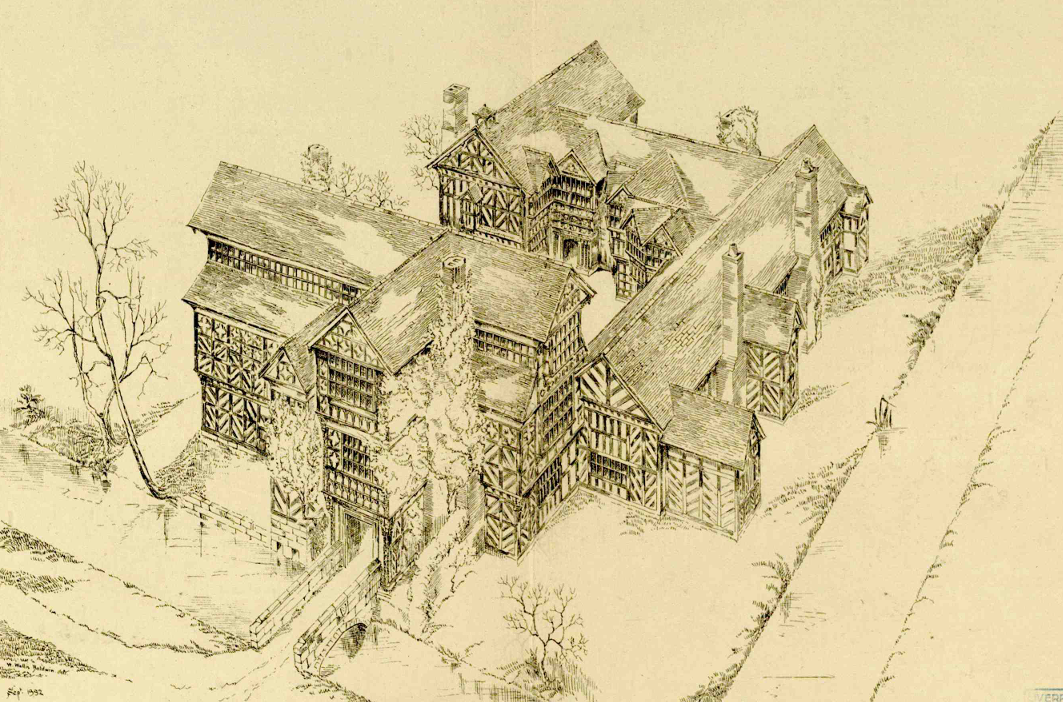
►1563 John Wedgwood of Harracles (?older brother or ?nephew of the 1st Richard Wedgwood of Mole) acquires large property in Leek & Biddulph parishes from Sir Thomas Gerard (see 1554) § xxdoes this inc Blackwood or do they have that already?-Burke implies they doxx § <cld either/both these JWs be jnr?—in1572will of JW of Blackwood his SON is JW of Haracles (both gents)> § the ?same John Wedgwood is ‘Highe Collector’ of the subsidy for Pirehill Hundred (tho Harracles nr Horton is in Totmonslow) § a tax on wealthier land-holders, the subsidy roll surprisingly has no-one but the 2 squires in Biddulph [no Boulton, Gibson, Keeling, Muchell, Stonehewer, Wedgwood, Winkle]* but 20 tax payers under ‘Tunstall Court’ inc John Burslem [Burslem & Park], Roger Drakford [Stonetrough], Ralph Slade, Ralph Kelinge, Thomas & Nicolas Adams [of Bemersley], John Caulton [doesn’t say which, cf 1558], Richard & John Colclough, & 4 Rowleys – John of Ridgeway, William, James, Geoffrey [no Podmore unless William ‘Radwood’ is an error] § /*suggesting either that the yeomanry in Biddulph is all poorer than that in neighbouring Tunstall,?etc or that Wedgwood or his subordinate collectors are favouring them by omission! § William Stonhewer mentioned {<check date!+?more infoxxx} (Biddulph) § Thomas Adams of Burslem bequeaths an ‘yron chymney’ to his son William (cf 1617) & another to dtr Ellen, usually presumed to be refs to pottery kilns § this is perhaps wishful thinking on the part of Percy Adams et al – iron furnaces are used in metallurgy but aren’t characteristic of the pottery industry, & iron chimneys (non-flammable) are used in smithies & forges where there are open fires § in fact an earlier Thomas Addams of Burslem (d.Dec 1534) also has an iron chimney in his inventory & mentions ‘ye workehowse’ [workshop] in his will, though his trade isn’t known either; the other iron chimney noted being in the inventory of a blacksmith, see 1547—John Swinnerton § Henry Lord Audley dies (Dec 30; buried at Audley Jan 5, 1564), his under-age successor George coming under the guardianship of Sir William Sneyd, his grandfather § squire William Moreton dies (June), his will (made May 28, proved July 14) instructing his executors to continue & complete ‘soche a frame as I have in hand or in woorke’ ie an extension to Little Moreton Hall under ‘Ric dale the head wright and woorkma[n]’ (see above & also 1559, 1576) § the inventory (June 26) includes 115 sheep & 54 lambs (enormous by the standards of the time) § the 6 appraisers inc John Cartwright snr & jnr & William Pever § the Little Moreton estate or sub-manor includes a corn mill, a bloomsmithy, & 100 acres of turbary § although there are a few Cheshire wills back to c.1520 both at Chester & at Lichfield (& at PCC, inc his father’s – see 1525), this is the earliest suviving will proved at Chester from anywhere adjacent to the Cheshire side of MC § Francis Bowyer of Knypersley born, & baptised at Biddulph xxxparentsxxx; (see 1634)
►1564 plague at London (1563-64) & elsewhere § William Podmore makes his will (March 20, 1564 NS), presumably ill & expecting to die (doesn’t say as they often do, just ‘whole of mynde & goode & p[er]fecte memorye’) but doesn’t die until 1575 § the will contains clauses explaining why son William only gets £1 & son Thomas nothing (for details see 1575), so his sons are grown up & independent by this date § executors are son Richard & grandson John, ‘supervisers’ Richard Wedgwood [snr] & son Thomas Podmore; witnesses Raphe Slade, Andrew Twemlow (‘tomelowe’), Lawrance Cauton, Thomas Whelock or Whillock (‘willocke’) (Slade & Twemlow are also connected as executors of the will of John Slade, see 1555) § George Twemlow born in Talke township (probably Butt Lane, bordering on Church Lawton; see 1612), son of George, & baptised at Audley (April 25)
►c.1565—Hugh & Thomasina Lowndes & the Lowndes Family Hugh Lowndes (formerly of Gawsworth) baptises his 2 youngest children at Astbury in 1576 & 1578, & is involved (as witness, appraiser, etc*) in various local wills from 1580, indicating that he is a well-connected yeoman & pillar of the community & that he & wife Thomasine or Thomasina (nee Broadhurst) are now living on the MC side of Odd Rode township, at Old House Green or thereabouts § according to some genealogies their son Edward Lowndes b.1566 is born in Odd Rode, pinpointing the move to 1565 since the previous child Peter is b.1564 in Gawsworth parish § they are married at Gawsworth in 1557/58 § Hugh Lowndes is usually presumed to represent a junior branch of the Lowndes family of Overton Hall, in Smallwood township, though modern genealogies conflict in how they link back or whom they identify as Hugh’s immediate forebears – Hugh has relatives in the Gawsworth, North Rode, Bosley part of Prestbury parish, & friends in Odd Rode & over MC in Staffs, but the Overton connection may be no more than an assumption based on the notion that Overton & Old House Green are near neighbours, though they’re 3 miles apart § unless there’s evidence confirming it there’s no intrinsic reason why the two families bearing a distinctive Cheshire surname (common in Cheshire) should be more than distantly related, & there seems to be no evidence of interaction between the 2 families that might suggest that as a reason for Hugh’s move to Odd Rode § the Old House Green lineage founded by Hugh & Thomasina is well documented & represents a remarkable continuity, genealogically & geographically, over 10 generations down to the early 20thC § the uncommon Christian name Thomasina found in the area during subsequent generations usually traces back to Thomasina Lowndes, whether through descent or god-parenting (eg T Wedgwood b.1616, T Hancock f.1641, T or ‘Timezin’ Challinor d.1720) § more recently (usually in the form Timison) it returns to the hill via Ellen Kirkham nee Bailey, grandtr of Timison Bailey nee Brough of Biddulph Moor (xxxx), wife of stone mason & pioneer Primitive Methodist preacher Richard Bailey or Bayley § in 1580 Hugh is witness & appraiser (one of the compilers of the inventory) of MC millstone man William Hancock, probably a neighbour; in 1597 Roger Stonier of Wedgwood township is owed 24s 4d by both John Podmore [of MC] & Hugh ‘Lownes’ in each case for half a millstone, suggesting they’re millstone-making partners (millstones are often made &/or owned jointly by 2 men) – indicating involvement in the MC quarrying industry (& see 1680 re grandson Hugh’s stone troughs etc) § *the wills involving Hugh Lowndes inc: William Hancock of Odd Rode, wit+inv 1580; Robert Hancock of OR, wit+inv 1593; Margery Rode of OR, wit 1593; John Froste of Biddulph psh, inv 1595; Roger Stonior of Wedgwood township, 1597-HLo owes him for ½ a millstone, suggesting they’re millstone-making partners; xx § NB>1st 3 chn supposedly bGaws 1560-62-64, middle 2 not stated starting with Edwd66[orOR] & must be some missing, last 2 bAst 1576-78---so if Edwd’s really bOR it’s 1565 if not it’s 1565-75/c1570
►1565—Thomas Drakeford, Curate of Leigh Revd Thomas Drakeford, Mow Cop-born curate of Leigh nr Uttoxeter, diesxxx § § xxx § xxxxxxxxxxx § xxx § § xxSEE:1509,10,56-Richard,xx,xx § § xNEWx
►1565 first mention of Whelock/Whillock family (John Whillocke) explicitly at Bacon House, Biddulph, where a branch has settled as kin of the vicar Nicholas Whelock (John is either his brother John f.1538 or his nephew; & see 1573) § it’s possible that Nicholas lives at Bacon House, as according to Jonathan Wilson there hadn’t been a parsonage since it burned down in the Hulton Abbey era § William Stonyer possesses a messuage with fields including Stoneyknowle, Barnefielde & Ryecroft (names of Hay Hill fields) xxxxxxx § xxx § Revd Thomas Tunstall, curate of Thursfield, dies § Thomas & Katherine Roker or Rooker first mentioned in Biddulph parish register, baptising a dtr Margaret (date illegible) § Warburra Kent baptised at Church Lawton (Aug 26) shows the continuing popularity of the name Warburga in honour of Cheshire & Staffordshire’s most beloved saint (parents not given; there are Kent families at Kent Green & on the Staffs side of MC, both of whom use Lawton church)
►1566 approx date that Thomas Dale of Dales Green dies (probably son of the Roger born c.1473, f.1533; husband of Joan & father of Roger, Thomas, Geoffrey, Randle, & Oliver) § his death precipitates a dispute between sons Roger & Geoffrey over ownership of Dales Green (see 1570), the agreement between them after their father’s death, that occasions the dispute, stated in 1570 to be ‘about three years past and more’ § xxx § John Spode or Spowde of Biddulph parish dies, one of his appraisers (compilers of the inventory) Rychard Wedgewud § John Spode is one of the earliest known members of the family from which the Spode dynasty of potters comes – so early the Spode/Wedgwood association is probably fortuitous § Thomas Wetwood [?probably either Wedgwood (unidentified) or Woodward (see 1593)] marries Johana or Joan Winkle at Biddulph § Roger Stonhewer marries Margaret Keellinge at Biddulph – probably Roger who settles in Wedgwood township & d.1597 § Thomas Robinson marries Margaret Shette at Swynnerton – seemingly TR the millstone maker (see 1593), parents of Margaret (b.1567, later Rowley) § ?the surname might perhaps be a mishearing of Sherratt § Edward Lowndes born (see c.1565, 1600)
►1567—Marriage of Richard Wedgwood & Margaret Boulton Richard Wedgwood jnr marries Margaret Boulton at Biddulph (Sept 14), probably dtr of William, a significant union between two yeoman-industrialist families on the Biddulph slopes § William Boulton transfers a messuage & 433 acres to Richard Wedgwood snr & jnr, presumably in connection with the marriage § even if these are ‘Staffordshire’ or other non-standard acres this is a very large holding – possibly Tower Hill Fm though difficult to reconcile to the normal yeoman farm of this period, which might more likely be 50-to-100 acres (& see 1587) § xxx § altho there appears to be only 1 household in the 1532/33 list (‘Abolton’, 2 couples), the Boltons or Boultons are a major yeoman-industrialist family in the Biddulph area from at least this time down to Daniel Boulton in the 20thC; they’re found on both sides of the valley, at Biddulph Moor as well as Mow Cop, their early epicentre appearing to be the Falls/Gillow/?Underwood area; they’re involved in quarrying and probably millstone making at MC and Congleton Edge (see eg 1580-81), suggesting the families they interact & esp inter-marry with are also active in such industries; as well as the Wedgwoods they inter-marry with the Muchell, Stonehewer, xxx & Winkle families § the 2 Richard Wedgwoods snr & jnr seem to operate in partnership in regard to land transactions (eg 1569, 1579) & probably also industrial or business enterprises § (& see 1567 blow) § xx
►1567 advowson of Wolstanton granted by the Bishop of Lichfield to Sir William Sneyd of Bradwall – effectively completing his rise to the status of leading landed gent of the region (see eg 1540, 1560) § Queen Elizabeth’s benefaction to the poor of Wolstanton parish seems to be of this date too § Richard Wedgwood jnr marries Margaret Boulton (see above) § the grounds for the suggestion that one of the Richard Wedgwoods is a potter at this date are unknown, perhaps retrospective wishful thinking, though 19thC curate & local historian Revd William Hadfield may have had access to parish records that haven’t survived (see eg 1552) § certainly they are involved in the industries of the hillside wch might well include pottery & glass making as well as stone quarrying, iron working, & iron & coal mining – crude earthenware was made at Gillow Heath using local clays found among the coal seams well into the 20thC (cf 1578-81, c.1580—Glass Making, c.1616—Wedgwoods Arrive in Burslem, xx+modern-refxx) § Margaret Robinson born, & baptised at Biddulph (June 2), dtr of Thomas & Margaret (later wife of William Rowley; she d.1641)
►1568 Society of Mines Royal incorporated, with a monopoly in certain districts & mines (removed 1690), its activities particularly concentrated on copper – testifying to the Elizabethan enthusiasm for developing raw materials § Mary Queen of Scots (1542-1587), having been deposed & defeated in battle, flees to England (May 16) & is placed in custody by Queen Elizabeth § ‘Bishops’ Bible’ published, replacing the Coverdale or ‘Great Bible’ in churches (until 1611) § English seminary at Douai founded by exiled Catholic priest William Allen (1532-1594) for training Catholic priests & missioners, a significant factor (for good or ill) in maintaining the supply of same & continuity of the Catholic faith in England § marriage of George Talbot, Earl of Shrewsbury to wealthy noblewoman Elizabeth nee Hardwick (‘Bess of Hardwick’), her 4th husband, links to the revival of Buxton as a spa & to the various connections of Mary Queen of Scots with the region, she being placed n George & Elizabeth’s custody 1569-84, inc at Tutbury & Chatsworth (see 1569, 1572, xxx) § xx
►1569 Mary Queen of Scots, having fled to England (1568) & been placed in custody by Queen Elizabeth, spends the 1st of several stints at Tutbury Castle (Feb-April), which she hates § Catholic uprising in her favour in the north of England (Nov-Dec) is defeated, but demonstrates how destabilising her presence is, as legitimate heir to the English throne & focus of Catholic intrigue, leading eventually to her execution (1587), the Spanish Armada (1588), & a long legacy of religious distrust & intolerance § William Wildblood makes his will, mentioning his children Alice, Margaret, Elsabeth & Richarde of whom Alice is eldest & Richard under-age § he appoints Roger ‘stonear’ overseer [probably of Wedgwood] & his witnesses are John Prince, Richarde Willocke, James Coulton (he dies & the will is proved 1576 qv) § Raphe or Ralph Keyling [Keeling] ‘Being Syck in boddey’ makes his will (Nov 16) & probably dies shortly before Jan 25, 1570, the date of his inventory (see below)
►1569-70—Ralph Keyling’s Will Raphe or Ralph Keyling [Keeling] of Stademorelowe ‘Being Syck in boddey’ makes his will (Nov 16, 1569; listed as proved April 26, 1570 which conflicts with the inventory date Jan 25, 1570 ie 1571 NS; if he’s sick in Nov the inventory year is perhaps the more likely error & he probably d. late 1569 or Jan 1570) § it mentions wife Isabell & 3 dtrs inc main heir Elizabeth (later Bullock(e), see 1581 where she’s also the main heir in her mother’s will) § though a husbandman with a modest valuation (£xxx) he is well connected with better-off yeomen & even gentry inc the Bournes, Rowleys, etc, & appoints William Unwyn of Chatterley & John Kelinge of ‘the newchastell’ overseers § this shows that the Keelings of Newcastle, forebears of Revd Isaac (1605-1679), Puritan vicar of Wolstanton, whose father is named Ralph, are a branch of those of the Harriseahead/MC area § the Keeling family has been here & in Biddulph parish for over 2 centuries: Roger Kelyng was the 1st known headborough of Stadmorslow (1353), Richard Kelyng an early millstone man (1423-24), & Gralam Keling (etc) a significant chap around the hill in the early 16thC (see 1536) § Ralph is not a son of Gralam but may well be his nephew § dtr Elizabeth represents a possible connection to MC through her husband William Bullock § the most interesting features of Ralph Keyling’s will & his most certain connection with the hill is his bequest of ‘one cloose or pasture wch I holde of Rycharde Wedgewoode thelder and Rycharde Wedgewoode the yonger called the brodefelde’, part of the Wedgwoods’ large property on the Biddulph side of the parish boundary (cf 1567) § it implies that he lives in the Mow House, Biddulph Rd, Stonetrough area § xx
1570-1599
►1570—Dispute Over Inheritance of Dales Green dispute between brothers Roger & Geoffrey Dale over ownership of Dales Green § it is precipitated by the death of their father Thomas (c.1566) so indicating that the Dales have been at Dales Green for at least a generation (& see c.1473, 1556) § Geoffrey claims xxxhis older brother Roger has renaged on an understanding or contract between them whereby he obtained the property at DG or a sum of money from Roger in forfeitxxxx, & also implying that X??he may be exercising undue influence over their mother Joan who lives with him so that he can get her Smallwood property too § Roger appears to retain Dales Green & Smallwood but owe Geoffrey the money in lieu, still owing when Geoffrey dies (see his will 1577) § their property at Smallwood (where the family originates) belongs to their mother Joan but also descends to Roger (see 1618, 1619) § Geoffrey’s complaint also mentions (without involving) brother Thomas but for some reason (perhaps because they are under-age) fails to mention brothers Randle & Oliver, to whom he bequeaths the money owed § xxxxx § xx
►1570 Queen Elizabeth excommunicated & deposed by the Pope – not something that overly troubles her except that it relieves Catholics of the obligation of loyalty & provides justification for rebellion & invasion § most English Catholics are actually law-abiding & loyal, but it encourages heightened nervousness & suspicion on the one side & fanatics & succession plotters on the other, widely believed to be egged on by Jesuit priests § plot by the Stanley family to free Mary Queen of Scots from Chatsworth § date sometimes given for foundation of Thursfield chapel, but see c.1530 § probable/approx date of Ralph Keeling’s death (see 1569) § Thomas Stonehewer or Stonhewer, later of Hay Hill, born at Hurst, youngest son of Richard & Anne, & baptised at Biddulph (June 20) § approx birth date of Richard Wedgwood (III) § ?approx birth date of William Rowley, co-founder of one of the great old MC families
►1571 Thirty-Nine Articles finally adopted as the articles of faith of the Protestant Church of England {see?1559} § Richard Roker (Rooker) of Biddulph parish dies (son of Isabel, see 1535, & probably father of Thomas Rooker the millstone maker)
►1572—The Auncient Bathes Of Buckstones the mineral waters of Buxton promoted by John Jones, a ‘Phisition’, in his book The Benefite of the Auncient Bathes of Buckstones, which cureth most greevous sicknesses (1572) § revival of Buxton spa at this period follows the attentions of a number of courtiers & aristocrats, notably George Talbot, Earl of Shrewsbury & his wife Elizabeth nee Hardwick (‘Bess of Hardwick’) (married 1568) § Shrewsbury 1st takes the waters 1569, builds a lodge or bath-house there, & takes Mary Queen of Scots 1573 § between 1573-84 Mary visits Buxton most years for the waters (Shrewsbury & his wife are her custodians 1569-84, 1st at Tutbury then at Chatsworth) § Buckstones is the genuine early form of the name, meaning rocking stones § it was the Roman spa Aquae Arnemetiae, the goddess of the grove, syncretised as St Ann(e), a common dedication of holy wells or healing spings § unusually it has both hot (82ºF) & cold springs in close proximity, the geothermal spring being St Ann’s Well, a medieval shrine & place of pilgrimage that is suppressed by the iconoclast Sir William Bassett on direct orders of Thomas Cromwell in 1538, to be re-discovered once its Catholic associations have faded from memory (tho they won’t have bothered Mary) § St Anne (feast day July 26) is the mother of the Virgin Mary, her feast an obligatory holy day in England from 1382 § well dressing at Buxton doesn’t seem to have been revived until 1840 § at 16 miles Buxton is the nearest town to MC outside Cheshire or Staffs (nearer than Ashbourne 21 or Market Drayton 18½), tho it’s not actually a town until the late 18thC, receiving its market charter 1813 (market day Sat) § it’s the highest town in England (1000ft), capital of the Peak District (a former royal forest), & from at least the 17thC centre of the limestone/lime industry § the baths subsequently belong to the Dukes of Devonshire of Chatsworth (descendants of Countess Elizabeth), the present somewhat gentrified town largely developed by them from the late 18thC starting with the building of the famous Crescent (1780-88) § (cf 1600 re ‘new found’ healing well in Delamere Forest, 1615 re revival of well dressing at Tissington, c.1189 re naturally or magically healing & refreshing waters) § xx
►1572 commencement of surviving Astbury parish register (but not readily available until 1593, qv & cf 1559), the 1st mixed vol continuing to 1668 § Cartlidge gives the 1st marriage entries in Oct 1572 – inc Thomas Furnival & Joanna Lowndes, probably from our part of the large parish – but no other early entries § both Roger & Geoffrey Dale appear in Tunstall court rollxxx?as-whatxxx § likewise William & Richard Podmorexxxmorexxx § Andrew Bowyer (of the Bowyers of Knypersley) referred to both as vicar of Wolstanton (Adams) & parson of Ashley (will of John Wedgwood of Blackwood) § Margery Cartwright of Rode (probably Bank) makes her will (Oct 11; see 1572-73 below) § John Wedgwood of Blackwood dies, brother of the 1st Richard Wedgwood of MC & father of John of Harracles (also great-grandfather of Gabriel Keeling, his dtr Mxxx marrying William Keeling of xxx) § Sir William Sneyd dies {??other notes1571=Ward} & is succeeded as lord of the manor of Tunstall by his son Ralph Sneyd of Bradwell (1527-1620??){other notesd.1615}, later of Keele (see 1580)
►1572-73—Margery Cartwright’s Will & Inventory Margery Cartwright’s will dated Oct 11, 1572 is the earliest Cartwright will & an early snapshot of one of the great old Mow Cop families (see c.1463) § she’s a widow but her husband’s name isn’t known & her precise abode can only be conjectured § most likely she lives at Bank, her son & main heir being the 1st of the sequence of Ralph Cartwrights of Bank (d.1604), though Kent Green, ?Old House Green & Mole End [Mount Pleasant] are the other Cartwright abodes at this time, as well as Hall Green & ?Alcumlow § it is also the earliest will & inventory from the Cheshire side of MC (if we count her as such), in Chester diocese, where the survival of wills lags 40 years behind the earliest on the Staffs/Lichfield side (see 1532-35; the earliest MC related will & inventory also belong to a widow, Margery Taylor 1534) § it’s catalogued as 1574 (usually the date of probate) but there’s no contemporary source for probate, the document being part of a batch of wills etc found in the diocesan registry (as distinct from the probate registry) & listed in 1896, so the catalogue date is in fact a misreading of 1572, the Elizabethan 2 resembling a 4 § the inventory is dated April 10 but with no year, & says ‘latlie deceast’, inventories nearly always being compiled within days of death & probate following quickly from submission of an inventory § the obvious inference is that this is the April following the making of the will ie 1573 § will & inventory are written on the same sheet in the same hand & ink, which must mean the whole thing is a contemporary copy § it’s possible the will is disputed or never proved, as it comes from a batch of wills preserved separately from the probate archive, but this doesn’t make its historical content less interesting nor mean that its main terms are not carried out § <> § ‘In the name of god Amen: the xith daye of Octob[er] Anno dnī 1572 I margerie Cartwright of Rood in the p[ar]ish of Asburie widowe of god [ie good] and p[er]fecte remembrance Laud and praise to god therfore [ie for that] do make and ordean[e] this my last will and Testament in manere and forme folowinge’ § her beneficiaries are (in order as mentioned) ‘Jone and Eln[or] p[ar]kinson alias Cartwright basse daught[er] of Ric Cartwright’ – cow & heifer, linen, pots, pans & dishes; ‘nicholas Cartwright and Ric Cartwright my sonnes to either [ie each] [of] them xiid in the name of ther childes part of my goods’ [ie a token bequest acknowledging their entitlement & implying they’ve already received their portions]; ‘Rauphe Cartwright my sone’ – ‘the residue of all my goods and Cattels moveable & unmoveable what soev[er] they be and in whos hands soev[er] the be ...’ [ie they be] § ‘I do ordeane and make Rauphe Cartwright my sone & Ric Douesone [Dowson or Dawson] my true & lawful Executors ..., and will[ia]m Rodd and Ric Cartwright of Rodd ov[er]seres’ § witnesses are Willm Rodd, Ric Cartwright, Willm Kent, Ric davson [Dawson again] § a list of ‘Debts owinge by me’ follows, to Kathren Mathewe, ‘Jone Cartwright alias p[ar]kinsone (basse daught[er] of Ric Cartwright)’, ‘Eln[or] cartwright daughter of John Cartwright deceased’ – amount followed by spiel to the effect that if she lives until Annunciation she’ll owe her more & then more at each Annunciation thereafter [Annunciation or Lady Day is March 25 – old New Year’s Day] § a heading for debts owing to her follows, but contains nothing § the inventory is dated April 10, but no year [presumably 1573] § ‘The Inventorie of all the goods and cattels of M[ar]gerie Cartwright widowe latlie deceast ...’ by John wolfe, John Cartwright, Thomas Twemlowe ‘and others’ § animals consisting of 2 oxen & a cow (£5-10s), a twinter & a yearling [ie young cows], a colt, 3 sheep, 1 ‘shate’ [??], 3 geese & a gander, ?8 hens; brass [& metal] pots & pans inc a frying pan; ‘fleshe at the [??looks a bit like rooaffe]’ [ie meat]; ‘ii bedds’, ‘Trumperie ware’ [ie things of little value] (10s), ‘corne and heay’, ‘here reament’ [ie her clothes], ‘Irone ware’ § the amounts are not all legible & some torn away [plus the inventory may be incomplete], what’s visible/legible comes to about £12 § <> § as one of our earliest insights into the real lives & relationships of people on & around the hill this is an exceptionally interesting & important document, tho it’s the little things that are worthy of commentary § ‘Laud and praise’ isn’t a standard formula in wills (thanks or blessed are more normal) but has currency at the time among Protestants, as in ‘All laud and praise with heart and voice’ (English metric version of Psalm 30 by John Hopkins c.1550) § early wills & those written down by less formally educated persons often contain archaic & dialect pronunciations embedded in the variable spelling, sometimes clearly echoing the actual voice of the testator – Margery’s ‘ordeane’ & the inventorisers’ ‘reament’ for instance are perfect MC dialect § the illegitimate dtrs are those of her son Richard, the bequest fulfilling the primary purpose of wills (among ordinary people) of providing for dependents or for close relatives with limited prospects – Margery has carefully chosen which of her modest possessions will be useful to her 2 less fortunate grandtrs, inc the cow (along with the oxen her single most valuable possession) § if disputed, this might well be an aspect of the will which 1 of the sons might chose to dispute § the sons could be interpreted either as Ralph being the youngest, the older 2 already set up & living independently, or as Ralph being the oldest, having remained to run & inherit the family farm while the younger 2 have been found homes, trades etc § Richard Dawson ‘of Maykom howse in Odd Rode’ d.1621 may be the same person as or the next generation from Margery’s executor & witness [& thus almost certainly a neighbour] – he’s an appraiser for Richard Cartwright of Kent Green d.1615 & grandfather of Thomas Dawson of MC & Chesterton § Richard Cartwright of Rode, one of the overseers (usually a person of fairly high status), is evidently different from her son Richard, to be described thus – 30 years later the 2 Richard Cartwrights in Odd Rode township are at Kent Green & Mole End (see 1605) § nothing is known of overseer & witness William Rode – an intriguing possibility is that he’s an intermediate generation between the squire’s family & Thomas Rode the MC millstone maker (whose father Thomas marries 1593); William Kent is one of the Kent Green family § 2 John Cartwrights of no stated relationship are implicated – a living one who helps compile the inventory, & a dead one whose dtr receives an annual payment from Margery, most probably either rent or an annuity § if the deceased John Cartwright is her late husband it’s odd to refer to him so obliquely, tho it would explain why she might be paying money to his dtr (a dtr by an earlier marriage would be assumed); otherwise obviously he’s a relative eg her late husband’s brother § various refs to John Cartwright (one or more) occur in the mid 16thC, inc in Richard Calton’s will 1559 (& cf Isabel Roker’s 1535 & the 3 Cartwrights who are 1533 witnesses); JC snr & jnr are among the appraisers of squire William Moreton’s 1563 will; not to mention Revd JC who becomes vicar of Wolstanton 1574 & in 1575 witnesses John Caulton’s will alongside Ralph Cartwright, so is himself one of the MC Cartwrights § Thomas Twemlow is an interesting name to encounter in this context, being presumably the one who d.1591 called of ‘the Bonck’ in Church Lawton court rolls [a context making it uncertain if this means The Bank in Odd Rode, tho association with the Cartwrights suggests it does] § one would assume a ‘shate’ is a sheet except for its position among the animals (sheet is spelled both ‘sheits’ & ‘shits’ further up) § the animals are few enough to suit an elderly widow with a toft or smallholding yet varied enough [except for the absent pig] to suggest a large yeoman farm, esp being headed by the 2 valuable work-animals the oxen – either the farm is run down or, more likely, Ralph is operating it, his mother’s ownership of some of the livestock being residual; by local standards (where farms aren’t usually large at this period either by acreage or by livestock) the farm operated by the dynasty of 4 Ralph Cartwrights of Bank House is a large & prosperous yeoman farm (see xxRalphrefsxx) § oxen are increasingly rare from this time onwards, replaced for ploughing & haulage by horses (tho like Joe Lovatt’s steam wagons they survive longer for the heavy duty of hauling millstones; cf 1593—Thomas Robinson, 1627—Thomas Burslem) § geese likewise § xx
►1573 for Thomas Tusser’s Five Hundreth Points of Good Husbandry see 1557 § William Podmore reeve of Tunstall (?jnr since his father is old & probably sick) § Nicholas Whilocke (a younger relative of Revd Nicholas) mentioned in Biddulph parish (probably a son of John & great-nephew of Nicholas) § Margery Cartwright diesxxxmove stuff fr 1574xxx(see 1572-73 above) § Alice Mainwaring (nee Boughey), lady of the manor of Nether Biddulph, dies § Stephen Drakeford dies, of Wolstanton parish, presumably Stonetrough § one of the bequests in his will is to Margery Drakeford ‘of the mosse’ [ie in Church Lawton, either Hall o’ Lee or nearby] xxx+others?xxx § (see 1556) § John Wedgwood born, son of Richard & Margaret
►1573-84 Mary Queen of Scots visits Buxton most years for the waters, staying for several weeks at a lodge built by her custodian George Talbot, Earl of Shrewsbury, the spa having recently been revived by the patronage of Shrewsbury & other aristocrats, & promoted by John Jones, a ‘Phisition’, author of The Benefite of the Auncient Bathes of Buckstones, which cureth most greevous sicknesses (1572) (see 1572) § she suffers from rheumatism – one of the ailments the Buxton waters are especially noted for – attributed to the various damp, draughty castles she’s accommodated in
►1574 (Margery Cartwright—see 1572-73) § Revd John Cartwright becomes vicar of Wolstanton (instituted xxx), & remains so until at least 1584 – seemingly one of the Cartwrights of Odd Rode & MC (see 1575—John Caulton’s Will) & probably one of the 2 Johns mentioned in Margery’s will (1572-73) § Rychard Wedgewud one of witnesses to the will of William Coke (or Cooke) of Biddulph parish<pr.date, check date madexxx § Richard Cartwright, probably Margery’s youngest son, marries Katherine Hulse at Church Lawton (parents of Jane who marries Edmund Antrobus c.1600 – hence probably of Kent Green or Bank) § Warburga Wedgwood of Mole marries James Calton or Caulton of Stadmorslow at Biddulph – she’s presumably a sister of Richard Wedgwood (II)
►1575—John Caulton’s Will will of John Caulton ‘of the brerehurste’ (made xxx, proved xxx) bequeaths a cottage & 7½ acres of ground ‘adioyninge to molle’ to his dtrs Ellen & Elizabeth (reverting after 20 years to his son Richard) § this is the earliest ref to cottages on or next to the edge of the common land (adjoining carrying this meaning) (cf 1611, 1614, 1617, 1619, 1620, etc, & 1659, 1666) & as with the Maxfields etcxxx represents the early model of a yeoman copyholder having such a cottage for his relatives or servants (as distinct from the familiar later procedure of poor people encroaching on the common & building cottages for themselves) § Caulton’s witnesses are John Cartwright ‘clarke’ & Raphe Cartwright, & one of his overseers Richard Cartwright (cf 1572-73, 1559—Richard Calton) § the role of overseer suggests Richard is of high status (& cf 1572-73 when he’s also Margery Cartwright’s overseer), & more intriguingly the context implies that Revd John Cartwright, vicar of Wolstanton, is one of the MC/OR Cartwrights § if Caulton lives in the Dales Green area (eg Dukes Fm) or at Brieryhurst Fm, his cottage (like Maxfields Bank) is going to be along the edge of the common alongside Mow Cop Rd somewhere between The Hollow & Dales Green Corner, while he is a neighbour or nearly so of the properties (over the county boundary) of Mole End & Bank (several farms), at least 2 of which are occupied later (& probably now) by Cartwrights
►1575—Death & Will of William Podmore William Podmore of Mow House dies, co-founder of the great dynasty of blacksmiths & yeoman-industrialists who are leading figures in the community & economy of Mow Cop for 10 generations § unfortunately his wife’s name isn’t known, nor his parentage § his 1st mention in Tunstall court roll is 1537 (qv) § his will (made March 20, 1564 NS, proved Oct 5, 1575) is unusual (at this period) in being made so long before his death; presumably he was ill in 1564 but recovered, tho he doesn’t say as they sometimes do – ‘william poodemore the elder whole of mynde & [of] goode & p[er]fecte memorye ...’ § the surname is spelled ‘poodemore’ & ‘poodmore’ throughout, a spelling not otherwise encountered nor so far as is known representing the pronunciation § he wishes to be buried in Wolstanton parish church, ‘and for my buryall I geve iiis iiiid to the Reparation of the same churche’ § the other bequests are to ‘everye one of my godchildren’ 4d, son William 20s, grandsons John & William sons of Richard each ‘a studye of Iren and of stille’ [anvil, OED stithy, related originally to steady; steel], rest & residue to son Richard § he takes the trouble to add notes explaining why William doesn’t get more (tho 20s is more than the normal 1s token child’s part) & why son Thomas gets nothing: ‘in the name of his childs parte of my goods consyderinge and weyinge that the forsayd william hathe ben chargeable to me [the] testator hearetofore to the Sum[m]e of v£ of englyshe monye and more’; ‘Also I the sayd william poodmore have Disbursed & payd to thomas poodmore my sonne vii£ xiiis iiiid, at the Day of his maryche for a full contentation and payment of his chylds parte of my goods’ § executors are son Richard & grandson John [1575 probate record names them in opposite order], ‘And Rychard wedgewood and Thomas my sonne supervisers’; witnesses Raphe Slade, Andrew ‘tomelowe’ [Twemlow], Lawrance Cauton [Caulton], Thomas ‘willocke’ [Whillock/Whelock] § a debt owed by him to son Richard of £10 is noted § the inventory (dated only 1575, no day date, but says ‘Lattelye Decessed’) is by Thomas ‘stonear’ [Stonier], John ‘bouthes’ & ‘Rychard wedgewood’, & shows a middling mixed yeoman farm – 2 oxen (£4), a horse & mare, small number of cattle, 10 sheep & 2 lambs, 1 sow & 4 pigs & 2 ‘other swyne’, 1 gander & a ‘gusse’ & 2 goslings, 1 cock & 3 hens, corn – plus the usual household things, ‘too stydds of Iren & styll wth certen toolls in the smythye’ (£4), & ‘the Reperrell of the sayd william’ [apparel] (20s) § the total valuation is £31-6-4, larger than most local probate valuations at this period § the breakdown of the livestock is unusually detailed, in inventories poultry alone is usual; hugely important however is the confirmation that the founder of the Podmore dynasty of yeoman-blacksmiths is a blacksmith with a smithy at Mow House (his occupation is not otherwise mentioned) – hence there’s a smithy at this important location at least as early as 1537 when WP is 1st mentioned § both grandsons are blacksmiths or apprentices xxx, & the £4 valuation of the tools & ‘stydds’ is high for the time § his successor at Mow House is Richard, then grandson John (& then 7 successive generations of Richards); the order of WP’s sons one would guess is Richard Thomas William, tho making Thomas an overseer might suggest he’s the eldest but has found a home elsewhere; the wife is deceased & no daughters or in-laws are mentioned (nor details known in the absence of a Wolstanton parish register, their 1st appearance in surviving parish registers is grandson John’s marriage at Biddulph 1576) § the other interesting feature is the names of his associates, friends & neighbours, a roll-call of early MC yeomen about whom at this early date we know little beyond their names; Ralph Slade & Andrew Twemlow also appear together in 1555 as executors of John Slade’s will; the Slade family are still friends of the Podmores in 1608 & the Twemlows still business partners in 1692; John Boothes is grandson of the John whose interesting will is proved 1539; most fascinating is Richard Wedgwood, both an appraiser (inventoriser) in 1575 & overseer nominated in 1564, on the basis of the latter presumably RW snr, the 1st RW of MC, demonstrating a close association between the 2 neighbours (they’re neighbours across the Wolstanton/Biddulph parish boundary, both RW snr & jnr being active in the community in Biddulph but seldom encounteerd outside – but cf William Wildblood’s will 1576) – evidence of collaboration between the Wedgwoods & Podmores in respect of their industrial activities (inc quarrying & potting) is a desideratumxx § xx
►1575 Chester mystery plays last performed before being banned as part of suppression of Catholicism § Queen Elizabeth visits Stafford & Lichfield § John Stonhewer of Biddulph parish dies
►1576—Death & Will of William Wildblood William Wildblood (‘Wylblude’ in will, ‘Wyldblude’ in inventory) dies (probably early Sept), & is buried at Wolstanton § his will (made April 22, 1569, proved Oct 1, 1576) bequeaths ‘all my howsse lands and goods’ to his wife Elizabeth for life ‘kepeinge my name’ [ie so long as she doesn’t re-marry], with provision for her to pay sums of money to dtrs Alice, Margaret & Elsabeth [sic] & for son Richarde to do so when he comes of age & enters into possession, or if he or their mother dies for the eldest Alice to inherit § his concern (in 1569) & the entire purpose of the will (which has no other provisions) is that Richard be maintained while under-age & then inherit, & that the girls (who are older) are also provided for § he appoints wife Elizabeth executor & Roger ‘stonear’ overseer [probably Roger Stonier of Wedgwood]; witnesses are John Prince, Richarde Willocke, James Coulton § Elizabeth proves the will in 1576, tho by this time Richard is doubtless of age & the girls probably married [Richard Wildblood d.1628 is a collier in 1608, later a pedlar, though of yeoman status, under-age in 1569, a grandfather by 1628, so probably b.1550s] § the inventory (Sept 7, 1576) contains very little, all household things except ‘one pigge and tow hennes’, with a low total valuation of £2-11s-8d (moveable goods only, not including the real-estate which the will implies he has), suggesting that farm stock & equipment & any trade-related things have already been passed on to Richard in the 7½ year interval since making the will, & perhaps that he’s had a prolonged illness § the inventory’s most interesting feature is that it’s compiled by Rychard Wedgwood & Thomas ‘telyeare’ [Taylor] – both of the Biddulph part of MC § both RW snr & jnr are active at this time (cf 1575, RW being both an overseer & an inventoriser for William Podmore), but they rarely crop up outside Biddulph parish xxxxx& being brother-in-law of witness James Caulton) & Taylor linking the Taylors of & those of Kidsgrove (see 1617) § § Richard Wildblood & presumably William live xxxxx – in Brerehurst township, somewhere on the hillside between Dales Green & Cob Moor – but their associations are predominantly with MC persons & families, Richard also with the Maxfields of Trubshaw, & it’s intriguing that William’s inventory shows such a close connection with Wedgwood & Taylor of the Biddulph part of MC; Roger Stonier is also either of Biddulph or the Biddulph-born Roger of Wedgwood township, & related to Thomas Stonier of Cob Moor; Roger is either a millstone maker or connected with the millstone trade § xx
>like WP (see 1575) he makes his will some years before dying, wch is unusual at this period: presumably he’s ill & expecting to die in April 1569, tho the will doesn’t seem to say so, just ‘being [damaged] whole of mynd and [smudge] p[er]fecte Remembrance’
►1576 Ralph Sneyd purchases his two-thirds share of Tunstall manor outright from his nephew George Lord Audley § famous from the 1559 bay windows of Little Moreton Hall, Richard Dale of Smallwood, carpenter, a kinsman of the Dales of Dales Geen, dies at Brereton, where he is working on the building of Brereton Hall (see 1559, 1563, 1586) § his barely legible willxxxxx § xxx § § William Wildblood (‘Wylblude’) dies, his will (made April 22, 1569, proved Oct 1, 1576) bequeathing ‘all my howsse lands and goods’ to wife Elizabeth with provisions for her to pay sums of money to dtrs Alice, Margaret & Elsabeth & for son Richarde to do so when he enters into possession (see above) § he appoints wife Elizabeth executor, Roger ‘stonear’ overseer [probably of Wedgwood], & witnesses are John Prince, Richarde Willocke, James Coulton § the inventory (Sept 7, 1576) contains very little, all household things except ‘one pigge and tow hennes’, with a low total valuation of £2-11s-8d (moveable goods only, not real-estate), suggesting that farm stock &/or any trade-related things have already been passed on to Richard in the 7 year interval between making the will & dying § its most interesting feature being that it’s compiled by Rychard Wedgwood [probably jnr] & Thomas ‘telyeare’ [Taylor] – Wedgwood rarely cropping up outside Biddulph parish (& being brother-in-law of James Caulton) & Taylor linking the Taylors of the Biddulph part of MC & those of Kidsgrove (see 1617) § John Podmore marries Anne Winkle at Biddulph (Jan 31) § approx birth date of their son Richard, first of the long continuous succession (7 over 200 years) of Richard Podmores of Mole House, yeoman-blacksmiths (though there is an earlier Richard, this Richard’s grandfather, see 1549, 1561xxetcxx, 1575)
►1577—Saxton’s County Maps Christopher Saxton’s county maps of Cheshire & Staffordshire, the first printed maps of either county, are engraved in & dated 1577, surveyed 1574-77 § ‘Mole cop hill’ is the largest of the east Cheshire hills except for Shutlingslow, & ‘Mow cop hill’ by far the largest & most rugged on the Staffs map – Saxton deliberately gives exaggerated prominence to hills that function as boundaries &/or are of strategic or cartographic significance (& had probably been visited & used in the course of his survey) § as well as the interesting duality of Mole & Mow, the maps are the first known instance of the ‘cop’, absence from early local records (& from local parlance to this day) suggesting it has been added by the mapmaker § the northern stream that goes by Moreton & is the subject of the 1530-33 dispute (rather than the southern streams that go by Church Lawton) is marked ‘Whelock flu:’ § ‘New chap:’ is marked with the symbol of a church or chapel (instead of the name Thursfield), which is how the name Newchapel gains currency, since generations of subsequent mapmakers & topographers follow Saxton § commissioned by the government, Christopher Saxton (?1544-c.1611) uses new geometrical techniques & instruments to survey all the counties of England & Wales, the complete set of county maps published as an atlas in 1579, the world’s 1st national atlas § subsequent maps for some time more-or-less copy Saxton’s, inc his semi-pictorial style & his place-names, which helps the cop & Newchapel become established as well as his exaggerated pictorialisation of MC
►1577—The Best Cheese Is The Chesshyre ‘In England, the best Cheese is the Chesshyre, and the Shropshyre, then the Banbury Cheese’ – according to Conrad Heresbach, Foure Bookes of Husbandry as translated from the Latin by the poet Barnaby Googe, probably one of Googe’s own additions to the English version § Heresbach (1496-1576), a protégé of Erasmus, publishes his book in Germany in 1570, a thorough practical manual on farming with ideas for improvement eg he advocates the growing of turnips, has a long section on beekeeping, & even mentions machinery § Googe’s English version achieves immediate popularity, with reprints or new editions in 1578, 1586, 1596 & on into the new century § William Camden’s Britannia (1586) refers to cheese from Cheshire as ‘better relished’ than that from other regions (in Philemon Holland’s 1610 translation from Latin) § soon after, the medical writer & naturalist Thomas Muffet is perhaps the 1st to refer to Cheshire cheese as such ie by that name (though Googe’s sentence presupposes it), in his Health’s Improvement, a popular work on diet written c.1595 though not published until 1655 § cheese is a staple food in traditional society because of its combination of tasty nutritiousness & storability, which also makes it indispensable to travellers, institutions, armies on campaign, & seafarers § regular trade of Cheshire cheese to London exists by the early 17thC, & it later becomes the Royal Navy’s cheese of choice (see 1650, 1739) § while the Cheshire Plain is renowned for its dairy farms & pasture land, Cheshire cheese is also produced in the neighbouring counties of Flintshire, Denbighshire, Shropshire & Staffordshire, inc in the highlands of N Staffs & E Cheshire § specialist cheese markets are held in some towns eg Nantwich, Chester, Market Drayton, Uttoxeter, Burton (as also the sister product butter) – even as late as 1854 the new town of Crewe is furnished with a market building called the Cheese Hall § Weatherill’s 1971 analysis of the agricultural basis of Burslem’s economy during the early development of the pottery industry identifies it as analogous to the dairy farming of ‘the Cheshire Cheese country’ & its chief product cheese § its topography notwithstanding, MC is a significant producer of cheese, & not just the fertile mid & lower slopes, since much early cheese is produced from sheep’s milk (& also goat’s, tho there’s not much evidence of goats being kept), & farmhouses on & around MC often have a dedicated ‘Cheese Chamber’ § evidence of cheese production is found in numerous probate inventories in the 16th, 17th & 18thCs, not just of dedicated dairy farmers but of hill farmers, smallholders, & craftsmen with farms (eg xxneed16/e17C examplexx, 1640 Richard Wedgwood, 1670 Thomas Rode, 1698 Richard Clowes, 1709 John Baker, 1751 Thomas Spencer), sometimes showing large stocks with relatively high valuations § stone cheese presses are a product of the MC quarries – an example serves as a paving slab at the side entrance to Mow House § for the pamphlet Sabbath Day Cheese-Making Not a Work of Necessity see 1841 § xx
►1577—Geoffrey Dale’s Will ‘Jeffray’ or Geoffrey Dale dies, probably at Smallwood, bequeathing his interest in Dales Green &/or the money his brother Roger owes him in lieu (see 1570) to his ‘brethren’ Randle & Oliver (‘Olliv[er]’) § his will (made May 20, 1577 & proved xxx 1577) mentions all 4 brothers (& ‘my mother’ incidentally), Randle’s sons Richarde & John, Oliver’s son Thomas, ?Thomas’s sons Gryffyn & Thomas, the wives of Oliver & Randle, 2 unnamed godchildren, Margrett Dale [relationship not stated], & several other people, bequeathing them small items or small sums of money (as is customary for unmarried testators who have no immediate dependents) § the 1st & main bequest regarding the property at Dales Green is expressed thus: ‘all my right interest and tittle wch I nowe have or heareaftr may have, in & to all that lande or lands of myne in Breary Hurste, and in & to everie pte and pceill thereof, in as ample man[er] to all intents and purpasses as I myselve might have hadd the same, if I hadd lyved’ plus ‘all my right and intereste in & to the advantage of one obligacon wch Rog.r Dale my brother hath forfayted: the Bance[abbreviation mark over n] whereof is lx.£’ § this of course means Roger hasn’t in fact handed over the £60 (a substantial sum), which was in dispute in 1570, so we can’t be sure if he ever does § the bequest to brother Thomas includes ‘a sufficientt bedd at the discrecōn of my mother’ § people who owe him money are listed as William Brucke, Agnes Dorbar, widow Jonson of Warton, Thomas Brucke, Rauffe Beswicke of Middlewiche, Richarde Harden § his executors are Oliver Dale & John Lyngarett [Lyngard], witnesses Thomas Brucke, Edwarde Smethwicke, John Hulme, John Shawe clerk § there is no inventory<ch § xxmore re associations (Brooks, Lingards,etc) +descent ofDG § Agnes Dorbar is an early representative of the local surname Doorbar/Durber, the Biddulph & MC family traceable to stone mason Rumbald Dorbar married at Biddulph 1583 § xx
►1577 date of Churche’s Mansion, Nantwich, one of the finest timberframe houses in Cheshire § Nicholas Whelock dies, after about 47 years as vicar of Biddulph, its first Protestant vicar and its longest serving ever (b.c.1498, see c.1530) § he dies just before Christmas and is buried on Christmas Eve § he must have relinquished his post through ill health or old age a few months earlier, as his successor John Thorley is instituted Aug 31 § also a local man, Thorley is rector of Brereton (from 1576), holding both posts till death (buried Biddulph 1597) § Thomas Rode, squire of Rode, dies & is succeded by his son Randle Rode § one of the witnesses to his will is Ald John Rode of Congleton xxxxx § Jeffray or Geoffrey Dale dies, probably at Smallwood, bequeathing his interest in Dales Green &/or the money his brother Roger owes him in lieu to his brothers Randle & Oliver (see above)
►1578—Sandbach Market & Town Sandbach market founded by royal charter granted at the request of Sir John Radclyffe, lord of the manor § renowned for centuries as the largest & most important market in the region, it’s regularly attended by people from the MC area, with in more recent times special Thursday-only bus services, always crowded § an important ancient village & parish, Sandbach is a late developer as a town & is never a borough, though at 6½ mls it’s now the nearest market town to MC after Congleton, slightly nearer than Newcastle § its prosperity & development derive largely from the phenomenal success of its market, & the productive mid-Cheshire agricultural catchment-area it serves § it also has a more ancient & natural connection to the hill, being the senior of the 3 villages (the others Wheelock & Warmingham) along the course of MC’s river the Wheelock before it joins the Dane at Middlewich § the name 1st appears as Sanbec in DB, meaning sandy stream/valley (that of the River Wheelock) § its unique pair of 9thC Anglo-Saxon crosses (restored or rather reassembled in their present form 1816) indicate that it was an early religious centre of some significance, probably the centre of an early mega-parish of the Mercian diocese of Lichfield (cf Leek 1207) § § links between Sandbach & the MC area inc personnel/demographic connections, probably inc the Twemlow family, & later esp in the 18thC (eg 1706, 1719, 1727, 1735, 1751, 1762, 1779)
►1578 possible date of the revival of a beacon chain (see 1588) § John Prynce dies, probably the one mentioned in 1525 § his probate inventory survives, xxxint’g-namesxxx § § Ralph Wedgwood, son of Richard & Margaret ‘De Mole’, born § his baptism (May 10) is the earliest mention of Mole in Biddulph parish register or any local parish register § Anne Lowndes born, dtr of Hugh & Thomasina (future wife of John Wedgwood, Ralph’s brother)
►1578-81—Wedgwood/Stevenson Loan Richard Wedgwood jnr borrows 200 marks from Thomas Stenson or Stevenson of Overton (1578), & they arrange for Richard (III) & Stevenson’s daughter Ann (both ‘of verey tender yeares’ – Ann was b.1573) to marry in about 10 years (they don’t) § a mark being traditionally 13/4d (⅔ of a £) this represents a much greater commitment than any ordinary loan &, if its purpose is to fund some business venture, a very substantial enterprise (?a glassworks or pottery, for instance – see c.1580) § cf the 20 acres transferred to the Wedgwoods by the Winkles (1579) § Stevenson is a large sheep farmer with close connections to the Biddulph family, so close indeed that squire Francis Biddulph is an executor & witness of his will (he d.1580) § half the loan has been repaid by this date, of the many debts listed in Stevenson’s will Richard Wedgwood’s is by far the largest, & his widow Margaret sues RW for repayment (see 1581) § xxx § the falling out with the widow provides a reason why the marriage agreement doesn’t go ahead § xx
►1579 John & Roger Wyncle transfer 20 acres to Richard Wedgwood snr & jnr § Sir Gilbert Gerard of Gerrards Bromley (d.1593) granted estates by Lord Audley, including an iron mine in Tunstall manor, which remains in his family for at least 2 subsequent generations (see 1585) § Gerard is knighted after 20 years as Queen Elizabeth’s attorney general (1559-81) § Ralph Whilock mentioned in Biddulph parish § John Tomkinson born at Hall Waters, son of James & Margaret (nee Thorley), & baptised at Biddulph (May 10) § several Tomkinson (Tunkinson etc) baptisms occur in Biddulph parish register ‘de Hall Waters’ (inc his brother Hugh 1582), without the usual indication that it’s in another parish, tho Hall Waters is at Endon (Leek parish); their mother is a native of Biddulph, evidently related to the vicar, & John later lives at Hay Hill (see 1636)
►c.1580/??later eg1610—Glass Making in Biddulph approx/probable date of glassworks at Biddulph, evidence for it being purely archaeological – no hint of such a thing is found in documents, nor in place-names, no wills or inventories mentioning anything relevant have been noticed, & no refs to anyone with the occupation of glassmaker or similar nor of the surnames associated with glassmaking elsewhere in Staffs § the nature of the evidence & lack of evidence leaves the dating very uncertain – c.1610 has been used, 1580-1610 sometimes cited is not its approx period of operation but a generic span within which this type of ‘forest’ glassworks usually falls, eg that in Bishop’s Wood nr Eccleshall is operating in 1585 (from documents) & probably set up 1579 § I’m not aware of the archaeological investigation in Biddulph turning up anything datable more exactly § § it is operated in conjunction with or adjacent to a long-existing bloomsmithy in the valley bottom alongside the Biddulph Brook near Whitemoor, its site on the 1597 estate map already large enough perhaps to accommodate other industrial functions § glassworks (& indeed bloomsmithy) may have some connection with yeoman industrial entrepreneurs such as the Wedgwood family, their relatives the Boultons, the Goslings (later associated with Lea Forge which in a manner of speaking is a successor to the bloomsmithy), xxxxx § the long hillside roadway known as ‘the Wedget’ (Wedgwood Lane-Akesmore Lane) leads fairly directly from the Wedgwoods’ house at Tower Hill to the bloomsmithy location, & is paved or causewayed at several points, suggesting heavy industrial traffic § ‘forest’ glassworks are usually sited for availability of fuel (wood or coal, both plentiful here), though sand is later quarried in the Hurst area & ‘Mow Cop sand’ (pounded gritstone) can also be used for glass making (cf 1668, 1801) § early glassmaking in Staffs is usually associated with certain immigrant families from the Low Countries, though their names (the best-known being Henzy or Henzey) are never found in the Biddulph area § if glass is being made here at such an early date, there’s no reason why pottery should not be, indeed it’s highly likely, clays suitable for primitive earthenware being available, usually from the same mines that the iron ore & coal come from (pottery using this local clay is made at Gillow Heath well into the 20thC) § the Wedgwood/Stevenson loan of 1578 seems likely to be connected with some ambitious business venture requiring a large initial capital outlay (& for earliest intimations of the Wedgwoods’ involvement in pottery see 1567 (?), c.1616, 1618, 1629, 1649, 1656) § xx
►1580—William Hancock’s Will William Hancock dies, leaving a bequest to Astbury church & referring in his will to several millstones belonging or partly belonging to him but in the possession of Thomas Rooker & Richard Muchill (see 1600) – they are millstone makers but it isn’t entirely clear what Hancock’s involvement in the business is, millstones are often made collaboratively by 2 men though a financial partner or middle-man are possibilities § his brief inventory has animals (inc 4 oxen), husbandry implements, & household things but no tools § the will also mentions his two sons, legitimate & illegitimate, both named John Hancock (they are thus indistinguishable in subsequent records, ??unless the illegitimate one is the person known as John Hancock alias Wedgwood—but much later, d.1633!) § Hugh Lowndes (who is also involved in the millstone & quarrying industry) & William Peever are among the witnesses & appraisers, & the overseer is John Moreton ‘my m[aster] and Landlorde’, indicating that he lives in the north-east part of Odd Rode manor/township belonging to Little Moreton (Old House Green/Drumber Lane/Close Fm area) § his executors are wife Ellen & Robert Hancock jnr (relationship not stated – presumably the RH who d.1593, Hugh Lowndes also witness & appraiser) § a John Hancock of Odd Rode makes his will in 1618, but has a brother Randle; another John Hancock(e) is a millstone maker in 1628 § although a continuous genealogy can’t be constructed until the 18thC (see 1746) & being a common surname in the region later Hancocks on MC represent several distinct lineages, there is no reason to doubt that William Hancock, the earliest known on the hill, is the ancestor of some or many of them (for other early refs see eg 1591, 1611, 1657) § in 1841 Hancock is the most common surname on MC as a whole (but 2nd to Harding in MC village), & remains one of the top 3 in 1939
>MOVEDfr abandoned chron>William Hancock died in 1580, a wealthy yeoman who was also either a millstone maker or a partner in a millstone enterprise, as his will refers to several millstones in the hands of others (one a known millstone maker) that he either owns or partly owns. He had two sons, one legitimate and one not, both unusually called John Hancock; whether he is the ancestor of all the numerous Hancocks on and around MC we cannot be sure, already in 1580 it was not an uncommon surname in the region<
►1580 Ralph Sneyd builds the original Keele Hall (rebuilt by his descendant of the same name 1855-60) § Isabel Boulton (later Stonier) born, dtr of John (d.1587) & Elizabeth of Gillow Heath Head § William Wedgwood born, son of Richard & Margaret (baptised at Biddulph Jan 1, 1581 NS; later of Ellerton, Shropshire)
►1580-81—Boulton Brothers’ Wills two wills contain almost exactly the same wording, referring to ?millstone quarrying works or rights at Congleton Edge, even to the extent of both bequeathing the quarries to a son Thomas § xxxxx § John Boulton dies (1580), his will referring to millstone quarrying at Congleton Edge § William Boulton dies (1581), his will like his brother’s referring to his quarrying concession at Congleton Edge (indeed in almost exactly the same words) § xxQUOsxx § +detls & dates of both willsxxx; NB both pr 81+ § it’s surprising to find oneself reading almost exactly the same wording in 2 different but nearly contemporary wills – xxwere they made at the same time?xx § § both Boulton brothers are succeeded at the quarry by youthful sons named Thomas Boulton (see 1583) § xxxxxxx § xxcf 1544RogerWynkyllxxalsoCExx &WmHancock abovexx § [John is not JB of Gillow Heath Head father of Isabel & friend of Richard Wedgwood, he d.1587] § xNEWx
►1581 drought – one of the dryest years on record (the dryest according to a 1930 study), the River Trent drying up at Alrewas on Dec 21 § earliest noted instance of the name ‘the Hall of Lee’ § Margaret Steneson or Stevenson sues Richard Wedgwood for 100 marks unpaid debt borrowed from her late husband Thomas (who d.1580; see 1578-81; the debt cited in his will/inventory is £66-13-4d [a vastly greater amount than the others listed & than debts normally seen in wills of the period]) § Isabel Keeling of Stadmorslow dies, widow of Ralph (see 1569-70) § the main heirs in her will (made & proved 1581) are dtr Elizabeth & son-in-law William Bullockexx?morexx(who gives his name to Bullocks House & is also connected with MC)
►1582 Gregorian calendar (devised for Pope Gregory XIII in modification of the less accurate Julian calendar of Julius Caesar) introduced in Catholic countries – but not adopted in England until 1752 (qv) § Hugh Tumkinson (Tomkinson) born at Hall Waters, Endon but baptised at Biddulph (brother of John & probably ancestor of Isabel etc – see 1579, 1716, 1728—Isabel Maxfield’s Will)
►1583 ‘Great Fire’ of Nantwich (Dec 10) destroys most of the town E of the River Weaver (it’s rapidly rebuilt; Churche’s Mansion survives from shortly before the fire, 1577, one of the finest timberframe houses in Cheshire) § the town’s importance can be gauged from the personal interest shown by Queen Elizabeth in its rebuilding, making a huge monetary grant plus timber from Delamere Forest § Thomas Boulton dies – which one isn’t known, there may be an older one (eg son of John & Joan f.1532-33) as well as the 2 young quarry heirs of 1580-81 § ‘Rumbaldo Dorbar’ marries Elizabeth Stocken at Biddulph – ancestors of the Doorbar/Durber families of the Biddulph & MC area & 1st appearance of Rumbald Durbar, stone mason (no bap found, d.1610) § the surname isn’t often encountered in the area before this, tho an Agnes Dorbar owes Geoffrey Dale money in 1577
►1584 William Wheelock mentioned as curate of Biddulph, presumably a nephew or great-nephew of Nicholas Whelock § Sir Anthony Colclough of Tintern Abbey, Ireland dies § his 7 sons (listed on his tomb) inc John Colclough of Broadfield (1565-1614), yeoman industrialist, the senior participant on the Colclough side against the Podmores of Mole in the 1608 Pinch Ridding dispute, & father of William Colclough of Burslem (c.1590-1662), brother-in-law of Gilbert Wedgwood § Sir Anthony’s wife Clare Agard (c.1535-1590) – or rather her mother Clare Noble – is the source of the Christian name Clare or Clara used in the Sneyd family (see 1617) & later by the Lawtons & Balls of MC
►1585 Sir Walter Raleigh attempts to establish the 1st English colony in ‘Virginia’, at Roanoke Island, but it proves unsustainable; however, he returns with some interesting commodities (see 1586—Potato & Tobacco) § Sir Gilbert Gerard said to hold 20 quarries in Tunstall manor (unless it’s an error this might be interpreted as quarrying rights leased or sufficient to be leased to 20 operators, of which the Tunstall part of MC is capable, though it’s a bit much to envisage at one time! cf 1670; the 1780 lease imposes a limit of 6 ‘pickmen’) (see 1579) § his involvement in local industry at the very time the uncommon Christian name Gilbert is bestowed upon a local entrepreneur’s son is suggestive (see 1588, & for the land holdings in Biddulph of a cousin branch of the Gerard family 1554, 1563) § William Smith’s map of Cheshire shows ‘Mow cop hill’ § a Nantwich-born herald, Smith writes an account of Cheshire antiquities (printed as part of Daniel King’s Vale Royal, 1656) which incs the 1st ever mention of Sandbach Crosses § Sir Ralph Egerton demises to Richard Bossone a property in Newbold Astbury including a windmill, a horse-mill, & the multure of the tenants (exact location unknown) § in spite of the prevalence of watermills it reminds us that windmills are common & horse-mills still in use, with consequent demand for MC millstones, though leaving little or no topographical imprint; & that the feudal obligation of tenants to use the manorial or appointed mill survives as a marketable commodity § Margaret Robinson dies, wife of millstone maker Thomas & mother of Margaret (later Rowley) § Thomas Whilock(e), son of Ralph & Alice of Wolstanton parish, baptised at Church Lawton § Thomas Kent, son of John & Agnes of Wolstanton parish, baptised at Church Lawton (see 1603, 1636)
►1586—Potato & Tobacco Sir Walter Raleigh (1552-1618) returns from Virginia with maize, potatoes & tobacco § known in Europe from the 1550s, when attempts to cultivate it fail, tobacco is regarded as medicinal § hence when Raleigh introduces recreational tobacco smoking to England (1586) it’s considered healthy as well as fashionable, helped by prevailing notions that disease & plague are caused by bad air § from the foundation of the 1st English colony (Jamestown) in 1607 it’s the staple product of farmers in Virginia & the basis of the colonial economy, large quantities being exported to England § pipe smoking becomes widespread, stimulating the manufacture of clay pipes, an early centre of the industry being Newcastle (see 1637) & (?presumably) the nearby village of Burslem § light-coloured clay suitable for pipes becomes known as ‘pipe clay’ (later combined with MC sand to make a version of stoneware; see 1690, c.1710, 1829) § cigarettes are mass-produced from the 1860s but not widely used in England until the First World War, from which many servicemen return addicted § the unglamorous potato makes no comparable impression on high society, though it features in the influential Herball (1597) of Nantwich-born John Gerard, who grows it in his London garden § Raleigh cultivates it on his Irish estate & by the mid 17thC it’s established as a suitable food for the poor on both islands § as well as easy to grow, it proves nutritious & also economical – a much smaller plot than is required for oats etc yields enough potatoes to feed a family, & processing it into edible form is far easier § during the 18thC it overtakes or ousts the turnip as a staple food for the exploding population of poor people, becomes one of the main crops of Cheshire & North Staffs (see 1834, xxx, & also 1845-50), & proves ideal for growing in the small crofts & terraces formed during the colonisation of the hilltop common on Mow Cop § xx
►1586 famine reaches the British Isles, part of a wider European famine (c.1585-89, & cf 1597-99) § scarcity & increasingly conspicuous mendicancy (or increasing intolerance of it) prompt a new poor law system & regulations against vagrancy, food profiteering, etc{<check dates of these! 1531-deserving poor cld be licensed to beg, ?badges(badges revived 1697)/1536-parishes made responsible for poor relief, tho contributions still voluntary/ “end of centy”-1597?-EliznPoorLaw parish responsible for relief of deserving poor & finding employment for or deterring able-bodied,+overseers,+poor rate} § xxx § xxCamden’s Britannia 1586+multedns?1610,1616...?see1695xx – the 1st work of English topography & local history (in Latin) § Camden is also the 1st to mention the so-called ‘wonders’ of the Peak (see 1681)xxx?etcxxx § William Camden (1551-1623), himself born in London, is the son of Sampson Camden, a native of Lichfield § he begins writing his work 1577, & continues his travels & revisions after 1586, 5 enlarged edns appearing in his lifetime, notably the 1607 folio containing county mapsxx § date over the entrance to Brereton Hall {accPevsnerBUT ChesCntryHss says 1585 sevl times!}, representing completion or finishing-touches of Cheshire’s finest brick-built country house, probably largely completed 1577 (see 1576) § squire Edward Mainwaring of Whitmore dies, successor of the Bougheys as lord of the manor of Nether Biddulph & overlord of Biddulph, 1st of 8 successive squires of that name § his alabaster tombstone at Whitmore has incised figures of himself & his wife Alice in medieval style § George Twemlow marries Margery Twemlow at Church Lawton (Sept 18) § they settle at MC now or soon after (see 1597, 1603, 1612, 1620) tho he continues to own his original house in the Butt Lane area (see 1612)
►1587 earliest record of French ‘Burr’ millstones being imported, which by the 18thC are regarded as superior to native millstone grit millstones § Ralph Sneyd acquires the manor of Great Chell from William Unwyn of Chatterley (the other so-called manor or estate of Chell remaining in the Bourne family until the late 18thC – see 1415, 1787) § final concord between William Bowyer of Knypersley & Richard Wedgwood snr & his wife Agnes, re a messuage & 433 acres (as in 1567) § Richard Wedgwood (doesn’t say which) is one of the witnesses to the will of Richard Wyncle of the Cross [Shepherds Cross, Biddulph], while Richard Dosen [Dawson, of Odd Rode] is one of the executors (cf 1572—Margery Cartwright, 1615, 1621) § the long list of people who owe money to Richard Wyncle incs several from neighbouring parts of Cheshire, Richard Deane ‘of blackehurst’ (cf 1610), John Keyleinge ‘of whytmore’ & his son Richard, Thomas Roker, Raphe Johnson ‘of Congleton edge’ (cf 1598), Richard Bosson ‘my uncle’ [of Newbold, see 1585] § will of John Cowton or Calton of Stodmorelowe (dated Jan 9, 1586 = 1587 NS, though listed as proved 1586) bequeaths half his carpenter’s tools to his nephew William Colclough, & tools & pump-making equipment to John Tunstall of Shelton § that he’s a specialist pump maker at so early a date is evidence of the advanced development of mines & quarries in the area § early connections are worth noting between the MC area & Shelton, joint birthplace with Burslem of the Staffs pottery industry § John Bolton or Boulton of Gillow Heath Head dies, appointing Richard Wedgwood & Richard Bolton overseers of his will (made & proved 1587) § the probate endorsement names his & wife Elizabeth’s under-age children as John, William, Isabel, & Ellen § he is probably brother of RW jnr’s wife Margaret; dtr Isabel & widow Elizabeth subsequently marry into the Stonier or Stonehewer family § Oliver Frost of Biddulph parish dies, father/grandfather etc of the Frosts of Mole, Newchapel, etc?//father of Roger & William Frost § xxxxxhis willxxxxx § xx
►1588—Armada Beacon Armada beacon on Mow Cop § preparations for the Spanish Armada include some form of national beacon installation & arrangements to man it, perhaps reviving a medieval beacon system (see 1329), no local details of which are known, though the tradition or folk-memory of it is strong (presumably conflating such signal fires & ceremonial bonfires inc those that are part of an annual calendar custom on the hill) § recollections of a beacon & associated keeper’s hut or cottage may influence the building of the Tower & nearby Cottage in 1754 – though the true summit at the Old Man is the more likely beacon site § various writers make bold satements like ‘Here [ie on MC] stood the Beacon Tower’ (T. A. Coward, Cheshire ..., 1932, not meaning ‘the artificial ruins’), though the presumption that a ‘beacon’ implies a permanent building lacks evidence as well as logic – would a tower really be needed? § the traditional northerly beacon station is Kerridge (White Nancy, also known as Northern Nancy), another to the north being Alderley Edge § Alderley Edge beacon is said to have been established in 1578, which (unless it’s a mistake) perhaps applies to the chain as a whole § to the south The Wrekin is a beacon site & MC’s sister mountan, though there must also be a nearer beacon in the chain § the Armada sets out from Spain in May, is 1st sited from England July 19, engaged by the English fleet July 21, & pounded & thrown into confusion by canon-fire & fireships at the battle of Gravelines off Flanders Aug 8 – the same day as Queen Elizabeth’s famous Tilbury speech to the militia assembled to defend the Thames estuary from invasion § in the event not one invader sets foot on English soil § what remains of the Armada is pursued into the North Sea, the English naval position & strong winds compelling it to return to Spain round the north of Scotland & west of Ireland, where windy sea conditions, rocky shores, & sickness & starvation take further toll during the agonisingly prolonged & ignominious retreat, which takes well over a month § a medal is struck with the motto ‘flavit [God symbol] et dissipati sunt’ (God blew & they were scattered) – the more ironical since the Armada’s moral justification is as a religious crusade to restore the Catholic faith to England § the defeat of the ‘invincible’ Spanish Armada is no foregone conclusion – the strongest military & seafaring power in the world sending, with the Pope’s blessing, the greatest fleet of warships ever assembled with the express purpose of conquering the little island nation is the worst external threat experienced between 1066 & 1940, & the alarm & call to readiness represented by the beacons is both real & dreadful § the day the beacons are lit is Sat July 20 [Continental or New Style date July 30]: ‘When the council [of war of the Spanish captains] broke up the Armada began its careful advance up the Channel [from its position off the Lizard] ... As they were sighted from the land the first beacons roared into flame, and presently from headland after headland the smoke towered skyward round the curve of the invisible shore carrying the warning past Plymouth, until, all the south coast alerted, the beacons glared redly above Dover to be seen by the ships off Dunkirk and signalled from the North Foreland to watchers on the Essex shore. At the same time, faster than any courier, other lines of beacons marching inland spread the alarm, until by [Sunday] morning not only London knew and Nottingham, but York and far-off Durham, that the Spaniards had come at last.’ (Garrett Mattingly, The Defeat of the Spanish Armada, 1959)
►1588—Lawton Family of Mole earliest mention of Thomas & Cicely Lawton in Church Lawton parish register, baptising dtr Alice, & thus of one of the great old Mow Cop families (still the 4th most common surname on the hill in 1841) § they evidently originate at some point as a junior branch of the Lawtons of Lawton Hall, a dtr of whom marries John Slade of Brieryhurst in the early 16thC so it’s reasonable to assume younger sons (& illegitimate sons) likewise marry yeomen’s dtrs & are ancestors of the many Lawtons now found in the area, the surname being common throughout NW Staffs § by this date there are already several non-gentry Lawton families/households in both Lawton & Wolstanton parishes; those who appear in Odd Rode in the 17thC & Biddulph in the 18th both appear to derive from the MC Lawtons § Cicely – ‘Cicilia Lawton de Mole’ – dies in 1624; Thomas’s death/burial hasn’t been found (Thomas Lawton of Lawton d.1595, who leaves an interesting will, isn’t him) § John Lawton (f.1606-37), seemingly their son, is beneficiary of the earliest known lease for a MC cottage explicitly on the common land, issued by Sneyd in 1617 (qv), a concession perhaps in deference to him as recognised kindred of the squire of Lawton § John’s son in turn is William Lawton the millstone maker (d.c.1655, see 1665-66), tho the several mid-17thC Richard Lawtons seem not to be descended from John tho they are related § Richard Drakeford of Dales Green’s 1556 bequest to ‘Jone & Katrin Lawton’ may take the Lawtons of Mole a generation or two further back § (see also 1606, 1617, 1624, 1652—Cottages, etc)
►1588 earliest known record of the playing of marbles § Elizabeth Bolton or Boulton, widow of John, marries Francis Stonhewer of The Hurst (oldest brother of Thomas of Hay Hill) § Gilbert Wedgwood born, youngest son of Richard & Margaret & co-founder of the Wedgwood family of Burslem, & baptised at Biddulph (Nov 26) § his uncommon Christian name bestowed at a time when Sir Gilbert Gerard has interests in local mines & quarries (see 1579, 1585 & cf 1554, 1563) is suggestive of a link, & although slight there is a possibility that Gerard is his godfather (an older MC Gilbert at this time is Gilbert Hill, see 1595, 1603, 1614) § approx birth date of the first John Twemlow of Mole, eldest son of George & Margery
►1589 earliest mention of William & Grace Slade in Church Lawton parish register, baptising dtr Ellen, & 3 days later burying her § Hellen or Ellen Stonier or Stonehewer, wife of William, dies § William Drakeford of Stonetrough dies § his will contains a long list of debts he owes, inc to William Muchell, Roberte Hochkinsone, Roger Froste, Warber Caulton [nee Wedgwood], & several Drakefords inc Rychard of Congleton – confirming they are a branch of this clan (see 1592, 1619, 1624) § Richard Wheelock of Biddulph parish dies, his inventory (no day date, admin granted Nov 14) containing ‘workinge Tooles’ & ‘Leather dressed & undressed’, appraisers William Wyncle, John Shawe, Rauffe Tofte, total value £16-12-8 [cf 1602] § Richard Wedgwood snr dies (not verified)
►1590 William Bullocke of Thursfield [Bullocks House] dies, his will referring to his brother Thomas Bullocke of Molexxxxx+more+xxxxx (see 1604, 1612) § xxx § Thomas Burslem jnr of Burslem & the Park (Oldcott) marries Mary Ford – parents of Margaret & Catherine (who marry Gilbert Wedgwood & William Colclough respectively; see c.1612, c.1616, 1617, 1627) § Thomas & Cicely Lawton baptise dtr Margaret at Church Lawton (see 1588, 1616)
►1591 Thomas Twemlow dies, his abode given as ‘the Bonck’ in Church Lawton court rolls – meaning it can’t be assumed to be The Bank in Odd Rode, though note he’s an appraiser for Margery Cartwright (1573), ancestor of the Cartwrights of Bank, & some later Twemlows of Mole with property in Lawton appear in the court rolls (eg John 1631, 1634, 1640) § Randle Twemlow’s father is named Thomas but this Thomas seems a generation too early § Eleanor Rode (previously Agard), widow of squire Thomas (d.1577) & step-mother of the present squire, leaves a will with various interesting bequests, inc xxxDalexxx [presumably Griffin or Griffith, a traditional name in the Dale family, see eg 1577] § Ralph Robinson of Biddulph parish dies, probably a brother or son of Thomas the millstone maker (see 1593) § Richard Maxfield of Trubshaw marries Elenor (or Ellen) Hancock at Church Lawton (& see 1609, 1634) § Richard (d.1608) may be the original head of the family at Trubshaw, his son John being later heir to Richard’s brother John § ?probably the earliest indication of the Maxfields at Trubshaw, the exact date (since 1555) & circumstances of their arrival not being known, except that it’s connected with squire William Lawton marrying Mary Maxfield (probably of Chesterton)
►1592—William & Margaret Rowley & the Rowley Family William Rowley marries Margaret Robinson at Norton (Nov or Dec 27) – founders of one of the great old MC families>copiedfr 92 below+amended>xxxxx § William is one of the Rowleys of Oldcott Park, & Margaret the dtr of Thomas Robinson the millstone maker (see 1593) § it’s not clear why they marry at Norton*, nor whether they live on Mole at 1st – WR is mentioned in the wills of Thomas Robinson & Thomas Woodward in 1593, but the 1st baptism (son James) is not until 1598 (& no older children are known) § *it might be an example of the forgotten tradition that couples from different parishes (Wolstanton & Biddulph) marry at a 3rd as-it-were neutral parish, perhaps assisted by family friend Thomas Adams of Bemersley< § xx
NB-this fr1598>James Rowley born, son of William & Margaret § his baptism at Biddulph (June 4) is the earliest Bidd parish register ref to the Rowleys of Mole (except 1596, & see 1592)< § William Rowley is one of the Rowleys of Oldcott Park (as we learn from sister Amy’s will, see 1625; for WR’s will 1623) & has presumably married a Biddulph or MC girl & settled on the hill, founding one of the great old MC families § the Rowleys’ house & land on Mole (shown on the 1597 estate map) is a late- or post-medieval assart enclosed from the edge of the common land, though whether newly enclosed at this time or taken over from Margaret’s family or an earlier tenant (?eg Thomas Woodward see 1592?) is not known § xxxxx § the surname Rowley (originating at Rowley, the extinct name for the medieval farm at Turnhurst) is very common in Wolstanton & Norton parishes, & becomes so in Biddulph from about this time, the Rowleys of Mole being the source of some but not all of the latter (Rowleys in neighbouring Stadmorslow go back earlier eg RR 1525) § the 2 main lineages on the MC ridge subsequently are the Rowleys of Whitehouse End & the Rowleys of Congleton Edge – due to the proliferation of the name in Biddulph parish register it hasn’t been possible to establish continuity in either case from the 16th/17thC Rowleys of Mole – one would assume the Whitehouse Enders were the same clan, but in fact they trace back to a Thomas Rowley of Bradley Green (d.1775)xxx § xxx § being an old name it’s declined to 19th position in the MC surname chart of 1841, though it rallies thereafter & remains a common MC name through the 20thC
►1592 serious plague in London (1592-93) § William Drakeford mayor of Congleton (1592-93), 1st of several Drakefords to hold the office (cf 1589) § William Rowley marries Margaret Robinson at Norton (Nov or Dec 27) – founders of one of the great old MC families (see above) § William is one of the Rowleys of Oldcott Park, & Margaret the dtr of Thomas Robinson the millstone maker (see 1593) § it’s not clear if they have a particular reason to marry at Norton (eg Robinson family friend Thomas Adams of Bemersley lives in Norton parish) or just the tradition of marrying in a neutral third parish when bride & groom come from different parishes; nor whether they live on Mole at 1st – WR is mentioned in the wills of Thomas Robinson & Thomas Woodward in 1593, but the 1st baptism (son James) is not until 1598 tho there are older dtrsxxxadd dtrs who’re older fr willxxx § xx
►c.1593—Sampson Erdeswick’s Survey of Staffordshire approx date of Sampson Erdeswick commencing his tour or ‘Survey’ of Staffs, which continues until his death 10 years later § his account is 1st published in 1717 as A Survey of Staffordshire, new editions 1723, 1820, new ‘improved’ edn 1844 edited & with additions by Revd Thomas Harwood (xxxx) § WASunder1598!<is this date right?or just a plumped-for median date?Harwood 1820edn says began his ‘Survey’ c.1593 & contin’d till d.1603; various MSS with variations, E’s original went to Walter Chetwynd § he follows the old chorographic convention of following rivers (like Camden, & later the poet Drayton), & thus begins at Biddulph, source of the Trent, though he also has connections or relatives therexx § xxxQUOxxx § he gives (among much else) a descent of the Macclesfield family of Maer & Chesterton [& thus of Trubshaw & MC] back to John de Macclesfield in the 14thC to the present owner William [father of Thomas the Catholic martyr], which carries authority because they’re related § xxxxx § Sampson Erdeswick (c.1538-1603) of Sandon nr Stafford is Staffordshire’s earliest antiquary/local historian/topographer § xx
►1593—Astbury Parish Register available (digitised) Astbury parish register commences, consisting of bishop’s transcipts (for actual surviving registers see 1572, & cf 1559) § the 1st entry & 1st baptism in this sequence is ‘Ann ye daughter of John Cuberbache of Rode’ April 15 [ie Cumberbach, probably of Bank; see 1604, 1617]; 1st burial Humfray Warde April 28; 1st marriage William Plant & Jane Wardle May 31 § surnames appearing this year (OS April-March; noting that many will be in Congleton) inc: Bann (of Cong) Bayly Benet Brodhurst Brook(e) Burgesse Cu[m]berbache Dale Deane Drakford Ford Furnifall Hancocke Henshaw(e) Hulme Kent Laplove Moore Nicson Oaks (see 1594) Peever (see 1594) Plant(e) Poynton Rathbone Saund[e]rson Sharman Sherrat Spencer Stubbs (of Cong) Sutton Taylor Wardle Whittakers Wolfe (of Cong) § years covered by these bishop’s transcripts are intermittent at 1st – indeed they’re not continuous until 1702 – & condition sometimes virtually illegible § xx
►1593—Thomas Robinson, Millstone Maker Thomas Robinson dies (early April), his will (made March 28, ‘A thowsannde ffive hundert fourescore and xiii ... xxxv’ [year of Elizabeth = 1593]) showing him to be a millstone maker § he wishes to be buried in Biddulph churchyard, but there’s no entry in the burial reg § his main beneficiary is unmarried dtr Jone – ‘tenne poundes that is in the hanndes of thomas Addams of Bemersele’, ‘my Greate panne’, ‘iiii peces of Goulde, in my Cofer’ [worth 10s each], ‘ye money that I Receaded [sic] for my oxen’ already delivered to her [£7-19s according to the inventory] § he bequeaths to William Unwene alias Roker, presumably his partner in making it, ‘my parte of A xviii hannde mylnes stonne: & vis of moneie that hy oweth my’, & to William Rowley [his son-in-law], ‘my wourcke in ye hill and all my towles in ye hill, and my wayne, and my paringe, whiles [wheels], & my youckes’ § John Unwene is bequeathed 6s-8d that he owes, god-dtr Isabell Podmore 2s, & the rest divided between his wife [Joyce] & dtrs Jone & Margaret [Rowley] § executors are Thomas Addams & William Stonhewer, the will actually proved by the latter (Stonier at Lichfield, Stonehewer at London); overseers John Unwene, John Winckell; witnesses John Unwene, John Winckell, William Rowley, William Stonhewer § a list of debts owing to Robinson is: William Barlowe 33s-4d, William Drakefourde 13/4, John Podmore 10s, Roger Drakeforde ‘due on easter even ye nexte’ 13/4, Roger Stonhewer 20s, Thomas Leight 20s, Thomas Bullouccke 5s, Thomas Stonhewer ‘of copmore’ [Cob Moor] 18d [also listed in TS’s will, who dies about the same time], John Thorley vicar of Biddulph 40s (not inc the 2 debts mentioned in the will); debts owed by him are Anne Saunderson ?2s [paper creased], Thomas Leight 2s-8d [Leigh/Lea is intended – the writer also puts a superfluous -t on the end of Hugh – tho this is the ancestral name of the Leese family of Biddulph; he’s Joyce’s brother & called Lees in her will] § the inventory is dated April 10, 35 Elizabeth [1593], so he dies between March 28 & April 10, & compiled by Thomas Roker, John Unwene, John Winckel, Hugh Meare, Thomas Leight § it contains animals, crops, etc typical of a yeoman farm inc 4 oxen [additional to those recently sold], 5 kie, 9 sheppe, & ‘donnge’; household goods & furniture; ‘money in his cofer’ inc the 4 pieces of gold; ‘waynes, plowes, harowe youkes, & cheanes, & one hakene saddell, & paccke saddell, & ladders’ [but no horses]; ‘the Reversion of A lease, of A littell grounde’; ‘all his towles yt hy did wourke wt in moulle’ (6s), & ‘mylnes, stownes’ (30s but no number); plus entries oddly in the 1st person for the money delivered to Jone [for the oxen] & ‘I delivered to will[ia]m stonhewer, three peices of goulde yt is to witte xxxs to ye use, of Joice Robinson, Jone Robinson, & margaret Rowley’ [ie in addition to the 4 in his coffer] § in addition to William Unwin alias Rooker, John Podmore [of Mow House], Roger Stonhewer, Thomas Bullock, & Thomas Rooker are either millstone makers or involved in the millstone business, very probably some of the others too; only the inventory mentions ‘moulle’ confirming that ‘ye hill’ in the will is common parlance for MC (cf 1599-1600); the number of oxen he’s had is very large, & their tasks will have included hauling millstones, & it seems reasonable to conclude that the wain etc given to William Rowley is the wagon used for millstones (cf 1709 for John Baker’s dedicated millstone wagon) § this ref is the only evidence that William Rowley is a millstone maker (not mentioned in his & his son’s wills 1623, 1663), & since William & Margaret are founders of the Rowley family of Mole the probability is that they take over Robinson’s house – Rowley’s house is a lost site just N of the top of Tower Hill Rd, the highest yeoman farm on the hill at this period; Robinson marries at Swynnerton in 1566 but dtr Margaret is baptised at Biddulph 1567; no previous refs to a Robinson family have been found § his 2nd wife Joyce dies in Horton parish 1608, perhaps living with her brother Thomas Leigh or Lees § >?+see comments under Woodward belo< § curiously the will is recorded as proved both at Lichfield April 24, 1593 & at the Prerogative Court of Canterbury, London Feb 7, 1594 [1595 NS], where the contemporary transcription gives the erroneous date 1594 for the making of the will, derived from that of William Stonehewer (snr, see 1594) which is proved at London by William & Thomas Stonehewer the same day as Robinson’s Feb 7; there’s no apparent reason why it should be proved twice, but it shows that the WS here is WS jnr, thought to be WS of Gillow; the close association is reinforced by the fact that the overseers of WS snr’s 1594 will are Thomas Rooker, John Unwin & John Winkle, all involved in Robinson’s will too § xx
►1593—Thomas Stonier of Cob Moor Thomas Stonhewer, Stonyer, or Stonier (Stonear or Stoneor in will) dies (April), & is buried at Wolstanton § he is presumably the TS who entered upon his tenancy in 1537, tho that makes him quite old (son of William & Ellen of Biddulph parish f.1532/33) § his will (made March 9, ‘Thomas Stonear of Cobmore in the countie of Stafford yoman sicke in bodie ...’, proved April 21) leaves a token 3s 4d [quarter of a mark] to sons Thomas Stoneor ‘Clerke’ & Richard, dtrs Margarett, Margerie, Elen [who are married], & all the residue to dtr Jone ‘upon condicon that she shall not bestowe her selfe in marriage to anie man wthout the consent of the said Thom[a]s Stoneor Clerke of Richard Stoneor, Wm Stoneor and Roger Stoneor or some two of theym’, plus the issues & profit of his messuage & ground for 1 year [implying he expects she will marry, the condition protecting her from a fortune hunter since she inherits virtually everything] § executors are clergyman son Thomas & Richard Stoneor ‘of Talke upon the hill yoman’, presumably the son; overseers William & Roger Stoneor; witnesses Thomas Jobsonn ‘Clarke’ [probably curate of Newchapel], William, Roger, Richard & ?George Stonyer § William & Roger are likely to be the Stoniers of Wedgwood township, who like Thomas originate in Biddulph & are closely related to him; if George is the correct reading he’s of Astbury, also closely related to the Biddulph Stonehewer family (cf 1601 where William & George are executors of Francis Stonhewer of Hurst) § the following people are listed as owed money by TS: John ffroste (£3, the only large one), Jone Cartlyche, John Werehu[superscript abbreviation squiggle] of ‘laton’ [Wareham of Lawton], ‘Mr lawton p[ar]son of lawton’, Roger Stonyer, Reynold Wryght of ‘namptwyche’, William Lounds, William Barnarde, Thomas Robynson (18 no symbol [pence]) § the link to millstone maker Thomas Robinson is interesting, the small debt listed in TR’s will too; the 2 men in fact die within days of one another § the inventory (April 17) is compiled by Roger Stonior, William Stonior, Thomas Holme, Oliver Bolington, & comprises a small farm stock inc 3 kyne & an ox, the usual household things & furniture (tho 6 ‘quissions’ [cushions] isn’t exactly usual), plus xxx § Richard Stonier is occupant of ‘Cobmore house’ in 1614-15, tenant of the Lawtons of Lawton – presumably the son presently of Talke § xx
>this is the earliest surviving Stonehewer family will {<check??-any Ches wills?} (noting the inventory only of William 1540), followed by William 1594, Richard 1597, Roger 1597, Anne or Agnes (Richard’s widow) made 1599 proved 1616, Francis 1601, Elizabeth (Francis’s widow) 1614
►1593 xx?Act Against Papistsxx § approx date of Erdeswickxxx (see above) § available (digitised) Astbury parish register (bishop’s transcripts) commence (see above & 1572) § Sir Gilbert Gerard dies (July 29), & is buried at Ashley, where his large & flamboyant monument in Staffs alabaster includes life-size effigies of himself (in armour, in the medieval knightly tradition, though he has no military credentials) & wife Anne (d.1608)xxx § Thomas Robinson, millstone maker & father of Margaret Rowley, dies (early April), bequeathing his share of a large millstone to William Unwin alias Rooker, presumably his partner in making it, & his tools & wagon to William Rowley, his son-in-law (see above) § Thomas ‘Wodward’ or Woodward of Biddulph parish dies, his will (made March 20, proved May 3; no burial record) calling him yeoman, ‘sycke in bodye’ § ‘Ric wedgewod junior’ [ie III (c.1570-1640)] is witness toxxx § § his creditors inc William Rowley [WR of Mole (few if any other Rowleys in Biddulph parish at this time)]xxx § Woodward’s heir & executor is wife Agnes [?cf Thomas Wetwood 1566 who marries a Johana (Joan)] § no burials have been found for either Woodward or Robinson – Biddulph parish register seems well kept at this timeBUTit’sa1598copy!, but Wolst doesn’t survive before 1624 & Horton until 1653{chNorton}—TR wants to be burBidd/checkTW:NB>conn’d toRW&WR< § Thomas ?Stonyer or Stonear of Cob Moor dies, his will leaving almost everything to unmarried dtr Joan & revealing various interesting connections, inc with millstone maker Thomas Robinson (see above) § curiously all 3 of these MC Thomases are closely acquainted/connected, & all 3 die within days of each other in April § Thomas Rode marries Margaret Boughey at Barthomley (parents of Thomas Rode the millstone maker) § he is either a nephew or more likely a cousin once removed (ie son of a cousin) of squire Randle Rode (d.1608), whose father Thomas Rode had a brother John who had 4 sons; not to be confused with his contemporary squire Randle’s son TR of Hall o’ Lee (d.1605), whose wife is Jane § Margaret (later Peevor [Peover] d.1633xxxdoesn’t her will refer to a property fr her 1st husb?xxxtho their living on the hillside (Drumber Lane area) probably arises from the Peover connectionxxx § Thomas son of William & Elizabeth Wawyne baptised at Church Lawton (probably Thomas Wowin or Owin who d.1644; see 1656)
►1594—William Stonehewer’s Will William Stonehewer or Stonhewer of Biddulph dies (buried Aug 15) § he is ‘sicke in bodie’ when he makes his will on Aug 1 ‘in the yeare of our Lord God a thowsand five hundered fower score and fowe[er]tene’ (proved in the Prerogative Court of Canterbury, London Feb 7, 1595 NS) § ‘I give and bequeath my soule to Almightie god the maker and creator thereof trustinge to be one of godes electe childeren and inheritor of his heauenlie kingdome, then my bodie to be buried in the churche of Biddulphe when it shall please god to call me to his mercye oute of this miserable worlde’ – bequeathing the soul & stipulating burial are conventional formulae in wills but the additional phrases are idiosyncratic, & convey a distinctly Calvinist-Puritan view of life & death § he makes bequests to sons Richard, John, Roger & William, John’s 3 children (not named), godson William, Roger Bane vicar of Leek, Ellen, Margerye & Joane Stonhewer [grandtrs b.1585-87-nf, dtrs of William jnr, of Gillow], his servants Margarett Turner & John Whelocke, & Thomas Stonehewer of Cocknech [Cocknage nr Trentham, ?brother] § bequests are mostly money, inc (to Richard) 56s 8d ‘in the hands of John Stonehewer of blackewood’, though godson William [b.1576, son of this John of Blackwood] gets more interesting things: ‘one longe board fower silver spoones the best salte my sworde and my sealinge ringe’, & Thomas ‘a staffe my best hatt a Jerken clothe of blacke Rogge’ § residual legatees are sons William & Richard § Thomas of Cocknech & son William are executors; overseers Thomas Roker, John Unwene, John Winkle; witnesses Thomas, Richard & William Ston(e)hewer § the surname is spelled both ways throughout § § § {not sure if he’s Richard(?bc1516, d1597)’s br nor same as 1565 nor wthr he lives at HH/Hurst/Gillow—terms of will/bequests don’t help...} § ??he’s pres’ly Wm f.1565, ?father of Roger who d.1597, father of William snr of Gillow.../Burke identifies him(ie the1595will) as husb of Ellen father of Richd(says 3rd of 4 sons) but since Wm&Elen f1532 that’d make him 90s § tho his wf may have been called Ellen – bur.1589 § xx
►1594 Randle Dale of Dales Green makes his will (see 1595) § William Peever of Rode (township) dies, & is buried at Astbury (March 7) § Joan Burslem, dtr of John & Margaret of Burslem & Oldcott, marries Thomas Adams or Addams of Burslem, potter (?son of William who d.1617) – a liaison that may be of some significance as Joan is the aunt of Thomas Burslem (d.1627) whose dtr & co-heir Margaret marries Gilbert Wedgwood, founder of the Wedgwood family of Burslem, meaning not only that all the pioneer potters in Burslem at this period are related but implying the possibility that Gilbert (b.1588, of apprentice age 1602) may be William or Thomas Adams’s apprentice (Gilbert is 1 of the appraisers who later compile the inventories of Thomas Adams 1629 & of Joan 1646) § P. W. L. Adams gives Thomas & Joan Adams’s dates as c.1560-1629 & c.1570-1644 {mkg her contemp of TB—checkAunt?} § aforementioned Margaret Burslem born, dtr of Thomas & Mary, & baptised at Norton (March 29) (no bap found for her sister Catherine, probably b.c.1596) § William son of Mathewe Oaks baptised at Astbury (Jan 27) – too little info available at this date to know if it’s likely to be one of our later WOs
►1595—Randle Dale of Dales Green Randle Dale of Dales Green dies § >copiedfr belo>in his will he wishes to be buried at Astbury, xxx?no-regxxx § his will (made xxxx 1594, proved xxx 1595) divides things between his wife Alice & sons Richard, John & William, Richard also getting ‘one brasse pott beinge the greatest pot that I have’ § one of the witnesses is Gilbert Hillxxxxx § xxxinvxxx § following the inventory is a short list of ‘Debts wch. the testato[er] oweth’ – to his brothers Olliver & Roger, & to Thomas Tayler, amounting to £23-10-2 (see picture) § presumably it’s the son John Dale & his wife Joan or Johanna who baptise dtr Ellen at Church Lawton (xxx) § late commencement of the surviving Wolstanton parish reg leaves the Dale genealogy undocumented at this crucial period, when it’s unclear to whom the main Dale property at DG descends & which of the Dale brothers (Roger, Thomas, Randle, Oliver; for Geoffrey who is unmarried see 1577) are the ancestors of the Dales found there over the next 2 centuries or so* § use of the name Randle for sons of William ?jnr 1639, John 1661, & Thomas 1738 implies a lineage conscious of its descent from this Randle § § xxx § xunfx
>DG still belongs to Roger, & in the ??1612 & 1619 leases Roger & his son & heir William appear to be living at Smallwood (the family’s original home), implying that the subsequent Dale family of DG may be Randle’s descendents; *William Dale snr & jnr are referred to in 1636, jnr holding the responsible position of churchwarden, but with no Wolstanton parish register before 1624 we can’t be sure whether they’re son & grandson of Randle or of Roger (returning to DG from Smallwood)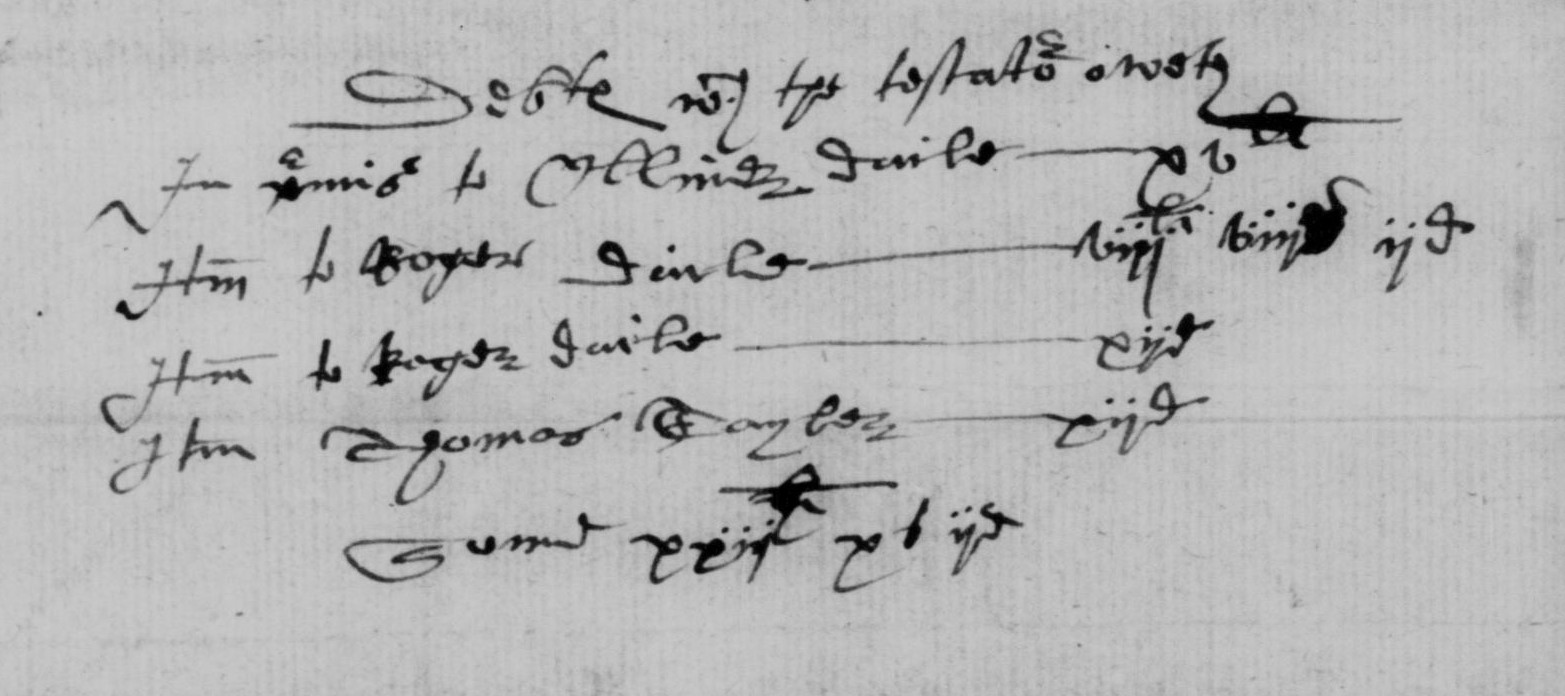
►1595 approx date of one of the earliest or perhaps the 1st ref by name to Cheshire cheese, by medical writer & naturalist Thomas Muffet (1553-1604) in his Health’s Improvement, a popular work on diet written about this date but not published until 1655 § Hugh Bellot (1542-1596), Bishop of Bangor, son of squire Thomas Bellot of Great Moreton, becomes Bishop of Chester (but d.1596) § his brother Cuthbert Bellot is archdeacon of Chester § Roger Wynkell (Winkle) bequeaths an old cow to the children of John Podmore (their mother is Anne Winkle, ?his dtr or neice) § xxmorexx § Thomas Lawton of Lawton, who leaves an interesting will, is not TL of MCxxxxx § Randle Dale of Dales Green dies, & wishes to be buried at Astbury (see above) § his will (made xxxx 1594, proved xxx 1595) divides things between his wife Alice & sons Richard, John & William, Richard also getting ‘one brasse pott beinge the greatest pot that I have’ § presumably it’s the son John Dale & his wife Joan or Johanna who baptise dtr Ellen at Church Lawton (xxx) § Nicholas Hobson marries Margaret Twemlow (‘Twemloe’) at Church Lawton (neice of George Twemlow of Mole) § William Twemlow, son of George & Margery, baptised at Church Lawton (xxx)
►1596 Ralph Sneyd grants an ironstone mine in Tunstall manor to William Bowyer of Knypersley § Hugh Muchell of Moody Street dies (father of millstone maker Richard Muchell, see 1599-1600) § John Rowley marries Margaret Dresser at Biddulph (Aug 8), probably related to William Rowley, though no subsequent mentions of a John & Margaret (WR’s will mentions his brother John Rowley, probably living in Wolstanton parish) § this is also the 1st mention of the name Rowley in Biddulph parish register, where it soon becomes common, as it has long been in Norton parish & the Tunstall part of Wolstanton parish (see 1592, 1598)
►1597—Mainwaring Estate Map of Nether Biddulph Nether Biddulph estate map, a beautifully drawn & coloured map & the earliest for the MC area, made for squire Edward Mainwaring (II) § tenants are listed & their holdings shaded in different colours § it shows, among other things, the bloomsmithy in the bottom of the valley & the Rowleys’ house at the top of the hill § place & field names inc xxx, xxx, xxx, xxx § xxx § xxmorexx § xxx § xx>MOVEDfr abandoned chron>An important and rare source document, the estate map of the manor of Nether Biddulph, belonging to the Mainwaring family, dates from 1597. It shows all the properties and field boundaries, houses, and even the bloomsmithy works in the bottom of the valley near Whitemoor, and lists the names of tenants. One of the most interesting things it shows is the position of the Rowleys’ house (now lost) high up on Mow Cop<
>1597 map field names>Comons / Keen haye (Stubble Keen haye 1840) / Bullhurst (the Bullhurst roe c1680, Bull Hurst 1840) / Rasam medow / Sivage medow / Barn fillde / The brome fellde (the Brome 1363/4, Big Broom Field 1840) / The fromiknowl [?st-] (Olde+Nether Stoneyknowle 1565, Stoney Knowl 1840) / Roe hurst CE (Rockhurst 1565) / The west march CE + The Este March (Over+Nether Marshfielde 1565, Marshfield Gate, Marsh Green) / Wast haye (Wastehaye 1565, ?the Waste 1279) [there’s also an area called The Waste at or nr what’s now Brown Lees] / The Hough / Gillow heath / Whyte more {?tot}
►1597—Closes & Enclosures in the Manor of Rode inventory of fields in the manor of Rode belonging to squire Randle Rode includes a field called ‘the Little Leasowe upon Mole’ § the same inventory includes ‘all lands from Turners Yate to Pevers Yate in Rode’ which may refer to the side of MC, esp perhaps (if connected with an enclosure) the common land above the line of Birch Tree Lane from Drumber Lane to Mow Hollow § the rest are all named ‘closes’ (probably in the vicinity of Rode Hall) plus ‘four parcels of ground below “Maister Rodes Mylne” ’ & the mill § as it appears to be an inventory of demesne fields & land in the squire’s hands it may be connected or contemporary with the enclosure of the common land & open fields (if any) in Odd Rode, which occurs at some unknown date in the 16th or early 17thC & is characterised by use of the word ‘close’ for the newly-made enclosures, a word replacing the medieval ‘hay’ & characteristic ever since of field & farm nomenclature on the Cheshire side of the hill § eg Mow Close (several), Quarry Close, Hatching Close, Horse Close, Moreton Close, Rode Close, ‘the Great Close on Mole’ (1669 etc), ‘the Common Close alias the Tenants Close’ (1647 etc – the one set aside for common use, later Fir Close; cf 1236) & later names inc Close Lane & Close Fm § § ‘the Common Close alias the Tenants Close’ (1647 etc, but not listed here) is the one set aside for common use by tenants or inhabitants who have common rights, as required by the law of 1236; it’s latterly known as Fir Close) § xx{cf Katherine Cartwright d.1633 holding the GrtClose}xx
►1597 The Herball, or, Generall Historie of Plants published in London by Nantwich-born botanist John Gerard (c.1545-1612), the most comprehensive & influential of the early botanical encyclopedias, inc their ‘virtues’ ie medicinal uses § Gerard’s parentage is not known but his coat of arms shows he’s of the same family as Sir Gilbert Gerard § Dieulacres acquired by Thomas Rudyard of Rudyard § Roger Dale (?same as 1570, or jnr) mentionedxxxxx § Richard Wearhame of Church Lawton parish lists in his will (made April 30) 2 debts he owes, 1 of which is ‘unto george Twemlowee [sic-check] de mole’ 20s – 1st explicit mention of George Twemlow being of Mole; while 1 of his appraisers (compilers of his inventory, dated May 4) is John ‘Temlowe’ § another MC ref occurs in the will (made Oct 22) of William Smith or Smyth, a large yeoman of Moreton township, though 1 of his executors being John Cartwright [presumably of Alcumlow] might place him on the Alcumlow side of the township § the long list of debts owing to him incs ‘Thom[a]s Rathbone und[er] mole senio[er]’ 9s – at least 4 TRs occur over the next few decades, both in Odd Rode & Moreton townships as well as in Kidcrew (the most likely is.....(see esp 1613) § Richard Stonhewer or Stonyer of the Hurst dies xx?no burxx(July/Aug) § he is the 1st generation in the 1665 heralds’ visitation of Staffs family tree, showing 4 generations from Thomas (III) back to Richard, also containing a coat of arms, ref to a portrait of Richard, & giving his death as xxx aged 81, the info supplied by John of Uppington (see 1665)>copiedfr 1516>his death presumably from family memory given there as c.1605 aged 81, hence adjusted to actual d.1597 gives b.c.1516, though the age is probably as inaccurate as the date [81 is more likely to have been Anne’s age, living 18 years after her husband & her last child b.1570 ie b.c.1530] § (chn b1550s---70, wife d1615, eldest son d1601 [hence more realisticly ?bc.1525/35])< § his will (made July 12, inventory Aug 19, proved Aug 25) leaves son ffrannces a twinter heifer & [married] dtrs Jone, Margerye & Isable token amounts of money [ie these 4 have already been provided for], the rest to ‘Anne mye wyff’ for life & then to younger children Richarde, John, Thomas & Ellen equally § Anne is executor, ‘Cosen’ William Thorley & son-in-law John Wynckle [Margery’s husband] overseers, witnesses William Thorley, John Wynckle, John Tomkynsone (presumably of Hay Hill d.1636; the connection is that JT’s mother is William Thorley’s sister) § his inventory is made by John Bayley ‘thelder’, Richard Wynckle ‘of the myle’ [sic, ?mill; probably the same as RW of the Pool, millstone maker (see 1599-1600), father of son-in-law John], John Bayley ‘thonger’, John Wynckel [sic] ‘of the more’ § it has all the usual household & farm things, the animals inc 7 keyne & 20 sheep, total valuation £36-3-4, a yeoman status house & farm although he calls himself husbandman [not really consistent with having a coat of arms & a portrait; John of Uppington is claiming descent from armigerous gentry] § both will & inventory give his name as ‘Richarde Stonyer of the Hurst’ § his wife Anne or Agnes (nee Meate) makes her similar will 1599 & d.1615 § Roger Stonier or Stonior of Wedgwood township dies, his will (made July 20, inventory Aug 1, proved Aug 2) indicating that he is either a millstone maker or involved in the business – John Podmore & Hugh Lowndes each owe him 24/4d for half a millstone, suggesting they’re business partners or joint makers (millstones are often made by 2 men; obviously the one who has it, or sells it, will owe the other for half) § he’s the only?? Stonehewer at this late date that can be shown to be a millstone maker § xxmorexhis debts owed by him inc to Richard Stonior [probably the 1 who dies later the same month, above], xxx, Robert Hodgkinson [a relative, see 1599]xx< § Richard Bolton dies, his willxxxxx § § approx date that Ralph Wedgwood marries Margaret Winkle, dtr of Richard & Margery Winkle (Wynckle) of the Pool [dtr Joan bap.Aug 6, 1599 but son Thomas is older hence b.1597/98] § although no marriage record has been found Richard Winkle’s 1599 will (see 1599-1600) refers to his dtr ‘Margarett Weadgewoodde’, as well as to his millstone works ‘uppon the hyll’ – a tangible connection between the Wedgwoods & MC quarrying § Richard Cartwright marries Anne Cartwright, dtr of Ralph & Cicely, at Astbury (Jan 30) – possibly Richard of Mole End (see 1605, also 1604)
►1597-99 scarcity or famine reaches the British Isles, part of a wider European famine or series of famines through most of the 1590s
►1598 concept of workhouses introduced by Poor Relief Act, tho the original sense is a place where able-bodied poor can be given work rather than a residential institution § even as the latter concept evolves +when-ish?+, until the 19thC they are generally small buildings accommodating a handful of people, not unlike alms houses, supplementing rather than central to the system of parish poor relief § William Dale of Dales Green, nailer, accused of assaulting Thomas Milles or Mylnes with ‘A naile rodd redd hott with fyre’ § Raphe Jaxson of Congleton Edge, millstone maker, referred to xxxxx (probably the same person as Raphe Johnson in 1587; & cf 1675) § Richard Wedgwood churchwarden of Biddulph § Lawtons of Lawton acquire further property in Brieryhurst § squire John Lawton dies § squire John Moreton, responsible for the long gallery at Little Moreton Hall, dies (Dec) § his inventory (1599) gives important insight into LMH as a lived-in house, though only 3 of the items of furniture remain today § squire Francis Biddulph, builder of Biddulph Hall (see 1558??), dies § under his successor Richard Biddulph (1560-1636) the family’s reputation as die-hard Catholics & harbourers of illicit priests etc becomes established (see 1613, 1626, 1636 & cf 1642—Strange Newes) – the usual assumption that the Biddulphs are among those who defy the Reformation & remain loyal to the old Catholic faith is incorrect, Francis (tho I can’t speak for his wife) has been a conformist, an active magistrate, & at times custodian of his recusant son, who with his wife Ann (nee Draycott) has increasingly become a Catholic extremist, guiding 3 of their sons into the priesthood (see esp 1613) § Richard Podmore marries Ellen Findloe at Wilmslow (Oct 19), indicating the extent of the Podmores’ personal & presumably business interests in Cheshire (businesses including millstones & coal; cf also 1601, 1602) § earliest Church Lawton baptism by Thomas Rode, the squire’s son, & wife Jane, indicating that they’re living at Hall o’ Lee – dtr Mary (March 31) § James Rowley born, his baptism at Biddulph (June 4) the earliest recorded child of William & Margaret of Mole (married at Norton 1592; there’s reason to think 2 dtrs for whom no baptisms have been found are older than James)
►1599 Anne Stonhewer or Stonier (the will calls her Agnes Stoneor), widow of Richard of Hurst (mother of Thomas of Hay Hill), makes her will (proved 1616, she d.1615 qv) § Richard Wynckle of the Pool, Biddulph, millstone maker, dies (buried May 14) § presumably ?son & successor of Roger Wynkyll (d.1544/45) whose 1544 will bequeaths ‘my gud wyll & tytyll of my w[er]ke or stone myne in co[n]gleton edge’ to his son Rychard § while millstone makers being yeoman farmers live on the lower slopes of the hill it’s perhaps surprising to find one entirely off the hill (the Pool is presumably Poolfold), though the Winkle family itself crops up all over Biddulph parish & has close connections with MC families such as the Podmores & Wedgwoods § Hugh Lowndes dies, co-founder of the Lowndes family of Old House Green § Anne Stonhewer or Stonier, dtr of Roger of Wedgwood (d.1597, millstone maker), marries Robert Howchkinson at Biddulph (July 2) – ancestors of the Hodgkinson family of Hall o’ Lee, Corda Well, etc § Thomas & Jane Rode of Hall o’ Lee baptise dtr ‘Aloici’ at Church Lawton (April 9) § Anne Podmore born, 1st child of Richard & Ellen, & baptised at Biddulph (Nov 26) § Joan Wedgwood born, dtr of Ralph & Margaret, & baptised at Biddulph (Aug 6) § John illegitimate son of William Burslem & Margery Rowley baptised at Biddulph (June 7; presumably John Rowley alias Burslem f.1629) § note the connection between the Rowleys & Burslems of Oldcott Park, of whom the Rowleys & Burslems of Mole are branches (& cf 1544, 1655)
►1599-1600—The Mylstone Worcke Uppon The Hyll two millstone makers die, Richard Winkle & Richard Muchell, leaving evidence of their trade in their wills &/or inventories, both of them whether by chance or common parlance referring to ‘the hill’ but not naming it – unusual in formal documents, but representing the authentic local colloquial name for the hill (cf 1593—Thomas Robinson, c.1200—The Name) § Richarde Wynckle (Winkle, Wincle, etc) ‘of the poole’, Biddulph [?Poolfold] dies in May 1599, & is buried at Biddulph (May 14 as ‘Richūs Winkcle de Poole’) § the 1st bequest in his will (made May 6, ‘sycke in bodye’, proved May 21) reads: ‘I geve and bequeathe unto my son[n]e John wynckel, all my yron Tooles, or instruments belonginge unto my woorcke uppon the hyll, and all my husbandrye ware whatsoever, after the deceasse of me, and my wyffe’ § the word work at this period carries a meaning similar to later ‘works’ (as in gasworks, ironworks) & is routinely used of a quarry or quarrying concession § his inventory (May 15, 1599) by William Thorley, Frannces Stonier & John Wynckle incs ‘the yron ware p[er]tey[n]inge unto the mylstone worcke uppon the hyll’ (lumped with husbandry & household ironware, a mere 6s 8d the lot) § the rest of the inventory is the usual household things & a reasonable number of all the usual animals (justifying his calling himself a husbandman) inc 5 keyne & 4 stires (together £27-6-8, by far his most valuable possession as cattle often are) & 10 sheep, ‘wt the salt meatte’, total valuation £42-5s § the requirements of a probate inventory & valuation mean that at least 1 of the compilers named must also be a millstone maker – son John obviously, but perhaps also Stonier [Francis Stonehewer of Hurst d.1601 brother of Margery, John Winkle of the Poole’s wife] § his will lists dtrs Joan[n]e Cooke, Ellen Leyghes, Anne Parker (token 12d each) & the main beneficiaries wife Margerey & 3 more dtrs Isabell Wynckle, Margarett Weadgewoodde, Jane Wynckle § other small beneficiaries are Margarett Cooke, nephew & godson John Wynckle, Appollayne Shawe, all his grandchildren (6d each), Jane Wynckle (a heffer) [?the dtr] § executor is his wife, overseers & witnesses Richarde Baddeley clerk [vicar of Biddulph], William Wynckle of Knypersley, son-in-law John Cooke § the dtrs are probably in age order, the reason for the distinction being that the older married 3 have already received dowries, the 2 unmarried haven’t & are still dependents, while Margaret Wedgwood [wife of Ralph of MC] is only recently married so presumably hasn’t received her share yet § the link with Ralph Wedgwood (see 1622) is 1 of the important things we learn from this document, being a tangible connection between the Wedgwoods & quarrying or millstone making, plus a strong hint that Ralph may have worked in this field, as being a younger son like his brother Gilbert (founder of the potting dynasty) he had to find a livelihood, & is variously called a husbandman & a labourer § Richard Winkle is a grandfather with 4 of his 6 dtrs married, the eldest Joan Cooke baptising from the 1580s, Margaret married c.1597, so he’s probably b.1530s – possibly the son & heir Richard of quarryman Roger Winkle (d.1544/45 qv) but more likely a grandson § Richarde Mucchell (Muchell) of Biddulph [Moody Street] dies a year later in May 1600, & is buried at Biddulph (May 27 as ‘Richūs Mucchell husbandmā’ later altered to Mutchell) § he didn’t make a will but administration is granted (to whom not known) on June 9 after submission of an inventory (May 29, 1600) by Thomas Roker, John Butterto[n], Richarde Choulkeclought [Colclough] & William Stonhewer which incs ‘all his twoelles yt hy dyd wourke wt in ye hill & all his mylnes stonnes’ (£3) § the rest of the inventory is the usual household & husbandry things & a reasonable but not large stock of animals (the burial register calls him husbandman), plus the lease ‘of his howse & his Bytacckes’ [?dialect tack=leasehold tenure], followed by lists of 5 people who owe him money & of 12 debts that he owes; no total valuation is given<ch § his debtors inc ‘Richarde barlowe of winckell’ 22s [?for a millstone], & his own debts (which are larger) inc to Rycharde Stonhewer, Jone Twemloe (see 1600), brother John Mucchell, Margarett Mucchell ‘my mother’, & Richarde Choukeclought {wfJoan poss his sister...?} § Richard Colclough [of Biddulph House, Brown Lees] & one of the other inventorisers Thomas Rooker are both known millstone makers (see 1636, 1580, 1593), & the Muchell family’s connection with millstone making continues over a long period (eg 1670, 1732) § (for John Butterton see 1617) § Richard Muchell is a youngish man, no baptism found but siblings Joan & John b.1559 & 1562, parents Hugh & Margaret (d.1596<ch-reg+m? & 1606) § the senior line of Muchells live for several centuries at Moody Street (Fm), on the lower slopes & on the edge of what we (artificially) define as MC for historical purposes; while the Pool where Winkle lives is presumed to be Poolfold (rather than Newpool), hence a millstone maker living beyond the foot of the hill, further out than expected § Biddulph parish’s reputation for stone masons is borne out by the relatively high number not just of masons but of millstone makers or quarrymen that emerge from the records at this period, relative both to its low population & to the other segments of the hill, the more populous being that in the neighbouring Wolstanton parish while the main millstone quarrying sites are in Wolstanton & Odd Rode § xx
1600-1627
►1600 population of England estimated at 4·12 million § Newes Out Of Cheshire of the new found Well, a pamphlet printed in London, with illustration, gives accounts of many cures recently effected by a healing spring at Utkinton nr Tarporley, on the edge of Delamere Forest, even of blindness § word spreads quickly after a local man is cured of ague or fits, & those who flock to it inc a blind man from Derbyshire, ‘Master Haworth of Congerton’, ‘Mistres Drakeford of Congerford’ § the spring actually has a longer history as a holy well, known as St Stephan’s Well, which had presumably lapsed with the Reformation; it still exists, known today oddly as the Whistlebitch Well § Richard Mucchell of Moody Street, millstone maker, dies (buried May 27) § his inventory by Thomas Roker, John Butterton, Richarde Choulkeclough [Colclough], & William Stonhewer includes ‘all his twoolles yt hy [d]yd wourke wt in ye hill & all his mylnes stonnes’ § Rooker & Colclough are involved in the millstone industry too (see 1580, 1636) § Richard Wedgwood (III, presumably) licensed as a ‘badger’ (usually a travelling food seller) § approx date of Edward Lowndes marrying Joan Kent of Kent Green, & settling at Old House Green if he & his parents aren’t already living there (see c.1565) § approx date of Edmund Antrobus of Peover marrying Jane Cartwright, dtr of Richard & Katherine, & settling at Kent Green, founding one of the most influential families in the area for several generations, who rise from yeoman to gentry status § it’s not certain if Jane is from Bank or Kent Green (Richard of Kent Green d.1615), though her family certainly have property on the hillside (see 1633) – it’s likely that (before canal & railway create an obvious division) the name Kent Green is applied less restrictively inc to the lower Spring Bank area § Thomas Taylor marries Joanna (Joan) Twemlow at Biddulph (Nov 3), the parish register calling him husbandman, he’s also a widower (as his eldest dtr Anne Pickering is certainly older; see 1617) § Joan is related to George Twemlow of MC or his wife Margery (nee Twemlow), tho too old to be their dtr § approx birth date of Thomas Rode (millstone maker; see 1628, 1647, 1670)
►1601 Poor Law Act xxxxx § xxxbasis of poor relief methods used by parishes until 1834 § John Podmore headborough of Stadmorslow § his presentation to Tunstall manor court mentions Stadmorslow residents inc William Burslem snr & jnr & John Burslem, William & Richard Drakford, John Colton snr & jnr & James Colton [Caulton], Ralph Wedgewood, Oliver Dale, Richard Knight, ?John Rowley, ?Hugh Sherratt § no presentation for Brerehurst (cf 1603) § list of Tunstall manor suitors who have not sworn allegiance to Queen Elizabeth includes Oliver Dale § John Podmore leases a tenement in Stadmorslow township to Robert Foden of Chorley [presumably the one N of Macclesfield] (another indication [cf 1598] of the Podmores’ Cheshire connections, probably related to coal supply) § Francis Stonhewer or Stonyer dies, eldest brother of Thomas of Hay Hill § his executors are William Stonyer of Wedgwood township & George Stonyer of Astbury, indicating that the Stoniers establishing themselves in neighbouring parishes are still considered close relatives of the senior Biddulph line [?probably nephews of Francis] § Ralph Cartwright who marries Joan Hildych at Barthomley (Nov 7) may be Ralph jnr of Bank f.1604, parents of Ralph, Edmund, etc § the Hilditch family is well-documented at Alsager (in Barthomley parish) at this period, & Randle Hilditch f.1664 later lives in Odd Rode § William son of William & Grace Slade born § Jane, first child of Edmund & Jane Antrobus, born, her baptism recorded at Astbury Feb 23 & Church Lawton Feb 24
►1602 famine in England § Newcastle grammar school founded § Richard Whelocke dies {+say where-Wolst?xx} (cf 1612) § Richard Podmore (II) born, & baptised at Church Lawton (Aug 24) § Thomasine or Thomasina Lowndes (II) born
►1603—Tunstall Court Roll & Lists of Suitors Richard Cawton [Caulton] (April) & Richard Dale (Oct) headborough of Brerehurst, Roger Frost (April) & John Cawton (Oct) headborough of Stadmorslow § interesting lists of suitors (inhabitants owing appearance at the manor court) at the April & October courts (lists follow for Oct 6, with names exclusive to April thrown in) § [note that such lists aren’t complete lists of inhabitants as they’re lists of those who didn’t come to court, plus certain malefactors] § Brerehurst township: Richard Dale (headborough); Richard Cawton [Caulton], William Colcloughe, Thomas Colcloughe, George Twamlowe, John Wilkinson, Hugh Wilkinson, Richard Wilkinson, Richard Stonyer, Richard Gregorye [sic, -ie in April], John Gybson, John Brooke, Richard Wildeblood (essoins); William Gybens, William Boughe (defaulters); George Twamlowe, John Kent, Gilbert Hill, William Gybson, Richard Gregory [sic, -ie in April], Robert Lawton gent, John Brooke, William Boughe (encroachers); John Unwyn, John Dale (default in April, not mentioned in Oct) § Stadmorslow township: John Cawton (headborough); John Cawton snr, John Cawton jnr, Francis Drakforde, Richard Drakford, John Mollett, Ralph Wedgwoode (essoins); James Cawton, William Burslem jnr, William Drakford (defaulters); John Jackson (breaks the assize); John Jackson & Ralph Porter (affray on each other); Roger Frost (headborough in April, not mentioned in Oct); Hugh Sherratt (one of several encroachers in April, not mentioned in Oct); John Podmore (also mentioned); Richard Podmore snr (mentioned in April, jnr not mentioned)
►1603 earliest mention of George Twamlowe (Twemlow) as a resident of Brieryhurst (Tunstall court roll), also fined for encroachment (see above, both courts) § of the other encroachers (listed above) John Kent, Gilbert Hill, Richard Gregorie/Gregory are certainly of Mole § Queen Elizabeth dies (March 24) & the English & Scottish crowns are united under her successor § Sampson Erdeswick, Staffordshire’s earliest topographer & antiquarian, dies (see 1598, 1717, xxx) § John Wedgwood, son of Richard & Margaret, marries Anne Lowndes, daughter of Hugh & Thomasina § Randle Rode born at Hall o’ Lee, son of Thomas & Jane & grandson (in 1608 successor) of squire Randle Rode, & baptised at Church Lawton (March 24, 1602 OS, ‘Ranulphus’) § this is the RR who in 1669 sells his share of the manor & title to the Wilbraham family & retires to Little Moreton Hall, where he d.1684 (qv)
►1603-04 plague at Congleton, Macclesfield, & Nantwich, as well as Chester, Manchester etc & of course London [??notNewc!Bgham?] § the townships of Astbury parish are charged with providing food for Congleton on certain days, Odd Rode’s Wednesday contribution (Oct 5, 1603) being xxxxxxx{seeHead} § 1603-04, 1641-42, & perhaps 1647-48 are probably the most severe outbreaks of bubonic plague in our region since the Black Death, ravaging Cheshire & N Staffs & esp (as ever) the crowded & unsanitary towns, but they’re also the last – after the Great Plague of London & its 1665-66 offshoot at Eyam, Derbyshire the most feared & deadly of epidemic diseases disappears
►1604—Raphe Cartwrighte of Odd Rode Yeoman Ralph Cartwright dies (Oct, between 16 & 24), & wishes to be buried in the church or churchyard of ‘Asburye’ <?fullerQuo § xxx, husband of Cicely & father of Ralph, Richard, John & Anne (who is wife of another Richard Cartwright, probably of Mole End) § xx § his will (made Oct 16, proved xxx)xxx contains a long list of debtorsxxxxxx § xx § the inventory (Oct 24, 2/38 James I [1604]) by John Cumberbatche, Richard Cartwrighte, John Henshawe shows a substantial dairy & mixed farm with plenty farm animals inc 4 oxen & 28 sheep, crops, butter & cheese, 3 ‘swyne trowes’, etc, plus the usual household things, beds, pewter, & a ‘Pack sadell’ § he is the 1st of 4 successive Ralph Cartwrights of Bank, all significant & influential yeomen, though whether the 1st Cartwright there is uncertain, his mother Margery may have lived there (see 1572-73), Ralph being her main heir § § witnesses are John Cumberbatche, George Stonyer ‘thelder’, James Clowes ‘thelder’ (see 1605) § § xx
>copy>WILL Oct 16, 1604 ‘Raffe Cartwrighte thelder of Odd Rode ... Yeoman sycke in bodye but of good and pfect remembrance’
to be buried in the church or churchyard of ‘Asburye’
wife Cyslye / Cyssley [Cicilia in Latin parish regs, usual English spelling Cicely]
‘Raffe my Sonne and Richard my sonne’ – all goods etc ‘at my howse & ellswheare’ divided between them & Cicely + Richard £20
son John – 6/8d ‘in full dischardge of his Chillds pte’
dtr Anne – ‘my beste Panne’
Anne’s dtr Grace – £3-6-8
‘Thomas Cartwright, my Grandchillde’ – cow
‘Thom[a]s my base sonne’ – 6/8d [no surname]
John Taylyer & his wife Ellen, their dtrs Joan & Margaret [poss ?son of TT d.1617; note the MC/Bidd spelling of the surname]
‘Margaret Cumberbatche my Servaunte’
godchildren
executors – wife Cyssley, son Raffe, son-in-law Richard Cartwright
witnesses – John Cumberbatche, George Stonyer thelder, James Clowes thelder
INVENTORY
Oct 24, 2/38 James I [1604] ‘Raphe Cartwrighte of Odd Rode Yeoman’
by John Cumberbatche, Richard Cartwrighte, John Henshawe
plenty farm animals inc 4 oxen & 28 sheep, crops, usual household etc things, pewter, butter & cheese, ‘Pack sadell’, ‘iii swyne trowes’, etc
no total & amounts not all clearly legible, but comes to about £80, not inc the very high value of the debts listed
LIST OF DEBTS
long list of ‘Debts’ [doesn’t say but presumably owing to him – it’d be a crippling amount for 1 person to owe, but in a world without banks large yeomen like the Cs of Bank routinely invest their surplus wealth in loans or credit both to neighbours & business associates – the 3 double debtors & 1 x4 suggest business business, while the Podmores are blacksmiths & millstone makers, & Rooker a millstone maker (later RCs are certainly involved in millstone-making partnerships & also as agents for the squire(s) ie arranging business deals, leases, etc)x] as follows:
• James Brooke – largest £30 – Brooke is a common surname around the hill in this period, esp on the Cheshire side, some of them as here closely associated with MC people, none having been pinned down as actually living on the hill, tho it’s likely
• George Stonyer – £20 – also witness
• Robert Mathewe – £24
• Richard Cartwright – £10 – xxxxxx
• William Podmore & John – £9
• Mr Moretone [squire, William, of Little Moreton Hall] – £8
• Thomas Sharman – £20
• Thomas Rooe [sic; Roe, of Moreton, a blacksmith] – £6 – xxx
• William Ameson Thomas Deane John Brooke James Brooke – £7-13s
• Thomas Rooker – £3-7-8d – xxxx
• John Podmore Francis Drakeford – £4
• William Scllade [Slade] – 50s – xxx
• Richard Cartwright Kennt greene – 40s
• Rodger Harrison William Devill – £4-13-4d
• John Porter – 17s – xxx
• John Stevenson – 20s
• John Podmore – smallest 6s
• Robert Spencer – 19s
comes to £154-6s [a very large amount]
►1604 stringent laws against witchcraft introduced, inc conjuring evil spirits & making pacts with the devil, with the death penalty for intentionally causing harm by witchcraft (repealed 1736) § Jesuits & Catholic priests ordered to leave the country § reference to an unnamed ‘Reader without Orders’ (ie lay) being in charge of Thursfield (Newchapel) chapel § Richard Calton or Caulton of Brieryhurst<ch (son of John d.1575) dies, his will (xxxxx) mentioning a debt to George Twemlow of 5/2d and 2 trees § xxx?morexxx § Thomas Bullocke dies at Bullocks House, but is presumably TB of Mole (see 1590, & cf 1612) since his inventory contains millstonesxxx § xxx § supposed death date of Mary Lawton (nee Maxfield), squire William Lawton’s wife – cf 1606 § squire Sir John Bowyer of Knypersley dies, succeeded by his under-age son William (1588-1641), who is supported by his uncle Francis Bowyer (see 1634) § William Podmore born § William Rowley (II) born § William Wheelocke (etc) born, son of John & Elizabeth of Bacon House § Hugh Lowndes (II) born
►1605—Gunpowder Treason And Plot a Catholic conspiracy to blow up the king & leading nobles & politicians at the state opening of parliament (Tues Nov 5) fails, & becomes one of the best-known events in British history, its memorialisation promoted almost immediately, each anniversary of ‘Gunpowder Treason & Plot’ from 1606 marked by bonfires & ringing of church bells § ‘Remember remember the fifth of November, | Gunpowder treason and plot. | I see no reason why gunpowder treason | Should ever be forgot’ (derived from a Latin verse written by John Milton) § the leader of the plot Robert Catesby dies resisting arrest in a gunfight at Holbeach House nr Kingswinford, Staffs (Nov 8) § proprietor of the house Stephen Littleton is executed at Stafford in 1606 § but the name popularly associated with it is Guy Fawkes (1570-1606) because as the blasting expert he stays with the gunpowder to set it off & is caught red-handed, accounts of his interrogation & confession being quickly published § he isn’t burned (hung, drawn & quartered, the usual punishment for treason), but the commemoration is to burn him in effigy on top of a bonfire, ‘Guy Fawkes Night’ or Bonfire Night proving remarkably enduring, partly because it succeeds to an existing ancient tradition of bonfires at the quarter day of Samhain/Hallowe’en, while processing the effigy around the community & door-to-door begging of ‘a penny for the guy’ merge with a seasonal begging custom (wassailing, souling, etc) as well as the ancient practice of displaying the scapegoat § eventually in the 19thC it ousts the MC folk custom of souling (All Souls being Nov 2; see 1865, 1869) § its other secret of longevity is that, although nominally anti-Catholic, the commemoration is politically non-partisan – Royalists celebrate it as a failed attempt on the king, Parliamentarians & even Puritans as a failed attack on parliament § Jesuit John Gerard, who escapes to the Continent, is one of the priests involved; he has close family connections to Biddulph (see c.1613, 1554) § the government knows the plot is confined to a bunch of headstrong malcontents & that a backlash against Catholics will be counter-productive, so it refrains from a witch hunt & its tightening of the existing penalties & restrictions on recusants is measured (see 1610) § xx
►1605 ‘Remember remember the fifth of November, | Gunpowder treason and plot’ (Nov 5, see above) § several of the conspirators have Staffs connections, inc Stephen Littleton, executed at Stafford in 1606, & Jesuit priest John Gerard, who escapes to the Continent (see c.1613) § commemoration of the event is promoted almost immediately, notably by burning an effigy of one of the conspirators, Guy Fawkes, on top of a bonfire, ‘Guy Fawkes Night’ or Bonfire Night proving remarkably enduring, eventually in the 19thC ousting the MC folk custom of souling (see above & 1865, 1869) § plague at Chester again § John Whillock churchwarden of Biddulph § two Richard Cartwrights living in Odd Rode township, at Kent Greene (d.1615; cf 1574) & Moule End, are among the appraisers of the goods of John Sherratt of Church Lawton parish [probably Grindlestone or Moss] § Thomas Rode of Hall o’ Lee dies § an inventory (no will) survives – ‘Thomas Rode late of the hall of lee in the Countye of Chester gent[abbrn mark] deceased’ – made March 2, 1604 OS by Thomas Cliffe, James Brooke, Richard Cartwright, William Turner [RC of Mole End is nearer than RC of Kent Green, but not much] § he has lots of livestock, plus crops, ‘cheeses’, ‘one pot of honie’, ordinary household things but hardly any furniture [ie it belongs to either the Leighs or his father], & nothing conspicuously wealthy except 6 silver spoons & ‘one byble’ (no total valuation is given, about £150 or so) § his father squire Randle Rode transfers land belonging to ‘Leigh Hall’ to his widow Jane, with a list naming 14 ‘closes’ (she stays at HoL & d.1632; their son Randle (1603-1684) succeeds his grandfather as squire 1608) § James Clowes marries Emma (‘Emota’) Rowe at Astbury (Feb 2), presumably<ch-will! dtr of Thomas Rowe or Roe of Moreton, blacksmith (who d.1627) § probable/approx date of their son James Clowes’s birth (apprenticed to William Dale 1618) § James Clowes has doubtless been an apprentice of Thomas Rowe, & is perhaps the 1st of the dynasty of blacksmiths (see 1660—Poll Tax, 1698—Richard Clowes), though his father is James Clowes ‘thelder’ (a witness to Ralph Cartwright’s will 1604) § approx/possible birth date of John Mottershead, if he’s the subject of this Biddulph baptism: ‘Johes filius Richardi Turnor, alias Mothershead, vel Mother=shawe pochiae de Prestburye, et Ellenae Wheellocke pochiae de Asburye’ (March 1, 1604 OS; see 1628, d.1637)
►1606 approx date of the manor house or hall at Great Moreton, built by squire Edward Bellot (d.1622; the house demolished c.1840) – timberframe like its famous neighbour, though of more conventional appearance{NB:formerly said JohnB but Edwd accNickKingsley’s geneal,&others—changed!} § Pevsner points out that the boathouse is embellished with re-used Jacobean stonework, suggesting some part of the old hall is stone-built § ‘The hall of Great Moreton is a spacious building of timber and plaster, finished with gables in the style of the early part of the seventeenth century. It has been of late much altered, and previous to these alterations windows of comparatively modern appearance had been substituted for the original ones, and the timber-work concealed by stucco.’ (Ormerod, 1819) § Richard Wildblood headborough of Brerehurst (& 1607) § Margaret Mutchell or Muchell of Moody Street dies § Richard Wedgwood (III) marries Ellen Boothes at Biddulph (Sept 21; he is the one who as a child was supposed to marry Anne Stevenson or Stenson, see xx1579xx; he’s in his mid or late 30s before he actually marries) § Anne daughter of John Lawton ‘de mole’ baptised at Church Lawton (Oct 8), earliest explicit mention of the Lawton family as of Mole (though they’ve been there for a generation or probably more, see 1588, 1556; presumably the same John Lawton as the 1617 cottage lease) § this is also the earliest of many mentions of Mole in Church Lawton parish register – Lawton church esp at this period serves many from neighbouring parts of Astbury & Wolstanton (& Audley) parishes, being nearer than their own parish churches, & esp in areas where the Lawton family has property & influence § future squire John Lawton born (see 1617—A Child Marriage)
►1607 Oliver Dale headborough of Brerehurst (second half) § Margaret Stonhewer, ?1st wife of Thomas, dies § baptism of John Barlowe at Astbury is very probably JB of the Drumble (m’d 1634 d.1672; no parents given) § William Antrobus of Kent Green born § Richard Wedgwood (IV) born, & baptised at Biddulph (July 12) § Thomas Podmore born
►1608—Battle of Pinch Ridding dispute over (?access to) a coal mine in Pinch Ridding between the Podmores of Mole (operating the mine) & the Colcloughs (owners of the field), including several alleged assaults & a mob attack on the mine § records of the dispute include rare info about an early mine (a bell pit with a windlass), & some of the earliest refs to workmen identifying themselves as ‘collier’ – Richard Wildblood, Robert Gibson, William Frost, Thomas Shawe, John Meere of Audley parish, Richard Edge jnr of Tunstall (latter on the Colclough side) § the mine belongs to John Podmore & is worked by his sons Richard Podmore, blacksmith, & John jnr, plus labourer Thomas Fletcher § the Colcloughs are John of Broadfield (head of the family) & William & Richard of Hayhead § William Dale (of Dales Green) is one of the Colclough mob, otherwise the MC people are on Podmore’s side, supported by several leading yeomen § the full list of those named on the Podmore side is John Podmore snr (of Mow House), Ann Podmore his wife, Richard Podmore, John Podmore jnr, Grace Slade, Richard Wildblood, Robert Gibson, Ralph Wedgwood, Thomas Fletcher, William Frost, Roger Frost, Thomas Shawe, Edward Drakeford (of Stonetrough), Nicholas Hobson, John Burslem (of Biddulph psh), John Rowley (of Turnhurst), John Meere (of Audley psh), Thomas Hurst (of Newbold) § in spite of the attack on their mine it is the Podmores who are summoned to the Quarter Sessions, though the outcome is not known § Pinch Ridding has not been located but is evidently on the Dales Green/Rookery slope, ‘ridding’ suggesting a clearing of former wooded parkland (& see 1611, 1615 for leases to the Hancock family)
>MOVEDfr abandoned chron>The record of this dispute is the first record of men in the area using the occupational designation ‘collier’. In other words, as well as our clearest description of a primitive coal mine it also provides evidence that coal mining was coming to be seen as more than a casual or occasional activity for farmers and their labourers, and gives us the names of some men (8 plus Thomas Fletcher, the labourer who was chased away in the attack) who could reasonably be called colliers, as distinct from the traditional designations of husbandman or labourer. The earliest parish register appearance of the occupational term is 1647, indicating how early 1608 is. The traditional meaning of collier (Latin carbonarius) had been a charcoal burner, hence the distinguishing terms became wood-collier and ground-collier, though neither are in fact much used since coal mining became so common in the 17thC<
►1608 John Sherratt & Richard Wedgwoodd [of Mole] stand sureties for James Procter as a licensed victualler in Biddulph; William Gibson & William Frost [of Mole] likewise for Thomas Baddeley in Tunstall manor § Joyce Robinson dies (Jan), & is buried at Horton – 2nd wife of Thomas Robinson the millstone maker (see 1593) § her will leaves her possessions to her brother Thomas Lees, with whom she is living at ‘Buckstales’ [in Horton parish; TL d.1625; Leight in Robinson’s will, see 1593] § Thomasina Lowndes dies § her son Edward Lowndes is ‘visited wth Sicknes’ & dies § his willxxxxx § &hers?xxxxx § Richard Maxfield of Trubshaw dies § squire Randle Rode dies, & is succeeded by his 5 year-old grandson of the same name, whose widowed mother Jane lives at Hall o’ Lee § joint squire William Moreton of Little Moreton becomes his guardian (but himself d.1609) § the manor of Rode at RR’s death consists of: 12 messuages, 8 cottages, 4 tofts [?smallholdings, often regarded as decayed messuages], 1 mill, 1 dovecote, 200 acres of land, 400 pasture, 100 meadow, 100 wood, 300 furze & heath § Richard Cartwright marries Elizabeth Lownds [which Richard nk] § Catherine Wedgwood (later Peever) born, & baptised at Biddulph (Aug 17), her godfather Francis Bowyer of Knypersley (1563-1634), uncle of the lord of the manor (see 1634) § her future husband Thomas Peever or Pever, son of William & Mary, born (baptised at Church Lawton Jan 1, 1609)
►1609 Revd Henry Stephenson, vicar of Wolstanton, makes claims in the consistory court (Bishop’s court) of Chester for tithes from Lawton residents William Claiton, Nicholas Hobson, & William Drakeford, evidently those whose property overlaps the county boundary § similar claim by the vicar of Audley against Thomas Cumberbach of Lawton contains 1 of earliest mentions of the Lawton salt industry § William Burslem or Bursleme of Brown Lees dies, his will (made April 4, proved May 19) providing the earliest details of the Burslem family of Brown Lees & Mow Cop § he mentions wife Agnes, dtrs Jhone & An (presumably the unmarried ones), son William & his son John, son John & his children Thomas, William, John, An, Katherene, Elizabethe, son-in-law Thomas Bowyer [husband of Katherine] & his children § debts owing to him inc from William Podmore, Olliver Dale, his brother-in-law Prynce, John Rowley of Wedgwood § squire William Lawton marries his 3rd wife Eleanor or Helenora Maxfield, sister of John Maxfield of Trubshaw (called sister in his will – not his sister-in-law Eleanor, née Hancock, widow of Richard d.1608) § (she f.1633 but no bur found) § she is thus step-mother of the young squire John Lawton (see 1617) § (WL’s previous wife was Mary Maxfield of Chesterton, also a ?sister or aunt of John of Trubshaw – which may be the connection that brought the Maxfields to Trubshaw) § William Lawton born, son of John of Wolstanton parish, & baptised at Church Lawton (WL of Mole the millstone maker who d.c.1655; & see 1617, 1665-66) § Thomas Rowley born
►1610 new oath of allegiance recognising the king’s supremacy, devised after the Gunpowder Plot, enforced, & Catholic priests & Jesuits ordered to leave the country § {??}John Speed’s map of Staffordshire shows ‘Mowcopp Hill’ very prominently, plus several smaller hills unnamed in the vicinity of Cloud & Biddulph Moor § John Speed’s Cheshire map also shows MC large & ruggedly conical, but not named! while ‘Whelock flu.’ takes the northern route, passing ‘Kent Greene’ § approx date sometimes cited for the glassworks in Biddulph, though it’s probably earlier (see c.1580) § Richard Podmore headborough of Stadmorslow & Richard Dayne or Deane headborough of Brerehurst § earliest mention of the 1st John Twemlow of Mole § Thomas Stonhewer marries Isabel Boulton, dtr of John (d.1587) & Elizabeth of Gillow Heath Head [Elizabeth re-m’d his older brother Francis Stonhewer, see her will 1613!] § John Wedgwood, son of Ralph & Margaret, baptised at Biddulph (Jan 14, hence b.1609/10) § Thomas Wedgwood, son of Richard & Ellen, born (baptised at Biddulph Jan 1, 1611 NS) § approx birth date of Robert Podmore (later of Congleton) § approx birth date of Margaret Gibson (later Mottershead & Hopkin, d.1683)
►1611—King James Bible King James Bible or Authorised Version completed, the official Anglican Bible & standard English translation hereafter § after several earlier translations that have limited impact & distribution, the AV commands unchallenged acceptance as the definitive English Bible for 350 years, & has not been eclipsed by modern translations § as well as establishing a distinctive religious or Biblical idiom, it achieves the Shakespearian paradox of being sublimely poetic while at the same time speaking the language of the common people, its archaisms & ‘thee & thou’ dialogue often matching the way an ordinary Staffordshire person speaks in the 17th to 20thCs – a feature not irrelevant to its impact upon them, their devotion to it & to fundamentalist Biblical religion § another effect is the adoption by dissenters & the working class of Biblical Christian names not hitherto much used in England (see c.1616), a phenomenon that goes deeper than just picking names out of a book – the stories, moral values & archetypes represented by such figures as Abraham, Joseph, Moses, Sarah, Hannah are now available at 1st hand, easy to identify themselves with, & now & then reveal a God greatly more sympathetic to ordinary folk than any priest ever told them: Hannah’s God, she says (for instance), ‘maketh poor, and maketh rich: he bringeth low, and lifteth up. | He raiseth up the poor out of the dust, and lifteth up the beggar from the dunghill, to set them among princes, and to make them inherit the throne of glory’ (I Samuel 2:7-8)
►1611 Ralph Sneyd buys the former Hulton Abbey from the Aston family (who acquired it after the dissolution) § William Rowley churchwarden of Biddulph § William Frost headborough of Brerehurst § John Maxfield of Trubshaw among the encroachers in Brerehurst township – significant because Trubshaw is in Thursfield township, so this may well be the origin of the family’s holding at Maxfields Bank, MC (see 1659) § Richard Colclough demises half of Pinch Ridding to John Hancocke, nailer (son of Laurence) (see 1615) § first mention of name Hay Hill § Thomas Stonehewer or Stonhewer (II) born, & baptised at Biddulph (Oct 13), later of Hay Hill tho his baptism says ‘de Hurst’ § an interesting baptism entry in Biddulph parish reg reads ‘Josua filius Francisci Bristowe et Annae ...’ (March 10, 1610 OS) – it may be the only documentary ref yet found to glassmaking in Biddulph, Francis Bristowe being a well-known but somewhat peripatetic ‘Broadglasmaker’ who crops up in various places, finally founding the glasshouse at Red Street & dying there in 1645, his son Joshua one of his successors § an early local example of a Puritan/Biblical Christian name (see c.1616), Joshua is used in the Henzey family of French glassmakers who came to England in 1567 & later operate glassworks in mid & South Staffs § no other Bristowe (or variants) appears in Biddulph parish reg so he’s there only briefly, possibly towards the end of the enterprise, but it shows that the Biddulph glassworks has links to the widely scattered glass industry of the time as well as providing an unexpected connection to the later Red Street ‘Glasshouse’ (see c.1580, 1645, 1668)xx
►1612—Drayton’s Poly-Olbion Michael Drayton (1563-1631) publishes his long topographical or ‘chorographical’ poem Poly-Olbion which mentions Molcop & illustrates it prominently on the accompanying map § the ref is in the 11th song, re Cheshire, in course of describing the boundaries or extent of the county § ‘O! thou thrice happy Shire, confined so to bee | Twixt two so famous Floods, as Mersey is, and Dee. | Thy Dee upon the West from Wales doth thee divide: | Thy Mersey on the North, from the Lancastrian side, | Thy naturall sister Shire; and linkt unto thee so, | That Lancashire along with Cheshire still doth goe. | As tow’rds the Derbian Peake, and Moreland (which doe draw | More mountainous and wild) the high-crown’d Shutlingslawe | And Molcop be thy Mounds, with those proud hills whence rove | The lovely sister Brooks, the silvery Dane and Dove; | Cleere Dove, that makes to Trent; the other to the West.’ § a good deal is made of Weever & its connections with the salt industry, Whelock & Crock [Croco] are briefly mentioned as tributaries of the Dane before it joins Weever, & the forests of Maxfield & Delamere are mentioned § ‘our proverbe calls her, Cheshire, chiefe of men’ § the 12th song covers Staffs & part of Shropshire, Wrekin playing a key role at 1st & Trent of course later; the forests of Canke [Cannock] & Needwood are mentioned § ‘But Muse, thou seem’st to leave the Morelands too too long: | Of whom report may speake (our mightie wastes among) | She from her chilly site, as from her barren feed, | For body, horne, and haire as faire a Beast doth breed | As scarcely this great Ile can equall: ...’ [the ref is to oxen, cf ?Plot, 1749—Bowen] § Drayton’s work is the finest example of the old ‘chorographic’ convention of describing topography by following rivers, stressing (as do his maps) the topography of rivers & mountains & forests over that of roads & settlements § full original title: ‘Poly-Olbion. Or A Chorographicall Description of Tracts, Riuers, Mountaines, Forests, and other Parts of this renowned Isle of Great Britaine, With intermixture of the most Remarquable Stories, Antiquities, Wonders, Rarityes, Pleasures, and Commodities of the same: Digested in a Poem By Michael Drayton, Esq.’ (1613 printing) § Poly-Olbion (often rendered later as Polyolbion) means All Albion, & the engraved title page shows the female figure of ‘Albion’ representing ‘Great Britaine’ holding a sceptre & cornucopia with sea & ships as background [precursor of the figure Britannia] § in spite of its topographical approach the bulk of the text is made up of digressions narrating the history of Britain in considerable detail § Drayton, a native of Warwickshire & sometime protégé of the Astons of Tixall, Staffs (‘Which oft the Muse hath found her safe and sweet retreat’), is personally familiar with Staffordshire & particularly fond of the River Trent (see 1627) § Drayton is generally considered the greatest English poet of his generation (which for a contemporary of Shakespeare is quite an accolade), & portraits shows him wearing the laurel crown associated with the status of poet laureate § he begins writing his magnum opus, one of the longest poetical works in the English language, c.1598; the 1612 publication contains 18 sections or ‘songs’, part of the introductory material dated May 9, 1612, the work dedicated to Henry Prince of Wales [who dies later the same year]; reissued 1613; it’s completed (for England & Wales, but not Scotland) in the 1622 edn with a further 12 sections § Drayton’s style is rhyming couplets in distinctive 12-syllable lines, defying the dominant decasyllabic form of English verse from Chaucer via Shakespeare onwards, occasionally awkward but at their best when they fall into natural 6s (as in the Molcop passage quoted above) § the maps engraved by William Hole show mountains & rivers, major towns, but no roads, & are peopled with figures inc rustics, water nymphs, & female personifications of towns (with buildings on their heads!); a goblinesque rustic sits on Molcop{?} in the map of Cheshirexx § (for another quote from Poly-Olbion see 1459; for ‘The Shepheard’s Sirena’ see 1627)
►1612—Dales Green Dale family leases out a cottage called ‘the Parke’ (Park Farm) to Thomas & Anne Pickering, with the archaic feudal rent of three-farthings & two days reaping a year, & ‘the best goods’ when they die § since this is evidently a decayed messuage (a main house downgraded) this may also be the approx date of the building of Dales Green Farm across the road, & perhaps coining of the name Dales Green (first noted in 1664) – the Dales in other words having originally lived at ‘the Parke’ before building themselves a new house & leasing the old one as a cottage § along with the pair of cottages leased to the Gibbons family in 1619, which presumably already exist, one can see that a hamlet justifying that name has come into existence around the junction of Alderhay Lane with the path or track along the hillside (from Fords Lane) which is also the original (medieval) common-land boundary § the Dales (a branch of the Dales of Smallwood) have been here since at least the early 16thC (see c.1473, 1566, 1570) § Dales Green forms a focal or nodal point for what to all intents & purposes is the original village of MC, before colonisation of the hilltop common – a distended linear settlement scattered about Alderhay Lane (from Cob Moor to Top of Dales Green) & along the edge of the common or the roughly parallel Mow Cop Rd (from Mow Hollow to Mow House)
>MOVEDfr other abandoned chron>In 1612 Roger Dale of Dales Green leased a cottage and one third of an acre called ‘the Parke’ (Park Farm) to Thomas and Anne Pickeringe, with the very archaic and feudal sounding rent of three-farthings and two days reaping a year, and ‘the best goods’ when they die. That a mere cottage has such a grand-sounding name shows that it was a decayed messuage, a farmhouse demoted to the status of a tenant’s or labourer’s cottage – which implies that The Park was the original home of the Dales, who had (perhaps recently) built a new house (Dales Green Farm) on the opposite side of the road. The Dales’ property originally belonged to Lawton Park<
►1612—Millstone Carrier George Twemlow settles a house in Talke township – presumably the family home where he was born, probably at Butt Lane – on his son George (see 1613), & in the deed is called ‘Mylne stone carye[er]’ [sic: carrier] § it is one of the few pieces of evidence that ‘carrier’ is a separate specialism & a bona-fide occupation in its own right, suggesting that partners in millstone enterprises may sometimes be carriers rather than makers (see GT’s will 1620, which has millstones in the inventory; ref to son John Twemlow’s wagon 1625; & ref to John Baker’s millstone carriage 1709) § quite apart from the special problems of transporting millstones, carrying or carting is a major but under-documented MC occupation, the business of transporting the products of quarries & mines being as crucial as & sometimes more laborious than the work of extraction (eg 1702 William Ford, 1759 Isaac Mountford, 1784 John Brearton, 1789, 1799, 1844 Charles Whitehurst, etc; 1851—Census re sand carriers; & note how early 20thC quarrymen like George Painter & Rowbotham & Ellerton were essentially lorry drivers or hauliers, & cf 1939—National Register) § xNEWx
►1612 Edward Wightman of Burton-on-Trent is executed for heresy at Lichfield, the last person in England to be burned at the stake (April 11) § ref to William Bullock ?of Thursfield [Bullocks House] putting marl ‘upon his tenement at Mole’ – evidently that formerly occupied by Thomas Bullocke (cf 1590, 1604) § Revd Francis Capps comes from Oxford to Congleton as schoolmaster & curate § messuage & 6 acres in Brerehurst, late held by Richard Whillocke, transferred by Richard Podmore to George Twemlow § George Twemlow settles a house in Talke township – presumably the family home where he was born, probably at Butt Lane or Hardings Wood – on his son George (in anticipation of his marriage, see 1613), & in the deed is called ‘Mylne stone carye[er]’ [sic: carrier] (see above) § approx date of Gilbert Wedgwood’s marriage to Margaret Burslem, dtr of Thomas & Mary of Burslem & Oldcott (no record found) § they afterwards settle in Burslem (see c.1616), but their first children being baptised & in one case buried at Biddulph in 1613 & 1614 & the first Burslem baptism not until 1618 (though Moses c.1616 is missing) indicate that they remain on Mole for a few years § Ralph Wedgwood baptises his baby son Lawrence at Biddulph (June 2, named after the patron saint of the parish) & buries him at Astbury (Oct 17), indicating that he is living at this time on the Cheshire side § Helen (or Ellen) dtr of Richard & Ellen Podmore baptised at Church Lawton § Elizabeth Dawson born, dtr of John ‘de Rood’ (& later wife of John Barlowe; they both d.1646), & baptised at Church Lawton [no bap found for her brother Thomas Dawson (alternatively an Elizabeth & Thomas are baptised at Barthomley 1609 & 1612, their father William)] § earliest?ch Wedgwood entry in Cheswardine parish registers, ‘The daughter of Willm Wedgwode gent was buried’ Feb 22, 1612 NS, MC-born William having married Margaret Sowdley or Sowdeley
►c.1613—Catholic Biddulph Jesuits supposedly come to live at Biddulph Hall § their presence significantly increases the Catholic presence (& risk) in the region, & implies a more militant attitude § the date can’t be verified but the fact needn’t be doubted in view of what is known of the Biddulph family & circle in this period § Richard Biddulph of Biddulph (1560-1636, squire from 1598) & wife Ann (nee Draycott) have made the family die-hard recusants during a period of increasing polarisation, 3 of their sons becoming Catholic priests (sometimes using the pseudonym Fitton) including Peter Biddulph (1602-1657, ordained on the continent 1625) who is connected with Queen Henrietta Maria & later a member of the Medici household, while son & heir John Biddulph (xx-1643) garrisons his house in the Royalist cause & goes off to fight for King Charles I in the Civil War, dying at Hopton Heath (see 1643, 1644—Siege) § leading Catholic controversialists & Jesuits stay at Biddulph Hall, notably Thomas Worthington, who dies there in 1626 (see 1613, 1626, 1643 & cf 1642—Strange Newes) § the 1644 siege doubtless drew inspiration as much from the symbolic defiance represented by the Catholic house & family as from its military or strategic value to the Royalist cause, which was not great § (see 1626, 1636 & cf 1642—Strange Newes) § xx
>Catholic/Jesuit strongholds in Staffs in the late 16th/early 17thCs are Alton, Aston Hall, Biddulph (& its outlier Rushton Grange, Cobridge), Boscobel, Moseley, Stafford, Swinnerton & Wolverhampton, where there is a Catholic school
>copiedfrom1626>Catholic priest & polemicist Thomas Worthington (1549-1626) dies at Biddulph Hall, increasingly a refuge for outlawed or underground Catholics (see 1613, 1636) § Worthington has been banished from England 1585, but returns 1616 & ministers to Catholics in London & then Staffs, Derbyshire & Nottinghamshire § the Biddulphs’ dtr Anne marries his relative Thomas Worthington of Lancashire (probably a nephew, though not the one who was at one time in prison with him & d. abroad in 1619)
>it’s also likely that they’re acquinted with the Jesuit John Gerard (1564-1637), son of Sir Thomas Gerard who formerly owned property in Biddulph (see 1554, 1563), who leaves England in 1606 after Gunpowder Plot, wanted as one of the plotters with whom he was associated though apparently not one (the Gerards are a divided fam, some being Catholics & some loyal Protestants; Sir Gilbert’s wife Anne was a Catholic, the root of him being criticised as ‘a protestant at London and a papist in Lancashire’ (anon letter to spy-master Walsingham 1586), tho his loyal service to Queen Elizabeth (& her loyalty to him) as well as the wording of the preamble to his will demonstrate his sincerity as a Protestant)
>family connections by marriage to a great extent underpin the Catholic network: these inc the Giffords of Chillington (RB’s mother’s fam, & see 1644—Siege), ?Gerards, ?Fittons{ch if Caths}, Draycotts, ?Breretons[notCath], ?Shakerleys[?notCath], as well as the Worthingtons
>copiedfr1598>squire Francis Biddulph, builder of Biddulph Hall (see 1558??), dies § under his successor Richard Biddulph (1560-1636) the family’s reputation as die-hard Catholics & harbourers of illicit priests etc becomes established (see 1613, 1626, 1636 & cf 1642—Strange Newes) – the usual assumption that the Biddulphs are among those who defy the Reformation & remain loyal to the old Catholic faith is incorrect, Francis (tho I can’t speak for his wife) has been a conformist, an active magistrate, & at times custodian of his recusant son, who with his wife Ann (nee Draycott) has increasingly become a Catholic extremist, guiding 3 of their sons into the priesthood (see esp 1613)
>the former Hulton Abbey property Rushton Grange nr Burslem, purchased by RB’s grandfather 1540, becomes like Biddulph House a noted Catholic household & refuge, & explains why Cobridge remains a centre of Catholicism in the Potteries area thereafter & into the 20thC
►1613 Thomas Stonhewer churchwarden of Biddulph § Thomas Rathbone of Odd Rode township dies (March), probably the TR snr of ‘under mole’ mentioned in 1597 § his inventory (March 25) by John Lawton, Edward Lownes, & Peter Lownes calls him husbandman & lists the usual animals, crops, farming equipment, household goods etc, plus a saddle & bridle, & a debt to him from Edward Tompson § Alice wife of Richard Gregorie dies, & is buried at Church Lawton § Margaret Wedgwood, Gilbert & Margaret’s first child, is born & dies, baptised at Biddulph May 8 & buried there July 10 or 11, indicating that they are still living at Mole (see c.1616) § George Twemlow jnr marries Mary Drakeford at Audley § Thomas Cartwright, son of Ralph of Rode township, baptised at Church Lawton (Jan 19; hence b.1612/13; probably TC of Hall o’ Lee)
►1614—Burslem as a Christian Name Gilbert & Margaret Wedgwood of Mole baptise their 2nd child & eldest son at Biddulph (Dec 11), giving him the Christian name Burslem (‘Bursleme’ in parish register) § it’s the 1st known use of this as a Christian name, deriving from his mother’s maiden name – she’s one of the 2 dtrs & heiresses of Thomas Burslem of Burslem & Oldcott Park (d.1627 qv), whose real-estate in Burslem is the basis of their removal from MC to Burslem c.1616 § it’s possible that Thomas Burslem his grandfather is his godfather & suggests the name instead of the conventional Thomas (his grandson by his other dtr is Thomas Colclough; Thomas Wedgwood is b.c.1630 after his grandfather’s death) § BW’s son is given the same name (c.1649, no bap found) but a 3rd BW dies aged 21 & unmarried (1703) & this lineage then dies out in the male line § 4 younger brothers of the 1st BW ensure that Burslem becomes flooded with the surname Wedgwood, but the distinctive Christian name seems never to be used in these other branches § Burslem Wedgwood of Burslem I (1614-1652), II (c.1649-1696), III (1682-1703) § § Burslem Hancock, son of William & ?Mary, baptised at Wolstanton in 1674 (June 8) is the earliest known use of Burslem as a Christian name outside the Wedgwood family § this BH is afterwards called of Stadmorslow township, hence 1 of the MC/Harriseahead Hancocks, m.1703, d.1712 § he & wife Rebecca in turn baptise a son Burslem in 1707 (Dec 7) § whether BH’s name is influenced by its use by the Wedgwoods isn’t known, tho either way it’s again likely that its immediate reference is the surname (no Hancock/Burslem marriage found; BH’s parents may be the William Hancock & Mary Lowe m’d 1656)-find-m! § next example is the industrialist George Sparrow & wife Anne (nee Bristoll) who have a son named Burslem (bap.Wolstanton March 16, 1702), which is probably Sparrow’s mother’s (the child’s grandmother’s) maiden name (George Sparrow snr marries Joan Burslem 1667; unconfirmed as the only GS baptism is a son of Peter<Peter’s-m?) § Burslem Sparrow moves to South Staffs & the Christian name is used several more times in later generations of his family § Burslem Clewse (Clowes) is baptised at Stoke 1711, son of John & Mary of Cobridge (& bur.Burslem 1729); Burslem Downes at Newcastle 1717; Burslem Edge at Newcastle 1718; xxseveralxx xxespDANIELfamilyxx, a Burslem potting family related to the Wedgwoods § a few other Burslems occur in the mid & later 18thC & early 19thC, mostly at Burslem but also several outside the area (later there are examples of Burslem as a middle name, which isn’t the same thing of course)
►1614 date of the cast-iron gravestone in Newcastle churchyard commemorating 20 year-old John Smith jnr, whose father operated an ironworks in the town{check 1612 will ?father?} § group of iconoclasts brought before the Court of Star Chamber accused of destroying monuments particularly crosses in the Sandbach area § it seems reasonable to interpret this as referring to the destruction of Sandbach Crosses (re-assembled 1816), tho an alternative is c.1649 (qv) or in that period of iconoclasm; one of the arguments for 1614 – that William Webb (1621) doesn’t mention them – is unsafe as there are numerous things Webb doesn’t mention, his preoccupation being country houses & their families § George Twemlow constable of Tunstall § Thomas Stonhewer & John Boulton overseers of Biddulph § as well as the usual churchwardens, overseers & vicar, William Cooke’s name as ‘Clarke’ ie parish clerk is recorded in Biddulph parish register<check if 1st time! – 2 generations of WCs served in the office, it’s not clear whether WC of Mole d.1661 is one of them § John Cartwright mentioned as tenant of a cottage belonging to the Podmores in Brerehurst township – probably that immediately opposite Mow House, Church Lane being the township boundary, otherwise in the Fords Lane/Dales Green area (alternatively he might be at Mole End [Mount Pleasant] overlapping from the Cartwrights there, tho it’s less obvious that the Podmores would own a cottage there – however cf 1628—Boundary Agreement) § he’s the earliest Cartwright recorded on the Staffs side of the hill § identifying him is risky, the family being long established (see c.1463, 1572) & several Johns known in the 16thC, though Ralph (d.1604 qv) has a youngest son John § Elizabeth Stonhewer or Stonnier of Hurst dies (March 12; no bur found—check1614+bolton!), her will (made Nov 23, 1613, proved April 29, 1614) showing her offspring to be Richard Stonhewer/Stonier, William, John & Ellen Boulton, & Issabell Stonnier (or -or) [hence she’s widow of John Boulton or Bolton of Gillow Heath Head d.1587, she m’d 1588 Francis S who d.1601, oldest brother of Thomas S of Hay Hill who m’d 1610 her dtr Isabel Boulton] § Hurst comes (or reverts) to the Stoniers of Hay Hill after Richard’s death 1653 § Gilbert Hill ‘de Moule’ dies, & is buried at Church Lawton § Burslem Wedgwood born, & baptised at Biddulph (Dec 11; his name deriving from his mother’s maiden name)
►1614-15 surrender of leases to squire William Lawton, presumably connected with their conversion to freehold § his tenants including John & George Twamlowe § deeds leasing property in Brerehurst township belonging to him inc ‘Cobmore house’ (occupied by Richard Stonier) & ‘the Ostowleys yardes’ (?East Alderhay, ie Rookery Farm)
►1615—Well Dressing at Tissington ‘Tissington is the accepted mother-place of Well-dressing’ (Crichton Porteous, The Beauty and Mystery of Well-dressing, 1949, p.43) § claims that there used to be well dressing on Mow Cop, as so often with such ephemeral aspects of history, are not actually verified by solid evidence/the dressing of Parsons Well for its ceremonial opening in 1859 is the only significant instance known, tho it might be assumed to presuppose an existing or recollected tradition/the greater renown of ancient springs like Woodcocks’ Well, Sugar Well & Corda Well together with known traditional festivities on the hill in (at least) May & July render the well dressing claim highly probable/but to get any further sense of it we have to look at better-documented analogies like the well dressings of Derbyshire<preamble only! § xxx § while clearly a custom or ritual of great antiquity, the veneration of the sources of water being one of the fundamental intuitions at the root of the origins of religion, the 2 traditions or legends of the origin of well dressing at Tissington claim it began (or was revived) in 1615 in response to the village’s several springs not drying up during a severe prolonged drought, the supply attracting people & animals from a wide area around, or in 1350 when the village’s being unaffected by the Black Death was attributed to ‘the purity and plenty of their water supply’ § both esp the 1st are versions of an archetype, venerated wells inc several on MC being routinely said to have continued flowing during some great drought (eg 1886—The Hill I Know) § the 1350 explanation sounds like a contrived Victorian history lesson (& school teachers are promenent among revivers of well dressing), but the other has a ring of truth to it – tho writers who try to have it both ways have a point, since all traditional well dressings even at Tissington are intermittent, falling into abeyance & being revived, sometimes multiple times § the 19thC story at Tissington was that it was revived in the opening years of that century by Mary Twigg, an old woman who remembered it from her own childhood § the distinctive Derbyshire ‘craft’ of dressing the well with a panel or screen decorated with flowers or petals pressed into clay to form a pictorial design (‘a surprise of beautiful and painstaking craftsmanship’, Porteous, 1949) seems to be an early 19thC innovation, bedecking the spring with garlands or poseys etc, perhaps with messages or verses attached, being a more obvious & timeless thing to do* – which may perhaps be why in some places the origin of well dressing seems unexpectedly modern, the Derbyshire craft tradition restricting the term to the screen dressings as distinct from the time immemorial practise of blessing or laying flowers at springs § xxWirksworth well dressing originates in 1827, Buxton well dressing is begun or revived in 1840, Stoney Middleton in spite of its ancient holy wells & thermal springs supposedly has no well dressing until 1936xxlocally the most famous Staffs well dressing at Endon begins 1845xx § typical well dressing places have multiple springs, like MC; Tissington is famous for its 5 – Hall Well, Hand’s Well, Coffin Well, Town Well, Yew Tree Well § often the Derbyshire well dressings are actually fully-fledged local wakes or fetes &/or held on parish saint’s days, with other customs like maypole dancing (even outside May), bull baiting & the other rough wake-time sports, a village ‘queen’, & in the 19thC the friendly societies ‘walking’ § *‘at Tissington ... we saw the spring adorned with garlands; in one of these was a tablet inscribed with rhymes, composed by the schoolmaster, in honour of these fountains’ (Nicholas Hardinge, 1758) § ‘At one time we were noted for our ‘Well Dressing’ on Mow Cop, but that has all been lost.’ (Old Samuel, see 1896) § (see also 1572—The Auncient Bathes; cf 1600 re ‘new found’ healing well in Delamere Forest, ‘Blessing the Brine’ at salt pits mentioned by Leigh 1867—Ballads & Legends, xxx)
►1615 prolonged severe drought March to Sept, recorded particularly in Derbyshire, where the origin of Tissington well dressing is traditionally attributed to it (see above) § Richard Wedgwood & Thomas Bourne churchwardens of Biddulph § Colclough family lease half of Pinch Ridding to William Hancock, son of John, & thereafter to his brothers Henry & John § ?earliest mention of the Lawtons having a water mill at Hardings Wood – though it doubtless existed long before § Revd Francis Capps mentioned as curate of Astbury § Anne Pickeringe ‘de Moole’ dies, & is buried at Church Lawton [unidentified – Anne wife of Thomas & their dtr Anne are both living in 1617; perhaps Thomas’s mother or sister] § Anne Stonhewer or Stonier of Hurst dies, widow of Richard, & is buried at Biddulph (Dec 5) § her will (made 16 years earlier on Nov 23, 1599) is proved Feb 27, 1616 NS after a brief inventory made Feb 21 – it names 8 children, of whom Francis [d.1601] & married dtrs Joane Dipdale, Margerie Wincle [wife of John, son of Richard the millstone maker], Isabell Backhouse get the token 12d child’s part & Richard, John, Thomas [of Hay Hill] & unmarried dtr Ellen share most of the rest/[reflcting the same division of the children (4 already provided for & the 4 younger) found in Richard’s 1597 will]/latter 4 are joint executors but Richard jnr actually proves the will/she calls the will ‘irrevocable’ & seems to give the executors the right to prevent her changing or revoking it, suggesting she expects (in 1599) to come under pressure from Francis or the older girls (or perhaps is making it under pressure from the younger contingent)/witnesses are Richard Brasinton & John Tūkinson (Tomkinson, also a witness to her husband’s 1597 will, JT of Hay Hill d.1636)/(her name is given as Anne [Stonyer] in 1597, ‘Agnes Stoneor of the hurst in Bidulph’ in her 1599 will, Anna Stonhewer [Latin] in the parish register entries, Anne Stonehewer in the 1616 inventory)/ § Ralph Wheelocke of Wolstanton parish dies, his will listed as proved Nov 22 (but unfortunately not surviving) § Richard Cartwright of Kent Green dies § his probate inventory (but no will) survives, made June 23 by Richard Dawson, John Henshawe, Edmund Antrobus & Rauffe Cartwright, calling him husbandman & showing a modest amount of livestock & household things plus ‘one stone tubbe & two swyne trowes’ & (unusually) ‘glasse in ye wyndowes & paynted clothes’ [cloths, ?tapestries] xx?valuexx § approx birth date of William Hopkin (who comes to MC in or before 1640) § Gabriell Keeling baptised at Norton, son of William & Frances of Bemersley (GK of Hay Hill; see 1639, 1676)
►c.1616—Wedgwoods Arrive in Burslem approx date of Gilbert & Margaret Wedgwood’s move from Mole to Burslem – between the baptisms of 1614 Dec 11 at Biddulph & 1618 April 7 at Burslem ie most probably sometime in 1615-16-17 § an event likely to be linked is the marriage of Margaret’s sister Catherine Burslem to William Colclough at Burslem on May 20, 1617 (& their 1st child Thomas baptised there April 5, 1618) – the settlement of the 2 couples in Burslem is certainly linked, & may well have occurred about the same time ie upon the Colclough marriage § approx birth date (within the same parameters) of their second son Moses Wedgwood (c.1616 likewise, no baptism found) § Margaret’s sister Catherine or Katherine Burslem marries William Colclough at Burslem (May 20, 1617) & they too settle in Burslem – it’s possible that the 2 couples move there at the same time § William Colclough’s step-brother known as John Colclough alias Rowley, a potter, also settles in Burslem about the same time, & works in close association or partnership with GW § William Colclough is godfather of Gilbert & Margaret’s son William, baptised at Burslem (April 7, 1618) § we know Gilbert is a potter from his son Moses’s marriage settlement (2nd marriage, 1649) & from John Colclough alias Rowley’s will (1656), as are sons Moses, William, Aaron, & Thomas § Margaret & Katherine are co-heiresses of Thomas Burslem of Burslem & Oldcott Park (c.1570-1627), whose ancestral property in Burslem is where the Wedgwoods & Colcloughs live (& devolves entirely on the Wedgwoods after Catherine Colclough’s death in 1669, the Colcloughs’ only surviving children Thomas & John having died unmarried in 1644 & 1666) § even so, it’s not known whether GW heads for Burslem (or marries the Burslem heiress) because he’s a potter or takes up potting because he finds himself in Burslem (or married to the Burslem heiress) – it’s perfectly feasible that the Wedgwoods are potters on MC (see 1567 (?), c.1580), & uncommon for a skilled craft normally learned by apprenticeship from the age of about 14 to be taken up & learned by a man in his late 20s § it’s conceivable that GW, the youngest son, may have been apprenticed c.1602 to a potter such as William Adams (d.1617), whose son Thomas is Thomas Burslem’s godson; Gilbert is one of Thomas Adams’s appraisers when he dies (1629) § the Burslems of Burslem are closely related to the Burslems of Brown Lees & Mow Cop, neighbours & friends of the MC Wedgwood family, & both Burslem & Wedgwood families are related to the Bowyers of Knypersley § their use either just before or just after they move of the name Moses, one of the earliest local instances of the Biblical Christian names favoured by Puritans, betrays not only Gilbert & Margaret’s religious leanings (later when it comes to be defined & named the Wedgwoods are Presbyterians) but also their aspirations – Moses being the heroic archetype who sets out for the promised land § the Wedgwoods are also fruitful in the Biblical sense, & with 5 sons who survive to marry & procreate, 4 of them potters (1 of the 2 dtrs also marries a potter), they people Burslem with Wedgwoods & contribute considerably to founding a town as well as an industry
►c.1616—Biblical Christian Names approx birth date of Moses Wedgwood signals the beginning of the use of a new repertoire of Biblical Christian names by Puritans & (as they will later become) dissenters § derived mostly from the Old Testament, & popularised in part by the newly-available English translation of the Bible (see 1611), they inc names destined to become common among the working class (Joseph, Samuel, Daniel, Sarah, Hannah) as well as those that will remain distinctively religious or nonconformist (Moses, Aaron, Abraham, Isaac, Rebecca, Rachel, Esther, etc) § such names (broadly speaking) begin to be found towards the end of the 16thC, making their greatest leap forward in the middle of the 17th (when the Puritans for a time take over the country) & are more normal thereafter, esp among the working class, in origin indicating nonconformist religious affiliation but then perpetuated & proliferated by the hereditary nature of Christian name usage (the revivalist Matthias Bayley b.1770 for instance is the 3rd generation of that name; fellow revivalist Daniel Shubotham b.1772 the 2nd generation, his father seemingly named after a great-uncle Daniel Heath b.1678) § they seldom equal the dominance of established names (John, Mary, etc) though the extremely popular nonconformist/working-class name Hannah manages to equal & marginally beat Elizabeth & the others on Biddulph Moor in the mid 19thC § xx?some MC stats wld be nicexx § early examples on & around the hill (with birth dates) inc: Moses c.1616 Sarah 1626 Aaron 1627 Joshua 1634 among the chn of Gilbert & Margaret Wedgwood; Susannah Shetwall of Newbold 1621; Timothy 1629 Isaac 1630s among the 7 sons of William & Mary Whillock of Bacon House; Matthew & Joseph sons of William Ford of Bank 1640s; Sarah dtr of John Twemlow 1648; Joseph Owen of Kidcrew & Mole 1656; Matthew son of Richard & Joan Lawton 1656; Jonathan son of Richard & Margaret Podmore of Mow House 1660; Josiah son of Edward & Elizabeth Sherman of Spen Green 1668 (Elizabeth nee Rowley of Mole); Samuel Oakes of Mole c.1670; Sarah 1670 Jonathan c.1670 Abel 1673 chn of William & Mary Hopkin; Daniel 1671 Sarah 1676 Matthew 1683 chn of William (II) & Anne Ford of Bank; Nathan Ball of Norton 1674; Rebecca Fletcher b.c.1675 future wife of Abel Hopkin; Hannah 1677 Rachel 1689 dtrs of Egerton & Mary Whitehurst of Biddulph; Jonathan 1692 Joseph ?1693 Joshua 1694 sons of Jonathan & Elizabeth Hopkin; Zachariah son of John & Ellen Twemlow 1696; Hannah 1696 Sarah 1698 Hester 1701 Martha 1708 sisters of John Rowley of Congleton Edge § (see also 1642-60, 1839; for Biblical combinations 1634, 1759, 1801, 1812, 1837; for perhaps the most unusual or rarely-used Biblical Christian name 1873)
>>Moses led the children of Israel, God’s chosen people, out of captivity to the Promised Land<
►1616—Twemlow Family John Twemlow baptises dtr Margaret at Church Lawton (March 10; cf 1647) § his marriage has not been traced, though there’s reason to think he marries a sister of John Lawton (of Mole), probably Margaret b.1590 (see 1617) § the founders of this great old MC family George & Margery (nee Twemlow) are better documented than their descendants – even though 4 or 5 seemingly successive John Twemlows are leading yeomen & industrialists on the hill over the next century or so § for some reason the usual genealogical records are fragmentary, making it difficult to reconstruct a coherent lineage or even gain much sense of the separate biographical identity of the several important individuals of this name § after George & Margery (1620 & 1638) there are no wills (except Randle of Sinderhill 1657), & only a handful of parish register entries – that their allegiance is divided between several parishes is not the reason, as that’s normal on MC, as is a streak of nonconformity which doesn’t usually so fully impede documentation; no obvious explanation suggests itself § there are also at times excessive numbers of John Twemlows – George & Margery have several grandsons of that name, each of their sons having a son John (George also has a brother John, & Randle has a son John) – but that isn’t the root of the problem either, there being too few rather than too many refs, though it does leave open the possibility that the sequence of prominent JTs are not all in a continuous lineage (like the succession of Richard Podmores) but include an admixture of nephews & cousins § xx
>earliest local representative is John Twemlowe of Odd Rode 1483 § Twemlow(e) entries occur frequently in Church Lawton parish register from soon after its commencement (baptism of a John Feb 10, 1560 NS being the 1st, parents not given), the name being most common there in the 16th & early 17thCs
►1616 Richard Wedgwood overseer of Biddulph § Catholic priest Blessed Thomas Maxfield executed in London (July 1; beatified 1929) – he is one of the Maxfields of Chesterton & Maer, a cousin of the Maxfields of Trubshaw & Mole, supposedly born in Stafford Gaol c.1590 where his parents William & Ursula were imprisoned for their faith § Thomas Kent marries Elizabeth Burslem at Church Lawton (May 27), their abodes given as ‘Warminiam’ & Lawton, the marriage also entered in Warmingham parish register § Elizabeth is half-sister of Thomas Burslem (see 1627), hence this isn’t Thomas & Elizabeth Kent (nee Maxfield) of Mole, whose marriage hasn’t been found (doubtless at Wolstanton, no surviving registers until 1624) § Thomas Cartwright, son of Richard, born, & baptised at Church Lawton [?probably TC of Mole End, not TC of Hall o’ Lee – cf 1613] § Thomasina Wedgwood born § xxxxx § John Twemlow baptises dtr Margaret at Church Lawton (March 10; cf 1647) § his marriage has not been traced, though there’s reason to think he marries a sister of John Lawton, probably Margaret b.1590 (see next, & see 1616—Twemlow Family above) § approx birth date of Moses Wedgwood, son of Gilbert & Margaret, who becomes a potter (no baptism found; they move to Burslem about this time – see above – so it’s not known if he’s born there or at MC)
>removed>Elizabeth Kent of Mole is the sister of John Maxfield (II) of Trubshaw (Robert Burslem of Oldcott Park is 1 of her appraisers in 1659)[Thos&ElizKent above are NOT T&E of Mole!]
►1617—John Lawton’s Cottage Lease 80-year lease by squire Ralph Sneyd & his son Ralph of John Lawton’s ‘Cottage’ ‘on the syde of Mowle hill’ (Tunstall manor), (March 6, 1617 NS) § this is one of the earliest cottage leases, explicitly stating that the land attached to it is enclosed from the common § its location will be just within the edge of the common eg on Mow Cop Rd, the lease describing it as adjoining the land of Richard Drakeford & Richard Podmore, suggestive of the vicinity of Porter’s brickworks or alternatively perhaps the Fords Lane area; it is the same house subsequently tenanted by Mary Owin (John Lawton’s daughter-in-law) & John Burslem (see 1665, 1666) § the rarity of cottage leases (this may be the earliest for one that is actually located on the common, permanent settlement on which was discouraged or disallowed – cf 1620, 1652) & of long leases to men of the lowly status of labourer makes one wonder if this is occasioned by the Sneyd-Lawton marriage later in the year (see below) eg special consideration being given to John Lawton of MC as distant kinsman of John Lawton of Lawton – noting that the Sneyds justify the lease with the phrase ‘for dyvers good and lawfull cawses theym therunto moovinge’ which may be somewhat formulaic but the related lease for the same cottage issued by Bowyer in 1637 is ‘for and in consideracon of the sume of Twenty shillings ...’
>removed>also mentioning his children William & Ellen, & John son of John Twemlow xx+QUOxx § presumably the curious inclusion of John son of John Twemlow alongside his own children is meant to legitimise his inheritance of the lease should the Lawton children die, ie John Lawton is making John Twemlow jnr his next heir § possible explanations for this are that JT jnr is JL’s step-son, but if so must be different from John Twemlow I & II of Mole, or more likely that he’s JL’s nephew, JT I of Mole having (by this hypothesis) married JL’s sister [no JT/Lawton marriage found]
►1617—Thomas Taylor’s Connections Thomas Teylior [Taylor] dies, probably living in the Kidsgrove area but with strong Mow Cop connections, almost certainly formerly of Dales Green & originally from the Biddulph part of MC § his will (made April 12, proved April 29) implies he’s involved in coal mining, though called husbandman, bequeathing ‘the Reversion of my terme wch I have in the delf field or croft’ to unmarried dtrs Ellin & Alice § he also has sons John & James, wife Jone, & Ellin has illegitimate dtr Elnor Teylior alias Show[?] § his eldest dtr is Anne Pickeren [Pickering, of Dales Green], her dtrs are given as Ellin, Jane [see 1633], Elizabeth [see 1643] & Anne, while the list of debts he owes begins with ‘margerie Twomloe’ [Twemlow, wife of George], of debts owed to him with Katherine Cartwright ‘wedow’ & includes Thomas Shaw, 1 of the colliers & Podmore supporters in the 1608 Pinch Ridding dispute (a relatively large debt of 23s; evidently the father of his illegitimate grandtr) § executors are dtr Ellin & John Unwin ‘of Hardinges wudd’ [d.1635], while one of the overseers & witnesses (& owed 8d) is Richard Scott – probably the RS of Kidcrow who is the 1st known person to be killed in the pit on the N Staffs Coalfield (see 1647) § TT is presumably the ancestor of the Taylors of Kidsgrove (& MC), pioneers of industrial coal mining there, & he is also the missing link back to the Taylors of the Biddulph part of MC (eg Margery Teylyer d.1534) & perhaps a descendant of the original William le Taylor, millstone maker (f.1348), his connections (Pickering, Shaw, Twemlow, Cartwright, Dale) strongly suggesting he’s a native of the hill § the name is spelled Teylior throughout (contemporary probate endorsements use the more normal Tayler & Taylor), reminiscent of the archaic spelling used in Biddulph (eg 1534) § having a married dtr with 4 children suggests he may be in his 60s ie b.c.1550/55 § he is called husbandman when he marries Joanna (Joan) Twamlowe at Biddulph in 1600, & must be a widower as eldest dtr Anne is certainly older § he's an acquaintance of Randle Dale of Dales Green, who owes him a shilling at the time of his death 1595 § he may be the 1576 ‘Thomas telyeare’ who’s paired with Richard Wedgwood in compiling the inventory of William Wildblood, a Thomas & Anne Taylor are baptising at Biddulph from the same date; while ‘ould Thomas Taylior de Bidulph’ is one of the debtors to John Cooke in 1604 § xx
►1617—A Child Marriage squire’s son & heir John Lawton, aged 10 or 11, marries Clara or Clare Sneyd, dtr of Ralph, at Church Lawton (Oct 28), her Christian name being adopted in a number of local families inc the Lawtons of Mole (see 1675, 1709, 1734) § the name derives, via Clare or Clara Colclough (b.c.1561) wife of Ralph’s deceased brother William Sneyd who has no surviving children, from her (CC’s) mother Clare Agard (c.1535-1590), wife of Sir Anthony Colclough & dtr of Sir Thomas Agard of Foston, Derbyshire & his wife Clare Noble (b.1510) § child marriages are rare (virtually unknown), the motivation in this instance being that John’s father squire William Lawton (1553-1617) is dying & wishes to effect the union of the two families before doing so, as well as place his family & estate under a trusted protector – he dies just two weeks later on Nov 12 & is buried Nov 20 § Ralph Sneyd (1564-1644) becomes guardian of John & until his majority looks after the Lawton estate as acting lord of the manor, being recorded as lord in the court rolls § strictly speaking the minimum age at marriage is 12 for girls 14 for boys but in common & church law (before 1754) a marriage can be agreed ‘de futuro’ & (as in this case) fully solemnised so long as consummation is postponed to a more appropriate age, usually in fact (& again in this case) considerably later than the minimum § the happy couple don’t produce their own son & heir until 1630, naming him William of course (baptised at Wolstanton Jan 6, succeeds as squire of Lawton 1655, d.1693), followed by several more children, inc of course a Ralph § the liaison with the wealthier Sneyd family, in whose manor of Tunstall the Lawtons own considerable freehold property, is particularly important to the Lawtons’ status & bloodline § writing in 1621 of ‘the ancient seat and hall of Lawton’, William Webb says ‘the heir of the house now in minority, and matched into the noble race of the Sneyds, a name of great worship and account, and of ample revenues in Staffordshire’
►1617 mines & ironworks in Tunstall manor inherited by Gilbert Gerard, 2nd Baron Gerard (Sir Gilbert’s grandson; he d.1622; see 1579, 1585)<>accWiki:ThosLdGerard d1618!/no furtherGerard refs... § William Adams of Burslem describes himself as potter in his will, the first local will with this designation, though he’s presumably old & retired as his inventory is minimalist (cf 1448, 1532-35, 1563, 1594, & cf 1629, 1656) § one of his witnesses is Marie Burslem, probably wife of Thomas (d.1627), while his heirs are sons John & Thomas Adams, latter a godson of Thomas Burslem (see 1629 for Thomas Adams’s inventory) § John Butterton of Biddulph parish dies, his will referring to his ‘Mr’ or ‘maister’ Edward Mainwaring as if he’s a servant or steward, & his inventory compiled by John Tompkinson, John Whelocke, & Thomas Stonior, associating him with the MC part of the hillside in the manor of Nether Biddulph (he is one of Richard Muchell’s inventorisers in 1600) § Thomas Teylior [Taylor] dies, probably living in the Kidsgrove area but his will reveals strong MC connections (eg to the Pickerings, Twemlows, Cartwrights) & implies he’s involved in coal mining (see above) § he’s likely to be the ancestor of the Taylors of Kidsgrove (& MC), descendant of those of the Biddulph part of MC, & perhaps of the original William le Taylor (f.1348) § William Colclough marries Catherine or Katherine Burslem at Burslem (May 20, Margaret in the parish reg is an error), & they settle in Burslem in close association with Gilbert & Margaret Wedgwood (see c.1616) § Ralph or Randle Comberbach (Cumberbach) marries Margaret Garrett of Audley parish – they probably live at Bank, where the Cumberbatches are connected with both Cartwright & Ford families (eg 1604, 1651/52)
►1618 William Dale of Smallwood, nailer, takes James Clowes jnr as apprentice (cf 1598 – probably the same WD being a nailer, tho both Roger & Randle have sons William) § Revd Francis Capps becomes vicar of Wolstanton (formally instituted Nov 3) § first Wedgwood baptism at Burslem, that of Gilbert & Margaret’s son William (April 7, presumably godson of William Colclough) § first mention in Burslem of William Colclough’s step brother John Colclough alias Rowley (?c.1596-1656), potter, who is very closely associated with Gilbert Wedgwood & his family & benefactor of youngest son Thomas § if John has served a normal apprenticeship he has probably recently completed it & set up as a master potter in his own right (it’s possible he’s an apprentice of Gilbert Wedgwood) § Anne Wedgwood born at Ellerton & baptised at Cheswardine, dtr of William & Margaret (marries her MC cousin Richard 1636)
►1619 Dale family (Roger of Smallwood & William his son & heir) lease out a pair of cottages at Dales Green to Henry & Thomas Gibbons, sons of Anne (see 1612) § squire Sneyd enfranchises the copyholders of his part of Tunstall manor (converting them to freeholders) § property deeds of this date inc William Drakeford of Congleton, tanner, for a farm in Wedgwood township, indicating continuing connections between the Drakefords of Stonetrough & Congleton (cf 1589, 1592) § approx date of Dud Dudley of Dudley (1599-1684) 1st experimenting with making iron using coal (coke) instead of charcoal, managing or operating ironworks at various places in the Black Country (S Staffs) over succeeding decades § John Maxfield of Trubshaw constable of Tunstall § William Unwin alias Rooker of Biddulph parish dies, a millstone maker or partner (see 1593) § his willxxxxx § xxx § xxx § Joan Wedgwood, eldest dtr of Ralph & Margaret, marries John Hulse or Howse at Middlewich (see 1622) § MC’s connections with Middlewich are probably stronger than might be assumed in the pre-canal era, & there are other examples in this period (eg 1634, 1676; see 1260) § Revd Francis Capps, vicar of Wolstanton, marries Margaret Cowall at Burslem (April 16) § John Stonehewer (later of Uppington, Shropshire) born at Hay Hill
►1620—George Twemlow’s Will George Twemlow dies, & is buried at Church Lawton (Dec 31) § his will (made Dec 14, 1620, proved Jan 19, 1621 NS) illustrates his position as an influential & wealthy yeoman-businessman & pillar of the community: making bequests to children & several women, & listing debts owed to him § he mentions sons John & Andrew & son-in-law William Halle [but not sons George, on whom he settled a house in Talke township in 1612, or William] § small money bequests are made to the children of son John, William Halle, Nicholas Hobson, Richard Podmore, Richard Pott, & to Margrett Beech, Marie Slade, Ann Radeley [sic – ?possibly an error for Baddeley], Roger Wearam, Margrett Whylocke § the interesting list of his debtors includes John Whythaugh of Broockehouse [Brindley Ford], Mrs Rode [Jane of Hall o’ Lee, mother of the lord of the manor of Rode], Richard Cartwright of Moule, Randle Hildiche of Scollar greene, William Frost [of Mole], Randle Wilkinson § his inventory made on Jan 8 by John Twemlow, Nicholas Hobson, William Slade, & Andrew Twemlow [his brother] includes 3 millstones, ‘His pte of Fyve stones’ [ie a share in 5 millstones – these refs confirm he’s a millstone maker or partner; in 1612 he’s called a ‘Mylne stone carye[er]’], ‘one little stone’, ‘Stontrowes’, ‘A stalle of Bees’, & varying terms remaining in leases of 3 closes called ‘Admitts feildes’ (tenanted by Richard & William Drakeford [?possibly of Lawton]), Sponde, & ‘kidhey’ § executors are his son John, brother Andrew [crossed out], & son-in-law William Halle, overseers his brothers John & Andrew § he is called of Breiriehurst, which is spelled differently each time it’s mentioned: Breeryhurst, Breyriehurst, Breriehurst § xx § for his widow Margery’s will see 1638
►1620 fustian first made in Manchester § Francis Bowyer of Knypersley purchases the third share of Tunstall manor owned by William Earl of Bath, & holds a court (but none thereafter) § he proceeds to enfranchise the copyholders of his share of the manor – townships of Oldcott, Ravenscliffe, Brieryhurst, Thursfield – converting them to freeholders (1620-28) § he may be acting on behalf of his nephew Sir William Bowyer, head of the family & lord of the manor of Knypersley, who anyway will inherit, Francis being unmarried, though either way he transfers it to William in 1628 (see 1628, 1634) § Francis Bowyer leases a coal mine to John Leigh of Lawton, gent (?Hall o’ Lee) § William Frost takes a lease of his cottage on Mole for the lifetime of his wife Mary & ‘adulterine daughter’ Margaret Frost alias Brody § Xsquire Ralph Sneyd’s death?? may prompt some of the preceding manorial changes § squire Randle Rode marries Elizabeth Moreton of Little Moreton § Edmund Cartwright born, son of Ralph of Bank, his godfather evidently Edmund Antrobus § approx birth date of John Twemlow jnr (see 1616—Twemlow Family, & ref to JT son of JT under 1637
►1621—That Famous Mountain William Webb refers to ‘that famous mountain, called Mowle-coppe’ & to the hill being the source of the River Wheelock § Webb’s ‘Itinerary’ of Cheshire, mostly hopping from country house to country house, is written in 1621 & printed as part of The Vale Royal of England (1656, reprinted in Ormerod 1819) compiled by Daniel King § ‘... and so by Kent-Green, a hamlet near the foot of that famous mountain, called Mowle-coppe, and from whence begins the water that afterwards obtaineth the name of the Whelock, making his first passage near unto Moreton, wherein are two very fair demaines, and the two houses of worthy gentlemen and esquires, of most ancient continuance; ...’ § that the hill is considered ‘famous’ as early as 1621 – long before Primitive Methodism, long before the Tower, a generation before Strange Newes from Stafford-Shire, & 330 years before W. G. Hoskins’s ‘This is the famous Mow Cop ...’ (Chilterns to Black Country, 1951) – is by itself one of the most significant statements in the historical record (cf c.1189, 1612, xxx) § (for Webb quote re Lawton see 1617—A Child Marriage) § xx
►1621 poor harvest & bad weather (see 1622-24 for consequent famine) § Francis Bowyer of Knypersley enfranchises or enfeoffs Randle Rode in respect of ‘the Long Meadow’ in Brerehurst (part of Hall o’ Lee lands) § Peter Lowndes of Moreton dies § his will (made 1621, proved 1622) contains a good deal of info about the Lowndes family & their circle, inc mention of his neice Thomasine Wedgwood & Hugh, John, & Thomasine, his brother Edward Lowndes’s children § wealthy yeoman Richard Winckle of Biddulph’s will (made Feb 3, proved March 2) specifies among the household & farm stuff bequeathed to eldest son John ‘one greate stone trough ... one weetinge trough at underwoodhouse ... one swinetrough at the said house’ (cf 1680) § his inventory incs 54 sheep § Richard Winckle’s executor is sister Margery, her surety Richard Stonyer ‘de le hurst’ § Anne Podmore, wife of John, dies, & is buried at Biddulph (Sept 24) § their dtr Marie or Mary Podmore dies, & is buried at Biddulph (Jan 17) § her will stipulates that ‘my fathers debts’ be paid out of her money § her inventory contains just 2 items – apparell & 6 sheep – though several debts to her are mentioned in the body of the will § she lives in Biddulph parish, probably Whitehouse End § Richard Dawson dies, called yeoman & husbandman but ‘one weavinge Loome, wth Tenteres’ in his inventory (Nov 6) suggests he’s a webster (like his grandson Thomas) § his will (made July 1 or 5, 1620) calls him ‘of Maykom howse in Odd Rode’, unfortunately unidentified though it’s on the slopes of the hill or in the Kent Green area given his associations eg his inventorisers, usually neighbours, are George Stonier, Randle Hildytch, Edward [=Edmund] Anterbus, James Lownes (& see 1615, 1633) while 1 of his dtrs Elizabeth is married to John Rooker of Biddulph parish & his grandson Thomas Dawson later lives with Thomas & Elizabeth Kent of Mole § xxx?Thomas Bullockxxx § John, first child of James Rowley & Ellen Malkin, baptised § ‘Margarit filia Pickring de Mole’ baptised at Church Lawton (?Thomas & Anne, or an illegitimate child of 1 of their dtrs) § James Muchill of Moody Street born § Helenora (Eleanor) Drakeford born, dtr of William of Moss (Hall o’ Lee; later Cartwright & Poole)
►1622—Death & Will of Ralph Wedgwood Ralph Wedgwood dies aged 43 or 44, & is buried at Biddulph (April 7), as requested in his will, tho he lives in the Wolstanton part of MC § his brief will (made April 2, 1622, ‘sicke in body’, proved March 27, 1623) lists his 7 children [born between c.1597 & 1609/10] in age order – Thomas, Jone Howse [b.1599, m.1619], Jane, An, Margreat, Isbell, John – plus son-in-law John Howse [Hulse] (husband of eldest dtr Joan), but leaves only one shilling to each, the traditional token bequest or ‘child’s part’, each with the phrase ‘in (full) discharge of her/his chylds part’ § the residue (unspecified, no valuation or inventory) is left to his wife Margreate, who is executor § the child’s part phrase & token bequest are generally used to ensure a will can’t be challenged either when effectively disinheriting a child or, more usually, when the child has already received sufficient & is no longer a dependent § why he even bothers to make such a basic will is unclear: contrasting interpretations would be to give each child its shilling from benign sentimentality, or to ensure each child gets no more than a shilling – some of them however must be under-age, the usual intent under such circumstances being to ensure the widow has sufficient resources to continue to maintain & educate them, though it’s usually explicitly statedxx{cf comments re IsaacFord1766} § the will is witnessed by son Thomas Wedgwood, John & Jane Boulton [Ralph’s mother’s family], & ‘Warber Coaton’ [Ralph’s aunt Warburga Caulton nee Wedgwood (see 1574), who is probably a neighbour] § his father Richard Wedgwood (II, d.1626), a large yeoman, is still alive, & youngest of his 4 brothers Gilbert is a potter at Burslem § Ralph himself has been variously described as husbandman and labourer (no occupation given in will), so is not wealthy; he is connected with the Podmores & perhaps involved in their industrial enterprises (eg 1608), while his wife being a dtr of millstone maker Richard Winkle strongly implies he might be a quarryman or millstone maker himself § (a Ralph Wedgwood who baptises a son at Burslem in 1607 – the only Wedgwood in Burslem parish register before the settlement of Gilbert & family – is a different person) § xx
►1622 Ralph Wedgwood dies aged 43 or 44, & is buried at Biddulph (April 7), his brief will listing his 7 children plus son-in-law John Howse [Hulse] (see above) § Richard Stonehewer (later of Newbold) born at Hay Hill
►1622-24 agrarian crisis & famine in NW England (esp Lancs) & Scotland § following from a poor harvest in 1621 & bad weather, its scale & nature are uncertain though famine conditions exist in those areas in 1623/alt famine date 1623-24 – has been called ‘The last peacetime famine in England’ tho cf 1727-28 {SEE1623}
►1623—William Rowley’s Will William Rowley dies, & is buried at Biddulph (Oct 5) § he lives in the highest house on the hill, now lost, a little N of the top of Tower Hill Rd, at 980ft, on the edge of the old common land boundary; & he’s son-in-law & business successor of millstone maker Thomas Robinson (see 1593) § William Rowley’s will (made Sept 18, ‘sicke in bodie’, proved xxx) calls him a husbandman, & its main bequest is ‘the howse wherin I now dwell’ with all its land to his wife Margrett [tho it must be leased] § he mentions his children in the following order: James ‘my eldeste sonne’, sons William, John, Thomas, dtrs Francis [sic], Margrett, Katherenne [boys & girls seemingly in age order, meaning that Fran & Marg of whom no baps have been found must be b.c.1593-97 since James is 1598 & Cath 1600], & James’s children John & Anne [b.1621 & 23, both pre-marital] xxsay what bqus they getxx § wife Margrett (‘Widow Rowley’ in the 1627 ref etc) is residual legatee & executor; witnesses Thomas Bowyer, John Tunkinsone [Tomkinson of Hay Hill, recently godfather of grandtr Anne], John Bursleme [probably of Brown Lees] § witnesses are usually relatives, close friends or neighbours (or servants, or clergy), so it’s interesting to see Thomas Bowyer, brother of Francis & uncle of squire William; TB (who himself died later this year, see below) is married to John Burslem of Brown Lees’s sister & connected to the Wedgwood family § the inventory (Oct 11) by John Tunkinsone, John Rowley [?brother], William Muchell is fairly brief & mostly the usual farm & household things; the livestock inc/?cons’g of 7 kine, 20 sheep, 5 horses, 2 swyne {checksps&others} however constitutes a well-stocked mixed yeoman farm, with more kine than expected, the sheep making good use of the adjacent common land, & 5 horses unusual – no oxen<ch such as his father-in-law had but certainly evidence of haulage activities {?+cartsetc} (see 1593—Thomas Robinson, & cf 1709—John Baker) § except for which, neither will nor inventory give any other hint of millstone making or quarrying or industrial activity, though their friends the Muchell & Burslem families are millstone making dynasties & WR’s unborn grandson Richard Rowley (1628-1686) & his grandson RR of Mow House (1696?-1776) are both millstone makers § § xx
►1623 first record of Cheshire cheese being supplied to London (by road – see 1650) § famine in NW England (esp {?documented in} Lancs) & Scotland (see 1622-24) – sometimes considered by historians the last widespread famine in mainland Britain/last significant large-scale naturally-caused famine in England{ie not caused by war!} § earliest readable date on a surviving gravestone in Astbury churchyard § Bridge Chapel, Congleton extensively repaired with stone from Congleton Edge § Wolstanton church restored or partly rebuiltxxx § xxx § John Macclesfield of Trubshaw churchwarden of Wolstantonxxx § Richard Podmore headborough of Stadmorslow & Randle Whitehaugh (Whitehall, probably of Cob Moor) headborough of Brerehurst § William Frost fined for breaking the assize (ie he is a brewer/ale seller) § Richard Wildblood snr referred to as ‘pedler’ § William Rowley dies, & is buried at Biddulph (Oct 5), inhabitant of one of the highest houses on the hill at this date & co-founder of one of the great old MC families (see above) § Thomas Bowyer of Knypersley dies (Dec 12), uncle of the squire, brother of Francis, brother-in-law of John & William Burslem of Brown Lees § his will (made Nov 26, 1623, proved Feb 26, 1624) is chiefly interesting for bequeathing to his wife Katherine or Catherine, in addition to his house & its grounds, ‘two closes knowne by the severall names of the Haksmore, & the Wencheshill, nowe in the tenure of Richard Wedgewood the eldest or his assignes’ – these are identifiable fields nr Tower Hill Fm, the 1st being an early ref to the place that gives its name to Akesmore Lane (where TB lives isn’t known, but he has other links on this part of the hillside, inc William Rowley – see above) § Richard Wedgwood ‘the eldest’ is II (m.1567 d.1626) & is so called because he has son & grandson of the same name; either he or his son is also one of the witnesses to the codicil (Dec 1; he signs with the modern spelling Wedgwood) § John Tunkinson [Tomkinson, of Hay Hill] is one of Bowyer’s inventorisers § Anne Podmore of Mow House marries Thomas Frost, blacksmith, her father’s apprentice, at Biddulph, & they settle in Newchapel § William Burslem of Brown Lees marries Mary Parker at Norton – parents not only of WB of Brown Lees & Newcastle (who refers to Richard Parker of Audley as his uncle; see 1676) but of the MC stone mason brothers Richard & Alexander {WB of Newc also sn of Wm&Mary-bapJan14`26NS Kath29 Jn31 Richd34 Thos37 Alex40 Mary42} §
►1624—Wolstanton Parish Register Wolstanton parish register commences by virtue of Kelsall’s transcript, the earliest actual surviving volume beginning in 1628 (a 1st vol covering from 1558/59 has long been missing) § the original that Kelsall copied was in poor condition & partly illegible, as are substantial parts of the surviving 3 early volumes (burials to 1678, baptisms & marriages to 1690) § luckily there’s a printed transcript prepared by Percy W. L. Adams & published in 1914, covering 1624-1812 § the earliest identifiable MC entry is probably Richard Wildblood’s marriage to Elinor Boothes Oct 8, 1624; or William Dale & Margrett Dean late 1626 [date illegible], having baptised pre-marital dtr Margrett June 7, 1626 § Richard & Ann Prince who baptise son Thomas June 20, 1624 are either at Harriseahead or MC; Richard & Issabell Wildblood [jnr] baptise another Richard June 19, 1625; William & Mary Burslem baptising William Jan 14, 1626 NS are at Brown Lees but also part of the MC dynasty of stone masons & millstone makers; & the illegible illegitimate son of Katherine Boothes by William Oakes baptised Feb 16, 1626 is suggestive of the hill (several other MC baptisms occur in 1626 inc the 1st appearance of the Twemlow & Podmore families) § the 1st certain MC person to be buried is widow Ann Gibbons of Dales Green July 16, 1626 (& see 1628) § the earliest explicit mention of Mole is John Podmore’s burial Oct 11, 1628 – though place-names are extremely infrequent, so in a huge parish stretching nearly 8 miles from Mole to Knutton Heath (Silverdale) it’s difficult to associate persons or families with the hill without prior knowledge or external corroboration, esp with surnames that are both common & widespread in the parish like Hancock, Lawton, Rowley § surnames appearing in these 1st few years (1624-27 inclusive, OS ie April-March) inc: Baddeley Beech Booth/Boothes Bullock Burslem Caulton Dale Dean Drakeford Frost Gibbons Gibson Hancock Hill Hulme Oakes Pickering Podmore Prince Rathbone Rowley Shaw Stonier Taylor Twemlow Whitall Wildblood Wilkinson § § xxcomment fr1559re inconvenience of late startxx § xx
>1624K>MAR:Oct8 Richard Wildblood/Elinor Boothes BUR:-- BAP:June20 Thos sn Richd&Ann Prince (other possibilities)
>1625K>MAR:-- BUR:?Feb8`26 Alice wf Rand Wilkinson?Mch22`26 Ellen wf John Gibson BAP:June 19 Richd sn Richd&Issabell Wildblood Jan14`26 Wm sn Wm&Mary Burslem ?Feb16 – bast sn Willi Oakes & Kath Boothes
>1628>MAR:Aug26 John Mottershead/Margery Gibson ?Nov1 John Hodgkinson/Ann Burslem BUR:June27 Richard Wildblood Oct11 John Podmore of Moll Mch6`29 Ann Podmore inf ?Mch12 William Boothes Mch15 Elizabeth Prince wid BAP:?June19 Richd sn Jn&Mary Caulton Dec10 Thos sn Wm&Alice Wildblood Feb8`29 Mary dr Richd&Margt Podmore Feb22 Wm&Ann tw Wm&Issabell Podmore Mch22 Margt dr Wm&Mary Burslem (other possibilities)
►1624 xxdate of Ford Green HallxxSEE1651/2xxbuilt by Hugh Ford ()xx § Sir William Brereton of Brereton (1550-1630) created Lord Brereton (his successor grandson William is the Lord Brereton involved in the siege of Biddulph 1644; the title dies with 5th lord Francis 1722) § Roger Drakeford becomes town clerk of Congleton (to 1656) § Gilbert Wedgwood headborough of Burslem § John Burslem, ‘alekeeper’ (probably of Harriseahead), headborough of Stadmorslow § he reports affrays against himself & John Rooker by James Mucchell of Newbold & John Boulton, Richard Boulton, & John Kaye (Keen) all of Biddulph (suggesting a squabble between quarrymen) § Ralph Prince of Stadmorslow referred to as of Mowle – Kidhay House (Fords Lane, lost) or one of the 2 farm sites at Sands/Biddulph Rd are candidates for his abode (see 1629 & cf 1666—HT, 1686) § Cicilia (or Cicely) Lawton ‘de Mole’, wife or widow of Thomas, dies, & is buried at Church Lawton (Jan 8) [Thomas’s death/burial hasn’t been found] § John Peevor dies (?Dec 1623 or Jan 1624 – will made Nov, inventory Jan, gap in Astbury parish register) § his will (made Nov xxx, 1623, proved xxx, 1624) refers to ‘my good Landlord and m[aster]’ William Moreton & to ‘my sonne’ Thomas Rode (the millstone maker, his step-son) xxx?morexxx § Richard Wildblood, widower, marries Elinor Boothes, widow, at Wolstanton (Oct 8; Boothe in his 1628 will) § Richard Frost, son of Thomas & Anne, born, & baptised at Biddulph § Edmund Antrobus (II) of Kent Green born
►1625 Margaret Dean, widow, breaks the assize § John Podmore (?jnr) headborough of Stadmorslow § John Twemlow fined by Tunstall court for not having ‘worked in the high road with his wagon’ § Amie Rowley of ‘parkehowse’ [Oldcott Park] dies about Christmas, one of the bequests to Rowley & Burslem relatives & others in her interesting will (made Dec 8, proved xxx) showing her to be the sister of William Rowley of Mole, co-founder of one of the great old MC families: ‘I doe give unto my sister in Lawe margret Rowley at mole xiis that she owes me’ § Anne Dawson, widow of Richard, dies, administration granted to their youngest son Edward & an inventory compiled (Feb 7) that consists entirely of her clothing! § Richard Podmore (II) marries Margaret Rowley (jnr) at Biddulph (April 2) § their son Richard Podmore (III) born two months later
►1626 xx??origl disputes with kg 26-31?xxx § Richard Wedgwood (II) dies § Anne Gibbons, widow, of Dales Green dies § William Podmore dies [probably of Newpool, younger brother of John of Mow House] § Catholic priest & polemicist Thomas Worthington (1549-1626) dies at Biddulph Hall, increasingly a refuge for outlawed or underground Catholics (see 1613, 1636) § xxxThomas Shawxxx?willxxx § William Dale jnr & Margaret Dean have baby Margaret (baptised at Wolstanton June 7), & later in the year marry (date illegible) § James Rowley & Ellen Malkin marry at Biddulph (May 29), though they already have 3 children (new one Margery baptised 8 months later Jan 21, 1627 NS) § Katherine Boothes has illegitimate child by William Oakes (baptised at Wolstanton Feb 16) § Richard Pickering born § Edward Lowndes (II) born
►1627—Thomas Burslem of Burslem Thomas Burslem of Burslem & Oldcott Park dies, & is buried at Burslem (Nov ?12) [sources saying 2 can’t be correct as the will is clearly dated 10; early vols of Burslem parish reg are virtually illegible] § he bequeaths his farming & carting equipment etc to eldest grandson MC-born Burslem Wedgwood (who consequently is the only Wedgwood brother who doesn’t become a potter) & half of the rest & residue to dtr Margaret Wedgwood (dtr Catherine Colclough & wife Mary getting a quarter each)* § his will (made Nov 10, inventory Nov 27, proved July 4, 1628) also mentions eldest Colclough grandson Thomas [(1618-1644)] (‘my greate Stone troughe’, ‘my whytch’ & some furniture), grandson William Wedgwood [also b.1618] (a brass pan & 13/4d) but not grandson Moses [b.c.1616], only ‘all the rest of my saide daughters Children not affore mentioned’ (10s each) § his 2 sons-in-law Gilbert Wedgwood & William Colclough are executors, Francis Bowyer ‘my kinsman’ (see 1634) & brothers-in-law Thomas Kent & John Mills overseers; Bowyer, Kent & Mills are also witnesses, together with godson Thomas Addames (see 1594, 1617, 1629) § his probate valuation is £121-14-2 & includes ‘one whytch’ (10s) [whitch = chest or coffer], ‘A greate Tubstone’ (10s), & ‘muck at dale halle’ (8s) – although a ‘gent’ it’s noticeable that he has nothing ostentatious at all (no cushions, no silver spoons) & his farm stock of animals (6 oxen, 7 kine, etc), crops & equipment extends to carting things eg wains, chains (bequeathed to BW), saddles, plus miscellaneous tools not necessarily exclusive to farming eg mattocks, axes, hatchets, pikes, etc, suggesting he’s involved in other activities as well as farming eg possibly carting, timber § xxx?more-detlsxxx § xxplus commentaryxxeg:*the preferential bequests to dtr Margaret Wedgwood & her eldest son Burslem recognise that the Wedgwoods are relatively poorer, his other dtr Catherine being married to a wealthy man § TB is head of the ancient Burslem family of Oldcott Park & Burslem, junior branches of which are involved in millstone making & quarrying on Mow Cop; marriage to his dtr Margaret is what leads Gilbert Wedgwood, youngest son of Richard & Margaret, to move from MC to Burslem as a potter (see c.1616) – tho that doesn’t dispose of the chicken-&-egg mystery... § [note that his brother-in-law Thomas Kent is not the same as TK of MC] § xx
►1627 Michael Drayton publishes a collection of poems inc ‘The Shepheard’s Sirena’, his beautiful pastoral/romantic lyric about the River Trent § ‘Neare to the Silver Trent, | Sirena dwelleth: | Shee to whom Nature lent | all that excelleth: | By which the Muses late, | and the neate Graces, | Have for their greater state | taken their places: | Twisting an Anadem, | wherewith to Crowne her, | As it belong’d to them | most to renowne her. | On thy Bancke, | In a Rancke, | Let thy Swans sing her, | And with their Musick, | along let them bring her. || ... || Fayre Dove and Darwine cleare | boast ye your beauties, | To Trent your Mistres here | yet pay your duties, | My Love was higher borne | tow’rds the full Fountaines, | Yet she doth Moorland scorne, | and the Peake Mountaines; | Nor would she none should dreame, | where she abideth, | Humble as is the streame | which by her slydeth. | On thy Bancke, | In a Rancke, | ...’ etc § Edward Mainwaring’s marriage settlement entails a rehearsal of his leases for the manor of Nether Biddulph: John Tomlinson [Tomkinson], James Rowley, Thomas Stonier, John Whillock, John Rooker, Thomas Edge, Thomas Gybson, Thomas Davemport [sic], William Murchell, William Boulton, Margerie Sharrat xxx (cf 1629 list) § Thomas Burslem of Burslem dies, & is buried at Burslem (Nov ?12), his will mentioning dtrs Margaret Wedgwood & Catherine Colclough, as well as grandchildren & other relatives, & making sons-in-law Gilbert Wedgwood & William Colclough executors (see above) § Thomas Roe of Moreton, blacksmith, dies (xx) § xxwillxx § xxx § Thomas Rathbone of Moreton dies (Oct) § his will is recorded as contested, executors William Hancocke of Odd Rode & Henry Werr[ington?] of Newbold, though accounts of the executors’ expenditure survive (dated 1628) inc payment of debts to William Stonhewer of Biddulph, Ellen Kent of Odd Rode, & others § William Wheelocke of Bacon House marries Mary Gesling (Gosling), probably of Lee Forge, at Biddulph (Jan 29) § Thomas Frost jnr born § Margery Rowley (later Wildblood) born, & baptised at Biddulph (Jan 21) – 4th child but 1st since marriage of James & Ellen, & grandtr of Widow Rowley § ‘A poore wandering womans child borne att Widdow Rowleys house of Moll’ (Biddulph baptism register, March 18, 1627 NS) – it’s curious that neither mother’s nor child’s name is recorded, suggesting the vicar Revd John Bowyer or a curate baptise the child at Widow Rowley’s (& have forgotten by the time they enter it in the register) § Aaron Wedgwood born at Burslem
1628-1641
►1628—Boundary Agreement, the Getting of Millstones, & the Old Man of Mow agreement between the manors of Rode & Tunstall re their shared boundary in connection with ‘the getting of millstones on Moule’, recognising that the manor/county boundary is vulnerable to quarrying & often uncertain or disputed § xx § crosses have been incised on the rock at strategic points the length of the potential millstone quarries [ie from Mount Pleasant to just beyond the Old Man; those surviving inc the rock behind Woodcocks’ Well School House] & the agreed boundary & marks are described in the document § in addition at certain points specific restrictions re quarrying & refuse are agreed to (eg quarrying down but not further forward where the quarrying has already reached the boundary) § xx??QUOxxx § xxx § parts of this agreement represent the origin or perpetuation of the Old Man of Mow, or rather (since it already exists in some form, under the older name Marefoot) of an undertaking to leave it in place in order to preserve the boundary, quarrying from the Cheshire side having already breached the county & manor boundary at the hilltop § xxxxxxx § three millstone makers/partnerships are mentioned as currently operating at the boundary: in Staffs at the lower end [Mount Pleasant/Millstone Corner/Woodcocks’ Well area] ?brothers William & Richard Podmore, & in Cheshire in the vicinity of the Old Man John Hancocke, & separately brothers Thomas & Randle Rode [Thomas later being sole operator of ‘the Marefoot Work’ (see 1647—New Leases, 1670)] § xunfx
►1628—Gettinge Of Millstones In The Hill Of Moole xxxxx § this is one of the few documents to offer a simultaneous snapshot of the millstone makers at work on the rock faces of the hilltop, telling us of 3 makers/partnerships: William & Richard Podmore, John Hancocke, & Thomas & Randle Rode § these 3 are specified because they work locations adjoining & potentially impinging on the manor/county boundary; most of the stone suitable for millstones is at the apex of the hill & thus straddles the boundary, but it’s possible there are other millstone makers whose concession or designated location lies away from the boundary, esp on the Staffs side (the quarry at Millstone Corner for instance stands apart from the boundary, as do the various bite-sized quarries along the line of Hardings Row-Mow Cop Rd-Congleton Rd – tho they’ve probably mainly produced building stone, it’s not certain they’d be suitable for millstones) § § xNEWx
►1628—A Maypole on Mow while the place-name May-Pole Bank (1680), referring to a millstone quarrying site at the rocky apex of the hill on the Cheshire side, presupposes a maypole or maypole site thereabouts, it’s still a surprise to learn from the 1628 boundary agreement that there actually is a permanent maypole on or nr the county boundary nr the summit of the hill, otherwise unrecorded § little evidence exists of maypoles at remote locations such as mountain tops, as distinct from village greens etc; nor does there seem to be much info regarding the relative rarity of permanent maypoles, except that even in sensible locations they require regular maintenance so aren’t necessarily preferable to those raised & lowered annually (the raising & lowering often being parts of the celebration) – the permanent pole at Barwick-in-Elmet, Yorks for instance is lowered, refurbished & re-erected every 3 years § traditionally maypoles are very tall, taller than we tend to picture them: that erected in The Strand, London c.1660 & blown down 1672 is over 130 ft; the tallest existing poles in the 21stC are 88 & 86 ft (Nun Monkton & Barwick); several are recorded in the 60-65 ft range which is perhaps more normal – but still very tall for a windy hilltop (twice the height of the Tower) § the boundary agreement leaves no doubt whatever that it stands ?on/nr the county boundary—substitute actual quote! that forms the apex of the hill, so our maypole confronts several problems besides the wind: if it cannot be set in sufficient depth of earth it must be slotted into a hole bored into the rock (possibly an advantage rather than a problem – will it be more stable than your average maypole?); tall maypoles are often supported or stabilised by ropes like the poles of a large tent, but a hilltop location where the ground falls away makes this difficult; the same topographical inconvenience/awkwardness affects usage – to be danced around requires a fairly flat area of a few yards radius, preferably of earth or turf § § maypoles begin to be frowned upon in the Protestant era, being targetted alongside symbols of Catholic idolatry by Puritan iconoclasts from 1547 & outlawed by the Puritan parliament in 1644 as ‘a Heathenish vanity’; folk customs are revived & many maypoles (re-)erected after the 1660 Restoration, May & Whitsun celebrations boosted by the restoration actually occurring in May (see 1660) § while the ban on maypoles is probably observed or enforced patchily according to the conscience of local officials, it seems unlikely that an extremely conspicuous permanent maypole on a mountain top will have survived § except for the 1680 place-name May-Pole Bank the 1628 ref is unique, there are no further refs to a maypole on the hill, nor to May Day celebrations or customs § the principal ancient festivity on the hill is ‘Mow Wake’ in July (representing the August 1 Lammas quarter day); the persistent popularity of ‘souling’ points to an observance of the Nov 1 quarter day; but the existence of a permanent maypole on the hilltop – an architectural structure requiring considerable community investment to create & maintain – means that an important festive event also takes place on the hill on May Day, for all that no other record or recollection of it has come down to us (the evidence for all of them is slight) § it also modifies our view of the landscape of the hilltop, more than merely by adding a maypole – such a conspicuous summit feature (a landmark) joins the cairn & the Old Man of Mow, & whatever notion we have of a beacon or bonfire, in the catalogue of features of the sacred landscape that are precursors of & inspirations for the Tower (see 1754); more than that, something as unexpected as a mountain-top maypole brings vague traditions like well-dressing & easily dismissable hypotheses such as the idea of the ‘castle of fire’ or ‘Lammas tower’ in from the lunatic fringe & makes them – considering not just the unexpectedness of the maypole but the communal effort it requires or presupposes – greatly more realistic propositions § the substantial devotion on 19thC MC to Congleton May Fair & its rowdy excesses finds a more traditional or deeper rationale if it’s seen as the surrogate for a defunct May celebration on the hill § the wake or principal annual gathering on MC’s sister mountain The Wrekin is May Day, & the May Day festivities on Offley Hay are one of the few such rustic customs in the area of which there’s an authentic description (see 1758) § § among the regional folklore that survives regarding the celebration of May Day, Leigh (Ballads & Legends of Cheshire, 1867) prints 2 versions of the famous ‘Cheshire May Song’, still sung from house to house in Cheshire villages at that date [& there’s a beautiful modern recording of it made in 1979 by The Oldham Tinkers, who of course consider it a Lancashire May Song!] § ‘All on this pleasant evening together come are we | For the summer springs so fresh, green, and gay, | To tell you of a blossom that hangs [or buds] on every tree, | Drawing near to the morning [or merry month] of May.’ followed by stanzas addressing people directly of which there are variations & alternatives ‘to suit the inmates, or any particular inmate, of the different houses visited on their rounds by the May Singers’ (Leigh, 1867) – ‘Rise up, the master of this house ...’, ‘Rise up, the mistress of this house ...’, ‘Oh! rise up, Mr. A. B. ...’ etc; last stanza: ‘God bless your house and harbour, your riches and your store, | For the summer springs so fresh, green, and gay, | We hope the Lord will prosper you both now and evermore, | Drawing near to the morning [or merry month] of May.’
►1628—Richard Wildblood’s Will Richard Wildblood dies, & is buried at Wolstanton (June 27) § his will (made May 10, proved June 19) fails to state his profession (collier in 1608, pedler in 1623, though obviously of yeoman status) but shows two men in Shropshire owing money to him § as well as his 3 sons Thomas, William & Richard & grandchildren it refers to ‘John dayne my god sonne’ [John Dean the millstone maker] & William, Katherine & Elizabeth Boothe [step children] § residual beneficiary & executor is (2nd) wife Elnor [formerly Boothe(s)], & witnesses William & Katherine Boothe, Robbert Maxfield, Thomas Gough (cf 1683 – later men by those names) § he evidently accords heirloom status to ‘one Cuborde standinge in the house of the said Thomas [son], to Remayne to the use of William Wyldbloud his sonne after the decease of the said Thomas’ § the inventory (June 26) by John Maxfield, Richard Whytoegh, Thomas Wyldblood, Richard Wyldblood is normal household things, a few animals suggestive of a run-down small farm, 2 horses & 2 pairs of wheels perhaps implying he had a carting business, with a low total valuation of £23-0-6 § Richard Wildblood is the son of William d.1576, is under-age in 1569 (perhaps not in 1576), a grandfather in 1628, so probably b.1550s; see his father’s will etc 1576 § § xx
►1628 King Charles I grants the manor of Congleton & other properties to the Corporation of London, seemingly as a financial investment (see 1629) § surviving Wolstanton parish register commences – a vol covering from 1558/59 has long been missing, though additional years (not now surviving) 1624-27 inc are known from Kelsall’s transcript & included in the published version (published 1914; see 1624, inc for earliest MC entries) § Wolstanton parish register covers the most populous part of MC & is a priceless document for the history & genealogy of the hill, tho extremely infrequent use of place-names in such a large parish is awkward & lack of the earlier vol a tragic loss; transactions at Newchapel are included in Wolstanton without differentiation until the early 18thC, surviving Newchapel reg starting in 1724 (except marriages which don’t start until 1847)<?hereOR1624orBOTH? § John Podmore of Mow House dies, his burial (Oct 11) recorded in both Wolstanton & Biddulph parish registers: Biddulph as ‘p[ar]ochio[superscript curve] de Woolstanton’ & Wolstanton as ‘de mole’ (published transcript ‘of Moll’ – the entry is very indistinct, almost illegible, but the 2 final letters are different); it’s the earliest mention of MC by name in Wolstanton parish register § he’s probably buried at Biddulph § no will has been found § Andrew Twemlow of Lawton, brother of George, dies, & xxxhis willxxx(made 1627, proved 1628)xxx § xxx § Thomas Gibbons ‘of Kidcrowe’ (formerly of Dales Green) dies, {NOburWolst-ChL?} his deathbed verbal will (March 25) proved (for no apparent reason) at Chester § it mentions his brother Henry, Elizabeth Gibbons, & John Gibbons who owes him 57s 9d, but the other names are unfamiliar § a modest inventory incs ‘1. paire of bellowes & other Necessaries’, suggesting he’s a blacksmith or nailer § John Mottershed marries ‘Margery’ Gibson at Wolstanton (Aug 26) § the bride, usually Margrett or Margaret (later Hopkin, see 1640), is a native of MC § William Gibson is headborough of Brerehurst in 1569, & several Gibsons are recorded in connection with the hill in the 17thC inc: Robert, a collier among the supporters of the Podmores in 1608 (probably the one b.1562); William, an associate of William Frost in the same year; Ellen, marries James Baddeley 1642; William of Long Lane, churchwarden of Wolstanton 1648; John, one of the earliest local coal pit fatalities 1663; another John living in the Dales Green area 1666-71; Robert of Alderhay Lane d.1686<Gibson notes hereORelsewh? § the name Gibson is common in Biddulph parish (eg 1539) § (altho sometimes confused & later tending to converge, the surnames Gibson & Gibbons seem to be distinct) § John Mottershead meanwhile is a one-off who has either come to the hill from the Mottershead homeland at Mottram nr Prestbury, or for a possible local origin – an illegitimate son of Ellen Wheelocke of Astbury parish, baptised at Biddulph – see 1605 § Richard Rowley born (& twin brother William, who dies) § he is named after (& godson of) Richard Podmore, who recently married his father James Rowley’s sister Margaret
►1629—Tithe List for Mole Side list of ‘Tythe Hay’ payments in Biddulph parish includes ‘Mole Side’ as a pseudo-township or division of the parish, consisting of the entire hillside in Nether Biddulph manor except Gillow Heath village & the small section in Knypersley manor § John Tomkinson & Thomas Stonier paying jointly [Hay Hill], Widow & Thomas Rowley [of Mole, see 1641 & cf 1639], John Rooker, John Whillock [Bacon House], Thomas Davenport & Thomas Gibson jointly [Whitemoor], William Mitchell [Moody Street], William Boulton of Fall Gate § under the Knypersley division are Richard Wedgwood, Widow & John Podmore [probably Newpool], John Frost & others § the Mole Side tenants are more-or-less the same as in Edward Mainwaring’s 1627 marriage settlement (& cf 1639), with the exception of Thomas Edge who is listed here under Lower Biddulph [Gillow Heath, Lea Forge, Crabtree Green, etc, the largest section], Margery Sharrat (not listed here), & James Rowley (instead of Widow & Thomas) § Hay Hill is 4d, Fall Gate 1d, the rest on Mole Side 2d, Wedgwood & Podmore 3d, Frost 1d
►1629 quarries specified among its assets when the Corporation of London sells the manor of Congleton to William Bramhall (it changes hands a number of times until 1745) § will of Humphrey Lowndes of London mentions his sister Anne Wedgewood & also his ‘very loving sister Anne Lownes’, doubtless meaning his sister-in-law Anne, widow of Matthew § xx?more § inventory of Thomas Addames (Addams) of Burslem includes ‘Leade and leade Ashes’ (£1-5s) & ‘ffive tuň of Limeston, or theraboutes’ (15s), as well as ‘A pot wheele pot boardes Clay for to make pots | pots and ware made and all other things belongenge | to pottinge’ (£2-6-8) § these are among the earliest local refs both to lead (for glazing pottery, see c.1670) & to limestone (presumably for agricultural use, he has a yeoman farm too; see 1685), the nearest source of both being MC § appraisers are William Colcloughe, John Addams, Gilbert Wedgwood, Thomas Daniell, Robert Addams (see 1594 & c.1616 for GW’s family connection + suggestion he may be Thomas Addams’s apprentice! see 1627 for TA’s connection with Thomas Burslem) § Ralph Prince (?snr) of Stadmorslow dies (see 1624 & cf 1686) ++his will++showing him to hold 2 houses, one occupied by John Rowley alias Burslem – the combination name not otherwise encountered, but he’s obviously John son of Margery Rowley by William Burslem b.1599 (& cf 1655) § John & Margaret (or Margery) Mottershead baptise their first child John at Wolstanton § Timothy Wheelocke or Whillock born at Bacon House
►1630 William Slade dies, & is buried at Church Lawton § Ellen Podmore, wife of Richard, dies § Thomas Rode marries Elizabeth Carter by licence at Astbury (Aug 29), bondsman John Sherratt (thought to be TR the millstone maker; she dies 1633; his later wife is Margaret, d.1670, no marriage record found) § approx date of Catherine Wedgwood’s marriage to Thomas Peever § approx birth date of Thomas Wedgwood at Burslem § approx birth date of Henry Baker of Mole § Thomas Dale born, son of William & Margaret § Anne Mottershead born (later Baddeley) § James Burslem baptised at Newcastle (March 28), son of Thomas & grandson of William of Brown Lees (the James who d.1676 & is evidently a limestone dealer)
►1631 ‘John Twemley de Molle’ included in list of suitors of Lawton manor (also 1634), in both cases he essoins (makes his apologies for not appearing) (& see 1640) § this means he holds property in Church Lawton manor § Thomasina Lowndes marries William Bann(e), their bondsman Richard Stonier (parents of Revd Nathaniel Bann) § Jane Cartwright marries James Deane at Astbury (May 16), & they live at Alderley § John Lowndes (webster) born § Thomas Podmore born § John Burslem, son of William & Mary of Brown Lees, born – probably one of the JBs of Mole (eg d.1675, d.1686)
►1632 Margaret Wedgwood, widow, dies, & is buried at Biddulph (Feb 10), widow either of Richard (II) or Ralph [former m’d 1567 would be very ancient, though Ralph’s widow being younger might have re-married—no record of re-m found, nor alternative burial] § Jane Rode of Hall o’ Lee, widow of Thomas (squire Randle Rode’s parents), dies § an inventory (no will) survives – ‘Jane Rode of Lee Halle in the p[ar]ishe of Churchlawton and Countie of Chester Latly deceased’ – made May 8, 1632 by Raffe Cartwright, Randll: Kennt, John Henshawe, George Stonier (cf John Dawson 1633) § it’s mostly household things, she has very few animals (cf Thomas’s inv 1605), ‘one spinnge wheele’, ‘Earthen vessells’, while unusually the most valuable entry is ‘Linnens & napery. Pllate & appell | Beddinge. Curtaines. & Carpetts.’ (£38-14-10; the total valuation £70-18-4) § William Peever of Brerehurst township dies, probably father of Thomas (see 1634—Francis Bowyer for ‘ould Peever’) § Francisca (or Frances) Rowley marries William Burslem (‘Burslome’) at Biddulph (Oct 16) § Ellen Gibbons marries Richard Glover § Robert Podmore marries Elizabeth Drackford at Goostrey, & settles as a blacksmith in Congleton § William & Mary Whillock’s daughter Jane baptised at Astbury (Jan 29) though they’re living at Bacon House § Jan 29 is their 5th wedding anniversary
►1633 appointment of William Laud as Archbishop of Canterbury signals high-church reforms unfavourable to Puritanism & nonconformity, extreme sections of which come to revile him as intensely (& indiscriminately) as they do the Pope & the Devil § Richard Whytall or Whitehall of Cob Moor constable of Tunstall § Hugh Lowndes churchwarden of Astbury § Edward Colclough of Brerihurst (probably Hayhead, White Hill) makes his will, calling himself a ‘Collier’ – probably the earliest local will with that designation (cf 1641) § John ‘Hancocke als Wedgewood’ dies, & is buried at Astbury (but probably of Wolstanton parish) – he may well be JH the millstone maker (see 1628, 1635) § Thomas Rathbone of Moreton township dies § John Dawson dies, believed to be father of Thomas, his inventory (April 9) compiled by Randle Kentt, John Henshawe, George Stonyer § Elizabeth Rode, wife of Thomas the millstone maker, dies following childbirth (buried May 13), & the baby Randle shortly after (baptised May 6, buried May 31) § Margaret Peevor dies, widow of John & previously of Thomas Rode (see 1593), mother of TR the millstone maker § xxxher willxxx § xxxxx § Katherine Cartwright dies, her share in ‘Moale Close’ passing to her daughter & son-in-law Jane & Edmund Antrobus § Jane Pickering has illegitimate daughter Anne (by Ralph Brown), & dies about a week later (baby Anne dies a few months later) § William Dale (III) born, son of William & Margaret{??does he survive?owner 60s=John(no-bap) &71list Jn+ThosBUT: 1666HT=Wm+Thos!} § William Podmore jnr born
►1634—Francis Bowyer’s Will Francis Bowyer of Knypersley (uncle of the lord of the manor Sir William) dies, & is buried at Biddulph called ‘senex’ (March 7; aged xxx, b.1563) § his unusual will consists of 2 papers in the same handwriting (probably Sir William’s), both signed by FB & the same 4 witnesses: one dated March 1, 1633 [=1634 NS] a more-or-less conventional will but containing only 2 bequests in addition to preamble, appointment of ‘my very lovinge Nephew S[ir] Wm Bowyer of Knipersley aforesaid knight’ as executor, & ref to his wishes & bequests ‘hereund[er] specified, and continued in a note written by the said S[ir] Wm Bowyer by the direcion of my selfe’; the 2nd paper being this note, mainly re debts but disposing of them by way of bequest, plus other minor bequests, the document’s wording confusing because it’s written from the point-of-view of Sir William (ie ‘my uncle’ & ‘my Cussin’ refer to their relationship to William not Francis) § this paper incs: ‘The debt of Richard Wedgwood of Mole to my Cussin Thomas Bourne of the Abbey is discharged’ [TB of Abbey Fm, Abbey Hulton, ancestor of Hugh Bourne], ‘The consideraton [payment due] of the debt of 3£-3s-4d from Richard Wedgwood of Mole to be given from the time yt was due unto my uncle ffrancis his death and for halfe a yeare after unto Catherine Peever the daught[er] of the said Richard and my uncle ffrancis his goddaughter’, ‘The 5s due from ould Peever to be given to Catherine Peev[er] my uncle ffrancis his goddaughter’ [presumably her father-in-law William], ‘Leonard and John Podmore debt is left to S[ir] Wms discreton’ [Podmores of Newpool, sons of William who was brother of John of Mole], ‘John ffrost to be favorably dealt wth all’, ‘The consideraton due for 10£ debt of my cussin Wm Colclough of Burslem at May day next to be bestowed uppon his wiffe’ [Catherine Burslem], ‘All the servants in the house to have given them ev[er]yone some thinge accordinge to S[ir] Wms discreton’ § others mentioned inc ‘my uncle Bourne’, John Sherman, xxxxxBowyer Bowyer § § the inventory made by William Bourne [?of Chell], William Colclough, & Thomas Cliffe (April 26) gives a valuation of £320-16-4 of which £152-11-6 is the debts § xx
>Richard Wedgwood is RW III (c.1570-1640) oldest brother of Gilbert
►1634—Maxfield Family of Trubshaw John Maxfield of Trubshaw dies, & is buried at Wolstanton (May 22) § his will (made xxx 1633, proved zxz) gives a 1st picture of the Maxfield or Macclesfield family of Trubshaw & later of Mow Cop, a junior branch of the wealthy Maxfields of Chesterton & Maer, tho we lack info on how & when they become tenants of the Trubshaw estate, presumably in the generation preceding John & his brother Richard (d.1608) § it follows the demise or removal of the original Trubshaw family (see 1537, 1554/55) & is connected with intermarriage with the Lawtons of Lawton, owners of Trubshaw, John’s will conspicuously stressing the family relationship § xxzzxxkeen to stress or enhance his family’s status by emphasising connections with & making ?token bequests to his landlords the Lawtons of Lawton, to whom he’s related [Xif William Lawton’s 2nd wife Mary Maxfield was JM’s sisterX then he’s squire John Lawton’s uncle]xx § xx § the Macclesfields are a wealthy gentry family of Maer & Chesterton, of whom at some point in the last ?quarter of the 16thC a scion Mary marries William Lawton of Lawton & another becomes tenant of the Lawton property of Trubshaw – which comes 1st & when isn’t clear § 1st indication of the Maxfields at Trubshaw is the marriage of Richard in 1591 (d.1608), brother of John who dies 1634, but it looks like we’re missing a previous generation between 1555 & 1591 § xxx § xx § +SEE1683,90, etc § xx
►1634 ‘John Twemley de Molle’ in list of suitors of Lawton manor (see 1631) § John Barlow(e) marries Anne Henshaw or Henshall at Wolstanton (July 7) § Thomas Cartwright marries Anne Becket at Middlewich (xxx) – thought to be TC afterwards of Hall o’ Lee & his first wife § his ?sister or neice Judith Cartwright marries William Burgess of Middlewich at Church Lawton (Nov 1) § Isabel daughter of William Burgesse ‘de Congleton Edge’ baptised at Biddulph [not certain if it’s the same WB; see 1685] § Randle Twemlow (later of Sinderhill & a MC quarry/millstone partner) marries Mary Bourne at Wolstanton, & their son John Twemlow is baptised there 10 months later § Randle’s relationship to the MC Twemlows isn’t known (though he is related—he has a son Andrew, & Margery T’s 1638 will mentions Margery T of Sinderhill, presumably a goddtr); with info re the several John Twemlows so sparse (cf 1616) plus the quarrying connection it could be that Randle’s son John is 1 of the subsequent JTs of Mole § in Burslem Gilbert & Margaret Wedgwood complete the perfect nonconformist/Biblical triumvirate with the birth of son Joshua (Aaron & Moses being born 1627 & c.1616; sadly he d.1639 (buried as Joseph); cf 1801) § Richard Burslem born, son of William & Mary, & baptised at Wolstanton (May 25) (later of Moreton & Smallwood, stone mason) § William Wheelocke (Whillock) jnr born, & baptised at Biddulph (Sept 24) § William Hancock born, son of John & Thomasina<ch-sp-fmp=Thomisinae, & baptised at Wolstanton (Dec 28) – probably the William who marries at Leek in 1656 (qv)
►1634-36 two loads of stone ‘from Moll’ used for building or rebuilding the porch of Biddulph church
►1635 Rannulph Harding banned from preaching at Newchapel (probably one of the Hardings of Buglawton) – presumably he isn’t conforming to the strict ‘Laudian’ forms recently imposed on the Anglican Church, which are unfavourable to Puritanism § (a hint of the beginnings of disaffection in the previously broad-church Anglicanism, which is part of the struggle that underlies the coming Civil War) § James Rowley churchwarden of Biddulph § John Mottershead mentioned as a resident of Brerehurst township, Tunstall court roll § brewers in Brerehurst township are Thomas Peever, William Dale, & Margaret Frost (all of Mole) § Jane dtr of John Hancock alias Wedgwood of Wolstanton parish buried at Astbury (cf 1633) § Elizabeth Frost has illegitimate son Richard by Richard Wedgwood § William Barlow born § William Rowley (III) born § Thomas son of John & Margaret Taylor ‘de Moll’ baptised at Biddulph § Thomas & Catherine Peever baptise daughters Catherine & Ellen on the same day (Jan 4), the first at Biddulph & the second at Newchapel or Wolstanton (Wolstanton parish register presumably includes Newchapel at this period) [an alternative interpretation is that it’s an entry for a single child duplicated between the 2 registers, as sometimes happens (eg 1628 burial of John Podmore), with one of the names incorrect, probably Catherine]
►1636—John Tomkinson’s Will John Tomkinson of Hay Hill dies, & is buried at Biddulph (Oct 7) § his inventory made the same day by John Wheillocke, Thomas Stonier [his neighbour at Hay Hill], Francis Brodhurst [his wife’s ?brother] & Thomas Edge [see 1627, 1629] is valued at £143-15s-6d § xxnthg re contents of inv?xx § in his will (made July 29, proved Oct 14) he calls himself ‘yoman’ & wishes to be buried ‘in the p[ar]ish Church of Biddle neare to my Ancesstours’ § main beneficiaries are his wife Elezebeth (see 1639) & brother & nephew Hugh & William of Endon, with small money bequests (as usual with wealthy men who are childless) to godchildren, women, servants, etc, inc ‘Francis’ Burslem [nee Rowley] wife of William of Biddle, xx?morexx, tho 3/4d to ‘everie one of my god Chilldren’ explicitly excludes ‘Anne Rowley daughter of James Rowley of mole’ [no reason given, not clear if it’s a benign or hostile exclusion – perhaps he’s given her something in person] § executors are wife & godson Richard Adams, one of the overseers & witnesses William Wheillocke [of Bacon House]xxothers?xx § § Hay Hill at this period is divided into a mansion house & a working farm, the Stoniers or Stonehewers being tenants of the latter & a succession of wealthy chaps like JT & his successor Gabriel Keeling (who marries his widow) living in the posh part (see 1639, 1666—Hearth Tax) § xx
►1636 Thomas Hobbes (1588-1679), better known as a philosopher, publishes De Mirabilibus Pecci, a verse description of the so-called wonders of the Peak (the 1676 edition with English translation subtitled ‘Being the Wonders of the Peak in Darby-Shire, ...’) – which along with Charles Cotton’s similar work (1681) & the reputation of the Buxton & Matlock spas inspires a tradition of tourism in the Peak, & a sightseeing itinerary (see 1681) § William Dale jnr churchwarden of Wolstanton § William Dale snr & Margaret Frost, widow, brewers in Brerehurst township § Thomas & Elizabeth Kent take a lease on their cottage (Dales Green/Fords Lane area) § Elizabeth Oldfield (wife of Somerford Oldfield of Somerford) acquires property in Newbold from squire John Bellot of Great Moreton, including Fryer Fields (Fairfields), tenant Richard Brooke § severe drought due to several months without rain § Richard Biddulph of Biddulph dies, he & wife Ann (nee Draycott) having made the family die-hard recusants during a period of increasing polarisation (see c.1613, 1626, 1643 & cf 1642—Strange Newes) § Richard Colclough of Biddulph House (Brown Lees) dies, his inventory including 3 millstones § xxxxx § xxx § John Podmore jnr dies § John Tomkinson of Hay Hill dies, & is buried at Biddulph (Oct 7) (see above) § Elizabeth Gibbons, wife of Henry, dies § Richard Wedgwood (IV) marries Anne Wedgwood of Ellerton, Cheswardine parish, Shropshire (cousins, dtr of his uncle William & Margaret Sowdley, hence ) at Cheswardine (March 23) (see 1640) § MC-born Burslem Wedgwood of Burslem marries Margaret Steele at Sandbach (+date) § the Steeles are an important Sanbach family at this time, Lawrence Steele son of Richard being donor of several items of communion plate to the church 1656 § Richard Dowson [Dawson] marries Joan Foord at Wolstanton – whether connected to the Fords of Ford Green or Bank (see 1651/52) hasn’t been established § Thomas Deane, son of William of Odd Rode township, baptised at Astbury (possibly TD the quarryman, see 1671) § Thomas son of John & Elizabeth Meat baptised at Biddulph (March 27) is probably Thomas Meat(e) or Mayott the millstone maker (see 1685-86) § Elizabeth Dale born, dtr of William & Margaret
►1637 plague in Derbyshire, having come north from London (1636-37) as usual § earliest ref to clay pipe manufacture in Newcastle, where it becomes for the rest of the century (?or more) an important industry second only to the traditional hat making § Richard Podmore churchwarden of Wolstanton § Thomas Pickrell (Pickering) headborough of Brerehurst § John Bradshaw mayor of Congleton § John & Anne Wedgwood bury an unnamed baby son at Wolstanton (April 11) § John Mottershead dies, & is buried at Wolstanton (March 15) § Margaret & Richard Gregory die, & are buried at Wolstanton (Jan 24 & Sept 9) § administration is granted to nephew John Gregory ‘de Moorelane’, Staffs [unidentified], nailer, & a short inventory made (Sept 11) by William Rowley, John Calton, Richard Withalle, John Drakefford, Thomas Rowley – household & personal effects only, no animals or farm or trade things, but inc debts owing to him from Margerie Hulme, & Thomas Rowley ‘of Derihouse in Biddulphe’ [Dairy House, unidentified] (£3-6-8) § Catherine Prince, widow of Ralph, dies § xxwillxx § John Whillock diesch § William Stonier of Wedgwood dies [son of Roger d.1597] § xxhis willxx+lime(st)xx § Thomas Stonehewer of Hay Hill marries Anne Bolton or Boulton, dtr of William of Knypersley (March 20) § approx date that Gabriel Keeling marries Elizabeth Tomkinson of Hay Hill, widow of John, & comes to live at Hay Hill § John Barlow (II) born § approx birth date of Francis Rowley (later ‘Colegetter’ of Braddocks Hay)
►1638—Margery Twemlow’s Will Margery Twemlow, widow of George, dies, & is buried at Church Lawtonxxx § § xxxherxxwillxxxgrate & ironxx § xxmentionsxx § xxx § xxxxxxxxx § § xNEWx
►1638 Ralph Prince churchwarden of Wolstanton § Gabriel Keeling & John Bolton churchwardens of Biddulph § Elizabeth Dawson (sister of Thomas) marries John Barlow at Wolstanton (Sept 30; JB of Chesterton<ch, ?seemingly not JB of the Drumble, tho probably related) § Margery Twemlow (widow of George) dies, & is buried at Church Lawton (+date) (see above) § George Stonier of Odd Rode dies, representing an early branch of the family to spill out of Biddulph parish, probably of Scholar Green (cf 1601, 1696) § his inventory (Aug 28) shows him to be a well-off yeoman (£184-8-8) & as well as the usual things includes cheese, wool, books, & ‘Burslome ware’ (2s – one of the earliest refs) (no will) § Thomas Stonehewer or Stonyer (III) baptised (Jan 7, hence b.1637/38) § he has been assumed in family trees inc Burke to be the next TS of Hay Hill (d.1696, husband of Ursula, father of Francis, who have all the appearance of a new generation) but in fact the 1696 will is that of his father TS II who has a 2nd wife & new batch of children – TS III isn’t mentioned in the will so must have died (he’s living aged 27 in April 1665, no bur found) § Joan Wedgwood born, dtr of John & Anne & grandtr of Ralph, & baptised at Wolstanton (March 20) § Anne Cartwright (later of Hall o’ Lee) born, probably at Davenport, dtr of Thomas & Anne, & baptised at Middlewich
►1639 Biddulph parish pays Sneyd 6/8d (per year) for use of a quarry at MC ie in Tunstall manor § Biddulph lune (parish tax) list includes Thomas Stonhewer, Gabriel Keelyinge, Will. Rowley & James [?error for Widd.], Richard Wedgwood, J. Bolton of Fallgate, R. Podmore [??], & an entry for ‘Stoney Knowles’ (near Hay Hill) [?no Rooker, Whillock...] § Gabriel Keeling & wife have succeeded her husband John Tomkinson (d.1636) as tenants of the posh part of Hay Hill (no m record fd) § Gabriel Keeling’s mother Frances dies leaving a verbal will attested to by Gabriel & Revd John Bowyer, vicar of Biddulph § she leaves everything to her sons Francis Keeling of Knypersley, yeoman, & William Keeling of Bemersley, blacksmith (Gabriel being independently wealthy, oldest son Thomas not mentioned) § John Wedgwood dies (probably Gilbert’s brother, husband of Anne Lowndes – see 1641; some genealogies make it son of Ralph) § Grace Slade dies, & is buried at Church Lawton § Anne Cartwright, wife of Richard, dies [probably of Mole End] § Richard Cartwright marries Margery Shetwall [which Richard nk, either the newly-widowed one (who d.1640) or in view of his bride’s surname RC of Astbury (d.1659)] § John Dean(e) marries Joan Twemlow, from 2 of the main MC quarrying/millstone making families § John son of William Ford of Rode township (son of John Ford, one of the Fords of Ford Green) baptised at Astbury, earliest ref to the Ford family of MC (see 1651/52) § James son of James Clowes baptised at Astbury (arguably JC the clockmaker, though most accounts have him b.c.1643 & since Astbury parish register is missing for much of the next 20 years we can’t rule out a 1639 baby who dies & is replaced) § Jane Rode born, dtr of William & Ann § Randle Dale born, son of William & Margaret § Thomas Lowndes (later of Betchton) born
►1640—Marriage of William Hopkin & Margaret Mottershead Margaret Mottershead, widow (nee Gibson), marries William Hopkin at Wolstanton (April 13) § he’s a newcomer who probably settles on Mow Cop at this time – it’s the earliest ref to the surname found in the locality – & they’re founders of the Hopkin or Hobkin family which is numerous on & around the hill for two centuries § by 1720 Hopkin is the most common surname in Brerehurst township, tho by 1841 it’s reduced to 1 household (Joseph & Ann) as well as suffering the indignity of being normalised to the more common spelling Hopkins § William Hopkin is a labourer & coal miner, & a Puritan, and will soon be swept up in national events & march off to war as a Parliamentarian soldier (see 1662—Year of the List) § Margaret is a native of the hill, her 1st husband John Mottershead d.1637, her own family the Gibsons an important MC family about whom we know too little partly due to the late start of the surviving Wolstanton parish reg (see 1628 ORmove Gibson stuff here?) § their son & only known child William Hopkin jnr is born nearly three months after their marriage, & baptised July 12 § xxx § SEE1628 re 1st m+JM+Gibsons § xx
►1640 1640s or c.1640 is the approx date assigned by modern archaeologists (Gordon Elliott etc) to the earliest pottery found in excavations in Burslem, though it doesn’t always have datable context or characteristics – documentary evidence in fact shows potters beginning to concentrate in Burslem (eg 1594, c.1616, 1617, 1618) & ‘Burslem’ beginning to be a byword for (a type of) pottery (x?1620sxx, 1638, 1640-41 below, 1641) a few decades earlierxxx § ‘Joh[ann]es Twemlow de Moole’ listed as a free tenant who owes suit to the court of Lawton manor & attends in person (possibly his last appearance, though there are no surviving court rolls between 1642-58; see 1662) § Richard Wedgwood & William Bolton churchwardens of Biddulph § Richard Wedgwood ‘senex’ (III) dies aged about 70, & is buried at Biddulph (Dec 1) § he’s made no will, but administration of his goods is granted to widow Ellen (May 19, 1641) & an inventory made (May 12, 1641) by William Wincle, Gabriell Keeling (probably writer of the whole) & Thomas Peever [RW’s son-in-law] (see 1640-41 below) § Biddulph parish register ends at the end of 1640 OS, among the last entries being the burials of RW ‘senex’ Dec 1, 1640 & of his baby grandson Sowdley Feb 21, 1641 NS (see below) (which actually come directly next to one another), resuming in 1653; Sowdley’s father Richard jnr disappears during this period (see xxx), & it’s noteworthy that he isn’t involved in these admin arrangements of May 1641, widow Ellen being supported by 2nd son Thomas as if he were the heir, which he ultimately is § Jane Wedgwood{Joan accWolst transc:check-origl!&cf1638;shld be Anne?}, wife of John (?Ralph’s youngest son), dies, & is buried at Wolstanton (Nov 21) § Richard Podmore snr dies, & is buried at Wolstanton (Feb 25, 1640 NS) § he leaves a long list of local people, of both genders & varying status, who owe him money, indicating a significant engagement with the local community of which he’s been the leading yeoman (his son & successor dies just over a year later; see 1640-41 below) § Richard Cartwright dies [probably of Mole End, see 1639] § Isabel Stonehewer of Hay Hill dies § Ellen Maxfield, widow, dies [probably widow of Richard of Trubshaw (d.1608), usually Eleanor{?}] § William Hopkin marries Margaret Mottershead, widow (nee Gibson), at Wolstanton (April 13), & probably settles on MC at this time – earliest ref to the Hopkin or Hobkin family (see above) § their son & only known child William Hopkin jnr born nearly three months later, & baptised July 12 § Margerie Kent baptises illegitimate twins Radulphus (Ralph) & Richard by Ralph Unwyn, & they are buried 5 days later (Wolstanton, Jan 21 & 26) § Richard & Anne Wedgwood baptise son Sowdley at Biddulph (Sept 6; d.1641 aged about 6 months) § the name is ultimately from a small village now Soudley, between Cheswardine & Ellerton in Cheswardine parish, Shropshire but Anne’s mother Margaret (d.1640) was a Sowdley & more immediately from Anne’s brother, usually Sowdeley in documents (probably the baby’s godfather) (1619-1647) [xxname Susanna also used (b/d.1622+d.1639) &Richd (b/d.1623) Thos (1627-1707); Wm+next gen’n all called ‘gent’ & Sowdeley too tho only 27 fairly wealthy (inv £274-12-10)] § Alexander Burslem born, son of William & Mary, & baptised at Wolstanton (March 8) (later of Newbold, stone mason)
►1640-41—Richard Wedgwood’s Administration & Inventory Richard Wedgwood ‘senex’ (III) dies aged about 70, & is buried at Biddulph (Dec 1, 1640) § he’s made no will, but administration of his goods is granted to widow Ellen (May 19, 1641) – the documents consist of the oath form, the admin form, & an inventoryxxxthe form on which she swears is issued to John Boyer [Bowyer] ‘Cl[er]ico de Biddull’ & Richard Burne [Bourne] ‘Curato de New chappell’ [her house tho in Biddulph parish is nearer to Newchapel] & she swears before Bowyer on June 11; the routine admin form is issued by Ellen Wedgwood ‘de Moule-side’ & her surety Thomas Wedgwood ‘de Moule-side ... Agricolam’, she signs with the usual cross mark & Thomas with a more masonic three vertical lines, witnesses John Bowyer, Thomas Bowyer, Anne Deane § the inventory (May 12, 1641) by William Wincle (a W mark like a mason’s mark), Gabriell Keeling (probably writer of the whole) & Thomas Peever [RW’s son-in-law] (both signatures) § <> § has a low total value of £25-12-6 & no animals except poultry & a pig (the farm having already been taken over by the next generation because of his age, presumably); it nevertheless incs crops, ‘fore Cheesses’ & a cheesepress § an item of special interest is ‘Burslem potes’ [an early ref (cf x?1620sxx, 1638, 1641-Colclough); RW being the eldest brother of Gilbert Wedgwood, founder of the Burslem potting dynasty; the value is very low, as always, the cheapness of earthenware being part of the secret of its success] § 2 unusual entries are ‘glasse in the windoues’ [?from the Biddulph glassworks] & 5 ‘loose inner doures’ – hard to imagine why he has loose doors, old doors that have been replaced are more likely to be classed as lumber, perhaps suggesting an aborted refurbishment § 2 uses of the word ‘sorry’ in the colloquial sense of poor quality or condition add to the impression of the run-down house & farm of an old man § with no cattle, the highest value possession is the beds & bedding (if taken together), followed by the brass & pewter § § it’s noteworthy that Thomas the younger son supports his mother in this application for admin, older son Richard not being mentioned, tho he’s still alive in 1640-41 even tho nothing more is heard of him thereafter – most probably he dies in March-May 1641 (Biddulph parish reg ceases in ??March), his death prompting the delayed admin of Richard snr § xx § § ‘A true and p[er]fect Inventory of all the Goodes & Chattles of | Richard Wedgwod in [word crossed out, seemingly a miswritten Biddulph] Biddulph late dececed tacen | and valued by them whose names are here under ritten [the crossed out] | the twelpth day of may, Anno donn. 1641.’ § the complete inventory follows; all entries except the 1st begin ‘It’ ie item & end ‘vallued at’ (as in the 2nd item) with the price to the right under £ s d
• Impri[mi]s his waring ap[ar]rill and mony in his pursse vallued at 02-00-00
• It Bedding all vallued at 04-02-00
• all bedstides 01-13-00
• lynnens & all napprie 02-02-04
• fiiue quishines [five cushions] 00-02-06
• soe much Brasse and peuter as was 04-16-08
• two Candlestickes & a tundish of tinn 00-00-06
• one Irne pot aladle & flesh forke 00-04-08
• Irne ware Belonging to the fire & a sawe 00-14-00
• three sorry ould Chestes 00-08-00
• [tear along line of writing, completely illegible] 00-10-00
• two tables & a little table leafe 01-11-[creased]
• two formes & all other benches & loose shilfes 00-07-00
• three Cheares & other stoules 00-04-06
• one turnell two tubes [tubs] two barrells six ferkins | foore loomes two peales [pales ie buckets] and all other Colpry [coopery ie copper] | and treene ware 01-16-00
• a dish borde and Cheese presse 00-05-00
• a backstone a Clise [??] and backelet 00-01-00
• two bascets & Burslem potes 00-01-[torn]
• [for crossed out] glasse in the windoues 00-04-04
• fiue loose inner doures 00-05-00
• a spining wheele & Cardes 00-01-04
• all Corne & strawe 02-04-08
• a swine 00-18-00
• poultry 00-04-06
• fore Cheesses 00-04-00
• a plue [plough] & plue beame a sorry pare of wheeles & axeltry 00-08-00
• [tear half-way along line of writing; probably ‘all other lumber ...’]ber thinges unnamed | what soeuer 00-02-06
>curiously during the 2 centuries that the Wedgwoods are an important MC yeoman family none of them makes a will, so far as is known; the only probate records we have are the administrations of Richard (III) 1640-41, his dtr-in-law Anne widow of Thomas 1686, & her son John of Harriseahead 1710, each with accompanying inventory § xx
►1640-41—Death of Both Richard Podmores Richard Podmore snr & jnr die just over a year apart, snr an elderly man aged about 64 [bc1576] in 1640 & his son aged only 39 in 1641 § xxxxxxx § both RPs dying little more than a year apart has repercussions for the community & economy of MC as well as for the family, the Podmores of Mow House, yeomen, blacksmiths & small industrialists, being the leading figures in the local communityxx § xxx § xNEWx
>MOVEDfr abandoned chron>Richard Podmore senior of Mow House died in 1640, an old man, and tragically his son and heir Richard Podmore died just over a year later in 1641, aged only 39. His widow Margaret (née Rowley) was left to manage farm and family of young children, while the smithy and presumably other business interests (which included quarrying and coal mining) were looked after by his brother William Podmore. § the older Richard’s contemporary and neighbour Richard Wedgwood senior also died near the end of 1640<
►1641 at Sir William Bowyer’s death he is lord of Knypersley manor & the third of Tunstall manor purchased by Francis Bowyer (see 1620), his son & heir being Richard (& after him a younger son John) § John Dale headborough of Brerehurst & Ralph Prince headborough of Stadmorslow § for the admin & inventory (May 19 & 12, 1641) of Richard Wedgwood (III) see 1640 § Richard Colclough of Hayhead (White Hill) dies, & an inventory is made (Dec 29) by William Burslem [?of Brown Lees/?Oldcot], Richard Whytall, John Caulton [of White Hill], Thomas Baddeley (of Church House, Biddulph), & Thomas Lawton § as well as a middle-sized farm (5 kine but only 2 sheepe) & the usual household things, it incs: ‘all hempe & flax wollen yarne and linan yarne’ £2, ‘Lyme’ £6 (a large amount), ‘Coles uppon the Banck wth the delph tooles and oth[er] Implements thereunto Belongeing’ £11-5s, ‘Honey’ 2/6d, ‘Burslem ware’ 12d, ‘Bees’ 2/6d (total valuation £93-5s) § as well as the variety of livelihoods, & the interest attaching to early refs to lime (see 1685) & pottery, it shows Colclough as a working independent coal miner, the tools & (mainly) the coal commanding a high value, & the term bank already in use for a pit-bank § this is the Colclough family, & probably the same Richard, who were in dispute with the Podmores of Mole over a coal mine in 1608 (& cf 1633), & Hayhead (adjacent to the Birchenwood/Clough Hall site) is a major early mining site (eg 1775—Yates’s Map) § baby Sowdley Wedgwood dies aged less than 6 months (bur.Feb 21), only known son of Richard (IV) & Anne § Richard Podmore jnr dies aged 39, just over a year after his father, & is buried at Wolstanton (April 11) § his brother William Podmore runs the Podmore smithy & other business interests § the 9 people who owe him money are all or mostly yeomen (cf 1640) (see 1640-41 above) § Margaret Rowley, widow of William (& mother-in-law of Richard Podmore), dies § administration of her goods is granted to Thomas Rowley, her youngest son (Sept 16; no burial entry, Biddulph parish register ceases in March; no inventory or will, & the admin document is little more than a scrap note) § Thomas Frost of Newchapel, blacksmith (& brother-in-law of Richard Podmore), dies § xxxxx § Thomas Pickering of Dales Green dies § Edward Unwin dies, his will describing him as ‘Edward Unwyn brother of John Unwyn late of Hardingswood ... Deceased’ (made & proved 1641) § his executor & residual legatee is ‘John Unwyn of Clough ... gentleman’, no relationship stated, not a nephew § he leaves £30 from which ‘yearlie for ever hereafter [to] Doale & give unto the poorest Housholders of the parish of Wolstanton that are not beggars upon every good friday the some of Thirtie shillings amongst Twenty of them’ – this is the 2nd item on the old benefactors board in Wolstanton church, following Queen Elizabeth & preceding ‘Mr Dale late of Mowle’ {next is Abnett 1628, last are ?mid 18thC; so it’s in approx but not exact chronological order, suggesting Mr Dale is 17thC – probably William d.1670} § Richard Bourne, ‘minister de Nova Capella in parochia de Wolstanton’, marries Jane Burton of Norton at Burslem § John Cartwright (‘Cartright’) marries Anne Wedgwood, widow, at Wolstanton (May 25) § Richard Hancock, son of John & Thomasina, born (identities hard to verify but possibly RH of Mole, while the name Thomasina suggests connection with the Lowndes or Wedgwood family) [NB:the date is exactly right for Thomasina Wedgwood/but cf John Hancock alias W d.1633/JH mlst mkr f.1628]
►1641-42 plague at Newcastle & Congleton, & generally in E Cheshire & N Staffs, lasting over 6 months § § xxxsee1603-04, 1647-48xx xx&/or cf London, Bgham, Eyam 1665-66xxx § NOmention of WmLaplove & familyxxx&other JEGC stuffxxx § >completeCOPYof>1603-04> plague at Congleton, Macclesfield, & Nantwich, as well as Chester, Manchester etc & of course London [??notNewc!Bgham?] § the townships of Astbury parish are charged with providing food for Congleton on certain days, Odd Rode’s Wednesday contribution (Oct 5, 1603) being xxx{seeHead} § 1603-04, 1641-42, & perhaps 1647-48 are probably the most severe outbreaks of bubonic plague in our region since the Black Death, ravaging Cheshire & N Staffs & esp (as ever) the crowded & unsanitary towns, but they’re also the last – after the Great Plague of London & its 1665-66 offshoot at Eyam, Derbyshire the most feared & deadly of epidemic diseases disappears
1642-1661
►1642—Strange Newes from Stafford-Shire pamphlet Strange Newes from Stafford-Shire of the Discovery of Many Papists printed in London (June 4), alleging/recounting the discovery of an outdoor Catholic mass on Mowle Copp Hill?ch & the arrest & trial of 13 participants § it names them both on the front of the pamphlet & (with several slight spelling variations) at the end of the text: Mr. Cristopher Lownes (Christopher), Mr. Hugh Mosse (Moße), William Gravenor, George Gatewell (Gatewel), Thomas Moore, Henry Pymrose, Mr. Caps and his wife Elenor (Elinor), Henry Turner, William Ball, Edward Payne, & the two (supposed) Jesuits John Kilsole (Kirlsoule) & Arthur Roeley (Roely) § Caps is presumably Francis Capps, vicar of Wolstanton, & Kilsole is John Kelsall, curate of Audley, a known Royalist (see 1644) § an Arthur Rowley also exists, but the rest have not been identified, though they are authentic-sounding local or regional names (not, however, MC residents) inc the distinctive Cheshire surnames Lowndes & Grosvenor (Kelsall is also originally a Cheshire name) § after a shepherd searching for lost sheep hears the sound of a bell & stumbles across their unlawful ritual they (these 13) are supposedly arrested & tried before a Justice Bidulph & sent to Stafford prison § the defence put into the mouths of the Papists claims similar liberty of worship as Protestant dissenters or sectarians, & the (supposed) judge or magistrate expresses some sympathy with them (‘countrymen all’)<chQUOs+add more § while the trial is certainly spurious or indeed intentionally ironical, the Biddulphs being a well-known Catholic family (see c.1613), the scene-setting description of MC & local intelligence re quarrying etc (for which see separate entry below) is authentic & convincingly detailed, suggesting there is some basis to the story & certainly confirming that the writer or ultimate source is familiar with the famous hill § anchoring the incident to a real, identifiable & fairly well-known place vividly described, while at the same time stressing its remoteness & inaccessibility, both paradoxically lend credibility to the account § the wider context of the pamphlet is not (as usually supposed) that of anti-Catholic propaganda but of the choosing of sides in the rift between king & parliament: Papists are equated with Royalists & June 4 falls in the critical few months when the country is dividing along Royalist/Parliamentarian lines in the final slide into civil war, the pamphlet (which is not actually inflammatory & is addressed in part to readers on the Royalist/Catholic side) holding out the prospect of a degree of tolerance if Catholics do not automatically support the King § Kelsall was certainly not a Catholic though he was an ardent Royalist & presumably therefore in religion a Laudian Anglican rather than a Puritan, so the truth that lies behind it might be some story circulated by his political or religious enemies to slander Revd ‘Kilsole’, or else some attempted mustering of support for the King (to whom most local clergy & gentry are loyal; cf Gillow’s opinion below) in which Kelsall was implicated, or indeed some misunderstanding or wilful misrepresentation of a different type of gathering on the hill § at a different moment in the political flux a weird mountain-top ritual discovered by a shepherd might equally be interpreted as witchcraft (the trial and execution of the so-called witches of Pendle in 1612 has been publicised in ‘strange news’ type pamphlets & incs the 1st known allegations in England of outdoor gatherings or ‘sabbats’; a resurgence of witch accusations in Lancashire occurs in 1634, while the brief reign of terror of the Puritan ‘witchfinder’ Matthew Hopkins in East Anglia will commence in 1645) § more plausibly although early records of it are lacking the annual extra-parochial rustic feast of Mow Wake (& similar customs on other quarter-days such as May Day) brings people together on the hill in a combination of religious observances, old customs & rowdy festivities, liable to be viewed disapprovingly in a period of Puritan ascendancy or misinterpreted amidst the fears & dangers of rebellion § Audley shares with Newchapel the dedication to St James so its parishioners & even its clergy may attend Mow Wake (the pamphlet’s date however means it is not this year’s, in late July, though there’s a similar May Day festivity on the hill) § both clergymen named are certainly familiar with the hill: Kelsall is a friend of the Antrobus family (see 1653), while Capps has been curate at Congleton & Astbury before his appointment to Wolstanton § the pamphlet is perfectly genuine, can be found both in the British Library & the Bodleian Library, & attention is first drawn to it by J. L. Cherry (1832-1911) who reads a paper about it to the North Staffordshire Field Club in 1911 (published as “A Staffordshire Story of the Seventeenth Century. Fact or Fiction?” in its Annual Report and Transactions, vol.46, 1911-12, pp.149-154) § Cherry is sceptical about the truth of the account, & quotes the opinion (in letters to him) of well-known Catholic historian Joseph Gillow, who rejects the likelihood of an outdoor mass & sees it as ‘the Puritans’ spreading alarm about the danger from Catholics, adding: ‘When one analyses these accounts there is generally very little in them, save where gatherings of Royalists are denounced as Papists’ meetings. I think your tract will turn out something of this sort.’
►1642—A Vast Sublime Place not the least interesting feature of the 1642 pamphlet Strange Newes from Stafford-Shire is its evocative & vividly worded description of Mxxx, with the added bonus of referring to the millstone quarrying industry & describing the quarries, & a yet further bonus of recording an otherwise undocumented boundary dispute with respect to the quarrying § xxx‘a vast sublime place very mountainous and devious’ etcxxx xxxxQUOsxxxx § in the course of describing the millstone quarries the pamphlet also states that quarrying is suspended due to ‘strife and variance’ between two lords over ownership (presumably Rode & Sneyd, cf 1628; though given the date some dispute or uncertainty within Sneyd’s manor consequent on the death of Sir William Bowyer is an alternative possibility – see 1641) § xxx § xNEWx
►1642 beginning of the Civil War (August 22) § Sir William Brereton (of Handforth) gathers a parliamentary army in Cheshire § John Biddulph xxxnthg re mustering support in advance of edgehill?xxx § tradition that a bonfire is lit on Congleton Edge (or Edge Hill!) to celebrate the king’s (supposed) victory at the battle of Edge Hill, Warwickshire (Oct 23), the first major battle of the war, which in fact is indecisive § Mow men known to have fought in the war are William Dale & William Hopkin, both Parliamentarians (see 1662) § Thomas Kent dies, & is buried at Wolstanton (Aug 7) § xxxwillxxx § for his widow Elizabeth see 1659, for his apprentice/journeyman Thomas Dawson see 1687 § Thomas Bullock dies, xxxxxxx § Thomas Cartwright of Astbury parish marries Eleanor Drakeford of The Moss (?Hall o’ Lee) at Church Lawton (Jan 15, licence Jan 11, 1642 NS), & they settle at Hall o’ Lee – but perhaps not exclusively until her father William Drakeford’s death (see 1647. 1649) § Thomas Cartwright is listed there in Oct court roll of Tunstall manor{check if 41/42?+is it really him?} (though when he buys Hall o’ Lee in 1647 he’s called of Davenport) § his brother Ralph Cartwright of Bank marries Judith Hobson of Lawton, bondsman William Furnivall ‘de Od wrode’ (licence April 26) § James Baddeley marries Ellen Gibson at Wolstanton (June 6) § Henry Gibbins or Gibbons ?of Dales Green, widower, marries Mary Oldcraft (May 14) § their son Thomas born 7 months later § John Maxfield of Trubshaw (& later of Mole) born § Richard Podmore, son of William & Mary, born § approx birth date of William Ford (II) of Bank (see 1651/52)
►1642-48—The Civil War the Civil War (or Wars) of the 1640s bring warfare closer to the hill & to the lives of hillfolk than has been usual in the conflicts of the preceding centuries, xxx § § xxx § § no MC fatalities are known (there being no records), though an estimate that 1 in 20 English men are killed suggests it’s almost inevitable § the proportion of fatalities to the population is greater than in the First World War § men go off to war & simply never return, while the lack of records is exacerbated by widespread under-recording or complete neglect of parish burial records during the 1640s & 50s, to say nothing of the Puritan antagonism to ritual § § xunfx
>King’s symbolic raising of his standard at Nottingham Aug 22 is formal start of CW
>signif battles>Edge Hill, Warwicks 42 Oct 23 - 1st signif - draw/ 1st Middlewich 43 March 13 – P win under SirWB/ Hopton Heath 43 March 19 - soon after – inconcl(?) / Burton Bridge 43 July 4 - Roys take Burton-on-Trent / Nantwich 44 Jan 25 - P win / Marston Moor 44 July 2 - P win/ Naseby 45 June 14 - P win, crushing defeat of Ch&Rupert, more-or-less ending 1st phase (Stow46xxx){?no famous battles in 2ndCW, shortxxx?48onlyxxx, till Worc51}
>Charles I at Chester Sept 23-28, 42
>Parlt occupies Nantwich autumn42
>Chester 1st attacked Jly43 / orAug Parltry forces attack Royalist Chester, fail / Chester under siege/blockade fr 44 / battle of Rowton Moor 45 Charles I who is nearby/or/watches fr the walls of Chester, defeated (tho Chester doesn’t fall immedly) / 46ns Feb 3 Chester roy garrison surrenders to Parlt/to Sir WB
>battles @Middlewich43 Nantwich44 Rowton Heath (or Moor) nr Chester Sept24/?27, 45 other source says Rowton Moor Sept 2, 1645 decides control of Ches [presly Parlt]
>Sir WB (1604-1661) makes his HQ at Nantwich 1643; battle of N Jan 26, 44 NS pltry victory foll’g 6wk seige by Roys
>siege of Chester – one acct says Nov 44 to Feb 45, another says under siege at time of Rowton Sept 45 (the battle not far fr Chester connected therewith) & fell to Parlt Feb 46
>Stafford Castle captured by Parliamentarians 43 (& subsequently decommissioned & largely demolished)
>Lichfield Cathedral besieged March 43, held by Royalists but town mainly Parltrn & falls to Parlt; retaken by Pr Rupert April 43
>Eccleshall Castle beseiged & captured by Parlt Aug 30, 43
>battle of Hopton Heath (Sun March 19, 43 NS) nr Stafford, the only significant battle fought in Staffs – Royalist victory in spite of death of John Biddulph & of the commander the Earl of Northampton; fought to defend Royalist-held Stafford, but fails to prevent Parltrns taking Stafford 2m later; Sir WB 1 of Parlt commanders
>1643 Sir Wm Br’s Parltry force supposed to have destroyed paintings & stained glass in AstCh
>an enemy describes Sir WB (1643) as ‘valliant ... if lying down in a ditch or standing behind a hayrick may go for valour’
>Kinderton Hall held by Royalists Dec43-into-44(not by Oct45), various squires etc of whom Venables is overlord gather at his house, temp siege of Nantw
>Hopton Heath 1643 / other relevant/local actions / Cheshire / Moorlanders
>Bradshaw-his Newc conn’n? d.1659 / ?others / Harrison—see below
>leftwingers–Levellers Muggletonians Diggers Ranters etc / link to rise of Quakerism Dissent etc
one of the military leaders who emerges powerful from the conflict is Major-General Thomas Harrison (1606-1660) from Newcastle, a zealous Puritan & ruthless tyrant, who becomes for a time one of Cromwell’s right-hand men, commands the north-west region, & also seemingly (see 1660) takes a hand in local mining development (at Apedale) § in 1660 he is arrested in Newcastle, & as an unrepentant surviving regicide is one of the few who are executed at the Restoration (the leaders such as Cromwell & Bradshaw (formerly of Congleton) being dead – though they are exhumed & executed posthumously, to be on the safe side) § xx
►1642-60—Dearth of Local Records fewer local records exist or survive during the Civil War (1642-49) & ensuing Commonwealth & Protectorate (1649-60), inc long gaps in some parish registers & court rolls § Biddulph parish register has a gap between 1641 & 1653, except for a solitary note re its squire who was killed in the war: ‘Burials 1642 | John Biddulph of Biddulph Esqr died March 19th.’ [ie 1643 NS] § Astbury parish register has a gap between 1641 & 1661 (bishop’s transcripts 1639-61), non inc, except for a partly illegible sheet with entries for 1657-58-59 § Church Lawton has a gap between 1640 & 47, ?50, ?51, 1653-60 except 1 entry for 58 [non-inc] continues but intermittently, xxxxxx § Wolstanton xxxxxx § marriage in church is replaced by civil marriage before a magistrate, though some parish registers record these, inc Wolstanton § an account re Congleton (quoted by Cartlidge) states that between 1642 & 1660 baptisms are performed at home by midwives, & burials made without any ceremony (burial not strictly speaking being a sacrament) § some significant life events in this period are thus missing from the record, eg the death of Richard Wedgwood (see 1645), marriage of Richard & Margaret Podmore (c.1647), beginnings of the Ford family of Bank (see 1651/52), death of William Lawton (c.1655), as well as quite a few births/baptisms that would be useful to the historical & genealogical picture § one effect of the Puritan ascendancy is that Biblical Christian names are noticeably more common when registers resume, such as Joseph, Samuel, Daniel, Matthew, Isaac, Sarah, Esther, Martha, Hannah (see c.1616)
>note that while some of the dearth of records arises from a breakdown in record keeping, esp in the case of parish registers, it’s also symptomatic of a breakdown in conventional procedures, or of confusion about what procedures are to be followed/ Puritan attitudes to burial cease to see it as a formal service or sacrament, & burials stripped of such procedural formalities are likely also to be unrecorded; christenings are done by a variety of people inc midwives, again evading the normal process of formal recording; while the status & formalities of marriage are thrown into greatest confusion, Puritans not only don’t consider it a sacrament but don’t think the church or clergy should play any part in it; over a decade of confusion precedes the act of 1653 which lays down the well-known procedure for marriage before magistrates (as the only legal form of marriage, church weddings being abolished), & in fact the statute establishing this process lapses before the end of 1657 & a further 3 years of confusion precedes a new act of 1660 more or less reinstating the previous marriage procedures (in a church by a priest after banns or licence)/some parish registers contain careful records of magistrate mariages 1653-57{??} (inc Wolst, Bidd, xxx), but we can’t know in the case of the many marriages that are unrecorded in this period whether they followed existing convention but weren’t recorded or whether in the confusion some irregular procedure was followed, which might be anything from marriages conducted by nonconformist ministers or pseudo-ministers to private pledges; the/an act of 1660 recognised all such marriages contracted during the 1640s & 50s as valid
>the dark side of the dearth is the plundering & theft or destruction of records during the Civil War, for instance the entire historic muniments of St Werburgh’s Abbey/Cathedral are stolen in 1648, & believed to have perished in the 1666 fire of London (the few surviving being either copies or those that are already in private hands) § to the destruction & pillage that come with warfare is added the iconoclasm of Puritan soldiers & officials, seemingly extending even to church documents (albeit in contrast to the Puritan contribution to administrative bureaucracy)
►1643 squire John Biddulph killed at the battle of Hopton Heath, nr Stafford (Sun March 19) § his body is brought back to Biddulph for burial (see 1642-60 above), the isolated burial entry in the parish reg (which seems otherwise to have been abandoned in 1641, resumes 1653) reads ‘Burials 1642 | John Biddulph of Biddulph Esqr died March 19th.’ [1643 NS] § his death is perhaps a factor in galvanising his Royalist friends to gather in defiance at his fortified or strongly-built stone manor house (see 1644—Siege) § the battle itself is a marginal Royalist victory, in spite of several high-ranking fatalities, but fails to disable the Parliamentary forces or prevent them from taking Stafford 2 months later § § John Caulton of Stadmorslow constable of Tunstall § Revd Francis Capps, vicar of Wolstanton, dies (buried Nov 24) § Ralph Sneyd as patron appoints Revd Richard Shelley as vicar of Wolstanton, but Shelley is ejected (Sneyd being a Royalist) & replaced by the Puritan Revd Isaac Keling or Keeling (1605-1679; who remains until his death) § Keeling is from Newcastle, but the Keelings of Newcastle are cousins of those of the Harriseahead/MC area (see 1569) § squire Ralph Sneyd dies<ch-1644under1617 § approx birth date of Ralph Cartwright (IV) of Bank (1642-44) § approx birth date usually given for James Clowes (IV), later clockmaker in London (see 1639) § Elizabeth Pickerill [Pickering] baptises illegitimate dtr Katherine by Edward Vernon
►1644—Siege of Biddulph siege of Biddulph House (Biddulph Old Hall), ‘a very stronge stonne Howse’ (Feb[>HistofBid says March, but they were prisoners in Feb; nor does it say how long—usu story implies protracted but if so did it start in 43?/Head or someone says 3ms?]---see Malbon--->the usual assumption & the implication of the legend are that the siege was protracted, but no reliable chronology seems to exist – historian Richard Biddulph’s opinion that it was probably under intermittent/sporadic attack or siege over some period (since soon after Hopton Heath perhaps) may be the most sensible conclusion / note Alcock’s shorter chronol—that LdBr fled there after fall of Nantw{?date}wch concentrated attn on Bidd as potential rallying point & made it necess to deal with it § it is pounded from positions on Congleton Edge & then elsewhere (supposedly with cannon balls made of Mow Cop or Congleton Edge stone) § large cannon named ‘Roaring Meg’, which had been used at Hopton Heath by the Royalists, is brought from Stafford § the Royalist defenders are led by William Brereton of Brereton, 2nd Baron Brereton (1611-1664), one of King Charles’s ‘commissioners of array’, responsible for mustering & preparing forces in Cheshire, & the Parliamentarians are led by his uncle & namesake Sir William Brereton of Handforth (1604-1661), a Puritan, friend of Bradshaw, & commander of parliament’s forces in the North Midlands § ‘Yonder stands my uncle | But he will not come near | Because he is a Roundhead | And I a Cavalier’ § the defenders surrender to Colonel Randle Ashenhurst on Feb 21<check § leaders taken prisoner & held first at Stafford then at Eccleshall Castle are Lord Brereton, his son & heir William aged about 13 (released to his mother in May), Peter Gifford, Francis Biddulph, Major Booth, Sir Gerrard Eaton, Lieut-Col Shakerley § Peter Gifford or Giffard (c.1581-1663) of Chillington, Staffs is a kinsman of the Biddulphs & a fellow Catholic, still described as ‘a Papist in arms’ in 1650 § the garrison is about 160 menxxreleased after disarming acc Alcockxx § during the siege the Parliamentary soldiers stable their horses in Astbury church § xxx § a move from quiet defiance to digging in at Biddulph may have been prompted at least in part by its owner’s death at Hopton Heath the previous year (see above), while the fact that Biddulph Hall is a sturdy stone-built house is also a consideration § xx[SEERichdBiddBKLET]xx
NB:there’s some doubt about the universally cited ‘fact’ that they’re uncle & nephew: modern biographies & genealogies don’t make them uncle & nephew at all, stating that Sir WB of Handforth belongs to a junior branch of the Breretons of Malpas, who go back to the 14thC & are thus only distantly related to the Breretons of Brereton – if this is the case it’s a mystery how them being uncle & nephew became such an entrenched & accepted part of the local story, & how the folk rhyme put into the mouth of WB Lord B of B ‘Yonder stands my uncle’ originated! unless it’s originally a joke that posterity has taken literally [unlike ‘cousin’ the word ‘uncle’ hasn’t changed its meaning] {might they be rel’d on the fem side?}
>?43/4on their way to besiege Biddulph Sir William Brereton & his men not only (as legend states, & as was quite normal in the Civil War) use Astbury church as a stable but carry out systematic iconoclasm, smashing the painted-glass windows & burning the organ [a rare thing in a church at this date], pictures, & relics{?in quotes} § Parliamentarian soldiers are generally fanatical Puritans who carry out such actions not as undisciplined bad behaviour but as part of their ‘godly’ mission to cleanse the church & churches of idolatry, popery & similar errors, esp where local clergy or visiting official iconoclasts haven’t done so § some historical accounts say the desecrated church then remains closed until 1660 (eg Astbury Women’s Institute, Astbury – Now and Then, 1980) – cf gap in parish register 1641-61, but with exceptions, & cf 1647 (bell)<
►1644 Revd John Kelsall, curate of Audley (one of those named in the 1642 pamphlet), imprisoned briefly as a Royalist § Parliamentary Committee governing Staffs sends its agent Richard Smith to confiscate & sell ‘all the Cole belonging to John Lawton esqr. in this County ... and also if he thinke fitt to go on with the workes and imploy workmen in them’ – this refers to Trubshaw, Brieryhurst Fm & any adjacent mining on Lawton land § parliament orders maypoles to be taken down as ‘a heathenish vanity’ – if MC’s maypole survives (cf 1628) it doubtless disappears at this time § William Slade jnr dies § Thomas Wowin or Owin dies (see 1656) (probably Thomas son of William & Elizabeth Wawyne baptised at Church Lawton 1593) – 2 burials in Wolstanton parish register, July 2 & 27, both originals apparently ‘Wowin’, Kelsall’s transcription ‘Unwin’ [an attempted rationalisation as he writes Alsager for Auger] § MC-born William Wedgwood of Ellerton, Shropshire, called ‘gent’, dies § xxx+more-re-himxxx § Elizabeth Drakeford ‘of Stone Trow’ dies, her burial entry in Wolstanton parish register (June 13) one of the earliest records of the name Stonetrough
►1645—John Wood Of Moule Ende John Wood ‘of Moule Ende inxxORxxin Astbury parishxxyoman’ [ie Mount Pleasant] dies (Sept or early Oct; will made Sept 5, inventory Oct 8, 1645) § he’s living close to his dtr & son-in-law Elizabeth & Thomas Cartwright (?1616-1675), in a house either adjacent or attached, his house & ground leased from TC § one of the main bequests in his will is the remaining 2½ years of this lease ‘& all p[ro]fitt in any wise arisinge from the same’, sufficient to distribute between his wife & the children of his son John, son-in-law John Caulton [dtr not mentioned], & dtr Elizabeth Cartwright – one wouldn’t have thought a small farm would produce sufficient profit, even if sub-let (which he doesn’t say), unless the clue is in one entry of the inventory – ‘one rucke of Coles’ (value only 2s), which suggests he’s mining coal on the land (cf 1641 inventory of Richard Colclough) § the will makes him sound rather like a businessman, but otherwise like the inventory contains nothing else inconsistent with being a small yeoman farmer § connections with Talke (suggested not just by William Wood but by William Dickinson & the Smyth family) make it likely he’s originally one of the Woods of Audley parish § xxxwillxxx § his inventory (dated Oct 8, 1645) means that he died shortly before that date, even though for some reason (the administrative or other disruption caused by the Civil War presumably) probate is delayed until 1647 (xx, proved x?x 1647) § the inventory* is that of an ordinary to small yeoman farmer, total value £84-8-10 § xxx includes xxx, xxx a ‘rucke of Coles’, a rare thing at such a date, probably mined from his own land & possibly part of the value or profit from the lease that he speaks of & makes elaborate arrangements for in his will – tho in fact the will itself doesn’t even hint at any industrial activity § xxx § he is the father-in-law of Thomas Cartwright of Moule End, with whom he is living, ?renting part of the house & some land//‘that p[ar]te of housinge | belonginge to it’ suggests the house is divided (or semi-detached), Cartwright occupying the other part; & of John Caultonxxxxx § § xx
>*by Richard Whytall, Richard Jacson, Raphe Cumberbache, Tho: Hulme [<actual signature; others are in same hand as rest] § xx
>selected entries>Imprimis foure kine one sterke & a Calfe 12-0-0
It twelve sheepe & one lambe 3-0-0
It all the treene & earthen ware in the house 1-0-0
It one hand millne 0-10-0
It the woolle Towe & yorne 1-0-0
It one Taccke of grounde held by lease from Tho=|=mas Cartwright his sonne in lawe their beinge | two yeares in revercon, wth that p[ar]te of housinge | belonginge to it 10-0-
It one rucke of Coles 0-2-0<
>debts owing to him noted below the will are from Thomas Cartwright (£4-13-4) & John Burslam (£5) xx § executor is wife Anne, witnesses Hellen Twemlowe [Ellen wife of John], Anne Smallwood, Thomas Hulme
►1645 ‘Paid at Wedgwood’s when ye parish rose up to prevent plundering 1s’ (Biddulph) – presumably a ref to soldiers passing through at the ?end of the (first) civil war{checkif 45or46}, the Royalists having been crushingly defeated by parliament’s greatly improved New Model Army at the battle of Naseby (June 14) § Royalist squires compound for their estates, inc John Lawton for possessions on both sides of the county boundary (neighbouring squires are all Royalists except the Bowyers) § approx date that Richard Wedgwood (IV) dies (gap in Biddulph parish register; J. C. Wedgwood plumps for 1646) <?? § his heir is his brother Thomas Wedgwood, who in fact is already their mother’s right-hand man in 1641 (see 1640-41) § J. C. Wedgwood’s curious conviction that Thomas marries the widow of his brother Richard, which would be unlawful though not unprecedented, is not correct – Anne ‘sener’ ie senior d.1680 & Anne widow of Thomas d.1686; Jane Wedgwood of Ellerton’s ref to her uncle Thomas which he cites in support refers to TW of Ellerton not TW of Mole § there is however no record of the marriage of Thomas & Anne (earliest known child 1661) § Francis Bristow, founder of the glasshouse at Red Street, dies, & is buried at Wolstanton (Jan 24) (see xxx) § John Wood of Moule End in Astbury parish [ie Mount Pleasant] dies (will made Sept 5, inventory Oct 8, 1645, proved 1647) (see above) § he is the father-in-law of Thomas Cartwright of Moule End, with or adjacent to whom he is living § Anne Pickering of Dales Green dies § Wolstanton parish register records the burial of an unbaptised baby dtr of Robert & Mary Gibson
►1646 Johann Blaeu’s map of Staffordshire shows ‘Mow copp Hill’ huge & rugged {ch date—1662 in old notes} § Lichfield Cathedral spire collapses, the building severely damaged both by being besieged & by iconoclastic Parliamentary soldiers (restored 1661-69) § Revd John Kelsall ejected from his post as curate of Audley § Joyce Burslem of Oldcott Park dies, widow of Thomas, step-mother of the late Thomas jnr (d.1627), mother of Robert Burslem & of Margaret Maxfield of Trubshaw § +her willxxxxxxx § Richard Lawton jnr of Mole born § William Cartwright born, & baptised at Wolstanton, son of Richard & Elizabeth – other sons inc Ralph & John, implying they’re a branch of the Cartwrights of MC & Bank § William is presumably William Cartwright snr of Great Chell d.1716 (see 1671)
►1647—New Leases for Tenants of Rode new leases issued by squire Randle Rode & his son Thomas for tenants of the manor of Rodexxx § xxx{in fact the new leases are presumably enfranchising the tenants as freeholders, as already done in Lawton & Tunstall; the enclosures presumably belong to the “Tudor” enclosures trend but I’ve no idea of a specific date for em! except see 1597} § § >copiedfr other file>some ??14 tenants of yeoman status in the ‘Upper End’ or eastern side of the manor (on and below the slopes of MC) have their leases rewritten in that year. Their rents didn’t go up, but the concern was obviously to define the premises and fields they were tenants of, and the rights or reserved rights (such as the tenants’ common right of pasture, and the lord of the manor’s right to quarry stone)< § these include the covenant reserving quarrying rights in ‘the drumble’ (Drumber Lane), ‘the hill Knolle’ & ‘the Higher Field’ to squire Randle Rode § Thomas Rode, yeoman & millstone maker, is one of the parties to this agreement & the lessee for life of ‘the Millstone Work upon Molle called the Marefoot Work’ (see xxx) § John Barlowe, clothworker, is tenant of the Drumble (Drumber Lane) § xxxmorexxx § § (for probable date of enclosure of Odd Rode common land see 1597)
►1647 squire Randle Rode sells the Hall o’ Lee estate to Thomas Cartwright (called TC of Davenport), who may already be living there § plague at Burslem (1647-48), also at Chester § xxxxmore re Burslem plaguexxxinc some Wedg involvementxxxx § one of the bells of Astbury recast by bellfounder Paul Hutton of Congleton bears the motto ‘God Save the King 1647’ – which if correct is very strange, at this date § John Wood’s will proved (see 1645) § Richard Scott of Kidcrow’s death is the earliest record of a coal mine fatality in the North Staffs coalfield – ‘imersus fuit in puteo carbonario’ (drowned or ?buried in a coal pit: Church Lawton parish register), while John Gater’s burial is the first reference to a collier in Wolstanton parish register (probably also in the Kidsgrove area) (see 1647-48 below) § Margaret dtr of John Twemlowe ‘de Mole’ buried at Church Lawton – not clear if this is Margaret b.1616 or more probably a baby of a 2nd-generation JT (cf 1648 & see note under 1616) § ??Thomas Stonhewer snr dies<wh does this come fr?-no pr & herald says 1648-& anywayWHICHone?<} § Elinor Boothes alias Wildblood, widow of Richard Wildblood, dies § approx date of Richard Podmore (III)’s marriage to Margaret, surname unknown but from Burslem (see 1648, 1651) § approx/probable birth date of Robert Maxfield or Macclesfield – he is probably [blank] son of John Maxfield baptised at Lawtonxxx § William & Katherine Postle [Postles] baptise son John at Wolstanton (Dec 12; & bury him Jan 19, 1648) – earliest ref to them, probably living in the Dales Green area, where Catherine later retires after living across the boundary in Lawton for some years
►1647-48—Colliers & Coal Pit Fatalities earliest refs to colliers & to coal mining fatalities in local parish registers § Richard Scott ‘de Kidcrow’ buried at Church Lawton – ‘qui infortuniu[m] et cacus, im[m]ersus fuit in puteo carbonario’ (... was drowned – or buried – in a coal pit) (Aug 1, 1647) § except that being buried (by a roof fall etc) is more common, I don’t know whether one can distinguish between the possible senses of ‘immersus’, since although an obvious alternative word exists for buried there may be constraints on using it in a burial register! (‘submersus’ is used for drowning in 1694) ‘cacus’ is a peculiar word that I’m not sure exists in Latin but the writer may be thinking of the Greek meaning, bad, so that the gist of the first phrase is by a terrible misfortune § this is the earliest coal mine fatality recorded in the locality, & as far as I know in the whole of North Staffordshire (ironically in a Cheshire parish register!) § John Gater ‘a collier’ buried at Wolstanton (Oct 10, 1647) is the 1st use of the occupational term collier in Wolstanton parish register (cause of death not stated) § Gater is already a fairly widespread working-class name, & there are 17thC Gaters both in the Kidsgrove area & in Biddulph parish § John Hill buried at Wolstanton – ‘a collier, killed by a fall of coal’ (June 6, 1648) – is the 2nd earliest record of a coal mine fatality § as well as Gilbert Hill of Mole (d.1614), the surname Hill is found at Kidcrew about this period, & that’s almost certainly where John Hill is killed § the first MC men to be called collier are some of those involved in the Pinch Ridding dispute of 1608: Richard Wildblood, Robert Gibson, William Frost, Thomas Shawe § Edward Colclough’s may be the earliest local will with that occupation (1633), he is presumably living in the Kidsgrove/White Hill area § the next local collier mentioned after 1647/48 is William Oakes [of MC] in 1656 (Wolstanton parish reg, marriage) & the next fatalities are Richard Proudlove, ‘killed by coal underground’ 1662 & John Gibson, ‘killed in a coalpit’ 1663, both also in Wolstanton reg & both likely to be from the Kidsgrove/MC area § the earliest occupational designation for a collier in Biddulph parish register is 1667 (‘colegeter’ – Lawrence Gater) & the earliest explicit fatality 1684: ‘Tho: Bagnal iuner, & Georg Chalener, wear both kiled in Mr Biddulphs Cole worke & buried May 18’ (which is also the earliest recorded multiple coal pit fatality) § the earliest designated colliers in Church Lawton parish register are 1722 (‘carbonarius’ – Abel Hopkin of MC & William Hodgkinson), in Astbury parish register (except ‘wood-collier’ meaning a charcoal burner) it is 1724 (Thomas Maxfield of MC) § no early coal mine fatalities are mentioned in Astbury reg § the instances given depend on the whim of the writer or the prevailing convention at different times to give or not give occupations, or causes of death, yet the broad impression is that coal mining becomes a recognised primary occupation for some men or communities during the 17thC, & that fatalities, shocking enough to be worthy of special note in 1647, also soon become a regular occupational hazard, albeit usually of individual men in the small mines of the pre-Industrial Revolution period § (see 1836)
►1647-48 plague at Burslem (1647-48), also at Chester § xxxmore re Burslem plaguexxxinc some Wedg involvementxxx § the period also sees food scarcity, & finally famine in northern England (1649)
►1648 the historic muniments of St Werburgh’s Abbey/Cathedral plundered under cover of Civil War, & thought to be later destroyed in the 1666 fire of London § xx2nd civil warxx § Richard Podmore one of the representatives for assessing the lune for the north side of Wolstanton parish xxxxx § unusually rainy year including a cold wet summer § ??Thomas Stonehewer of Hay Hill (II) dies<see above & 1696xxx § Richard Cartwright marries Mary Unwyn of Lawton [which Richard nk] § Richard Podmore (IV) born, son of Richard & Margaret, his baptism recorded in both Wolstanton & Burslem parish registers (Sept 15; cf brother’s bap 1651), latter presumably his mother’s home § John Twemlowe ‘de Moule’ (presumably II) baptises dtr Sarah at Church Lawton (later wife of Richard Cartwright of Hall o’ Lee)
►1649 famine in northern England following a period of scarcity & plague § Gilbert Wedgwood called potter in son Moses’s marriage settlement (2nd marriage) § first signatory of the death warrant of King Charles I is lawyer & former mayor of Congleton John Bradshaw (1602-1659), president of the court that condemns him & then of the council of state that governs the new republic – to all intents & purposes head of state between the King & Cromwell, & thus the country’s only ever ‘President’ § the king is executed on Jan 30 § approx date (according to Harper & others) of destruction of Sandbach Crosses (re-assembled 1816) § partly it’s a natural assumption that such iconoclastic destruction belongs to the era of Civil War & Puritan ascendency, but it’s certainly in this period that the leading Cheshire Parliamentarian Sir John Crewe makes off with 3 pieces (those recovered from Oulton Park in 1816; see alternatively 1614 which may be a stronger candidate for the actual breaking up of the crosses) § Thomas Cartwright of Hall o’ Lee purchases land from William Moreton of Little Moreton & builds Boarded Barn Farm § his father-in-law William Drakeford of Moss (Hall o’ Lee) dies § Thomas Turner of Odd Rode, blacksmith, dies, his inventory (Oct 3) inc ‘All the Implemts in the Smythy’ (£5), total valuation £74-0-8 § witnesses to the will (undated, proved 1650) are Randle Rode, William Tompson, John Hulme, Randle Kent, placing him on the Kent Green side of the township or the slopes of MC; witness Randle Rode may be RR the millstone maker, brother of Thomas, rather than the squire § the Turners are a dynasty of blacksmiths over multiple generations § John Rowley of High Carr’s will includes a debt to him of £5 ‘for 40 tunne of Lyme stone’ (George Wood alias Flynt of Chatterley) & mentions John Burslem (millstone maker, see 1655)
►c.1650—Tea & Coffee curiously both of the staple beverages, tea & coffee, begin to be drunk in England at about the same time § coffee, cultivated in North Africa & the Middle East, is imported from or via Turkey & promoted both by merchants & by Jews newly admitted to England by the Commonwealth régime § the 1st coffee house in England opens at Oxford in 1651, the 1st in London in 1652, becoming numerous in the 18thC; they resemble taverns (or opium dens) & in some sense are precursors of gentlemen’s clubs, having a largely male clientele & becoming noted for intellectual & political meetings & discussions § colonial cultivation of coffee is introduced to the Caribbean & Americas in the early 18thC, Brazil becoming the main producer § tea becomes familiar to early 17thC travellers & merchants in China & Japan, Peter Mundy for instance describing it (‘chaa’) in 1637 as ‘water with a kind of herb boyled in it’ § it’s 1st served in a London coffee house in 1657, & by the early 18thC in dedicated tea houses (more usually called tea rooms) or in ‘china shops’ – china referring to tea before pottery, though the one helps the other as it’s drunk from imported porcelain tea-bowls, creating a taste for both § the East India Co imports it (tea, but doubtless porcelain too) on a regular basis from 1664, & because it’s expensive & subject to artificially high taxes it becomes a major commodity for smuggling § the tax is reduced from 119% to 12½% in 1783, bringing non-smuggled tea within reach of the mass market; by the early 19thC tea dealer is a common occupation even in rural areas & black tea (instead of green), usually made more palatable by milk & sugar, has become the quintessentially ‘English’ drink among all classes § coffee consumption never challenges tea as an everyday domestic beverage until after the late 20thC § at 1st both are taken as if they’re drugs: Pasqua Rosee (proprietor of the 1st London coffee shop) issues an advertising handbill listing coffee’s medicinal qualities, noting in particular its capacity to hinder sleep & improve alertness – coffee is still explicitly used in this way, while tea is treated as having medicinal or relaxant properties by implication (‘what you need is a good cup of tea’) § a small afternoon meal for posh ladies centring on taking tea is invented in the 18thC, vaguely influenced by the Japanese tea ceremony, & percolates down until ‘tea’ becomes the name of the main evening meal in northern & working-class houses § John Wesley disapproves of tea drinking, & ladies attack coffee drinking on the grounds that it makes men impotent § >old entryunder 1652>tea first introduced to England/before filtering through to the poorer classes xxwhen?xx it is sold in London ‘china shops’ § xx
►1650 often cited as the date of the beginning of the Cheshire cheese trade with London, it’s actually the 1st record of Cheshire cheese being shipped to London by boat rather than by road (see 1623), allowing it to begin to supplant Suffolk as the capital’s favourite cheese (cf 1739) § plague at Chester again § Richard Sherratt & John Twemlow churchwardens of Wolstanton § Richard Drakeford or Drakefoot of Stonetrough constable of Tunstall § approx date that John Stonehewer (who calls himself Stanier & Gent) marries Rachel Allestry or -ey (d.1690) of Uppington, nr Newport, Shropshire, & settles there (1st child Mary bap 1651) § approx birth date of John Twemlow (III)
►1651 defeated at the battle of Worcester (Sept 3) in his ill-fated attempt to reclaim his kingdom, Charles Stuart (King Charles II) spends several weeks on the run, at first in Staffs & Shropshire, famously hiding one day (Sept 6) in the Boscobel Oak on the border of the 2 counties while Parliamentary troops search the area § after the Restoration the story & tree become legendary, commemorated eg on decorated slipware dishes of the 1660s by Thomas Toft, by the popular Royal Oak inn sign & pub name, & in the public holiday Oak Apple Day (May 29) § other supporters retreating north are involved in skirmishes at Congleton & Sandbach § approx date (1651/52) that George Fox preaches at Caldon (Cauldon), the 1st indication of Quakerism in North Staffs (& see 1654) § grant of a property in Odd Rode to Richard Peever, miller (?probably Bank Farm, Mill Lane) § Robert Gibson dies § Thomas Podmore, 2nd son of Richard (III) & Margaret, baptised at Burslem (Aug 13; cf brother’s bap 1648), presumably his mother’s original home (see 1647) but also suggestive of stronger links between the two places, perhaps relating to the quarrying & pottery industries § Richard’s father having died in 1641 it’s highly unlikely he’s actually living in Burslem rather than at Mow House § Mary dtr of Thomas & Ellen Cartwright baptised at Wolstanton – 1st ref to TC of Yeld Hill (d.1675), his relationship to the Cartwrights of Mole, Bank, Hall o’ Lee etc not known {notT&Eleanor of Hall o’ Lee/xxEllen of Yeldhill—will} NB: ??is this the TC in ct roll c41?rather than TC of HoL § approx birth date of John Clowes, later clockmaker in London
►1651/52—William Ford & the Ford Family William Ford(e) dies (will made Oct, proved Feb), bequeathing his Odd Rode property to his second son William (still a child, b.c.1642) § the eldest son John (b.1639) will presumably receive an inheritance from his grandfather John who is still living – probably John Ford of Ford Green, one of the brothers of Hugh (1572-1651) who built Ford Green Hall in 1624 § the dearth of info about William’s family is due to the gap in Astbury parish register during the 1640s & 50s, the younger sons being born & the (unnamed) wife dying in the 1640s § the wife is a dtr of Ralph & Margaret Cumberbatch (married 1617), as the latter (d.1675) later lives with William jnr at Bank as his grandmother § this is the beginning of one of the great MC families, the Fords of Bank & seemingly also (see xxx) the lineage of Isaac Ford & the Fords of Fords Lane § the Fords’ presence here is presumably the link that leads James Ford, a younger son of the Ford Green family in a later generation, to marry into the Antrobus family (see 1677)
►1652—Cottages John & Richard Lawton reported to Tunstall court ‘for erecting cottages, the same for incroachments’ – one of the earliest mentions of unauthorised cottages § the location isn’t known: as yet such things largely occur on low-lying wasteland, waysides, & occasionally the edges of the common, but the Lawtons are MC men, so these are either wayside cottages in the Mow Hollow, Dales Green or Fords Lane area or some of the earliest encroachments into the edges of the medieval common land, probably on the east side of (the modern) Mow Cop Rd or in the Mow End (Mount Pleasant) area § John Lawton (presumably of an earlier generation) has however been granted an 80-year lease for his cottage in 1617, & see 1637 § § the earliest cottages are either at the farms (the farmstead becoming a hamlet, eg Dales Green see 1612) or outlying cottages belonging or pertaining to the yeoman farms (eg 1575, 1659), while the cottages occupied by the poorest people on wayside waste land or the edges of the common are in principle temporary, not at first intended to outlive the widow or poor labouring family that occupies it § § it’s in the 18thC that the combination of population pressure & decline of the manorial courts & frankpledge system give rise to increased unregulated cottage building by/for a population sufficiently poor to regard tiny hovels on a wild windy hillside as permanent & even hereditary family homes (see 1730, 1754—The Cottage, xxx) § xxc/refs fr orig’l reLawtoncotts1652>(for earlier hints of the same kind see 1575, 1611, & cf 1614, 1617, 1619, 1620, etc, & 1659, 1666)
►1652 11 men killed when lightning strikes the tower of Lawton church during Sunday service (June 21) § elderly widow Jane Antrobus is present & badly shaken but uninjured, though it may be what prompts her to make her will (in 1653, though she doesn’t die until 1665) § the thunderstorm is accompanied by a ferocious downpour of hail which kills many small animals § MC-born Burslem Wedgwood, eldest son of Gilbert & Margaret, dies at Burslem § his widow Margaret goes to live at Ashley, probably with dtr Catherine Nixon, tho they have earlier Ashley connections (baptising son Thomas there 1651)
►1653—John Wedgwood of Yearsley John Wedgwood appears at Yearsley, a remote village nr Easingwold, N Yorkshire, where he marries & establishes a pottery (d.1682, son John d.1707ch+more) § xxchaparrives as potter in Yorks!+see JCW for origin legend +BUTnotenuffly local+tooomanybloodyWedgwoods! (eg1656!)xx § SEE-BELOW § it seems inescapable that he’s one of the Staffs family but his identity is problematical: Gilbert & Margaret’s son John (b.1632) would be perfect, but he’s buried 1635 & (as confirmation) not mentioned by John Colclough alias Rowley in 1656; JC in fact mentions all the Wedgwoods of Burslem, even the widowed dtr-in-law who’s moved to Ashley, proving JW of Yearsley isn’t one of them; the alternative is a son or grandson of a MC Wedgwood – Ralph’s youngest son John b.1609/10 & a son of Ralph’s eldest son Thomas b.c.1598 would both suit § [one modern genealogy makes him the latter, via Nottingham, Thomas married there 1624 & John b.there 1630, but there’s no corroboration; nothing more is heard locally of Thomas after 1622 (Ralph’s will), & Nottingham is a potting town; the older John b.1609/10 might have been apprenticed to his uncle Gilbert after Ralph’s death, but the younger one implies a tradition of potting in the MC family going back to Ralph or beyond]xxNB>the fact that JohnColc-als-Rowley see1656 doesn’t mention such a person proves he’s not one of the Burslem bunch & implies they’re unacquaintedxx § JCW quotes a legend of the origin of the Yorks Wedgwoods that makes John older brother of Aaron who came from Burslem as a potter & then went on to Cumberland – Aaron however is an identifiable Burslemite of the next generation (b.1671?), so doesn’t compute as regards John of Yearsley (existence of the legend however suggests no local recollection of John’s origin, to have invented a Burslem origin legend)
>John sn of John of [?]Easeley bap Brandsby May 24, 1658 (=eiest Yorks Jn bap) Wedgewode & -woode
>Thomas sn of John de Yearsley bap Brandsby Feb 26, 1665 NS
>John sn of Thomas bap Nottingham Nov 7, 1630
>Thomas x Elizabeth Dixon at St Olave, York Sept 14, 1635 by lic; baps&burs of sn Thos 36+38 (=eiest Yorks Thos baps)
>Thomas bur St Olave, York April 21, 1670, just says TW (mod splg); Eliz bur St Olave Nov 20, 1670
>(Thomas sn of Ralph&Margaret bc.1597, John b.1609/10)
>other John baps at Stone 1606, Solihull 1620, Cheswardine 1620, Willesden Mdsx 1637, Leek 1638/9
►1653 Oliver Cromwell becomes Lord Protector § secular marriage introduced as the only lawful form of marriage (church weddings abolished), with banns read at market crosses etc & the ceremony performed by a magistrate § xxx § Staffs-born Izaak Walton (1593-1683) publishes The Compleat Angler, not merely the most famous work on angling but one of the earliest masterpieces of modern English prose § 1st record of a Quaker preacher, Richard Hubberthorne, visiting Congleton, though there’s already a ‘community’ there § first mention of name Moody Street § John Wedgwood appears at Yearsley, a remote village nr Easingwold, N Yorkshire, where he marries & establishes a pottery (d.1682, son John b.1658 d.1707ch) – it seems inescapable that he’s one of the Staffs family but his identity is problematical (see above) § Jane Antrobus of Kent Green’s brief will (proved 1665) is witnessed by ejected Royalist clergyman ‘John Kelsall Clerke’, an interesting association, & spells the name ‘Anterbus’ throughout § Richard Stonyer ‘of the hirst’ dies (Nov), his will (made Feb 18, 1653, proved at the PCC, London May 9, 1654) makes bequests after his wife Elizabeth’s death to (among other relatives) cousins Thomas, John, Richard & Elizabeth Stonyer ‘of the Heyhill’ & ‘kinswoman’ Elizabeth Dale & her brother & sister William & Anne [identity uncertain; William & Margaret Dale of Dales Green have chn William & Elizabeth] § Thomas & Ann Stanway ‘of ye parish of Asbury’ baptise son Richard at Biddulph (Sept 26), probably of Congleton Edge – the 1st baptism when the parish reg resumes (after 1641) § John & Katherine Maxfield of Trubshaw baptise son Richard at Burslem (March 16) § probable birth date of Grace Trafford at Helsby nr Frodsham (wife of John Baker, see 1688), baptised at Frodsham Oct 8, dtr of John (his wife not named)
►1654 first Quaker ‘missionary’ Richard Hicock visits Leek & the neighbouring Moorlands (see 1651) § the Staffs Moorlands are assosiated with nonconformity & the Parliamentary cause in the Civil War & there are Quakers, Ranters, & Baptists in Leek & neighbourhood in the 1650s & 60s § Richard Podmore headborough of Stadmorslow & Thomas Peever headborough of Brerehurst § squire William Moreton of Little Moreton dies § burial at Biddulph of Ann Stonhewer (Feb 1654 NS, day date illegible<+ch for other Anns to1666) may be Ann wife of Thomas of Hay Hill § Catherine Rooker born (see 1688) § Egerton Whitehurst born at Whitehurst, nr Dilhorne
►1655 Richard Podmore constable of Tunstall § Ellen Rowley, widow of John of High Carr, includes in her will a bequest to John Burslem ‘Millstone Getter’ & his children (no relationship stated) [they’re also in her husband’s 1649 will without the occupation; cf John Rowley alias Burslem f.1629 & John Burslem of Moule d.1675], while one of her executors is her ‘cosin’ Randle Brereton {check}xxxxx (John Burslem of Moule’s grandson, or ?son-in-law, see 1671) § approx date of William Lawton of Moule’s death (no burial found; his inventory, not made until 1665 when his widow requires administration of his estate, shows him to have been a millstone maker) § Margaret Wedgwood (nee Burslem), wife of Gilbert & co-founder of the Wedgwood family of Burslem, dies § squire John Lawton dies § his widow Clare or Clara (nee Sneyd) subsequently+?date marries Thomas Bowyer, brother of Sir William (1588-1641) – probably the same TB who was a friend of William Rowley of Mole (see 1623)
►1656—John Colclough alias Rowley & the Wedgwoods of Burslem John Colclough alias Rowley of Burslem dies – he’s the JC buried at Burslem Dec 19 [step-brother or half-brother of William Colclough of Burslem] § he calls himself potter in his will, one of the earliest to do so (made Nov 17, 1656, proved in the Prerogative Court of Canterbury, London May 7, 1657) § he mentions Gilbert Wedgwood & all his children by name, his main & residual beneficiary being Thomas, except ‘That Gilbert Wedgwood his father shall have the usage of all the goods of mine now standing in his howse at Burslem aforesaid, Th’aforesaid silver spoones onlie excepted’ – the 6 silver spoons engraved ‘J.C.’ go to his nephew John Colclough [presumably also his godson] § what goods he keeps at Gilbert’s house & why isn’t apparent, silver spoons implies they’re household or luxury things, not trade related; Gilbert is aged 67 or 68 & his wife died the previous year; although unmarried it seems unlikely that JC, a well-off man with servants, lived with the Wedgwoods, tho it may be that, being well-off & the Wedgwoods being poorer (& the main beneficiaries of his will), he has helped Gilbert with furniture & domestic comforts – he is clearly an integral part of their life & work – the wording of the will might even imply that he worked in partnership with Gilbert) § Gilbert Wedgwood is also a witness to the will § he specifically bequeaths his potting instruments & materials to Thomas Wedgwood ‘Lead & Lead oare onlie excepted’, though oddly the lead isn’t mentioned again & the residual legatee & executor is also Thomas – unless the inference is supposed to be that the lead doesn’t belong to him § that he has both lead & lead ore & thinks it worth mentioning implies it’s a valuable amount; it’s one of the earliest mentions of lead used by a Staffs potter – see 1629, c.1670; Moses Wedgwood’s inventory ?1677 also includes ‘lead and leadoar’ § again his making Thomas his business heir is a deliberately targetted benefaction, Thomas being the youngest Wedgwood son [Wedgwood family histories/trees traditionally treat him as older but they’re mistaken], allowing Moses (or Moses & William) to be heirs to their father Gilbert’s business § other bequests inc £1 to Oliver Astburie of Shelton, following 2/6d to his servants (suggesting he may be a former servant, employee or apprentice) – the earliest ref to an Astbury involved in the pottery business [bur.Stoke 1678>Feb25 ?os/ns no-im!find; the name Oliver is used later in the famous potting family] § if Gilbert Wedgwood is apprenticed as a potter at the usual age of about 14 (c.1602) it’s perfectly conceivable that John Colclough alias Rowley could have been Gilbert’s apprentice at a similar age (c.1610 till c.1617), tho Gilbert is living on Mow Cop at this period § xx
►1656 William Webb’s ‘Itinerary’ of Cheshire, written in 1621 & referring to ‘that famous mountain, called Mowle-coppe’, is printed in The Vale Royal of England compiled by Daniel King (see 1621) § ‘Also, there are very fair mill-stones digged up at Mowcop-hill’xxx § King?? describes the place {??map} as ‘Mowcop Hill, which is a mile from the foot to the top, but standeth most part in Staffordshire’xxx § xxx(King is reprinted in Ormerod 1819)xxx § John Deene [Dean] headborough of Stadmorslow & Richard Sherratt headborough of Brerehurst § John Colclough alias Rowley of Burslem, potter, dies, his will mentioning Gilbert Wedgwood & all his children, his main & residual beneficiary & executor being Thomas Wedgwood (see above) § 2 of the 1st parish register refs to colliers occur in marriage records this year, William Oakes & William Hancock, both probably of Mole (see below & 1634 for WH, 1667 for WO) § William Oakes designated ‘collier’ in Wolstanton parish register when he marries Elizabeth Blower (Blore), widow, in a civil ceremony before magistrate Edward Brett (May 25) § though they baptise or register son Peter Oakes two months earlier (b.March 29) § Henry Baker marries Mary Hargreaves in a civil ceremony at Wolstanton before magistrate Edward Brett (April 7) § their son William Baker (millstone maker) born a month earlier (March 12) § arrangements for civil registraton of marriages during the Commonwealth may be the reason for these pre-marital births or delayed marriages § William Hankocke (Hancock) ‘of Bedle ... Colliar’ [Biddulph parish] marries Mary Lowe of Astbury parish in a civil ceremony at Leek (Sept 6) § James Burslem marries Rebecka Warner at Newcastle § Mary Lawton, widow of William, marries Thomas Awen or Owin (son of Thomas, deceased) in a civil ceremony at Wolstanton before magistrate Edward Brett (June 16) § Margery Rowley, dtr of James & Ellen, marries John Wildblood (son of Thomas, deceased) in a civil ceremony at Wolstanton before magistrate Edward Brett (June 6) § their dtr Margery born a few months later (Nov 2; later one of the main beneficiaries under the will of her grandmother Ellen Rowley d.1676) § their kinsman William son of John & Marie Deane also listed in Wolstanton parish register as born Nov 2 [the section heading is births, as befits the secularised procedures of the period – otherwise one would take it to be a double baptism as the 2 families are closely related] § Joseph Owen, son of William & Elizabeth of Kiddcrowe, born (July 12; probably JO of Mole who d.1697) § Matthew Lawton born, son of Richard & Joan
►1657 John Barlow becomes tenant of the Great Close on Mole (Odd Rode) § Thomas Cartwright of Hall o’ Lee purchases a close on Mole (site of Woodcock Farm) from squire William Lawton § John Wood of Bullocks House constable of Tunstall § William Peever headborough of Brerehurst § probable date of Randle Twemlow of Sinderhill’s death – his will & inventory are both dated Aug 4, 1657, the inventory more likely back-dated as the will is proved 1661 (qv), Astbury parish register only resuming part way through 1661 § his executors are widow Mary & ‘kinsman’ John Muchell, witnesses William Antrobus, Edmund Cartwright, William Furnifall, Thomas Hulme § last & lowest entry on the list of debts owing to him is ‘Tho: Cartwright Mole end’ (2s) § Randle Twemlow has been in partnership with William Furnivall as millstone makers on the Cheshire side, leasing from Rode manor § Anne Cartwright of Hall o’ Lee marries her kinsman John Cartwright of Old House Green & Burghall, Shropshire [Broughall, nr Whitchurch] (see 1658, 1672) § John Salmon marries Elizabeth Burslem at Newcastle (March 30), both of Wolstanton parish § William Drakeford of Stonetrough marries Frances Sawmon [Salmon], dtr of John & xxxxx[no bap fd/not given@m]xx, in a civil ceremony at Wolstanton before magistrate Edward Brett (June 10) § William Drakeford is also churchwarden of Wolstanton this year § Henry son of Richard & Margaret Hancock of ‘Owlerley lane’ baptised or registered at Wolstanton (b.March 25) § xxx[too early to be RichdH b1641]xxx § this may be the ??first mention of the name Alderhay Lane [=Wolst; checkCLregs(prob1686) & other sources...] (but cf 1614-15) § Ellen dtr of Richard & Margaret Podmore ‘of Moule’ born (Feb 27) § Richard Wedgwood (V, son of William & Mary) born
►1658 the night that Oliver Cromwell dies (Sept 3) is a ‘wild stormy night’ with damage to roofs & chimneys § John Turner of Stafford acquires 21-year lease of a corn mill at Lawton & converts it to an iron furnace § later operated by the Foley family, Lawton furnace is a major supplier of pig iron into the 18thC, as well as a consumer of local ??coal & iron ore, stimulating mining in the adjacent areas § little is known of its history & even passing refs are barely found until the early 18thC, though financial accounts survive from 1696-1711 (see c.1700) § Ralph Prince churchwarden of Wolstanton § William & Thomas Maxfield, children of John & Katherine of Trubshaw, die within a week of each other (April) § approx marriage date of Richard Rowley & Ann Rooker (no record found) § James Brewer marries Elizabeth Booth at Wolstanton before magistrate Edward Brett (March 9) – probably the 1st ref to the Brewer family who give their name to Brewhouse Bank (cf 1695) § Richard Stonier of Odd Rode marries Elizabeth Cawton [Caulton], dtr of John, at Wolstanton before magistrate Edward Brett (Feb 16) § marriage settlement of John & Anne Cartwright (married 1657), which gives them an interest in her father’s recently-built Boarded Barn farm § approx birth date of their eldest child Thomas Cartwright (listed as eldest in John’s 1671 will, the others being John, Shackerley, & Peter) § for reasons not known it’s John & Anne’s offspring (specfically 2nd son John d.1719) who later inherit Hall o’ Lee, rather than the family of her brother Richard (cf 1695—Cartwright Will Dispute, it’s not clear if this is connected)
►1659—William Whillock’s Will William Whillock of Bacon House dies, his will (made Feb 24, proved Oct 28) showing him to own several valuable properties in Biddulph parish inc Woodhouse (the largest & most valuable, bequeathed to eldest son John), Bacon House (Timothy), Beckfields (widow Mary, probably intended for under-age youngest son Richard), & a smallholding ?probably on Congleton Edge or Mow End (William jnr) [WW (1634-1720) of Bacon Hs at death; note that zzz] § latter is described as ‘the Two high heas [hays], the ffox ffeild and a messuage or tenemt. called Kaynes house [Keen’s], & one Cottage Called Twemloes house’ [WW pays poll tax for property over the county boundary in Newbold 1660, suggesting Mow End eg Hackney’s beerhouse; see 1754 for a ref to ‘Keens House of Underwood’, & cf 1506] § other children mentioned are Raphe, Isaack, Randle (ie 7 sons), Jane, Mary (under-age), executors being sons John & William § the inventory (March 6, 1659 NS) includes 2 silver spoons, & substantial livestock (by the standards of the time), chiefly 11 cows & 40 sheep § xx?morexx § the will & inventory give us the 1st detailed peep into the branch of the ancient MC family of Wheelock or Whelock that has settled at Bacon House in the mid 16thC after Nicholas Whelock becomes vicar of Biddulph c.1530 § § xx
►1659 lease from squire William Sneyd to John Macclesfield is the earliest mention of a cottage or house on Mole (Maxfields Bank) leased to the Maxfield family of Trubshaw (but see 1611 mentioning an encroachment, & 1683) § Thomas Rode (millstone maker) acquires tenancy of the Tenants Close (Fir Close) from squire Randle Rode § William Whillock of Bacon House dies, his will showing him to have several valuable properties in Biddulph parish, substantial livestock, 2 silver spoons, 7 sons & 2 dtrs (see above) § Elizabeth Kent dies xx?ChLxx § xxxwillxxx § Richard Cartwright of Astbury dies § his will (made 1659, proved 1661) mentions godsons Richard Cartwright & Thomas Stonways (Stanway), ‘kinsman’ Edward Cartwright [presumably Edmund], acquaintances inc William Broadhurst, James Clowes, William Harrison, & leaves his clothing to yet another Richard Cartwright ‘who liveth about Newcastle’ § these connections indicate he’s one of the Cs of Odd Rode probably living in the Limekilns area, probably the RC who married Margery Shetwall 1639 § Ellen Rowley, dtr of Richard & Ann, born (later Mountford)
►1660—Poll Tax Lists (Cheshire) one-off poll tax levied on all persons over 16 not receiving alms involves detailed lists of people & households by township § wives taxed jointly with husbands are often not mentioned, nor are the c.15% of households exempt because of poverty § the lists show generally small households (average 2/3 excluding unlisted younger children) but a surprisingly high incidence of people with different surnames living together (servants &/or in-laws) § as with the hearth tax (see 1664) the lists’ geographical vagueness & how little we know of precise abodes at this period impede extrapolating a definitive MC list – known hillfolk, relevant or promising others, & possible geographical sequences are given here § William Sherrat ‘of puddle banke’ is identified thus under Congleton, with offspring (aged 16+) William, John & Margerie; there’s also a William Sherrat ‘of the Mosse’ & wife Catherine; in Congleton town is Robert Podmore with offspring Richard & Alice § William Wheelocke & Thomas Stonyer both ‘of Bydulph’ appear in Newbold Astburie (meaning they own property there), latter followed by [his brother] Richard Stonier & wife (unnamed); other Stoniers in Newbold are Raph, George, William & wife, another George & wife, & note also Thomas Stanger; William Shetwall, wife & dtr Margerie, Thomas Stanwey & wife, John Shetwall & wife, Richard Shetwall & wife appear in sequence [Limekilns area], Thomas Broadie [Broad] snr & jnr & wives (separately) shortly after; William Sherrat could be the same as the Puddle Bank one; other Sherrats are Raph, John & wife, another John; John Bolton, labourer, & wife; William Nickson & wife; John Deane & wife; Ann Podmore, widow, with sons Thomas & Richard, both blacksmiths [unknown but obviously related to the Podmores of Mow House]; William Broadhurst ‘of Moreton’; in addition in Newbold there are several Hancockes, Henshaws, Lownds[es], Moores, Shaws, etc § Moreton Alcomlow includes William Harrison, carpenter, wife Bridget & son Richard, also carpenter [Roe Park]; Thomas Row, gunsmith, & ?dtr/sister Ann are listed under Robert Whithall; William Broadhurst with offspring John, taylor, & Ellin; William Henshall; squire John Bellott’s house contains 16 servants inc Richard Rowley (1st named) [d.1669], Thomas Peever, Mary Bowrey [see 1678] § Thomas Cartwright ‘de Moule end’ is listed thus under Odd Rode (to distinguish him from TC of Hall o’ Lee who also owns land in Odd Rode), with dtr Elizabeth; John Cartwright [?of Old House Green] is accompanied by ?servants John & Marie Baker [brother & sister of Henry snr of Mole]; Hugh Lownds with offspring Edward, John, webster, Hugh & Thomasin, Edmund Cartwright with ?servant Jane Whittikars [see 1666], Raph Cartwright [of Bank] with Raph jnr, Thomas Plant & Frannces Rennalls [a relative], Thomas Smalwood with ?servants John Stonier & Alice Cartwright, Edward Shaw, carpenter, Ann Drakeford, widow, & dtr Ann, Richard Peever with son William & ?servants James Broadhurst & Joane Brownsull, & separately next Robert Peever, shoemaker, all appear in sequence; Widdow Cumberbach is listed alone [later lives with grandson William Ford of Bank (or he with her), not present in this list]; James Lownds with dtrs Thomasine & Jane, Thomas Rode designated ‘milstone getter’ with son Thomas, John Barlow, ‘Sherman’ [cloth shearer], with offspring William, Richard & Katherine [of Drumber Lane; Rode & Barlow are adjacent in the hearth tax list too], Randle Hilditch with ?servants John Baddeley & Elizabeth ?Cooper, Margaret Stonyer, widow, John Stonier with Elizabeth Deane, Thomas Lea [unidentified, cf hearth tax Thomas Leach] with servant or relative John Twemlow, TC of Mole End (as above), William Stonyer, Robert Hancocke, wheelwright, James Clowes snr & jnr together, both blacksmiths, Thomas Hulme, William Turner ‘de Lynhouse’ [unidentified], William Furnivall, Jane Antrobus, widow, with offspring Edmund & Marie & servant John Shetwall, William Antrobus [her son] separately next, ‘Banns house’ [Revd Nathaniell Bann lives in Buglawton township] all appear in sequence; Thomas Kettle, ‘Sherman’, has ?servant or son-in-law Richard Lawton, ‘Sherman’, & wife Jone with him [see 1661]; James Baddeley & wife Ellin; Richard Peever, miller, & wife Ellinor; William Rode, carpenter, & wife Ann, while their dtr Jane [see 1665] is a servant with John Kent; Katherine Moore, spinster, is one of ?4 servants at Little Moreton Hall, home of brother & sister Philip & Jane Moreton (squire William Moreton is living at Hulme Wallfield); squire Randle Rode has 4 children [but no sign of eldest son Thomas] & 6 servants inc Richard Cartwright [?probably of Mole]; in addition in Odd Rode there are several further Hulmes, Kents, Shaws, Stoniers, etc § Church Lawton lists Thomas Cartwright ‘of Lee hall’ with ?servant Thomas Gill; Richard Cartwright, labourer [probably his son], is living with Samuell Poole [whom TC’s widow later marries]; Randle Poole (lands) [probably lives in Staffs, or ?same as very wealthy Raph Poole ‘gent’ listed in Odd Rode]; Thomas Gowgh & wife Marie; William Postles & wife Katherine [later of Dales Green]; Thomas Hamnet, labourer [possible ancestor of the Hamlett family]; squire William Lawton’s 13 servants inc Warbridge Smith, a colloquial rendering of the popular local girl’s name Warburga now in decline
►1660—Bowyer’s Royal Warrant squire John Bowyer of Knypersley is granted a warrant by the newly-restored King Charles II (June 26) to work ‘severall mines of Coal Ironstone & Lymestone’ commenced by Thomas Harrison & to search for others in Staffordshire north of the Trent xxx{QUO}xxx § xxx § >teasle out the approp parts of 1660 below, leaving behind the stuff about Harrison etc< § xxxthe area abounds in the 1st 2 but the inclusion of limestone is intriguing, though more likely to refer to stone found in coal mines [ie meant to be read as ‘mines of coal+iron+lime’] than to be (as some have taken it) the genesis of the Astbury lime industry (for earliest explicit evidence of working at Limekilns see 1685 & 1706, though there are refs to substantial quantities of lime or limestone in several 17thC inventories & wills eg 1637<noref?, 1649, xxx, 1662, 1676; the Bowyers however have no known connection with Limekilns or the lime industry there) § >copiedfr below>the warrant is a reward for Bowyer’s part in apprehending Harrison (1616-1660), the most hated & ruthless of Cromwell’s major-generals, +his executn, & its main purpose is not the search-for-others clause but the commandeering of Harrison’s mines, which are those at Apedale still operated by Sir JB II, his son, in 1686 (see Plot’s comment) § Harrison probably developed then during the period he was out of favour & residing mostly in Newcastle from Feb 1654 (though regularly involved in religio-political come-backs, conspiricies & intrigue, & several times arrested & imprisoned) § it’s paradoxical that the only squire in the manors surrounding MC who was not a Royalist & fought against the king is employed & honoured by the restored king, & significantly enriched, while several others traditionally blame their declining fortunes on the money they spent &/or fines they incurred in supporting the Royalist side in the Civil War § xx
>new/altcommentary>the warrant has been taken by some local historians, perhaps not realising the specific circumstances relating to commandeering Harrison’s mines, as a kind of carte blanche to develop these 3 industrial resources in the region, particularly perhaps in the Bowyers’ home parish of Biddulph, while the ref to limestone has been seized upon as representing the beginning of the Astbury lime industry; more likely ‘north of the Trent’ is just a safely vague formula for officials in London who can’t be sure of the precise or correct location of Harrison’s mines (Apedale being on the boundary of Audley & Wolstanton parishes), while limestone recognises the presence of other commercially useful materials among the coal & iron; the Bowyers’ main industrial interest is still Apedale when Plot visits, while they’re not known to have any connection with Limekilns or the lime works § xx
►1660 Revd John Kelsall reinstated as vicar of Audley on the restoration of King Charles II § restoration day (May 29) made an annual public holiday named Oak Apple Day in memory of the Boscobel Oak (see 1651) § xxxcomment on the restornxxx § squire John Bowyer of Knypersley (paradoxically the only local squire who was not a Royalist!) helps to arrest Thomas Harrison (1616-1660) at Newcastle (May or June) & convey him to the Tower of London, is made a baronet (Sept 11), & is granted a warrant by the King (June 26) to work ‘severall mines of Coal Ironstone & Lymestone’ commenced by Thomas Harrison & to search for others in Staffordshire north of the Trent{QUO} § the warrant is a reward for Bowyer’s part in apprehending Harrison, the most hated & ruthless of Cromwell’s major-generals, +his executn, & its main purpose is not the search-for-others clause but the commandeering of Harrison’s mines, which are those at Apedale still operated by Sir JB II, his son, in 1686 (see Plot’s comment) § Harrison probably developed then during the period he was out of favour & residing mostly in Newcastle from Feb 1654 (though regularly involved in religio-political come-backs, conspiricies & intrigue, & several times arrested & imprisoned) cf.above § Harrison (1616-1660) is tried on Oct 11, convicted of high treason & executed (hung, drawn & quartered) Oct 13 at Charing Cross, watched by the king & others inc Samuel Pepys (‘he looking as cheerful as any man could do in that condition’) § coal production (at 2 million tons per year) is already & uniquely a significant feature of English industry & economy § Richard Podmore ‘of Mould’{?} one of the overseers of the poor of Wolstanton parish § Widow Aume (probably Mary Owin), Widow Pever (Catherine), & Sarah Deane listed as brewers in Brerehurst township, all of MC § Richard Lawton, Widow Aume, John Maxfield, & Henry Baker among the encroachers § Richard Whitaugh or Whitehall of Cob Moor dies § ??Thomas Baddeley marries Anne Mottershead, dtr of John & Margaret, step-dtr of William Hopkin – presumably TB the quarryman (see 1687—William Baker) [BUT NB>Wolst reg says ‘of Chesterton’] § approx date that Thomas & Ann Wedgwood of Mole Side marry (no record found), her maiden name possibly Ashley (see 1686) (their 1st known child Dorothy baptised June 24, 1661) § approx birth date of John Cartwright jnr of Old House Green § John Baker (millstone maker) born, & baptised at Wolstanton (Feb 7) § Jonathan Podmore born § Lidia or Lydia Burslem born, dtr of William & Elizabeth of Brown Lees & Newcastle, & baptised at Newcastle (July 3; later Podmore)
►1661 plague at Chester, probably for the last time § Oliver Cromwell’s dead body exhumed & executed on Jan 30 (anniversary of the execution of King Charles) § Henry Baker headborough of Brerehurst § William Podmore churchwarden of Wolstanton ‘for his house neare to Harrishey head’ § Randle Twemlow of Sinderhill’s will proved (made 1657) § the inventory (bearing the same date as the will but more likely made in 1661 & back-dated) by ‘kinsman’ & executor John Muchell, Edmund Cartwright, William Furnivall, & William Antrobus incs ‘All timber unwrought’ & ‘all stone troes grindlestones & other stones’ which might equally suggest he is a carpenter & a quarryman, though we know he has been millstone partner of Furnivall (see 1683) § xxdoes it ment his son JohnT?xx § William Cooke of Mole (in Biddulph parish) dies § Richard & Joan Lawton baptise dtr Anne at Church Lawton § Dorothy Wedgwood born, 1st child of Thomas & Ann, & baptised at Biddulph (June 24) § John Heath born at Burslem (later of Trubshaw, see 1690)
1662-1685
►1662—Year of the List constables ordered to compile lists of former Cromwellian soldiers (ie who fought against the King in the Civil War) still living in their jurisdictions § the purpose is not apparent, & no action follows § one possibility is in connection with an act of parliament passed this year making detailed standing arrangements for the militia & the raising of forces § a more obvious assumption would be that it’s a repressive measure with the intention of punishing them, but the restored monarchy is not vindictive & the restoration involved a general amnesty with only a limited number of named exceptions (such as Harrison, see 1660) § even so the very compiling of such a list must seem repressive & cause foreboding to those whose names are included § that so few lists exist at all (they’re in State Papers Domestic at the PRO) suggests that many constables in fact ignore the instruction, or are not aware of any candidates § the list for Tunstall constablewick, presumably compiled by constable John Rowley of Gill Bank, contains 9 names inc at least 2 MC men, William Dale & William Hopkin or Hobkin § dated Aug 23, 1662 the full list is: Georg Ridgway, William March, John Broadast, William Hobkine, John Greene, William Booth, John Wood, William Dale, John Hodkinson § ironically or fittingly, William Hopkin’s name occurs in a contrasting capacity in the same year, as head man of his township
►1662—Ejection of Dissenting Ministers act of uniformity leads to formal separation of dissenting sects from the Church of England, & ejection of dissenting ministers (mostly Presbyterian or Congregationalist, known at this period as Independent)xxx § § many dissenting congregations & some meeting houses (eg Warrington) date their existence from this year § Revd George Moxon (1602-1687) of Astbury is the main local victim, & xxxJohn Machin (d.1664)xxx Thomas Brook (xx-1664) ex Cong xxxGeorge Long (xx) curate of Newcastle xxx § ejected clergy generally remain active as ministers of small dissenting congregations, which proves a nuisance (or anyway is perceived as such by the established church) & leads to further legal restrictions: the banning of ‘conventicles’ [non-Anglican assemblies of more than 5] 1664 & of ejected clergy living within 5 miles of the parish from which they were ejected 1665xxxzzz § xxx § xNEWx
>while voluntarily separatist sects (eg Quakers) have come into existence, mostly during the religious ferment of the Puritan-dominated period of the Civil War & Commonwealth, the core of respectable ‘nonconformist’ opinion (Presbyterian, Congregationalist) has hitherto been accommodated, not always comfortably, within broad-church Anglicanism zzz
>further act of uniformity 1662 basis of EJECTION of c2000 noncon clergy / ?toler’n act1689 /Moxon Machin Brooke ?others /DISSENTING congs+mtghss egCngNwcLk
►1662 weight restriction imposed on butter pots, indicating not just the protection of staple foodstuffs from fraud but also the scale & economic importance of that aspect of the Burslem pottery industry (described by Plot 1686 visiting c.1676) § July 20 a ‘very stormy and tempestuous day’ in Cheshire & Lancashire, inc large hailstones, & a tornado in Macclesfield Forest § William Hopkin snr headborough of Brerehurst § William Hopkin & James Baddeley fined for digging pits (for coal) in ‘the Harresse Lane’ (Harriseahead – more likely High St than the present Harriseahead Lane), & ordered to fill them up – probably WH jnr § Francis Rowley of Braddocks Hay (son of James & Ellen of Mole) fined by Tunstall court for digging pits in ‘Greenway lane’ (Greenway Bank, in Bemersley township), & ordered to fill them up § John ‘Twomley’ mentioned as a suitor of Lawton manor (uncertain if JT of Mole; see 1663) § Richard Drakeford of Stonetrough dies § William Colclough of Burslem dies § his inventory includes £20’s worth of limestone § Shakerley Cartwright of Old House Green born § Anne Cartwright, dtr of Edmund & Anne of Bank, born
►1663—James Rowley’s Will James Rowley dies, & is buried at Biddulph (June 29) § ‘?I? James Rowley of mole in the parish of Biddulphe ... husbandman. being mindfull of my mortality. for present in good & perfect memorey. for wch I praise almighty god. doe make this my last will and testament ...’ § his will (made June 26, proved Oct 13) refers to ‘my four sonnes’ James, Richard, William & Francis, ‘my two Doughters’ Margery & Elizabeth {bequs?!}xxx § executors are wife Ellen & son Richard, adding to their nomination the ambiguous phrase ‘desiering my beloved wife to be as good to my sonns as she can’ [perhaps simply meaning financially, noting Ellen’s very low probate valuation in 1676]; overseers are ‘my kinsman Thomas Stonhuer of the heahill & my Brotherinlawe Richard Rooker’ [not wife’s brother – her will refers to him as neighbour – & married to a Winkle, though he’s son Richard Rowley’s father-in-law so perhaps that makes him brother-in-law; TS’s precise kinship also isn’t known; the same TS & RR are overseers of wife Ellen’s will made 1672 – see 1676] § witnesses are Richard Rooker, Gabriel Keeling, Thomas Stonhewer, Thomas Wedgwood – latter signs with a mark consisting of a neat seriphed T (like a mason’s mark), Rooker signs with a mark tho actually signing the inventory (unless it’s snr & jnr tho this would usually be indicated) § the inventory (July 4) is by Gabriell Keellinge, Richard Rooker, Thomas Stonhewer, Richard Podmore (who all sign thus), & contains mostly the usual things tho not in the usual order, inc ‘in his owne litle parler his bed & furnitule[?] thereto belonging’, ‘two stone & halfe of wooll’, ‘Spinnig wheeils<ch & Burslem Pots’, 5 cows & 4 calfs, 6 sheep & lambs [cf his father William’s 20 in 1623], ‘somaney stone trouse’ [troughs]xxx xxxmore++totalvalue+xxx § § xx
►1663 Randle Rode’s original lease of his manor to Roger Wilbraham & others (revoked; see 1669) includes ‘all and singular the Rents ... due and payable to him and his heirs for getting mill-stones and other stones within or upon Mowle’ § covenant confirms Thomas Rode, yeoman, as tenant of ‘the Tenants Close or Common Close on Moule’ [Fir Close, TR the millstone maker] § Thomas Cartwright of Hall o’ Lee purchases several fields from Thomas Cartwright of Moule End § James Baddeley headborough of Stadmorslow § Henry Baker ordered by Tunstall court to scour his ditch between Short hey & a meadow belonging to Richard Sherratt (see 1664) § John Twemlow(e) is a juror & affeerer (a kind of auditor) of the court of Lawton manor (uncertain if JT of Mole) § Richard Stonhewer of Newbold dies, & is buried at Biddulph (son of Thomas & Isabel of Hay Hill) § Thomas Denill (Daniell) of Congleton Edge dies<wch side? § Mary Podmore marries her cousin Richard Frost of Biddulph parish at Wolstanton (April 27) § future squire Randle Wilbraham born at Nantwich
►1664—Hearth Tax Returns (Cheshire) hearth tax returns list householders & the number of hearths they are taxed for by township, though usefulness is limited by geographical vagueness & how little we know of precisely who lives where at this period § a yeoman’s house typically has 2 hearths, so the occasional 4+ are comparatively grand, though the manor houses always win by a long way: Lawton Hall 15, Rode Hall 10, Little Moreton Hall 15, Great Moreton Hall 13 (& Brereton Hall 39, Kinderton Lodge nr Middlewich (home of Peter Venables, Baron of Kinderton) 48! cf 1666) § selected names are given below in order of occurrence, with sequences as listed (that may correlate with geographical proximity & sometimes obviously do) indicated by dashes instead of commas § Lawton includes Thomas Cartwright (6 hearths, 2nd largest after Lawton Hall) [Hall o’ Lee], William Polstels (1) [Postles] – Ann Dain (1) [Dean] § Odde Rode incs John Cartwright (4) [?Old House Green], Richard Pever (1), Widdow Twamlow (1) [Cinder Hill, wid of Randle], Jane Antrobus (2) – William Antrobus (1), Hugh Lownes (2) – John Hulme (4) – Thomas Rode (2) – John Barlow (1) [Drumber Lane] – Nathaniell Bann (1) – Thomas Leach (1), James Clowes (2), Gaberill Keileing (1) – Mis [Mrs] Smith (2) – Raphe Cartwright (2) [Bank] – William Forde – Edmund Cartwright – Thomas Cartwright [Mole End ie Mount Pleasant] – Richard Cartwright (1 each), Randle Hilditch – William Furnifall – William Rode – Richard Lawton (1 each); the list of non-chargeables (poor people) is astonishingly small (only 6) inc Jane Lownes, William Moore (1 each) § Moreton incs Thomas Rowe (1), William Harrisson (1) [Roe Park] – Richard Burstem (2) [Burslem, see 1668, later of Smallwood] – William Henshall (2) – 2 William Broadhursts (1 each) § Newbould Astbury incs George Stonier (1), John Burgis (2) – Widdow Stonier (3) [wid of Richard] – William Nixson (1), John Shetwall (1) – 2 Thomas Broads (2 & 1) – William Shetwall (1), William Sherrott (1), Raphe Stonier (2), Ann Podmore (1), John Dean (1), John Boulton (1); non-chargeables inc Thomas Stonier, William Sherratt – Elizabeth Sherratt, Thomas Sherrott, Thomas Stanway – Thomas Frost, Ann Deain (1 each); there are various other surnames that might be significant such as Hancock(e), Henshall, Lown(d)es, Moore(s), Shawe § Congleton incs Richard Podmore (1), Thomas Stanway (1) – William Sherwood (2) [Sherratt, Puddle Bank], Robert Podmore (2) [Congleton town] § (for Staffs see 1666)
►1664 Richard Rowley churchwarden of Biddulph § Hugh Lowndes & Thomas Rowe churchwardens of Astbury § Randle Whitaugh or Whitehall of Cob Moor churchwarden of Wolstanton ‘for Wildblood’ § James Baddeley ordered by Tunstall court to scour his ditch between Shorthey meadow & ‘the lane leading betwixt Moule & Dalse greene’ (cf 1663) § this is the ??first mention of the name Dales Green § Robert Burslem ‘de Parke’ dies (of Oldcott Park), brother of Thomas Burslem (d.1627) & Margaret Maxfield & an influential yeoman-industrialist in the area § dissenting minister Revd Thomas Brook or Brooke (‘Babbling Brook’) dies, ?probably at Little Moreton § Ralph Cartwright jnr of Bank marries Elizabeth Shaw of Barthomley parish at Barthomley (Dec 27), bondsman Richard Wildeblood of Odd Rode (she dies 1668) § John Burslem, ?widower (d.1675), marries Mary Ball, widow, at Norton (April 27) § Thomas Wedgwood, son of Thomas & Ann ‘de mole’, born, & baptised at Biddulph (Dec 1) § John Dean, son of Thomas & Mary, born, & baptised at Wolstanton (Dec 18, ‘Dayne’) § John Stonier, son of Thomas ‘de Newbold’, born § John son of John & Elizabeth Dale born § James Baddeley ‘de od Rode’ baptises son John at Astbury
►1665 Thomas Cartwright of Hall o’ Lee leases the Little Close upon Mole to Thomas Plant of Smallwood (the close he acquired from William Lawton in 1657) § since no messuage is mentioned presumably Plant builds Woodcock Farm there (where he is living by 1669) § one of series of severe winters with prolonged frosts (1664-65 & 1660s generally), inc what Pepys thinks is the coldest day ever known in England (Feb 6) § the ‘Great Plague’ ravaging London (& also Birmingham) reaches Eyam, in the Derbyshire Dales, where the population agrees to quarantine the village, preventing a more widespread outbreak across Derbyshire & N Staffordshire – 267 of them die (Sept 1665 to Nov 1666) § after this particularly virulent visitation the dreaded bubonic plague, recurrent for over 3 centuries, never returns § heralds’ visitation of Staffs contains a family tree & coat of arms of the ‘Stonyer’ family of Hay Hill, showing 4 generations from Thomas (III) back to Richard, plus ref to a portrait of Richard that shows the coat of arms § the info is apparently reported by John of Uppington, who calls himself Gent & presumably aspires to the arms § Gabriel Keeling contributes his own pedigree but only of ?3 generationsxx § xx; xx?+othersxx § John Dale headborough of Brerehurst & Ralph Prince headborough of Stadmorslow § Jane Antrobus of Kent Green (nee Cartwright) dies § Thomasina Lowndes, Hugh’s dtr, dies (Jan) § William Rowley of Mole Side dies § John Deane ‘de Mole’ dies, & is buried at Church Lawton (March 15) § William Lawton jnr marries Jane Rode, daughter of William, at Astbury (May 15; she dies 1667) § Edward Lowndes of Old House Green marries Margaret Sherwood (or Sherratt) § Thomas Brett marries Elizabeth Smith (now or later of Alderhay Lane) § approx date that Thomas Stonehewer of Hay Hill, widower, marries Ursula Tomkinson of Horton Hay § their 1st child Anne baptised at Biddulph (Dec 27) § Richard Burslem born, son of William (millstone maker) & Alice ‘de Harrishey head’, & baptised at Wolstanton (Feb 7) § Richard Lawton ‘de Rode’ baptises son Richard at Astbury (Jan 28, hence b.1664/65){cf RL jnr b1646?}
►1665-66—The Great Plague Comes to Eyam plague brought from London in a box of clothing (1665) gives rise to the famous story of the ‘plague village’, Eyam, Derbyshirexxx § Revd William Mompesson (1639-1709) rectorxxpersuades his parishioners to quarantine by confining themselves to the parish, with the result that the disease was not spread § xxxxxxx § c25mls § § xNEWx
>contents>GrtPlg of London`65+plg at Eyam`65-66+final/end of plg+GrtFire of L`66+plg=bubonic=bd+ genl hist & nature of plg+main local 17C outbreaks as below
>copy of 1603-04>1603-04 plague at Congleton, Macclesfield, & Nantwich, as well as Chester, Manchester etc & of course London [??notNewc!Bgham?] § the townships of Astbury parish are charged with providing food for Congleton on certain days, Odd Rode’s Wednesday contribution (Oct 5, 1603) being xxxxx{seeHead} § 1603-04, 1641-42, & perhaps 1647-48 are probably the most severe outbreaks of bubonic plague in our region since the Black Death, ravaging Cheshire & N Staffs & esp (as ever) the crowded & unsanitary towns, but they’re also the last – after the Great Plague of London & its 1665-66 offshoot at Eyam, Derbyshire the most feared & deadly of epidemic diseases disappears
>copy of 1641-42>1641-42 plague at Newcastle & Congleton, & generally in E Cheshire & N Staffs, lasting over 6 months § § xxxsee1603-04xxcf1647-48xx xx&/or cf London, Bgham, Eyam 1665-66xxx § NOmention of WmLaplove & familyxxxxx&other JEGC stuffxxxxx § >completeCOPYof>1603-04 plague at Congleton, Macclesfield, & Nantwich, as well as Chester, Manchester etc & of course London [??notNewc!Bgham?] § the townships of Astbury parish are charged with providing food for Congleton on certain days, Odd Rode’s Wednesday contribution (Oct 5, 1603) being xxxxx{seeHead} § 1603-04, 1641-42, & perhaps 1647-48 are probably the most severe outbreaks of bubonic plague in our region since the Black Death, ravaging Cheshire & N Staffs & esp (as ever) the crowded & unsanitary towns, but they’re also the last – after the Great Plague of London & its 1665-66 offshoot at Eyam, Derbyshire the most feared & deadly of epidemic diseases disappears<
>copy of 1647-48>§ plague at Burslem (1647-48), also at Chester § xxxmore re Burslem plaguexxxinc some Wedg involvementxxx
>copy of 1665-66>§ the ‘Great Plague’ ravaging London (& also Birmingham) reaches Eyam, in the Derbyshire Dales, where the population agrees to quarantine the village, preventing a more widespread outbreak across Derbyshire & N Staffordshire – 267 of them* die (Sept 1665 to Nov 1666) § after this particularly virulent visitation the dreaded bubonic plague, recurrent for over 3 centuries, never returns/*of c350
►1665-66—William Lawton’s Inventory & Cottage William Lawton [jnr] & his mother Mary ‘Uauin’ [Wawin=Owin] or ‘Lawton als Owin’ [can’t find ref to her 2nd husband Thomas Owin’s d!] ‘of Moule’ obtain administration of William Lawton snr’s estate, c.10 years after his death, in connection either with tranferring the lease of her cottage to John Burslem (see 1666 & for origin of lease 1617) &/or with the marriage of William jnr (see below) § her signed renunciation (Jan 24+yr) is witnessed by Richard Lawton, Richard Sherratt, & William Antrobus § the inventory of William Lawton’s possessions made by Richard Lawton & Thomas Bloore (also Jan 24) includes ‘The Leases in beinge of ye house and garden and meadowe’ (worth £20, see 1617) & ‘The mille stone worke and ye towles’ (£11-8s), revealing him to have been a millstone maker (total value £22-14s is an error for £32-14s!) § § later in 1665 William Lawton jnr marries Jane Rode, daughter of William, at Astbury (May 15, 1665; she d.1667), & they live on the Cheshire side of the hill – she’s thought to be a neice of the millstone maker Thomas Rode § in 1666 the cottage of Mary Owin, widow, is leased to John Burslem of Kidcrow, who moves (?back) to Moule – he too is probably JB the millstone maker (f.xxx, he d.1675) § xx
►1666—Hearth Tax Returns (Staffs) hearth tax returns list householders & the number of hearths they are taxed for, though usefulness is limited by geographical vagueness & how little we know of precisely who lives where at this period, plus (in Tunstall) no list of non-chargeables (poor people) § (exemption certificates for 1673 show 17 in Brerehurst, 9 in Stadmerslow, 3 in Thursfield, all with 1 hearth) § a yeoman’s house typically has 2 hearths, so the occasional 4+ are comparatively grand, but there are very few on the hillside § selected names are given below in order of occurrence, with sequences as listed (that may correlate with geographical proximity & sometimes obviously do) indicated by dashes instead of commas § in Tunstall constablewick, Stadmorlowe township includes William Drakeford (1 hearth) [Stonetrough], John Hulme (1) – Richard Podmore (2) [Mow House] – 2 Ralph Princes (2 & 1) – Thomas Meate (1) [see 1685], John Addams (1), William Burslem (2), Lawrence Caulton (1) [WB would be assumed to be Brown Lees so WB of Harriseahead, the millstone maker, is missing, non-chargeable, or the one in Brerehurst] § Rainscliffe incorporating [Brerehurst] incs 2 John Caultons (3 & 1) [White Hill & ?Dales Green] – Randle Poole (4) [?White Hall nr Hardings Wood] – John Kellett (2) [probably Kettle, see 1667] – John Twamlowe (1) – Thomas Tagge (1) – Richard Skerratt (1) [Sherratt, Dales Green] – Randle Whitehall (2) [Cob Moor] – John Wood (2) [Hay Head, White Hill] – Ralph Union (1) [Unwin] – Henry Baker (1) – Thomas Turner (1) – John Gibson (2) – Robert Bowler (2) – William Dale [Dales Green] – William Podmore – William Bursten [Burslem] – Thomas Dale (1 each) § Thrusfeild incs John Macclesfeild (3) [Trubshaw], John Salman (3), Randle Hancocke (1) [?Harriseahead] § in Biddulph & Knypersley constablewick, the Biddulph division incs John Wheelock (4) [Woodhouse], Tymothy Wheelock (2) [Bacon House], Thomas Davenport (2) [Whitemoor] – Thomas Gibson (2) § Knypersley division incs Widdow Muchell (2) [Moody Street] – Thomas Stonyer (1) [Hay Hill] – Gabriell Keeleing (4) – Widdow Rowley and her sonne (2) [Mole] – Wedgwood’s house (2) – John Frost (2), Francis Rowley (1) [Braddocks Hay], Thomas Frost (1 ‘And 1 too many by mistake’) § the non-chargeables will mostly be at Gillow Heath, Bradley Green, & Biddulph Moor, but inc 2 John Wheelockes, William Sherratt, Richard Daniell – William Podmore – Sarah Wedgwood [wid, of Mole] § there are various other surnames that might be significant such as Boulton, more Stonyers, Keene, Winckle § Hay Hill (Stonyer & Keeling, 5) is thus the grandest house on MC, while Sir John Bowyer’s 20 hearths [Knypersley Hall] are unrivalled (Francis Biddulph only manages 6) until we reach Brereton Hall’s 39! § (for Cheshire see 1664)
►1666 salt-glazed stoneware first known to have been made in England (Southampton) § Nottingham potter Thomas Morley acquiring land at Crich, Derbyshire is thought to represent the beginning (or beginning of the heyday) of pottery making there & thus of ‘Crich ware’ (pronounced as in cry), model for the Staffordshire ‘Crouch ware’ that uses MC sand (see 1690, 1704) § Sir John Bowyer of Knypersley dies, & is succeeded by his son Sir John Bowyer 2nd baronet § William Hopkin (?jnr) headborough of Brerehurst & Ralph Prince headborough of Stadmorslow § cottage of Mary Owin, widow, leased to John Burslem of Kidcrow, who moves to Moule – probably JB the millstone maker § John Colclough of Burslem dies, unmarried & without issue in spite of his great interest in his pedigree & wider family, his will leaving token bequests to numerous distant relatives § his mother Catherine is still alive, last of the Burslem Colcloughs, on whose death in 1669 most of their property & possessions devolves on the Wedgwood family § William Podmore of Harriseahead, blacksmith, dies § xxxhis willxxx § his brother [check:no local bap—BUT—Marie’s 1621 will definitely lists br Richd’s sons as ThosRichdWmRobt! >no prev Podmores in Cong exc a stray John1600 & Eliz1627<] Robert Podmore of Congleton, blacksmith, dies, his son Richard (b.1639) continuing as a blacksmith in Congleton § Margery Lowndes, wife of Hugh, dies § Mary Tomkinson of Hay Hill dies [?mother of Ursula Stonhewer] § William Furnivall, quarryman or millstone maker, dies § James Cleare marries Jane Whittakers at Wolstanton (June 11) § this is the earliest mention of the Clare family (see 1734, 1768), one of the major MC families during the 18th & 19thCs & the 5th most common surname on the hill in 1841 § Jane Whittakers has been a servant (or relative) of Edmund Cartwright (see 1660—Poll Tax), but nothing is known of the origins of James Clare or Cleare [the dialect pronunciation is Clear or Clayer] § William Lawton jnr born, & baptised at Church Lawton (see 1668) § Isaac Dale born, son of John & Sarah § John Wedgwood born, his godfather Sir John Bowyer jnr
►1667—Oakes Family burial of William Oakes at Church Lawton (Jan 1, 1668) is the earliest explicit evidence that the Oakes family is on Mow Cop, tho there’s earlier indirect* evidence § >copiedfr below>William Oakes ‘de Mole’ dies at the end of the year (& is buried at Church Lawton Jan 1, 1668 NS) § this is the earliest explicit evidence that Oakeses are on Mole (but there are many circumstantial *earlier refs eg 1626, 1656, & even 1427, & see 1684, 1691) § he may be the father of Samuel (baptising from 1691)xx § xposs/eier dates W1626baby, W56m, W67dMC, 84d, 91babyMCx&see1427 § Oakes is one of the great old MC families, the surname very common – perhaps the most common – on the hill throughout the 18thC & early 19th, though noticeably declining by the 1851 census {+stats}; branches in Church Lawton, Biddulph, Chell, Tunstall, Kidsgrove etc originate on MC; they are all descended from Samuel & Dorothy, baptising children between 1691-1706, & on the hill the largest lineage from their son John & his wife Anne Ford, married 1726 § unfortunately records haven’t been found of Samuel’s birth or parentage nor of Dorothy’s origins & maiden name, though scattered refs during the 17thC gives the impression the Oakeses of Mole go back a least a few more generations, if not perhaps longer (see eg 1427) § xxthe 1656 Wm is 1 of the earliest people recorded as a ‘collier’ & the sons of S&D were also colliersxxTrubshaw linkxxOakes of Whitfieldxx § § xx
►1667 John Cettell ?or Kettle constable of Tunstall ‘for the Brerihourse’ – alternative list of constables reads John Caulton ‘for Brieryhurst’ § Thomas Rowe & William Antrobus churchwardens of Astbury § Thomas Cartwright of Hall o’ Lee dies, & is buried at Church Lawton (July 8), leaving a will that is proved (dated xxx; proved xxx 1668) & another supposedly forged by his brothers (see 1695) § a codicil of this year bequeaths the large sum of 52s per year to the poor of Church Lawton, chargeable on ‘Mole Close’ (ie the rent of Woodcock Farm) § this provides 1 shilling for the provision of 13 penny loaves of bread (a baker’s dozen) each week to the poor at Lawton church, the earliest charity listed on the benefactions board in the church & still distributed in the mid 19thC § William Oakes ‘de Mole’ dies at the end of the year (& is buried at Church Lawton Jan 1, 1668) § this is the earliest explicit evidence that Oakeses are on Mole (see above) § he may be the father of Samuel (baptising from 1691) § Jane Lawton (nee Rode) dies, two weeks after her baby dtr Anne § Richard Peever dies § William Ford jnr, of Hassall according to the licence, marries Ann(e) Poole of Alsager at Barthomley § though in the same year he is called of Odd Rode [ie Bank] when bondsman for the marriage licence of William Broome of Little Hassall & Martha Tudman § William Sherrat marries Anne Booth § John Cadman marries Elizabeth Handley at Wolstanton (May 23; see 1686) § Thomas Keene marries Joan Ridgway at Wolstanton (April 8) (later of Old House Green)
►1668/??or earlier—Glass Making at Red Street Randull Bristall dies (April 2), his gravestone calling him ‘broad-Glasse-Maker’, his inventory (May 26) ‘Broadglasmaker’ [sic], broad glass being plate or window glass, usually at this period cut into small pieces for fitting into leaded windows § it’s one of the oldest legible gravestones in Wolstanton churchyard, & unusual to find an occupation recorded on a gravestone – suggesting awareness of the rarity or novelty of glassmaking in the area § the inventory provides interesting details of his enterprise: ‘for goods in the glashouse | glas cut & uncutt’ £36 (a very high valuation), ‘clay to make Potts’ £4, ‘Ashes’ £5, ‘kelpe & fretting’ 15s, ‘Stone’ 10s, ‘All tools belonging to the woorke’ £4, ‘crats to pack glasse in’ [crates] 10s § [ashes of xxxxx are used as a flux in traditional ‘forest’ glass making – the high valuation suggests a substantial amount; kelp=seaweed, its calcined ashes used in glassmaking; fritting=xxxxx; stone is most likely the source of the core raw material, glass being made out of sand (eg from the beach) or high silica content stone pounded or crushed to sand, usually derived from pebbles but ‘Mow Cop sand’ is of that nature; alternatively stone might be limestone, as lime is also used as a ?flux in glass making] § in addition to the usual farm & household things in Bristall’s inventory there are luxury items such as 8 silver spoons, a watch, Bibles & books, a sword, & ‘in Redie moonie & specialltie’ £100 § the total valuation is £222-6-8 (high for the time) but with a note that he owes £109-10s (no details) § he made no will but administration is granted to his widow Anne, witnesses inc Revd Isaac Keling, vicar of Wolstanton § the admin document calls him Randulph Bristow, the inv Randull Bristoll, & Anne signs Bristoll (actual signature) § he’s presumably fairly young as Anne outlives him by 36 years & their dtr Anne marries George Sparrow 25 years later, 1693 (no Randle baptism or marriage, nor baptisms of children found){F’s inv Feb 1645, presly an adult, makes him at least mid40s in 1668} § Anne’s 1704 will confirms they live at Glasshouse, Red Street (in Chesterton township), where the Sparrows also live after their marriage – that Anne remains here & that the place-name endures (to the present day) strongly suggest that glassmaking continues (a glass house isn’t a residence it’s a glass works), tho there seems to be no subsequent record of it § at least one of Randle’s inventorisers needs to be knowlegeable about glassmaking, hence one or more of Robert Whitehall, Coulton Whitehall (also the admin bondsman ie he stands guarantor in support of Anne) & John Hatton work at the glass house & probably continue to operate it § future son-in-law George Sparrow becomes 1 of the earliest industrial capitalists, chiefly a coal & iron master but with a portfolio that also includes salt, lime, & millstones (see 1712, 1717); the usual assumption is that his roots lie in coal & iron mining, but the Bristall connection suggests his original business may have been glassmaking – glass furnaces by this date are coal-fired, & it would make sense for a glass maker in such a location ie on top of a rich coalfield to have his own coal mine (as do some early potters, Moses Wedgwood for instance; as does glassmaker Joshua Henzey of Amblecote nr Kingswinford, S Staffs d.1660) § availability of coal & an old-established pottery industry (noting that Randle Bristall also made pots) are what make Red Street a suitable place for a glasshouse, along with its lying on a major highway (the road north out of Newcastle) § the intriguing question (as with the Biddulph glass works of c.1580) is whether ‘Mow Cop sand’ (pounded gritstone) might be used as the raw material (it’s used in pottery from at least 1690, & for glassmaking by Davenports in the 19thC, see 1801) § MC connections with Bristall & Glasshouse are slight & circumstantial, but there are some: Sparrow takes the lease of the MC millstone quarries from Sneyd 1717; by 1712 (from an unknown date) he holds the limestone quarry & kilns at Limekilns, MC; his coal mines inc Trubshaw & a mine ‘at Harris Heyes near Mow’; Sparrow is related to the Burslem family; one of Anne Bristall’s 1704 inventorisers Richard Smith (of Talke) married Anne Whitehall of MC, 1681; the latter suggests that the Whitehalls involved in the inventory & admin after Bristall’s death in 1668 (probably of Audley parish) are closely related to the Whitehall family of MC § no details have been found of Randle Bristall’s origins – he could well be the son of Francis Bristow, a broad glass maker in the 1630s at various disparate places inc Haughton Green nr Stockport, Rotherham, & (in a partnership) Greenwich; but there are also Bristows (etc) in Wolstanton parish at that time, inc the impressively named Caesar & Elizabeth baptising children from 1637 § xx
<NB:need to rethink this after discovering Francis Bristow @RedStreet 1645 & @Biddulph 1611, Randle probly his son/?neph-not a beneficiary of F’s will but an inventoriser, as is Hatton, F’s [2nd] wf Eliz’s maiden name/F’s bens are wf+sons John & Joshua, who also has a son, hence he’s the Josh b.Biddulph 1610/11/F bc1580; m2 nr Bagot’sPark 1626, no Wolst baps;not clear fr will how long he’s been at RedStreet
►1668 glassmaking recorded on the gravestone in Wolstanton churchyard of Randull Bristall, ‘broad-Glasse-Maker’, who dies April 2 – he has a house & glass works at Glasshouse, Red Street, his inventory has entries relating to the trade, & his dtr later marries industrialist George Sparrow (see above) § Francis Biddulph dies, the young squire during the siege & ?probably the last of the Biddulphs to have influence locally § William Rode, carpenter, dies § his will (made 1668, proved 1669) makes his infant grandson William Lawton [of Mole b.1666] his main heir § Thomasina Lowndes, spinster, dies{<but who?Hugh’s dtr d65!} § Elizabeth Cartwright, wife of Ralph jnr, dies (buried Aug 4) § their son Ralph Cartwright born (baptised Jan 8; he dies 1680) § Francis Stonhewer or Stonier of Hay Hill born, & baptised at Biddulph (Feb 10) § John Burslem born in Moreton township, son of Richard & El[izabeth?], & baptised at Astbury (April 3; see 1759) – 1st Burslem baptism at Astbury, the only one from Moreton (Richard is in Moreton 1664 but not 1660, moves to Smallwood by 1670), indicative of the transfer of stone mason brothers Richard & Alexander (see 1670, 1671) of the MC millstone-making family to the Cheshire side, where they’re involved in the development of the lime industry & where Burslems are masons for 2 centuries & seemingly the vanguard of the enclave of masons found in the Newbold area from the late 17thC & throughout the 18th
►1669—Sale of the Manor of Rode sale of the manor of Rode by squire Randle Rode seems to be precipitated by threats of foreclosure by the yeoman-financier Thomas Lovatt, of Eardley End, & has been looming for several years (see 1663) § the principal part (chiefly the manor house, demesne lands, corn mill, & quarries) is sold to Roger Wilbraham (1623-1708) of Townsend, nr Nantwich, initially intending it for his newborn son Stephen (1669-1733) § older son Randle Wilbraham (1663-1732) & wife Mary subsequently take up residence at Rode Hall, probably on their marriage in 1687, baptising children at Astbury from at least 1694 (their early children almost certainly baptised there as well but the registers are missing 1686-92 inc) (& see 1692, 1693) § Randle Wilbraham builds a new hall at Rode in 1708, immediately after his father’s death (but is called of Nantwich in his will & buried there in 1732) § the property in 1669 includes ‘a stone quarry ... called Barlowes Drumble’ [Drumber Lane], ‘liberty to dig and carry away stone from the Tenants Close’ [Fir Close], & ‘the Moiety of a Stone Quarry called the Mole’ (cf 1647), as well as joint-ownership of manorial wasteland or common land & his share of the lordship, held jointly with the Moretons of Little Moreton § fewer tenanted farms & fields are included than might be expected because local yeomen are allowed to buy them, inc John Barlow, Edmund Antrobus, Ralph Cartwright, & others, including ‘the Great Close on Mole’ (Randle Wilbraham’s early 19thC namesake partly rectifies this by buying up farms that come on the market, though not on the MC side of the manor) § in preparation for the sale several small encroachments are regularised by being demised by Rode & Moreton to their tenants (William Antrobus, William Barnett, James Clowes, William Lawton [of Mole], Richard Wildblood) – such encroachments at this period are usually wayside wasteland, but some may be into the edges of the common on MC or at Mount Pleasant § Randle Rode retires to Little Moreton Hall, his wife’s ancestral home (see 1684) [the common assumption that he’s the Randle Rode of Dean Hill, Betchton whose name is prominently displayed on his house is incorrect] § what’s become of RR’s son & heir Thomas isn’t known, after long being included in manorial transactions as if he were joint lord, presumably he’s died (perhaps during the pre-1661/2? gap in Astbury parish register)
►1669 Lichfield Cathedral re-consecrated after repair & restoration following the Civil War damage (its present appearance & details however nearly all date from Sir George Gilbert Scott’s extensive so-called restoration of 1857-1901) § mention of Thomas Plant living at (what is now called) Woodcock Farm (see 1665) § deed of partition of the Great Close between John Barlowe?, Ralph Cartwright, xxxAntrobus, forming the ‘uppermost end’ for Barlow (Halls Close, where School Fm is subsequently built c.1673) § xxx xxx § Richard Sherratt constable of Tunstall ‘for Dales green’ § John Twemlow headborough of Brerehurst § Peter Venables, Baron of Kinderton dies, succeeded by his grandson Peter (who d.1679) § Revd John Kelsall, vicar of Audley, dies § Catherine Colclough (nee Burslem) of Burslem dies, last of the Burslem Colcloughs, most of their property & possessions going by her will to her sister’s family the Wedgwoodsxxxxx § Richard Podmore (son of William & Mary) marries Sarah Kettle at Wolstanton (Aug 2) § Richard Cartwright of Lawton parish (Hall o’ Lee, son of Thomas & Eleanor) marries Sarah Twamlow or Twemlow (dtr of John II of Mole) at Wolstanton (Nov 9) – a significant liaison for both families, esp the less affluent Twemlows (cf 1689) § Ellen Rowe marries Richard Spencer – probably the beginning of the Spencer family of Spencer’s Tenement in Roe Park (see 1751) § baptism at Church Lawton of John son of Richard Lawton, webster, of Odd Rode also entered in Astbury parish register (Nov 2) § twins George & Ralph of Thomas & Ursula Stonhewer of Hay Hill baptised at Biddulph (Nov 14; both d.Sept 1671)
►c.1670—Lead Glazing of Pottery approx date applied by Simeon Shaw (writing in 1829) to the practice of lead glazing becoming common in the Potteries: ‘At this period, 1670, pulverized lead ore became very commonly used for glazing the vessels’ § although saying elsewhere that ‘all the materials are the produce of the vicinity’ (& instancing Mow Cop sand) he doesn’t actually say where the lead comes from, though we know from Plot (1686 from info of c.1676) that the lead from the mine at Fawn Field (Rookery) is principally used for this purpose § since lead glazing is an ancient practice not an innovation, & was normal in the middle ages, a moment when it seems to become common is consistent with the discovery of a local source [Shaw’s dates being extrapolations from oral recollection & hearsay are highly approx] § the earliest mention of lead noted in a local potter’s will or inventory is Thomas Addams 1629, who is associated with Gilbert Wedgwood; others inc John Colclough alias Rowley 1656, a collaborator of the 1st 2 generations of Wedgwoods of Burslem, & Moses Wedgwood 1677 (see also 1686, 1714) § § butter pots, a staple product of the early Burslem potters, are sometimes lead glazed on the inside § colours of lead glazed items are affected by many variables, but also achieved by addition of metal oxides to the glaze, most commonly iron, giving a dark red-brown, or manganese (as mentioned by Plot), giving a more purple-brown, again well established in the 17thC § xx
►c.1670—Newbold Masons approx date of Alexander Burslem’s move from the Staffs side of the hill to the Limekilns area in Newbold township (1st baptism of a child 1671; the probable date would be that of his marriage, esp if he marries a Cheshire girl – but unfortunately no record has been found) § his older brother Richard Burslem (marriage likewise not found) moves to Moreton township in the early 1660s & Smallwood by 1670, tho his son RB jnr returns to Newbold township § xthe brothers are both stone masons & belong to the MC/Brown Lees millstone making family; their move to the Cheshire side of the hill is probably connected with the development of the lime industry, & inaugurates the phenomenon of the Newbold masons – the curious fact that multiple stone masons & family dynasties of stone masons are recorded in (& adjacent to) Newbold township from this time & throughout the 18thC, far more than would be expected in this sparsely populated rural/woodland area & more than are documented on MC hill itself § as well as Burslem the other family dynasties are Broad (also of Limekilns), Henshall (spelled Henshaw at this period), Keen (originally from the Biddulph side), Sherratt ?+Cotterill Shaw ?Moore {cf 1769, xxx} § several of them move to Congleton, Macclesfield, etc & become town masons, inc descendants of the Burslems, & are still stone masons beyond the mid 19thC – Jesse Burslam (1805-1866), stone mason of Congleton, is a grandson of Thomas Burslem & Jane Broad of Limekilns (m.1747); Randle Burslem or Burslam (1816-1871) is a mason at Cheadle, Cheshire § xx § ?Keens eier?xx § xx
►1670—Thomas Rode, Millstone Carver Thomas Rode, millstone maker, dies, & is buried at Astbury (Feb 8) § in his will (made Feb 5 & proved April 11, 1670) he describes himself as ‘Milston Carver’, a unique designation, & as well as his ??step- or half-brotherX{only WP in `60 is son of Richd} William Peever his witnesses are Thomas Smith & William Heath, who sign with mason’s marks T & W (probably his workmen) § both will & inventory may be in the handwriting of William Peever (or Peover), who also witnesses the codicil § the will mentions his wife Margaret (who dies later the same year, bur Sept 6), dtr Margaret, & sons Thomas, Randle, & Francis § residuary beneficiaries are sons Randle & Francis, executors wife Margaret & son Randle § a long & fascinating inventory compiled by James Muchell, John Rode, Edmund Antrobus, & William Peever refers particularly to his millstone works at Marefoot: ‘in ye meerefoote worke millstones and all other stones upon mowle’ (£14-18-4), ‘one millston at Grappnall’ [Grappenhall nr Warrington], ‘twoo pumps in the meerefoote worke Iron belonging to them and all twooles of Iron and wood belonging to ye ?sd worke’ § it indicates 2 interesting business relationships: ‘one logg of tymber at Edmund Cartwright’s house’ & ‘new Iron at Richard Podmore’s’ [a yeoman blacksmith, also involved in the millstone business] § he also has carts & cartwheels, a grindlestone, mustard mill, crab-mill, cheesepress, ‘Stonn Cesterne and ·8· Stonn Trowes’ [more than a farm would need], as well as the usual farm animals & household furnishings, ‘Buslem ware’, a clock, & ‘all Instruments of musicke’ [the clock a sign of affluence at this date, & the last item rarer still, presumably a sign of culture too] § plus the most valuable item: ‘wood upon ye land reserved for Coalewood’ [ie standing timber for charcoal] (£20 – the 2 values quoted, the wood & the stones, are the largest by far) § the total probate valuation £99-1-8 is fairly well-off but not exceptional for a yeoman; it’s also not actually correct, the figures given amounting to £105 (or £102 if the one uncertain reading is £1 not £4) § § Thomas Rode, a cousin several times removed of squire Randle Rode (they have both given their children the same names), is the best-documented of the traditional yeoman millstone makers, tenant of the Tenants Close [Fir Close – perhaps where the timber is], & tenant for life of the Marefoot (Old Man of Mow) millstone quarry § the quarry is continued by his eldest son of the same name (d.1683) § the complete inventory follows [in the left margin are written ‘Inpr[er]im’ for Imprimis (=firstly) alongside the 1st entry + ‘Item’ 23 times, mostly not aligned precisely with an entry or line & not covering all entries, hence omitted here] § ‘A true and perfect Inuentorie of all the good [sic] Cattells and Chattells of Thomas Rode of Odrode lately deceased veiwed and aprized the .23th. [?altered to or from 27] daye of ffebruarie in the .23th. yeare of of [sic] the raigne of our Lord King Charles ye .2th. Ouer England &c Anno donini [sic] 1669: by James Muchell John Rode Edmund Antrobus and Willm Peever
• Three Cowes one Twnter heafer one heafer sterke 9£-6s-8d
• one mare 5-0-0
• one Swine 1-12-0
• Corne and haye in the Barne 0-15-0
• one paier of Iron bound wheeles Carts body one paier of | muck Cart wheeles and muck Tumbrell Twoo plowes wheeletimber: | and plowtimber and one little Cart 3-0-0
• Corne upon ye ground [entry interpolated] 1-12-0
• Three paier of horse Chaines and horse geares and other | Implemonts belonging to husbandry } 2-0-0
• broken Tymber about ye house and one logg of Tymber | at Edmund Cartwrights house } 1-10-0
• one stonn Cesterne and ·8· stonn Trowes grindlestonn | mustard mill stonn flaggs and [originally a] loadtree } 2-3-4
• one Crabbmill 0-6-8
• in the house Cubboards and skreene 2-0-0
• in the house twoo tables and frames Chaires and stooles | formes and shilues } 1-10-0
• Brass and pewter 2-10-0
• in the house one firegrate Brunderett gobotts 2 spits | fire shouell tongs bellys and other Iron Commodities } 0-13-0
• one fowling peece one bridding peece 4-0-0 [?or 1-0-0]
• in the further little parlour one bedd with its furniture 0-13-4
• in the neerer litle parlor one bedd with its furniture 0-13-4
• in the Seruants Chamber one bedd one spining wheele | and other Commodities } 0-10-0
• in ye Buttery Cheese Butter one barrell of venega[er] | Buslem ware bords and shilues } 1-10-0
• in ye Chamber ouer ye house one bedd with its furniture | Cushons and napery ware } 5-14-0
• in ye same Chamber twoo Chests twoo Coffers 1-6-0
• in ye Chamber ouer ye parlor wooll hempe and flaxe | 2 spimg wheeles i wainerope side saddle formes and shilues } 3-3-4
• wheate Barley Rye and oates 1-10-0
• a Clocke Steele Trapp buckeling Chaine and ould Iron 2-5-0
• new Iron at Richard podmores 0-10-0
• in ye same Chamber one little table all boards and shilues 0-5-0
• one windowing sheete Baggs siues and Riddles 0-6-0
• in ye little parlor in Thomas end of ye house one paier | of Joyned Beddsteeds one table Chaire one Coffer and desk 1-10-0
• Three ladders 0-3-0
• one Turnell one Cheesepresse with all treene ware 2-0-0
• poultry 0-2-0
• in ye meerefoote worke millstones and all other stones | upon mowle } 14-18-4
• one millston at Grappnall 2-10-0
• twoo pumps in the meerefoote worke Iron belonging to [to has been added] | them and all twooles of Iron and wood belonging | to ye sd [?or just an erroneous squiggle] worke } 3-2-0
• wood upon ye land reserued for Coalewood [wood has been added] 20-0-0
• in ye hayehouse plaster and Coales 0-10-0
• muck ashes and manure 0-10-0
• money in his purse his wearing apparell saddle | and bridle and all Instruments of musicke } 3-6-8
• if any goods bee forggotten and not come | to ye veiwe of ye apprizers } 0-3-4
[total]> 99-1-8’
[actually £105 (or £102 if the guns are read as £1 rather than £4)]; the writer (?probably William Peever) has a mild minim dyslexia – several letter sequences made up of minims being short-changed (donini for domini, Twnter for Twinter, spimg for spinning or spining)
>TR is the son of Thomas & Margaret Rode, b.c.1600, they are cousins only a few generations removed of squire Randle Rode, who favours his kinsman with a lifetime lease of the main millstone quarry on the Cheshire side, the Marefoot Work (Old Man of Mow); he starts in partnership with brother Randle (see 1628), assisted financially by step-father John Peover; zz § xxxthe inventory also reveals a further activity in hunting & shooting (or poaching), possessing a steel trap & 2 guns for ‘fowling’ & ‘bridding’ (surprising that the 2 are distinct) § adjacent entries referring to ‘Coalewood’ & ‘Coales’ demonstrate the coexistence of the old meaning of charcoal & the increasingly dominant modern meaning, still differentiated by the final -s (as also in John Wood’s inventory 1645, etc), tho here ‘wood’ has been added as an afterthought to clarify the other § it’s interesting that his standing timber is earmarked for charcoal, used in the iron industry (?eg Lawton furnace) § the musical instruments occur with his clothing & saddle, indicating that they’re portable if not that they go everywhere with him – does he fiddle while the charcoal burns? or accompany the maypole dancing on the elbow-pumped bagpipe (cf 1758)?
►1670 Tunstall manor income includes ‘Milstone rents of 5 quarries’ £10 (probably meaning 5 independent millstone makers or partnerships) § mining of rock salt begins in the Northwich area, rock salt being discovered during searches for coal at Marbury (the salt industry hitherto & in the other wiches dependent on brine springs & pits) § Timothy Whillock churchwarden of Biddulph § John Maxfield churchwarden of Wolstanton ‘for the house at Trubshaw’ § William Dale of Dales Green dies § Margaret Rode dies, widow of Thomas the millstone maker (buried Sept 6) § Elizabeth Sherratt of Puddle Bank, wife of William, dies § Anne Cartwright, wife of Edmund of Bank, dies § Thomas Heath of Moreton marries Sarah Shetwall, probably dtr of John of Newbold (Limekilns) (Dec 12; see 1682) § Richard & Sarah Podmore baptise their first child William at Astbury as of Odd Rode township, so they are living on the Cheshire side § approx birth date of Samuel Oakes (see 1691, 1667) § Lydia Lowndes born § John Lawton, son of William of Rode township, born, & baptised at Church Lawton – indicating that WL has a 2nd wife though no m has been found {does he d.inf?}(cf other JLs b.1669 & 1673)
►1671—Tunstall Court Roll & List of Brerehurst Suitors list of Brerehurst suitors provided by John Salmon of MC, headborough of Brerehurst, contains 41 names & appears to be in approximately geographical order § after James & John Brewer [of Brewers Bank, now Brewhouse Bank] it runs: Thomas Handley, William Samples, William Hopkin snr, Rondull Whittall [of Cob Moor], John Whittall, John Hulme, John Gibson, John Peever, William Podmore snr, John Dalle, William Hopkin jnr, William Podmore jnr, William Burslem, John Hanley, John Saund, Thomas Dalle, William Nickinson, James Clare, John Twemlow, John Dorebarre, Richard Lawton jnr, Richard Hancocke, Henry Baker, John Baker, James Baddeley jnr [{?end?}] § encroachments listed are Rondall Whittall, James Brewer, Thomas Handley, John Dalle, William Hancocke, Richard Lawton, Richard Hancocke, John Twemlow, James Clare, John Burslem, at least half of which are certainly MC names § alehouses in Brerehurst are John Burslem, William Hancock, William Podmore, & Katherine Pever, all possible MC names, the last two definitely § in addition Thomas Frost & Thomas Deane are fined for ‘Breaking soyle uppon Moule’ & unauthorised quarrying of troughs § elsewhere in the manor, Anne Keeling (wife of Gabriel) is fined for ‘making an affray’ on William Cartwright (of Chell), the last case of affray dealt with by the manorial court as its jurisdiction narrows § William Cartwright (?1646-1716) seems to be related to the Cartwrights of Bank &/or Mole End, while Gabriel Keeling is nephew of GK of Hay Hill
►1671—William Burslem of Harriseahead William Burslem of Harriseahead, millstone maker, dies, & is buried at Wolstanton (Aug 23) § copied>, leaving widow Alice (who marries Richard Lawton of Mole 1672) & 3 small children Thomas, Richard, & Mary § xxxhis willxxx § his inventory (Sept 1) by John Maxfield, Richard Podmore, & William Podmore incs ‘the deceaseds Instruments and tooles to gett millstones withall’ (10s) § § xxcfJohnBurslem71+75xx § xNEWx
►1671 law intended to protect hunting as the preserve of the wealthy forbids killing game even on one’s own land except for wealthier freeholders & leaseholders, effectively turning much traditional rural sport & subsistence hunting into poaching § John Salmon headborough of Brerehurst (see above), meaning he’s moved to MC since being listed in Thursfield township in the 1666 hearth tax (see 1684) § James Clowes becomes a free brother of the Clockmakers’ Company of London as a ‘Great Clockmaker’ (April; usually meaning turret clocks, though very fine early domestic clocks are also known by him) § famous clockmakers Thomas Tompion, Daniel Quare, & Joseph Windmills also enrol in the guild this year/?check?/at ?c.? the same time, having in common (with Clowes) that they have been trained outside the London guild system but are exceptionally skilled ?+ blacksmith backgroundxxx & ?representing a new openness on the part of the restrictive London guild system § Thomas Rode jnr (millstone maker) makes his will (see 1683) § so does John Burslem, with Richard Podmore & John Twemlow as witnesses (proved 1675) § mention in it of his grandson Randle Brereton (xxsilver buttonsxx) is first mention of the Brereton family of Kidsgrove & MC [BUTsee 1655RBr & RBr of Alsager will...]?? § William Burslem of Harriseahead, millstone maker, dies, & is buried at Wolstanton (Aug 23), leaving widow Alice (who marries Richard Lawton of Mole 1672) & 3 small children Thomas, Richard, & Mary § xxxhis willxxx § his inventory (Sept 1) by John Maxfield, Richard Podmore, & William Podmore incs ‘the deceaseds Instruments and tooles to gett millstones withall’ (10s) § Katherine Maxfield, wife of John, dies (Jan) § a few weeks later her ??mother-in-law elderly widow Margaret Maxfield (nee Burslem) of Trubshaw dies, her inventory (March 23) by John Caulton & John Whitall being routine things plus 3 silver spoons & ‘one bible’ (6s) § James Muchell ‘of ye Moody Street’ dies § his will (made & proved 1671) includes the request ‘that my beloved mother shalbe carefully looked upon whilst that she lives and handsomely brought home when she dyes’ (Anne Muchell d.1679) § he may be the JM who is one of the compilers of the inventory of Thomas Rode the millstone maker (1670), suggesting that he’s probably in the millstone business (tho there are also Muchells in Church Lawton parish) § Thomas Lowndes marries Margery Lowndes of Betchton, recorded in both Church Lawton & Astbury parish registers (March 20 & 21) § John Burslem marries Margaret Podmore at Biddulph (Oct 30) § William Burslem is the 1st child baptised at Astbury (May 8) by Alexander Burslem, mason, of Newbold township, & 1st mention of him there – he has recently moved from the Staffs side of MC (cf 1668 for brother Richard) § Daniel Ford, son of William & Anne, born § Ralph Stonhewer or Stonier born, & baptised at Biddulph (Nov 28; later brazier of Congleton, see 1721), shortly after the burial of his parents’ infant twins Ralph & George
►1672 Brook House (Newbold) built (datestone) § Ralph Cartwright churchwarden of Astbury § John Dwight’s patent re porcelain & stoneware (April 23), & approx date of establishment of his Fulham pottery § 1st mention of silk industry in Leek – mostly a domestic industry until the 19thC, with a distinctive specialist trade in button making § Ellen Rowley ‘of mole ... Being Aged but well in body’ makes her will (June 3; see 1676), probably prompted by her dtr Margery’s recent death § her dtr Margery Wildblood (nee Rowley) dies (March 2), wife of John, now living over the hill in Newbold township § John Cartwright of Odd Rode, formerly of Burghall, Shropshire [Broughall, nr Whitchurch], dies & is buried at Coventry (entered in Astbury parish reg under April 1) § his will (made 1671, proved 1672) refers to a 1658 agreement with Thomas Cartwright ‘Late of the Hall of Leigh’ re ‘his Messuage lately erected’ [Boarded Barn, the marriage settlement, TC being his father-in-law] & details bequests of small items & furniture to his 4 sons, wife Anne, brothers Shackerley & Thomas (an unmarried dependent), & godson Joseph Gibbson § John Barlow(e) snr of Odd Rode dies (called of Moreton in burial reg), bequeathing his close on Mole (site of School Farm) to his younger son John (will made 1670, proved 1673) § William Harrison of Roe Park’s wife & infant son Bridget & James die a few days apart § Richard Lawton marries Alice Burslem, widow of William Burslem of Harriseahead (millstone maker) (July 8)
►1673 Richard Blome’s map of Staffordshire (engraved by Wenceslaus Hollar) showing hundred boundaries & ‘Moucopphill’ by far the largest & most prominent mountain § Blome states that Leek is one of the three most important markets in Staffs § hearth tax exemption certificates show 17 in Brerehurst, 9 in Stadmerslow, 3 in Thursfield, all with 1 hearth, illustrating the higher concentration of poor people in the 1st 2 § Randulph Whitaugh or Whitehall of Cob Moor & John Burslem ‘for Ramscliffe house, in Kidcrew’ churchwardens of Wolstanton (probably JB of Mole who moved to Mole from Kidcrew, or his son) § John Addams of Stadmorslow one of the overseers of Wolstanton § another of the churchwardens is John Steele ‘for all the wide lands of Thomas Dawson, in/of Chesterton’ (TD formerly of Mole, see 1687) § further documents of Rode manor mention quarrying § approx date of building of School Farm by John Barlow (II) § John Clowes (brother of James) becomes a free brother of the Clockmakers’ Company of London as a ‘Great Clockmaker’ (Jan; usually meaning turret clocks, though very fine early domestic clocks are also known by him – see 1684) § John Maxfield of Trubshaw dies, & bequeaths his messuage at Mole End (Maxfields Bank) & all its contents to his younger son Robert (heir to the lease of Trubshaw being John jnr) § his dtr Margaret Maxfield dies about 10 days after him (bur.Wolstanton June 3 & 14) § Richard Cartwright marries Elizabeth Bourne (Jan 30) [probably Richard of Mole End whose dtr Elizabeth b.1675/76] § Timothy Booth marries Jane Millns (ie Milnes or Mills) at Astbury (April 30) § they are ancestors of the Booths of Limekilns & thus many of those of MC & Mount Pleasant villages (see 1706), while Timothy is the earliest holder of a Christian name that long remains in common use among their descendants § James Baddeley marries Joan Wedgwood § Robert Baker marries Mary Peever § John Durbar or Doorbar marries Mary Baker § their son John Doorbar born (cf 1678) § John Lawton born, son of Richard & Alice (cf other JLs b.1669 & 1670) § Thomas Rooker born, son of Richard & Jane § Abel Hopkin born, son of William jnr & Mary § William & Anne Nickenson baptise dtr Anne at Wolstanton (see 1686) § Hugh Lowndes (IV) born
►1674 Cheshire dialect words included in John Ray’s Collection of English Words, beginning a long tradition of interest in Cheshire dialect (not mirrored in Staffs oddly) § prolonged March snowfall lasts 13 days, many sheep perish § William Stonier or Stonehewer of Newbold township, tailor, dies, & is buried at Biddulph § Margery Peover ‘De Banck’, widow, dies [widow of Richard & mother of William] § her burial is probably the ??first mention of name The Bank (& see 1675) [>psh regs&wills+cf field name] § Ralph Cartwright (also of Bank), widower, marries Mary Garratt (April 20; she d.pre1688 [gap in Astbury psh reg 1686-92 inclusive]) § Joseph Ford(e) of Bank marries Susanna Brownsword (thought to be grandparents of Isaac Ford) § Thomas Cartwright born, son of Richard & Sarah (the Thomas who contributes to the 1695 will dispute re his grandfather TC of Hall o’ Lee) § Elizabeth Stonhewer born, dtr of Thomas & Ursula of Hay Hill, & baptised at Biddulph (July 26) § Burslem Hancock, son of William & ?Mary, baptised at Wolstanton (June 8) – earliest known use of Burslem as a Christian name outside the Wedgwood family, tho a rationale for the name hasn’t been found (no Hancock/Burslem marriage; BH’s parents may be the William Hancock & Mary Lowe m’d 1656) § BH is afterwards called of Stadmorslow township, hence 1 of the MC/Harriseahead Hancocks, m.1703, d.1712 (he & wife Rebecca in turn baptise a son Burslem in 1707 (Dec 7)) § Nathan Ball (I) born in Norton parish
►1674-87—Accounts & List of Coal Seams for Nether Biddulph Mainwaring estate document contains an account for several years between 1674-87 of Mainwaring income or profit totals for Biddulph for coal mines, charcoal burning, & sale of timber lumped together: £22-3-0 in 1674, £24 in 1680, £72-6-3 in 1681, £44-4-3 in 1687 § an undated Mainwaring estate document from about the same period & perhaps related lists coal seams (‘roes’ ie rows) worked in the manor of Nether Biddulph: ‘The several roes of coles in my lordship as follows | The lowest roe at Gillow Heath [probably the Crabtree] ... The next is the Pare Tree Croft roe ... Mr. Winkles roe at our new Cole pits [Winkle of Underwood presumably] ... Cannel ... The two little roes ... The Bowling Alley roe ... The next is called the 4 foots | Ten foot is next ... The Bullhurst roe’ [Bullhurst is a field near Hay Hill, though there’s another at Sands] § such documents show the serious part coal mining now plays in the manorial economy, while equally that it’s not as yet significantly greater than charcoal & timber; noting also that iron & clay aren’t mentioned, though both should be found in the same coal mines § xxx+more+xxx § § xx
►1675—Congleton Edge Village William Sherratt’s verbal will referring to a cottage on Congleton Edge is one of various references in the 17thC (& a couple earlier!), from both Cheshire & Staffs sides of the hill, suggesting there is already settlement or a hamlet at CE at this early period § § +long string of refs>copiedfr belo>several refs at this period (see 1587, 1598, 1634, ?1636, ?1659, 1663, 1675, 1681, 1685, ?1689, 1710, 1728(x2), 1729, 1732, etc) indicate there is already a hamlet or settled community at Congleton Edge (Nick i’th’ Hill), surprisingly early & earlier than any settlement on the upper parts of MC (inc 1660s/80s hence 75 reasonable median date, move stuff fr belowxxxxx § BUT note 1795 enclosure map shows only ?2 houses apart fr PB, tho there are refs on the Bidd side tooo § § § xNEWx
►1675—Death & Will of John Burslem John Burslem dies, is buried at Wolstanton (May 5) § xxx, & his 1671 will proved (xxx) § >copiedfr71>makes his will ... so does John Burslem, with Richard Podmore & John Twemlow as witnesses (proved 1675) § mention in it of his grandson Randle Brereton (xxsilver buttonsxx) is first mention of the Brereton family of Kidsgrove & MC [BUTsee 1655RBr & RBr of Alsager will...]?? § xxxxx § copiedfr75belo>John Burslem dies (for his will see 1671), his burial entry in Wolstanton parish register (May 5) gives the place-name but is virtually illegible, transcribed in the published version as ‘of Mow Colle’ but probably Coppe, 1 of the earliest local uses of the modern form of the name [no im on fmp, gap between films 1655-65 & 1679 onwards] § c/rs to lease&cottage § relship to other Burslems inc Burslem-alias-Rowley, Bs of Brown Lees, Bs of Oldcot&Burslem, Bs of Newbold, JB who d.1686=?son, & esp Wm d71 § § xNEWx
►1675 John ‘Maxfield or Macclesfield’ of Trubshaw one of the overseers of Wolstanton, another Richard Cartwright ‘for Colton [Caulton] Latham’s house’ § William Sherratt of Puddle Bank dies § his verbal will refers to a cottage he owns on Congleton Edge occupied by Richard Jackson (see 1732 & cf 1587, 1598; no RJ in Congleton/Newbold poll tax or hearth tax) § several refs at this period (see 1587, 1598, 1634, ?1636, ?1659, 1663, 1675, 1681, 1685, ?1689, 1710, 1728(x2), 1729, 1732, etc) indicate there is already a hamlet or settled community at Congleton Edge (Nick i’th’ Hill), surprisingly early & earlier than any settlement on the upper parts of MC (see above) § Thomas Cartwright ‘de Mole-End’ dies § his burial is the earliest mention of Mole in Astbury parish register § Margaret Comberbatch or Cumberbach of Bank dies § John Burslem dies, is buried at Wolstanton (May 5), & his 1671 will proved (xxx; see above) § James Clowes, clockmaker of London, marries Mary Winkle (‘Winkow’ in register) at Barthomley § John Twemlow marries Ellen Twemlow (April 12; cf 1677) § John Maxfield of Trubshaw (later of MC) marries Jane Oakes (dtr of Edward Oakes of Whitfield; relationship to the Oakeses of Mole not known) (Jan 25) § their son John Maxfield born 9 months later § Clara Lawton (later Ball) born, & baptised at Wolstanton (Oct 12) § Mary Cartwright, dtr of Ralph & Mary ‘de Bancke’, born § John Cartwright born, son of Richard & Sarah, & named after his grandfather John Twemlow (II) of Mole
►1676—Ellen Rowley’s Will Ellen Rowley ‘of mole’, widow of James, dies, & is buried at Biddulph (Oct 27) § her will (made June 3, 1672, when she was ‘Aged but well in body’, & proved April 26, 1677) consists of small bequests of money or items mainly to grandchildren – Wildbloods [children of John & Margery, latter d.1672], Rowleys [children of sons Francis & Richard], Shermons [children of Edward & Elizabeth] – plus £2 to son Francis & ‘my best Appron & my best handkerchiff’ to dtr-in-law Anne (Richard’s wife), the main & residual beneficiaries being dtr Elizabeth Shermon & gdtr Margery Wildblood [b.1656] § executor is son-in-law John Wildblood, overseers Thomas Stonhewer of Hay Hill & Richard Rooker of Braddocks Hay ‘my Loveing neighbors.’ [the same TS & RR are overseers of husband James’s will 1663]; witnesses are Richard Rooker & Ursilla Stonhewer [Thomas’s wife] § ‘praisers’ [compilers of the inventory] are Thomas Stonhewer, son Richard Rowley, & Richard Rooker § the inventory (Oct 30) is a modest amount of household things except for ‘One Cow’ (£3) & ‘One Wheele’, inc ‘One Bedd’ (£1), ‘One Iron pott’ (6s-8d, bequeathed to grandtr Mary Shermon), ‘One Table & one forme’ (‘the Large Table standing in my howse’ is bequeathed to grandson John Rowley), ‘all Burslom ware’ (6d), the total valuation a measly £7-3s (less than half the value of her money bequests!) § her friend & former neighbour Richard Rooker is the great pioneer of coal mining in the Biddulph Valley (see 1677), father of her dtr-in-law Anne, & described in husband’s James’s will as his brother-in-law [whether on that basis or actually a brother-in-law in the modern sense not est’d...]; if he’s living at Braddocks Hay latterly then he’s not actually a neighbour but he originates on the hillside § xx
►1676—Gabriel Keeling’s Will Gabriel Keeling of Hay Hill dies, & is buried at Biddulph (Aug 25) § his will (made xxx, proved xxx) shows him to be also tenant of ‘Heysmalwoods’ [Higher Smallwood, in Odd Rode] from the Bellots (cf 1664 hearth tax) § his main beneficiary after his wife is his ‘Cusin’ Venables Keeling, the 2 also being executors [actually a nephew, b.1652 son of Francis who was steward to the Venables family of Kinderton; ?no other refs to Venables Keeling found—recheck!] § +conn’n with Middlewich-see1619+ § his inventory is valued at £189-6s-6d & he has trappings of affluence like pistols (bequeathed to Sir Thomas Bellot<ch-b1651), looking glasses, a clock & a watch § zzGabriel’s wife isn’t named in the willxxchxx but is now Margaret (d.1700 & see 1690), Elizabeth having died-no ref!zz § (several contemporary refs to Gabriel Keeling, eg 1671, are to his namesake nephew & godson) § xxxxx § xx
►1676 approx date of Robert Plot’s visit to North Staffordshire (1675-77; see 1686) § meaning that the things he describes – such as millstone making & the pottery industry – belong to this date, not necessarily to 1686 when the book is published § hence the lead mine at Lawton Park [Rookery], of which Plot’s description is the only record, is operating at this date (cf c.1670)} § bilingual (Latin & English) edition of Thomas Hobbes’s verse description of the wonders of the Peak (see 1636, 1681) § expanded edition of Izaak Walton’s The Compleat Angler with contributions by Charles Cotton of Dovedale § Gillow Fold Farm extended by William Stonehewer of Gillow, the stone-built addition (to a 15thC hall-type cruck) bearing initialled datestone § boundary perambulation of Lawton manor mentions William Hodkinson as tenant of ‘a field called Smedrope ... belonging to the Hall’ (Smithrope, Hall o’ Lee) & Thomas Gough as tenant of an intake on ‘Mole Lane’ § John Mills of Newchapel churchwarden of Wolstanton – called ‘a black man’ in the parish register (& other refs) (cf 1776, 1902) § Ellen Rowley ‘of mole’, widow of James, dies, & is buried at Biddulph (Oct 27) (see above) § Gabriel Keeling of Hay Hill dies, & is buried at Biddulph (Aug 25) (see above) § James Burslem of Newcastle’s will shows several people owing him money for substantial quantities of limestone – it seems likely that he is acting as a merchant for limestone supplied by his stone mason/quarryman relatives the Burslems of MC & Newbold (eg Alexander, who moves from MC village to the Limekilns area c.1670) § James is son of Thomas, bap.Newcastle 1630, & grandson of William of Brown Lees{?cousin of current BrLs} § William Burslem of Brown Lees & Newcastle dies § his will (made April 29, 1676, proved April 26, 1677) mentions wife Elizabeth, dtrs Hester & Liddia (Lydia who marries Richard Podmore, see 1681), son Samuel, son-in-law Richard Kelinge or Keeling (cf 1686), & uncle Richard Parker of Audley (cf 1623, xxx), while his inventory (Sept 2) incs ‘one Maltemill & A new Milstone’ (£1) § Richard Shetwall of Newbold dies, & is buried at Biddulph § Richard Cartwright, labourer, dies, & is buried at Astbury as of ‘Bryry-hurst-Hamlett’ (Dec 25) § Margaret Dale, widow of William, dies<CH-prtdPRsays blank WIFE of, ‘of DelvesCH Green’ (bur.Feb 16) § Jane Clare, wife of James (now of ‘Stadmore-Low-Hamlett’), dies, & is buried at Astbury (Jan 2, 1677) § Elizabeth Cartwright, dtr of Richard ‘De Moule-End’, baptised at Astbury (Jan 7, hence b.1675/76) § double baptism at Wolstanton (June 20) of 2 Sarahs, dtrs of John & Sarah Baker & John & Sarah Dale § Elizabeth Rooker born, dtr of Richard jnr & Jane (later Stonier, wife of Francis; see 1699)
►1677—Richard Rooker & the Development of Coal Mining in Biddulph Richard Rooker snr of Braddocks Hay (originally of Mole Side) dies, & is buried at Biddulph (May 10), a significant pioneer of coal mining in the Biddulph Valley, as his will (made April 19 & proved xxx, 1677) makes clear, with interesting passages re exploring for & getting coal from his properties at Braddocks Hay & The Waste [Brown Lees/Black Bull area] worded in a way that indicates the systematic search for & development of viable coal or mining sites § ‘All Singular Colemines, Roe, Roes, or Roch of Coles & Cannell lyeing & being in the said p[re]mises And libty to sink eye & eyes pitt & pitts for the looking for, soughing [draining], & getting of the same and libty to Land & carry the same away’ – repeated more or less several times, the 3 principal properties being a messuage & land at ‘Braddockshay’ ‘purchased of William Lord Breereton of Breereton’, messuage & land ‘called the Waste ... purchased of Jacob Bradbury’, & land leased from Sir John Bowyer at Braddocks Hay, tenant of latter Francis Rowley [formerly of Mole] § RR’s wife is Izabell [zzz], his sons Richard & Thomas, unmarried dtr Catherine (see 1688), sons-in-law John Majott [Mayott or Myatt] husband of Emme, John Cumberbach [wife not named zzz], Thomas Goughe husband of Izabell, & Richard Rowley [of Mole]xxx § executors are xxx, witnesses Richard jnr, Richard Munford jnr [Mountford], John Whillock § the inventory (June 7, 1677) is compiled by Richard jnr, John Majott, John Cumberbach, & incs xxx, xxx, ‘Burslem Ware’ & 3 ‘stonetrows’ § § xunfx
►1677 manuscript recipe book of Eliza Cholmondeley of Vale Royal, part cookery & part medicinal, includes 1 of the earliest recipes for orange marmalade § Henry Baker snr headborough of Biddulph § John Dean(e) headborough of Stadmorslow § John Astles churchwarden of Wolstanton ‘for Harrishey house’ § Moses Wedgwood of Burslem dies, calling himself potter in his will (made 1677, proved 1679) § he owns a share in a coal mine, & the inventory +DATE+ includes ‘lead and leadoar’ § xxxmorexxx § Richard Pickering of Dales Green dies § Alice Bowler, wife of Robert, dies, & is buried at Wolstanton on Christmas Day § Lancelot Barker, quarryman, marries Ellen Baddeley at Wolstanton (Feb 19) § John Twemlow marries Mary Cartwright (sister of Sarah who marries Thomas Podmore 1681) (Feb 17; cf 1675 & see 1728) [parentage nk] § James Ford of Ford Green marries Jane Antrobus of Kent Green (Feb 28), their bondsman Peter Moreton of Little Moreton Hall, & they live at Kent Green (latterly at Congleton) § Judith Cartwright of Bank born (f.1713)
►1678 so-called ‘Popish Plot’ (a politically-motivated fabrication) causes widespread panic & revival of persecution of Catholics § among those falsely implicated & arrested are Lord Aston of Tixall & a group of his friends § Henry Baker snr churchwarden of Biddulph § Thomas Lawton headborough of Brerehurst § Gilbert Wedgwood dies at Burslem aged 89 (buried May 23) § the Mow Cop born co-founder of the Wedgwood family of Burslem has lived long enough to see 7 of his 12 children marry & have children of their own, significantly populating the village of Burslem (esp with people named Wedgwood, 5 of them being sons, ?4 of them potters) – over 60 descendants of Gilbert & Margaret have been born by the time of his death (see also c.1612, c.1615-17, ??1627, 1701) § John Barlow jnr marries Mary Bowrey of Moreton (servant at Great Moreton Hall) § he has built School Farm & they probably live there at first, though latterly they are in Congleton where he is a tailor § no baptisms have been found for their children Anne & John (b.c.1680) § another John son of John & Mary Durber or Doorbar baptised § approx birth date of William Ford (later of Stonetrough), son of James & Jane of Kent Green
►1679 Robert Plot supposedly begins writing his topographical & historical survey of Staffordshire (see 1676, 1686) § Walter Chetwynd (1633-1693) also begins compiling such a work, but later abandons it after covering only Pirehill Hundred (published in 2 vols 1909 & 1914) § unlike Plot he follows the old chorographic convention of following rivers, & thus like Erdeswick begins at Biddulph, source of the Trent (actually Chetwynd possesses Erdeswick’s MS so is probably copying!) § John Hulse ‘for Ashe’s house’ & Joseph Delves [of Stonetrough] churchwardens of Wolstanton § Richard Whitall of Dales Green overseer of Wolstanton § Ralph Whelock & Thomas Rooker overseers of Biddulph § Peter Venables, Baron of Kinderton dies, last of the senior male line (the honorary title – last of the Cheshire baronies to survive – passes indirectly to his nephew George Vernon, Lord Vernon) § John Keene ‘de Roe=parke, Agricola’ dies, & is buried at Astbury (June 25) – brother of Thomas & William of Old House Green (see 1699) § Edmund Cartwright of Bank dies § Anne Muchell of Moody Street, widow, dies (see 1671) § ??>Francis illegitimate sn of Mary Podmore & William Hopkin(s) born (dies 1692) {Check—dtr at bap[WsaysFrances bast, not sn/dr], sn at bur!}+{ALSO bur ChL 1687 (illeg son)}< § approx birth date of James Whitehurst (if the age on his marriage licence is accurate)
►1680—My Three Great Stone Tubbs And My Three Lesser Stone Troughes Hugh Lowndes (II) of Old House Green dies, & is buried at Astbury (July 12) § he describes himself in his will (made June 3, proved July 28) as ‘being aged and weake in body Nevertheles of sound and p[er]fect Memory blessed be God for it’ [he’s just short of his 76th birthday] § ‘First I give and bequeath unto my sonne Edward Lownds my three great stone Tubbs and my three lesser stone troughes (And my will is that they shall remaine at my house as Heire-loomes)’, plus a third of his farming equipment, ‘my great Table with its frame and formes’, other furniture, & beds § he bequeaths to grandchildren Liddia [aged 10, later Lydia Ford] & Hugh ‘All the moneyes which my sonne Edward their father now oweth me’ § ‘Alsoe whereas I have beene at great Charges with my sonne William Lownds to p[ro]cure him learneing notwithstanding I give him’ £10 in fulfilment of a legacy left him (Wm) by John Kent of Talke, ‘my great Brasse pann (in answer to a request of his Mothers)’, & also at her ‘desire’ a bed & bedding [Hugh’s wife Margery d.1666] § likewise ‘although I have heretofore given my sonne Thomas Lownds his filliall portion yet notwithstanding I give him’ 5s § the will also mentions William’s wife Jane (a side-saddle), Edward’s wife Margaret (‘my pillin’ – also a form of woman’s saddle), dtr Anne Maddock, & her dtr Mary Maddock ‘who now lives with me’, whose £80 is by far the largest monetary bequest § residual legatees are sons John & Hugh equally (not hitherto mentioned) § executors are sons Hugh & Thomas § the scribe uses Lownds throughout, but the testator signs ‘Hugh Lownes’, & witnesses are Edward Lownes, James fforde, Thomas Hulme § an addendum or codicil (June 25) leaves £3-6-8 ‘to ye use of ye poore; such poore p[er]sons as my sonne Edward Knowes my will is shall receive it ... for ever’ (ie the yearly interest) § this addition, like the heirlooms & getting an education for a younger son, shows Hugh Lowndes defining himself & his family as higher status – will & burial register both call him yeoman, the Lowndeses being typical of higher yeomanry on the way to becoming lesser gentry § the particular mention at the outset of the tubs & troughs to be kept ‘as Heire-loomes’ has been noticed with amusement by family historians, & is more-or-less reiterated in his grandson Hugh’s will (1737 – ‘all ye Stone Troughs and Cisterns now being at ye Old House Green’), incidentally showing that the wish was honoured § (the difference between a tub & a trough is that one’s square & the other’s oblong; a cistern may therefore be the same as a great tub) § quite what we can infer from it isn’t clear – that Hugh Lowndes (or perhaps his grandfather the 1st Hugh) hewed & fashioned them himself? (there’s evidence of involvement by early Lowndeses in quarrying & millstone making) that they are of enormous value? (unfortunately there’s no inventory to tell us) that they’re so heavy he can’t countenance them ever being moved? that his house or farm depends upon them for water? that they are part of some artificial water-supply system? (the building resembling an ice-house in the woods above OHG may in fact be a conduit house ie reservoir, evidence of such a system) § like beds, tables, pots & pans, stone troughs are sometimes specifically bequeathed in wills (eg Richard Winckle of Biddulph 1621, Thomas Burslem of Burslem 1627), being both expensive & durable § troughs, tubs & cisterns are a significant product of the MC quarries (eg 1670—Thomas Rode, 1671—Tunstall Court, c.1870—Mow Cop) § xx
►1680 Lancelot Barker leases millstone quarrying rights from the manor of Rode for ‘that part of the Hill on the Cheshire side going by the name of May-Pole Bank’ § though its exact location is not known, it is certainly part of the summit scarp or outcrop somewhere between the Tower & the top of Rock Side – there is actually a may pole there in 1628 (though unlikely to have survived the Puritan ascendancy) § William Ford churchwarden of Astbury § Sir John Bowyer holds courts at Newchapel for his part of Tunstall manor (1680 & 1681) § Tunstall court roll lists holdings of John Twemlow, Richard Sherratt, Richard Whitall, & John Dale § xxx+morexxx § William Hopkin (?jnr) headborough of Brerehurst, but fails to appear at the October court (Oct 6), perhaps with good reason § William Hopkin(s) (?snr) dies, & is buried at Church Lawton (Oct 26) § Thomas Dale dies (also buried there Oct 26) § burial of ‘John Chadocke, Colegetter, snr’ is an early intimation that the Chaddock family in Biddulph parish are coal miners – destined to be one of the commonest surnames in the parish & a major presence in Congleton Edge village (Nick i’th’ Hill) & the northern part of the MC ridge (another JC same profession presumably jnr is buried 1689) § Catherine Peever (nee Wedgwood) dies, & is buried at Biddulph (Jan 13) § Anne Wedgwood ‘of Mole sener’ [senior] dies (buried Oct 2; probably widow of Richard IV) § Randle Rode or Rhodes marries Eleanor Peever or Peover at Astbury, both of Odd Rode (probably son or grandson of the millstone maker; she d.1685) § Ralph or Randle Stonier of Newbold township marries Anne Cartwright § Robert Bowler, widower, marries Alice Ward at Wolstanton (Jan 1)
►1681—The Wonders of the Peak Charles Cotton (1630-1687) of Beresford Hall, Dovedale publishes The Wonders of the Peake, a good-humoured verse description of the so-called ‘wonders’ § which along with Thomas Hobbes’s similar work (1636, recently re-issued with English translation 1676) & the reputation of the Buxton & Matlock spas inspires a tradition of tourism in the Peak, & a ready-made sightseeing itinerary § the wonders are 1st mentioned in Camden’s Britannia (1586, English versions 1610, 1695) – 3 wonders, 3 ‘commodities’ (lead, grass, sheep), 3 beauties – but take their conventional form of 7 in Hobbes’s work – 2 springs, 2 caves, a palace (Chatsworth), a mountain, a ‘pit’ § it’s not clear if Hobbes (who has served as a tutor at Chatsworth) extrapolates the 7 in expansion of Camden or gives literary voice to an existing local folk tradition § Cotton approaches the subject with more humour & relish, as well as being a native of the area & one of the earliest writers who truly admires such scenery – even at the height of the ‘romantic’ era topographer William Pitt finds the area repulsive (see 1817) § among travellers to see the wonders of the Peak have been Staffs-born Elias Ashmole (1617-1692), the intrepid Celia Fiennes (1662-1741), & our own cousin John Whitehurst (1714-1788), whose visits will lead to a seminal study of the area’s geology (see 1778)
►1681—Odd Rode Free Schools Trust Odd Rode Free Schools Trust (as it’s later called) founded by William Peover of Bank, who vests a piece of land at Scholar Green in 4 trustees with stipulation that a building be erected for use both as a school & a kind of village hall or assembly room § original trustees are his neighbours at Bank & Kent Green: Ralph Cartwright, William Ford, Edmund Antrobus, & Randle Kent § xxx § xxnot his will—NB:no d in chron, but cf1685=m settlmt of heiress dtr Janexx § xNEWx
►1681 foundation of Odd Rode Free Schools Trust by William Peover of Bank, who vests a piece of land in trustees stipulating that a school cum village hall be built on it (see above) § Henry Baker snr overseer of Biddulph § John Doorbar headborough of Stadmorslow § Richard Hancock dies, & is buried at Wolstanton, probably RH of Alderhay Lane § Thomas Stanway of Congleton Edge dies § Jane Whillock of Bacon House dies, unmarried, her will mentioning all 7 of her ‘brethren’ (see 1659) § Anne Whitehall of ‘Moule’ marries Richard Smith of Talke § Richard Podmore (IV) marries Lydia Burslem, daughter of William & Elizabeth of Brown Lees & Newcastle, at Biddulph (Jan 6) § Thomas Podmore marries Sarah Cartwright at Astbury (sister of Mary who marries John Twemlow 1677) [parentage nk] § John Cartwright of Old House Green marries Mary Statham of Brereton at Brereton (April 8) § William Oakes, son of Peter & Margery, born § Anne Maxfield born, & baptised at Wolstanton as dtr of John & Sarah (probably an error for Jane, no other evidence for a John & Sarah; thought to be Anne mother of Isaac Ford (b.1702), a nephew of John Maxfield jnr – see 1728, though no Ford/Maxfield marriage found)
►1682 earliest mention of lime burning at Newbold when ‘Thomas Moore lime burner of odd Rode’ is made executor (with Thomas Heath of Moreton) of John Shetwall of Newbold’s will (JS dies 1685 – the name is added in a different hand to replace a heavily deleted name, so it’s possible the alteration belongs to 1685)>SEE1685! § Thomas Heath is probably Shetwall’s son-in-law (marries Sarah Shetwall 1670) § John Shetwall’s will also provides for the maintenance of ‘Alice Waterfall yt now lives with mee’, referring to a ‘Bond’ that places this obligation on him (as if she were an apprentice, or alternatively someone who came with his lease!) – reminiscent of the legend that the Limekilns lime was first noticed by a servant girl from Derbyshire (the name Waterfall presumably deriving from Waterfall in the limestone district of NE Staffs; no further ref to an Alice Waterfall has been found in local records) § lease of a cottage by Sneyd to Robert Macclesfield (see 1683) § bond between James Clowes snr & jnr (latter of London) re property in Odd Rode § James Baddeley headborough of Brerehurst § Robert Plot’s map of Staffordshire engraved by Joseph Browne (see 1686) § Francis Rowley ‘Colegetter’ dies (Jan), & is buried at Biddulph [of Braddocks Hay, b.MC] § William Drakeford of Stonetrough, termed ‘Gent’, marries Alice Howard of Frodsham, widow{where?} § Robert Podmore, son of Richard & Sarah, born {+say wch Robt?}
►1683—Robert Macclesfield’s Will Robert Macclesfield ‘of Moule’ dies, & is buried at Wolstanton (May 23, ‘Maxfield’ch) § his will (made xxx & proved 1683) mentioning what sounds like a cottage on the common, occupied by Thomas Gough, the lease of which he bequeathes to his sister Ellen § § >copiedfr belo>after his death his older brother John Maxfield () & wife Jane move from Trubshaw to the Maxfield property on MC (?Maxfields Bank or Alderhay Lane) (sometime between 1683 & 1692) § xxx § xxxxx § xNEWx
►1683 Lichfield-born Elias Ashmole (1617-1692) founds the 1st public museum, the Ashmolean Museum at Oxford University (see 1686—Plot) § the Talke Ash, a legendary landmark tree on the hill at Talke, reputed to be the tallest ash tree in England, is blown down § Richard Rowley ‘of the Ashes in Biddulph’ leases a quarry or quarrying rights in part of the Cheshire side of the hilltop (‘formerly held by Randle Twemlowe & William Furnivale’) from Rode manor, presumably for millstone making § Ashes is unidentified but probably the name of either the old Rowley house (lost) N of the top of Tower Hill Rd or another house in that area eg Whitehouse End § John Cartwright & Thomas Keene churchwardens of Astbury § Thomas Rode jnr (millstone maker) dies § his inventory refers again (see 1670) to the millstone works at Marefoot continued from his father § xxx § xxx+?more+quotes?+xxx § John Twemlow snr in partnership with Edmund Antrobus & millstone maker John Deane then leases the Marefoot millstone quarry from the two manors, Rode & Tunstall, ‘to get Millstones and other Stones there’, initially for 7 years (extended to 21 in 1684) § the quarry lease calls John Deane of Stadmorslow, while in the same year Catherine Rooker makes her will (Oct 10; d.1688) & refers to John Deane the younger of Astbury [parish] & John & Isabel Deane (no marriage found)<cf 1688 entry! § Robert Macclesfield dies, his will (made & proved 1683) mentioning what sounds like a cottage on the common, occupied by Thomas Gough (see above) § after his death his older brother John Maxfield & wife Jane move from Trubshaw to the Maxfield property on MC (?Maxfields Bank or Alderhay Lane) (sometime between 1683 & 1692) § Margaret Hopkin(s) (formerly Mottershead, nee Gibson), widow of William snr, dies, & is buried at Wolstanton (Oct 2) § Thomas Frost dies § Richard Sherratt dies § William Podmore marries Alice Clare § ??first mention of name Old House Green – Astbury baptism of ‘Sara fil: Johannis Cartwright, de Old=house:green, yeoman’ (May 13) § Elizabeth Shaw, dtr of Henry, baptised at Astbury (Jan 3, hence b.1682/83), described as of ‘Newport-Astbury’ when she marries Timothy Booth in 1703 (she d.1755)
►1684 John Twemlow asks for his 1683 lease of the Marefoot millstone quarry to be extended from 7 to 21 years (which it probably is – but see 1699) § John Dwight’s renewed & expanded patent re porcelain & stoneware (June 12) § John Clowes of London makes a clock for the king costing £25 § coldest winter on record (1683-84), with prolonged ‘great frost’ from mid Dec 1683 to mid Feb § the best-remembered of the so-called ‘frost fairs’ on the River Thames in London is emulated on other frozen rivers inc the Aire in Leeds § Thomas Handley overseer of Wolstanton ‘for Princes house’ § John Whitall or Whitehall of Sandy Moor mentioned (see 1685) § squire Randle Rode dies at Little Moreton Hall, his wife Elizabeth’s ancestral home, to which they retired when he sold his share of the manor of Rode to the Wilbrahams in 1669 (qv) § in his will (half of which is missing due to water damage) he retains the title ‘Esquire’, makes the usual lordly bequests to the poor of Odd Rode & of Astbury parish ‘(Congleton excepted)’, & appoints neighbouring squires Sir Thomas Bellot & William Lawton overseers § xxmore-detlsxx § his descendants disappear into obscurity, nothing further being known of them – sons Randle & Francis & 3 dtrs are mentioned in the will but seemingly not eldest son Thomas (b.1623, ?f.1663 but not in 1660 poll tax), though formerly RR conducted manorial business in their joint names § 2 men buried at Biddulph who have been ‘kiled in Mr Biddulphs Cole worke’: ‘Tho: Bagnal iuner, & Georg Chalener, wear both kiled in Mr Biddulphs Cole worke & buried May 18’ § it’s the earliest explicit coal mine fatality recorded in Biddulph parish reg, & the earliest in North Staffs recording a multiple fatality (cf 1647-48) § Mary Okes, widow, of Wolstanton parish buried at Astbury [unidentified – parochial duality suggests MC, perhaps ?mother or grandmother of Samuel Oakes whose eldest dtr is Mary b.1692] § Henry Baker snr dies, & is buried at Biddulph (Aug 6) § his needlessly wordy will (made July 31, proved Oct 24) leaves everything to wife Mary & mentions no-one else § he’s called husbandman, but the mark he signs with is a neat H like a mason’s mark, all 3 sons are involved in millstone making (see 1687), & his inventory (Oct 22) is summary & ordinary except for 6 horses, very unusual & suggestive of haulage or industrial activity (eldest son William has 7 horses in 1687) § witnesses are John Cope, Anne Wedgwood (see 1686), John Whillock; the inventory is by John Addams & John Baker – latter who also supports Mary in proving the will is probably the son (b.1660), tho Henry also has a brother John (1640-1685) § John Salmon ‘of Mowle’ dies, his widow Mary renouncing administration in favour of her son Hugh Delves of Cheddleton, the principal creditor, & going to live at White Hill with dtr & son-in-law Anne & John Caulton § an inventory is compiled by Richard Podmore, John Twemlow, Joseph Delves [of Stonetrough, step son], & James Prince § Richard Harrison of Roe Park dies § James Clare, widower, marries Sarah Rowley (Feb 12; she d.1686) § Robert Gibson marries Mary Prince, & her brother Ralph Prince marries Margrett Beech the next day, both at Wolstanton xxx (April 28 & 29; see joint baptisms 1685) § Richard Podmore (V) born § John Twemlow, son of John & Mary, born – presumably the birth of a 4th-generation JT to the current JT jnr, though the usual genealogical records of the Twemlows are sparse & fragmentary (see note under 1616) § Henry Whitehurst born
►1685—Earliest Reference to the Lime Industry earliest definite indication of a lime industry based upon the outcrop of limestone at what will come to be known as Limekilns is the designation of one of the executors of John Shetwall of Newbold’s will – ‘Thomas Moore lime burner of odd Rode’ (with Thomas Heath of Moreton) § there is an ambiguity as to date as the will is made in 1682 (xxx) but an original name is heavily deleted & replaced by Moore’s name in a different hand, so it’s likely the alteration belongs to 1685, when Shetwall dies & the will is proved (xxx) § the will gives no further hint of the industry, but the Shetwalls are a family living at or near Limekilns (see eg 1660—Poll Tax), certainly involved in the industry in 1719, & the choice of executor (perhaps replacing someone deceased) suggests Moore is a trusted friend or business associate § he is probably the Thomas Moor of Moreton Close (probably Close Fm, Drumber Lane, in Odd Rode) who d.1722 § earlier refs exist to quantities of lime or limestone in wills or inventories (1629, 1637, 1641, 1649, 1662, 1676, xxx), those of John Rowley of High Carr 1649 & James Burslem of Newcastle 1676 in particular seeming very likely to reflect this source, but none of them prove conclusively that the limestone is being quarried or the lime burned on the Cheshire slopes of MC, until now § § next early refs inc to the place-name are 1706, 1708, 1719, 1728, 1742, 1747, 1748, 1750, etc (& cf 1660—Bowyer’s Royal Warrant) § the lime industry is thus well established long before the approx date of mid 18thC usually given for its origin, to which a typical discovery legend is attached – a servant girl from Derbyshire notices the light colour of the stone in the vicinity of Limekilns § ‘The limestone at Newbald [sic] Astbury was identified about two hundred years ago by a servant girl who noticed that the rocks surrounding Astbury brook were of the same nature as those which were burnt in her own village in Derbyshire.’ (Fred H. Crossley, Cheshire, 1949) § the same 1682 will of John Shetwall provides for the maintenance of ‘Alice Waterfall yt now lives with mee’, a surname suggestive of Waterfall in the limestone district of NE Staffs nr the Derbyshire border § xxSEE1682!xx § xx
►1685 approx date applied by Simeon Shaw (writing in 1829) to the introduction of fine sand from pounded millstone grit to pottery bodies to produce ‘a rude kind’ of stoneware (see also 1690, 1710): ‘About 1685, Mr. Thomas Miles, of Shelton, mixed with the whitish clay found in Shelton, some of the fine sand from Baddeley Hedge, and produced a rude kind of White Stone Ware ...’ [nothing can be discovered about this personxxx] ?+ ‘Can Marl obtained from the coal pits ... the Brown Stone Ware of that day’ xxx? § approx date usually given for foundation of Presbyterian Meeting House at Newcastle, the oldest surviving dissenting congregation in North Staffs (see 1694, 1715, 1717) § John Whiteall or Whitehall of Mole mentioned, burying dtr Ellen at Church Lawton § Richard Lawton constable of Tunstall ‘for Stadmoselow House’ § Thomas Meat (Mayott in burial entry) of New Pool, millstone maker, dies, & is buried at Biddulph (Feb 25) § administration is granted to his widow Ann Meat(e), supported by John Addams, & the inventory made on March 3 by Hugh Barlow & John Addams incs ‘The revarsion of a Leas for a worke in mould’ [sic – ie a quarry at Mole] (£10), but no millstones or tools § note that when his widow dies in 1686 her largest debtor by far is the millstone maker Lancelot Barker (£7-5s), implying she sub-lets to him, & the quarry or site leased by John Baker from Sneyd in 1703 is ‘comonly known by the name of meats work’ <CHECK-latterQUO fr memo! § in 1666 hearth tax Thomas Meate is at MC or Harriseahead in Stadmorslow township, so has moved to New Pool since< § Elizabeth Stonhewer ‘of Gilloe’, widow of ?William, dies, & is buried at Biddulph (March 3) § in her will made 2 years earlier (Jan 10, 1683 NS) she calls herself ‘Aged and weak of body’, & as well as mentioning all her children & grandchildren indicates that she has a great-grandtr Elizabeth Sydebotham (dtr of John), something rare in the 17thC § the will is a good example of an elderly lady remembering all her relatives & female neighbours/servants, forgiving debts, & bequeathing small amounts of money, domestic items, & clothing, inc her red & brown petticoats § Richard Lawton of Mole dies, & is buried at Church Lawton § William Burges(s) of Congleton Edge dies § Francisca Burslem (nee Rowley) dies § William Hoskison (Hodgkinson) of Hall o’ Lee dies (see Dorothy 1686) § he is ancestor of the 18thC Hodgkinsons of Odd Rode (inc Clare Mayer) & of the subsequent Hodgkinsons of Corda Well & Fir Close § Thomas Cartwright [?jnr] of Hall o’ Lee dies § John Shetwall of Newbold (Limekilns area) dies § his will is proved by executors ‘Thomas Moore lime burner of odd Rode’ & Thomas Heath of Moreton (see 1670, 1682) – earliest explicit evidence of a lime industry at Limekilns (see above) – & the modest inventory made by George Stonier & Timothy Booth § xxmorexx § John & Sarah Baker die in the same month (Aug), & are buried at Astbury § in her brief days of widowhood Sarah makes a will, only a badly damaged fragment of which survives, plus 2 papers re William Baker’s expenses & disbursements as executor 1685-86 ie her nephew WB the millstone maker, their main concern being the maintenance of 4 children § re some of these deaths see comment under 1686 § Richard Wedgwood (V) of Mole marries Mary Bessick [Beswick] of Stoke parish at Church Lawton (April 2) § Jane Peever or Peover (daughter & heiress of William) marries John Boote of Church Coppenhall, her marriage settlement describing the property of William Peover at Bank § Margaret Cartwright of Odd Rode marries John Whitehall ‘in Com. Staffordiae’ [?of Sandy Moor] at Astbury (Dec 24) – bondsman for the licence Ralph Cartwright [of Bank] so presumably his dtr (no bap fd) § Richard Hancock marries Elizabeth Bromley at Wolstanton (April 20) – ?probably Richard of Mole who d.1712 & Elizabeth who f.1720 § on the same day (April 20) Mary Bowler & Sarah Bowler marry John Machin & Richard Gater [of Kidcrew] – probably dtrs of Robert Bowler & his 1st wife Alice § Ralph & Margrett Prince & his brother-in-law & sister Robert & Mary Gibson baptise sons John together at Wolstanton (April 25; cf 1684) § also baptised there the same day is Sarah dtr of John & Ellen Hancock
►1685-86—Death & Legacy of Thomas Meat administration & probate documents of Thomas Meat(e) & his widow Ann reveal another Mow Cop millstone maker & a few details of his business § xxx § Thomas Meat(e), millstone maker, dies, & is buried at Biddulph Feb 25, 1685 NS as ‘Thomas Mayott of New pool’ § administration granted to xxx March 20, 1685 NS +inv husbandman ‘Meate’ § § xx+bring in stuff fr Ann Meat’s will+inv 1686xx § no marriage found § § he is probably the Thomas son of John & Elizabeth Meat baptised at Biddulph March 27, 1636 § the name is evidently pronounced mee-ət, ancestor of modern Myatt; the family is related to the Stonehewers several generations back, is originally ??based at Gratton, & a Thomas Meate of Biddulph parish f.1626 § xxxxxxx § xNEWx
>NB:probate docs of Thos&Ann indexed on fmp under JAMES Meat 1685!
1686-1699
►1686—Plot’s Natural History of Stafford-Shire Robert Plot’s The Natural History of Stafford-Shire describes in detail the county’s geography, geology (of which Plot is a pioneer), natural history, industries, agriculture, curiosities, antiquities, etc § true to his title he doesn’t follow the usual preoccupation with gentry families & their ‘seats’, yet (to ensure sales) his illustrations are mostly of country houses & dedicated in obsequious terms to the proprietors while his map is surrounded by over 200 coats of arms § 16 pages of prelims+450 pages+10 page index+37 plates+folding map § the ‘newly delineated’ map (completed & engraved in 1682, engraver Joseph Browne) is the largest & most detailed of Staffordshire so far, though still in the pictorial tradition of Saxton § ‘Mole Cop’ (indexed as ‘Mole-cop’) is large & pyramidal, along with ‘The Cloud’ larger than other Staffs hills, & with a headwater of the Trent coming directly from it, while Lawton Park is shown but not named § specific to Mow Cop he describes (in some detail) lead mining (the only account & the only mention of it at all before the 19thC), millstone making, & an ingenious mechanism used in the smithy – presumably the Podmores’ § the only MC name he mentions is the owner of the lead mine, ‘one Townley’ [John Twemlow, dialect Twomly] § in addition his pioneering descriptions of the pottery, iron, & coal mining industries are of relevance § lead p.166: ‘After the Copper, come we next to the Lead-Ores of this County, ... it is dug here in a yellowish stone, with Cawk and Spar, in Fowns field belonging to one Townley on the side of Lawton park; where the workmen distinguisht it into three sorts, viz. round Ore, small Ore, and Smithum; the two last whereof are first beaten to pieces with an instrument called a Knocking-bucker, and the Ore separated from the stone with another call’d a Limp. and then washt in a Sieve made with Iron-wyer; yet further to clear it from terrestrieties: which done, it is sold to the Potters at Burslem for 6 or 7 pound per Tun, who have occasion for most that is found here for glaseing their Pots. There has been Lead-ore also dug at Ecton-Hill; ...’ § lead glazing of pottery is described in his section on pottery p.123: ‘After the vessels are painted, they lead them, with that sort of Lead-Ore they cal Smithum, which is the smallest Ore of all, beaten into dust, finely sifted and strewed upon them; which gives them the gloss, but not the colour; all the colours being chiefly given by the variety of Slips, except the Motley colour, which is procured by blending the Lead with Manganese, by the Workmen call’d Magnus. But when they have a mind to shew the utmost of their skill in giving their wares a fairer gloss than ordinary, they lead them then with lead calcined into powder, which they also sift fine and strew upon them as before, which not only gives them a higher gloss, but goes much further too in their work, than Lead-Ore would have done.’ [calcined = burnt in a kiln to an ash-like fineness; cf ‘Leade and leade Ashes’ 1629] § millstones pp.169-70: ‘Another sort of Grinding stones [in addition to sharpeners] are those wee call Milstones, the Grit whereof need not be so fine, provided it be hard and doe not sweat in moist weather, which would both prejudice the Meale and clog the Mill. Of these some are made out of great loose stones, others dug out of Quarries. ... [describes the former] ... At Mole Cop in this County they dig them as in a Quarry, which they cleave from the rock with a great number of small wedges, driven with as small stroaks, least the stone should crack or flawe; when they have got it from the rock, they presently binde it round with a joynted hoop of Iron, which they call a Rivet-hoop, and this they straighten [tighten] hard about it also with wooden wedges, driven in between it and the edg of the stone, that it breake not in the working. [new para] Which it so frequently does notithstanding their utmost care, that there is but very few of them that are not made up of two or three pieces, thus bound together with a hoop; nay so very subject is it to crack and flaw, that whenever it happens that they finish one intire, yet it must be bound about thus with an Iron hoop to remain upon it even in the Mill, to preserve it from falling asunder in the motion. Nor is it any wonder that it should be thus, since it consists of a large angular shining grit, so knit together, that there are interstices between the parts, which are fill’d with a kind of mealy substance; this some people fancy tasts like meale, and amongst the Workmen the stone that ha’s most of this (as it were by way of signature) is counted the best, though no question it must needs be so much the weaker. and yet as weak as it is, it lyes well enough in building, the parish [new page] Church of Biddulph, which is a reasonable fair one, being built with it. These are seldome used for grinding of Wheat, because these grind Bran and Meal altogether, whereas the blew stones only bruise the husk from the floore; but chiefly for Rye, Barley, and Mault, or for shaling of Oates: nor doe they ever use two of these stones together, but always pair them with a white sort of Mill-stone brought out of the Peak; the Molecop-stone being always the runner, and the Darby-shire stone, the Legier.’ § smithy pp.389-90+plate 32 fig 10: ‘As for the Arts relating to Men, ... amongst the Mechanics, I met with several usefull and curious things: particularly at a Smiths shop a little South of Mole-Copp, I found an Engine [new page] that managed a large Sledg [hammer] to so great advantage, that it frequently supplyed the defect of a man ordinarily had elsewhere for that purpose, the Sledg being set in an Axis of wood, from whence goes a rodd of Iron fastned to a pallet, that reaches out a little beyond the Anvil, which being drawn down by the foot of the Smith, who keeps time to it with his Hand-Hammer, is returned again by three springs of holly, that clasp the Axis the contrary way. The same I also found at Betley, Caverswall, and elsewhere, but somewhat different from that near Mole-Copp, the Sledg being return’d by two poles above it, like the pole of a turning-lathe, whereas the springs of the former were fastned below it. ... [describes the illustration, which is actually of the sort with 2 poles above] ... With which Engine I saw a Smith make a Horse-shooe, as they can also any other smaller sorts of wares, almost as quick as if another had struck the Sledg to him.’ (in other words a labour-saving foot-operated tilt-hammer) § under quarrying he also mentions grindstones p.168: ‘the Grinding-stones [sharpeners] dug near Biddulph-Hall of a red larger grit are not accounted so good as those dug at Heaton, ... which are of a grayish colour, and of a fine small grit.’ § he gives the earliest account of the Staffs pottery industry, in the S as well as N, pp.xxxx, inc the famous sentence p.122: ‘But the greatest Pottery they have in this County, is carryed on at Burslem near Newcastle under Lyme, where for making their severall sorts of Pots, they have as many different sorts of Clay, which they dig round about the Towne, all within half a miles distance, the best being found nearest the coale, ...’ [goes on to list them, & then xxxxx], the process ending p.124: ‘then they draw them [from the oven] for Sale, which is chiefly to the poor Crate-men, who carry them at their backs all over the Countrey, ...’ (the original itinerant pot sellers) § he describes iron working, pp.xxxx, not specifying where (probably the S) § presumably the same day that he visits MC he also goes down a coal mine p.147: ‘I went down into one of these hanging mines [deep coal mines with steeply dipping seams] at Hardingswood belonging to the aforemention’d Mr. Poole ...’ (one of his main informants about the coal industry) [?Randle or Samuel Poole] § he also visits p.129: ‘The footrill at Apedale’ belonging to Sir John Bowyer ‘one of the most noble promoters of this work’ [son & successor of the one mentioned 1660] § he treats so extensively of coal & its mining, pp.xxxx, that he ends p.148: ‘tis time to shut up this tedious discourse of coal’! § his first-hand information & visit seem to date from 1675-77, though more recent events are mentioned (eg earthquakes in 1677, 1678, & 1683)+Hackwood says he saw Jack of Hilton on May 26, 1680<ch § § Robert Plot (1640-1696) is professor of chemistry at Oxford & keeper of the Ashmolean Museum (the first public museum, founded by Staffs-born Elias Ashmole in 1683, hence his following his earlier Oxfordshire book with Staffs), pioneering in his teaching & his books a broad concept of ‘natural history’ & new approaches to gathering knowledge both antiquarian & scientific, inc use of questionnaires & picking the brains of knowledgeable workmen, merged with the traditional antiquarian/topographical itinerary or visitation § at Oxford Plot has been associated with Robert Boyle, John Dwight, & the pioneers of the Royal Society of London
>Plot is the source of the famous insult paid to Staffordshire by King James II{??-Hackwood says I}, who remarked that the county was ‘fit only to be cut out in thongs to make highways for the rest of the Kingdom’{quo fr Paffard}/find ref p.xxx/which is an interesting way of phrasing it – almost as though he’s thinking of the quarrying of roadstone!
>ADD>clog almanacs or ‘cloggs’p.430ch(FWH1905)+illn: a wooden calendric tally-stick with notches for each day & symbols for the main saints’ days & immovable feasts/refs to moorland stone masonsxxx/?Tutbury/etc
►1686—Dorothy Hodgkinson’s Will Dorothy Hodgkinson ‘of ye Hallaleigh’, widow & 2nd wife of William, step-mother of Robert, dies. & is buried at Church Lawton (Nov 3, ‘Dorothea Hoskison vidua’) § her will (made xxx, 1686, proved xxx, 1687) makes small bequests to quite a few ‘cuzens’ & some others, typical of the wills of childless people but also with something of the flavour of a gentry will (though the Hodgkinsons are tenants or servants of the Cartwrights) § the bequests show her to be closely related to Sarah (nee Kettle) wife of Richard Podmore (‘my Bed ... And my Wider Coffer’) & to the Baddeleys of Tunstall [Newfield], the inclusion of James Baddeley of Odd Rode indicating that the MC Baddeleys are part of that clan § § one of her appraisers is Richard Cartwright [presumably of Hall o’ Lee] § xxxxx § xNEWx
►1686—Ann Wedgwood’s Administration & Inventory Ann Wedgwood, widow of Thomas, dies, & is buried at Biddulph (Nov 14) § neither Thomas’s burial nor their marriage c.1660 have been found; her maiden name may be Ashley, as her brother (or possibly brother-in-law; Ann’s eldest child Dorothy is his heiress & neice) Thomas Ashley is living with her & dies shortly after her (Dec 1686<bur?, see below); J. C. Wedgwood’s belief that she’s Ann nee Wedgwood widow of TW’s brother Richard isn’t correct § the deaths of Ann Wedgwood & Thomas Ashley are part of a spate of proximate deaths of Mow Cop people resulting from some natural catastrophe, probably a typhus epidemic (see 1685-87 above) § she’s made no will, & administration of her estate is granted (Nov 26) to her ‘Principall Creditor’ Thomas Cookes of Stoke parish, her children renouncing – the renunciation document (Nov 23) lists them as Thomas, John, Dorothy, Isabell & Ellen but Thomas & Isabell are crossed out (it’s not clear why, they’re not dead but perhaps they’re not available to sign, presumably they’re deemed in effect to have renounced rather than (say) refusing to), the other 3 signing (the girls with a mark, John an actual signature), witnessed by John Sydebotham, Richard Rooker, William Mills § the accompanying inventory is made the same day (Nov 23) by Richard Rooker, William Baker, & John Adames (all of whom sign) § the handwriting of the inventory resembles William Baker’s but it’s not certain; WB, the MC millstone maker, dies less than 2 months later, Jan 1687, his inventory done by Rooker & Adams § Ann Wedgwood’s inventory is unusually detailed, not only in its breakdown of contents but in its prices which are also sometimes broken down, in the manner of a working document, even tho the contents are ordinary & of relatively low value (total £35-4-8), making it an exceptionally interesting list of the movable goods of a typical MC household & their values § the complete inventory follows; abbreviations filled out in square brackets are those for which there are written abbreviation marks, superscripts are given as such but the intention is not always clear, interpolatons & words written above the line are merged in, ??deletions/corrections??are(not)noted §<>§ ‘A true and p[er]fect Inventory of all ye goods cattells & Chattells [single letter del’d, probably &] | [Chatt del’d] of Ann Wedgwood late of ye p[ar]ish of Biddulph | in the County of Staff widow dec[ease]d whereof shee dyed possessd | taken and apprized ye 23th day of November Anno Dni[abbreviation curve] 1686 | by us whose names are subscribed apprizers
• Impr[im]is twoe Cowes and a Twinter heifer vallued at 08-00-00
• Item twoe Swine at 02-00-00
• Item hay Corne & meal at 05-10-00
• Item 8 blanketts at 00-15-0
• Item 2 chaff bedds 00-05-[??]
• It 4 p[ar]e of bedsteads 01-05-0
• Item 2 paire of old Curtaines 00-02-6
• Item ye table in ye parlor & forme belonging to it 00-13-4
• Item one Joyned chayre 00-03-6
• Item one skreene chayre an old Coach box chayre & an old turnd chaire [last word above line] 00-10-[??] [10 corrected from somethng]
• Item a feather bed weighing 53£ at 6d: p[er]£ comes to 01-06-6
• It: 6 feather boualsters [the -ua- run together as tho the writer started writing u & changed his mind] and pillowes weighinge 34½ £ [£ above line] 00-17-3 [17 corrected from 16, 3 corrected from something] [in left margin 17s 3d:]
• Item 6 pewter dishes 2 Candlesticks 8 spoones weighing 26£: at 8d p[er]£: 00-17-4
• Item a dozen and a half of plates [at 6d: p[er] peece del’d] [00-09-0 del’d] 00-12-0
• Item 4 flaggons at 00-12-0
• It one pewter ?Kan, [price above line in shillings, illegible due to crease] 4 pewter porrengers [price ditto] 3 little pewter cupps 18d [18d above line] 00-05-6
• Item one Carpett in ye parlor 4s: [4s above line, colon below] 3 sett cushions 6s: & 2 ?mere cushons 12d: [12d above line] 00-11-0
• Item one p [<probably meant to be del’d] broach 3s [price above line] 1 p[ar]e of Gobutts 3s [price above line] a frying pan 9d [price above line] 3 Iron dreeping pans 10s [price above line] 00 16 9
• [written as if continuing from preceding line but that line has separate price at end] a slice a flesh fork a hanging spitt, a bread Iron ?2 [word del’d] of [2+del’d+of interpolated, intended to come after ‘&’] & potracks | and a ladle wth a brasse ?bitt, all att 00-03-0
• Item one pewter chamber pott weighing 2£: & half a q[ar]ter 00-01-8
• Item one brasse pan skellett & kettle att 00-07-0
• It one brass pott 00-09-0
• It one Iron pott 00-08-0
• Item 4 peeces of white ware 00-02-0
• Item another kettle of mixt mettle at 00-07-0
• Item one grate fire shovell and tongs & [pack del’d] potracks at 00-10-0
• Item one Coffer and a desk 9s: & a table & forme inthe chamber 8s: 00-17-0
• Item an old Chest in the furmost chamber 00-03-0
• It anoth[er]: little old Coffer at 00-00-6
• Item one bigg Coffer in ye parlor at 00-05-0
• Item one little Cubbord at 00-03-0
• It table under ye Cubbord 00-02-0
• Item one skreene in ye kitchin 4 stooles & one old chayre 00-06-6 [in left margin 29--75: 4 (the 7 meant to be written over the 5)]
[new page overleaf] on ye oth[er]. side 29-07-4 [ie carried forward]
• Item one hundred weight of cheese at 00-15-0
• Item brewing vessells [at del’d] & other wooden ware at 01-15-0
• Item 15 y[ar]ds of [<interpolated] woollen cloath in the ?sett [<3 wds interpolated] at ye dressing vallued at 01-00-0
• It [the del’d] a paire of flaxen sheets at 00-10-0
• It 3[<interpolated] p[ar]e of ordinary sheets at 00-12-0
• 11 Napkins at 6d p[er] peece 00-05-6
• one pillow bear [?=bare ie no case] 00-00-6
• 2 short [single letter del’d] peeces of cloath 00-01-4
• one long table cloath 00-03-0
• It one little Iron morter & pestell 00-02-6
• It Burslam [the -m is flattened & cld be read -ne except no local person would call it that] ware at 00-01-0
• It a cheesepresse 00-01-6
• It the decedents [<interpolated to replace>] [miswriting of decedents=deceased’s del’d] apparrell apprized at 00-10-0
>35: [del’d ending 5 probably 45]: 04: 8’
being a Wedgwood it’s interesting to note (as in 1641, but now more common) that she has ‘Burslam ware’ worth a shilling (the low valuation is normal, pottery is extremely cheap, wch is one of the secrets of its success in replacing treen & pewter) § ‘white ware’ isn’t pottery, probably linen except that it comes among metal things; ‘mixt mettle’ is evidently alloy tho equally evidently not brass or pewter § ‘one pewter chamber pott’ is interesting because it’s not perhaps the material we’d have imagined, tho it may be normal, inventories usually lump all pewter together; the other pewter here is dishes, candlesticks, spoons, presumably the plates, not so sure about the flagons, a ?can, porringers [soup dishes], cups § a ‘bread Iron’ is presumably a kind of oven tray or spatula § the 2 large tables (the 1 under the cupboard will be smaller) each have accompanying form, reminding us of the monastic-refectory way of sitting at table that’s traditional even in ordinary houses, even when there are plenty of chairs § a coach box chair refers to the shape, coach box being the coachman’s seat; xxscreen chair?xx § another interesting item is the ‘little Iron morter & pestell’ which (unlike a larger stone one) might perhaps be for spices or medicines § the contents are almost entirely household things, mostly ordinary with a few comforts (feather as well as cheap chaff beds, a few cushions, a carpet, a table cloth), absolutely no luxuries or bric-a-brac § lack of the usual farm tools etc indicates the farm is run down &/or being operated by someone else § she nevertheless owns 3 cows (as usual, at £8, her most valuable possession) & a pig, sufficient crops to merit a high value of £5-10s, woollen cloth ‘at ye dressing’ (£1 – but where are the sheep?), brewing equipment, cheese & a cheese press, all suggesting (as we’d expect) a farm that’s been a thriving mixed yeoman farm in its heyday § while household brewing is normal (if perhaps in decline now), brewing vessels along with 4 flagons & a variety of chairs, stools & forms makes one wonder if she’s been running an alehouse (sister-in-law Catherine Peever (nee Wedgwood, d.1680) was one of the hill’s leading ale sellers) § debts aren’t mentioned but clearly she dies in debt that’s not or barely covered by the value of her inventory, given the granting of admin to her main creditor, & she has no cash in hand, the absence of an inventory entry for money in purse being unusual § dtr Dorothy marries Stephen Adams a month later (Dec 27), a relative of inventoriser John § son John retains yeoman status (see 1710) but the remaining generations of MC Wedgwoods are poor people, the last (Richard) d.1817 § curiously during the 2 centuries that the Wedgwoods are an important MC yeoman family none of them makes a will, so far as is known; the only probate records we have are the administrations of Richard (III) 1640-41, his dtr-in-law Anne widow of Thomas 1686, & her son John 1710, each with accompanying inventory § xx
►1686 Henry Baker jnr churchwarden of Biddulph § lease by squire William Sneyd to Ralph Prince of ‘one day’s work of waste land on the common’ adjoining his house, the Over House in Wolstanton (parish) sounds suspiciously like MC, though no other refs to the Over House are known (his ancestor Ralph d.1629 held 2 houses in Stadmorslow, ‘over’ perhaps meaning upper; Sneyd owns the common on MC but not in Wolstanton village) § inventory of Joseph Simpson of Burslem, potter, includes ‘oweinge to ye deceased ... for a hundred [weight] of lead ore’, implying he was supplying it to other potters (cf 1690, 1714) § a group/spate of deaths of related & acquainted MC people in 1685-86/?7 (inc John & Sarah Baker, Francisca Burslem, John Burslem, Richard Rowley, Anne Wedgwood, Thomas Ashley, & also William Baker in Jan 1687) as also of several husbands & wives (see below) suggests a virulent epidemic, although no explicit ref has been found locally (typhus epidemics occur in England in 1685 & 86) § Dorothy Hodgkinson ‘of ye Hallaleigh’, widow & 2nd wife of William, step-mother of Robert, dies, & is buried at Church Lawton (Nov 3, ‘Dorothea Hoskison vidua’) (see above) § her will (made 1686, proved 1687) makes small bequests to quite a few ‘cuzens’ & some others, showing her to be closely related to Sarah (nee Kettle) wife of Richard Podmore (‘my Bed ... And my Wider Coffer’) & to the Baddeleys of Tunstall [Newfield], the inclusion of James Baddeley of Odd Rode indicating that the MC Baddeleys are part of that clan § one of her appraisers is Richard Cartwright [presumably of Hall o’ Lee] § Ann Meat(e) (Mayott in burial entry) of New Pool, widow of the millstone maker Thomas Meat, dies, & is buried at Biddulph on Christmas Day § her will (made Aug 28, proved 1687) & inventory (Dec 22) contain interesting details: her brother is Richard Keeling (presumably of Lane End, nr Brindley Ford); she has a well-stocked small farm with 7 kine & other animals, ‘9 hundart of chiees’ (£6-15s), ‘One grindleston’ (1s), mention of a lease or money due for a lease [probably that of her husband’s millstone quarry], & there are 2 overlapping lists of debtors, all small amounts except ‘Lanstlet Barcar’ who owes her £7-5s [the millstone maker Lancelot Barker of Mole, to whom the millstone quarry has evidently been sub-let] § xxx § Edmund Antrobus of Kent Green dies § his will (made Aug 10, ‘being sick and weake of Body’, proved Feb xx, 1687 NS) referring toxxxmorexxx § John Burslem, ‘milstone getter’, dies, & is buried at Biddulph (Aug 4) § another millstone maker Richard Rowley snr dies (Oct) § William Sherratt ‘de Brook’ in Newbold (Brook House) dies § John Kadman or Cadman ‘de Mole, parochiae de woolstanton’ dies, & is buried at Church Lawton (Sept 14) § Robert Gibson of ‘Ouler-Lane’ dies, & is buried at Church Lawton § William Nickison ‘de Mole’ & his wife Anne die, & are buried at Church Lawton § James Baddeley of Rode & his wife Eleanor (or Ellen) die, & are buried at Church Lawton (JB snr of Mole) § Sarah Clare, 2nd wife of James, dies § Thomas Ashley ‘of Moule’ dies (Dec), +bur?+, principal beneficiary & administrator of his verbal will being his ‘Neice’ Dorothy Wedgwood § he has evidently come from his home at Baddeley (Green or Edge) to live with his sister Anne Wedgwood, who dies shortly before him § Ann Wedgwood, widow of Thomas, dies, & is buried at Biddulph (Nov 14) § she’s made no will, & administration of her estate is granted (Nov 26) to her ‘Principall Creditor’ Thomas Cookes of Stoke parish, her children renouncing – the renunciation document (Nov 23) lists them as Thomas, John, Dorothy, Isabell & Ellen § the accompanying inventory made the same day (Nov 23) by Richard Rooker, William Baker, & John Adames is unusually detailed, even tho the contents are ordinary & of relatively low value (total £35-4-8) (see above) § a month later her dtr & eldest child Dorothy Wedgwood marries Stephen Adams (1667-1714) at Stoke (Dec 27), one of the Adams family of Bemersley & a relative of her friend & inventoriser John Adams § Ellen Rowley, dtr of Richard & Ann of Mole, marries Richard Mountford at Biddulph § William Barlow of Biddulph parish marries Elizabeth Challinor (see 1709, 1712, 1718, 1726) § John Cartwright of Old House Green born, & baptised at Astbury – ‘Jo: fils Jo: Cartwright, de Old=house=green, yeoma[n]’ (Feb 25)
►1687—Death & Will of William Baker William Baker the millstone maker dies aged 30, & is buried at Biddulph (Jan 19) § his will (made Jan 13, ‘beeinge weake in body’, proved Feb 25, 1687 NS) refers to 4 separate properties – ‘my tenemt Called Whitemoore’ (no owner given, the implication being that it’s his own freehold), land held of Sir Bryan Broughton, 2 closes held of William Shaw of Mill heyes, a tenement held of Sir John Boyer [Bowyer] – latter being where he lives [probably Whitehouse End] § the burial register calls him of Mole § ‘I give unto my said deare brothers all my workes [in Moue crossed out] that is all my Milston-workes in Mole to gether with all tooles and meterialls belonginge to the same. together wth all millstones standinge there belonginge unto mee & likewise my workmen Lanclet Barker Wm. Deane & Thomas Baddely with all my intrest in them’ [sounds as tho he’s bequeathing his workmen but the meaning must be the millstones belonging to him & his workmen; millstones are traditionally made & owned in partnership] § all 4 properties (or his interest in them – the wording is ambiguous & doesn’t mention leases or terms), all his business, & all his goods go to his younger brothers Henry & John Baker, who are also executors § in addition he leaves ‘my Deare Mother’ an annuity of 30s, ‘my Cozenes’ Joseph & John Baker & ‘theire youngest sister’ £5 between them on reaching the age of 21 [most likely children of John (his uncle) & Sarah, who both d.Aug 1685], & ‘my three workemen that is Lanclett Barker Wm. Deane and Thomas Baddley’ 12d each § (on millstone maker Lancelot Barker see 1677, 1680, 1685-86, d.1699; on Henry & John Baker see 1688, 1703, 1709, 1737) § witnesses are Elizabeth Ellis, Amy Fletcher, Thomas Bruen, Sampson Ellis – none of whom are known to us, tho Bruen is the writer of the will, his signature neat & elegant tho the rest of his writing is scruffy § an interesting aspect of this will is the writing of the name of the hill, wch occurs twice: the 1st ‘in Moue’ is crossed out in favour of a clarification of ‘workes’ as ‘Milston-workes’, then ‘in Moue’ written again & then corrected to Mole ie the u over-written with an l – proving (like the documents in the 1695 Cartwright will dispute, & cf Ormerod 1819) that the name is spoken as Mow but Mole regarded as the correct or formal written form § the inventory (Jan 18, 1687 NS) made the day before his funeral by John Addams & Richard Rooker has a high total valuation of £275-9-2 of which £133 is ‘Bills Bonds Debts and Mortgages’ – a large amount of money owing to him & lent or invested by him, of which there’s no list § otherwise it’s a conventional inventory for the farm & household of a yeoman (as he calls himself) inc 8 cows (£24), only 5 sheep, hay & corn (£30), beds & bedding (£10), ‘Shelves & Burslem ware’ (3s 6d), etc § neither the several land tenures referred to in the will nor the millstone works, tools & stones are represented in the inventory at all, the only hints of anything more than farming being ‘seaven horses’ (£30, joint highest value; no ordinary farmer has so many, cf 1684, 1709) & ‘one wagon Carts Ploughs Chaines & all husbandry ware’ (£11-10), where the wagon may be his specialised, sturdy millstone carriage (easily requiring 6 horses, if he has no oxen) § apparent mismatches between wills & inventories do occur, but it’s an extreme case that WB’s will is predominantly concerned with his several properties & his millstone business while neither are represented in his inventory & valuation at all [freehold real estate isn’t included in probate but leases are] – if it’s an omission then he’s even wealthier than appears; or a possible explanation might be that the property &/or business are deemed to belong to the 3 brothers in partnership, the will ensuring his share or interest goes to the brothers albeit sounding as if WB owns it all § xx § in spite of his youth WB is evidently an important millstone maker with a large operation, a busy investor in property etc, & also a literate man with a distinctive signature; it’s tempting to assume the business & wealth has been inherited from his father Henry Baker snr who d.1684, less than 2½ years before, though HB’s will makes no mention of any trade or business – tho he has 6 horses! – & leaves everything to his wife Mary (d.1692), the annuity she receives from son William perhaps suggesting that the millstone business is transferred to him (or to the 3 brothers) before 1684 § WB has also been executor for his uncle & aunt John & Sarah Baker who both d.Aug 1685 leaving 4 little children, & less than 2 months before his own death appraiser along with (his own appraisers) John Adams & Richard Rooker for Anne Wedgwood (Nov 23, 1686) § it seems likely that he’s one of the last victims of the natural catastrophe that accounts for so many proximate deaths on & around the hill at this time, probably a typhus epidemic (see 1685-87)
►1687 foundation of the Presbyterian (later Unitarian) chapel or meeting house in Congleton § John Twemlow jnr & John Whytall of Cob Moor overseers of Wolstanton § Henry Wedgwood dies § John Dale & his wife Judith die, & are buried at Church Lawton (+dates+) § William Baker, millstone maker & oldest of the Baker brothers tho only 30, dies (Jan), leaving a will that makes interesting refs to his ‘Milston-workes in Mole’ & his workmen Lancelot Barker, William Deane, & Thomas Baddeley, his main heirs & executors being his younger brothers Henry & John Baker (see above) § Ralph Browne of Odd Rode, whose will is made May 23 & proved Sept 24, probably lives near the foot of the hill in the Kent Green area, his witnesses including Richard Lawton & Randle Kent (who signs in elaborate Elizabethan style with lots of squiggles) & his appraisers are John Lawton, William Willshawe, Randle Turner, Randle Kent § called husbandman, he’s actually a substantial dairy farmer with 15 cows (£37-10s) & cheese worth an enormous £25, the 2nd largest amount (total £135-16-8), plus ‘Bourselam ware’ worth 3s-4d § Thomas Dawson (or Doson) of Chesterton dies (bur.Wolstanton June 17), his will & inventory showing him to be extremely wealthy (probate valuation £328-12s, movable goods only not real-estate; tho he’s wealthy in real-estate too, see 1673) & well-connected (eg he’s godfather of Smith Child [probably the one married 1690, of Boyles Hall nr Audley, grandfather of Admiral Smith Child]), though he’s the same Thomas Dawson living at Mole in 1646-47, a webster, grandson of Richard Dawson of Maykom House (see 1621) & apprentice or journeyman of Thomas Kent (d.1642) & a significant beneficiary under the will of Elizabeth Kent (d.1659) § how he’s come to such wealth & status isn’t clear § Dawson’s widow Elizabeth marries Ralph Cartwright of Bank in 1688, the Cartwright & Dawson families having a long connection (see 1572) § Jonathan Podmore, son of Richard (III) & Margaret, marries Elizabeth Child of Wedgwood township, & they live there (July 24) § Randle Wilbraham marries Mary Brook(e) at Aston, nr Frodsham, & they come to live at Rode Hall, the first of the family to reside there (see 1669, 1692, 1694)
►1688—Sir John Bowyer’s Sporting & Affectionate Will Sir John Bowyer of Knypersley, 2nd baronet, makes his will (Feb 16, 1688 NS, proved in the Prerogative Court of Canterbury, London April 20, 1695, though he d.1691), leaving an interesting bequest to his godson John Wedgwood: ‘to William Warwick my Faulconer and to my Godson John Wegwood my under Faulconer all my Hawkes that I shall have at my decease to be parted equally betwixt them if it happen that I have no Hawkes at my decease then I give them twenty shillings apeice’ {?misquoted by JCW as ‘all my hawks or 20s’} § the will is interesting & unusual in several ways, not least for its beautiful wording & lavishly affectionate terms, & for several bequests that illustrate his sporting pastimes § ‘the best of women (as I beleive) my loveing and dearly beloved wife Jane Bowyer’ [d.1727], ‘my intirely beloved and dear friends Sr Thomas Bellott of Moreton Barronet and William Lawton of Lawton Esqr.’, ‘my ever honoured and true friend Peter Shackerlye Esqr. now Governour of Chester whose exceeding favour to me shall never be forgotten soe long as my life lasteth’ § his sporting interests or pastimes, in addition to falconry & horses, are angling & archery: ‘all my Angle Rods trowling Poles Hooks Lines and all my fishing Tackle whatsoever (my Netts excepted)’ to ‘my dearly beloved Brother’ William [vicar of Biddulph, d.1702], ‘All my hand Bowes Quivers and arrowes and all my Tackle belonging to an Archer’ to Peter Shackerley § servants mentioned inc ‘my old and trusty Servant Robert Moore’ & ‘honest Timothy Keene’ (who dies later in the year, see 1688 below) § Bowyer is lord of the manor of Knypersley & a third share of Tunstall manor, & proprietor of the Apedale coal mines etc (see 1686—Plot, who describes him as ‘one of the most noble promoters of this work’ ie coal mining), though nothing of his industrial concerns is even hinted at in the will
►1688—Marriage of John Baker & Grace Trafford John Baker the millstone maker marries Grace Trafford of Guilden Sutton, nr Chester, at nearby Waverton (Dec 4) § her origin 25 miles or more from the hill arises from & illustrates the connections between the MC millstone makers & the Chester, Warrington, Liverpool area, not least as ports for shipping millstones (cf Thomas Rode’s millstone at Grappenhall 1670, William Drakeford’s marriage 1682) § she is probably Grace dtr of John Trafford of Helsby, baptised at Frodsham Oct 8, 1653 (making her older than expected, though not inconsistent with their 4 children 1690-96; & see 1709) § that JB marries the year after his brother William’s death, now that he’s in charge of the millstone making business, also illustrates the traditional connection of marriage to business activity & financial independence § xmorex § xx
►1688 King James II deposed in the so-called ‘Glorious Revolution’ & flees to exile in France (d.1701) § influenza epidemic § Ralph Prince snr fined for not filling in pits at Harriseahead & ordered to dismantle his encroachment & level the ditch (& forfeits a large fine of £2 at the 1689 court for not doing), indicating wayside coal mining beyond the merely casual & worth the forfeit (& cf 1689) § Richard Lawton headborough of Stadmorslow & Matthew Lawton headborough of Brerehurst § Sir John Bowyer of Knypersley makes his will (Feb 16; d.1691, proved 1695), interesting for its lavishly affectionate terms & for several bequests that illustrate his sporting pastimes, inc the bequest to godson John Wedgwood of Harriseahead (see above & 1710) § Timothy Keene diesch at Knypersley Hall, an unmarried retainer of the Bowyers & brother of Thomas & William Keen(e) of Old House Green (cf 1699) § his neatly-written will (made Sept 24, 1688, proved April 12, 1689) consists of an amazing list of smallish money bequests, from £10 to 1s, starting with his ‘Good Master’ Sir John Bowyer, ‘my Lady Bowyer’, ‘my Little Master’, & ‘Mr Moore’ [Robert, chief servant at Knypersley Hall], then 21 names probably fellow servants/staff ending with John & Thomas Wedgwood (1s each) [sons of Thomas & Anne of Mole Side], then 12 Keene relatives & finally Katherne Burgesse the younger of Congleton (probably also a relative) § brothers Thomas & William are his executors § his inventory (Nov 23) contains only 3 items, the only thing he owns being his ‘apparrell’ (£4) plus good debts (£83-15s) & ‘desperate’ debts (£10), total valuation £97-15s § he appears as ‘honest Timothy Keene’ in his good master’s will also made this year (see above) but dies before him § William Antrobus of Kent Green dies, the only heirs mentioned in his will being wife Margaret & dtrs Jane Ford, wife of James, & Mary Sydebotham, wife of John § his inventory is mostly the usual farm & household things, the most valuable item being ‘Eleaven hundred weight of Cheese’ £9-14s § Shackerley Cartwright of Shrewsbury, ironmonger, dies (his ?will proved 1689), son of John & Anne of Old House Green & Burghall § Revd John Cartwright of Coolane nr Audlem dies, his will (made & proved 1688) showing him to be a brother of Ralph III of Bank, Thomas of Hall o’ Lee, etc § he is very wealthy, & makes small money bequests to (among others) ‘my Cousin John Cartwright, of odrode near mole my bro: Edwards son’, ‘my Cousin Jane daughter to my sister Jane Deane of Alderley’, & ‘my Cousin Rich: Cartwright of ye moss my bro: Tho: eldest son’ [Edward an error for Edmund; nothing more is known of his son John – unless he’s JC of Old House Green] § Mary Salmon (formerly Delves, mother of Joseph Delves of Stonetrough) dies at White Hill, her dtr Anne Caulton’s home, her will (made 1685?ch, proved 1688) & inventory showing her to be quite well off § Catherine Rooker (spinster, dtr of Richard & Isabel) dies aged 34 (buried Dec 17), her will (made xxx, 1683, proved 1689) mentioning various interesting MC people inc Anne wife of Richard Rowley, Isabel (Catherine’s sister) wife of Thomas Gough, Isabel wife of John Deane jnr (the name Isabel is traditional in the Rooker family, see 1535) § her inventory (March 9, 1689, total £12-10-8) is done by John Rowley [of Mole], Raphe Hulme, & John Deane § John Baker marries Grace Trafford of Guilden Sutton, nr Chester at nearby Waverton (Dec 4) § her origin 25 miles or more from the hill arises from the connections between the MC millstone makers & the Chester, Warrington, Liverpool area, not least as ports for shipping millstones (cf Thomas Rode’s millstone at Grappenhall 1670, William Drakeford’s marriage 1682) § she is probably Grace dtr of John Trafford of Helsby, baptised at Frodsham Oct 8, 1653 (making her older than expected, though not inconsistent with their 4 children 1690-96; & see 1709) § that he marries the year after his brother’s death, now that he’s in charge of the millstone making business, also illustrates the traditional connection of marriage to business activity & financial independence § Ralph Cartwright of Bank marries Elizabeth Dawson, widow, his 3rd wife (Sept 26), the licence issued at Keele by Revd Thomas Walthall authorising marriage at ‘Wolstanton or New Chapp~’ & addressed to ‘Ministro de Wolstanton prædict: vell Capellae Novae in Eadem Paroā:’ § hence though entered in Wolstanton parish register as normal they’re probably married at Newchapel – the inscriptions on the licence being rare evidence that marriages are sometimes performed at Newchapel in this period but recorded without distinction in Wolstanton parish register (cf 1742-54, 1754, 1847) § she’s the widow of Thomas Dawson (d.1687) of Chesterton & formerly of Mole, a webster, probably an apprentice of Thomas Kent (d.1642)xxx{?no ref to his m} § association between the Cartwrights & Dawsons goes back to at least 1572 (Margery Cartwright’s will) § William Rowley (III), ?widower, marries Mary Sherratt § Wolstanton baptism entry for William son of John Twamlow [Twemlow] calls him ‘of Moll’ (March 6, 1688 NS; no mother named)
►1689—Thomas & Mary Mellor & the Mellor Family Thomas Mellor of Leek parish marries Mary Adams of Biddulph parish at Leek (Feb 2) § he signs the licence (Jan 21) with his mark ‘T’ & is called yeoman § towards the end of the year their son Thomas Mellor is born, & baptised at Biddulph (Dec 3) § these are the founders of the Mellor family, one of the major MC families throughout the following 3 centuries & 10th most common surname on the hill in 1841, though Thomas & Mary are buried at Norton (see 1698), perhaps because of the Bemersley origins of the Adams family § their arrival coincides with the traditional date for the beginning of the ‘MC sand’ or ‘potters’ sand’ industry (see c.1690), with which the family is long associated, & it’s not impossible that they are involved with the quarrying industry from the outset, though TM (II) is a blacksmith (not incompatible with being a quarryman or quarry partner – quarrying & mining depend heavily on blacksmiths & from the Podmores to John Jamieson blacksmiths are found in quarry partnerships) § the Mellors live in the Biddulph part of MC, & at some point build Mainwaring Farm just inside the edge of the common land, one of the oldest houses on the former commonxxthe family also has interests & connections in the Dales Green/Alderhay Lane areaxxafter the mid 18thC the family splits into 2 increasingly distinct branches when Marmaduke Mellor, a yeoman farmer, settles at Dales Green (Dukes Farm) c.1786/87, the poorer Mainwaring Fm line continuing to be sand men as late as the lifetime of Solomon Mellor (1851-1932), probably the last traditional MC ‘sandman’ § a Mellor family on Biddulph Moor (pot sellers, which is connected to the sand industry) is presumably related but the actual link hasn’t been found
►1689 John Whytall of Cob Moor & William Hancock ‘for Bullock’s house’ overseers of Wolstanton § Joseph Delves of Stonetrough ordered to fill in pits made in the lane ‘for getting coals’ (& forfeits the fine at the 1690 court for not doing; cf 1688) § xxisn’t WmHanc also a miner & lane-encloser etc?(?ORlater-see1719)(also a will WH of Newch)xx § for Catherine Rooker’s will & inventory see 1688 § James Clowes, blacksmith/nailer, dies, his business continued by youngest son Richard Clowes (see 1698; older sons James & John having gone to London as clockmakers) § his will (made 1686, proved Jan 10, 1690 NS) also mentions dtr Anne Clowes, brother Richard, ‘Coosin’ Richard Rooker of Biddulph, ‘neighbor’ John Hulme, while witnesses inc William Furnivall § Randle Kent dies, his only heirs his wife & under-age dtr, both Margaret, meaning he’s the last in the male line of Kents of Kent Green § dtr Margaret (c.1680-1756; latterly Porter, see 1756) thus inherits Kent Green Fm (her mother d.1696) § his long & detailed inventory (made June 7) has a total value of £150-8-4 § as well as a leading yeoman RK has been a friend of squire Randle Rode & a pillar of the community, his beautiful squiggly Elizabethan-style signature (on his will, made Aug 3, 1686, proved Sept 12, 1689) familiar from many local documents such as wills § his other bequest is to the school founded by his friend William Peover: ‘I give to wards the Schoole in odde Rode the sum[m]e of ffive pounds and to bee put forth by ye ffeoffies of the sd Schoole, and the interest to bee paid yearely to the said Maister of the Schoole for ever’ § one of the witnesses is Richard Lawton, who signs with a mark ‘R’ § Joan Lawton ‘de Mole’, widow of Richard, dies, & is buried at Church Lawton § Anne Baddeley, wife of Thomas of Biddulph parish, dies, & is buried at Church Lawton (TB’s death/burial not identified, several at Wolstanton early 18thC) § John Boulton of Fallgate dies § Robert Hodgkinson (‘Hoskison’) of Hall o’ Lee marries Clara or Clare Horton of Audley parish at Church Lawton on St Valentine’s Day – hence she’s the source of the Christian name of their gdtr Clare Hodgkinson (1734-1814), though what the link is to Clare Sneyd/Lawton isn’t known (see 1617—A Child Marriage) § another entry in Church Lawton parish register reads ‘William ye Son of Richard Cartwright Gent was Baptized ye ninth of August at Eccleston 1689’ – presumably RC of Hall o’ Lee; Eccleston is nr Chester § for Thomas Mellor’s marriage to Mary Adams & the origin of the Mellor family of Mole see above § Ralph Brown son of Ralph & Martha born, & baptised at Biddulph (?of Congleton Edge)
►c.1690—Legend of the Derbyshire Quarrymen one of the strongest narrative items in Mow Cop folklore is the legend of the Derbyshire quarrymen, known & believed by all old MC folk § different tellers apply different dates to it, the most accepted being the 18thC, but evidence allowing it to be pinned down to particular people at a particular time or period is completely lacking – normal of course that a folk story contains no intrinsic evidence of that kind, but perplexing that extensive research into the genealogical & demographic history of MC ie the history of MC families & the make-up & origin of MC’s populace, plus the vast resources of modern family history research, have failed to shed light on the story § it’s of particular importance because it isn’t merely a story, a vaguely remembered or inherited tale from MC’s past, but a foundation myth – demonstrably untrue, but nevertheless it purports to tell how the hilltop village of MC came into being § § xx
>one of the strongest items of Mow Cop folklore, the legend of the Derbyshire quarrymen purports to narrate or explain the origin of the hilltop village, & appears to relate it to the beginnings of the sand industry (see below) – which is the reason for placing it at this point in the chronology § in the telling the legend is either unencumbered by a date, or placed in widely different periods by different tellers,//the time referred to by the Derbyshire quarrymen legend is either vague or unspecified, each teller seeming to invent their own (Swingewood claims mid-1500s, MC Trail booklet 17thC, Mrs Beckensall 17th, I’ve often assumed 18th!) § while all efforts to find corroborating evidence for it have so far failed/it’s not that there are no connections between MC or MC people & Derbyshire, but they are mostly haphazard & where more suggestive or substantial they’re not in fact consistent with the scenario of the legend – there’s certainly a millstone making connection, probably represented by William Dale’s residence in Hathersage (); there’s a MC sandman (as they’re called) John Stanyer who finds a wife in Derbyshire (); & there’s the intriguing, intangible fact that the early pottery made with MC sand was named ‘Crouch Ware’ after the rustic pottery of Crich, Derbyshire (see below)/but no evidence has been found of migrant quarrymen from the Derbyshire Dales working the MC quarries, nor building cottages, nor settling on the hill
>the best telling of the legend is Mrs Beckensall’s in her 1957 thesis: ‘In the 17th C., quarrymen from the dales of Derbyshire opened up quarries along the ridge from Mow Cop. The soft sandstone, with its high silica content, was in great demand for the making of glass. Donkeys, carrying the crushed sandstone in panniers, were led along the tracks from Mow Cop towards the growing Pottery towns. ... These early quarrymen stayed in rough stone huts with sod roofs, returning to Derbyshire for fresh supplies of food. Finding that the ‘Potteries’ was a growing market many decided to build permanent stone cottages and to bring their families to Mow Cop. Thus settlement began. ... So far as records and maps can be traced, there was no settlement at all on Mow Cop until the late 17th C., when the quarrymen from Derbyshire decided to settle here with their families.’
>Mrs Beckensall’s, written from local knowledge and hearsay about 1957, is the best telling of the tradition: zzz Which makes a great deal of sense except for 3 things: why wld such minimally skilled work in a region of growing population require an imported workforce? absolutely no evidence exists of any person or family from Derbyshire settling on MC! & those who did & were involved in this particular aspect of quarrying (potter’s sand, the quarries ‘along the ridge’) were not from Derbyshire – Breretons, Hardings, Hackneys, Pointons, Stanyers, Moulds, Mellors (Mellor alone is a name of Derbyshire origin but was common in the Staffs Moorlands by the 17C)
>add Dorothy Sylvester xxx
>MOVEDprevly under 1799>one of the strongest elements in MC folklore or folk memory is the tradition that migrant quarrymen from the Derbyshire Dales or Peak live in temporary huts while working in the quarries & periodically return home to their families, & that this represents the beginnings of the village of MC – the last part manifestly untrue, even re the hilltop village, unless interpreted along the lines that permitting temporary dwellings for such workmen paves the way for permanent colonisation of the common land (where under traditional manorial regulation permanent cottages wouldn’t have been permitted), which is quite likely § zzz but the only period with any evidence of such contacts (unless ‘Crouch’ ware counts – see c.1690) is this time around the turn of the 18th/19thCs § yet in fact the Moulds are from Elkstone in the limestone district of NE Staffs (though John Mould says he’s from Derbyshire!), while far from corroborating the legend the marriages of the Mould brothers, Lydia Stanyer’s Derbyshire marriage (1806), & William Dale’s residence in Hathersage (at least 1808-13) demonstrate a relationship to Derbyshire but a different one from the legend § MC’s millstone grit – geologically & industrially – is an outlier of the Peak & Hathersage c.40 miles away is the centre of Peak millstone making, so inevitably there are connections, & there are certainly times (eg 1826) when the skill has to be imported (likewise perhaps with lime & lead), though that hardly applies to quarry labourers & sand quarriers, which is what the Moulds are – perhaps they are the last representatives of an older tradition that started with millstone making, though the legend doesn’t refer to millstone making § apart from such speculation the Derbyshire connection remains an aspect of the history of MC that defies elucidation & tangible verification § xx
>the Derbyshire Dales refers to parts of Derbyshire adjacent to the Staffs Moorlands, but unfortunately it’s a large & imprecisely defined area stretching from Ashbourne in the S at the southern entrance to Dovedale to the Peak in the N, embracing areas associated with all 3 Derbyshire industries that mirror MC – lead mining, limestone quarrying, & millstone making – & several places (a fair distance apart) with actual connections to MC such as Tissington, Bakewell, & the millstone-making capital of Hathersage; another place of interest, Crich, isn’t in the Dales but is not far to the SE; no links conforming to the legend of the Derbyshire quarrymen have been found in this area, & tho personal/personnel connections related to the quarrying industry occur for instance in Hathersage & Bakewell they neither conform to the specific relationship contained in the legend (Derbyshire workmen coming as a migrant workforce to MC) nor amount to a systematic or continuous connection (as distinct from isolated incidental connections, natural enough with a neighbouring region); the area has closer connections with the semi-itinerant pot sellers of Biddulph Moor
►1690—Crouch Ware & Mow Cop Sand date (not given as approx like most of his dates) applied by Simeon Shaw (writing in 1829) to when ‘Crouch Ware’ using fine sand from MC is first made in Burslem (see also xxx): ‘we find Crouch Ware first made there in 1690. ... In making Crouch Ware, the common Brick Clay, and fine Sand from Mole Cob, were first used; but afterwards the Can Marl and Sand, and some persons used the dark grey clay from the coal pits and sand’ § it’s interesting that Shaw’s date for this is precise when his others are all approx (1670, 1685, 1710), being extrapolations from oral recollection & hearsay [presumably he’s saying that crouch ware is a type of ware 1st made in Burslem, though his phrasing allows of the interpretation that crouch ware is an existing sort of ware 1st made in Burslem at that date – see below] xxhis comparable refs in 1685 & 1710 refer to ‘Stone Ware’ rather than crouch warexx § likewise date claimed by latterday quarry proprietor & sand merchant Joseph W. Casstles in his advertising of MC sand – ‘As supplied since 1690’ (see 1931) § Casstles may have the date from his predecessor Revd W. H. Holt, & Holt from Shaw, so we can’t be sure it’s a genuine local tradition, except in so far as Shaw himself derived it from oral reminiscence or tradition (cf 1689—Mellor Family) § the name Crouch ware implies the ware resembles a primitive localised pottery from Crich, Derbyshire, or even that the innovation is derived from there, & might suggest a connection with the legendary migrant quarrymen from the Derbyshire Dales working in the MC sand quarries, the dating of which is otherwise obscure (see c.1690 above) [Crich however isn’t strictly in the Dales it’s E of the Derwent between Matlock & Belper] § Derbyshire Crich ware is made from 1666 at least § the significance of the addition of MC sand (crushed gritstone, mainly quartz) is that it is a step in the potters’ quest for a whiter (& stronger) body, & produces a native form of ‘stoneware’ § although Shaw’s account is scrappy & his dates probably no more than guesswork, what’s noteworthy is that he takes it for granted that clay & ‘fine sand’ are the basic ingredients of much pottery in this period (as too does J. C. Wedgwood, 1913; apart from Robert Copeland later historians of the pottery industry have given the sand element scant attention), inc pre-Plot (though Plot doesn’t mention it<ch), what varies being the type of clay the sand is mixed with: c.1685 ‘the whitish clay found in Shelton’ makes ‘a rude kind of White Stone Ware’ & ‘Can Marl obtained from the coal pits’ makes ‘the Brown Stone Ware of that day’; 1690 ‘the common Brick Clay’ makes ‘Crouch Ware’ then ‘Can Marl’ makes same; c.1710 ‘common pipe clay’ makes ‘the Stone Ware ... whiter than any before made’ (then the next advance is the discovery of flint & introduction of white Devon clay) § while 1690 is not at variance with the received chronology of pottery development (though MC’s contribution has been forgotten or dismissed) it’s tempting to speculate that it becomes widely known in the Potteries about this date but originates earlier, since some innovation utilising raw materials from MC seems likely to have been part of Gilbert Wedgwood’s move to Burslem c.1616 (significantly perhaps, he d.1678), &/or the Podmore family’s connection with Burslem c.1650 § note that 1690 is also the date of the Heath family of Burslem coming to Trubshaw (see below) § it is Gilbert’s immediate successors whom Dwight sues for allegedly making something resembling his patented stoneware (see 1693-97)
►1690 will of Thomas Bowyer ‘of the Grange’ [?uncle of Sir John Bowyer] leaves bequests mostly of money or pieces of gold of certain value to a long list of beneficiaries, mostly upper-class relatives, inc ‘old Mrs Keelinge of Heyhill ... widdow’ [of Gabriel, she d.1700] (made 1689, proved 1690) § although he makes his sister Anne Eardley executor, administration is actually granted to William Brereton & Thomas Stonier (May 2) – presumably TS of Hay Hill § approx date of John & Jane Maxfield’s move from Trubshaw to Mole, being followed as tenant of Trubshaw by John Heath of Burslem (1661-1732) § it’s not known why the Maxfields relinquish the tenancy, though John’s astonishingly small 1692 probate valuation suggests they’ve become impoverished somehow § the same John Heath marries Mary Simpson at Newcastle, ‘from Burslem’ (June 2), hence this being the most likely date of their taking over the tenancy of Trubshaw § Mary Simpson is a member of one of the chief potting families, who may be connected with the MC lead mine (cf 1686, 1714) § ??John Cartwright of Hall o’ Lee marries Elizabeth Woolrich of Shrewsbury, where he is in business as an apothecary § (their son Revd John Cartwright, see 1719, 1721, d.1731, is b.1690s but no bap found) § approx birth date of Ralph Cartwright of Old House Green (& later Newcastle)
►1691—A Mine Leased to Robert Boyle & Others famous scientist Robert Boyle (1627-1691) refers in his will to a lease (no date given, pre-1680) to himself, two other scientists, & Lord Brereton (1631-1680) by the Mines Royal of ‘a Myne or Mynes in or neere the parish of Ashbury in Cheshire’ (Mines Royal are those expected to yield viable quantities of gold or silver) § most likely it’s a venture that comes to nought, though the mine with the potential must exist & the most likely place in Astbury parish is of course on the side of MC, esp in the Limekilns limestone or the Bank coal (better still the lead mine, except it isn’t in Cheshire, tho it is ‘neere’) § Lord Brereton will have been responsible for identifying the mine; he also sold Braddocks Hay to the coal mine pioneer Richard Rooker (see 1677) § he’s the Brereton who as a youth was in the siege of Biddulph with his father, later obtaining a scientific education & becoming a founder Fellow of the Royal Society of London (1663); he is also related to the Moretons of LM & Fittons of Gawsworth § § pioneers of the Royal Society are interested not just in pure scientific enquiry but in practical/economic exploitation of discoveries & natural resources like mineral waters, metals, potter’s clays, etc § Plot is a follower of Boyle (see 1686), & Dwight (see 1693-97) commences his career as one of Boyle’s laboratory assistants § xx
►1691 John Twemlow overseer of Wolstanton & headborough of Brerehurst § John Broade snr acts as churchwarden of Wolstanton for Richard Podmore, the other churchwarden Richard Lawton of Stadmorslow § inventory of Alice Colclough of Biddulph House [Brown Lees] is done by Richard Podmore, Philip Machin [of Oldcott Park], & William Simcock § Sir John Bowyer of Knypersley, 2nd baronet, dies – he is lord of the manor of Knypersley & a third share of Tunstall manor, & proprietor of the Apedale coal mines etc (see 1686), & is succeeded by his only son Sir John § (for his interesting will see 1688, not proved until 1695) § John Stonehewer of Uppington, Shropshire dies, his will (calling him Stanier, proved at PCC) showing him to have considerable mostly leasehold property in Shropshire & plenty silverware, his main heir & executor son John (d.1696 unmarried; older son Francis has presumably received his share on marriage & is ancester of the Shropshire Staniers) § Thomas Broad of Newbold (Limekilns area) dies, describing himself in his will (made March 31, 1690, proved May 12, 1691) as ‘being aged, & infirme as to my health’ § he disinherits son John except for £10, leaves £5 ‘& my fowling peice’ to under-age grandson Samuel, all the rest to son Richard, who is to maintain his mother (not named) § witnesses are John Shetwall snr & William Lingard § the inventory (March 16, 1691 NS) by John Burges & Alexander Burslem reflects a modest farm & household, the usual things except ‘one little fowling peice’ (5s), the chief items ‘five milking Cowes’ (£12-10s) & debts due to him (£21), total valuation £59-13s § Elizabeth Brett, wife of Thomas, dies § Jonathan Hopkin(s) marries Elizabeth Brett at Wolstanton (April 30) – earliest indication of the Brett or Bratt family living in the Alderhay Lane area (see 1695) § Richard Oakes born, son of Samuel & Dorothy – earliest mention of these significant populators of the hill § Lawrence Caulton jnr born
►1692 John Cartwright of Hall o’ Lee disputes Roger or Randle Wilbraham’s pew in Lawton church (1692/93) § millstone partnership of John Baker, John Twemlow, & Richard Podmore, ‘millstone men’, lease quarrying rights on the Cheshire side from squire Wilbraham (see 1693, 1699) § Richard Cartwright is a witness & appraiser of the will & inventory of Mary Hodgkinson, widow, who refers to her ‘kinssfolke’ John Brewer, James Brewer, & latter’s wife Sarah § she calls herself ‘of Brerihurst Hamlett’ but indicates that she lives with John Brewer ‘of Trubshaw’ [which is in Thursfield township, but his abode may be peripheral to Trubshaw as these are the Brewers who give their name to Brewers Bank (Brewhouse Bank)] § Mary Baker, widow of Henry snr & mother of John, dies § John Maxfield or Macclesfield of Brerehurst dies (having moved from Trubshaw to Mole), & is buried at Wolstanton (Feb 24) § administration is granted to his wife Jane supported by her ?father Edward Oakes of Whitfield, with a surprisingly low valuation of £6-7s-4d § the inventory by John Caulton, William Beech, John Brown & John Salman (Feb 27) consists of ordinary household things & furniture, inc 4 beds, ‘Hay in ye. Barn’, ‘Husbandry ware wth. othr. Tools’, but no animals § William Malkin ‘de Mole’ dies, & is buried at Church Lawton § William Wedgwood dies § Thomas & Margaret Bloore or Blower of ‘Wilbersmoore-house’ die [unidentified, ?possibly Dales Green but alternatively there’s earlier evidence he lives in Chatterley township (churchwarden 1677)], & are buried at Wolstanton at the same time (Dec 22) § he is probably a quarryman (see 1665) – his inventory includes ‘one Crowe of Iron one Mattocke some other small tooles’ § Robert Bowler dies § administration is granted to his widow Alice & Thomas Skellet [?Sherratt], ‘Collyer’, though the value of his goods is only £6-17-2d § Alice Bowler, his widow, marries James Baker § Mary Podmore’s illegitimate son Francis buried at Wolstanton [sic – cf x1679x] § Jonathan Hopkin(s) jnr born § Mary Oakes, daughter of Samuel & Dorothy, born
►1693 Congleton mill pays John Baker £3-17s for a millstone (& spends 7s on hay for the horses & ale for the human beings) § dispute in Mow Lane (Biddulph) concerning wagons § Richard Lawton headborough of Brerehurst § house of Thomas Lawton [unidentified; ?cf 1678] in ?Brerehurst registered for dissenters’ worship § Richard Podmore (IV) dies (buried Aug 22; his father RP snr is still living) § problems re payment between Wilbraham & the millstone partnership (?presumably because of RP’s death) § his dtr Mary Podmore born (baptised Feb 14; later Hopkin) § industrial pioneer George Sparrow marries Anne Bristoll at Newcastle (Dec 11), both of Wolstanton parish § she’s the dtr of Randle Bristall (Bristoll, Bristow, etc) the glassmaker d.1668, & the Sparrows live at Glasshouse, Red Street (see 1668—Glass Making, 1717) § Sarah Ford (or Foord) born, dtr of Thomas & Mary of Knypersley End (later wife of Henry Whitehurst, & see 1707)
►1693-97—Dwight’s Patent Lawsuits John Dwight’s lawsuits for patent infringement (patents of 1672 & 1684) commence with former employee John Chandler & the Elers brothers David & John Philip, all of Fulham, where Dwight is based § he subsequently adds others to the action, which drags on for years, Dwight even at one point sueing his own solicitor § Aaron, Thomas, & Richard Wedgwood of Burslem are sued (Dec 15, 1693) – often assumed to be the brothers (sons of Aaron) though there is also a cousin Thomas & more intriguingly the patriarch Aaron snr is still alive & potting, the most plausible assumption being that Dwight himself has no more idea than we do § Aaron snr in fact has ‘Stone & London ware’ amongst his possessions when he dies (see 1701) § Dwight obtains an injunction against the Wedgwoods (May 19, 1694) to stop them making the disputed wares until the case is resolved, though they deny making stoneware § nothing more is on record re the Wedgwood case, & they seem to continue unaffected § finally Dwight sues Cornelius Hammersley, Moses Middleton, & Joshua Astbury (Dec 4, 1697), accusing them of intruding themselves into his Fulham factory to steal his secrets § this is part of what lies behind the legend of Twiford & Astbury feigning indifference & idiocy respectively in order to steal secrets from the Elers brothers – Joshua Astbury (1676-1721) & either his friend John Twiford (1690-1756) or latter’s father Joshua Twiford (1640-1729) § the relevance to MC is that it is the use of MC sand (crushed gritstone) that makes the Staffordshire equivalent of ‘stoneware’, so this is more likely a local innovation independent of Dwight’s experiments or patent, probably introduced by the Wedgwood family (see c.1690) – Dwight’s an academic as well as a lawyer, so even aside from his litiginousness his approach to pottery development is significantly different from the native Staffs potters, whose innovations are based on empirical experience & local raw materials § John Dwight (c.1635-1703) is an Oxford-educated chemist & lawyer, tilting at provincial peasant potters, to very little purpose or effect, while almost certainly having originally learned (ie stolen) from such people some of the very techniques he has patented, having travelled in Cheshire, S Lancs & quite possibly N Staffs as well as studying laboratory chemistry & materials science under Robert Boyle & others before setting up his Fulham factory c.1672 § salt-glazed stoneware is subsequently the distinctive product of the Staffordshire Potteries, & Thomas Wedgwood & ??Joshua Astbury among its chief early makers
►1694 Newcastle Meeting House (Presbyterian) registered for dissenters’ worship (probably built c.1685; rebuilt 1717 qv) § earliest of the deeds of Dukes Fm is a mortgage between John Caulton & Richard Sudell of Hanley (June 17; assigned by Sudell to Edward Mainwaring of Whitmore 1695) – the owners being John & Ann Caulton of White Hill, their son John & wife Catherine probably living there § Richard Gregory of Sandbach parish buried at Church Lawton (Oct 26) after drowning in the stream that serves the furnace – ‘qui torrento vel rivulo juxta fornacem submersus fuit’ § he is presumably kin of Elizabeth Gregory who marries Thomas Maxfield in 1719, whose parents Nathaniel & Bridget are married at Sandbach 1689 § William Stonier called ‘de Mowl-end’ (in Newbold township, ie Pot Bank or White House), baptising his dtr Mary at Astbury § Richard Cartwright ‘nup de Mowl-end’ (in Odd Rode, ie Mount Pleasant) dies in Wolstanton parish, & is buried at Astbury (May 31) § Judith Cartwright of Bank, widow of Ralph, dies § Mary Moore ‘de Moul-Close’, widow, dies § Isabel Prince, wife of Ralph [?snr], dies § James Baddeley ‘of Mole’ dies, & is buried at Wolstanton (Feb 25) § his widow Ellen Baddeley dies around Christmas (bur.Dec 29) § approx date that William Ford marries Lydia Lowndes (no marriage record found) § John Burslem of Newbold (Limekilns) marries Anne Plant (May 1) § approx birth date of Isabel Tom(p)kinson (later Maxfield, see 1728) (her age at marriage in Dec 1725 is given as 31 but her sister Hannah is baptised Dec 1694 so with no bap for Isabel we can’t be sure; there is a baptism for an Elizabeth on Oct 20, 1696 (but no further ref to Elizabeth)) § Joshua Hopkin(s) born § Richard Hancock jnr born § Randle Wilbraham son of the first squire Randle Wilbraham (& later builder of the Tower) born (see 1732, 1752, 1770)
►1695—Cartwright Will Dispute belated dispute over the will of Thomas Cartwright of Hall o’ Lee (d.1667), allegedly forged or rather falsified on his deathbed by his brothers, with interesting witness statements by Thomas Cartwright (his grandson aged 21), Robert Hodgkinson of Hall o’ Lee, Catherine Postle(s) of Dales Green (aged 84), Robert Broadhurst of Talke, & Jane Cooke (a former servant of William Ford of Bank) § the challenge arises out of a death-bed allegation by Cartwright’s widow Eleanor Poole [widow of 2nd husband Samuel Poole; she d.Jan 1695 NS], & a dispute with her ‘undutiful son’{chQUO} William Cartwright of Cob Moor (whom she curses in their last meeting), but while the allegation that the will was false comes across vividly & is clearly true (Ralph Cartwright [snr] actually demonstrating physically how he & his brother Richard lifted Thomas’s hand to make his mark when he was ‘senseless’ on his deathbed) neither the point of the dispute nor what inheritance is at stake are clear § in fact surviving records indicate that a will has been proved in 1668 (whereas in these dispute papers William Cartwright has the original & is threatening to get it proved), & considering there is also a surviving 1667 codicil the original will must predate it & cannot be a forgery [the only interpretation that makes sense of this is that the falsified deathbed will is being claimed by William as superseding the will & codicil that were proved] § another confusing aspect is the discussion of the ‘brothers’ who, where specified, are clearly Thomas’s brothers Richard & Ralph (who would have no natural claim on his estate) but seem to get confused with the brothers his sons (who of course would), the concern being partly about them getting their share [the best interpretation I can propose is that Richard Cartwright the brother of Thomas falsifies the will in order to constrain Richard Cartwright the son of Thomas into dealing fairly with his brothers (inc the disaffected William), but in the affidavits the 2 Richards appear to be conflated] § if nothing else the papers illustrate the confusing multiplicity of Cartwrights – two different Ralphs are involved, & an additional unrelated Thomas (‘of Mow-end’) § Thomas Cartwright’s principal asset, the Hall o’ Lee property, ultimately devolves upon John Cartwright of Hall o’ Lee & Shrewsbury (1659/60-1719), who surprisingly is not John the son of TC’s son Richard but the son of TC’s eldest child Anne, who marries a ?cousin John Cartwright of Odd Rode (d.1672), but this is not mentioned in the dispute papers & it’s not apparent how it comes about nor how it bears on the dispute § alienation of the valuable property – for instance if Richard sells it to his nephew John, without liaising with his brothers – might create the very sort of tensions & resentments in play, but the supposed falsified will precedes any such event § more interesting are the incidental trivia – Catherine Postles eavesdropping while gathering acorns in woods belonging to Ralph Cartwright, William Ford’s aged grandmother Margaret Cumberbach living with him, Ralph Cartwright [snr] of Bank popping in for a chat or [=jnr?] being sent for by Eleanor Poole in the middle of the night xxx § xx
►1695 Robert Morden’s map of Staffordshire shows ‘Mole Cop hill’ as 2 hills, & also Lawton Park (unnamed) (based on Speed, not newly surveyed) § Morden’s maps are produced to accompany Edmund Gibson’s translation with additions of Camden’s Britannia (1st edn 1586 in Latin, 1st English edn 1610), the earliest county-by-county topographical history § the year is bookended by severe winters with lengthy snowfalls & low temperatures (1694-5 & 1695-6, part of a series in the 1690s generally), inc snowy weather not ending till mid April, making 1695 one of the coldest years ever (cf 1684) § the 1690s is also a period of economic depression with increasing poverty & vagrancy § tax placed on marriages § Sir John Bowyer’s will proved in the Prerogative Court of Canterbury, London (see 1688 for details, d.1691) § James Brewer of Brewer’s Bank (Brewhouse Bank) dies (Jan 26), his will (made Jan 25, proved April 19) appointing as executors ‘my Two frends’ John Caulton & Richard Cartwright, latter also a witness & appraiser (evidently not RC who d.1694) § Eleanor Poole (formerly Cartwright, nee Drakeford) dies (Jan), leaving her family & neighbours embroiled in the will dispute (see above) § Mary Bramhal (Brammer) ‘nuper de Congleton-Edge’, widow, dies at Sproston, nr Middlewich § Ellen Barker, wife of Lancelot, dies § Elizabeth Oakes, widow of William, dies, & is buried at Church Lawton (Jan 25) § Anne Whiteall of Cob Moor, widow, dies, & is buried at Church Lawton (Feb 2) § Mary Deane ‘de Mole’, widow (probably of John), dies, & is buried at Church Lawton (March 2) § Andrew Twemlow, son of John & Ellen, baptised & buried at Church Lawton § earliest refs to the Brett or Bratt family of ‘Oulery Lane’ when John & Elizabeth baptise son John at Wolstanton (April 13, Brett) & bury him at Church Lawton (April 26, Bratt), & Thomas Brett, widower, marries Jane Maxfield (nee Oakes), widow at Wolstanton (Aug 20) (cf 1691) § Abel Hopkin(s) marries Rebecca Fletcher at Wolstanton (Nov 5) § Samuel Oakes jnr born § his future wife Margaret Knott born at Congleton § Mary Wedgwood, dtr of Richard (V) & Mary, born (see 1719) § John Burslem of Newbold (Limekilns) born, & baptised at Astbury (Dec 26), only known baptism by John & Anne (John the 1719 limeworks partner could be either snr or jnr)
►1696—Thomas Stonhewer ... Being Aged & Weak In Body Thomas Stonhewer or Stonyer ‘de heay hill’ dies aged 84, & is buried at Biddulph (March 10), his inventory made the day after the funeral & his will (made July 15, 1693) proved by wife Ursula & son Francis (April 10, 1696) § ‘Thomas Stonhewer of the Hayhill ... yeoman, Being aged & weak in body yet in good and perfect remembrance ...’ § family trees inc Burke have assumed the TS who m.Ursula, has sons Francis & Ralph, & d.1696 is TS III b.1637/38 f.1665, but the will shows it’s his father the ‘aged’ TS II b.1611 who has re-married c.1665 & had a family a generation younger than his children by his 1st wife Anne (?d.1654; no burial found for eldest son Thomas III) § the nicely & formally written & legalistically worded will bequeaths the token 12d ‘child’s part’ to older sons William, John, Richard [meaning they have long since received their ‘portions’]; the Hurst & ‘lands & Inheritance of Richard Stonhewer my Nephew’ to sons Francis & Ralph (‘Raphe’ in the will, but he signs Ralph); £100 between dtrs Anne & Elizabeth subject to them paying Ursula an annuity of 20s; a bed to wife Ursula ‘such as the said ursilla shall choose & best like of’ & a bed each to the 4 children plus ‘the rest & residue of my Bedding and Linnens & Nappery ware ... distributed & divided amongst them as the said ursilla my wife shall think fitt, my said Children suffering & allowing my said wife to have some parte thereof for her owne use if she doe desire it’; the residue of everything else to Francis & Ralph equally subject to paying Ursula £20 one-off & £3 yearly § executors are ‘Ursilla my wellbeloved wife’ & son Francis, overseer Richard Rooker, witnesses Richard Rooker, Francis & Ralph Stonhewer § the inventory made March 11 by Richard Rooker, Ralph Stonhewer, Paul Wardle has a fairly high total valuation of £253-2s § animals are/inc? 15 Cowes (£60, as usual the most valuable possessions other than real-estate), 9 Sterkes & 9 Calves, 3 horses & 3 Colts (£30); hay & corn (£10), wheels & carts etc (£4), ploughs & other farming equipment, horse gear, pack saddles, ‘one ox Chaine’, etc; ‘Cheesepresse’; household furniture & equipment; ‘moneys uppon Speciallty’ (£60) [ie loans, investments] § this is a prosperous dairy farm, less mixed than usual, particularly conspicuous by their absence being sheep given Hay Hill’s higher & rough pastures & adjacentness to the common land § wheels, carts, pack saddles, etc indicate carrying & carting capability perhaps beyond the normal needs of the farm (both haulage services & industrial activities dependent on transportation eg quarrying & mining being likely sidelines of the yeoman farmers on this part of the hill) § Francis succeeds to the lease of Hay Hill (see 1699, 1721), Ralph is or becomes a brazier in Congleton (see 1721), probably continuing the business of John Stonehewer d.1705 who may be his older brother § xx
►1696 surviving financial accounts from the heyday of Lawton furnace commence (1696-1711; see c.1700) § Edward Lowndes (II) of Old House Green dies § his brother John Lowndes, webster, dies § xxxhis will (made 1695, proved 1696) xxxinterestingxxx § xxxxx § John & Mary Stanway ‘de Congleton-Edge’ die § Thomas Stonehewer or Stonyer ‘de heay hill’ (II) dies, & is buried at Biddulph (March 10), his inventory made the day after the funeral & his will (made 1693) proved by executors wife Ursula & son Francis (see above) § John Stonier or Stonehewer of ‘Scholley green’ dies, a relative of the Cartwrights of Bank as well as of the Stonehewers of Hay Hill § Zachariah Twemlow born, son of John & Helen (Ellen)
►1697 John Dwight sues Cornelius Hammersley, Moses Middleton, & Joshua Astbury, accusing them of intruding themselves into his Fulham factory to steal his secrets, the last of his insane catalogue of lawsuits (see 1693-97—Dwight’s patent lawsuits), Astbury (1676-1721) being the legendary pioneer who supposedly feigned idiocy in order to steal secrets from the Elers brothers (see 1721, 1723) § nominal expiry date of the 80-year lease of John Lawton’s cottage, later Mary Owin’s & John Burslem’s (see 1617, 1666) § we don’t know who lives there after John Burslem’s death in 1675 § reference to William Rowley of Stonetrough (baptising son William at Wolstanton; unidentified) § John Twemlow (?snr = II) dies § Joseph Owen of Mole dies, & is buried at Church Lawton § Joseph Delves of Stonetrough [?widower, or Joseph jnr b1675] marries Eleanor Booth at Astbury (Dec 29) § Jane Oakes, daughter of Samuel & Dorothy, born
►1698—Richard Clowes’s Inventory Richard Clowes dies, leaving everything to his wife for the maintenance & education ‘of all my Children’ (being under age), his executors wife Ellen, brother John, & brother-in-law John Twemlowe (Ellen’s brother) § his probate inventory made Oct 7 by Hugh Barlowe, Randle Smith, & John Hulme is a particularly interesting one, illustrating his known hereditary trade of blacksmith (see 1689), plus a dairy farm operating in tandem, & a surprising amount of carting parafernalia implying that he’s also involved in cart making § the ‘Smithy’ contains ‘A weigh beame [ie steelyard] old scales : A vice : Hamers : pincers . some files A wimble brace : Bitts : Two sawes and other old Tooles’ (10s the lot) § by far the most valuable items (as usual) are the cattle: ‘Nine Kine : one Twinter heifer & one bull | Two Stirkes & four Calves’ (£26-10s), followed by corn & hay (£11-10s) & ‘fivescore and odd Cheeses’ (£10), demonstrating the importance & value of farming even when it’s seemingly a secondary occupation, as well as adding to the evidence for the large scale of cheese making on & around MC § carting stuff fills the ‘Cart house’ & ‘Stable’ & spills over into ‘the Bake house’, inc a cart, ‘Two Tumbrells’ (termed ‘two Muck Carte tumbrells’ in his father’s 1689 inventory), ‘One Sleade’ [sledge], ‘14 ffellowes’ [segments of the outer circle of cart wheels], various wheel-hubs, spokes, & other cart parts, accessories, & harness – that he has only ‘One Old Mare’ (6s-8d) reinforces the impression that he’s making or repairing carts (rather than running a ramshackle haulage business), though one would associate that with a wheelwright or carpenter rather than a blacksmith (an alternative explanation might be that he’s inherited or taken over or been lumbered with a wheelwright’s leftovers – wheelwright Robert Hancock is listed next to his father in the 1660 poll tax) § furniture & household things inc plenty of beds, both feather & chaff, tables, chairs & forms, coffers & boxes, etc, plus a ‘Coale rake’ (?a smithy tool), ‘One post Clock’ (£1, also in his father’s 1689 inventory, probably a lantern clock; his older brothers James & John are both London clockmakers), ‘a lookeing Glasse’, ‘a Counting Reele’ [?possibly a type of waywiser, in view of all the cart stuff] § the total probate valuation (movable goods only, not realestate) is £68-16-10d, which is modest bearing in mind the diversity of the enterprises represented & the affluence of his brothers in London § xxADDcomment re or find rel’ship of Cloweses who are carriers in Ast psh regxx § xx
►1698 John Dwight’s patent re porcelain & stoneware expires?? § Thomas Savery (c.1650-1715) patents his steam engine designed to pump water from mines, the 1st practical application of steam power & forerunner of more efficient steam engines developed by Newcomen & later by Watt (see eg 1712, 1714, 1716, xxWattxx) § Mary Hopkin(s), wife of William jnr, dies § Thomas Mellor dies, co-founder of the Mellor family of MC, & is buried at Norton as ‘of ye Parh: of Biddulph’ (Nov 29) (his dtr Mary born a month or so later, see 1699) § Richard Clowes dies, yeoman-blacksmith, ?last of a dynasty of blacksmiths, brother of London clockmakers James & John, & brother-in-law of John Twemlow – for his interesting inventory see above § John Twomlow or Twemlow marries Mary Pool at Wolstanton (which JT not known) § the Christian name of John & Mary Wedgwood’s son Prince (baptised & two days later buried, June 26 & 28, both Wolstanton) suggests this was his mother’s maiden name (no marriage found), linking JW not only to the Prince family but to coal mining (see 1688, 1710)
►1699—William Keen, Yeoman of the Guard William Keen formerly of London (where he has been a Yeoman of the Guard) & now of ‘the oldhouse’ at Old House Green dies § his will (made Aug 24, proved in the Prerogative Court of Canterbury, London Nov 18) bequeaths money & a variety of silver-headed canes, ?silver spoons, ?buttons/?clothing, & other ostentatious bricabrac, clothing, as well as money to his nephews, cousins, & other relatives, including neice Anne wife of Robert Hobson (see 1735) & cousin John Keen(e) of Crowborough+others?xxxxx § § § § the (partly illegible) inventory (no legible date) lists these luxury items plus expensive clothing, but otherwise just money inc money ‘received for the dec[eas]eds service as one of his Maties. Yeomen of the Guards’ & ‘due to the dec[eas]ed from his Majesty’ (each £13-10) § expensive cloth & clothing incs silk, lace, velvet, ‘Holland’ sheets & pillowcases, a ‘Camlett’ cloak, a ‘Dimask’ wastecoat, a ‘Fure Muff’; silver items inc a tankard, candle cup, drinking cup, pottinger, taster, 6 spoons, shoe buckles, a silver hilted sword, 2 silver headed canes, a silver watch; other items inc a ‘Lazer Case’ [?leather] containing razors & scissors, & a ‘Case of Pistolls’ § § hence the household establishment at the Old House, furniture, farm stuff etc, belongs to someone else, probably his brother Thomas, d.1708, while in London he presumably lives in quarters or barracks at St James’s Palace § the total valuation is illegible but would seem to be at least £336, a considerable sum § § (cf his brother Timothy Keene’s will 1688) § xx
►1699—Nathan & Clara Ball & the Ball Family Nathan Ball of Norton parish marries Clara Lawton of Mole at Stoke (mother church of Norton) (+date+) § >copiedfr below+rev’d>, & settles either on MC or in the Balls Bank vicinity, founding one of the distinctive families of the area § the marriage register calls him Nathaniel, though Nathan is the usual form in the family & he’s the 1st of at least 5 generations of Nathans § several of Nathan’s relatives or ?brothers inc Daniel Ball also settle hereabouts (see 1720; no marriage found for Daniel), though the Mow Cop Balls are descended from Nathan & Clara § it’s the 15th most common name on MC in 1841, & regarded as a typical MC name during the 19th & 20thCs § § xNEWx
►1699 William Cartwright constable of Tunstall ‘for his house in Briery Hurste’ (Cob Moor) § John Dwight’s patent expires?? § William Keen formerly of London (where he has been a Yeoman of the Guard) & now of ‘the oldhouse’ at Old House Green dies § being wealthy but unmarried, his will bequeaths money & other things to all his relatives, & his inventory lists a variety of silver-headed canes, ?silver spoons, ?buttons/xx, quality clothing, & other ostentatious bricabrac (see above) § Lancelot Barker, quarryman & millstone maker, dies, & is buried at Wolstanton (Aug 24) § John Deane ‘de Mole’, millstone maker, dies, & is buried at Church Lawton (Dec 18) § assuming John Baker’s 1692 lease is not for this site (?though it might be), John Deane (in partnership with John Twemlow – see 1683, 1684) is the last millstone maker operating the Marefoot (Old Man of Mow) quarry, & thus following the 2 Thomas Rodes the man responsible for leaving the Old Man more or less as we know him § William Rowley of Mole (Biddulph parish) dies § John Adams dies, & is buried at Norton § Nathan or Nathaniel Ball of Norton parish marries Clara Lawton of Mole at Stoke (mother church of Norton), & settles either on MC or in the Balls Bank vicinity, founding one of the distinctive families of the area & 1st of at least 5 generations of Nathans (see above) § several of Nathan’s relatives or ?brothers inc Daniel Ball also settle hereabouts (see 1720; no marriage found for Daniel), though the Mow Cop Balls are descended from Nathan & Clara § William Ford of Kent Green (later of Stonetrough; son of James & Jane) marries Dorothy Dickenson of Talke § Francis Stonhewer or Stonier marries Elizabeth Rooker at Dilhorne (Oct 8), the marriage also noted in Biddulph parish register § the marriage licence is sworn out by John Fernyhough of Dilhorne, carpenter/wheelwright [d.1722], though bride & groom are both from Biddulph parish so it’s not clear why they marry there – it’s unlikely to be an elopement or deliberately clandestine marriage (esp as it’s recorded in the Biddulph register); Elizabeth is however 7 months pregnant – not sufficiently unusual to justify a clandestine marriage, tho possibly cause for discretion if they have refined sensibilities; neither have family connections in Dilhorne parish, but links to coal mining there are likely (it’s on the Cheadle coalfield; the Rookers are major pioneers of mining in the Biddulph valley; Egerton Whitehurst has recently settled in Biddulph from the Dilhorne area, the Whitehursts being involved in coal mining at both ends) § Elizabeth is the dtr of Richard & Jane Rooker & grandtr of the Biddulph coal mining pioneer Richard snr (see 1677), RR snr an approx contemporary of Francis’s father Thomas & RR jnr having recently been overseer & appraiser for Thomas’s will< § Francis & Elizabeth’s dtr Jane Stonier is born exactly 2 months later (Dec 9, bap.Dec 17; see 1721) § Mary Mellor born about the beginning of the year, a month to 6 weeks after her father’s death in late Nov, & baptised at Biddulph (Jan 15)
1700-1727
►c.1700—Lawton Furnace one of the customers for pig iron mentioned in the surviving accounts from the heyday of Lawton furnace (1696-1711) is John Podmore (f.1679, d.1720), a saw manufacturer or dealer of Broadwaters, nr Kidderminster, who sometimes fetches his order directly from Lawton § Podmores almost everywhere at this period are blacksmiths, but the Lawton connection & the fact that the Podmores of Congleton are also saw makers suggest he’s closely related to the MC family – however no candidate emerges, & Podmores are not uncommon in west Staffs & north Shropshire § the name arrives in the Kidderminster area in 1679 when both John & Mary & Thomas & Mary baptise children there – probably John who marries Mary Hughes at Broseley 1677 § surprisingly few refs exist to Lawton furnace, important as it is, but xxx (for its origins see 1658) § even its location seems to be unknown, but it’s presumably at the Red Bull end; the name Furnace Bank in 1841 refers to some run-down old houses close to the county boundary at the Moss § for a drowning accident beside & possibly connected with the furnace see 1694 § one of the new bells installed in Lawton church in 1713 is donated by the ‘ironmasters of Lawton Furnace’ § Church Lawton parish registers in the 1720s onwards occasionally refer to its workmen eg ‘opifex apud ffornacem ferrarium’ 1723 George Maddock (1st mention), ‘opifex apud fornacem ferrarium’ 1724 John Taylor, ‘opificis apud ffornacem’ & ‘opificis apud fornacem’ 1727 John Cooke, ‘opificis apud fornacem’ 1728 James Sherwin, ‘opifex apud ffornacem’ 1729 John Hall (d.1730), ‘opificis apud fornacem’ 1729 Joseph Hall, etc § note that Furnace sometimes has a capital F (ff) § it’s also interesting that the clergyman consistently uses not operarius, the usual Latin word for labourer or workman, but opifex, a skilled artisan (literally a maker of something that requires skill or has value) § (see also 1658, 1694, 1713, xxx)
►1700—Mole Cop, Edgmond parish register of Edgmond (nr Newport, Shropshire) records baptisms of Elizabeth dtr of John & Elizabeth Roden ‘of ye Mole Copp’ (June 3) & John son of John & Jane Moulton ‘of ye Mole=Cop’ (Nov 18) § thus begin baptism & burial records for people called of (the) Mole Cop (& latterly sometimes Mow Cop) that continue thereafter (usually stated as until 1812 but that’s when the published transcript ends; occasional refs continue to appear in the registers of 1813 onwards) § the place is a piece of waste or common nr Pickstock, on the edge of the parish, where evidently a hamlet of poor people’s cottages exists at this period, now lost, the place-name preserved in Mow Cop Fm nearby § the only significance of the date ie their commencing 1700 is that the writer of the parish register begins the habit of giving place-names in 1699 § Shropshire Parish Register Society’s published transcript of Edgmond parish register (1913) brings them to the attention of Revd J. E. Gordon Cartlidge, local historian of Astbury & vicar of Oakengates, Shropshire § unaware of the local place-name Cartlidge mistakenly interprets the refs as evidence of a migrant or gypsy-like<quo community moving between Edgmond parish & our Mow Cop, 24 miles away – an interpretation not inconsistent with the MC tradition of migrant quarrymen from Derbyshire (or the semi-itinerant Biddulph Moor pot sellers), as well as suiting Cartlidge’s notion of a long-distance prehistoric trackway linking the Peak District & Shropshire via MC & its continued use or influence into more recent times § he includes the info in his 1939-40 series of articles “From Cloud to Mow” (see 1939) § the error has been repeated in several publications since, the one usually cited being John Dearden, Tale of the Backbone (1986, written 1962) p.175, which takes the story from Cartlidge’s article without acknowledgement § the Shropshire place-name is probably a coincidence – tho curiously there is a link with the area, a branch of the Wedgwoods of MC settling in the neighbouring parish of Cheswardine in the early 17thC & maintaining links with their kinfolk on the hill into the mid 17th (see xx, 1636, 1640) § another Mole Cop is a small hill at Fenton, which some modern writers mistake for the ‘Mole Cob’ referred to by Shaw (1829) § xx
►1700 population of England estimated at 5·2 million § Thomas Cox’s Topographical, Ecclesiastical, & Natural History of Staffordshire refers to Mole-Cop millstones, but mainly repeats Plot § Margaret Keeling of Hay Hill, widow of Gabriel, dies (bur.Dec 30) § William Podmore jnr of Harriseahead dies § Richard Burslem, glover or leather-worker, dies aged 35 § xxhis will+whereaboutsxx § xxx § Ralph Prince marries Anne Peever § Sarah Dale of Dales Green marries John Lawton § John Oakes, son of Samuel & Dorothy, born § Samuel Oakes is called ‘a pauper’ in the baptism entry (April 14; cf 1743) § Nathan & Clara Ball name their first child Patience, but she is buried only 3 days after baptism (Sept 19 & 22) § approx birth date of John Moor (mason) § approx birth date of James Ford, son of William & Dorothy (attorney & town clerk of Congleton 1733-76; d.1778) – his parents marry 1699 & he marries 1720 so although no baptism has been found there isn’t much leeway around 1700!
►1701—Aaron Wedgwood’s Will & Inventory Aaron Wedgwood of Burslem dies – last survivor (b.1627) of the sons of Gilbert & Margaret, who settled in Burslem from Mow Cop c.1616 § in his will (made xxx 1695, proved 1701) he calls himself yeoman but the inventory calls him potter & refers to materials ‘in respect of his Trade of an Earthen potter’, indicating that he has remained active in spite of his age & in spite of his 3 sons who are potters § the inventory (xxx) also includes among personal possessions ‘Stone & London ware’ & ‘Coates of Armes & Pictures’ (though of slight value) § the total valuation of £109-13-4 makes him better-off than most potters but not exceptionally wealthy § ‘Stone & London ware’ is a striking & intriguing entry in light of John Dwight’s lawsuit & injunction against him & his family (1693 & 1694 respectively) for allegedly infringing his patent by making ‘stoneware’, which they denied (see 1693-97) § Staffs ‘stoneware’ using MC sand may be a native innovation, quite possibly pioneered by the Wedgwood family given their MC connection, but ‘London’ confirms that he possesses wares made by Dwight at Fulham § Aaron Wedgwood’s sons – ‘Doctor’ Thomas, Aaron, & Richard – continue the good work, as do his nephews John & Thomas, latter the grandfather of Josiah § xx
►1701 John Seller’s map of Staffordshire shows ‘Mowcopp Hill’, the only one of the local hills marked § earliest known dated piece of Crich ware (Derbyshire) is a jug marked ‘Crich 1701’ (see 1690—Crouch Ware) § Aaron Wedgwood of Burslem dies – last survivor (b.1627) of the sons of Gilbert & Margaret, originally of MC (see c.1616), his inventory containing interesting items as well as indicating that he has remained a working potter in spite of his age (see above) § Sir John Bowyer of Knypersley dies childless, succeeded by his uncle Sir William Bowyer, who is also vicar of Biddulph (who dies 1702) § Randle Tompson of Odd Rode, tailor, dies, his precise abode not known but the list of beneficiaries in his will (made May 14, proved Dec 12) incs several MC folk § he is of only modest means (inventory value £36-8-4, £27-4s of it being debts owed to him) but as usual with people who are childless he leaves small (mostly money) bequests to relatives, friends & children, inc ‘the five Children of my Kinswoman Sara Podmore’, nephews John & Samuell Tompson, ‘my Cousin John Peever’, his chief & residual legatees being ‘my Kinsman William Lawton Junior’ (inc ‘yt [ie that] bed wch I Lie upon’) [b.1666 grandson of WL the millstone maker] & ‘my Neece Mary Taylor’ (married name), also small money bequests to WL’s 2 children & MT’s ‘Every Child she haith now Living’ [he’s evidently lost count!] § executors are ‘my Two friends’ John Hulme & Edmund Antrobus; witnesses John & Margret Smallwood & Mary Antrobus [unmarried sister of Edmund, of Kent Green] § in addition & of great interest, few such bequests being known (cf 1689 Randle Kent): ‘I give and bequeath unto the Trustees or ffeoffees for the school of Odd Rode the sum of fforty shillings [£2] ... to be by them Imployed and the Interest that is yearly made thereof To be by them paid to the present schoolmaster of Odd Rode, and his successors for ever’ § Thomas Gough snr of Church Lawton parish dies (see 1683) § Catherine Postles of Dales Green dies, & is buried at Church Lawton+date (also noted in Wolstanton registerW=Oct12 as burd@L) § Robert Baker of Stadmorslow dies, & is buried at Church Lawton (?probably uncle of the Baker brothers, millstone makers) § Isaac Dale marries Hannah Frost at Wolstanton (April 20) § John Lawton jnr born § William Lowndes (surgeon) born
►1702 on Revd Sir William Bowyer’s death Knypersley & his third share of Tunstall manor pass jointly to his 4 daughters, of whom Dorothy later marries Sir Thomas Gresley (sole owner by 1728; cf 1719) § William Ford of Bank called ‘aurigae’ (charioteer) ie a waggoner or carter – 1 of the great MC occupations but often invisible in historical records § Margaret Podmore, wife of Richard (III), dies § Peter Hobkins or Hopkin marries Esther Ridge, probably widow of John (married at Biddulph 1692, nee Rimmer) § Lydia Ball (later Hopkin) marries John Warham § Moses Hobkin or Hopkin(s) born, son of Abel & Rebecca, & baptised at Wolstanton (Dec 19) § Daniel Hulme born, son of John & Mary, & baptised at Wolstanton (May 14) § also Mary illegitimate dtr of Mary Hulme (bap.June 8) § Isaac Ford born, son of Joseph & Anne, & baptised at Horton (Dec 21) § his future wife Grace Baker born, dtr of Jonathan & Mary, relative & presumably god-dtr of Grace Baker wife of John (the millstone maker), & baptised at Wolstanton (March 15) § Elizabeth Brett or Bratt of Dales Green (later Barnett) baptised at Wolstanton Jan 4, 1702 NS (ie b.1701/02) § William Wedgwood of Harriseahead born (see 1710)
►1703 lease for 29 years by Sneyd to John Twemlow, Edmund Antrobus & John Deane, millstone getter, of a millstone quarry or quarrying site referred to as ‘comonly known by the name of meats work’<checkQuo! [ie formerly leased to Thomas Meat [Myatt], f.1666 d.1685; Meat’s lease has been worked by Lancelot Barker, who d.1699] § xxEdmund Antrobus (c.1680-1732) is son of the Edmund earlier involved in a quarrying partnership (xx) & older brother of Philip who later leases the quarries (in 1731 – probably continuing on from the expiry of this lease, tho cf 1717)xx § ‘great storm’ (Nov) § Thomas Bratt or Brett of Alderhay Lane dies § John Durber or Doorbar dies § Ellen Macclesfield or Maxfield (presumed to be Robert’s sister, see 1683) marries Thomas Rooker of Biddulph parish at Wolstanton (May 24) § Isabella Gough (nee Rooker), widow, marries Richard Cartwright, widower, both of Lawton parish [which Richard?xx] § Henry Baker marries Alice Tellwright (nee Ball) of Burslem, widow, at Astbury (Dec 14), the marriage licence signed by John Baker & Henry, & they live at the Tellwright property of Stanfield, between Burslem & Chell, in Sneyd township § she’s widow of John Tellwright of Stanfield who d.April 1703, their only son John dying in 1704 aged 2 or less, so that the heirs are John’s brother James of Great Chell (d.1709) & nephew Samuel (1701-1769; grandfather of William Tellwright of Hay Hill) – hence from 1709 Alice & Henry become effectively heads of the Tellwright family (they d.1747 & 37 qv) § Timothy Booth of Moreton marries Elizabeth Shaw of ‘Newport-Astbury’ at Gawsworth (April 30) (cf his brother Isaac’s marriage 1706) § baptism of Enoch Booth, son of Ephraim (1672-1722) & Mary of Newbold, seems to be the earliest instance of that name, later one of the commonest name-combinations on MC (Ephraim’s relationship to Timothy & Isaac hasn’t been determined, he’s not a brother) § John & Elizabeth Rowley have triplet daughters (who are born, die, & are buried the same day, Feb 16) § Thomas Stonier (later of The Hurst) born at Hay Hill § James Taylor, son of Ralph & Jane, born § Solomon Oakes, son of Samuel & Dorothy, born § he is the earliest known bearer of the Christian name Solomon in the family § Sarah Ball, dtr of Nathan & Clara, born § John Wesley born at Epworth, Lincs
►1704 earliest known ref to the pottery term ‘crouch’ in an entry for Crouch Clay in Dictionarium Rusticum & Urbanum, defined as ‘white Clay, Derbishire, of which the Glass-pots are made at Nottingham’ [glass presumably means glazed] § the clay is presumably (originally) from Crich, & it’s significant that it’s white in view of the Staffs usage of ‘crouch ware’ for the primitive whitish stoneware made with Mow Cop sand (see 1690—Crouch Ware, 1701 & cf c.1710) § Revd Philip Egerton becomes rector of Astbury, & also owns the manors of Newbold & Astbury § he presumably takes a closer interest in the management or development of his assets there, inc the lime works (see 1708, 1719) § mention of Anne Sherratt, widow, ‘de Common Clough’ in Newbold township (cf 1706) § inventory of William Harding of Red Street (Jan 1, 1704 NS; d.1703) – thought to be grandfather of John Harding (b.1705) & ancestor of the Hardings of MC – includes ‘His working tooles one Cro of Iron three pecks [picks] two windes two Ropes & other tooles’ (7s) indicating that he’s a miner, though called a yeoman § Anne Bristall (Bristoll, Bristow, etc) of Glasshouse, Red Street dies (Feb 21) (see 1668—Glass Making) § Elizabeth Burslem dies at Church Lawton & is buried at Newcastle (Jan 12), widow of William (d.1676), mother of Lydia Podmore § Thomas Plant of ‘iuxta Mole’ (he lives at Woodcock Farm) dies, & is buried at Church Lawton § James Clare of Stadmorslow township dies, & is buried at Church Lawton – co-founder of the Clare family of Alderhay Lane § William Broad of Limekilns marries Mary Shetwall (cf 1719 lime workers) § William Ford (IV) of Bank, son of William & Lydia, born § William Dale, son of Isaac & Mary, born, & baptised at Wolstanton (March 5) – he’s a candidate for the WD who d.1792 supposedly aged 100 [would actually be 88], tho there are other possibilities
►1705 John Henshall of Padgbury Lane, Congleton in his will (made ??1705, proved 1709) bequeaths his best suit of clothes to John Baddeley of Harrisyhead near MoleQUO [no hint of what connects them, no other Baddeleys or familiar names in will, no known relation to MC or Newchapel Henshalls; ?probably the John Baddeley son of James b.1664] § the nature of the bequest suggests a close relationship – perhaps Henshall is his godfather & one of the Newbold stone mason family § will of John Barlow (II), tailor (made 1705, d.1707, proved 1708), refers to his property at Mowle [School Fm] & in Congleton, where he lives § last record of James Clowes in London Clockmakers’ Company records, approx/probable date of his death § Alice Lawton (formerly Burslem) dies § Richard Burslem or Burslam of Smallwood, stone mason, dies § xxxxxhis will (made xxx, proved 1706)xxx(cf 1706, 1713) § xxx § John Stonehewer or Stonier of Congleton, brazier & pewterer, dies [unidentified, but Ralph of Hay Hill is subsequently a brazier in Congleton (cf 1721) & has an older brother John b.1640s, sons of Thomas (II) of Hay Hill (1611-1696)] § administration is granted to his brother-in-law John Whittakers of Sandbach & Richard Owen of Chester, latter an ironmonger, though the valuation is recorded as only between £20 & £40 § Robert Podmore marries Elizabeth Lawton (Dec 27) § Peter Hopkin jnr born § John Harding born (builder of the Tower with his son Ralph)
►1706—Isaac & Elizabeth Booth & the Booth Family Isaac Booth of Newbold marries Elizabeth Johnson of Buglawton township at Sandbach (Nov 13), ancestors of the Booths of Limekilns/Tank Lane & thus a good many in Mow Cop & Mount Pleasant villages § Elizabeth’s baptism & parentage haven’t been found [she’s not the EJ of Smallwood baptised 1686 NS, who marries a Sparrow] § Isaac is born c.1680 son of Timothy & Jane (m.1673), presumed younger brother of Timothy b.c.1675 who marries Elizabeth Shaw of Newbold 1703 (qv) § both brothers marry local girls from within Astbury parish but for some reason Timothy marries his Elizabeth at Gawsworth & Isaac marries his at Sandbach – whatever the reason, the unusualness of them both chosing to get married in another parish some distance away links them § their relationship to Ephraim & the 1st Enoch (see1703) hasn’t been established § § xxJohn Bothys d.1538/39qvxx § the name Booth or more usually Boothes occurs on MC earlier (eg 1538-39, 1606, 1624, 1626, 1628), but most later Booths on the hill are descended from Isaac & Elizabeth – it only becomes one of the major MC surnames during the 19thC, is the 23rd most numerous surname on the hill in 1841 but 1 of the top 4 by 1939, representing (like Hancock) both indigenous fertility & unrelated settlement from neighbouring places, where it’s generally a common surname, esp in Cheshire & the NW § xx
>copiedfr fam tree blurb>...beyond which (ie in the two 1st generations shown below) no baptisms can be found – the 1st generation coinciding with the gap in Astbury parish register, the 2nd perhaps with a period of active nonconformity, of which the use of these Biblical Christian names is symptomatic
►1706 John Cartwright of Shrewsbury & Hall o’ Lee makes his will (d.1719 qv) § earliest explicit ref to the lime works, burial of Anne Sherratt ‘de Lime: pitt’, widow (see 1685, 1704, 1708, 1719, 1728) § Henry Hancock of Thursfield township dies – possibly Henry b.1657 at Alderhay Lane § Richard Podmore (V, later of Somerford) marries Elizabeth Lowndes of Moreton at Astbury (Aug 21) by licence § the bondsmen – relatives, friends or business associates – are Richard Burslam of Newport (Newbold), malster, & John Billinge of Sandbach, glover (cf 1700 & 1734) [RP’s mother Lydia is a Burslem of Brown Lees, & Richard Burslam or Burslem & John Billinge are brothers-in-law (of each other), son & son-in-law of Richard Burslem of Smallwood (d.1705), mason; & see 1713]{note:RichdBurslem d1700 is a glover, as are some of the BrownLees Burslems} § Thomas Cadman marries Ellen Hambleton at Wolstanton (Sept 2; their dtr Mary born about 6 months later, early 1707) § Isaac Booth of Newbold marries Elizabeth Johnson of Buglawton township at Sandbach (Nov 13), ancestors of the Booths of Limekilns/Tank Lane & thus a good many in MC & Mount Pleasant villages (see above) § Thomas Dale born, son of Isaac & Hannah, & baptised at Wolstanton (Nov 24) § Ralph Shaw, son of Thomas & Mary, baptised at Wolstanton the same day (probably the Thomas & Ralph later of Newbold connected with the lime industry) § Job Oakes, youngest son of Samuel & Dorothy, born § he is the earliest known example of the Christian name Job in the family
►1707 Mary Wedgwood, wife of John of Harriseahead, dies § 2 Mary Wedgwood burials are recorded: at Biddulph (March 17), with ‘alias Wetton’ crossed out; & at Church Lawton (March 28), of Wolstanton parish – John & Mary of Harriseahead are in Wolstanton parish, but John is buried at Biddulph, his family allegiance being to Biddulph parish (see 1710); another Mary Wedgwood is Richard’s wife, married at Church Lawton (1685; no burial found), though they would be expected to be of Biddulph parish; another possibility is that it’s a duplicated record with one of the dates incorrect § Thomas Ford of Knypersley End dies (relationship to other Fords not known, but he’s father of Anne & Sarah who marry the Whitehurst brothers James & Henry in 1715) § his mother-in-law Mary Henshall, formerly of Audley parish but now living with them, makes her will (d.1710), leaving most of what little she has to dtr Mary Ford & Mary’s 4 children & making grandtr Sarah Ford aged 14 her executor § James Baddeley dies § William Stonier ‘de Congleton edge end’ (in Newbold Astbury ie probably White House (Enos Lovatt’s)) dies § John Barlow (II), tailor, dies at Congleton § xxwill ment’d05 pr08xx?morexx § xxx § Richard Waller of Rushton marries Anne Booth at Leek, ancestors of the Waller family of Hay Hill (see 1722) § Burslem & Rebecca Hancock baptise a son Burslem at Wolstanton (Dec 7) § Richard Podmore (VI) born § Thomas Ford(e), Isaac’s brother, born
►1708 earliest surviving actual documentary records of the lime works – weekly accounts for 1708??or1707-08 only (cf 1704) § new Rode Hall (brick) completed, presumably made possible by Randle Wilbraham’s financial independence after his father’s death (in March 1708 NS) § date sometimes cited for foundation of Newchapel Grammar School by Robert Hulme, actually the date his will is made (see 1709, 1714) § Thomas Keen of Old House Green dies § Thomas Gough (jnr presumably) of Astbury parish dies § John Warham or Wareham of Brerehurst township dies § Margaret Brookes or Brooks, widow (nee Kent, originally of Kent Green) marries Philip Porter of Biddulph (1680-1730) at Biddulph, & he moves to Kent Green Fm which she’s inherited § they’re founders of the Porter family of Odd Rode & MC (& see 1756) § James, son of James & Mary Plant ‘de Row parke’, born § Margaret Macclesfield or Maxfield has illegitimate son Robert, baptised at Wolstanton Aug 10
►1709—Death & Inventory of John Baker John Baker the millstone maker dies in Wedgwood township (Pack Moor, Lane End or Brindley Ford area) aged 49, & is buried at Biddulph (July 27) § he leaves no will but administration is granted to his widow Grace (Oct 26), & an inventory by Richard Rooker & brother Henry Baker (Aug 6) has interesting details of his millstone business & equipment: ‘New Millstones valued att ye Hill rate’ (£15-16s), ‘Old Millstones’, ‘The Tools: Hoops Wedges & a pair of Cart Wheels that are att Mow belonging to ye work’, ‘One Iron Ringer att ye House wth 3 wedges and One Mall bound wth Iron’, & ‘7 Horses wth all their Drawing Materials and ye Millstone Carriage’ (£30) [confirming that special carts are used for the difficult job of transporting millstones; 7 cart-horses is extraordinary] § the phrase ‘valued att ye Hill rate’ implies the millstones are at ye hill but evidently means they’re valued at a wholesale price or similar, eg a basic from-the-quarry price not including transport & fitting, or ?perhaps not including dressing (no other refs have been found to the phrase) § the number of millstones isn’t given so the rate can’t be deduced (see 1693 for a price) § his farm stock indicates a healthy dairy farm operating in tandem with his millstone business, inc 12 cows (£45), cheese chamber, cheese press & ‘14 Hundred of Cheese’ (latter £14), while his prosperity is underlined by a ‘Servant Mans Chamb[er]’, 7 silver spoons, silver tankard & cup, 2 guns, a clock & a watch § his total probate valuation (moveable property not real-estate) of £281-8-6 places him among the wealthiest people of the region § no further local record is found of Grace, nor of their several children § a Grace Baker of Rochdale widow marries George Ryley of Liverpool merchant by licence in 1710, & dies at Liverpool 1712 (unlikely as it seems, the date is an amazing coincidence & since Grace’s origin – see 1688 – illustrates the connections between the MC millstone makers & the Chester, Warrington, Liverpool area it can’t be discounted) § it’s not known who continues John Baker’s millstone business, if anyone – probably his brother Henry (now living at Stanfield, nr Burslem) or his 1692 partner John Twemlow, noting also that relatives Jonathan & James Baker & families also live in Wedgwood township, former having a dtr Grace, presumably a god-daughter of John & Grace § John Baker may be the last great traditional yeoman millstone maker – no subsequent wills or inventories or other records suggest millstone makers of remotely comparable wealth or status (cf 1717), with the possible exception of William Rowley of Overton (1715-1757) & perhaps Ralph Waller (b.1752/53, see 1780) § it’s not known where in Wedgwood township the Bakers’ large farm is, tho the township is small & sparsely populated – the main farms are Wedgwood (largest in acreage), Brook House, & Lane Ends plus several others along Bull Lane, & hamlets at Brindley Ford & Lane Ends § Lane Ends Fm (listed grade 2 under the name Elm House) is an impressive large brick-built yeoman farmhouse, 18thC in appearance but the oldest part late 17th, & would be a good candidate (tho another significant yeoman with MC connections, William Lowe, lives at Lane Ends about this time)
►1709—Doctor Hulme’s Charities Robert Hulme of Sandbach, ‘Practitioner of Physick’, dies, & is buried at Sandbach (June 25) § his will (made Aug 5, 1708, proved Oct 19, 1709) is famous for founding Newchapel Grammar School but in fact makes 7 interesting charitable bequests, all to the benefit either of the chapelry of Newchapel or of local grammar-school education, all derived from the rents & profits of a messuage & land in Odd Rode ‘which I lately purchased from William Barnett of Leigh Cross’ [Lea Cross, Shropshire; the property is nr Rode Heath], & all but 1 coming into effect when his wife dies – Alice Hulme d.1713 & her will proved 1714, hence effectively 1714 § the immediate bequest is 10s a year to ‘the Settled Preaching Minister of Gods word of New Chappell for the time being ... for the Preaching of an Anneversary Sermon yearly for ever upon the day it shall please God I shall Dye’ § the other charitable bequests are for apprenticeships, the minister, the schoolmaster, the poor, all of Newchapel, & the schoolmasters of Congleton & Sandbach § £5 a year to ‘the [Church] Wardens and Overseers of the Poore of New Chappell aforesd for the time being ... [to be] imployed and Disposed of for the Setting and binding for a terme or time of one or two poore boyes yearly and every year for ever Inhabiteing within New Chappell aforesd And Such as the Major parte of the Substanciall Inhabitants of New Chappell aforesd shall from time to time Elect Nominate Direct or Appoint to bee Apprentices for to be Instructed in Some Trade & Calling or Employmt.’ § 20s a year to ‘the Settled Preaching Minister of Gods word of New Chappell aforesd’ (no specified purpose) § the residue (after the other bequests) of the rents etc of the property to ‘the Schoole Master of New Chappell aforesd for the time being That Shall Teach a Gram[m]er School[e] ?(If such Schoole Master of New Chappell aforesd for the time being Doe not or shall not Exercise att any Such time as hee shall bee Schoolmaster of New Chappell any the ffunctions or offices of a Parson Viccar Curate or Clarke) ... for the Teaching and instructing of soe many poore boyes within New Chappell aforesd Sufficiently from time to time as the Inhabitants of New Chappell aforesd or the Major parte of them shall from time to time Select Nom[ina]te & Appoint Soe as the Same Doe not Exceed Eighteene in Number at any one time’ with proviso that if the schoolmaster defy the condition by also working as a clergyman the bequest go instead to ‘the Schoole master of Odd Rode aforesd for the time being That shall Teach a Gram[m]er Schoole ... for the Teaching and instructing of ...’ (as above) § £26 one-off to invest at interest & ultimately purchase property to the trustees appointed for the Newchapel school bequest to pay the interest or profits to ‘the [Church] Wardens & Overseers of the poore of New Chappell afd for the time being And by them ... Distributed in Six penny loaves weekly on every Lords Day for ever Amongst Six poore Ancient people being good livers and Inhabitants of New Chappell afd & Such persons as shall Come every Lords Day to the Church & hear Divine Service unlesse hindred by sicknesse or Some other lawfull cause’ § £20 on the same terms to ‘the Major [Mayor] Aldermen & Iustices of the Burrough of Congleton ... to the use & benefitt of the Schoole master of Congleton for the time being that Shall Teach a Grammer Schoole’ § £20 on the same terms to ‘the Governors and Trustees of the Schoole of Sandbach ... to the use and benefitt of the Schoole Master of Sandbach for the time being that shall teach a Gram[m]er Schoole for the Teaching and instructing of such poore boy or boyes from time to time (Inhabiteing in the said parrish of Sandbach) well & Sufficiently as the sd Trustees or the Major parte of them as shall bee then liveing shall from time to time Elect & Appoint Soe as there be not above one such boy at any one time to be taught and instructed for the same’ § the trustees appointed to oversee the 1st 5 bequests are William Burne [Bourne] of Little Chell, Ralph Alsager of Alsager, Thomas Machin of the Parke, William Lowe of Odd Rode, Randle Baddeley of Tunstall, ‘William fford son of James fford of Kent Greene’ [=WF of Stonetrough], ‘John Cartwright son of Ralph Cartwright of the Bank’ § these are leading lesser gentry & higher yeomen of Newchapel chapelry & Odd Rode township [Alsager owns property nr Newchapel], confirming that he has in mind the whole chapelry not just the village as well as that his own associations are with those 2 areas (either side of MC) § the schoolmaster of Odd Rode must be disappointed to get nothing unless Newchapel defies the condition – perhaps an oversight? § while usually regarded as the foundation of Newchapel Grammar School, & certainly representing its endowment & the trustees in effect its governors, there is nothing explicitly indicating a new foundation & (except for the proviso) no difference in the wording of ‘the Schoole Master of New Chappell’ from the other 3 schools/masters who we know already exist § a grammar school at this date is one that teaches Latin § Robert Hulme has no children, but leaves money bequests to various cousins & others, inc ‘the four Children of Cozen William Lowe’ of Odd Rode, who is executor along with John Hulme of Odd Rode (no relationship given & not otherwise mentioned) § other relationships between those mentioned xxxDickinsonsxxx § RH’s birth hasn’t been found, we don’t even know if he’s old or youngish, tho it’s obvious that he’s from the Newchapel part of Wolstanton parish; the name RH occurs in Wolstanton parish in the 1650s-60s; his marriage is at Gawsworth 1691 to Alice Bourne of Gawsworth in the licence, of Rode in the register [=North Rode], he being then of Congleton § except for the geography there’s nothing to link him with the contemporary Hulmes of MC – the surname is fairly common in the area, esp in the Staffs Moorlands
►1709 William Barlow, formerly of Biddulph parish & from c.1703 of ‘Brook’ in Odd Rode township, makes his will (proved 1712; & see 1726 for widow Elizabeth) – not WB b.1635 or 1673, what relation if any to the Barlows of the Drumble & School Fm not known § John Baker the millstone maker dies in Wedgwood township aged 49, & is buried at Biddulph (July 27) § he leaves no will but administration is granted to his widow Grace (Oct 26), & an inventory by Richard Rooker & brother Henry Baker (Aug 6) has interesting details of his millstone business & equipment (see above) § Robert Hulme of Sandbach, ‘Practitioner of Physick’, dies, leaving a number of charitable bequests inc for the poor of Newchapel chapelry & notably endowing Newchapel Grammar School (see above) § Richard Lawton marries Mary Oakes (not sure which Mary – cf 1710) § their dtr Mary Lawton born 3 months or so later § Clara Ball jnr born
►c.1710—Stoneware Made of Pipe Clay & Mow Cop Sand approx date applied or implied by Simeon Shaw (writing in 1829 qv) to the use of Mow Cop sand (fine sand consisting of pounded gritstone) & Burslem pipe clay in making an early form of stoneware that is whiter & very strong § he goes on to mention its use as placing sand during firing & in making saggers, & adds his brief but uniquely valuable description of the actual quarrying & pounding by ‘poor children resident nigh where the grit rock crops out’, which belongs to his own time in the early 19thC of course § ‘About this time [1710] also was first made the Stone Ware, (in imitation of the kind made in various places on the European continent,) by mixing common pipe clay with the fine grit or sand from Mole Cob. This kind was whiter than any before made; it is very durable, and will bear any degree of heat uninjured; hence, its great demand for chemical purposes; and Macquer’s high eulogium, “the best common stone ware is the most perfect Pottery that can be; for it [page] has all the essential qualities of the finest Japanese porcelain.” [Macquer is a chemical encyclopedia] ... Probably the quantity of silica and argil found in this rock at Mole Cob, (which is an interposed bed of sandstone,) approximating closely to the compound which Potters call Clay, and of which Pottery is made, may be the cause of the fine grit preventing biscuit pottery from adhering while being fired; and also of strengthning [sic] some kinds of Pottery, and Saggers. It is brought to the manufactories in a pulverized state; poor children resident nigh where the grit rock crops out, break off masses, and with wooden mallets pound the pieces, until sufficiently fine to pass thro’ a sieve of a certain size. Iron hammers would perhaps injure the grit, by the particles which would intermingle during the pulverization.’ (pp.127-8) § he goes on immediately pp.128-9 to tell the tale of Mr. Astbury’s discovery of flint [which in some degree replaces MC sand] by ‘A mere accident at this time (1720)’ § note that he has also given different accounts of the introduction of fine sand under c.1685 to make ‘a rude kind of White Stone Ware’ & under 1690 to make ‘Crouch Ware’, his intention under 1710 perhaps being the 1st use of the lighter coloured pipe clay with sand (preceding adoption of white Devon clay) [though Shaw’s book is inherently disorderly, his powers of collating & reconciling his data limited, & his dates are evidently extrapolated from oral recollection & hearsay] § (see also 1685, 1690, 1829) § xx
►1710—John Wedgwood’s Administration & Inventory John Wedgwood of ‘Harrishay-Head’*{ch/source} dies aged 44, & is buried at Biddulph (Dec 2) § there’s no will, but administration is granted (Dec 14) to William Lowe of Odd Rode, one of the sureties Richard Podmore § William Lowe becomes guardian of his son William aged 7 [or 8, b.1702] until he’s 21, as recorded in an additional handwritten document preserved with the administration form [no further ref to WW has been found, but no local burials except at Burslem] § John’s wife Mary has already died (see 1707), but neither document states on what basis William Lowe claims admin or guardianship – 1 or more of JW’s 4 siblings (see 1686) would be assumed to be living, but perhaps Lowe has married one{?} § the inventory (Dec 7) by Francis Stonier & Paul Wardle totals £60-11-6d & includes coal mining tools (cf 1698): ‘A Colliers pick, two wedges, two old Augers wth. other old Iron’ (3s-6d), & the stock of a small mixed farm: 4 cows, 7 sheep, 1 hog, 3 geese, hay & corn, cheese, & a ‘Chesnutt Nagg’ (the cows & crops his most valuable items at £10-10s & £5-10s) § we know from the will of his godfather & distant relative Sir John Bowyer of Knypersley that he had employed him as under-falconer (d.1691, will made 1688 qv), doubtless a part-time job § John Wedgwood, son of Thomas & Anne of Mole, godson of Sir John Bowyer (see 1688), is the last of the senior line of Wedgwoods of Mole tho his poorer cousins continue for 3 more generations (family of his cousin Richard, see 1712; Thomas Wedgwood also a coal miner is killed in the pit in 1755, & the last MC Wedgwood Richard d.1817) § he also represents a transitional generation between the traditional yeoman/industrialist & the coal miner/labourer – the coal-mining tools imply he’s an independent coal miner in the transitional period between the old small bell-pits worked by independent miners or yeoman-farmers and the larger mines of the industrial revolution § xx*np in bur reg/‘Late of Harrishay:head’ in admin/...?inv
>transc inv like RW 1640-41 & AW 1686 – the only 3 MC Wedgwood invs
>curiously during the 2 centuries that the Wedgwoods are an important MC yeoman family none of them makes a will, so far as is known; the only probate records we have are the administrations of Richard (III) 1640-41, his dtr-in-law Anne widow of Thomas 1686, & her son John of Harriseahead 1710, each with accompanying inventory
►1710 approx date applied or implied by Simeon Shaw (writing in 1829) to the use of Mow Cop sand (fine sand made from pounded gritstone) & Burslem pipe clay in making an early form of stoneware, also mentioning its use as placing sand during firing & in making saggers (see above) § Elizabeth Hopkin, wife of Jonathan snr, dies, & is buried at Astbury § William Clayton of Congleton Edge, Congleton township, carpenter, dies § James Baker marries Anne Cartlitch (?3rd m of JB of Wedgwood) § Mary Oakes has illegitimate daughter Mary by John Turner (cf 1709) § approx birth date of Thomas Clare (no bap fd) § Richard Barker born (later of Bacon House) {gravest d1793@84 +wfSarah (1714-1785)}
►1711 Thomas Cartwright of Old House Green ordained as a Congregationalist minister § Elizabeth Moor of Moreton Close dies § Isabella Cartwright, wife of Richard, dies § John Cartwright of Bank marries Elizabeth Everard of Dane Bank, Congleton, at Astbury (Sept 24), the marriage licence sworn by Charles Everard & Ralph Cartwright, their respective fathers § John Keen marries Sarah Brown § Jonathan Hopkin(s) snr, widower, marries Lydia Wareham (nee Ball), widow at Wolstanton (July) § Philip & Margaret Porter baptise son John at Astbury (Oct 5), one of her 23 children (see 1756) & ancestor of the Porter family of MC
►1712—Richard Wedgwood Released from Prison Richard Wedgwood released from Congleton prison, partly at the expense of Biddulph parish which then sets him to work (suggesting he may be a pauper imprisoned for vagrancy, drunkenness or similar) § the entries in the parish accounts read: ‘towards releasing Richard Wedgwood out of Congleton Prison £1’ & ‘gave him 1/- for hemp to make bell ropes and clock cords and making them 4s 8d’ § it may have been a matter of paying the gaoler, as prisoners are charged for bed & board so even after serving a sentence or paying a fine a poor person will remain in prison until the gaoler is paid! § Richard Wedgwood (1657-1724) is son of William & Sarah of Mole, marries Mary Bessick 1685 (?d.1707), & seems set to be the last of the ancient MC line of Wedgwoods until his dtr Mary (b.1695) has illegitimate son Thomas (1719-1755) who in turn has a son Richard (1748-1817) § exactly where they’re living by the early 18thC is uncertain – William’s burial 1692 is the last explicit ref to Wedgwoods of Mole, tho Rachel widow of the Thomas who d.1755 marries Ralph Brown of Congleton Edge, suggesting they’re still somewhere on the hillside or else at Gillow Heath § xx
►1712 Thomas Newcomen’s 1st successful steam engine pumps water from Lord Dudley’s coal mines at Dudley § Richard Podmore (?III) dies (see 1715) § Thomas Podmore (born 1631) dies § Richard Lawton of Stadmorslow, webster, dies § Richard Hancock ‘de Mole’ dies, & is buried at Wolstanton (Oct 11) § William Barlow ‘de brook’ in Odd Rode dies § ??Elizabeth Whytall or Whitehall of Sandy Moor dies § Clara Hodgkinson, wife of Robert, dies § William Hopkin ‘of Od-Rode’ [Mount Pleasant area presumably] marries Mary Taylor of Wolstanton parish at Astbury (Sept 6) by licence, bondsman John Twemlow ‘de Mow-Copp’ § their dtr Mary is born 3 or 4 months later (baptised Jan 11, see 1713) § Mary Taylor is probably the dtr of John & Margaret, baptised at Wolstanton Jan 27, 1695 (b.1694/95) § Mary Cartwright born, 1st child of John & Elizabeth of Bank (see 1734, 1735) § John Plant, son of James & Mary ‘de Roe-prke’ [sic], born § Nathan Ball jnr born
►1713 one of the new bells installed in Lawton church is donated by the ‘ironmasters of Lawton Furnace’ § John Clowes due to serve as warden of the Clockmakers’ Company of London but is prevented by illness § Ralph Cartwright of Bank dies § his will (made xxx & proved xxx 1713) appoints his son John Cartwright & his ‘Kinsman’ John Cartwright [of Old House Green] as executors, his only heirs being son John & dtr Judith § xxxxx+more?xxxxx § Thomas Cadman dies, & is buried at Church Lawton (Aug 23) as of Wolstanton parish, though his inventory calls him of Biddulph parish (he lived formerly in the Dales Green area but latterly somewhere on the Biddulph part of the ridge) § the inventory (Aug 28) by Thomas Stanway [?of Congleton Edge] & Francis Stonier [of Hay Hill] shows a well-stocked dairy farm with 8 cows & a bull (£20), ‘Milking:pales’, a cheese press (2/6d), cheese (£7), sheep (no number), total valuation £62-19s § in absence of a will administration is granted to wife Ellen supported by John Salmon ‘de Dales-Green ... Collier’ § Alexander Burslem of Newbold, mason, dies § his nephew Richard Burslem (‘Boslam’ in the licence, & called ‘Gent’) marries Ann(e) Moore or Moors of Rothwell, Yorks at Rothwell (April 9), his age given as 35+ [b.1675, cf 1706] § William & Mary Hopkin baptise their first child Mary at Wolstanton (Jan 11 – hence b.1712/13)
►1714—Nixon the Cheshire Prophet sayings or prophecies of Nixon the so-called ‘Cheshire Prophet’ printed for the 1st time in a pamphlet entitled Nixon's Cheshire Prophecy at large § title page of the 1719 edn reads: ‘Nixon’s Cheshire Prophecy at large. Published from the Lady Cowper’s Correct Copy. With Historical and Political Remarks: and Several Instances wherein it is Fulfilled. | The Sixth Edition. | To which is added, The Life of Nixon. | London: Printed for J. Roberts, near the Oxford-Arms in Warwick-Lane. MDCCXIX.’ 32 pages § author of the introduction & ‘remarks’ is John Oldmixon (1673-1742), a historian with miscellaneous interests who also does an edn of Nostradamus § appended from the 3rd edn onwards is ‘The Life of Nixon, the Cheshire Prophet’ with further discussion of the prophecies, dated March 24, 1715 [ie 1716 NS], written in response to the 1st edn by W.E. of Nantwich, who says he knew a man, ‘Old Woodman of Copnal’, who remembered ‘the Prophet’ – ‘he us’d to drivle as he spoke, which was very rarely, and was extremely Surly’ § if true this supports the early 17thC dating; Oldmixon says he ‘may have flourished around 1620’<ch! & was ‘a Fool’ or ‘a kind of Idiot’<ch! § some of his prophecies relate to Vale Royal, which again makes more sense if (as claimed) he’s a retainer of the Cholmondeley family of the post-dissolution house rather than earlier when it’s an abbey § numerous reprints or editions follow throughout the 18thC – later edition numbers aren’t reliable but the 1719 title page (quoted above) claiming it’s the 6th is credible & indicates a re-issue every year at 1st § the prophecies & the story of Nixon’s life have circulated orally, & the earliest manuscripts are late 17thC § a printed version distributed in such large numbers must feed a considerable existing interest as well as contributing to making him more widely known – tho Oldmixon already states his prophecies are ‘as well known in that County-Palatine, as Mother Shipton’s in Yorkshire’<ch! § ‘Among the lower orders in Cheshire there is a strong belief and faith in Nixon, and there is no story about him too wild to be believed’ (Egerton Leigh, 1867) § Robert Nixon was an idiot-savant ploughboy, born at Darnhall in Over parish; because of his prophecies he was sent for by the king, he prophesied that if he went he would die of starvation, & at court his minder locked him away & then forgot about him & he starved to death § the 2 versions of his life-story differ not in the story but in the ascribed date, the more credible placing him around 1620, the king being James I, the other having him born c.1467, the king being Richard III or Henry VII § Miss Wilbraham makes him a character in her historical novel For and Against (1858), set even earlier, in the 1450s, nicknamed Rob Wantwit, & even places him on Mow Cop at one point (vol.I p.123; chapter III, vol.I pp.48-71 is called ‘Of the Cheshire Prophet Robert Nixon’, but he crops up passim, with quotations of some of his prophecies esp vol.I pp.53, 56-7, vol.II pp.96, 295) § the prophecies (as usual) are cryptic drivel of little intrinsic interest, mixing national & local, portentous & trivial, some of which are claimed to have come true, which is part of the point of the printed versions § a frontispiece found in some editions depicts Nixon paused from his ploughing in the act of prophesying, with several of his prophecies illustrated in the background § xx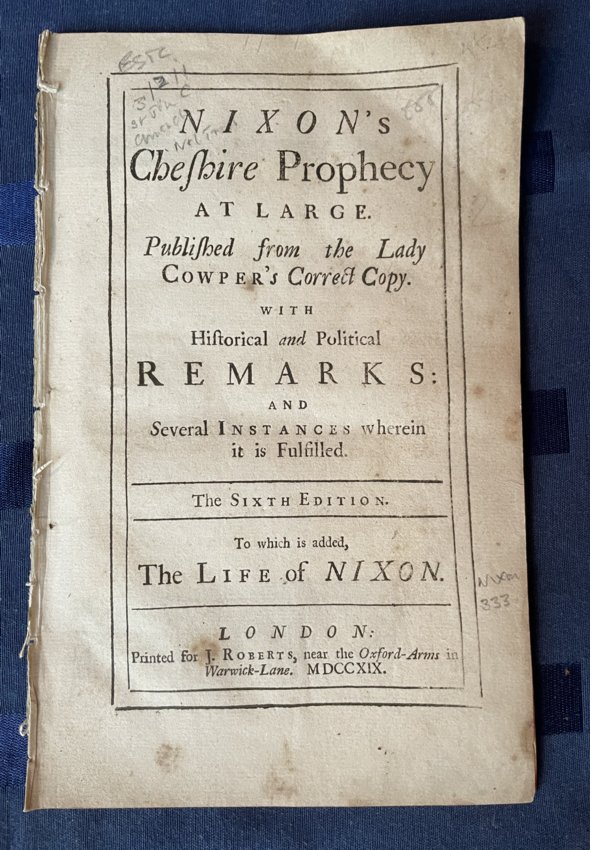
►1714—All Sorts Of Lead Ore Got At Several Groves inventory (Oct 20) of Joseph Simpson of Burslem, potter, lists ‘All Sorts of Lead Ore got at Several Groves’ [mines, as in grooves] with the high valuation of £6 – implying a search for suitable new sources § whether the lead mine at Rookery is still operating isn’t known, though Simpson is related to the Heaths who are now tenants of neighbouring Trubshaw (see 1690); the seam continues under Trubshaw & was never fully worked out, tho what remained may have been considered too small to be viable § otherwise the nearest source is the Derbyshire lead-mining area, which overlaps slightly into NE Staffs esp at Ecton Hill nr Warslow § the lead is the most valuable item in Simpson’s inventory, followed by his clothing & loose change £5 & clay £3, tho £90 of his total probate valuation of £106-17-6 is debts (mostly money he’s lent or invested)xxx § xxinventorisers?xx § Joseph Simpson is buried at Burslem June 22 xxx?familyxxx (cf 1686 re his uncle & namesake) § xx
►1714 Newchapel Grammar Schoolxxxxx § xxcloses 1877xx § xxSEE1709xx § xxseeKelly’s Tunstallxx § >del’dfr eier>charity grammar school founded at Newchapel by the will of Robert Hulme of Sandbach, physician, for teaching 18 poor boys plus an apprentice premium of £5pa, endowed with a property near Rode Heath {NB??Wardsays est in OR now yields £100+pa § George Sparrow uses a Newcomen steam engine to drain a deep mine, probably its first use in North Staffs (1st practical use anywhere is Dudley 1712; cf 1716 & see also 1717) § inventory of Joseph Simpson of Burslem, potter, lists ‘All Sorts of Lead Ore got at Several Groves’ with the high valuation of £6 (see above) § squire Sir John Bellot dies, 3rd baronet & last of the male line (though he has 7 dtrs){??CH>other notes say no chn, wfAnneBowyer}, the Great Moreton estate eventually being sold to Thomas & Edward Powys or Powis (see 1735) § Joseph Delves of Stonetrough dies § his widow Eleanor Delves lives at Harriseahead (eg 1719) & later Congleton § Richard Peover of Brieryhurst dies, & is buried at Astbury § Stephen Adams dies, & is buried at Norton § according to P. W. L. Adams he is the last to bear the name Stephen that has been traditional in the family for several centuries § he & his wife Dorothy {+NBher d-not fd} are recorded on the Adams monument in Wolstanton church, latter as ‘Dau. of Thos. Wedgwood of Mole in Biddulph’ § Samuel Broad of Limekilns, stone mason, marries Sarah Keen of Biddulph parish, who is also part of a family of masons § Margaret Owen has illegitimate son Thomas by Richard Hancock, baptised at Wolstanton (Dec 19) § Richard Ball, son of Nathan & Clara, born
►1715 youthful squire & politician Ralph Sneyd (1692-1733) instigates a riot at Newcastle in favour of the attempted Jacobite coup (the Old Pretender, son of the deposed King James II) (July) § rioters target dissenters in particular & destroy the Presbyterian Meeting House (rebuilt 1717, now the oldest nonconformist church in N Staffs & still in use) § Jacobite sympathisers control the town council, probably encourage the riots & are so conspicuously lenient on the rioters that the government has the mayor & 2 magistrates arrested § Sneyd is also prosecuted, tho his irresponsible not to say treasonable behaviour doesn’t prevent his appointment as a JP from 1717, sheriff of Staffs 1721, or deputy lieutenant 1725 § it’s possible the ostensible support for the Catholic Pretender is more a channel for dislike of the Hanoverian succession & other grievances § similar riots elsewhere eg Manchester § the rebellion itself (Sept-Nov) is easily quelled & the riots tho widespread seem not to be coordinated with it § ‘an act for preventing tumults and riotous assemblies, and for the more speedy and effectual punishing the rioters’ rushed through to come into force Aug 1, allowing groups of 12 or more to be dispersed by force upon ‘reading the riot act’ § probable date that Newchapel becomes a perpetual curacy § certainly the chapel receives an endowment from Queen Anne’s Bounty & local benefactors including the Bourne family of Chell (& see 1718, 1749) § Richard Podmore dies – either III of Mow House or his cousin, son of William (see 1712) § William Ford snr of Bank dies § James Whitehurst marries Ann Ford(e) at Audley (Jan 10), & they live in Odd Rode township § his brother Henry Whitehurst marries her sister Sarah Ford (b.1693, see 1707) at Biddulph (April 18) § John Barlow (III) of Congleton, surgeon, marries Ann(e) Hassells of Hanchurch at Keele ‘on holy thursday May 26’ § Thomas & Ellen Mellor’s first child Sarah (later Pott) born (though no ref has been found to their marriage) § Mary Oakes has illegitimate son Ralph by Ralph Hancock § William Rowley of Overton, Biddulph (millstone maker) born § Thomas Buckley (of Newbold, pioneer local Methodist) born
►1716 notice in London Gazette announcing that engines ‘for Raising Water by Fire’ aka ‘fire engines’ [Newcomen steam engines for draining coal & tin mines] are now working in Staffs, Warwickshire, Cornwall & Flintshire § John Marsh serves as constable of Tunstall ‘for John Fordes, Harriseyhead’ [JF of Ashes, formerly of Ford Green] § Ursula Stonier or Stonhewer ‘de Hayhill’ dies, & is buried at Biddulph (Oct 12) § Margery Barlow ‘iuxta old house green’, widow of William snr, dies § Mary Podmore, widow of Thomas, dies § Richard Rooker ‘de Lane’ [Holly Lane, Biddulph] dies § William Hobkin or Hopkin (?jnr—cf 1680) dies § Thomas Cadman of Biddulph parish buried at Church Lawton is probably a child, son of Thomas & Ellen (see 1713) § ??William Burslem of Newcastle dies<ch!, his will (made 1699) proved at the Prerogative Court of Canterbury, London by son James, eldest son Thomas & both nominated executors having died § William Dale marries Mary Harrison § Charles Cartwright of Bank born, & named after his maternal grandfather Charles Everard of Congleton § Elijah Rigby or Rigbey, son of Edward & Mary, baptised at Biddulph (Jan 10, hence born 1715/16) – first record of the Rigby family of Mow Cop & Kent Green
►1717—Millstone Rights Leased to George Sparrow millstone quarrying rights on the Tunstall part of Mow Cop leased by squire Sneyd to industrialist George Sparrow (proprietor of coal mines at Colclough Lane, ironstone mines at Red Street, etc; cf 1714, (1716), ?1719) § he lives at the Glasshouse, Red Street, having married Anne the dtr of glassmaker Randle Bristow, so it’s highly likely that he’s involved in glass making too (cf 1668) § he’s also related to the Burslems of Brown Lees, Newcastle, & Mow Cop, & names his son Burslem (1702) § xxxfor how long??xxxterms-of-lease-etcxxx § xxx § this is the 1st time the millstone quarries are controlled by a remote ‘industrialist’ or ‘capitalist’ as a business investment rather than by a working millstone maker or partnership – it’s not known whether he sublets to millstone makers or employs them – either way the arrangement devalues or even subordinates the millstone makers & is a factor in their noticeably diminished status in the 18thC as compared to the traditional independent yeoman craftsmen of the previous centuries (indeed for the same reason fewer millstone makers are known at all in this period, & between John Baker in 1709 & William Jamieson (I) in 1848 there are no known wills or inventories of millstone makers (in the 16th & 17thCs there are dozens!)) § xxxis it/?may be also 1st time Sneyd leases whole rights rather than specified “work”xx § less is known of the millstone makers of the 18thC than previously, & fewer of them identifiable, at least partly because they’re now men of lesser status, less independently affluent than their yeoman precursors § while chiefly a coal & iron master George Sparrow is one of the earliest identifiable modern style industrial capitalists, involved in a wide range of industrial activities – by 1710 he has a large portfolio of business & property interests
►1717 Sampson Erdeswick’s antiquarian compilation from Elizabethan times (see c.1593) finally published as A Survey of Staffordshire; Containing the Antiquities of that County, edited & with additions by Revd Thomas Harwood (reissues/edns 1723, 1820, 1844) § body of Burslem church (ie except the stone tower) rebuilt in brick § mention of John Lockett, blacksmith (who gives his name to Locketts Tenement, Newbold, where there’s still a smithy in the mid-19thC) § John Stevenson serves as constable of Tunstall ‘for Mr. Beardd, of Stonetrough’ § John Clowes of London, clockmaker, dies § Anne Lawton, wife of squire John, dies, supposedly after having 22 children (inc quite a few who have died in infancy) § Margaret Lowndes of Old House Green, widow of Edward, dies § Isabel Tomkinson of Hay Hill dies, & is buried at Biddulph (March 7), unmarried sister of Ursula Stonier who d.1716 § her will (made Jan 31, 1715 NS, proved April 11, 1717) makes Ursula’s children & grandchildren her main beneficiaries, Francis’s dtr Ann (who’s 6) getting ‘the Bed which I lye upon’ plus bed-clothes & -stocks § nephews Francis & Ralph Stonier are her executors § her modest inventory (March 29, 1717; value £28-9-2 of which £25 is money lent or invested) is done by Henry Whithurst (as he signs) & William Bayley, Whitehurst’s involvement being interesting both as an early indication of the Whitehurst family’s connection to MC & because it presupposes an acquaintance between Ralph Stonier, who has a brazier’s business in Congleton, & Henry’s younger brother John Whitehurst, the 1st clockmaker of that name § Jonathan Hobkin marries Mary Podmore (daughter of Richard IV & Lydia) § John Hobkin marries Mary Rowley at Wolstanton § Thomas Spode marries Sarah Sherratt § Richard Hancock marries Ann Gater (presumably Richard & Elizabeth Hancock’s son b.1694; no baps of children fd) § William Boulton marries Hannah Tompkinson at Biddulph (see 1718) § Thomas Broad of Limekilns born (mason)
►1718 churchyard of Newchapel consecrated for burials – though the surviving burial register doesn’t commence until 1724 (qv) § John Stevenson once again serves as constable of Tunstall, this time ‘for Mr. Townsends, Dalesgreen’ § Elizabeth Barlow, formerly of Biddulph parish & from c.1703 of ‘Brook’ in Odd Rode township, makes her will, 1 of the witnesses Richard Podmore (proved 1726 qv) § William Lawton (of Astbury parish) buried at Church Lawton (March 1) – most probably son of WL the millstone maker (cf 1665) § Richard Boulton marries Sarah Tompkinson at Horton § two Thomas Boultons baptised at Biddulph, sons of William & Hannah & of this Richard & Sarah, one of whom dies & the other is presumably TB of Mole (m.1744, f.1750) § William & Richard Boulton are brothers & their wives sisters, Tomkinsons from Horton parish but with MC associations & sisters of Isabel Maxfield (see 1728 & cf 1716, 1724, 1725)
►1719—Court for the Gresley Part of the Manor of Tunstall manorial court for the third part of the manor of Tunstall formerly belonging to the Bowyers of Knypersley held (+date+), xxxxx § xxdate+detls of courtxx § the jurors are: Thomas Machin, John Lowe, William Tunstall, William Plant, Thomas Marsh, William Whitall, Barnes Poole, John Kelsall, Thomas Burslem, Samuel Allen, Samuel Taylor, John Horne § § Richard Podmore is listed as holder of both ‘Mow’ & ‘Brownlees’ & called ‘Mr.’ (indicating high status) § § refs to digging for coal & ironstone in lanes at Harrishay head, Kidcrew, Cobmore, etc (by serious industrialists such as George Sparrow, William Hancock of Newchapel, & the Taylors of Clough Hall, not little men any more), & lists of deceased tenants, cottages, & encroachments (see also 1720—List) § § attached to the court record are a rental, a list of chief rents, & a written description or perambulation of the boundaries of the third part of the manor (see below) § § xxx § § >copiedfr belo>this perambulation & the revival of the manor court after some years in abeyance (first for this part of the manor since 1682) is prompted by Knypersley heiress Dorothy Bowyer’s marriage this year to Sir Thomas Gresley (see 1702), who thus becomes heir to the Bowyer part of Tunstall manor § § xNEWx
►1719—So Up The Lane To Mole End Tunstall manorial court rolls contain a written account of a boundary perambulation of the Bowyer/Gresley section or third of Tunstall manor dated June 5 & signed by the jurors (see above) – it covers the contiguous townships of Oldcott, Ravenscliffe, Brieryhurst & Thursfield § it begins & ends at Knacmarill(s) Lane & the Bent [Pack Moor] on the boundary between Thursfield & Wedgwood townships § taking it up later, on the county boundary at ‘the Island of Hardingswood’: ‘So up the brook by the side of Hardingswood land to an ash standing in the lane, & so into the Barnfield belonging to the Moss House; & up an old watercourse for about 6 roods; & so up the brook side again almost to the top of Cowley yard; & by an old watercourse in the bottom of Hodgkinsons meadow into the lane at Hall Lee. So up the lane to a watercourse which runs to Rhode Mill; & at that place comes in the Psh. of Astbury. So up the lane to Mole End, & near the wall to an holly where formerly stood an old house; & from thence up the hill to a spring called Woodcocks well; from thence to the top of the hill, from the highest to the highest unto Mearfoot; so along the top of the hill to a cross road, which comes by a little house in the upper corner of the Roe Park; at which highway comes in the Psh. of Biddulph. Along the siad highway to the head of Ric. Podmores land, (where we join to Stodmorelow), to the head of the lane leading from Mole to Harrishay head; & over into Wm. Dales meadow; & over the bottom of the said meadow, & likewise the bottom of the Rough piece & Beechs croft, all along the Kidhay stones, & over the bottom of Holmes croft to Mole Common. Thence down betwixt the Kidhay house & the house of Peter Blackhurst, & down the side of Kents croft into John Kelsalls land, the first & second pieces; ...’ through various fields inc ‘the Pittfield ... & so into a cornfield of John Lawtons; & along from thence up the fence betwixt the land of Lowe & Lawton to the Harrishay head; & by the Causey End thereon to the house of Elinor D[elves]; & so down the lane to the lower end of the Harrishays; ...’ § of the many interesting things here (on which commentary follows) 2 are worthy of special emphasis § evidence of no less than 3 houses that no longer exist, one of them already gone at this date – at Mole End within the present village of Mount Pleasant, N of the Old Man in the top corner of Roe Park/Moreton township, & on Kid Hay on the N side of Fords Lane – a reminder not only that houses decay & disappear but that the historical pattern of settlement can’t be assumed to be confined to sites that actually have houses on them § 2ndly, explicit evidence that the Old Man of Mow (‘Mearfoot’) exists in more-or-less its present form by this date, since it’s both separate from the 2nd ‘highest’ & specifically singled out as a boundary mark § Hodgkinsons meadow – must be the field in the corner between Cob Moor Rd & Mow Lane, also known as Staffordshire Meadow, half in each county but belonging to Hall o’ Lee; Hodgkinsons are former tenants of Hall o’ Lee § Mole End – site of Mount Pleasant village § an holly where formerly stood an old house – a house already old & lost before 1719; we’re perhaps about the site of the Broad Oak that’s a boundary tree a century or so later (somewhere nr the site of MP post office); John Jamieson’s house stands against the county boundary hereabouts on the tithe map, conceivably the site of the old house reclaimed § a spring called Woodcocks well – probably the earliest ref, indicating that it’s an older name & certainly proving it’s not a Victorian fancy § to the top of the hill, from the highest to the highest unto Mearfoot – a few words covering a lot of ground which isn’t described in more detail because most of the way between Woodcocks’ Well & the Old Man the boundary simply follows the apex of the ridge, generally referred to as ‘the highest’ (noun; cf 1628); the phrase ‘from the highest to the highest’ might also be taken, since ‘top of the hill’ precedes it, to acknowledge the dual summits at (what is now) the Tower & Old Man; ‘Mearfoot’ is the original name for the Old Man (see 1533) § a cross road – the track N of the Old Man now turns sharp right but at this date is crossed by a road or track (‘Old Mow Lane’) coming up the Cheshire side following the boundary of Roe Park, still a footpath § a little house in the upper corner of the Roe Park – one would never suspect there had been a cottage beside this track at the beginning of Black Bank ie more or less facing you where the track turns sharp right (there are 2 cottages on the Staffs side at this point, one of which is old, but the (lost) cottage must be on the Cheshire side) § the head of Ric. Podmores land – ie opposite the MC Inn, the upper part of the land of Mow House being bounded by Congleton Rd & Church Lane; Richard Podmore of Mow House d.1741 § the lane leading from Mole to Harrishay head – Church Lane; the boundary goes along Congleton Rd, left down Church Lane (or the Church Lane side of Dale’s meadow as implied), then opposite Mow House turns right into Kid Hay & along the path to Fords Lane § Wm. Dales meadow – refers to the field bounded by MC Rd-Church Lane-Kid Hay, site of the Moorland Rd housing estate & brickworks & Porter’s shop; in the 1840 tithe apportionment it’s divided between brothers Thomas & Samuel Dale; William is one of the Dales of Dales Green listed in 1720 § the Rough piece & Beechs croft ... Holmes croft – crofts between the Kid Hay path & the present MC Rd from the end of Dale’s meadow to the rear of the Ash Inn; assuming the names are contemporary the croft nr the Ash Inn belongs to John Hulme, father of Daniel, f.1720 (Wolstanton parish reg has multiple JH burials), but we don’t know of a contemporary Beech § all along the Kidhay stones – the uphill boundary of Kid Hay is formed by an ancient low bank made of stones, the medieval common land boundary; the footpath (Church Lane to Fords Lane) still exists § to Mole Common – the path emerges nr the head of Fords Lane so Mole Common is the land uphill of the present MC Rd inc Chapel Side & Rock Side, as yet not settled or enclosed § betwixt the Kidhay house & the house of Peter Blackhurst – former a lost house on Kid Hay on the now uninhabited left side of Fords Lane, so PB’s house must be the house & smallholding occupied in the 19thC by John Ford; the ref to Peter Blackhurst is the only record of him living on MC – he & wife Ann baptise & bury children at Church Lawton 1686-93 of that parish but are of Wolstanton parish [MC] when they bury Peter jnr 1708; son John (b.1686) is called a ‘Furnace-man’ in 1723, living at Doddington in Wybunbury parish, where Peter dies Jan 1724; the occupation suggests that John originally works at Lawton furnace & that Peter may have been connected with it § Kents croft into John Kelsalls land – the croft must be on the right side of Fords Lane; the Kent family live hereabouts in the early 17thC; xxxKelsallxxx § by the Causey End thereon – a unique ref to a causeway on Harriseahead, a paved or built-up road probably made for industrial purposes, tho the description loses us in this section, the meaning of ‘by the Causey End’ is unclear – perhaps it’s a detour, since most of Harriseahead village up to (but excluding) Chapel Lane is in Stadmorslow township yet the Thursfield boundary on the opposite side of the Harriseahead ridge runs down the NE side of the Harris Hays to the Long Lane kink just before Wain Lee ie considerably N of most of Harriseahead village, implying that at some point the village has been jiggled into Stadmorslow by some extension or detour of the boundary § Elinor Delves – widow of Joseph of Stonetrough (d.1714), she d.1733 § the Harrishays – the field(s) that give Harriseahead its name, a medieval enclosure meaning literally Harry’s enclosure (see 1299); the land is in Thursfield township so the boundary runs from High St down a (former) track along the NE side to Long Lane § xx § this perambulation & the revival of the manor court after some years in abeyance (first for this part of the manor since 1682) is prompted by Knypersley heiress Dorothy Bowyer’s marriage this year to Sir Thomas Gresley (see 1702), who thus becomes heir to the Bowyer part of Tunstall manor
►1719—Lease of the Lime Works lease of the lime works by squire Revd Philip Egerton for 3 years to a consortium, company, or co-operative of 8 local quarrymen & lime burners – William Broad, William Shetwall, John Burslem, John Stonier, Thomas Hulme, Thomas Shaw, Thomas Taylor, & Edward Broad § the surnames are all families that have been established in the Limekilns area & adjacent slopes of MC in Newbold & Moreton townships for some generations § the 1660 poll tax for instance has Broad, Shaw-unspecified?, Shetwall, Stonier//not-notedHulmeTaylor?; stone mason Alexander Burslem settled here c.1670, his son xxx b.xx??+more re who they arexxORJohn sn of Richd b1668?xx § several of them are also related or inter-married: eg William Broad m.1704 Mary Shetwall, xxetcxx § xxnote:shows primitive/preIndRev way of operating;origly as with millstone making individual prospectors wld presly pay annually for the right to get&burn;becomes a capitalist indl enterprise ie one owned by an indl tycoon 1774 (Henshall&Gilbert) or beforexxBUTnoteGeoSparrow holds the limeworks in 1712xx § xx
►1719—John Cartwright of Shrewsbury & Hall o’ Lee John Cartwright of Shrewsbury & Hall o’ Lee dies, & is buried at Church Lawton (March 6 & 10) § he is commemorated by an unusual wall monument in Lawton church, a large oval wall-plaque framed in white plaster with urn at top & skull & cross-bones at bottom, with unconventionally worded Latin eulogy, doubtless composed by his son John who becomes a priest later this year § ‘PIE | I Cartwright | de Lee Hall | Viri | Orthodoxiæ fidei more | Consentaneo, scientia in | suos ardore amicos | candore omnes obsequio, | vere Laudabilis. | obt sexto die martii | Anno Dom 1718 | 9 [below the 8 ie 1718/9] | Ætat Suae | 59’ § xxxxx § his will, made at Shrewsbury (where he’s in business as an apothecary) in 1706, is proved at Chester by wife Elizabeth & son John, the Shrewsbury executor Thomas Jenkins renouncing § he bequeathsxxxmore-re-willxxx § § xNEWx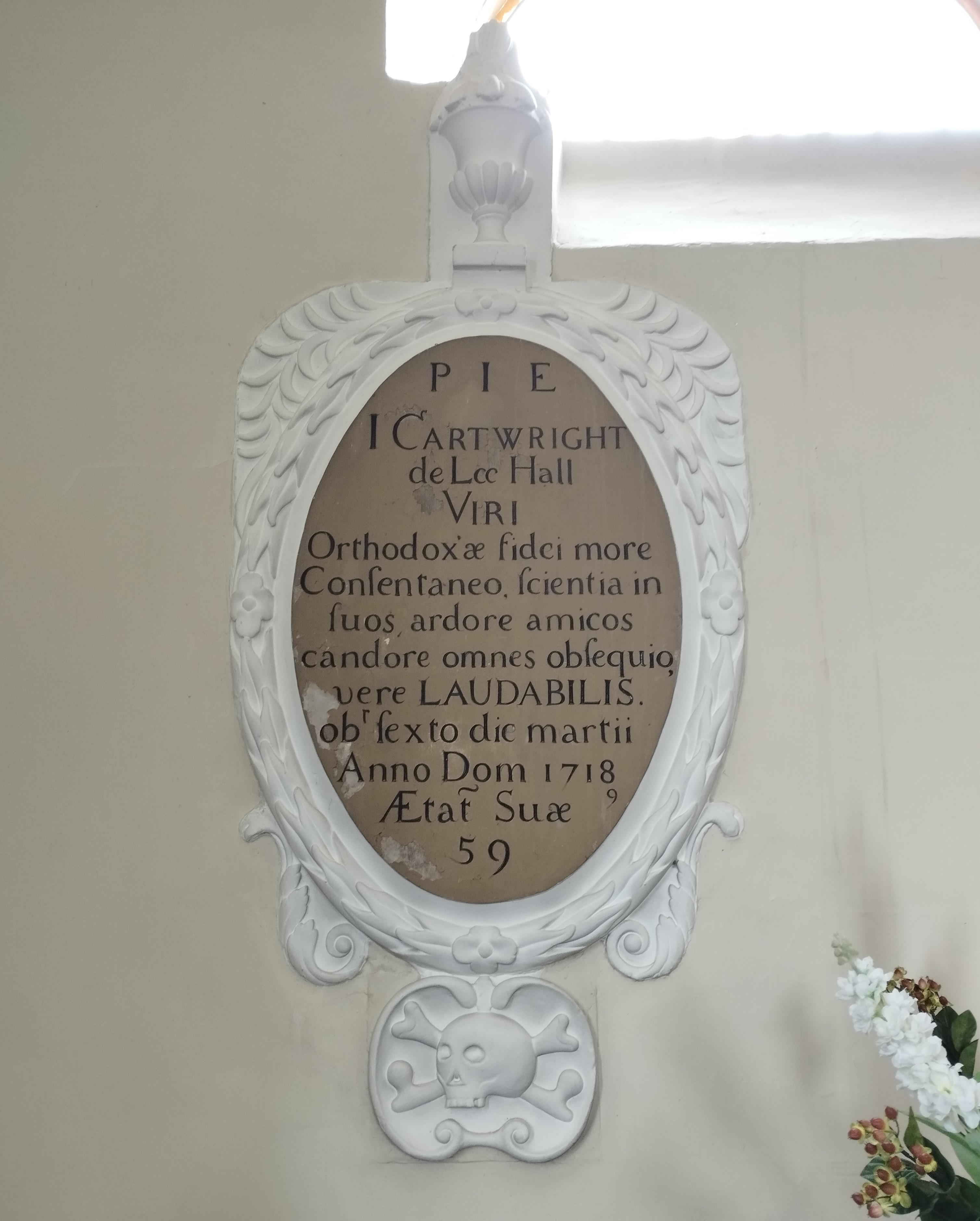
►1719 Biddulph rental mentions Thomas Bourn(e) of Mole § lease of lime works for 3 years to a consortium, company, or co-operative of 8 local quarrymen & lime burners (see above) § the surnames are all families that have been established in the Limekilns area & adjacent slopes of MC in Newbold & Moreton townships for some generations § Earl of Macclesfield drains a large area of coal by a ‘gutter’ nr Burslem church § Revd Ralph Malbon begins Congleton’s 1st separate parish register at the start of the year Old Style (ie late March; runs to 1783, mostly baptisms & burials) § Revd John Cartwright (jnr) of Hall o’ Lee is ordained priest & becomes vicar of Middlewich § his father John Cartwright snr of Shrewsbury & Hall o’ Lee dies, & is buried at Church Lawton (March 6 & 10) § he is commemorated by an unusual wall monument in Lawton church, with flattering Latin eulogy (see above) § his will, made at Shrewsbury in 1706, is proved at Chester by wife Elizabeth & son John xxx (see above) § William Cartwright buried at Church Lawton (June 19) is probably his ?uncle WC of Cob Moor, son of Thomas of Hall o’ Lee (see 1695) § Lawrence Caulton dies at Dales Green § Jane Boote (nee Peover), widow, dies at Sandbach § Thomas Maxfield marries Elizabeth Gregory at Betley (May 21), by licence sworn by Thomas Maxfield ‘Generos.’ or ‘snr:’ (presumably his wealthy relative TM of Chesterton (d.1720), who might also be his godfather) § the wealthy relative may be the reason for marrying at Betley (Thomas’s brother John also later marries there) § Elizabeth Gregory, dtr of Nathaniel & Bridget, may be living at Sandbach{?lic shld say!} tho her parentsch{Nat bur.N but check Bridg} later live at Newchapel § Thomas & Elizabeth’s son John Maxfield born 3 or 4 months later (bap.Sept18; father of Thomas the blacksmith) § Thomas Wedgwood born, illegitimate son of Mary (b.1695, daughter of Richard V & Mary; see 1755), & baptised at Biddulph (Sept 20) § Ralph Waller born in Rushton parish
►1720—List of Brerehurst Suitors list of suitors owing appearance at Tunstall manorial court (for the Bowyer section or third only) dated May 13 contains 62 names under Brerehurst & appears to be in approximately geographical order § after William Galley & Daniel Wakefield [of Galleys Bank & Cob Moor] it runs: John ?Boot, William Rowley, John Clare, John Twemlow jnr [no snr], Peter Hopkin, William Hopkin jnr, ?Jonathan Dale, Isaac Dale, William Dale, John Hulme, William Oakes, William Salmon, Daniel Ball, Richard Lawton, Robert Podmore, John Lawton snr, ?Jonathan Hopkin jnr, John Mellor, Daniel Ball snr, Nathan Ball, John Oakes, John Hopkin, William Lawton jnr, John Reeve, Elizabeth Hancock, Samuel Oakes, William Swinerton, Richard Shaw, John Lawton, Ann Sherratt, Jonathan Hopkin snr, Ralph Taylor, Abell Hopkin, John Galley, John Caulton, Daniel Lowe (end) § William Hopkin snr appears earlier in the list [?perhaps now living in the Kidsgrove area], as do wealthy chaps like George Sparrow, Richard Townsend, John Cartwright [presumably for Hall o’ Lee] & Samuel Taylor [of Kidsgrove] § interesting juxtapositions inc John Clare & John Twemlow (see 1739), the same Twemlow & 2 Hopkins (1712), Richard Lawton & Robert Podmore (1705, 1732) § the commonest surname appearing is Hopkin (7) followed by Ball & Lawton (4 each) § a few expected surnames are absent eg Brett [tho John ?Boot may be a misreading, the expected Brett would be John], Brereton, Ford, Maxfield [currently over the border in Odd Rode], Stubbs, & surprisingly there is only one Hancock (Elizabeth d.1721) § Thursfield inc Newchapel & part of Harriseahead has 2 John Hancocks & a William, & there will be others in Stadmorslow, not included in these lists
►1720 approx date of the earlier part of Ramsdell Hall (L-shaped east/south front with diagonally positioned doorway in the angle), presumably built for John Cartwright (d.1726), either replacing or alongside the Cartwrights’ original house (see 1794 ref to ‘the Old House’) § Revd John Cartwright leases out the Hall o’ Lee estate § Thomas Mellor churchwarden of Biddulph § approx date that Burslem’s estimated population reaches c.1000 & it can be considered a town (see 1761) § approx date given by Simeon Shaw (writing in 1829) for the discovery & application of calcined flint in the manufacture of stoneware (largly replacing MC sand), which he attributes to ‘Mr. Astbury’ § G. F. Handel’s harpsichord composition known as ‘The Harmonious Blacksmith’ is supposedly inspired by the rhythmic hammering from a smithy heard when he is staying at Turnhurst Hall (though several alternative explanations or legends exist, & it’s unclear if it actually bore this title until long after) § William Whillock of Bacon House dies, & is buried at Biddulph (Oct 25), his age given (correctly) as 86 in the parish register § John Podmore of Broadwaters, nr Kidderminster dies (see c.1700) § John Ford of Ashes (Harriseahead; originally of Ford Green) marries Margery Ford at Astbury [?of Kent Green, but no Margery baptism found] § Matthew Ford of Bank marries Elizabeth Whitney of Barthomley parish (probably Alsager) § John Heath jnr of Trubshaw marries Anne Shufflebotham or Shubotham, commencing the close liaison between the 2 families (both her brothers marry Heath sisters) § Josiah Sherratt marries Susannah Sherratt at Astbury (Jan 2, 1720 NS; see 1769) § Samuel Oakes jnr, called of Biddulph, marries Margaret Knott of Congleton at Astbury § Jane Oakes has illegitimate daughter Hannah by Daniel Hulme § Elizabeth Mellor born (later Brown)
►1721—Death of Francis & Ralph Stonier Francis Stonier or Stonhewer of Hay Hill & his brother Ralph Stonier of Congleton die, & are buried at the same time (Dec 12) § their gravestone at Biddulph reads ‘Hic Sunt Sepult Fran: & Ra: Stonier of the Hay-Hill’ § Thomas Rooker helps Francis’s widow Elizabeth (nee Rooker, his sister) prove the will (made Dec 8, 1721, proved++), the nominated co-executor & overseer being son Richard (aged 15) & brother Ralph (deceased) respectively § while both Elizabeth & dtr Jane Stonier (aged 22) act as unmarried brother-in-law/uncle Ralph’s administrator, & have a very detailed inventory done, inc his stock as a brazier (Jan 9, 1722, appraisers not named – one of them very probably clockmaker John Whitehurst, whose older brother Henry is an acquaintance of the Stoniers) § the stock is appraised by weight & valued at £116-16-11, Ralph’s total valuation being £175-11-11 inc such luxury items as a clock, watch, gun, looking glass, books, & ‘A large Bible’ § unusually 2 administrations are issued for Ralph’s estate on the same day (April 20, 1722), to Jane & to Elizabeth (who signs ‘Eliz Stonier’) on behalf of her under-age children – listed as Elizabeth aged 20, Thomas 18, Richard 16, Anne 14, Mary 12, Margarett 8 [actually 6], Rachaell 3 – ‘having Goods Rights Credits & Chattles left to them by the last Will & Testamt. of Ralph Stonier later of Congleton ... Brazier decd. or otherwise’ § since he didn’t make a will we must assume his wishes were for his nieces & nephews to inherit, Jane being given separate admin as the only adult § the supporter or surety for both admins is Thomas Rooker § Francis’s inventory (Dec 21, 1721) is done by Thomas Rooker & Paul Wardle, the household part by room only with no details, inc ‘In the New House’ & ‘In the old House place’ indicating that Hay Hill has been extended or partly rebuilt in Francis’s time § by probate valuation (personal or movable goods only, not real estate) Francis Stonier is the richest person in Biddulph parish (£332-7-4), inc 20 cows (worth £70) & £100 of cash in his purse, both extraordinary by the standards of the time, while crops, horses, & 21 sheep reveal a large & thriving mixed farm & good use of its higher rough grazing & adjacent common land by the sheep § Elizabeth Stonier & the 8 children move (presumably in the new year 1722) to the family’s house at The Hurst, ending a long association of the Stonehewers with Hay Hill (the Waller family follow) § Jane Stonier’s future has not been traced for certain (no marriage found; a Jane Stonhewer who d.1766 cannot be confirmed as her) § xx
►1721—Joshua Astbury’s Wealth & Legacies Joshua Astbury (1676-1721) of Shelton, potter, dies, & is buried at Stoke (Oct 10), his will (made Sept 25, ?+proved date) & inventory (Oct 17) showing him to be exceptionally wealthy, with a probate valuation (movable goods only, not inc his real-estate) of £435-6s & bequests of £500 each to 4 dtrs! § both figures are extraordinary for such a person at this date, & equivalent to well over £100,000 in the early 21stC; compare the high probate valuations of Francis Stonier 1721 above, yeoman farmer Elizabeth Barlow 1726, John Baker the millstone maker 1709, & by normal standards relatively well-off potters Aaron Wedgwood 1701, Joseph Simpson 1714 – before the era of large manufacturers potters are not wealthy, & part of the secret of pottery’s success is that it’s very cheap § at this early date Joshua Astbury’s wealth is unique for a potter § Joshua Astbury’s executors are his ‘loving friends’ John Adams of Birches Head & John Twiford of Shelton, witnesses William Twiford [John’s brother, ancestor of the sanitary ware manufacturer T. W. Twyford], Jon Astbury [probably John, his ?half-brother], J. Poulson [a Stoke church official & pillar of the community who often ocurs in such capacities] § the only son Joshua jnr is under-age, John Adams leaves administration of the estate to John Twiford, & Twiford marries one of the dtrs, Anne (see 1723), all possible contributory factors to problems & disputes that are recorded re the inheritance § xxmore?xx § Joshua Astbury is the one sued by John Dwight in 1697, in spite of which historians have shown great reluctance to accept him & uncertainty about the identity & even name of the famous potter usually referred to simply as ‘Astbury’, variously baptising him William, Samuel, Robert, & Thomas (as well as John & Joshua); Shaw (1829), who sticks to ‘Mr.’ in his text, indexes him as ‘J.’ & attributes the accidental discovery of calcined flint as a pottery ingredient c.1720 to him § contrary to the prevailing modern accounts (eg DNB which features John Astbury & Joshua Twyford!) it is this Joshua Astbury who is the legendary pioneer of the pottery industry, steals trade secrets by industrial espionage (supposedly from the Elers brothers, whom Dwight also sues), manufactures what come to be known as ‘Astbury ware’ & ‘Astbury figures’, & makes the name famous; while his younger friend, collaborator (quite likely an apprentice), & executor John Twiford (1690-1756) is evidently the Twiford or Twyford [the modern spelling popularised by toilets] to whom a similar legend attaches § xx
►1721 Revd Ralph Malbon (1670/71-1721), curate & schoolmaster of Congleton, dies, succeeded in the latter role by his son Revd Thomas Malbon (see 1741) § Joshua Astbury (1676-1721) of Shelton, potter, dies, his will & inventory showing him to be exceptionally wealthy (see above) § Nathan Ball (I) dies, ancestor of the Balls of White Hill & MC & 1st of several bearers of the distinctive Christian name § Elizabeth Hancock dies § Revd John Cartwright, vicar of Middlewich, marries Grace Welles (1695-1771), dtr of the vicar of Sandbach, his marriage settlement mentioning his properties & tenants: Lee Hall (Daniel Ford), the Newhouse (Boarded Barn, William Beech), & ‘the Mole Tenement’ (Woodcock Farm, John Dale) § Samuel & Margaret Oakes baptise their 1st child Thomas at Congleton, named after his grandfather Thomas Knott (& buried at Biddulph 1722) § Thomas Booth of Newbold born, son of Isaac & Elizabeth (see 1757) § Elizabeth Wakefield born in Newbold township (bap.Astbury Jan 1, 1722; later Mellor) § Margaret Whitehurst born, ancestor of many MC Whitehursts (mother of Charles of Mole b.c.1750) § William Dale jnr born § John Hopkin or Hobkin jnr born
►1722 Robert Morden’s maps of Cheshire & Staffs reprinted for 2nd edn of Gibson’s Camden’s Britannia – see1695 § approx date of Richard & Ann Waller taking over the tenancy of Hay Hill from the Stoniers, who move to The Hurst (see 1721) § Abel Hobkin of MC & William Hodgkinson (who probably lives in the Moss/Little Moss area) are the earliest persons designated ‘carbonarius’ (collier) in Church Lawton parish register (April 7 & June 2) § latter ref is the earliest baptism of a child (John) of William & Noa Hodgkinson, parents of Clare b.1734 (see 1759) & ancestors of the Hodgkinsons of Corda Well & Fir Close § the unusual or even unique name, fairly consistently given as Noa, since there’s little justification for using Noah for a girl, is probably a form of Noël, a name given to either gender born at Christmas; unfortunately their marriage hasn’t been found § Francis Lord Brereton of Brereton dies, last of the senior male line § Thomas Moor of Moreton Close dies § Joshua Hobkin(s) marries Mary Mellor & Jonathan Hobkin(s) marries Mary Owen at Wolstanton (June 23 & 24) § Sarah Ball has illegitimate daughter Mary by Moses Hobkin
►1722-31—Causes of Death in Trentham Parish Register miniser of Trentham Revd Jeffrey Williams records causes of death (under the heading ‘Distemper as far as known’) for the 10 years 1722-31 inclusive § xx § Trentham, S of Newcastle & at the SW extremity of the Potteries, is 10 mls from Mow Cop & (unlike some places) has no significant links; however the mystery epidemic of 1728-29 demonstrates that much the same conditions are likely to prevail in respect of regional phenomena affecting weather, harvest, health etc – anyway local info about illnesses & causes of death at this early date is so rare & so seldom systematically recorded (not a normal feature of burial registers, & not required by death records until 1837), it is of obvious interest § the record is more systematic & intelligent than the brief amateurish record kept at Church Lawton, 1 of the hill’s nearest churches, 1783-86 (for others see 1807-12 Burslem, 1837-62 Biddulph) § § SEEtable § § cf.1728-29 § § xNEWx
>copyfr table>between 1722 & 1731 inclusive (a nice round 10 years) Revd Jeffrey Williams, minister of Trentham, records ‘Distemper as far as known’ in his neatly kept burial registerxxthe distempers are listed below in the order enountered except for a few near synonyms which are juxtaposed or merged, spelling as given though it varies slightly of coursexxnote that the years covered are Old Style ie beginning March 25xxby chance the great epidemic of 1728-29 occurs during this period, causing a dramatic spike in total deaths but interestingly no new or unusual ‘distempers’, except 3 instances of chincough (whooping cough), the excess deaths almost entirely accounted for by the increase in ‘fever’ cases together with very slight increases in natural decay & natural weakness (old age & babies – both likely to die quickly in an epidemic perhaps before the fever symptoms are obvious) & ‘ague’ (itself a feverish condition, perhaps indistinguishable)
►1723—Marriage of John Twiford & Anne Astbury John Twiford (1690-1756) marries Anne Astbury (1704-1758), both of Shelton, at Biddulph (Sept 29) § they represent the two legendary families or figures who are significant pioneers of the pottery industry (see 1721—Joshua Astbury), & therefore its close connection with Biddulph & MC § their wedding is arranged for them by John Stonier of Crowborough (see 1732), who swears out the licence, issed by xxxxx – it’s not entirely clear why he does so nor why they wish to marry at Biddulph, though conceivably connected with the awkwardness of Twiford marrying the underage orphaned heiress of whom he is to all intents & purposes guardian, &/or with ongoing disputes re his administration of her father’s willch—seeAdams § Anne Astbury is 1 of the dtrs of Joshua & Abigail, her father being the legendary ‘Astbury’ who feigned idiocy to steal trade secrets from the Elers brothers (or from Dwight), while John Twiford’s association with him (perhaps as apprentice) & marriage to his dtr makes it fairly certain that he is the legendary ‘Twyford’ of whom a similar story is told, even though he would be very young when the incident occurred § Joshua Astbury was the wealthiest potter of his age & a pioneer of improvements in pottery manufacture; he was sued by John Dwight in 1697, probably involved in the introduction of MC sand for the local version of stoneware (see 1690), & is credited by Shaw (following local tradition) with discovering the use of calcined flint § his will entrusts his valuable estate & his 5 valuable children (the dtrs worth £500 each) to his ‘loving friends’ John Adams of Birches Head & John Twiford of Shelton, both potters, though in practice Adams leaves it to Twiford § xx § the famous sanitary ware manufacturer Thomas William Twyford (1849-1921) is descended from John’s brother William § xx
►1723 grammar school founded at Leek by Thomas Parker (1667-1732), a native of the town, Lord Chancellor of England (1718-25) & 1st Earl of Macclesfield (1721) § earliest ref to a furnace worker – George Maddock, ‘opifex apud ffornacem ferrarium’ – in Church Lawton parish register (see c.1700 for details & other examples) § Hannah Boulton (nee Tom(p)kinson) dies after having a stillborn child (bur.May 9, the baby May 1) § Ellen Whitehurst (b.1692; she is 49 when their son Jonah is b.1742) marries Richard Mountford at Biddulph (May 3) § Laurence Caulton marries Ellen Mills at Wolstanton (Nov 9) [?error for Margaret – baptisms by Laurence & Margaret 1727-32 & Margaret d.1736, but neither burial of Ellen nor m to Margaret found] § Thomas Mellor (III) born § William Hopkin (later of Meadow Stile), son of Joshua & Mary (nee Mellor), born § Henry Whitehurst (II) born
►1724—Newchapel Parish Register earliest surviving parish register of Newchapel commences, recording baptisms & burials (but not marriages, which continue to be conducted or at least recorded at Wolstanton, except 1742-54 qv) § xx>copy> § xxre condition of surviving pagesxx § latest probable date of commencement of burials at Newchapel (see 1718) – they should begin when the graveyard is consecrated in 1718, but the earliest recorded in the earliest surviving (very tatty) register is Matthew son of James & Elizabeth Millins of ‘Breryhurst Ham:’ on Aug 6, 1724; presumably register pages covering the previous few years haven’t survived § the earliest section being very tatty & damaged loose pages 1724-41, followed by a better preserved & neatly kept vol 1741-89 § xx?more fr 1st pp of regxx< § § § xxxnew neater & better preserved reg started by Revd Thomas Malbon (c.1700-1777, curate 1741-77) in 1741 § see 1742-54 for brief marriage regxx+1847 § § xNEWx
►1724 Hermann Moll’s map of Staffordshire shows ‘Molecop Hill’, depicted larger than ‘The Cloud’ § earliest surviving parish register of Newchapel (see above), recording baptisms & burials but not marriages, which continue to be conducted or at least recorded at Wolstanton (except 1742-54 qv), the earliest section being very tatty & damaged loose pages 1724-41, followed by a better preserved & neatly kept vol 1741-89 § this year is also the latest probable date of commencement of burials at Newchapel (see 1718) – earliest recorded in the earliest surviving (very tatty) register being Matthew son of James & Elizabeth Millins of ‘Breryhurst Ham:’ on Aug 6, 1724, but presumably register pages covering the previous few years from when the graveyard was consecrated in 1718 haven’t survived § Mary Mellor dies, & is buried with her husband Thomas at Norton § Richard Wedgwood (V, son of William & Sarah of Mole) dies § ‘Peter Blackhurst Husbandman, who departed this life within the Township of Doddington’ buried at Wybunbury (Jan 14) – formerly of Lawton & MC, he dies at the home of his son John (b.1686), a furnace man § Thomas Maxfield, now of Odd Rode township, collier, dies, & is buried at Astbury (July 21) § he is the earliest person designated ‘collier’ in Astbury parish register, & considering his age (?early 30s to early 40s – no baptism found) he might well be a coal mine fatality § his posthumous dtr Bridget (‘Brigetta’) is baptised 3 months later (Oct 19), named after her maternal grandmother Bridget Gregory, & survives (see 1747; for TM’s marriage see 1719) § John Moor marries Mary Tomkinson of Moreton township (see 1725) § Abel Hobkins or Hopkin jnr marries Jane Robinson at Wolstanton (Jan 4) § John Swain of Knypersley marries Mary Brooke(s) (see 1731) § Thomas Rooker of Biddulph parish marries Elizabeth Ford of Burslem, dtr of William, at Caverswall § Hannah Heath of Trubshaw marries Roger Shoebotham (grandparents of Daniel Shubotham the revivalist) § Mary Wedgwood baptises a 2nd illegitimate child William at Biddulph (d.1730)
►1725 John Ridge of Dales Green (b.1694) buried at Astbury § John Harding marries Sarah Wasson at Wolstanton on the same day as another John Harding marries Elizabeth Bayley, conducted by the vicar Revd John Harding (Feb 9) [he’s given by Adams & church panel as succeeding 1724, formally instituted March 2, 1725 [ie 1724 OS], signs the parish register at end of 1724 OS ie March 1725, baptises his own 1st child Dec 8, 1725 (another John, later curate of Astbury)---henc e??Feb9 mightNOTbe him!] § John & Sarah are founders of the Harding family of MC (see 1753) § Thomas Keen of Moreton township, mason, marries Elianora (subsequently called Ellen) Robinson of Middlewich at Astbury § Ann(e) Cartwright, dtr of John & Elizabeth of Hall o’ Lee, marries Thomas Weston at Lichfield Cathedral (May 7), called ‘de clauso’ [ie she’s living in the Cathedral Close] § John Maxfield marries Isabel Tomkinson at Betley (Dec 24), their marriage licence sworn by Isabel’s brother-in-law John Moor (see 1724) +issued by/at?? § Isabel, dtr of Ralph & Sarah, belongs to the Tom(p)kinson family connected with Hay Hill (cf 1716 & see 1728) § John Maxfield (b.1675) has remained unmarried until the age of 50, his marriage perhaps prompted by his younger brother Thomas’s recent death (Thomas was also married at Betley; but John & Isabel both die 1728) § James Whitehurst, son of Henry & Sarah, born
►1726 Revd Philip Egerton, rector of Astbury & squire of Newbold, dies § Elizabeth Barlow ‘de Brook’, widow of William, dies § her inventory shows a thriving mixed farm, the 2 most valuable items being 8 cows at £28 & £24’s worth of cheese, other items inc a ‘house bible’ & ‘One Iron Crow 4 wedis one ax’ (probably quarrying tools – noting she’s one of the Challinor family of Moorland stone masons), the total valuation a wealthy £267-14-8d § the compilers are John Hulme, Richard Podmore (who also witnesses the will made 1718, proved 1726), & Philip Porter § Thomas Podmore of Brown Lees (born 1651) dies § Jonah Podmore dies § John Cartwright snr of Old House Green dies § John Cartwright jnr of Old House Green marries Mary Sandbach of Eaton at Prestbury (+date; she dies 1729) § the marriage licence is issued by xxxxx & witnessed by Grace & Thomas Welles, vicar of Sandbach & his wife (cf 1721) § John Cartwright jnr presumably inherits the Old House Green property (Ramsdell Hall or its predecessor), though by 1778 it belongs to his younger brother Ralph rather than his son Thomas § Thomas Stonier or Stonyer of Hurst marries Anne Baddeley of Newfield (1703-1783), parents of William (friend of John Wesley), Francis (of Newcastle), & Anne (wife of Joseph Smith, pioneer Methodist of Tunstall) § the licence permits marriage at Wolstanton ‘or in newchapl:’ so presumably it’s at Newchapel as it’s not in Wolstanton (or Biddulph) parish register § John Oakes marries Anne Ford at Wolstanton (May 28) § their first child Mary is born two months later & baptised at Astbury (+date) as of Odd Rode township, the first of a series of Oakes brothers baptisms at Astbury (John, Solomon, & Job) – they are evidently living just over the boundary in the Mount Pleasant area § the baptism entry calls John a collier § John & Isabel Maxfield’s dtr Mary born, & baptised at Congleton (Dec 30) (see 1728, 1746) § James Whitehurst, son of James & Anne, born § Ralph Moor or Moors (father of Thomas & Jonathan) born
►1727 posthumously published works of the Swiss pathologist & medical researcher Johann Jakob Wepfer (1620-1695) contains the earliest recognition of ‘millstone maker’s phthisis’ (silicosis) – though dust-related lung diseases aren’t generally accepted until the mid 19thC, & ability to distinguish them from other forms of lung disease esp consumption or tuberculosis comes later still (cf Agricola 1556) § ??famine in England (1727-28; cf 1728-29—Fever Epidemic below) § William Ford snr (III) of Bank dies (buried Jan 2, 1728) § Thomas Stonier or Stonhewer of Gillow dies (Feb), his will (made 1722, proved 1727) containing interesting insights into the Stonewhewers of Gillow xxx § Jane Heath of Trubshaw marries Thomas Shufflebotham § Daniel Hulme marries Mary Tomkinson at Swettenham, ancestors of most subsequent Hulmes in the MC area § William Lowndes of Old House Green (described as ‘de Sandbach Serjeant Barber’) marries Isabella Buckley of Sandbach at Astbury (Feb 3) § Thomas Cartwright of Old House Green, only child of John & Mary, born § Thomas Cartwright, only son of Revd John & Grace, born at Middlewich, later of Sandbach (owner of Hall o’ Lee) § Joseph Yarwood born at Holmes Chapel (assuming the baptism there is JY of Roe Park – his 1805 gravestone says he’s 75) § William Stonier (of Hurst) born at Tunstall
1728-1753
►1728—Isabel Maxfield’s Will Isabel Maxfield’s interesting & sad will, made (Sept 2) after her husband John’s death, when she is sick & pregnant herself, consists of bequests of his clothes to their nephews ‘Izack Forde & Thomas Forde’ & to ‘Ould Nathaniall Gegory’ [sic=Gregory], & of her own clothes to ‘my Deare Mother Sarah Tomkisson’, her 4 sisters Mary Moore [wife of John], Sarah Boulton [wife of Richard], Lettice T (‘my Straw Hatt and a silk hankerchief’) & Ann T, & her sister-in-law Elizabeth Maxfield [Old Gregory’s dtr, widow of Thomas Maxfield], the residue to her infant dtr Mary [b.1726] § there is also provision for ‘[if] I Live and have a nother Child borne In due time’ the baby to have half, & if both die before 21 without issue the residue to be divided between mother & sisters § she appoints as executors ‘my two good Freinds and Nightbors John Cartwright of Odd Rode and John Cartwright of Odd Rode Aforesd’ (clarified in the 1729 probate endorsement in Latin as ‘Jo[han]nēs Cartwright de Bank et Jo[han]nēs Cartwright de Old house green in Odd rode’ § the witnesses are Elizabeth Cartwright [wife of John of Bank], Katherine Astle, & James Forde, who is the writer of the will [JF of Kent Green is still alive but more likely his grandson (c.1700-1778) who’s an attorney] § the will is proved Dec 8, 1729 § the inventory dated Jan 10, 1728 [=1729 NS] by Hugh Lownes & Joseph Sandbach [neighbour & father-in-law respectively of JC of OHG; cf 1735] is non-specific by room (6 rooms) except for ‘Husbandry Ware’ (£1-11-10), ‘Cheese’ (£1-13s) & ‘Wearing Apparel’ (£1), total £37-11-6 of which £28-17-8 is ‘Money owing’ to her (mostly money formally lent or invested) § since we know she dies between the dates of the will & inventory, & would be buried at Astbury with her husband, but no burial entry exists, it seems likely that the burial entry for Elizabeth Maxfield on Dec 27 is not the sister-in-law but an error for Isabel (some still consider Isabel a nickname for Elizabeth) § the ref to nephew Isaac Ford is important but ambiguous – since the Tomkinson girls are too young, it must mean nephew of her husband ie a Maxfield girl (sister of John & Thomas) marries a Ford c.1700 & is mother of Isaac [probably Anne b.1681; no record of such a marriage has however been found (see 1702)] § Isabel, dtr of Ralph & Sarah of Horton Hay (Biddulph Moor) & 1 of at least 7 sisters & no known brothers, belongs to the Tomkinson family that once lived at Hay Hill, & inherits the name Isabel from her great-grandmother who d.1657 (cf 1716), Isabel being one of the most popular in the Biddulph area in the 16th & 17thCs § her father Ralph Tom(p)kinson, a blacksmith, dies at the beginning of the same year, Jan 1728 § she is aged 34 [=b.1694] if the age on her m licence is correct, though with no baptism record & since it conflicts with her sister Hannah’s age (baptised Dec 1694) there is some doubt; noting the Isabel/Elizabeth analogy there’s a baptism for an Elizabeth on Oct 20, 1696 but no further ref to Elizabeth, so it may in fact be that the names are interchangeable in her case (in which case she’s 32) § dtr Mary may be the Mary Macclesfield married at Wybunbury in 1746 (qv)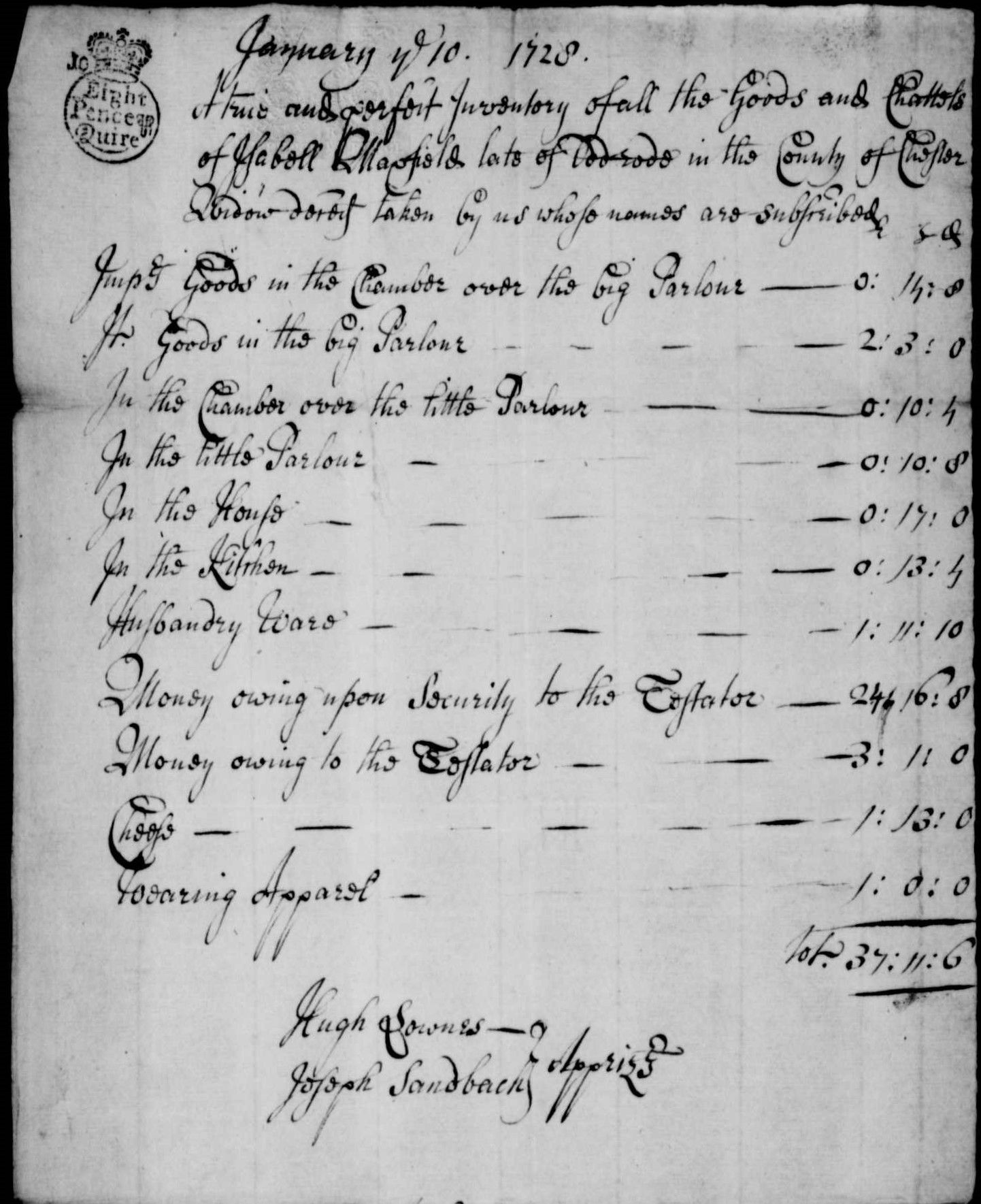
►1728 Thomas Shufflebotham recorded as tenant of The Ashes § Mary Sherret or Sherratt ‘de Lime Kiln’, wife of John, dies § her burial entry is the earliest instance of Limekilns used as a place-name (but see 1706) § Robert Podmore of Burslem, blacksmith, dies, his burial recorded in both Burslem & Wolstanton registers (Aug 27) § Ralph Brown of Congleton Edge dies § John Ford of Ashes dies § John Twemlow (snr) & his wife Mary die, & are buried at the same time § Mary Hobkin dies following childbirth, & is buried with her parents Thomas & Mary Mellor at Norton (xxx) § John Rowley dies, living in Wolstanton parish, & is buried at Biddulph (Dec 23) § John Maxfield (xxx) & his wife Isabel die (see her will above) – Isabel dies Dec or Jan (1728/29) but the only burial record is for Elizabeth Maxfield (Dec 27), most likely an error for Isabel § either way this glut of deaths among a small related group, mostly youngish (noting also the Twemlows, Mary Hobkin, & in Jan 1729 Mary Cartwright of OHG) suggests an unusually deadly localised epidemic (see below) § William Ford jnr of Bank marries Elizabeth Pool § John Rowley marries Anne Hulme, both of Biddulph parish, & they live on Congleton Edge, ancestors of the Rowleys of CE § Solomon Oakes marries Hannah Ford at Wolstanton (June 8) § Isaac Ford marries Grace Baker at Wolstanton (Oct 6) § Elizabeth Bratt or Brett marries James Barnett at Wolstanton (Aug 31) & he settles at Alderhay Lane § Hannah Oakes, dtr of John & Ann, born (later Ford) § John Broad of Limekilns born
►1728-29—Fever Epidemic evidently some unusually deadly plague or contagious epidemic affects the region in 1728 & 1729 (see comment above), though there doesn’t seem to be independent record of it – parish burial registers however consistently show greatly increased burials in the 1st or both years, esp from August 1728, inc as noted above on Mow Cop an alarming number of close neighbours, relatives, & married couples, sometimes on the same day (for specifics see 1728, 1729) § the phenomenon has been independently noted in Trentham parish register § with normally c.15-30 burials Trentham suddenly has 65 in the year 1728 OS (ie from March 25), 43 1729, 22 1730 then a run of below average years (normal after a culling of the vulnerable population) § in our own parishes around MC: Church Lawton normally c.20 burials suddenly has 51 in 1728, 20 1729, 30 1730; Biddulph normally under 20 has a less dramatic spike of 30 in 1728, 32 1729, 22 1730, 31 1731; Wolstanton’s norm is more variable, usually between the 20s & 40s, but shows two clear spikes of 55 in 1726 (probably unrelated) & 70 in 1729; Congleton normally in the 20s or 30s leaps to 64 in 1727, 59 1728, 62 1729, then back to the 30s; xxx?Newch+Astxxx § unusually & by chance the miniser of Trentham Revd Jeffrey Williams records causes of death (‘Distemper as far as known’) during the decade 1722-31, the high years containing no new or unusual ailment, the higher numbers largely accounted for by an increase in ‘Fever’ (1 of the regular causes in normal years eg a high 7 out of 22 in 1724 ie 33%; but 36 out of 65 in 1728, 25 out of 43 in 1729 ie over 50%) & also very slightly in ‘Natural decay’ (ie of the old)* § the most likely common fever to manifest as a virulent epidemic affecting all age-groups is probably typhus, though the history of epidemics also sees the appearance & disappearance of new or mysterious illnesses that don’t necessarily conform to absolute diagnoses nor exist in other periods (sweating sickness, scrofula, ague, etc) § smallpox, measles & chincough (whooping cough) are among the familiar killers named by the minister of Trentham, so it isn’t them § ??also relevant is the/some sources say there is a famine in England in 1727-28 (tho we lack details of its severity & spread)?or? (“famine”may be alt/or/mis interpretation of the high fatalities) – deaths during famines come mostly from diseases that target those with reduced resilience & act faster than starvation alone; while in the aftermath of famine it’s not unusual for higher levels of ordinary illness or opportunistic epidemics to affect the debilitated population § xx
>*copiedfr table>by chance the great epidemic of 1728-29 occurs during this period, causing a dramatic spike in total deaths but interestingly no new or unusual ‘distempers’, except 3 instances of chincough (whooping cough), the excess deaths almost entirely accounted for by the increase in ‘fever’ cases together with very slight increases in *natural decay & natural weakness (old age & babies – both likely to die quickly in an epidemic perhaps before the fever symptoms are obvious) & ‘ague’ (itself a feverish condition, perhaps indistinguishable)<
►1729 William Waller churchwarden of Biddulph [unidentified] § the only known William in the Waller family is born at Rushton 1713 & marries at Biddulph 1740, so this WW is a mystery (though the name is clearly written); being relative newcomers to the parish it might still I suppose be an error for Richard, who occupies the related office of overseer 1732 § Solomon & Job Oakes witness the will of John Heath of Trubshaw (proved 1732), indicating a close association & suggesting they work in the coal mines at Trubshaw § Hugh Sherret or Sherratt of Congleton Edge, mason, dies § another Mary Sherret or Sherratt, this time described as ‘de Clough’, dies (cf 1728) § Mary Cartwright (nee Sandbach) of Old House Green, wife of John, dies aged about 28 (Jan 25), & is commemorated on a tombstone (now badly worn) near the south-west corner of Astbury church § Ralph or Randle (‘Randulphus’) Peever marries Mary Brownsord at Wolstanton § Hugh Delves ?of Stonetrough marries Margaret Shipton § Solomon & Hannah Oakes’s first child William is born, & baptised at Astbury as of Odd Rode (see 1726)
►c.1730—Two Hundred Year Lease supposed or approx date of 200 year lease of the field behind The Views & in front of Hardings Row (later held by Samuel Harding & the Mellors; xxxref to 1904 salexxx) § if correct this is the earliest explicit indication of enclosure within ie beyond the edges of the common – furthermore an isolated plot & long lease make no sense unless taken to imply that a house exists or is to be built, perhaps (as becomes the custom) not on the field itself but on adjacent common land § the candidates are the house of which 26 Hardings Row with its 18thC gable end is the remnant, or the original house on the site of Hardings Row proper, or Pump Farm, the 1st being perhaps the most likely (The Views to which the field later belongs is built on part of the field in the ?1850s/60s) § the lease is too long to postulate an industrial purpose, unless (in view of the 1731 quarrying lease) it might be leased by the Swaine/Antrobus millstone partnership to provide a smallholding for their millstone maker, quarry manager, or workman/men § either way it provides a date for the 1st house at Hardings Row (& perhaps the surviving gable of 26), which may well be the 1st permanent house on the upper part of the common in Tunstall manor, which later becomes MC village § it’s also possible that the original lease is for a larger property which has been divided up eg all or some of the fields held in the tithe apportionment by the Harding bothers; the date however is too early for the Hardings to be the original leaseholders § it approx coincides with the lease of a cottage & croft to John Salmon of Dales Green, as well as the lease of the quarries to Swaine & Antrobus § xx
►1730 Congleton’s Lower or Bridge Chapel converted into a workhouse (precursor od Mossley 1810) § John Salmon the younger of Dales Green, webster, takes a lease of a cottage & croft at MC from squire Sneyd § supposed or approx date of 200 year lease of the field behind The Views & in front of Hardings Row (later held by Samuel Harding & the Mellors) § if correct this is the earliest explicit indication of enclosure within or beyond the edges of the common & implies that a house exists or is to be built, perhaps on adjacent common land (see above) § Clara Ball dies § Philip Porter of Odd Rode dies (no burial record found; administration granted to widow Margaret Nov 16; see 1756) § John Stubbs, ‘Collier’, marries Hannah Hancock, both of Smallwood § a year or so later (1731) John Stubbs of Smallwood, ‘Woodcollier’, is buried – the 2 entries in Astbury parish register showing that collier is still sometimes being used in its old sense of a charcoal burner, solving the problem of the Smallwood colliers who appear in the register at the same time as those from the MC area (from Thomas Maxfield 1724 onwards) § Smallwood is immediately adjacent to Street Forge (in Odd Rode), which uses charcoal, but 2½ mls from the nearest coalxxsee tablexx § Zachariah Twemlow marries Hannah Walley § Jonathan Baker (II) marries Margaret Stubbs § John Bratt or Brett jnr of Alderhay Lane marries Mary Smith of Odd Rode § John Brereton marries Martha Salmon at Church Lawton (parents of Randle Brereton snr) § John Cumberbatch marries Anne Stanier at Newcastle (Oct 1), both of Biddulph parish – probably Anne dtr of Francis & Elizabeth b.170?6/7 § Edward Lowndes (III) born
►1731—Millstone Rights Leased to Swaine & Antrobus millstone quarrying rights on the Tunstall part of Mow Cop leased by squire Sneyd to John Swaine of Knypersley & Philip Antrobus of Congleton, successively snr (1677-1749) & jnr (1720-1788) § Antrobus is a businessman/investor, though his family (of Kent Green) has been associated with quarrying on the hill for several generations, inc his father Edmund (eg xxx) & his older brother Edmund (see 1703) § it’s unclear if John Swaine is himself a millstone maker (see 1733), there is some evidence that he may be a carter but he’s a fairly high-status person; millstones are purchased from him by name (eg 1733) but this doesn’t preclude him being the merchant or agent & the millstone makers now being employees or sub-contractors, men of lesser status than the independent yeoman millstone makers of previous centuries (cf 1717) § (later William Rowley is Antrobus’s partner – see 1746, 1754) § the lease continues until 1780, when Ralph Waller jnr of Hay Hill becomes lessee, having previously worked for William Cook, Antrobus’s manager or sub-tenant (see 1780) § (some connection between this quarrying lease & the 200 year lease of ?1730 might throw different light on the latter, see c.1730) § § § the lease appears to remain in force until 1780, when the rights pass to Ralph Waller, 2 generations of Philip Antrobus controlling the main quarrying & millstone making parts of the hill for virtually half a century § § xx
►1731 millstone & other quarrying rights leased by squire Sneyd to John Swaine of Knypersley & Philip Antrobus of Congleton (see above) § Thomas Copland serves as constable of Tunstall ‘for Thos. Burslems house at Harriseahead’ § ‘great frost’ at start of year, followed by a warm, very dry summer & drought § Revd John Cartwright, vicar of Middlewich, rector of St Mary on the Hill, Chester, & (with his mother Elizabeth, still living) owner of Hall o’ Lee, dies (Jan 1731 NS) § Peter Oakes dies § John Bratt or Brett of Alderhay Lane dies § his son Edward Bratt, called potter, marries Elizabeth Ford of Odd Rode (?probably Isaac’s sister b.1705) § Joshua Hobkin(s), widower, marries Martha Shufflebotham § Ralph Harding born in Audley parish (probably Talke, Butt Lane, Hardings Wood area), & baptised at Audley [?Dec 13 – month indistinct] § Elijah Mayer born at Wedgwood (Brindley Ford or thereabouts), & baptised at Newchapel (April 18) § John Ford, son of Isaac & Grace, born (no bap fd){where’s this date from??} § Jonathan Hulme, son of Daniel & Mary, born § ?probable birth date of William Hancock of Limekilns – if he is William son of William & Hannah baptised at Newchapel Jan 2, 1732
►1732 Chester Courant newspaper founded § Richard Waller overseer for Knypersley End of Biddulph parish § John Swaine is executor of his father-in-law, Biddulph yeoman Thomas Brooke, in whose will he is called Mr., indicating high status § squire Randle Wilbraham dies, & is buried in Nantwich church, his Nantwich estates already settled on eldest son Roger, 2nd son Randle (called of Lincoln’s Inn; builder of the Tower) succeeding to the manor of Rode § John Stonhewer or Stonier of Crowborough, formerly of Gillow (b.1663), one of the most influential & wealthy men in Biddulph parish, dies, mentioning various Stonier kinfolk in his will § xxxxxxx § Ralph Sherratt of Puddle Bank dies § in his will (made 1730, proved 1733) his goods are divided between sons Jonathan & William, & he bequeaths the latter ‘the Little house att Congleton Edge’ (cf 1675) § Robert Podmore of Dales Green dies § xxxhis willxxx(made & proved 1732)xx § his brief inventory is made by John Twemlow & Hugh Henshall § xxx § Nathaniel Gregory dies, & is buried at Newchapel § John Heath of Trubshaw dies § Job Horne of Newchapel & his son Matthew are both called potter when Matthew marries John Heath’s dtr Martha – evidence that serious potting goes on at Newchapel (cf 1747) & perhaps of the continuing involvement in the industry of the Heath family, who came to Trubshaw from Burslem c.1690 § Richard Rowley, millstone maker (‘Milstone Gettr.’), marries Esther Muchell at Astbury (Feb 7; later of Mow House) § Edward Broad of Limekilns, widower, marries Elizabeth Sherratt § Thomas Knott, originally of Congleton, marries Elizabeth Kelsall at Wolstanton, their various subsequent abodes (townships of Odd Rode, Newbold, & 1739-40 Brieryhurst) suggesting they live on the hill – either way they are ancestors, through their dtr Elizabeth & her illegitimate son Thomas (b.1762), of the Knott family of MC § Jane Boulton, baptised at Horton Jan 30 dtr of William & Ann, is the only known baptism in this generation suitable for the Jane who marries James Whitehurst jnr in 1750 (she d.1785) § Thomas Cartwright, son of John ‘Gent’ & blank, baptised at Astbury [presumably John & Elizabeth of Bank]
►1733 Trentham estate pays John Swain £3-2s for a millstone § Richard Parrott writes ‘An Accountt Who Hath Enjoyed the Severall Estates in the Parish of Audley and Hamlett of Talk in the County of Stafford for 200 Years last past’, a gossipy record of 17th & early 18thC persons, families & properties, usually referred to as Parrott’s survey § xxclarify wchRichd-Audley bk says b1662(snFrancis,f of Stonier;this RP is the industrialist)but elsewh implies he d1721 &had snRichd f1744??xx § squire Ralph Sneyd dies, his son Ralph aged 10, the functions of lord of the manor of Tunstall devolving for some years on his widow Anne’s 2nd husband Crewe Chetwood (see eg 1747, 1758) § Eleanor Delves (formerly of Stonetrough & Harriseahead) dies at Congleton § Job Oakes marries Mary Ford at Astbury § their first child Thomas is born 4 months later & baptised at Astbury (see 1726) § Hannah Hobkin has illegitimate or pre-marital daughter Martha by Thomas Dale of Dales Green (see 1734) § Thomas Barnett of Alderhay Lane born § Hannah Oakes dtr Solomon & Hannahxxwhere-bap?xxNBofAst@mxxx(thought to be the HO who marries Joseph Pointon 1755)
►1734—Thomas & Catherine Clare & the Clare Family Thomas Clare of Dales Green marries Catherine Billinge (‘Billidge’) at Wolstanton or Newchapel (June 16), probably dtr of John Billinge of Sandbach (tho no baptism found; see 1706 for John Billinge) § they have 9 known children between 1735-55 inc 4 sons who marry & have children, John, Thomas, William & James (Thomas & wife & children moving to Burslem c.1793), & 3 dtrs likewise, Mary Mountford, Elizabeth Oakes & Hannah Pot § although the Clare family of Alderhay Lane has been around since TC’s grandfather James, first noted in 1666, the subsequent Clares of MC are all descended from Thomas & Catherine via 3 of their sons, becoming one of the largest MC families § Clare is the 5th most common surname on the hill in 1841, most of them concentrated in the Alderhay Lane/Dales Green area § through dtr Mary (b.1737, m.1759) they are also ancestors of the Mountford family of MC (whose family nickname Kit derives from Catherine Clare; see 1759—Isaac & Mary Mountford), while granddaughter Sarah Clare (b.1786, m.1805 Nathan Ball) is responsible for much of the Ball family § see 1768 for TC’s death & will, not proved till 1789, probably the year of Catherine’s death (no record of burial or re-marriage found); see 1844 for John Clare & Clares Row; & see 1939—National Register for the last Clares § xx
►1734 will of John Barlow (III) refers to timber ‘upon my Estate at Ollers Green long since by me intended to be fallen’, plus codicil 1742 referring again to the standing timber at Ollers Green [Old House Green] (d.1747, will proved 1748) § Joseph Bourne of Chell bequeaths 20s a year to the poor of the north side of Wolstanton parish (ie Newchapel chapelry) & 30s a year to the schoolmaster of Newchapel, latter from his property the Bent (Bent Fm, Packmoor), currently tenanted by John Henshall, his trustees being his brother John Alsager & John Henshall § his will (made 1733, proved 1734) is witnessed by John Swaine (he signs thus), Samuel Tellright (likewise) & John Burgess [evidently Swaine the partner in the millstone quarries] § Elizabeth Cartwright, widow of John of Hall o’ Lee, dies § Jonathan Buckley of Dales Green dies, & is buried at Astbury (?probably JB b.1668 at Moreton) § ‘Ellen Twemlowe of Cobb moor Widow’ buried at Lawton (Feb 14) – widow of John & mother of Zachariah (1696-1761), but as usual with JTs it’s uncertain which John this is § Thomas Baddeley of Newfield (Tunstall) marries Mary Cartwright of Rode at Congleton (Feb 21) – presumably Mary b.1712 eldest child of John & Elizabeth of Bank § (she dies in or after childbirth in March 1735; the son Thomas d.1755, they are thus the last of the Baddeleys of Newfield, the historic property passing to TB’s nephew Smith Child; TB d.1770) § Thomas Dale marries Hannah Hopkin or Hobkin(s) at Wolstanton or Newchapel (June 3) § Joseph Pointon marries Martha Keen at Biddulph (July 22) § their son Joseph Pointon (of School Farm) born about 4 months later, & baptised at Biddulph (Dec 1) § Clare Hodgkinson born § Clare or Clara Ball jnr has illegitimate son Nathan by her ?cousin John Lawton (but the baby dies) § Hugh Henshall of Newchapel (surveyor, canal engineer, & industrialist) born § John Whitehurst (of Tower Hill) born § Thomas Taylor, son of James & Deborah, born § Isaac, son of William & Sarah Mountford, baptised at Biddulph (xxx) – the only baptism that suits the first Isaac Mountford of MC, though he’s of Norton parish at the time of his marriage (see 1759) [no other Isaac baptism found, & no other contemporary Isaac] § John, son of Thomas & Elizabeth Stonier of Newbold township, baptised at Astbury (May 5) – the only baptism that suits John Stonier of Brownlow, with his wife Anne (b.1735, nee Child, see 1756) ancestors of most of the subsequent Stoniers & Staniers on MC § Thomas’s occupation is ‘Sawer’ & he’s descended from the Stoniers who spill over the ridge from Biddulph parish in the 17thC or before
►1735—Gillow Heath Workhouse workhouse built for Biddulph parish at Gillow Heath, a modest building of brick & thatch, now the Staffordshire Knott public house<ch—BUTother source (?RB) says “near”!cf.alsoalt date 1783? § little is known of its history & inhabitants, & no mention has been noted in the parish register until the 19thC (the 1st MC person buried at Biddulph as of the workhouse being Thomas Brammer 1832) § workhouses pre-1834 are peripheral to the system of out-relief, small & relatively benign compared to their successors § § assumptions that it closes before 1803 are based on its apparent absence from a government survey of that year, though the survey’s question is how many permanent inmates does the parish have, so a zero return doesn’t mean there isn’t a workhouse – it doesn’t make sense for it to have closed unless a new workhouse has been built § it is however absent from the 1841 census, while Mossley Workhouse has plenty Biddulph surnames (Bailey, Brown, Hall, Mitchell, Rowley, etc) – so Biddulph closes its small workhouse on joining the Congleton Union in 1837, Mossley being barely a mile from the Biddulph boundary § it remains in use until Arclid’s completion in 1845 § xx
►1735 River Dee deepened to restore its navigability to Chester § Thomas Powys or Powis of Shrewsbury & his son Edward (1710-1768) purchase the manor of Great Moreton & associated properties from the heirs or trustees of the Bellots, & Edward lives at Great Moreton Hall § Robert Hobson of Congleton & Old House Green dies § Joseph Sandbach dies in Odd Rode township, evidently living with his son-in-law John Cartwright of Old House Green (as in 1728), & is buried at Astbury as ‘Late of Eaton’ § Mary Baddeley of Newfield (nee Cartwright of Bank) dies in or after childbirth aged 22 – the child Thomas is baptised at Wolstanton March 24, & Mary buried a few days later [day illegible] (he d.1755) § Richard Podmore (VI) marries Mary Pass at Horton (May 6) § the marriage licence calls him of Astbury parish, & their first child Elizabeth is baptised as of Buglawton township § his father Richard Podmore (V), widower, marries Mary Hasledine of Knutsford at Christleton, nr Chester (Aug 6) § Jane Clare of Wolstanton parish marries William Boulton of Biddulph § Ralph Shaw of Wolstanton parish (later of Limekilns; see 1753) marries Elizabeth Ward of Odd Rode § William Cheshire marries Mary Bayley, widow, the earliest indication of the Cheshire family of Limekilns § Richard Oakes jnr, son of Richard & Sarah, born (later of Little Chell, f.1762; no death found) § Peter Oakes, son of Job & Mary, born § Anne Child born, dtr of Richard & Hannah of Wedgwood township (later of Newbold), future wife of John Stonier (see 1756) § Ann(e) Stonier (of Hurst & Tunstall) born at Tunstall
►1736 Witchcraft & Conjuration Act of 1604 repealed & replaced by legislation redefining witchcraft & magic as forms of criminal fraud § Hall o’ Lee leased by Grace Cartwright to John Lawton (see 1737) § squire John Lawton dies § John Whillock of Newbold dies, & is buried at Biddulph § James Clare (1716-1751), son of John & Elizabeth of Alderhay Lane, marries Mary Bottoms, & they seem to live in Audley parish (presumably Talke/Butt Lane area) § John Sherratt marries Mary Burslem (Jan 29), both of Newbold (Limekilns area) (probably Mary b.1715 dtr of John) § Job Oakes, son of John & Anne, born § Sarah Harding jnr born, & baptised at Wolstanton (April 11) § Joseph Baddeley born at Burslem, son of John & Mary (settles at Harriseahead at or before his marriage 1763; ancestor of subsequent Baddeleys of Harriseahead, MC & Rookery; nothing has been found re his parents, there are multiple John Baddeleys)
►1737 Hanley church (St John the Evangelist) founded (rebuilt 1788-90) § John Lawton of Hall o’ Lee takes in Zachariah Twemlow & Richard Ball & their families as lodgers & is fined by the court of Lawton manor & ordered to ‘forthwith discharge them from his House’ (manorial courts’ jurisdiction over lodging is a remnant of laws discouraging vagrancy & the harbouring of riffraff) § Richard Ball is the son of Nathan (I) & Clara (nee Lawton) & future father of Nathan (III), & John Lawton may be the cousin who fathered Clara Ball jnr’s illegitimate child in 1734 § Hugh Lowndes (IV) of Old House Green dies (buried Sept 5) § he makes his will ‘being something Indispos’d as to health’ (Feb 2, but not proved until 1741), once again like his grandfather (see 1680) making special mention of ‘all ye Stone Troughs and Cisterns now being at ye Old House Green’ § xxxmore fr willxxx § William Ford of Stonetrough dies, & a few months later his son William § Elizabeth Ford of Bank dies (see 1738) § Henry Baker dies at the Tellwright family home of Stanfield, between Burslem & Chell in Sneyd township, & is buried at Burslem (for his widow Alice see 1747) § Mary Baker, widow, dies & is buried at Church Lawton (either ancient widow of Robert or widow of his son Jonathan I) § Isaac Dale dies, & is buried at Church Lawton (?probably ID b.1666) § Abel Hopkin dies § John Reeve (‘Reve’) dies § Charles Cartwright of Bank marries Mary Kelsall of Haslington, aged 17, dtr of Hannah & the late Revd Richard Kelsall, at Acton nr Nantwich (May 13) § Lawrence Caulton, widower, marries Mary Waller of Biddulph parish § John Sherratt marries Mary Burslem, both of Newbold § Isaac Dale born, son of William & Sarah (?probably ID the pot seller of Exeter; see 1802) § Mary Clare born (later Mountford), & baptised at Wolstanton (July 19) § Richard Rowley jnr (of Mow House, d.1806) born § William Rowley of Congleton Edge born § Jonathan Buckley born at Red Hall, son of Thomas & Hannah § Richard Podmore (VII) born, & baptised at Newchapel § Francis Stonier (of Hurst & Newcastle) born at Tunstall § Jonas Parkinson born at Castle Church nr Stafford (May 9), baptised as Jonah
►1738—Whitehurst Family Egerton & Mary Whitehurst of Firwood House, Biddulph (ancestors of the numerous Whitehursts of the area) die, & are buried at Biddulph (July 15 & Oct 24) § their unusually shaped tombstone can still be seen in Biddulph churchyard § Egerton (1654-1738) settles in Biddulph parish in the 1680s; his wife Mary may well be a native, though unfortunately no marriage record has been found so her maiden name isn’t known § born at Whitehurst in Dilhorne parish, c.10 miles away, a younger son of an ancient line of yeoman farmers who also dabble in coal mining, it seems inescapable that Egerton Whitehurst’s move represents industrial links between the Biddulph area & the small Cheadle coalfield – another in this period being the marriage at Dilhorne of Francis Stonier of Hay Hill & Elizabeth Rooker, grandtr of the leading developer of coal mining in the Biddulph Valley (see 1699) § through their sons Henry, James, & John (of Congleton, clockmaker), & also through grandtr Margaret’s illegitimate son Charles, Egerton & Mary are founders of the Whitehurst families of Biddulph, Congleton, Mow Cop, Derby, Capesthorne, Manchester, Stockport etc, inc the famous dynasty of clockmakers of Congleton & Derby § 3 strands live on MC: very probably Egerton & Mary’s son James (of Odd Rode township); several lines of descendants of their eldest son Henry, who probably lives at Holly Lane; & Henry’s dtr Margaret’s son Charles (c.1750-1830) & his numerous descendants § the Congleton line (descendants of John) moves away or dies out, the last being Charles who comes to MC to marry Susannah Harding (1844; & afterwards gets transported to Australia); meanwhile new Whitehursts appear in Congleton, most of them from MC! § Whitehurst is the 12th most common surname on the hill in 1841 § xx?note re Whitehurst family/name/descdtsxx § xxx § xx
►1738 Revd John Wesley (1703-1791) forms the first Methodist society (May 1), experiences ‘instantaneous conversion’ at one of its meetings (May 24, Wesley Day), & becomes a lifelong revivalist & itinerant preacher (1738-39), joined by his brother Revd Charles Wesley, who also writes his 1st hymns (see 1738-46 below) § earliest mention of name Grindlestone (‘the Grindstone’) § subsequent occupant MC-born John Oakes (1730-1796) is a ‘Publican’ so it might be a pub sign – a grindlestone is an edge-grinding ie sharpening stone, though grindstone is sometimes used of a millstone; Grindlestone stands just outside Lawton Park § pauper Mary Sherratt given 2d by Astbury parish ‘to buy her Tobackee’ § Egerton & Mary Whitehurst of Firwood House, Biddulph die (ancestors of the Whitehursts of Biddulph, Congleton, & MC; see above) § Zachariah Twomblow (Twemlow) dies, called ‘colorer’ (collier) in Lawton parish register (cf 1737; identity uncertain, as ZT the family man continues baptising children at Newchapel & d.1761) § burial entry for William son of William Ford gives his residence as ‘und[er] Moul in Odd Rode’ § three of William Ford’s children die during the year following his wife Elizabeth’s death § the same William Ford marries Mary Shaw at Prestbury § Thomas Ford ‘of Biddulph Collier’ [presumably Isaac’s brother] marries Ann Clewlow at Newcastle, & they afterwards (1740s) live in Odd Rode township § Martha Ronkhorn (or Runcorn) of Newbold township has illegitimate son Joseph by Ralph Gosling of Biddulph (cf 1741) § Abraham Lindop born at Stretford nr Manchester, illegitimate son of Elizabeth by Abraham Beswick (baptised April 16, ‘Lyndap’; see 1749, 1760, 1832) [accounts stating he’s born at Chell Heath are a misreading of Henry Wedgwood’s article, though Wedgwood is himself mistaken in assuming he’s a native of Harriseahead, where he settles on or before his marriage 1764]
►1738-46—Origins of Methodism Revd John Wesley (1703-1791) forms the first Methodist society (May 1){<BUTdoesn’t accord with ChambersBioDict—check!}, experiences ‘instantaneous conversion’ (alias being born again) at one of its meetings (May 24, Wesley Day), & becomes a lifelong revivalist & itinerant preacher (1738-39) § his brother Revd Charles Wesley (1707-1788) is also converted, writes his 1st hymns, & joins him in preaching § at Bristol JW finds Revd George Whitefield preaching out-of-doors, himself preaches (indoors) on the Sermon on the Mount, noting that it’s ‘one pretty remarkable precedent of field-preaching’, & the next day follows Whitefield’s example & preaches in the open-air (Mon April 2, 1739), frequently following the practise hereafter § (Primitive Methodism later regards open-air worship & preaching as one of its defining characteristics, justifying it as much from Wesley’s example as from scripture, though he isn’t as strong an advocate of it as they imply) § xxQUOre in the lanes&hedges etcxx § as early as June 11, 1739 he writes in his journal ‘I look upon all the world as my parish’ § § as evangelism spreads & growing numbers of local societies are formed, ‘Methodism’ as an organised network or ‘connexion’ emerges between 1738 & c.1746 § forming ‘societies’ is normal practice from the start (derived both from the ‘holy club’ of the Wesleys’ student days & from a practice common in other revivalist sects eg Moravians); class meetings begin 1742; the 1st ‘conference’ is held 1744; travelling preachers’ ‘rounds’ or ‘circuits’ covering societies in a given region (large at 1st) originate in 1746; xxx § the movement reaches our area by 1745, when John Wesley preaches at Roger Moss’s house nr Rode Hall (April) & Thomas Buckley of Newbold becomes a Methodist (for local beginnings see 1740, 1745-46, 1760, c.1770, 1783, c.1785) § Abraham Lindop introduces Methodism to Harriseahead in or soon after 1760, after hearing Wesley preach at Burslem § not seeing itself at 1st as a separate church or denomination, Methodist societies & meetings are open to all denominations & membership is open to women (unusual at the time), while converts are advised to worship at the nearest (Anglican) church – a practice later repeated in the formative phase of Primitive Methodism § JW always regards Methodism as a movement within the Anglican church, but he departs from it significantly in 1784 by assuming the authority to ordain clergy (at 1st to work in America) & in his later years makes robust arrangements for the continuity of the movement after his death § ironically, within a few years of his death the Methodist Church or Connexion organises itself as a separate nonconformist church, while at the same time it experiences considerable internal dissidence & fragmentation, of which the Methodist New Connexion (1797) is the 1st formal instance & the rise of Independent Methodism in Cheshire & Lancashire & of Primitive Methodism on & around Mow Cop (1800-12) a significant part (see xxx) § xx
►1739 in Bristol Revd John Wesley preaches in the open air for the 1st time (April 2; see 1738-46) § Royal Navy buys only Cheshire cheese from this year (a major cheese consumer because of its nutritiousness & preservability) § by this date London is the chief remote market for Cheshire cheese § John Clare of Alderhay Lane dies, & is buried at Church Lawton § his spartan inventory consists of ‘Six Cows ... Household Goods ... Money in purse’, in all £19 of which the cows account for £15 § John Twemlow supports Elizabeth Clare in obtaining administration of her husband’s estate (the document calls him Twomley but he signs Twemlowe) § John Clare is the 2nd generation (see 1666) & the MC Clares are all descended from his eldest son Thomas (see 1734) § Revd Ralph Baddeley, curate of Newchapel, dies, precipitating a dispute over who has the right to appoint his successor (see 1740, 1741) § Sarah Mellor marries Thomas Pott § Margaret Whitehurst marries Isaac Rathbone of Congleton at Astbury – not MWh b.1721 so it must be her middle-aged aunt b.1692, as it’s common for spinsters who’ve stayed at home to look after aged parents (as youngest dtrs often do) to marry after the parents die (Egerton & Mary both d.1738); no children are known, but the only baptism for an Isaac Rathbone is 1708 at Gawsworth, making him rather young for such duty § Samuel Cheshire born (baptised Jan 1, 1740) § Thomas & Anne Ford(e) baptise their 1st child Thomas at Biddulph § John Ford, son of William & Mary of Bank, born (presumably the JF who d.1810, age given as 72, & in 1767 is described as great-grandson of William Ford (II d1715) – meaning the 1756 burial record is an error for one of his brothers) § Everard Cartwright born, only son of Charles & Mary of Bank, named from his grandmother’s (Charles’s mother’s) maiden name (see 1711)
►1739-40 exceptionally severe winter, one of worst ever, the cold & snow exacerbated by easterly & northerly gales (Oct onwards) § remains cold throughout 1740
►1740 dispute re advowson of Newchapel, the judge upholding the claim of the Sneyd, Bowyer, & Bourne/Crewe families as founders of the church, against the vicar of Wolstanton Revd John Harding’s claim that he appoints the curate § Congleton chapel (St Peter’s) rebuilt § 1st Methodist society in Burslem supposedly formed [though it seems far too early] § William Cheshire of Limekilns dies § Anne Whitehurst (nee Ford), wife of James, dies § Jane Ford (nee Antrobus) dies at Congleton § Mary Dale marries William Shaw § Elizabeth Knott born (ancestor of the Knott family of MC; see 1762) § Joseph Rowley born at Bradley Green (later of Whitehouse End)
►1741 Revd Thomas Malbon (c.1700-1777), schoolmaster of Congleton, appointed curate of Newchapel (formally instituted July 9; see 1740), & commences a new parish register (better preserved than its predecessor) § xxx?more re reg/or/see1724xxx § Joshua Stonehewer & Richard Stonier churchwardens of Biddulph – incidentally illustrating the simultaneous usage of the different spellings, as they each sign thus § epidemic(s) of ‘fever’ &/or typhus (1741-42) § Richard Podmore (V) of Somerford, formerly of Mow House, dies (Nov 9), & is buried at Astbury § his gravestone near the north-west corner of the church records him as ‘late of Mole-house in Stafford sheire’ § his son Richard (VI) is called of Mole in documents related to his father’s death, but lives at Somerford for some years after (see 1742 & cf 1735) § Podmores continue to be buried in the family grave at Astbury until Thomas in 1786 § Elizabeth Podmore ??of Dales Green, widow of Robert, dies § burials at Wolstanton of Obadiah son of John Swain & Mary wife of John ‘Swinne’ (Nov 2 & Dec 10) may refer to John Swain(e) the millstone man § John Lawton of Dales Green dies, & is buried at Biddulph § Moses Hobkin or Hopkins dies § Lydia Hopkin(s), wife of Jonathan, dies § Thomas Shaw of Newbold dies – probably TS the lime man (see 1719) § Thomas Rooker ‘of the Fields’ (Biddulph) dies (?presumably Thomas b.1673) § James Whitehurst, carpenter, & his dtr Mary die in the same month (July) § his other dtr Sarah marries William Bayley of Odd Rode township (termed ‘Gent’) § James Whitehurst jnr at some point returns to Biddulph parish (see 1750) § John Hobkin marries Jane Taylor § John Lawton marries Mary Allen at Biddulph § Esther Rowley, dtr of Richard & Esther, born § Cartwright Hancock, ‘Bastard Child’ of Lydia, baptised & buried at Newchapel (March 14, June 25)
►1742 lease of Hollin House including coal mining rights § incomprehensible entry referring to Limekilns in Astbury parish overseers’ accounts: ‘Spent in meteing abough hasalous agane at Lime kill astbury’ § burial of Mary Leigh at Burslem (May 10) may be Molly Leigh the so-called Burslem witch (a milk seller notorious for diluting her milk) § this identification conflicts with the usual one (dating at least from Ward, 1843) identifying her as the Mrs Margaret Leigh of Jackfield buried April 1, 1748, though Ward says nothing of a witch, merely explaining the transversely aligned tomb by her having been re-buried thus to ‘pacify’ her ghost § since ‘Mrs’ indicates a person of wealth & status & Molly is the familiar form of Mary not Margaret, it’s impossible to reconcile the 1748 identification with the legend, so either it’s wrong or 2 separate local legends & characters (witch & ghost) have been conflated § the fullest version of the story is Henry Wedgwood’s (1877) § belief in witchcraft in any real or legal sense is long defunct by this time, the redundant witchcraft law of 1604 being repealed in 1736 § Thomas & Hannah Dale bury children Mary (Feb 27) & Randal or Randle (Oct 10) § Richard Podmore (VI) lives at Somerford for some years after his father’s death, as indicated by baptisms of daughters Mary this year & Anne (1744) § Elizabeth Ronkhorn (or Runcorn) of Congleton Edge has illegitimate son John by Thomas Mellor of Biddulph parish (presumably III) (1741/42, baptised Astbury Jan 31, 1742) § Samuel Oakes, son of John & Anne, born
►1742-54—Newchapel Marriage Register earliest marriage register for Newchapel kept by curate Revd Thomas Malbon, within the general register (baptisms & burials) of 1741-89, though it’s less that 2 pages long & contains 22 marriages, 1742-54 § it’s scuppered by the new regulations & printed pro-forma marriage registers which come into force on Lady Day (March 25) 1754, after which there’s no further Newchapel marriage register until 1847 (shortly after becoming an ecclesiastical parish in its own right), Newchapel marriages being included in Wolstanton parish registers usually without distinction § for evidence that marriages are sometimes conducted at Newchapel before 1742 but likewise recorded in Wolstanton register see 1688 & xxx § the register includes Richard Ball & Ann Austin’s marriage in 1749 (parents of Nathan III), Jonathan Baker & Ellen Twemlow in 1750, & the only record of the marriage of Ralph Harding & Dorothy Oakes in 1753 (qv), a milestone in the history of MC as well as strong confirmation of the traditional 1754 date for the Tower § the last 3 entries inc the latter are conducted ‘by Mr. Turner’ [Revd Daniel (1709-1789) curate of Rushton, Meerbrook & Quarnford, a well-known clergyman in the district who frequently officiates in other parishes & acts as the Bishop’s surrogate in issuing marriage licences etc]
►1743 Thomas Buckley constable of Tunstall ‘for Red Hall at Dales green’ § first mention of name Red Hall (‘Rod Hall’ in Adams is doubtless a misreading) § his namesake & relative (?cousin) Thomas Buckley of Newbold becomes a Methodist, the first in the district (see 1745-46) § John Bennet (1714-1759) joins Methodism & begins establishing his network or ‘round’ of societies & preaching places in & beyond his native Derbyshire (see 1744, 1745-46) § Samuel Oakes snr receives 10½d poor relief from the curate of Newchapel (cf 1700) § James Plant snr, formerly of Roe Park, dies § James Ford, formerly of Kent Green, dies at Congleton § Elijah Rigby or Rigbey marries Lydia (‘Lydy’) Hancock at Biddulphch (April 10; ancestors of the Rigbys of MC & Kent Green) § Isaac Ford jnr born, & baptised at Astbury on May Day (f.1752 – his father’s will – but no bur fd)
►1744 water-powered silk mill built at Macclesfield by Charles Roe (1714/5-1781) represents the beginning of industrial silk production there (though it’s previously been a centre of button making), which in time influences the industrial development of Congleton, Biddulph, & Leek § Roe later moves into the copper & brass industry (see 1758) § 1st Methodist ‘conference’ (see 1784) § John Bennet’s preaching ‘round’ (prototype of the Methodist circuit) includes Burslem (see 1745-46) § Samuel Oakes snr dies, & is buried at Newchapel (May 4) § Revd Thomas Cartwright, formerly of Old House Green, Congregationalist minister, dies at Long Buckby, Northamptonshire (his extensive library of books on religion etc is sold by auction in 1745) § William Keen snr of Moreton township, mason, dies § William Chaddock or Chadwick marries Martha Rigbey at Biddulph (sister of Elijah; ancestors or founders of the Chaddock family of Congleton Edge) § Thomas Wedgwood marries Sarah Mountford § Thomas Boulton, weaver, marries Sarah Forster of Congleton § Thomas Nixson marries Anne Forster § John Clare of Dales Green born § Samuel Harding born in Odd Rode township, & baptised at Lawton (March 23)
►1745 second attempted Jacobite coup (the Young Pretender, Bonnie Prince Charlie) sees the invaders reach Leek (Nov/Dec-ch) via Congleton & Rushton, & various local military actions xxxxx [passed thro Leek on ‘march’ to Derby...??]but when they hear the English army under the Duke of Cumberland is coming to meet em they turn round & retreat [Bagshaw: marched into Macc Dec 1 & stayed 2 days+to Leek Dec 3+but turned back at/near Derby on hearing an English army was advancing fr Newc(St)] (ending after their retreat to Scotland in ignominious defeat at the battle of Culloden, April 16, 1746) § march thro Leek Tues Dec 3 `45, ‘some thousands of ill armed men, chiefly Highlanders, with their chiefs at the head of each clan. ... The troops marched in separate clans or divisions to the music of the Highland pipes and the drum, ’ (John Corry, 1817), led by the Prince in person & several Scottish noblemen, & back Sat Dec 7 § a tradition associated with Lane Ends Fm nr Pack Moor claims that ‘Prince Charlie housed his prisoners here on march to Leek’ (Sentinel web site), which sounds as if either he lost his way (in ref to the assumed route) or the place has been confused with some other Lane End(s), which is a common place-name § >?attendant widespread riots esp agst dissenting mtg hss (why?) or is this only in 1715?/BPCharlie (1720-1788) § title page of a book provides the name of one of the few known schoolmasters of Odd Rode: A Preservative against Separation from the Established Church of England by Luke Smith, ‘Teacher of the Grammar-School in Odd Rode’ § Peter Shackerley or Shakerley (1709-1781) of Somerford purchases the manor of Congleton, his family remaining lords of the manor into the 20thC (his heir being dtr Eliza Buckworth, whose son changes his name to Shakerley 1790) § Thomas Stonier of Hurst, son of Francis & Elizabeth, dies (bur.April 30) § Jonathan Hopkin snr dies, & is buried at Church Lawton § Elizabeth Brat or Brett, wife of Edward, & baby son Edward are buried together at Newchapel § Elizabeth Mellor marries Joshua Brown (probably of Congleton Edge) § Thomas & Sarah Bolton or Boulton’s 1st child Joshua born, & baptised at Newchapel § Elijah Oakes, son of John & Anne, baptised at Newchapel (Jan 13) [b.Dec or Jan 1744/45], earliest of the family with this Christian name (later of Woodcock Fm d.1803) § Isaac Dale born, son of Thomas & Hannah of Dales Green § John Nixson or Nixon (of Congleton Edge) born
►1745-46—Local Beginnings of Methodism Revd John Wesley preaches at several places in Cheshire (April 1745) including the house of Roger Moss (1690-1746) ‘near Rode Hall’ (Dyson’s speculation that it is at Old House Green is not correct; cf 1759) § his son Richard Moss is already a Methodist preacher § Thomas Buckley attends meetings at Roger Moss’s & then (perhaps on Moss’s death in Oct 1746) forms a Methodist society at his own house in Newbold (?Hockadilly) § Wesley also preaches at Shrigley Fold, Higher Hurdsfield, nr Macclesfield (Nov 8, 1745), whither Buckley repairs when he hears that regular meetings are held there<<JW acc HHurds website/check date/sequ of Buckley’s repairing(Dyson doesn’t say to hear W)>?? § Shrigley Fold is a regular preaching place of John Bennet (1714-1759), one of the most influential early Methodist preachers whose network of societies or preaching ‘round’ in Yorkshire, Lancashire, Cheshire & his native Derbyshire is the prototype of the subsequent circuits, to which he now adds Buckley’s house at Newbold [JB joins Methodism 1743, leaves 1752, ordained an Independent (Congregationalist) minister 1754, minister of a chapel at Warburton] § other early preachers at Newbold inc both Wesleys & Revd William Grimshaw; on one occasion the Wesley brothers & Bennet (all 3) stay the night at Buckley’s § Revd Charles Wesley preaches at Congleton (1746) § xx § x?meanwhile it may be about this date that the potter John Mitchell (1702-1790) is the first to host Methodist meetings in Burslemx § xx (see also 1760, c.1785)
>JW preaches nr Waters Green, Macclesfield + Congleton 1747
►1746—John & Mary Hancock & the Hancock Family John Hancock marries Mary Birks at Wolstanton (Nov 22) § xxx § >copy>parents of Samuel & grandparents of Luke, Grace, James, Ralph, zzz//– by no means the founders of one of MC’s oldest families, but a continuous lineage for the main (Luke Hancock) branch of MC Hancocks can only be firmly traced from this marriage (see above) § although an old-established MC family//there are Hancocks on the hill before 1580 (see eg 1580, 1591, 1611+15, 1628—Boundary Agreement, 1633+35, 1641, 1657, 1712, 1715, etc & cf 1720—List) & a common name in the region generally, early refs tend to be fragmentary & a continuous lineage for the main (Luke Hancock) branch of MC Hancocks can only be firmly traced from this marriage – & even that has its pitfalls, as there are 3 contemporary couples in the immediate area named John & Mary! § [chn:Mary John Ann Ralph Hannah Samuel Luke Joseph=?clues to prts’ names] § (+info re the others!) § there are also other lineages or branches on & around the hill at this time (eg 1719—Court, 1720—List, 1731, 1743, 1747, 1750, 1757, 1764, etc) & Hancock is long the most common surname in Harriseahead § xxadd note re untrue but unexplained legend of Luke coming fr Buxtonxx § § xx
►1746 Samuel Simpson’s map of Staffordshire shows ‘Molecop Hill’ § Thomas Hutchinson’s unconventional map of Staffs, with north to the left, depicts MC as usual in the pictorial tradition as a rugged heap, but doesn’t name it § alternative date in Harding family tradition for the building of the Tower (see 1754) § Roger Moss of Rode dies (Oct), host of the earliest Methodist preaching in the Mow Cop area (see 1745-46) & father of Richard, one of the 1st generation of Methodist preachers or evangelists § Lydia Podmore (nee Burslem), widow of Richard (IV), dies § Jonathan Podmore of Wedgwood dies § Mary Cartwright of Bank, wife of Charles, dies aged 26, & is buried at Astbury (Jan 27, 1746 NS) § Mary Rowley of Overton marries Philip Antrobus of Congleton § presumably Antrobus is already in partnership with her brother William Rowley in running the millstone business (see 1731, 1754) § Mary Macclesfield marries John Barlow of Wybunbury, ‘Founder’, at Wybunbury (Sept 18) [thought to be Mary dtr of Isabel – see 1728] § John Hancock marries Mary Birks at Wolstanton (Nov 22), parents of Samuel & grandparents of Luke, Grace, James, Ralph, zzz – by no means the founders of one of MC’s oldest families (there are Hancocks on the hill before 1580), but a continuous lineage for the main (Luke Hancock) branch of MC Hancocks can only be firmly traced from this marriage (see above) § Matthias Bayley (snr) born at Biddulph Moor (comes to Dales Green c.1786)
►1747 a map of Staffordshire shows ‘Mole Cop’ & ‘Cloud Hill’, while Biddulph Moor & nearby moors are marked as ‘More Land’ {?+no+name+in old notes} § date of the earliest Gothic or pseudo-medieval follies of the tower or ‘sham castle’ type, at Hagley, Worcs (lost-check!) & Edge Hill, Warwicks (now the Castle Inn) both designed by Sanderson Miller (see discussion under 1754—The Tower) § John Daniel of Newchapel, ‘earth potter’, obtains a lease of his cottage at Newchapel with appurtenances inc ‘potthouses’ (plus a cottage at Golden Hill inhabited by William Rowley) from Crewe Chetwood & his wife Anne (acting as lord of the manor of Tunstall on behalf of her son by her 1st husband Ralph Sneyd) – evidence that serious potting goes on at Newchapel (cf 1732) § Trentham estate pays Daniel Griffis £4 for a millstone § the estate usually buys directly from MC (see 1733, 1754) & £4 is about the going rate for a new millstone, but Daniel Griffin (usually, sometimes Griffith(s)) isn’t a millstone maker he’s a miller at Trentham (m.1735, d.1771), so he’s either selling a spare or refurbished stone, acting as a middle-man, or being reimbursed for a stone he’s purchased on behalf of the estate § Astbury parish accounts inc ‘Pd for Brid lime to kill the hornets’ [brid lime=slaked lime used as a glue for catching or killing birds, usually] § Revd John Wesley preaches at Congleton & Macclesfield, nr Waters Green § settlement document recognising John & Sarah Hancock & their children Joseph, William, Samuel, Sarah [b.1744Ast] & Anne ‘to be inhabitants legally settled in the Parish of Biddulph’ (from Astbury) § John Barlow (III) of Congleton, surgeon, dies, & is buried at Congleton (Sept 2; will made 1734, codicil 1742, proved 1748) § his son John Barlow, also a surgeon, now living in Bristol, comes to Congleton to prove the will (March 1748), & inherits the MC property (School Farm; see 1783) § Thomas Keen killed in a coal mine aged 18, & buried at Biddulph § Ellen Mellor dies § Alice Baker, widow of Henry (d.1737), dies at the Tellwright family home of Stanfield, between Burslem & Chell in Sneyd township, & is buried at Burslem as ‘Mrs.’ (indicating high status) § her will implies she has no children, shows she is one of the Balls of Ball Green, mentions only 1 Baker relative Ellen [unidentified], & one of the inventorisers is Samuel Tellwright (1701-1769, her nephew & heir to Stanfield, grandfather of William Tellwright of MC) § her probate valuation (excluding real-estate) is £271-7s of which £262-13s is debts, indicating that she lives modestly but has moderate wealth, lent & invested< § John Macclesfield or Maxfield marries Mary Brooks at Wolstanton (Jan 2; she dies 1751) § his sister Bridget Maxfield marries William Copland at Astbury on May Day § Thomas Burslem marries Jane Broad (May), representing 2 stone mason families in the Limekilns area (parents & grandparents of stone masons Jesse Burslam snr & jnr) § Anne Henshall (later Brindley & Williamson) born at Newchapel § Alice Maire [Mayer] born at Burslem (wife of John Ford of Bank) § Mary Buckley born at Red Hall, dtr of Thomas & Hannah § Thomas & Sarah Bolton of Odd Rode baptise dtr Elizabeth at Astbury
►1748 lime works at Astbury mentioned in the parish overseers’ accounts: they pay for 2 days accommodation for a pauper named Frizwid Parnell, plus 4d for ‘butter and bread to take with her to the lime kill’ – where presumably she works § burial of Margaret Leigh at Burslem (April 1) is usually identified as Molly Leigh the so-called Burslem witch (see comments & alternative 1742) § Sarah Lawton of Dales Green dies, & is buried at Biddulph § Thomas Brat or Brett, blacksmith, dies § Thomas Mellor (II), recently widowed, marries Ellen Maddock, & makes his will to ensure his new wife has a bed & other basic paraphernalia, with James Mellor of Newbold as trustee & joint executor [?his brother] § his son Thomas Mellor (III) ‘of the parish of Bidulph’ marries Elizabeth Wakefield of Lawton parish at Barthomley (June 7) § George Burgess of Alsager marries Mary Twemlow(e) of Sandbach at Brereton (July 24) – thought to be GB of Dukes Fm (baptising 1749-58, d.1791) § Charles Cartwright of Bank, widower, marries Hannah Astbury, widow (nee Stevenson), at Caverswall (May 18) § Thomas Moor (pioneer local Methodist & preacher) born, & baptised at Astbury (April 6) § Randle Brereton snr born, son of John & Martha § David Oakes, youngest son of John & Anne, baptised (Jan 17, hence b.1747/48) – the first in the family with that Christian name (presumably suggested by Solomon) & grandfather of David Oakes the poet § Richard Wedgwood, son of Thomas & Sarah, born (d.1817 at Astbury, last of the native MC Wedgwoods)
►1749—Bowen’s Maps of Staffordshire & Cheshire Emanuel Bowen’s map of Staffordshire shows ‘Mole Cop Hill’ as a broad rugged hill (but in a later ‘Corrected’ version as 2 smallish hills), adding ‘Here are dug up Mill Stones out of a Quarry.’ [a line adapted from Plot]; other local names inc ‘Thursfield als New Chap.’, Kidcrew, Clough hall, Turnhurst, Knypersley, Knypersley Park, Biddulph, Biddulph Hall, The Cloud (large & conical); Lawton Park is depicted (inc a house) but not named; ‘Dane Inch R.’ [Biddulph/Dane-in-Shaw Brook] runs N from a lake at Knypersley, a Trent tributary runs S from an adjacent lake, the MC Trent tributary/headwater is also shown, but ‘New Pool being the Head of the R. Trent’ is shown at the northern end of Biddulph Moor! (some other aspects of the map are also not very accurate) § its unusual feature is that the map is densely surrounded by textual notes, inc: ‘The produce of this County are Copper, Lead, Salt, Alabaster & Pit Coal. It feeds abundance of Sheep; the Mutton is much esteem’d & its Parks are full of Deer. The chief Manufacture are Nails, and Iron Tools.’; ‘The Moorlands ... are almost barren of Corn, yet produce plenty of Coal, Lead, Copper, Marble, and Millstones. The Grass is short but extreme sweet, & these Hills yield as fine Oxen as any in the Kingdom.’; ‘In Knypersley Park there is a Well whose Water is said to Cure the King’s Evil.’ § preceding taken from later or final version entitled ‘A Corrected Map of the County of Stafford Divided into Hundreds’, undated [1760-65], the original Staffs map 1749 entitled ‘An Improved Map of the County of Stafford Divided into its Hundreds’ § Bowen’s ‘An Accurate Map of the County Palatine of Chester, Divided into its Hundreds’, also with texts, has The Cloud but no Mow Cop, & is extremely inaccurate hereabouts eg Kent Green, Rode Hall, Morton Hall appear miles across the plain! § ‘Congleton carries on a good Trade, in Leather Gloves, Purses and Points’ [c.1767 version, other editions vary]; ‘Namptwich ... is the fairest & largest Town in the County, next to Chester. The Trade of the Town very considerable, & its Inhabitants wealthy & numerous, from the Salt & Cheese which it produces in great plenty & perfection.’ § Emanuel Bowen (1694-1767) is a London-based engraver & mapmaker, later in partnership with his son-in-law Thomas Kitchin (cf 1764, 1786), his complete set of county maps issued as The Large English Atlas (1760)
►1749 John Cinstin [??] constable of Tunstall ‘for John heaths house at Harriseyhead, in Stadmorslow Hamil, formerly Wm. Low’s’ [Ashes] § Abraham Lindop aged 11 apprenticed by Stretford overseers of the poor to Peter Drinkwater of Knutsford, linen weaver, for 10 years § Burslem free school founded § Philip Antrobus of Congleton dies<ch it’s ours! § Richard Waller of Hay Hill dies § Thomas Mellor (II), blacksmith, dies (for his will see 1748) § Margaret Baker, wife of Jonathan, dies § Richard Ball, widower, marries Ann Austin at Newchapel § Marmaduke Mellor born, first child of Thomas (III) & Elizabeth, & baptised at Biddulph (April 28, ‘Marmiduke’) § the source of his unusual Christian name isn’t known (the nearest local example being a Marmaduke Shore baptised at Astbury 1682; it’s usually considered a Yorkshire name, tho of Irish origin); most subsequent local Marmadukes are his descendants § he is known as Duke, & gives his name to Duke’s Fm, Dales Green § John Chaddock of Congleton Edge born, & baptised at Biddulph on Christmas Day § Thomas Clark baptised at Church Lawton (Jan 22, b.in Odd Rode, later of Dales Green) § Elizabeth Cartwright of Bank born (later Mrs Paddey) § Jonathan Moor born, & baptised at Astbury (Nov 30)
►1750 approx date of the Podmores’ removal from Mow House to Brown Lees, renting Mow House (to Richard Rowley) (see 1719, 1742, 1769, 1782, 1794) § William Hancock constable of Tunstall ‘for Mr. Parrs house at Harriseahead’ § John Cartwright of Bank, now living at Holmes Chapel, makes his will (June 20, d.1759 but not proved until 1784), which indicates indirectly that the Bank estate (Higher & Lower Bank Fms) has already been transferred to son Charles’s ownership: ‘And I will direct and require them respectively [younger sons William & Thomas] to release my Son Charles and his Estate of the Six Hundred Pounds charged for younger Children by my Marriage Settlement He haveing paid that Sum into my Hands for their use in discharge thereof ...’ § Hannah Oakes, wife of Solomon, dies, & is buried at Astbury as of Odd Rode (Feb 11) § Sarah Hancock ‘of Lime killn’, widow, dies § Ann(e) Ford, dtr of Isaac & Grace, marries Thomas Sutton at Leek § Jonathan Baker, widower, marries Ellen Twemlow (probably also a widow) at Newchapel § James Whitehurst marries Jane Boulton at Biddulph (since James son of Henry & Sarah remains unmarried (see 1798) this must be the son of James & Anne, latterly of Odd Rode, returned to Biddulph parish since his father’s death in 1741) (for Jane’s possible identity see 1732+noteT&S’s Jane following...) § approx birth date of Charles Whitehurst (of Well Cottage), illegitimate son of Margaret (1721-1782; see 1774) & ancestor of many of the Whitehursts of MC § Thomas & Sarah Boulton ‘of Mole’ baptise dtr Jane at Biddulph (see 1718, 1744) § Richard Rowley of Congleton Edge born § Thomas Nixson or Nixon (of Congleton Edge) born § Charles Shaw of Limekilns born § Nathan Ball (III) born, probably at Balls Bank
►1751—Oft Did The Harvest To Their Sickle Yield ‘The curfew tolls the knell of parting day, | The lowing herd wind slowly o’er the lea, | The ploughman homeward plods his weary way, | And leaves the world to darkness and to me.’ § Elegy Written in a Country Churchyard by Thomas Gray (1716-1771) printed, tho begun c.1742, reflecting on the ‘destiny obscure’ of the common people, ‘The rude forefathers of the hamlet’ who are buried there, & musing on how but for their humble station they might have it in them to be great statesmen or poets, though Gray prefers the quiet life, ‘Far from the madding crowd’s ignoble strife’, & cautions against being disdainful of ‘their useful toil, | Their homely joys’ or ‘The short and simple annals of the poor’ § ‘Perhaps in this neglected spot is laid | Some heart once pregnant with celestial fire; | Hands that the rod of empire might have swayed, | Or waked to ecstasy the living lyre. | ... Some village-Hampden that with dauntless breast | The little tyrant of his fields withstood; | Some mute inglorious Milton here may rest, | Some Cromwell guiltless of his country’s blood.’ § Gray’s Elegy touches a chord with humble folk, becoming one of the most universally known poems, perhaps the most famous poem in the history of English literature § it’s also one of the most imitated, inspiring many less literary talents – inglorious Miltons – to write verse § Thomas Gray’s mother Dorothy (1685-1753), incidentally, belongs to a London branch of the Cheshire Antrobus family § she & her son are both buried in Stoke Poges churchyard, nr Slough, generally assumed to be the setting of the poem § xx
►1751 Elegy Written in a Country Churchyard by Thomas Gray printed (see above) – Gray’s Elegy touches a chord with humble folk, becoming perhaps the most famous poem in the history of English literature § Thomas Gray’s mother Dorothy (1685-1753) belongs to a London branch of the Cheshire Antrobus family § old pauper Ruth Osborne is the last fatal victim of witch persecution in England: accused of witchcraft for the usual classic reason (a farmer refuses her alms & afterwards suffers illness & misfortune), a frenzied mob seizes her & husband John & ducks them in muddy water, from which she dies; the ring-leader of the mob is afterwards tried & executed § Hackwood (1924) says the couple are ‘of the Staffordshire Moorlands’, tho in fact it occurs at Tring, Herts & has no Staffs connection whatever – an odd mistake that perhaps illustrates how facts become folklore & folk stories travel & universalise § it’s a late example of serious witch belief & persecution, or scapegoating, significantly different from that associated with Molly Leigh (see 1742) § John Twemlow dies, presumably JT IV (b.1684) & thus ?last of the century-long succession of John Twemlows of Mole (or see Zachariah 1761, another John unidentified 1771) § Thomas Spencer, ‘yeoman’ & gunsmith of Moreton township, dies, his will (made 1751, proved 1752) referring to ‘my Tenement in Moreton Allcumlowe’ [Spencers Tenement in Roe Park] & a house called ‘the Astbury House’, while the inventory by Timothy Booth & son James Spencer includes his anvil & smithy tools (7s-6d) & a large quantity of cheese (£3) plus cheese press, tubs, vats, etc § his children are Richard, James, Samuel, Elizabeth, & John; exorsxxxxxxx; witnesses Edward Lowndes, William Keen, John Hassall § Mary Maxfield, wife of John, dies § Sarah Wedgwood, wife of Thomas, dies § William Oakes (son of Peter & Margery) dies § Dorothy Oakes dies, & is buried at Newchapel (Feb 9), widow of Samuel & matriarch of what is now the hill’s largest family § Dorothy Ford of Stonetrough dies, & is buried at Astbury (Jan 16) § Lydia Ford, widow of William (III), dies § John Ford (son of Isaac & Grace) marries Hannah Oakes (daughter of John & Anne) § Samuel Oakes of Tunstall [who is either b.1722 son of Richard or b.1725 son of Samuel (II)] marries Ellen Walklate (she d.1762) § William Hopkin marries Jane Shovelbotham or Shufflebotham at Wolstanton (Jan 1) § Ralph Waller of Hay Hill marries Margaret Eardley § Ralph Cartwright of Newcastle & Old House Green (called ‘Gentleman’ in the licence) marries Elizabeth Colthurst of Nether Knutsford at Knutsford (Feb 18) § Thomas Sherratt, called of Buglawton (township), marries Sarah Mountford of Biddulph parish (parents of Charles & Elizabeth) § Henry Whitehurst (II) marries Ellen Proctor (Jan 14) § their son James Whitehurst born (baptised Oct 20) § James & Jane Whitehurst’s firstborn Thomas born (baptised at Biddulph Feb 19) [no subsequent ref found in Biddulph, but almost certainly TWh who marries at Astbury 1776 Ann Davenport (d.1838) & is later of Heap, nr Bury, Lancs, bur.Heywood 1830 his age given as 82; TWh of Heap is one of the (probably the) earliest Whitehursts in Lancashire & the Manchester area] § Mary Waller, dtr of Samuel & Sarah, born (later Mountford, see 1768-69) § Ann(e) Yates baptised at Biddulph (Jan 27, hence b.1750/51), dtr of John & Sarah, probably born at Gillow Heath but afterwards of Congleton Edge § xxx?note on Yates familyxx11th in 41/CE&MP branchesxx § James Rigby born § Hannah Wilding (later Moor) born at Sandbach § John Batkin or Badkin born at Old Road, Barlaston
►1752—Gregorian Calendar & New Style Dating ‘New Style’ dating comes into effect with the belated adoption of the Gregorian calendar (see 1582), Jan 1 being 1752 (hitherto although Jan 1 is popularly celebrated as new year the formal or bureaucratic year in England has begun on March 25, Lady Day) [year-dates in this chronology are corrected to NS wherever feasible] § calculation of Easter is also brought into line with Gregorian/Continental practice § in addition 11 days are skipped (Sept 3-13 inclusive ie Sept 2 is followed by Sept 14) to achieve the required correction, the old Julian calendar dating from the time of Julius Caesar having become progressively out of synchronisation with the actual astronomical solstices & equinoxes § popular history tends to emphasise the 11 ‘lost’ days, implying that the ignorant masses are aggrieved at being deprived of them & believe their lives have been shortened, even that there are riots, but this is greatly exaggerated § a more common response is to adjust the celebration of anniversaries or calendar customs by advancing them 11 days, which has some logic for short-term anniversaries (eg a birthday) but otherwise defeats the purpose (eg for midsummer or May Day) of rectifying the celebration to the correct astronomical date § more significant not least for the historian is the adjustment of the new year – before 1752 it has to be remembered that documents & inscriptions (eg gravestones) bearing dates Jan 1 to March 24 have years in ‘Old Style’ ie the previous year by modern reckoning; sometimes or for certain purposes (eg some newspapers, business or diplomatic correspondence going abroad where the Gregorian calendar was adopted in 1582) both dates are given in the form 1748/9 or as a fraction – an unusual example is on the memorial to John Cartwright in Church Lawton church which gives his death as March 6, 1718 with a 9 added below the 8 [ie it’s 1719 NS] § (the other archaic style of dating, by ‘regnal’ year, counts years from the day of accession of the monarch eg 1 Elizabeth is Nov 17, 1558 to Nov 16, 1559)
►1752 Manchester Methodist circuit formed, with the societies at Astbury (see 1745-46) & Biddulph original members § corn mill at Leek, now known as the Brindley Mill, built by local millwright James Brindley § Congleton’s first silk mill established by John Clayton, a silk throwster from Stockport, its large waterwheel supposedly made by James Brindley (the Pattinson or Pattison family, London merchants, sometimes credited eg by Ormerod are partners of Clayton) [tho NB:silkweavers start app’g reg’ly in Cong in 1730s—Ast pr +refs back into 17C, presumably hand-loom weavers working at home or in small workshops]xxx § new Rode Hall built for squire Randle Wilbraham § the stables at Rode also date from this period, indicating a spate of building work & estate improvement that culminates in the Tower on Mow Cop (see 1754) § Isaac Ford makes his brief will (June 27), leaving 1s each to 5 children & the rest (under £xx?x but no actual valuation or inventory) to wife & executor Grace – but he doesn’t die until 1766 (qv) § Ralph Swindel ‘killed in Mole Lane’ (Biddulph) § Ann Heath of Trubshaw marries Peter Shepley of Somerford, the entry in Astbury parish register describing her as ‘Anne Heath nere mow in Staffordshire’ § William Clare (snr) of Alderhay Lane born § Charles Sherratt born in Biddulph parish (later of Kent Green & Bank) § Samuel Hargreaves born at Marl Sprink, nr Rushton
►1753—Harding Family Ralph Harding marries Dorothy Oakes of Mow Cop (Sept 8) at Newchapel, & soon after settles on the hill – probably at The Cottage near the Tower (see 1754) § the marriage is a milestone in the history of MC as well as strong confirmation of the traditional 1754 date for the Tower § it is conducted at Newchapel by Revd Daniel Turner (1709-1789, curate of Rushton, Meerbrook & Quarnford) & recorded in the brief Newchapel marriage register (1742-54) § their 1st child William’s baptism 1754 (Aug 10) records them as of Stadmorslow township but Mary 1756 & thereafter are of Brieryhurst § the founders of the family Ralph’s parents John & Sarah Harding are married 1725, John b.1705 of an old local family, presumably the one that gives its name to Hardings Wood, while Sarah’s origin hasn’t been established, her maiden name ‘Wasson’ suggests a dialect or colloquial form of (eg) Weston, Whiston, or the like, but no suitable baptism has been found § living in recent years in Odd Rode township, they are now in Stadmorslow township, it’s not known whether either means MC (either/both Odd Rode & Stadmorslow could be MC) § xxx § the Hardings’ arrival on the hill is connected with building the Tower (see 1754), brothers Ralph & Samuel marrying local girls & settling (see 1753, 1761, 1766) § permanent settlement on the hilltop common is a new or recent thing, & the Hardings over several generations play a significant part (in stone & in flesh) in colonising the common land & creating the hilltop village of MC (see also 1841-48), & by 1841 Harding is the most common surname in MC village & only slightly behind Hancock on the MC ridge as a whole § by 1939 it has lost its dominance but remains one of the dozen most common surnames on the MC ridge as a whole § xx
>‘John Harding of Woolstanton’ buried at Church Lawton (April 10, 1753) – no burial found for JH the builder of the Tower & ancestor of MC’s Hardings, unless this is he; slightly awkward in respect of the accepted date of 1754 for the Tower, though surprising that tradition doesn’t record his dying during construction or before completion; however, burial of dtr Mary at Newchapel the same year (July 22; & of widow Sarah in 1780) suggests it’s one of the other contemporary JHs, or of course it could be his father (?b.1680, married 1704) § § it doesn’t significantly compromise acceptance of the traditional date, there’s nothing improbable about it being commenced in 1753 & completed in 54, most ambitious buildings span a year or 2, even something more modest like Parsons Well is actually dated 1858 but was ceremonially opened or unveiled in July 1859, Square Chapel dated 1852 was already under construction in the early months of 51, etc/what’s more baffling is that the oral account has come down that Ralph Harding lost 2 fingers in an accident while building (or helping his father build) the Tower – how odd that he failed to mention or his listeners failed to remember that his father died during construction/ along with Mary’s burial & the fact that there are sevl JHs in the area it casts great doubt on identifying the ChL bur with our hero/BUT the other JHs known from earlier refs aren’t actually much in evidence at this period, John & Sarah’s family have used Lawton church while living in OR township (son Samuel ancestor of some MC Hdgs is bap’d there 1744), & we know that by 53 they’ve moved to the Staffs side (or possibly Hd) so Wolstanton psh wld be correct.....
►1753 Thomas Cartwright leases ‘the Molehill tenement’ (Woodcock Farm) to John Lawton (?probably the same JL who is previously tenant of Hall o’ Lee, see 1736, 1737) (& see 1754) § Mary dtr of John & Sarah Harding buried at Newchapel as of Stadmorslow township (July 22) § ‘John Harding of Woolstanton’ buried at Church Lawton (April 10) – no burial found for JH the builder of the Tower & ancestor of MC’s Hardings, unless this is he § on the negative side it’s slightly awkward in respect of the accepted date of 1754 for the Tower, surprising that tradition doesn’t record his dying during construction or before completion, & we know there are or have recently been several other JHs in Wolstanton parish (it could even be his father b.1680, married 1704); furthermore burial of dtr Mary at Newchapel rather than Lawton a few months later (July 22; & much later of widow Sarah in 1780) conflicts with the identification; & note a John Harding is still living in the vicinity later in 1754 when he witnesses a marriage at Church Lawton (signing with an x mark) § on the positive side there’s less sentimentality about burial places at this period, the family have used Lawton church, & have recently moved over into Staffs, while little recent activity of other JHs has been noted; John’s death in April may leave his widow by July in the position of being unable to afford any but the most convenient burial for her dtr, or dependent on the decisions of others; as regards the Tower there’s nothing surprising about its construction spanning a year or 2 (most years cited for buildings are simplifications, or the year of opening or completion), Ralph’s MC marriage of Sept 8, 1753 certainly suggests the project is underway before then, xxx??xxx<cf above § John Maxfield, widower, marries Elizabeth Frost of Congleton at Astbury (Nov 19), the register calling him collier (parents of Thomas Maxfield the blacksmith) § Thomas Wedgwood, widower, marries Rachel Smith at Biddulph (he d.1755, & see 1758) § Ralph Waller jnr baptised at Biddulph Jan 14 (hence b.1752/53) § Joseph Moor baptised at Astbury Jan 13 (b.1752/53; see 1802) § baptism of Martha dtr of Ralph & Elizabeth Shaw of Newbold township (May 6) gives Ralph’s occupation as ‘Lime man’, a rare ref to the lime industry [Thomas Shaw is one of the syndicate of 8 quarrymen/lime burners who lease the works in 1719] § John Yates jnr born, son of John & Sarah, probably at Gillow Heath but afterwards of Congleton Edge
1754-1776
►1754—The Tower Tower built for squire Randle Wilbraham (1694-1770) of Rode by John Harding & his son Ralph Harding (1731-1812) § there’s no reason to reject the traditional date of 1754, tho the project is probably underway by Sept 8, 1753 when Ralph marries Dorothy Oakes of MC at Newchapel (see 1753—Harding Family) § in style & concept it is one of the earliest Gothic revival or pseudo-medieval buildings & one of the earliest examples of the fashion for ‘follies’ & ‘mock ruins’ § no designer or architect is known § it is often said to be influenced by the ‘sham castles’ of Sanderson Miller (1716-1780), architect & landscape designer who pioneers such follies as well as the revival of ‘Gothic’ architectural style – though his folly tower at Wimpole Hall, Cambridgeshire bears little resemblance to the building on MC except that the tower is round (with more architectural detail & much taller; designed 1749-51, built 1772), while his own folly tower at Edge Hill, Warwickshire is octagonal and chunky with emphatic castellation (1747, the earliest) § such lack of comparability suggests rather that the same fashion trends that are influencing Miller influence Wilbraham independently, while local factors explain the idea & the form of the Tower on MC § the folly closest in design – Old John at Bradgate Park nr Leicester – is of later date, 1786 (though coincidentally the name 1st appears on a map of 1754, when there’s a windmill on the site); that closest in geography – White Nancy at Kerridge – is later still, 1817 § another folly tower associated with an earlier windmill is that at Forton nr Newport, nr the Staffs/Salop border, built or converted 1780; & the tower alias windmill at Kidsgrove is probably of similar date but no one can agree if it’s a windmill or a folly (Windmill Field is included in the 1812 Clough Hall sale description, but no working windmill mentioned) § while Miller’s folly-towers are flamboyant pseudo-medieval pretences, Wilbraham’s Folly adopts the Gothic arch (the diagnostic of that architectural style) but is otherwise plain & functional (not castellated for example), suited to & blending into its location § among local factors are the long quest for some immutable way of marking the boundary & preserving it from quarrying (cf 1628 – very likely it occupies the site of one of the 1628 boundary marks), tradition or folk memory of the cairn above the Old Man that once formed (from a distance) a similar summit feature (see 1533), & possibly a (forgotten) custom of a hilltop bonfire that might have taken the form of a combustible structure or ‘Lammas tower’ § a permanent beacon (ie combustible stack) or ‘beacon tower’ may also have existed on the hilltop at some periods, & the Tower is frequently referred to as a ‘beacon tower’ § although neighbouring squire Sneyd’s descendant later challenges the ownership (see 1850—Court Case) the stones (now lost) built into either side of the Tower reading ‘CEST’ & ‘STAFF’ & the fact that it is at one period actually known from these stones as the ‘Cestaff’ or ‘Chestaf’ Tower prove that it is intentionally situated on & meant to mark the county & estate boundary, & understood as so doing (until at least the 1850s); attached wall & archway follow the boundary line, while the doorway & access steps are on the Staffs side – strongly suggesting some forgotten agreement or collaboration, if not with Sneyd perhaps with his tenant Philip Antrobus, lessee of the quarries, whose older brother John Antrobus of Congleton (1711-1775) acted as an agent or estate bailiff for Wilbraham § family tradition states that Ralph Harding (presumably) loses two fingers in an accident during construction, & that they are paid 1s a day in ‘leathern pennies’ or ‘lether money’ (tokens of some sort) [leather tokens are known down to the 17thC but by this date are old-fashioned] § it’s been remarked that 1s a day ‘seems like a very generous wage’ (Leese, 2011), but of course if payment is in tiddlywinks the value is nominal, while the fact that a later Harding still has some in his possession indicates that they weren’t (all) redeemed – or perhaps proved worthless! – how or where or for what they are meant to be redeemed (tokens are usually issued by tradesmen to be spent at their own shop or business) isn’t known § Ralph Harding subsequently looks after & keeps the key to the Tower for Wilbraham (either until he dies in 1812 or until c.1808), succeeded by John Stanyer, succeeded in 1847 by Joel Pointon, succeeded in ?1877 by Joseph Hancock § ‘The Cottage’ (precursor of Beacon House – & also on Sneyd’s land) is presumably built at the same time as a home for this caretaker (see next entry), tho in the 19thC Sneyd’s local ‘stewards’ live there § the Tower originally has door & windows, window tracery, roof, first floor/ceiling, staircase, fireplaces, & interior furnishing (some of these things restored in 1847 after a period of neglect), but no evidence exists that it is ever lived in (but cf 1896) § a flagpole from which a flag is often flown (eg 1850, 1856, 1865) probably dates from the 1847 restoration{butCHECKif 1841 jollificns mention flags!}, as presumably does the unexpectedly concave lead roof (water running off through a central pipe rather than to a gutter round the edge), as probably does the large key to the door (last heard of in possession of Joseph Lovatt’s dtr Mrs Taylor of Colwyn Bay) – though the locked door reinstated in 1847 may be the earlier door, whose disappearance & retrieval are discussed in the 1850 court hearing § the 1847 reinstatement of a locked/lockable door is in fact what prompts the 1850 court case (qv) § the extent of the 1847 repairs is called into question by a stray remark in 1856 when, speaking of ‘the remains of the ancient summer house, from the tower of which the Union Jack floated briskly in the breeze’ (on the day of the presentation to Revd J. J. Robinson), the Staffordshire Sentinel (July 19) reports that ‘several of the visitors expressed the hope that it would soon be restored to its ancient pristine beauty’ §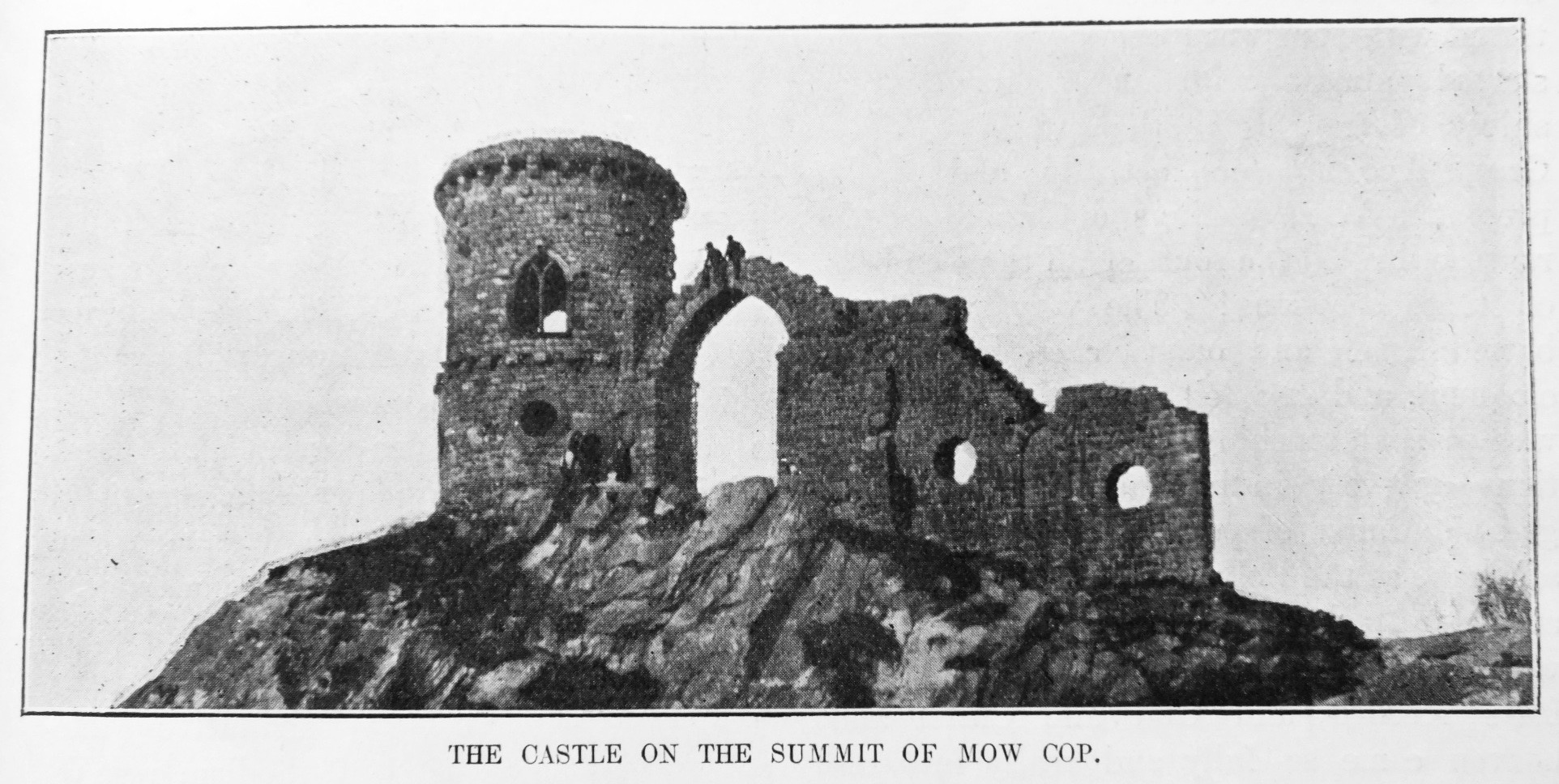
§ the 1850 court case includes a description of ‘the building in its original state, which consisted of two stories, a room above and another below, standing on three arches’ § while ‘standing on three arches’ might conjure a picture of a ground floor of 3 open archways like Kidsgrove Windmill, this not only conflicts with ‘two stories’[quo via Leese/=storeys] but would be impossible at this location – it would soon blow down, which might of course have happened, but more likely it refers to the attached archway & wall, either an inaccurate description of it as we know it, or a unique recollection of it having differed originally § there’s nothing else to suggest that it did so: the earliest depictions of the building inc pre-1847 show the tall arch & the curtain wall containing 2 port-hole windows & a blind or dummy arched window recess between, the same as all the 1890s/1900s photos, but longer than the surviving wall § they also all show both wall & arch with ragged top, it’s not clear if this is an original feature or results from decay – it’s not levelled & squared off until 1936 § early photos also seem to show repair or reinforcement or at least heavy re-pointing of both ends of the wall (the lost lower end, originally vertical, & esp that supporting the arch), probably from the 1847 restoration § the multi-view postcard (Leese Living p.4, ?1920s) shows a substantial part of the wall recently collapsedxxx § another intriguing feature appears in a 1907 painted depiction (surviving on a plate & also a ceramic plaque) showing the tower part (but not the wall) distinctly white – there are no other records of this, but stone cottages & even outbuildings are at one period routinely whitewashed & in appropriate lighting conditions a white tower on the hilltop would be very distinctive § alternative date in Harding family tradition for the building of the Tower is 1746 (genealogical evidence supports 1753/54, but a 1747 baptism at Newchapel but of Astbury parish suggests the family may be living on the hill by this date), plus 1035 & 1272, which seem to originate in the speculations of George Harding of Dales Green Corner § spurious or waggish traditions such as that it was built by Julius Caesar (see 1816) or damaged by Cromwell have early currency, while a more authentic local folk-memory always associates it with the idea of a beacon or ‘beacon tower’ (cf 1329, 1588), perhaps conflated with the ceremonial bonfire mentioned above § pseudo-antiquarian notions of an earlier tower (a Roman ‘watchtower’, a ‘beacon tower’, a ‘medieval mystery tower’, etc) derive from these ideas, or from W. J. Harper’s discussion of the beacon, or from the 1916 publication Some Ancient Mystery Towers ... by Samuel Smallwood (revived by Norman Roche in 1955) § there is more substance in the notion of an earlier non-specific summit feature that looks similar from a distance, its disappearance prompting the idea of building a tower – this summit feature would be the cairn at the site of the Old Man; also relevant is common attitude or idiom that conflates Tower & Old Man or de-particularises ‘Old Man’ to represent the summit or the hill (eg the Old Man of Mow is traditionally pointed out from Biddulph, even though he’s invisible) § the Tower’s usual name has been the Summerhouse or Summer House (‘Mow Summer-House’ 1850, xxx, xxx); the name ‘Chestaf Tower’ or ‘Cestaff Tower’ is well-evidenced but forgotten (from the ‘CEST’ & ‘STAFF’ stones; refs in 1819, 1831, 1858); it’s been called a ‘tower, belvedere, or summer-house’ (1850 court case), an ‘observatory’, seemingly in reference to the terrestrial view, ‘a place of pleasurable resort’ (Ward, 1843) or a place ‘to boil our kettle and have tea in’ (Miss Wilbraham quoted by Harper) ie a kind of gazebo for visitors to rest or picnic or shelter in; while the nickname Wilbraham’s Folly (pronounced Wilbrəms) is well-remembered locally & has early currency (1850); referring to it as a castle or the Castle or MC Castle only arises in the late 19thC (see 1887—Porter’s Directory (Castle Inn), +1894HarperPC:‘Mow Cop, shewing Castle’, 1902 (‘Mow Cop Castle’), 1907—Centenary Camp Meeting, 1922-24) &, in spite of Joseph Lovatt & then the National Trust adopting the name, lacks local support until well into the 20thC § Lovatt & the NT also encourage the erroneous notion that it’s associated with the history of Primitive Methodism or that the early camp meetings occurred here or nearby (see eg 1937), even though contemporary literature of the movement never mentions the Tower (Walford 1855 is probably the 1st, but only in passing) § PM bodies from at least 1907 to this day use it as a symbol or logo, one of the most interesting being its profoundly symbolic depiction in a stained-glass window in Wesley’s Chapel, London § when scaled-down or pseudo camp meetings begin to be held on the Castle Banks rather than at or nr School Fm isn’t known (see 1841—Primitive Methodism, 1876, c.1890), certainly by the 1870s{NB:did I find an eier ref??} but not at an early date § the PM/camp meeting commemorative stone (Kerridge stone, perversely!) installed just below the Tower on the Cheshire side in 1948 reads ‘To the glory of God a Camp Meeting near this spot on May 31st 1807 began the Religious Revival led by Hugh Bourne and William Clowes known as Primitive Methodism Unveiled by the President of the Methodist Conference May 16th 1948’ § actual early records of the Tower are non-existant: historians haven’t come across any, Arthur Ogden failed to find any, the 1850 court case produced nothing before 1804, while the debates between Joseph Lovatt & his opponents re the ‘deeds’ are a red herring (they are presumably modern documents drawn up by solicitors c.1922-24) § it is first mentioned indirectly in the name Tower Hill on Yates’s map (see 1775), but neither records of its maintenance (see 1804, 1824) nor published descriptions (see 1818, 1819, 1834, 1843) occur until the 19thC § likewise the earliest known depiction of the Tower is on a ceramic jug dating from 1805-20 (Staffs side, with figures; illustrated in Leese Living p.18), & otherwise later (see 1840, 1865, 1887, 1894, 1898) § W. J. Harper photographs it c.1894, Francis Frith in 1898, Fred Rowley before 1907, & many photographs & reproductions are prepared in connection with the 1907 centenary camp meeting § later in the 20thC enlarged photos by John Smith of Congleton (xxdates-nfxx), painstakingly hand-coloured, become popular local wall art; while little ceramic models made as a retirement hobby by Jessie Hallen of Bank House (1902-1983) do a surprisingly brisk trade § depictions & photos reproduced in Leese Working inc pp.11, 46 (aerial photo), Leese Living inc pp.4, 16, 24, 25 (very clear 1907 photo, one of the few in which the ‘CEST’ stone can be seen & read) § § Barbara Jones’s book Follies & Grottoes (1953) reproduces a good photo of about 1900/07 vintage (Ches side), before it became truly a ruin, while a spectacular modern photo (Staffs side) credited to G. Douglas Bolton forms the cover & frontispiece of W. G. Hoskins’s famous book The Making of the English Landscape (1955) § ‘a particularly good and dramatic sham ruin’ (Jones) § ‘The so-called castle in the foreground is a sham ruin of eighteenth-century date’ (Hoskins) § ‘It is the prototype sham ruin, copied nearly everywhere, and of course it was one of the first’ (Gwyn Headley & Wim Meulenkamp, Follies, 1986) – a not entirely justifiable comment § ‘John didn’t think much of the castle. There was nothing to do with it except climb down again.’ (Alan Garner, The Old Man of Mow, 1967, p.10) § ‘H.T.’ likes it even less, calling it ‘the “eye sore” at present standing in ruins, which I understand has no historical value’ (letter to Staffordshire Sentinel, May 14, 1919) § as late as 1960 the Ministry of Housing & Local Government concurs, ruling that it ‘has no architectural value’, prompting the distinguished historian & geographer Dorothy Sylvester to write her insightful article “Significance of Mow Cop’s Past and Future” § ‘Mow Cop without its imitation castle, or “folly,” would not be Mow Cop to the thousands who climb every summer up the gaunt, jagged gritstone rocks which it crowns.’; ‘Since about 1754 ... the “Old Man” and the tower have stood side by side, each enriching the meaning of the other’ (Dorothy Sylvester in Chester Chronicle, Oct 8, 1960, p.9) § architectural historian Sir Nikolaus Pevsner (1971) considers ‘the assigned date 1754 very early indeed’ but doesn’t reject it, adding ‘So medievalism starts in Cheshire in 1754, but there were no immediate successors’ § for other historical comments or speculations see 1850—Court Case, 1881—Rambler’s Mow, 1887—Porter’s Directory, 1896—Old Samuel, 1907—Harper’s History of Mow Cop & its Slopes, 1916—Ancient Mystery Towers, 1937—National Trust Ceremony § for some events in its history see 1847—Restoration, 1850—Court Case, c.1918—Partial Collapse, 1922-24—Ownership of the Hilltop, 1923—The MC Dispute, 1935, 1936 (restoration), 1937—National Trust Ceremony
►1754—The Cottage The Cottage (precursor of Beacon House) is presumably built at the same time as the Tower as a home for its caretaker (initially Ralph Harding) § like the doorway & steps to the Tower it too is on the Staffs side & on Sneyd’s land, strongly suggesting (in spite of the amnesia that prevails in 1850) some kind of agreement or collaboration between the 2 squires, or if not with Sneyd perhaps between Wilbraham & Sneyd’s tenant Philip Antrobus, lessee of the quarries, whose older brother John Antrobus of Congleton (1711-1775) acts as an agent or estate bailiff for Wilbraham § if its initial purpose is as suggested, this changes in or before 1812 when John Stanyer succeeds as Wilbraham’s representative on the hill & lives at Marefoot (the house beside the Old Man); subsequently it’s Sneyd’s representatives or ‘stewards’ James Thorley & William Jamieson snr & jnr who live at The Cottage, ?possibly preceded by Isaac Mountford (II, d.1834) or someone unrecorded (Thorley is still living at his native Harriseahead in 1808 but no date has been found to pinpoint his move to The Cottage; the plantation he looks after is planted 1831/32) § The Cottage is rebuilt or replaced during Jamieson’s time by a larger house, the present Beacon House, though retaining the name ‘The Cottage’ until at least 1921, when it’s sold § it appears to stand on top of an enormous ancient quarry refuse mound, which in consequence is one of the few to survive Joseph Lovatt’s clearance of these features in the early 20thC (another by the Old Man is similarly protected by John Stanyer’s house) § allowing a permanent cottage to be built in such a location in 1754 influences the colonisation of the common land (hitherto protected from development & encroached largely from the edges) & development of the hilltop village, in which the proliferation of Hardings is a significant factor § adjacent cottages Sugar Well Farm & 50 Castle Road (later home of Ralph Harding II) are also early or primitive buildings, as is the oldest part of Hardings Row (see 1753—Harding Family, c.1730) § on the Ches side the original house on the site of Castle Shop (aka Castle Mount), home in the mid 19thC of the Mountford family, is also one of the earliest cottages on the upper common, & may also date from the 18thC & have some connection with the Tower
►1754—Marriage Act & New Marriage Registers Lord Hardwicke’s Marriage Act, passed by parliament in 1753, comes into force on Lady Day (March 25) 1754 § xxx § marriages required to be registered separately on printed forms with additional info & witnesses//requiring signatures of bride, groom, minister, & 2 wits § xx?other provns of m actxxxprinted proforma regs are 54}---aims to introduce better recording & control of marriages from a civil & legal point of viewxxx (ie impose a civil/legal formality on the religious procedure/record) § the purposes of the act are to eradicate irregular & clandestine marriages (Fleet chapel in London is put out of business & replaced by Gretna Green, the act not applying to Scotland), & to impose a uniform record with appropriate info & signtures (marriage unlike baptism being a legal secular arrangement or contract, not just a religious/ecclesiastical one) § xx § needs more! § xxx
>a notable local consequence of the Marriage Act, reflecting the emphasis it places on parental consent, is the two weddings that Jonah Mountford & Mary Waller go through, at Stoke in 1768 & 7 months later (after the birth of their dtr) at Biddulph in 1769 – the act invalidates marriages by licence that lack parental consent (but not marriages by banns – the rationale being that banns allow ample opportunity for the parents to put a stop to it, whereas licences depend on an oath that consent has been given or isn’t needed ie they’re 21 or more) § the license under which they marry at Stoke, presumably having eloped, gives Stoke parish as abode for both & Mary’s age as 21 – in fact she’s 17 & (of course) pregnantxxx
>noteNorton ‘Gretna Green’ (Hackwood, 1924, p.64-5)>Hackwood (1924) claims that until the marriage act Norton was ‘a sort of local Gretna Green’ that performed ‘irregular marriages’ without banns or licence; I can’t say I’ve seen any evidence for this nor spotted anything in Norton’s parish register that might support it – unless the implication is that such marriages weren’t recorded at all; it’s obviously something that’s more likely to be a quirk of a particular minister, & thus relatively short-term, than a long-term characteristic of a church or parish; +note also he appears to be talking of N church but Gretna Green isn’t a church it’s a smithy! check for larger nos of ms than wld be expected...
►1754 Trentham estate pays William Rowley £5-3s for a millstone § John Cumberbatch snr of Biddulph, blacksmith, dies ‘aged 82’ according to the parish register – tho presumably he’s the one baptised Dec 27, 1669, hence 84 § his will (made 1751, proved 1756) shows him to be owner of several houses inc that ‘formerly called Keens House of Underwood’ & a cottage ‘at Congleton Edge’ § squire Wilbraham’s wife Dorothea or Dorothy dies (Nov 18) § Thomas Cartwright of Sandbach leases out the Hall o’ Lee estate, sells lands in Brieryhurst (unidentified), & marries Elizabeth Knowles (1732-1824) of Crowley, in Great Budworth parish, at Great Budworth § James Rowley ?of Congleton Edge marries Mary Potts at Rushton (at the baptism of their 1st child Jane later in the year they’re of Bradley Green) § Jane Stonehewer or Stonhewer born (later Whitehurst), dtr of Thomas & Sarah, her baptism recorded in Biddulph parish reg Dec 23 as taking place at Astbury, but appearing in Astbury reg under Jan 5, 1755 § Elizabeth Sherratt (later Badkin) born § Thomas Maxfield (blacksmith) born, & baptised at Congleton § William Harding, first child of Ralph & Dorothy, born, & baptised at Newchapel as of Stadmorslow (Aug 10) § Jane dtr of Thomas & Hannah Dale baptised the same day (Aug 10) § Solomon Oakes, son of William & Mary & grandson of Solomon (I), born at MC (later of Great Chell, parish clerk of Newchapel)
►1755 Samuel Johnson’s Dictionary of the English Language published § 1st Methodist society in Leek § Thomas Bourne of Newpool dies, his probate valuation a wealthy £351-12-2 – whether he’s the same as TB of Mole f.1719 isn’t known § William Ford of Bank dies § Joshua Brown dies § Thomas Wedgwood killed in a coal mine in the Biddulph area, probably Mole Side or Gillow Heath (nearly the last of the native Mow Cop Wedgwoods, though note his son Richard (1748-1817) of Congleton Edge & latterly Astbury) § Joseph Pointon marries Hannah Oakes at Astbury (July 26) after banns at Wolstanton (July 6-13-20), Joseph being of Wolstanton parish, Hannah of Astbury parish, & they settle at School Farm § she’s thought to be dtr b.1733 of Solomon & Hannah Oakes, hence son Solomon, tho their oldest son is named Peter, also an Oakes name but no Hannah known with father or brother Peter § Elizabeth Oakes marries John Cotton of Lawton, witnessed by Job Oakes (see 1757) § Margaret Whitehurst (b.1721, mother of Charles) marries Joseph Keen(e) at Norton § William Dale marries Mary Wood, witnessed by Isaac Dale § Thomas Mellor (IV) born § John Hamlet born in Odd Rode township, who settles on MC, probably Bank, c.1790, though it’s possible his parents Thomas & Martha lived there (see 1790) § Charles Rigby born (co-founder of the Kent Green branch of the family)
►1756 dissenting ‘Academy’ or college founded at Warrington (closes 1782, replaced by Manchester Academy 1786, forerunner of Manchester College, Oxford) § administration documents for Elizabeth Stanier of Biddulph parish give her son Joshua’s name variously as Stonhewer & Stanier & altered from one (or similar) to the other, tho he actually signs Stonhewer § Margaret Porter dies, & is buried at Astbury with her parents Randle & Margaret Kent of Kent Green, her tombstone famously reading: ‘Also Margt wife of the afore said John Brooks and late wife to Philip Porter of Odd Rode which by the above two Named Husbands had twenty three Children she was buried the 16th of February 1756 Aged 76’ § she is an ancestor of Francis Porter (1837-1910) & the Porters of MC § the gravestone & shared grave with her parents are also significant & poignant because she’s their only child, the last of the main line of Kents who gave their name to Kent Green (see 1689) § John Twiford of Shelton, potter, dies § burial at Astbury (March 21) of John son of Mary Ford widow Odd Rode must be an error for one of his younger brothers as John Ford f.1767 & d.1810 (see 1739) § Richard Podmore jnr marries Elizabeth Brownsword at Whitmore, the register describing them as of Norton parish, Richard a labourer § John Oakes (son of John & Anne) marries Hannah Durber or Durbar of Lawton at Wolstanton (March 1), witnessed by Job Oakes & John Forde (she dies 1761/62, see 1762) § the banns are recorded as having been read both at Wolstanton & Lawton § on the same day John Lawton (later of Bullocks House) marries Sarah Turnock of Biddulph at Wolstanton, witnessed by Joseph Turnock & Henry Whithurst § William Dale marries Mary Oakes, witnessed by William Shaw (see 1740) § Henry Mountford marries Mary Child at Church Lawton, witnessed by John Owen & William Machin § parents of John & Thomas Mountford, they live like their friends the Owen family in the borderlands of Rode, Lawton & Brieryhurst, inc Alderhay Lane, & seem to be unrelated to Isaac Mountford & family § John Stonier & Anne Child baptise dtr Elizabeth at Astbury (March 7) & marry there 5 days later (March 12), living at Brownlow (though oddly John is called ‘of Yoxall Parish’ in the marriage reg, tho there’s no other evidence of him or a Stonier family at Yoxall & he’s presumably in Astbury parish when he impregnates Anne, whose parents have moved from Wedgwood to Newbold township; the assumption is that he’s the JS born in Newbold 1734 § these are the ancestors of most of the Stoniers & Staniers found on MC hereafter – it’s curious that their 3 sons Joseph, John & Thomas all settled on the hill, as tho prompted by their father’s MC ancestry § Joseph & Hannah Pointon’s first child Hannah born, & baptised at Astbury (June 13) § Thomas & Sarah Boulton baptise son William at Astbury
►1757 William Rowley of Overton, millstone maker, dies § his business partner & brother-in-law Philip Antrobus manages the millstone business alone, though who the actual millstone maker is at this date isn’t known § Astbury parish register records the burial of James Cranton of Wolstanton parish ‘killed at Gillow’ § Richard Oakes dies (see 1758) § Job Oakes marries Elizabeth Cotton of Lawton, witnessed by John Cotton & John Ford § their son Samuel born about 3 months later (d.at Burslem 1791) § James Washington, presently of Biddulph parish, marries Sarah Broadhurst at Astbury, & now or soon after they settle at Puddle Bank founding a branch of the Washington family of farmer-butchers § William Rowley of Congleton Edge marries Sarah Brough § Thomas Booth of Newbold marries Elizabeth Griffin (no immediately local bap found), ancestors of the Booths of Tank Lane etc & many of the later Booths of MC & Mount Pleasant villages § William Hancock of Wolstanton parish marries Mary Shaw of Limekilns at Astbury (April 10), & they live at Limekilns § their son William Hancock born 2 months or so later, baptised June 25
►1758—May Games on Offley Hay William Vernon (b.1734), Wolverhampton buckle-maker’s apprentice turned soldier, publishes his Poems on Several Occasions, containing in particular ‘The Race of the Maids’, a description of the May games or ‘annual gambols’ on Offley Hay, one of the few authentic accounts of such an event § in the absence of more than fragments re the festive assemblies or wakes on MC (17 mls away), an account of another such rustic festivity (ie one held on a hill or at a remote location, not in a town or parish centre) is of great interest § ‘On this fair plain, to welcome in sweet May, | The lads and lasses annual gambols play. | Forgetting all the year’s revolving toils, | While rosy health auspicious on them smiles. | Here Hodge essays to toss the pondrous bar, | And Robin slings the rounded coit afar. | Others their swiftness in the race display, | And others dextrous with tough cudgels play; | Pleas’d while the smiling fair their manhood view, | At ev’ry smile their vigour does renew. | Now when the sun rolls down the western sky, | And lengthning shadows mark the ev’ning nigh; | Join’d hand in hand the chosen pairs advance, | And on the flow’ry turf in rustic measures dance | To uncouth music, which some hoary swain | With lab’ring elbow does from bagpipe strain.’ § latter line is rare evidence that the extinct English bellows-pumped bagpipe (cousin of the Northumbrian small-pipe) is still providing the music for folk dancing in 18thC Staffs § § he goes on to narrate in more detail a rollicking female foot-race that provides the title for the poem § the competitors are Susan ‘A ruddy virgin born at Chatkill-green’ [Chatcull], Nell ‘a girl of moderate size ... bred up at Blore’, Sally ‘Fair was her face, and finely turn’d her frame, The pride of Stoke’ [-upon-Tern], Margery ‘surnam’d the tall, Fam’d for her size, and for her strength withal’, a Yorkshire lass living at Cheswardine; Sally wins § § pastoral poets routinely write about ‘rustic feasts’ & merrymaking amongst milkmaids & swains, accounts usually dismissed as idealised or totally invented, but we know that such festivities, feasts or wakes did take place & Vernon’s ‘The Race of the Maids’ sounds entirely real & authentic, a probability enhanced by his humble origin & limited education (ie he’s probably not sophisticated enough to be inventing it), plus the fact that altho previously assumed to be a native of Wolverhampton we now know he’s born at Seighford, nr Stafford, much nearer to the Offley area § the only thing hazy – tho the time difference is only 10-to-15 years – is whether the event as described is taking place about the time of writing, as the present tense & fresh vividness imply, or is a memory from his childhood, as implied by the lines that immediately follow the ‘bagpipe strain’ quoted above: ‘Delightful scenes! in which I once had part, | (And still the dear remembrance warms my heart) | When with the flocks I frequent spent the day, | Myself as blithe and innocent as they.’ § the nostalgia is a poetic/pastoral touch, as perhaps is the implication (‘flocks’) that he’d been a shepherd § it’s noteworthy that his summary lacks the drunkenness & blood-sports usually prominent in such descriptions (usually written by disapproving outsiders of course; tho there’s also clearly a distinction between the urban/industrial context of most such descriptions & this purely rural/pastoral event) § xx
►1758 ‘imperial’ measures standardised § cattle disease or ‘Distemper’ epidemic (probably foot & mouth disease) (1758-59) § William Vernon (b.1734), Wolverhampton buckle-maker turned soldier, publishes his Poems on Several Occasions, containing in particular ‘The Race of the Maids’, a description of the May games or wake on Offley Hay, one of the few authentic accounts of such an event (see above) § approx date of ironworks & blast furnace set up at Bradley nr Bilston by ironmaster & industrial inventor John Wilkinson (1728-1808) – an outpost of his & his father Isaac’s businesses at ??Bewdley etc—check § Charles Roe establishes a copper works at Macclesfield (& outposts later at Buglawton & Bosley), sourcing his copper from Alderley Edge, Ecton Hill, & eventually chiefly Anglesey § James Brindley surveys the line of the proposed Trent & Mersey Canal § Brindley also builds or works on a corn mill at Congleton for Philip Antrobus{<Boucher’stext1758,chron1756??} § Richard Oakes jnr of Little Chell involved in deed with Crewe Chetwood of Chester (acting as lord of the manor of Tunstall on behalf of his wife Anne & her son by her 1st husband Ralph Sneyd) re his father’s cottage on MCxxx § Thomas Dale of Dales Green dies § Anne Hobson of Old House Green dies § Anne Twiford of Shelton dies (nee Astbury, see 1723) § Rachel Wedgwood, widow of Thomas, marries Ralph Brown of Congleton Edge at Astbury (April 3) § which is how her step-son Richard Wedgwood (1748-1817), last of the native MC Wedgwoods, comes to be living on the Ches side of the ridge § John Harding, son of Ralph & Dorothy, born, & baptised at Newchapel (Nov 26; later of Rainow nr Macclesfield d.1822) § John Mountford, son of Henry & Mary of Brieryhurst township, born § Hannah Rowley of Congleton Edge born § Lydia Rigby (later Cotterill) baptised at Biddulph (as Lydi; Jan 15, hence b.1757/58) § Thomas Hulme born (later of Trubshaw)
►1759—Isaac & Mary Mountford & the Mountford Family Isaac Mountford of Norton parish, carrier, marries Mary Clare at Newcastle (April 24), & settles on Mow Cop, founding what eventually becomes one of the largest & best-known families on the hill § xxxlicxxx § he is probably the Isaac baptised at Biddulph in 1734, son & youngest of 9 children of William & Sarah (who d.1756 & 1745 respectively) § the name Isaac Mountford is legendary on MC, & while several Isaacs are conflated (notably the 19thC adventurer & eccentric who travelled abroad & on returning lived in a ‘sod hut’) speaking of him as ‘the first man to settle down on MC’ is clearly a memory of the founder of the family, perhaps also preserving a tradition of the beginnings of permanent settlement on the common land, which occurs in this generation § an even more unlikely link is preserved in the Mountfords’ hereditary nickname (nickname for the surname), Kit, still used into the mid-20thC, which seems to derive from their maternal ancester Catherine Clare, Mary’s mother – as a newcomer to a matrilocal community Isaac & his children would be looked upon as part of Mary Clare’s family § records of the family are fragmentary in the 1st 2 generations: baptism of the first child Catherine in 1760 (as of Brieryhurst) followed by a xxx?gap?xxx before the baptism of 2 dtrs in the 1770s (as of Odd Rode), no baptism being found for Isaac jnr (b.1768/69) who continues the male line § a later description of this 2nd Isaac as a pensioner (ie a retired soldier) implies that he is the legendary adventurer & eccentric (see 1829) § xxx(see 1791 for the sojourns of Isaac (II) & his sisters in Bollington)xxx(for the confusing identity of the 2 Isaacs born in the 1790s see xxx)xxx § Mountford is a fairly common surname in the surrounding area (esp in Norton parish) – another Mountford family commenced about the same time by Henry & Mary (married 1756, Henry d.1806) seems to be unrelated, tho there are possible Biddulph baptisms for Henry too; also seemingly unrelated or only distantly is Jonah of Biddulph (1742-1805; see 1769); a later unrelated Mountford who impinges briefly on the history of the hill is Alfred (1825-1905; see 1863) § Mountfords are still few in the mid-19thC, only 1 of the 3 sons of Isaac II marrying – hence there’s only 1 household in the 1851 census, but this 3rd-generation James & Judith (nee Sherratt, married 1829) & their sons rectify the situation & before the turn of the century & for much of the 20th (inc in the 1939 register) it is one of the 3 most common surnames on the hill § the 1st generation move about a good deal, perhaps related to Isaac’s business as a carrier, & refs eg baptisms & burials are fragmentary/incomplete, tho their last baptisms are at Astbury as of Odd Rode; the 2nd generation (Isaac II & his sisters) follow a more routinely peripatetic or itinerant life, at least in the 1790s, between MC & Bollington, but there’s clear evidence that they regard MC, Odd Rode as their home base, suggesting they have a house there § 3rd generation James & Judith from 1829 live at a house & smallholding near the Cheshire side of the Tower later known as Castle Mount & Castle Shop, & this is the epicentre from which the outpouring of Mountfords occurs in the 19thC; but it’s not been established whether this property (1 of very few houses on the upper part of the Cheshire side prior to the 1840s) is newly established by James & Judith or might have been inherited from 1 of the 1st 2 Isaacs (the crofts either side of it are held in the tithe apportionment by John Oakes, implying the house or its site was originally part of that holding, tho (so far as is known) its not the same Oakes branch that Isaac II’s wife Rebecca belongs to) § xunfx
►1759 Old House Green Methodist society mentioned, but no leaders or members named (probably short-lived) § xx?discn inc who’s there at timexx § (Dyson’s belief that OHG is the site of Roger Moss’s house, where the 1st local Methodist meetings took place in 1745-46, is not correct) § first Methodist chapel in Cheshire built at Stockport § Elizabeth Stonier, widow of Francis, dies at The Hurst, Biddulph § Elizabeth Clare, widow of John, dies § Thomas Spode dies § Jonathan Hopkin & his wife Mary die three weeks apart (Feb) § John Burslam of Astbury buried (March 3), his age given as 95 [b.c.1665] – presumably John b.1668 son of Richard (of Smallwood) of the family of stone masons, descended from the 17thC Burslems of MC & Brown Lees § John Cartwright, formerly of Bank, dies at Holmes Chapel & is buried at Astbury (Feb 24) § the Bank estate is already vested in son Charles Cartwright, probably at the time of his parents’ move to Holmes Chapel before 1750 (John’s will, made 1750, is never proved by his widow & executor Elizabeth d.1771 & remains so until administration is granted to son William 1784) § John & Elizabeth Cartwright’s dtr Ann(e) Wilcoxon, widow, living with her parents at Holmes Chapel, marries Revd Thomas Hodges (1733-1821), curate of Holmes Chapel, at Holmes Chapel (Nov 5), Revd John Harding, curate of Astbury, officiating, the co-bondsman for the marriage licence being her brother William Cartwright ‘of the Bank, Gentm.’ § which is the only explicit ref showing that William has remained at Bank after the transfer of the property to his older brother Charles (William is of Macclesfield in 1784) § Revd Thomas Hodges is incumbent of Holmes Chapel for a remarkable 64 years 1757-1821 § Thomas Cartwright of Old House Green (Ramsdell Hall) marries Elizabeth (Betty) Floyd of Daventry at Daventry (Dec 4) § Elijah Mare or Mayer marries Clare Hoskinson or Hodgkinson at Astbury (June 3) – 1st of his 3 wives, even though she lives into her 80s § Thomas Boon marries Judith Smith § Thomas Barnet marries Sarah Hall (Feb 26) § John Leigh or Lees of Biddulph parish marries Anne Handley (parents of Matthew, Mark, Luke, John & Cornelius Leese) § Thomas Whitehurst born (latterly of Mow House) § James Crawfoot born at Clotton, & baptised at Tarvin (July 1) – founder of the Magic Methodists of Delamere Forest & one of the founders of Primitive Methodism
►1760—Abraham Lindop & John Wesley Abraham Lindop of Harriseahead (1738-1832) converted by John Wesley on Wesley’s first visit to Burslem (March 8 & 9, Sat & Sun), & introduces Methodism to Harriseahead, holding meetings in his cottage § he subsequently becomes a local preacher & a pioneer & stalwart of Methodism in Tunstall § yet oddly, the later Harriseahead revivalists or their historians portray Harriseahead as utterly godless & never mention him, even though ironically he lives in the same row of cottages as Daniel Shubotham! § Wesley proceeds from Burslem to preach at Biddulph & Congleton (March 10), William Stonier of Hurst (1727-1791) being his host at Biddulph – his ‘extremely pleasant walk’ between the two presumably takes him via Overton rather than Congleton Edge § Lindop’s birth or parentage+summarise his birth+app+etc § he marries Ann Hancock 1764 (June 19), who is a native of Harriseahead, 1 of their witnesses Joseph Baddeley of Harriseahead (father of Hannah Shubotham) § subsequent Lindops at Tunstall, Harriseahead & MC are all their descendants & all Methodists § xxHenry Allen Wedgwood’s account is perhaps somewhat romanticised/dramatised & has a few inaccuracies (Lindop is a weaver not a farm labourer, for instance) but must command considerable respect not least because Wedgwood (b.1799) evidently knew Lindop &/or his family, as well as rescuing him from complete obscurity § xxthe 1738 bap of an illegitimate AL at Stretford nr Manch is too perfect to dismiss (conforming to his age at death, & explaining why his family didn’t know his parents’ names), tho it does present a problem: the only other ocurrences at Stretford are the baptism in 1759 & burial on March 29, 1760 of AL son of AL, meaning not only that he had a 1st wife before his 1764 local marriage (neither earlier m nor burial of wife found) but also casting doubt on his being at Burslem (or Harriseahead) in March 1760; true he doesn’t need to be at Stretford for his son to be buried there, he might have been travelling, seeking work, etc, or indeed have abandoned his wife & baby; but of course the story of him being converted specifically on W’s 1st visit to Burslem derives from the recollections of a very old man, who not only may have been uncertain of the actual year but indeed may well not have known which of W’s various visits to Burslem was in fact his first (Wesley himself wasn’t sure – visiting in 1763 he refers to his 1st visit as 4 yrs ago)...it’s likely AL came to live at Harriseahead in the period 1760-64 (no later than his June 19, 1764 marriage) & heard W at some point in the same years (or no later than 1765{?} since it wld be evident that W’s 1st visit preceded Burslem’s 1st chapel) § >Wesley’s journal re 1st visit to Burslem: Sat March 8: ‘Went from Wolverhampton to Burslem, (near Newcastle under Lyme), a scattered town on the top of a hill, inhabited almost entirely by Potters; a multitude of whom assembled at five in the evening. Deep attention sat on every face, though as yet accompanied by deep ignorance ...’; he preaches again the following day; he’s there again a year later, also in March, & there or elsewhere in the Potteries from time to time until his last visit March 28-29, 1790 (qv) § xunfx
►1760 completion of Bowen & Kitchin’s Large English Atlas of county maps (see 1749) § James Brindley, his brother John (potter), Thomas Gilbert & Hugh Henshall purchase the Turnhurst estate & Golden Hill Colliery in equal quarter shares (March), Brindley’s share in turn being partly financed by John Gilbert (Thomas’s brother, & manager of the Bridgewater Canal project on which Brindley is presently engaged) – probably the 1st involvement in the coal industry of the area by the man who subsequently owns & expands the coal mines of Kidsgrove & founds the industrial town (see 1777) § Joseph Heath of Trubshaw acquires the Bank property of John Boote, grandson of Jane Peover (see 1685) § approx date of the later part of Ramsdell Hall (west front, presumably an extension or remodelling of the c.1720 original) – though it isn’t clear whether that means before John Cartwright’s death eg 1750s or after by either son Thomas or brother Ralph (curiously Ralph appears to be the owner, bequeathing it to his nephew Thomas 1778) § John Cartwright ‘Gent: & widowman of Odd Rode’ dies, & is buried at Astbury (April 10) [ie JC of Ramsdell Hall b.1686] § Mary Dale, widow, marries Thomas Child, collier, witnessed by John & Isaac Ford § Thomas Mellor witnesses the marriage at Wolstanton of Hannah Wakefield of Lawton (presumably his sister-in-law) to Samuel Handley of Harriseahead § Isaac & Mary Mountford’s first child Catherine born, named after her grandmother Catherine Clare, & baptised at Newchapel as of Brieryhurst (Feb 10) § Henry Whitehurst (III) born § Joseph Cotterill born, probably at Congleton Moss (later of Congleton Edge & Roe Park) § William Booth of Limekilns born § Peter Pointon born § Samuel Hancock (father of Luke) born
►1761—Burslem Becomes a Town town hall built at Burslem, & street market developed in connection with it, signifying its transformation into a town, the 1st formal municipal building & 1st market in the Potteries § Burslem is known as ‘the mother town of the Potteries’ (or sometimes ‘the mother of the Potteries’) § John Wesley calls Burslem a town on his 1st visit in 1760: ‘a scattered town on the top of a hill, inhabited almost entirely by Potters’ § (Plot 1686 uses the word town but it’s not clear if he means it in the modern sense or as a synonym for township) § Lorna Weatherill devotes a chapter of her book The Pottery Trade and North Staffordshire 1660-1760 (1971) to a discussion of whether Burslem is a town or when it becomes one, analysing factors such as population & urban trades eg retailing, concluding that it’s a large village in the 17thC & ‘a small town by 1720 at the latest’, when urban trades have become well established & the estimated population reaches c.1000, rising to c.2000 by 1760 § Ward estimates the population c.1750 as nearly 1000 but over 2000 if including the whole parish § a school founded in 1749, the turnpike road to Red Bull via Brownhills & Tunstall 1763, & the 1st Methodist chapel 1766 are other things symptomatic of Burslem’s development as a town around this period § a large market hall ie covered market is built 1835-36 (of MC stone), adjacent to the town hall – the 2 buildings are illustrated in Ward facing p.257 § the 1761 town hall is replaced 1854-57 by the more architecturally elegant present building § like many industrial towns Burslem lacks formal status & governance long after its urbanisation, not becoming a borough until 1878 § Hanley (with Shelton) follows & then overtakes Burslem – market 1776, mock corporation 1783, formally recognised market town 1813, town hall 1845, borough 1857 – eventually becoming the main shopping centre & actual city centre § for Tunstall see 1816 § MC’s connections with Burslem stretch back centuries, chiefly arising from the supply of raw materials to the pottery manufacturers but also involving family & other links (see eg c.1616—Wedgwoods, 1627—Thomas Burslem, 1648 (Podmore), 1686—Plot (re lead), 1690—Crouch Ware, 1690 (Heath family), 1703 (Baker), 1775 (Grace Ford), 1791 (Oakes), 1795 (William Ford), 1826-44—Burslem Weddings)
►1761 town hall built & market commenced at Burslem, signifying its transformation into a town (see above) § Duke of Bridgewater’s canal opened (commenced 1759, fully completed 1776), James Brindley’s 1st completed work as canal engineer & the earliest canal of the Industrial Revolution; conceived & supervised by John Gilbert (1724-1795; founder of the industrial town of Kidsgrove) § it links the Duke’s coal mines at Worsley to the Mersey at Runcorn via Manchester – Runcorn being the westerly terminus is transformed from a decayed fishing village to a major port § the Duke is Francis Egerton (1736-1803) of that ilk § Zachariah Twemlow dies (?probably the last of the MC Twemlows; but see 1771) § Dorothy Harding (nee Oakes) dies, & is buried at Newchapel (March 19) § her widower Ralph Harding marries Mary Brearton at Wolstanton or Newchapel (Sept 5), witnessed by John Lawton & Thomas Turner § Thomas Oakes (son of Job & Mary) marries Hannah Holinshead or Hollenshead, widow (probably nee Galley b.1734) § John Oakes of Astbury parish marries Elizabeth Clare at Wolstanton, the marriage recorded in both parish registers (June 29 in Wolst, June 28 in Ast) § their dtr Hannah born 3 months later, baptised at Newchapel Oct 4 § this Hannah is a good candidate for the mother of John O (1783/84-1829) of Biddulph Rd § Judith Boon jnr born § Sarah (known as Sally) Waller born § John Hoskinson (Hodgkinson) born in Odd Rode township, & baptised at Astbury (Oct 11; see 1790)
►1762 Hannah Oakes, wife of John of Odd Rode, buried at Astbury (Jan 3) (m’d 1756, wf of JO of Mole jnr) § Margaret Oakes, spinster, of Odd Rode township buried at Astbury (Dec 20) [unidentified—the name Margaret suggests an unrecorded dtr of Samuel (II) & Margaret, m’d 1720] § Peter Oakes (son of Job & Mary) marries Esther (‘Easter’) Rowley (daughter of Richard & Esther of Mow House), witnessed by William Dale § Richard Oakes jnr called ‘Shumaker’ when he marries Ellen Jervis, witnessed by Samuel Oakes [no d/bur found for either Richard or Ellen] § Joseph Rowley marries Hannah Washington, & they live at first in Congleton township (Congleton town or Congleton Edge) before moving to Whitehouse End § Joseph Pointon snr, widower, marries Hannah Holme or Hulme, ?widow, at Wolstanton, witnessed by Daniel Hulme § Daniel Wakefield of Cob Moor marries Phoebe Beech, witnessed by Richard Ball § George Turner, stated to be of Middlewich parish, marries Elizabeth Barber of Sandbach parish at Sandbach (May 12) § their son Henry Turner of Drumber Lane born, & baptised at Astbury (Dec 26) § Ralph Harding jnr born § Thomas Knott born in Biddulph parish, illegitimate son of Elizabeth & ancestor of the Knott family of MC § William Hancock jnr of Limekilns born § Alice Owen born (later Mountford, of Alderhay Lane)
►1763 Burslem to Red Bull road via Tunstall & Kidsgrove turnpiked § Josiah Wedgwood’s cream-coloured earthenware patented (‘Queen’s ware’), a thin & highly glazed ware that’s also strong & cheap § xxx?MCsandxxx § an epitaph in Wolstanton churchyard makes an accusation of murder on behalf of Sarah Smith of Bradwell, aged 20: ‘It was C—s B—w | that brought me to my end | Dear Parents mourn not for me | For God will stand my friend | With half a Pint of Poysen | He came to visit me | Write this on my Grave | That all that read it may see.’ [generally believed to be Charles Barlow, who does exist, though Cornelius scans better; in fact she died in childbirth or soon after, & baby Sarah a week or so later, which puts a different complexion on the matter] § Sir William Moreton dies, last of the senior male line, his nephew Revd Richard Taylor succeeding to Little Moreton & adopting the name Moreton § Ellen Whitehurst, wife of Henry jnr, dies shortly after giving birth to twins Charles & William, who also die § Thomas Taylor marries Mary Wakefield, witnessed by Daniel Shubotham snr & Joseph Wakefield (parents of James Taylor who marries Mary Mellor & Elizabeth who marries Thomas Rowley) § Samuel Oakes (son of John & Anne) marries Ann Wakefield at Wolstanton (April 17), witnessed by John Ford § Samuel Oakes of Tunstall, victualler, widower [who is either b.1722 son of Richard or b.1725 son of Samuel (II)] marries Hannah Holland of Biddulph (1737-1816) at Biddulph, witnessed by John Oakes & William Barlow § Joseph Baddeley (signs ‘Badley’) marries Elizabeth Astin or Austin at Wolstanton (Sept 4), & they live at Harriseahead but are ancestors of most of the subsequent Baddeleys of MC § Thomas Dale marries Sarah Sherratt of Stoke parish at Stoke (see 1789) § Thomas Mountford, son of Henry & Mary, now living in Lawton parish, born § the 1st Luke Hancock born (uncle of the better-known Luke) § source of the fashion for the name Luke (Luke Pointon being b.1764) isn’t known, but cf Luke Smith 1745 § Alice Bratt (later Booth) born at Holmes Chapel
►1764 Thomas Kitchin’s map of Staffordshire shows ‘Mole Cop Hill’, roughly the same size as Biddulph Moor (unnamed) & ‘the Cloud’ (cf 1786; Kitchin is a partner of Emanuel Bowen, see 1749) § Ann Oakes dies (probably Anne widow of John) § Abraham Lindop marries Ann Hancock at Wolstanton (June 19), witnessed by Joseph Baddeley of Harriseahead § Ann (1742-1826) is dtr of John & Mary Hancock of Harriseahead [not Luke’s John & Mary – cf 1746] § Josiah Sherratt, stone mason of Newbold, widower, marries Ellen Buckley (nee Mountford), widow of Congleton mason Randle Buckley (see 1769) § James Hopkin, bricklayer, son of Peter jnr & Hannah, marries Susannah Dale of Dales Green, dtr of William & Sarah § Rachel Whitehurst marries John Cumberbatch (1734-1816), & they live at Holly Lane (the White House) § John Ford (later of Bank) marries Alice Mayer or Mare at Stoke § Isaac Ford, son of John & Hannah, born § Luke Pointon born § Anne Mellor (later Henshall) born § Solomon Oakes son of John & Elizabeth baptised at Burslem (May 6), presumably John son of Solomon (I) & Elizabeth Clare m.1761 (baps at Newchapel as of Brerehurst 1761, 67, 69) § Joseph Stonier or Stanyer born at Brownlow § James Steele born in Audley parish (afterwards of Tunstall, a pioneer of Methodism there & the founding patriarch of Primitive Methodism)
►1765 foundation of the Lunar Society of Birmingham, an informal network of progressive men of science & industry in the Birmingham, Lichfield, Derby area inc Matthew Boulton, Erasmus Darwin, Richard Lovell Edgeworth, Joseph Priestley, James Watt, Josiah Wedgwood, John Whitehurst § xxx?morexxx § land purchased for a Methodist chapel in Burslem by several men (?jointly or as trustees) inc Thomas Wedgwood, William Stonier of the Hurst, Joseph Smith of Tunstall (see 1766, 1768; conveyed to the circuit trustees 1798) § John Lowndes of Old House Green & Newcastle, surgeon, dies aged 30 § Edward Broad of Limekilns dies § Thomas Broadhurst of Limekilns dies § Sarah Harding (Ralph’s sister) marries Francis Rowley at Biddulph § Hannah Clare marries William Pot, witnessed by John Clare & Thomas Mellor § Anne Henshall of Newchapel marries James Brindley, millwright & canal engineer (Dec 8), & they live at Turnhurst Hall § Joseph Baddeley (later of MC) born at Harriseahead § Robert Maxfield or Macclesfield born, & baptised at Newchapel (March 17) – reg says son of John & Ann of Brerehurst, but it must be an error for Elizabeth § Sarah Oakes born (later wife of James Harding), & baptised on Christmas Day § Ann Hulme born (later wife of Thomas Mountford, boatman) § probable birth date of Samuel Cotterill (brother of Joseph)
►1766—Isaac Ford’s Brief Will Isaac Ford dies, living in the Odd Rode part of MC [probably what’s now Mount Pleasant], & is buried at Astbury (Aug 6) § his brief will (made 14 years earlier on June 27, 1752, proved Nov 14, 1766, Grace sworn where? Oct 16) leaves 1s each to 5 children – John, Ann wife of Thomas Sutton, Mary, William, Isaac – the rest, ‘all my real and personal Estate at my Decease’ (under £20 but no actual valuation or inventory, not inc real-estate if he had any), to wife & executor Grace (another executor Thomas Ford, presumably his brother, is crossed out, seemingly contemporary with the writing) § witnesses (1752) are John Lockett, Joshua Johnson, Sarah Locket (for Lockett cf 1717, 1769—Josiah Sherratt) § a shilling is the traditional token bequest or ‘child’s part’, usually bequeathed either when the child has already been given an ample portion & is no longer a dependent or (less often) as a disinheriting formula that ensures the child gets only the shilling & cannot challenge it on the grounds of being omitted – while either might be the case with the older children such as the married dtr, it’s more difficult to interpret the intention here, considering that (when made in 1752) the youngest child Isaac jnr is 9 so can’t qualify for either kind of shilling § an alternative might be to ensure the widow has sufficient resources to educate & maintain the under-age children, tho this intent is usually explicitly stated & (where it is) is legally guaranteed by the probate court (cf Ralph Wedgwood’s similar will 1622) § xx
►1766 act of parliament authorising the Trent & Mersey (alias Grand Union) Canal & incorporating the Trent & Mersey Canal Company (taken over by NSR 1847) § construction commences – Josiah Wedgwood (1730-1795) cuts the first sod nr Brownhills (July 26) § Wedgwood purchases the Ridge House property alongside the canal where he commences building a factory & residence (Etruria – named 1767, opens 1769) § construction of the Harecastle Tunnel also commences, an unprecedented engineering project with the added peculiarity of penetrating the water-table to form the summit water-source for the canal; the tunnel, through coal measures, also doubles as a coal mine; the hill it goes through is in fact Ravenscliffe not Harecastle, the name of the nearby hill seemingly sticking after originally being used as a joke (punning on ‘air castle’) § first Methodist chapel in N Staffs opens at Burslem, its promotors inc Thomas Wedgwood, William Stonier of the Hurst, Joseph Smith of Tunstall, & the potter John Mitchell, who supposedly provides the site (but cf 1765) (replaced by Swan Bank 1801) § first Methodist chapel in Congleton built in Wagg Street (1766-67; replaced 1807-08 & 1967) § Isaac Ford dies, living in the Odd Rode part of MC [probably what’s now Mount Pleasant], & is buried at Astbury (Aug 6) § his brief will leaves 1s each to 5 children & the rest to wife & executor Grace (see above) § ‘Doctor’ William Lowndes of Old House Green, surgeon, dies § Joseph Sherratt of Congleton Edge dies § John Salmon dies § Elijah Oakes marries Martha Hancock, witnessed by John Ford § Samuel Harding marries Elizabeth Brearton at Wolstanton or Newchapel (May 25), & like his older brother Ralph settles on MC § Whitmore marriage of Randle Brereton, husbandman, & Sarah Day [?error for Dale] is the only suitable candidate for Randle & Sarah snr parents of Randle, William, etc of MC (& see 1788) § Jonas Parkinson marries Mary Moores or Moor (sister of Ralph) at Astbury (Jan 1), & they live in Brieryhurst township, probably Dales Green area, & later at Bacon House § Immanuel (Emanuel) Hancock born, his name reflecting his father William’s role as leader of the Limekilns Methodist society (see c.1770) § John Lawton (of Dales Green) born at Harriseahead
►1766-77—Trent & Mersey Canal & Harecastle Tunnel first sod of the Trent & Mersey or Grand Trunk Canal dug at Brownhills nr Burslem by Josiah Wedgwood (July 26, 1766)xxx § § ... finished nearly 11 years later May 1777 ... 93 miles § cf 1772-Brindley-merge/swap?, 1767-IndRev-differentiate!, 1777-Kids § xxxxx § § xNEWx
►1767—Such A Revolution, I Believe, Is At Hand Josiah Wedgwood writes to his friend & business partner Thomas Bentley: ‘I am going on with my experiments upon various Earths, Clays, &c. for different bodys, & shall next go upon Glazes. Many of my experiments turn out to my wishes & convince me more & more, of the extensive capability of our Manufacture for further improvements. It is at present comparatively in a rude, uncultivated state & may readily be polished, & brot to much greater perfection. – Such a revolution, I believe, is at hand, & you must assist in proffitt by it.’ (Aug 5, 1767) § he isn’t exactly thinking of an ‘Industrial Revolution’ in the same fundamental terms as historians & economists have come to use the term, nor indeed talking about key factors in ‘industrialisation’ like mass production, mechanisation, power harnessing, or transport, but it’s interesting that he uses the word, & is busy with technical improvements to bodies & glazes in the immediate wake of inaugurating work on the Trent & Mersey Canal & his new factory, which he 1st refers to by the name Etruria (or Hetruria) later this year § § xNEWx
>ind.rev>The Industrial Revolution is an economic shift arguably 2nd only in magnitude & its effect on human history to the Neolithic Revolution (the transition from hunter-gatherer to settled farming)/it can’t be dated very precisely, tho certain economic & statistical ways of measuring it can, & it certainly happened more quickly than the thousands of years in which the rise of agriculture would have to be measured (tho a detached perspective might see the developments that climax in the 18th & 19thCs as following on from industrial & scientific progress in the 17thC, in the 13th & 14thCs, or further back to (say) the mechanisation or automation of milling); the ‘1st indl nation’ is England & although 1760s is early the process is certainly underway; the measurable statistical point – whether the point at which industrial work becomes more common than agricultural, or the economist W. W. Rostow’s ‘take-off into self-sustained growth’ – falls about the beginning of the new century; Eng is an ‘industrialised’ nation by the mid 19thC, though in other industrial countries the Ind Rev is beginning about then??/nor of course can the Ind Rev be described or summarised in a few lines – some significant general & local factors & developments are mentioned briefly below<
>OLD DRAFTSre IND REV(fr1777)>?OR=>?c1780/77/66/66-67/1812/c1800/span-of-dates § as an economic revolution the Industrial Revolution, while characterised by physical achievements like factories, blast furnaces, deep mines, technological inventions & innovations, & urbanisation, is defined by less tangible economic & statistical factors, notably:
prerequisite or 1st stage is the so-called ‘agricultural revolution’, improved agricultural techniques & increased scale of food production making it possible to feed a much larger urban & industrial population & for rural farm labourers to transfer to industrial work (underway by c.1750)
Adam Smith (1723-1790) esp in his 1776 Wealth of Nations analyses the creation of wealth & nature of national economies, stressing the importance of manufacturing & advocationg division of labour, specialisation & the pursuit of high productivity; he provides the basis of modern economics esp suited to the industrial world
steam power ..... James Watt (1736-1819) makes improvements to increase the efficiency of steam engines used (since Newcomen’s time) for pumping water out of mines & 1781 adapts it to drive factory machinery (1st reliable alt to water power), leading to larger factories & their location in coal-producing & urban areas/.....
Richard Arkwright (1732-1792) mills – water-powered cotton factory at Cromford 1771 using the spinning frame he’s invented, the other mills; adopted steam 1790 ..... factory system esp in textile industry
factories & the mechanisation of production esp in textiles stimulates demand for machines & machine-tools, & further mechanisation stimulated by such innovations (likewise in pottery eg flint mills) .....
Lunar Society 1765
exploitation of materials esp coal & iron xxx
iron industry ..... (see 1619 (Dudley), xxx, 1758{?} Wilkinson)
1st coke-fired blast furnace in N Staffs, Apedale 1768 (see 1619 for Dudley’s early expts) [no mention of ADarby!]
Etruria 1769
commercial revolution as in pottery
transport revolution
turnpike roads eg Burslem to Red Bull 1763, Tunstall to Overton 1770
canals—see 1772; Cauldon Canal 1779
flint mills [no refs in chron! till Bank]
steam engines for pumping water out of mines, used in N Staffs from 1714 (see 1698, 1712, 1714, 1716)/make deeper mines possible & productive mines deeper into the coalfield
Boulton & Watt
W. W. Rostow’s ‘take-off into self-sustained growth’
point at which greater propn of the economy derives from industry than from agriculture &/or at which larger number are employed in industry than in agriculture
?urbanisation
Coalbrookdale/Iron Bridge 1779+uncertainties!
conspicuous ind’l/technol’l developments continue in the 19thC, notably railways & science-based innovations such as gas lighting, electricity, chemical industry, etc
19thC – the heyday of the IR is the 1st three-quarters of the 19thC, when essentially Britain is the world’s only industrial nation, & industry & commerce are the foundation of Victorian prosperity//while prosperity is relative, & co-exists with extreme poverty, mid-19thC MC shows signs of the general economic prosperity of the period with its building booms, population increase, full employment, increased spending power, proliferation of shops, pubs, & services//the down-side & negative consequences or effects of the IR also become manifest in the early 19thC//a severe cost-of-living crisis at its peak in the 1820s ...//considerable discontent & unrest resulting from inadequate wages (even among heavy industrial workers such as coal miners & iron workers, who are better-paid than most)...//(noting that political aspirations, discontent, protest & rebellion frequently follow not from destitution or down-trodden-ness but from improved conditions, pay, education, etc)
►1767—Joseph Heath’s Will Joseph Heath of Trubshaw dies (Nov 25 or soon after), & is buried at Newchapel (Dec 2) § although the younger son he has followed his father as tenant of Trubshaw & (it’s said) made a fortune from coal mining, investing it in nearby properties inc ‘the Ashes & Dales Green Tenements’ & the former Peover property at Bank § his will made Nov 24, 1767 – ‘Joseph Heath of Trubshaw ... Yeoman being Weak and indisposed of Body ...’, codicil Nov 25 – ‘Plate Linen and other goods’ at Trubshaw to wife, proved Feb 9, 1768; witnesses Charles Shaw, William Turner, John Henshall [surveyor of Newchapel], codicil witnesses Mary Booth, Ann Booth, Thomas Vawdrey; he signs the will shakily, the codicil with a mark, & dies perhaps that or following day § he mentions & makes bequests to: nephew Nathan Jackson, brother John, sisters Sarah Hassall, Mary Bourne, Hannah Shufflebotham, Martha Jackson, late sister Jane [Shufflebotham] & her children inc Ellen, ‘Elizabeth my dear Wife’, nephew Daniel Shufflebotham, nephew Daniel Heath, nephew William Bourne ‘of Hall well Lee’ [Hall o’ Lee], children of sister Mary Bourne, neice Mary Horne wife of John; executors nephews DH, DS, NJ § messuage & property in Odd Rode [Bank] occupied by Randle Wilkinson to NJ, Ashes & Dales Green Tenements occupied by John Lawton & John Keen to wife for life (as income) then to be sold, ‘dwelling houses’ at Cob Moor to Mary Horne, messuage & property at ‘Harrysey head’ lately purchased from brother John plus ‘my several Leases Terms and Estates for years or otherwise of and in any Mines of Coals or Tythes of what nature or kind soever’ to DS – latter important in establishing the basis of DS’s wealth & his peculiar tribute to Trubshaw (he marries 1768 & gives it as Christian name to his 1st son!), as well as confirming the Primitive Methodist accounts (referring to Daniel Shubotham jnr) that say his father has been a man of property & a colliery proprietor § he favours DS because Daniel’s father Roger died 1743 & Joseph has stepped in & been a father figure (DS’s other son is named Joseph)
►1767 Harecastle Tunnel commenced<?or66! , using Astbury lime (completed 1777) § Newchapel church rebuilt (1766-67; replaced 1880) § xxxJohn Ford/Odd Rode Free Schools Trust refxxrel’d to JHeath’s deathxxx § Joseph Heath of Trubshaw dies (see above) § Revd John Harding, curate of Astbury, dies § Thomas Cartwright of Sandbach dies (heir to the Hall o’ Lee estate, though his mother Grace is still living) § Thomas Brammer of Congleton Edge dies § Edward Lowndes of Old House Green marries Mary Slack § Solomon Oakes marries Ann Cotton § William Chaddock marries Sarah Rowley, both of Congleton Edge (she dies 1778) § James Harding born, son of Samuel & Elizabeth, & baptised at Newchapel (March 8; see notes under 1769 birth of his cousin & namesake) § Sarah Hancock born (parentage unknown; she marries John Owen 1787 & has at least 14 children, matriarch of the Owens of Alderhay Lane/Rookery) § James Sutton born at Derby, son of canal carrier & industrialist Thomas Sutton (1728-1814) (who later continues his father’s business as canal carrier & salt & coal merchant as James Sutton & Co, based at Shardlow, Derbyshire nr where the T&M Canal joins the River Trent; see 1778, 1824, etc)
►1768 first coke-fired blast furnace in North Staffs (Apedale) § John Alsager dies, last of the senior male line, leaving the manor of Alsager & his other properties (inc Turnhurst Hall) to his 3 spinster sisters Mary, Margaret & Judith § Thomas Clare of ‘Owlerry Lane’ dies, & is buried at Newchapel (July 16) § his will made a month before (June 11), ‘being very sick & weak in Body’, divides the recently-extended three houses of Clares Row & associated crofts between 3 of his 4 sons, plus a bed each, the other (2nd) son Thomas getting a small annuity & a bed (this is the son who, with wife Hannah & children, moves to Burslem, though not until c.1793) § executor is wife Catherine’s ?nephew John Billing(e), witnesses Thomas Taylor, Jonathan Buckley, William Taylor § {is there an inv?} § for some reason the will is not proved until 1789 (Jan 12; perhaps when his widow Catherine dies, no burial record found) § Elizabeth (Betty) Cartwright, wife of Thomas of Ramsdell Hall, dies aged 35 (Nov 10) § Joshua Hobkin dies, & is buried at Norton with his first wife (see 1728) § 17 year-old Mary Waller marries Jonah Mountford at Stoke (Oct 18), an elopement without her father’s consent & pregnant (see 1768-69 below) § Daniel Shubotham or Shufflebotham of Harriseahead marries Mary Buckley of Newbold at Astbury (parents of Daniel Shubotham the revivalist; Mary is a relative of pioneer Methodist Thomas Buckley & of the Buckleys of Red Hall) § Joseph Smith (1740-1807), pioneer Methodist of Tunstall, marries Ann Stanier at Biddulph, sister of William Stonier or Stanier of Hurst, friend of Wesley (see 1765, 1783) § ‘(Old) Mr Smith’ is also an important figure in the origin of Primitive Methodism esp the 1810-11 Tunstall secession; PM historians & biographers (inc Kendall & Wilkinson) usually identify him as Joseph, & Wilkes says Joseph & John are uncle & nephew, but in fact Joseph d.1807, the subsequent ‘Mr Smith’ is his older brother John (1738-1814), & he is succeeded by his nephew John who is also involved with the Tunstall PMs § James Rowley (later of Congleton) born at Whitehouse End § Rebecca Oakes, daughter of Samuel & Ann (later wife of Isaac Mountford II), born § approx birth date of Isaac Mountford (II) (no baptism found; m.1789, see also 1829) § approx/probable birth date of Randle Brearton or Brereton (see 1770 for baptism)
►1768-69—Two Weddings & a Christening 17 year-old Mary Waller (1751-1815) marries Jonah Mountford (1742-1805) at Stoke (Oct 18, 1768), an elopement without her father’s consent & pregnant (see 1769) § 6 months later Mary & Jonah baptise their daughter Sarah (April 28, 1769)xxunder?namesxx § 3 weeks later they re-marry at Biddulph (May 20, 1769), their original marriage at Stoke having been without parental consent (she had been 17) § xx?Quo-fr-pshregxx § a 2nd marriage is very unusual, even under such circumstances, & & by forcing them to do so her father Sam Waller (presumably it’s he) [& he signs thus!] is making his grandtr Sarah illegitimate § xxx § presumably he consulted the vicar of Biddulph—who?+check he performs it! & they may have felt that the recent legislation (see 1754), which aimed to eradicate clandestine marriages inc marriages of minors without consent, made their elopement unlawful, & it certainly illustrates several aspects of the problem – that mutual consent remains at the heart of the common-law understanding of marriage (assuming Jonah didn’t drag her to Stoke by force), that ambiguity remains even after the 1753 act, & that clergy even in good faith (ie the rector of Stoke—who?+) will still marry couples who seem bona fide as they simply haven’t the means or knowledge to question or investigate them § it’s also an example of the conspicuousy high proportion of marriages in our area that occur when the bride is pregnant, & an illustration of the custom (as it evidently is) of waiting for pregnancy to occur before marrying § in that sense Mary & Jonah are doing the right thing, so it’s hard to see why her father doesn’t approve – the weight given to parental consent by law is at least partly to do with protecting inheritances from fortune hunters, tho Mary is hardly a significant heiress; another factor might be the importance attached to public or community witness to a marriage, denied when a couple elope & marry in a church where they aren’t known, which might perhaps be the only good reason for waller making them go through it again (tho surely spoiled somewhat by the crying baby!) § xxxxx § Mary is dtr of Samuel & Sarah Waller of Moody Street, niece of Ralph Waller snr of Hay Hill, older sister of Richard Waller later of Bank & of Sarah Sherratt of Kent Green; Jonah is son of Richard & Ellen, ?probably of Bradley Greenxxx § xx
>NB>it wld be in-valid if the 1st Stoke m is by LIC without prtl consent...
►1769—Josiah Sherratt’s Fortune & Rough Relations Astbury parish register contains an unusually gossippy & disapproving note at the burial (Sept 11) of Josiah Sherratt of Newbold, who dies at Congleton Moss, his occupation given as ‘rough Stone mason’: ‘got in 60 years time Somehow besides a deal of Losses a fortune of 4500 pounds and left moast of it to as rough a sett of Relations’ (the 2nd ‘rough’ is a pun, rough stone mason being a valid occupational term) § whether we are meant to assume gambling (as losses suggests) or crime I know not, but it sounds like something iffy § the comment also reflects the snooty notion that the lower classes aren’t worthy of having money § the comment is written by curate Revd J. Platt, who also swears the executors (Dec 23) prior to probate of the will (made Dec 5, 1765, proved Jan 1, 1770) § in addition to Josiah Sherratt’s leasehold real-estate, 27 legatees – mostly not stated to be relations – receive from £200 to 5s, totalling nearly £1000, plus ‘the Poor of the Parish of Astbury’ £20 (the interest to be given in bread on St Thomas’s Day or the Sunday following) – making the curate’s disparagement the more uncalled-for § he has no (surviving or recorded) children, main heirs after his 2nd wife Ellen being Susanna Boon, widow, his 1st wife Susanna’s neice; Anne Ford of Odd Rode, relationship not stated (sounds like a young servant woman); brother James Sherratt; nephew (brother John’s son) John Sherratt § the rest inc namesake & great nephew Josiah Sherratt [b.1760], stepson Thomas Buckley [b.1748, son of stone mason Randle], MC stone mason John Moore of Moreton, masons Ralph Shaw & Samuel Henshaw both of Congleton, clockmaker John Whitehurst of Congleton & his wife [Anne], the children & wife Phebe (& maidservant Hannah Broad) of blacksmith Samuel Shrigley [of Lockett’s Tenement alias Shrigley’s Smithy, adjacent to the Horse Shoe] § executors are nephew John Sherratt & John Lockett of Smallwood, witnesses Samuel Shrigley, William Baddeley, Joseph Hancock § Josiah Sherratt’s baptism hasn’t been found, nor any baptisms of children; he’s married 1720 so probably b.1690s or c.1700 like his friend or kinsman John Moore (c.1700-1777) § 1st wife Susanna d.1762, as did 2nd wife Ellen’s husband Randle Buckley, stone mason, variously of Congleton & Buglawton, from whom she obtained a tenement on Congleton Moss where they’re living when Josiah dies; he & Ellen (nee Mountford) are married 1764 § the Sherratt masons of Newbold & Congleton Edge (see eg 1729, 1732, 1766, & cf c.1670—Newbold Masons) are a branch of the Sherratts of Puddle Bank & Brook House § xx
►1769 John Rocque’s map of Staffordshire shows ‘Molecop Hill’ larger than the neighbouring hills § Josiah Wedgwood’s Etruria pottery factory opens (June 13; closes 1950), situated alongside the new (unfinished) Trent & Mersey Canal § Richard Podmore of Brown Lees leases ‘the Mow House’ to Richard Rowley (already the tenant) § Josiah Sherratt, ‘rough Stone mason’, formerly of Newbold township, dies at Congleton Moss, prompting an unusually gossippy & disapproving note in Astbury burial register (Sept 11) & leaving an interesting will (see above) § the Sherratt masons of Newbold & Congleton Edge are a branch of the Sherratts of Puddle Bank & Brook House § Sarah Whitehurst, wife of Henry snr, dies § Thomas Ford buried at Biddulph – probably Isaac’s brother § Thomas Moor marries Hannah Wilding, aged 17, at Astbury (May 28) § Thomas Brammer marries Sarah Stanhewer § Mary Waller of Moody Street (daughter of Samuel & Sarah) & Jonah Mountford (son of Richard & Ellen) baptise their daughter Sarah (April 28) & later re-marry at Biddulph (May 20), their original marriage at Stoke 6 months earlier (Oct 18, 1768) having been without parental consent (see 1768-69 above) § Daniel & Mary Shufflebotham or Shubotham of Harriseahead baptise their 1st child Trubshaw (he d.1787, though the name is used in the family for several generations; it recognises the benefit DS has received from the coal mining wealth of Trubshaw & his uncle Joseph Heath’s legacy – see 1767) § James Harding born, son of Ralph & Mary, & baptised at Newchapel (April 16; assumed to be James who d.1858 aged 89, father of James Samuel George Matthew & William +Thos, though he cannot with certainty be differentiated from his cousin James b.1767 son of Samuel & Elizabeth; the Methodist local preacher JH of Hurdsfield nr Macclesfield who d.1827 aged 62 [ie b.c.1765, but ages given at burial are often inaccurate], presumably identical with JH of Macclesfield who preached at the MC camp meeting of 1810 etc, may well be our JH b.1767) § James Taylor born § Joseph Pointon (III) born § John Ford, son of John & Hannah, born § Jonathan Hulme born § Anne Oakes of Woodcock Fm born (?later wife of John Triner)
►c.1770—Limekilns Methodist Society approx date of Methodist society or class at Limekilns, the earliest Methodist society on the MC ridge, meeting at Charles Shaw’s house (or his father Ralph d.1780), leader William Hancock, & later at the Cheshires’ house [Limekiln Fm] § Thomas Moor (1748-1801) is an early convert & later leader § the date of formation may be earlier in view of the naming of William Hancock’s son Emanuel in 1766 § it doubtless arises from the earliest Methodist society of the area at Thomas Buckley’s house in nearby Newbold c.1746 (see 1745-46) § surprisingly for so remote & sparsely populated a location, Limekilns society proves durable & also influential – the focus from which Thomas Moor evangelises other places such as Sandbach, Lawton & Harriseahead, the venue for some significant preaching & encounters (eg 1801, 1801-03), & the mother society of Congleton Edge chapel (1833, the 1st purpose-built permanent place of worship on the MC ridge) § it joins with Congleton Edge (as 1 society of 2 classes) to build the chapel, class leaders in 1856 William Chaddock & Charles Shaw § it also has links with & influence upon the early Methodists of Gillow Heath & Bradley Green, MC village, & even Harriseahead [Daniel Shubotham’s mother is a Buckley while Thomas Moor’s brother Jonathan lives at Harriseahead (see eg 1802—Ralph Moor’s Will, xxoldBettyrefxx)] § § xx+ccts +nos +more names, ?Cheshires ?Chaddocks, wk@Lks, etcxx § xx
>J. B. Dyson, The History of Wesleyan Methodism in the Congleton Circuit (1856), p.81: ‘One of the oldest societies next to those of Old-house-green, Astbury, and Congleton, was at the Lime-kilns. Preaching was conducted for many years at the house of Mr. Shaw, where a class was met by William Handcock, and afterwards for many years at Mr. Cheshires. The society is now merged in that at Congleton-Edge, where there is a small chapel to which the preaching has been removed.’
►1770—Eulogy of Randle Wilbraham Randle Wilbraham (1694-1770) of Rode dies aged 76 (Dec 3), lawyer & politician as well as country squire, builder of a new Rode Hall (1752) & of the Tower on Mow Cop (1754) § his memorial in Astbury church, a large wall tablet, contains a lengthy eulogy § ‘Near this place is buried Randle Wilbraham of Rode Hall in the County Palatine of Chester, Esq ... His great Industry and Abilities carried him to the highest Reputation and Practice in his Profession [barrister], which he adorned with sound Knowledge, clear Judgment, and steady Integrity. He sate many years in Parliament, where his public Conduct, superior to Interest, or Faction, shewed him a Lover of his King and of his Country, the Laws and Constitutions of which he well understood and well maintained, Loyal, Upright, and Independent. His Private Virtues shone in the Husband, Father, and Friend, Tender, Careful, Affectionate, Candid and Easy. The natural Goodness of his Heart, he improved by sincere Religion; he was a true Christian, and a firm Member of the Church of England.’ § confirming the picture of a man of great ability & integrity, judge Sir John E. Wilmot writes that RW ‘has not left a better lawyer, or an honester man, behind him’ § (for family succession see 1770 below)
►1770 turnpike road from Furlong Rd, Tunstall to Overton (Biddulph) opened § squire Randle Wilbraham of Rode dies (Dec 3), the one responsible for the Tower (see above) § his son & heir Richard Wilbraham Bootle (1725-1796) lives in Lancashire, he & wife Mary (1734-1813, married 1755) having inherited her family property (& name), so the Wilbraham presence skips a generation until their younger son Randle (1773-1861) inherits & returns to Rode c.1796-98 § BUT??the Bootles are bur’d@Ast & spoken of eg Ceramics bk as of RHallxxx § John Podmore, son of Richard (VI) & Mary, dies at Manchester, & is buried at Astbury § Nathan Ball (II) dies § James Barnett of Alderhay Lane dies § Elizabeth Cartwright of Newcastle, wife of Ralph, dies, & is buried at Astbury § Elizabeth Cartwright of Bank marries James Paddey of Street Forge, ironmaster § approx date that Thomas Cartwright of Old House Green (Ramsdell Hall), widower, marries his 2nd wife Ellen (no record found), probably at St James’s Clerkenwell, London (where their 1st child Mary is born & baptised on July 1, 1771) § David Oakes marries Sarah Pott, witnessed by Thomas Mellor § Matthias Bayley (Methodist revivalist) born in Buglawton township (Cloud or thereabouts; family settles at Dales Green c.1786) § Thomas & Hannah Moor baptise their firstborn Catherine at Newchapel (June 3) as of Brieryhurst, indicating that they live on the Staffs side of MC when first married (the rest of their 13 children are baptised at Astbury from the townships of Odd Rode 1771, Moreton 73-86, Newbold 88-90, & finally Congleton ie Congleton Edge 92) § Randle Brereton, son of Randle & Sarah (m’d 1766), baptised at Church Lawton (April 1) – in 1833 his age at death implies b.1768, which also suits his 1789 marriage better, so it’s possible this is a delayed baptism § Phoebe Rowley (later Rigby & Hamlet, & mother of Luke Rowley) born § John Lowndes born § Samuel Harding (son of Samuel & Elizabeth) born
►1771 Macclesfield Methodist circuit formedxxxmorexxx § John Twemlow of Brieryhurst dies & is buried at Newchapel [unidentified, cf 1751, 1761] § Elizabeth Cartwright (nee Everard), formerly of Bank, dies at Holmes Chapel (see 1759) § Grace Cartwright (nee Welles) of Sandbach, widow of Revd John of Middlewich, dies § John Clare marries Ellen Dale of Dales Green (she dies 1775 after having 3 children) § Joseph Stubbs marries Sarah Dale of Dales Green (daughter of Thomas & Hannah) § Jonathan Moor marries Sarah Booth, witnessed by Aaron Booth (of Harriseahead) & Jonathan’s brother Thomas Moor (she dies 1772, he re-ms 1773) § Thomas Nickson or Nixon marries Mary Barlow, now or later of Congleton Edge § Richard Rowley of Congleton Edge marries Fanny Bailey § John Triner born in Newbold township, son of Joseph & Hannah, earliest mention of the Triner family of MC (later of Spout Fm & one of the founders of Mount Pleasant village; see 1792, 1844) § Samuel Harding (son of Ralph & Mary) born (& his twin Thomas, who dies 1782; thought to be SH the ‘lunatic’, see 1801) § Elijah Oakes jnr, son of Elijah & Martha, born § Tabitha Pointon born § Elizabeth Hancock born at Harriseahead, illegitimate dtr of Mary (see 1792, 1801—Harriseahead Revival) § Joseph Hulme born (later coal mine proprietor of Harriseahead) § Mary Cartwright, 1st child of Thomas & Ellen & oldest of the 4 Cartwright sisters of Ramsdell Hall, born in London, later recorded in Astbury parish register as born & baptised on July 1, 1771 at St James’s Clerkenwell
►1772—James Brindley & the Canal Age James Brindley (1716-1772) dies at Turnhurst (Sept 27), & is buried at Newchapel (Sept 30) § Brindley’s death leaves the Harecastle Tunnel to be completed by his brother-in-law (wife’s brother) Hugh Henshall (1734-1816) (the Trent & Mersey Canal is largely complete – certainly from its junction with the Trent at Shardlow, Derbyshire to Etruria – but for the tunnel), the Oxford Canal by his other brother-in-law (sister’s husband) Samuel Simcock (1727-1804), & the Cauldon Canal still in the planning stage (completed 1779) § as a millwright he got into canal building via the hydraulic engineering works associated with water mills xxx § xxemergence of engineering out of surveyors & millwrightsxx § xx+Br’s fame & posth reputn & gravexx § xxx § xximpact of canals on transport wharfs packhorses etcxx +limexx § xxx § canals create new classes of industrial work, notably the boatmen (or boatsmen) eg William Maxfield b.MC 1757 (Thomas the blacksmith’s brother) & boat builders eg the Fryer family originally carpenters & wheelwrights who come to the area as boat builders c.1820 § xx § (see 1831 re Macclesfield Canal, one of the last to be built)
>Simcock Henshall ?other canal bldrs Telford’s tunnel(s) etc / xxx
>boat people, barge & canal life / boat bldrs (Fryers, ?Chadd, ?others) / Mfs Mxfs Chadds etc becoming boatmen / Drownings / effects on transport of pottery coal stone ?sand ?other / WHARFS dry & wet / wharf men, lock keepers, etc
>Francis Egerton 3rd DoBridgewater (1736-1803) DNB Br canal 1760, Manch-Lpool 1762-72
►1772 Daniel Hulme dies, & is buried at Church Lawton as of Wolstanton parish (ancestor of many Hulmes of MC, Harriseahead, & Trubshaw) § Sarah Moor, recently married wife of Jonathan, dies some months after the birth of son Ralph (bap April 1, she’s bur Nov 26) § John Hackney marries Elizabeth Lees at Astbury § John Chaddock marries Ann Yates, & they live at Congleton Edge (or already are doing – representing 2 of the main CE families hereafter) § Thomas Clark(e) marries Mary Hall (parents of Elijah Clarke), & they live at Dales Green, probably Red Hall § Daniel Shubotham or Shufflebotham born at Harriseahead (probably early March), son of Daniel snr & Mary nee Buckley § he & twin brother Joseph are baptised at Burslem March 5 (‘Shubotham’) & Newchapel May 5 (‘Shufflebotham’) [entries in dated sequence so unlikely to be errors] – DS’s connections with Burslem come through his mother’s family the Heaths of Trubshaw, tho it’s not apparent why he should baptise the twins twice nor firstly at Burslem § Daniel jnr’s 2nd-cousin Hugh Bourne born at Ford Hays, nr Bentilee (April 3), son of Joseph Bourne (1733-1825), wheelwright & farmer, & Ellen nee Steele, afterwards of Bemersley Fm (sometimes called Bemersley Hall) +bapxxx § William Lowndes born
►1773 Richard Ball of Balls Bank or thereabouts, ‘Cokeman & Collier’, makes his will (Aug 3; see 1784) § Samuel ‘Maggotty’ Johnson alias ‘Lord Flame’ dies, & is buried in a wood in the grounds of Gawsworth Old Hall – musician, dancing-master & a kind of latterday jester § John Maxfield dies § William Foden of Roe Park dies § Thomas Pott or Pot of Blue Pot Farm dies § Samuel Oakes of Tunstall, victualler, dies (see 1751, 1763) § his widow Hannah Oakes (nee Holland) marries Thomas Walklate of Red Street § Marmaduke Mellor marries Sarah Dale of Dales Green at Biddulph, witnessed by Henry Whitehurst, & they live at first in Moreton township, probably Roe Park (settling at Dukes Farm c.1786/87) § William Clare marries Mary Ford, witnessed by Elijah Oakes § Thomas Clare marries Hannah Oakes of Lawton § John Hall of Harriseahead marries Jane Holland of Biddulph (‘Old Jane Hall’, & parents of John Hall snr of School Farm) § Jonathan Moor, widower, marries Elizabeth Hobkin § his nephew Joseph Moor, son of Thomas & Hannah, born § John Clare jnr born § John Stonier or Stanier (d.1837) born at Brownlow § Sarah Hancock of Limekilns born (later Hodgkinson)
►1774 lease of Astbury limeworks by squire Egerton to Hugh Henshall & John Gilbert – significantly during building of the Harecastle Tunnel, Astbury lime (being ‘hydraulic’ ie it sets under water) being used in the building & lime kilns soon to be a feature of the canal-side § Sarah Broad of Limekilns dies in childbirth § Joseph Keen of Pool Fold, Biddulph dies, his will (made 1774, proved 1775) leaving £10 & ‘the Bed that my Wife brought at our Marriage’ to step-son Charles Whitehurst – proving that Charles (c.1750-1830), ancestor of many MC Whitehursts, is illegitimate son of Margaret § Joseph & Hannah Pointon snr die a few days apart (buried at Newchapel April 2 & 5, of Brieryhurst) § brothers Solomon & Job Oakes diexxx § William Mold buried at Biddulph (unidentified but earliest mention of the Mould family – see below & 1799) § John Batkin or Badkin of Barlaston marries Elizabeth Sherratt, though they live at Barlaston for c.10 years before settling at Badkins Bank § Ann Pott of Dales Green, aged 17, marries Samuel Hargreaves of Harriseahead, & they live at Dukes Fm or Blue Pot Fm (until c.1786; Ann d.1788) § 3 John Hancocks of Wolstanton parish marry at Wolstanton this year alone – illustrating the difficulty in keeping track of the bearers of some common local names § one is presumably John b.1749 brother of Samuel of MC; xxneed to name wifesxx=Keziah Salt, Ann Barlow, Esther Holland of Biddulph parish!; among others John & Mary of Brieryhurst & John & Sarah of Stadmorslow baptise in subsquent years § Mary Mellor (later Taylor) born § William Ford of Bank born § George Harding, youngest child of Ralph & Mary, born (dies 1777) § John Cartwright, only son of Thomas & Ellen of Old House Green (Ramsdell Hall), born (dies 1786) – his baptism entry in Astbury parish register is accompanied by a note recording the birth & baptism in London of his older sister Mary in 1771 § John Mould born, son of John & Sarah, & baptised at Alstonefield as of Elkstone (Staffs, nr Warslow, between Morridge & the Manifold Valley) § one of 3 brothers who settle on the hill around the turn of the century (see 1799), he tells the 1851 census he was born in Derbyshire followed by a place-name that can’t be identified (looks like ‘Land Katty’), which has led to the supposition that the Moulds represent the MC tradition of migrant Derbyshire quarrymen (or a vestige of it) – the limestone district of NE Staffs is often mistaken for Derbyshire even by natives, but the legend refers to the Derbyshire Dales, so the matter remains ambiguous (see c.1690)
►1775—Yates’s Map of Staffordshire William Yates’s map of Staffordshire (surveyed 1769-75) contains interesting features & more detail than previous county maps, & is surprisingy accurate for its scale & date § ‘Mole Cop’ is one of the triangulation points, & is shown by hatching § it contains the earliest instance of the name ‘Tower Hill’ (referring to the farm), which is the earliest mention of a tower, & also depicts an unnamed feature at the hilltop, too tiny to identify with certainty but perhaps intended to be a tower (or could it be the Old Man?) § the map is sufficiently detailed to depict individual houses, though those representing villages are presumably symbolic rather than accurate § it shows more clearly than any other map (dating from just before the conspicuous colonisation of the hilltop common) the original settlement pattern of MC village as a linear settlement at ‘Alder Lane’ & ‘Dale Green’ & along the edge of the common (approx Mow Cop Rd) § coal pits are shown, & although positions are approximate & the scale small, a very significant one occurs immediately above ‘Molecop House’ at about the location of St Thomas’s church (where local tradition says the Crabtree seam was 1st mined) (cf 1794—Sale of Mow House), & another at Sands (where there’s a field called Bullhurst, & small mines into the 20thC) § several coal pits each occur in the ‘Trabshaw’, ‘Hayhead’ (White Hill), ‘Cobmoor’ & Mary Hill (not named) areas § other named farms are ‘Ashes’, ‘Stonetrough House’, ‘Moldy Street’, ‘Hay Hill’, ‘Bacon House’, while Holly Lane (White House) is shown but not named & an unnamed lost house is marked on the opposite side of the road at Whitehouse End § ‘White moor Wood’ is shown, & the road through Nick i’th’ Hill, while the road through the Biddulph valley is the original route east of the church joining Dial Lane at Overton (pre-dating the Whitemoor-Mossley road) § a mill is shown at Hardings Wood & 2 in Biddulph, 1 marked ‘Forge’ (Lea Forge), a lake is shown at ‘New Pool’, & a pool shown on the stream S of Brieryhurst Fm (the farm not shown) § the map shows the original village of ‘Kid-Crew’ as a small scatter of houses on Ravenscliffe Rd/Gaters Bank & around the junction with the turnpike road, immediately preceding the building of the ‘rows’ that will turn it into one of the earliest industrial towns § Yates’s map stands on the eve of the Industrial Revolution that will transform both Kidsgrove & the Potteries, showing the newly-built canal (& the newly named ‘Etruria’) & the not-quite-completed Harecastle Tunnel (‘Cut under Ground’) which engender these developments § for Burdett’s contemporary but less accurate Cheshire map see 1777
►1775 Chester Chronicle newspaper founded § serious influenza epidemic throughout England 1775-76 § earliest known building society, in Birmingham, conceived as a form of friendly society (see 1836) § Richard Podmore jnr, currently living at Hardings Wood, makes his will (Nov 8), evidently expecting to die & concerned for the maintenance of his children, the witnesses Daniel Shubotham [snr] & William Clowes jnr [presumably no connection to WC the Primitive Methodist!] (he d. & the will proved 1780) § Henry Whitehurst (I) dies aged 90 § his brother John Whitehurst of Congleton, clockmaker, also dies at an advanced age § Grace Ford dies at Burslem & is buried at Astbury § Elijah Rigby dies § William Rowley of Congleton Edge killed in a coal mine § Ellen Clare (nee Dale), wife of John, dies after 4 years of marriage & 3 children (buried Dec 9) § James Brindley’s widow Ann(e) marries Robert Williamson at Wolstanton (Dec 30), & they live at first at Knypersley § Isaac Dale marries Mary Blackshaw, witnessed by Thomas & James Clare § Charles Whitehurst marries Hannah Nixon of Horton parish, witnessed by his cousins James & Sarah Whitehurst § Charles Sherratt marries Sarah Waller, dtr of Samuel & Sarah of Moody Street, aged 17 (later of Kent Green & Bank, parents of Samuel Sherratt of Spring Bank) § Charles’s sister & her husband, Elizabeth & John Badkin, baptise their first child Sarah at Barlaston (later Sarah Salt, shopkeeper of Bradley Green) § Jesse Harding, son of Samuel & Elizabeth, born (dies 1786) § Thomas Stanier or Stonier born § Elizabeth Rowley of Whitehouse End born § Martha Spode has illegitimate son James § Martha Tellwright born at Stanfield, nr Burslem (later Ford) § Hannah Baddeley, dtr of Joseph & Elizabeth, born at Harriseahead, & baptised at Newchapel (Dec 17 – Ann in the baptism register is an error; wife of Daniel Shubotham) § Thomas Gray born at Lower Withington (later of Bank, farmer) § approx birth date of Joseph Mould, first of the 3 brothers to marry & settle on the hill (see 1799) § no baptism has been found & his age as given at death (indicating 1774/75) clashes with his brother John (b.1774) so it’s uncertain if he was slightly younger or slightly older
►1776 ‘Gregory Lowndes a Negro Man aged 25 belonging to Thomas Lowndes of Liverpool’ baptised at Church Lawton, one of the earliest refs to a black person in the locality (see 1676, 1902) § James Boswell introduced to the delights of the Staffordshire oatcake on a visit to Lichfield with Samuel Johnson § Congleton burial register records a famous local murder (bur Nov 25): ‘Ann Smith, a woman that was murdered Paup:’ last word crossed out & ‘by Saml. Thorley’ added (see 1778) § Richard Podmore (VII) dies at Brown Lees & is buried at Astbury (July 21; see 1779) § his tenant Richard Rowley of Mow House, millstone maker, dies, his son Richard continuing as tenant § Henry Whitehurst (II) dies, only a year after his father § xxxhis willxxx xxx § xxx § Rachel Brown of Congleton Edge (formerly Wedgwood, nee Smith) dies § John Yates marries Sarah Bayley, & they live at Congleton Edge (or already are doing) § William Shufflebotham of Congleton Edge, pot seller, marries Ann or Mary Rowley (parish reg Mary, m licence Ann) (she d.pre-1780 when he re-marries) § Thomas Whitehurst (thought to be son of James & Jane of Biddulph parish b.1751) marries Ann Davenport at Astbury (July 7), & later they live at Heap nr Bury, Lancs (d.1830 & 1838) § Samuel Cheshire marries Martha Shaw § Elizabeth Cartwright, dtr of Thomas & Ellen & 2nd of the Cartwright sisters of Ramsdell Hall, born (May 29; later Mrs Dobbs) § Rebecca Pointon born § Charlotte Stanier born at Brownlow § Thomas Holland (later of Drumber Head) born at Hodnet, Shropshire (baptised March 10) § it’s not apparent whether his surname is a coincidence or whether he represents a prodigal branch of the existing Hollands of MC, Odd Rode & Biddulph § Holland is a more common MC surname than would be supposed, esp in the early 19thC for girls! Holland brides are legion inc several roughly contemporary Sarahs § it’s the 8th most common surname on MC in 1841 § Samuel Mould born, son of John & Sarah, & baptised at Butterton as of Elkstone (Staffs, nr Warslow, between Morridge & the Manifold Valley; cf 1774), youngest of the 3 brothers who settle on the hill around the turn of the century (see 1799)
1777-1799
►1777—Kidsgrove completion of the Harecastle Tunnel & full opening of the Trent & Mersey Canal (May) prompts the more-or-less immediate development of an industrial settlement or town in the wooded valleys & hillsides nr its northern entrance, formerly known as the Cloughs & adjacent to the old hamlet of Kidcrew – originally a scattered linear village along Ravenscliffe Rd/Gaters Bank, though the Burslem-Tunstall-Red Bull turnpike (1763) now provides another focus § the earliest ‘rows’, primitive terraces, mostly brick built (except Stone Row), date from about this time – Llewellin thinks Forge Row & Twelve Row are the 1st – & are all in existence by 1812, when the sale catalogue of the Clough Hall estate lists all their tenants; they all belong to Gilbert & then Kinnersley, & all the occupants work for them § there’s some confusion between the 2 John Gilberts snr & jnr, but the initial development must be the work of the famous John Gilbert snr (1724-1795), mining engineer & agent to the Duke of Bridgewater, prime mover in the construction of the Bridgewater Canal (1759-61) which launches the era of canal building § he’s said to have lived at (or built) White Hall c.1765 but that seems rather early; his 1774 partnership with Hugh Henshall in the Astbury limeworks (at Limekilns, MC) during the building of the Harecastle Tunnel provides a certain date at or by which he’s engaged entrepreneurially in local industries § his large canal wharf is at Hardings Wood, just across the road from White Hall § ‘A valley to the left, called Kidsgrove, deep and dark with woods, has had to lament the destruction of all its picturesque beauty by the introduction of the black and nasty apparatus accompanying coal-mines.’ (Richard Warner, A Tour Through the Northern Counties of England, 1800)<ch-frLlewellin! § John Gilbert jnr (1757-1812) of White Hall rebuilds Clough Hall c.1800 & lives there, slightly apart from ‘the murky confines of Kidcrew, enveloped in continual smoke’ (John Ward, 1843), though the great coal & iron complex comes to be known as Clough Hall Collieries (later Birchenwood) § presumably Gilbert is also responsible for the paradoxical gentrification of the old place-name Kidcrew or Kidcrow § zzxxxzz § the original industrial town, situated in a rustic valley & lacking civic infrastructure & public buildings, would have resembled Ironbridge; it was then, unlike Ironbridge, transformed by 19thC additions including shopping streets, churches, & eventually (as late as 1898) a town hall, effectively disguising the fact (which is seldom realised even by its own historians) that Kidsgrove is one of the world’s oldest industrial towns & (like Ironbridge/Coalbrookdale) one of the earliest places to be transformed in this way by the so-called Industrial Revolution (on which more generally see 1767) § xx
>Gilbert =>White Hall or built it c1765, =>Clough Hall by 1800/reblt CH c1800; op’d as pleasure grnds 1891; snr=supposedly d@Worsley; limeworks ptnrship 1774; Ll says TK bt colliery/ies 1809 before CH estzz
>Rly tunnel op’d 1848 Oct 9
>the Duke of Bridgewater is quoted as saying ‘A Navigation should have Coals at the Heels of it’ & this is Gilbert’s philosophy too – as well as part of what inspires the canal, coal is a major factor in its subsequent prosperity while simultaneously the canal prompts a huge & rapid expansion of coal mining
>copyfr 1812>John Gilbert of Clough Hall dies, & is buried at Audley (Sept 21) § Clough Hall estates offered for sale in lots {+DATEof sale?} but purchased in their entirety by Thomas Kinnersley snr of Newcastle (1752-1819)
>copyfr Yates75>the map shows the original village of ‘Kid-Crew’ as a small scatter of houses on Ravenscliffe Rd/Gaters Bank & around the junction with the turnpike road, immediately preceding the building of the ‘rows’ that will turn it into one of the earliest industrial towns § Yates’s map stands on the eve of the Industrial Revolution that will transform both Kidsgrove & the Potteries, showing the newly-built canal & the not-quite-completed Harecastle Tunnel (‘Cut under Ground’) which engender these developments<
►1777—Burdett’s Map of Cheshire Peter Burdett’s map of Cheshire (surveyed 1772-74) is more detailed than previous county maps, but not necessarily more reliable – lines of roads (for instance) don’t seem very accurate § it gives an interesting selection of local place-names including some rarely seen, using the modern form of ‘Mow Cop’ & also naming Lawton Park, Lea Hall [Hall o’ Lee], Old House Green, Quarry Wood, Roe Park, Lime Kilns, Congleton Edge § it’s the 1st map to use ‘Lime Kilns’ as a place-name & a rare example of it in a formal (non colloquial) context § Quarry Wood may be the 1st instance of that name{Ch>PNChes}, proving that the quarries there are older than might be thought § Lawton Park is rarely named too, even tho commonly depicted on Staffs maps; Burdett shows its apparent boundaries (on the Staffs side) but smaller than expected, stretching from Top of the Hollow only half-way to Cob Moor Rd (shown but not named) – given the other inaccuracies it’s probably not significant § Old Mow Lane (the southern boundary of Roe Park) is also shown but not named, with Quarry Wood printed above it rather than below § no Tower is shown (cf Yates’s map 1775, Greenwood’s 1819) § xx
►1777 Peter Burdett’s map of Cheshire (surveyed 1772-74) is more detailed than previous county maps, but not necessarily more reliable, tho it gives an interesting selection of local place-names including some rarely seen (see above) § Revd John Brand’s Observations on Popular Antiquities contains items of Staffs folklore {<check!} inc the custom of souling (see 1865; various later edns) § Harecastle Tunnel (commenced 1767), & thus Trent & Mersey Canal, completed & opened (May)xxx § earthquake felt in the area (Sept 14) – recorded by the curate of Rushton, & sufficient to ring bells at several churches in Manchester! § Revd Daniel Turner writes in Rushton parish register: ‘On Sunday the 14th: September about 11 o’clock, whilst the Minister was in the pulpit at Rushton, there was an earthquake, which threw the congregation into the greatest confusion ... [sic] It was very sensibly felt at Macclesfield, Manchester &c’ § John Whitehurst of Tower Hill & Jane Stonhewer obtain a marriage licence, but don’t marry until 1779 (& see 1778) +detls of licxxx § Revd Thomas Malbon dies, & is buried at Congleton (May 15), Revd Joshua Stonehewer succeeding as curate of Newchapel § John Moor dies § Francis Hall of Stonetrough dies § John Dale of Dales Green marries Mary Gater § ??John Dale of Astbury parish marries Hannah Colclough at Wolstanton § ??Richard Dale, carpenter, marries Elizabeth Oakes, witnessed by William & Solomon Oakes § Thomas Maxfield marries Elizabeth Skelon or Skelland at Leek § Mary Pointon (daughter of Joseph & Hannah) marries Matthew Hall – first evidence of a significant liaison between the 2 Methodist families § Thomas Winkle marries Ann Nixon of Congleton Edge § Jane Rowley marries Ralph Brown, widower, both of Congleton Edge § Thomas Rowley of Whitehouse End born § Thomas Mellor (of Mellors Bank), son of Marmaduke & Sarah, born in Moreton township (probably Roe Park) § William Cheshire born § Thomas Cotton (later of MC, revivalist & 1 of the founders of Primitive Methodism) born at Burslem, & baptised there Feb 2, son of Joshua & Esther (who hail from Lancashire, baptise children at Stoke in 1767 & 1770, Newchapel 1772, Wolstanton 1775, Burslem 1777, Newchapel 1780, & are recorded as of Oldcott township (Goldenhill) in 1772, 1780, & 1803 when Joshua dies) § Martha Oakes born at Grindlestone in Lawton parish § Thomas Hilditch born at Wheelock (grandson of Elizabeth & the late Thomas Cartwright of Sandbach & later owner of the Hall o’ Lee estate)
►1778—Whitehurst’s Geology of the Carboniferous John Whitehurst (1714-1788), clockmaker & amateur geologist, publishes An Inquiry into the Original State and Formation of the Earth, a pioneering study of the geological strata of Derbyshire which establishes the characteristics & sequence of the Carboniferous series (limestone, millstone grit, coal measures) § he states that this subject ‘excited my attention very early in life’ § while not mentioned (though he does describe the fossil trees of Congleton Moss), it’s hard to believe that the microcosm of this geology presented by MC is not part of this early inspiration, since he grew up in Congleton, his grandparents (who d.1738) living in Biddulph & various uncles, aunts & cousins around MC – walking to visit his grandparents will take him through all 3 geological landscapes if he comes via Limekilns (active throughout), while his Biddulph relatives are involved in coal mining (& thus also in their way ‘excited’ about geology) § (Crossley also notices the geological diversity of this limited area (even while omitting to mention coal!): ‘The Millstone Grit overlays the limestone in Cheshire except at Astbury; indeed Astbury parish is the nearest approach we have to a geologist’s paradise in the county, for it includes Millstone Grit, Pendleside shales, mountain limestone, red rocks and heavy clay, alternating with sandy patches of Glacial drift. At the quarries at Gannister near by, the hard sandstone is largely composed of silica and was in use for lining furnaces ...’ – Fred H. Crossley, Cheshire, 1949) § born at Congleton son of Biddulph-born clockmaker John Whitehurst (1687-1775), JW lives in Derby from c.1735 & London from c.1775, & is the cousin of John Whitehurst of Tower Hill, Rachel Cumberbatch of Holly Lane, et al, the Whitehursts of MC (& from the mid 19thC most of those in Congleton too) being mostly descended from his father’s older brother Henry Whitehurst (1684-1775) § JW’s geological monograph is the main item reprinted in The Works of John Whitehurst, F.R.S. (1792), also containing ‘Memoirs ...’ of his life by Charles Hutton
►1778 Revd Jeremiah Brettell (1753-1828) 1st appointed to Macclesfield Methodist circuit (1778-80, 1799-1802) § Wesley’s Chapel in City Rd, London built for Revd John Wesley (1777-78, opens Nov 1), replacing the Foundery, his headquarters since 1739 (a house is built adjacent which he moves into 1779, & he’s buried in the graveyard behind the chapel) § Wesley’s Chapel is still the spiritual centre of Methodism, & later obtains a stained-glass window depicting MC § Arminian Magazine begun by Revd John Wesley, forerunner of the Methodist Magazine (Arminian signifiying opposition to the Calvinist doctrine of predestination ie a salvation reserved for the ‘elect’, a subject of debate & controversy in the 1770s – all true Methodism is Arminian & follows Wesley in offering salvation to all, a significant factor in its appeal to the poor) § Tutbury bull-running abolished § with completion of the Harecastle Tunnel Thomas Sutton builds a salt warehouse at Shardlow, Derbyshire (nr where the T&M Canal meets the River Trent), his canal carrier & salt & coal merchant business evolving into James Sutton & Co, principally a canal carrier but also proprietor of salt works & coal mines § Samuel Thorley executed at Congleton for the murder of Ann Smithxx{ch-date/bur.76}xx, which he has tried to disguise by butchering her & making meat pies § Ralph Cartwright of Newcastle dies, & is buried at Astbury, bequeathing Ramsdell Hall to his nephew Thomas § John Ford (son of Isaac & Grace) dies § John Heath of Stadmorslow (originally of Trubshaw) dies § Elizabeth Broad of Odd Rode, spinster, dies, leaving a will (made & proved 1778) naming her nephews Thomas John Joseph & Samuel Broad, neices Jane Burslem & Elizabeth Bourne, latter’s dtrs Hannah Bourne & Sarah Lowe, & god-dtrs Hannah Shaw & Sarah Hancock § Joseph Yarwood, widower, marries Mary Lowndes, ?presumably of Old House Green § Joseph Whitehurst marries Jane Waller of Ravensclough, Rushton (neice of Ralph of Hay Hill), & takes over her father Richard’s farm there § Ann Waller of Hay Hill marries John Shrigley of Newbold at Astbury (Aug 19) § her sister Mary Waller marries Ralph Chesters of Astbury parish (later of Burslem) at Biddulph (Oct 8; she d.1792) § Jane Stonhewer & John Whitehurst (of Tower Hill) baptise their son James at Congleton (yet still do not marry until 1779, in spite of having a licence) § Ann Dale, 1st child of John & Mary, born § Thomas Dale, son of Isaac & Mary, born (blacksmith, beerseller etc) § Alice Stanier born at Brownlow
►1779 Cauldon (or Caldon) Canal from Etruria to Froghall completed & opened § 1st iron bridge built at Coalbrookdale (Ironbridge) {notes say>actly blt 77-79 opd 81, Wilk notes also 81, castiron} § John Cartwright of Sandbach leases Hall o’ Lee to Samuel Hockenhull [see below] & the Mole tenement (Woodcock Farm) to Elijah Oakes § Richard Podmore (VII) of Brown Lees, termed ‘Yeoman’ & ‘Gent.’, obtains administration of the estate of his father Richard, who died intestate ‘some time since’ [1776], his mother Mary renouncing, though oddly the personal estate (excluding real-estate) is valued at under £20 (he in turn dies 1780) § the belated admin may have something to do with youngest son Jonah Podmore (who witnesses his mother’s renunciation) reaching 21 § Thomas Broad of Newbold, mason, dies [?probably b.1717 son of Samuel & Sarah] § Solomon Oakes (b.1754) marries Sarah Bailey, & they live at Great Chell § John Whitehurst of Tower Hill finally marries Jane Stonehewer or Stonhewer at Biddulph (xxx) after a long engagement (licence dated xxx, 1777 & firstborn b.1778) § his niece Sarah Whitehurst marries Matthew Henshall or Henshaw, ‘Stonecutter’, at Biddulph (June 3; he dies 1783, she re-marries 1786) § Catherine Mountford marries Thomas Turner § James Clare marries Elizabeth Lawton § Charles Hancock of Limekilns marries Hannah Wildblood § their son Daniel Hancock (later of Congleton Moss) born § Lucy Cheshire born § her future husband Charles Shaw jnr of Limekilns born § William Yarwood of Roe Park born § Samuel Sherratt of Spring Bank born § Elizabeth Hockenhull born at Sandbach (later Holland of Drumber Head), dtr of George & Mary (nee Holland), afterwards of Hall o’ Lee [George Hockenhull is tenant of Hall o’ Lee in the land tax assessments 1781-1800; Samuel mentioned above, if not an error, will be his father or brother] § Sampson Oakes, son of John & Hannah, born (seemingly in Lawton parish, hence at Grindlestone, though 1851 census gives his birthplace as ‘Mow’) § he is the earliest known holder of the Christian name Sam(p)son in the family § his future wife Sarah Hamlet or Hamblet born at Smallwood § William Hughes born at Burslem, son of Robert & Jane (& baptised Jan 2, 1780)
►1780—Quarrying & Millstone Rights Leased to Ralph Waller millstone & other stone quarrying rights on the Tunstall part of Mow Cop leased by squire Ralph Sneyd to ‘Ralph Waller of the Hay Hill ... yeoman’ – the lease gives no further indication whether this is snr or jnr, tho seemingly it’s Ralph Waller jnr b.1752/53, his father presumably funding him § RW snr makes no mention of it in his 1791 will (proved 1801) but says he’s already given his children their share, which for the 2nd son might typically consist of an apprenticeship &/or setting him up in business (Ralph jnr becomes presumed heir to the lease & farm of Hay Hill only with brother Richard’s death in 1795; tho in fact he doesn’t inherit the lease & largely disappears from records before 1810, his mother Margaret Waller being the official tenant of Hay Hill after 1801 & bequeathing the lease to unmarried dtr Sally Waller d.1823) § RW jnr later calls himself a ‘stone-getter’ & ‘stonecutter’ & claims to have worked for William Cook, a sub-tenant under the previous leaseholder Philip Antrobus – again credible being a younger son § hence he’s a millstone maker himself, rather than just an industrial capitalist like Antrobus § Waller or the Waller family are thus for c.40 years proprietors of all the quarries on the part of the hill in Tunstall manor, operating some directly & perhaps sub-letting others – though very little detail is known from this period (see 1819, 1825/26; no record of his d or bur or will has been found) § hence his dispute with rogue quarryman Elijah Mayer, who takes stone without payment or permission (see xxx) § the lease between Ralph Sneyd & ‘Ralph Waller of the Hay Hill ... yeoman’ [no indication whether it’s snr or jnr] is dated May 1, 1780 & comes into force Sept 29 [the traditional half-year date] for 7 years at a rent of £20 a year [plus £10 a year to Sir Nigel Gresley, owner of one third of the manor, for which presumably there’s a separate document] (evidently renewed periodically, the last renewal apparently between Sally Waller & Walter Sneyd 1819) § ‘All those two parts ... [ie Sneyd’s two-thirds of the manor] of all those Mines Veins Rows or Quarries of Millstone or other Stone as well covert as open lying and being in or upon a certain Common or Parcel of waste Ground situate in the Hamlet of Brerehurst within the said Manor of Tunstall commonly called or known by the Name of the Mould or Moald Cop (Lime Stone Flint Stone and Iron Stone only excepted) with full and free Liberty ... to dig and make Pitts Gutters and Drains in and upon the said Common or waste Land for the Benefit of the said work and to do all other lawful acts that shall be requisite and necessary for getting up raising and draining of the said Millstone or other Stone works ... And the said Millstones or other Stones there to be gotten to sell and dispose of ... together with full & free Liberty of Ingress Egress and Regress from in and to the said Mines and Quarries and for the Carriage of the same and for bringing Timber and other Materials into the said Stone Works for the use of the same by the most convenient ways and Passages.’ § Ralph Waller is not to have ‘above the Number of six Pickmen for the cutting hewing raising up or getting of such Stone as aforesaid’, is to ‘cause the same to be worked in a good and workmanlike manner and with as little Loss or Damage as may be to the said work or works’, & has the right ‘to continue his or their Stock of Millstones upon the Banks of the said Millstone works or elsewhere upon the Common or Waste near thereunto, and to carry away the same’ for 12 months after expiry § § >copiedfr fam tree>he trained as a millstone maker & held the lease or farm of the quarries in the Sneyd part of MC from 1780 (not expecting to inherit the lease of Hay Hill, but he became heir when his brother died in 1795) § curiously no record of RW’s death, burial, or will has been found – his mother Margaret is subsequently recorded as official tenant of Hay Hill, his sister Sally Waller enters into an agreement with squire Walter Sneyd re the MC quarries in 1819, probably suggesting he’s died (the leases, if renewed, remain valid under his heirs or assigns); Margaret d.1814 (will 1810), Sally d.1823, both making no mention of Ralph (or quarry lease) in their wills § the quarries are advertised as ‘lately re-opened’ in 1826 after the arrival of the Jamiesons § xx
►1780 millstone quarries in Tunstall manor leased by Sneyd to Ralph Waller (see above) § leases of coal mines at Moss, Trubshaw, & White Hill offered by the Lawton family (cf 1803) § old windmill at Forton nr Newport converted into a decorative tower by Charles Baldwin of Aqualate, & subsequently known as Forton Folly or Forton Monument § the standard Methodist hymn book A Collection of Hymns, for the Use of the People called Methodists published, 525 hymns, compiled by John Wesley & featuring many hymns by his brother Charles, opening appropriately with his ‘O for a thousand tongues to sing | My great Redeemer’s praise!’ § ‘the hymnal that exerted the most enduring influence on Methodism’ (Martin V. Clarke, British Methodist Hymnody, 2018) § with occasional supplements it has currency for well over a century (new edn with supplement 1876, replaced 1904 & 1933) & is used by all the breakaway Methodist sects (early PM collections eg 1821 are conceived more as supplements to it) § Sarah Harding, widow of John & mother of Ralph & Samuel, ancestress of all the Hardings of Mow Cop, dies in Stadmorslow township § Richard Podmore (VIII) of Brown Lees dies, & is buried at Astbury (May 28) § he is thus the same Richard Podmore, then of Hardings Wood, husbandman, whose will dated Nov 8, 1775 (his father being still living) is proved Nov 8, 1780, executor wife Elizabeth & one of the witnesses Daniel Shubotham [snr] § Ralph Shaw of Limekilns dies § John Broad of Newbold (Limekilns area) dies, called farmer in the admin document granted to widow Hannah (c.1742-1822) nee Baddeley, supported by ?brother William Baddeley & John Sumner, both of Newbold, farmers § William Stonier of Hurst, a bachelor aged 52, marries Betty Richardson, a young widow (& they manage to continue the senior line of Stoniers) § William Shufflebotham of Congleton Edge, pot seller, widower, marries Mary Stanner (Stanway) § Thomas Boon marries Judith Boon (cousins) § John Oakes, son of Elijah & Martha, born (later of the cottage on the county boundary at/near 30 High St) § William Yates of Congleton Edge born § William Brereton born, son of Randle & Sarah the elder & uncle of WB of Castle Rd § Charles Hackney born § Thomas Clare (later of Biddulph Road) born § William Clare, son of William & Mary, born (bap Dec 31; this is the WC who d.1822 at Congleton) § William Tellwright born at Stanfield, nr Burslem § Elizabeth Mellor (later Mollart) born in Moreton township § Elizabeth Taylor (later Rowley) born § Hannah Dale (later Bayley) born § Ellen Cartwright, dtr of Thomas & Ellen & 3rd of the Cartwright sisters of Ramsdell Hall, born § William Clowes born at Burslem (March 12), son of Samuel Clowes or Clewes (1742-1817), potter, & Ann nee Wedgwood, dtr of Aaron Wedgwood (IV) & Sarah nee Littler, sister of the famous potter William Littler (1724-1784) § he’s thus great nephew of William Littler, from where he gets his Christian name, & great-great-great-great-grandson of Gilbert & Margaret Wedgwood of MC, founders of the Wedgwood family of Burslem § Robert Williamson born at Longport, & baptised at Burslem (Sept 10)
►1781 James Whitehurst (b.1726, son of James & Anne) dies, Biddulph burial register recording ‘who was found dead on Crabtree Green’ § Matthew Henshaw of Congleton dies (father of Matthew Henshaw or Henshall, stone mason d.1783), his will referring to real-estate belonging to him or his late wife [Elizabeth d.1779] at Bakewell – an interesting Derbyshire link § Fanny Rowley of Congleton Edge dies § John Harding marries Mary Mountford, but she dies in childbirth three months later § John Oakes marries Elizabeth Durber, witnessed by Samuel & Peter Oakes § Samuel Hancock marries Martha Carter at Astbury (parents of Luke, Grace, etc) § William Booth of Limekilns marries Alice Bratt § John Hamlett born at Wall Hill § Nathan Ball (IV) born § John Dale, son of John & Mary, born § William Burgess born in Buglawton township, probably Timbersbrook (later large farmer of Close Fm, Drumber Lane) § James Bourne (Primitive Methodist) born at Ford Hays
►1782 Burslem Methodist circuit formed, taking over from Macclesfield the Biddulph societies & (at 1st) that at Limekilns as well as including the Leek area § Limekilns appears to be the only society on MC at this date & has 13 members (it returns to Macc circuit 1797; the most logical boundary would be the county boundary, though Pointon’s Fm (School Fm) is subsequently in Burslem because the MC society originates on the Staffs side; see c.1785) § Mow House sold by auction at the Crown Inn, Newcastle (March 25), presumably by the heirs of the last Richard Podmore (d.1780 at Brown Lees Fm) whose forebears were at Mow House at least as early as 1537 § ‘A Freehold Estate, call’d Mow-House, situate in the Liberty of Hadmozeslow [sic=Stadmorslow] ... consisting of a good Farm-house, convenient Out-buildings, and several Closes or Parcels of Land, Meadow and Pasture Ground, lying contiguous, and in a Ring Fence, containing by Estimation about seventy-five Acres; now, and for many Years past, in the Holding of Richard Rowley, as Tenant thereof, at the clear yearly Rent of 30l. [£30] – In the Lands are several valuable Coal Mines. | Also Two Dwelling-Houses, and Gardens, situate in the Liberty of Hadmozeslow aforesaid, now in the several Holdings of William Sherratt and Joseph Wolfe. | The Tenants will shew the Premises; and further Particulars may be had of Mr. Sparrow, of Newcastle aforesaid.’ (Chester Courant, Feb 19 & March 19) § the 2 cottages are probably at Sands, unless they’re unrecorded lost cottages in the immediate vicinity of the farmyard; they’re not the pair of cottages on the opposite side of Church Lane; William & Sarah Sherratt, otherwise of Brieryhurst township, are recorded in Stadmorslow in 1782 & 84 § (see 1794 for another sale with description that expands on the coal mine potential) § Thomas Brammer snr dies § Margaret Keen (nee Whitehurst, mother of Charles Whitehurst of Mole) of Biddulph dies § the burial at Newchapel (July 16) of Samuel son of John & Sarah Harding of Stadmorslow may be Samuel b.1744 (otherwise no burial fd; Samuel & Elizabeth’s last baptism is also 1782 March 24), though the form of the entry implies it’s a child (no John & Sarah having children at this date) § William Hancock jnr of Limekilns marries Martha Tomkinson § Samuel Oakes of Oakes’s Bank (son of Samuel & Anne, father of Sampson the shoemaker) born § his cousin Samuel Oakes of Cob Moor (son of David & Sarah, father of David the poet) born § Samuel Colclough, illegitimate son of Sarah of Ranscliffe (Kidsgrove), born (later of MC) § approx birth date of Joseph Boden at Appleby, Leics
►1783 Odd Rode Free Schools Trust purchases School Farm from John Barlow of Bristol, stated to be grandson (actually great-grandson) of the original John Barlow, with Joseph Pointon as sitting tenant § the 24-acre property is purchased for about £155 (accumulated donations &/or bequests) as an investment to generate income (rent is paid directly to the schoolmaster of Scholar Green; see 1850-51), it being merely fortuitous when 75 years later the trust decides to build a school on the hill § Ramsdell Hall referred to as ‘New Hall’ § Methodist society formed at Tunstall, meeting first in Jane Leigh’s house then (1783/84) Joseph Smith’s, James Steele involved from the outset § tea tax {?or shld it be duty} reduced from 119% to 12½% bringing non-smuggled tea within the reach of the mass market & the status of quintessential national English beverage § Daniel Morris of Church Lawton dies aged 48, singled out by Simeon Shaw (1829) as a particularly important carrier for pottery & pottery materials § Church Lawton burial register calls him ‘Carrier’ though his will (made 1781, codicil 1783, proved 1791) calls him malster § he owns property in Lawton, ‘Harecastle’, Golden Hill & Burslem, & appoints trustees John Twisse of Alsager, carrier, & [substituted for an erased name] Thomas ‘Wedgewood’ of Etruria, potter [(1734-1788) nicknamed ‘Useful Thomas’, Josiah’s cousin & business partner] (the farming Morris families of Rookery, Hall o’ Lee, etc are collateral descendants via his nephew Daniel Morris (1766-1837) farmer) § Congleton stone mason Matthew Henshall dies (May 27), husband of Sarah nee Whitehurst (who re-marries 1786) § Matthew Wakefield, collier, ‘Died by Accidence’ according to Church Lawton burial register, presumably in a coal mine (probably brother of Daniel of Cob Moor) § Esther Rowley of Mow House dies § Martha Chaddock dies § Sarah Nixon of Congleton Edge marries Shadrach Winkle § Richard Rowley of Congleton Edge, widower, marries Margaret Bailey § Thomas Boulton (then of Biddulph Moor, Horton parish) marries Ellen Turnock (parents of Joseph Boulton & his brothers), witnessed by Richard Rowley [presumably jnr of Mow House] § Thomas Knott marries Mary Hill § Hannah Pointon (eldest child of Joseph & Hannah) marries John Cooper of Congleton, blacksmith § James Thorley born at Harriseahead, & baptised at Newchapel (Feb 2) (‘Old Thorley’) § Thomas Yates of Congleton Edge born § Samuel Dale, son of Isaac & Mary, born § William Dale, son of John & Mary, born § Judith Cartwright, dtr of Thomas & Ellen & youngest of the Cartwright sisters of Ramsdell Hall, born § Hugh Henshall Williamson born at Longport
►1783-86—Causes of Death in Church Lawton Parish Register rector of Church Lawton Revd xxxxxxx records cause of death for most (but not all) entries in the burial register over a period of just under 3 years, May 1783 to March 1786 § 75 deaths in all share 15 different causes (including ‘suddenly’) § the largest by far is ‘a Weakness’ (sometimes spelled ‘Wakeness’ representing dialect pronunciation), which is disappointingly unspecific – it appears in the Trentham record of 1722-31 & Burslem record of 1807-12 but not remotely so dominant, & at Trentham {?Burs} almost exclusively in reference to babies, where weakness clearly implies a baby that seems weak from birth & never thrives § OED has an archaic definition as ‘A weakened physical condition’ &/or ‘attack of faintness’, confirming its use as a medical diagnosis but not making it any less vague, esp as a cause of death; one of OED’s 18thC quotations suggests paralysis, tho paralysis can’t be the meaning in such a large proportion of cases, & is usually called palsy at this period (& used in all 3 of the other burial regs) § the victims of ‘Weakness’ range from babies of a few weeks to 93 via all age-groups, more female than male but not vastly, so it’s an egalitarian diagnosis, suggesting it’s a fall-back term that covers a variety of different actual causes § Consumption is used twice – less than expected of what soon if not now is the biggest killer, but indicating that the writer recognises the classic ‘wasting’ disease as distinct from his Weakness § common conditions not in the register that might have a debilitated physical state as their most obvious symptom inc heart disease & of course cancer § next after Weakness are Measles (8 cases=10½%) representing a brief localised epidemic in Dec & Jan 1785-86, mostly children under 6 plus a 10 & a 16; & Convulsions (7 cases), all children & babies § the other causes are: ‘a Decline’ (5 adults), ‘a Fever’ (4 – 3 children & an adult), ‘by Accidence’ or ‘Accident’ (4=5% – 2 colliers, a 12 year-old boy, & a baby), ‘(the) Small Pox’ (3ch[2] children & babies), ‘Childbed’ etc (3), ‘a Dropsy’ (3 adults), ‘Chincough’ (3 babies), ‘an Asthma’ (2 adults), ‘a Consumption’ (2 adults), ‘an Inflammation’ (1 adult), ‘suddenly’ (1 – ‘a Passenger’ aged 30), ‘Old age’ (1 aged 75, though others in the list are as old & older) § John Colclough [of the Kidsgrove area], collier, dies ‘of an Accident’ aged 45 (March 18, 1785), Matthew Wakefield [of Cob Moor], collier, ‘by Accidence’ aged 35 (June 17, 1783), John Dale ‘by Accident’ aged 12 (Jan 20, 1784), baby Richard Heath ‘by Accidence’ aged 1 (Sept 19, 1783) – it’s reasonable to assume the 2 colliers & quite probably the 12 year-old are pit accidents (very rarely recorded at this period) § other interesting individuals inc Ann Rawlinson, wife of Thomas the bricklayer, who dies ‘of an Inflammation’ aged 45 (Oct 25, 1783), the famous carrier Daniel Morris of Lawton (mentioned by Simeon Shaw, see 1829, 1783 above) ‘of an Asthma’ aged 48 (Nov 18, 1783), Richard Ball [of Balls Bank or thereabouts, independent colliery proprietor & ‘Cokeman’; see 1784] ‘of a Weakness’ aged 70 (Jan 26, 1784), forgeman James Paddey [snr, of Street Forge] ‘of an Asthma’ aged 75 (May 25, 1784), Hannah dtr of ‘Liger’ & Clare Mayer of Odd Rode ‘of a Weakness’ aged 6 (Jan 11, 1785) [MC quarryman Elijah Mayer], a baby of James Paddey & Elizabeth (nee Cartwright, of Bank) ‘of Convulsions’ aged 2 days (March 5, 1785), William Stonier of Odd Rode ‘of a Weakness’ aged 93 (April 30, 1785) § the dates are of death not burial, & the ages as given (not verified) § [see table]+(cf Trentham 1722-31, Burslem 1807-12, Biddulph 1837-62) § xx
►1784 Revd John Wesley gives certain preachers or ministers licence to administer sacraments in America (because of the shortage of ordained clergy there) – his 1st significant departure from Anglican practice, making the separation of Methodism from Anglicanism virtually inevitable § he signs a ‘deed of declaration’ making arrangements for the continued governance of Methodism after his death, in particular giving the annual ‘conference’ the status of a governing body (cf 1791) § puddling introduced as a method of turning coke-smelted iron into wrought iron, making the iron industry fully independent of wood as fuel § cotton spinning introduced to Congleton (& Biddulph soon after) § commencement of the ?protracted dispute over stone quarrying between Ralph Waller, lessee of the quarrying rights from Tunstall manor, & Elijah Mayer, a casual or rogue quarryman-haulier who takes stone (chiefly roadstone presumably) over a prolonged period ?from this date, acting on the principal or assumption that being common land the stone’s there for the taking (see 1819) § administration of the will of John Cartwright of Bank & Holmes Chapel (d.1759) granted belatedly to his son William Cartwright of Macclesfield, formerly of Bank, the widow & executor Elizabeth (d.1771) having never proved it § Richard Ball dies (Jan 26), his will (made 1773) calling him ‘of Cinder hill ... Cokeman & Collier’ [presumably Balls Bank or thereabouts (not Scholar Green)] & indicating that he’s an independent small colliery proprietor, bequeathing to younger son Nathan ‘the profits of the said Colliery during the expiration of the Lease thereof’ [subsequent Balls of Balls Bank, Kidsgrove & MC are mostly this Nathan’s descendants] § Sarah Rowley, widow & pauper, dies, & is buried at Biddulph [?probably widow of William of Congleton Edge, mother of Hannah] § William Oakes dies [?probably b.1729 son of Solomon & Hannah] § Ellen Baker, wife of Jonathan of Stadmorslow, dies § Luke Hancock (uncle of Luke) marries Susannah Lees at Astbury § Ralph Harding jnr marries Mary Hancock at Wolstanton or Newchapel (Nov 15) § their son James born only weeks later (baptised Dec 15) § John Harding, widower & ‘ground collier’, marries Jude or Judith Handley of Harriseahead at Wolstanton or Newchapel (Feb 23), in a double wedding, both witnessed by Ralph Horne, with John Brearton, ‘osler’, marries Jane Mountford, dtr of Isaac & Mary & sister of John Harding’s 1st wife Mary § ‘osler’ in this context evidently means a packhorse man, carter, or horse-handler for a haulage business, as he’s unlikely to be an ostler in the usual sense of a stableman at an inn (the Breretons are sandmen & sand carriers, & Isaac Mountford is a carter; cf Charles Whitehurst, called ostler in 1844 but also probably a sand or stone carter) § John & Judith Harding’s son John born exactly 9 months later (JH of Hurdsfield, d.1856) (& John son of John & Jane Brereton b.1785) § Mary Oakes, dtr of Elijah & Martha (later wife of Samuel Dale), born, & baptised at Church Lawton § approx birth date (1783/84) of John Oakes of Biddulph Rd, illegitimate son of Hannah § Charles Yates born in Odd Rode township (later of Mow Hollow) § probable birth date of Lydia Stone in Derbyshire (who marries John Stanyer in 1806 at Bakewell)
►c.1785—Mow Cop Methodist Society approx date of formation of a Methodist class at MC, of services or preaching in the barn nr Hardings Row, & of James Harding becoming a Methodist § latter ‘upwards of 70 years’ in 1858 [ie before 1788, & see 1789 re his marriage]; first class meeting ‘more than seventy years ago’ according to David Oakes’s c.1870 poem quoting George Harding [ie before c.1800 if dated from the assumed/approx date of the poem but before 1786 if dated from the 1856 speech that’s being quoted] § Samuel Oakes (1742-1825, of Oakes’s Bank or nearby) may be the 1st leader § independent corroboration implying the same date c.1785 comes from xxxxx § xxadds re:JHdg of Macc/SamlO/xx § Thomas Moor, originally of MC & latterly of Congleton Edge, member of the Limekilns society (see c.1770), & the contemporary revival with which he is associated in parts of Cheshire (see 1785 below), may have something to do with it, &/or the influence of Abraham Lindop in Harriseahead (see 1760) § Joseph Pointon of School Farm is the MC society’s host, class leader & senior figure by 1800 & probably much earlier, & the Harding & Oakes families prominent participantsxx § the society is in Burslem Circuit, which appoints a preacher for the Sunday service fortnightly § xx
►1785 Methodist chapel built at Leek § approx date of planting of trees on Fir Closexxx § approx date of John & Elizabeth Badkin settling at Badkins Bank, later giving his name to that farm & to Badkins Houses (nr Mollarts Row, lost), which he presumably builds § Thomas Moor converts Miss Harrison of Wheelock when preaching at Sandbach, a conversion that has a notable effect on the Methodist revival in that area (TM’s wife Hannah comes from Sandbach) § Independent (Congregationalist) Chapel founded in Mill St, Congleton, 1st baptisms June 29 (usually stated to have been built 1790) § ‘The chapel is numerously attended’ (Bagshaw 1850) § drought lasting nearly 8 months until Aug, leading to delayed harvest & shortage of hay & animal fodder § localised measles epidemic (Dec 1785 & Jan 1786) in the contiguous parts of Lawton, Astbury (Odd Rode), Wolstanton & Audley parishes – recorded in Church Lawton parish register (see 1785-86 below, 1783-86) § Mary Podmore, widow of Richard (VI), dies at Brown Lees, & is buried at Astbury (Dec 18) § Jane Whitehurst (nee Boulton), widow of James, dies § Elizabeth Barnett (nee Bratt) of Alderhay Lane dies (March 6) § Thomas Buckley of Red Hall dies § Randle Brereton snr dies § Ralph Brown of Congleton Edge dies § Alice Owen marries John Mountford (Moumford) of Church Lawton at Astbury – they are listed variously in Odd Rode & Wolstanton at 1st, & later live at Alderhay Lane near the site of Rookery § Emanuel Hancock of Limekilns marries Elizabeth Wood § Peter Pointon marries Hannah Brookes at Whitmore, & they live at Congleton § his brother Luke Pointon marries Ruth Farrall at Wolstanton (Oct 16) § Richard Waller of Hay Hill marries Ann Waller of Sutton at Prestbury § James Rigby marries Hannah Beresford § Joseph Stanier or Stonier marries Margaret Albiston at Astbury, & they live at first at Brownlow, moving to Spring Bank c.xxx (parents of John Stanyer of Marefoot) § their 1st child Alexander born xxx § John Brereton, first child of John & Jane, born § George Dale, son of John & Mary, born § Sarah Shufflebotham of Congleton Edge born, dtr of William & Mary § James Mellor (of Dukes Fm, Dales Green, coal bailiff) born in Moreton township § Hannah Goodall of Moreton (probably Roe Park) has illegitimate child Ellen by James Whitehurst § Thomas Turnock born, illegitimate son of Elizabeth
►1785-86—Measles Epidemic localised measles epidemic (Dec & Jan) in the contiguous parts of Lawton, Astbury (Odd Rode), Wolstanton & Audley parishes – 8 deaths attributed to it in Church Lawton parish register which happens (unusually) to record causes of death at this time (see 1783-86) § victims are a 16 year-old, children aged 10, 5 & 4, an infant of 2, & 3 1 year-old babies; 3 from Odd Rode, 3 Wolstanton, 2 Audley § it starts with children of James & Hannah Wakefield (aged 1) & John & Ann Wakefield (10) on Dec 4 & 5 (dates of death) § Astbury parish register also has more than the usual number of burials in Dec 1785, 6 of them children, causes not given, inc Thomas (aged 1) son of Thomas & Hannah Moore of Moreton on Dec 4 [Thomas Moor of MC, the pioneer Methodist] & Daniel son of Richard & Ann Dale of Odd Rode on Dec 11 (dates of burial) § Audley, Newchapel, & Biddulph registers show no excess child deaths § 2 year-old Mary dtr of Jonathan & Elizabeth Moores of Brerehurst [MC] is buried at Newchapel Jan 3, 1786 [probably d.Jan 1 or Dec 31], cause not given [Jonathan is brother of the aforementioned Thomas Moor] § measles is one of the most contagious of the contagious diseases & frequently fatal at this period § another serious epidemic occurs in Burslem parish Sept 1809 to Jan 1810 with a peak of 31 deaths in Nov, again revealed by chance because the parish register happens to record causes (see 1807-12)
►1786 Thomas Kitchin’s map of Staffordshire depicts MC quite small & unnamed, but shows ‘New Pool’ as a large lake (cf 1749, 1764) § Old John tower/folly at Bradgate Park nr Leicester built on the site of an old windmill by Thomas Sketchley for the Earl of Stamford, clearly based on the shape of the Tower on MC 40 mls away (see 1754—The Tower & cf 1780 Forton)<??date fr bks, bldr fr internet/wiki wch says 1784! § approx date of Matthias & Sarah Bayley snr settling at Dales Green, parents of Matthias Bayley the revivalist & founders of the Bayley or Bailey family of MC, Kidsgrove, & Golden Hill – Bailey is one of the most common surnames of the area (emanating chiefly from Biddulph Moor) but in the places mentioned they’re mostly of the Matthias lineage § Matthias snr is son of the 1st Matthias (1720-1788) of Biddulph Moor & Overton & Ellen Simcock (b.1726) § the name Matthias & kindred names Marcus Myra Micah Michael remain distinctive in the family for several generations § approx date of Samuel Hargreaves & family moving to Harriseahead (between 1785-87), where now or later he’s keeper of the Red Lion § approx date of Marmaduke & Sarah Mellor coming to Dukes Farm, Dales Green (which takes its name from Marmaduke) (between 1785-88) § the 1801 deed for Dukes Fm refers to Marmaduke Mellor taking possession on Oct 15 as ‘Attorney’ for Thomas Kinnersley, who is selling it to Timothy & Thomas Challinor, but he’s already tenant § by the time of his death in 1826 MM is the freehold owner § Sarah Barker, wife of Richard ‘from Rushton Spenser late of Bacon house’, buried at Biddulph (Jan 3) § Sarah Oakes, wife of David, dies § Thomas Oakes of Harriseahead dies § Thomas Podmore of Brown Lees dies, last of the Podmores to be buried in the family grave at Astbury{find Eliz,R’s wid!} § John Stonier or Stanier of Brownlow dies (father of Joseph, John, & Thomas, all of MC, grandfather of John Stanyer of Marefoot, etc) § Anne Mellor (b.1764, sister of Marmaduke) marries Joseph Henshall, widower, witnessed by Joseph Baddeley § Elizabeth Lindop of Harriseahead, eldest child of Abraham & Anne, marries Thomas Lawton, ?probably son of John & Sarah of Bullocks House & parents of Thomas Lawton of Dales Green § Thomas Boon marries Sarah Henshall, widow (nee Whitehurst) § Sarah Brereton baptises illegitimate children Thomas & Betty at Biddulph (July 30), presumably twins, by Thomas Mellor (IV) (they marry 1788, & see 1834) § survival of twins is rare at this period, but in fact both live to an advanced age: Thomas more usually called Thomas Mellor d.1872 & Betty later Elizabeth Mould d.1870 § although called ‘singlewoman’ in Biddulph parish register this is probably Sarah widow of Randle Brereton snr (recently d.1785) § Sarah Hall born at Harriseahead, dtr of John & Jane (later 2nd wife of John Stanier) § Lucy Moor, dtr of Thomas & Hannah, born, presumably named after Lucy Cheshire of Limekilns (b.1779) § John & Alice Mountford’s 1st child Thomas born (March 1) § John Yates of Congleton Edge born at Gillow Heath § Anne Kinnersley born at Newcastle (later Williamson)
►1787 Ralph Sneyd purchases the Gresley family’s third of Tunstall manor from Sir Nigel Bowyer Gresley, reuniting the lordship § also about this time Sneyd acquires the so-called manor or estate of Chell from the Bourne family, though its manorial status seems to have fallen into abeyance (see 1415 & cf 1587) § Edward Lowndes of Old House Green bailiff of the Little Moreton estate for the absentee owner § William Thorneycroft, as his gravestone at Wolstanton tells us, ‘was scalded to death by the bursting of a Fire engine boiler’ aged 18 – an early record of an industrial accident with a steam engine § Joseph Cotterill snr of Congleton Edge dies § Henry Whitehurst (III) of Mow End, Biddulph parish, marries Mary Boon (aged 17) § William Macclesfield or Maxfield marries Sarah Owen at Astbury (Jan 1) § ?her brother John Owin marries Sarah Hancock at Wolstanton § in a double wedding at Wolstanton (or Newchapel) Thomas Hulme of Trubshaw marries ‘Bettey’ Barnett of Alderhay Lane, dtr of Thomas & Sarah, witnessed by Thomas ‘Moumford’, & his sister Ann Hulme marries Thomas Mountford, witnessed by John Mountford of Alderhay Lane (Feb 5) (brothers, seemingly unrelated to Isaac) § David Oakes of Cob Moor, widower, marries Ann Bates, widow § Thomas Mayer marries Ann Nixon § their eldest child Thomas born about 3 months later § John Stanyer (later of Marefoot) born at Brownlow, & baptised at Astbury xxx § James Clare born § Abraham Rowley born, first illegitimate child of Hannah of Congleton Edge § William Rowley born at Whitehouse End (later of Bradley Green, ancestor of photographer & newsagent Fred Rowley) § Elizabeth Hancock born, & baptised Dec 30, dtr of John & Sarah of Stadmorslow (later wife of John Oakes of Biddulph Rd)
►1788 earliest recorded ref to a ‘Cheshire cat’, the phrase ‘He grins like a Cheshire cat’ appearing in a dictionary, hence it’s already a well-established idiomatic expression § it’s a pig-in-shit type of phrase, meaning that cats living in a county famous for its abundance of milk & cream have cause to grin, rather than referring to a type of cat (Cheshire-born Charles L. Dodgson alias Lewis Carroll later gives the phrase a breed-like character with his perpetually grinning (& gradually disappearing) cat in Alice’s Adventures in Wonderland, 1865) § Methodist chapel built at Tunstall (see 1790) § Independent (Congregationalist) Chapel built at Macclesfield § Philip Antrobus of Congleton, dyer & former partner in the MC quarries, dies § a John Barlow buried at Bristol, probably the Congleton-born surgeon who formerly owned School Fm (see 1783) § Thomas & Elizabeth Hulme’s 1st child Phoebe is baptised at Newchapel Jan 13 & buried at Church Lawton March 25 § James Rowley of Whitehouse End, called of Congleton, tailor, marries Mary Turner of Congleton, widow, the licence both referring to his father Joseph’s consent ‘in writing first given’ & bearing the signed oaths of James & of John Yearsley, schoolmaster of Astbury, ‘that the sd. Joseph Rowley ... is consenting to the sd Marriage’ (James being aged 20) – though why Joseph doesn’t appear himself is not apparent § Thomas Whitehurst (later of Mow House) marries Hannah Mitchel at Rushton § Jane Waller of Hay Hill marries James Hazlehurst or Hazelhurst (or -s-) of Stoke parish at Stoke (April 29) § Thomas Mellor (IV) marries Sarah Brereton at Whitmore, home parish church of his landlord squire Mainwaring, their house on MC being Mainwaring Farm – noting also that if correctly identified as Sarah widow of Randle Brereton (see 1786) she had been previously married there in 1766, her maiden name given as Day [?error for Dale] § later in the year their daughter Mary Mellor (later Boden) is born, & baptised at Newchapel (they already have pre-marital children Thomas & Elizabeth, see 1786) § Mary Shufflebotham of Congleton Edge born, dtr of William & Mary § Luke Hancock born, & baptised at Newchapel (March 2) § Thomas Harding, son of Ralph jnr & Mary, born § James Boon, son of Thomas & Judith jnr, born § Ralph Shaw born at Limekilns (later a sandman of Henshalls Bank) § Joseph Capper born at Tarporley (see 1807, 1842)
►1789—A Hat-Trick of Marriages a snapshot of a new generation of MC folk is provided by 3 weddings at Wolstanton (or perhaps at Newchapel, for which there is no separate register) among a close-knit group of young friends & doubtless also neighbours § Randle Brearton marries Sarah Buckley (Feb 23), witnessed by Isaac Mountford § Isaac Mountford marries Rebecca Oakes (Feb 25), witnessed by Randle Brearton § James Harding marries Sarah Oakes (June 22), Rebecca’s sister, also witnessed by Randle Brearton § these 3 interrelated marriages represent relations between several key MC families at about the time the common is being colonised & the hilltop village created § a common factor between some of them is the quarrying & sand industries & associated transport/carrying activities – the Breretons/Breartons are ‘sandmen’ & sand carriers, the Hardings are builders & quarrymen, Isaac Mountford’s father Isaac snr is or was a carrier/carter, & Isaac & Rebecca & Isaac’s sisters appear for a time to lead a sort of itinerant life between MC & Bollington (see 1791-93-96-98) § there’s also a Methodist element: the Oakes girls are dtrs of Samuel Oakes (1742-1825), sometime leader or host of the MC Methodist class; Sarah’s husband James Harding is later the leading Methodist on MC; Sarah Buckley belongs to the Dales Green branch of the Buckleys of Newbold, of whom Thomas is the leading Methodist there & one of the 1st Methodists in the area (& Mary Buckley has married Daniel Shubotham snr of Harriseahead) § § Randle & Sarah’s daughter Sarah Brearton is born about 4 months later, & baptised July 5 – being sand people they have kept up the MC tradition of being pregnant at marriage § Isaac & Rebecca’s son Samuel Mountford is born, & baptised on Christmas Day § (James & Sarah’s firstborn Ann (Nancy) Harding is born 1790, bap.Sept 12) § xx
►1789—In Earth I Work’d And Lost My Breath an unusual epitaph at Newchapel indicates the person commemorated has been killed in a coal mine § ‘In Earth by day, in Earth by night, | In Earth I took my whole delight; | In Earth I work’d and lost my breath, | In Earth my God sent sudden death’ § it’s recorded by W. J. Harper in By-Gone Tunstall, 1913, but he doesn’t give the name, only the year, & the gravestone can no longer be located § only 4 adult men are buried at Newchapel in 1789: Jonathan Baker (of Stadmorslow, aged 81, bur.May 10), John Dale (of Dales Green, bur.Nov 27), John Lawton (of Bullock’s House, farmer, bur.March 11), Hugh Sherratt (of Oldcot, bur.June 28), of whom John Dale is the most likely § JD’s birth date isn’t known but he’s thought to be husband of Mary (c.1747-1834, m.1777) so he’s probably in his 40s; they are parents of John & George Dale & great-grandparents of George & Joseph, killed in the Whitfield Colliery disaster of 1881 § xx
►1789 Odd Rode Association founded, ‘a society for the detection and prosecution of offenders for all criminal offences, which shall be committed upon any of our persons and properties’ (mainly prompted by theft) § Christ Church, Alsager built (in Barthomley parish) § Thomas Clare’s will (made 1768 qv, the year he died) proved (Jan 12, executor John Billing(e) sworn at Newcastle Jan 9), perhaps prompted by the death of his widow Catherine (though no burial has been found for her) § epitaph at Newchapel (recorded by W. J. Harper in By-Gone Tunstall, 1913, but he doesn’t give the name) implies the deceased has been killed in a coal mine (see above): of only 4 adult men buried at Newchapel this year the most likely is John Dale § John Dale of Dales Green dies (birth date not known but ?presumably husband of Mary (c.1747-1834), married 1777; cf 1805, 1834), probably killed in a coal mine, & is buried at Newchapel (Nov 27) § Thomas Dale dies, & is buried at Audley, leaving a brief will witnessed by Ralph Harding (whose mark is an H) § the will (made Jan 12, proved Nov 4) leaves £80 plus interest in the possession of Richard Peever ‘Bucher at Astbury in Cheshire’ [who acts as a banker], ‘my two Cows now upon the Premises’, & everything else inc debts ‘due unto me’ [not specified] to wife Sarah, who being sole legatee is granted probate, the appointed executors Henry Sherratt & James Brunt of ‘Hanly’ renouncing § this is TD who married Sarah Sherratt in 1763, but his birth & place in the Dale family tree haven’t been established; the will gives no occupation or status; nor is it clear where he lives, the will says ‘of the Parish of Woolsington’ but he’s buried at Audley [probably son of William & Mary b.1726/27 bap Jan 3; though Ralph Harding is acquainted with TD & Hannah of Dales Green] § John Thompson of Rode Close, farmer & collier, dies § Jonathan Baker of Stadmorslow dies (b.1708 brother of Grace) § John Lawton of Bullocks House dies (both descendant & ancestor of MC Lawtons) § his son John Lawton of Dales Green marries Mary Turnock at Wolstanton (Dec 28), witnessed by Daniel Heath & Thomas Taylor § Richard Wedgwood marries Ann Stevenson at Norton (Nov 30) – seemingly Richard (1748-1817) of Congleton Edge, & later Astbury village, labourer, last of the native MC Wedgwoods (whose widow Ann d.1834) § Luke Pointon jnr born § Joseph Clare (later of Red Hall) born § John Ford (later of Fords Lane, son of Isaac & Mary) born in Lawton parish & baptised at Newchapel § George Stanier or Stonier born at xxx (later of Congleton) § Enoch Yates of Congleton Edge born § Sarah Whitehurst born (later wife of James Rowley of Mow House etc)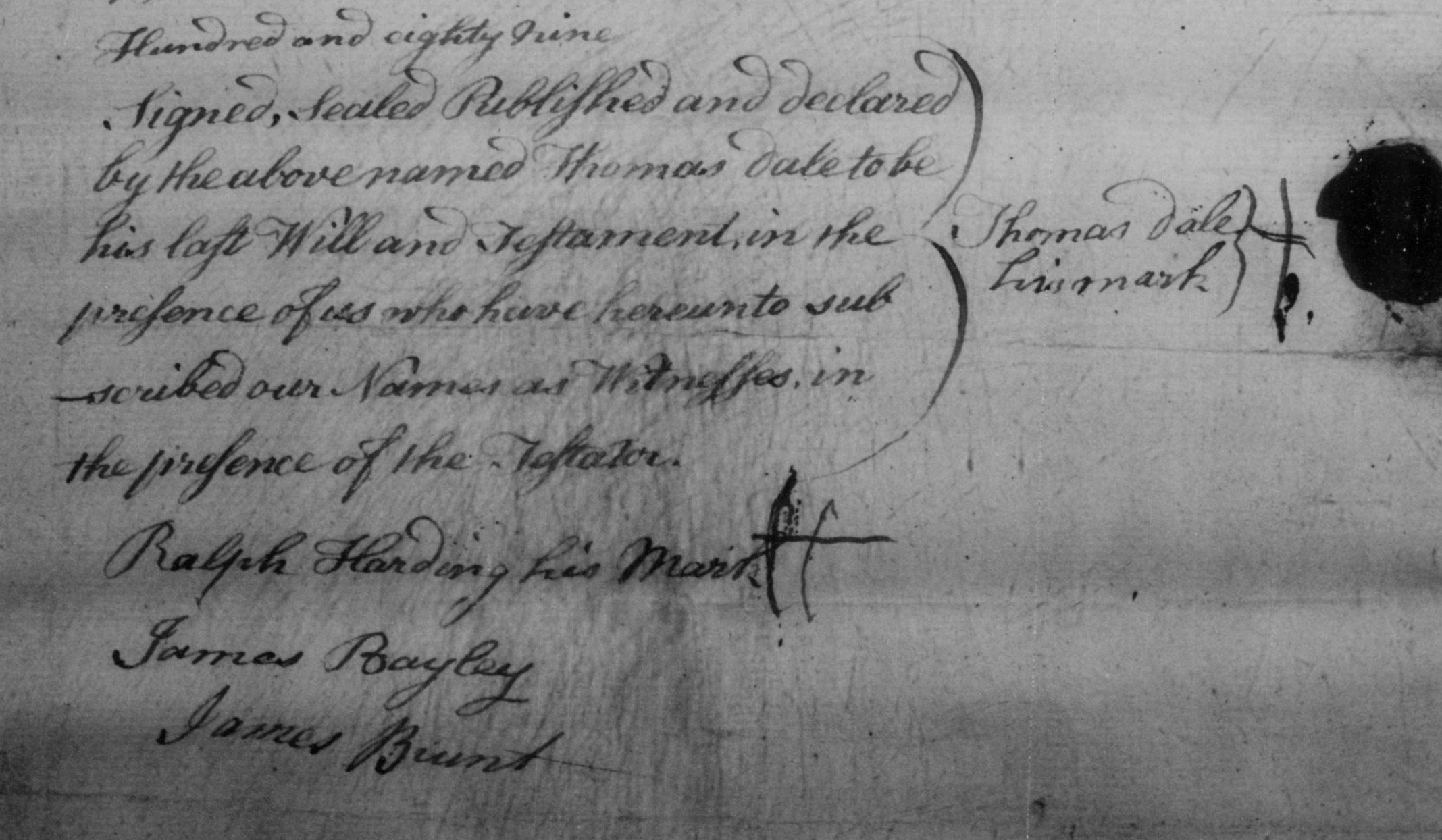
►1790—Wesley’s Last Visits Revd John Wesley pays his last visit to the district, aged 87 (he dies 1791), preaching at Burslem March 28, Tunstall March 29, & Congleton xxx § it’s his only known visit to Tunstall, preaching at the new chapel (March 29) which he extolls highly § ‘At nine I preached in the new chapel at Tunstall;/, the most elegant I have seen since I left Bath. My text was, “Let us go on unto perfection”; and the people seemed to devour the word.’ (Wesley’s journal) not in onlineSoT version § § at Congleton he preaches before the mayor, Anglican minister, & other chief citizens § § he also preaches at Chester (+date?), where he famously commends/in which he advocates aggressive outdoor evangelism & supposedly concludes ‘And this was the way the primitive Methodists did’; there’s some ambiguity about whether he actually said it or whether it’s James Crawfoot’s elaboration when he later quotes what he heard or remembered Wesley saying (cf 1812) § xxChest,Cong,Tunst,Burs,?etcxx § xNEWx
►1790 Revd John Wesley’s last visit to the district, aged 87 (dies 1791), preaching at Burslem March 28, Tunstall March 29, & Congleton xxx § it’s his only known visit to Tunstall, preaching at the new chapel (March 29) which he extolls highly § at Congleton he preaches before the mayor, Anglican minister, & other chief citizens § Hanley church consecrated after rebuilding (1788-90) § Charles Watkin John Shakerley (1767-1834), lord of the manor of Congleton as son & heir of Peter Shakerley’s dtr Eliza Buckworth, changes his name from Buckworth to Shakerley by act of parliament § usual date given for building of the Independent (Congregationalist) Chapel, Congleton (see 1785) § approx date that John & Mary Hamlet come to live on the Cheshire side of MC, probably at Bank (if his parents Thomas & Martha aren’t already living there) § George Harding, illegitimate son of Ann (possibly a dtr of Ralph), buried at Newchapel § John Hodgkinson of Odd Rode township marries Sarah Hancock of Limekilns, & they live either at Limekilns or Corda Well [date of the family settling at Corda Well unknown] § Margaret Waller jnr of Hay Hill marries Thomas Brough of Burslem at Biddulph (Dec 22) § Ann (Nancy) Harding, first child of James & Sarah, born, & baptised at Newchapel (Sept 12) § James Mellor of Mainwaring Farm born, & baptised at Biddulph § William Mellor of Dales Green (pot seller) born
►1790-92 limeworks accounts show coal acquired from James Whitehurst, John Whitehurst (Tower Hill), Richard Barker (Bacon House), & Henry Whitehurst at Mow End
►1791—Made By My Own Hand Ralph Waller Of Ye Hay Hill Ralph Waller ‘Living at ye Hayhill’ writes his own will (July 20) with quaint (& in part ambiguous) phraseology & mis-spellings, a naively pious preamble, & various additions & alterations inc a codicil of 1795, the main will signed (tho this too has been altered) ‘Made by my Own Hand Ralph Waller of ye Hay hill’ § ‘I Desire forgivness of Almighty God for all my Sins past through ye Merits of Christ Sufforing for mee and All mankind So I Commit my Sole and my Body to Almighty God my Saviour and Redeemer in whom and By ye Merits of Jesus Christ I Hope to be Saved at ye general Day of ye Resurrection I Shall rise a gain with Joy to Inherret ye kingdom of heaven prepaired From ye Foundation of ye Woarld’ § children Richard, Ralph, John, Ann, Mary are bequeathed 1s each ‘because I have Given a good Shire of There Fortains before’, while dtrs Margrit, Jane & Hannah are bequeathed ‘What My Executers Can Asist them with’ altered [between 1791-95] to 1s with the note ‘Sinces I Did Rite this Will I Have Given my 3 Daughters [Mary changed to] Margt Jane & Hannah There Fortaines according to ye Rest So I Cut them of with One Shilling a Peace’, also adding here £150 to dtr Sarah [Sally, d.1823; curiously not mentioning William or Ettey, who both die in their 20s but not until after this date, 1794 & 1797] § the dated addition or codicil (Jan 30, 1795) includes ‘As to ye Lease of ye Hay Hill I Expect some of My Famely to Hold on to ye End of ye Lease Paying for it’ § a line added at a different time [perhaps earlier than preceding] reads ambiguously ‘Likewise I Apoint my Neave Richard Caulton my Trustee’ [nephew, see 1737; this is ignored when the will comes to be proved] § ‘As to All These Sons and Daughters as are Mentioned in this Will my Mind Is that Nether None of them nor Heirs nor Asynes shall Demand any More’ § the original part of the will appoints as executors his wife & son-in-law John Shrigley (1756-1837) ‘to Asist my Dear Wife in All this Bisness if it shall please God to Call for mee’ § witnesses (at foot of paper but at what stage isn’t clear) are Charles Broady, John Heath § the basic contents are rehearsed in more formal terms in his wife Margaret’s professionally-written will of 1810 (proved 1814), together with provisos in case Ralph’s will is deemed not valid, though in fact she & John Shrigley prove it shortly after his death in June 1801 (July 31, 1801) § § he doesn’t mention the quarrying business or lease (see 1780), which we presume is held by his son Ralph § xx
►1791 Solomon Oakes of Chell (b.MC 1754) becomes parish clerk of Newchapel on the death of James Bourne § Revd John Wesley dies (March 2) § xxx § although he has organised Methodism robustly & made arrangements for its continuity & governance (by Conference) he has never renounced or formally separated from Anglicanism, so it’s only with his death & in the years immediately following (by 1795) that the Methodist ‘Connexion’ or Church regards itself as a separate body (cf 1784, 1797 & for origins see 1738-46) § this is why correctly-speaking Methodists are ‘nonconformists’ while the older Protestant separatists such as Congregationalists are ‘dissenters’ § disagreements as to its constitution, organisation, & practices surface almost immediately, giving rise before long both to secessions & to autonomous ‘Methodist’ movements (see 1796, 1797, xxx) § Charles Cartwright of Bank dies, his heir being his daughter Elizabeth Paddey § xxx xxx?more?xxx xxx § George Burgess of (or formerly of) Dukes Fm dies § Samuel Oakes of Burslem, son of Job & Elizabeth, dies aged 33, & his youngest brother Thomas aged 9 a month later (buried at Newchapel March 8 & April 9) § William Oakes marries Ann Oakes, witnessed by Joseph Oakes (?probably Joseph b.1767 son of Elijah & Martha) § John Oakes of Wolstanton parish marries Rachel Hancock of Biddulph parish at Wolstanton (Dec 31), & they live at Gillow Heath (grandparents of Samuel Oakes (1818-1890) of Bradley Green, grocer, & great-grandparents of John Thomas Oakes (1855-1941) postmaster of Biddulph; John’s age at death Jan 1845 is 78, there are no JO baptisms in 1766 but 4 to choose from in 1767!) § Samuel Cotterill marries Mary Slater (of Congleton Edge, later of MC; cf sister Susannah’s m to James Slater 1793) § Hannah Waller of Hay Hill marries Humphrey Low(e) of Scholar Green at Astbury (Feb 22; she d.1798) § Isaac Mountford (III) born at Bollington & baptised at Macclesfield (see 1796 for his cousin & namesake, the 2 being indistinguishable, & 1829 for his father Isaac II; also 1855, 1867) § Bollington has coal mines & stone quarries (Kerridge), one or both attracting Isaac Mountford (II) & his sisters there at this period (see 1793, 1796, 1798) § Mary Harding (later Mellor), dtr of Ralph (II) & Elizabeth, born § William Ford (of Dales Green) born
►1792 lease of coal mines on the Hall o’ Lee estate by John Cartwright of Sandbach to John Luckcock or Lucock, representing the opening of Hall o’ Lee Colliery § William Dale of Stadmorslow township dies, Newchapel burial register giving his age as 100 (May 19) § it’s not verified of course, the nearest baptisms being son of John & Mary at Church Lawton Oct 12, 1686 [105] & son of Isaac & Mary of Dales Green at Wolstanton March 5, 1704 NS [88], & note the WD who marries 1716 (Sarah Ellen Cooper nee Stubbs is the 1st verifiable MC centenarian in 1972, see 1872) § William Cartwright buried at Holmes Chapel (June 1) is presumably WC formerly of Bank & Macclesfield, younger brother of Charles § James Washington of Puddle Bank, farmer & butcher, dies § John Triner marries Anne Oakes (probably dtr of Elijah & Martha of Woodcock Farm b.1769), & settles at or builds Spout House (though for some years they baptise at Newchapel as of Brerehurst – Spout House is on the boundary, & note his burial says Brerehurst too, though will & tithe apportionment recognise that he’s in Odd Rode township; see also 1844) § John Barlow of Gillow Heath marries Mary Hancock (parents of the 3 brothers James, George, & Benjamin who settle on MC) § Joseph Baddeley marries Elizabeth Hancock (cf 1801—Harriseahead Revival), both of Harriseahead, & they later live nr Dales Green Corner § last of Thomas & Hannah Moor’s 13 children, Peter, baptised at Astbury (July 22) as of Congleton township, indicating that they are now living on Congleton Edge (& buried Jan 15, 1793) § baptism of Thomas Lawton son of Thomas & Elizabeth (nee Lindop) of Stadmorslow (April 8) is probably TL of Dales Green (d.1863), husband of Jane Mellor & father of the Lawton Brothers (colliery proprietors) (alternative is son of Thomas & Mary nee Oakes of Stadmorslow bap.Sept 11, 1791) § James Harding jnr, eldest son of James & Sarah, born § Ralph Hackney born § William Boon, son of Thomas & Judith jnr, born § Margaret Stanier or Stanyer born at xxx (mother of Peter)
►1793 Stafford Prison (County Gaol or House of Correction) opened (transferred to War Office 1916; re-opened 1939, still in operation) § France declares war on Britain (Feb), beginning the protracted Napoleonic Wars (see 1793-1815 below) § legal recognition & provision for registering friendly societies, but subject to rules & approval (so that many see it as restrictive &/or don’t register) § ?later>James Crawfoot (1758-1839), a Methodist local preacher in the Chester area, retires to Delamere Forest & establishes prayer meetings which have a strong mystical or visionary element, the participants becoming known as ‘Magic Methodists’ or ‘Forest Methodists’ (the Harriseahead Revivalists 1st liaise with them in June 1807, betw the 2MC camp meeting(s); & see 1809xxx)<move? § Holland Ackers (1744-1801), Manchester cotton manufacturer & property speculator, son of a Bolton fustian manufacturer, buys Great Moreton, Smallwood & Wheelock manors & their various appurtenances from the Powys family (see 1714, 1735) § Thomas Brammer of Roe Park acquires game licences as gamekeeper for squire Holland Ackers for both the manors of Smallwood & Moreton (& regularly until at least 1798) § squire Ralph Sneyd dies, succeeded by son Walter Sneyd (1752-1829), whose son Ralph (squire 1829-70) is born § Sarah Spode (née Sherratt), ‘a Pauper’, widow of Thomas, dies aged 95 [credible as they’re m’d in 1717] § Sarah Pott (nee Mellor) dies § Lydia Rigby dies § Richard Barker of Bacon House dies § William Hopkin or Hopkins of Meadow Stile dies § Ann Bayley, wife of Joshua, dies aged 26 § Matthias Bayley marries Sarah Machin § Susannah Cotterill or Cotterell of Congleton Edge marries James Slater at Sandbach § Ann Oakes marries William Woolliscroft jnr of White Hill at Wolstanton (May 20), witnessed by Elijah Oakes (which suggests she’s dtr of Elijah snr of Woodcock Fm b.1769; but that AO is more likely to be the 1 who marries John Triner 1792; her{who?} age at d in Jan 1848 is given as 76 ie b.c.1771) § Elijah Clark(e) born § Charles Turner of Alderhay Lane born § Joseph Boulton born § James Mountford, son of Isaac & Rebecca, born at Bollington (Dec 16, & baptised at Newchapel Jan 12, 1794) – incidentally proving the inference from the refs to the Mountford sisters (1796, 1798) that the family is leading an itinerant or migrant existence between MC & Bollington (see 1791) § the dates coincide with Isaac Mountford joining the navy, based on his period of service of 8 years 9 months on leaving in Sept 1802, pointing precisely to Dec or Jan 1793/94 § assuming he isn’t press-ganged it seems an odd thing for a married man with 3 children one of them newborn to go to sea – whether it’s the eccentricity for which he’s later remembered, or patriotic fervour at the beginning of the French Revolutionary (Napoleonic) Wars (France declares war on Britain Feb 1793), we have no way of knowing § Mary Harding (later Ford), dtr of James & Sarah, born § Sarah Mellor (later Ford) born § Olive Rowley born, illegitimate dtr of Hannah of Congleton Edge § approx/probable birth date of Harriet Hargreaves (later Hancock) – no baptism found, but since all/most Hargreaves children have baptisms at Newchapel it seems likely that the baptism of Ann (Dec 25, 1793 born Dec 19) is an error for Harriet (the Dec date supporting the usually inferred birth date of 1794)
►1793-1815 the protracted Napoleonic Wars, proceeding from the French Revolution of 1789 & prolonged by the grandiose military ambitions of Napoleon Bonaparte (an artillery officer in 1793, first consul from 1799, emperor from 1804), last on & off until the battle of Waterloo in 1815 § a number of local men enlist in the army & from 1798 in local companies of volunteersxxx (some names known+IMf) § food shortage 1800-01 § in 1802-03 Napoleon’s ‘Army of England’ is encamped at Boulogne ready to invade § indirect domestic consequences inc economic depression, features of a wartime economy such as food shortages & cultivation of less fertile wasteland, & restrictions on liberties of the kind that governments like to impose eg the unlawful societies act & the combination acts of 1799-1800 § see also 1803 (MC a signal point), 1805 (proposed obelisk commemorating Trafalgar), 1815 (Waterloo)
►1794—Inheritance of Ramsdell Hall Thomas Cartwright of Ramsdell Hall dies (July 4), his heirs after his 2nd wife Ellen (d.1809) being his four daughters Mary, Elizabeth, Ellen, & Judith (only son Thomas having d.xxx) § his ?slightly ?complicated will (made June 30, 1794, not proved until 1802 +explain why listed as 1819=after sale to WL!{seems to be listed 1802@Chester but 1819@PCC—clarify}xElizabeth Dobbs granted administration by PCC the executors Daniel Vawdrey & Samuel Holland having died without proving it [it says or to that effect!]) stipulates that a future husband of one of them who is willing to assume the name Cartwright be entitled to Ramsdell Hall, at which point Ellen is to ‘resign up to them the said House and Estate and live in the Old House adjoining’ § although the first to marry, Elizabeth in 1801, lives for some years with her husband Henry Dobbs at Ramsdell, Mrs Cartwright remains the nominal owner, Dobbs thereafter acts as such (representing his wife, presumably representing or buying out his sisters-in-law), & none of the husbands accedes to the name-change, though both Mary & Ellen give Cartwright as a middle name to their children (xxxxxxx) § this branch of the ancient family & name thus becomes extinct, ironically about the same time as the Cartwrights of Bank, Charles having 3 dtrs (cf 1791) § Ramsdell Hall & estate is sold by the Dobbses to William Lowndes in 1818 § xx
>leaves propty to Ellen for life or until re-m
>rest to Vawdrey & Holland in trust for the children when they reach 21 or marry
>guardianship of chn to Ellen (till re-m) plus exors
>‘as soon as any of my Daughters shall happen to marry a person to the approbation of my said Executors who will take the name of Cartwright and live at my House at Old House Green then I will that my said wife shall resign up to them the said House and Estate and live in the Old House adjoining if most agreeable to them’ plus £700 extra to the husband who takes the name
►1794—Sale of Mow House Mow House advertised for sale, presumably by whoever bought it in 1782 (qv), the advert this time placing particular emphasis on the coal mining potential § ‘To Be Sold By Private Contract, | A Good and neat Freehold, Modern Farm-House, built with brick, and cornished with stone, and convenient out-buildings, all in good repair, called Mow house; with sixty acres or upwards of arable, meadow and pasture Land, lying near thereto, and within a ring fence; situate in the parish of Woolstanton, in the county of Stafford, and now in the tenure of Richard Rowley, as tenant at will. | It is a very desirable estate, abounding with coal-mines in most part of the land, and a sough already made for draining the same, near to the lime-kilns at Newport Astbury, and within three miles of Burslem, and two of Congleton. There is a meadow adjoining, of nine acres, washed by a spring running ??through the fold yard, besides the advantage, from its peculiar situation, of powers to drain the mines of other proprietors in several of the lands adjacent. | Further particulars may be had of Mr. Richard Sutton, near Park-hall; Mr. Child, of Cheadle; or Mr. John Child, jun. attorney at law, Oakamoor, near Cheadle.’ (Chester Chronicle, June 6 & 13) § the assumption is clearly that the purchaser will be more interested in the coal, while the ‘sough already made’ [a drainage adit] means there’s already been more serious mining than other evidence suggests, supporting the tradition of a mine on the site of St Thomas’s churchyard (see 1775—Yates’s Map) as well as the assumption that the mine at Pinch Ridding (see 1608) won’t be the only coal mining enterprise of the Podmores § the ‘advantage’ of also being able to drain mines on adjacent land [through being on a slope] is that this can be charged for § reference to the lime kilns indicates how well known this industry is by this time, as well as that they & the 2 towns are ready markets for the coal (the Podmores have had close connections with both towns, though Cheshire is the main market for MC’s coal since Burslem has plenty of its own) [Burslem is 4½ miles as the crow flies] § the acreage has shrunk slightly since the c.75 of 1782, & the 2 cottages aren’t included § who buys Mow House isn’t known, the next known owner is James Beech of Tunstall but it’s too early for him (see 1838) § xx
►1794 Mow House sold (tenant Richard Rowley), the advert emphasising that the land is ‘abounding with coal mines’ & already drained by a sough – meaning that there’s already been more serious mining than other evidence suggests, (see above) § sale by auction of Astbury limeworks advertised for Nov 7 – presumably the lease as Egertons continue to own the freehold; it’s within the period that Henshall & Gilbert hold it, so why it needs to be advertised or auctioned isn’t apparent, tho particulars from ‘Mr Kerfoot, Oulton Park’ shows it’s the Egertons doing so § ‘At the house of John Handcock, known by the sign of the Red-lion, in Astbury ... Astbury Lime-Works, Together with a mine of coal lying adjacent.’ (Chester Chronicle, Oct 24) § the ‘mine of coal’ is intriguing: except for Newbold (Pillacosha) Colliery in the millstone grit at the top of the ridge no coal or mine is known in the immediate Limekilns area, tho it’s not a geological impossibility, or Pillacosha may have operated much earlier than is known § Staffordshire Regiment of Gentlemen & Yeomanry formed, Earl Gower of Trentham its Colonel as well as commander of the N Staffs contingent § Wolstanton & Burslem parishes arrange to share poor law services, & a new workhouse is built at Wolstanton § Talke chapel (St Martin’s) rebuilt § Isabella Lowndes of Old House Green dies § William Sherrard (Sherratt) killed in a coal mine aged 42, leaving widow Sarah with 6 children dependent on parish relief § Jonathan Buckley of Dales Green dies, & is buried at Church Lawton (presumably Jonathan b.1737) § Thomas Cotton marries Elizabeth Masden (she signs Mazden, he signs with a mark) at Wolstanton (Aug 25) – presumed to be TC the revivalist, whose wife is Elizabeth, no other marriage record having been found, though at 17½ he’s unusually young for a groom § Elizabeth is older, about 22, & may be a cousin; her surname is probably Marsden, a Lancashire name, which is where Thomas’s parents come from § Ralph Farrall marries Elizabeth Hancock at Stoke, both stated to be of Newcastle (later of Wood Fm, Moreton) § Thomas Harding, son of James & Sarah, born § Joseph Baddeley (later of Rookery) born, illegitimate son of Elizabeth of Harriseahead § Joseph Thorley (later of Bottom of Fir Close) born in Odd Rode township (his parents Joseph & Sarah afterwards of Brownlow) § Charles Morris born in Odd Rode township (probably Thurlwood) § Peter Farrall born at Trubshaw, son of Edward & Frances (see 1800, 1817) § Elizabeth Hopkin(s) (later Clarke) born
►1795—Enclosure & Sale of Congleton Edge Congleton’s enclosure act passed by parliament § the process that follows is described by David Iredale in the 1970 History of Congleton: ‘The Act appointed commissioners to superintend all proceedings, and divide the commons. To the Shakerleys as lords of the manor went one-sixteenth of the area, including, for example, much land on West Heath and Mossley Moss. A certain amount had then to be set aside to pay for the costs of enclosure. The whole of Congleton Edge was sold for this purpose.’ § in addition some land inc at Mossley/Congleton Moss is set aside to produce an income for poor relief (or rather to reduce the poor rate) § all local histories say the same thing re Congleton Edge, the whole of the manorial waste or common land there (within Congleton manor/township) being divided by the enclosure commissioners into 16 freehold plots or smallholdings & supposedly sold off to pay the costs of the enclosure process § the ?1795 enclosure map shows the 16 numbered plots (& is illustrated in xxx Mossley) § oddly however it either didn’t happen as intended & assumed, or Shakerley himself bought all or most of it, since ?most of the plot boundaries shown on the 1795 enclosure map don’t exist on the 1845 tithe map & much of the hilltop belongs then to Shakerley jnr, who as lord of the manor would be the assumed or default owner of manorial waste anyway § he’s unlikely to have bought it competitively in order to retain it, since the divisions of the enclosure map (which must have been agreed with him) allow for his retention of plots that include quarries ie bring him income & it’s hard to see how the rest would be of use or value to him § an alternative perhaps is that it failed to sell & he stepped in & bought it as a sort of benefactor § the Shakerley in 1795 is Charles Watkin John Shakerley (1767-1834) of Somerford, who inherited the manor from his mother Eliza Buckworth (dtr & heir of Peter Shakerley d.1781) & changed his name to Shakerley in 1790; the 1845 owner is his son Sir Charles Peter Shakerley (1792-1857) of Somerford § the Congleton enclosure process is completed in 1798 § the other enclosed land is allocated to freeholders in proportion to their existing acreage; poor folk (who benefit most from common land eg for grazing, turbary, etc) don’t get any § Congleton Edge is not in fact the largest or main part of Congleton’s common lands § apart from the large dairy farm of Puddle Bank, belonging to the Washingtons, the only houses on the Congleton part of the Edge in 1795 are Cotterills’ (Hill Fm), ?uphill E of this on the common (xx in 41), & on the common N of this (Baileys’ in 41)xx??xx § xx
►1795 Staffordshire Advertiser newspaper founded § exceptionally severe winter (1794-95), with persistent cold from Christmas Eve (1794) to late March, inc one of the coldest Januaries § Josiah Wedgwood dies (Jan 3) § John Gilbert dies at Worsley nr Manchester § his son & main heir John Gilbert jnr may be living at Kidsgrove – John snr’s will incidentally mentions 2 servants (1 originally from Worsley) who are currently living at ‘or near’ Clough Hall, perhaps suggesting that they’ve recently acquired it &/or that John jnr may be in process of rennovating &/or moving in (he or they previously live at White Hall, Hardings Wood) § Richard Waller of Hay Hill dies aged 43, leaving brother Ralph as heir to their aged parents Ralph & Margaret (tho in the event the lease of Hay Hill passes to Margaret after Ralph snr’s death in 1801, & is bequeathed by Margaret to unmarried dtr Sally) § Luke Rowley of Whitehouse End dies aged 13, after whom his posthumous nephew Luke Rowley (1800-1850) is named § William Ford (of Bank) marries Martha Tellwright of Burslem (sister of William – see 1804) at Burslem (Sept 29), witnesses Elizabeth Ford, James Tellwright § Mary Mellor (daughter of Marmaduke & Sarah) marries James Taylor, witnessed by Joseph Moor § though their daughter Sarah is baptised a month earlier § Joseph Hulme marries Hannah Marsh at Astbury (later of Harriseahead, coal master) § his nephew John Hulme, son of Thomas & Elizabeth, born (later of Sinder Bank, Mow Hollow) § Hannah Rowley of Congleton Edge has her 3rd known illegitimate child, John § Joseph Dikes or Dykes born at Oakhanger Moss (later of Rode Close)
►1796 Thomas Telford mentions MC millstones in a report on mills § Methodist minister Alexander Kilham (1762-1798) expelled by the Methodist Conference after persistent disagreements mainly re lay & local involvement in running societies & chapels (his expulsion leads to the foundation of the Methodist New Connexion – see 1797) § Hannah Ford (nee Oakes), widow of John, dies § William Lowndes (then of Manchester) marries Elizabeth Hope of Liverpool at St Paul’s, Liverpool § Joseph Cotterill marries Lydia Rigby jnr, & they live near the top of Roe Park in Biddulph parish § John Chaddock of Congleton Edge marries Mary Lees § John Clare marries Ellen Bayley § John Stanier (b.1773) marries Elizabeth Cockram at Astbury § Henry Turner of Drumber Lane marries Sarah Shaw of Sandbach parish at Astbury (Dec 28) § Phoebe Pointon, dtr of Joseph & Hannah, marries Thomas Davenport of Congleton § double wedding of Samuel Hardings (cousins, sons of Samuel & Ralph, b.1770 & 1771) to Rebecca Oakes & Martha Brearton, both witnessed by Randle Brearton (Aug 29) § Samuel & Rebecca have children (inc Jesse & Noah) & f.1807, Samuel & Martha have no known children & he’s thought to be SH the ‘lunatic’ exorcised by the revivalists c.1801 (no burial found for either Samuel!) § Samuel Harding, son of James & Sarah (& builder of Hardings Row), born § Hannah Mountford has illegitimate son Isaac, born at Bollington & baptised at Macclesfield – the 2 IMs cousins b.1791 & 1796 are indistinguishable but in later records there’s only 1, who lives mostly & dies in Macclesfield Workhouse (cf 1791, 1829, 1855, 1867) § Joseph Hopkin born
►1797—Methodist New Connexion & Dissident Methodism After Wesley Methodist New Connexion formed, first (?formal/signif/organised/etc) secession or offshoot from Methodism, its founders including pottery manufacturer Job Ridgway (1759-1814) & his followers at Hanley, which becomes 1 of the centres of the new church § it betrays tensions that have quickly emerged in the Methodist movement in the few years since Wesley’s death (1791) between the growing authority & conservatism of its grandees & ministers & the revivalistic & dissenting tendencies & desire for lay invovement & local autonomy of its grass-roots, of which MC is soon to become a testing ground & symbol (see 1801 etc) § the principal grievance of the secessionists is the diminishing role of the laity & local stalwartsxxxRidgway & friends at Hanley are turfed out of a chapel that they have recently founded themselves, so they start again & establish a chapel on the site of the subsequent Bethesda Chapelxxx § see 1796above re Kilham § § xx
>JobRidgway (1759-1814), ?+others / Hanley, Bethesda chapel etc, ?mention Kilham—came to Bethesda op’g!
>other subsequ dissident offshoots/breakaways / nr fragmentation of Msm after JW’s d
>note Crawfoot’s withdrawal & beg’g of Magic Msts 1793 qv
>movedfr 1791(JW’s d)>disagreements as to its constitution & organisation surface almost immediately, giving rise before long both to divisions or secessions (see 1797—Methodist New Connexion) & to separatist or independent ‘Methodist’ movements (eg 1793, 1802, 1806) § this situation of flux & dissidence in Methodism during the 1790s leads directly into the beginnings of the Harriseahead Revivals at Mow Cop & Harriseahead in 1800-01
►1797 unlawful oaths act (see 1799, 1834) § Rudyard Lake created as summit or feeder reservoir for the Cauldon Canal (cf 1827) § 1st known American camp meetings held in Kentucky § Methodist New Connexion formed (see above) § Limekilns Methodist society moved from Burslem to Macclesfield circuit § John Lowndes of Old House Green succeeds his father Edward as bailiff & gamekeeper of the Little Moreton estate for the absentee owner § Sarah Mellor (‘Mellow’ in Newchapel parish register; formerly Brereton), wife of Thomas, dies, & is buried at Newchapel (Feb 10), her age given as 49xxx § Etty Waller of Hay Hill dies aged 23/4 § Thomas Boon dies (aged about 41, husband of Judith jnr) § Thomas Brammer marries Mary Low § Hannah Moor or Moore, dtr of Thomas & Hannah, marries George Shaw of Limekilns § Thomas Stanier, son of John & Elizabeth, born § Isaac Booth (of Limekilns & later Moreton) born § Martha Hamlet born (see 1809) § Smallbrook Rowbotham or Robotham born at Rocester, son of Robert & Ellen § the source of his unusual Christian name hasn’t been found – it isn’t a surname thereabouts & his mother’s maiden name is Pountain, though a Smallbrooke Horsley (& various spellings) is buried at Rocester 1768 § Robotham is the usual spelling of the surname at this period
►1798 map of Staffordshire {??no-name/?Shaw’s} dated Aug 10 shows ‘Mole Cop’ at one end of a ridge & ‘Cloud Side’ as the other § vol 1 of The History and Antiquities of Staffordshire published by Revd Stebbing Shaw (1762-1802), inc a county map surveyed by Yates (see 1775) (the planned work left incomplete on his death, part of vol 2 being issued in 1801) § local Volunteer Associations or companies of volunteers formed to boost recruitment in connection with the war against France § dry weather or drought in summer & early autumn § thatched & timberframe body of Lawton church destroyed by fire (rebuilt in brick, completed 1803) § Bethesda Chapel built in Hanley for the Methodist New Connexion (the finest New connexion chapel, & still in use) § MNC chapel also built in Burslem, known as the Zoar Chapel § James Whitehurst ‘of the Lane’ (Holly Lane) dies unmarried, administration granted to his sister Rachel Cumberbatch § William Blood marries Anne Ball, daughter of Nathan & Sarah, & they live at first at Cob Moor (see 1815/16) § Elijah Oakes jnr of Woodcock Farm marries Mary Farr of Dales Green § Thomas Stanier (called Stonehewer) marries Ann Kennerly at Prestbury § Daniel Shubotham or Shufflebotham (he signs the former) marries Hannah Baddeley, both of Harriseahead (Dec 2) § Joshua Bayley [?Matthias’s brother] marries Ann Brereton at Wolstanton on Christmas Day, & they live at Kidsgrove § Marcus Bayley (Matthias’s brother) marries Barbara Bromley (Dec 31), & they live at Kidsgrove § John Durber marries Margaret Reese at Stoke, parents of the Durbers of Harriseahead & MC (see 1820) § James Clare (shoemaker) born § George Harding, son of James & Sarah (shopkeeper & leading Wesleyan), born § John Hope Lowndes born at Manchester § Robert Bellford (later Belfield or occasionally Belford) born at Cheddleton (Feb 16) § his future wife Sarah Holdcroft (sister of Aaron) born at Milton, & baptised at Norton § Sarah Mountford has illegitimate dtr Jane, baptised at Prestbury, & her sister Hannah Mountford has another illegitimate son, Thomas, who dies, & is buried at Prestbury § Jesse Mitchel(l) born in Rushton parish, illegitimate son of Maria (1st of 3 generations of that name living at Clough House, Newbold) § approx birth date of Edward Conway at Flint Common (1798/99), oldest brother of John & Richard (comes to Welsh Row 1850s) § Luke Lawton born in Keele parish (operator of Bank Colliery in the 1850s & 60s; no immediate relation to the MC Lawtons)
►1799—Mould Brothers Joseph Mould (‘Mowle’ in the marriage registerch) marries Sarah Barnett at Wolstanton (March 25), daughter of James (d.1788) & Martha, neice of Thomas of Alderhay Lane (see 1799 below), first of the Mould brothers to marry & settle on MC § later Samuel Mould marries Sarah’s sister Anne Barnett in 1810 (?) & the ?oldest brother John Mould (b.1774), after an apparently abortive flirtation with Ellen Davis (see 1806), marries Elizabeth Mellor (alias Brereton) in 1808 (?B), evidence of close business connections with Thomas Barnett, who is a carrier, & Thomas Mellor, sand quarryman, which is John Mould’s occupation § Samuel Mould later moves to Bemersley but the descendants of Joseph & John (with a little supplementary help from Rebecca Mountford, see 1871) make Mould a distinctive MC name & by the 20thC one of the 10 most common names on the hill – most of them in fact Joseph & Sarah’s descendants § an earlier instance of the surname ‘Mold’ in the vicinity occurs in 1774 § John Mould, the only brother alive at the 1851 census, gives his birthplace as [?illegible – (looks like ‘Land Katty’)], Derbyshire, prompting the thought that the Mould brothers represent a tangible link to (or the final generation of) the legendary ‘Derbyshire quarrymen’ who supposedly worked as migrant workers in the quarries on MC & founded or helped found the hilltop village (see c.1690) – like all attempts to pin down the legend however, the lead evaporates § baptisms of Mould brothers John & Samuel (1774 & 1776, parents John & Sarah) show they actually hailed from Elkstone nr Warslow, in the eastern, limestone part of the Staffordshire Moorlands, not actually from Derbyshire (albeit frequently mistaken for it) § there are other Derbyshire connections at this period – notably William Dale’s residence in Hathersage & John Stanyer’s marriage at Bakewell (see 1808, 1806) – but none of them conform to the terms of the legend (wch speaks of a migrant workforce returning periodically to wives & families in the Derbyshire Dales) nor lead to better evidence § xxsee 1774 re their geog’l originsxx
►1799 shortly after their marriage Wolstanton overseers grant Joseph or Sarah Mould 4 shillings a week ‘for Barnett during his Illness’ (seemingly referring to Sarah’s uncle Thomas Barnett of Alderhay Lane) § Hugh Bourne experiences conversion & joins the Methodist society at Ridgeway § unlawful societies act (expanding the 1797 law against unlawful oaths) outlaws oaths of secrecy, secret & closed societies (Freemasons excepted), etc, effectively criminalising much of the ritual associated with friendly societies, trade unions, etc (repealed 1967 but little enforced after 1834) § combination acts (1799-1800<ch) likewise xxxxx § Ralph Moor or Moors & his wife Ann die (buried at Astbury Feb 20 & Jan 5; for his will see 1802) § John Mountford of Alderhay Lane dies, & is buried at Church Lawton (see 1810) § John Burgess marries Margaret Cox at Church Lawton (see 1806, 1810) § Thomas Rowley of Whitehouse End marries Elizabeth Taylor at Biddulph § John Mollart marries Elizabeth Mellor (daughter of Marmaduke & Sarah) § Thomas Clark jnr of Dales Green marries Mary Ellison § John Ford (of Bank) born & baptised at Burslem § his future wife Theodosia Pointon born at Church Lawton (seemingly unrelated to the MC Pointons) § John Beech (later of Limekilns) born § Joseph Moors (later of Brake Village) born § Sarah Henshall born at Henshalls Bank (later Unwin & Shaw) § James Sutton jnr born at Aston-on-Trent, nr Derby (heir to his father’s firm James Sutton & Co, canal carrier, boat builder, & salt works & coal mine proprietor) § Primitive Methodist hymn writer William Sanders or Saunders born at Gorsty Hill, nr Upper Tean (see 1821, 1824; his natural talent comes to HB’s attention when he’s a live-in farm servant at Bemersley; he becomes a PM minister at Tunstall 1820 & emigrates to America before 1838, d.c.1882) § local historian Henry Allen Wedgwood born at Stoke, Surrey [sic] (grandson of Josiah; see esp 1877-81) § James Losh born at Carlisle (later minister of Odd Rode)
1800-1811
►c.1800—Stonetrough-to-Congleton Tramway approx/probable date of the Stonetrough-Congleton tramway or horse-drawn railway, built using unusual oval-section iron rails & stone sleepers, the longest of the MC mineral tramways (c.3¼mls), supplying coal from Stonetrough Colliery to Congleton via a large coal wharf at Congleton Moss § it is embanked in several places, & presumably crosses the sunken Mow Lane below Pot Bank by means of a bridge § similar tramway from Ironstone Green (nr Moody Street) to the Caldon Canal mooted, but (supposedly) not constructed § the ‘slack fall’ section of the tramway from Falls Colliery to Limekilns (?1808) crosses the Stonetrough line § the Stonetrough tramway is sometimes assumed to be part of the improvements or extensions of the colliery that Hugh Bourne is involved in in 1800 (see below), but in fact there is no solid evidence as to its date – the mines around Stonetrough, Tower Hill, Sands, & Mow House have been supplying Congleton for centuries & a well-established route exists over the ridge (part of it called Coal Pit Lane on Bryant’s 1831 map), which the railway approximately follows, which in principle could have been converted to a railway much earlier (horse-drawn mineral tramways or waggonways at & from mines occur from the 17thC, cast-iron rails from the 1770s) § the tramway also serves the lime works, which uses MC coal (at least until the Falls link), & there is an 1805 ref implying it is used in the other direction to carry lime § the tramway is shown on several maps inc Bryant’s 1831 marked ‘Private Rail Road’ & Moule’s 1837 marked ‘Railway’ § it is replaced by the tramway to the Macclesfield Canal via the tunnel, begun 1832 & completed 1842 § John Farey writing in 1817 mentions seeing the Stonetrough-Congleton tramway in 1809
►1800—Hugh Bourne Comes to Dales Green ‘Early in the year 1800, he purchased a quantity of oak timber, growing on a farm at Dales Green, between Harrisehead and Mow Cop. ... His business engagement[s] increase on his hand, – he is employed to execute the carpenter’s work at a mountain farm – the manager of the Stonetrough colliery engaged him to do the wood-work connected with the working of that coal mine, ... His natural bashfulness was such that there was no prospect of even social intercourse with the mountaineers. There was, however, one man among the natives, namely, Mr. Thomas Maxfield, of Mow Cop, farrier and blacksmith, with whom he could trust himself to hold converse. This man had his smithy or workshop at Harrisehead; and H. B. having occasion for iron work in his business as a carpenter, had frequently to call at the smithy, and with Mr. M. he would talk with all the zeal of a new convert; ... In the spring of the year 1800, when Hugh Bourne was working at the Ash farm, his cousin Daniel came to see him. ... when H. Bourne was working at the Stonetrough colliery, on his contract, Daniel Shubotham was employed at the same place as a collier, consequently, they saw each other more frequently; ...’ (Walford, pp.47, 48, 52, 54) § and so it all begins – the events which can seem to dominate the history of MC hereafter § carpenters routinely buy standing timber, & landowners or farmers grow it as an investment & advertise it once it’s mature; there are several farms at Dales Green, but ‘the Ashes & Dales Green Tenements’ belong to Daniel Heath, another cousin of the Bournes & Shubothams, so it’s feasible the timber is on the Dales Green part of this property, so the work at Ashes follows naturally, either way Heath is the connection; the smithy is in fact situated at the gate of Ashes (on what’s now High St, Harriseahead), convenient for trade from farms, coal mining & passing traffic, a footpath coming across the field opposite directly from Stonetrough, an even more convenient or tempting place for Bourne to call in for a chat than Walford realises – & it also belongs to Heath (see 1812); Stonetrough Colliery will have many links with neighbouring farms & carters, as well as the smithy, its manager at this period probably one of the Handleys of Hollin House; for yet another tie-in between HB & the place he finds himself at see below re his sister § Hugh Bourne (1772-1852) of Bemersley xxxxxxxpurchases standing timber from Dales Green, does carpentry work at Ashes Farm, & begins carpentry work at Stonetrough Colliery § a recent (1799) convert to ‘born-again’ religion, Bourne forms (or later extrapolates, as normal in nonconformist historiography) an exaggerated notion of the lack of religion in the district, or a false correlation of its apparent destitution with lack of religion, & in spite of his shyness feels himself called to evangelism – like many born-again Christians he sees it as a fundamental personal duty to spread the ‘good news’ & save sinners § he has conversations with Thomas Maxfield of MC, the blacksmith (whose smithy is by the gateway to Ashes), as does Daniel Shubotham of Harriseahead, Bourne’s second cousin § encouraged by Maxfield & after reading Bourne’s account of his religious experiences, Daniel Shubotham is converted (Christmas) & leads a Methodist revival in Harriseahead (see 1801, etc) § studious, introspective & obsessed with self-analysis, Bourne finds he can channel these things through preaching ‘in our conversation way’ & fervant praying into an effective engagement with ordinary working people, experiences fulfilment in saving souls, & as the revival takes off (in 1801) discovers a commitment to revivalism, a passion for organisation & rule-making, & a vocation or calling to which he devotes his indefatigable energies for the rest of his long life § Matthias Bayley of Dales Green is converted independently & joins Bourne & Shubotham § Bourne’s grandmother, whom he knew as a child, was Mary Heath of Trubshaw, through whom he is related to a number of families in the vicinity inc the Heaths, Shuffleborhams, Hopkins, Buckleys; Ashes Fm currently belongs to his father’s cousin & contemporary Daniel Heath, so that’s how he gets work there [?tenant not known] § (since the Heaths originally owned Ashes in conjunction with a ‘tenement’ or farm at Dales Green, it’s possible that the timber purchase was linked) § HB’s sister Ellen Bourne (1775-1816) marries Joseph Woolliscroft (c.1775-1856) at Wolstanton (Dec 1), a farmer at various farms around MC inc later at Stonetrough (1840/41) § we don’t know which of them comes to the area first, nor precisely where the Woolliscrofts live at 1st (before marriage he lives with his parents at White Hill Fm; the 1st baptisms of their children are from Brerehurst 1803 & 06, Brerehurst inc White Hill as well as the Dales Green slope; Ashes & Stonetrough are in Stadmorslow), but in an age of long courtships it’s likely that Ellen’s connection with the Harriseahead area preceded Hugh’s, probably helping him get further work & at least, like their kinship to Daniel Shubotham, & Thomas Maxfield’s willingness to endorse him, helping a shy, surly, bookish chap find acceptance among colliersxxx § {who’s at Ashes in 1800??}xx
►1800 hot summer & drought, affecting the hay & potato crops § combined with the effects of the war, food shortages result (1800-01) § approx date that Clough Hall is built by John Gilbert according to Ward – understood as rebuilt (a mansion existing here from at least the mid 16thC), but in fact (a) during demolition in 1927 it’s found to be an older building merely encased or fronted in stone, (b) Gilbert is in residence by 1799 at least, & the property belongs to the Gilberts by 1795 (qv) § Randle Brereton of Cob Moor allowed poor relief (& see 1801; presumably the same as RB of MC) § Elizabeth Paddey (nee Cartwright, owner of Bank) dies (see dtr’s marriage below) § xxwillxx § Ann Stanier of Brownlow dies (mother of Joseph, John, & Thomas, all of MC, grandmother of John Stanyer of Marefoot, etc) § Peter Farrall (will Farrol, probate Farroll, burial Farrel) of Trubshaw dies, a farmer with probate valuation of under £600 (which is quite high), so he’s presumably tenant of Trubshaw between the Heaths & Hulmes § he & wife Mary are ancestors of the Farralls of Harriseahead & MC, eg grandson Peter (b.1794) who marries Ann Harding (1817) § William Clowes, future Primitive Methodist, marries Hannah Rogers (1780-1833) at Newcastle (July 28) § the marriage at Prestbury of James Harding & Sarah Storey of Macclesfield (Oct 12) is probably JH of MC b.1767 (see 1769, 1827) § John Ford (grandson of Isaac & Grace) marries Alice Ford (daughter of John & Alice) at Newcastle, later living at Bank § Thomas Gray, a gardener (perhaps at Rode Hall), marries Ann Hancock at Wolstanton (later farmers at Lower Bank) § William Burgess marries Mary Plant at Astbury (Jan 30) – he’s called of Kerrington, Bowden parish, perhaps working there as a farm labourer § William Brammer marries Sarah Leese § Thomas Chaddock of Congleton (1770-1855), innkeeper & wine merchant, marries Sarah Paddey, dtr of James & Elizabeth, at Astbury (June 17; she dies 1802 qv) § Sarah Badkin of Badkins Bank aged 25 marries Richard Mountford, the old schoolmaster of Biddulph, who is aged about 95 (if his gravestone is to be believed – not verified by a baptism however; he dies 1801) § Alice Stanier has illegitimate son Noah (d.1801), first instance of this name being used in the Stanier family § Luke Rowley of Whitehouse End, illegitimate son of Phoebe, born § James Rowley of Whitehouse End (& later Mow House) born (no baptism found, probably son of Thomas & Elizabeth, married 1799; Elizabeth’s brother is James Taylor of MC) § William Turner of Alderhay Lane born (baptised 1840) § Joseph Hodgkinson of Corda Well born (baptised Jan 1801) § his cousin John Hancock of Limekilns, son of William & Martha, born (baptised Jan 11, 1801) § approx birth date of Jonathan Hulme (no bap found – ages in 51/61 censuses suggest 1805, but 40 [ie 40-44] in 41, 82 in 1880, & his 1823 marriage make 1798-1800 more likely); he seems to be son of Joseph & Hannah of Harriseahead (both they & Thomas & Elizabeth of Trubshaw have gaps in their fruitfulness around 1800), & is named after his uncle who appears not to have married § approx birth date of Mary Baddeley (later Triner & Whitehurst of Mount Pleasant) (no bap found) § Charles & Mary Mitchell or Mutchel baptising dtr Jane (at Biddulph, of Astbury) may be earliest ref to the Mitchells of Clough House, Newbold?or eier?/Jesse bB1797/8?ch where the family remain for several generations (from Newtown, Biddulph Moor) § George Smallwood born at Congleton (see 1837) § George Cooper, later of Rookery, born at Drayton in Hales, Shropshire
►1801—The Harriseahead Revival Daniel Shubotham’s conversion under the informal ministry of his second cousin Hugh Bourne & encouragement of his friend Thomas Maxfield (see 1800) precipitates the Harriseahead Revivals, the first important religious movement of the 19thC & the roots of the Camp Meeting Movement (1807 onwards) & the Primitive Methodist church (formed 1810-12) § the rapport between Shubotham & Bourne (& Maxfield), & Shubothom’s standing & influence in the small Harriseahead community, turn what might otherwise have been just personal soul-searching into open revival – much as he may have felt a genuine calling to preach, it’s hard to see a shy, clumsy introvert like HB achieving acceptance never mind converts without the robust endorsement of Shubotham (& Maxfield) § xxmentionMBayleyxx § Thomas Cotton of MC joins the Harriseahead Revivals (later supported financially by Bourne to free him as a preacher) § Daniel Shubotham & the revivalists hold weekly prayer meetings at Jane Hall’s house, Harriseahead § Bourne believes her to be the only existing Methodist in Harriseahead, & neither he nor any of the accounts of the revival ever mention Abraham Lindop (who not only introduced Methodism to Harriseahead in or soon after 1760 but lives in the same row of cottages as Shubotham! or if he’s now living in Tunstall 1 of his sons lives there) nor the two Methodist classes that exist or recently existed (as recently as 1797) in the immediate area, except for Joseph Pointon’s at MC (successor to one of them) § the required revivalistic narrative of the visiting evangelist bringing the ‘gospel news’ to an utterly benighted community of sinful heathens (see Walford quotations under 1855-56) is thus nonsense, as witnessed also by the nonconformist Biblical Christian names of the likes of Daniel & his wife Hannah, & Matthias & his wife Sarah § one early convert is Elizabeth Baddeley – ‘so vile that her swearing and blasphemy were notorious’ – supposedly converted after hearing the enthusiasm of the worship at Harriseahead from the open door of her cottage on MC! (171 Mow Cop Rd) though note that she’s Hannah Shubotham’s sister-in-law (EB of MC (1771-1815), nee Hancock, wife of Joseph Baddeley who is Hannah Shubotham’s brother; & see 1805) § Hugh Bourne preaches at the established Methodist meeting at School Farm, his first public sermon, given out of doors – when so many people turn up Joseph Pointon the host, who has opposed Bourne’s preference for open-air preaching, concedes ‘Then it is like to be in the field’ (July 12 – ‘New life was imparted to me ... and Mow Cop was that day consecrated to the Most High’) § shortly afterwards the Harriseahead converts inform HB that they’ve decided to have a chapel, to be built on part of Daniel Shubotham’s garden (July 31) § formal Methodist class formed at Harriseahead, Daniel Shubotham its official or nominal leader though in practice leadership is shared § Harriseahead Chapel built by Bourne in Daniel Shubotham’s garden, literally, which he gives to the Methodist Church (+datexx01; this remains a Wesleyan Methodist chapel, extended 1823 & 1838, replaced xxx, & what remains of it finally demolished 1979) § responding to frustration at the shortness of the meetings Shubotham suggests ‘a day’s praying & shouting on Mow’{<checkQUO!} – precise date of this important statement, the basis of the 1st camp meeting, isn’t certain, ??Walford/HB placing it in the earliest phase of the Harriseahead Revival, Clowes narrating it as something DS tells him soon after they 1st become acquainted in 1805 (see 1807) § § the 1st wave of the Harriseahead Revivals belongs largely to 1801, & as in all religious revivals settles{?} somewhat, though the sincerity of local converts & the infrastructure that’s been put down (esp the chapel) ensure some continuity & make Harriseahead both a base for outreach (Bourne in particular becomes an enthusiast for travelling about making converts & making contact with other revivalist groups) & a focus for revivalistic inclinations (as witness when William Clowes is converted at Burslem in Jan 1805 but seeks some fuller or confirmatory experience, he is directed to Harriseahead & duly finds it there); Clowes’s conversion & shortly before it the existing Methodist James Steele’s conversion to the cause of revivalism commence the 2nd phase of the revivals (see 1805) § § xxxmorexxx (& see next & 1805, 1807, etc)
>checkDATE>‘Our chapels were the coal-pit banks, or any other place; ... we preached the Gospel to all, good or bad, rough or smooth. People were obliged to hear.’ (HB)
►1801—Then It Is Like To Be In The Field* ‘By faith Noah, being warned of God of things not seen as yet, moved with fear, prepared an ark to the saving of his house; by the which he condemned the world, and became heir of the righteousness which is by faith.’ (Hebews 11:7) § at the height of the 1st phase of the Harriseahead Revivals, Hugh Bourne preaches his 1st sermon outside Joseph Pointon’s house on Mow Cop (July 12)xxintentionally or not he could hardly have chosen a better text, Hebrews 11:7 being one of the Bible’s clearest statements of the doctrine of justification by faith (Latin iustitia=Biblical English righteousness), the fundamental belief of Methodism, made vivid by treating the familiar story of Noah as an allegory – duly warned (eg by a preacher) & fearing damnation, you must prepare to save your soul, in doing which you reject the material world (ie are born again) & inherit God’s saving grace purely by virtue of your faith § we have no idea what HB says, he’s a dull preacher at best, & hesitant & dreadfully nervous on this his 1st public attempt to preach formally (ie sermonise from a Biblical text), but his forte is expressing this call to salvation in simple, urgent, conversational terms, while his theological knowledge & reading are sufficient for him to have understood that this is a keynote text for the path of Methodist revivalism he has embarked upon § xxHB himself tells us not just that he’s inexperienced & nervous but that he’s ‘often at a loss’<ch (ie embarrassing pauses presumably) & that he keeps his hand on his brow & over his eyes throughoutxx § we also know from Revd John Simpson’s vivid Recollections and Characteristic Anecdotes ... (1859) that he spoke in a ‘broad emphatic provincial dialect’ & ‘a plain style’ without simile or image, or philosophising, with ‘varied expressions’ & even sometimes (surprisingly) ‘a glorious smile’ on ‘his otherwise unpleasing countenance’ § xx+backgrnd+full story fr HBorWalf+aftermathxx § § HB & his biographer revd John Walford returned to this event over & over, being particularly fond of the retrospective characterisation of it as ‘a/the camp meeting without a name’<ch , seing in it (as preachers routinely see in the stories of the Old Testament prophetic foreshadowing of the NT & the life of Christ) the roots of the whole PM movement & prophetic or Providential foreshadowing of the later camp meetings & of camp meeting & open air worship & evangelism as the central feature of PMsm § ‘New life was imparted to me, and Mow Cop was that day consecrated to the Most High.’<ch (HB, xxx) § alt titles:*NB:can’t verify Field-not in Walford’s version=Open-AirOROut-of-Doors/MC Was That Day Consecrated To The Most High=retrospective exaggeration/By Faith Noah=HB’s text Hebrews 11:7/Pointon’s Farm § xx
►1801—Harriseahead Chapel Hugh Bourne builds a chapel in Daniel Shubotham’s garden at Harriseahead § surprisingly quickly after Daniel Shubotham’s conversion (Christmas 1800) & the beginning of the Harriseahead Revivals the idea of having a chapel arises, & it’s built in Shubotham garden – literally, the chapel actually stands on the plot of land at the back of DS’s house § it’s an impressive testimony to either his own enthusiasm or the revival’s runaway early success – most historical accounts treat it as unsurprising, a natural enough development, but it’s not normal for a newly formed Methodist society to move so quickly to aspiring to have its own chapel nor for so small & isolated a village as Harriseahead is at the time to have one (Primitive Methodism once it exists & as it expands makes something of a speciality of chapels in unlikely out-of-the-way places, but this is not a characteristic of Wesleyan Methodism) § xxseeabovexx § § xx
►1801—A Lunatic Cured Samuel Harding, a ‘lunatic’ who has recently been released from an asylum as incurable & is kept chained in his brother’s house, is cured & converted by the revivalists, & a few days afterwards dies (latter not verified, no burial found) § probably Samuel b.1771 (of whom likewise no burial record found), son of Ralph & Mary, husband of Martha (m.1796, she d.1811, no known children), the brother in question being James Harding (1769-1858), already one of the leading Methodists on the hill § Samuel is the survivor of twins, his brother Thomas having died aged 10, which may be part of his troubles (Daniel Shubotham likewise, curiously) § the incident is one of several instances of the Harriseahead revivalists conducting exorcism or curing madness or ‘possession’ that are typical of religious revivals, & demonstrate how religious enthusiasm goes hand-in-hand with equally firm belief in the Devil & his demons & their war against the faithful (for Jane Hall see c.1806) § the nature of such exorcisms is a concerted effort of prayer or praying combat against the supposed forces of possession, ritualistic in a way but not in the same sense as a Catholic exorcism § Daniel Shubotham, Matthias Bayley, & othersxxxxxxx inc ‘the women’*, visit him one Saturday afternoon ?ch(by inferance) at his brother’s invitation or request § ‘when they prayed, his neck and face reddened, and he rushed with fury to the end of his chain; but on their getting up in faith, he fell like an ox; when they slackened he rose up again in fury; but when they again rose in faith down he fell, and they went on, till at length he began to praise the Lord ...’ (Hugh Bourne via Walford) [in other words, praying rouses him to violence proving his trouble to be Satanic or demonic possession, a battle of wills ensues, & persistent praying by those with faith vanquishes Satan] § *‘the women’ with no names sounds odd given that the leading women of the revival (Elizabeth Baddeley etc) are usually named on equal terms, so it probably means the womenfolk ie wives (Hannah Shubotham, Sarah Bayley etc) § for a similar incident involving Jane Hall & comparative comments see 1806
►1801—Death & Funeral of Thomas Moor Thomas Moor of Congleton Edge, formerly of Mow Cop, revivalist preacher & pioneer local Methodist, dies of ‘fever’ [probably typhoid or similar] aged 53 § his funeral sermon is preached by the senior Methodist minister in the Macclesfield circuit, Revd Jeremiah Brettell (1753-1828, doing his 2nd stint in the area 1799-1802) ‘in Mr. Shaw’s orchard’ at Limekilns, preceding burial at Astbury (Sept 21) – a circumstance that not only shows the esteem in which TM is held but suggests that open-air preaching or worship is not as frowned upon as Hugh Bourne or John Walford would have us think, &/or that Thomas Moor has been a proponent of it too § § Revd J. B. Dyson’s respectful account attributes considerable influence to Thomas Moor as a pioneer local preacher & evangelist & also makes him sound like a precursor of the proto Primitive Methodist revivalists whose revival is underway at the time of Moor’s death § pursuaded by Charles Shaw snr to attend preaching at ‘the Lime-kilns’ [1770s] he ‘speedily joined the class, and afterwards became its leader, and also a very laborious and acceptable local-preacher. He had a moral field of some extent [ie a large geographical area], for a time at least, under his almost exclusive culture. Beginning at his own residence at Congleton-Edge, it extended to Mow-cop, Harriseahead, Lawton, and other parts of Cheshire and Staffordshire. ... [which] afforded an ample field of labour for such spiritual husbandmen as Thomas Moor, whose labours have been made a blessing to many. The energetic and pointed preaching of this zealous man seems to have been much owned of God in the conversion of sinners [ie led to many converts]. Perhaps the most important of these was that of Miss Harrison, of Wheelock [at Sandbach in 1785]. ... He was suddenly cut off by fever || in the midst of his usefulness, and in the prime of manhood.’ (The History of Wesleyan Methodism in the Congleton Circuit, pp.83-4) § unable to discover the origins of the society at Lawton (various locations inc Salt Works; chapel built 1812) Dyson says ‘It seems probable that Thomas Moor was one of the first to || preach the Gospel there.’ (pp.130-1) – tho he (naturally perhaps) makes no mention of William Clowes & friends evangelising that area c.1805-07 § Dyson’s main informant is Charles Shaw jnr § Dyson assumes he lived at CE throughout but in fact he only ends up there c.1792, he & wife Hannah beginning their married life on the Staffs side of MC 1769-70, & subsequently baptising children as of Odd Rode 71 Moreton 73-86 Newbold 88-90 Congleton 92 (townships) hence living at several places on the Cheshire side, Moreton implying Roe Park, Newbold implying Limekilns § his interest/influence in the Sandbach area leading to him playing a significant part in the 1785 revival there is related to his wife coming from Sandbach town § (see also c.1770, 1802—Ralph Moor’s Will) § xx
►1801 first decennial population census consists of statistics only (see 1841 for 1st with names) § it’s the 1st attemp to count rather than estimate the population, tho military personnel, seamen & convicts are excluded, in addition to local inaccuracies § the population of England is 8·33 million, Cheshire 191,751, Staffs 239,153 § food shortages continue, caused by drought, crop failure, & war § new benefactions board for Lawton church begins with Thomas Cartwright’s bequest of the rent of Woodcock Fm in 1667, providing 13 penny loaves of bread to be given to the poor each Sunday § large Methodist chapel built at Swan Bank, Burslem, suitable for the circuit headquaters & dominating part of the town centre (enlarged 1816, demolished & replaced with a monstrous eyesore 1971) § sale of standing timber at Hay Hill, Willocks Wood, etc, the advert mentioning Thomas Brammer, gamekeeper, & William Cooke of Whitemore (?same as WC the millstone maker) § William Wharton mentioned as gamekeeper of Moreton § Great Moreton manor passes on the death of Holland Ackers (who dies at Lark Hill, Salford) to his brother James (1752-1824) until the majority of his son George § Sarah Harding refused poor relief because husband James ‘has a good property and gets his own corn’ § Randle Brereton of Cob Moor sent to the workhouse (at Wolstanton) & his poor relief stopped § John Davenport (1765-1848) commences manufacture of flint glass at his pottery at Longport, in partnership with Thomas Kinnersley (financier) & Edward Grafton (glassmaker) – so it’s from about this time that the firm uses ‘Mow Cop sand’ (pounded gritstone) to make glass § it continues until 1887 (& see 1806, 1815) § Edward Grafton is recorded at Longport 1802-03, & in 1811 & 1817 at Liverpool described as glass dealer; kinsman xxBenjamin Grafton (glassmaker) m.1789 f.Liverpool 1797, is in Burslem parish xxx § ‘In 1801, the making of flint-glass, or chrystal, was introduced by them [Messrs Davenport], and is still extensively carried on; connected with which is steam-machinery for cutting and ornamenting it. They produce very brilliant specimens of stained glass, and have | got up some elaborate works of that kind for church and other windows, particularly one for St. Mark’s, Liverpool; and have furnished splendid assortments for the Dukes of Sutherland and Devonshire, the Marquises of Anglesea and Westminster, and others of the nobility.’ (Ward, 1843, pp.156-7) § Davenport originally works for Kinnersley’s bank, is then partner in a china factory at Liverpool (Liverpool remaining relevant to his glass business), in 1794 acquires the Longport factory of John Brindley, later taking over others inc the Williamsons’ (c.1840); after the founder’s retirement or distraction by politics it’s run by sons Henry (d.1835) & William § Thomas Kinnersley (who buys the Clough Hall estate & Fir Close in 1812) already has property interests in the Kidsgrove & MC area, inc Dukes Fm, which he this year sells to Timothy & Thomas Challinor, tenant Marmaduke Mellor (deed dated Sept 28; see 1786) § the deed names the farm as ‘Dales Green’ [later Dukes Fm from Marmaduke] & lists the fields etc belonging to it as ‘The Sidney Field the Tomley Meadow the Limefield the Fox-Holes the Hopkins Meadow the Hopkins Croft the Gorsely Banks the Broomy Croft the Hancocks the Rough Field the Cottage with the Garden and Yard’ – preserving several historic surnames, Tomley being Twemlow [dialect Twomley], tho no record is known of a local Sidney § Thomas Moor of Congleton Edge, revivalist preacher & pioneer local Methodist, dies of ‘fever’ [probably typhoid or similar epidemic disease – several other Congleton Edge people die this year], & is buried at Astbury (Sept 21) after a funeral sermon by the Methodist minister ‘in Mr. Shaw’s orchard’ at Limekilns (see above) § James & Martha Brammer of Congleton Edge die § Margaret Rowley of Congleton Edge dies § Joseph Rowley of Whitehouse End dies § Ralph Waller snr of Hay Hill, yeoman farmer, dies (for his quaint self-written will see 1791, proved 1801) § Thomas Mellor (III) dies § Thomas Clark(e) of Dales Green dies § Elizabeth Cartwright of Ramsdell Hall marries (Thomas) Henry Dobbs of London (1775-1843) at Astbury (March 31), & they live on & off at Ramsdell – 1st of the 4 Ramsdell Hall sisters, dtrs of Thomas & Ellen, to marry § William Yarwood of Roe Park marries Mary Rushton at Leek § Ann Moor(es), dtr of Thomas & Hannah, marries John Oakes [?of Congleton], & they live at Congleton Edge § Samuel Oakes of Oakes’s Bank marries Mary Moss (parents of Sampson the shoemaker, etc) § they either establish the first cottage at Oakes’s Bank or attach theirs to an existing one – his father Samuel (1742-1825, m’d 1763) lives nr Dales Green but precisely where isn’t known [cottages are usually established by or for newly married couples, so Oakes’s Bank most likely originates in 1801 or 1763, the ultimate ancestral home of the Oakeses being unlikely to be on the former common like Oakes’s Bank] § William Clare marries Ann Moores or Moor, dtr of Jonathan & Elizabeth (she dies shortly after, as he re-marries in 1802, though no burial record has been found) § Jesse Harding born (baptism entry says Jacob) § Jane Mellor (later Lawton), youngest child of Marmaduke & Sarah, born § Luke & Ruth Pointon complete the perfect nonconformist/Biblical triumvirate with the birth of son Joshua (Aaron & Moses being born 1794 & 1799; cf 1634, 1759, 1812) § Rebecca Morris born at Smallwood (sister of James of Rookery, wife of Joseph Hulme of Trubshaw) § William Chaddock of Congleton born (future husband of Elizabeth Lowndes) § future squire Randle Wilbraham born § John Conway born at Flint Common, brother of Edward & Richard (comes to Welsh Row 1850s)
►1801-03—Jabez Bunting at Limekilns Revd Jabez Bunting (1779-1858) attached to Macclesfield Methodist circuit, his first posting as a young Methodist minister (1801-03, minister 1799) § hence the highly symbolic anecdote (c.1802/03) where he arrives to preach at Limekilns but feels ill & retires to bed, a certain ‘H.B.’ begins to lead the worship ‘unsolicited’, hearing which with horror from upstairs Bunting rises from his sick bed & preaches § Jabez Bunting & Hugh Bourne, the living embodiments of the 2 extremes of Methodism, the rigid conservative establishment & the unruly radical grass-roots, in direct confrontation on Mow Cop in the years following the 1797 secession & the early years of the Harriseahead Revivals, is so symbolic one might think it too good to be true (though it comes from a Limekilns source, probably Charles Shaw, to Dyson) § historians, notably E. P. Thompson in his seminal book The Making of the English Working Class (1963), have used the anecdote to symbolise the class conflict at the root of the evolution of working-class or socialist politics & religion § Bunting’s early support for revivalism is (supposedly) reversed due to his experiences of it in the Macclesfield circuit at this time (Macclesfield itself being a hotbed of religious radicalism & revivalism that influences the MC movement), & thereafter he becomes its strongest opponent & the champion of conservatism in the Wesleyan church, or ‘High Methodism’ § Bunting becomes a dominant figure in (Wesleyan) Methodism for most of the 1st half of the century, called by the Dictionary of Methodism ‘the architect of the WM Church’, & the extreme & forceful nature of his views is expressed in quotations such as ‘Methodism knows nothing whatever of Democracy: it is as much opposed to Democracy as it is to sin’ (speaking in 1827 in defence of the supremacy of Conference) § among other things he promotes the formal training & ordination of ministers, & is credited with establishing the use of ‘Reverend’ (previously disavowed by Methodists, as at 1st by the breakaway sects) § along with democracy & the question of grass-roots or lay influence in the practices of the church (root cause of the New Connexion secession), revivalism is the issue that in some measure fragments Methodism in these early post-Wesley decades, the church & its ministers being from about this time opposed to it & afraid of it, while HB is in process of making himself its most dedicated & undisciplinable advocate § the Limekilns incident is also a rare glimpse of Bourne’s early movements as he turns up at Methodist meetings in the locality & becomes an increasingly familiar & unifying (or divisive) figure, as well as of his (otherwise unrecorded) association with the pioneering society at Limekilns, the oldest Methodist society on Mow Cop, whose leading & most dynamic figure Thomas Moor, well known all around the hill & in Harriseahead, has recently died (1801) § xx
►1802/??other—Camp Meetings & Revivals Reported in the Methodist Magazine Methodist Magazine carries enthusiastic reports of religious revivals in the United States of America, a recurrent feature of which is a large open-air gathering, rally, or meeting referred to as a ‘camp meeting’ § the term appears to derived from improvised outdoor religious meetings or services held during the course of long journeys by wagon train (convoys of wagons), when the wagons are parked in an approx circle & a central camp fire made for the travellers to gather round, most immigrants to the American west being Protestant nonconformists of various types § § these accounts are read with interest & envy by (& to) the participants in the Harriseahead Revivals § xxHB says American cms began 01or02{check dates—wch yr 1st reported? wld a span make more sense?}xxWalford quotes sevl letters/reports ref’g to 1801 but pub’d in MM 1802xxpp89-90+116xxxQUOsxxx § § see 1797 § § xNEWx
>MM 1802 p.523>dated May11 ref’g to Aug12`01ch>About this time I received the joyful news of the work breaking out in the upper part of Georgia, and running like fire in dry stubble, since which most of the circuits in the district have caught the fire, which has continued to spread. What cannot the methodist [<sicW] do through grace? Glory be to God, primitive methodism shines in this country [<sicW] and through America.’
>MM 1802 letter/report datedORreAug7`01>‘They encamp on the ground, and continue praising God for a whole week, day and night, before they break up.’
>MM 1802 letter/report of or re Oct 23`01>‘Twenty thousand meet at once, and continue encamped for ten or twelve days. Some have been so powerfully convinced, that they have been nine or ten hours without any signs of life, while others have been delivered from their distress in a few hours.’
►1802—Ralph Moor’s Will & Joseph Moor’s Illness Ralph Moor’s will proved belatedly (made 1796, he died 1799) after son Jonathan of Sands is granted administration in lieu of the named executors, his brothers Thomas Moor (the Methodist evangelist, who has died) & Joseph Moor (who is mentally ill – ‘being insane and a lunatic and thereby incapable of proving and taking upon him the execution of the said Will’), though it’s not clear why Thomas hadn’t previously dealt with it § several documents preserved at Chester relating to the matter (1801-02) inc an affidavit sworn by Jonathan Moor & Charles Davenport of Odd Rode, surgeon, giving details of Joseph’s illness, which began about 7 years ago [1795], Joseph living with Ralph in Odd Rode & since his death with Jonathan § the surname is variously spelled Moor, Moore, Moors (Moor throughout Ralph’s actual will), the Bishop of Chester’s authorisation calls him ‘Jonathan Moor of Harrisey Head ... Tailor’, & Jonathan signs the administration form ‘Jonothan Moor-’ [sic] & the affidavit ‘Jonathan Moors’ [cf his uncle John’s 1808 will ‘Moores’ & ‘Moore,s’ (sic)] § he actually lives in the Sands/Biddulph Rd area § Ralph’s will mentions his wife (who d.shortly before him) & 3 sons only, with Joseph as residual legatee § Ralph Moor (1726-1799) is the son of MC stone mason John & his wife Mary (nee Tomkinson; see 1724, 1725, 1728), & brother of John (d.1811 at Bacon House), William (ancestor of the Moors family of Bank), & Mary (of Bacon House, wife of Jonas Parkinson)<add more dates for’em!
►1802 Elizabeth Tomlinson (1775-1849; from 1804 Evans; model for her neice George Eliot’s character Dinah Morris in Adam Bede) commences revivalistic preaching in the Tutbury/Burton-on-Trent area (without endorsement from the Methodist circuit authorities) & afterwards (+date) in Ashbourne & the eastern Staffs Moorlands, which paves the way for &/or dovetails into the Camp Meeting Methodists’ success in this areaxxx (see 1808, 1809, 1813)??or eier § her standing in relation to official Methodism can be gauged from the fact that female preaching is banned by the Methodist Conference in 1803 – female preachers consequently come by definition to be associated with dissident revivalist activity & groups & are a significant feature of Camp Meeting Methodism & early Primitive Methodism, with which Evans subsequently becomes closely associated § Sarah Chaddock of Congleton (nee Paddey, wife of Thomas & mother of William) dies in childbirth aged 25 (the baby Sarah dies a few months later in March 1803) § her husband Thomas Chaddock becomes 1 of the joint-owners of her grandfather Charles Cartwright’s Bank property (Upper & Lower Bank Fms; administration of her estate granted to him 1804; see 1855) § Thomas Yates dies, probably of Gillow Heath, unmarried brother of John Yates & Anne Chaddock of Congleton Edge § his will (made 1802, proved 1803), written by parish clerk William Cooke but clearly dictated by Thomas himself, makes itemised & quaintly spelled bequests of ‘my Sisters Wareing Apperil’ [Pamela alias Permelia d.1801] & his own, including ‘Petecote[s]’ & ‘Hancerchifes’ – although not wealthy he also has several silver items & both ‘Best’ & ‘Woser’ china § he’s the Thomas Yates who is a member of Gillow Heath Methodist class § Isaac Dale of Exeter, ‘china & earthenware man’, dies (will proved, but no burial found) [?probably the ID b.1737] (& see xxx, 1829—Shaw’s History) § William Shaw of Limekilns dies § William Dale marries Margaret Sherratt § William Clare, widower, marries Mary Biddulph of Biddulph (she dies 1810), witnessed by Richard & Catherine Colclough, his sister & brother-in-law § Charles Hackney marries Anne Stubbs § Thomas Holland marries Elizabeth Hockenhull at Wolstanton, dtr of the farmer George & Mary (nee Holland) of Hall o’ Lee, & they live at Drumber Head (Birch Tree Fm) § Elizabeth Lowndes (later Chaddock) of Old House Green born in Manchester (Jan 12), & baptised at Mosley Street Independent (Congregationalist) Chapel, Manchester § Joseph & Margaret Stanyer have twins Joseph (later of Kent Green) & Thomas (of Scholar Green) § Mary Rowley born (later Oakes), illegitimate dtr of Elizabeth of Whitehouse End § Matthew Harding, son of James & Sarah, born § John Taylor (later of Sugar Well Farm) born § Charles Gater (later of Sands) born, son of Thomas & Anne of Gillow Heath § George Knott born § Thomas Turner of Drumber Lane (& later Brake Village) born, eldest son of Henry & Sarah § Absalom Pointon born, son of Luke & Ruth, & baptised at the Independent (Congregationalist) Chapel, Congleton § Jabez Goodwin baptised at Congleton (Jan 13, hence b.1801/02) § John Gray (later of Bank) born at Rode Heath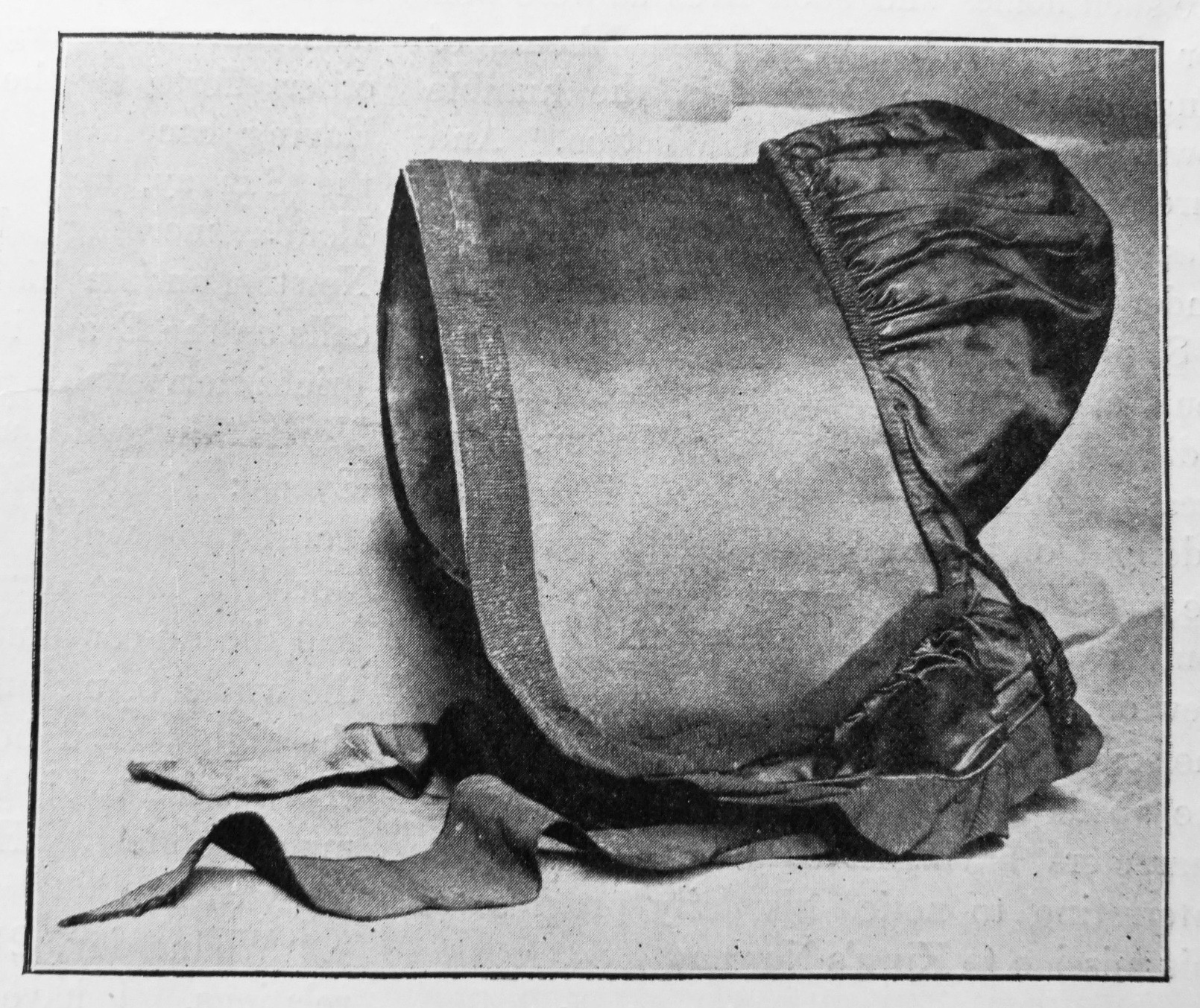
►1803 Mow Cop designated a signal point in connection with raising military reserves in case of invasion by Napoleon, whose army is encamped at Boulogne ready to invade § rebuilding in brick of the body of Lawton church completed (benefactions board dated 1801, royal coat of arms dated 1802) § squire John Lawton grants 21-year lease on Trubshaw Colliery (described the following year as a ‘newly established Colliery’, though it is just the operating company that’s new – probably Richard Speakman & Co) § Jonathan Washington of Puddle Bank acquires game licence (called ‘gent’) § Hugh Bourne records that James Mellor is hurt at Stonetrough (probably JM b.1785, later bailiff of Clough Hall Collieries) § Congleton Methodist circuit formed, inc the Limekilns society {where’sBidd now?Burs/Cong/Leek} [Cong in Dyson1856+33] § James Hancock of Harriseahead becomes leader of the Bradley Green Methodist class at Thomas & Judith Boon’s house {say more of who he+they are & their MC connectionsxx—did they move fr ‘Newpool’ to BG?} § Methodist Conference bans female preaching § William & John, sons of Alice & the late John Mountford of Alderhay Lane, die, & are buried at Church Lawton (Feb 10 & March 6) § Hannah Pointon, wife of Joseph of School Fm, dies § Elijah Oakes snr of Woodcock Fm dies, & is buried at Newchapel as of Brerehurst township (Jan 15) § his son John Oakes marries his cousin Martha Oakes, & they live at (or build) a cottage that straddles the county boundary at approx the position of 30 High St, working (or creating) a series of crofts along the top edge of Fir Close from Parsons Well to Wood St § their dtr Sarah Oakes born (see 1832, 1835) § Thomas Clare marries Jane Moors or Moor, dtr of Jonathan & Elizabeth, & they live at Biddulph Rd near her family § Elizabeth Baddeley of Harriseahead, who has several illegitimate children, marries Samuel Lawton, widower, brother of John of Dales Green § Peter Hamblet or Hamlet marries Ellen Stanier, & they live at Chell § William Whitehurst (son of Charles & Hannah) marries Phoebe Smallwood § Phoebe Rowley of Whitehouse End marries James Rigby jnr § William Chaddock marries Anne Atkinson § William Yates of Congleton Edge marries Anne Statin (or Staton) § their dtr Sarah Yates born (baptised at Congleton Jan 1, 1804) § Maria Mould (later Stanyer) born § Jane Whitehurst born (later wife of Luke Rowley of Whitehouse End) § Thomas & Betty Cotton baptise dtr Betty at Newchapel as of Brerehurst, confirming that they’re living on MC at this time, though not confirming Hugh Bourne’s statement that they have a large family as only 1 other baptism is known, in 1805 § Elijah Harding, son of Samuel & Rebecca, born § Sampson Oakes (shoemaker) born, named after a cousin of his father’s (probably his godfather) § Charles Yarwood of Roe Park born § William Ford jnr born (later joiner & builder, of Fegg Hayes & Burslem) § Robert Burgess, son of John & Margaret, born (see 1836—Beginnings of The Rookery) § Mary Booth born at Hassall, & baptised at Sandbach on May Day (later wife of Joseph Moor(e)s of Brake Village)
►1804 small hospital built at Etruria, forerunner of the North Staffs Infirmary at Shelton (opened 1819) & then Hartshill § repairs to the Tower (the earliest retrospectively attested at the 1850 court case) – presumably those by William Rawlinson & his father (recollected as 40-50 years ago when William appears as a witness) § lease of iron foundry at Hall o’ Lee to William Luckcock or Lucock § a share of the property of Charles Cartwright at Bank offered for sale by auction (owners of the property in 1838 tithe apportionment are given as John Theodore Cartwright [correctly Theodore John], Thomas Chaddock & Elizabeth Shufflebotham [Shipplebotham] who are actually the heirs of the 3 dtrs of Charles Cartwright; cf 1807) § sale of standing timber from Mrs [Ellen] Cartwright’s land at Ramsdell Hall § James Steele, one of the most senior Methodists in Tunstall, becomes involved in the Harriseahead Revivals (Christmas), converting him to a revivalist & bringing Tunstall into the revival (see 1805) § Thomas Barnett of ‘Olery Lane’ (gravestone) or ‘Ollerly Lane’ (will), carrier, dies (Nov 8), & is buried at Newchapel § his will (made Nov 5, 1804, proved May 13, 1805) divides things between sons Matthew & Joseph, dtr Elizabeth Hulme [wife of Thomas of Trubshaw], & wife Sarah, & refers to ‘my estate at Congleton’ & ‘the Estate at Cob more as I am Possessed of’ § executors are ‘Master’ William Lowndes & son Matthew, latter actually proving it; witnesses Charles Davenport, Matth[superscript squiggle] Bayley, William Kennerley § his witness is either Matthias Bayley the revivalist or his father MB snr; since the other 2 are surgeon & schoolmaster of Odd Rode the executor WL is WL of Old House Green, tho one would expect him to be living mostly at Manchester at this date – Barnett’s strong connections with Odd Rode are surprising, perhaps they’re customers of his carrying business (tho stone & sand would be expected to predominate) § Susannah Pointon, dtr of Joseph & Hannah, dies aged 31 § John Whitehurst of Tower Hill dies § his dtr Esther Whitehurst ‘of Tower-hill’ marries Joseph Broadhurst of Congleton § the farm seems to be continued by eldest son James Whitehurst (or Stonhewer, b.1778) § another James Whitehurst (son of Charles & Hannah) marries Anne Duckett of Odd Rode § William Tellwright of Stanfield marries Mary Myott of Biddulph Hall at Biddulph (Jan 11), & they settle at Bacon House (from 1811 Hay Hill) § the marriage reg calls him a potter, confirming John Ward’s otherwise surprising statement that he was ‘originally a Tilewright by trade’ § William Hughes marries Sarah Stubbs, witnessed by Charles & Ann Hackney (Sarah’s sister) § Samuel Hancock (Luke’s brother) marries Elizabeth Bourne § Ann Dale, dtr of John & Mary, marries James Spode § William Brereton the younger, son of Randle & Sarah the younger (& nephew of the older William), born § William Taylor (later of Mount Pleasant) born § James Mollart (later of Mollarts Row) born § Thomas Owin or Owen of Rookery born § James Stonier or Stanier, son of Joseph & Margaret, born § Sarah Triner (later Egerton) born § William Minshull or Minshall born at Smallwood, son of schoolmaster Joseph (1768-1854) & his wife Sarah (manager & later proprietor of the lime works at Limekilns)
►1805—The Second Harriseahead Revival a second wave of revivalism centring on Harriseahead Chapel begins around Christmas 1804 or in the New Year of 1805 § NB:Walford dates 2nd HdRev fr Sept04 to 06! § William Clowes of Tunstall converted at a prayer meeting in Burslem (Jan 20; see 1844—Autobiography), & experiencing doubts about the validity or permanence of his conversion attends a love-feast at Harriseahead Chapel (Jan 27) where ‘in that meeting the clouds of darkness and temptation which had settled on my soul were dispersed, and the flame of God’s love expanded throughout all my powers; both body and soul rose in strength and majesty. I shouted “Glory to God” in the meeting with all my might, ...’ (Journals, 1844, p.24); shouting ‘glory’ becomes a characteristic of Clowes (& perhaps already is of the Harriseahead revivalists), & criticism from senior Methodists only encourages him further § on the same occasion he makes friends with Daniel Shubotham, who soon tells him of his idea for ‘a day’s praying and shouting upon Mow hill’ (Journals, p.37)<chQUOelsewh § he becomes an active revivalist leader in Tunstall § James Nixon (1785-1857) is also among the Tunstall converts in the wake of James Steele’s conversion to or espousal of the revivalist cause (Christmas 1804), both joining Steele’s Methodist class § xxx § in WC’s account it’s during this period that Shubotham, reporting on the progress of the revival at Harriseahead & the enthusiasm that makes it difficult to close the prayer meetings on time, tells Clowes ‘he had told them, that they should some Sunday have a day’s praying and shouting upon Mow hill, and then they would be satisfied’ (zabovez) § xxx § a typical Hugh Bourne journal entry describes the second phase of the Harriseahead revivals: ‘I was at Harriseahead class. We had two converted – David, a collier, and old Betty Moors. The work goes on rapidly. Jesus is gathering the people.’ (April 15) [probably David Oakes of Cob Moor & Elizabeth Moor or Moors, wife of Jonathan of Sands, aged about 56 (sister-in-law of the late pioneer revivalist Thomas Moor)] § on another occasion Hugh Bourne attempts to describe the revivalists’ spiritual experience based on what was evidently a particularly electric ?evening at Harriseahead: mentioning that Elizabeth Mollart & Elizabeth Baddeley ‘have the spirit of burning, and are sealed also’ xxetcxx{SEE BELOW} xxetcxxmorexx typical of how HB & co are always trying to analyse & classify their inner religious feelings into a sort of hierarchy of spiritual experiences & find expression for what can’t really be put into wordsxx(but on this occasion it rises above the usual obsessive introspection to become a truly Pentecostal experience honestly & vividly captured/related/xx?) (see below) § Thomas Cotton of MC (‘a poor man with a large family’)<checkQUO! is active in the revival & financially assisted by Bourne to allow him xxxxx § xXDowVisitXx § xx
►1805—The Spirit of Burning & the Solid Weightiness Hugh Bourne’s journal, Mon March 11, 1805: ‘Today I was at Whitfield, and with difficulty reached Harrisehead in time for the class. They had begun to sing. I kneeled down, and the power of God came upon me, and the Lord sealed me afresh: I had more of God than I can remember having had at any one time. I had such discoveries that they were past human language. I kneeled all the time of singing. I spoke with E. Mollot and E. Baddeley; they have the spirit of burning, and are sealed also, and so is E. Hargreaves. Glory to God! The sealing I take to be the solid weightiness of the spirit. After sealing, they have the power with God in prayer more than ever. After class we discoursed. T. Cotton said he had the solid weightiness, with sorrow and love for sinners, but not the spirit of burning. I said I had had both the weightiness and burning, but not sorrow. Daniel Shubotham said J. Handcock had both: that himself had only the weightiness. T.C. said that in prayer sometimes his spirit seemed to go out of his body, and ascend to God, – the body meantime was left almost senseless. They said it was the same with T.K., and with old James Selby. Matthias Bayley sometimes groans in an agony for sinners. We are all unanimous in our opinions. It has been very difficult to understand each other when speaking of the deep things of God: these things are so very difficult to be put into human language. ...’ (Walford p.106-7) § NB—other such discussions & clarifications in surrounding entries (Walford)(but this one’s the best), inc that the spirit of burning = the Holy Ghost, & that WmClowes has had it all over! § the dramatis personae are: Elizabeth Mollart (1780-1838) of MC, nee Mellor, wife of John; Elizabeth Baddeley (1771-1815) of MC, nee Hancock, wife of Joseph; Elizabeth Hargreaves (?1773-xx) of Hd, nee Turner, wife of Samuel; Thomas Cotton (1777-1813) of MC; Daniel Shubotham (1772-1814) of Hd; ?James Hancock of ?Hd; Thomas Knight of Hd; James Selby of ?Hd; Matthias Bayley (1770-1818) of DG § xxx § xxxfr abovexxx § xxx § xx
►1805—Independent Methodists & Quaker Methodists first joint or federated meeting of the various independent Methodist groups of N Cheshire & S Lancashire, which becomes an annual event & thus comes to be regarded as the 1st conference of Independent Methodism § those involved are the Quaker Methodists of Warrington, Independent Methodists of MacclesfieldxxKnutsfordxxStockportxxx § xxcf1806 below—which is correct??xx § § xxxxxxx § § xNEWx
>Peter Phillips (1778-1853) & wife Hannah (1780-1853) nee Peacock ‘key figure in the Independent Methodist movement’ (Wgtn Mus web site), philanthropist, Sunday school founder, attended sick during 1832 cholera ep
►1805 after the Battle of Trafalgar (Oct 21) John Gilbert suggests erecting a limestone obelisk on MC as a memorial to Nelson, but the project comes to nought (limestone because he jointly owns the limestone quarry at Limekilns!) § Gillow House (Falls) & extensive land advertised for sale – apparently purchased by John Gilbert’s partner Hugh Henshall, mainly for industrial uses in extension of the lime works which he operates in partnership with Gilbert § Falls is developed as offices etc of the limeworks over the hill, as well as of the adjacent colliery or collieries § large sale of standing timber from Roe Park, Quarry Wood, Wood Farm, & other parts of the Moreton estate, ‘fit for ship-building, or any other purpose’ § several properties at Dales Green advertised for sale, mostly occupied by Mary Dale (?widow of John) but including one occupied by Ralph Harding (?I or II) & Fawn Field Farm (Rookery; see 1836; seller not named) § xxx+?mention of leadxxx § Joseph Yarwood of Roe Park dies § James Rigby snr dies § John Lowndes of Old House Green marries Hannah Hodgkinson, widow, of Sandbach at Sandbach (she d.1815) § Mary Cartwright of Ramsdell Hall marries Joseph Churchill of Nottingham, widower, at Astbury § Alexander Stonier or Stanier marries Ann Fox § Nathan Ball (IV) marries Sarah Clare § Samuel Oakes of Cob Moor marries Sarah Hargreaves (parents of David, the poet) § Thomas Yates marries Sarah Shufflebotham, both of Congleton Edge § MC-born John Harding of Hurdsfield marries Betty Hoofe [probably Hough] at Prestbury (Nov 25; she d.1837) § John Hall marries Hannah Harding, illegitimate dtr of Hannah & grandtr of Ralph (I) (between 1808 & 1815 they settle at School Farm) § their son John Hall jnr born § George Holland marries Elizabeth Lees at Sandbach § their dtr Sarah Holland (later Henshall & Pointon) born, & baptised at Church Lawton § William Harding, son of Samuel & Rebecca, born (later of Windy Bank) § William Tellwright jnr born § Thomas & Elizabeth Cotton baptise dtr Mary at Newchapel as of Brerehurst (see 1803) § James Morris born at Smallwood (later of Rookery Fm) § his future wife Mary Wood born at Burslem, illegitimate dtr of Mary § Joseph Durber born § Maria Hancock (later Taylor) born § Mary Ann Burgess (later Hodgkinson) born in Buglawton township § Richard Colclough born at Halmer End (May 31; later of Gillow Heath & MC, father of Samuel the waterman, Richard the dog breeder, etc)
►c.1806—Exorcism of Jane Hall probable/approx date of the mental illness or possession of Jane Hall of Harriseahead & her dramatic exorcism by the prayers of William Clowes, Daniel Shubotham, Thomas Cotton & William Summerfield – narrated in WC’s Journals pp.77-79, chronologically between 1807-08 but ‘should have been noticed before’ hence 1805-07 (cf 1801—A Lunatic Cured) § ‘It is the singular case of old Jenny Hall, of Harriseahead. She was one of the members of Daniel Shubotham’s class, and a very happy and valiant soul in the cause of God, until she fell in evil reasonings, and by giving way to the suggestions of the devil, she lost her confidence and sunk into despair. Subsequently to this, such was the condition of this poor woman, that occasionally she would curse and swear, and throw herself into the most violent paroxysms. On many occasions it was very dangerous to be in the house with her; at one time such was her violence that her husband narrowly escaped with his life. Her conversation became a compound of blasphemy and uncleanness, which was not | [p.78] fit to hear; she was therefore, as I understand, taken to the poor-house, and in the periods of her violence they had to bind her down to the bed with chains. | Daniel Shubotham sent me a message to my residence at Tunstall to come up to Harriseahead, and see if by united faith and prayer the woman could be delivered from the powers of darkness. Accordingly, I went up, and Daniel Shubotham, T. Cotton, and myself had a round or two in prayer in her behalf, but we did not succeed. We therefore agreed to have a special fast, to engage more praying labourers, and to fix a specific period on which to meet to pray with the woman. Four of us especially entered into this matter with all our hearts by fasting and secret prayer; we accordingly went up to Harriseahead on a Saturday evening to hold the intended meeting. They had brought the woman home to be present to be prayed with, but before we arrived she had given them the slip; however, we stopped all night, and in the morning they found her wandering in the fields, and brought her home. When she saw us she cried out, “It is no use, Dan, the devil will fetch me away before morning, body and soul.” Daniel Shubotham replied, “The devil is a liar, Jenny; you told me that before, and you are here still. We are come to pray for you, and we will have you delivered from the powers of darkness in the name of the Lord,” so we immediately entered into the conflict – Daniel Shubotham, Thomas Cotton, William Summerfield, and William Clowes. The struggle was great, but our united confidence took hold on God, and the Divine power descended in a mighty stream upon us all. The woman, as we proceeded, became agitated in a remarkable manner; her body appeared singularly convulsed, as if some internal | [p.79] power was rending her in pieces: her face was absolutely black, her throat rattled, and she foamed at the mouth, and appeared as if she would choke. We continued, however, wrestling with the Almighty, and some of us began to be nearly exhausted; to get a little relief, I threw off my coat, bound up my head with a handkerchief, and maintained along with my brethren the combat. Faith now began to rise; we felt as if the heavens were rending, and God was amongst us. Then one began to adjure the devil in the name of the Father, Son, and Holy Ghost, to come out of the woman; immediately there was a sudden alteration, – her deliverance came, and she shouted glory. We shouted glory along with her, with such united power and vehemence that the noise was heard afar off. In a short time after this circumstance, I went up to the same place to learn how Jenny was going on; Daniel Shubotham told me she stood her ground nobly, although the devil had made frequent thrusts at her; she was completely changed, and generally happy in God. | From this time, whenever I met Jenny Hall, if it was even in the market, she would seize me by the hand, heave it up as high as she could, and bring it down again, and cry aloud, “Glory to God! O, Billy, how you prayed for me! I shall never forget it! Glory, glory!” About eighteen years subsequent to this event ... [?c.1824] I visited Jenny Hall, and found her living in the same place, happy in the Lord, and shouting glory. She told me she had never lost her faith, but lived constantly in the light of God’s countenance.’ § it’s worth noting that Jane Hall is not merely one of the members of DS’s class, she is a key figure in it, stated to be the only Methodist in Harriseahead at the time of DS’s conversion & her house is the class’s 1st meeting place (1801); from which follows not merely his concern to retain her but her undoubted importance to the cohesion of the group § the case differs from that of Samuel Harding (see 1801) in that he is a medically diagnosed incurable lunatic, & while claiming a sort of victory his exorcists do not restore him to normal life; yet the melodrama of the actual conflict is similar inc the physical convulsions & resistance shown by the subject [& attributed by the exorcists to the devil] § Jane Hall’s case sounds at 1st like ordinary depression, or the disillusionment (‘evil reasonings’) that follows the discovery that religious revivals can’t be sustained § sometimes the antidote to decline or stagnation in a revival, perhaps even in a personal conversion, may be just such a communal melodrama § a secular & non-medical explanation might be built upon her social position in the community or group & her need for re-affirmation of her importance to them, noting how her exclamations of ‘glory’ are rejoicing in the friendship & society of peers such as Clowes, as much as in her relationship with God § either way the description could come straight from the pages of an anthropologist observing primitive witch doctors at work! § almost more peculiar & intriguing than Jane Hall’s behaviour is that of the men, who not only engage (as in 1801) in an impromptu & so far as we know unlearned ritual of prayer-exorcism but don’t for a second question the logic & efficacy of it – even when it has zero effect their response is to modify the strategy & recruit more participants § JH (1748*-1837) nee Holland of Biddulph parish marries John Hall of Harriseahead 1773, & is the mother & grandmother of John Hall snr & jnr of School Fm (Halls Close), MC § *she’s said to be 91 at her burial, but the most likely Biddulph baptism is Feb 17, 1748 NS (ie 89), others being Biddulph 1750 & Marton 1747 § xx
►1806 date sometimes given for formation of the Independent Methodist &/or Quaker Methodist churches or societies – actually the date of the 1st ‘annual meeting’ (conference) of ‘Independent Methodists’ at Manchester, whereby various independent & revivalistic groups in the region assumed a loosely federated relationship, the Quaker Methodists of Warrington being regarded as the most senior § xxx?morexxx § xxsee1805 above—?wch is correct?xx § probable/approx date of the mental illness or possession of Jane Hall of Harriseahead & her dramatic exorcism by the prayers of William Clowes, Daniel Shubotham, Thomas Cotton & William Summerfield (see above) § John Davenport patents a method of decorating glass to give the appearance of engaving or etching (see 1801) § earliest North Staffs Coalfield disaster on Winstanley’s list – 7 killed in explosion at Fenton Park [not on Lumsden’s list because the victims’ names aren’t known] § Robert Podmore, boatman, sent to prison for 3 months for ‘stealing a quantity of coals’ belonging to Kidsgrove coal master John Gilbert (April) – it’s not known whether this is the common sort of coal ‘stealing’ (picking up spillings from coal in transit, or sometimes foraging from refuse heaps) or a more organised theft § his age is given as 39 confirming that he’s RP b.1766 one of the sons of the last Richard Podmore (d.1780) § squire William Lawton leases property at Oulery Lane to the Cox family, including cottages known as the Robin Hood Tenement (suggesting the beerhouse of that name already exists – after W. C. Cox’s sister & brother-in-law Margaret & John Burgess acquire it they run the beerhouse or pub, see 1834, 1836) § xxx § another large sale of timber (see 1805), this time ‘ready fallen’, from Roe Park, Quarry Wood, & Wood Farm § Richard Rowley jnr ‘of Mow House ... Farmer’ dies, & is buried at Biddulph (May 22) § his will (made May 2, proved June 21) makes bequests to nephews Matthew & Thomas Boulton, neices Mary & Hannah Oakes, Hannah’s ‘natural son’ John Oakes (under-age) [b.1804], & ‘my Housekeeper’ Margaret Mellor [unidentified – presumably an unrecorded daughter or sister of Marmaduke] § executors are Marmaduke Mellor & his son Thomas of Dales Green § xxis that all??xx § Thomas Buckley, pioneer local Methodist, formerly of Newbold, dies at Middlewich aged 91 § banns read at Biddulph for James Whitehurst (presumably of Tower Hill) & Sarah Waller, though there is no record of an actual marriage § banns read at Biddulph for John Mould of Biddulph parish (of MC) & Ellen Davis of Astbury parish (Oct & Nov), but no record of marriage, nor of her death (he marries Elizabeth Mellor 1808, the register not giving his marital status) [an Ellen Davies is baptised at Congleton 1777] § Thomas Mellor of Dales Green, later of Mellors Bank (son of Marmaduke & Sarah) marries Sarah Cooper (she d.1811) § James Badkin of Badkins Bank marries Anne Chesters § Rebecca Pointon (dtr of Joseph & Hannah) marries John Lunt of Congleton § John Yates marries Mary Shufflebotham, both of Congleton Edge § Lucey Moor(es), dtr of Thomas & Hannah, marries William Baddeley of Biddulph at Astbury § Samuel Colclough marries Phoebe Hackney § Sampson Oakes marries Sarah Hamlet, sister of John Hamlet of MC § James Thorley marries Mary Hancock, witnessed by Samuel Hancock & Thomas Baddeley (Aug 19) § Mary’s origin is unidentified (b.Smallwood according to 1851 census) but the witnesses imply she’s a sister or close relative of Luke; Luke’s brother James is Thorley’s lifelong friend § Grace Hancock (Luke’s sister) marries Thomas Baddeley of Harriseahead (June 16) § their son Joseph Baddeley baptised less than two weeks later (June 29) § John Stanier or Stanyer (later of Marefoot) marries Lydia Stone at Bakewell, Derbyshire (May 12) § xxthe Derbyshire connection is intriguing, Stanyer being a quarryman, & coincides with William Dale’s residence in Hathersage (see 1808, cf c.1690, 1799)xx § their dtr Ann Stanyer born 3 months or so later, probably at Congleton (baptised at Astbury as of Congleton, Aug 31; not known if she survives, no further info found; see 1808) § John Oakes of Biddulph Road marries Elizabeth Hancock § their son William Oakes born § Henry Yarwood of Roe Park born § Robert Heathcote born at Holly Lane, Biddulph § Charles Stonier or Stanier born (later of MC), illegitimate son of Charlotte, herself illegitimate grandtr of John & Ann Stonier of Brownlow & a cousin of John Stanyer of Marefoot (Charlotte b.1791; assuming baptism dates are within weeks of birth<givethesedates! (as they usually are) she is just 15 – the youngest mother encountered at this early date, before the age of female fertility begins to drop) § John Stanyer’s cousin Jonas Stanier born, son of Thomas & Anne, 1st of the family to bear the oft repeated but slightly variable name Jonas (often rendered Jonah) § Esther Baddeley born (later Triner) § approx birth date of Richard Turner of Drumber Lane (founder of the Globe Inn; no baptism found) § Samuel Harding born at Hurdsfield nr Macclesfield (see 1839) § Thomas Bason born at Swettenham (co-founder of the Boyson family of MC, see 1834, 1835) § PM evangelist & Hugh Bourne protégé Thomas Russell born at Kinderton
►1807—A Day’s Praying On Mow the first English camp meeting takes place at Mow Cop on Sun May 31 § it’s seen as both a realisation of the ‘day’s praying’ spoken of (seemingly) as early as 1801 by Daniel Shubotham & his fellow revivalists at Harriseahead, ie as a locally evolved idea, & as an experiment in holding an American-style revivalist meeting of the kind that the Harriseahead revivalists & many others have been reading about since about 1802 & also hearing about from the evangelist Lorenzo Dow, ie as an adoption of a new sort of religious meeting of much wider relevance § a less easily defined 3rd strand in its origin or interpretation is that, further to their conference-type meeting of 1805?or?6, the dissident Methodist groups of Cheshire & S. Lancs clearly see it as part of their burgeoning religious movement or revival – it’s they who begin & take a leading part in the actual preaching on the day, & largely they (supplemented by Hugh Bourne’s widespread contacts & activities) who account for so large a number of people turning up, & from so large a catchment-area § the huge importance of this event derives in part of course from the events that it set in train, from what happened after it, in particular the formation of the Primitive Methodist church; its importance is not only retrospective however, it’s an event of immediate & intrinsic significance at the time, on the day, & in respect of all 3 of the different identites & interest-groups mentioned § it’s also one of the best documented events in the history of the hill, 2 complete & detailed eye-witness accounts existing, one of them written & published immediately after § BOTH{?separate?}xxLorenzo Dow (1777-1834) preaches ?at Harriseahead (April)<check! {WC says Burs Tunst nextday Cong, WC attdd Burs+Cong, H&JB Cong} +note:earlier visit(s) ?1805!xxxxx § first & second camp meetings (Sunday May 31 & July 18-21, Saturday pm to Tuesday) § first camp meeting runs from about 6am to 8.30pm § as well as locals touched by the Harriseahead Revivals contingents of Independent Methodists & Quaker Methodists attend from Cheshire & South Lancashire § ‘on my arrival at the hill, about six o’clock, I found a small group of people assembled under a wall, singing’ (WC) § after initial singing & praying the first preacher is Peter Bradburn (?c.1783-1838) of Knutsford, then ‘an individual from Macclesfield’ (see below) § other significant individuals preaching or attending inc Captain Edward Anderson (1764-1843) from Yorkshire, who erects ‘something like a flag on a long pole’ to indicate the site, a former lawyer from Ireland [?name unknown], some from Macclesfield inc Eleazar Hathorn with his wooden leg (c.1765-1844; Hardern in formal records), Peter Phillips (1778-1853) of Warrington, a leader of the Quaker Methodists, ?& his wife Hannah (1780-1853) § Joseph Capper (aged 19, later a local preacher & Chartist) is among those converted, & several children inc Martha Hamlet aged 10 § the crowd increases during the day until four preaching stands are in simultaneous use, the number present at the peak around 4pm being ‘prodigiously large’ § attendence is estimated at between 2 & 4 thousand § ‘The first day’s praying on Mow-hill presented at this period [afternoon] a most magnificent and sublime spectacle. Four preachers simultaneously crying to sinners to flee from the wrath to come; thousands listening ... many in deep distress, and others pleading with Heaven in their behalf; some praising God aloud for the great things which were brought to pass; whilst others were rejoicing in the testimony which they had received, that their sins, which were many, had been all forgiven.’ (WC) § William Clowes’s valuable & nicely-written account with its famous opening (‘a small group of people assembled under a wall, singing’) appears in his 1844 autobiography – ‘the glory that filled my soul on that day far exceeds my powers of description to explain’ (Journals, 1844, pp.68-71/68, 71) § Hugh Bourne’s pamphlet Observations on Camp Meetings ... published very quickly after, containing a contemporary account of the first English camp meeting at MC, including précis of some of the preaching & personal testimony, & also announcing the 2nd & Norton meetings § ‘the people were flocking in from every quarter. The wind was cold, but a large grove of fir-trees kept the wind off, and made it very comfortable. So many hundreds now covered the ground that another preaching-stand was erected in a distant part of the field, under the cover of a stone wall. ... about noon, the congregation was so much increased, that we were obliged to erect a third preaching-stand; we fixed it a distance below the first, by the side of the fir-tree grove. I got upon this stand, after the first preaching, and was extremely surprised at the amazing sight that appeared before me. ... I had not before conceived that such a vast multitude were present; but the thousands hearing with attention as solemn as death, presented a scene of the most sublime and awfully-pleasing grandeur that my eyes ever beheld.’ (HB) § xxx § Revd John Riles, superintendent minister of the Burslem circuit, responds to HB’s pamphlet – which he says has been ‘industriously circulated through the country’ – by issuing a handbill Camp Meetings | An Address to the Methodists condemning them as ‘irregularity and disorder’ & making it clear that the Methodist authorities ‘highly disapprove of these Meetings’ (July 8) § second camp meeting scheduled to begin at 4pm on Sat (July 18) ‘to be held day and night for two or three days or more’ to coincide with Mow Wake § it faces threats of opposition & suggestions it may be unlawful § to avoid charges of unlawful assembly Hugh Bourne builds the Woodern Tabernacle alias Bourne’s Chapel, & registers or licenses it (at Lichfield) as a chapel for protestant dissenters, the first ever formal place-of-worship on Mow Cop (June 7; signatories or witnesses Hugh Bourne, Joseph Pointon, James Bourne) § Pointon’s signature confirms that he is a significant organiser or enabler of the 1st camp meetings, & still leader of the MC class § (for more re Wooden Tabernacle see separate section below) § the Bourne brothers also licence themselves as preachers (‘Protestant Dissenting Ministers’; July 16) § other preparations for the larger-scale & better-planned 2nd meeting include hiring actual tents, arranging for food & refreshments, & providing ‘coals, lanterns, candles, &c., to light the camp during the night’ § Clowes takes Bourne to the pottery where he works to purchase pottery for the meeting § printed notices of the meeting bear the names of Hugh Bourne, James Bourne, Daniel Shubotham, Matthias Bayley, & Thomas Cotton § Shubotham however seemingly repudiates the 2nd meeting (& later supposedly leaves Methodism altogether) § William Clowes states (with no obvious reason) that he ‘laboured but little at this meeting, but I felt equally interested in it success’, & praises his friend James Nixon’s preaching at the 2nd meeting § ‘When the day arrived on which the second camp-meeting was held, vast numbers of people attended, and the meeting continued for three days. The influence that accompanied the word was great, and many souls were converted to God. I laboured but little at this meeting, but I felt equally interested in its success, and defended it with all my might against all its opponents. My friend James Nixon laboured with extraordinary power and effect. I was, with many others, greatly struck with the solemnity and power which attended his ministrations. In giving out that hymn which begins with the words, “Stop, poor sinner,” every word appeared to shake the multitude like the wind the forest leaves.’ (Journals, p.73) § supposedly 60 converts<source? § further camp meetings are held at Langtoft-in-the-Wolds, nr Driffield, Yorkshire (Aug 9 BUTKendallsays 16th same day as BrEdge!) – one of the few early camp meetings not organised or addressed by the Harriseahead Revivalists; who organised it isn’t known{—did Capt Anderson live nr there?}, Brown Edge (Aug 16, preachers HB & Thomas Cotton), & Norton (Aug 22-25, Sat 4pm to Tuesday, this being another wakes weekend; preachers inc the Bs, TC, James Nixon, persons fr Knutsford & Macclesfield (as at MC), & Paul Johnson of Dublin, a friend of Dow & a captivating speaker – while Daniel Shubotham comes along to protest against it<ch) § Norton camp meeting is significant as the first after the Methodist Conference (Liverpool, +date?) explicitly disavows such meetings § between the 2 MC meetings Bourne & Clowes go to Delamere Forest to meet & witness the meetings of James Crawfoot & the Magic Methodists (June 27)xxxxx – while this implies that the Magic Methodists weren’t present at the 1st cm (& HB’s description of Crawfoot indicates they hadn’t previously met), it might well be that Crawfoot & co were at the 2nd as part of the purpose of their journey is to distribute B’s pamphlet; ?Walford however says xxx is JC’s 1st cm § a Methodist society is formed under Bourne’s aegis at Lask Edge § later in the year James Steele & John Smith (1738-1814, br of Joseph ?JosephORJohn?Wilk-in-Clowes says Joseph here!){NB:Kendall calls him Joseph, says he’s eccentric & very old & Steele’s cousin, doesn’t seem to mention John at all;1910 source calls John eccentric; Joseph is bur.Jly22`07 so ‘later in yr’ not him!} >WC speaks of ‘the venerable John Smith, of Tunstall” in connection with his (WC’s) expulsion 1810<, the senior Methodists in Tunstall, speak of secession, partly in protest at the exclusion of a female preacher (Mary Dunnell of Macclesfield, a supporter of camp meetings) from the chapel, but instead establish meetings in Smith’s kitchen (?an early Methodist meeting place, see 1783), joined by Hugh Bourne who obtains a licence {?date} for the place but discourages talk of secession § Mary Dunnell is often said to have attended the 1st camp meeting (?ultimate source unknown), though there are too many other possibilites to conclude she’s the ‘individual’ from Macclesfield – on the other hand the evasively neutral term might well betray a natural reluctance to broadcast something so revolutionary as a female preacher taking a leading role in the already controversial meeting/OR/if the only source is WC 1844 it’s consistent with their falling-out & deeming her name unmentionable!; that Mrs Dunnell was so enthusiatic an advocate of camp meetings, was very nearly the pretext of a secession when disallowed from preaching at Tunstall, was the subject of elaborate efforts to prevent her from participating in the Norton meeting, was for a time after these events (although they later fell out & she left the movement) part of Hugh Bourne’s inner circle (& may even have lived at Bemersley for a time) & like Cotton & Crawfoot partially supported by him, all tend to strengthen the hypothesis that she Mary Dunnell may have been the ‘individual from Macclesfield’ who, with Peter Bradburn, opened the great meeting on the morning of May 31 § NB:female preaching banned by MstConf 1803 § ‘... a Peter Bradburn preached a sermon, and an individual from the town of Macclesfield followed with another.’ WC Journals 1844 § xx
>the 1st visit of Bourne & Clowes to the meetings of the Magic Methodists, seemingly also their 1st meeting with James Crawfoot, takes place in June, between the 2 camp meetings § this implies that Crawfoot & his followers aren’t at the 1st cm, though opens the possibility that they came or were invited to the 2nd § xxx
>a rhyme or rhyming aphorism ‘If there had been no Dow there would have been no Mow’, origin or source unknown, is often quoted by PM historians, seemingly in agreement, & perhaps it’s true that Dow’s visit just before the 1st camp meeting provides the dormant or frustrated idea with the final impetus it needs, tho in other respects the tribute is contrary to Bourne’s emphatic grounding of the idea of the camp meeting in Daniel Shubotham’s ‘day’s praying on Mow’ ie a spontaneously conceived native concept, to which the American camp meetings they afterwards learn about give encouragement & a name § zzz
►1807—Second Camp Meeting second English camp meeting takes place at Mow Cop on Sat-Tues July 18-21, the dates arramged to coincide with ‘Mow Wake’ § xxx § (account above—to be moved here; see Wooden Tabernacle below) § § xxxxxxxxx § § xNEWx
►1807—Wooden Tabernacle Hugh Bourne builds the Woodern Tabernacle alias Bourne’s Chapel for use at the 2nd camp meeting (July 18-21), costing him £30, the first ever formal or purpose-built place-of-worship on Mow Cop § he registers or licenses it (at Lichfield) as a chapel for protestant dissenters (June 7; signatories or witnesses Hugh Bourne, Joseph Pointon, James Bourne) § xxNB:June 7 is surprisingly early—reg of self as min is July 16, 2 days before; this is over 6 wks before & only a wk after the 1st cm—when did he actually build the thing?? § Pointon’s signature confirms that he is a significant organiser or enabler of the 1st camp meetings, & that the Tabernacle is adjacent to his land (School Fm) § the building is large & stands on common land, but its exact location is not known – the land between upper Woodcock Lane & High Street or the site of Coronation Mill would be suitable (the 1841 chapel is built on the latter site); we can’t be sure whether HB took into account or knew the exact position of the county/diocese boundary in licensing it at Lichfield, but the mill site is in Lichfield diocese, the other in Chester, but only just § the chief motive for building it is to protect the camp meeting against threats of legal disruption, a licensed place-of-worship being less susceptable of accusations or misrepresentations as an unlawful seditious gathering § nothing is known re its future history or use nor its longevity & fate – it is never mentioned again after 1807, though in principle being built of sturdy timber by a professional builder (& licensed) there is no reason it could not have survived & continued in use until (say) c.1840 (though note that it would not in fact be a precursor of the 1841 PM chapel as it would be a Wesleyan chapel, while its ownership would be ambiguous, the materials of the building belonging to HB but the land being manorial common land!) § the barn at Hardings Row traditionally pointed out as the 1st meeting place of Methodists on MC is stone-built, & the allusion presumably to an earlier time (see c.1785) § xx
►1807—Magic Methodists between the 1st & 2nd camp meetings Hugh Bourne & William Clowes go to Delamere Forest to attend a meeting of the ‘Magic’ or ‘Forest’ Methodists & meet James Crawfoot (June 27) & also to distribute Bourne’s pamphlet giving account of the Mow Cop camp meeting & notice of the next § this is the 1st we hear of Crawfoot & the Magic Methodists, except for an odd discrepancy: WC places his own 1st visit to ‘the old man of the forest of Delamere’ before the 1st camp meeting & before seeing Lorenzo Dow, hence c.1806, tells HB about it, HB ‘felt strongly inclined to go himself’, WC offers to go with him, & they ‘carried our intention into effect’ between the 2 camp meetings – hence this being WC’s 2nd visit; the details & incidents in WC’s account of his 1st visit however are identical with those described by HB for the joint visit of June 27, 1807, suggesting WC’s recollection is faulty (it’s more usual to mis-remember by conflating than duplicating, but WC’s memoirs are less reliable on dates while HB’s life is documented to the point of obsession) § in HB’s account he hears about them from Joseph Lowe, formerly of Moss House & a convert of the Harriseahead revivals, who sets up his visit, & ‘William Clowes wished to accompany me’ § ‘The report was current that these people used magic, or were in league with satan. ... Joseph Lowe ... told him the report was false, and that these forest methodists were a holy people; ... and what the world ascribed to magic, were visions or trances which frequently occurred among them, ...’ (Walford, vol.I, pp.140-143) § visions & related trance-states (eg speaking in tongues) are a staple of inspired & ecstatic religion, usually assumed to be & frequently actually achieved by hallucinogens, but they’re rare in normal organised religion & certain to be frowned upon by Methodists who consider revivalism suspect & camp meetings unacceptable § Bourne & Clowes are fascinated by the visions & take them on board for a time; the Bournes’ servant Hannah Mountford begins to have them (& later marries Crawfoot), & shortly before her separation the great preacher Mary Dunnell claims to have begun to have them – possibly the point at which, on reflection, HB begins to suspect their relevance or even their authenticity, the latter being extremely difficult for a historian to accept in the case of Dunnell, who is obviously using them to ingratiate herself with HB § the curious thing about the visions reported (tho it’s not clear what the pre-Bourne & Clowes visions were like) is that they’re invariably visions of the interested parties showing them in some state or degree of holiness & in hierarchy (Lorenzo Dow always above the others, I think!?), in other words rather than being (apparent) insights into the nature of the divine they’re self-involved, self-referential depictions of who’s superior to whom or holier than whom – at best an unseemly distraction from the religious experience they’re supposed to be cultivating & the selfless dedication & humility they’re preaching § xxx § the Magic Methodists are usually spoken of as if they’re an established, organised group that has a significant existence or continuity over some period – assumed to be the time of Crawfoot’s residence at Bryn in Delamere Forest, tho that’s from c.1793 in one account, c.1800 in another (DNB) to ?c.1814 § in fact their existence can’t actually be documented beyond the brief period that HB & WC refer to them (1807-09 or -11 at most), they have neither an identity as an independent group within Independent Methodism (like Quaker Methodists) nor a PM identity as one of the formative groups (like Clowesites); some histories of PMism say the MMs joined PMism, but so far as we know only Crawfoot joined, & he was gone little more than a year after the adoption of the name; Crawfoot’s modern biographer Revd Henry D. Rack (DNB & elsewhere) implies the continued existence of a dissident group or pseudo-sect around Crawfoot, saying he has ‘followers’ as late as 1831 & preaches until his death (1839), tho he doesn’t say what denomination he supposedly belongs to, having been expelled by the Wesleyans in 1807/08 & by the Primitives in 1813 § § James Crawfoot (1759-1839) xxxxxconverted 1783, local prchr, expelled 1807/08, hired & paid by HB as 1st itinerant of protoPM 1809, left PMsm 1813/Dict of Msm under ‘Forest Msts’ gives no start date for MMs, little heard of after 1811, JC moved c1793 to Bryn in Delamere Forest, soc fdd & chapel blt there, says most MMs became PMs; another source says he stepped back fr (official) Msm c1793 & formed MMs; DNB (Henry D. Rack) gives c1800-c1814 for lvg at Bryn (rest of life in Tarvin psh); class ldr by 1796, & local prchr Northwich cct; no visions recorded after July 1811 [poss ref HB jrnl]; still had ‘followers’ as late as 1831, preached till d; said to have used term PMsm in answering his critics in 07 when expelled; HB’s later unpub’d ‘Autobiog’ 1845-51 critical of him [no mention in Rack’s version of 1793 or retiring fr Wsln activity]/1st wife Phoebe m.1780 d.1807+date /Hannah (c.1785-1841)m.1816//“magic mst” not in OED//SEEfurther notes in drafts file//alt dates for this section:?c.1793 ?c.1800 ?under 1797 or 1806 or05 [probly no more relvt than QuMs+IndMs hence treat tog?]...verify date of C’s supposed withdrawal to Delam:DictMsm=c1793,DNB=c1800 § xx
►1807 hitherto said to be the largest parish in Staffs, Stoke (aka the ‘Rectory of Stoke’) is divided up, the chapelries of Bucknall-cum-Bagnall, Burslem, Newcastle, Norton & Whitmore becoming separate parishes (later also Hanley, Longton & Shelton) § a one-third share of the property of Charles Cartwright at Bank offered for sale by auction (cf 1804) – either it doesn’t sell or it’s bought within the family, since the owners in the 1838 tithe apportionment are the heirs of the 3 original heirs Shufflebotham, Cartwright & Chaddock{?sequ}[=TC as heir to his wifeORmight it be Chad’s advertising it & buying it himself after his wife’s d1802 to legitimise his ownership] § Ralph Harding (III) imprisoned for a month & whipped for stealing a goose § William Stanway of Burslem aged 34 buried at Wolstanton (Dec 20) with the note ‘His death was occasioned by the bursting of the boiler of a steam engine’ (cf 1807-12 below) § Samuel Waller of Moody Street dies § Joseph Smith of Tunstall dies (1740-1807), pioneer of Methodism there & friend of the revivalists (younger brother of John Smith & kinsman/cousin of James Steele), & is buried at Audley (July 22) § having been converted at the 1st camp meeting, precocious 19 year-old blacksmith Joseph Capper marries pregnant 25 year-old Sarah Lloyd (1782-1859) at Chester, & they afterwards (c.1813) come to live at Tunstall § James Bourne of Bemersley marries Sarah Rowley (1783-1853), a devout Methodist herself who sometimes participates in evangelism as well as for over 40 years a steadfast housekeeper & hostess for her husband, her brother-in-law ‘Mr. Hugh’, & their many visitors (see 1853) § Thomas Dale marries Jane Bayley, sister of Matthias, witnessed by George Dale (July 21 – wakes or camp meeting Tuesday) § George Dale marries Martha Lawton, witnessed by John Dale (Sept 14) § Thomas Lawton, widower, marries Hannah Oakes, witnessed by George Dale (TL whose 1st wife was Elizabeth Lindop, d.1806) § Joseph Clark of Dales Green marries Anne Mountford (also Sept 14) § John Hackney marries Hannah Twiner [Triner] § George Stonier or Stanier marries Sarah Frost, & they live in Congleton § Ann(e) Lindop of Harriseahead, dtr of Abraham & Ann, marries William Hollinshead (later of Sands & Alderhay Lane) § Elizabeth Moores or Moor of Sands marries James Bayley or Bailey, & they live at Sands Farm § their first child Jonathan Bailey born, named after his grandfather Jonathan Moor & baptised on Christmas Day § Matthew Leese jnr born in Wedgwood township § Enoch Booth born, son of William & Alice of Tank Lane § Benjamin Barlow born § Noah Harding born § William Harding, son of James & Sarah, born § William Holland of Drumber Lane, son of George & Elizabeth, born § Samuel Taylor (later of Harriseahead) born § Charles Whitehurst, son of James & Anne, born, & baptised at Church Lawton (Aug 16; an earlier Charles bap’d Jan 19, 1807 either dies (no burial found) or one of the names is wrongxxsame-yr?oldnotes say 06+07, recent view was both 07!xxORwas he bap’d twice?[his given ages later eg census, bur consistent with 07 the Aug bap (not the Jan)][HyWh’s b missing but ?07 doesn’t compute]) § John Minshull or Minshall born at Smallwood, brother of William § Tracy Ann Durber or Doorbar (Theresa Anne at bap) born at Kidsgrove § Charlotte Procter or Proctor born at Trentham (later Holdcroft)
►1807-08—Mainwaring Rental for Congleton Edge & Mow largest sum in the Mainwaring rental for the manor of Nether Biddulph for 1807-08 under ‘Congleton Edge & Mowe’ is 21s from ‘Marma’ Mellor, an exceptionally large amount – ?perhaps representing quarrying rights as well as farmland & cottages, as he’s the only Mellor on the list so Mellor family holdings inc Mainwaring Fm must all be in Marmaduke’s name, even though he’s living at Dales Green § Margaret Waller more predictably pays 10/6d [for Hay Hill], John Cumberbatch 6/8d [?Holly Lane], most tenants (smallholdings & cottages) between 5s & 2s, the lowest Thomas Chadwick jnr 1/6d & James Brammer 6d § the full list in order as given is: James Brammer, John ‘Cumburbatch’, John Chadwick, William Lawton, Marma Mellor, Richard Rowley, John Yates, Charles Whitehurst [Well Cottage], Samuel Hancock, William Booth, John Chaddock (plus arrears), Margaret Waller, Thomas Chadwick Junr. § Brammer, Rowley, Yates & some of the Chaddock/Chadwicks are at Congleton Edge, though 1 of them might be at Lane Ends (top of Mow Lane) § Thomas Chadwick [?snr] & ‘Ezekiah’ Barlowe are among the names at Gillow Heath § John Badkin is the resident most conspicuously missing – perhaps he’s a sub-tenant of Margaret Waller or Marmaduke Mellor § John Mollart (m.1799 Elizabeth Mellor, Marmaduke’s dtr) is certainly a sub-tenant of Marmaduke [tho one might expect Mollarts Row to be in Knypersley manor]; John Mould doesn’t appear (m.1808 Elizabeth Mellor, M’s niece); other expected or possible names that are absent inc Brereton, Cotterill, Henshall, Mayer, Rigby § rent collector is Hugh Henshall Williamson
►1807-08/??-10—Camp Meeting Methodists expulsion from Methodist membership of the camp meeting revivalists Hugh & James Bourne in June 1808, & shortly after of Thomas Cotton of Mow Cop, creates a group of freelance evangelists or revivalists outside the Wesleyan fold who come to be known as the Camp Meeting Methodists § since no secession of followers follows their expulsion they are neither a threat to official Methodism nor the embryo of a new sect, even when joined by radically independent preachers Mary Dunnell & James Crawfoot (also expelled 1807/08); the threat lies in Methodism’s own continuing intolerance of their activities, illustrated by the circuit’s refusal to ratify or take into membership the class formed at Stanley in March 1810; & this comes to a head when they proceed to expell 2 of their own most respected leaders, William Clowes for continuing to attend camp meetings & fraternise with the camp meeting revivalists, & James Steele, for (allegedly) attending a separatist prayer meeting held by Clowes & the dissidents – the Methodist followers of both secede, the local Methodist authority’s stubborn or pompous stupidity decimating (Wesleyan) Methodism in Tunstall & leading immediately – literally within days – to the formation of a new sect by the union of the Clowesites & the Camp Meeting Methodists § this in short is how the PM church comes into being as a direct result of the first 2 camp meetings on MC in 1807 § § aftermath of 1st 2 cms>inc further cms + WM reaction & ruling agst + cm evangelism & emergence of named group CMMsts + response in Tunstall + etc – fr Day’sPraying section above § xxx § xNEWx<?or1808when they’re expelled?
►1807-12—Causes of Death in Burslem Parish Register vicar/?curate of Burslem Revd xxxxx records causes of death for most burial entries during the 5½ years between June 1807 & the end of Dec 1812 (new printed pro-forma burial registers coming into use from the beginning of 1813) § the info given is name, abode, age, ‘Disease’, date § the 1st on June 21 are baby boys aged 18 months, ‘Tooth Fever’, & 15 months, ‘Hooping Cough’, tho only from Aug 13 do most entries have causes § the runaway winners are Convulsions (all babies) & Consumption (all ages), with Decline coming in 3rd (all ages inc infants & teenagers, so not connected to old age) § common are Old Age, Drops(e)y, Fits (babies), Bowel Complaint & similar terms (‘Inflammation of the Bowels’ etc) § Fever is well represented if not perhaps as common as might be expected, plus specific types Typhus Fever & Scarlet Fever; Asthma always seems to be adults; Weakness (all ages) & Waste occur regularly [on Weakness see 1783-86]; so does the ever reliable ‘Child-Birth’, ‘In Child-Bed’ & variants (ages from 17 to 43) § Small Pox/Smallpox occurs occasionally, mostly babies & infants, & there’s a modest epidemic during the 1st half of 1809, peaking in April; Measles likewise, with a terrible measles epidemic Sept 1809 to Jan 1810 esp late Oct (5 burials on 29th), Nov (31 burials) & Dec, nearly all children & babies (cf 1785-86) § Chin Cough & Hooping Cough are both used, as if regarded as separate diseases; the old-fashioned sounding Palsy occurs twice (men in their 60s); a baby has Swine Pox (1808); & a 16 year-old girl dies of the decidedly archaic King’s Evil (1809) § of modern favourites Cancer occurs only twice, heart disease or attack aren’t mentioned, though doubtless covered by ‘Died suddenly’ (mostly adult & old men, plus 1 cot death); influenza & pneumonia are also absent § by far the most common violent or accidental death is ‘Burned to Death’, ‘By Fire’ & variants, all children except for the surgeon’s wife Sarah Hickman, ‘Death occasioned by being burned her Cloaths having catched ye. Fire’ (1807) § the 3 Drowned, less than might be expected in a parish containing a very busy stretch of canal, are all young men aged 20 or 21; surprisingly not a single coal mine death is recorded, tho James Ball aged 36 is ‘Killed by Accident’ (1809), the only explicitly industrial calamity being ‘Killed by the Explosion of Mr. Stanway’s Engine’ (John Davenport 20 of ‘Novascotia’, 1807+day-date; exploding engines ie steam engine boilers are surprisingly common – see eg 1787; Mr Stanway himself is also killed – see 1807 above) § other violent deaths are ‘Being hurt by a Cart’ (girl 11, 1808), ‘Killed by Lightning’ (man 41, 1809), ‘Killed by a blow’ (man 28, 1811), ‘Kicked by a horse’ (boy 7, 1811) § a fascinating industrial diagnosis is contained in ‘Consumption by Colour-Making’ (Enoch Ashworth 28, 1807) § Andrew Ball 68 [distant kin of the Balls of MC] dies in the ‘Poor-House’ by ‘Visitation of Providence’ (1808) & Thomas Godwin 57 at Cobridge by ‘Felo de se’ [suicide] § xx
►1808—Warning to Trespassers squire James Ackers of Great Moreton prosecutes 11 twig gatherers & bilberry pickers for ‘wilfully and maliciously damaging and destroying the trees belonging to him, in the township of Odd Rode ..., and for taking, stealing, and carrying away the bilberries growing on his lands in the said township’, threatening a ruinous penalty of £20 each [the standard fine in 1870 is 6d], & then lets them off in return for an extraordinary public apology in the form of a legal notice headed ‘Warning to Trespassers, Damagers of Trees, and Gatherers of Bilberries, &c.’ (published in the Chester Chronicle, +date) ‘publicly begging his pardon, as a warning to others ... and ... promising not to be guilty of the like in future’ § the 11 penitent trespassers as listed are Elizabeth Oaks, Richard Scrag, Lidy Scrag, William Chaddock, Joseph Chaddock, Ruth Thorley, Ann Burch, Sarah Hall, William Hancock, Ester Hancock, Joseph Hancock, & the witnesses Samuel Sherrat & Samuel Hargreves § they aren’t all easy to identify without further info, but Richard Scragg (1777-1845) & Lydia (1790-1824; nee Gibson) are a recently married (Dec 26, 1807) couple from Tunstall who subsequently live in Congleton, Ruth Thorley (1791-1850; later Rothwell) is a sister of James Thorley of Harriseahead (later ‘Old Thorley’ of MC), Esther Hancock dtr of John & Esther of Stadmorslow was b.1785 [BUTcan’t be-she m’d MLindop1805], & Elizabeth Oakes nee Hancock of Biddulph Rd (1787-1840) may be the best candidate for Elizabeth Oaks, & has a brother William Hancock b.1781; a Joseph Hancock illegitimate son of Mary is b.1782 & a Joseph son of Joseph & Sarah b.1789 § Sherratt & Hargreaves are respectable farmers at Bank & Harriseahead § this is the earliest evidence of the prosecution of bilberry pickers & beginning of the Ackers family’s endless strife with their poor neighbours over access to their land, which G. H. Ackers in particular takes up with gusto when he acquires the estate c.1839 (see eg 1840, 1870) § attacks upon poor people’s traditional common rights, established practices, & access to land are nothing new (see 1530) but the ‘modern’ trend towards eroding & challenging them that culminates in the Mow Cop Dispute of 1923 (or the more famous Kinder Scout mass trespass of 1932) begins here
►1808 Hugh Henshall leases land from Mainwaring for ‘an iron railroad’ (at Falls Colliery – presumably the Falls tramway to the top of the ridge above Limekilns) [sometimes erroneously attributed to his successor Hugh Henshall Williamson {BUTcf 1807-8 rental where HHW is Mainwaring’s rent collector}] § John Gilbert advertises the Limeworks (presumably to sub-let??)—curious since HH is still in partnership with Gilbert & running both Falls & Limekilns in conjunction when he makes his will in 1810—& cf 1805 § xxx § enclosure of Newbold Astbury manor, probably including creation of Cheshire’s Close § approx date of building of St Thomas’s church or chapel-of-ease, Kent Green (see 1808-09 below) § further camp meetings held at MC (May 29 & July 17) & elsewhere, inc The Wrekin (May 1, first of the ‘season’ & coinciding with the traditional hilltop wake or festivity there; ‘the Shropshire Mow Cop’ – Revd J. Day Thompson, 1912), Buglawton (May 15), Wootton-under-Weaver (May 22), & in the autumn the first 2 Ramsor camp meetings (Sept 4 & Oct 9, where William Clowes preaches his first formal sermon, on the basis of which he is given a formal trial sermon at Tunstall & appointed a local preacher), Wootton & Ramsor becoming early centres of the movement (eg 1809, 1813) § ‘It was at this camp-meeting [2nd Ramsor] that I first ventured to take a text to preach from; I had exhorted for a long time, almost from my first setting out for heaven, ... and great results followed this mode of my addressing the congregations; but at the Ramsor camp-meeting I felt moved to take a text out of 1 John v.12, “He that hath the Son hath life.” ’ (Journals, 1844, p.80) [Wilkinson corrects WC’s ‘error’ in saying he preached at the 1st Ramsor cm but the error is Wilkinson’s, WC clearly says it’s the 2nd one ‘a month after’] § Hugh Bourne’s pamphlet Remarks on the Ministry of Women published, at the encouragement of Peter Phillips, an intelligently argued & unreserved defence of female preaching, founded in scripture § ‘And your sons and your daughters shall prophesy’ (Joel 2:28) § Hugh Bourne’s pamphlet Rules for Holy Living published § Hugh & James Bourne expelled from the Methodist Church (June 27), followed shortly after by their protégé Thomas Cotton of MC § John Smith’s house in Tunstall licensed for worship (?kitchen/date?see1807cm) – reviving the meetings in ‘Mr Smith’s kitchen’ that were part of the early history of Methodism in Tunstall in the 1780s, when the host was his brother Joseph (recently d.1807), tho the house is thought to be the same § Isaac Dale jnr ‘of Ollery’ converted by reading a pamphlet (probably Rules for Holy Living; called by Bourne in 1809 ‘one of the most earnest, exemplary characters in the country’) § approx date that John Stanyer settles at Marefoot (beside the Old Man of Mow) (son William baptised as of Odd Rode, see below) & begins looking after the Tower for the Wilbrahams in succession to Ralph Harding, according to his account at the 1850 court hearing (Ralph d.1812, & see 1847) § John Moore or Moores (etc), living in old age with his sister Mary Parkinson at Bacon House, makes his will (d.1811) § Jonas Parkinson of Bacon House dies § Ann Oakes, wife of David, dies § Joseph Pointon of School Fm dies, & is buried at Astbury (Jan 31) § shortly afterwards his daughter Tabitha (Tabithy) Pointon, aged 36, who has been looking after her elderly father, marries William Dale, then of Hathersage, Derbyshire, at Astbury (March 7), & they live at 1st at Hathersage § Hathersage is the centre of millstone making in the Peak, & Dale a quarryman or millstone maker & associate of her brother Joseph jnr (presumably the WD b.1783 at Dales Green, hence over 10 years younger than his wife) § Tabitha’s nephew Peter Pointon (son of Luke, grandson of Joseph & Hannah) marries Hannah Hancock (a sister of Luke Hancock; Peter dies 1810) § squire Randle Wilbraham, widower, marries Sibylla Egerton (1780-1868) at Backford, Cheshire § Ellen Cartwright of Ramsdell Hall marries Revd Hugh Williams of Stone, widower, at Astbury § Francis Loxley or Locksley (from Leicestershire) marries Martha Pickering at Astbury (Dec 29), his first appearance in local records (see 1826) § John Mould marries Elizabeth Mellor § William Chaddock marries Mary Lawton of Lawton’s Bank, Biddulph parish?? § Charles Yates marries Ellen Dale (?probably one of the Odd Rode Dales), & they live at Mow Hollow § Samuel Dale marries Mary Oakes, witnessed by her brother Elijah Oakes § Samuel Oakes, son of John & Martha, born § Thomas Ford, son of William & Martha, born § William Whitehurst, son of James & Anne, born, & baptised at Church Lawton § Daniel Clare born § Hannah Moors born (sister of Joseph, wife of Richard Turner of the Globe Inn) § James Hodgkinson (later of Fir Close) born, & baptised at Astbury Aug 21 § Samuel Stonier or Stanier, youngest child of Joseph & Margaret, born § his uncle William Stanyer, eldest son of John & Lydia, born at Marefoot (+date/bap) § Francis Stanier, son of Thomas & Ann(e) of Biddulph, born at Newcastle (lawyer & industrialist, proprietor of the coal & iron works at Silverdale, Knutton & Chesterton) § Richard Conway born at Flint Common (July 31) & baptised at Northop, leader of the Welsh contingent in Welsh Row & one of the 1st Welsh settlers there (1845/46) § Edward Wales, another original inhabitant of Welsh Row, born at Westmoor, Northumberland (mining engineer at Trubshaw, Tower Hill, etc)
►1808-09—St Thomas’s Chapel, Kent Green approx date of building of St Thomas’s church or chapel-of-ease, Kent Green, founded by Henry Dobbs of Ramsdell Hall & sometimes known as Dobbs’s Chapel, the dedication (which may influence that of MC Church 1842) perhaps influenced by Dobbs’s father’s name (Dobbs himself is Thomas Henry but never uses the 1st one) (Dobbs later founds the church of St John the Evangelist, Southall Green, London) § 1838 tithe map & apportionment show the chapel & an adjacent cottage, the plot described as ‘House, Garden, Chapel and Yard’ owned by Henry Dobbs & occupied by Ellen Fox [perhaps caretaker] § the site is not part of the historic Ramsdell estate so must be an odd field that Dobbs purchased § described in 1850 as ‘a neat brick fabric’ seating about 400 § only surviving register commences xxx 1809, which may represent the actual opening for business (register continues to 1816, ??baptisms only); first ‘Minister’ Revd John James § zzmorezz § a rare & interesting account occurs in Lewis’s Topographical History of England (1831): ‘In the township of Oddrode, a church, or chapel of ease, has been erected by Mr. Dobbs, of Clapham in Surrey, which for a time was shut up, on account of some dispute respecting the patronage, but the service of the established church is now performed in it, the minister being appointed by the founder.’ § the wording might imply a disagreement regarding denominational affiliation; more probably the dispute was with the rector or curate of Astbury, as incumbents prefer to appoint their own subordinate clergy & to receive the fees for the ceremonies – the baptism reg 1809-16 perhaps telling us the date of the dispute & closure, 1816, after which (rather than a missing reg) baptisms are probably confined to the mother church until the resumption of Odd Rode records within Astbury parish reg July 1850 (noting that the founder Dobbs baptises his own children at Kent Green 1810 & 1813 & then at Astbury 1815) § the church (& perhaps the advowson) is purchased by squire Wilbraham in 1840, & is replaced in 1864 by All Saints church in the more convenient position – for the squire that is – nr Rode Hall § at some point – probably after Wilbraham acquires it – the dedication is changed to Holy Trinity (recorded thus in 1850 Bagshaw & xxxnewspaperxxx), suggesting that Wilbraham is keen to stress its conformist & episcopalian credentials against any suspicion of dissent or unitarianism § the chapel is probably demolished once All Saints is open (1864) § at some stage – pre-1850, not present in 1838 – an adjacent parsonage is built (& still survives), replaced c.1864 by a parsonage adjacent to the new church § xx
►1809 John Farey (writing in 1817) mentions seeing the Stonetrough-Congleton tramway § squire George Ackers (1788-1836) comes of age & takes over Great Moreton from his uncle James § James Bateman of Tolson Hall (Westmoreland) & Salford purchases Knypersley manor from the executors of Sir Nigel Bowyer Gresley of Drakelow (d.1808) § freehold estates & coal mines advertised for sale in various newspapers (inc multiple times Jan-April in Aris’s Birmingham Gazette), the tenants James Locket, James Whitehurst, James Bayley, Thomas Brough, William Cook [?of Whitemoor] – ‘Cook’s Holding is under Lease to him for his Life, and he is about 60 years old’, the rest offer ‘early possession’ § Revd John James mentioned as ‘Minister’ of St Thomas’s chapel or district church, Odd Rode (the first incumbent known) § he commences a register of baptisms, a small notebook covering 1809-16, which contains valuable MC references (unfortunately the only surviving register from Odd Rode’s first church) § date & circumstances of its foundation unknown; curiously its dedication seems to have been changed, unless Bagshaw’s 1850 description ‘The Episcopal Chapel, dedicated to the Holy Trinity’ is incorrect<NB:---SEE1808ABOVE § John Wedgwood (1788-1869), a potter & friend of William Clowes, becomes a local preacher (often said to be distantly related to the famous potter but in fact he’s quite closely related, Josiah being his great uncle) § Hugh Bourne issues a version of Lorenzo Dow’s hymn book, printed at Newcastle by C. Chester, under the title A General Collection of Hymns and Spiritual Songs, for Prayer Meetings, Revivals, &c or as given by Walford ... for Camp Meetings and Revivals – no surviving copy has been found, but it evolves through various edns into that of 1812, & the more fully-fledged & enduring Collection of 1821 (qv) § further camp meetings at MC (June 18, postponed from May, & July 16) & elsewhere, inc Runcorn Hill (May 14 & July 2), Ramsor (May 21), Troughstones (July 9) § xxxit’s not clear what the difficulty is that postpones the MC cm; B’s journal says ‘zzzzzzzz’ § the revival extends to Biddulph Moor village § Hugh Bourne refers to Congleton Edge as being among the Methodist societies favourable or affiliated to the camp meeting movement § Bourne hears Elizabeth Evans (1775-1849; model for her neice George Eliot’s character Dinah Morris) preach at Wootton, nr Ramsor (June 25) § James Crawfoot (1758-1839), leader of the Magic Methodists of Delamere Forest, joins Hugh Bourne & Thomas Cotton as a full-time evangelist § young converts who begin to preach inc William Maxfield of MC, son of Thomas § an even younger convert Martha Hamblet (Hamlet) of MC dies aged 12 (dtr of John & Mary), her death noted in Hugh Bourne’s journal, who hears about it at the June 18 MC camp meeting § Ruth Pointon dies in childbirth, & her son Solomon (her 14th child) is baptised at her funeral (& dies two weeks later; Jan) § Ruth & Luke’s dtr Deborah Pointon dies aged 17 or 18 (May) § Matthew Hall of Scholar Green dies § Thomas Yeomans of Biddulph killed at Trubshaw Colliery § Ellen Cartwright of Ramsdell Hall, widow of Thomas, dies § John Mountford, son of Thomas & Ann, marries Elizabeth Maxfield, dtr of William & Sarah, at Wolstanton, uniting 2 families of canal boatmen § James Farr marries Mary Clare, & Thomas Clare marries Elizabeth Farr, both witnessed by the Farrs’ brother-in-law Elijah Oakes (Jan 1 & 30) § Daniel Clark of Dales Green (d.1812) marries Mary Lawton § Ellen Ford of Bank marries William Beech, widower, a farmer of Betchton § Robert Williamson marries Anne Kinnersley (1786-1842) at St Giles, Newcastle (Aug 31) § William & Tabitha Dale’s first son Joseph born at Hathersage, & named after Joseph Pointon § Thomas Pointon born at Biddulph Moor xxx – surprisingly unrelated to the MC Pointons with whom he’s so closely associated (his great-grandfather is fairly well-off yeoman William Pointon (1731-1810) of Bond House, Horton parish, & he’s also related to the Pointons who are wheelwrights at BM & Gillow Heath) § Nathan Ball (V) born § Charles Lawton (son of Samuel & Elizabeth; later of Rookery) born § Jane Bailey of Sands (later Turkington) born § Ellen Dale (later Durber), dtr of Thomas & Jane, born § her cousin Elizabeth Dale (later Staton), eldest child of Samuel & Mary, born § Jane Tellwright born at Bacon House (see 1846) § Ralph Washington born at Puddle Bank § Caroline Billington born at Brownlow (later Stanier & Holland, also ancestor of the Billingtons of MC) § her future husband Thomas Holland born, son of George & Elizabeth § Adam Stanier born § William Oakes of Oakes’s Bank born § Joseph Baddeley jnr of Dales Green Corner born § Aaron Holdcroft born in Norton parish § John Blanthorn (Blanton) born at Beeston
►1810—Mossley Workhouse new workhouse for Congleton (& presumably also Astbury parish) built at Mossley (Biddulph Rd, High Town), replacing the decayed former chapel in Congleton used as a workhouse since 1730 § one source says the site is leased, another that it’s part of the land allocated to the funding of poor relief in the 1795 Congleton enclosure § the building accommodates 100, costs about £3000, & still exists § Congleton Poor Law Union formed 1837 includes Biddulph parish, whose workhouse at Gillow Heath (see 1735) closes, its inmates going to Mossley (only a mile over the county boundary) § the guardians representing Congleton wish to retain & extend Mossley but its peripheral & distant location makes it unacceptable to the Sandbach representatives; after a few years of squabbling it’s replaced by Arclid Workhouse in 1845 § § in the 1841 census Mossley Workhouse (at this stage serving Congleton, Astbury & Biddulph) has 4 staff & 114 inmates, who inc Samuel Cottrill, age given as 82 [presumably Samuel Cotterill of MC (?1765-1844)] § § xx
►1810 celebrations of the Jubilee (50th anniversary) of the reign of King George III, the 1st monarch to reign so long since Edward III in the 14thC § lease of coal mining rights under Stonetrough & Hollin House farms (owners John Johnson & William Cheshire Glover) § Congleton (Mossley Moss) Workhouse built, designed for 100 people (see 1841, closes 1845 replaced by Arclid, the building still stands) § Lowndes family of Old House Green grant their ‘Commons or Waste Land’ to Randle Wilbraham § W. C. Cox’s lease on property at Oulery Lane sold when he goes bankrupt (see 1806) – his brother-in-law John Burgess probably buys it (see 1836) [William Charles Cox (1782-1826)] § one of the tenants is Alice Mountford (1762-1845), widow of John & mother of Mary who (this year) marries Joseph Lovatt – great-grandparents of Joseph Lovatt of MC § Alice is called of Audley [parish] when 2 of her children Ann & Thomas are buried at Church Lawton this year (March 11 & 18) (cf 1803) § Thomas Burslem or Burslam dies at the Mill House, Astbury, his age given as 90<ch-for-bap>(=TB who m.1747, father of the 1st Jesse) § Mary Clare, wife of William, dies aged 26, 2 months after the birth of dtr Phoebe (who dies a few months later in 1811) § Elizabeth Badkin of Badkins Bank, her 15 year-old son John, & then John Badkin snr die in the space of less than a month (Aug-Sept), presumably of some virulently contagious disease § John Badkin makes his will on Aug 29 knowing he will be next, & dividing things between son James (see 1828) & married eldest dtr Sarah Salt § John Ford of Bank dies, & is buried at Astbury (Dec 19), his son William (of Biddulph parish) taking over the farm at Bank § xxxxxhis will&his bedxxxxx § Peter Pointon, eldest son of Luke & Ruth, dies aged 22 § his young widow Hannah Pointon marries John Ford (later of Fords Lane) at Church Lawton, witnessed by her brother Luke Hancock § Judith Cartwright of Ramsdell Hall marries Thomas Hall of Hull at Astbury § David Oakes of Cob Moor marries Mary Whatton, widow, his 3rd wife § Samuel Mould marries Anne Barnett (cousin of Sarah who married his brother Joseph) at Wolstanton (Dec 31), witnessed by his brother John § William & Tabitha Dale’s 2nd son John born at Hathersage § Abraham & Isaac, sons of Robert & Judith Mayer, born (see 1812) § Noah Chaddock, son of John & Mary of Congleton Edge, born § James Whitehurst jnr born § James Mellor (tailor) born (his mother Sarah dies c.6 months later, 1811) § Martha Brereton (later Longton & Myatt) born§ Maria Holland (later Hall) born § approx birth date of Sarah Holland (later Yarwood), illegitimate dtr of Hannah § Sarah Harding (later Triner & Thompson) born, illegitimate dtr of Mary Harding (b.1791 dtr of Ralph II & Mary) § William Hodgkinson born at ‘Newport’ (1871 census – either Limekilns area or Corda Well) § Job Shenton born at Cheadle, & baptised at the Independent (Congregationalist) Bethel Chapel there (Nov 28) (he comes to Welsh Row in 1848) § Charles Philip Wilbraham born (vicar of Audley, a significant contributor to the Wilbrahams’ paternalist & charitable activities on MC) § approx birth date of Jane Ferrabee (later Brassington & Graham, PM revivalist & local preacher & mother of D. W. Brassington; see 1856), born illegitimate at Knutsford
►1810-11—The Clowesite Secession expulsion from Methodist membership of William Clowes (Sept 1810), James Nixon (Jan 1811), & James Steele (April 1811) precipitates a significant secession from (Wesleyan) Methodism in Kidsgrove & Tunstall & the immediate formation of a new sect consisting of the Clowesites & the (already expelled) Camp Meeting Methodists § Mary Dunnell (f.1805?/7-12?/13; no proper biographical details found), the female preacher excluded from preaching by the Methodist authorities, begins working with Hugh Bourne § further camp meetings on Mow Cop (Sun July 15, 1810 & Sun July 21, 1811/// Jly 21, 1811: single day: ‘we had a camp meeting at Mow. It was rainy, but we had a large company in the afternoon’ is all he says! [NB:HB didn’t keep his jrnl for 1yr Feb12-Feb13 so we don’t know if there’s one in 1812] 1813 refs to cm at Tunst Tues Jly 20 wakes wk (Sun 18 at Cannock) & prchg at Wolst 21st but no ment of MC; no ment of MC cm ’14,15...)/// Jly 15, 1810: a single-day meeting but described by HB as ‘A day that will long be remembered, yea, that will be had in everlasting remembrance ... a meeting attended with an extraordinary unction, and at which much good has been done. I believe the Lord has now fully established the camp meetings.’ – interestingly he lists the sequence of preachers etc, starting in the morning: HB, praying, James Bourne, ‘Richard Bayley preached a wonderful discourse in much power’, HB exhorting ‘with much liberty’, dinner, William Alcock, William Turner, ‘then James Harding, from Macclesfield’, James Bourne, HB; followed by an evening cottage meeting ‘at Clare’s’ at which Ruth Cotton was born again § William Clowes expelled by the Methodist Church for supporting camp meetings (omitted from the preachers’ plan June [which does not amount to expulsion], his quarterly membership ticket withheld Sept 1810 {‘At the Sept visitation’ @Kidsgrove}, the following day at a leaders’ meeting in Tunstall he is asked to promise not to attend camp meetings & on refusing ‘I was the told that I was no longer with them’ (Journals, p.84; account of his expulsion pp.83-7){neither Clowes nor Wilk nor Kendall nor DNB give exact?date(s)! HB’s in London Sept20-Oct10 so doesn’t record it directly} § his expulsion precipitates ‘a general feeling of indignation, astonishment, and sympathy’ (p.85), with 2 significant practical expressions: ‘the venerable John Smith, of Tunstall’ announces ‘They have turned Billy out of society; but he shall preach in my kitchen’; & the 2 classes he leads in Kidsgrove & Tunstall ask him to continue as their leader, & along with James Nixon, Thomas Woodnorth, William Morris & Samuel Barber secede from Methodism, numbering between 30 & 40 & becoming known as the Clowesites [other sources say Nixon is expelled*] § § the Methodist circuit also refuses to ratify or take into membership a class formed at Stanley (March 1810) unless HB & co relinquish it entirely & desist from visiting it or preaching at it (exact date not recorded, later printed tickets just say March, March 14 sometimes cited is correct for the inauguration (by the Bourne brothers & Mary Dunnell) as a preaching place of the house at Stanley of Joseph & Mary Slater, HB’s cousin’s dtr & husband, Joseph becoming class leader, but the attempt to attach it to the local Methodist circuit is in May) – a date subsequently used (or anyway preferred by HB) as that of the foundation of the new church (hence the celebration of its anniversaries in 1860 & 1910, rather than 11or12) >(the anniversary traditionally derives from HB’s formation of the Stanley class in March 1810, though no secession occurred until William Clowes’s expulsion in Sept 1810, while Kendall rightly supports Clowes’s contention that no new sect existed until the two groups – Camp Meeting Methodists & Clowesites – merged in 1811, which was precipitated by James Steele’s expulsion)<note moved fr1910! § after WC’s explsn his 2 classes (K&Tunst) asked him ‘still to instruct them, and lead them in the way to heaven’ & began mtg at his hs & he says Nixon Woodnorth WmMorris SBarber ‘left the Mst soc, and came along with them’; Nx&Wdn offer to pay him if he leaves wk & preaches fulltime § *James Nixon expelled Fri Jan 18, 1811 after speaking critically of the travelling preachers at a lovefeast in Burslem chapel Sun 13th § Steele expelled: James Steele (1764-1827), one of the most senior Methodists in Tunstall & superintendant of the Sunday school (since c.1800), expelled by the Methodist Church (April 21, 1811) probably for supporting camp meetings? & the Clowesites, & in particular/ostensibly for attending a lovefeast at Smith’s house conducted by Clowes, precipitating a further & crucial secession of his 2 classes & half the Sunday school at Tunstall, who walk out when he is dismissed in front of them § within days separate (now, technically, secessionist) meetings are held & a chapel is being mooted § the first Primitive Methodist chapel is built at Tunstall (begun May, opened Oct 10, 1811) {Chappell says July 13 by Crawfoot/Birchenough says SunOct13,Crawfoot prchd/xxSEEWilkxx} § (for Cloud chapel, sometimes dated 1811, see 1815) § ‘class’ tickets & a ‘plan’ (preaching roster) are arranged on May 30, 1811 (the date preferred by WC for when the several groups become a ‘connexion’) & Steele is appointed Circuit Steward at a first business or preachers’ meeting (effectively the 1st quarterly meeting) on July 26, 1811 (essentially head of the church, a position he holds till death; the Tunstall Circuit is the entire church until 1816), by which date the embryonic new sect has about 200 followers § much as both sides try subsequently to play it down (Wesleyans for obvious reasons, Primitives because they don’t see themselves as secessionists) the Clowesite secession under Clowes & Steele & esp the decimation of the Sunday school does huge harm to Wesleyan Methodism in Tunstall, whose numbers plummet & whose activities are significantly curtailed § it also of course calls strongly into question the prevalent ‘Hugh Bourne’ centred version of the origin of PMism § second handwritten preaching plan includes ‘Mow’ (illustrated in Kendall p.xx), but no subsequent ones § the so-called first preaching-plan printed (essentially a list of active preachers, inc Thomas Knight & William Maxfield of Harriseahead xxx) [NB>1st 2 were hand-written—both reprod’d in Kendall] § these events & the two groups amount to a de facto separate sect, the Camp Meeting Methodists, formalised the following year (see 1812) into the Primitive Methodist church § further camp meetings xxxRamsor (4th, June 3, 1810+5th, May 26, 1811)xxxmorexxx § xx
>Mary Dunnell affair 1811>HB & some of his friends discover that Mary Dunnell is a polygamist, having 2 living husbands at Macclesfield & recently (1811) marrying a 3rd at Derby – Bourne verifies this by consulting the actual parish records § they are having difficulty with her anyway, as although associated with the camp meeting movement (& well into this year admired & trusted by HB) she’s retained independence, not become part of their preaching plans, & now looks upon the groups formed under her ministry (mostly in Derbyshire, centring on Boylestone{Sp}, but she also has influence in the neighbouring Ramsor area of NW Staffs that’s 1 of the heartlands of the movement) as belonging under her perview not that of HB & co, essentially a separate sect § in some sense her personal indiscretions are a godsend, since rather than wrestling for control of her societies or territory Bourne merely has to convince them of her moral wrong-doing (indeed the way they emerge as soon as her independent behaviour becomes an issue is oddly convenient, suggesting if nothing else that a blind eye has happily been turned to them hitherto!)-in the space of a few months she moves from being one of his closest religious collaborators & confidantes to being his arch enemy: on June 18 ‘M. Dunnel prayed for me and I got help’, June 25 ‘Mrs. Dunnel went into vision’ (HB was a sucker for visionary women), Aug 5 ‘There are some disagreeable things on foot, in M. Dunnel’s society, in Derbyshire’, Oct 31 ‘M. D. has acted very inconsistently; I have many times been involved in troubles through her and I doubt [ie fear] she will be a causer of more troubles’, Nov 19 at Macc ‘I had uncommon sorrow through Mrs. Dunnel’s conduct’ (which Walford identifies as the occasion he discovers she’s a bigamist), Dec 29 (or soon after) ‘When we came to Boylston we found the war very heavy and the people much distressed. We also were informed that Mrs. D. was married to a third husband’ (‘the war’ = for control between Dunnel & Bourne), he brings proof of the marriage & ‘This finished the war’ § § xx
>HB goes to Tutbury to see Anne Moore, ‘the woman that lives without food’ & considers her miraculous & a saint (June), visiting her again with WC & encouraging others inc Sarah Bourne (his sister-in-law) & Hannah Mountford – the phenomenon is 1st publicised in 1808 when she claims not to have eaten for a year or more; examinations in 1808 & 1811 conclude she’s genuine, but another in 1813 exposes her as a fraud; she moves to Macclesfield & much later dies there/Mrs Moore (1761-xx76thxx?1837ch)
>GoodFriApr12 love-feast conducted by WC at Smith’s that was pretext for Steele’s expulsion/TuesApr16 Steele expelled/SunApr21 Steele ejected fr SS, grt SS walkout, HB notes Steele’s expulsion in diary-‘In Burslem circuit they have put JS out of the society, and this has unhinged all their classes at Tunst’-/FriApr26 Steele preaches at Smith’s, HB present/SunApr28 SS meets in Boden’s warehouse {NB:Wilk confirms Tues 16}
►1811—Mow on the Preaching Plan second (surviving) handwritten preaching plan of the newly merged Clowesites & Camp Meeting Methodists, drawn up Sept 1811 for the quarter Sept 22 to Dec 15, is the only early PM plan to contain the preaching place ‘Mow’ § it’s paired with ‘Pits Hill’ with preaching scheduled for 10 am there & 2 pm at Mow – the early plans pair-up preaching places within walking distance to be served by the same preacher on the same Sunday, who thus has to walk 3 miles § it’s unlikely that Mow refers to the existing society at Pointon’s Farm (or wherever it meets since Pointon’s death in 1808) since unlike Tunstall there’s no secession – so far as we know members remain Wesleyans, & although (as appears to happen at Congleton Edge) they may be toying with the idea of allying to the new breakaway sect it’s more likely that ‘Mow’ represents a separate group, probably meeting at the expelled founder Thomas Cotton’s cottage{cf-below} § this is Mow’s only appearance on any known early plan: it’s not on the preceding one drawn up in May 1811, so the society or preaching place has come into existence in the period June-Sept; it’s not on the next surviving plan (1st printed one) drawn up in Feb 1812, but there’s a missing plan in between of which we know nothing § this means there’s briefly, in Sept 1811 & after, but not enduring 5 months on, a group or proto-society at Mow outside formal membership of the existing Burslem Wesleyan circuit, looking to the Clowesites &/or Camp Meeting Methodists to supply their preachers § the most likely explanation is that it’s leader is Thomas Cotton, expelled in 1808 like the Bourne brothers, the only MC/Hd revivalist not now belonging to the Wesleyans, & it probably consists of a small group of his relatives & neighbours; an alternative possibility is that it’s a pseudo-secessionist group, again most likely gathered around TC, who flirt with allegiance to the separatists but then fall back into line § why it fizzles out (or falls back) so soon, when Cotton doesn’t die until 1813, can’t be known, though he’s in poor health during the last 2 years of his life, which is the reason his name isn’t on the plans as a preacher, a surprising omission being a proper Wesleyan local preacher before his expulsion & a renowned evangelist & camp meeting speaker (see 1813) § xx
►1811 John Farey (in his book about Derbyshire) mentions that Peak-type millstones are ‘formerly’ made at ‘Mole-copt’ § Charles Shaw churchwarden of Astbury § further lease of Woodcock Farm to Elijah Oakes § William Tellwright moves from Bacon House to Hay Hill § Tellwright becomes cottage rent collector for squire Mainwaring (1811-24) § approx date of Matthew & Elizabeth Leese snr settling at Dales Green, & his brother Luke at Cob Moor § Edward Lowndes of Old House Green dies at Congleton § William Woolliscroft of White Hill dies – he & wife Mary having moved from the southern Moorlands &, perhaps with others, established the Woolliscroft farming & coal mining family, which is soon so numerous & typical of Wolstanton parish that P. W. L. Adams is able to write (only partly incorrectly): ‘The surname of Wooliscroft (Wolstan’s croft) is taken directly from the locality. It is a name somewhat rare outside the district.’ (Wolstanton: (Wolstan’s Town), 1908) § Esther Broadhurst (nee Whitehurst) dies at Congleton § Mary Buckley of Dales Green, spinster, dies, & is buried at Astbury § Martha Harding, wife or widow of Samuel, dies (no burial found for Samuel but he may be the ‘lunatic’ who d.c.1801 qv) – Newchapel burial reg says ‘Martha Wife of Samuel Harding’ (March 16) § James Clare of Alderhay Lane dies § Sarah Mellor, wife of Thomas of Mellors Bank, dies aged 33 § Mary Mellor, dtr of Thomas IV & Sarah of Mainwaring Fm, marries Joseph Boden, a joiner born in Leicestershire § Luke Hancock marries Harriet Hargreaves of Harriseahead § Anne Triner marries Thomas Harding (son of Ralph II & Mary) § they live in Chell township at first, where their 1st child Sarah is born § James Clare marries Elizabeth Dale of Dales Green (dtr of Isaac & Mary) § William Clare, widower, marries his 3rd wife Sarah Drakeford of Congleton § William Rowley of Whitehouse End marries Sarah Turnock of Newbold, & they live at Bradley Green § Hannah Mollart marries John Cotterill of Congleton Moss (grandparents of Peter Cotterill) § Hannah Dale (dtr of Isaac & Mary, sister of Thomas who married Jane Bayley) marries Joseph Bayley (brother of Matthias & Jane), witnessed by Michael Bayley § Jane Lawton, dtr of John & Mary, & Thomas Hancock, son of John & Hannah, baptised on the same day at Newchapel (Dec 15), barely suspecting they will marry 29 years later § Olive Rowley of Congleton Edge has illegitimate dtr Maria § James Skelland (Scelland, Scellon, etc) born, son of Thomas & Mary (seemingly a different family from that of William Skellern b.1840) § Thomas Chaddock (of Lane Ends, Biddulph parish) born § Samuel Hamlett (of Bank) born § Sarah Brammer (later Henshall) born § Mary Stanyer, dtr of John & Lydia, born (later Brereton) § Mary Bailey of Sands (later wife of Charles Lawton of Rookery) born § Daniel Dale born at Townsend, Odd Rode § John Henshall Williamson born at Newcastle (Feb 22), 1st of the 7 children of Robert & Anne Williamson later of Ramsdell Hall
►1811-12—First Preaching Plans issuing of ‘class’ membership tickets & a ‘plan’ (preaching roster) on May 30, 1811 represents (& is the date preferred by William Clowes) de facto formation of a new sect or ‘connexion’ & the merger of the Clowesites & Camp Meeting Methodists § the plan lists those preaching places (which by definition are in fact societies or groups of adherents) that look to the new sect to provide their preaching & organisation or oversight, & the local lay preachers who are effectively the staff of the new church (& by definition now separated from the Methodist church) § the 1st 2 plans (handwritten) & the 1st surviving printed plan are reproduced in Kendall (1905) § 1st handwritten preaching plan [May 1811] covers Sundays June 2 to Sept 15, 1811 § 8 places: Tunstall 2 & 6 o’ clock, Bagnal 10 Badley Edge 6, Stanley 2 Brown Edge 6, Ramsor [no time, fortnightly], Lax Edge 2 Gratton 4 [fortnightly]; 15 preachers: J. Crawfoot, J. Steel, J. Bourne, H. Bourne, W. Clowes, R. Bayley, W. Alcock, T. Woodnorth, E. Macevoy, W. Turner, J. Nixon, H. Mattison, T. Alcock, T. Hulme, J. Marsh [Kendall p.559, transcript p.113 with errors] § 2nd handwritten preaching plan [Sept 1811] covers Sundays Sept 22 to Dec 15, 1811 § 17 places: Tunstall 2 & 6, Norton 10 Golden 2, Pits Hill 10 Mow 2, Stanly 2 Brown Edge 6, Bagnal 10 Badly Edge 4, Roggin Row 9 Talk o’ the Hill 6, Lawton Heath 10 Boot Lane 2 [fortnightly], Englsha Brook 10 Copnal 2 [fortnightly], The Clowd 10 & 2 [fortnightly], Ramsor [no time, fortnightly]; 17 preachers: J. Crawfoot, J. Steele, J. Bourn, H. Bourn, W. Clowes, R. Bayley, W. Allcock, T. Woodnorth, E. McEvoy, J. Nixon, T. Allcock, T. Hulme, J. Marsh, J. Benton, J. Boden, S. Brode, H. Mathias [Kendall p.114] § this is the only early PM plan with ‘Mow’ § Golden is probably an error for Holden nr Burslem (usually assumed to be Golden Hill but linked to Norton seems unlikely), Roggin Row is nr Chesterton (identified by Kendall as Buglawton but linked to Talke that can’t be so – linked places are served by the same preacher on the same Sunday so have to be within walking distance), Boot Lane is Butt Lane § H. Mathias is an error for Mattison (or Mattinson on 1812 printed plan) § note that neither have the name of Thomas Cotton (nor the 1812 printed plan) § no plan seems to survive (nor ever be mentioned in the histories) for the next quarter Dec 22, 1811 to March 15, 1812 § presumably it’s handwritten, as Walford states definitely that next is the 1st to be printed § 1st printed preaching plan (& the 1st under the name PMsts) covers Sundays March 22 to June 20, 1812, has 34 places, 23 preachers as listed though 2 are blank, & was authorised at the same Feb 13 meeting that adopted the new name [Kendall p.134] § a huge increase in places (& distances – they inc Cannock, Hollington (Derbys), & Risley (Lancs, nr Warrington)) but not in preachers is compensated for by a higher proportion being fortnightly – while evidently overstretched, the geographical scope more accurately reflects the territory that the Bournes, Clowes, Crawfoot, Dunnell, etc have been evangelising in the preceding years § xx
>NB:Walford in fact in spite of the “1st” etc nomenclature + in spite of the 1st seeming symptomatic of the merger&formalisation, refers to earlier less formal tho still proper pps drawn up by HB & containing TC & MD...he transcribes (vol.I p.270) such a plan supposedly of March 1810, tho to what extent it’s a real document or an invention of Walford’s is uncertain (as part of its purpose is to reinforce Walford’s propagandistic contention that the new Stanley class of that date is part of a ‘nucleus’ that now comes together as a distinct sect, inc the groups in the Warrington area & the Ramsor/Wootton community, before & not including the Clowesites)<>as listed by Walford the places in Staffs are Ramsor, Wooton, Tean, Caldon-lowe, Lask-edge, Standley, the 9 preachers H. Bourne, Bemersley, J. Bourne, ditto, T. Cotton, MC, T. Knight, Harrisehead, W. Maxfield, ditto, F. Dreacott, Ramsor, W. Alcock, Bemersley, W. Turner, Brown-edge, M. Dunnell, Bemersley; the places in Cheshire & Lancs are Macclesfield, Warrington, Stockton-heath, Rizley, Runcorn, the 3 preachers H. Bourne, Bemersley, J. Crawfoot, Delamere forest, T. White, Runcorn [founder of the small class or society there]
►1811-12 economic depression, accompanied by the earliest Luddite riots as skilled textile workers see their work & wages undercut by machinery & cheap machine-made products § xxx?more?xxx § xx
1812-1828
►1812—The Society Of The Primitive Methodists ‘Thursday February 13th 1812 | We called a meeting and made plans for the next Quarter and made some other regulations ... In partic-ular We took the name of the Society of the Primitive Methodists’ (Hugh Bourne’s journal) [... sic] § in other words a quarterly meeting of the new sect at Tunstall prepares the preaching plan for the next quarter (the 1st to be printed) & adopts a name § the designation hasn’t previously been mentioned in any known documentation of the Harriseahead or Tunstall revivals – though it solves the problem inherent in the merger of the Camp Meeting Methodists & the Clowesites – & there is no concensus among historians on its actual origin/source § some say it’s suggested by James Crawfoot who heard John Wesley’s 1790 address at Chester in which he advocated aggressive outdoor evangelism & supposedly concluded ‘And this was the way the primitive Methodists did’; there’s some ambiguity about whether he actually said it however, some sources quotating it without the crucial concluding phrase, implying the original anecdote is actually Crawfoot quoting Wesley & then himself adding the PM remark § alternative version of the anecdote is that Crawfoot uses the ref to Wesley & the ‘primitive Methodist’ phrase in his defence when censured (& then expelled) in 1807/08 § the term ‘p/?Primitive Methodism’ is definitely used in/?from xx1802xx in the Methodist Magazine’s reports of the revivals associated with the original camp meetings in AmericaxxxQuoxx, & since the Hd Revivalists read these reports they would have picked up ‘pMsts’ as they did ‘camp mtg’ (see xxx) § Walford quotes the passage in question, but zzz § according to a later account by HB he falls asleep during the meeting & when he awakes the name has been chosen! § § here/or/below>curiously the Feb 13 entry is the last before a long gap – for some unknown reason Hugh Bourne doesn’t keep his journal for 1 year, writing only ‘I left off keeping a journal for nearly a year.’, resuming Feb 7, 1813 § an unfortunate moment to desist from his lifelong obsessive self-recording, meaning that details are much thinner than usual in the aftermath of the momentous adoption of the name & during the formative months of the now formalised new sect § there’s no hint why, though it’s bookended by 2 notable conflicts or power stuggles: the scandal re Mary Dunnell immediately precedes it – a power struggle of sorts in that Dunnell is an old-style Independent seeing ‘her’ societies as separate under her own leadership while HB is committed to the Methodist ‘connexional’ model as well as an inveterate organiser (or control-freak) – while some sort of falling-out or power struggle with Crawfoot is coming to a head when the journal resumes, Crawfoot separating or retiring from the PMsts shortly after § Walford states that HB ‘returned home [from Derbyshire, Dunnell’s district] ... weakened and much depressed’ on Feb 12 (the day before the name) which ‘compelled him to seek a partial relaxation from mental care and physical toil’ – whether Walford is speculating or speaking from personal knowledge is hard to tell, referring to fatigue (etc) of body &/or mind & to mental distress or sorrow is actually very common in HB’s journal, & consistent with his story of falling asleep, but taking a break or a period of inactivity of such long duration, of body or pen, would be utterly uncharacteristic § Kendall in a 1912 article offers the ridiculous explanation that it’s to do with being broken-hearted as a result of Crawfoot marrying James & Sarah Bourne’s maid Hannah Mountford, of whom HB has been a rival suitor, but in fact the marriage doesn’t occur until 1816 so even if there’s some truth in such a rivalry it has nothing to do with the gap in the journal (while the idea of HB letting heartbreak stop him in his tracks is frankly absurd) § one important detail missing in consequence of the gap is whether or not there’s a camp meeting on MC in 1812, Bourne’s journal being the only source – none are mentioned after 1811 ie there’s a MC camp meeting in 1811 but none mentioned in 1813 or thereafter (next known being 18xx, see also 1813, 1841, 1876) § also in the journal hiatus Hugh Bourne issues a new hymn book (?or pamphlet) compiled by himself (precursor of that of 1821) § xx
►1812 large sale of standing timber from Roe Park (William Yarwood), ‘Mole Land and Acorn Close’, Quarry Wood (Ralph Farrall), Charles Yarwood’s farm, & Thomas Goodall’s farm, ‘fit for ship building, or any other purposes’ § supposed or traditional date of Kidsgrove Windmill or Tower, a building which (in the great tradition of strange buildings on hilltops) has baffled & divided historical commentators, some contending that it could not have functioned as a windmill § ‘windmill’ is definitely mentioned in the 1812 Clough Hall estate sale catalogue, so it’s older & certainly regarded locally as a windmill § John Gilbert of Clough Hall (1757-1812) dies at Cheltenham, & is buried at Audley (Sept 21) § Clough Hall estates (including the outlying lot of Fir Close & its plantation of fir trees) offered for sale in lots {+DATEof sale?!ifany} but purchased in their entirety by Thomas Kinnersley snr (1752-1819), a banker of Newcastle who has invested in a number of industrial concerns § the detailed printed catalogue names all the householders of the ‘rows’ or terraces that form the industrial housing of Kidsgrove, one of the world’s earliest industrial towns (see 1777) § Daniel Heath’s will (dies & proved 1820) includes ‘my Blacksmiths Shop situate lying and being at Harraseyhead ... now in the occupation of Thomas Macclesfield’ (& another smithy at Black Bull) § the smithy, on wayside waste by Ashes Fm, belongs to squire Sneyd in the 1840 tithe apportionment, so either Heath mistakenly believes he owns it (not unknown) or he has a long lease, or he simply owns the building, sub-letting to Maxfield § Ralph Harding dies, & is buried at Newchapel (May 20) § John Stanyer follows him as caretaker of the Tower (or earlier – see 1808) § Rebecca Mountford dies, & is buried at Newchapel as of Stadmorslow (March 21) § Mary Hancock of Limekilns, wife of William, dies § William Clare of Alderhay Lane dies § John Blood marries Anne Lawton, one of their witnesses Ellen Clare, & they live at first in Thursfield township [Chapel Lane part of Harriseahead, or Trubshaw] (see 1815/16) § Ralph Harding (III) marries Frances Hinton of Leek parish § Charles Shaw jnr marries Lucy Cheshire § William Tellwright, widower, marries Hannah Holland at Astbury § Robert & Judith Mayer baptise twins Abraham & Isaac, aged 2½, plus newcomer, aptly named Jacob § Elijah & Isaac, twin sons of Samuel & Mary Dale, born, & named after their grandfathers Isaac Dale & Elijah Oakes § Elijah Clare, son of Thomas & Elizabeth, born, also named after Elijah Oakes § Luke & Harriet Hancock baptise their firstborn Samuel at St Thomas’s chapel, Odd Rode (+date+; he dies, though no burial record has been found) § Rachel Burgess (later Hodgkinson) born in Buglawton township § Thirza Yates of Congleton Edge (later Chaddock) born § John Yates, son of William & Anne of Congleton Edge, born § Joseph Dale, son of Thomas & Jane, born § John Mould, son of Samuel & Anne, born (d.1886 at Leek Workhouse) § Thomas Hughes born, son of William & Sarah (no baptism found) § Hannah Beckett baptised at Astbury (Jan 19, hence b.1811/12; see 1834) § Thomas Hugh Williamson born at Newcastle (Aug 17) § John James Robinson born in County Cavan, Ireland (vicar of MC 1845-76)
►1813—Death of Thomas Cotton Thomas Cotton, the revivalist preacher, camp meeting pioneer, & Primitive Methodist founder, dies aged 36, & is buried at Newchapel (June 15) § a week later Hugh Bourne records: ‘At Wooton I spoke of Thomas Cotton, of Mow, who was buried last Tuesday [June 15]; he finished his course well. He had preached many times at Wooton. ... At Ramsor, by request, I again gave an account of Thomas Cotton’s departure and it had a good effect’ (both Sun June 20) § TC is involved from the earliest days of the Harriseahead Revivals, either being converted or joining already a convert near the beginning of 1801*, very soon after Daniel Shubotham’s conversion; he shares leadership of the Harriseahead class formed early in 1801 with Daniel Shubotham, Matthias Bayley & Hugh Bourne; the same 4 plus James Bourne are joint signatories to the notice announcing the 1st camp meeting (& have been dubbed ‘the camp meeting fathers’), Cotton being the crucial figure as it’s the fact of his being the local preacher officially scheduled to speak at ?Harriseahead Chapelch-orJP’s? on Sun May 31, 1807 that determines & enables the 1st camp meeting § it seems likely that he also plays a crucial role in the continuation of camp meetings on the hill, as after his death they cease for over a generation (see 1812, 1813, 1841) § he may well be the 1st preacher/evangelist offered financial support by the Bourne brothers (?+date+quote), which suggests the procedure they subsequently employ in the formative years with others inc Mary Dunnell, James Crawfoot & Sarah Kirkland § he’s a leading figure in the evangelism & revival centring on Wootton & Ramsor in NE Staffs, & in the camp meetings there from 1808, the great esteem he’s held in in those places being obvious from HB’s diary entries quoted § he is expelled from Methodist membership shortly after the Bourne brothers in 1808, & is thus co-leader with them of the independent proto-Primitive Methodist group the Camp Meeting Methodists, their distinctive characteristics being open-air preaching & holding camp meetings (other leading participants in the revival such as Daniel Shubotham aren’t expelled & therefore remain Wesleyans) § Walford adds as a footnote to HB’s journal recording a missed preaching appointment (Sept 1809) that ‘T. Cotton was often unwell’, & again in his notes on the question of finance for paying preachers raised at the July 26, 1811 business meeting ‘James Bourne and Thomas Cotton made frequent preaching excursions; the two Bournes always remunerated the latter for his services and loss of time; but he was now sickly and did not often go out’ [ie by mid 1811; go out on ‘preaching excursions’ he means] § this is the reason he isn’t listed on the earliest preaching plans of May & Sept 1811, tho the ‘Mow’ preaching place on the Sept plan is probably TC’s house (see 1811—Mow) § Thomas Cotton (1777-1813) is born at Burslem, his parents having come to the area from Lancashire (see 1777), grows up at Oldcott (Golden Hill), & is living on MC from at least 1801, perhaps 1794, recorded as of Brerehurst township 1803 & 05 but of Stadmorslow township at the time of his death § he marries Elizabeth Masden or Mazden [probably Marsden] in 1794; HB says they have a large family, though only 2 baptisms can be found § § xx
>*‘In the beginning of the year 1801, the Lord raised up another collier colleague for H. Bourne in the person of Thomas Cotton, who became a most valuable open-air preacher, and laboured successfully in the infancy of the rising cause, and died happy in the Lord.’ (Walford with fn ref to HB’s History)//paid a ?salary by Hugh Bourne
►1813 manorial courts for Tunstall manor lapse after this year, though revived (1826 onwards) for limited functions § Buxton receives its market charter (market day Sat) – a late developer as a market town but important much longer as a spa (see 1572), & as a centre of the lime industry § xxxChester Easter Monday sports (see1835,54)xxx § Manchester Unity of Oddfellows founded, from which the Grand United Order of Oddfellows is an outgrowth before 1822 (to which the MC lodge formed c.1842 belongs); the Manchester Unity arises from the Patriotic Order existing in 1797, an affiliation of lodges some dating to the early 18thC § new printed pro-forma parish registers introduced for baptisms & burials, former requiring father’s occupation, latter requiring age, both requiring abode § 1st stipendiary ie paid professional magistrates, tho it’s several decades before they begin to be introduced generally § William Cheshire churchwarden of Astbury § James Crawfoot retires from preaching & leaves the PM church after disagreements with Hugh Bourne § approx date that Matthas & Sarah Bayley jnr move from Dales Green to Kidsgrove (between baptisms of their last 2 children Joshua May 24, 1812 & Maria June 19, 1814) § Thomas Cotton, the MC revivalist preacher, camp meeting pioneer, & Primitive Methodist founder, dies aged 36, & is buried at Newchapel (June 15), his abode given as Stadmorslow township (see above) § no MC camp meeting is recorded this year, nor hereafter (until 1835, & cf 1812, 1818, 1841) – probably a consequence of the loss of Thomas Cotton & the absence of a replacement (as local organiser) since local converts of the revival remain nominally Wesleyans § at what would be the usual time for it (Sun July 18) Hugh Bourne’s journal has him with John Wedgwood at a camp meeting at Cannock Wood, whence they hurry back to Tunstall for a half-day camp meeting there on Tues 20 (‘It was the wake, so the people flocked to the field’), organised by William Clowes; he & Clowes preach outdoors at Wolstanton the next day; & on Sun July 25 he preaches at Butt Lane & Talke, where a chapel is being built § Jonathan Washington of Puddle Bank, farmer & butcher, dies § Sarah Yates of Congleton Edge dies § William Barker formerly of Bacon House dies at Congleton § Thomas Boon (b.1734) dies at Hockadilly, Astbury, formerly of Bradley Green § George Holland dies aged about 25 (no baptism found) § Thomas Harding (son of James & Sarah) marries Sarah Taylor § Mary Triner marries James Hancock § Margaret Heathcote of Holly Lane marries William Whitehurst of Gillow House (Falls), one of the witnesses his exact contemporary William Whitehurst of MC § Luke Pointon jnr marries Mary Owen § their dtr Hannah born about 6 months later, & named after Luke’s grandmother § William & Tabitha Dale’s dtr Hannah born at Hathersage (later Hannah Blood), & named after her mother Hannah Pointon § John Tellwright born § James Harding (beerseller & clogger) born § Joseph Clare (of Biddulph Rd) born (no baptism found) § Peter Stanier or Stanyer born, illegitimate son of Margaret (dtr of Joseph & Margaret) § John Mould, son of John & Elizabeth, born in Stafmorslow township (d.1882 at MC) § Mary Kinnersley Williamson (later of Ramsdell Hall) born, probably at Clough Hall, & baptised at Church Lawton (Dec 31; & again at Audley March 3, 1814), named after her grandmother Mary Kinnersley (& always signs with the full name) § as the only sister of the 6 Williamson brothers & after her mother’s death in 1842 mistress of the household at Ramsdell Hall, she’s a more important member of the Williamson family than is usually recognised (see 1855, 1868) § Elizabeth Bradshaw born at Chell § William Patrick born at Maer, nr Ashley
►1814 Fir Close offered for sale by auction in 5 lots (presumably not sold – see 1817) § exceptionally severe winter (1813-14), inc frost from late Dec (1813) onwards & heavy snowfalls in Jan § canal carrier & industrialist Thomas Sutton (1728-1814) of Shardlow, Derbyshire dies, the business already taken over by his son as James Sutton & Co § 1st rules of the new PM connexion issued § first PM Sunday school built, at Boylestone, Derbyshire § ‘Old Mr. Smith, of Tunstall’ dies (May 2) ie John Smith (1738-1814), a great relief to Hugh Bourne & James Steele as when he was near death in May 1812 Steele ‘besought the Lord to grant him two years more’ & then tells him he’s got him a ‘reprieve’, being rash enough to predict he will die precisely in May! § his will (xxx) leaves bequests (among many) to James Steele, his wife Mary Steele, William Clowes, the children of John Lees of Bradley Green deceased (ie Matthew Leese of Dales Green etc), Hannah Bayley wife of John of Harriseahead [?unidentified], xxx, & Steele is one of the executors & trustees § John Smith & his brother Joseph (with whom he’s often confused) have been major figures in the history of Methodism in Tunstall, both Wesleyan & Primitive § Daniel Shubotham or Shufflebotham of Harriseahead dies aged 42, & is buried at Newchapel (March 15) § Daniel Shubotham is the 1st convert & leader of the Harriseahead Revivals 1800-07, leader of the Harriseahead class & founder of Harriseahead Chapel, originator of the idea of a camp meeting or ‘day’s praying’ on MC as early as 1801 & an organiser of the 1st of 1807, but disappoints his 2nd cousin Hugh Bourne by following the Methodist ruling against camp meetings; the 2 remain friends however; he also helps William Clowes soon after his conversion in 1805 & the 2 become great friends § like most of the revivalists in the MC/Harriseahead area he is never a Primitive Methodist (as there is no secession), he & the chapel built (literally) in his garden remaining Wesleyan; some sources say he becomes a back-slider & leaves Methodism altogether, others that he continues as an active Wesleyan Methodist & lay preacher § young convert of the revivals Isaac Dale jnr dies (see 1808) § another participant in the revivals Jane Clare (nee Moors) of Biddulph Road dies aged 29 § Margaret Waller of Hay Hill, widow of Ralph snr, dies (March 9) (see 1791) § her will (made July 19, 1810, proved May 20, 1814) makes unmarried dtr Sarah (Sally) her main heir, inc to the lease of Hay Hill, confirms the £150 (plus interest) her father left her (see 1791), & divides the remaining money between her 8 children (inc Sarah, & in the case of those deceased their children) – excluding (ie not mentioning) son Ralph, the only inference being that he’s died [no record found, usually thought to be f.1819] § Robert Macclesfield ‘of Mow cop’ (in Odd Rode), farmer, is one of the executors of her will (see 1815), along with Sarah § Thomas Taylor dies § Clare Mayer (nee Hodgkinson) dies § after 55 years of marriage her widower Elijah Mayer, aged 83, marries Alice Smith, widow (c.1755-1821) (& see 1821 for his 3rd marriage) § Thomas Whitehurst (thought to be TW of Tower Hill b.1784) marries Alice Riley of Manchester at St John’s, Deansgate, Manchester (Sept 8), & they live in Manchester § Thomas Whitehurst of Newbold (son of Henry III & Mary) marries Mary Baddeley of Buglawton § Ralph Hancock marries Olive Clare § Ellen Clare marries Charles Sherratt of Harriseahead § Charles Turner marries Mary Sherratt (later of Rookery) § William Cheshire marries Hannah Shaw § their dtr Hannah Cheshire born (last of the Cheshires when she d.unmarried 1880) § Samuel Hancock (eldest surviving son of Luke & Harriet) born § James Stanyer, son of John & Lydia, born § Owen Washington born at Puddle Bank § Hannah Dale (later Oakes), dtr of Thomas & Jane, born § Joseph Boden jnr born § Thomas Boot(e) born at Gillow Heath, illegitimate son of Mary (1 of the founders of the Boote family of Mount Pleasant, 1 of the commonest surnames there by the 20thC)
►1815 John Davenport, Longport pottery & glass manufacturer, takes part in the Potteries victory parade after Waterloo finally ends the protracted Napoleonic Wars wearing a glass hat & carrying a glass walking stick to promote his glass manufacturing (see 1801) § approx date that Scottish engineer John L. McAdam (1756-1836) supposedly originates the paving of roads with crushed rock (not yet bonded with tar or asphalt) (published 1819) – though refs to MC stone used in this way (see 1819—Ormerod, 1819, 1822) imply this is already being done locally § in tandem with re-erecting the ancient crosses the market square of Sandbach is paved with pebbles or cobbles, the financial accounts seemingly showing them being bought from women & children who gather them on Sandbach Heath; numerous entries in 1815-16 show payments for stone, seldom differentiating between paving stone, building stone (eg for the large stepped plinth on which the crosses stand), & the actual scattered fragments of the crosses themselves § by far the largest single payment is £5-19-2½ in Dec 1815 to ‘Robt. Macclesfield, for stone’ – this is RM (1765-1840) of MC (in Odd Rode), usually called a farmer, evidently a stone merchant & probably a quarry operatorxxx § miner’s safety lamp for use in coal mines invented by chemist Humphry Davy § Arminian Bible Christians founded, another grass-roots Methodist movement, probably the one closest in nature to the Primitive Methodists (Bible Christians from 1828, part of United Methodist Church 1907, & see 1894) § Methodist New Connexion chapel built at Lord St, Macclesfield (replaced by Park St 1837) § Primitive Methodist chapel built at Cloud (sometimes dated 1811, though still the oldest surviving PM chapel, & still in use) § Joseph Mould dies, 1st of the Mould brothers to marry & settle on the hill § Matthias Bayley snr of Dales Green dies (father of MB the preacher) § Elizabeth Baddeley, wife of Joseph, dies (see 1801, 1805) § Hannah Lowndes, wife of John, dies aged 42 § Mary Mountford (nee Waller) of Bradley Green dies § James Harding jnr marries Martha Farrington of Brereton § Peter Shaw of Limekilns marries Maria Washington of Congleton Edge § Ralph Hackney marries Mary Machin, witnessed by William Brammer § William Boon marries Olive Rowley of Congleton Edge at Biddulph (Dec 12), witnessed by Ralph Brough § presumably the same WB who marries Hannah in 1823 (tho no death/burial found for Olive, & no children) § William Ford marries Sarah Mellor (daughter of Marmaduke & Sarah) § William Egerton marries Sarah Wakefield of Cob Moor, ?probably the earliest ref to the Egertons, who were navvies before settling on the hill (see 1824) § Samuel Hancock (son of James & Mary) born about the time of the battle of Waterloo (June 18), baptised at Newchapel July 30, & later immortalised by journalist & local historian W. J. Harper as ‘Old Samuel’, Mow Cop’s earliest oral source of local history & reminiscence (see 1896) § James Blood baptised as of Thursfield township (Jan 8, b.1814/15), & his parents John & Anne move up to Rock Side soon after (see 1815/16) § John & Elizabeth Mollart have twins William (later of Long Lane or Wain Lee, d.1847) & Mary (d.1857 at Congleton, unmarried but after having at least 3 illegitimate children) § Mary Clarke has illegitimate son Peter by Ralph Hackney § Sarah Brereton has illegitimate dtr Ann by James Mountford, baptised at Newchapel on Christmas Eve § Hugh Hall born, son of John & Hannah of ‘side of Mow’ [School Fm], & baptised at St Thomas’s chapel, Odd Rode § Samuel Turner of Drumber Lane (& later Bank) born § Benjamin Lunt born, illegitimate son of Ann, & baptised at Church Lawton (as of Odd Rode) as Benjamin Copeland Lunt, evidently his father’s name § Zilpah Burgess born in Stadmorslow township § Harriet Clare born § Elijah Rowley born at Congleton Edge (later of Fir Close) § Jane Pointon (later Chaddock) baptised at Horton (Jan 15, hence b.1814/15) § Ann Harding (dtr of John & xxx) baptises illegitimate dtr Dorothy at Macclesfield (Sept 17), as of Sutton, tho 1841 census (living at Hurdsfield) records both as not born in Cheshire ie born on the Staffs side of MC § Dorothy (m.Francis Bennett 1836, she d.1844 aged 28) preserves the name of her great-grandmother Dorothy Harding nee Oakes & of her grandmother Dorothy Oakes (f.1691, d.1751) § James Broad born at Hulme Walfield (Jan 23; later of Congleton, butcher & preacher, one of the leading local Primitive Methodists – see 1851—Census, 1856, 1886, 1889) § Frances Maria Wilbraham (novelist) born at Rode Hall (June 30), & baptised at both Church Lawton & Astbury (July 1 & Aug 4) § Robert Williamson (III) born at Clough Hall (Sept 21)
►1815/16—Blood Brothers quarrymen brothers William Blood (c.1780-1845) & John Blood (c.1786-1877) move up the hill (1815/16), William & 1st wife Anne (nee Ball) having lived at Cob Moor upon marriage in 1798, then in Thursfield township [Trubshaw, Red Row, or Chapel Lane part of Harriseahead], John & wife Anne (nee Lawton) likewise since their marriage in 1812 § assuming they establish their cottages & quarries as per the 1840/41 tithe map they represent the beginning of the settlement of Rock Side (one of the main remnants of the old Mow Common), William at the bottom end working the quarry at Millstone Corner (& later Dales Green Quarry alias Bloods Quarry, where he lives) & John at the top end working the outcrop there – though John’s lease is 1839xxx § their origin & parentage haven’t been traced & no likely or verifiable baptisms found – John’s birthplace in censuses is variously Stoke, Bignall & unknown, suggesting he hadn’t much more idea than we have, & William dies before censuses give birthplace (William baps at Cauldon, Checkley, Stone all 1780 are the right date but rather distant; no John bap nearer than Cheadle 1782, Uttoxeter 1792) § a slightly earlier John Blood marrying Jane Goodfellow at Wolstanton in 1788 precedes their appearance § the Bloods become one of the main & typical MC families of the 19th & 20thCs § their presence on Rock Side encourages further settlement & draws their relatives the Balls to settle there, at least from 1830 when Nathan (V) marries Mary Hamlett § § xx
►1816—Tunstall Becomes a Town establishment of market place (Tower Square) & market, & erection of 1st town hall (known as the Court House), signal the rapid transformation of Tunstall into a town § the 17 subscribers/shareholders inc James Steele & John Boden, pioneer Primitive Methodists § ‘The Market commenced on a very small scale at first ... but has since increased to some extent, for the sale of butcher’s meat and vegetables’ (John Ward, 1843 writing in 1838), market day Sat § the town hall incs a lock-up & fire station § Tunstall Building Society formed § the Building Society develops several residential streets leading off the Market Square § Ward calls it ‘a Town almost wholly of modern erection’ § ADDother things fr Harper&Scarratt eg chapels ?stocks park church popn-stats(seeDirs) potwks ?societies ...etc § xx
>noteTCross, Longport & the canal are in Burslem psh Fowlea Brk being the psh boundary the long bridge being all or mostly in Wolst ?probly the bdry betw Chatterley & Wolst tships § xx
>WARDwrtg1838>/May 1829 move & subs for new ch, blt31, consec Aug14,32 (st fr Chell), 1000 seats, 1st inc Carter succ35 GeoGaytonHarvey, serves ‘District’ tships TOldcottRanscliff[pre-Kids]/ ‘With the year 1816, commenced the most general and important improvement of T, and its amazingly rapid advancement in buildings and population.’/new WM chapel 1400seats+ (repl’g the one praised by JW)+dt+/PM chapel enl’d32/MNCchapel+dt+
>JosSmith potter blt hs c60yrs ago now owned by neph Jn; Jos ‘the principal patron of Msm, at T, in his day; and by his liberality, the first chapel erected here in 1790, was principally raised. In like manner, his brother and successor, Mr. John Smith, patronized the P Msts, on their first commencing in T; and || accommodated them with a large apartment in his house for their assemblies.’ (pp.103-4)
►1816 approx date of the quarrymen brothers William & John Blood moving up the hill to Rock Side (1815/16; see above) § approx date recorded by W. J. Harper in 1906 for the currency of the claim that ‘the tower of Mow Cop ... had been built by Julius Caesar’ § bad winter (early 1816) inc late snowfalls & snow remaining on hills till late July, followed by an unusually cold wet summer, known as ‘the year without a summer’ § restoration or re-erection of Sandbach Crosses completed (Sept; see 1815) § Derby PM circuit formed, 1st division/expansion of the single-circuit sect based at Tunstall § enlarged Swan Bank Methodist Chapel, Burslem now seats 1290 § establishment of market place (Tower Square) & market, erection of 1st town hall, & formation of Tunstall Building Society signal the rapid transformation of Tunstall into a town (see above) § Hugh Henshall dies, bequeathing Astbury limeworks, Falls Colliery, etc to his nephews Hugh Henshall Williamson (1783-1867) & Robert Williamson (1780-1869), though his sister (their mother) Anne Williamson remains co-owner § she dies 1826 & the Williamson Brothers divide the empire & cease to operate as a partnership 1831, shortly before Robert Williamson begins to develop Tower Hill Colliery & comes to live at Ramsdell Hall § John Foden, returning to a farm near Knutsford with a load of lime from Limekilns, suffers a gruesome death from ‘the burning quality of the lime’ when the cart overturns & dumps him & the lime into a pool, the presumed cause being that he was drunk & sitting on top of the lime ‘as is too frequently the custom’ (Chester Courant) § Sarah Waller of Moody Street dies at Bradley Green aged 90 § James Farrall of Congleton Edge dies aged 89 § Daniel Wakefield of Cob Moor dies, his age given as 90 in Church Lawton parish register (though he is not quite so old) § Ellen Woolliscroft, wife of Joseph & sister of Hugh Bourne, dies in Church Lawton parish aged 41 (given as 43), & is buried at Newchapel (July 26) § Judith Boon snr dies § Judith Hall (nee Cartwright, youngest of the Ramsdell Hall sisters) dies at Swanland nr Hull aged 33 § Isaac Dale of Dales Green dies § Samuel Cheshire of Limekilns dies (July 7), his will (made Jan 18, 1812, proved Jan 2, 1817) bequeathing his lease to son William & the rest (valuation £520) to be divided equally between children William, Lucy, Thomas & Sarah § James Crawfoot marries Hannah Mountford at Tarvin (Jan 3), & their dtr Sarah born 9 months later (baptised Oct 6) § the marriage licence calls Crawfoot a weaver; the writer writes Crowfoot but he signs Crawfoot § a former maid at Bemersley, Hannah (c.1785-1841) is thought by some to have been the object of Hugh Bourne’s affections & her marriage to Crawfoot is traditionally blamed for the falling out between the 2 revivalists that precipitated Crawfoot’s departure from Primitive Methodism, & even (by Kendall) for the year’s gap in Bourne’s journal, but neither can be so as these events are 1813 & 1812 respectively § Thomas Mellor (alias Brereton) of Biddulph parish marries Mary Harding, dtr of Ralph (II) & Mary § Thomas Clare of Biddulph Road, widower, marries Mary Durber (nee Harrison), widow of Joshua of Newpool (1738-1810), who is about 15 years older than him (c.1765-1837) § Enoch Yates marries Sarah Chaddock, both of Congleton Edge (probably his cousin, dtr of John & Anne) § Joseph Thorley (later of Bottom of Fir Close) marries Mary Stubbs at Astbury, witnessed by Thomas Stonier § their son William Thorley born 6 months later, the baptism register calling them of Moreton Wood [Roe Park, probably Wood Cottage] § Ann Harding, eldest child of James jnr & Martha, born § Hannah Stanyer, dtr of John & Lydia, born (later wife of Thomas Pointon) § Luke Hancock jnr born § Samuel Cheshire born § Richard Burgess, son of John & Margaret, born at Sandbach § James Wilson born at Oakhanger & baptised at Alsager (moves to Bank 1840s) § Henry Austin born at Newcastle (1st parish clerk of MC) § Robert Heath jnr born at Sneyd House, Burslem (industrialist, later of Biddulph Grange)
►1817—Pitt’s Topographical History of Staffordshire William Pitt (1749-1823) includes in his Topographical History of Staffordshire an improbable description of ‘Mole-cop common’ & the mountainous parts of North Staffs – oddly (for an exact contemporary of Goethe) he finds mountains, moorland, & ‘huge tremendous cliffs’ repulsive &, being interested mainly in agriculture, thinks ‘The tract of country north-east of Mole-cop, is the worst part of the Moorlands, and of Staffordshire’ § his brief paragraph on millstone making is a précis of Plot, & he quotes Plot in extenso on the pottery industry, pointing out that he is ‘the earliest writer who notices it’ § updating the history of pottery he makes several references to the use of Mow Cop sand which predate Shaw’s (see 1829) & are thus the earliest known, though it’s not certain if his information is independent of Shaw’s as the wording is very similar § ‘others [pieces of early salt-glazed ware] have been found, formed of this clay [Can-marl from Burslem coal pits] and a mixture of white sand or pounded gritstone, procured at Mole Cop ... This last is known by the name of Crouch Ware ...’; ‘a dark greyish clay, dug from the coal-pits, which, when exposed to an intense heat, became of a light greyish colour. This clay, mixed with pounded sand from Mole Cop, produced a whitish body, then called Stone Ware ...’; ‘Another body was afterwards formed of the whitest clay [ie from Devonshire presumably – though Shaw doesn’t say this] and a pounded gritstone from Baddeley Edge and Mole Cop’ § he makes no mention of the Tower (cf Ormerod 1819)
►1817 tramway from Trubshaw to Red Bull in existence by this date § White Nancy built at Kerridge, supposedly to commemorate the battle of Waterloo; not exactly a tower, its unique shape actually mimics that of a traditional bonfire or beacon fire § William Pitt’s Topographical History of Staffordshire published (see above) § John Corry’s The History of Macclesfield published, also including a trade directory of Macclesfield & brief histories of Congleton, Knutsford, Stockport, Buxton & Leek § pair of cottages built at Bottom of Fir Close (site of Lion Cottage) § they & the existing cottage (occupied by Michael Ashmore) & the rest of Fir Close including a stone quarry & c.18,500 trees offered for sale by auction in 6 lots (once again presumably not sold) § Michael Ashmore, living on MC expressly in connection with the management & sale of Fir Close, is either the elderly snr (1739-1820) of Alsager, a timber merchant & wood cutter, or more likely jnr (1779-1858), also usually of Alsager § John Wedgwood (1788-1869) becomes the first Primitive Methodist to be imprisoned for open-air preaching, at Grantham, though he’s acquitted at his trial § Richard Wedgwood of Astbury [?village], formerly of Congleton Edge, labourer, dies, & is buried at Astbury (xxx) – last of the native MC Wedgwoods (his wife Ann d.1834) § John Cartwright of Sandbach (1758-1817) dies (Aug 4), ?grandson of JC who d.1719 & uncle of Thomas Hilditch § his will (made 1815, proved 1818) implies that he owns Hall o’ Lee, makes Thomas Hilditch & John Lockett [nephew & nephew-in-law] trustees, his main beneficiaries being his sisters Grace Davies & Mary Holland & Thomas Hilditch § a brass memorial plaque dated Aug 4, 1885 in Lawton church records that ‘John Cartwright of Lee Hall Co Chester Esqr ... was the last male representative of his family’, placed by ‘his nephew’s granddaughter’ Anna Maria Toler of Saltersford Hall, Holmes Chapel [(1834-1915) nee Hodges, dtr of TH’s only child Mary; no Cartwrights live at Hall o’ Lee after 1719] § Richard Rowley of Congleton Edge dies § Anne Hackney, wife of Charles, dies aged 44, & their infant son Thomas dies a week later § Deborah Ford of Bank dies at Stonecotes [nr Chell Heath] aged 34, her illegitimate dtr Maria aged 5 probably fostered by her childless aunt Alice & uncle by marriage John Ford, with whom she’s living as housekeeper after Alice’s death (see 1845) § Deborah’s sister Elizabeth Ford of Bank marries John Twemlow of Arclid, farmer, at Sandbach on May Day § Joseph Baddeley marries Elizabeth Turner, to be two of the founding families of Rookery § Luke Pointon snr, widower, marries Elizabeth Holland, widow of George, at Astbury (Dec 15), witnessed by his son Luke jnr § John Oakes jnr of Lawton marries Rebecca Cartwright of Odd Rode § Ann (Nancy) Harding (eldest child of James & Sarah) marries Peter Farrall, & they live at Harriseahead § her nephew James Harding (later of Newchapel) born, son of James jnr & Martha § Thomas Harding (later of Boundary Mark) born, son of Thomas & Anne § Timothy Sherratt born at Bradley Green (later of MC; son of William & Mary, not to be confused with his ?cousin & namesake (1815-1868) who remains at Bradley Green, latterly keeper of the Royal Oak) § Benjamin Chaddock of Congleton Edge born § William Gater (later of Congleton Edge) born, son of Thomas & Anne of Gillow Heath § William Burgess jnr born (later gamekeeper of Church Lawton) § Robert Gray of Bank born § Levi Cottrell or Cotterill born at Newpool § Mary Hall born at School Farm § her future husband John Wilding born at Macclesfield § James Newton born at Arclid (his family coming to Stafford House, Mow Hollow in the 1820s/30s) § Hugh William Williamson born at Knotty Ash, nr Liverpool (April 13) § Richard Goldham born at Islington, London (1st vicar of Mow Cop 1842-45)
►1818 Stafford Lunatic Asylum opened (built 1812-18), one of the earliest county asylums (later St George’s Hospital, closed 1995ch; superseded for North Staffs by Cheddleton 1899, & see also 1854, 1864) § Knutsford Prison (County Gaol or House of Correction) opened (transferred to War Office 1915) § xx‘the extraordinary drought during the summer of 1818’(ref’d to in Cong&Macc Merc1868)<confirm!xx § William Lowndes purchases Ramsdell Hall & estate from Henry Dobbs, husband of Elizabeth Cartwright, she & her sisters being the legal or original owners as heirs of Thomas Cartwright § newspaper advert for Ramsdell may be the earliest explicit mention of the Tower (‘and ornamental ruin on its summit’) +fullQUOxxx § Lorenzo Dow, xxxxx: ‘When I was in this country before, a meeting on Mow Hill had been talked about, and I was drawn to speak particularly on the origin, progress, and consequence?? of camp-meetings in America. This affected the minds of the people who were in the spirit of revival, and from a combination of antecedent circumstances, they now resolved to spend a whole Sabbath Day together in prayer for an outpouring of the Spirit of God, which they had agitated, but could not bring to bear until now.’ § returning home from preaching in Cheshire Hugh Bourne visits MC in nostalgic mood ‘to see the places where the first camp meetings were held; truly I felt in a peculiar manner’ (Oct 5; cf 1813, 1829, 1835, 1841) § approx date of William & Mary Burgess, originally of Buglawton township, after several years (c.1813/14-c.1818) at a farm in Stadmorslow township, moving to the large (105 acres in 1851 census) Close Fm alias Ley Fm, Drumber Lane § Ann Oakes, widow of Solomon, dies, her age recorded as 90 [Ann Cotton m’d SO b.1733 in 1767 so 80s is credible] § Matthias Bayley, Methodist preacher (‘a mighty man in faith’), dies at Kidsgrove aged 47 § his sister-in-law Hannah Bayley or Bailey (nee Dale) dies aged 37 § John Hackney of Dales Green dies, & is buried at Astbury § Thomas & Sarah Cheshire, only surviving adult siblings of William of Limekilns, die aged 32 & 23 (May & Aug) § Thomas Ford, son of Isaac & Mary, marries Mary Harding, dtr of James & Sarah § Joseph Boulton (called of Barthomley parish, presumably Alsager) marries Jane Sproston of Lawton at Lawton § Robert Bellford (later Belfield) marries Sarah Holdcroft of Norton parish at Stoke (Dec 12; sister of Aaron), & they live at Kidsgrove until moving to Hall o’ Lee in the 1840s § James Maxfield marries Mary Hulme § their two babies, William (1817-1819) already in their possession & Frances known as Fanny born within four months of their marriage, baptised together at Newchapel on Christmas Day § George Harding (of Dales Green Corner), son of Thomas & Sarah, born § George Hancock (son of Ralph & Olive) born § Charles Hancock (son of Luke & Harriet) born § Henry Baddeley of Rookery born § George Snape born at Stone § Edward Williamson born at Knotty Ash, nr Liverpool (Dec 25)
►1819—Ormerod’s History of Cheshire The History of the County Palatine and City of Chester by George Ormerod (1785-1873) completed in 3 vols (1816-19), vol 3 covering Northwich Hundred & thus the townships & manors on the Cheshire side of MC § xxlater ednxx § his map dated 1819 has no MC, but names Lea Hall, Kent Gr., Old House Gr., Moreton Hall, Moreton Gr., Roe Park, Newbold Lanes, Congleton Edge, Fairfield, Congleton Moss [no Scholar Green] § he mentions Mole Cop or Molecop ‘(vulgarly pronounced Mowcop)’ several times, describing it as ‘a long monotonous ridge’ (Ormerod like Pitt (1817) is unmoved by scenery!) § he is the earliest writer to mention the Tower: ‘On the summit, this unpleasant line is judiciously broken by a tower and other imitative ruins erected many years ago by the family of Wilbraham of Rode’ & elsewhere ‘the artificial ruins and plantations on Mole Cop’ § the plantations are presumably the commercial plantings at Fir Close & Hatching Close, no Cheshire equivalent of Sneyd’s beautifying plantations of 1831/32 being known § he cites the 1329 ‘asterium ignale’ deed, commenting: ‘This must have been a beacon on Mole Cop’ § he has little to say about industries, except for providing useful info about road stone (cf 1819 below) in describing the state of the roads: ‘The principal roads are either paved with hard granite, brought from Mole-Cop, and broken into form by mallets, or are strewed over with small fragments of the same in the manner of gravel. The last-mentioned material is found and used almost exclusively in the neighbourhood of Congleton’ § his principal focus is the history of manorial properties & landed families, with useful (if not wholly reliable) family trees of most of them & a vast amount of antiquarian info inc material from early muniments § he also reprints the contents of Daniel King’s Vale Royal, published 1656 § xx
►1819—Greenwood’s Map of Cheshire & the Ches Staff Tower Christopher Greenwood’s map of Cheshire is sufficiently detailed to show houses on ‘Mole Cop’, at ‘Limekilns’, etc, though with little impression of accuracy, nor do the lines of roads (for instance) seem very accurate § lower Spring Bank is shown as 2 elongated triangular spaces, which may have some validity prior to wayside enclosures § the [Stonetrough-to-Congleton] ‘Railway’ is shown from the county boundary to ‘Coal Wharf’ [at Congleton Moss] § it follows Burdett’s map (1777) in using ‘Limekilns’ as a place-name, a rare example of it in a formal (non colloquial) context § the map is chiefly interesting for showing the Tower, the earliest to do so (but see Yates 1775), & more surprisingly for clearly naming it ‘Ches Staff Tower’ [sic], the earliest formal record of a proper name for the building (cf 1818 & 1819—Ormerod for the earliest printed refs to the Tower, using descriptive terms rather than a proper name; & see 1775 for ‘Tower Hill’ on Yates’s map) § an authentic but forgotten former name, ‘Ches Staff Tower’ derives from the stones reading ‘CEST’ & ‘STAFF’ & showing that it is recognised as marking & (contrary to what’s implied in the 1850 court case) deliberately straddling the county boundary (cf Bryant’s map 1831 xxxxx, Miss Barnard’s diary 1858 xxxxx, also 1865, 1907) § § xx
►1819—The Peterloo Massacre one of various popular meetings at this period addressed by radicals & calling for political reform turns into a blood-bath when magistrates, deciding the speaker must be arrested, send cavalry with swords drawn into the very large crowd § xxx § xx § John Hope Lowndes one of the cavalry-men present at the Peterloo massacre in St Peter’s Square, [?/Fields] Manchester (Aug 16), according to family tradition drunk & managing to do no more than cut his horse’s ears off (noting that such a claim while insulting to JHL also exonerates him from murder!) § magistrates wishing to arrest the speaker send cavalry with swords drawn into a very large crowd listening to a radical political orator, Henry Hunt, resulting in 11 dead & over 500 injured, inc women & children § protest meeting held at Hanley as part of the widespread outcry after Peterloo § there have been ‘Radical Reform’ meetings some of which turn to riots previous to Peterloo, which is why the authorities are so twitchy, inc riots in Macclesfield a week or so before...++ § § xx
>poss P’loo adds:HAW’s Potts chap who’s there/Barber I think ills it(histPMsm)/it’s also another example of the large outdoor mtgs paranoia suffered by the establishment or authorities of (so-called) law & order
>detls / causes & consequences & signifce / statistics-d & inj’d / context—riots etc elsewhere / +?local link &/or PM link (generic)<
>?Gilray’s cartoon shows the scene as a satire on the Battle of Waterloo, captioned ‘The Massacre, at Peterloo! or a Specimen of English Liberty’//Hunt, a proponent of universal suffrage etc, was sentenced to 2 years imprisonment for addressing the meeting<
>NB:Eleazar HATHORN (c.1765-1844) akaHardern of Macc, at 1807CM, see section in Wilkes&Lovatt p52-3, veteran soldier, wooden leg, convert of Dow, in 1819 he walked to Manch fr Macc to preach=provides direct link between MC&Peterloo!-?day-date
►1819 for Christopher Greenwood’s map of Cheshire including the ‘Ches Staff Tower’ see above § North Staffordshire Infirmary & Eye Hospital opened at Shelton, forerunner of NSRI at Hartshill (opened 1869) § William Clowes first comes as an evangelist to Hull (Jan; he worked there for a time in 1804), which he soon makes the centre of his activities & his homexxx?Quoxxx § Primitive Methodist connexional magazine commences, edited by Hugh Bourne, from 1821 printed at Bemersley & entitled The Primitive Methodist Magazine, but the 1st vol 1819-20 printed at Leicester is called A Methodist Magazine, for the year 1819, conducted by the camp-meeting methodists known by the name of Ranters, called also Primitive Methodists § Primitive Methodists hold a ‘preparatory meeting’ at Nottingham re governance of the rapidly growing church (Aug 10-14), deciding (inter alia) upon an annual meeting or conference starting next year § dispute re quarrying between Ralph Waller & Elijah Mayer (aged 66 & 88), who apparently for several decades has been helping himself to stone that Waller leases the rights to from Sneyd & Gresley as lords of the manor of Tunstall (see 1780) § the dispute stretches back to 1784 § Mayer asserts a (spurious) traditional or common right to take stone, though Waller for his part seems to have been oddly tolerant of him – if it’s only now come to a head after going on for 35 years & he’s taken as alleged 10,000 tons, to which the ridiculous value of £5 is attached [£500 would be the approx 1819 value for rubble or road stone] § witnesses who make statements or affidavits in ?support of Waller inc quarrymen Thomas Mellor, William Dale, & Joseph Pointon [jnr], & Philip Antrobus [NB>PA former lessee d1788 his son d1816 (no kn conn’n to qu’g); other 3 cld be 1819or1784 manifest’ns!/acc cata the 1819 ref is SarahW(d.1823if sisterSally)/ WalterSneyd d.1829succ1793 agrt re qus] § agreement between Sarah Waller & squire Walter Sneyd re the MC stone quarries leased by her brother Ralph [no death, burial or will found for Ralph – hitherto assumed to have d in or shortly before 1825, precipitating the coming of the Jamiesons, but he’s not mentioned in Sally’s 1823 will & this agreement could mean he d 1819 & Sally takes over the lease; zznot ment’d in mother’s will either!zz] § tenders invited for the supply of ‘Mole Cop Stone’ for the new road from Newcastle to Talke § new road constructed through the Whitemore/Mossley gap in Biddulph, around the northern foot of Congleton Edge § standing timber of Fir Close offered for sale by auction yet again § banker & industrialist Thomas Kinnersley snr of Clough Hall & Newcastle dies § John Clare snr of Alderhay Lane dies § Mary Harding, widow of Ralph, dies § John Chaddock or Chadwick of Congleton Edge dies § Margaret Moor or Moors, unmarried dtr of Thomas & Hannah, dies aged 41 § Joseph Hackney, formerly of Dales Green, brother of Charles & Ralph, dies aged 28, & is buried at Astbury as of Odd Rode § a baby & two infants of Samuel & Mary Oakes of Oakes’s Bank die (Feb) § Joseph Clare marries Anne Dale of Dales Green (youngest child of Isaac & Mary), & they live at first at Mow Hollow (later Red Hall) § John Dale marries Maria Beech of Astbury at Wolstanton (Dec 28) (she d.1823) § Thomas Turnock marries Sarah Plant at Biddulph (Sept 22), witnessed by Thomas Boulton § Leah Pointon marries Ralph Goodwin § Joel Pointon born § Francis Henry Randle Wilbraham born at Rode Hall (Jan 6) § Mary (or Marie) Ann Tellwright born (see 1844) § Joseph & Martha Evenson ‘of the Mow Parish of Biddulph’ baptise dtr Elizabeth at the Independent (Congregationalist) Chapel, Congleton (previous entries they’re of Gillow Heath) § Leah Burgess born at Close Fm, Drumber Lane § Margaret Stanyer, dtr of John & Lydia, born (later Hancock) § Thomas Boden born § John Duckworth born, & baptised at Swettenham (presumed to be JD of MC, though he always gives his birthplace as Brereton, where he’s living (alone) in 1841 & gets married in 1845) § William Sidebottom or Sidebotham born at Warhurst Fold, nr Glossop, & baptised at Mottram-in-Longdendale (March 7) § the area is the original home of the surname Sidebotham, which William brings to MC c.1855 § approx birth date of William Lawton, keeper of the Oddfellows Arms [a William is baptised at Burslem Wesleyan Methodist Chapel 1818, though his abode is Shelton whereas our William is always recorded as b.Audley parish] § approx birth date of Thomas Foulkes at Flint Common (son of William & Elizabeth, nee Evans; no bap found), who comes to Welsh Row c.1855, co-founder of the Foulkes family of MC
►1820—First Primitive Methodist Conference ‘The First Annual Meeting’ of the Primitive Methodist church, effectively the 1st Conference, held at Hull (May 2-10) (the Methodist term conference isn’t adopted till 1825) § first president George Handford or Hanford (a local preacher & lace manufacturer of Sileby, Leics, about whom little is known), secretary probably Hugh Bourne, 18 delegates § membership is reported as 7,842 (though the 1821 figure of 16,394 suggests it might be an underestimate) § xxstations +other signifs of 1820 eg ?circuits ?non-mission law ?xxetcxxno detls of conf busxxbutSEEWalfordxx § only a few conference presidents or other post holders are recorded before 1842, though Hugh Bourne was often secretary; likewise few or no details of actual business transacted is recorded for early conferencesxx?? § Hull has only recently become a circuit centre following William Clowes’s successful 1st mission there, & a chapel opened, all in 1819 § 1820 is also the date from which the ‘stations’ of travelling preachers (ministers) are officially listed, indicating like the conference itself a church that’s now formally organised & professionally run § for ‘preparatory meeting’ at Nottingham see 1819 § for other conferences see 1835, 1842, ?1857 (jubilee), 1860 (jubilee), ?1862, 1907 (centenary), 1910 (centenary), 1932 (final) § § xx
►1820 first Primitive Methodist Conference held at Hull (see above), president George Handford, secretary probably Hugh Bourne § meanwhile Primitive Methodism’s arch-enemy Revd Jabez Bunting is president of the (Wesleyan) Methodist Conference this year (also 1828, 1836, 1844) § approx date (Bagshaw 1850 says ‘about thirty years ago’) that the Free School at Scholar Green – that founded in 1681 by William Peover of Bank – falls down & is rebuilt at Randle Wilbraham’s expense § Hall o’ Lee estate including Woodcock Farm (called ‘Mow-House Farm’, tenant Elijah Oakes) advertised for sale<Check! (see 1821) § approx date the 4 Fryer brothers from Middlewich (William, George snr, Samuel, Thomas) settle in the area, drawn by the canal, 3 of them being boat builders – they live mostly at Moss (Church Lawton), some of them for a time at Alderhay Lane (1820s), & George jnr moves up to Mount Pleasant 1845, followed by brother Joseph & sister Elizabeth (wife of George Turner of the Globe) § approx date that John & Margaret Durber (or Doorbar etc) move to Harriseahead (having previously been mostly in Brieryhurst township) & establish the carpentry & beerselling businesses later continued by sons John & Enoch (called ‘Nags Head Beer Shop’ in 1840TA but its site is the later Royal Oak not the Nags Head nr the top of Chapel Lane; however see 1834—White’s Directory where Margaret is keeper of the Red Lion!) § Daniel Heath of Stadmorslow dies, his will (made 1812) indicating that he owns (among other property) the smithies at Ashes Farm (Thomas Maxfield’s) & Black Bull § Mary Oakes, third wife of David snr, dies § John Hodgkinson of Limekilns or Corda Well dies § Emanuel Hancock of Moreton (& Limekilns) dies (see 1828) § his dtr Jane Hancock marries Isaac Booth of Limekilns, & they live at a cottage in Moreton below Roe Park § Jesse Mitchell of the Clough, Newbold marries Hannah Hodgkinson of Limekilns or Corda Well (she dies 1824) § their 1st child Mary born 3 months later § Jonathan Hobkin or Hopkin marries Sarah Bayley at Astbury, & they live at Gillow Heath § Joseph Hulme of Trubshaw marries Rebecca Morris of the large farming family (her brother James later of neighbouring Rookery Fm) § Samuel Harding marries Mary Pointon (aged 15 or 16) xxx § Jane Turner (dtr of Peter & Sarah of White Hill) marries George Cooper, & they live at various places in the Kidsgrove, White Hill, Harriseahead area before becoming one of the founding families of Rookery c.1838 § Lisha Hancock, eldest dtr of Luke & Harriet, born, & baptised at Newchapel under the name ‘Lisha’ (April 30; later variations inc Elitia, Alicia, Felicia) § David Oakes (poet) born, & baptised at Newchapel (Dec 4) § Robert Maxfield (veterinary surgeon) born, & baptised at Newchapel (Sept 24) § John Harding, son of Thomas & Anne, born § John Baddeley born, Phoebe’s first illegitimate child (of 4), his father’s name given in Newchapel parish register as John Harowah § Adam Baddeley of Rookery, later of Milton, born § approx birth date of Mary, wife of John Duckworth (m’d 1845), whose maiden name is either Hancock or Beech § approx birth date of Enoch Yates jnr of Congleton Edge (no baptism found) § Enoch Shallcross born at Red Cross (Knypersley) § Joseph Minshull or Minshall born at Smallwood, brother of William & John (living at Limekilns 1861, later of Brown Lees) § John Kirkham born at Harpers Gate (later of Mow House, see 1858) § John Steele born at Macclesfield, & baptised at Allostock Presbyterian Chapel (Nov 19) (1st station master of MC, see 1848-49) § John Broscombe born at Leeds (stone mason, builder of Square Chapel)
►1821—Hymns for Camp Meetings, Revivals, &c first book published by the recently-established Primitive Methodist printing & publishing house or ‘Book Room’ is a new hymn book, A Collection of Hymns, for Camp Meetings, Revivals, &c. for the use of the Primitive Methodists, printed at ‘Bemersley near Tunstall ... by J. Bourne’ (preface dated Aug 10, 1821) § expanded by Hugh Bourne from his earlier compilation (1812, ?several printings or versions), many of the hymns are written by him & by William Sanders (1799-c.1882, originally a cowboy on the Bournes’ farm), both separately & jointly, with external material ranging from classics by Watts to items with a distinctly folksy pedigree, the flavour over all as the title suggests being outdoor, revivalist & quirkily ‘Primitive’ § the thinking is less that the PMs need their own hymn book than that they need what’s not in the relatively sedate existing hymn books – all Methodist sects use that compiled by John Wesley in 1780 § 154 hymns, though some are just one or two stanzas intended as sung prayers or punctuation of revival meetings § appropriately for the sect whose inspiration & holy place is Mow Cop, no.1 is ‘Christ he sits on Zion’s hill, | He receives poor sinners still; | Will you serve this blessed King, | Come, enlist, and with me sing: | [chorus] I his soldier sure shall be, | Happy in eternity’ (aka ‘The Christian Soldier’, ?Anon), which becomes beloved of the grass-roots (& is thrown out by Flesher in 1853, though see 1907) § ‘Haste again ye days of grace’ (?Bourne & Sanders, no.13) describes with striking accuracy the Pentecostal ecstasy of a successful revival meeting or camp meeting: ‘Haste again ye days of grace, | When assembled in one place, | Signs and wonders mark’d the hour! | All were fill’d, and spoke with power; | Hands uplifted, eyes o’erflow’d, | Hearts enlargèd, self destroy’d! | All things common, now we’ll prove, | All our common stock be love’ § ‘Alas! how soon the body dies!’ with refrain ‘Prepare to meet thy God’ (by Sanders, no.22) strikes the gloomier argument for seeking salvation § ‘Stop, poor sinner, stop and think, | Before you further go’ (no.28) is one of the ‘Olney Hymns’ (published 1779) of Revd John Newton (1725-1807), writer of ‘How sweet the name’, ‘Amazing Grace’, etc (& sung on MC in 1807) § ‘The gospel news is sounding | To nations far and near’ (?Bourne & Sanders, no.45) is the source of the phrase they later use in the famous ‘Hark! the gospel news is sounding’ (see 1824) § ‘Come and taste along with me, | Glory, glory, glory, | Consolation flowing free, | Praise him halleluia’ (aka ‘The Christian’s Consolation’, no.46) takes a popular hymn by the American Baptist John Leland (1754-1841) & adds the quintessentially Primitive/Pentecostal refrain ‘Glory, glory, glory’ (18 times over! William Clowes’s favourite thing to shout) § even more glories in no.50, ‘I’m glad I ever saw the day, sing glory, glory, glory, | We ever met to sing and pray, glory, glory, glory’, where each of the 36 lines is meant to end ‘glory, glory, glory’ § ‘Camp Meetings with success are crown’d, | The wilderness and barren ground, | Now blossom as the rose’ (no.54) – Bourne’s ‘Camp-Meeting Hymn’ (one of several referring explicitly to camp meetings) goes on to describe the event: ‘The num’rous praying, preaching host, | Baptizèd with the Holy Ghost, [another allusion to Pentecost] | The heavenly standard raise; | They preach, and pray, and sweetly sing ...’ until those affected ie born again fall or throw themselves to the ground in desperate weeping (a genuine phenomenon): ‘Now sinners turning to the Lord, | And falling down beneath the word, | For mercy loudly cry; | But when they taste his pard’ning love, | And feel the witness from above, | They rise, and shout for joy’ § ‘Come, ye that love the Lord, | And let your joys be known: | Join in a song with sweet accord, | While ye surround his throne’ (no.71) is 1 of at least 4 by Isaac Watts (1674-1748), originally entitled ‘Heavenly Joy on Earth’, as amended by John Wesley (who changed Watts’s ‘we’ to ‘ye’, inter alia) (as yet without the famous chorus ‘We’re marching to Zion | Beautiful, beautiful Zion ...’ added along with a rousing tune in 1867 by Robert Lowry (1826-1899), writer of ‘Shall we gather at the river’) § ‘Thou chusest not the rich and great | To spread thy truth around; | By foolish men, of low estate, | Thou dost the wise confound’ (by Sanders, no.99) provides a rare intrusion of class politics into hymnody § while ‘My soul is now united, | To Christ the living vine’ (no.111) sees Bourne & Sanders at their most lyrical (thrown out in 1853 but reinstated in 1887, & considered by Kendall the best original hymn in the book) § there’s also a reminder of Lorenzo Dow’s influence (or what a historian has called ‘folk elements in nineteenth-century Puritanism’ (Reginald Nettel, 1969)) in the great American folk spiritual ‘Is there any body here like weeping Mary? | Call to my Jesus, and he’ll draw nigh’ (no.51) § Charles Wesley isn’t entirely absent, but the 5 are all greatly abbreviated § whether a measure of its inadequacy or of its success, proposals follow for a ‘standard’ ie more conventional hymnal for ordinary congregational use, giving rise to the so-called Large Hymn Book of 1824 (536 hymns), intended as a companion volume to that of 1821 (no repetitions) & usually bound with it, serving thus through many reprints or editions until 1853 § a new intro or preface by Bourne ‘On Worship in the Open Air, and Camp Meetings’, dated Sept 6, 1824, is added to the 1824 edn of the 1821 Collection, tracing open-air worship in a few sentences from the Garden of Eden to Mow Cop (see 1824—Hark!) § (see also 1853, 1861, 1862, 1887, 1907, 1923, 1933)
►1821 Thomas Hilditch of Blackden (1777-1847) acquires the Hall o’ Lee estate from his grandmother Elizabeth Cartwight of Sandbach (1732-1824), widow of Thomas d.1767 (cf 1820 – presumably it failed to sell when advertised) § Charles Shaw constable of Astbury (1821-22) § 2nd Primitive Methodist Conference held at Tunstall (May 2-10), president not known § it incs the curious incident of Hugh Bourne (not technically an elected delegate, but assuming a prerogative as owner of the chapel in which they’re meeting!) deliberately provoking a political argument (or argument about political activism, which he opposes) by evicting one of the delegates for being ‘a speeching radical’ (unnamed – sometimes thought to be Joseph Capper though that wouldn’t make sense since it’s Capper’s local chapel anyway, HB’s tantrum being provoked by the presence of someone he doesn’t approve of ie a delegate from another place) § the Conference decides to establish its own printing press § Primitive Methodist printing & publishing house or ‘Book Room’ established at Bemersley, James Bourne ‘Book Steward’ & printer, Hugh Bourne Connexional Editor § the Bournes purchase an ‘Atlas’ printing press (used until 1939 & preserved in working order at Englesea Brook) § its 1st publication other than magazines is a new Primitive Methodist hymn book, A Collection of Hymns, for Camp Meetings, Revivals, &c. for the use of the Primitive Methodists, bearing the imprint ‘Bemersley near Tunstall: Printed at the office of the Primitive Methodist Connexion, by J. Bourne’ (see above) § ? ?new PM chapel in Tunstall<is this a mistake [this date not in Harper/but PMM1860says1821 enlarged34 as does online DictMsm] § Methodist New Connexion chapel built at Tunstall{?or23} § Mary Shufflebotham of Congleton Edge dies § Margaret Booth, wife of William, dies § Ann Blood, first wife of William, dies in childbirth aged 41, & her daughter Eliza is baptised at her funeral (& dies a few weeks later) § Elijah Mayer’s 2nd wife Alice dies, & a few weeks later aged 89 he marries Mary Twemlow of Smallwood, widow (c.1759-1833), the Staffordshire Advertiser joking that ‘The bridegroom had experienced the solitary state of widowhood upwards of five weeks, when he again sighed to be bound with the silken cords of Hymen’ [the Roman god of marriage] § Charles Hackney, widower, also sighs & marries Mary Dale, widow, at Astbury § John Ford of Bank marries Theodosia Pointon of Lawton § Isaac Ford marries Mary Hancock § Mary Hodgkinson marries Joseph Davenport of Limekilns (Dec 31) § John Holland marries Ellen Booth, witnessed by George Harding (who later marries his sister Sarah Holland), & they live at Sands in one of the cottages belonging to John Oakes § John & Elizabeth Oakes’s dtr Maria Oakes born (later Baddeley) § Mary Elizabeth Beresford or Berrisford born, & baptised at Church Lawton (Sept 2), dtr of John (1790-1872), a publican somewhere in Odd Rode (previously & later a farm labourer), & his wife Mary (nee Reese) § John Stanyer jnr, son of John & Lydia, born § George Fryer born at Moss (Church Lawton, later of Mount Pleasant), son of George, a ‘Boatwright’ (1841), & his wife Ellen (see 1820) § Samuel Dale jnr born § Samuel Tellwright born § Samuel Yates born at Spen Green (living at Bank as farm servant 1841, MC Rd as lodger 1851, marries ?cousin Ellen Yates jnr of Mow Hollow 1853 & lives there) § William Shepherd Williamson born at Knotty Ash, nr Liverpool (April 24), youngest of the 6 sons (& 1 dtr) of Robert & Anne Williamson later of Ramsdell Hall
►1822—Poem Singing the Praises of Moule ‘Arise ye bards! Your harps attune | The praises of old Moule to sing.’ § poem entitled ‘Moule Cop’ by C. H. [unidentified] published in Potteries Gazette (Nov 19), extolling the scientific & spiritual ‘utility’ of the hill, including to botanist, geologist, artist, & moralist, yet ending by calling upon ‘Philanthropy!’ to replace the brambles with roses & ‘Let fair instruction thither haste. | The reign of ignorance despoil | And cultivate the moral waste.’ – in spite of human beings, ignorant & immoral or otherwise, never being mentioned! § the ‘utility’ cited first & foremost as a pretext for praising the hill is to the potter: ‘Moule’s daily tribute is convey’d | To aid the Potter’s chemic skill; | Then let the kindness be repaid | And eulogize the favourite hill.’ § this is one of the few refs (anywhere) to the distinctive MC sand trade, & the only industry mentioned in the poem § uninformative as it is, ‘daily tribute’ vividly evokes the continuous traffic of pack-animals & carts carrying ‘MC sand’ (pounded gritstone) into the Potteries (see c.1690, 1829), while implying the very familiarity that leads to it being so largely undocumented § (the main occupational designation relating to the MC quarrying industry in mid 19thC censuses is ‘Sand Carrier’, & MC has always been a centre of industrial haulage activities & is famous for breeding donkeys) § ‘While clambering up Moule’s craggy side | Have ye ne’er thought just such is life? | The summit gained, the prospect wide | Has recompensed the toilsome strife.’ (ie ‘such is life’ in the religious sense, worth the ‘strife’ to reach the ‘summit’ ie heaven) § it’s thus a combination of specific detail showing actual knowledge of the hill, & conventional religiose platitude § incidentally the poem is also the last use of the by now very archaic spelling ‘Moule’ (& Cop appears only in the title) § another poem, of different authorship, undated but seemingly of the same period, is called ‘To the Auld Man o’ Mow’, inexplicably in mock Scots dialect [any connection with the Scottish settlers of 1825/26 is scuppered by the author claiming to have known the OM since a toddler] & relevant as perhaps the earliest instance of the name Old Man (see 1831, 1848-49, 1850, 1850-51) § Potteries poet Noah Heath is also waxing lyrical at about this time (see 1823)
►1822 Committee of the Useful Classes formed in London by John Gast (see 1836) to represent the interests of workers & promote trade unions, an early forerunner of the TUC § new turnpike road at Talke, by-passing Red Street & Talke village, made using MC stone (1822-23) § James Caldwell visits MC & mentions the quarrying of millstones & of stone for roads § 1st PM chapel built at Burslem § 1st PM chapel built at Congleton, off Lawton St {Alcock+website say1821}(extended 1890-91 to a new grand frontage on Kinsey St) § Wesleyan Methodist chapel built at Golden Hill § severe wind storm blows down a house at Sneyd Green, killing a woman (night of Dec 5-6) § Sarah Washington dies, widow of James, the 1st Washington of Puddle Bank, whom she’s outlived by 30 years § Mary Harding, wife of Ralph (II), dies § John Harding (b.1758 son of Ralph & Dorothy) dies, & is buried at Macclesfield (July 21) as of Rainow, collier (he probably moved to Rainow or Hurdsfield about the turn of the century; no burial has been found for wife Judith) § James Whitehurst (b.1751) dies, & is buried at Biddulph as of Wolstanton parish § William Clare dies at Congleton aged 41 § Ralph Hancock, widower, marries Sarah Lawton § John Hancock of Limekilns marries Ann Hancock § recently widowed William Booth, originally of Tank Lane, marries Hannah Baddeley at Astbury (April 9; seemingly the dtr of Joseph & Elizabeth b.1794, though the marriage entry calls her a widow), witnessed by John Mould § Sarah Henshall of Henshalls Bank marries Isaac Unwin (from Bollington) at Astbury (he d.1829) § Cornelius Bailey or Bayley marries Hannah Mare, & probably settles at Daisy Bank as a sandman (from Biddulph Moor) – he’s there in 1841 & probably 1850 (qv) but not on MC in 1851 [oddly there are several CBs of approx his age in 51 eg at Macclesfield—not sure which if any is him!] § Joseph Bayley, widower (brother of Matthias), marries Hannah Shubotham of Harriseahead, widow of Daniel, who is 10 years his senior § they already have a child John (b.1819 when she is 43), afterwards known as John Bailey § Luke Rowley of Whitehouse End marries Jane Whitehurst, dtr of Thomas & Hannah § James Barlow marries Sarah Holland at Astbury § their dtr Mary Barlow born (later mother of several illegitimate children, then wife of Luke Hancock jnr) § a different Sarah Holland (presumably dtr of George & Elizabeth, & later wife of William Henshall of Henshalls Bank) has illegitimate son George (who dies 1823 aged 9 months) § (yet another Sarah Holland marries George Harding (shopkeeper & Wesleyan) in 1823) § Hannah Brereton born, illegitimate dtr of Mary Brereton, presumably by James Mellor (they have a son in 1826 but don’t marry until 1834) § Jabez Clare’s ages (in censuses etc) consistently point to a birth date of 1822/23, but since no baptism has been found & his supposed parents James Clare & Frances (nee Triner) marry in 1827 it’s evident he is the Jabez son of ‘James & Amy Triner’ baptised Dec 22, 1822 [ie James Clare & error for Frances or Fanny Triner – no Amy is known; cf 1824 Ralph son of ‘James & Sarah Whitehurst’ ie James Rowley & SW, 1826 George son of James & Mary Brereton ie James Mellor & MB] § Amy Goodwin baptised at Biddulph (Jan 27, b.1821/22, later Harding) § Joseph Lovatt born at Kidsgrove, & baptised at Church Lawton (March 31; comes to Rookery c.1865, grandfather of Joseph Lovatt) § Ralph Proudman (or Proudmore), son of John & Rebecca, born at Ranscliffe § Ralph Procter or Proctor born at Audley § Richard Minshull (engineer at the lime works) born at Smallwood, youngest sibling of William & John [baptism giving his parents as Joseph & Mary is an error for Sarah] § Elizabeth Ellis (later Foulkes, co-founder of the Foulkes family of MC) born in Flintshire, dtr of Edward & Catherine (nee Williams) of Northop & Flint Mountain
►1823—History of the Primitive Methodists Hugh Bourne’s History of the Primitive Methodists published in book form (parts 1 & 2 having appeared 1st in the Primitive Methodist Magazine 1821-22, the much shorter part 3 covering 1819-23) § full title History of the Primitive Methodists giving an account of their rise and progress, up to the year 1823, printed at ‘Bemersley near Tunstall’, 1823, iv+68 pages § it establishes the enduring & received story of the Harriseahead Revivals & origin of Primitive Methodism with Hugh Bourne, however naturally modest, as its focal figure, chapter 1 being ‘Account of H. and J. Bourne’, & a frontispiece portrait of him (see 1852, etc) § one can see why, without necessarily disputing the facts or wishing to promote himself, William Clowes objects to this approach § ‘H. Bourne, through his mother’s pious care, was early impressed with a sense of Divine things ...’ [but nothing about the childhood or pious mothers of any of the other original participants; frankly it lacks only shepherds & wise men – tho he’s oddly innocent of the archetype he was usurping] § he believes the story shows ‘the movements of Divine Providence’ & makes the point throughout ‘that the connexion was begun, undesigned of man; that it rose in something of an unexpected manner; and that there is some reason to conclude, that its rise was Providential’ § however one might criticise it, it commands respect as an eye-witness account written 20 years or less after the events not merely by a key participant but by one who kept unusually thorough written records & journals § § xunfx
>altho based on his contemporary journals the History makes a curious dating error at the outset, giving 1801 for his beginning to work in the Harriseahead area, Christmas Day 1801 for Daniel Shubotham’s conversion, the consequent revival inc building the chapel 1802 – all other (but later) accounts placing them a year earlier; Walford quotes from HB’s original journal for Thurs Dec 25, 1800 (etc) which is verifiable – Dec 25 is indeed a Thurs in 1800 (in 1801 it’s Fri) so 1800 is correct
►1823 Harriseahead Chapel extended § Noah Heath of Sneyd Green (b.1768, d.nf) publishes his book of Miscellaneous Poems, containing ‘Lines Wrote Upon Mow Cop’, chiefly describing the view § ‘Wolstanton Spire now makes a pompous show, | And now Newcastle in the vale below: | Then Keel appears well planted on all sides, | The ancient seat where Walter Sneyd resides; | ... | Now Hanley and the Church are plainly seen, | Besides the Poet’s Cottage at Sneyd Green.’ etc § more meaty are his crude but authentic accounts of a bull-bait, a drunken fight, etcxxxxx § Henry Wedgwood’s article about him in Romance of Staffordshire vol.2, 1878, picks out several of those that are social/historical documents (& several dreadfully tedious ones), though Wedgwood’s prose commentary is more interesting than the poems, as well as better written! § new lease of Astbury limeworks to Ann Williamson & her sons Hugh H. & Robert § John Stanyer takes a 50-year lease on his cottage at Marefoot § Elizabeth Harding, widow of Samuel snr, dies § Anne Oakes, wife of Samuel, dies § Mary Hackney, wife of Ralph, dies § Mary Clarke, widow of Thomas, dies § Sarah or Sally Waller of Hay Hill dies (Oct 21) § her will (also made Oct 21, 1823, she signs ‘Salley Waller’, proved April 26, 1824) leaves money towards building a chapel or school ‘on’ Gillow Heath, part of which later goes towards building the school at St Thomas’s, MC (see 1841) § she mentions most or probably all her living brothers, sisters, neices & nephews, esp favouring neice Ann, her husband James Badkin & their dtr Etty, but makes no mention of brother Ralph nor of the quarrying lease or agreement (see 1819) § Charles Rigby of Kent Green dies, brother of the late James of MC & co-founder of the Rigbys of KG § Ralph Harding (II), widower, marries Elizabeth Mare, witnessed by Cornelius Bailey (whose wife is Hannah Mare) § George Harding (shopkeeper & Wesleyan, son of James & Sarah) marries Sarah Holland § Thomas Wilcox marries Ann Chaddock, both of Congleton Edge § John Beech marries Frances Hancock of Limekilns § Joseph Turnock marries Ann Hodgkinson, & they live nr Limekilns § Elizabeth Moore or Moors marries Thomas Hargreaves § William Boon, presumably a widower (see 1815) tho the marriage register doesn’t say one way or the other, marries Hannah Barlow at Biddulph (Feb 9), witnesses by Thomas Cottrell & Ester Boot § Hannah is unidentified, no bap found, though most likely a sister of the Barlow brothers John, James, George & Benjamin § John Barlow of Gillow Heath marries Hannah Foster at Astbury (she d.1831) § Jonathan Hulme marries Ann Morris at Church Lawton (April 8), the register recording the consent of ‘Parents subscribing as below’ ie witnesses Joseph Morris, Joseph Hulme, Hannah Morris (& parish clerk John Briscall) [neither Ann nor Joseph Morris can be identified!] § their first child Joseph Hulme is born 4 months later, Ann aged 16 or 17; they have 13 known children § Joseph Clarke born at Tunstall, & baptised at the Wesleyan Methodist Chapel (comes to Mount Pleasant c.1855, father of George C. Clarke, unrelated to the existing MC family) § Rubin (Reuben) Yates of Congleton Edge born, & baptised at Congleton Wesleyan Methodist Chapel § William Ford (miller, of Bank) born, & baptised at Church Lawton § Richard Burgess, youngest child of William & Mary, born at Close Fm, Drumber Lane § George Harding (later of Fir Close, son of Thomas & Ann) born (Dec 15; baptised at Harriseahead Chapel Jan 17, 1824) § Matilda Baddeley born, illegitimate dtr of Phoebe by George Ensworth (later mother of George Hancock of Mount Pleasant) § Samuel Yates (later of Wood Fm, Quarry Wood) born, & baptised at Astbury (Jan 26) § Edward Conway, son of Edward & Elizabeth, born at Flint Common (comes with parents to Welsh Row 1850s, later of Hanley)
►1824—Hark! The Gospel News Is Sounding the 1821 collection of revivalist & camp meeting hymns inspires proposals for a ‘standard’ ie more conventional hymnal for ordinary congregational use § the resulting Large Hymn Book, for the use of the Primitive Methodists is published, compiled by Hugh Bourne & intended as a companion to the ‘small’ 1821 book (no repetitions) & usually bound with it, a total of 690 hymns, serving thus until 1853 § ‘I will sing with the Spirit, and I will sing with the understanding also’ – title page epigraph from I Corinthians 14:15 § many of the hymns are written by Bourne & by William Sanders (1799-c.1882), both separately & jointly, with external material by Charles Wesley (some amended by HB), Samuel Wesley, Isaac Watts, Philip Doddridge, John Newton, William Cowper § after a long rambling intro inc a history of ‘the Service of Song’ & detailed guidance ‘On Worship’ typical of HB, it opens in the true MC spirit with ‘Great is the Lord on Zion’s hill, | To him be glory given’ (Bourne & Sanders) § & ends with no.536, a 2-stanza lyric by Sanders that hints at the militant evangelism as well as the persecution or derision characteristic of this period: ‘How vast, how wondrous is that love, | Which brought the Saviour from above; | That love, if sinners did but know, | They would not slight the Saviour so. || May Jesus now his grace impart, | And may his love fill every heart, | And change the vulture to the dove, | And turn their hatred into love’ § Bourne & Sanders also contribute 2 new camp meeting hymns: ‘Camp Meeting Farewell’ (differing from that of the same title in the 1821 book) & ‘Almighty God in persons three, | Camp Meetings have been blest by thee; | Met in thy own appointed way, | We ask thy blessing here to-day’ (‘thy own appointed way’ being a none-too-subtle claim of divine approval of open-air worship) § above all the Large Hymn Book is notable for introducing the famous PM hymn ‘Hark! the gospel news is sounding’ (aka ‘Now, poor sinner’), written by Bourne & Sanders & one of the greatest expressions of the religious spirit of Mow Cop (no.16) § ‘Hark! the gospel news is sounding, | Christ hath suffer’d on the tree; | Streams of mercy are abounding; | Grace for all is rich and free: | Now, poor sinner, now, poor sinner, | Look to him who died for thee. || O escape to yonder mountain, | Now begin to watch and pray: | Christ invites you to the fountain, | Come, and wash your sins away; | Do not tarry, do not tarry, | Come to Jesus while you may. || Grace is flowing like a river; | Millions there have been supplied; | Still it flows as fresh as ever | From the Saviour’s wounded side; | None need perish, none need perish; | All may live, for Christ hath died. || Christ alone shall be our portion, | Soon we hope to meet above, – | Then we’ll bathe in the full ocean | Of the great Redeemer’s love; | All his fulness, all his fulness, | We shall then for ever prove’ § punctuation varies in later edns § it is presaged by several lyrics in the 1821 hymn book, esp ‘The gospel news is sounding | To nations far and near’, & partly inspired by Revd John Newton’s ‘Stop, poor sinner’ (published 1779), which was sung at the MC camp meetings of 1807 where ‘every word appeared to shake the multitude like the wind the forest leaves’ (William Clowes, Journals, 1844, p.73) § it is the only early PM hymn to survive in the post-union 1933 hymn book (no.315), but is not in its modern successor Singing the Faith (2011); it survives however in The Song Book of The Salvation Army (1986 & current; no.239), correctly attributed to Bourne & Sanders § ‘Hark! the gospel news is sounding’ is the masterpiece of PM hymnody, one of the few PM hymns to be taken up by other singing evangelistic denominations inc the American Southern Baptists as well as the Salvation Army, has been called the PM ‘anthem’ or ‘grand march’, & is still being performed with the old gusto by the choir of the PM Memorial Chapel on MC when Joe Agnew (1929-2015) is choir master in the 1960s § (see also 1821, 1853, 1861, 1862, 1887, 1907, 1923, 1933) § new edition of the ‘small hymn book’ (A Collection of Hymns, for Camp Meetings ...) issued to accompany the new book has the same contents as 1821 (with occasional slight amendments) but a new (brief) preface by Bourne ‘On Worship in the Open Air, and Camp Meetings’, dated Sept 6, 1824, tracing open-air worship in a few sentences from the Garden of Eden to Mow Cop § ‘Worship in the open air commenced with Adam and Eve in the Garden of Eden, when in a state of innocence ... Noah, Job, Abraham, Isaac, and Jacob, celebrated worship in the open presence of heaven ... Our Lord Jesus Christ carried on religious services in the open air ... Sometime about the year 1801, or 1802, Camp Meetings were begun in the United States of North America ... In England, the first religious meeting ever known to bear the title of “A Camp Meeting,” was held on Sunday, May 31, 1807, upon Mow, a large mountain running between Staffordshire and Cheshire. A day’s praying upon Mow was first proposed in 1801. The thought simply arose from a zeal for praying, which had recently sprung up in that neighbourhood ...’ § a late edition (undated, in use 1849-55 so probably the last) has this preface in rejiggled & compressed form, ‘On Camp Meetings, and on Worship in the Open Air’: ‘The first English Camp Meeting was held upon Mow, on Sunday, May 31, 1807; and it has since been celebrated in the following lines:– | “The little cloud increases still, | Which first arose upon Mow Hill.” | The American Camp Meetings commenced through praying with mourners, about the year 1802. | Adam and Eve, in Eden, worshipped in the open air. And after the fall, worship by sacrifice was continued in the open air, until our Lord, by his death sealed the vision and prophecy. And he and his Apostles stamped a dignity on out-of-door worship, as they usually celebrated worship in the open air.’ § the hymns in the late editions of both hymn books are the same, with occasional slight amendments or differences of punctuation § xx
►1824 repairs to the Tower by Wilkinson of Burslem § Astbury church extensively renovated (1824-25) § Mount Tabor chapel built at Tunstall for the Methodist New Connexion § probable date of James Sutton & Co taking over Trubshaw Colliery from R. Speakman & Co § combination acts repealed, opening the way (in principle) for the formation of trade unions etc § additional PM hymn book published, the Large Hymn Book, usually bound with its smaller 1821 predecessor which it supplements rather than replaces, the pair serving until 1853 § it introduces the famous PM hymn ‘Hark! the gospel news is sounding’, written by Hugh Bourne & William Sanders (see above) § Thomas Steele (1801-1885), widower, son of James of Tunstall, marries Elizabeth Andrew of the leading PM family in Congleton (at Astbury, Dec 16), & moves to Congleton, where he is later postmaster [Kendall gives a glowing account of his life & evangelistic work, even tho he later leaves the Primitives] § Elizabeth Cartwright of Sandbach dies aged 92, a widow for 57 years & last of the Hall o’ Lee line of Cartwrights (her heirs inc Thomas Hilditch & his dtr Mary Hodges) § Luke Pointon snr dies, after the birth but before the baptism of his last child Solomon – 38 years separating the first & last of his 18 children by two wives § William Hancock of Limekilns, leader of the Limekilns Methodist society, dies § his brother-in-law Charles Shaw snr of Limekilns, host of the Methodist meetings, dies § Charles Yarwood of Roe Park dies § Hannah Mitchell (nee Hodgkinson), wife of Jesse, dies aged 22, some weeks after the birth of son George (who dies in Feb 1825) § Charlotte Harding (daughter of James & Sarah) marries Henry Whitehurst § George Mellor marries Mary Brereton § Elijah Clark(e) (of Clarkes Well) marries Elizabeth Hopkin § Ralph Hackney, widower, marries Ann Snape, widow, at Astbury § Samuel Mould marries Elizabeth Baddeley § Joel Lawton marries Hannah Hancock at Horton § Sarah Triner marries Thomas Edgerton or Egerton at Prestbury, both called of Macclesfield, & he settles near her family at Mount Pleasant (cf 1815) § Charles Gater from Gillow Heath marries Harriet Durber or Doorbar at Burslem (May 19; see 1826-44—Burslem Weddings), & they settle at Sands § Harriet, dtr of James & Ann, is neice of John & Margaret of Harriseahead & cousin of Joseph & Enoch, tho her parents live in Biddulph parish § Judith Stonier of Brownlow (a cousin of John Stanyer of Marefoot) marries her uncle Isaac Dale of Congleton, tailor, whose first wife was her mother’s sister Charlotte Stonier (seemingly unrelated to the MC Dales) § Lydia Stanyer jnr, youngest dtr of John & Lydia, born (later wife of Joel Pointon) § Ellen Yates jnr of Mow Hollow born § Eliza Harding, dtr of Ralph (II) & Mary, born (later Stanier or Stonier, & mother of Aaron Stonier Harding) § Rebecca Harding (later Blood) born, illegitimate dtr of Sarah Harding (b.1800, dtr of James & Sarah) § Ralph Whitehurst Rowley born at Bradley Green, & baptised at Biddulph as Ralph son of James & Sarah Whitehurst (his parents James Rowley of Whitehouse End & Sarah Whitehurst marry in 1827) § Simeon Rowley, son of Luke & Jane of ‘Tower Hill’ (Whitehouse End), baptised at the same time as cousin Ralph (July 11) § Leah Farrall of Harriseahead born, & baptised at Harriseahead Chapel (Feb 6 & March 10), dtr of Peter & Ann (nee Harding, James & Sarah’s eldest child)
►1825 Thomas Telford, amidst supervising construction of a new Harecastle Tunnel, surveys the route of the proposed Macclesfield Canal (commenced 1827, completed 1831) § the Stockton & Darlington Railway, though originally built to serve the collieries, is also the first public passenger railway operated by a steam locomotive, George Stephenson’s ‘Locomotion’ § Hugh Bourne’s ‘Ecclesiastical History’ articles begin to appear in the Primitive Methodist Magazine (to 1842; issued in book form 1865) § new hymn books issued by Methodist New Connexion (printed at Hanley) & Bible Christians, both based on the 1780 Methodist hymn book & probably prompted by the PM hymn book of 1824 § Hall Green Wesleyan Methodist chapel built § Robert Heath snr (1779-1849) becomes manager of Kinnersley’s Clough Hall Collieries § Mary Kinnersley (nee Shepherd) dies § squire Edward Mainwaring of Whitmore dies aged 89, 8th in an unbroken sequence of that name, succeeded as lord of the manor of Nether Biddulph by his nephew Charles § Thomas Maxfield, the blacksmith who lit the spark of the Harriseahead revivals, dies § Samuel Oakes (aged 82, son of John & Anne) dies, of Oakes’s Bank or thereabouts § John Hall snr of School Farm dies § approx date of the death of Ralph Waller (no burial record found) § Jesse Harding marries Hannah Oakes § Thomas Hamlet marries Mary Oakes § Thomas Mollart marries Esther Oakes § John Triner jnr marries Mary Baddeley at Astbury (March 14) § his brother James Triner marries her sister Esther Baddeley at Astbury (Dec 26) § their dtr Rebecca Triner born a month or less later (baptised Jan 29, 1826) § Matthew Harding marries Elizabeth Holland § Sarah Holland marries William Henshall of Henshalls Bank § Jane Mellor of Dales Green marries William Wright, a bricklayer from Leicestershire (she dies 1830) § William’s brother John & family, whose sons Charles & Henry Wright later live at MP, comes to the Moss, Church Lawton about the same time or soon after § Joseph Hopkin(s) marries Ann Clarke, witnessed by Elijah Clarke § Joseph Moor or Moors marries Mary Booth, founders of the modern Moors family of Bank & MC (though he’s descended from earlier MC Moors & a cousin once removed of Thomas & Jonathan) § their son William Moors born § John Taylor marries Maria Hancock, & they live at Sugar Well Fm § Jonas Stanier marries Ann Bromley at Norton § Jabez Goodwin marries Jane Heathcote of Holly Lane at Biddulph on Boxing Day, witnessed by brother Robert Heathcote & brother-in-law William Armett [Armitt], after banns at Horton, living at first at Holly Lane before moving to Wood Farm, Moreton (Quarry Wood) c.1830 § James Mollart marries Maria Brindley § their son Samuel Mollart born (dies 1829) § William & Hannah Boon’s first children Judith & Mary baptised together, though Judith is probably the elder § William Harding (stone mason & grocer, builder of 24 Hardings Row) born § James Yates of Congleton Edge, son of Enoch & Sarah, born, & baptised at Congleton Wesleyan Methodist Chapel § Rachel or Rachael Lovatt baptised at Church Lawton (Jan 9, hence b.1824/25; later wife of Noah Stanier of Packmoor) § Charles Whitehurst, son of Egerton & Nancy (& later husband of Susannah Harding, see 1844), born at Congleton § Robert Oswald born at Penshaw, co Durham (mining engineer & manager of Moss Colliery) § William Jamieson born at Brydekirk, Dumfriesshire (Nov 25), a new or model village where his family are presumably working immediately before settling on MC
►1825/26—Scottish Settlers Jamieson family arrives from Scotland (end of Dec or beginning of Jan) to operate the millstone quarries (following the death of Ralph Waller): brothers John (b.1786/87), a blacksmith & later school teacher, Robert (1790-1830) & William (1793-1848), both millstone makers, their wives Janet, Sarah, & Agnes, the children of the 1st two couples (William & Agnes have none) plus Agnes’s son by a first marriage George McCall, also a stone mason § the date recorded by David Oakes – ‘William Jamieson was but five weeks old / When out of Scotland brought’ – indicates the year’s end or new year of 1825/26: WJ b.Nov 25 + 5 weeks = Dec 30 § the name is pronounced & often spelled Jemieson (Jemmisən) § they form friendships with among others the Leese family of Dales Green, the Locksleys (who arrive on MC about the same time; Sarah Jamieson jnr’s marriage to Francis Locksley jnr is the 1st marriage, 1838), & the Hancocks § the 1st deaths & local burials are in 1830, of Robert (d.Oct 3, buried Newchapel Oct 7) & John’s 1st wife Janet (buried Astbury Oct 23) § the quarry (belonging to Sneyd) is originally at Mow End (soon to be called Mount Pleasant) & they live adjacent, building several small cottages near Top of the Hollow, though John Jamieson’s house against the county boundary (approx site of MP post office & shop) is probably an older existing one § his smithy is the building facing the Top of the Hollow § Chester Chronicle & Staffordshire Advertiser (March 31 & April 1, 1826) announce the millstone quarries ‘lately re-opened’ & ‘experienced workmen’ engaged, & solicit orders via agent James Dryden of the Red Bull § other Scottish settlers follow, presumably relatives or friends of the Jamiesons – Alexander MacKnight & wife Janet McCall (probably George’s sister) in 1839/40, & the Campbells from 1840/41 onwards § they come from the Annan, Dumfries, Lockerbie area of SE Dumfriesshire, Robert’s son William Jamieson (II) recorded on his gravestone as born at Brydekirk, a new ‘model’ village, which is thus where his family are based immediately before setting off § no millstone making sites are known in Dumfriesshire (the main Scottish quarry being at Kaim Hill in Ayrshire, c.70 mls NW), so where they’ve obtained their specialist experience isn’t clear § as would be expected of emigré craftsmen from the community of Robert Burns & Thomas Carlyle (a stone mason’s son) they are literate nonconformists who value education & religious independence § Robert & Sarah patronise the Independent (Congregationalist) Chapel at Congleton, baptising youngest dtr Jane there 1828 § John builds his own school (1850) § the 1st William donates a guinea towards the building of St Thomas’s church (1841), his treasured bookshelf indicates a devout Calvinist (see 1848), & he bequeaths the books as well as his business to his nephew & apprentice the 2nd William (the one who ‘was but five weeks old’), who marries the village school-mistress (1854), several of their children & grandchildren being teachers § this William Jamieson (1825-1884) becomes one of the leading figures in MC village & more-or-less the last great millstone maker § (see also 1830, 1841—Census, 1848, 1850—Mount Pleasant, 1851—Old Thorley’s Death, c.1897)
►1826—Marmaduke Mellor’s Will Marmaduke Mellor dies aged 76 or 77 (Feb 21), & is buried at Newchapel (Feb 25), his & wife Sarah’s gravestone conspicuous nr the churchyard entrance § his somewhat longwinded will (made Feb 8, proved March 28) consists almost entirely of distributing leasehold & freehold real-estate between his 4 dtrs & 3 sons § land in Biddulph parish leased from Thomas Mainwaring & occupied by son-in-law John Mollart to dtr Elizabeth Mollart [site of Mollarts Row or adjacent]; land at Dales Green leased from Walter Sneyd to dtr Mary Taylor wife of James; cottage & 4 roods of land at Dales Green leased from Sneyd & occupied by Thomas Frier to son William; ‘my Freehold Parlour’, part of his own house at Dales Green [Dukes Fm, named after him], plus outbuildings plus half of Lower Meadow to dtr Jane; the other half of Lower Meadow to dtr Sarah Ford wife of William; ‘the Kitchen’, part of his own house, plus the back garden plus half of Over Meadow to son Thomas; ‘the other part’ of his own house plus the front garden plus the other half of Over Meadow to son James § Elizabeth’s & Mary’s land is subject to a weekly payment of 6d each to his wife Sarah, & the 3 slices of his house etc 1s each § additionally William is bequeathed £10, Jane & Sarah £20 each § ‘all the rest residue and remainder’ (presumably inc movable effects, unusually not mentioned) to be divided equally between Thomas & James, who are executors § he signs ‘M. Mellor’ & witnesses are Joseph Bailey of Dales Green [either (1785-1831) – tho he’d be expected to be living at Harriseahead at this date – or his uncle (1758-1838), a contemporary of Marmaduke], Thomas Harding ‘of Mow Cop near Dales Green’ [James’s son (1794-1828) whose wife Sarah Taylor is Marmaduke’s grandtr], William Cooper of Burslem [possibly the will writer or solicitor; but note son Thomas Mellor’s wife was Sarah Cooper d.1811 & they have Burslem connections] § Thomas Fryer b.1802 is one of the original Fryer brothers who settle in the area from Kinderton, Middlewich c.1820; the cottage owned by William Mellor in the tithe apportionment is one of the end houses of Clares Row § it seems odd to divide a freehold house up in such a way – it secures the unmarried youngest dtr Jane [later wife of Thomas Lawton] but seems an unsustainable arrangement; James is listed as sole owner of Dukes Fm in the 1840/41 tithe apportionment so perhaps he eventually buys his brother & sister out § xx
►1826 approx date of Francis & Martha Locksley & family settling at Bottom of Fir Close (site of Lion Cottage) § Francis ‘Loxley’ witnesses the marriage at Astbury of Job Cockup [sic] & Maria Booth (Jan 1) § James Bourne president of the PM Conference, this year held at Nottingham (May 16-25) § Loyal Order of Ancient Shepherds friendly society founded at Ashton-under-Lyne (Mount Pleasant lodge formed 1879) § Elijah Mayer, rogue quarryman, dies aged 95 § Marmaduke Mellor dies (Feb 21), & is buried at Newchapel (Feb 25), his & wife Sarah’s gravestone conspicuous nr the churchyard entrance (for his will see above) § Jonathan Moor of Sands dies § Thomas Harding (son of Ralph II & Mary, husband of Anne & father of James of Harding’s Beerhouse, Thomas of Boundary Mark, John & George of Fir Close) dies aged 38 § Solomon Oakes of Chell, parish clerk of Newchapel, dies § Martha Oakes, widow of Elijah snr, dies § Jane Whitehurst (nee Stonhewer, formerly of Tower Hill) dies at Tunstall (Nov 16), her heirs & executors her sons John of Tunstall & Thomas of Manchester § Mary Ford, wife of Isaac & mother of John of Fords Lane (etc), dies at Congleton, & is buried at Astbury § 3 of the 4 Ramsdell Hall Cartwright sisters die within a few months: the oldest Mary Churchill dies at Sneinton nr Nottingham aged 54 (Jan 9); Ellen Reeves (formerly Williams) dies at Handsworth nr West Bromwich aged 45 (Feb 27); Elizabeth Dobbs dies at Clapham Rise, London aged 49 (May 13) (youngest sister Judith Hall d.1816) § Anne Williamson of Longport (formerly Brindley, nee Henshall), industrial proprietor, dies, & is buried at Newchapel (Oct 5) § Ann Lindop, wife of Abraham, dies at Tunstall § Tabitha Triner marries William Baddeley § Sarah Mould marries Thomas Pointon of Biddulph Moor (aged 18 & 17 respectively), & they live at MC working as sand quarriers/carriers § Moses Pointon marries Anne Goodwin & they live at Bradley Green (she d.1834) § William Blood, widower, marries Anne Whitehurst, widow § Thomas Stanier (he signs thus) marries Maria Mould at Burslem, witnessed by Joseph Durber & Ellen Dale (who marry in 1827) § Esther (Etty) Badkin marries Samuel Booth at Burslem (+date+; he dies 1827), witnessed by Thomas Stanier § their 1st child George Badkin Booth is born a month later (zzz), & baptised at Astbury (May 14) § James & Esther Triner of Spout House (married Dec 26, 1825) baptise their first child Rebecca at Newchapel as of Astbury parish a month later on Jan 29 (she d.1840) § Thomas Hulme, son of John & Mary, born at Trubshaw (later of Sinder Bank & Woodcock Fm) § Elizabeth Hulme, dtr of Jonathan & Ann, born at Little Moss (later wife of Oliver Locksley) § George Mellor alias Brereton of Mainwaring Farm born, & baptised at Astbury (Sept 24) as son of James & Mary Brereton [ie James Mellor & MB; they marry in 1834] § Susannah Harding born, & baptised at Astbury (July 30) § Jane Clarke (later Thomas) of Clarke’s Bank born § Noah Stanier, son of Jonas & Ann, born at ?Harriseahead (bap.Newchapel as of Stadmorslow; at Alderhay Lane [Rookery] 1841; later of Packmoor) § Alice Booth born, dtr of Isaac & Jane of Moreton, grandtr of Alice of Tank Lane § John Booth (butcher & innkeeper) born at Church Lawton § James Conway born at Flint Common, he & his brothers & parents Edward & Elizabeth being among the Welsh colliers who come to Welsh Row 1850s (see 1868) § approx date of John Seed’s birth (1826/27; vicar of MC 1877-1900)
►1826-44—Burslem Weddings marriages at Burslem of Samuel Booth & Esther (Etty) Batkin or Badkin (April 10, 1826), witnessed by Thomas Stanier (or Stanyer), & of Thomas Stanier & Maria Mould (June 19), witnessed by Joseph Durber & Ellen Dale, commence a trend for Mow Cop couples (a minority but a significant & intriguing one) to marry at Burslem parish church (St John the Baptist), which continues to 1844 (& occasionally thereafter*) & for which there is no parochial or geographical justification § it’s not clear whether the marriage of Charles Gater & Harriet Durber in 1824 belongs to the sequence – they have no known Burslem connections & Charles hails from Gillow Heath, but once married they live at Sands; Harriet is cousin of Joseph the 1826 witness § so far as can be identified (MC isn’t mentioned, the personnel have to be recognised) there are x45x such weddings in the 19 years 1826-44 inclusive, the busiest years being 1828 with 5 marriages (2 with Thomas Stanier as witness again), 5 in 1831, 7 in 1835, 5 in 1836 § in addition there are 2 MC/Burslem weddings (William Ford to Emma Johnson, James Mellor to Paulina Jane Oakes) which aren’t related to the phenomenon § except for some personal & family inter-connections like the recurrence of Staniers, Moulds, Whitehursts, Breretons etc & other relatives, no obvious (causal) pattern emerges: the marriages are not for the most part (if at all) clandestine or improper (elopements, underage, etc), are not clustered around a traditional festive event such as Burslem’s midsummer wakes (like Biddulph Moor marriages at Biddulph, which cluster about the time of Biddulph Wakes), & don’t represent family connections with Burslem nor MC/Burslem unions – in virtually all cases both parties are from the hill, & the witnesses too § yet the marriage registers never mention MC & always identify them as ‘of this parish’ or (from 1837) of Burslem or places in the parish like Brownhills or Hot Lane, & they are all by banns – meaning (strictly speaking) that at least one party has been (or pretended to be) resident in Burslem parish during the 3 weeks the banns are read § the nearest to a common characteristic (though by no means applying to all) is the prominence of several inter-related family networks – Breretons, Stanyers, Moulds, Triners, Whitehursts, Baddeleys – & the fact that some (but again not all) are associated with the sand industry or sand carrying (eg William Brereton & Mary Stanyer, Thomas Pointon & her sister Hannah Stanyer, xxx), for whom regular movement between MC & Burslem in connection with this trade might be the rationale § a special relationship between MC & Burslem connected with the pottery industry has existed since the 17thC § some Biddulph Moor marriages occur at Burslem in the same period & may likewise reflect sand carrying & the related Biddulph Moor speciality of itinerant pot selling § pressure on parish churches in areas of working-class population increase (as illustrated by the Newchapel mass baptisms of 1836-37) prior to the new district churches at Tunstall, Kidsgrove, Golden Hill, MC etc might be cited, but by that argument Burslem church should be under greater pressure than (say) the nearer Biddulph or Church Lawton, while from 1833 the new church at Tunstall would be another nearer alternative – perhaps local clergy are restricting appointments or have a backlog & Burslem clergy prove more flexible (or easier to hoodwink) § what may help the hoodwinking & a possible scenario (tho it’s pure speculation) is if some or even one of the pioneers through their regular toing & froing as a sand carrier has established a relationship with a householder or beerseller or lodging house keeper (or indeed actually has a family relationship – Maria Stanier later keeps a lodging house at Longton specialising in MC lodgers & relatives) who is happy to facilitate the arrangement eg by providing a house from which to marry, by hosting one of them for the period required by banns, or pretending to, &/or... {tho that person wld be expected to turn up repeatedly as a wit whereas.....}?? § a small spate of MC marriages at Horton 1824-28, contemporary with the 1st years of the Burslem phenomenon, suggests a common cause ie less a specific Burslem connection than a reason that leads to them trying both, as well as reinforcing the Biddulph Moor connection § the opening of St Thomas’s church, or rather the delayed commencement of marriages there in 1844, coincides with the end of regular Burslem weddings § *ms@Bursl noted after 44: 50 (underage), 58 (Welsh), 62, 73, 86 {1850=end-of-thoro-trawl}
>to contextualise how infrequent such weddings are outside this core period, the nearest Burslem wedding of a MC person before 1824 is William Ford’s 1795 marriage to Martha Tellwright of Burslem, marrying quite naturally at her native parish church, & no pure MC couples have been identified marrying there before 1826; while after 1844 the next Burslem wedding with some MC connection is 1850, Paul Chaddock of Edge Hill & Jane Machin of Biddulph psh?, which may well be an elopement as both are under-age; 1858 between ex-Welsh Row couple Edward Conway & Sarah Jones, both widowed, who then settle at Hanley, hence not strictly MC; 1862, Samuel Ball & Emily Lawton, both of MC, reason not apparent; 1873, Charles Whittaker & Harriet Lindop, latter of Harriseahead & they live there at first, only later settling on MC – the point being that marriages at Burslem with any MC association are no more frequent than about once a decade, a statistic of no significance, while marriages of MC couples who both live at MC, before & after, but choose for some unknown reason to wed at Burslem are once in a blue moon § xx
►1827 work commences on building the Macclesfield Canal § Thomas Telford’s new Harecastle Tunnel completed (1824-27) § Knypersley Pool or Reservoir, also designed by Telford, completed as a new summit or feeder reservoir for the Cauldon Canal, supplementing Rudyard Lake § new road from Newcastle to Talke (using MC stone) completed § further advertisement for millstones from the Jamiesons’ quarry – ‘superior to any in England, and very little inferior to the French Burs’ § MC aficianados are doubtless among the ‘many thousands’ reported attending an illegal prize fight on Knutton Heath (noted venue for rustic & illicit sports & site of a race track) [site of Silverdale] between ‘the Birmingham youth’ Phil Sampson & Irishman Paul Spencer, which is stopped by a magistrate in the 5th round & they all troop off to Woore, Shropshire to continue (Sampson wins in round 17; Woore is the nearest bit of Shropshire ie in a different police jurisdiction) (cf 1857) § Biddulph Moor Primitive Methodists begin using an old mill at the top of the Hurst as a chapel § James Steele (1764-1827) of Tunstall, leader of the Primitive Methodists, dies (May 8), a week before the Manchester conference (May 15-24) § an account of his death is given during the evening service at Manchester chapel, Sun May 20, following the conference camp meeting § William Clowes visits & prays with him during his short illness, & he & Bourne are with him only minutes before his death § returning to Tunstall after the conference Clowes preaches a memorial sermon § WC’s Journals (pp.278-81) contain an interesting tribute to ‘one of the excellent of the earth’, inc the anecdotes of him obtaining a 2 year ‘reprieve’ from death for John Smith (see 1814) & curing Mary Lowns or Lowndes of fits, both by ‘the power of his faith and prayers’ § underrated in most histories of PMism, Steele’s separation from Wesleyanism in 1811 is the single most crucial factor in ensuring the creation of a new sect, causing a large secession & leading within days to the formalisation of the new body & plans to build a chapel § as Circuit Steward of Tunstall from 1811 (the only circuit until 1816) he has been effectively head of the new church § ‘Mr. Steele was an intellectual man, having read much, and acquired extensive information. He was one of the best class leaders that I ever knew. Many overwhelmed with trouble and spiritual distress, have, by his counsels and the power of his faith, suddenly entered into the liberty of Christ. God honoured him at the last; for he died in peace, aged sixty years; and his works of faith, labours of love, and patience of hope, form a monumental column to his memory, which will remain imperishable.’ (Clowes p.281) § James Harding of Hurdsfield nr Macclesfield dies, & is buried at Christ Church, Macclesfield (Nov 1), his age given as 62 [ie b.c.1765, but he’s thought to be JH of MC b.1767] § he’s a Methodist preacher associated with the dissident & independent revivalists of Macclesfield, preaches at camp meetings on MC (eg 1810), & afterwards joins the New Connextion<check-all-this+expand!xxx § Shadrach Winkle dies § John Whitehurst of Astbury (?village) dies (presumed to be John b.1757 son of Henry (II) & Ellen) § Samuel Booth, husband of Esther (Etty) Badkin, dies aged 24, & is buried at Astbury as of Biddulph parish § after birth of his posthumous dtr Ann (1828, baptised as of Mole Cop) no subsequent record (d/burial, re-marriage, census) is found of Etty & the children § Lydia Cotterill or Cottrell of Roe Park dies (see 1829) § Sarah Mason of Roe Park dies, administration granted to her principal creditor George Ackers, presumably her landlord § Mary Maxfield dies aged 27 § Esther Lindop (nee Hancock) of Harriseahead dies aged 42 giving birth to her 15th (known) child (July; the baby Benjamin lives for 9 months; mother of George Lindop of Fir Close, grandmother of Benjamin of Rookery & Moses of Mount Pleasant) § Elizabeth Rowley of Whitehouse End, wife of Thomas, dies, within a fortnight of two of her sons George & William (March-April) § her ?eldest child James Rowley of Whitehouse End marries Sarah Whitehurst, dtr of Thomas & Hannah, at Burslem (May 8), & they live at Mow House – moving to Mow House is probably the cue for them to marry (or vice versa; they have already been living together, probably at Bradley Green, & have a child!) § their dtr Elizabeth Rowley born, & baptised at Biddulph as of ‘Mole-House’ (Nov 25) § Elijah Harding marries Elizabeth Oakes (nee Whalley), widow, of Bradley Green, & they live there (he dies 1834) § Ellen Dale, dtr of Thomas & Jane, marries Joseph Durber at Astbury (Jan 8) § James Morris marries Mary Skennel [in marriage register; alternatively Skelland, Skellern] at Astbury, later (from c.1830) of Rookery Fm § Jesse Mitchell of Clough House, widower, marries Sarah Hancock § Benjamin Broad of Baytree Fm, aged about 50, marries Martha Hill § Sarah Winkle marries George Webb (from Lancashire) & they live at Dales Green § William Taylor marries Judith or Judy Leese § George Barlow marries Mary Anne Ball at Horton § Fanny or Frances Triner marries James Clare, cordwainer, at Horton § their son Jonathan born a few weeks later (though they already have older son Jabez – see 1822) § Tamar Harding (later Hancock), dtr of Samuel & Mary, born § Hannah Rowley (later Tellwright & Cartlidge) born at Whitehouse End (baptised April 1) § William Gray born at Kent Green, son of John & Mary of Bank (latterly of Puddle Bank) § John Jeffries or Jefferies born at Walsall § Joseph Augustus Louis (later Lewis) Littlewood born at Newchurch, Hampshire (headmaster of Woodcocks’ Well School 1875-76)
►1828 Red Bull Aqueducts carrying the Macclesfield Canal over the road bear the datestone 1828 § PM Conference at Tunstall (May 14-22), president not known § a conference camp meeting is held at Hanley (no evidence of one at MC) § meanwhile Primitive Methodism’s arch-enemy Revd Jabez Bunting is president of the (Wesleyan) Methodist Conference this year (also 1820, 1836, 1844) § Englesea Brook Primitive Methodist Chapel built (now PM museum) § John Lowndes offers a 60 guineas reward after a burglary of valuables & bank-notes at Old House Green (50 guineas from himself & 10 from ‘the Odd Rode Association for the prosecution of Felons’ (see 1789)) § Samuel Barber of Tunstall, the black PM preacher & early co-worker of Clowes & Nixon, dies aged 42 (b.1786, named after Samuel Johnson, son of his Jamaican servant Francis, a former slave) § John Badkin aged 18, his sister Elizabeth aged 15, & then their father James Badkin die in the space of ten days (Nov), evidently of some virulently contagious disease & reminiscent of the tragedy that befell the previous generation of the same family in 1810 (& cf comments about Etty under 1827) § Elizabeth Hancock of Moreton, widow of Emanuel, hangs herself § John Owen or Owin of Alderhay Lane, brickmaker, dies § Samuel Mountford dies § Thomas Harding (son of James & Sarah, husband of Sarah & father of George of Dales Green Corner) dies aged 33 § Elizabeth Stonier or Stanier (Stonyer in parish reg), wife of John, dies, & is buried at Astbury § her widower John Stonier or Stanier [uncle of John Stanyer of Marefoot] marries Sarah Harvey, widow (nee Hall) at Burslem, witnessed by her brother Matthew Hall § in a double wedding at Burslem (Dec 29), both witnessed by Thomas Stanier (aforementioned John’s son), William Harding, son of James & Sarah, marries Sarah Sherratt, dtr of Timothy & Jane of Bradley Green, & Charles Whitehurst (1805/6-1895, later of Mount Pleasant) marries Anne Mould, dtr of Joseph & Sarah (she dies 1832) § another Charles Whitehurst (1804/5-1887, later of Newpool) marries Jane Cotterill or Cottrell of Newpool, also at Burslem § William Whitehurst marries Sarah Lawton at Horton (she dies 1831), witnessed by Samuel Oakes § William Chaddock marries Susannah Chaddock, both of Congleton Edge § Absalom Pointon marries Betty Hatton, & they live at Congleton § George Smallwood marries Elizabeth Bayley § Elizabeth Dale, dtr of Samuel & Mary, marries Joshua Staton, whitesmith from Congleton, & they live at 1st at Pack Moor § Ellen Clare jnr marries William Turner § Ann Ford of Bank marries Thomas Durber of Harriseahead at Astbury § Sampson Oakes marries Mary Rowley § their son Samuel Oakes (blacksmith) born three months later § Jane Jamieson born (June 9), youngest child of Robert & Sarah, & baptised at the Independent (Congregationalist) Chapel, Congleton (July 27) as ‘daughter of Robert and Sarah Jameison, of Mole-Cop, Parish of Woolstanton’ § Ann Badkin Booth born, posthumous dtr of Samuel & Etty, & baptised at Biddulph (see 1827) § John & Lydia Stanyer baptise their youngest child Abraham (Jan 6, hence b.1827/28; he d.1829 aged 1½) § Enoch Baddeley of Rookery, later of Milton, born § Levi Harding, son of Ralph (II) & Elizabeth, born § Thomas Stanier, son of Jonas & Ann, born at Golden Hill § Emma Moors born, dtr of Joseph & Mary (who come to Brake Village in the 1840s; Emma is mother of William Dale, grocer of Top Station Rd, see 1854) § John Hancock, son of Luke & Harriet, born (March 19), & baptised at Newchapel (April 13; d.1884) [his gravestone says b.1830 but it’s not correct] § John Hancock born at Marshfield Gate, son of Philip & Hannah, & baptised at Biddulph (??+date; later of the Biddulph part of MC, d.1886, buried at Congleton Edge) § John Barlow (later of Rookery) born near Hassall Green, & baptised at Alsager § Abraham Kirkham born at Bollington § Thomas Conway born at Flint Common (comes to Welsh Row 1850s; & see 1876)
1829-1839
►1829—Shaw’s History of the Pottery Industry Simeon Shaw’s History of the Staffordshire Potteries gives several accounts of the early use of Mow Cop sand for primitive stoneware & ‘Crouch Ware’ (see c.1685, 1690, c.1710 & cf Pitt 1817), including a unique eye-witness description of how ‘poor children resident nigh where the grit rock crops out, break off masses, and with wooden mallets pound the pieces ...’ (see below) § Shaw’s phrasing makes it sound casual whereas it’s a well-organised & conspicuous industry (see 1822—Poem), but the account is accurate – wooden mallets are used & children &/or teenage girls are the ‘sand punners’ [pounders] § Shaw (or his printer) calls the place ‘Mole Cob’ throughout, considers MC sand sufficiently important in the history of pottery raw materials to mention 4 times, & also incidentally mentions the MC pot seller Isaac Dale of Exeter (see 1802) § Shaw’s is the first history of the Staffs pottery industry, & although much maligned for supposed errors, inaccuracy, hearsay, & its scrappy style such a verdict ignores the fact that it is derived chiefly from ‘the Reminiscences of many aged Persons’ (ie it’s a pioneering oral history of a topic that has virtually no documentary records), & thus although its dates are mostly approximate or extrapolated from oral recollection & some of its accounts are hearsay/legend it nonetheless contains unique info not found elsewhere (& too often ignored or rejected by later historians) § this incs processes & materials such as MC sand, aspects of the trade like the arrangements for carrying coal, clay, flint etc, & forgotten or less celebrated potters & other innovators such as Thomas Miles (see 1685), John Mitchell (1702-1790) & his pioneering system of travelling salesman (inc Isaac Dale), Daniel Morris (1735-1783; carrier of Church Lawton), John Gallimore (c.1727-1819; millwright) [Shaw’s d.1802 is an error] & Joseph Bourne (1733-1825; millwright, father of Hugh), whom Shaw knew personally § xxx § xxAstbury/Twifordxx § § Simeon Shaw (1785-1859) is a schoolmaster & expert on materials chemistry, later describing himself in censuses as ‘Author’, though in fact his book is badly written, badly organised, & his powers of collating & reconciling his data limited § he is living at Shelton at the time of his book, later at Tunstall, & d.at Stafford Lunatic Asylum § his unfinished later work on the general history of the Potteries is the basis for John Ward’s book The Borough of Stoke-upon-Trent (see 1843)
>re local materials p.101: ‘we find all the materials are the produce of the vicinity; the Clays are those on the surface, and near the strata of Coal, and the fine sand is from the hilly parts of Baddeley Hedge and Mole Cob. At different successive times the Potters, at pleasure, have varied these, and introduced others; ...’ [except for ‘all the materials’ he doesn’t explicitly say if the lead is local] § re internal lead glazing p.101: ‘the finer clays formed into other vessels, with a smooth surface, on the inside of which pulverized lead ore was dusted from a linen bag, and the ardent heat of the oven partially vitrified it.’ § re lead glazing, fine sand, crouch ware pp.109-111: ‘At this period, 1670, pulverized lead ore became very commonly used for glazing the vessels; ... Tiles glazed in this manner, having the initials of persons’ names, and dates from 1670 to 1700, may be seen in the fronts of old houses, in the district. [para] About 1685, Mr. Thomas Miles, of Shelton, mixed with the whitish clay found in Shelton, some of the fine sand from Baddeley Hedge, and produced a rude kind of White Stone Ware; and another person of the same name, of Miles’s Bank, Hanley, produced the Brown Stone Ware of that day, by mixing the same kind of sand with the Can Marl obtained from the coal pits. Other manufacturers soon followed and various kinds of Pottery resulted. Some of the specimens are glazed with lead ore, and others with [page] salt; some have only the inside, others have both sides glazed; and all of them manifest considerable improvement in quality, shapes, and ornamental workmanship. ... [para] These improvements caused attention to be given in reference to body, glaze, and workmanship, by the Burslem Manufacturers; and in consequence we find Crouch Ware first made there in 1690. ... In making Crouch Ware, the common Brick Clay, and fine Sand from Mole Cob, were first used; but afterwards the Can Marl and Sand, and some persons used the dark grey clay from the coal pits and sand, for the body; and Salt glaze; to each bushel the principal Potters added a pint of Red Lead powder. The specimens are jugs, cups, dishes, &c. ... [page] This kind of Pottery possesses several excellent properties; tho’ not manufactured now in this District. It is cleanly in appearance, of a very compact texture, durable, and not easily affected by change of temperature.’ § re salt-glazed crouch ware p.112: ‘The employment of salt in glazing Crouch Ware, was a long time practised before the introduction of White Clay and Flint.’ § re stoneware pp.127-8: ‘About this time [1710] also was first made the Stone Ware, (in imitation of the kind made in various places on the European continent,) by mixing common pipe clay with the fine grit or sand from Mole Cob. This kind was whiter than any before made; it is very durable, and will bear any degree of heat uninjured; hence, its great demand for chemical purposes; and Macquer’s high eulogium, “the best common stone ware is the most perfect Pottery that can be; for it [page] has all the essential qualities of the finest Japanese porcelain.” [Macquer is a chemical encyclopedia] ... Probably the quantity of silica and argil found in this rock at Mole Cob, (which is an interposed bed of sandstone,) approximating closely to the compound which Potters call Clay, and of which Pottery is made, may be the cause of the fine grit preventing biscuit pottery from adhering while being fired; and also of strengthning [sic] some kinds of Pottery, and Saggers. It is brought to the manufactories in a pulverized state; poor children resident nigh where the grit rock crops out, break off masses, and with wooden mallets pound the pieces, until sufficiently fine to pass thro’ a sieve of a certain size. Iron hammers would perhaps injure the grit, by the particles which would intermingle during the pulverization.’ § he goes on immediately p.128?-- to tell the tale of Astbury’s accidental discovery of flint c.1720 [which in some degree replaces MC sand]
►1829—Isaac Mountford Gets his Pocket Picked Isaac Mountford, ‘an old pensioner ... whose domicile is Mole Cop’, robbed by pickpocket William Davenport while boozing in Congleton (Jan 31), Davenport being sentenced to 3 months with hard labour by Congleton Quarter Sessions § ‘As he went into the yard behind the Old Crown he was followed by the prisoner, who shouthered [sic = rubbed shoulders or jostled] and put his hand into the pocket of his inexpressibles [sic], and thence extracted a half sovereign. Witness being at the time not more in liquor than usual at pension time. Moreover, he remembered telling the prisoner to take his Cratch Hooks from him, meaning his paws. (Much laughter.)’ (Macclesfield Courier & Herald, April 25) § this is Isaac Mountford (II) who is aged about 60 (m.1789 d.1834), the 2 younger IMs his son & nephew being in their 30s § pensioner at this period implies an ex-serviceman in receipt of a military pension § he served in the Royal Navy 1793/94 to 1802, his naval pension being £7 annually paid quarterly, his £1 15s due nominally on Dec 31 being paid in Jan § hence it’s this Isaac Mountford of whom Old Samuel [Hancock] & Mountford family tradition speak, the legendary adventurer & eccentric who returned to the hill boasting of his travels in exotic lands & on return lived in a ‘sod hut’ ie one that he built himself of turf § he has been assumed otherwise to be one of the younger ones as Old Samuel speaks of remembering ‘a young man’ [one would have to speculate that Harper misquotes or misunderstands him & Samuel (b.1815, speaking in 1896) uses ‘young man’ generically rather than in relation to himself or remembering him thus (& in fact even the younger IMs would be too old for that, unless he’s speaking of IM b.1830 & still living which seems unlikely)] § one tends to assume that soldiers & adventurers, never mind eccentrics who live in huts of turf, are unmarried, IM (II) marrying & having 3 sons 1789-93, enlisting soon after (?or even before) the birth of the 3rd – having no more known children & the Napoleonic Wars starting in 1793 seemingly confirms this identity, while his wife Rebecca d.1812 buried as of Stadmorslow, leaving the possibility that they are separated § they’re the parents of James Mountford (1793-1852, m.later this year 1829) of what’s later called Castle Shop or Castle Mount, from whom the numerous later MC Mountfords are descended § xx
►1829 Chester Lunatic Asylum opened (closed 2005; superseded for East Cheshire by Macclesfield 1871) § 2nd vol of Noah Heath’s poems published (see 1823) § xxShawxx (see above) § new church at Stoke completed (consecrated 1830) & the ancient church demolished § Primitive Methodist Conference at Scotter, Lincs (May 14-26), James Bourne president, Hugh Bourne secretary § authorises a draft PM deed poll establishing the ‘Primitive Methodist Connexion’ on a proper legal basis (see 1830), & a mission to America by 4 preachers § first Primitive Methodist missionaries to America make pilgrimage to MC with Hugh Bourne before embarking from Liverpool (June; see 1840) § Ralph Sneyd (1793-1870) succeeds Colonel Walter as lord of the manor of Tunstall, & takes fresh interest in his property – see for instance his plantations 1831/32, his new agent 1848, his legal challenge re the Tower 1850; he’s also the one who rebuilds Keele Hall 1855-60 § Stonetrough Colliery lease (see 1810) terminated due to the coal being worked out ‘down to the depth from which the existing engine is capable of raising coal’ (new lease advertised 1831 & taken by Robert Williamson 1832) § Isaac Mountford, ‘an old pensioner ... whose domicile is Mole Cop’, robbed by pickpocket William Davenport while boozing in Congleton (Jan 31), tho ‘not more in liquor than usual at pension time’ he says (see above) § William Kennerley, schoolmaster of Scholar Green & executive of the Odd Rode Free Schools Trust, dies, his age given as 92 [b.c.1737] § John Durber snr of Harriseahead, carpenter & publican, dies § Joseph Cotterill of Roe Park (gravestone, though he calls himself ‘of Mow Cop in the Parish of Biddulph’ in his will) dies, & is buried at Biddulph (Dec 15, as of ‘Mole’) § ‘Roe Park’ appears to be used of the cottages on the ridge, in Staffs, nr to the head of the road through RP, inc that occupied by John Mould (lost) & the row belonging later to Enoch & Hannah Shallcross § Cotterill’s slightly naive will (made Dec 24, 1828, proved>where? 1830) mentions brothers Thomas & Samuel, sister Susannah Slater, several nephews inc sons of brother John [deceased], & James ‘Rigbey’ [of MC (1785-1838), wife Lydia’s nephew] § executors are James Hall of Falls & brother Samuel Cotterill ‘of Mow Cop’, witnesses Charles & William Yarwood, who may have written the will for him § George Faulkner of Roe Park, ?lime burner, dies aged 31 § Isaac Unwin of Henshalls Bank dies aged 34 § James & Maria Mollart’s 1st 2 children Samuel & Sarah die 2 weeks apart aged 4 & 2 (buried Dec 6 & Nov 22) § John Oakes of Harriseahead (Biddulph Rd) dies aged 44 or 45 § his will (made & proved 1829) leaves 6 cottages (1 also a shop) with crofts inc wayside encroachments at Holly Lane & Wain Lee (though it’s unclear if the latter are actually his property, as wayside encroachments belong to the manor) to his 6 children after his wife Elizabeth’s death, plus ‘the New uninhabited House’ to eldest son William § Anne Chaddock of Lane Ends, Biddulph parish, dies § her widower William Chaddock marries Sarah Pointon, widow, at Wolstanton § William & Anne’s dtr Hannah (called Chadwick) marries Joseph Mould (1802-1863, latterly of Roe Park), son of Joseph & Sarah, at Burslem, witnessed by his brother-in-law Charles Whitehurst § Joseph Lees(e) of Dales Green marries Hannah Yates of Mow Hollow at Astbury § James Mountford marries Judith Sherratt at Astbury (Nov 7) § George Knott marries Ellen Kirkham of Leek parish at Astbury, & they live on the ridge above Roe Park, in Biddulph parish § Tabitha Clare marries Moses Malbon § Smallbrook Rhubottom or Rowbotham marries Mary Hancock, & they baptise their first child John – earliest references to this MC & Harriseahead family, who live at first at Biddulph Road § John Hall marries Maria Holland at Astbury (Aug 3) § their dtr Hannah Hall born (Nov 10, baptised at Newchapel Jan 17, 1830), 1st of their 15 children (later shopkeeper & wife of Joseph Hancock) § xxx§ Hannah Mollart born (later Ford, Oakes, & Lawton) § Hannah Maria Shallcross born at Gillow Heath (later Sidebotham, co-founder of the MC family; see 1848, c.1855) § approx date that Hannah Beckett aged about 17 has illegitimate son William (1828/29), who grows up with Hannah & husband Thomas Bason/Boyson & later lives at Mount Pleasant § Aaron Mould born, son of Samuel & Elizabeth (later keeper of the Railway Inn & founder of the Church House Inn) § Thomas Hargreaves jnr (joiner) born § George & Sarah Webb’s firstborn Emma baptised at Church Lawton as of ‘Holla Lee’ [Hall o’ Lee] § George Hammond born at Dane-in-Shaw, illegitimate son of Sophia (1809-1864, later Sanderson; settles on MC 1857)
►1830 formal deed poll establishing the Primitive Methodist Connexion dated Feb 5, 1830 (date signed, enrolled Feb10) & signed by Hugh Bourne, James Bourne, William Clowes & 9 others, witnessed by solicitor John Ward (the historian) § PM Chapel built at Beech Lane, Macclesfield § PM chapel built at Kidsgrove, William Clowes coming from Hull to conduct the opening service: ‘I had a glorious time at this opening, for the believers present on the occasion had not only faith in God, but likewise confidence that success would crown my labours among them; and God honoured their faith. At this place I have had many a glorious time, and never will my endearments to Kidsgrove be wiped from my recollection. It was here that I was first appointed to be a shepherd in Israel ...’ [ie a class leader] (Journals, 1844, p.299; cf xxx) § xxxBeerhouse Act 1830xxx xxxxx § coal miners from Biddulph attempt to cause unrest & strikes at Trubshaw, but the miners there are not disaffected (before organised trade unions this is the usual procedure, miners with a grievance going around other mines in the neighbourhood hoping to get their fellows to strike in sympathy – but of course the line between persuading & intimidating, or between going round & rioting, is a fine one; cf 1842) § the supposed leader Mark Hackney is imprisoned for riot § approx date of James & Mary Morris coming to Rookery Fm § Robert Jamieson, millstone maker from Scotland, dies aged 40 (Oct 3), & is buried at Newchapel with an elegantly carved gravestone (probably by his brother William) § his widow Sarah is left dependent on parish poor relief for herself & 8 children (14s per fortnight) § later the same month his brother John’s wife Janet Jamieson dies aged 33, & is buried at Astbury (Oct 23) § these are the first burials of Scottish colonists § the Astbury burial suggests that JJ considers his house (at what is now Mount Pleasant) is in Cheshire, though the 1840 tithe map shows it against the county boundary on the Staffs side & he’s in the Staffs census in 41 & a tenant of Sneyd § James Sutton snr of Shardlow, Derbyshire dies, his son continuing the James Sutton & Co business as canal carrier, boat builder, & proprietor of salt works & coal mines § William Shufflebotham of Congleton Edge, pot seller, dies § Charles Whitehurst of Well Cottage dies § William Sherratt killed by a fall of coals at Trubshaw Colliery aged 41 (his father of the same name was killed at about the same age), & his newborn son William is baptised at his funeral (Nov 21) § his widow Nancy is left dependent on parish poor relief with 4 children (10s per fortnight) § Sarah Pointon (nee Mould) dies aged 22 § Margaret Stonier or Stanyer of Spring Bank dies § her widower Joseph Stonier or Stanyer marries Mary Mountford (she presumably d.1830-32 but no bur found) § Joseph & Margaret’s son James Stonier or Stanier marries Mary Gratton, & they live at Drumber Lane § Joseph & Margaret’s grandtr Mary Stanyer, dtr of John & Lydia of Marefoot, marries William Brereton (1804-1877), sandman, at Burslem, witnessed by William Brereton, presumably his uncle with whom he works § they live at the white house on Castle Rd, & with their children contrive to be one of the most colourful & badly behaved families on the hill (see eg 1857, 1863, 1869) § Ellen Triner marries William Harding (son of Samuel & Rebecca), witnessed by William Stanier, & they live at Windy Bank, Mount Pleasant § Nathan Ball (V) marries Mary Hamlet(t), & they live at Rock Side § John Hamlett jnr marries Sarah Dykes of Rode Close (dtr of Ralph & Ann, sister of Joseph who’s a witness) § James Hamlet marries Mary Taylor (dtr of James & Mary) § James Whitehurst jnr marries Maria Heath at Burslem, & they live at Bent, Newchapel [ie Packmoor] § Richard Turner of Drumber Lane marries Hannah Moors (sister of Joseph who settles at Brake Village in the late 1840s) § Jane Bailey of Sands marries James Turkington or Torkington § Job Shenton marries Mary Scott at Cheadle (they come to Welsh Row 1848, she d.1849) § James Hodgkinson marries Rachel Burgess of Close Fm at Astbury (Aug 5), witnessed by his younger brother William § the same William Hodgkinson (‘Hodgkison’) marries Rachel’s older sister Mary Ann at Horton 4 days later (Aug 9), witnessed by Rachel, whose name is 1st written Burgess then corrected to Hodgkinson (they all sign with marks) § James & William’s sister Maria Hodgkinson marries Daniel Davenport (Dec 27) § Sarah Holland (step-daughter of William Tellwright) marries Henry Yarwood of Roe Park, witnessed by her brother & sister John & Hannah Tellwright, brother-in-law & future husband Charles Yarwood, & friend Harriet Ford of Bank § their daughter Eliza Yarwood is born 2 months later, about the same time as Sarah’s mother Hannah Tellwright’s last child Martha, the 2 babies being baptised together at Biddulph (Oct 31) § Edna Oakes baptised as dtr of Samuel & Mary (Edna d.1836), but since Mary is about 50, their dtr Anne is on the 1831 Wolstanton ‘bastardy’ register, & Hannah b.1836 is also attributed to her grandparents presumably she’s the 1st of at least 4 illegitimate children of Ann Oakes of Oakes’s Bank (the 4 inc Daniel Oakes (1833-1874) founder of the Ash Inn § Martha Harding (dtr of James & Sarah, afterwards wife of John Dale) has illegitimate dtr Lavinia § Elizabeth Stanier (dtr of John & Elizabeth) has illegitimate son Henry (Dec 6) § Abraham Rowley born at Biddulph § Israel Yates of Congleton Edge born § Joseph Hancock (shopkeeper) born § Isaac Mountford (V) born § Nehemiah Harding born § Samuel Harding, only child of William & Ellen of Windy Bank, born § James Triner jnr of Spout House born § Samuel Hulme, son of Jonathan & Ann, born § Emma Mollart born (later Harding, see 1858) § Peace Chaddock or Chadwick (later Stanier) born at Dane-in-Shaw, dtr of John & Sarah, & baptised at St Peter’s, Congleton § David Patrick born at Ashley, Staffs, & baptised by Revd John Walford at Prees Green Primitive Methodist Chapel, Shropshire (see 1845, 1868)
►1831—Bryant’s Map of Cheshire William Bryant’s map of Cheshire (surveyed 1829-31, published May 1831 in 2 formats, plain on 6 sheets & coloured on 2 large sheets) is significantly more accurate than its immediate precursors (Greenwood, Burdett), & at 1½ inches to the mile is also larger scale & thus more detailed than previous maps, with room for interesting details not found elsewhere, in particular industrial features, early industrial tramways, & many more minor place-names & road names, some unfamiliar § in particular the forgotten name ‘Chestaf Tower’ [usually misread as Chester] is given to the Tower (derived from the stones reading ‘CEST’ & ‘STAFF’; cf Greenwood’s map 1819, Miss Barnard’s diary 1858, also 1865, 1907) § other unfamiliar or rarely recorded names inc Acorns Close, Bilbury Hill, Cheshire Fields, Coal Pit Lane, Horns Lane, Kirk Lane, Lawton Park, Mole Hollows, Nickabarrows Lane (leading into ‘Private Road’, Roe Park), Nogars Moor, Park House (Roe Park Fm), Whitmore Wood Gate (nr N end of Congleton Edge), Wood House (below Roe Park, lost), Woodcock Well § Close Fm off Drumber Lane is called ‘Close Fm’ [more usually in this period Ley Fm], & ‘Bank House’ appears to be attached to Higher Bank Fm (rather than Bank Fm, Mill Lane) § ‘Limekiln Lane’ is shown W of the canal for what’s now Dodds Lane, the continuation of Mow Lane to Astbury village § the Stonetrough-to-Congleton Moss tramway is marked as ‘Private Rail Road’ (crossing ‘Coal Pit Lane’ ie Mow Lane/Ganny Bank) & heading in a mostly straight line to ‘Coal Wharf’ on Congleton Moss § other industrial tramways are a ‘Rail Road’ from near Brieryhurst Fm to the canal at Hardings Wood, a ‘Little Railway’ branching off it to a ‘Coal Wharf’ at Scholar Green, & a littler ‘Railway’ from the ‘Coal Pits’ above Bank to a ‘Coal Wharf’ on Spring Bank § both ‘Newport Lime Works’ (Limekilns) & ‘Lime Works’ (Limekiln Wood) are marked, as are the ‘Corn Mill’ at Bank with its stream, the ‘Foundry Ho[use]’ near ‘Lea Hall’ (Hall o’ Lee), & a ‘Stone Quarry’ just over the border in Staffs at the top of ‘Mole Hollows’ (the Jamiesons’ original millstone quarry) § the Macclesfield Canal is virtually featureless because new (see below), & the coal wharfs north of the Trent & Mersey are all landlocked, representing a pattern that is just poised to disappear § William Andrewes Bryant (1799-1878; known as Andrew) issues a prospectus in 1822/23 intending to cover all English & Welsh counties, but abandons the project unfinished in 1835 § he employs surveyors but his method also includes copying or collating info from as many existing maps as can be found inc large-scale estate maps § all his maps are characterised like Cheshire by interesting details & unprecedentedly rich nomenclature, while managing to be surprisingly accurate § xx
►1831—Macclesfield Canal Macclesfield Canal completed & opened, nearly 28 mls linking the Trent & Mersey nr Red Bull & the Peak Forest Canal nr Marple, via Congleton & Macclesfield, running along the edge of the Cheshire Plain at the foot of MC § mooted 1824, surveyed by Thomas Telford 1825, act of parliament & company formed 1826, 1st sod cut at Bollington Dec 4, 1826 & work commences on northern or ‘higher’ section, work commences on junction with Trent & Mersey & 1st 1½ miles 1827, work commences on southern or ‘lower’ section Dec 1827, datestone on Red Bull Aqueduct 1828, largely completed by July 1831, Aug 30 opening postponed to allow more settling of the large embankments, ceremonial opening Nov 9, 1831 § engineer William Crosley jnr (c.1777-1841), principal agent [manager] Edward Hall § it makes an early appearance on Bryant’s map (see above), on Moule’s of 1836 or before (published 1837), & is also shown on the late 1830s tithe maps § xxxxx § the grand opening sees 2 processions of boats from either end meeting at Macclesfield for the usual jollifications § mooted at Macclesfield which feels isolated from the transport system & finds everything more expensive because it has to be brought by road; Congleton immediately supports the idea, led by businessman mayor John Johnson § debates nonetheless continue as to whether it should be a canal or railway, railways being cheaper to build (but not to run) & canals (some suspect) having had their day § it proves indeed one of the last canals to be built, while the rejected idea of a railway ends up being built alongside it (1848) § it’s also opposed by the Trent & Mersey Co, protective of their monopoly – the price of their participation is that they get to build the Red Bull link & 1st mile or so & to collect the toll charges for this section, which terminates in a ‘stop lock’ at Hall Green § unusually, because of the nature of the terrain, the two sections or levels are flat & lock-free, the lower corresponding to the summit level of the Trent & Mersey, the higher to the Peak Forest, the climb/descent achieved by a flight of 12 locks within the space of 1¼ mls at Bosley § the Macclesfield Canal ‘has been justly considered one of the best erected works of the kind in England’ (Macclesfield Courier & Herald in its 1841 notice of Crosley’s death) & remains celebrated not only for its scenic beauty (from the mountains in the higher level to the exquisite view of Ramsdell Hall) but also for the high quality of its architecture inc many fine stone bridges & 2 large aqueducts; the stone is mostly obtained from the Cloud, the lime from Limekilns with its special ‘hydraulic’ property of setting under water § its main cargo is expected to be coal, stone, lime, along with agricultural produce, malt, salt, & flour (with surprisingly little emphasis on Macclesfield & Congleton’s textile products); it boosts trade in Kerridge building stone & coal from the Bollington area; the intended reduction in the price of domestic & industrial coal at Macclesfield is achieved, the principal supplier being Stonetrough/Tower Hill Colliery § the canal is a crucial factor in Robert Williamson’s ambitious Tower Hill Colliery scheme launched in 1832, with its mineral tramway & tunnel through MC, which takes 10 years to build (completed 1842) § Kent Green Wharf is established adjacent to the canal bridge at the foot of Spring Bank, a principal route for coal & sand even before the tramway & tunnel § on the 1838 tithe map the wharf is in 2 sections, the corner segment nearest the bridge owned by Cartwright Chaddock & Shufflebotham (ie part of the Bank estate of the Cartwrights) & tenanted by Robert Littler (operating coal mines in the Bank & Mount Pleasant area), the northen segment owned by Antrobus & tenanted by Williamson, whose Ramsdell Hall grounds are adjacent § an 1888 list of wharfs on the canal incs Stonetrough Colliery Co’s wharf at Macclesfield, Biddulph Valley Railway siding E of Congleton, Gravel Pit Lime Wharf [nr Baytree Fm], Henshall’s Wharf, Williamson’s alias Stonetrough Colliery Wharf at Kent Green, Littler’s Wharf, & Hall o’ Lee Colliery Co Wharf § zzz § like most canals it’s taken over by a railway co, the Sheffield, Ashton-under-Lyne & Manchester Railway Co, 1846, becoming part of the Manchester, Sheffield & Lincolnshire Railway Co 1847, renamed Great Central Railway 1897, merged into LNER 1923 § xx
►1831 coal miners’ trade union formed for North Staffs, but opposed by the mine owners (cf 1869)xx??contin-or-shortlived?xx § Thomas Kinnersley notifies his employees & potential employees that he’ll only employ those who formally renounce membership of ‘the Union’ by signing a declaration § similar proto union formed in the Durham coalfield, followed by strikes in 1831 & 1832, one of the leaders PM lay preacher Thomas Hepburn (1796-1864) § Williamson Brothers Robert & Hugh Henshall dissolve their business partnership (notice in London Gazette Aug 9) & divide the industrial empire inherited from their mother Anne & uncle Hugh Henshall (see 1816) § lease of Stonetrough Colliery advertised (see 1832) § Stonetrough-to-Congleton Moss tramway mentioned briefly in Lewis’s Topographical Dictionary of England: ‘A railway passes through the parish [Astbury] from Mole-Cop to a coal wharf near Congleton’ § the same work contains a rare account of Odd Rode’s 1st church, St Thomas’s at Kent Green (see 1808-09) § St Paul’s church, Burslem (built 1828-30) consecrated & opened (Jan) § St Paul’s church, Burslem (built 1828-30) completed & openedone of earliest refs to the Old Man by his new name noted as ‘Old Man’ (cf 1822) {NB:place-names ntbk has OldMan:1831 nosource/noidea what this 1831ref is/NOT Bryant’s map} § briefly summarising Plot’s ref to the lead mine at Lawton Park, John Ward adds the footnote: ‘In 1831, the vein was traced up to the vicinity of Trubshaw Colliery, and some favourable specimens were obtained; but the speculator died and the work was abandoned.’ (Ward, 1843, p.46) § the speculator is almost certainly John Burgess (??c1776-1834), who acquires the lease of the property from his brother-in-law W. C. Cox, probably in 1810, & d.1834 § Charles Bourne Lawton (1770-1860) succeeds his brother as lord of the manor of Lawton & owner of the Lawton properties over the county boundary (inc Brieryhurst Fm & Trubshaw Fm & Colliery) § Wolstanton ‘Bastardy’ register (parish poor relief) contains 6 ‘Mow’ girls (Hannah B—[illegible], Martha Harding – see 1830, Sarah Harding – ?see 1824, another Sarah Harding, Ann Oakes – see 1830, Elizabeth Stanior – see 1830) plus a Brieryhurst (Sarah Sutton) & a Harriseahead (Hannah Dale) § Thomas Owen named as father of 2 illegitimate children by different women a week apart – Ann Rawlinson & Mary Turner (he chooses the former – see 1836) § Ann Brereton imprisoned for stealing a gold sovereign from Ralph Harding § Jane Ferrabee or Ferribee (the PM preacher Jane Brassington, c.1810-1887) baptised at Congleton Town Chapel (St Peter’s) aged about 21, probably signalling her conversion to Primitive Methodism § Alice Ford dies at Betchton, home of her dtr Ellen Beech & also unmarried son John (widow of John of Bank d.1810) § Sarah Rigby of Kent Green dies § Mary Cotterill, wife of Samuel, dies at MC, & is buried at Astbury § Elizabeth Lowndes of Ramsdell Hall dies (Sept 22) § Hannah Pointon (eldest child of Luke & Ruth) dies aged 45 § David Oakes snr dies § John Triner jnr dies § his brother William Triner marries Sarah Harding alias Mellor, illegit dtr of Mary Harding (dtr of Ralph II & Mary) at Burslem, in a double wedding with Elizabeth Harding [unidentified] & John Brereton, George & Mary Mellor witnessing both § Noah Harding marries Emma Brereton § Rebecca Harding (daughter of James & Sarah) marries Charles Whitehurst (son of James & Anne) at Astbury § his sister Sarah Whitehurst marries Daniel Heath at Burslem (a grandson of Daniel Heath of Stadmorslow), & they live at first at MC § his brother Charles Heath marries Hannah Pool at Burslem, & they live at first at MC § Samuel Taylor marries Hannah Hulme (dtr of Joseph & Hannah of Harriseahead, colliery proprietor), witnessed by ‘Martin Marsh-Hulme’ (as he signs) & Elizabeth Hulme § Samuel Stonier or Stanier of Spring Bank marries Mary Ash § Richard Colclough marries Ann(e) Beech at Biddulph (July 26), & they live at Gillow Heath (later at MC, parents of Samuel the waterman etc) § Thomas Chaddock of Lane Ends, Biddulph parish, marries Jane Pointon of Crowborough, aged 16, at Astbury § Matthew Leese jnr of Dales Green marries Elizabeth Walley or Whalley of Biddulph § William Oakes of Oakes’s Bank marries Emma Hood § John Wooliscroft or Woolliscroft, son of Joseph & Ellen (Hugh Bourne’s sister), marries Martha Gray, dtr of Thomas & Ann of Bank, where they are farming in 1851 (previously of Hollin House 1841 & afterwards Golden Hill) § Ellen Faulkner of Roe Park, widow, marries John Turnock at Burslem, one of their witnesses Charles Yarwood § James Mellor of Dales Green marries Paulina Jane Oakes of Burslem at Burslem, & they live there, James & the children returning to MC after her death in 1842 § Charles Lawton (later of Rookery) marries Mary Bailey, dtr of James & Elizabeth of Sands Fm, where they live until c.1843 § James Thorley jnr marries Mary ‘Ancock’ at Astbury, witnessed by Thomas Holland & James Hancock § their dtr Hannah Thorley is born about 3 months later, & dies aged 1 month § Daniel Boulton (lime manufacturer, quarry proprietor etc) born (April) § George Baddeley (fustian mill pioneer) born (Oct 22), illegitimate son of Phoebe Baddeley & James Maxfield (last of Phoebe’s 4 illegit children) § Ellen Ford (later Harding) born, illegitimate dtr of Harriet of Bank (dtr of William & Martha) § Eunice Morris born at Alderhay Lane Fm (Rookery Fm), 1st of James & Mary’s children to be born there § George Turner of Drumber Lane (& Mount Pleasant) born § Edwin Webb, son of George & Sarah, born
►1831/32—The Plantation Sneyd’s plantation planted on the Staffordshire Castle Banks, & tended by ‘Old Thorley’ – James Thorley (1783-1851; see 1851) § the 1850 court hearing describes Thorley’s job as xxxlooking after Sneyd’s plantations—checkQuoxxx; & his son later gives his father’s ocupation as ‘Wood-ranger’ (1863) § David Oakes’s poem quotes Thorley as saying ‘I’m employed by Squire Sneyd, | ... [I] chase the youngsters among these plants, | It’s enough to drive a fellow mad!’ (ie protecting saplings from vandalism) § presumably the purpose is to beautify the hilltop, or perhaps help consolidate it, since cultivating trees for commercial timber (as at Fir Close & parts of the Ackers woodland) hardly seems practical on these steep, rugged upper slopes; though the concept is evidently abandoned when Jamieson’s quarrying operations move uphill about or after 1852 § the whole area is shown as wooded on the tithe map of 1841, & trees can be seen on several early 20thC photographs (eg reproduced in Leese Living p.40 lower, Leese Working p.9 lower), a few stragglers hanging on within living memory § it explains the name Woodside Cottages (nr Hardings Row), & colloquially old folks still refer to the Staffs Castle Banks as ‘the Plantation’ in the mid 20thC, long after most of the trees have disappeared § Ralph Sneyd has succeeded as lord of the manor of Tunstall in 1829, & is thus taking a fresh interest in his property
►1832 the much-vaunted ‘Great Reform Bill’, while reforming ancient & corrupt parliamentary constituencies & extending the franchise somewhat, has virtually no effect on the ordinary working population, except to provide grounds for the disaffection that will be expressed in the Chartist movement (see eg 1838, 1842 & cf 1837) § annual registers of electors (‘electoral rolls’) established (hitherto eligibility to vote is represented by land tax returns) § Englesea Brook chapel enlarged § William Clowes’s busy schedule of preaching engagements incs ‘aiding to re-open our chapel at Englesea Brook, which had been greatly improved by the insertion of a gallery’ plus Tunstall, Burslem, Talke, & Pitts Hill, where ‘the stool on which I stood in the pulpit gave way, and I fell against the pulpit’s door, which flew open ... but I caught hold of the pulpit’s bible-board with my right hand, and recovered myself’ – an incident he confidently attributes to the devil, tho what seems odd about it is that he has to stand on a stool when in the pulpit! (Journals, p.322) § 1st burial in the new churchyard at Christ Church, Tunstall (Nov 18; see 1833) § Stoke parish builds a large new workhouse at Penkhull (replacing one of 1735), partly perhaps in anticipation of forthcoming legislation, which thus continues in use under the new poor law system of 1834 § Robert Williamson leases coal mining rights under Stonetrough, Hollin House, & Tower Hill farms (from Trustees of the Stonetrough Colliery, who are Ann Johnson, Edward Case, & Eliza Anne Case), commences Tower Hill Colliery, & makes arrangements for a tramway from Tower Hill to the new Macclesfield Canal at Kent Green § construction of tramway & tunnel begin (completed 1842) & Kent Green Wharf established § first national cholera epidemic (‘Asiatic Cholera’, part of a worldwide epidemic) is very severe in the Wolverhampton area & reaches Newcastle (& see 1854) § George Barlow, stated to be ‘heretofore of Howlery Lane near Mow Cop and late of Mow Cop’, goes bankrupt {?what business...} § Abraham Lindop of Harriseahead (pioneer local Methodist) dies at Tunstall aged 94, & is buried at Newchapel (March 13) § Thomas Brammer dies at Gillow Heath Workhouse aged 90, patriarch of one of MC’s oldest families § Mary Dale, widow of Isaac, dies § William Ford of Bank dies § John Hamlet dies in Stadmorslow township § Richard Colclough of Moody Street dies § Joseph Pointon jnr dies § his sister Rebecca Lunt dies at Congleton, a few months after her husband John Lunt, both recorded as paupers in Astbury burial register § Charlotte Longton dies § Anne Whitehurst (nee Mould) dies aged 22, a few days after her baby son Thomas § William Hancock jnr of Limekilns dies § John Yates snr of Congleton Edge dies § John Lowndes of Old House Green dies (March 25), both without children & intestate, his property passing to his brother William Lowndes ‘of Ramsdell’, who moves out of Ramsdell Hall into the humbler house (in 1833) § WL’s dtr Elizabeth Lowndes of Old House Green marries William Chaddock of Congleton, son of Thomas, wine merchant, & Sarah (nee Paddey), at Astbury (June 21) § unusually Elizabeth & her father (1 of 4 witnesses) sign the marriage register ‘E. Lowndes’ & ‘W. Lowndes’ § the couple live with his father at West St, Congleton until after William’s death in 1850 § James & Sarah Bourne’s 16 year-old dtr Sarah marries Revd John Walford, widower (see 1855-56) § Aaron Holdcroft marries Charlotte Procter or Proctor at Cheddleton § Joseph Stonier, widower, marries Fanny Cook § Thomas Hancock, blacksmith, marries Maria Cotteril(l), witnessed by Elijah Dale & Margaret Unwin (who marry in 1835) § Joseph Hodgkinson marries Ann Rogers at Wolstanton (Dec 24), witnessed by his sister Mary Davenport § they are both called of Wolstanton parish, but now or subsequently live at Corda Well § Thomas Rowley jnr of Whitehouse End marries Tracy Ann Durber or Doorbar, dtr of John & Margaret & sister of Enoch (see 1836), & they live at Lane Ends, nr Pack Moor § Thomas Boon, eldest child of Mary & the late James, marries Mary Baddeley, dtr of Thomas & Grace of Harriseahead (Sept 10), witnessed by her brother Charles Baddeley & his future wife Sarah Sicksmith (see 1838) § their dtr Hannah born a couple of months later (baptised Dec 2) § they afterwards live at MC but Hannah remains with her grandparents at Harriseahead (until marrying Edwin Webb 1853) § William Moors of Odd Rode marries Ann Buckley at Astbury (Jan 25; see 1846) § Ann Moors of Sands marries Adam Hammond at Astbury, witnessed by John Lindop § the same John Lindop of Harriseahead marries Ann’s cousin Ann(e) Clare of Biddulph Rd at Wolstanton on Christmas Day, witnessed by Joel Clare & Hannah Moores (he d.1842; parents of Jane Harding, Nehemiah’s wife) § Sarah Brammer marries Samuel Henshall at Astbury on Christmas Eve § the same Sarah Brammer has (some months earlier) illegitimate son James (1832-1840) by John Tellwright, baptised at Newchapel April 22 (‘Bramwell’) § Sarah Oakes baptises illegitimate son Elijah at Congleton (March 25), her abode given as Astbury – Elijah subsequently lives with his grandparents & uncle Samuel, & gives his father’s name as John (his grandfather) when he marries (1857 & 1886) § Paul Chaddock of Edge Hill born (no baptism found) § Hannah Brereton born (later wife of Aaron Mould, keeper of the Railway & Church House Inns) § Hannah Boon born (later Webb; grows up with her maternal grandparents Thomas & Grace Baddeley of Harriseahead) § Samuel Mollart born § Samuel Oakes of Rookery born § Thomas Hall, son of John & Maria, baptised (Jan 29; b.1831/32) § George Harding, son of William & Sarah, born § Jonathan Harding, son of Ralph (II) & Mary, born § Elizabeth Hodgkinson (later Morris & Harding) born § Ann(e) Miller born at Whitehaven, Cumberland (later Oakes & Blood) § John Ikin, co-founder of the Ikin family of MC, born at Baddiley, nr Nantwich § local historian & journalist John Law Cherry born at Northampton (see 1865, 1911)
►1832-42—The Tunnel & The Brake Robert Williamson’s grand scheme to link his new Tower Hill Colliery (essentially the old Stonetrough Colliery expanded, both over & under ground) to the newly completd Macclesfield Canal by a tramway (combination horse-drawn & mechanical railway) taking the shortest route over Mow Cop involves a xxx yards tunnel cut through solid millstone grit & a rope or cable-controlled incline just under a mile long down the steep Cheshire side of the hill § the plans & arrangements are all made in 1832, & so far as is known the colliery begins operation (though it expands considerably in the 1840s), but the tunnel takes fully 10 years to build or excavate, being completed & opened in Dec 1842 § xxx § the railway consists of a conventional horse-drawn tramway at a gentle slope from Tower Hill to Tunnel End, & a rope or cable-controlled incline down the steep slope to the canal (The Brake), in places massively embanked, with a tunnel c.xxxx long at the middle § no ventilation or construction shaft appears to exist, though there’s at least one drainage adit (under School Fm land to the watercress hollow beside Halls Rd) § the tunnel through solid rock takes 10 years to build, a significant engineering & labouring feat, though surprisingly leaving no obvious record of its impact on the hill – maps, censuses, tithe apportionments & other documents of the period register nothing & we have no record of who carries out the work § tunnelling & pit sinking skills exist locally, among coal miners as well as quarrymen § one hypothesis is that the Harding brothers, describing themselves as ‘stone miners’ in the 1841 census, dig the tunnel, & some of the stone extracted is used in the buildings of the time, presumably the elegant engine house & stables at Tower Hill but probably also domestic & public buildings in MC village, many built by the Hardings § the building boom towards the end of the period (see 1841/42, 1841-48) & the development of a more concentrated village centre above the line of the tunnel are certainly connected with this work, & in some degree encouraged or sponsored by the Williamsons, who are for instance patrons of the Oddfellows friendly society lodge based at the new pub that is central to this development § xxxxxxx § one of the few descriptions of the tunnel & railway, somewhat fanciful & inaccurate (it implies the wagons are bringing iron-ore out of the hill itself), appears within a rather rambling report of the 1857 jubilee camp meeting in the Weekly Sentinel (June 5, 1857): ‘... he [the Old Man of Mow] sees, day after day, in these days [ie the present], waggon after waggon, belonging to the enterprising Mr. Williamson, emerge from the art-made cavern’s mouth, and dash down the steeply inclined tramway, and move along to the canal-side’ § Kent Green Wharf consists of 2 wharves in the 1838 tithe map & apportionment, belonging to Robert Littler & Robert Williamson § xx
►1833—Congleton Edge Chapel Congleton Edge (Nick i’th’ Hill) Wesleyan Methodist chapel built during a local revival in the Congleton area (1831-c.1835) § it’s the earliest place-of-worship on the Mow Cop ridge (excluding the 1807 Wooden Tabernacle) § the Chaddock family are its main promoters, & the Limekilns society, the 1st Methodist society on the ridge (parent society of CE), is attached to it, class leaders Charles Shaw of Limekilns & at Congleton Edge William Chaddock § until enlargement or rebuilding in 1889 it’s the smallest Wesleyan chapel in Congleton circuit, with 80 seats, & costs a mere £90 to build, presumably of stone from the adjacent quarries § it’s situated at Nick i’ th’ Hill beside the junction of CE Rd & the ‘Old Road’ from Puddle Bank, the gabled front facing the latter (now a footpath) § presumably the building as we now see it is largely that of 1889, a typical small Moorland chapel fitting perfectly into its environment § a vestry is added in 1931 § a small burial ground is attached, its date uncertain, the earliest certain burial 1886 (John Hancock, d.Jan 20) though his gravestone also lists 3 dtrs 1871, 72, 82 & an infant son n.d. {CHECKthese...poss bur Ast?} (see also 1878 re Mary Wilson in workhouse death reg) § in the burial ground stands the only public war memorial on the MC ridge, a cross on a rustic plinth, erected by Joseph Bate after the First World War using stone quarried from his own property The Querns nearly adjacent (see 1917) § xx
►1833 approx date of Robert Williamson & family leasing & coming to live at Ramsdell Hall § Congleton Edge (Nick i’th’ Hill) Wesleyan Methodist chapel built (see above) § Gillow Shaw Brook chapel built, the first Methodist chapel in Biddulph (200 seats), the Gillow Heath & Bradley Green Methodist societies merging § these both follow a local revival in the Congleton circuit (1831-c.1835) § Primitive Methodist chapel built at Golden Hill § Christ Church new district church at Tunstall opened, the 1st new church in Wolstanton parish since Thursfield Chapel (c.1530), commencing the process of new church building & of dividing the huge ancient parish into small eccesiastical parishes (Tunstall EP actually formed 1837) (cf 1836-37, 1874) § Hannah Clowes, long-suffering wife of William, dies at Tunstall, becoming one of the 1st to be buried in the new churchyard there (Jan 15) (1st burial actually Nov 18, 1832) § Sarah Harding of Hurdsfield nr Macclesfield dies (thought to be widow of James Harding d.1827, who is probably JH of MC b.1767) § inquest at Astbury on one Mitchel who died ‘by fighting’ [the only burial at this time is James Mitchell of Bradley Green aged 77, bur.Biddulph Feb 28]{@Ast suggests a Mitchell of Clough??} § Phoebe Wakefield of Cob Moor dies aged 96 § Martha Hancock, mother of Luke, dies § Mary Hamlet, mother of John, dies § Randle Brereton dies § Thomas Stonier or Stanier (b.1775) & his wife Anne die at Kidsgrove § John Hall of Falls, agent of H. H. Williamson (ie manager), dies § William Harding, son of Ralph (II) & Mary, latterly of Tunstall, killed in a coal mine at Golden Hill aged 43 § Ann Turnock (nee Hodgkinson) dies aged 34 § all 3 children of Thomas & Ann Durber die within days: Eliza aged 2 (bur.Feb 9), Emma 4 & Hannah 10 months (bur.together Feb 19) § Sarah Stubbs, wife of Joseph of Trubshaw, carpenter, dies following childbirth aged 40, her son George being baptised at her funeral (& buried 12 days later) § her widower Joseph Stubbs marries Ann or Nanny Gater § Joseph Clare of Biddulph Rd marries Hannah Barnett § Randle Wilbraham jnr marries Sibella Egerton (1813-1871) at Gresford, Denbighshire (nr Wrexham) § James Skelland marries Mary Ann James at Astbury (Feb 7), witnessed by William Wright § Martha Shaw of Limekilns marries Job Shufflebotham § Ralph Shaw, widower [according to the register, though his 1st marriage not found], marries Sarah Unwin, widow (nee Henshall), at Astbury (Jan 1), & lives with her at Henshalls Bank working as a sandman (but see 1838) § Daniel Dale marries Ann Rigby of Kent Green, & they live at Old House Green (& from 1848/49 at MC; grandparents of Hannah Dale) § Thomas Turner of Drumber Lane marries Ann Lees, & they live at Scholar Green, the Staffs side of MC village, & from c.1846 at newly-built Brake Village § Thomas Lawton, widower, marries Jane Mellor, youngest child of Marmaduke & Sarah, at Burslem, witnessed by Isaac Dale (April 15) § their son Marmaduke Lawton born less than 6 months later (named after his grandfather Marmaduke Mellor) § Daniel Oakes (later co-founder of the Ash Inn) born, illegitimate son of Ann Oakes of Oakes’s Bank, who also has other illegitimate children (see 1830, 1831) § Ann Yates of Mow Hollow has illegitimate son Walter, who grows up with his grandparents Charles & Ellen (& d.1854) § Thomas Charles Clare born § James Mountford jnr born § Ann Hall, dtr of John & Maria, born (later Mellor, of Dales Green & The Views; see 1854) § Joseph Colclough born at Gillow Heath § Reuben Swinnerton born at Burslem (his father James d.1834, mother Mary d.at Chell Workhouse 1843, from where Reuben is apprenticed to a tailor at Golden Hill; he never lives on the hill but by marrying Lois Harding becomes co-founder of the Swinnerton family of MC, see 1860, 1879) § John Shenton born at Huntley, nr Cheadle
►1833-34 Biddulph church rebuilt, except for the tower § it doesn’t seem to have been greatly enlarged{??}, so presumably the 1534 building had become dilapidated § John Bateman is the main contributor of costs § § NB>docs ref’d to in BiddBk 1830+still closed at Xmas 34—so do the dates need expanding?xx
►1834—New Poor Law & Workhouses Poor Law Amendment Act (passed in parliament Aug 14) provides for ‘poor law unions’ (of several parishes, previously called ‘incorporations’), boards of elected ‘guardians’ to administer them, building of large new workhouses, & provision of relief based on a doctrine called ‘less eligibility’ – available only within the workhouse, where conditions are intentionally so unattractive & oppressive that no one would go there except as a last resort, driven by utter destitution & actual hunger § ‘the design of the legislature, [is] to suppress indiscriminate pauperism, by throwing the utmost difficulty in the way of applications for relief, – by dealing it out with niggard hand, – and by the prison-like discipline to which claimants must submit’ (John Ward’s excellent description of the philosophy, 1843; see 1839) § ‘The unimaginative and rigid implementation of that policy is one of the great human tragedies of the nineteenth century’ (Bryan Keith-Lucas, Historical Association pamphlet, 1977) § the motivations in addition to establishing a consistent national system are to eliminate the able-bodied poor & merely unemployed (on the assumption that they could always find work if they really tried), reduce the vast cost of poor relief (which has more than tripled in the previous 50 years), & place its administration in more competent & accountable hands than the old parish vestries § poor relief has long been by far the most expensive & burdensome secular responsibility of parishes, which have buckled under the combined pressures of massive population increase, the industrial & agricultural revolutions, falling standard of living, & economic depression & unemployment in the years following the Napoleonic Wars § xxx § the entire Cheshire side of MC (Astbury & Church Lawton parishes, etc) & the Biddulph part of Staffs (Biddulph parish) are in Congleton Union, formed Jan 13, 1837, new workhouse designed for 370 people built at Arclid 1844-45; the more populous part of the Staffs side of MC in Wolstanton parish is in Wolstanton & Burslem Union, formed April 2, 1838, new workhouse designed for 400 people built at Turnhurst Rd nr Chell 1839-40 § unions & workhouses further afield are: Leek, union formed 1837, new workhouse built 1838-39; Cheadle 1837, existing workhouse (built under the old system 1775) enlarged; Stoke 1836, existing large workhouse at Penkhull (built under the old system 1832) continues in use (site of City General Hospital); Stone 1838, existing workhouse (built under the old system 1793) enlarged; Newcastle 1838, new workhouse built 1838-39; Nantwich 1837, existing workhouse (built under the old system 1780) continues in use; Northwich (inc Middlewich) 1836, new workhouse built at Leftwich 1837-39; Macclesfield 1836, new workhouse built 1843-45 (finished early 45 but datestone 43) § although relaxed later (since it simply doesn’t work, as well as being inhuman) & ‘out-door relief’ reintroduced, the new system at 1st rigidly restricts relief to those who enter workhouses (previous workhouses were smaller & more peripheral to the system, which was based on out relief; see 1598) § the new huge workhouses are designed & to some extent operated like prisons, or indeed lunatic asylums, with harshly restrictive rules & punishment regimes, inc cells for solitary confinement & a prohibition against leaving, runaways being prosecuted as criminals (see 1840—Absconding) § among the benefits (if something so fundamentally misconceived can have them) the workhouses have hospitals (which treat poor patients for free, including from outside the workhouse), schools (for child inmates), industrial (craft) training, & ‘casual’ wards for travellers & vagrants (bed & breakfast in return for 2 hours work) § among the worst things about the system are the separation of married couples & families (eg elderly couples enter the workhouse with near certainty that they will never see each other again & die there) & the excellent conditions provided for concentrating, breeding & disseminating both endemic & epidemic contagious diseases (typhus has long been nicknamed ‘gaol fever’ from its predilection for crowded institutions, & pneumonia is the commonest cause of death in hospitals – dubbed ‘the old man’s friend’ by medical pioneer Sir William Osler because it ends their suffering quickly) § other ways of dehumanising inmates inc making them wear workhouse uniform, with the added advantage that when they run off or leave without permission they can be (& are) prosecuted for the serious crime of theft (ie of the ‘parish clothing’ they’re wearing; see 1840—Absconding), punishable by imprisonment (fines not being an option since by definition they have no money) usually with hard labour; forbidding them from bringing any personal possessions; imposing humiliating prison-like punishments such as solitary confinement for petty rule breaking, & routinely having them sent to actual prison for more serious misbehaviour like ‘disorderly conduct’ or refusing to work; & not least making them eat food which is intentionally revolting (workhouse rules state explicitly that it should be inferior to the poorest food poor people have at home) § in 1846 an epidemic of ‘disorderly conduct’ sweeps through Macclesfield & Stockport workhouses resulting in 44 people being sent to Knutsford prison, all claiming they did so ‘because they preferred the dietary of the prison to that of the workhouse’; the guardians agree that not only the food but conditions generally are better in prisons, their suggested solution being to lower the standard of the prison food! § ‘I had had poor food before this, but never any so offensively poor as this. By what rare culinary-making nausea and bottomless fatuousness it could be made so sickening I never could make out. Simple meal and water, however small the amount of meal, honestly boiled, would be palatable. But this decoction of meal and water and mustiness and fustiness was most revolting to any healthy taste. It might have been boiled in old clothes, which had been worn upon sweating bodies for three-score years and ten. That workhouse skilly was the vilest compound I ever tasted ...’ (Revd Charles Shaw, a child inmate of Chell in 1842, When I Was a Child, 1903) [skilly alias gruel is a thin soup of boiled oatmeal & water] § Charles Dickens’s Oliver Twist (1st published in monthly parts 1837-38) commences with the most famous of all portrayals of the cruel treatment & unpleasant conditions (& food) of pauper children in an institution, which is not an orphanage but a parish workhouse under the 1834 system (& goes on to give an equally graphic & harrowing account of the criminal gutter-world to which workhouse children often graduate) (see also 1843 re A Christmas Carol, 1867 re Dickens’s article criticising Leek Workhouse) § for a few examples of the system’s tragic inhumanity & unfairness see 1840—Absconding, 1840 (Eliza Baskerville), 1842 (Ellen Hughes at Stockport), 1842-43, 1849 (poor little Emma & Egerton Whitehurst), 1853—Last Days of William Clare, 1854 & 1862 (Harriet Pointon), 1855 (Isaac Mountford at Macclesfield), ?1861—Census, xxx § WORKHOUSES old&new+esp refs to old ones GH 1735 Mossley 1810 others Wolst 1794 Penkhull 1832/eiest MC person noted as dying in wkhs 1832 (Thomas Brammer at GH), fairly common after 1834 but not normally recorded before
►1834—White’s & Pigot’s Directories William White’s History, Gazetteer, and Directory of Staffordshire ... published at Sheffield is the earliest to cover MC (for next issue 1851 see 1850-51) § it includes references to ‘Mole-cop’ & ‘Mole-cop common’ in its general topographical intro (derived from Pitt, see 1817), to sand from ‘Mole Cop’ used in pottery in a history of the pottery industry (resembling Shaw’s, see 1829; MC mentioned 3 times), to the Trent rising ‘under the high rocky ridge, called Mole Cop’ (under Biddulph), plus one of the earliest accounts of the Tower (under Stadmorslow rather than Brieryhurst) § brief descriptions of the townships of Wolstanton parish inc ‘Brerehurst, or Brieryhurst’ & ‘Stadmoreslow, or Stadmereslow’, latter ‘with a number of scattered houses at the foot of the lofty hill, called Mole Cop, on which there is a summer house, for the convenience of parties, who frequently ascend the hill for the purpose of enjoying an extensive prospect of the surrounding country’ (p.552) § the directory for Wolstanton parish is presented under townships § under Brerehurst (p.591, complete list): Thomas Ball, grocer & draper, Harding’s Wood; John Burgess, beer house, Dale’s Green [Rookery; see 1834 below, 1836]; Samuel Dale, coal owner, Oldry Lane; Thomas Dale, blacksmith, Mole Cop [also under Stadmorslow, suggesting he’s operating Maxfield’s smithy by the entrance to Ashes Farm; he lives on the site of Porter’s Shop, in Brieryhurst]; Joseph Hulme, coal master, Harrisy head [although Harriseahead is mostly in Stadmorslow & Thursfield the little bit at the top west of Harriseahead Lane where Hulme lives is indeed in Brieryhurst; this is JH the uncle (1771-1846)]; Charles Napper, beer house & William Napper, shopkeeper, both Kidsgrove; James Sutton & Co, coal masters, Trubshaw (Richard Sherratt, agent) [Trubshaw is correctly in Thursfield]; & farmers William Baddeley [no place, ?White Hill], Joseph Clare, Red hall, Charles Lawton, Cob moor, John Lawton, Dale’s Green, Matthew Lees, Dale’s Green, James Morris, Oldry Lane [Rookery Fm] § under Stadmoreslow (p.592, complete list): George Booth, farmer [no place, probably Upper or Lower Stadmorslow]; Thomas Bowers, farmer, Brown lees; John Dale, farmer, Ashes [uncertain which JD this is]; Thomas Dale, blacksmith [np, see Brerehurst above]; Margaret Durber, victualler, Red Lion [Harriseahead pub names are very confusing: in 1840/41 the Durbers are at the Nag’s Head which is the present Royal Oak!]; Charles Gater, beer house [np, Sands]; James Rowley, beer house & shopkeeper [np, the only one we know at this date is JR of Mow House, tho it’s surprising to find him operating a beerhouse; note also that he’s the only shop/shopkeeper listed on MC & thus the 1st known shopkeeper in the history of the hill! (see c.1845)]; John Woolliscroft, farmer, Hollin house; Joseph Woolliscroft, farmer, Stone trough § other entries of interest elsewhere inc: James Beech, earthenware manufacturer, Sandyford (Tunstall); Joseph Capper, ‘fitter-up of stove grates, &c.’ under blacksmiths, Market Place (Tunstall); Samuel Cotterell, victualler, Black Bull (Wedgwood); John Davenport, Son, & Co, glass manufacturers, Longport (Burslem); William Ford, under joiners, builders, & cabinet makers, Navigation Rd (Burslem); John Goodwin, flint grinders, Shelton; Robert Heath, colliery agent, Kidsgrove (Ranscliff); Joseph Hulme, farmer, Trubshaw (Thursfield) [JH of Harriseahead’s nephew (1792-1873)]; Thomas Kinnersley, coal master, Clough hall & White hill (Ranscliff), also listed as banker, Newcastle; Joseph Kirkham, under stone & marble masons, Navigation Rd (Burslem) [later of MC]; John Lucock, iron founder, Kidsgrove (Oldcott); Francis Stanier, attorney, Newcastle; John Taylor, blacksmith, [Black Bull] (Wedgwood); William Whitehurst, farmer (Wedgwood); Robert Williamson, ‘stamp distributor’, Longport (Burslem), coal master (Oldcott), & under brick & tile makers, ‘near Clay Hills’ (Tunstall); William Woolliscroft, farmer, Bullock’s house (Thursfield) § under Biddulph parish it incs (pp.618-9, selected entries): Ralph Hackney, beer house [no place, top of Mow Lane]; James Hall, coal agent, The Fall; James Lancaster, beer house, Gillow heath; Lancaster, Smallwood & Lancaster, coal masters, Gillow heath; James Pointon, wheelwright, Fall gate bank; Sarah Salt, shopkeeper, Bradley green [nee Badkin of Badkins Bank; surprisingly the only shopkeeper listed at Bradley Green]; Thomas Taylor, blacksmith, Red cross; H. H. Williamson, coal master, The Fall; xxxxx; & among 30 farmers George Birks, White moor, John Colclough [no place, Moody Street], John Durber [np, ?same JD who’s at Roe Park Fm in 1841], John Goodwin [np, Tower Hill], James Hancock, Underwood, William Harrison, Underwood, Mrs Hopkins [np, ?Meadow Stile], Thomas Lawton, Bradley green, Thomas Rowley [np, ?Whitehouse End], Thomas Smith, White moor, William Stonier, Hurst, William Tellwright, William Tellwright jnr [np, Hay Hill & Bacon House respectively], Charles Whitehurst, Gillow heath § the introductory blurb for Biddulph lists its industries as ‘four large collieries; several quarries of hard and durable stone; a scrap iron, and spade, and shovel manufactory; a silk mill; and two other buildings, formerly silk and cotton mills, but now unoccupied’ [Hurst & Biddulph Moor] (p.618), & (somewhat geographically disoriented) speaks of ‘the rapid stream of the Trent, which rises at the north end of the parish, under the high rocky ridge, called Mole Cop, near the boundary between Cheshire and Staffordshire’ (p.617-8) § James Pigot’s National Commercial Directory of the same year covers Cheshire but has no MC entries, merely garbled refs in the introductory blurb for Congleton to ‘the barren ridges of the mole, cop, and cloud’ [sic] & ‘the hills of Biddulph, near Congleton edge mole’ [sic] § the general intro lists the ‘productions’ of Cheshire after its ‘staple commodities’ of salt & cheese as ‘potatos (which are cultivated to much advantage), corn, millstones, timber’ & under industries cotton (Stockport), silk (Macclesfield & Congleton), hats, copper & brass, machinery, copper & lead mining (Alderley Edge & Mottram), coal (NE of county ie Bollington etc) § a list of minor streams incs ‘the Biddle’ [Dane-in-Shaw Brook] § a few entries of interest (mostly Congleton town unless otherwise stated) inc: Jonathan Brammer, whitesmith & bell hanger, West St; Jesse Burslam, stone mason & beer retailer, Chapel St [descendant of the Burslems of MC]; Thomas Chaddock & Son, wine & spirit merchants, Swan Bank; Robert Littler, salt manufacturer (brine), Anderton (Northwich); Thomas Steele, post master, Congleton [son of James the PMst]; John Washington, butcher, Market Shambles; Ralph Washington, grocer, High St; Egerton Whitehouse [Whitehurst], blacksmith, Canal St [father of Charles who marries Susannah Harding, see 1844]; Joseph Whitehurst, Fox & Hounds, Astbury § oddly the Cheshire directory has no entries at all for farmers! § both directories represent the world on the eve of railways, which aren’t mentioned [the Grand Junction Railway is in early stages of construction – see 1837 – & Crewe doesn’t exist], instead towns have listings of passenger coaches & goods carriers & the inns they run from, plus (where appropriate) canal carriers § coaches (which all have names, a habit copied by trains) inc ‘the Potter’ running between the Potteries & Manchester via Congleton, the inappropriately named ‘Rail-Way’/‘Railway’ between Birmingham & Manchester via Newcastle & Congleton, the ‘Bang up’ between Birmingham & Liverpool via Newcastle; from Newcastle you can also take the ‘Hero’ to Derby or the ‘Paul Pry’ to Shrewsbury [a comical character from a play of 1825 who quickly becomes a byword for a nosy parker]; London (as with trains) usually involves changing at Birmingham, though the ‘Umpire’ runs from Liverpool all the way to London via Newcastle [but I’d guess is usually full] § carriers inc ‘Ann Johnson’s Waggon’ between Birmingham & Manchester via Newcastle & Congleton, Joseph Salt who runs services from Newcastle to Lane-End, to Leek, to Stone, & to Derby via Cheadle, & also various local carriers within the Potteries
►1834—Death & Will of Thomas Mellor of Mainwaring Farm Thomas Mellor (IV) of Mainwaring Farm dies (xxx), xxx § xxx § his willxxx xxxxxxx xxx § xxx § § (+see son James’s m below) § § xNEWx
►1834 George Whitehurst & Thomas Birtles sentenced to death at Chester Assizes for an aggravated burglary at Hulme Walfield (committed on Dec 20, 1833), the sentence commuted to transportation to Australia (commutation is normal at this period when the crime isn’t murder) § this appears to be George Whitehurst son of William & Phoebe, b.MC 1810 (& brother of Adam who is also a rogue – see 1869) § in the same session James Walker, a Macclesfield factory steward found guilty of murdering 11 year-old silk worker Sarah Stubbs by striking her 4 times about the head with a strap for inattentiveness, gets two months in prison § Ancient Order of Foresters founded at Rochdale, an outgrowth/secession from an original Foresters friendly society formed in Yorks c.1790 (MC lodge formed c.1854 qv) § the ‘Tolpuddle Martyrs’ (Dorset farm labourers transported to Australia for forming a friendly society to act as a trade union) become a cause celebre not just for the burgeoning trade union movement but for working people who see in the contrived prosecution & disproportionate sentence an example of ‘justice’ being used by the rich to repress them, as in recent struggles in North Staffs (see xxx)<not incl’d! § it’s ?usually/?sometimes said the Tolpuddle Martyrs are Primitive Methodists, illustrating its role in arousing or enabling political activism, but modern accounts don’t confirm this {DNBjust saysMst, wiki saysWesleyan! checkWearmouth!} § camp meeting held at Dane-in-Shaw, led by John Hallam (June), probably in the southern Castle Inn/Congleton Edge part of Dane-in-Shaw as it’s seen as a precursor of the chapel built 1840 (qv) § PM chapel in Tunstall enlarged § Hugh Henshall Williamson begins developing the Whitfield coal mines, having {it’s said—check} inherited parts of the Whitfield estate § he is also High Sheriff of Staffs this year § winter 1834-35 is the beginning of a sequence of cold snowy winters § Isaac Mountford (II) dies, & is buried at Astbury (March 15), his age given as 65 § Isaac Ford of Stadmorslow dies, & is also buried at Astbury (June 14) § Ann Wedgwood of Astbury village dies, her age given as 86 – widow of Richard (d.1817) & last bearer of the ancient surname in the immediate MC area § Mary Dale, widow of John, dies at Stadmorslow, her age given as 87 (b.c.1747, so probably the John who d.1789, m.1777) § Mary Clare (nee Ford), widow of William, dies § William Yarwood of Roe Park dies § John Burgess of Alderhay Lane dies (April 10) § probate documents call his wife Margaret Burgess (1780-1835) ‘Innkeeper’, evidently of the original Robin Hood (see 1806, 1836) § Anne Mould (nee Barnett), wife of Samuel, dies at Woodhouse Lane, nr Bemersley, & is buried at Norton § Hannah Booth, wife of William, dies aged 40, her children going to live with her ?sister Elizabeth, wife of Samuel Mould (nephew of preceding), while William adopts the life of a live-in farm labourer (eg at Dales Green Fm in 1841) § Margaret Durber (nee Hulme) dies aged 38 (given as 36) § Aaron Pointon dies at Kent Green aged 39 § Elijah Harding dies at Bradley Green aged 31 § infants Martha & Mary & 19 year-old Simeon Chaddock of Congleton Edge dying within a few weeks suggests something contagious as well as, perhaps, the conditions of poverty & bad weather in which it thrives (Oct-Nov) § William Clowes the Primitive Methodist, recently widowed, marries Eleanor Temperton, widow, at Sculcoates nr Hull (Feb 25) § Thomas Mellor (IV) of Mainwaring Farm dies (+date) (see above) § his son & heir James Mellor marries Mary Brereton at Burslem (+date), implying the father has been an obstacle to it since they have 2 illegitimate children (curiously Thomas too had illegitimate children by a Brereton but delayed marrying her – see 1786, 1788 – James’s older brother being Thomas Brereton who usually calls himself Mellor) § Martha Brereton marries James Longton at Astbury § James Harding (beerseller) marries Maria Holland at Astbury, witnessed by Thomas Hughes § Samuel Hall of Halls Close marries Ann Harding (eldest daughter of James jnr & Martha) at Astbury on Christmas Day, witnessed by Charles Stanier & Caroline Billington (see 1835, 1840) § Samuel’s sister Jane Catherine Hall marries William Johnson at Burslem (x+date+x) § they’ve already had an illegitimate dtr Harriet, buried at Newchapel aged 19 days (July 6) § Enoch Booth (of Tank Lane) marries Ann(e) Hancock at Horton on Christmas Day, both stated to be of Biddulph parish but married there because Biddulph church is being rebuilt § Thomas Bason of Swettenham marries Hannah Beckett of Odd Rode at Astbury, & they live at first on the Staffs side of MC (where son John is born 1835) before settling at Bank by 1839 (founders of the Boyson family of Bank & Mount Pleasant) § although Bason sounds like a colloquial or dialect pronunciation it’s been the consistent form of the surname for generations, but from the 1861 census onwards it’s invariably Boyson on MC [& entirely distinct from Bosson], tho Bason is retained by some collateral branches § Ann Oakes of Biddulph Rd marries Joseph Shubotham or Shufflebotham, Daniel & Hannah’s son § John Blanthorn (Blanton) marries Martha Vickers at Bunbury (later of Limekilns) § Samuel Hancock (son of Luke & Harriet) marries Mary Ford (daughter of William & Sarah) § Jesse Pointon (son of Luke & Ruth) marries Harriet Bennet § Thomas Pointon, widower, marries Hannah Stanyer (called ‘Stanway’; dtr of John & Lydia) at Burslem, witnessed by William & Mary Brereton (her sister, & both sandmen) § previously Hannah Stanyer has illegitimate or pre-marital dtr Eliza § Zilpah Burgess of Close Fm, Drumber Lane has illegitimate son Henry § James Boon, son of Thomas & Mary, born in Stadmorslow township (later carpenter) § James & Maria Mollart (living at Wain Lee) baptise dtr Harriet at Harriseahead Chapel § approx/probable birth date of Ann(e) Hulme at Kent Green (founder of the Ash Inn, see 1857) § Lavinia Yates of Congleton Edge (later Shufflebotham & Goodwin) born § Lydia Pickford (later Mountford) of Congleton baptised at Astbury (Jan 5, b.1833/34) § Samuel Webb, son of George & Sarah, born § Samuel Eardley born at Sheriffhales, Shropshire (comes to Tower Hill Colliery as a youth, living at Welsh Row & later Stone Villas, & ends up a mining engineer & manager) § Abner Dale born at Dial Lane, Cloud (see 1907)
►c.1835—Mow Cop Primitive Methodist Society probable/approx date of the formation of a Primitive Methodist society on Mow Cop, where the Methodists inc those converted in the Harriseahead Revivals have continued to be Wesleyans & hence paradoxically (for the place seen as the birth-place of the movement) there has been no PM society until now § (except see 1811 for the sole appearance of ‘Mow’ on the Sept 1811 quarterly preaching plan, probably representing a group gathered around Thomas Cotton, who’d been expelled) § >copy>1st noted in surviving documents in the Tunstall circuit preachers’ plan for the 1st quarter 1836 (as ‘Mow’), tho plans don’t survive for the several years preceding (see also 1841, 1862, c.1890, & cf 1811)< § founding members & leaders aren’t known, MC Methodists in this period being mostly Wesleyans § one assumes it’s a small society, tho they’re ambitious or prosperous enough to envisage a chapel, perhaps with encouragement from local minister John Hallam, which is built in 1841 (qv) § about the time of the chapel no less a figure than Hugh Bourne joins the MC society & assists in raising money to pay off the costs of the chapel (see xxx, xxx) § xxx § (see 1811, 1841, c.1890) § xx
►1835—Tunstall Primitive Methodist Conference & Camp Meeting Primitive Methodist Conference at Tunstall (May 22-28), president Revd Thomas King (1788-1874), & associated camp meeting (Sun May 24) § the notion that this conference celebrates the 25th anniversary of the foundation (reckoned as usual from the separatist events of 1810) & includes a camp meeting on Mow Cop is incorrect; Leese (Living p.55) quotes the Staffordshire Advertiser re the camp meeting & says it’s at MC § in fact the newspaper report states that it’s ‘in a field near to Tunstall’, William Clowes’s account corroborating, neither account mentioning any anniversary celebration; no other refs have been found, nor any mention of a 25th anniversary (Walford says nothing of this period at all – his detailed narrative is replaced for 1834-35 with a resumée of Hugh Bourne’s writings & magazine articles, & then he leaps to c.1840; Petty’s review of ‘progress’ in the mid 30s makes no mention of an anniversary or the Tunstall Conference, neither do Kendall or Barber); significance is not generally attached to 25th anniversaries at this period (cf 1935—Silver Jubilee) § the conference appears to be entirely routine & uninteresting, tho the camp meeting & services are lively, reflecting the revivalism that’s been in the air in recent years (see eg 1833—Congleton Edge Chapel) § the matter is important since a camp meeting on MC would be the 1st since 1811 or 12 (contrary to the myth that they’ve occurred annually since 1807) & might thus represent or inspire their revival as an annual event, & also explain the formation of a PM society on the hill at about this date (earliest known mention on the preachers’ plan for 1st quarter 1836, tho plans for the several years preceding don’t survive) – something occurs in the 1830s that kick-starts these related things (society, annual camp meetings, & the 1841 chapel) but except for the general local revival (Wesleyan as well as Primitive) we don’t know of anything specific (see 1841, & further comments below) § ‘The Primitive Methodists have held their 16th annual Conference during the past week at Tunstall, in the Potteries; and besides the meetings of delegates and preachers for the regulation of their temporal &c. affairs, have held many others for religious services, which have been most numerously attended. On Sunday last they held a “Camp Meeting” in a field near to Tunstall, which was attended by an immense concourse of people. The conference began on Friday the 22nd, and terminated on Thursday evening last; and after the business of each day was concluded many of the preachers dispersed themselves, and preached in various places in the district. This body has had an accession of about 5,000 members during the year, and numbers altogether about 56,000. A similar and very numerous society exists in America.’ (Staffordshire Advertiser, May 30, 1835, complete report) § ‘On May the 15th I went to Tunstall, to preach a sermon for its Sunday-school, and attend our connexional conference. ... / The preachers’ yearly meeting was held on the 21st of May, and the sittings of the conference began on the 22nd. On the 24th the conference camp meeting was held in a field belonging to brother Joseph Nixon, where we had three preaching-stands. I was appointed to occupy one with brother Hallam and W. Cries for mercy were frequently uttered among the people; and it was said that at our stand twenty-five souls were saved. Brother Hallam led the evening’s love-feast, and I think it was the best I had ever attended. The glory of the Lord seemed to fill the chapel; and the souls supposed to be saved at this service, and at the camp-meeting, were about one hundred. On Monday, May the 27th, the conference terminated [both day & date are errors], and the total number of members in the Connexion was 56,649, the increase for the year being 4,772, besides supplying the vacancies occasioned by removals, fallings away, and the departure of 587 to the eternal world.’ (The Journals of William Clowes, 1844, p.347, complete account) § ‘W.’ is unexplained § Revd John Hallam (1801-1845) is a travelling preacher & revivalist well respected for the effectiveness of his ministry; from 1836 he’s based at Bemersley as an assistant to the Bourne brothers in the Book Room, tho still an active preacher in the area (eg 1840—Dane-in-Shaw), & succeeds James Bourne as book steward 1838, going to London with the Book Room 1843 § it’s thus virtually inevitable that he preaches to the new MC society, probably encourages their wish for a chapel (as by implication at Dane-in-Shaw), & perhaps plays a part in Hugh Bourne’s support for it & renewed interest in MC that follows § § with no evidence of annual camp meetings on the hill after 1811/12, tho from the 1840s they’re annual, nor of a PM society on MC up to this time, tho by 1841 they’re building a chapel, c.1835 is sometimes credibly given for the formation of the MC society (see above) § xx
►1835—Cruelty to Animals Outlawed cruelty to animals becomes illegal, the new law chiefly concerned with horses & cattle, but cruel sports & entertainments are effectively outlawed either directly (bull-baiting & bear-baiting) or indirectly (cock fighting & dog fighting – prosecuted using the formula cruelty by ‘encouraging’ or ‘enticing’ them to fight) § prosecutions for ordinary cruelty, especially to working animals such as horses, become quite common (see eg 1848, 1864, 1904) § xxneed summary of the complex&ambiguous legislation+intents of 35act+differences&intents of 49xx § cruel or ‘barbaric’ sports are much debated in preceding decades, but have their champions among the upper classes as well as the plebs, which may be why the 1st serious attempt to quash them is buried with broader legislation dealing with ordinary mistreatment plus the banning of formal venues (since all toffs are scared of unruly gatherings & resentful of other people making money from fees & gambling) § confusion therefore arises between the acts of 1835 & 1849 (frequently cited as outlawing cockfighting), which replaces 1835 with some additions xxx, 1835 making no reference to cocks or fighting but applying to baiting since it’s by definition a form of organised cruelty xxx? § {35= chiefly illtreatment of fm dom & wkg animals} § xx
>historians refer to bull-baiting & bear-baiting as if commonplace which in fact they aren’t, being confined to public festivities, which are easy to police, & little more is now heard of them § bears are rare & expensive, but Congleton, nicknamed ‘Bear Town’, has for several centuries maintained a town bear for use at the various festivals, oft referred to in the 16th & 17thCs (eg ‘the Great Bear-Bate’ 1602, ‘the Bears at the Wakes’ 1613, xxx, xxx) § bull-baiting is referred to in the 19thC folk song re Newcastle Wakes § cock fighting is a more common occurrence, as are dog fights, though less often mentioned because easier to stage informally or impromptu, & to conceal (for dogs see c.1854) § cock-fights or ‘cockings’ are again referred to in Congleton municipal accounts (‘the Cockpit’ 1592, ‘the great Cock fight’ 1601), & are regularly advertised at certain public houses in Congleton, Newcastle & other towns in the 18thC, while the most famous of the ‘sporting’ ballads refers to the Wednesbury cocking in the Black Country of South Staffs, an area also famous for its dog breeding & fighting § ‘At Wednesbury there was a cocking, | A match between Newton and Skrogging, | The colliers and nailers left work, | And all to [Old*] Spittle’s went jogging | To see this noble sport’ {*not in my anth!} § as at Wednesbury, the event is not complete unless it ends in general mayhem & fighting between the rival followers, an outcome guaranteed by the common practice of pitting district against district or county against county, which of course is second-nature to MC aficianados § another Wednesbury rhyme refers to it as ‘a town whose name | Is coupled with its cocking fame, | Was yearly held by custom’s right | A wake where colliers met to fight, | Where bulls were baited, torn, abused | And dogs were killed ...’ § an account lampooning the ‘festivities of Easter Monday’ at Chester in 1813 lists ‘cock-fighting, dog-fighting, and other sports, equally polite and delicate ... and the sublime orgies of Bacchus [ie boozing] ... At night ... a pugilistic combat between two eminent professors [practitioners], both with the juice of Sir John [ie drunk]’ § (for MC’s favourite violent sport – man fighting – which has been illegal all along, see 1827, 1857)
►1835 Primitive Methodist Conference at Tunstall (May 22-28), president Revd Thomas King (1788-1874), & associated camp meeting (Sun May 24) (see above) § refs to a camp meeting on Mow Cop are erroneous § probable/approx date of the formation of a PM society on MC (see above), 1st noted in surviving documents in the Tunstall circuit preachers’ plan for the 1st quarter 1836 (as ‘Mow’), tho plans don’t survive for the several years preceding (see also 1841, 1862, c.1890, & cf 1811) § founding members & leaders aren’t known, MC Methodists in this period being mostly Wesleyans § ??new Wesleyan chapel built at Tunstall<check-not-Prim{PM‘enlarged’34/Ward says enl’d32}! § Burslem market hall built with MC stone (completed & opened 1842; see 1835-36 below) § Trentham (Hall) Gardens commence occasional public openings, the Potteries tradition of ‘Trentham Thursdays’ developing (see 1912) § summer drought § Municipal Corporations Act establishes modern-style municipal corporations, which are also the model for the subsequent county & district councils § Elijah Oakes of Woodcock Farm dies § Peter Pointon of Congleton dies (eldest son of Joseph & Hannah of School Farm) § William Booth of Limekilns (Tank Lane) dies § Margaret Burgess of Alderhay Lane dies (Dec 27; see 1834, 1836) § Anne Chaddock of Congleton Edge, widow of John, dies, her age given as 85 (84 is correct, nee Yates) § she makes a will (as Anne Chaddock ‘of Nick o’th Hill’) bequeathing her cow to her dtr Sarah [?Yates], & after her death jointly to her other children James Chaddock & Elizabeth Washington, nicely demonstrating the value of a single beast to poor mountain crofters § Alice Ford, wife of John b.1769 of Bank, dies § Martha Ford, widow of William of Bank, dies § Martha Harding (daughter of James & Sarah) marries John Dale (son of George & Martha) at Astbury (Feb 2) § their 1st child George born 6 months later (bap.Aug 9) § Elijah Dale marries Margaret Unwin at Burslem § his twin brother Isaac Dale marries Sarah Critchlow at Burslem § Isaac & Sarah Dale live at a new settlement nr Newchapel (but in the old township of Wedgwood), joined by his sister Elizabeth Staton & family & (by 1851) by twin brother Elijah & parents Samuel & Mary, creating a MC colony that will become the new village of Pack Moor § Samuel Hamlett of Bank marries Sarah Taylor of Smallwood at Astbury § John Cottrell marries Marandria Taylor at Astbury § John Minshull, brother of William, marries Mary Whitemore § William Burgess jnr (gamekeeper) marries Hannah Lawton § Joseph Dykes, widower, marries Hannah Barlow at Barthomley, but is by now living at Rode Close § Joseph Ball, eldest child of Nathan & Sarah, marries Sarah Oakes at Burslem (Dec 7), witnessed by her brother Samul & his sister Elizabeth § they live at Newfield, Tunstall, her illegitimate son Elijah continuing to live with grandparents John & Martha Oakes § Joseph Boden jnr marries Dinah Mould at Burslem on April 13, & she is buried at Newchapel 6 weeks later on May 30, aged 23 or 24 § Ann(e) Blood, dtr of William & Anne, marries boat builder John Fryer at Burslem (March 16), & they live in the Butt Lane area (uncle of George Fryer of MP) § Caroline Billington has illegitimate son John Thomas at Congleton, presumably by Charles Stanier who is already her boyfriend (see 1834; though they don’t marry until 1840) § Emma Harding, youngest child of Ralph (II) & Elizabeth, born (50 years after Ralph II’s oldest child) § Sarah Brereton (later Hackney) born § John Stanier, son of Thomas & Maria, born (see 1857) § Thomas Cottrell (later of The Falls) born at Moody Street § John Bason (later Boyson) born on the Staffs side of MC but baptised at Swettenham (Nov 8), 1st child of Thomas & Hannah (JB of Mount Pleasant, sexton of St Luke’s, d.1915) § Allen Belfield born at Kidsgrove § James Dale born at Street Lane, illegitimate son of Elizabeth (moves to Mount Pleasant 1860s; see 1889) § Frederick Moses, one of the founders (with brother James & their wives) of the Moses family of MC, born at Wheelock
►1835-36—Burslem Market Hall ‘Ashler stones have been got at Mow | For Burslem market-hall’ (David Oakes, c.1870) § large ‘market hall’ ie covered market built in Burslem of Mow Cop stone, architect Samuel Ledward, builder William Smith, clerk to the project John Ward (solicitor & historian), who gives an account, illustration & plan of it in his Borough of Stoke-upon-Trent (1843) § foundation or corner stone is laid (Dec 1, 1835) by Enoch Wood (1759-1840), figure maker, pottery manufacturer, chief constable of Burslem for 1835, & treasurer of the market trustees, using an inscribed silver trowel which is presented to him (& still exists) § the vast structure is completed in just 10 months & opens for trade on Sat Oct 1, 1836 § such rapid progress implies equally intensive quarrying & transport operations on the hill in 1835-36 (1835 is the peak year for MC marriages at Burslem, tho no explicit connection has emerged) § cost of the building is £3600, double when including the properties purchased & cleared to make way for it § a magnificent classical civic building, it’s the one most often mentioned (by David Oakes, Joseph Lovatt, etc) as an example of a building built of MC stone § the main part is ashlar [large finely finished square-cut stones] (‘smooth stone’, Ward), the partial foundation or basement level (12 steps high at the front, tapering to nothing at the rear being on a slope) fashionably rusticated, the grand front portico having 6 fluted Doric columns § it contains 124 ‘stations’ ie units or stalls, chiefly intended for meat, ranging in rent from 3s 1d to 1s 6d per day, not including gas lighting, the original market days being Monday & Saturday § this new market hall & adjacent old (1761) town hall are illustrated in Ward facing p.257, ground plan facing p.225 § the building is now demolished § xx
►1836—Beginnings of The Rookery Robert Burgess (1803-1856) of Chance Hall, Odd Rode, who has inherited Fawn Field Fm from his parents John & Margaret (nee Cox – see 1806, 1810; they d.1834 & Dec 27, 1835), sells it including, as a separate lot, the original Fawn Field, site of the 17thC lead mine § this paves the way for the field to be divided into plots & roadways & for the first houses to be built, originally for owner-occupiers, & the development of Rookery village, which lies largely on Fawn Field § by 1840/1 (tithe apportionment) the initial 14+2 houses at the heart of the village, owner-occupied unless stated, are: 6 on ??Bank St/Lawton St: John Hollinshead, John Lawton, George Dale, another John Lawton (both listed as owner-occupiers – 41 census confirms there are 2, ages given as 45 & 29), Peter Lawton, Joseph Basford (in TA – error for Beresford, though in 41 census it’s John, owner Joseph Baddeley); & 8 on High St: Jonas Stanier & 2 others (a row of 3 owned by him), George Cooper, Thomas Owen, James Wright* & another (owner Joseph Baddeley), Ralph Turner (see 1838 re Charles Turner) § xxthe newest 6 houses in a neat row representing ??Bank St/LawtonSt, off the main road, built 1836-40, plus 8 mostly older houses adjacent on Alderhay Lane (High St)xx § up the bank off-road is ?Fawnfield Fm, owned & occupied by Joseph Baddeley (previously of Harriseahead, nephew of JB of Top of Dales Green & of Hannah Shubotham, wife of Daniel), a founding father of Rookery; opposite is Alderhay alias Rookery Fm, James Morris tenant of squire Lawton; (excluding the upper parts inc the older Owins & Clares Row; until Rookery the whole would have been counted as Dales Green tho generally known as Alderhay Lane & variants) § the unbuilt-upon parts of ‘Lower Fawn’ belong partly to squire Lawton & partly to Joseph Baddeley, so the inference is that Baddeley buys the Burgess property in 1836 & is responsible for the new houses; the neighbouring Owin/Owen family are brickmakers, & Thomas Owin’s wife Ann (m.1836) belongs to the Rawlinson family of bricklayers § the 41 census (under ‘Helderly’ Lane) matches most of the above with a few deviations from sequence & a few additional households – 19 in all (noting that some may be households-within-households eg a family of lodgers or 2 young families sharing) § Joseph Baddeley (?Fawnfield Fm), Peter Smith, John Beresford, Solomon Oakes, James Barlow, Peter Lawton, John Lawton (aged 29), George Dale, John Lawton (aged c.45), John Bailey, William Hollinshead (eldest son recently married John), Jonas Stanier, Elijah Booth, Thomas Owin, George Cooper, James Morris (the farm), Joseph Stubbs (aged c.20; an older JS lives at Clares Row), Henry Baddeley (son of Joseph & son-in-law of Peter Smith), Mary Turner (widow, with son Ralph who’s listed as householder in TA) § occupations given are all collier or farm labourer except for a lodger who’s a ‘Shoe.’ & Morris the farmer § Thomas Owin or Owen (farm labourer in the census) is the village’s first beerseller/innkeeper (in existing premises – see 1806, 1834, & below) & George & Elizabeth Dale ?probably open the first grocer’s shop, though George Cooper is later a grocer & by ?1861/71 there are several § the name The Rookery is 1st found in 1844 – why such a coinage is preferred to the several existing possibilities (Alderhay, Fawn Field, Lawton Park) isn’t apparent § subsequently like other satellite villages Rookery gains its chapel (1855), plus uniquely an Anglican church (1879-80) § xx
►1836—Robin Hood Inn in the same year as the sale of Fawn Field & beginnings of the village of Rookery, by coincidence (or is it?) Thomas Owen or Owin of Rookery marries Ann Rowlinson or Rawlinson at Astbury (+date+), & they live at the Robin Hood (following the death of Margaret Burgess in 1835), developing it from an isolated wayside beerhouse into the pub of the new village § Owen is thus the village’s first beerseller/innkeeper, & it’s still kept by his son-in-law William Durber in the 1870s § Charles Sugden comes to Rookery c.1875 & is keeper in 1881ch, John Lester is listed as keeper in 1887, 1896 & still in 1905, xx1911xx, George Morries in 1921, & Albert Turner (of another of Rookery’s founding families) is landlord from the early 1930s § the Owen family are originally brickmakers, presumably in the immediate vicinity, & the Rawlinsons a well-known family of bricklayers who presumably build much of the village, including at some point (seemingly) rebuilding the Robin Hood § unusually the pub’s name is recorded as early as 1806 (& may of course be much older), making it the earliest named public house on Mow Cop – it may have been kept previously by Alice Mountford (1762-1845; nee Owen), who’s living there in 1810, & bear witness (like Ralph Hackney’s isolated beerhouse at the top of Mow Lane above Gillow Heath) to a regular traffic of thirsty carters & carriers passing up & down the old road § since the Robin Hood building is later than 1836, & seemingly-ch! lower down the road than the Owens’ home on the tithe map, while the nearby beerhouse sometimes called the Rising Sun claims (in 1879) to be old-established, it’s possible that Thomas & Ann Owen migrate the name to their newly-built pub while the new owner or tenant of the old premises continues to operate it as a beerhouse § beersellers in Rookery inc xxWilliam Warren to 1866xxJames Lloyd 1864, Joseph Handford 1867, William Boon71, Joseph Hinton 1880, xx § the RH is sometimes said to have once been called the Robin Hood & Little John, but this may be an impression gained from a prominent stained glass window depicting the legendary combat between the two § xx
►1836—Coal Pit Fatalities & Disasters vicar of Audley Revd Thomas Garratt (1796-1841) in an open letter to colliery proprietors (Staffordshire Advertiser, Dec 3, letter dated Nov 21) proposes a permanent fund for relieving families affected by mining injuries & fatalities occurring ‘by the Visitation of Almighty God’, reminding them of ‘the moral and Christian duty ... to obviate ... the afflictive consequences of such events; which are, alas, of frequent occurrence, in varied forms and degrees, amongst those who labour in your mines’ & stressing the frequency of individual fatalities whose effects are ‘as grievous and deplorable’ to the widows & children as in the larger disasters that attract attention & charity such as the recent ‘Bignall Hill Calamity’, organising a ‘relief fund’ for which has prompted his suggestion (Sept 26, 11 killed in an explosion inc 2 boys aged 10 & 8) § ‘Many instances of calamity, similar in kind though not equal in extent, have occurred during the last six years in my own immediate neighbourhood’ – he cites 2 specific individual fatalities either side of the recent disaster – ‘In each of these cases a wife has been made a widow, and helpless children fatherless ... in cases of this kind the personal sufferings and privations of the respective widows and children, are as grievous and deplorable in their nature and degree, as in the more extensively fatal, and therefore more effectually awakening calamity at Bignall Hill.’ § Bignall Hill belongs to John Wedgwood (see 1839), whose pits have an appalling safety record § it reminds us that coal mine fatalities are commonplace long before we have systematic records of them – Lumsden’s list (named fatalities, North Staffs) goes back continuously but diminishingly only to 1826 with a very incomplete smattering before that, his earliest 1693 (see 1647-48 for the actual earliest); Winstanley’s list (disasters with 5+ fatalities, UK) goes back to 1705 (1st large disaster for which there’s reliable evidence, over 30 killed at Gateshead inc a girl), its 1st North Staffs entry 1806 (7 killed at Fenton Park) but again thin until the 1830s § that’s approx when inquests, official enquiries & newspaper reports begin; before this we’re dependent largely on burial registers noting causes of death, which mostly they don’t; systematic official investigation & listing of accidents & fatalities only begins 1850 § contemporary reports of the Bignall Hill Disaster imply that it’s regarded as unusually severe, & along with Sladder Hill 1821 (9 killed, 5 of them boys) it’s the earliest with 5 or more victims in Lumsden, his 1st multiple being 4 killed at Roggin Row, Chesterton 1819 § mass deaths will obviously be fewer going further back to when mines are worked by fewer men, ultimately by 2/3 (earliest known multiple pit death locally 1684, 2 men in Biddulph) § but Garratt’s point is that 11 fatalities in succession are not a less tragedy than 11 simultaneous ones, nor the plight of the destitute families any less, yet ‘from their very frequency and commonness’ they excite no similar charitable response (a similar point is made in the xxxreportxxx of 1842) § the average (from Lumsden’s N Staffs list) of about 25 deaths a year in the 1840s consists chiefly of individuals & small groups, with no disasters above 10 § an incomplete listing from various sources of MC men killed in the pit shows a few random ones only (ie very little info) before 1830 & about 80 in the century 1830-1929 (4 every 5 years), some in multiple incidents & disasters but most by far in individual accidents § see 1647-48, 1724, 1789, zzz, etc; for local high-fatality disasters see 1866 Talke 91, 1875 Bunkers Hill 43, 1878 Apedale 23, 1881 Whitfield 24, 1895 Diglake 77, 1918 Minnie 155+1; for some other disasters that affect the MC community see 1846 Trubshaw 3, 1865 Clough Hall 5, 1925 Birchenwood 7, c.1938 [re the 1953 Dales Green Colliery Disaster 6]; for a few examples of individual fatalities see eg 1755 Thomas Wedgwood, 1794 William Sherratt, 1830 his son William Sherratt, 1850 Isaac Hancock, 1852 & 1853 Charles Baddeley, 1854 Francis Locksley, Thomas Hamlett (separately), 1856 Levi Cottrell, Joseph Clare (seply), 1860 William Stanyer, 1875 Thomas Foulkes, William Shenton, his brother Thomas Shenton (seply), 1909 Thomas Warren § xx
►1836 ‘great strike’ among potters on the joint issue of wages & unionisation – lasts 5 months, ending (Jan 1837) in defeat § meeting ‘of the working classes’ in London (Nov 24) hears from a deputation of Staffs potters & supports their strike, the chairman John Gast (1772-1837), a London shipwright & veteran trade union activist (see 1822, & cf 1836-48 below), stressing ‘the necessity of union among the working population, as the only efficient protection they had against the power of the capitalists, whose object it invariably was to increase profits by keeping down wages to almost starvation point’ § building societies given legal recognition, distinct from friendly societies, resulting in increased formation of small localised societies & of permanent building societies cum savings banks (by 1860 there are over 2500) § Wesleyan Methodist Conference authorises ordination by laying on of hands (which has long been contentious & lacked official sanction, even though Wesley did it & from 1791 travelling preachers have been recognised as tantamount to ordained clergy) § Revd Jabez Bunting is president of Conference, advocate of ordination, the title ‘reverend’, & the authority or superiority of the ministry § Belle Vue zoo & pleasure grounds open (closes 1980), initially expensive & genteel but quickly becoming the resort of the working-class with the coming of railways (its amusement park aspect dating from the 1870s) § Primitive Methodist chapel built at Leek § Methodist New Connexion chapel built at Congleton, & new one at Macclesfield (opens 1837) § Congleton Borough police established (merged with Cheshire 1947), one of earliest after borough councils are allowed to form permanent paid professional full-time uniformed police forces {wch was when?/Newc police 1834 accBriggs bk!also to 1947} § borough constables’ jurisdiction extends 7 miles around the borough, which for Congleton embraces MC (see 1857 for formation of county constabulary, 1842 for Staffs) § Jesse Hancock of Newbold (1784-1843) prosecuted ‘for having ... cut, broken, and rooted up, with intent to steal, in a certain park situated in the township of Moreton, thirty holly saplings, the property of George Ackers, Esq.’ § squire Ackers dies, his brief will (made 1835, proved in London 1836) bequeathing his estate to his widow with no mention of their son (cf 1838-39) § Sarah Jamieson, widow of Robert, dies § Sarah Mellor, widow of Marmaduke, dies § Tabitha Dale (née Pointon) dies at Harriseahead, & is buried at Astbury (Oct 29) § Samuel Hargreaves of Harriseahead dies § Thomas Mayer dies § William Luckcock or Lucock of Ranscliffe, coal & iron master, dies § Hannah Mould dies in or soon after childbirth aged 23, the baby Samson (her 3rd child) surviving § husband Joseph never re-marries, living at 1st with his mother & then with dtr Dinah & her husband Enoch Lockett, latterly at Lodge Fm, Roe Park § Mary Mollart’s illegitimate son William buried at Newchapel aged 1 (Jan 26; no bap fd), named after her twin brother but the burial reg gives Joseph Haller as the father’s name § George Harding of Dales Green Corner marries Jane Hancock (dtr of Ralph & Olive), one of their witnesses being Sarah Jamieson jnr § William Oakes of Harriseahead (Biddulph Rd) marries Hannah Dale, dtr of Thomas & Jane § her brother Joseph Dale marries Elizabeth Boon at Astbury (Sept 27), & they live at Harriseahead § Joseph Boden jnr, widower, marries Ann Pointon § Benjamin Barlow marries Mary Blood at Burslem § Thomas Owen of Rookery marries Ann Rowlinson or Rawlinson at Astbury, & they live at the Robin Hood (see above) § Peter Stanier marries Nancy Beard (afterwards of Hall Green & Rookery) § Margaret Stanyer or Stonier (dtr of John & Lydia) marries Thomas Hancock (son of James & Mary??) at Astbury on Boxing Day, witnessed by her brother James § Sarah Ford, youngest dtr of William & Martha of Bank, marries Edwin Porter of Alcumlow, & they live at Kent Green (parents of Francis Porter) § her sister Harriet Ford marries James Holland § Richard Conway marries Ann Hughes at Flint (May 1) § Thomas Lawton, son of Thomas & Jane of Dales Green, born § James Harding, son of William & Sarah, born, & baptised at Harriseahead Chapel § Enoch & Hannah Durber baptise son Thomas at Harriseahead Chapel (born Nov 2), the register indicating that she’s Hannah Rowley dtr of Thomas & Elizabeth [of Whitehouse End], probably married earlier in the year but no record has been found § several MC children are among the 20 baptisms conducted at Newchapel by curate Revd William Carter on Sun July 17 (Wakes Sunday) (see 1836-37 below) § the mass baptism incs John & Maria Hall’s son John, John & Maria Taylor’s son John (later postmaster of Harriseahead), 3 children of Matthias Bailey (IV) of Golden Hill & his wife Ann (nee Gater), 2 of them pre-marital & newborn Myra, plus a nephew & godson Matthias son of John & Martha Bailey, also of Golden Hill § a more normal high of 8 children baptised at Newchapel on Dec 25, Christmas Day happening to fall on Sunday, inc Thomas son of Jonathan & Ann Hulme (currently living in Wedgwood township), & John & Martha Woolliscroft’s twins Thomas & James (a delayed baptism as they’re 18 in 51 ie b.1832/33) § 5 children baptised at Astbury on Oct 9 (Wakes Sunday) inc William & Tabitha Baddeley’s dtr Eliza & James & Esther Triner’s dtr Hannah, both of Mount Pleasant [as it is not yet called], Samuel & Sarah Henshaw or Henshall’s dtr Ann, & James & Mary Ford’s pre-marital dtr Eliza Thorley (b.1834) § Sarah Oakes of Cob Moor (David’s sister) has illegitimate son Caleb Henry (usually just Caleb) by Thomas Cork (probably TC of Church Lawton & Betchton (1806-1870), relative but not son of Samuel Cork of Stanfield, nr Burslem, b.c.1785, mine owner, farmer, & brother-in-law of William Tellwright, with whom Sarah is living as a servant in 1851) § Harriet Pointon born, dtr of Thomas & Hannah, & baptised Aug 14, a cripple most or all her life (by 1853, not known if born crippled; see also 1861) § Thomas Hamlet(t) jnr born § his cousin John Hamlet, son of John & Sarah (nee Dykes), born (baptised at Astbury Jan 1, 1837) § Thomas Mellor (later of The Views) born at Burslem, son of James & Paulina (baptised Jan 10, 1837) § Thomas Dale (later of Brake Village, see 1854) born at Scholar Green § Thomas Charlesworth (1st headmaster of Woodcocks’ Well School) born at Leighton (in Nantwich parish), son of William, shopkeeper & miller, & Betsy (later of Church Minshull), & baptised at Coppenhall (Sept 8), both places nr what will soon be the new town of Crewe § his future wife Elizabeth Mollatt born at Red Street, dtr of Joseph, farm labourer & later tollgate keeper, & Jane, & baptised at Wolstanton (May 29) [Red Street is in Chesterton township, hence her sometimes being recorded as b.Chesterton] § Fanny Hulme, dtr of Thomas & Sarah, born (May 24), & baptised at Church Lawton (July 3; later wife of John Hancock, founders of the Millstone Inn) [her gravestone says b.1840 but it’s not correct] § William Chaddock jnr born at Congleton (d.1860), son of William & Elizabeth (nee Lowndes) § Primitive Methodist minister & historian William Mottram born at Waterfall (cousin of novelist George Eliot, his special interest the PMs & revivalists of the Waterfall & Ramsor area; see 1905)
►1836-37—Mass Baptisms at Newchapel two instances leap out of Newchapel parish register of unusually high numbers of baptisms on a single day: Sun July 17, 1836 when curate Revd William Carter conducts 20 baptisms, & Sun March 19, 1837 when he conducts 43 § most baptisms occur on Sundays, usually several & sometimes 6 or more, randomly one supposes tho parents presenting with a backlog of several children is not uncommon & occasionally a special day attracts more eg 8 on Dec 25, 1836 when Christmas Day happens to fall on Sunday, 10 on July 15, 1832 which is Wakes Sunday; highest numbers (apart from the 2 in question) in the 10 years 1830-39 are 14 on July 18, 1830 (Wakes Sunday), & 13 on April 22, 1832 (Easter Sunday) & March 24, 1837 (Easter Sunday & the week following the 43 baptisms); so 20 is exceptional & 43 astronomical § Sun July 17, 1836 (20 baptisms) is Wakes Sunday in Wolstanton parish inc Tunstall & Newchapel, & Mow Wake § MC children baptised are John & Maria Hall’s son John, & John & Maria Taylor’s son John (later postmaster of Harriseahead) § Matthias Bailey of Golden Hill (son of revivalist MB of Dales Green) & his wife Ann (Gater) bring 3 children, 2 of them pre-marital – Sarah, William & newborn Myra – while also baptised is nephew Matthias son of John & Martha Bailey, also of Golden Hill, Matthias presumably standing godfather § a characteristic of both mass baptisms is that nearly half come from Oldcot township ie Golden Hill, while the 2nd also has strong showings from Ranscliff (much of Kidsgrove) & Chell (containing Pitts Hill), all rapidly developing populous places; Tunstall, where the 1st of the new district churches has recently opened, occurs only once among the 20 & not at all in the 2nd batch § Sun March 19, 1837 (43 baptisms) is Palm Sunday ie the week before Easter § MC children baptised are James & Frances Clare’s twins Joel & Abel, Daniel & Sarah Heath’s son Charles (currently living at Newchapel but sometime of MC), & the delayed baptism of Charles & Ann Whitehurst’s son Henry b.c.1830, whose mother d.1832 (Charles later this year marries Mary Triner of Mount Pleasant) § such unprecedented mass baptisms vividly illustrate both the pressures that the small number of old-established churches are under & the enormity of the working-class population explosion § even so it’s hard to see how they could come about without the curate Revd William Carter calling for or rousting out candidates, which he may have been prompted to do not only by his ‘cure of souls’ ie his religious duty but by the imminence both of civil registration (commencing July 1, 1837) & of new district churches eg at Kidsgrove (opens May 7, 1837) & Golden Hill (1841), a wish perhaps to clear any backlog ready for these fresh starts § never again will such numbers be conceivable for both reasons – with obligatory civil registration baptism, seen since the 16thC as a form of registration, becomes optional & purely customary or religious; while the subdivision of the ancient parish into manageably small ecclesiastical parishes with new churches shares out the burden (cf 1874)
►1836-48—Chartism & Political Unrest formation in London of the London Working Men’s Association to focus the widespread discontent at the failure of the 1832 Reform Act to make any difference to the representation of the mass of the population plus the continued opposition of the authorities to working-class political organisation such as trade unionism, represents the beginning of the Chartist movement § ‘The People’s Charter’ [taking the word from the medieval Magna Carta] is launched at Birmingham in 1838, its main demands universal make suffrage, annual parliaments, voting by ballot, payment of & abolition of property qualification for members of parliament, equal electoral districts § rejection of their petition to parliament in 1839 is followed by riots & the arrest of some leaders, the movement suffering internal divisions § revitalised in 1842 a 2nd petition carries 3 million signatures & is rejected, & again there is widespread rioting § plans in 1848 to demonstrate in London & present another petition seem to threaten a more serious rebellion, similar to those happening on the Continent, but when the government promises military resistance it fizzles out, as does the Chartist movement, die-hard adherents turning to other forms of political activism such as trade unionism § xxcharter1838, pseudo48revns, 42riots, Capper / mentionCorn Laws&Anti-CL Leaguexx&see1842-Strikes&Riotsxx § § xxPeople’sCharter38xx § xxxxx § xunfx
►1837—Kidsgrove Church St Thomas’s Church, Kidsgrove, known at first as Kidsgrove Episcopal Chapel, founded by Thomas Kinnersley, technically a private or estate chapel but open to the populace, who nearly all work for him (in fact he probably makes them attend, being a tyrant) § inaugural service May 7; not formally consecrated until Dec 1852, Kidsgrove becoming a separate parish Jan 11, 1853 § it’s built to an elegantly plain Gothic design in Staffordshire blue brick – ‘the best bricks that Staffordshire could produce’ (F. G. Llewellin, 1935) – a rare use of this very durable material more familiar from railway bridges (another ecclesiastical building built of engineering-type bricks is Newcastle Roman Catholic Church 1833-34) § architect & builder are unknown, but local tradition says Mrs Kinnersley designs it – not entirely implausible – & Kinnersley workmen build it in just 6 weeks! supervised by his manager Robert Heath snr § 1st incumbent, appointed by Kinnersley, is Revd Frederick Tobias Wade (1809/10-1884), an energetic Anglo-Irish evangelical who soon heads movements to establish churches at Golden Hill (opens 1841) & Mow Cop (see 1840, 1842) & in the meantime sets about baptising MC children at Kidsgrove (eg 1840, 1842) § he remains at Kidsgrove 43 years, to 1880, is also incumbent of Golden Hill 1843-53, & is involved in secular affairs inc as magistrate & member of the school board § he is probably already a friend (perhaps a fellow student) of another Irish evangelical Revd J. J. Robinson (1812-1876), who marries his sister Jemima in 1843 & becomes vicar of MC 1845 § a detached cemetery with stone-built mortuary chapel is located in St John’s Wood {??datexx} § Kinnersley’s will (made 1847, proved 1855) bequeaths ‘All that the Edifice erected by me at Kidsgrove ... hitherto used as a Licensed chapel for the celebration of Divine offices’ plus school & parsonage (but excluding mineral rights) to a group of trustees, mostly clergymen § Kidsgrove church is extended 1857-58 with a chancel commissioned by the 2nd Mrs Kinnersley in memory of her husband (who d.1855), designed by Sir George Gilbert Scott & built of stone (MC stone core & Hollington stone facing), both of which (design & material) make it incongruous & unsympathetic with the main building, not least in breaking a cardinal rule for extensions by presenting a dramatically conflicting roof-line § predictably most commentators praise the horrid addition with hyperbole – ‘an exquisite specimen of ecclesiastical architecture’ (Staffordshire Advertiser, April 10, 1858, parroted by Llewellin as his own opinion, 1935) § the dedication to St Thomas (saint's day Dec 21) might be thought to influence that of MC, but it’s not clear (given its non-parochial status) whether Kidsgrove actually has a dedication until the formal consecration of Dec 1852, leaving the possibility that the influence is the other way round (or even the suspicion that it’s a conceit on the founder’s part!) (cf also St Thomas’s, Kent Green 1808-09) § Thomas Kinnersley (1782-1855) of Clough Hall, coal & iron master & banker; 1st wife Anne Kinnersley nee Dixon (1792-1843, m.1829); 2nd wife Mary Kinnersley nee Barnston (1797-1877, m.1845); the family grave is at Ashley [the modern convention is to spell the name Kinnersley but both TK & his father of the same name consistently spell it & sign -ly]
►1837—Civil Registration of Births, Marriages, & Deaths civil registration of births, marriages, & deaths introduced (July 1) § official copies of registrations or certificates are kept centrally by the General Register Office (formerly at Somerset House, London) § marriage registration is unified (church & civil the same), & it becomes possible to marry in a secular ceremony conducted by a registrar at a register office § marriage registration forms have been imposed by the state since 1754; the main new info required by the new printed pro-forma forms is father’s name & occupation § birth & death registration are now entirely separate from baptism & burial § the main new info required for births is place of birth & mother’s maiden name; the main new info required for deaths is place of death & cause – latter the most significant innovation from a data point of view § registration districts are the same as poor law ‘unions’, the Cheshire side of MC & Biddulph parish in Congleton & the rest of the Staffs side in Wolstanton & Burslem, with local or sub-district offices at Sandbach, Congleton & Tunstall (Biddulph moves to Leek in 1894 {other list says 1/10/93} with a local office in Biddulph; Wolstanton moves to Stoke 1922 & to Newcastle 1935; Congleton divided between Crewe & Macclesfield 1937) § while poor & poorly-educated people might be expected to exhibit difficulty in grasping &/or reluctance in conforming to the new system, coverage is close to comprehensive – omissions occur, now & in the future, but as well as local clergy & others lending assistance (see below) transition is smoothed by the fact that baptisms have been virtually universal (burials too, needless to say), their entry in the parish register already regarded as a form of registration, so the concept of ‘registration’ is not new § that said, no birth or death registrations exist for Wolstanton RD in 1837, & only 87 marriage registrations (several hundred would be normal; 1 is a MC couple), the reason not known (they commence in 1838) § the earliest birth & death registrations lack place of birth/death – presumably this wasn’t a requirement at first – & are sometimes vague as to cause eg ‘An Accident’ in the case of George Smallwood (see below & 1837) § the earliest death registration for a MC person is 80 year-old Martha Hancock of Limekilns (‘Newport’), who dies of ‘Cancer & Old Age’ on July 13 (reg’d same day by son John, the 6th death certificate issued in Congleton, buried Astbury July 16); followed by George Smallwood of Harriseahead (also d.July 13, reg’d at Congleton xxx by Revd William Hadfield of Biddulph, no.12, buried Biddulph July 16; see 1837 below) & the child William Chaddock of Roe Park (reg’d as Chadock, d.July 24, bur.Biddulph July 27; see 1837 below); other Congleton RD deaths registered July-Dec 1837 inc Hannah Rowley of Congleton Edge (d.Aug 9) & John Mollart of MC (reg’d as Mollard, d.Nov 2 or 3; see 1837 below) § the earliest marriage registration for a MC couple is Luke Hancock & Martha Hamlett, married at Astbury in Congleton RD (July 3; see below); followed by John Bailey & Hannah Hancock, married at Wolstanton in Wolstanton RD (July 24; see below); others are Thomas Hughes & Frances Harding, John Chaddock & Hannah Yates of Congleton Edge, Abraham Ledsom & Ann Newton, Charles Whitehurst & widow Mary Triner of Mount Pleasant (all Congleton registrations), & Samuel Mould & Elizabeth Holland, married at Norton in Leek RD (Oct 9) § the earliest birth registration for a MC person is Henry Chaddock of Congleton Edge (Biddulph side), 1st child of Benjamin & Thirza, born July 29 (reg’d Sept 2 by Caroline Yates, his aunt, the 25th birth certificate issued in Congleton, no bap); followed by Mary Ann Hancock of Limekilns, dtr of John & Ann, born Sept 12 (reg’d Oct 10 by her mother Ann, no.77, baptised Oct 8; sadly she d.1853 aged 16), coincidentally the granddaughter of the aforementioned Martha Hancock; other Congleton RD births registered July-Dec 1837 inc John Chaddock of Congleton, son of Noah & Mary & grandson of John & Mary of CE (b.& reg’d Aug 5; he d.1844), & Samuel Whitehurst of Congleton son of Thomas & Martha & grandson of Henry (III) & Mary of Mow End § on John Chaddock’s birth certificate the informant is entered as ‘from the mother to Chs Millar Surgeon’ [Charles Millar of Knutsford (1811-1878)], an example of a medical man assisting in early registrations, as clergyman Hadfield in the case of George Smallwood’s death
►1837—Moule’s County Maps The English Counties Delineated by Thomas Moule brings together his county maps printed 1830-36, the last county-based series before the Ordnance Survey’s definitive maps using a sheet & grid system § the maps are steel-engraved & modern in cartographic style ie non-pictorial, while surrounded by illustrations & coats of arms in the old tradition, & accompanied by descriptive text by Moule § his Staffordshire map has ‘Mole Copt’ [sic], reverts to Thursfield [for Newchapel], & shows the new Newcastle-Talke road § his Cheshire map has relief markings for MC but no name, names ‘Ramsdill Hall’ [sic], & shows the new Macclesfield Canal § in addition it has 2 unexpected railway features: the Cheshire section of the Stonetrough-Congleton mineral tramway marked ‘Railway’ [correctly – it’s almost certainly in operation until completion of the MC tunnel 1842], & a non-existent public railway coming from Staffs nr Red Bull, following the W side of the Macclesfield Canal as far as Congleton then turning across country to join the Crewe-Manchester line nr Alderley [the actual NSR 1848 line runs on the E or MC side of the canal & continues N to Macclesfield] § it’s the beginning of railway mania, & presumably such a line is being mooted & Moule has been hoist by his own desire to be very up-to-date – who’s mooting it at this date I know not, the North Staffordshire Railway Co that subsequently controls that territory isn’t formed until 1845 § Thomas Moule (1784-1851) is a London-based antiquary & writer on heraldry, architecture & topography, rather than a surveyor himself, though his maps are an amalgam of antiquarianism & keenness to be up-to-date, the new phenomenon of railways being a prominent feature § his publisher/printer is George Virtue, a specialist in fine engraving § xx
►1837—Beginning of the Railway Age Grand Junction Railway completed & opened (July 4; built 1833-37), from Birmingham to Newton Junction nr Liverpool via Stafford & Crewe § it’s shown on Thomas Moule’s maps of Staffs & Cheshire (see above) § this route by-passes the Potteries & thus, amidst ‘railway mania’, creates the need for the North Staffordshire Railway (see 1845, 1848-49) as well as for links in Cheshire eg to Manchester & Macclesfield § the Grand Junction is part of London & North Western Railway from 1846 § § railway mania is characterised by financial speculation inc widespread investment in railway company shares, & by speculative projects for building new lines, many of which come to nought (cf 1837—Moule’s County Maps) § by 1845 there are supposedly ‘fifty-six new proposed Railways through and into Staffordshire’ (Olde Leeke, vol.2, 1900, p.124) § Crewe railway station & engineering works built at a major junction on the new Grand Junction Railway {loco wks 1843-is there a diffce??}, & the 1st Stafford railway station on the same line (rebuilt 1844), both opening July 4 § as yet there is no town or even settlement of Crewe, which is developed rapidly during the 1840s, mostly by the railway companies – ‘the most important railway centre in the world’ (Bartholomew, 1904) § § unlike some transport revolutions (eg flight, motor cars) railways have immediate impact on the lives of ordinary people, ‘third class’ travel being extremely cheap & operators providing & promoting ‘excursion’ trains & holiday services for the masses – within a very short time of the opening of local lines & stations, prohibitively time-consuming & expensive travel has been replaced by ‘day trips’ & holidays to seaside resorts like Blackpool, Southport & Rhyl as a normal part of working-class life § xxxAlton Towers (opens 1860)xxxBelle Vue (opens 1836, amusement park introduced 1870s)xxx § Mow Cop itself becomes a much more popular recreational destination (in spite of the very steep mile-long walk from station to summit – indeed it seems to be considered part of the adventure!), not to mention short hops to Congleton May Fair, Burslem Wakes, etc § see esp 1845 (NSR), 1848, 1848-49, 1850 (1st excursion trains to MC)xx1854 (Railway Inn)xx1877 (pigeons)xx1881 (Rambler’s Mow)xx?1887x1907 (centenary camp meeting)xx1908 (Picturesque Staffordshire)xx?1923xx+BVRlyxx
►1837 Grand Junction Railway completed & opened (July 4; built 1833-37), from Birmingham to Newton Junction nr Liverpool via Stafford & Crewe (see above) § Crewe railway station & engineering works built at a major junction on the new Grand Junction Railway, & the 1st Stafford railway station on the same line (rebuilt 1844), both opening July 4 § as yet there is no town of Crewe, which develops rapidly during the 1840s § large new Methodist New Connexion chapel at Park St, Macclesfield opens (March 12; built 1836-37), seating 1500 § Congleton Poor Law Union formed (Jan 13), including Biddulph parish, its existing workhouse at Mossley (precursor of Arclid) § new ecclesiastical parish of Tunstall (Christ Church) formed, the first subdivision of the ancient parish of Wolstanton § father & son William & James Longton are buried on the same day at Astbury aged 49 & 25, cause of death not known (April 12, before commencement of civil registration) § George Smallwood of Harriseahead ‘Killed by falling down a Coal Pit’ aged 37 (July 13), & buried at Biddulph (July 16) § Biddulph parish register records cause of death for a period, this being appropriately the first entry (see 1837-62 below) § George Smallwood’s death is registered under the new civil registration by the curate who writes the burial entry, Revd William Hadfield, but the very early death certificate (the 12th issued in Congleton, +reg-date+) records the cause as simply ‘An Accident’ & omits to say where (Congleton RD means Biddulph parish, but we can’t be certain it isn’t at Harriseahead given the poor grasp of the requirements of civil registration at 1st) § that he’s working in the pit (not just sauntering past) is indicated by Hadfield’s double record ‘Killed in a Coal Pit’ in the same burial entry § veteran Methodist Jane Hall of Harriseahead (‘Old Jane Hall’/‘old Jenny Hall’, one of the leading figures of the Harriseahead Revivals, & mother & grandmother of John Hall snr & jnr of School Fm) dies aged 91, & is buried at Newchapel (Sept 2) § ‘a very happy and valiant soul in the cause of God’ (Clowes, Journals, p.77; & see c.1806) § Martha Hancock of Limekilns, widow of William jnr & mother of John, dies (July 13; see above) § Hannah Rowley of Congleton Edge dies of ‘Palsy & Natural Decay’ (Aug 9), curate Revd William Hadfield recording her age in Biddulph burial register as ‘79 years since Baptism’, indicating he’s looked it up (he’s a local historian) § he omits to record that she is unmarried but has had 3 illegitimate children, & has several grandchildren & great-grandchildren (inc Abraham Rowley (1830-1911) later of MC village, see 1851—A Bigamous Marriage) § her latest great-grandson Abraham’s brother Zachariah dies aged 6 months, & 7 weeks later (Dec 21) his mother Mary Rowley aged 28 (wife of William), both of tuberculosis § Thomas & Jane Chaddock of Roe Park’s son William killed by a kick from a horse aged 5 (July 24), & buried at Biddulph (July 27) [not T&J of Lane Ends but T&J who later live at Dales Green then Boundary Lane] § Judith Boon (b.1761) dies at Mole in Wolstanton parish (ie living with her dtr-in-law Mary Boon, James’s widow), & is buried at Biddulph (Jan 6) as Boon, her maiden name & 1st married name, though her 2nd husband was John Booth! (m’d 1802, he d.1811) § Mary Clare of Biddulph Rd, 2nd wife of Thomas, dies § John Stanier (b.1773, brother of Joseph & uncle of John Stanyer of Marefoot) dies (April 1), & is buried at Astbury as of ‘Harrisy Head’, though called ‘of Mow Cop’ in his will (made xxx 1836, proved 1837) § he makes bequest of his house ‘at Mow Cop’ (& of ‘rents’) as though he owns it though the Tithe Apportionment shows widow Sarah & son Thomas living in 2 cottages on the former common land belonging to squire Sneyd § also mentioned are dtrs Allice Devenport & Elizabeth Meigh, illegitimate grandson Henry (Elizabeth’s), & brother Joseph [of Spring Bank] § executors are John Hall of High Lane (Burslem) & George Harding of MC, witnesses Charles Whitehurst, Joseph Dale, Thomas Ford § John Mollart dies (Nov 2) § his simple will (made Sept 11, 1837, proved March 16, 1838) leaves ‘all my Goods Chattels and all my effects’ to wife Elizabeth for life then to be divided ‘amongst my nine Children’ named as Thomas James William John Samuel Elizabeth Hannah Mary Jane § executors are Joseph Moors of Harriseahead (tailor), George Harding of MC, & wife Elizabeth; witnesses William Handley, James Harding, James Taylor § he signs ‘Mollatt’ & the name is spelled thus throughout; the early death registration spells it ‘Mollard’ § Joseph Moor(s) of Harriseahead dies, & is buried at Astbury [b.1753, uncle of the JM tailor just mentioned (see 1802)] § Ralph Harding (II) dies § Thomas Clare of Alderhay Lane dies § Luke Pointon jnr dies at Buglawton § Luke Hancock jnr marries Martha Hamlett at Astbury (July 3; she dies in childbirth 1838), witnessed by her friend Frances Maxfield § John Bailey (son of Marcus & Barbara of Kidsgrove) marries Hannah Hancock at Wolstanton (July 24), & although they’re both from Kidsgrove they live at Alderhay Lane (Rookery) (see 1846) § they already have a pre-marital dtr Mary born earlier this year, & an older pre-marital or illegitimate son Joseph § Thomas Hughes marries Frances Harding, dtr of Thomas & Anne (Astxxx; she dies 1840) § they live at first in a cottage or hut on Fir Close (shown on the 1838 tithe map) § Abraham Ledsom or Ledsham marries Ann Newton of Mow Hollow (Astxxx) § they’re living at the Chapel Lane end of Harriseahead in 1840/41, & in MC village in 51 § Mary Triner, widow (nee Baddeley), marries Charles Whitehurst, widower, at Astbury (Dec 30), & they live in the house built by her late husband John Triner at what will soon be called Mount Pleasant § Hannah Dale, dtr of William & Tabitha, marries James Blood at Wolstanton (Feb 12), witnessed by his sister & brother-in-law Mary & Benjamin Barlow (see 1813, also 1864-68 re saga of the well!) § William Stanyer (son of John & Lydia of Marefoot) marries Mary Ann Plant, widow (nee Else), at Burslem (April 17), witnessed by his sister & brother-in-law Hannah & Thomas Pointon (see 1826-44—Burslem Weddings) § Sarah Oakes of Biddulph Rd marries Trubshaw Shufflebotham or Shubotham, son of Daniel & Hannah, at Wolstanton on Christmas Day (but no GRO), & they live at Biddulph Rd § approx date that John Durber of Harriseahead marries Ann Pernall (no record found; later Ford, see 1854) § Samuel Mould, widower, now living at Woodhouse Lane nr Bemersley, marries Elizabeth Holland, servant or housekeeper of James Bourne of Bemersley, at Norton (Oct 9; Leek GRO) § Joseph Clulow Washington (son of Jonathan & Ann of Puddle Bank), established as a draper in Congleton, marries Mary Annette Moorhouse aged 16 at Astbury (licence dated Aug 4) § John Chaddock marries Hannah Yates at Astbury (Aug 16), both of Congleton Edge, prior to which (June 1) they have a pre-marital son John{f41not51-check if dies}, later baptised at Biddulph [when they move to MC village in the 1850s their name gets transmuted to Chadwick] § several MC children are among the 43 baptisms conducted at Newchapel by curate Revd William Carter on Sun March 19 (Palm Sunday), such an unprecedented number illustrating both the pressures that the small number of old-established churches are under & the enormity of the working-class population explosion (see 1836-37 above) § the mass baptism incs twins Joel & Abel Clare, sons of James & Frances, Charles son of Daniel & Sarah Heath (currently living at Newchapel), & the delayed baptism of Henry, b.c.1830, son of Charles & Ann Whitehurst, whose mother d.1832 (the Charles who later this year marries Mary Triner, see above) § baptism at Astbury of son William (Oct 29; no GRO) is 1st indication of Charles & Elizabeth Wright, presently of Church Lawton, later from c.1850 of Mount Pleasant (no marriage record found) § Joel & Hannah Lawton baptise sons David & Martin together § Noah & Emma Harding baptise dtr Ann at Harriseahead Chapel (March 15, born Feb 6) § Rebecca Mountford (sand punner; later Mould & Hood) born, & baptised at Astbury (May 12) § Harriet Turnock (later Harding) born § Sarah Hall, dtr of John & Maria, born, & baptised at Newchapel as of Brieryhurst (May 7; later Lawton) § Jonah Stanier born, son of Jonas & Ann (baptised as Jonah & sticks to that form, in spite of his father & various relatives usually being called Jonas) § William Brereton jnr born (pugilist, see 1857) § Isabella Chaddock born at Congleton (d.1894) § Francis Porter born at Kent Green (March 16; see 1839) § James Belfield born at Kidsgrove § William Bowker born at Burwardsley, nr Peckforton (1st of the Bowker brothers to come to MC c.1860)
►1837-62—Causes of Death in Biddulph Parish Register prompted by the introduction of civil registration (July 1) & the requirement of cause of death on death registrations/certificates, curate Revd William Hadfield begins recording causes of death in Biddulph burial register, beginning appropriately on July 16, 1837 with George Smallwood, ‘Killed by falling down a Coal Pit’ (see above), & (with other colleagues) continuing for nearly 25 years until March 25, 1862 with James Partington, schoolmaster for 38 years, ‘Cardiac Disease’ § § § 1980 Biddulph history lists & analyses the 1st 5 years 1837-41 (inc) = 222 deaths (inc a few without cause) in 5 yrs=av 44pa*=22 per thou assuming pop c2000 [but oddly doesn’t give a 41 pop,only 51on!], highish but not exceptional [in fact this is incorrect bec the 1st is ½yr, the av/norm is c50pa]; well over third under 5 mostly babies plus high no chn 5-under12; only comment on causes o/s list is 4/5 accs rel’d to coalmining+“a hint at least”of chest diseases affecting miners § SEE-TABLE § xxx § *NB:these figs are incorrect since they mistakenly treat the half-year 1837 as a full year; average or normal number of burials is ?very consistently c.50 per year & thus 25 per thousand inhabitants or 2½% § over the full period chest diseases are much more than a hint with ??plenty bronchitis & consumption<ch § a very much larger & more modern diagnostic vocabulary is evident than in the 18thC records § § among surprising results are the complete absence of influenza (except the one possible ‘throat fever’), bronchitis, xxx& the poor showing of childbirth (xxx) relative to expectations (though many young women die of consumption xxx); pneumonia doesn’t occur either, perhaps more understandably being often the technical cause when the more obvious illness will be something else § conversely the dominance of consumption is no surprise, especially as at this period it embraces the common industrial diseases silicosis & pneumaconiosis (dust) which have similar symptoms & are as yet indistinguishable § consumption proper (tuberculosis) is highly contagious, the other main contagion represented being typhus/typhoid (also hard to distinguish), but no major epidemics occur & apart from measles common epidemic diseases like scarlet fever are also absentxxx{seek evidce later...<NB:these comments based on the Bidd bk’s 1st few yrs not the whole!} § xxxxx § xxunfxx
►1838 Queen Victoria’s coronation (June 28) is marked by beacons, & altho no record has been found of one on MC it’s implied in Beatrice Tunstall’s novel The Shiny Night (1931), when her character attending the beacon at Beeston Castle looks around & sees them zzzz (Tunstall is also a local historian & folklorist so the rich detail in her historical novels is generally authentic; see eg c.1200—Recreations, 1931) § Wolstanton & Burslem Poor Law Union formed (April 2) § plans immediately made for a massive workhouse at Chell (see 1840) § school built attached to Harriseahead Chapel § spire of Astbury church struck by lightning & rebuilt § so-called People’s Charter (giving its name to the Chartist movement) calls for various popular or democratic reforms of parliamentary representation inc universal male suffrage & secret ballot (presented to parliament & rejected 1839, 1842, 1848) § Chartists are also strongly motivated by opposition to the poor laws & by calls for fairer pay, hence merging into existing disaffection & agitation re wages & unions § Anti-Corn-Law League founded in Manchesterxxx § James Beech (1780-1854), pottery manufacturer of Sandyford, builds a new factory there; in the tithe apportionment he’s owner of Mow House, we don’t know whether by inheritance or purchase (latter more likely, Henry Wedgwood says he’s of poor origins); his will (made 1853, proved 1854) mentions various properties but not this, but in 1856 it’s apparently owned by the Williamsons § Martha Hancock (young Luke’s wife, nee Hamlett) dies in childbirth aged 19, & her daughter Martha is baptised at her funeral (Feb 14) § her dying wish is that the baby be cared for by her sister Mary, wife of Nathan Ball (see 1851, 1857, 1892; she d.1909 aged 71) § James Taylor dies § James & Elijah Rigby, father & son, die (Feb 18 & March 28) § Ralph Shaw, sandman of Henshalls Bank, hangs himself aged 49 (March 6), his widow Sarah (nee Henshall) continuing their sand business § we can’t know what led to Ralph’s tragedy, but only note that Sarah has lost both her husbands after just a few years of marriage (Isaac Unwin in 1829, cause unknown; she d.1844) § Amelia Washington of Congleton Edge dies § Sarah Yates, wife of Thomas, formerly of Congleton Edge, dies at Congleton Moss § Mary Whitehurst (nee Boon) of Mow End dies § Phoebe Davenport (nee Pointon) dies at Congleton § William Whitehurst, waggoner at Knypersley Hall, dies suddenly § Charles Turner of Alderhay Lane killed in a coal mine at Kidsgrove aged 45 § 21 year-old James Hancock, son of James & Mary, dies at home ‘from Injuries received by an Accidental fall of Bass upon him whilst at work in a coal Pit’ at Harriseahead (Dec 29; reg.& bur.Jan 1, 1839) § John Bolton or Boulton, son of John & Ann, dies aged 15, & is buried at Newchapel as of Astbury parish (Jan 28, d.Jan 26) § the death certificate records simply ‘Drowned’ but (in spite of discrepancies—Lumsden says Harriseahead Jan 22) he is probably the Boulton killed in a coal pit at Harriseahead on Lumsden’s list § Sarah Jamieson jnr marries Francis Locksley jnr at Astbury (Dec 31), the first local marriage of a Scottish colonist, witnessed by William Wilkinson who is soon to marry her sister Mary (see 1840) § William Blood jnr marries Anne Dykes of Silverdale (xxx) § their son George Blood born § Robert Heathcote of Holly Lane marries Mary Hill of Newport (Newbold – the Horse Shoe Inn, where they are in 1841), widow of ?Thomas, at Astbury ()xxx § John Colclough, farmer of Moody Street, marries Ann Ash § Charles Baddeley of Harriseahead marries Sarah Sicksmith or Sixsmith at Burslem, & they live at MC § James Harding (III, later postmaster of Newchapel) marries Mary Unwin, witnessed by his brother-in-law Samuel Hall § Eliza Plant born at Gillow Heath (June 24), dtr of Thomas & Mary (nee Ratcliffe) (she marries Elijah Oakes 1857, & becomes MC’s 1st newsagent in or before 1873, her enterprising ‘Cheap Shop’ cut short by her untimely death aged 35) § Paulina Oakes Mellor (later Hancock) born at Burslem § Phillis Cork born at Wood Lane, & baptised at Audley (Sept 16; later Wilson of Bank; her name is consistently spelled Phillis in most records) § Peter Cotterill born, son of Samuel & Jane of Congleton Moss § Elijah Harding (shoemaker), son of Jesse & Hannah, born § William Stubbs (of Rookery) born § approx birth date of Thomas Hughes at Flint or nearby Bagillt (later of Hanley & from c.1865 Fir Close, but see 1857; date not verified – numerous THs are registered or baptised in that area, & knowing from his marriage registration that his father’s name is Edward doesn’t help as there are several Edwards too!)
►1838-39—Great Moreton Sales consequent on the death of squire George Ackers (1788-1836) a large 3-day auction at Great Moreton Hall sells off the entire contents of the house, not just furniture, household things, books, etc, but even inc fixtures such as grates & furnaces (Oct 31 & Nov 1-2, 1838), & then even stranger, the entire manor & other real-estate is advertised for sale (auction Oct 2, 1839 if not previously sold) § what’s strange is that the next owner & squire is the son George Holland Ackers (1812-1872), but he isn’t mentioned in the will which bequeaths everything to his mother & makes her & her brothers executors: unless it’s some sort of scam, it must be assumed he is compelled to purchase the estate from his mother after she’s asset-stripped the old house – which may be why he builds a new one, if it was creaky anyway tearing out cupboards & fire-grates etc is not going to help! § the largely timberframe Jacobean hall (see 1606) is demolished c.1840 & a grand new one built of MC stone 1841-43 § xxx § the manor as described in the 1839 advert includes: ‘The Plantations, which are extensive, are thriving; and the Estates are well stocked with game. In the upper parts of the Moreton property there are valuable workable beds of lime-stone, of the same quality as the celebrated Newport lime. Abundance of free-stone and grit-stone, of an excellent description, may be got ...’ (+newspadvertref+) § xx
►1838-45—Tithe Maps & Apportionments tithe maps (by township on the Cheshire side, parish on the Staffs) are the first detailed, accurate maps of Mow Cop showing every field & cottage, the accompanying apportionments listing all plots, their name, acreage & land-use, & the owners & occupiers (though a few double cottages & rows are described in ‘James Brereton and others’ terms) § they are drawn up for valuation purposes under the Tithe Commutation Act 1836, replacing outdated payments in kind of a tenth of the produce (to support the parish church & clergy) with a money charge based on the value of the land & the price of corn § the Cheshire apportionments & maps are 1839, Biddulph 1840, Wolstanton ??the apportionment is dated 1840 & the map 1841 <old sentnce§new sentnce> the dates of the maps are: Biddulph 1840ch, Wolstanton 1841ch, Church Lawton 1839, Odd Rode 1838, Moreton-cum-Alcumlow 1838, Newbold Astbury c.1839, Congleton 1845 § taken with the 1841 census – the first complete listing of inhabitants by name – we obtain the first comprehensive picture of the settlement & population of MC, at a fairly primitive stage in the development of the villages & on the eve of considerable increase in housing & population § the Cheshire side is remarkably bare, with Fir Close as yet un-developed & other areas very sparsely occupied (eg 7 houses along the hilltop from School Fm to the Old Man inclusive, the Cheshire half of what is to become Mount Pleasant village just 3 old houses plus a recently-built row of 3 (4 in John Triner’s will, see 1844), & just 6 houses in the whole of Bank & Spring Bank)xxxxx § in certain respects the maps are disappointing, reflecting their limited purpose – there is no sign of the tunnel & associated works, & little visual indication of mines, quarries, etc – but bonuses include the lime kilns in Limekiln Wood (shown on the map but not acknowledged in the apportionment), a curiously primitive pair of houses (or huts) on Fir Close with no land, boundary marks or ‘meers’, & cartographic representations of the Tower (xxnamesxx) & Old Man (latter not named) § xxsome place-names are given on the maps, inc the otherwise unrecorded ‘Broad Oak’ at what will soon be Mount Pleasant (Wolstanton map), presumably a boundary tree, the adjacent field being listed as ‘Oak Croft’ on the Cheshire side & ‘Part of Broad Oak field’ on the Staffs sidexx § although there are some ancient ones, esp lower down, field names listed in the apportionment are often disappointingly bland, esp on the more recently settled hilltop, though ‘Sams Croft’ (occupied by Samuel Oakes) is nice, several ‘Mow’ Fields & Closes are interesting, & there are various ‘Delph Field’, ‘Pit Field’, ‘Stone Pit Field’ & the like § a useful & common land-use term is ‘bassylow’ meaning the field consists (partly) of coal mine refuse, invariably the sites of early footrails or bell-pits § maps & apportionments provide unique documentation of a forgotten type of building, the ‘Sand House’ (evidently for storing it & keeping it dry, possibly for pounding it though it’s easier to picture that being done in the quarry) – the original building on the site of the Mow Cop Inn, for instance, is a sand house, about the size of an ordinary cottage, while another (lost) is in the field above § xx § xxxmorexxx § xx
>new>an imp category of info provided by the tithe apportionments, not readily available fr other sources, is ownership: we learn who are owner-occupiers, & which areas of housing have developed that way (eg Rookery & Sands), which locals own houses with tenants (eg the Mellors of DG), which outsiders own parts of the hill (eg James Beech owner of Mow House, Revd Daniel Turner owner of Red Hall, xxx), the extent of the holdings of lesser gentry like William Tellwright & William Lowndes; some such properties are probably recent purchases (real estate being the best investment) while some represent historic land holdings with a long descent (eg those of Antrobus, Cartwright, Thomas Hilditch heir of the Cartwrights of Hall o’ Lee, etc); the former common in Nether Biddulph, Tunstall, & Congleton manors still belongs almost entirely to squires Mainwaring, Sneyd, & Shakerley, Brieryhurst & Trubshaw to squire Lawton, ?virtually the whole of MC in Great Moreton & Newbold manors to squires Ackers & Egerton {?Knype}; it’s particularly interesting to note James Beech (of Sandyford, pottery manufacturer) owning Mow House, Revd Daniel Turner (?of Norton/?Endon) xxx, John Ford both Bank Fm (Mill Lane) & the old farm of Mole End [Mount Pleasant] (possibly 2 John Fords conflated?), Jonah Anders (sometimes given as Andrews [presumably Jonah Andrew (1782-1870) see 1870]) Dales Green Fm, Thomas Kinnersley Fir Close (as yet undivided & undeveloped), xxx<
►1839—Bank Chapel Bank Wesleyan Methodist chapel built, on land given by John Ford § except for the Wooden Tabernacle (1807) & Congleton Edge Chapel (1833) it is the first place-of-worship on Mow Cop, though it’s in the middle of nowhere (Bank having as yet only a handful of houses, 6 to be exact) & fronts on the Tower Hill tramway, the Brake (planned 1832, operational from 1842) § it thus differs from subsequent chapels in representing not a community initiative or the needs of a populous growing village but the enthusiasm of its founder, & perhaps provides something of a focus for the development of a more concentrated village (which occurs in succeeding decades, but more slowly than the other satellite villages – see c.1846, c.1875) § the founder & donor of the site, usually assumed to be the wealthy landowner & farmer John Ford of Bank Fm (Mill Lane) (1799-1870), is in fact one of his namesake-uncles, both eccentric old men who also live at Bank – an unmarried uncle (1776-1852; see 1852-53) & a widowed uncle-by-marriage (1769-1855) § the latter lives in a cottage on Spring Bank, just above Mill Lane, & the chapel is built on part of his garden/croft § W. J. Harper’s description (gathered from oral sources in the 1890s) of the eccentric old JF who was the founding stalwart of the chapel disturbing the opening service with his fussy pottering is thus vindicated – the real founder is aged 70, has been widowed in 1835, his wife’s illegitimate neice/foster dtr Maria lives with him as housekeeper & has an illegitimate son Francis John Ford (b.1845, probably by him; his will bequeaths everything to them) § the nephew JF is also a Methodist, & presumably participates in the foundation; he baptises 6 children at Astbury this year (March 24 – Mary Ann, Samuel, Martha, John Pointon, Anna or Anne, Thomas), born between 1826 & new arrival Thomas (b.Jan 19), perhaps in connection with the chapel’s foundation (Methodists still mostly baptise at Anglican churches) § earlier baps inc the same son John Pointon at Tunstall WM Chapel 1835 (b.1834) & dtr Anne at Burslem WM Chapel (or possibly Harriseahead Chapel) 1837 (b.1836) § his wife Theodosia Ford (nee Pointon – not one of the MC Pointons) has a sister Ellen who is married to a Wesleyan Methodist minister Revd Robert Bentham, & John & Theodosia’s eldest son & dtr William & Elizabeth later marry minister Revd Thomas Pinder’s children (see 1847) § Bank Chapel (architect & builder unknown) is a simple rendered brick building, basically plain but made beautiful by tall ‘Early English’ style windows (cf St Thomas’s church 1842) with nice mouldings around the Gothic arches, plus an original sentry-box porch with the same details § this lovely historic building, the 1st permanent place of worship ever built on the sacred hill, appears to have been demolished without protest or remark in the early 21stC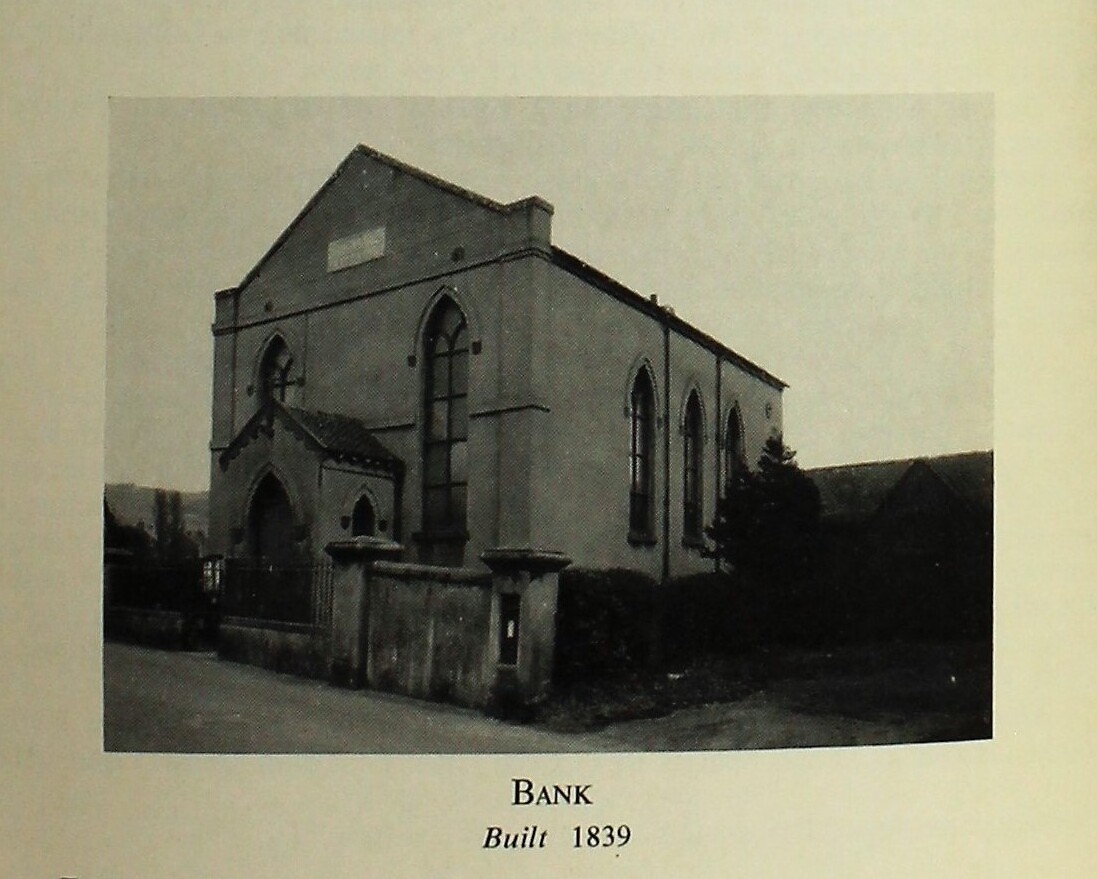
►1839 tithe maps of Cheshire parishes??, the first comprehensive large-scale maps that show every house & field, with accompanying tithe apportionment listing owners & occupiers, acreage, land-use, etc (see 1838-45) § date of John Blood’s lease of cottage, crofts & quarry at the top end of Rock Side § usual date given for Chell Workhouse (see 1840 below) § Newcastle Workhouse completed (built 1838-39) § Leek Workhouse completed (built 1838-39) (cf 1867) § article “A Peep at the Staffordshire Potteries” in Chambers’s Edinburgh Journal (reproduced with corrective editorialising in Staffordshire Advertiser) comments among other things on the strength of Methodism & dissent in the Potteries (‘Nine-tenths of the population are dissenters’) & the prevalence of Biblical Christian names (‘Every other name that you meet is Moses, or Aaron, Elisha, Daniel, or Job’) § Staffordshire Gazette runs a series entitled “Topographical History of North Staffordshire” by C.C. [unidentified] § Thomas Hughes, William Stonier, & Samuel Lees, ‘three notorious poachers’, fined £1 each & costs for poaching on Egerton’s land in Newbold manor § Samuel Harding (b.Hurdsfield 1806), grandson of John (1758-1822), briefly ‘returns’ to his ancestral hill with wife Ann(e), as evidenced by 2 entries in Newchapel parish reg – Joseph bur.March 24, 1839 aged 3 & William (Grocer, Br) bap.Jan 13, 1839 – +Astbury + & by the birthplaces of sons William (as preceding) & Nehemiah (b.1840) given as MC in the 1851 census, by which time they’re living back at Sutton nr Macclesfield (where they are in 41) § bestowing the rare name Nehemiah links him with the family of Nehemiah (b.1830), grandson of James (1769-1858), but more interestingly Samuel’s occupation is given as ‘Grocer’ in the 1839 baptism entry (weaver in all other refs), making him one of the earliest shopkeepers on the hill & suggesting he may be somehow involved in the establishment of George Harding’s shopxxx § John Wedgwood of Bignall End (1760-1839), owner of the collieries thereabouts, dies, requesting to be buried on Bignall Hill & ‘an obelisk or monument’ erected over him – they bury him at Audley but erect the Wedgwood Monument on Bignall Hill (unveiled 1845, designed by Thomas Stanley, architect of MC Church), a prominent eye-catcher from MC until blown down in the great storm of Jan 2, 1976 § James Crawfoot, founder of the Magic Methodists of Delamere Forest & one of the founders & the 1st salaried itinerant preacher (minister) of Primitive Methodism, dies at Barrow, & is buried at Tarvin (Jan 23) § although expelled from (Wesleyan) Methodism in 1807/08 & separated from the Primitive Methodists 1813, after which nothing more is heard of his proto-sect the Magic Methodists or Forest Methodists, he is said to have preached & had followers for the rest of his life, & to have been heard shouting ‘glory’ [like a true Primitive] shortly before he died § Elizabeth Clare (nee Lawton), widow of James, dies § Hannah Mountford, unmarried dtr of John & Alice of Alderhay Lane, dies § Prudence Owen of Alderhay Lane dies aged 38 (Dec 30, buried Newchapel Jan 2, 1840) § the death certificate gives the cause as ‘Decline’, which given her age is probably being used as a synonym for consumption (tuberculosis or similar) § Samuel Hall of Halls Close killed by a fall aged 32 § Edwin Porter dies at Kelsall Hill, nr Tarvin, aged 27, his young widow Sarah (nee Ford) returning to Bank with her baby Francis (founder of the Porter family of MC) § approx date that Timothy Sherratt of Bradley Green & Hannah Goodwin of Waggoners Lane marry (1838/39, no record found, their 1st children – twins – b.Aug 15, 1839), living at Bradley Green, Wain Lee, & from c.1850 MC § John Mollart jnr marries Jemima Sherratt at Astbury (Nov 10; she d.1840, he 1841) § James Newton marries Fanny Hulme, both of Mow Hollow § Joseph Dale, son of George & Martha, marries Tracey Ann Ball of White Hill § Henry Baddeley, son of Joseph & Elizabeth, marries Sarah Smith, dtr of Peter & Mary – 2 of the founding families of the new village of Rookery § James Wilson marries Elizabeth Rigby (afterwards of Bank) § John Fleet, brickmaker, marries Emma Durber of Harriseahead, & they live at first at Wain Lee (before moving to Sands) § Thomas Skelland of Tunstall, tailor, marries Elizabeth Bradshaw, grandtr of David & Sarah Oakes of Chell, & they come to live at MC (see 1844, 1857) § George Whitehurst, youngest child of Henry (III) & Mary, marries Harriet Hollinshead at Audley (they are living together at Moss, in Newbold, in 1841 but otherwise George lives most of his life separately from his wife, as a live-in farm labourer/manager; see 1856) § George Lindop of Harriseahead (called of Tunstall) marries Hannah Bailey, & they later live at Fir Close (from 1850s-xch-el.reg) § James Bayley, blacksmith, marries Mary Ann Clarke (parents of William Bailey of the Ash Inn) § Joseph Eardley marries Elizabeth Boulton § Ann Locksley, dtr of Francis & Martha, marries Ephraim Bayley of Biddulph Moor at Gawsworth (their ages given as 30 & 50, tho she is 21 or 22 & he’s considerably older) § in 1851 they’re living at Smallwood, ages given as 34 & 73, his occupation ‘Sand Man or carrier of Sand’ § William Leese of Dales Green marries his cousin Ellen Leese of Bradley Green (she dies 1842) § Alexander MacKnight & Janet McCall are married at Dumfries (Sept 13), & settle at MC between then & their son William Jamieson MacKnight’s baptism less than 5 months later (March 1, 1840) § birth of Mary Hall’s illegitimate dtr Eliza, by John Wilding, is first intimation of Wilding’s presence on the hill (see 1841/42) § young widow Martha Longton has illegitimate dtr Ann § Ellen Pointon, aged about 17, has illegitimate dtr Hannah (1st of 2) § Sarah Mould (dtr of Joseph & Sarah, later wife of George Snape) has illegitimate dtr Hannah by her cousin John Mould (the baby dies 1840 aged 14 months) § Emma Henshall born § Randle Brereton born § Thomas Ford of Bank born (Jan 19; see 1839—Bank Chapel above; pottery manufacturer of Sandyford, d.1919) § Timothy Harding born (later of Bradley Green, & then Manchester) § George Harding jnr, son of George & Jane of Dales Green Corner, born § Jane Lindop born at Harriseahead (wife of Nehemiah Harding) § Samuel Harding, son of Noah & Emma, born § Charles Branson born at Red Cross § approx birth date of Samuel Colclough (1838/39) at Gillow Heath, later ‘waterman’ in charge of MC waterworks
1840-1843
this section contains entries for an unusually busy four year period containing an explosion of significant building on the hill, including the first ‘civic amenity’ buildings attempting to provide a focus for the growing village, and coinciding with both the 1841 census – the first ever listing of all inhabitants by name – and the tithe maps and apportionments showing all houses and fields, together providing for the first time a comprehensive picture of settlement and population on the hill
►1840—Dane-in-Shaw Primitive Methodist Chapel small brick Primitive Methodist chapel built at Biddulph Rd, Mossley/Dane-in-Shaw, at the foot of the north end of Congleton Edge, commenced Oct & completed in little more than 2 months § opening service is Sun Dec 27, preacher Revd John Hallam from Bemersley (see 1834, 1835xxx) § described in the Primitive Methodist Magazine (1841) as 30 foot long, 20 wide, 16 high (floor to ceiling) with 4 sash windows, a fanlight over the door & a flourishing Sunday school § it’s shown on the 1845 tithe map, but erroneously identified as Wesleyan in the accompanying apportionment § xxx+eccl-censusxxx § xxxxx § known as Daneinshaw or Dane-in-Shaw PM Chapel, latterly after union as Biddulph Road Methodist Church, it has one of the longest histories of continuous use of any PM chapel § adverts & newspaper reports show a vibrant programme of services & other events & a loyal membership or congregation, continuing into living memory § it’s extensively altered in 1890 & again in 1951, & closes in 1994, being converted the following year into a private house § veteran local preacher & church official Edwin Hancock becomes a member when he moves from Mow Cop to Whitemoor in 1905xxx(ofDiS@d)xx § (see 1869 for a gaggle of MC local preachers preaching here)
►1840—Chell Workhouse usually recorded as opening in 1839, Chell Workhouse (built 1838-40) is actually completed & ‘fit for the reception of the poor’ in the week ending Sat March 28, 1840, as the Staffordshire Advertiser of that date reports § that week the existing inmates of the old workhouses at Burslem & Wolstanton, numbering about 220, are transferred § ‘The new establishment is situated on lofty ground at Chell, near Tunstall, and has a very imposing appearance. It consists of three distinct ranges of building, composed of white fire brick, which gives the whole a light and cheerful appearance. The first range nearest to the road, contains the Board Room, the Clerk’s, and Relieving Officers’ room, the porter’s lodge, probationary wards and stabling. The second range is the main building. In the centre, which is three stories high, are the apartments for the Governor and Matron. On each side are the school rooms, and day and sleeping rooms for the aged, the kitchens, &c.: two wings, one at each extremity, comprise the day and sleeping rooms for the able-bodied. The third range of building, which is at the rear, comprises a spacious hospital for the sick, with every needful convenience, wash-houses, laundries, workhouse for the children, mill-room, bake-house, &c. A spacious chapel neatly fitted up, and capable of holding above 300 persons, forms a part of the arrangements, and is conveniently situated on the second floor between the men’s and women’s apartments. The building is in the old English Gothic style of architecture, and its already very respectable appearance will be much improved when the fences, approaches, &c., are finished. The interior is lofty and well lighted, and the whole appears to be exceedingly well adapted both for the preservation of order and the promotion of the health and comfort of the poor inmates. The architects are Messrs. Boulton and Palmer, of Stafford; the contractor, Mr. Robert Shufflebotham; the clerk of the works, Mr. Hilton ... The first stone was laid on the 17th of September, 1838. The total cost of the erection, when finished, including the land (about eight acres) will be about £10,000. It is calculated to hold about 350 persons.’ § surprisingly the population in early censuses is lower than anticipated: 129 in 1841, 158 in 1851; but by 1911 there are over 600 § for the 1st runaways – within days – see below § early admissions registers don’t survive; the 1st known MC admission is sand punner Sarah Hughes aged about 25 (1843/44; she remains & dies there 1870), the 1st known MC death widow Phoebe Clare aged 64 (1851) § xx
►1840—Absconding With The Parish Clothing within days of its opening Harriet Challinor & Eliza Whitney, ‘two females of loose character’, are up before the magistrates (March 30) charged with ‘absconding from the Chell Workhouse, and taking the parish clothing with them’ – Challinor gets 21 days in prison, Whitney a month § whether running away from a workhouse is illegal or not may be a moot point, but since all inmates are stripped of their clothing (& other possessions) on admission & made to wear a prison-like uniform all runaways can be & routinely are prosecuted for the serious crime of theft, the only possible punishment for which (since by definition they can’t be fined) is imprisonment, usually with hard labour; on very rare occasions, eg with children, they are merely reprimanded (though for a later alternative for children see 1873) § huge numbers of such prosecutions occur from as soon as the new workhouse regime kicks in, & some people are regularly alternating between stints in Stafford Prison & in the workhouse § Eliza Whitney crops up on other occasions, & for other offences – in 1841 for instance, described as a ‘disorderly prostitute’, she gets 14 days hard labour for ‘improper conduct in the streets of Burslem’ § some early examples of ‘parish clothing’ prosecutions: 1838 Newcastle, Richard Harrison for ‘absconding and taking with him the workhouse clothing’, 3 months; 1839 Stafford, Thomas Stonier, an epileptic, dies in prison where his crime is ‘having left the workhouse and taken his clothing with him’; 1839 Stoke, Thomas Lawton for ‘stealing clothes belonging to the Spittals’ [nickname for Stoke Workhouse, short for hospital], 3 months; 1840 March Chell see above for 1st; 1840 Sept Chell, John Mountford & Thomas Nixon, boys, for ‘general disorderly conduct and absconding with clothing belonging to the Union’, are ‘suitably admonished’ & the former ‘whose conduct had been very notorious’ 14 days; 1840 Oct 1 Chell, Felix Parr, a boy, for ‘absconding and taking away clothing belonging to the Guardians of the Wolstanton and Burslem Union’, 3rd offence, 14 days hard labour; 1840 Oct 12 Chell, William Cootes for ‘absconding from the Wolstanton and Burslem Union workhouse, with the clothing belonging thereto’ after recently returning to the workhouse from prison, his wife & children also being there, ‘strongly censured ... for his profligate conduct’ plus 12 days hard labour; 1841 xxx Chell, John Daniel & Taylor Rainbow [sic] for absconding ‘and taking with them parish clothing’, 21 days hard labour; 1841 Newcastle, John Booth for absconding ‘taking with him clothing, belonging to the guardians’, 3 months; 1841 Stoke, Sarah Barker for absconding ‘and taking with her the parish clothing’, 21 days hard labour; 1842 Jan Stoke, John Pointon ‘for absconding from Spittles workhouse in June last, taking with him parish clothing’, 21 days hard labour; 1842 June Stoke, Thomas Lawton [again] & Joseph Scott for absconding ‘and taking with them parish clothing’, 21 & 7 days hard labour respectively; 1842 xxx Chell, Mary Ann Myatt charged with ‘refusing to deliver up parish clothing belonging to Wolstanton and Burslem Union workhouse’ & ordered to do so or be imprisoned; 1843 Jan Chell, 5 men ‘for absconding from the Burslem and Wolstanton Union Workhouse with parish clothing, and creating a distrurbance in the streets of Tunstall, on Saturday night, (which has of late been a frequent occurrence,)’, 21 days hard labour; 1843 xxx Chell, Samuel Bailey charged with ‘having refused to give up the parish clothing on leaving the house, because his own were not mended to his satisfaction. The magistrates ordered him to be stripped, by force if necessary.’; 1844 Aug Chell, John Daniell [again] ‘for absconding ... on the 26th of August, taking with him the Union clothing’, hard labour (period not stated); 1846 Stoke, George Price, ‘a graceless lad’, for absconding ‘and taking the parish clothing’, 3 months; 1847 xxx Chell, Philip Clarke, ‘a lad’, for ‘absconding with the parish clothing’, 14 days; 1848 March Chell, William Seddon, ‘a lad’, ‘for absconding with the parish clothing’, 21 days; 1848 Oct Uttoxeter, Eliza Robinson aged 14 & Sophia Thompson 16 for ‘having absconded on the 25th ult., taking with them the clothes belonging to the union, and not returning until brought back by the police on the 30th, Robinson having been found asleep the night previous in a deserted house’, discharged (& sent back to the workhouse) ‘After a severe admonition from the Bench, and on their promising to behave better in future’ § for mass abscondings by gangs of unruly young men during the troubles of 1842 see 1842 § for a particularly appalling instance of the ‘parish clothing’ prosecution used against a sick old Mowman see 1853, & for the equally unfair treatment of Isaac Mountford of Macclesfield see 1855 § no early Arclid examples found (perhaps because Cheshire has fewer local newspapers to report such trivia), but for an interesting later Arclid/MC example see 1873 § misbehaviour within the workhouse & even passive disobedience, usually dealt with internally (most workhouses have a solitary confinement punishment cell), sometimes spill over into the courts, cases which also illustrate the vicious circle of prison-workhouse-prison: in xxx 1840 Eliza Baskerville, recently returned to Chell from Stafford prison for refusing to work in the workhouse, resumes her refusal in protest against not being allowed to leave – ‘She was constantly importuning to leave, in order that she might renew her intimacy with a man with whom she had formed an illicit intercourse ... the Governor described her as an incorrigible girl’, hence back to prison for 21 days; less passive & either very angry or very insane, in xxx 1847 Hannah Barlow, ‘a young woman of most depraved and abandoned habits’, again returning to Chell from prison for ‘improper conduct’ in the workhouse, refuses to work, breaks windows, threatens to fight & uses ‘language lower, if possible, than the lowest in St. Giles’s or Billingsgate’, is charged with ‘disorderly conduct’ & given 2 months in prison, on the way out of the court room she attempts to attack & threatens the governor Mr Wellam (‘She is perfectly unmanageable’) so is given an additional month [HB of Mow Hollow would be 21/22, but it’s a common name] § xx
►1840—The Hancock Seventeen Luke & Harriet Hancock’s 17th & last child Fanny born, her mother aged 46 § Fanny’s baptism is postponed, perhaps deliberately, to be one of the 7 conducted at the opening services of St Thomas’s church (Oct 16, 1842) § married in 1811 when Harriet is about 17, their 1st child Samuel is born in 1812, dies as a baby & is replaced by another Samuel in 1814 (Samuel is the name of both grandfathers) § baptisms are all at Newchapel except the 1st & last
• Samuel 1812 bap.xxx at St Thomas’s, Kent Green, dies in infancy 1812/13 (no burial found)
• Samuel 1814 bap.April 10, d.1896
• Luke 1816 bap.Jan 21, d.1891
• Charles 1818 bap.May 17, d.1894
• Lisha (Alicia or Felicia) 1820 bap.April 30 ‘Lisha’, d.1902; marries Charles Hackney 1850 & William Sherratt 1861
• Daniel 1822 bap.April 14, d.1874
• Thomas 1824 bap.Dec 5, d.1898
• Henry 1826 bap.May 14, killed in the pit 1865
• John 1828 bap.April 13, d.1884
• Joseph 1830 bap.Jan 24, d.1909
• Abraham 1831 bap.June 19, d.1870
• Betty (Elizabeth) 1832 bap.Aug 12 ‘Betty’, dies of consumption 1851 aged 19
• Harriet 1834 bap.Aug 10, d.1910; marries Hugh Lionel Woolliscroft 1854
• Isaac 1836 bap.Oct 16, killed in the pit 1850 aged 13
• George 1837 bap.Oct 1, dies in infancy 1839
• Fanny 1838 bap.Nov 11 ‘Fanny’, dies in infancy 1839
• Fanny 1840 bap.Oct 16, 1842 at St Thomas’s, MC, d.1914; marries Charles Branson 1859
x § 12 boys, 5 girls; 2 boys & 1 girl die as babies, Isaac & Betty die in their teens, so 12, 9 boys & 3 girls, live to adulthood § the Hancock 17 are the largest family of children that can be verified in the history of the hill – there are local women who claim over 20 (eg 1717, 1756) but they are impossible to verify & may include stillborn or miscarried babies, the standard demographic criterion being born alive; several 15s are verifiable, inc John & Maria Hall of School Fm & Moses & Esther Lindop of Harriseahead, 13 isn’t uncommon, & before the 20thC 12 is normal § 11 of the 17 Hancocks are still living when Luke dies in 1868 aged 80 – 3 having died in infancy, Betty dying of consumption aged 19, & 2 sons Isaac & Henry being killed in the pit aged 13 & 38 respectively § all 10 sons who survive infancy work as coal miners, though Luke jnr is also a specialist mine sinker & Joseph & Abraham later become shopkeepers § the memory of 17 children survives in the Hancock family for generations, & 17 names are traditionally recited, 3 of them (Edward, Jonathan, William) bogus – the source of the bogus names isn’t known, but they arise to preserve the number 17 after the names of the three who died in infancy, two of them duplicated names, have been forgotten § (the next largest verifiable MC family is John & Maria Hall’s 15 between 1830-55, 5 of whom die in infancy or childhood) § xx
>Luke Hancock (1788-1868) also had an illegitimate dtr Elizabeth by Hannah Sherratt b.1810 bap.Nov 18 at Newchapel, ?xxx § Harriet Hargreaves (?1794-1873)
►1840 tithe maps & apportionments of Staffordshire parishes (see 1838-45) § approx date of Revd William Hadfield’s local history notebooks, now preserved at William Salt Library, Stafford § approx date of watercolour of the hilltop (Cheshire side) at William Salt Library, one of the earliest depictions of the Tower & the earliest known of the Old Man (reproduced in Leese Working p.11) § approx date of ink drawing of the hilltop (Staffs side) by T. P. Wood at William Salt Library, one of the earliest depictions of the Tower – Thomas Peploe Wood (1817-1845) is employed by Salt to draw pictures of Staffs for his collection § xx?+say what shows—eg plant’n veg?quarry?bods?xx § approx date of erection of notice boards around squire G. H. Ackers’s land telling people who can read to keep out (cf 1838-39; referred to in court cases of 1869 & ?1870) § approx date the Williamson brothers sell their father’s Longport pottery to the Davenports § James Bateman (1811-1897) moves from Knypersley Hall to Biddulph Grange & begins to create the famous gardens there § Dane-in-Shaw PM chapel built & opened (see above) § Buglawton church (St John the Evangelist) opens in the township of Astbury parish with the most rapid population increase, commencing the process of dividing the ancient parish into small ecclesiastical parishes § first step in establishing a district church at MC with formation (Nov 27) of a committee of gentry & clergy to promote it & raise funds, in order (it says) to remedy a ‘lamentable state of spiritual destitution’, chairman Randle Wilbraham, secretaries James Bateman & Revd Frederick Wade – latter generally considered the originator of the project & certainly its main promoter in practice (see 1841, 1842) § American Primitive Methodist Church established, independent of the British Conference (& still exists) § first ref to Edward Wales in the area, mining engineer first at Trubshaw & later Tower Hill § William Turner of Alderhay Lane baptised aged 40 § James Broad of Congleton baptised aged 25 (July 1), evidently signalling his conversion to Primitive Methodism § Peter & Elizabeth Lawton baptise their 3 children Mary Anne 11, Thomas 5, Sarah 2 at Christ Church, Tunstall – one of the founding families of Rookery (called of Brieryhurst in the register) § Robert Macclesfield or Maxfield, brother of Thomas the blacksmith, dies at Mossley Workhouse aged 75 (Nov 20), & is buried at St Peter’s, Congleton § the death certificate (reported by the master of the workhouse) says he’s a labourer, tho in his prime he’s a farmer, friend of the Waller family, & stone merchant/quarryman § Henry Whitehurst (III), formerly of Mow End, dies at Congleton Moss § Elizabeth Hamlett, wife of John, dies (Hamblett on the gravestone) § Elizabeth Oakes of Biddulph Rd, widow of John, dies, administration of her estate granted to dtr Hannah Holland, the document signed by 3 sons-in-law as sureties: Thomas Holland, Joseph Shufflebotham, Richard Baddeley, all of Harriseahead § Hannah Hall of School Farm dies § Henry Yarwood of Roe Park dies of consumption aged 33 § Maria Davenport (nee Hodgkinson) dies at Congleton Moss aged 27 § Frances Hughes (nee Harding) dies aged 23 § Sarah Henshall’s illegitimate son James Brammer dies aged 8 (July 24) § Thomas Harding, son of Thomas & Anne, marries Amy (or Emma) Goodwin, & they live at first with or near her parents James (1791/92-1874) & Sarah at Waggoners Lane nr Brown Lees (moving to their new cottage at Boundary Mark nr the Old Man c.1845) § William Whitehurst, widower, marries Sarah Boot (nee Dean), widow of Lionel of Gillow Heath § she brings her 3 sons John, William & baby Lionel to MC with her, who along with Thomas’s family are responsible for Boot(e) becoming 1 of the commonest MC surnames by the 20thC § Sarah Porter (nee Ford), widow, marries Richard Burgess § Samuel Sherratt of Spring Bank marries Rebecca Heath, widow, of Burslem at Astbury – he’s a bachelor aged 61 § Jane Lawton of Dales Green marries Thomas Hancock, widower, of Newchapel (see 1811) § Mary Jamieson (daughter of Robert & Sarah) marries William Wilkinson at Biddulph § Sarah Jamieson (daughter of John) marries Jonathan Lees at Burslem (June 8), witnessed by John & Hellen Campbell, who both sign (Sarah signs ‘Jameson’) § this pinpoints John & Ellen Campbell’s arrival on MC from Scotland to this year, evidently as a result of some link with the Jamiesons (see 1825/26), followed in the 40s by John’s brothers Thomas & James & their widowed mother Susannah Campbell § Charles Stanier marries Caroline Billington (engaged since at least 1834, they already have 2 children; they live in a cottage near the summit of Wood St) § their son Henry Stanier born § Charles Hancock, son of Luke & Harriet, marries Matilda Baddeley, illegitimate dtr of Phoebe, at Astbury (Dec 14), witnessed by Joseph Baddeley (probably her uncle), & they live at Mount Pleasant § Richard Baddeley, son of Thomas & Grace of Harriseahead, marries Maria Oakes of Biddulph Rd, witnessed by her brother-in-law & sister Trubshaw & Sarah Shufflebotham § Henry Wright marries Jane Carter & they live in the Moss/Hall o’ Lee area (& by 1851 at Mount Pleasant) § David Mould marries Lettice Lancaster, dtr of James & Theodosia § Mary Hall of School Farm marries John Wilding at Congleton (see 1839, 1841/42), shortly after burying their illegitimate dtr Eliza at Biddulph § Samuel Dale jnr marries Eliza Maxfield, dtr of James & Mary, at Astbury (licence date April 30), their ages 18 & 17 § George Blood, son of John & Anne, marries Rebecca Harding, illegitimate dtr of Sarah (dtr of James & Sarah), shortly after her 16th birthday, at Astbury (Nov 7) § William Lawton marries Mary Warburton of Alsager, aged 15, dtr of Samuel (wheelwright) with whom he is living as apprentice, 6 days after baptising their pre-marital dtr Sarah (March 10 & 4) (later keepers of the Oddfellows Arms c.1855-80, & Sarah wife of carpenter James Boon) § Robert Hales marries Mary Creswell at Aldridge § Fanny Hancock born, last of Luke & Harriet’s 17 children (see above) § their eldest dtr Alicia Hancock (Lisha) has her first illegitimate child Matilda (who dies; named after Lisha’s sister-in-law Matilda Baddeley) § Joseph Baddeley born at Rookery, son of Henry & Sarah & grandson of Joseph & Elizabeth, with whom for some reason he lives (see 1863) § Joseph Moors jnr born at Wood Fm (Wood House nr Old House Green), his family moving to Brake Village later in the 1840s § James Wilson jnr born at Green Fm (nr Wood House), his family moving to Bank in the 1840s § Jane Oakes, dtr of William & Hannah of Biddulph Rd, born § Eliza Ann Hodgkinson of Corda Well born § Eliza Morris of Rookery Fm born, & baptised at Newchapel (March 15) § John Harding Hall born, illegitimate son of Ann Hall (née Harding), widow § Sarah Harding, dtr of James & Maria (& later wife of Elijah Harding), born § Thomas Chaddock (later Chaddock Lowndes) born at Congleton § Thomas Booth born, son of Enoch & Ann of Tank Lane (later grocer of Mount Pleasant) § William Skellern born at Mow Lane, Newbold § William Mellor (tailor), son of James & Paulina, born at Burslem § William Jamieson MacKnight born at MC, named after the elder WJ & baptised by Revd Frederick Wade at Kidsgrove (March 1) § this indicates that parents Alexander & Janet MacKnight (married at Dumfries, Sept 13, 1839) have recently arrived from Scotland (1839/40) § Mary Ann Booth (school teacher) born at Brookhouse Green, Smallwood (April 26), illegitimate dtr of Martha (b.1813/14, d.nf), & entered twice in Astbury baptism register (May 10 presumably at home & Dec 27 ‘Rec’d into the Church’) § she lives from an early age with her aunt Mary Moors & Joseph at Brake Village, & later with her cousin/adoptive brother George § James Moses, one of the founders (with his brother Frederick & their wives) of the Moses family of MC, born at Wheelock § Peter Minshull born at Betchton, & baptised at Sandbach (Dec 28) [later of MC; not to be confused with his near contemporary namesake b.1843/44 on MC] § Joseph Shenton born at Hardings Wood (lives at Welsh Row 1848-60, later ordained as a Primitive Methodist minister)
►1841—Census census taken on Sun June 6 provides first complete list of inhabitants & households § for all its limitations, the first name-specific census gives a unique picture of the primitive village & other settlement on MC & the make-up of the community on the eve of momentous expansion § Hancock, Harding, & Dale are the top three surnames, with Lawton, Chaddock (of Congleton Edge), & Clare not far behind, then Stanier/Stonier (counted together), Holland, Baddeley, Mellor, Yates, Whitehurst § some old names like Oakes & Rowley are well represented but in decline, & some subsequent big names either small like Mountford, Hughes, & Boot(e) or as yet absent like Cope & Kirkham § the population of the entire MC ridge is 1,552 in 286 households, the adult/minor ratio unsurprisingly 701:851 (45:55%) but the male/female ratio more unusually 841:711 (54:46%), reflecting the plentiful industrial employment that both keeps young men from wandering off & attracts more of them into the area eg as lodgers § the population of the hilltop village proper (as best one can define it), excluding scattered & outlying settlement & places that are or will soon become separately identified villages in their own right (Dales Green & Mount Pleasant), is 592 in 112 householdsxx, with Harding the dominant surname § Dales Green has a population of 182, the proto-village below it which will soon become The Rookery has 115 (avoiding overlaps with Dales Green, though until now DG has applied to it all), what will soon become Mount Pleasant but as yet is a scattered extension of MC already has 126, Bank (Spring Bank, Mill Lane, & upper Bank) has a mere 69, while the most surprising concentration of population is the scattered hamlet at the head of Mow Lane above Gillow Heath, which doesn’t even have a name (though sometimes referred to as Lane Ends or Black Cob, & earlier Mow End), in which vicinity are 71 people in 13 houses § Congleton Edge village has a population of 98 in 19 housesxxx § (noting that population figures don’t exist for a non-unitary place like MC, which might fall into as many as 10 enumeration districts, they have to be painstakingly researched & counted & based on an artificial definition of ‘MC’ for the purposes of this history) § part 2 of the 3 parts or enumeration districts of ‘Hamlet of Brieryhurst or Brerehurst’ contains everything downhill from Mow Cop Rd (called ‘Mow Lane’), enumerator William Smith (presumably the 28 year-old WS living at Dukes Fm, no occupation given); part 3 everything uphill from Mow Cop Rd, enumerator George Harding (d.1871), who has written the entries in a jumbled-up order that appears to be entirely random [almost unique in census history, some semblance of geographical sequence being apparent for all the difficulties that the upper parts of the hill present] § § § ancient inhabitants caught uniquely by this census inc Joseph Baddeley of Top of Dales Green (78), Ann Blood of Dales Green Quarry (75), Alice Booth of Limekilns (80), Sarah Brereton (70, Randle’s widow), James & Sarah Harding of Chapel Side Fm (both 70), Jonathan Hulme (74, living with George Dale on the site of the Ash Inn), John & Mary Lawton of Dales Green (both 75), Sarah Machin (80, living with Samuel Colclough), Sarah Owin of Alderhay Lane (73), Joseph Stonier or Stanyer of Spring Bank (78), Sarah Sutton (70, living with Joseph Turnock at Mow Lane, Newbold), Henry Turner of Drumber Lane (75), John Washington on the Cheshire side of Congleton Edge (72), & Thomas Whitehurst (82, living at Mow House with son-in-law James Rowley) (ages as given – unreliable at the best of times but deliberately approximate in the 1841 census) § the largest household, appropriately, is that of Luke & Harriet Hancock, who have 12 children living with them § the last great MC millstone maker William Jamieson is aged 15 living with his uncle of the same name as his apprentice (cousins James & Robert Jamieson are living as lodgers at Golden Hill & working in the coal mines), MC’s first postmaster Nehemiah Harding is aged 11 living with his parents, future fustian tycoon George Baddeley is aged 9 living with his unmarried mother Phoebe & his grandfather Joseph, & my great-great-grandmother Mary Dale is 6 weeks old & as yet unnamed with her parents John & Martha (nee Harding) § all 7 (grown-up) children of Robert & Anne Williamson are present at Ramsdell Hall, plus xxx servants § with no birthplaces & only approx ages it isn’t easy to spot Mow folk living away from the hill or in institutions, though the recently completed Chell Workhouse (6 staff, 129 inmates) contains 10 year-old illegitimate Henry Stanyer (Elizabeth’s son), the old Mossley Workhouse serving Congleton & Biddulph (4 staff, 114 inmates) contains Samuel Cottrill or Cotterill, age given as 82 [presumably SC of MC (?1765-1844)] (no census entry can be found for Gillow Heath Workhouse, perhaps already closed) § John Ford of Bank (1776-1852) & his unmarried sisters Ann & Sabrah are living at Linhouse Fm, Betchton with widowed sister Ellen Beech, for whom he presumably manages the farm since her husband’s death in 1821 (returns to Bank c.1844; see 1852-53) § xxothersxx § the census comes on the eve of rapid development, catching the first hints – such as John Wilding (Oddfellows Arms), John Campbell (Mount Pleasant), & the first houses built on Fawn Field (see 1836) – but otherwise showing a primitive settlement pattern, before the development of Fir Close, Fawn Field (Rookery), Mow End (Mount Pleasant), & Bank, before Hardings Row & Welsh Row & Buckram Row § xx
>censuses are mainly about population statistics: in the 40 years since the 1st census in 1801 the population of the ancient parish of Astbury (inc Congleton) has doubled: 7095 to 14355, the increases chiefly occurring in Buglawton township (517 to 1846), Congleton (3861-9222), & Odd Rode (917-1585)xxx+Bidd+Wolstxxx
>like the tithe maps the census contains little indication of ongoing building development or industrial activity, & in particular no hint of the substantial engineering project of the Tunnel & Tower Hill-to-Kent Green tramway (eg no shanty-town of navvies, no occupations of obvious relevance – unless it’s ‘stone miner’ used for the Harding brothers (see 1832-42), though the term isn’t of itself unusual)
>enumerators... inc GeoHarding
>first comprehensive/complete list of Mow folk! deserves more stats<
►1841—To Castle Wakes Let’s Go! ‘ancient sports’ associated with Newcastle Wakes revived & promoted with gusto (& a good deal of tongue in cheek) at the initiative of Isaac Cottrill, the town’s chief constable alias superintendent of police, partly as a (relatively) harmless distraction for the populace from Chartist agitation & the hardships of the time, also from the recently-outlawed brutal sports like bull baiting, hitherto a central attraction at local wakes § a handbill or poster adopting the tone of a spoof royal proclamation advertises ‘a renewal of those ancient sports your fathers loved’ in connection with the wakes, Mon Sept 13 [Wakes Mon] § they are listed as prison bars, tipcat, ‘the Royal sports’ of ‘a wheelbarrow race between two bandylegged or knockneed men’, game of taws [marbles], bag race, jumping match, ‘the modern sport of steeplechasing open to all weights and ages, from the Ashfield boundary stone to the Grammar School Farm, near Knutton, and back’, & a competition to ‘grin through a collar’ [gurning, pulling faces] § ‘And whereas, in consequence of the high price of wheat, that heart-loving sport and delightful pastime of eating stir pudding with a fork was discontinued, to the grief of many, we do command in lieu thereof and for the poverty of the time there be a match to eat stir pudding with an awl.’ – this is the full version of the Staffs stir pudding joke, which explains the abbreviated refs to eating it with an awl in the ‘Castle Wakes’ song & with a fork in the 1847 handbill, the joke being that you can’t eat it with either [stir pudding is a sort of porridge; modern glosses are wrong in identifying it as something like Christmas pudding, having missed the joke!] § the 1847 handbill/poster maintains the mock royal proclamation language & the jocular tone, making much of Queen Victoria’s endorsement of the Highland games in Scotland [she 1st attends the Braemar Highland Games (revived 1832) in 1848, but must have commended them or announced her intention during her 1847 Scottish holiday] § the 1847 event commences Tues Sept 15 at 2pm at ‘the Ash Field’ plus processions there & back, the wordy handbill describing a packed programme of ‘ancient Sports and Amusements’: procession to the field lead by Cottrill & his ‘bold Brigade’ [IC also appears to command the Fire Brigade], dancing, donkey races, wheelbarrow races, bag races, jumping match, game of taws, leap frog, ‘Together with other Gymnastic Sports, Games, and Pastimes, as in the olden times, with the modern games of Steeple Chasing and Pole Swarming’ [alias greasy pole], games of prison bars, tip-cat, ‘foot ball’, drummers & fifers, ‘far-famed Worrall’s band’ [also mentioned is ‘The Sutherland Band’], ‘the heart-loving Sport and delightful Pastime of Eating Stir-Pudding with a Fork’ [see above], a competition to ‘grin through a collar’ – ‘the Fowest will take the prize’, fireworks, concluding with a ‘Cavalcade’ into town & songs from ‘the disciples of Hulla’ accompanied by ‘the Itinerant Worshipers of Apollo, from Germany and Italy’ [god of music; German bands & itinerant German musicians & Italian piano-accordion players & ballad mongers are familiar in England at this period; John Hullah (1812-1884) isn’t a local character but a renowned music teacher & conductor whose name is well known from the 1840s onwards] § the same 1847 handbill also contains lyrics of an uninspiring song, an inferior variation on the famous folk song ‘Newcastle Wakes’ that so beautifully captures the spirit of the occasion § Jon Raven says the song is written in 1841, which seems a little early for the Hullah ref, tho 1841 handbill & song share specifics from the event so there’s certainly a relationship § ‘To Castle Wakes let’s go! let’s go! | To Castle Wakes let’s go! | For fun and cakes, the best of wakes, | as everyone shall know. | To our Town Field then we’ll repair | where our fathers drank their wassail, | and proclaimed the charter of the wakes, | the birthright of Newcastle. || To Castle Wakes let’s go! let’s go! | To Castle Wakes let’s go! | For fun and cakes, the best of wakes, | as everyone shall know. || The sports so gay will soon repay | th’enraptured anxious gazer, | whilst wives and sweethearts on your knee | will doubly add to pleasure. | Strike up, strike up, thou glorious band, | fifes, fiddles, pipes and organ, | our leader with famed Hullah’s wand | will keep time with old Morgan. || To Castle Wakes ... || A chosen band of loyal men | that faced the rebel wars | will stand at ease and tip the cat, | and play at prison bars. | The Italian ballad singers feast, | the chorus loud to bawl, | whilst Billy Punky and the rest | eat stir pudding with an awl. || To Castle Wakes ... || The steeple chase, the barrow race, | in bags with many a faw, | whilst some you’ll see on bended knee | knuckeing down to taw. | And men so sage will mount the stage | in hopes to win the dollar, | with many a tug their ugly mug | keeps grinning through the collar. || To Castle Wakes ... || With drums and fifes and banners bright, | and men of all profession, | and champions gay in fine array, | to join in the procession. | And whilst we sing each year shall bring | our festival so gay, | with ale and cakes our merry wakes | upon St Matthews Day. || To Castle Wakes ...’ (from The Rigs of the Fair, ed Roy Palmer & Jon Raven, 1976, with simplification of punctuation; their source broadside in Newcastle Library) § the song has been adopted by the other Newcastle, the best recording being by Geordie folk group the High Level Ranters (1977) § this recorded version improves on the weakest part of the printed lyric, the 1st half of stanza 2: ‘The sports so gay they soon will play | for here you will find pleasure | wives or sweethearts on your knee | clap loudly now my treasure’ § the ‘charter of the wakes’ is usually thought to be that of 1590, tho largely just confirming existing privileges; earlier charters of 1336 & 1281 specifically grant a fair, tho markets & fairs are normal in municipal charters so it’s likely they exist from 1173 § Hullah is referenced in connection with singing in the 1847 prose text but here in ref to conducting the glorious band – Hullah does both but is mostly known for encouraging choral singing among ordinary people § ‘rebel wars’ isn’t explained – the suggestion of Chartism doesn’t seem appropriate (to an audience doubtless supportive of Chartism); the Napoleonic Wars seem rather distant, tho Isaac Cottrill has been a soldier & served in the latter years of the conflict § ‘ale and cakes’ & ‘fun and cakes’ recollect the Shakespearian aphorism for merrymaking: ‘Dost thou think, because thou art virtuous, there shall be no more cakes and ale?’ (the drunkard Sir Toby to the Puritan Malvolio, Twelfth Night, 1601) § the cakes are literal, at least at some venues, the local confection at the famous Eccles Wakes, Lancs for instance being the ‘Eccles cake’ (pronounced ekləs) much loved throughout our region from at least Victorian times § St Matthew’s Day is Sept 21 (& the dedication of Etruria church, built 1848-49) but it’s not clear why it’s cited for Newcastle wakes; the 1841 handbill locates the games (Sept 13) as the Mon following ‘St Mary’s Day’ [Nativity Sept 8], Matthew perhaps being a mistake for this § the traditional date is of course the parish patron feast of St Giles, Sept 1 or Mon following, but the borough changes it to Mon/week following Sept 11 after the 1752 calendar change, with which the 1841 & 47 handbills are consistent § both handbills are printed by Bayley, Ironmarket, Newcastle § (note that the brutal aspects of traditional wakes activities or entertainments such as bull baiting & cock fighting, recently outlawed, aren’t present) § Isaac Cottrill (1797-1856), a former soldier in the Guards, deputy constable of Pendleton nr Manchester, is appointed ‘Head Constable’ of Newcastle Nov 1834, 1st head of the town’s new permanent police force; also market inspector, inspector of weights & measures, & seemingly head of the Fire Brigade too; he’s evidently a colourful & resourceful character; ‘He busied himself with numerous projects for enlivening the lot of the populace’ (Evening Sentinel, Sept 23, 1930); he’s sacked for drunkenness in 1849, subsequently keeps a pub, & dies at Stafford Lunatic Asylum § xx
►1841—Mow Cop Church Fund the Queen Dowager (Queen Adelaide) donates £25 to the fund for building a new parish church (Jan), a generous sum but equally useful in the prestige it lends to the cause, her name now heading the long list of ‘subscribers’ published in the Staffordshire Advertiser (June 26) § in addition to the 2 church-building societies (national & diocesan, £550) donors inc squires Lawton, Wilbraham, Mainwaring, & Ackers, Jonathan Higginson (owner of Red Lion & Ashes), & James Sutton & Co (£50 each – the only donations above £25), Sneyd (£25 – surprisingly, as it will chiefly serve his manor), John Bateman (£25), Mrs Kinnersley (£20), Robert Littler (colliery owner, £20), Robert & Hugh Henshall Williamson (£20 each), their sister Mrs Spode (£5), William Lowndes (£10), the potter Job Meigh (£5), John Ward (presumably the solicitor & historian, 2 guineas), plus small-fry such as William Jamieson (snr, 1 guinea), James & Thomas Mellor (of Dales Green, 1 guinea each), ‘Mr Ball’ (probably Nathan snr, £1), James Thorley (5s) § in fact there are only a handful of small donations, though the widows’ mites are represented by collections from workmen at Pinnox Colliery & associated works (belonging to Williamson; an impressive £30-1s), Kidsgrove Colliery (£16-5s), Trubshaw Colliery (£15), Falls Colliery & Astbury Lime Works jointly (£7-1s), & Biddulph Colliery (£3-4s), not to mention Kidsgove Sunday School (2 guineas) § a particularly interesting donor is Mr Hall as executor of the late Miss Waller ‘for building the school’ (£25) [Sally Waller (1761-1823) of Hay Hill, a Methodist spinster, left money towards a chapel or school at Gillow Heath; Gillow Heath Methodists having joined with Bradley Green to build Gillowshaw Brook Chapel, her executor James Hall, manager of the Falls coal & lime complex, evidently feels a school on MC will suit her purpose; she’s sister of Ralph Waller the quarry proprietor] § while tenders are invited (Aug) the church’s foundation stone is laid by the Bishop of Lichfield (Thurs Aug 12 at 2pm) with accompanying jollifications on the hilltop § he consecrates the new church of St John at Golden Hill the day before
►1841—Primitive Methodist Chapel & Primitive Methodism on the Hill Primitive Methodist chapel built on a croft tenanted by James Harding jnr (site of Coronation Mill), on or near the site of the Woodern Tabernacle & first camp meetings § its name-&-date stone (built into present chapel – see 1903) bears the motto ‘Hitherto hath the Lord Helped us’ (archaic usage of hitherto meaning to this end—it’s probably a Bible quotation) § ‘Upon the mossy brow | Of the venerated Mow | There stands a chapel now’ says a PM song or hymn circulating in 1857 & probably before § a later illustration shows a small oblong single-storey stone building with raised gable, the style of some of the Harding cottages of the time, within a small low-walled garden or entrance yard, the datestone above the doorway in the long side, the doorway non-central with one window to the right & 2 to the left, plus 2 windows in the near (presumably the uphill) gable § replaced by the PM Memorial Chapel in 1862 it became a ‘Free Trade Hall’ (see c.1862), at some stage the roof was replaced & heightened slightly (removing the raised gables), & it was demolished in 1902 to make way for the Coronation Mill § its precise position & orientation aren’t clear from the 2 illustrations (reproduced in Leese Living p.55 & elsewhere), but a village scene (p.57) shows it in context immediately next to (E of) the Oddfellows Arms, a gable facing downhill (as depicted this gable has an upstairs window & the 2 ground-floor windows are lower than the side windows – this is perfectly feasible being built on a steep slope, as with the mill itself & also the 1862 chapel, ie it may have had a basement room at the downhill end; though being a drawing that’s not very accurate in other respects we don’t know if such details are reliable) § the uphill gable was thus in line with the long uphill side-wall of the mill & some irregular stonework therein may actually be part of it § the chapel, the pub (Oddfellows Arms) built at about the same time, & George Harding’s (Sidebotham’s) shop are part of a building boom that seeks to create a village centre at this location (see c.1842, 1841-48), in which the Hardings & Halls are involved, though like most MC Methodists they are Wesleyans § almost nothing is known of the Primitive Methodist society on MC at this date, or the origin & history of the 1st chapel, such as the names of those involved (the stalwarts & old-timers recalled by Lewis Hancock are the next generation, see c.1890) § one reason that PMism is small on the hill is that (except for the Clowesites) the sect did not originate in a split or secession, so apart from Thomas Cotton who was expelled all the MC & Harriseahead converts & participants in the revivals that gave rise to PMism remained Wesleyans – paradoxically therefore there are at 1st no Primitives on MC! § a short-lived society or preaching place existed in 1811, probably gathered around Cotton § the MC society is formed about 1835, but likewise its founders & leaders aren’t known; it’s notable that it’s prospering sufficiently to undertake the costy commitment of building & maintaining a chapel only a few years after the society’s formation § Hugh Bourne’s reverence for MC, & his involvement in the society, chapel & camp meetings in the 1840s, doubtless help the cause*, while the 1830s is a time of revival in both Primitive & Wesleyan Methodism locally (cf 1833—Congleton Edge Chapel) – to say nothing of a kind of unco-ordinated ecumenical church-building boom on the hill at this very date (Bank WM 1839, Dane-in-Shaw PM 1840, MC PM 1841, MC WM 1842, MC Anglican Church proposed 1840, fund & foundation stone 1841, completed 1842) § further boosts to PMism on the hill come with the ‘great revival’ of 1856, camp meeting jubilee 1857, new ‘Memorial’ chapel 1862, as well as a tendency for devoted Prims to settle on the hill eg Edwin Hancock 1867, David Patrick 1868, D. W. Brassington 1876 § annual camp meetings are probably held from about this date (1840/41) – although widely assumed to have been annual events since the 1st of 1807, none are recorded after 1811 & Bourne’s sentimental visit in 1818 ‘to see the places where the first camp meetings were held’ clearly implies there have been none for some years [see notes under 1810-11, 1812—The Society, 1813—Death of Thomas Cotton, & cf 1818; 1811/noHBjrnl1812 /noMCcm ment’d1813+thereafter] +1840s=x2=43 48 both fr HBjrnl} § likewise the shift from the traditional date of July to the last Sunday in May indicates that rather than continuous (in which case they’d be July) they’ve been revived as anniversaries of the first camp meeting (May 31) § by the 1860s they are annual § an 1881 newspaper assuming they’ve occurred annually since 1807 says that James Broad (converted 1840) has attended for 40 years – so if they weren’t regular before then the likely occasion for their revival is the chapel building of 1841 or the events leading up to it c.1840; while in 1923 the Crewe Chronicle says ‘the first camp meeting took place about the year 1840’, which seems less likely to be a misprint than to refer either to the current continuous tradition &/or to their re-location to the Castle Banks, the date of which is also not known [before 1876] (see also 1843, 1848, xx, 1876, xx, c.1890) § (see also 1856 xxx) § HB>1842 43 46 48<
>*it’s tempting to see Revd John Hallam as a likely figure in the foundation or encouragement of a society & chapel at MC – a highly effective revivalist preacher active in the area from at least 1834 to 1843 (when he moves to London, & d.1845), admired by William Clowes & Thomas Bateman among others, from 1836 he’s actually attached to the Book Room at Bemersley, where he may well have encouraged Hugh Bourne’s association with the MC society (see 1834, 1840 for his connection to Dane-in-Shaw, 1835 for Clowes preaching at Tunstall with him, xxx)
►1841 simultaneous celebration of the Queen’s 1st wedding anniversary & the christening of her 1st child the Princess Royal (both Feb 10) § slight repairs to the Tower by Jesse Dudsden, who appears as a witness in the 1850 court case [no one by this or similar name (eg ?Dudson) has been identified – it’s presumably a queer mistake or reporter’s mis-hearing for the Congleton stone mason Jesse Burslam (1805-1866), a very likely local repairer (as well as descended from an ancient dynasty of MC masons)] § 2nd edn of ‘the celebrated pamphlet’ Sabbath Day Cheese-Making Not a Work of Necessity; or, Dialogues Between a Country Clergyman, and his Parishioners by Revd John Armitstead (1801-1865), vicar of Sandbach, printed at Chester (36 pages) – ‘which [says W. J. Harper, 1894] revolutionised agricultural customs in the district’ § date of Wolstanton tithe map (see 1838-45)xx??but apportionment 40xx § Golden Hill church (St John the Evangelist) completed & opened (consecrated Aug 11) – sister church of St Thomas’s, MC § Primitive Methodist chapel built at Pitts Hill § Newchapel churchyard extended, partly as a result of the workhouse being built in the chapelry, a memo of May 7 (attempting to justify using poor law money towards the extension) claiming 30 pauper deaths in the past year § 8 men & boys injured when part of the winding gear breaks while descending a shaft at Trubshaw Colliery, but no fatalities § Joseph Kirkham & family settle on MC (from Tunstall), doubtless (being a stone mason) in connection with all the building going on, especially perhaps the church – he lives just up the road at Badkins Houses § Thomas Pointon’s wife Hannah (nee Stanyer) leaves him & he publishes a disclaimer (of her debts) in the Staffordshire Advertiser § Thomas Stanyer dies of ‘Dropsy’ (probably heart disease) aged 44 (Dec 28; buried Newchapel Jan 1, 1842) § Thomas Boon, son of William & Hannah, killed in a coal mine aged 15 (Dec 31; buried Biddulph Jan 2, 1842) § Isaac Booth of Moreton (born at Tank Lane) killed at the Limekilns in Limekiln Wood aged 43 – death certificate reads ‘Crushed to Death’ § William Henshall of Henshalls Bank dies of consumption aged 37 (March 31) § on Christmas Eve, one week short of 9 months after his death, his widow Sarah gives birth to twins Thomas & James (who live for 4 days & 3 weeks respectively) § Ann Shrigley (nee Waller) of Dubthorn nr Astbury, widow of John, dies § William Tellwright of Hay Hill dies § his sons John of Smallthorne & James of Bucknall are his executors, & John initially succeeds him at Hay Hill § old Joseph Baddeley of Top of Dales Green dies § Joseph Clare of Red Hall (b.1789) dies § Sarah Oakes of Harriseahead, wife of Sampson, dies § Hannah Cooper (nee Pointon) dies at Congleton § John Hamlett, widower, marries Phoebe Rigby (nee Rowley), widow, aged 60 & 71 respectively § Timothy Rowley marries Mary Handley of Lane Ends, nr Brindley Ford § Thomas Hughes, widower, marries Fanny Hackney, dtr of Ralph & Mary, & they live at first at or next to Hackney’s beerhouse (nr the top of Mow Lane, above Gillow Heath) § Hackney’s step-son George Snape marries Sarah Mould at Caverswall § her cousin Thomas Mould marries Frances Lancaster, dtr of James & Theodosia § Joseph Clarke marries Julia Johnson at Christ Church, Tunstall (who settle at Mount Pleasant c.1855; parents of George Charles) § John Steele marries Mary Furnivall at Holmes Chapel § George McCall (son of Agnes Jamieson) marries Elizabeth Hollins of Talke at ?Txxx § Lydia Stanyer aged 16½ has illegitimate son Abraham, originally christened Joseph! at Astbury, Feb 28, but Abraham by the census aged 4 months, June 6 ?GRO (she doesn’t marry Joel Pointon until 1843, Abraham at 1st remaining with his grandparents John & Lydia snr, so we don’t know if he’s the father; he uses both surnames but eventually settles for Pointon) § Joseph was her grandfather’s name (as well as Joel Pointon’s grandfather’s), Abraham was the name of her younger brother, John & Lydia snr’s last child, who d.1829 aged 1½ § Ellen Pointon has her 2nd illegitimate child James (he uses the name Mellor so Thomas Mellor may have been his father, though he & Ellen don’t marry until 1844) § Thomas & Amy Harding have their first two children, James b.Jan 26 (who d.1842) & Thomas b.Dec 1 (later of Congleton, d.1901) § Lois Harding (later Swinnerton & Wright) born § Thirza Lawton born at Sands (later of Rookery) § Hannah Hodgkinson born at Holly Lane, Biddulph (aged 1 month in 1841 census) § William Sherratt (son of Timothy & Hannah) born at Bradley Green
►1841-48—Village Development an unprecedented surge of building in the 1840s sees development of a Mow Cop village centre in the Oddfellows/Hardings Row area, of new villages at Mount Pleasant (see 1850) & Rookery (see 1836), & of smaller housing concentrations such as Brake Village (see c.1846), Welsh Row (see c.1845), & Buckram Row § unlike previous building some of it is characterised by a degree of ‘civic’ planning & by public buildings & amenities, starting with the Oddfellows Arms (see c.1842), Primitive & Wesleyan Methodist chapels (1841 & 1842), & a new parish church & school (1842 & 1843), & also the hill’s first purpose-built shops (esp George Harding’s, later Sidebotham’s, c.1845) § Hardings Row belongs to this period (row of 7, the eastern end one double-fronted for the builder), built by Samuel Harding on the site of an older row of three cottages § Diamond Cottage is probably built about the same time by his brother James Harding § William Harding’s single cottage ‘WH 1846’ (24 Hardings Row) & Sarah Harding’s semi-detached ‘SH 1848’ (16-18 High Street) follow § purpose-built rows or terraces are characteristic of the time (earlier or traditional rows on MC being organic, original cottages having additional cottages attached to them by/for married sons & dtrs etc): Buckram Row (Biddulph Rd) is first mentioned 1844, Welsh Row is completed 1845 (see c.1845—Welsh Row) § § scattered cottages also continue to be built eg Thomas Harding’s at Boundary Mark (see 1845) & several at Rock Side & along Mow Cop Rd § the momentum continues into the next decade eg at Fir Close, see 1851xxx; Square Chapel 1852; chapels for the new villages of Rookery & Mount Pleasant 1855 & 1856; purpose-built or adapted public houses the Railway Inn (1854), Ash Inn (1857), Millstone (1860, see c.1862), Crown (c.1865), Royal Oak (c.1865), etc; Woodcock’ Well School 1858 (& see c.1855) § stone remains the chief building material in the central part of the village, brick more common for outlying developments like Brake Village, Welsh Row, Rookery, both at Mount Pleasant, most or all the bricks made locally § stone houses with brick frontages are clearly regarded as elegantly fashionable eg Diamond Cottage, ‘S.H. 1848’, 7-9 Primitive St (1854); & the PM Memorial Chapel (commenced 1860, completed 1862), brick with stone trimmings, is the first (& with Board School only) significant public building in MC village of brick § the Harding brothers (James, Samuel, George, William, Matthew) & John Hall of School Fm are significant figures in the development of the Oddfellows area § stone from the tunnel is probably used in the building boom, inc by the Harding brothers, described as stone miners in the 1841 census – tunnellers perhaps – but best remembered as builders, while industrialist Robert Williamson (for whom the tunnel is being built) is a significant projector or patron of these developments (the Oddfellows lodge is named after him, & his son W. S. Williamson purchases building plots on Fir Close)
►c.1842—Oddfellows Arms Oddfellows Arms built, John Wilding first keeper § it’s not on the 1838 & 1841 tithe maps, but John & Mary Wilding (no children) are living at or nr the spot in the 1841 census (Odd Rode), or alternatively at the cottage above Halls Close § xx?1st mention?xx § it is the first purpose-built pub & first proper hotel on MC, & indeed one of MC’s largest buildings, & one of its few three-storey houses § it is deliberately built on the county boundary, supposedly because of different licensing bye-laws – a mark in the middle of the bar indicates the boundary, so you can stand toe-to-toe with the policeman from one county & drink illegally in another jurisdiction, or be served your drink in one county & drink it in another, or pour it into your mouth in one & it arrives in your belly in another, etc § the original application for a licence (??Staffs) is turned downxxx § John Wilding is a carpenter, so he is presumably involved in the actual construction, on completion becoming keeper (most innkeepers also have another trade at this period) § his wife Mary, sister of John Hall of School Farm, is the invisible tie to the MC community, & she & her family doubtless have more to do with the foundation than has been suspected § John & Mary have an illegitimate or pre-marital dtr Eliza, buried at Biddulph (where his parents live) Aug 13, 1840 aged 11 months as of Mole Hill, marry at Congleton shortly after, & baptise son William at Biddulph Sept 12, 1841 as of Bradley Green (b.Aug 13) [the inconsistency as to their abode is probably not significant – if they’re on Mole Hill Aug 13, 1840 & June 6, 1841 (census), the Bradley Green Sept 12, 1841 ref need mean no more than that they baptise the baby from his parent’s house or the clergyman assumed they lived there; it doesn’t help fix a date for the Oddfellows because their position in the census sequence would be the same whether at the Oddfellows or the Halls’ cottage] § with the usual ironical incongruity the Oddfellows stands immediately beside the semi-teetotal Primitive Methodist chapel, indeed they are built at the same time (not clear which is commenced or completed first) (& at a time when there’s a strong teetotal movement – see 1842) § like large inns everywhere the Oddfellows provides not only a focal-point for the developing village but a venue for meetings & other functions, inc property auctions & coroner’s inquests § in particular of course it is (until 1878) the meeting place of the ‘Williamson’s Arms’ lodge of the Oddfellows friendly society, presumably founded at the same time (see below) § 1860 directory states ‘The Williamson Lodge of the Grand United Order of Odd Fellows is held at Mowcop, and contains 180 members’ § the pub is occasionally referred to as the Williamsons Arms (see Grand United Order below), though its other local nickname is ‘the Oddun’ [Oddən] § the Williamson family’s patronage confirms that such developments are linked to industrial projects such as the tunne, completed 1842 (see 1832-42—The Tunnel, 1841-48—Village Development), quite apart from the fact that most of the members are going to be colliers employed by the Williamsons § the Wildings emigrate to Canada & are followed by William Lawton c.1855 (at Hall Green 54, electoral reg MC 54, Oddfellows 57 directory), who is also chiefly a carpenter, leaving 1879 for the Horse Shoe § subsequent keepers inc John & Elizabeth Wynne 1881+84, Francis Porter from 1886-+91c, John Triner or Tryner takes over from Porter 1891/92, d.1894 then his widow Rose Anniexxx{Leese:96-06}[she d.1932] (her dtr is Sarah Leah Fletcher, shopkeeper), {1911census??}, John Thomas Higgins 1913+14, d.1921 followed by his widow Hannah Higgins 1921-(re-m.24), Enoch Nixon 1926-xx, George Butters 1935-40 – not present in 39 reg, his wife Katherine A. Butters is there but not listed as licensee
>MOVEDfr abandoned chron>The Oddfellows Arms was the centre-piece of the new village centre developed in the 1840s (perhaps surprisingly, as one of the driving forces behind the development and builders of many of the buildings were the Hardings, who were devout Methodists), and it was the first modern-style public house on the hill (though traditional beerhouses had always existed – ordinary houses with a public room where drink was served). It was deliberately built on the county boundary, and the bar was half in each county with a mark down the middle<
►c.1842—Grand United Order of Oddfellows ‘Williamson’s Arms’ Lodge of the Grand United Order of Oddfellows friendly society is presumably founded at the same time as the Oddfellows Arms, 1841/42 § 1860 directory states ‘The Williamson Lodge of the Grand United Order of Odd Fellows is held at Mowcop, and contains 180 members’ § it meets there until 1878 when it moves to the Wesleyan schoolroom § whether the arms of the Oddfellows or the Williamsons prevailed isn’t clear – the pub is occasionally referred to as the Williamson’s Arms (the Williamson family’s coat of arms is illustrated in Ward p.177) § xxvariants WilliamsonsArmsxxor?just WilliamsonLodgexx § (see above & 1813, 1854, 1855, 1857, 1866, 1878, 1894, 1908) § xxx § it is (until 1878) the meeting place of the ‘Williamson’s Arms’ lodge of the Oddfellows friendly society, presumably founded at the same time (1841/42; see 1813, ?1822{?no-ref}, 1854, 1855, 1857, 1866, 1878, 1894, 1908) § the Williamson family’s patronage confirms that such developments are linked to industrial projects such as the tunnel (see 1832-42—The Tunnel, 1841-48—Village Development) § their annual celebration or ‘Festival’ is described in 1875 as that of the ‘Loyal Williamson Lodge, Independent Order of Oddfellows MU’ (see comment under 1875) § § Oddfellows are the oldest of the 3 friendly societies represented on the hill, originating in the early 18thC, a Patriotic Order of Oddfellows existing by 1797; the Manchester Unity seceded from this in 1813, & the Grand United Order had formed as an outgrowth of the latter by 1822 § of several traditional explanations of their origin & name (usually, of course, bogus) one that has the advantage of linking them to the Freemasons, the ultimate model for these societies, is that they were originally a guild of ‘hod fellows’ who carry stones for medieval masons – whether that influenced the choice of Oddfellows as MC’s 1st friendly society, or was even known to the founder members, is impossible to say (tho millstone maker William Jamieson is subsequently ?master of the lodge) § it participates in the amalgamation for certain purposes of 1894 § xx
>copiedfr1857>procession & ‘annual feast’ of MC’s Oddfellows, latter attended by more than 60 members & hosted by William Lawton at ‘the Williamson’s Arms Inn’ (Staffordshire Sentinel, July 25)
►1842—St Thomas’s Church St Thomas’s Church completed & opened, consecrated by the Bishop of Hereford on Tues Oct 11 at 11am (the Bishop of Lichfield being ill); Revd Richard Goldham, curate of Wednesbury, first vicar § first Sunday services (Oct 16) conducted by Goldham in the afternoon, together with first 7 baptisms, & in the evening by Revd Frederick Wade, incumbent of Kidsgrove § the 7 baptisms in order as entered in the first parish register are: Joseph Beresford (son of John & Mary of Dales Green; sadly he dies 3 months later & his buried at Newchapel), Henry Hancock (son of Samuel & Mary), Mary Hancock (dtr of cousin Samuel & Sarah), John Bosson (son of John & Hannah of Harriseahead), Caroline Harding (dtr of James & Maria), Fanny Hancock (youngest dtr of Luke & Harriet, b.1840), Edwin Turner (son of Thomas & Ann, later of Brake Village) § remaining baptisms in 1842 are conducted by Wade & various other officiating ministers, Goldham taking up regular duties in the new year § first burial in the new churchyard is Samuel Colclough aged 11 months, Nov 27, conducted by Revd William Bewsher, curate of Astbury, the only one in 1842 (for other early burials see 1842-45) § earliest gravestone is that of Sarah Harding, wife of George, d.Dec 25, 1843 § (for first wedding, formation of new ecclesiastical parish, & formal institution of vicar see 1844) § the architect is Thomas Stanley of Shelton, fresh from designing Golden Hill church, the style ‘Early English’, a type of Gothic revived from the 13thC & featuring tall narrow side windows & mock buttresses; the glass is all plain (until the Robinson E window 1877); the entrance is through the tower at the W end, the 3-storey tower ‘thin’, castellated, with 2 diagonally-positioned corner buttresses § it has to be said the over-all effect, esp once the stone has gone nearly black, is gloomy, while the gross castellation of the tower, albeit normal to this style, seems incongruous, perhaps because the tower is narrower than would be usual § much of the cost of £1400 [Pevsner gives £1665] is raised from subscriptions (donations – see 1841), the stone is given by squire Egerton (Sir Philip de Malpas Grey Egerton (1806-1881)) from the quarries along the ridge above Newbold, 40 tons of lime by H. H. Williamson, the land by James Beech of Tunstall, owner of Mow House, & the organ by Thomas Kinnersley § the tower has a single bell & the church 500 seats § tenders are invited ‘for Mow Cop School (or Parsonage)’/‘for the erection of a School and Parsonage House’ in various newspaper adverts in March, to designs by Stanley; one ‘for the Erection of a National School’ (April 30) implies a builder for the house has been found, tho the school is built 1st § work on the small adjacent day-school is in progress Oct, completed 1843 (the vicarage completed in or before 1845) § opening of the church occasions a lithograph by M. Scott, from a sketch by R. Wilbraham, entitled ‘The New Church of St Thomas, Mow Cop’ but showing a wider view of the village & hilltop (Staffs side), the earliest picture known of MC village, with the Tower seeming the wrong way round! (reproduced in Leese Working p.20) [but note there also exists an engraved version of the same scene without the church & thus earlier!] § § the reason for the dedication to St Thomas the Apostle (saint’s day Dec 21) is not known (cf 1837—Kidsgrove Church, 1808-09—St Thomas’s Chapel, Kent Green) – as well as famously doubting (but by doubting & then accepting becoming the most convincing witness to the resurrection & divinity of Christ), Thomas is patron saint of architects, sometimes depicted with a symbolic T-square; St Thomas’s Day (Dec 21) is Midwinter Day & for centuries the traditional day for giving charity or bread to the poor (‘St Thomas’s dole’) § ‘Above all he is remembered as the apostle who refused to believe in the Resurrection unless he actually touched the wounds of the risen Christ ... an attitude for which the Fathers [early theologians] both blamed him for his lack of faith, and thanked him for his scepticism which was the occasion for reassuring future generations of believers by his confession of Christ’s Divinity.’ (David Hugh Farmer, The Oxford Dictionary of Saints, 3rd edn 1992)
►1842—Wesleyan Chapel Mow Cop village’s 1st Wesleyan Methodist chapel built, at Chapel Bank on the site of the much grander Square Chapel that replaces it only 10 years later (see 1851-52) § (the 1st WM chapel on MC hill is Bank chapel 1839, the 1st on the MC ridge is Congleton Edge chapel 1833) § its chief promotor is George Harding (1798-1871), who lives nearly opposite, who may indeed build it himself § David Oakes states that George Harding gives the land, though on the tithe map the future site of Square Chapel straddles the boundary between A78 (a croft of James Harding) & A63 (Samuel Harding’s meadow, the field behind The Views), both tenanted from Sneyd, the tenants both brothers of George § a likely explanation for the straddling is that the small 1st chapel together with Chapel House & entrance yard may be entirely on A78, so the extra space for the larger replacement had to come from A63 § little is known of the 1st chapel & there are no pictures of it – presumably it’s a small, plain, oblong gabled building like its Primitive counterpart built about the same time (1841) § it serves only 10 years before being replaced on the same site by the much grander Square Chapel, which is constructed around it in 1851-52 & the old chapel then dismantled & removed through the door – presumably so that it can continue to be used for as long as possible § the date of Chapel House isn’t known for certain – its style, stonework & location imply it’s built with the 1842 chapel, while the grand aspirations implicit in an accompanying house (for minister or caretaker?) smack more of the ambitious 1852 project; a possibility that fits both is that it’s built in 1852 of the materials of the dismantled 1842 chapel § xx
►1842—Primitive Methodist Conference Primitive Methodist Conference held at Newcastle-upon-Tyne (June 10-16), James Bourne president – not his 1st time (1826 & 1829 are known but a complete list of presidents only exists from this year) but certainly his last § Revd William Harland, a protégé of William Clowes, is secretary § >COPIEdfr below>both William Clowes & Hugh Bourne (aged 62 & 70) are superannuated by Conference ‘in consequence of old age and attendant infirmities’ with an annuity of £25 each (June 10—BUTWilkWC says 16th ‘one of its last acts’) § Bourne is succeeded as Connexional Editor by John Flesher (see 1843, 1853), & James Bourne relinquishes his post as Book Steward & printer (see 1821) too, succeeded briefly by his assistant John Hallam (d.1845)[OR1838?] § Clowes, whose health is less good, retires from regular preaching & travelling, starts writing his memoirs (which end in 1838; see 1844) & lives at Hull (though he serves as president for the 3 years 1844-46) § Walford implies that retirement is forced upon Bourne against his wishes, perhaps even acrimoniously, & says the proposer or prime mover is Hallam, who’s been living at Bemersley as assistant to the Bourne brothers – surprising if it’s a betrayal or coup; one wonders if, perhaps with James’s connivance, he thinks it’s in HB’s own interests § relieved of ‘official’ duties & engagements 70 year-old HB continues his restless travelling & preaching undaunted, in particular taking up the cause of teetotalism § he also associates himself more closely with the society at MC, & collects donations towards the new PM chapel there (see 1841; perhaps the chapel isn’t completed until 1842, but there are bound to be bills & borrowings to pay – chapels in this period are nearly always part funded by debt)< § xx
►1842—Women & Children in Coal Mines Mines & Collieries Act outlaws employment underground of boys under 10 & all females § while exploitation & the occasional child fatality are reduced, the low age limit of 10 shows that like all morally-motivated legislation it’s half-hearted & avoids inconveniencing the owners/employers, since 10 is the ideal age for it § the unintended consequences are an increase in employment of young boys above the prohibited age, since the obverse of prohibition is tacit approval, & that 10 or 11 thus becomes the accepted routine age for boys to be sent down the pit! § hence at Welsh Row in 1851 a quarter of the male workforce are ‘collier boys’ aged 10 to 15, inc 2 aged 10, 2 aged 11, 1 aged 12, 5 aged 13 § other census enumerators distinguish between coal miner & coal labourer, some of the latter working on the surface; in the Brieryhurst upper section of MC village (uphill of MC Rd) in 1851 both are common down to the age of 14, then there are miners aged 13, 12, 10 (1 of each) & labourers aged 13 (2), 12 (2), 11 (3), 9 (1), 7 (1) § [no explicit MC refs to women or girls working underground in coal mines] § women routinely work on the surface at pit heads into the 20thC, inc heavy, dirty work, though they are virtually invisible in records eg hardly ever mentioned in census occupations – no MC examples spring to mind § (there’s a photo of ‘Pit Bank Wenches’ at Wednesbury c.1910, & film footage of them at Wigan also 1910) § cf 1911 for opposition by women to banning women from such occupations § for refs to some child fatalities in coal mines see 1836—Coal Pit Fatalities; but no MC example has been noted younger than Isaac Hancock 13 (1850), & several 15s; plus possibly a boy 12 in Church Lawton 1784 (see 1783-86) § § xx
►1842—Strikes & Riots serious unrest & rioting occurs throughout the areaxxx § xxxxxxxxx § xxx § (see 1836-48 for summary history of Chartism) § Chartist meetings & unrest at Tunstall & elsewhere, & also a coal miners’ strike § Joseph Capper, the Tunstall blacksmith & Primitive Methodist preacher, arrested & imprisoned for 2 years for incitement (& subsequently the much more serious crime of sedition) § xxxxxxxxx § (& see below, re unrest among young men in Chell Workhouse) § § xNEWx
►1842—Police Forces & Police Constables Staffordshire County Police (alias Constabulary) established (Staffordshire & Stoke-on-Trent from 1968), adopting the Staffordshire Knot as their badge § Newcastle forms a borough police force as early as 1834 (1st chief constable or superintendent Isaac Cottrill), Congleton in 1836 (xxJohn Bohanna f51 xx{newsps:1847+48 of the Ches Constabulary/1852---6--+ superintendant of the Cong police}), & Cheshire County at the latest possible date of 1857 § ?Tunstall, ?Kidsgrove, JnScott HallGrn 57dir, othersxx § xxgenl backgrndxx § the 1842 riots are the immediate prompt for Staffs to act, with various employment disputes in the background, not the least rationale being that a permanent professional force under control of magistrates will avoid calling in militia/military & formation of ad hoc private forces of thugs by industrial employers § the earliest local bobby recorded is Andrew McCartney (St Thomas baptism reg 1846), probably based at Harriseahead, as is James Lawler shortly after (1851 census) – who brings more crime into the area than he prevents in the shape of his son Thomas Lawler (see 1854-55, 1862, 1866) § the more usual effect of stationing full-time uniformed constables in working-class villages is that they become more instruments of social engineering than fighters of crime, engaged (perhaps for want of anything better to do) in silly cat-&-mouse feuds with beersellers, ruffians, drunkards, & poachers & the petty criminalisation of hitherto ordinary community activities like drinking, fighting, gambling, whoring, etc (see 1869) § § relatively sudden establishment of police forces & saturation policing (a constable ever-present in the community, where before they didn’t exist at all) represents a more dramatic social change than is usually realised, & that it is less to do with fighting crime in the strict sense than with behaviour & public order is evident both from the background of strikes & riots that prompts the formation of the Staffs force (it grows from the industrialists’ & magistrates’ need for a standing civil paramilitary to enforce their authority over dissident behaviour) & from the daily round of pointlessly silly petty interference with ordinary working men’s (& some ordinary women’s) lives that the local constables engage in § xunfx
►1842—Ordnance Survey Maps first publication of the Ordnance Survey sheets covering Mow Cop: SW quarter of sheet 81 (Buxton) of the 1st edition or ‘old series’ of one-inch-to-a-mile Ordnance Survey maps 1st published (Nov 11) § Mow Cop is at the very SW corner of the sheet, almost entire but cut off at the southern end, so that the adjacent NW quarter of sheet 72 (Stafford) is needed for the vicinity of Millstone Corner & southwards (‘Lea Hall’, Dales Green etc), as well as Harriseahead & Kidsgrove, 1st published 1837 (March 25)xxx § for ‘Moreton Old Hall’, the N end of Scholar Green, Rode Hall & points W the SE quarter of sheet 80 (Northwich) published 1842 (July 1); for Hall Green, Red Bull, Church Lawton & points S & W the NE quarter of sheet 73 (Market Drayton) published 1833 (May 17)xxx § § xNEWx
►1842—Marriage of Sarah Yarwood & Charles Yarwood Sarah Yarwood (nee Holland) of Roe Park, widow of Henry, marries her brother-in-law Charles Yarwood at Prestbury (Oct 10), witnessed by her step-brother William Tellwright jnr (WT [snr] is given as her father) & their friend or cousin John Hope Lowndes § their residence is given as Woodford (nr Poynton), but Prestbury is one of the stock places for a MC couple to conduct a clandestine or somewhat iffy marriage or elopement (eg Lisha Hancock’s in 1850) § such a marriage between sister-in-law & brother-in-law is technically unlawful, hence Prestbury (their own curate at Astbury Revd William Bewsher may have declined, he certainly expresses open disapproval later – see 1843)<needsQUO!, but Sarah is pregnant so has good reason, & the support of 2 respectable & sympathetic friends (the witnesses) is heartening § that the dtr b.1843 is given Hope Lowndes as middle names means either that JHL’s support continues as godfather or that he’s actually the father, which puts a different complexion on it! tho note that Charles is living with her in the 41 census) (Sarah & Charles go on to have 4 further children, & she already has 5 by his brother Henry, all living) § >new>they’re living together at Lodge Fm in 41, Henry having d.1840, suggesting Charles lived with them previously (as farming siblings frequently do) esp being the older brother, though whether one should suspect a ménage a trois or allow that the practical logic of their situation brought them together I know not (his status is bachelor in m reg—so an earlier Charles m is presumably not him—there’s a contemporary CY of Congleton) § unusually they later abandon the farm c.1852 & move to a terraced house in Tunstall where their final child Jane is born & where Charles does unskilled industrial labouring & they are very poor – one suspects Bewsher’s disapproval has spread to their heartless landlord Ackers & either pressure forces them out or their lease comes up for renewal § while technically unlawful*, marrying a deceased wife’s sister or (more rarely) husband’s brother is not uncommon & not necessarily accompanied by opprobrium or legal sanction, moves to legalise it date back at least to this period § another ?blatant example is Mary Ann Bowers marrying Joseph Hopkin & then his brother James in 1835 & 37xxx § [*such marriages within degrees of affinity are not criminal offences in the way that bigamy is, nor invalid in the sense of void by definition, but in legal terms are ‘voidable’ ie can be annulled if challenged, but otherwise stand//marriage to a deceased husband’s brother isn’t formally legalised until 1921, even though the parallel deceased wife’s sister is legalised 1907] § the Yarwoods have been tenants of the whole of Roe Park since about the middle of the 18thC, probably inc involvement in the lime & timber industries as well as farming § xx
>bapAst 1843 June 4 Mary Ann Hope Lowndes dtr of SY ‘illegally married to Charles Yarwood her late husband’s brother’ WmBewsher, curate, RP / subsequly Hannah45 Geo47 / bur 1843 Sept 29 MAHL dr of SY ‘illegally married to Charles Yarwood her late husbands brother
►1842 tunnel through Mow Cop finally completed (after ten years work – see 1832-42), & horse-drawn tramway & gravity incline (The Brake) from Tower Hill Colliery to Kent Green Wharf begins operating – formal opening on Boxing Day § xxxzznewsp-acct-of-op’gzzxxx § supposed date on datestone of Tower Hill Colliery (not verified), though the or a building is on the 1840 tithe map § notorious case of the ‘cripple pauper’ Ellen Hughes of Stockport Workhouse being sentenced to 21 days hard labour for giving some of her food ration to her starving sister, the guardians & magistrates regarding it as theft § Charles Shaw (1832-1906) of Tunstall spends 4 or 5 weeks in Chell Workhouse, later c.1892 writing of his experiences, published as When I Was a Child in 1903 (see 1834—New Poor Law) § Burslem Primitive Methodists acquire the Zoar Chapel of the Methodist New Connexion § Aaron Leese of Tunstall (b.1792) publishes An Account of the Introduction and Progress of Wesleyan Methodism in Tunstall and the surrounding neighbourhood, prompting Hugh Bourne to issue 2 pamphlets in the form of open letters to Leese, correcting or adjusting his account from the HB/PM perspective § James Bourne president of the Primitive Methodist Conference, this year held at Newcastle-upon-Tyne (June 10-16) – not his 1st time (1826 & 1829 are known) but a complete list of presidents only exists from this year (see above) § both William Clowes & Hugh Bourne (aged 62 & 70) are superannuated by Conference (June 10), & Bourne is succeeded as Connexional Editor by John Flesher (see 1843, 1853) § Clowes retires from preaching & travelling, starts writing his memoirs (which end in 1838; see 1844) & lives in Hull (though he serves as president 1844-46) § Walford implies it was forced upon Bourne against his wishes, perhaps even acrimoniously § relieved of ‘official’ duties & engagements 70 year-old HB continues his restless travelling & preaching undaunted, in particular taking up the cause of teetotalism § he also associates himself more closely with the society at MC, & collects donations towards the new PM chapel there (see 1841; perhaps the chapel isn’t completed until 1842, but there are bound to be bills & borrowings to pay – chapels in this period are nearly always part funded by debt) § first Wesleyan Methodist chapel built, at Chapel Bank on the site of the much grander Square Chapel that replaces it only 10 years later (see above & 1851-52) § advert for sale of 3 leasehold houses ‘called Batkin’s Row’, occupants James Hodgkinson, George Knott, Joseph Kirkham § George Harding (1818-1890; of Dales Green) in dispute with William Jamieson (snr) over an access road is sued for ‘maliciously damaging’ it, Longton police (magistrates) court establishing that it ‘had belonged to the proprietor of the millstone works for 36 or 37 years’ [1805/6 – indicating that the Jamiesons’ millstone quarry at Mount Pleasant goes back to Ralph Waller’s time, perhaps commenced in that year] & Sneyd & Jamieson have repaired it, so he’s fined 6d damages plus £1-14s costs § in another dispute re rights of way John Lawton of Dales Green, ‘an old man’ [75], charges his neighbour Matthew Leese with damaging the stone wall of his garden, but the magistrates ‘decline to interfere’ (as they often do in matters re rights & real-estate) [Lawton lives on the opposite side of the road (the old house below the playground) but his croft is on the other side adjacent to Dales Green Farm, so the dispute relates to this] § Thomas & Maria Stanier’s dtr Dinah aged 9 & illegitimate nephew Henry 11 (whom they have presumably rescued from Chell Workhouse, where he’s listed in 41) are baptised at Kidsgrove by Revd Frederick Wade (Jan 30) § in several different batches over 30 young men appear before Burslem police court for absconding from Chell Workhouse (Dec), many of them ‘in a body ... taking with them the parish clothing’ – they’re mostly ‘admonished’ (remarkably lenient – see 1840—Absconding & cf 1853—Last Days) but the one who returns drunk gets 7 days in prison & 6 who’ve recently returned from Stafford Prison, including the ring-leaders, are sent back for 14 days § that the workhouse is full of restless or disaffected able-bodied young men is symptomatic of the prevailing economic depression &/or linked to the general unrest in the district (see sect on rioting above!) § note that there are numerous prosecutions for running away from workhouses in all districts as soon as the workhouses open (1839 onwards), usually upgraded to theft since their clothes are taken from them & they’re made to wear workhouse uniforms, so that’s what they’re wearing when they run away! (see 1840) § poverty excerbated either by severe weather or some epidemic – or indeed by the ideal breeding-ground the workhouses provide for deadly contagions, endemic & epidemic – manifests itself in an unusual spate of infant deaths at Chell Workhouse (Feb; 8 Newchapel burials from ‘Union Work-House’, all but 1 babies or infants) (& similarly at Mossley in the following winter of 1842-43, see below) § xxx § Revd William Carter, curate of Newchapel +Tunst?, buried there aged 46 (Jan 26) § Anne Williamson (nee Kinnersley) of Ramsdell Hall, wife of Robert, dies (Aug 15), & is buried at Newchapel § Ann Gray of Bank, wife of Thomas, dies § Sarah Owen snr, matriarch of the Owin/Owen family of Alderhay Lane, dies (she had 14 known children) § Mary Taylor (nee Mellor), widow of James, dies at Talke, where she’s living with dtr Mary Hamlet § Thomas Rowley of Whitehouse End dies § Charles Yates of Mow Hollow dies § Jonathan Hulme (b.1769) dies (living in 1841 with George Dale at the Ash Inn site) § Jonathan Brammer of Congleton, whitesmith, dies (son of Thomas & Sarah) § William Triner killed by a fall of stone in a quarry aged 30 (death certificate, reported by the coroner, says the quarry is at Kidsgrove) § Ann Durber (nee Ford) dies a few months after childbirth aged 40 (buried June 4) § Paulina Jane Mellor dies of ‘Dropsy’ (oedema, probably from heart disease) at Burslem aged 32, James & the children returning to Dales Green § John Lindop of Harriseahead (Ann’s husband) dies aged 30 § Jonathan Leese dies at Brindley Ford aged 26, the cause given as ‘Decline’, which given his age is probably undiagnosed for consumption (tuberculosis) or similar § Joseph Beresford, the first child baptised at St Thomas’s church, dies aged 3 months, & is buried at Newchapel § Enoch Yates jnr of Congleton Edge marries Ellen Forbes Oakes of Boundary Lane, previously of Congleton Edge (aged 15; cf 1866) § xxsay smthg re who she isxx § Charles Whitehurst of Well Cottage marries Lettice Boot at Burslem § Adam Baddeley of Rookery marries Esther Hancock § Hugh Hall of Halls Close marries Ellen Sherratt, dtr of Timothy & Jane of Knowle Stile, Biddulph (not the Timothy who moves to MC), at Burslem (Dec 26) § Hannah Boden marries John Cope of Eaton, nr Congleton (see 1851), & they live at 1st at Eaton before moving to MC 1849/50 § Harriet Hackney, 16 year-old dtr of Ralph & Ann & waitress (etc) in their beerhouse, has her 1st (of 3) illegitimate child Caleb (probably by regular customer Joseph Baddeley – see 1864) § Leah Burgess of Close Fm, Drumber Lane baptises illegitimate dtr Eliza (Jan 23, b.1841/42) § Aaron Lawton, son of Thomas & Jane of Dales Green, born, & baptised at Kidsgrove by Revd Frederick Wade § Moses Lindop born at Harriseahead (later of Mount Pleasant) § Caroline Harding (later Henshall), dtr of James & Maria, born § William Bailey or Bayley born (Feb 6) in the Biddulph part of MC, son of James & Mary Ann, later of Dales Green (blacksmith & keeper of the Ash Inn, see 1878) § Emma Cooper (later Cotterill) born at Rookery § Elizabeth Caroline Taylor born at Talke, dtr of Samuel & Hannah (Samuel later colliery proprietor of Harriseahead, brother of John & William Taylor of MC) § Sarah Hope Chaddock born at Congleton § Charles Jepson born at Smallwood (Jan 3; birth certificate confirms), though his baptism (at Sandbach) gives Arclid & the 1851 census (living at Smallwood) gives Harriseahead, as do some later sources (younger brother Edwin’s birth 1847 is registered in Wolstanton so they live briefly at Harriseahead or Sands when Charles is an infant)
►1842-43 Congleton parish register suddenly contains an unusual number of burials from the ‘Workhouse’ or ‘Poorhouse’ (Mossley) in the winter of 1842-43, suggesting a severe winter &/or some other poverty-inducing crisis § among them Joshua Pointon aged 7 months (Jan 19, 1843, of pneumonia – an endemic workhouse disease that preys upon or hastens the end of those weakened from other causes), whose father Jesse, son of Luke & Ruth, has recently come to Congleton from MC (& himself dies at Arclid Workhouse in 1871) § the spate of infant deaths at Chell Workhouse (Feb 1842, see above) doesn’t coincide with that at Mossley, being the previous winter § Tower door retrieved from Old Thorley (1842/43), as discussed in 1850 court case (& see 1847)
►1842-45—Early Burials at St Thomas’s first 5 pages of St Thomas’s burial register, coinciding with the incumbency of 1st vicar Revd Richard Goldham, provide a stark illustration of the pattern of deaths in the poor community, in particular showing the overwhelming preponderance of children & babies, the 39 burials including only 4 adults (aged 21+) while 28 of them (c.72%<ch) are aged 3 or below § while the statistic may be slightly exaggerated by the fact that older persons are at 1st more likely to be buried in existing family graves at Newchapel, rather than in the newly created burial ground, the pages are nonetheless a striking illustration of the appalling level of infant & child mortality at this period § nor are they untypical of the entire first burial register, which runs to 1876, except that Revd J. J. Robinson (vicar 1845-76) writes ‘Infant’ for all the very youngest instead of precise ages § the 1st burial is Nov 27, 1842, Samuel Colclough aged 11 months, the only one in 42, conducted by Revd William Bewsher, curate of Astbury [SCxxxxx]; there are 3 in Jan-Feb 1843, then a 6-month gap [impossible to know whether it means the register is neglected or the burials are taking place elsewhere], resuming Sept & thereafter fairly regular, though the numbers modest; Goldham’s last entry is July 29, 1845, Jane Harding aged 1 month § the 1st adult buried in the new graveyard is William Brereton, +date+, age given as 63, followed by Sarah Harding 53 (wife of George & subject of the 1st gravestone), Nathan Ball 64, Elizabeth Holland 76 (mother of aforementioned Sarah Harding) § there are youngsters aged 20, 17 (Benjamin Barlow, killed at Trubshaw Colliery 1845 – the 1st coal mine fatality to be buried in the new churchyard) & 14; children of 11, 9 (James Barlow, killed by a coal wagon on the surface 1844) & 8 § the rest are all infants & babies aged 3 or below – 28 of the 39, over 70%, an astonishing but not untypical majority (cf 1874) § leaving 1 with no stated age, John Hancock in June 1845 [a very common name in the area, 4 John Hancocks die in Wolstanton RD in the 2nd quarter of 1845, aged 0, 0, 6 & 34 – most likely it’s the illegitimate baby of Hannah baptised at St Thomas’s Sept 19, 1844 ie one of the 0s] § the youngest age is 1 week (Elizabeth Nixon, 1844), with several of 2 & 3 weeks § xx
►1843—Ward’s Borough of Stoke-upon-Trent John Ward (1781-1870) publishes The Borough of Stoke-upon-Trent, a work begun by Simeon Shaw, covering a wider area than the title implies, containing extensive antiquarian material, documents, family trees, etc, & including valuable references to Mow Cop, to Biddulph parish & manors, to Tunstall manor, & to Wolstanton parish & the townships thereof, both historical & contemporary § ‘Brieryhurst, or Brerehurst, is the most northwardly Lordship of the Parish ... The Hamlet of Brerehurst extends to Mow Cop, along the ridge of which runs the boundary line between the counties of Chester and Stafford. This notable hill has quite a mountainous character, and affords a rich prospect over the county of Chester ... Numerous white cottages stud its uneven declivities, on the Staffordshire side, and the Cheshire slope is covered with young plantations. On the summit is a building, appearing at a distance, like a ruined castle, but erected eighty or ninety years ago, by some of the principal gentry of the neighbourhood, as a place of pleasurable resort. This extreme part of the Parish of Wolstanton is nearly six miles from the Mother Church.’ (pp.128-9) § Ward’s beautiful central phrase reminds us that the stone cottages are traditionally kept whitewashed, while his attribution of the Tower is tantalising – & his dating of it correct! § (for plantations cf 1819—Ormerod, 1838-39) § his account of the beginnings of Primitive Methodism is one of the few by a disinterested, secular outsider, & is thus refreshingly interesting as well as a nice example of his writing style; he regards William Clowes as the principal founder § ‘The Society of Primitive Methodists, (or Ranters, as they are frequently called,) originated at Tunstall ... at first called “Clowsites,” [sic] from William Clowes, who was formerly a working Potter, and has been, since he applied himself to the work of the Ministry, one of the most indefatigable religious labourers of the present century. ... being a man of good natural capacity, which had received early culture of that humble kind which a Sunday and common Day-School could supply, and being, moreover, imbued with the warmest zeal in the cause of his new profession, he set out as a local preacher, (for which a rude eloquence happily qualified him,) among the Colliers and Cottagers of the neighbouring villages ... his eminent success called forth from among the Wesleyan ranks other volunteers in the same benevolent service. Their uncultivated manners, boldness of language, and primitive dress and habits, distinguished them from the rest of their Methodist brethren, though they advanced no particular innovations in doctrine. They held field-meetings, termed Camp-meetings, of several days duration, in the Summer season, on the declivity of Mow Cop, a lofty eminence dividing Staffordshire from Cheshire, as well as in other open places, where tents were pitched, and temporary bedding and cooking accommodations were provided for distant comers; great numbers were attracted to these meetings, either by the novelty of the thing, or from higher motives, and their religious services were characterized by a boisterous fervour and extravagance which greatly fascinated the understandings of the peasantry who flocked to these assemblies. Such irregular proceedings engaged the attention of the Wesleyan body, to which most of these over-zealous persons then belonged, and as the rules of that Society did not sanction a self-elected ministry, or Camp-meetings, or such high-blown extasies and rhapsodies, some of the leading-men of the Clowsites were first admonished, and proving contumacious, were afterwards expelled from the Wesleyan Society. ... hereupon a new society was formed, at the head of which were Mr. James Steele, of Tunstall, Mr. Hugh Bourne, and Mr. James Bourne, (both of Bemersley,) all of them men of humble station and acquirements, though above the rank of working people, together with Mr. Clowes, the zealous missionary. ... They soon afterwards adopted the appellation of “Primitive Methodists;” and, disregarding that dictum of St. Paul – “that it is a shame for women to speak in the Church,” they very commonly introduced females into their pulpits; (of unblemished reputation, we believe, without exception,) who could hardly fail to win over, by their modest eloquence, the hearts of their simple hearers, to the holy cause, for which they outstepped the sphere of woman’s duty. ... The sect has advanced prodigiously within the thirty years that have elapsed since its commencement ... It has been mostly confined to the humbler classes of society, and we believe the members are generally distinguished by the most peaceable demeanour, indifference to worldly politics, and inoffensive character.’ (pp.97-100) § what’s charming about this account apart from its elegant style & in spite of its condescending vocabulary is that Ward obviously likes and approves of them, even down to the women preachers, & admires Clowes § as a solicitor Ward helped them draw up & enroll the 1830 deep poll or legal constitution § § Ward is sometimes criticised for stealing credit for the authorship of the famous book, but he carefully explains his part in it in the introduction, allows the royalties to be paid to Shaw, & one only has to read Shaw’s incoherent & badly written 1829 work (valuable though its historical content is) to appreciate ‘the labour I experienced in adjusting the matter he supplied to my own philological standard’ § (for another example of Ward’s style see 1840—Chell Workhouse; for his interesting footnote re the lead vein see 1831; xxx) § xx
►1843—St Thomas’s Day School St Thomas’s day school or National School completed & opened, Mary Elizabeth Beresford (1821-1892) first headmistress § few details of its history are known, even names of head teachers are fragmentary, though the fact that it’s commonly known as ‘Mr Robinson’s school’ suggests it’s more directly controlled by the clergy than its equivalent on the Cheshire side (Woodcocks’ Well) § ‘Eliz. Berrisford’ is listed as mistress of the National School, Mowcop in White’s 1851 directory, though there’s no sign of her in the 51 census so we don’t know where she was living or lodging (her widowed father John & younger sister Eliza, also a school teacher, are living at Alsager) § Miss Beresford, later Mrs Jamieson (see 1854), stays until 1855, a rare example of a female head of a junior mixed Church of England school, unusual too not just continuing in post after marriage but until well into her 1st pregnancy (aged 34); later several of her children are student teachers & teachers there § xxx § xxxxxx § frequently referred to as ‘Mr Robinson’s school’ (during the incumbency of JJR 1845-76), the impression is that the vicar essentially runs the school (unlike at Woodcocks’ Well, although exactly the same type & status of school, where the clergy inspect, help out, & show benign interest but the headmaster has complete authority), though whether Robinson or his successor Seed actually teach lessons is not known § a significant difference is that the clergy of Odd Rode live some distance away while the vicar of St Thomas’s lives next-door § David Oakes’s lines in his c.1870 poem (just before attendance becomes compulsory) imply that Robinson went about rousting & recruiting: ‘We have a Sabbath School at Church, | And a week-day School you know, | The clergy looks his parish round, | So there many children go.’ § the disadvantage of such close supervision alias interference is dissatisfaction & frequent turnover of head teachers, & sometimes outright conflict, of which there’s evidence under Seed, who unlike the amiable Robinson is a prickly, belligerent character as well as incompetent (see 1888, & cf 1881-82, 1898-1900) § a related consequence, presumably, is that the school has a poor reputation – applications to transfer pupils to Woodcocks’ Well are common, never the other way round – poorer even than the Wesleyan day school, which is the one adopted by the Wolstanton School Board in 1882 § both are replaced by the newly built Board School, & thus St Thomas’s Day School closes 1891 § the building continues in use thereafter as a church hall & Sunday school § § xx
>starts40,list41>a particularly interesting donor is Mr Hall as executor of the late Miss Waller ‘for building the school’ (£25) [Sally Waller (1761-1823) of Hay Hill, a Methodist spinster, left money towards a chapel or school at Gillow Heath; Gillow Heath Methodists having joined with Bradley Green to build Gillowshaw Brook Chapel, her executor James Hall, manager of the Falls coal & lime complex, evidently feels a school on MC will suit her purpose]
>42-church consecr’dOct11>tenders are invited ‘for Mow Cop School (or Parsonage)’ in March & work on the adjacent day-school commences (completed 1843, & then the vicarage, completed in or before 1845)
>42/43>on retirement in Sept 1855 Mrs Jamieson is stated to have been mistress 13 years ie since 1842; the school is in process of being built when the church is consecrated Oct 1842, so the traditional date of 1843 is most likely for its opening; it’s possible however that she is appointed about the time of the church’s opening, since a makeshift school could have been convened in the church itself
>46>a needlework sampler exists saying ‘Mow Cop School 1846’, made at the recently established St Thomas’s National School – needlework is the main subject apart from the three rs taught to girls
>61>James Betson (1832-1911) mentioned in St Thomas’s parish register as headmaster of the National School (St Thomas’s) – 1st ref is April 7 census, wife Sarah Anne, no children; baptisms Sept 8, 1861 [d@10m, April62], April 5, 1863, & Dec 24, 1865
>67>Alfred Osborne (& wife Emily) mentioned as schoolmaster, probably of the National School (St Thomas’s)
>70>Benjamin Hodgins (?or Hodgkins) mentioned as schoolmaster, probably of the National School (St Thomas’s)
>76>John Hargreaves Beare mentioned as schoolmaster, probably of the National School (St Thomas’s) (though called of Liverpool)
>82>James P. Cottrell & his wife Ellen first recorded as teachers at the National School (St Thomas’s){??source }(see 1887, 1888) [m’d 1878, master of Langley Bd Schl nr Sutton nr Macc 81, son JmsAlf b.there 1882\3rdQu, next 2 both bap.MC Feb86(bOR) Apr88(bBidd), next b.Crewe late89—hence @MC 1882/3-1888/9>exact dates in post nk]
>87>??John F. Hulme succeeds James P. Cottrell as headmaster of the National School (St Thomas’s) (Jan87, resigning June 1888—accLeeseBUTsee1888below&1887dir+JPC baps son at StThos Apr88
>88>??John F. Hulme resigns as headmaster of St Thomas’s day-school after only a year, recording his difficulties & dissatisfaction in the log book{<accLeese,butNOTacc to logbook sect of website!/poss JPCottrell see1887BUThe’s been there longer—at least 5 yrs—see1882—& is still @MC in April88—see1887!} (June 9) § J. F. Hulme proves curiously immune to biographical identification [no such person found in b/m/d records or censuses, earliest John Fs are children at this date, a 65 bap seems to d.66, tho cf Fred Hulme school teacher (1868-1951) son of Martin of Harriseahead, but all records inc b&m(signed) call him “Fred” & he cld hardly be in charge of the schl aged under 21]
>82—Seed defending his job@Chell>& claiming (or threatening) that without the extra income he will have to close ‘our day schools, which contain 213 children’
►1843—Isaac Ford Versus Luke Hancock Stonetrough colliers (spokesman Isaac Ford) demand a pay rise, & quit when Williamson refuses § >copy>this gives rise to a court case between Luke Hancock (under the ‘butty’ system their legal employer) & Isaac Ford for breach of contract, which is dismissedxxx § xxmore on this—it’s a significant possibly seminal case both in view of the unrest of the time &/or workers’ organisation/unionismANDin respect of the iniquities of the butty system—more detls in newspxxx< § § xNEWx
►1843 St Thomas’s day school or National School completed & opened, Mary Elizabeth Beresford (1821-1892) first headmistress (see above) § few details of its history are known, even names of head teachers are fragmentary, though the fact that it’s commonly known as ‘Mr Robinson’s school’ suggests it’s more directly controlled by the clergy than its equivalent on the Cheshire side (Woodcocks’ Well) § Elizabeth Beresford, later Mrs Jamieson, stays until 1855, a rare example of a female head of a junior mixed Church of England school, & later several of her children are student teachers & teachers there § National School also built at Astbury § basic hygiene (hand washing) recognised as preventive of childbed (puerperal) fever (though it remains a common & usually fatal disease for generations) § A Christmas Carol by Charles Dickens promotes enduring notions of the spirit & celebration of Christmas & of the particular association of Christmas, the season of gift-giving, with charitable benevolence (cf St Thomas’s Day 1842, xxx), as well as, like all Dickens’s works, providing illustrations of poverty, injustice, & the seedier side of life (cf xxoliverxx+1867) § Primitive Methodist printing & publishing house or ‘Book Room’ moves from Bemersley to London § Chetham Society founded (antiquarian society in Cheshire) § railway works (for building locomotives) commences at Crewe § Stonetrough colliers (spokesman Isaac Ford) demand a pay rise, & quit when Williamson refuses § this gives rise to a court case between Luke Hancock (under the ‘butty’ system their legal employer) & Isaac Ford for breach of contract, which is dismissed – a significant case not least in respect of the iniquities of the butty system (see above) § John Mellor imprisoned for a month & bound over at Staffs Epiphany Session for the relief of the Assizes, Stafford (March), ‘for being present at a riot and prize fight in the parish of Wolstanton, some months since’ [ie 1842/43; the fight could be anywhere between MC & Knutton Heath; a John Mellor aged about 30 is at Newchapel in 41 but hasn’t been linked to the MC family] § Thomas Washington of Congleton Moss, ‘a very old man’ [(1772-1861)], bound over for 6 months after being violent to his dtr-in-law Frances [wife of George] & destroying furniture, not for the first time, his excuses being that they ‘received him uncivilly’, some of the furniture was his, & he was drunk § Thomas Hilditch leases Hall o’ Lee Colliery & Farm to Robert Littler (see also ?1838, 1847, 1848) § Littler is already proprietor of coal mines in the Mount Pleasant & upper Bank area plus part of Kent Green Wharf, is mentioned on the Cheshire side 1838-56, but doesn’t seem to reside locally (hence either sub-lets the farm or commences its degeneration into several smallholdings – see 1848) § the best candidate is RL (1793-1872) listed in Pigot’s 1828 directory as salt manufacturer of Anderton nr Northwich & in censuses as salt manufacturer/merchant living at Hartford nr Northwich, his brother William called a ‘Coal weigher’ (the link between salt & coal being canal transport, as with James Sutton & Co) § Great Moreton Hall rebuilt in castellated Gothic or ‘English Baronial’ style using MC stone, architect Edward Blore (1841-43; cf 1838-39, 1606) § nothing remains of the original mainly timberframe house except a detached outbuilding converted into a boathouse & (according to Pevsner) ‘dressed up with Jacobean stonework, perhaps from the old hall’ § Hugh Bourne preaches at a camp meeting on MC (May 21) § Captain Edward Anderson dies at Hull § Anne Kinnersley of Clough Hall, wife of Thomas, dies § William Brereton snr dies, & is the 1st adult to be buried in the new St Thomas’s churchyard § Sarah Harding, first wife of George (shopkeeper & Wesleyan), dies suddenly on Christmas Day, hers being the first gravestone in St Thomas’s churchyard: ‘Sacred to the Memory of Sarah Harding, Wife of George Harding of Mow, who Departed this life December the 25th. 1843 Aged 53 Years’ § Charles & Mary Lawton’s son Joseph dies at Sands Fm aged 11, the death certificate giving his father’s address as Alderhay Lane – hence this is the approx date that Charles & Mary move from her parents’ farm to the new village of Rookery § Thomas Whitehurst of Mow House dies § Sarah Hughes, wife of William, dies § approx date that their dtr Sarah Hughes, aged about 25, a sand punner, goes into Chell Workhouse, never to return (1843/4; see 1851, 1861, 1870) § Sarah Salt (formerly Mountford, nee Badkin) dies at Burslem, where she has lived latterly with her married dtr Elizabeth Hulme, & is buried at Biddulph § Sarah Stanyer or Stonier dies, widow & 2nd wf of John, & is buried at Newchapel (as ‘Stonnier’) § Thomas Wilcox or Wilcock of Congleton Edge dies of injuries received in a colliery accident some years before (according to Biddulph parish register, tho the death certificate simply says ‘Pnumonia’), aged 41 § Thomas Leese of Bradley Green killed at Stonetrough Colliery aged 30 § Ann Downing (nee Yates, of Mow Hollow) dies of typhus aged 29, her dtr Ellen (Dunning in 51 census) living with grandmother Ellen Yates (& after her death in 1860 with uncle Daniel at Golden Hill) § Jesse & Harriet Pointon’s son Joshua dies of pneumonia at Congleton ‘Poorhouse’ (Mossley Workhouse) aged 7 months (bur.Congleton Jan 19; cf 1871) § Joel Pointon marries Lydia Stanyer, dtr of John & Lydia, at Burslem (May 8) § Joel Lawton of Mow Hollow, widower, marries Elizabeth Mollart § Joel’s dtr Mary Lawton marries Thomas Locksley, & they live at 1st at Dales Green before moving to Mount Pleasant c.1858, then or later founding a grocer’s shop & the Crown Inn (see c.1865, 1869) § shortly after his mother’s death John Owen jnr of Alderhay Lane, a bachelor aged about 45, marries Elizabeth Hall of Sandbach at Sandbach § Ann Hulme of Trubshaw, dtr of Joseph & Rebecca, marries Joseph Lovatt of Newchapel at Wolstanton (July 15; later of Rookery from c.1865, grandparents of Joseph Lovatt of MC) § Revd John James Robinson, curate in Yorkshire, marries Jemima Matilda Carlisle, widow (nee Wade, sister of Revd Frederick Wade, with whom she’s been living in Kidsgrove) at Christ Church, Tunstall (see 1845) § Robert Heath jnr (1816-1893) of Kidsgrove (later of Biddulph Grange; see 1857, 1873, etc) marries Anne Beech (c.1823-1894), dtr of James Beech of Sandyford (pottery manufacturer & owner of Mow House), also at Christ Church, Tunstall (Nov 30) § Thomas Foulkes marries Elizabeth Ellis at Flint (June 10), who come to Welsh Row c.1855, founders of the Foulkes family of MC § William Thorley marries Matilda Rowley of Whitemoor, Biddulph (dtr of Abraham & Elizabeth, originally of Congleton Edge) at Rushton § Benjamin Critchley or Critchlow marries Sarah Bosson, & they live in Roe Park § baptising Charles & Sarah Yarwood’s firstborn, Mary Ann Hope Lowndes Yarwood (her godfather being their friend John Hope Lowndes), the curate of Astbury Revd William Bewsher records her disapprovingly as daughter of ‘Sarah Yarwood illegally married to Charles Yarwood her late husband’s brother’ (June 4; & again when burying her in 1844 [Sept29 aet 17m=b.April!] (see 1842) § Louisa Whitehurst, dtr of Charles & Rebecca, born § Thomas Rowley, only child of Timothy & Mary, born at Whitehouse End (latterly of Diamond Cottages) § Thomas & Louisa are baptised on the same day at St Thomas’s (May 26), though it’s her older sister Ellen whom he later marries § George Hancock of Mount Pleasant (churchwarden & friend of the poet George Heath) born, only child of Charles & Matilda § Emma Brammer born at Congleton, illegitimate dtr of Ann (Jan 18) § Lettice Boot born at Well Lane, Gillow Heath (Sept 19) § Ellen Steele born at Sandbach
1844-1850
►1844—Autobiography of William Clowes The Journals of William Clowes, a Primitive Methodist Preacher published, a retrospectively-written autobiography (based in part on journals that don’t survive) prompted by Clowes’s resentment of the degree to which Primitive Methodist history is dominated by the accounts written by & centred on Hugh Bourne – hence it’s the only contemporary internal account from a different point of view § though autobiography aside, its differences aren’t radicalxxx& the conflicting positions of the 2 emerges only occsionally § it contains a valuable & very nicely written account of ‘The first day’s praying on Mow-hill’ (see 1807)<brief quote there § among much else of interest, his account of his conversion (at a prayer meeting at Burslem on Jan 20, 1805) is a classic subjective description of the experience of conversion or being born again: ‘It was towards the close of the meeting, when I felt my bands breaking; and when this change was taking place, I thought within myself, What is this? This, I said, is what the Methodists mean by being converted: yes, this is it – God is converting my soul. In an agony of prayer, I believed God would save me, – then I believed he was saving me, – then I believed he had saved me, and it was so. I did not praise God aloud, at the moment of my deliverance; but I was fully persuaded that God had wrought the glorious work – that I was justified by faith, and had peace with God through Jesus Christ. Accordingly, when the meeting was concluded, some one asked me how I was going on. I instantly replied, “God has pardoned all my sins.” ’ § experiencing doubts about his conversion (which is also the normal next stage) he attends a love-feast at Harriseahead (Jan 27, 1805) where ‘the clouds of darkness and temptation which had settled on my soul were dispersed, and the flame of God’s love expanded throughout all my powers ... I shouted “Glory to God” in the meeting with all my might’ – an occasion ‘rendered memorable to me ... on account of another circumstance, which was, at this meeting my acquaintance with Daniel Shubotham first began’ § DS [1805] tells C ‘he had told them [Hd prayer mtg], that they should some Sunday have a day’s praying and shouting upon Mow hill, and then they would be satisfied’ [this is generally 1801 in the Bourne/Walford chronology, but DS telling C can’t be before Jan 1805, so either the idea is more recent or the 05 conversation with C is significant evidence of its continung vitality as an idea ...] § it’s interesting that he becomes such good friends with DS & values the friendship so highly – in Bourne’s case their family relationship links them in spite of greatly differing personalities, so Clowes’s experience is better testimony in confirmation of DS’s charismatic character & influence as leader of the Harriseahead Revivals § § xx
>more?TOPICS>xxglorygloryxx xxNixonxxWoodnorthxxespSteelexxpp.278-81 see 1827xx xxLawtoninc saltwksxx xx1st sermon Ramsor(1808)xxlocal prchrxxclass leaderxx xxexpelledx xformation of chxxHull(1819)xx xx?Bournexx?Dowxx ?history/fndrsxx xx?boggart/kidsgrove/Kidsgrove chapelxx § xxx § clothing/hair/ women/xxx § 2ndmarriage?/his account of his wife Hannah Rogers, prompted by her death (1833), is frank & touching if somewhat defensive, given that her ‘mental derangement’ results from having to put up with him, inc eventually his virtual desertion of her (aka ‘called of God to leave the world’), pp.326-9
>Quakerish plainness quotes> ‘At Talk-o’-the-Hill ... I preached for the Sunday-school, and was very much pleased with the simplicity of the singing services, all connected therewith being plain and consistent with Christianity.’
for 1st camp meeting pp.68-71 see 1807 for 2nd MC camp meeting pp.71-73 see 1807 for exorcism of Jane Hall & its pleasant autobiographical denouement pp.77-79 see c.1806 for 1835 conference & camp meeting p.347 see 1835 for Crawfoot & Magic Methodists pp.65-66, 72, see 1807xxx nearly falling out of the pulpit at Pitts Hill p.322 see 1832xxx
xx § the chronological narrative ends abruptly in 1838 § Clowes is helped by his step-son-in-law Revd John Davison (1799-1884), whose first ministerial posting is Hull 1824, where he marries Clowes’s future step-dtr Charlotte Temperton (1807-1893) in 1825; they emigrate to Canada in 1847, where he produces his later biography (1854) § the usual assumption that WC, who writes little (in print or manuscript), has less literary ability than the hugely prolific Hugh Bourne (‘my skill in composition is limited’ he says in the intro) is belied by the style of many passages in the book (as too perhaps by his famous eloquence as a preacher, tho it seems to have been more an inspired than a coherently argued eloquence), though the extent to which this might result from being improved or ghost-written by Davison is unclear (Wilkinson discusses it in his 1951 biography & concludes ‘it is probable that some other hand set the Journals in emended and final form’ consistent with the claim that Davison prepared it for the press) § a different possibility consistent with the sound of the text in places (eg the vivid conversion passage quoted above) is that parts may have been taken down from dictation or anecdote, allowing WC’s fluency as a speaker to transcend his hesitancy as a writer § as if in endorsement of his implicit bid for recognition, Clowes, who is much more widely liked than Bourne, is made president of the PM Conference in 1844, 1845 & 1846 (held at Lynn-Regis, Hull & Tunstall respectively – the latter his 2 home-towns)
►1844—Marriage of Susannah Harding & Charles Whitehurst first wedding held at St Thomas’s church (none previously because it doesn’t become a formal ecclesiastical parish until this year) § Susannah Harding (daughter of Ralph II & Elizabeth of 50 Castle Rd) marries Charles Whitehurst (ostler, from Congleton, b.1825 – not to be confused with several others of the same name) (Sept 16) § bride & groom are aged 18 & 19 § their dtr Ann Whitehurst baptised there 3 months later (Dec 23) & again at Astbury as of ‘Mow’ (March 17, 1845 giving ‘born Jany 1845’ which obviously can’t be correct) GRO45\1 =bornDec25! reg’d by Sus Jan 31! § Ann is living with her grandmother Elizabeth Harding at 50 Castle Rd in 1851 aged 6, but what became of her is not known – no marriage, death, or further census appearance has been found § xxxmorexxx § xxx § (for the bizarre future of this first MC marriage see 1848, 1850, 1851) § xx
►1844—Death & Will of John Triner John Triner dies (+date=not without cert!), & is buried at Newchapel (Feb 11) as of Brieryhurst township, though in his will (made 1843, proved 1844) he is called ‘of Mow in the Township of Odd Rode ... Collier’ [Spout House is in Odd Rode but right against the boundary] § (his children are also ?mostly baptised at Newchapel as of Brieryhurst, though the probability is that he’s living at Spout House all along) § how he comes to be a freeholder hasn’t been established, though he’s listed thus in the tithe apportionment {?ch-electoral roll!} – strictly speaking his land should be part of the manorial waste or common land belonging (if it’s in Odd Rode) to Wilbraham & Moreton; if there’s an example of someone deliberately building a house or enclosing crofts on the county boundary or where the boundary is ambiguous so as to either avoid paying rent or claim ownership (often assumed to occur in places like MC, but in fact little in evidence) Triner’s property could be one § (an alternative if remote explanation might be that they are among the encroachments whose ownership is transferred in 1669) § note also that of the 2 crofts that overlap the county boundary (as defined on the tithe maps), the Wolstanton tithe apportionment assigns 1 to John Triner’s ownership & the other (‘Part of Broad Oak field’) to Sneyd with JT as tenant – indicating that there is unresolved ambiguity § xxx § he bequeaths 4 cottages built (he says) on plots of land belonging to him [which also abutt the county boundary, on Chapel St] by his sons John (deceased), James, William (deceased) & son-in-law William Baddeley to grandsons Samuel & Joseph (jointly), son James, William’s children, & William Baddeley respectively, which along with the Jamieson settlement & subsequent building (see 1825/26, 1850) represent the beginnings of Mount Pleasant as a concentrated & separately identifiable village {row of 3 inOR-TA,no Wm(d42,f41Staffs) Jms&Esther+Jos&Han also f41Staffs; will no mention Jos?} § § xx
>new >the name Triner occurs in Congleton but JT’s baptism in 1771 (born in Newbold township, son of Joseph & Hannah) is the earliest mention of the Triner family of MC – he marries Anne Oakes in 1792 which doubtless brings him to the hill § his ownership of this group of crofts (stretching from above Spout House to the N side of The Hollow) & his sons & sons-in-law building cottages* on what becomes Chapel St make him & the Triner family one of the founding families of the village of Mount Pleasant, where Triner remains one of the main family names for several generations § *the usual time to bld cots is m; John mMaryBadd25 d31/Jms mEstherBadd25 later of SpoutHs/Wm mSarahHdg31 d42/dtrTabitha mWmBadd26/so 3 of the cottages wld probly be blt 1825-26 [NB:same time the Jams arrive]
►1844—Death & Will of John Clare John Clare of Alderhay Lane dies (+date), & is buried at Newchapel (Jan 28) § xxx>copy>John Clare, in his will desiring to be buried ‘without any funeral pomp and with as little expense as may be’xxx § xxx § xxx+more-re-Clare’sRowxxx § xxx+&what’s-bequ’d-to-whomxxx § § xxxxxxx § xNEWx
►1844—Death & Will of William Lowndes William Lowndes dies (+date/bur+), & is buried at Astbury () § xxxbequeathing the Old House Green & Ramsdell estates to his daughter Elizabeth Chaddock § his long convoluted legalistic will (+date/proved)xxx § xxxmore-fr-WLo’s-willxxxesp-reElizxxx&reJHLoxxetcxxx § § he is generally regarded as having disinherited his son John Hope Lowndes, but it isn’t entirely clear that this is the intention – certainly leaving the valuable Old House Green & Ramsdell houses & estate to Elizabeth cuts him off from a significant source of income & the life of a country gent, tho WL himself had largely made his own fortune as a merchant (sufficient to purchase the Ramsdell property) before he unexpectedly inherited Old House Green from his older brother (after whom John was named), so he probably expected JHL to do the same, once he had (as he says in the will) been to considerable expence<Quo to set him up in such businessxxx § § § xNEWx
►1844 Hugh Bourne visits the USA & Canada § xx?morexx § William Clowes elected president of the PM Conference, held at Lynn-Regis (June 6-13) – 1st of 3 successive years as president, seemingly in endorsement of the bid for recognition as one of the founders implicit in his published Journals (see above) § meanwhile Primitive Methodism’s arch-enemy Revd Jabez Bunting is president of the Wesleyan Methodist Conference this year (also 1820, 1828, 1836) § foundation stone for Holy Trinity church, Mossley laid by Randle Wilbraham (June 18; see 1845) § call for tenders for the building of Arclid Workhouse (Feb), while opposition to its location at Arclid continues at Congleton § ‘improved’ edition of the famous antiquarian work A Survey of Staffordshire by Erdeswick & Harwood (see 1717, 1598) § Robert Garner’s Natural History of the County of Stafford mentions ‘the remains of old forests’ on the Cheshire side of MC (cf 1865) – Garner (1808-1890) is a credible judge so it’s probably a fact (amid Ackers’s plantations & until the felling & fires of the 20thC) § 1st Staffordshire Agricultural Show or County Show held at Stone by recently-formed Staffs Agricultural Society (see 1864) § sale of livestock at ‘Briery Hurst, Lawton Park Farm Yard’ – presumably indicating the point where Sutton & Co cease to operate Brieryhurst Fm directly (though the next known farmer George Chadwick is tenant from 1850/51) § earliest records of the name ‘The Rookery’ (parish register April 28, newspaper Oct 5) § Thomas Owen of Rookery & his brother George (who lives with them) fined for drunkenness, but the additional charge against Thomas of permitting drunkenness in his beerhouse is dismissed (?probably the first ref to him as a beerseller; but see 1836) § Noah Harding fined at Burslem magistrates’ court for indecent assault of Mary Ann Stanier, wife of William § new ecclesiastical parish of Mow Cop formed (Feb 16), parish clerk Henry Austin, & Revd Richard Goldham (incumbent since 1842) formally instituted as vicar (July 10) § the Bishop of Lichfield preaches at St Thomas’s as part of fund raising for building the vicarage § ecclesiastical parish of Golden Hill formed (from Tunstall, itself formed 1837 from Wolstanton), inc Kidsgrove church until Jan 1853, Revd Frederick Wade incumbent of GH 1843-53, & of Kidsgrove 1837-80 § non-fatal accident at Stonetrough, the young man trapped & rescued said to belong to a family of 16 of whom 10 sons & the father are colliers (the figures don’t exactly match but it sounds suspiciously like Luke Hancock’s family) § Gillow Heath Workhouse closed (?or before) § advert for sale of Badkins Row (similar to 1842), occupants given as John Minshull & others § first mention (baptism of Joseph Clare jnr) & approx date of building of Buckram Row § approx date of Thomas & Mary Armstrong settling at Dales Green (from the Peckforton area of eastern mid-Cheshire, via Hall Green & Kidsgrove) § William Lowndes dies (Aug 26), his long convoluted legalistic will bequeathing the Old House Green & Ramsdell estates to his daughter Elizabeth Chaddock (see above) § John Triner dies, & is buried at Newchapel (Feb 11) as of Brieryhurst township, though in his will (made 1843, proved 1844) he is called ‘of Mow in the Township of Odd Rode’ (see above) § John Clare of Alderhay Lane dies (+date), & is buried at Newchapel (Jan 28), in his will desiring to be buried ‘without any funeral pomp and with as little expense as may be’ (see above) § Samuel Cottrell or Cotterill of Congleton Moss dies, & is buried at Astbury (March 13), his age given as 83 § he’s in Mossley Workhouse in 1841, but Congleton Moss implies he doesn’t die there, confirmed by lack of a death registration as it’s the master’s duty to register all workhouse deaths § Charles Lawton of Cob Moor, formerly of Biddulph, dies (Dec 30; not CL of Rookery) § less than 3 months after his son Charles’s wedding at MC church Egerton Whitehurst of Congleton drowns himself in the Macclesfield Canal behind the Wharf Inn, Congleton ‘while under the influence of liquor’ (Dec 5<ch-Thurs, date assuming SA 7th is Sat) § Jane Dale, wife of Thomas, dies § Elizabeth Holland, mother-in-law of George Harding, dies § Nathan Ball (IV) dies, his gravestone famously confronting all visitors to St Thomas’s churchyard (one of the earliest gravestones in the new churchyard) § Sarah Shaw (formerly Unwin, nee Henshall) of Henshalls Bank dies of consumption aged 44 (cf 1829, 1838) § tuberculosis is endemic & the main killer at this period, but as a sand quarrier her illness may have been silicosis, not distinguishable at this period>copiedfr SHarding48>tuberculosis is the main fatal endemic disease in the community at this period, though as yet indistinguishable from silicosis, which a quarryman & stone mason may well have suffered from< § Tabitha Malbon (nee Clare) dies of ‘fever’ (probably typhoid[??not puerperalxxcheck for childxx]) at Newcastle aged 38 § Mary Wilkinson (née Jamieson) dies in Newbold Astbury township aged 27, the death certificate giving the cause as ‘Disease of the Stomach’ § her son Francis, born 3 months earlier, is brought up on MC by her sister Sarah Locksley § James Barlow of Rookery aged 9 dies after being knocked down & dragged by a coal wagon at/?near Trubshaw Colliery § Mary Ann Tellwright of Hay Hill (William’s daughter) marries George Brook of Hanley – 2nd wedding at St Thomas’s, signalling the Tellwright family’s support for the new church & parish § Zilpah or Zilpha Burgess marries George Hancock (son of Ralph & Olive, former boyfriend of his cousin Lisha) § Levi Cotterill or Cottrell marries Mary Rowley of Whitehouse End § Simeon Rowley of Whitehouse End marries Mary Copeland (later of Brown Lees) § George Plant marries Frances Maxfield at Burslem (Jan 23), & they live at ‘Maxfield Farm’ (Rode Close) § Ralph Proctor marries Ellen Boulton, dtr of Joseph & Jane § Charles Hughes marries Ellen Gould of Talke at Audley § George Harding, widower (shopkeeper & Wesleyan), marries Ann Lindop (nee Clare), widow of John (she dies 1849), witnessed by his brother & sister-in-law Matthew & Elizabeth Harding § Joseph Booth of Rainow, nr Timbersbrook, marries Ann Mitchell at Buglawton (founders of one of the several Booth families of Mount Pleasant, see 1848) § Susannah Harding marries Charles Whitehurst (ostler, from Congleton, b.1825 – not to be confused with several others of the same name) (Sept 16), the first wedding held at St Thomas’s church § their dtr Ann Whitehurst baptised there 3 months later (Dec 23) & again at Astbury as of ‘Mow’ (March 17, 1845 giving ‘born Jany 1845’) GRO45\1 =bornDec25! reg’d by Sus Jan 31! § triple baptism at Newchapel of children of three of the founding families of Rookery (Joseph & Hannah Whittaker, John & Mary Lawton snr, Henry & Sarah Baddeley) § Mary, illegitimate dtr of Sarah Jamieson ‘Spinster’ by Luke Hancock [jnr] baptised at St Thomas’s – her identity a mystery as not only can no other ref be found to Mary but there is no known Sarah at this date, both SJs being married § (a delayed baptism of a child of one of the Sarahs is a possible explanation of the latter part) § John Skelland or Skellern baptised by Frederick Wade at Kidsgrove as ‘Bastard son of Elizabeth Skelland Mow Cop Wife of Thos Skelland a Lunatic’ § Sarah Henshall, widow, of Henshalls Bank has illegitimate son George either by George Mellor (a married man & neighbour) or by her young lodger Thomas Mellor § Ellen Yates jnr of Mow Hollow has illegitimate dtr Hannah § Peter Minshull baptised at Astbury (Jan 28), but born on the Biddulph side of MC (1843/4, no GRO found) [not to be confused with his near contemporary namesake b.1840] § Charles Bason (later Boyson) born at Bank § Henry Rowley born at Whitehouse End § Sarah Ann Booth born (Feb 11; mother of Edward, later wife of Randle Brereton) § Hannah Baddeley born, dtr of Henry & Sarah of Rookery (later Heath & Shufflebotham) § Fanny Pool(e) born (later Jepson) § George Charles Clarke born at Tunstall § approx birth date of George Jones at Bagillt, Flintshire (later known as George Howell, who comes to Welsh Row 1860s, co-founder of the Howell family, see 1868) § Lucy Elizabeth Chaddock born at Congleton § Abraham Sankey born in Shropshire § historian of Primitive Methodism Holliday Bickerstaffe Kendall born at Wakefield (see 1905)
►c.1845—Welsh Row approx date of completion & occupation of Welsh Row (originally named Williamson’s Row & at first nicknamed Red Row, Welsh Row 1st found 1868 (Biddulph parish register)), a terrace of 25 houses built as dedicated accommodation for an imported workforce at Tower Hill Colliery § in spite of their later reputation as slums (arising after the depression of the 1870s-80s) the 4-room houses are elegant & spacious by the standards of the time, each with back yard, detached coal-house & privy, & garden/allotment at the front § sometimes dated 1842, but birth-place data from the 1851 census shows the first families moved in in 1845/46, while the first known baptisms of children born here occur in 1846 (John Thomas Wales April 26 & Elizabeth Conway Oct 25), both at St Thomas’s § the first Welsh Row burials are 1847-48-49 (George Wales, Mary Thompson, Mary & Martha Shenton) § the first marriages are 1849 (Thompson/Triner Feb 26 at Wolstanton & Shenton/Brereton Dec 31 at Biddulph), c.1850 (Thomas/Clarke, no record found), & 1851 (Shenton/Hughes & Jones/Hughes, both at St Thomas’s) § the bricks are made at Williamson’s brickworks nearby (just below WR & uphill from Whitehouse End; in the tithe map & apportionment there’s an earlier brickworks belonging to them E of TH Colliery), & Joseph Hales one of the family of brickmakers (whose wife Jane is Welsh) is among the early inhabitants § others (as of 1851 census) are manager/engineer Edward Wales (from Newcastle-upon-Tyne, tho he’s been in the area for some years working at Trubshaw), coal agent (perhaps an assistant manager) Allen Gee, blacksmith (at the colliery) Joseph Cheadle, shoemaker James Branson, silk weaver Thomas ?Halines, Staffs/Cheshire colliers Charles Brough, Enoch Green, Elijah Pipper, Thomas Washington, Thomas Peacock, William Nixon, Job Shenton, Cheshire farm labourers (odd men out) William Slater & James Olliver, colliers John & William Thompson (from Durham & Northumberland respectively), colliers Samuel & William Bryan & James Williams (from the part of the Wirral nr to Flintshire, so perhaps part of the Welsh contingent), & John Williams, John Hughes, Edward Evans, Thomas Jones, Richard Conway (1808-1880; also a manager & looked upon as leader of the Welsh contingent), James Thomas, Edward Jones (twice), & Peter Martin, all colliers from Wales, mostly Flintshire, & their wives & children in all cases, plus 10 lodgers inc 17 year-old Samuel Eardley, a saddler (at the colliery; later its manager) § the 25 houses are more than fully occupied for the next 30 years (the 1851 list gives 29 households, ie 4 houses contain two young couples & children sharing, as well as many with lodgers), & turnover is rapid, the row acting as a kind of clearing-house or way-station for immigrants from Flintshire, many of whom quickly move on eg into the Potteries § several Welsh Row families stay longer & then move into the expanding villages of MC & Harriseahead, Fir Close & nearby Sands & Buckram Row being favourite destinations, the Hughes, Foulkes, Howell, & Conway families becoming integral parts of the MC community § the Welsh Row Welsh are part of a wider influx (mostly from Flintshire) into the Potteries area, esp Tunstall, Hanley, Silverdale, Chesterton, & Golden Hill, close cultural & often family ties being maintained § the Welsh settlers are all Methodists, MC & Tunstall Welsh holding the first Welsh-language religious service in the Potteries at the house of Edward Buckley in Tunstall (c.1800-1872; from Flintshire, living at Tunstall in 1851 & 71 but at a Welsh enclave in Hanley in 61), while the ‘churches’ in private houses (a house in Welsh Row is later reserved for this purpose – no.14) are also found at Tunstall, Hanley, & Silverdale, co-ordinated by the Wesleyan Methodist local preacher David Thomas (see 1939) [several DTs in Potteries but presumably the one b.c.1841 living in Hanley 1861-71-81 his birthplace given as Mostyn in 61 & Flint thereafter, coal miner] § (for later snapshots of WR see 1881, 1891, 1911) § photos reproduced in Leese Working pp.51 lower, 54 top)
►c.1845—Harding’s Row approx date of building of Hardings Row by Samuel Harding (1796-1848), whose own house is the double-fronted E end house, the other 6 being single-fronted 4-room cottages § the row (like many early cottages on the Staffs side) is built into the hillside, the rear bedrooms lit by a window level with the surface of the track (Stony Rd) running behind (& the ground-floor rear kitchen or scullery having no window) § the neat, sturdily built stone row replaces a row of 3 old cottages marked on the 1840/41 tithe map § at 7 houses barely comparable to Welsh Row (25) yet in some respects the heart of the old village & one of MC’s most famous addresses, zzz § § the earliest inhabitants of HR are represented in the 1851 census but the sequence is not entirely clear (no house or street addresses being used); they probably inc: xxxxxxx § xxxxx § § >gen’l blurb on rowsxxx+cf Kidsgrove, Red Row, ?etc>xxx § § the last house standing belongs to Joe Agnew (or to the Sidebothams) & is demolished by him c.1970 § HR is visible in various old photos reproduced in Leese Living pp.40 lower (middle distance), 126 upper, Leese Working p.87 lower; the last house standing is visible in 1966 photos in The Old Man of Mow pp.16 middle, 40 upper § xx
►c.1845—Rise of the Village Shop retail shops, traditionally a characteristic of towns, become a feature of village life at this period, a response not just to the expansion of villages & proliferation of new settlements but to the ‘industrial’ structure of work for most of the population, making it less usual (tho it remains a characteristic of MC of course) for a working man working long hours nearly every day in the pit, ironworks, etc to be producing his own food & other supplies, but equipping him with a salary than enables him to purchase them § hence as well as the development or continued relevance of markets and shops in market-towns, village shops selling food & some other domestic necessities (soap, oil, ?matches, etc) pop up & in their heyday are numerous, virtually in every street, many of them quite small but some better stocked or more ambitious, usually described as ‘grocer & provision dealer’ & occasionally branching out into drapery, hardware, etc, while some food shops had their own bakeries § among the earliest to provide such retail services were farmers or smallholders, presumably initially selling mainly their own produce, supplemented perhaps by taking advantage of their trips to market & their contacts to obtain stock that couldn’t be locally produced such as tea, salt, sugar, fruits, etc – early farmer shopkeepers are James Rowley 1834, John Hall 1844, Matthew Leese 1848, John Washington of Congleton Edge 1850, possibly Samuel Hamlett of Bank xxx § beersellers might branch out in this direction, & several MC pubs incorporated grocer’s shops – the Crown & the Millstone certainly, while John Hall was connected with the foundation of the Oddfellows § § xxor1844actual+GeoHdg’s2ndmxx xxor34xxsee39xx § § 1st shops & shopkeepers on MC appear in the mid 1840s in response to the increasing density of housing/population along with the relative decline in subsistence agriculture & increased spending power of full-time waged coal miners § the earliest actual refs are to John Hall 1844, James Jamieson 1846, George Harding 1848ch, Matthew Leese 1848 § to all intents & purposes retail shops didn’t exist outside towns until the effects of the industrial revolution & population explosion (full-time waged work, concentrated housing outside urban areas, decline in proportion of households engaging in subsistence agriculture, demand for ‘exotic’ or non-local products like tea) created the neighbourhood or corner shopxxxmost provisions hitherto had been self-supplied by subsistence farming even on scales as small as a single croft, supplemented by purchase or barter from neighbouring farms & for certain goods from markets & hawkersxxxsupply of ‘exotic’ commodities/staples not locally cultivated also played a part, some of the earliest local grocers or ‘provision dealers’ start as tea dealers (eg Samuel Hamlet) or beersellers, or evolve from farmers (or rather their wives) selling their own produce at the farm or from an outbuilding developed as a shop § xxx1834 directory incRowleyxxx § no shops or shopkeepers on MC are listed in the 1841 census, though pioneers like John Hall, Matthew Leese, Samuel Hamlett at Bank, John Washington at Congleton Edge may well be doing it silently (as with beerselling & smallholding the census under-records such occupations & is content with the householder’s main one eg Hall a collier, Leese a shoemaker) § misc documents in the 1840s mention those named above § 1850 directory xxx § 1851 directory xxx § 1851 census xxx § 1857 directory xxx § xxx § § § (1966 colour photo of Sidebotham’s Shop in The Old Man of Mow p.22; it’s visible at the centre of one of the c.1900s village views reproduced in Leese Working p.18 lower; modern photos in Leese Working pp.98 lower, 117) § for Hancock’s Shop & later PO at 10 High St see 1853; for Nehemiah Harding’s shop & the 1st PO see c.1855; xx § xunfx
>NOTESamlHdg fr Hurdsfield/Sutton on MC as Grocer 1839!
►1845—Mossley Church & School Holy Trinity church, Mossley completed & opened (consecrated Oct 23; saint’s day presumably Trinity Sunday, a moveable feast following Whitsun), Revd James Brierley of Mossley Moss Hall first incumbent (until 1871, when he defects to the Unitarians), his uncle James Brierley being the church’s main benefactor & donor of the land § architect James Trubshaw, builder John Brown, seating for 366 § new ecclesiastical parish formed including the Cheshire side of Congleton Edge, though in practise people from both sides of the Edge & from Whitemoor Village (in Biddulph parish) use the new church § Mossley National School built at the same time (nearby on Leek Rd, Congleton Moss), taking children from Congleton Edge & even some from Biddulph, Whitemoor, & Timbersbrook (in Buglawton EP) § the school closes 1975 (replaced by a new one on Boundary Lane), & later becomes a community centre § both church & school are of local stone, either from Congleton Edge or Cloud § § xxxxx+1st baps&burs (withinAst psh reg at 1st `45-58) ntbk says46->/ – 1st bur noted 1846 § separate registers don’t begin until 1858 § xx
►1845—Arclid Workhouse Arclid Workhouse completed & opened for business (built 1844-45), replacing Mossley (& Gillow Heath) & serving the ancient parishes of Sandbach, Astbury (inc Congleton) & Biddulph (& others inc Alsager, Brereton, Holmes Chapel) § xxx>copiedfr 45 below>, designed for 370 people § Arclid Workhouse thus serves three-quarters of MC geographically, though not the most populous parts, & ‘Arclid’ becomes & remains well beyond the era of workhouses a local byword for the horror & dread of involuntary incarceration of the innocent poor & elderly § it’s the last new workhouse in the area to be completed, the Congleton guardians having squabbled from their formation in Jan 1837 to Jan 1844 over the alternatives of expanding Mossley or finding a location more central to the large area – ironically one of the things that makes the notion of ‘Arclid’ so dreadful to generations of MC & Biddulph people is its seeming remoteness § Arclid in fact is much nearer to Sandbach than to Congleton (2 mls/4½ mls), 5½ mls from MC, 6½ mls from central Biddulph (as the crow flies – much further by road) § § xxx § § xunfx
►1845—Plancina Planseanninaah or Planseaniah or Plansenah (etc) Hamlett born at Bank, dtr of Samuel & Sarah, first instance of this unusual & unspellable name that achieves a slight vogue on the hill, esp in the Harding family (GRO b.Plancenia, no bap, 51 census Planseaniah, 61 census Plansenah, 71 Plansenah, 81 P· [sic=decimal point ie the enumerator is stumped], 1875 marriage she signs Plansananiah while the clergyman or clerk manages Planseanninaah, GRO d.1882 also Planseanninaah) § the next, the 1st Harding, is baptised as Planseeniah (implying it’s derived from 7 year-old Miss Hamlett) in 1853 (Feb 17) & buried as Plancena in 1854, dtr of George & Jane of Dales Green Corner § next is a dtr of Thomas & Amy Harding of Boundary Mark, baptised at Odd Rode as Plensena in 1858 (Sept 29) but registered as Plancenia (again like Miss Hamlett), Plansenah & Plantsenia in 61 census (where Thomas & Amy’s family appear twice), Franzina in 71 census, & married at Chesterton in 1877 as Plancina (she signs thus) § several subsequent Hardings are from these 2 branches of the family § Aaron & Tamar Harding have dtr Plancina (bap) or Planciana (reg), who dies, & replacement Plancina (as she signs very nicely at her 1897 marriage aged 17), her birth registered in 1880 as ‘female’ [ie either she hasn’t been named yet or the registrar just can’t be bothered!] § her sister Eliza has illegitimate dtr Plancina in 1898 § not in Oxford Dictionary of English Christian Names, no examples have been found before the 19thC, not even in fiction (a common source of suddenly fashionable new names, eg Pamela, Shirley, Wendy), except for the rather unsavoury Roman noblewoman Plancina who committed suicide in 33 AD; nor has it any apparent meaning, though derived from the Roman family name Plancius § 28 examples (persons) have been found between 33 AD & 1900, the earliest (births) 1824 & 1829 at Sutton & 1826 at Bollington, 8 of them MC girls & 12 in the Macclesfield area § the earliest Cheshire examples imply it’s a Gypsy name, where exotic or outlandish names are favoured (another Gypsy instance at Smallwood 1863), but it’s still odd that it has no earlier history & a mystery both how it comes to the notice of the earliest MC users & why they use it § Roman names are rare in English usage except where they’ve come via an intermediary eg Drusilla occurs in the New Testament, Augusta is used by the Hanoverian royals § it’s also rare to use uncommon names that are mainly associated with horrid people (eg Judas), poorly educated parents having the excuse that they’re unlikely to know about the original Plancina – tho note that Cain is used locally at least twice in the 1830s!
►1845 Revd Richard Goldham resigns (Dec 9) & Revd John James Robinson (1812-1876) becomes vicar of Mow Cop (formally instituted Dec 17), & moves into the recently completed Vicarage with his wife Jemima Matilda (m.1843) & baby § she is sister of Revd Frederick Wade of Kidsgrove § (on JJR see esp 1856, 1876) § Holy Trinity church, Mossley opened (consecrated Oct 23), Revd James Brierley of Mossley Moss Hall first incumbent, & parish formed including the Cheshire side of Congleton Edge (see above) § Mossley National School built at the same time, taking children from Congleton Edge & even some from Whitemoor & Biddulph § William Clowes president of the PM Conference, held in his home town of Hull (June 5-14) § pioneer socialist Friedrich Engels (1820-1895) publishes The Condition of the Working Classes in England in 1844, based on direct observation in the Manchester area (where his father owns a cotton factory) & contact with the Chartist movement, & begins his collaboration with Karl Marx § Wedgwood Monument on Bignall Hill unveiled, a needle-type obelisk designed by Thomas Stanley (architect of MC Church), in memory of colliery owner John Wedgwood of Bignall End (1760-1839) – a prominent eye-catcher from MC until blown down in the great storm of Jan 2, 1976 § Arclid Workhouse completed & opened for business (built 1844-45), replacing Mossley (& Gillow Heath), designed for 370 people & serving the ancient parishes of Sandbach, Astbury (inc Congleton) & Biddulph (see above) § Arclid Workhouse thus serves three-quarters of MC geographically, though not the most populous parts, & ‘Arclid’ becomes & remains well beyond the era of workhouses a local byword for the horror & dread of involuntary incarceration of the innocent poor & elderly § it’s the last new workhouse in the area to be completed, the Congleton guardians having squabbled from their formation in Jan 1837 to Jan 1844 over the alternatives of expanding Mossley or finding a location more central to the large area – in fact Arclid is much nearer Sandbach than Congleton, while ironically one of the things that makes ‘Arclid’ so dreadful to MC & Biddulph people is its seeming remoteness § Macclesfield Workhouse completed & opened early in the year (built 1843-45, datestone 1843), ‘pleasantly situated on the Prestbury road’ (Bagshaw, 1850) § approx date of George Harding’s shop (later Fletcher’s & Sidebotham’s), built in a position commanding the new village centre (he’s referred to as miner in 1843 & shopkeeper in 1848) § North Staffordshire Railway Company formed (its authorising act of parliament 1846) § 1st line planned is to run from Colwich nr Rugeley to Macclesfield (which already has a northward link to Manchester) via Stoke & a new Harecastle railway tunnel & along the Cheshire foot of MC (see 1848-49—Mow Cop Railway Station, 1837—Beginning) § standing timber on upper part of Hatching Close sold by squire Ackers to the NSR company for building the new railway to Congleton (see 1848) § Thomas Cliff(e) aged 28, Richard Baxter 23, John Baxter 21, William Whitehurst 43 & Thomas Carter 20 tried at Chester Assizes ‘for being out armed on certain enclosed lands belonging to George Holland Ackers, Esq. ... for the purpose of destroying game’, the jury finding Cliff & the Baxters guilty (cf 1855) § Charles Barber of the Red Lion, Harriseahead, passing near Limekilns, is set upon by several men who throw him ‘into an adjoining coppice’ & make off with his horse & saddle § George Patrick recorded as of MC when he marries Maria Walley, perhaps (although they subsequently live in Tunstall) indicating the date of his brother William’s settling on the hill § Thomas & Amy Harding baptise sons Thomas & James (b.1841 & 1843) at Astbury, indicating they have now settled into their new cottage at Boundary Mark nr the Old Man, & perhaps also a tradition of Lammastide baptisms, Eliza Harding & James Stanier taking their baby Aaron & James & Ann Brereton their dtr Maria (b.1837) on the same day (July 20) § 14 year-old Daniel Boulton baptised at Astbury, along with baby Charles Proctor, 1st child of sister Ellen, wife of Ralph Proctor (Oct 5) § first recorded fatality at Tower Hill Colliery is Thomas Carter of Gillowshaw Brook, aged 18 (March 26), buried at Biddulph § Benjamin Barlow, eldest child of George & Mary Ann, killed at Trubshaw Colliery aged 17 – the 1st coal mine fatality to be buried in the new churchyard at St Thomas’s (but cf James Barlow – no relation – 1844) § William Blood of Dales Green Quarry alias Bloods Quarry, aged 65, one of the Blood brothers who founded the MC family, dies as a result of an accident on his cart at Church Lawton when his horse bolts (May) § Thomas Clare of Biddulph Road dies § Samuel Colclough dies, & is buried at Astbury (for widow Phoebe see 1871) § Henry Turner of Drumber Lane dies § Mary Turner of Alderhay Lane dies § Elizabeth Holland of Drumber Head, wife of Thomas, dies § John Dale (born 1781, formerly of Dales Green) dies in Odd Rode township, & is buried at Astbury § Revd John Hallam dies at Bradwell nr Hope, Derbyshire aged 44 (Sept 15), PM preacher based in Macclesfield & Tunstall circuits & from 1836 at Bemersley as assistant to the Bourne brothers, active in the MC area where he promotes the society & chapel at Dane-in-Shaw & may similarly have influenced those at MC (see 1834, 1835, 1840, 1841) § he dies under a cloud because of problems with his financial accounts as book steward & treasurer, but Kendall defends him robustly as ‘a man taken from a post for which he is eminently fitted, and set to fill another for which he is unfitted’ (ie preaching & pastoral ministry versus business management) & Thomas Bateman vouches at the time for his ‘integrity’, & along with John Petty & William Clowes (see quotation under 1835) admires his preaching & pastoral ministry § in his will he bequeaths the amount of the accounting shortfall to the PM bookroom fund § George Whitehurst, eldest child of Henry & Charlotte, dies of consumption aged 20, & is buried at St Thomas’s § Robert Jamieson (son of John) marries Elizabeth White (July 7), witnessed by John & Sarah Leese who sign Leighs & Lees & marry (as Leese) later in the year § Sarah Leese, widow (of Jonathan, & daughter of John Jamieson), marries John Leese, widower (son of Luke) (Oct 20) § Elizabeth Maxfield marries William Bailey of Moors Farm, Odd Rode (she d.1848) § Rhoda Hargreaves marries Levi Turner § Leah Farrall marries Josiah Thorley of Harriseahead (illegitimate son of Alice, James Thorley’s sister) § Richard Ball of Rock Side marries Elizabeth Beech of Limekilns § John Newton of Mow Hollow marries Mary Booth at Church Lawton (Nov 29) § John Duckworth of Brereton marries Mary Hancock (?or Beech) at Brereton, & they live on the Staffs side of MC village (later at Ramsdell Lodge, & from c.1860 at Pot Bank, above Newbold) § Henry Austin marries Margaret Warburton at Great Budworth § Joseph Hales jnr marries Jane Evans of Llanasa, & they live nr Llanasa at first (coming to Welsh Row c.1850) § George Patrick, currently living at MC (later of Tunstall), marries Maria Walley § George Fryer, son of George & Ellen of Moss, boat builder (see 1820), marries Elizabeth Easom & they live at Mount Pleasant § the Fryers of Mount Pleasant are their descendants, their first child Theophilus born later in the year § Planseaniah Hamlett born at Bank, first instance on the hill of this unusual & unspellable name [alias Plancina etc] that achieves a slight vogue, esp in the Harding family (see above) § John Harding & Anne Pointon have daughter Maria, born before they marry § Maria Ford (herself illegitimate) has illegitimate son Francis John, baptised at Astbury Dec 14 – hard not to conclude that the father is her 75 year-old uncle John Ford (see 1855) with whom she has lived as housekeeper since his wife died in 1835, & in all probability since her mother died in 1817 § Mary Ellen Hulme born (later wife of Joseph Hancock of Dales Green) § Alfred Edward Locksley born § George Whitehurst (grocer & Primitive Methodist preacher) born, son of Charles & Rebecca § George Snape jnr born § approx birth date of Michael Chaddock (1845/46; no baptism or registration found; Wesleyan Methodist local preacher) § David William Brassington born at Congleton (PM local preacher who settles on MC 1876), son of Thomas & Jane (latter the famous PM revivalist & local preacher; see 1856) § Hannah Jones (later Hancock) born at Congleton (April 24) § Sarah Ann Fox (later Wilson & Boyson) born at Smallwood<or? § John James Bowyer born, illegitimate son of Elizabeth of Mill St, Leek
►1845-50—Crop Failure, Foul Weather, & the Great Hunger the potato famine or ‘Great Hunger’ in Ireland begins in 1845 with the appearance of ‘potato blight’ (Sept 1845)xxx § xxxxxxxxxxxxx § along with the political revolutions in various European countries (1848) the Irish famine is the most conspicuous manifestation of a much more widespread misery in the second half of the 1840s, one of the roots of which is persistent bad weather, with unseasonal rain, severe winters, cold wet summers § xxxpotato diseasexxx § an unseasonally cold summer and persistent heavy rain in 1845 contributes to crop failures across Europe, the corn harvest (wheat etc) failing in England the same season as the first Irish potato failure § the summer rain continues in 1846, spoiling another precious crop, then the winter of 1846-47 is bitterly cold § large numbers of fatalities occur & mass emigration from Ireland begins § xx?47summer,47-8winter?xx § 1848 is one of the wettest years on record, & another frosty winter follows, rounded off with a phenomenally late snowstorm in April 1849 (the month that babies Emma & Egerton Whitehurst die in Arclid Workhouse – see 1849) § potato blight, ruined corn crops, foul weather, & consequent disease & starvation occur in England & Scotland as well as Ireland, esp in 1846-47>?? § xxxpotato blight in North Staffsxxx newsp-ref+datexxx/Lovatt of Cheddleton (quoted by M. H. Miller) records ironically in 1845 ‘Railway Feaver and Potatoe Murrain’ § a million people have died of starvation in Ireland by now, which dwarfs the suffering of the English poor, but starving to death – or starving & surviving in destitution & degradation – is not ameliorated by statistics & there is genuine distress, hunger, & death here too § though at least in England, as Scrooge points out in 1843 (A Christmas Carol), there are prisons and workhouses where the poor can go § in turn poverty, famine & foul weather are conducive to contagious epidemics, as well as helpful to the pernicious endemic diseases such as consumption (tuberculosis), bronchitis, influenza & pneumonia – in fact even in the Irish famine half the deaths are from illnesses that ride on the back of malnutrition etc § local epidemics on MC inc scarlet fever in 1847 & 1851-2, xxx?typhusxxx § if death in the workhouse is taken as an approximation of misery, nearly half (32 out of 68) of the bodies buried in Newchapel churchyard in the 6 winter months of Sept-Feb 1847-48 (for instance) come from Chell Workhouse § § xxxxxxx § § (cf 1842, 1842/43; see eg xx1847x1849x1851xx) § xxx § xx
>?needs to incorp phrase ‘the Hungry Forties’ (actually coined much later)/ ‘Black 47’
>potato has become a staple food during the past century, largely replacing the turnip//potatoes are a major crop of the small crofts on MC
>45 Aug heavy rain (potentially good for the Sept/Oct potato crop)
>45 Sept 1st signs of ‘potato blight’ / pot harvest not entire failure & for most lasts the winter but scarcity foll’g summer
>45-46 winter: scarcity/hunger but not starvn
>46 late July pot blt returns in earnest, foll’d by ‘the hunger’ + food prices soar, ds fr eating seaweed wch causes dysentery (etc)//crop fails again
>‘terrible winter’ 46-47 ie weather – worst weather on record, ‘one continuous storm’
>47 worst yr of Ir famine ‘black 47’ + diseases inc typhus cholera scurvy// spring huge ds fr ‘fever’ / ‘famine fever’ in Wkhss / 300,000 Ir come to mainland Br, mainly via L’pool, poor & sick preceded by some better off eg farmers driven out as much by excessive taxation +100,000 to NAm
>47 typhus outbreaks in Br 1st½47 widely blamed on (& in some degree correctly) mass influx of Ir refugees esp to west-coast ports, called ‘Irish fever’, particly virulent form
>also acute economic depression in manuf’g in Br 47, wch mass Ir immigration <from late46 onwards< made worse [also an ec’c recession in Eng 47]
>47-48 worldwide influenza epidemic
>48 more cholera outbreaks//mass eviction in Ire for non-payt of rent
>48-49 unusually long harsh winter
>‘long drought’ Spring 49 (recollected in BurtonChron1864)
>49 final yr of famine 45-49
>general crop failures & rainy summers 1840s / typhus epidemic 1846-47 / ‘hungry forties’ etc / Irish influx 1846=>
>potato blight [still not fd the specific NSt ref that I saw before; but>] 46 in Ches (SA Oct31)/ 47 in Ches (SA June12)/ 48 ‘The potato blight is increasing in virulence in all quarters of the kingdom’ [“kingdom” must mean Br](SA Aug19)+‘Continued wet weather, and reports of the extensive and rapid progress of the potato blight’ [?may be spkg of Ir](SA Aug26)/ 49 p b ‘in this neighbourhood’ [but context mt be smwh else eg Ir](Wolv’nChronicle Sept 26)
>Bagshaw’s 1850 Directory says ‘The failure in the potatoe crop during the last few years has been a serious loss to the Cheshire farmers’
►c.1846—Brake Village approx date of three pairs of semi-detached houses built where the Brake crosses the old track to Rode Close & Mount Pleasant § the name Brake Village is 1st recorded in the 1851 census (as ‘Break Village’) where it’s applied also to an older property, Samuel Hamlett’s shop & adjacent houses on what’s now MP Rd – suggesting it’s intended at 1st as a name for the hamlet here, as yet detached from the houses on Spring Bank (there being no houses between Bank Corner & Bank Chapel before the 1870s – see c.1875) § Rachel Hamlett is called of ‘Break-Village’ in 1860, Hamlett’s shop however is listed as ‘Bank’ in all subsequent censuses, immediately preceding BV § birth-place data from the 51 census & marriage records show the first families moved in 1846-49, while the first baptisms of BV children occur in 1846 (Thomas Turner jnr Sept 20 at St Thomas’s) & 1849 (John Timms April 22 at Astbury) § the householders listed in 1851 are: Joseph & Mary Moors, Henry & Emma Timms [Timmis is a mistake], Solomon & Jane Pointon, Benjamin & Mary Anne Hancock, Thomas & Ann Turner, Daniel & Ann Pickering, Michael & Elizabeth Morris (the last 2 probably living in the same house, both are young recently married couples) – Moors, Pointon & Turner are local families, Emma Timms & Elizabeth Morris are recently married MC girls, the Hancocks & Pickerings are incomers from Kidsgrove & Eaton respectively § Pickering is a miller obviously working at Bank Mill, & Hancock a brickmaker – tempting to think he’s been making the bricks for the houses, though in fact he’s the most recent settler, being still in Kidsgrove when his youngest child is baptised June 30, 1850 (not one of the MC Hancocks) § otherwise the menfolk are labourers, Moors a farm labourer § the Hancocks, Pickerings & Timms move on (& Michael Morris dies 1860) but the Moors, Pointons & Turners stay, the 1st in particular becoming one of the distinctive Bank families § xx
►1846 Hugh Bourne preaches at MC chapel (Dec 27) § PM Conference at Tunstall (June 3-12), president William Clowes (his 3rd & final year in sequence) § a needlework sampler exists saying ‘Mow Cop School 1846’, made at the recently established St Thomas’s National School – needlework is the main subject apart from the three rs taught to girls § ecclesiastical parish of Newchapel formed, existing curate Revd Thurston Forshaw becoming first vicar (retires 1875, d.1878) § Corn Laws (tariffs & restrictions keeping corn prices artificially high) repealed § Audley church restored or partly rebuilt under Sir George Gilbert Scott (see c.1335 & cf 1847-49) § 24 Hardings Row (‘WH 1846’) built by stone mason William Harding – the younger William (son of James & Martha, brother of Nehemiah, nephew of George, William, etc) who marries Alice Jarvis this year § in addition to the date over the doorway, the kneelers (front corner stones of the gable) have heads carved by him § ref to ‘James Jameson of Mow Cop, a shopkeeper’ in a case at Chester Assizesxxx[son of John] § explosion at Trubshaw Colliery kills 3 men inc George Mellor aged 21 (son of George & Mary) & John Bailey of Rookery aged 42 (son of Marcus & Barbara, nephew of Matthias) (Dec 1) § principal witness at the inquest, held at Harriseahead, is James Hamlet of Talke (originally of MC), who helps investigate the accident & concludes that the cause was John Bailey removing the top of his safety lamp to light a candle § another man is killed at Trubshaw in a separate incident the same day § fatal accident at Norton a few days later leads to 3 separate inquests being held on the same day, occasioning a report of the accidents in the Annual Register § Matthew Leese snr of Dales Green dies § Joseph Stubbs of Alderhay Lane dies § Joseph Hulme of Harriseahead dies § William Chaddock of Lane Ends, Biddulph parish, dies § James Whitehurst of Well Cottage dies § Thomas Whitehurst of Hulme, Manchester, railway clerk, dies (thought to be TW of Tower Hill b.1784 son of John & Jane) § Alice Booth of Limekilns (Tank Lane) dies § Sarah Mould (nee Barnett), widow of Joseph, dies § Rebecca Proudman dies § Elizabeth Clarke of Clarkes Bank dies § Hannah Shaw (nee Moor) dies at Daneinshaw § Anne Moors of ‘Lawton Park’ [Brieryhurst Fm, wife of William b.1806] dies aged 38, followed a week later by her baby of the same name § Daniel Clare dies of ‘Inflammation’ aged 38 § James Hall (brother of John of School Fm) accidentally discharges his gun while cleaning it, & dies of his injuries aged 26 (May 7) § John Tellwright of Hay Hill marries Hannah Rowley of Whitehouse End at St Thomas’s (June 10) § his sister Jane Tellwright, who has been living with her brother William jnr at Bacon House, marries William Baddeley of Oak Fm, Newbold, farmer, at Astbury (he d.1888) § David Oakes marries Sarah Dooley (alias Siddall, her step-father’s name) of Congleton at Gawsworth (Oct 12) – probably a clandestine marriage as they give their abodes as Gawsworth § they both sign the register with marks, implying that the MC poet (aged 25) cannot write § Sarah Yates of Congleton Edge marries John Hancock of Gillow Heath, he’s aged 18, several years her junior, & they live on the Biddulph part of MC § James Stanier or Stonier (son of John & Lydia) marries Eliza Harding (they already have a son Aaron b.1844/45; see 1871) § Isaac Harding of Hardings Row marries Mary Ann Taylor of Smallwood (she dies 1850) § John Harding, son of Thomas & Anne, marries Ann(e) Pointon of Gillow Heath § James Jamieson marries Sarah Whitehurst, witnessed by William Jamieson § Oliver Locksley marries Elizabeth Hulme § Benjamin Lunt marries Mary Eachus Bayley or Bailey, & they live at Bank § William Sutton of Biddulph (of the Biddulph Moor family) marries Anne Garner of Congleton (ancestors of the Suttons of Church Lane – hence the Christian name Garner, their gson b.1899) § Peter Boon marries Lettice Plant at Horton § baptism at St Thomas’s of a dtr of Andrew & Elizabeth McCartney may be earliest recorded ‘Police Constable’ stationed in the area (of MC parish, probably living at Harriseahead) § Elizabeth Conway born at Welsh Row, & baptised at St Thomas’s (Oct 25), the 1st child of Welsh parents to be baptised locally § Sarah Duckworth born, eldest (surviving) child of John & Mary § Edwin Hancock born at Congleton (no immediate relation to the MC Hancocks) § Enoch Booth, son of Joseph & Ann from Rainow, nr Timbersbrook, born at Newchapel or the Chapel Lane end of Harriseahead (see 1850) § Richard Colclough born at Gillow Heath (deaf-&-dumb dog breeder) § William Clowes born at Thurlwood (later of The Hollow) § Joseph James Warren, eldest son of William & Mary Ann, born at Calder St, Salford (baptised at Prestbury, his parents’ home parish, 1847, giving their residence as Hulme, Manchester; see 1866)
►1847—Renovation of the Tower extensive renovation & refurbishment of the Tower following a period of delapidation & neglect or only minor repairs § work includes reinstating the windows & locked door & presumably internal furnishings & fittings inc upper floor & staircase § assuming the roof would be an early victim of dilapidation, the unusual concave lead roof (commented on by W. J. Harper) presumably dates from this refurbishment – rather than throwing water off into a gully round the edge it leads it to the middle from where a pipe takes it to a protruding spout or gutter stone in the outer wall, about the middle of the Staffs side (see image – the protruding stone high on the right) § the presence of this stone & unusualness of the roof’s concave design suggest it may nonetheless have been an original feature § the flagpole seen in some illustrations & from which flags are flown during jollifications may well date from this restoration § builder/bricklayer William Rawlinson is paid over £5 for repairs to the structure; no other names are recorded eg carpenter § Joel Pointon succeeds his father-in-law John Stanyer as keeper of the key to the restored door & local representative of the Wilbrahams (probably until his death in 1877) § discussion in the 1850 court case of the recovery of the original door in 1842/43 might imply that the same door is repaired & reinstated in 1847 § restoration of the locked door precipitates uncertainty over ownership, access, & the precise line of the boundary, leading to a dispute with Sneyd or his agent & the court case of 1850 (see 1848, 1850), though the Wilbrahams’ claimed intention is that the key be available to visitors § xxphrase re key fr 1754xx § the extent of the 1847 repairs is, however, called into question by a stray remark in 1856 when, speaking of ‘the remains of the ancient summer house, from the tower of which the Union Jack floated briskly in the breeze’ (on the day of the presentation to Revd J. J. Robinson), the Staffordshire Sentinel (July 19, 1856) reports that ‘several of the visitors expressed the hope that it would soon be restored to its ancient pristine beauty’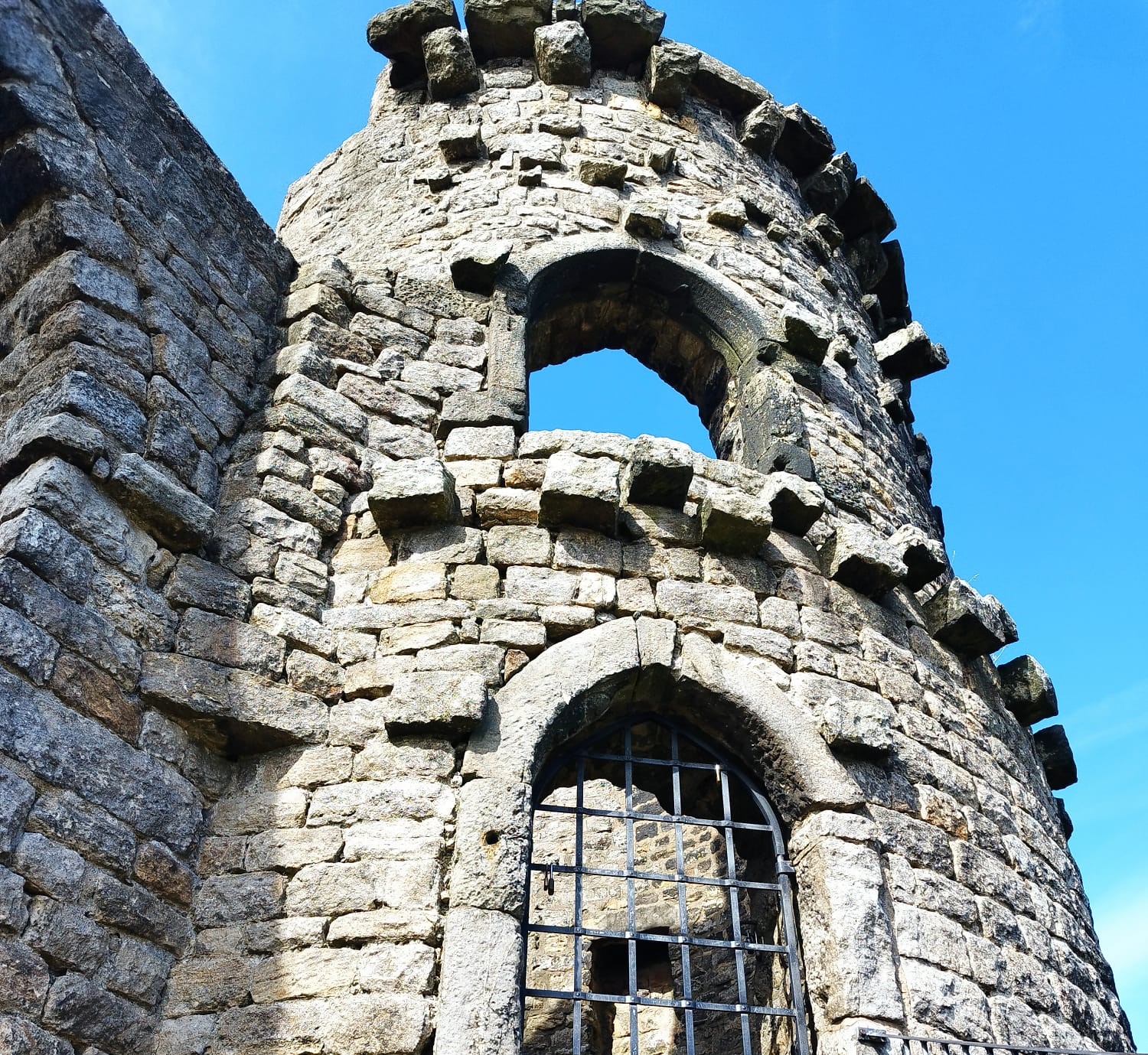
►1847—Alleged Poisoning of Thomas Booth Thomas Booth, formerly of Tank Lane, dies at his son William’s house at ‘Brieryhurst’ (Oct 29), & is buried at St Thomas’s as of ‘Lawton Park’ (Oct 31), his age given as 54 in the burial reg, death cert & at the inquest, where he’s called ‘a labouring man’ [he’s 55, son of William & Alice of Tank Lane, bap.Feb 26, 1792, living in 41 with Alice, age given then as 55 {no wife/chn on fam tree ?=1823 Mary Turnock, a WB 15 with RHackney41 o/w not traced (notWBofMossEnd)}] § he is afterwards exhumed because of suspicions or allegations of poisoning, but the post mortem is inconclusive & an inquest (held at Thomas Dale’s beerhouse) returns an open verdict § the final death cert (Dec 31) reported by the Burslem coroner William Harding unusually gives cause of death as ‘Unknown’ § the allegation is that on Oct 10 (‘Astbury Wakes Sunday’) at Thomas McLoughlin’s beerhouse one of the company of drinking men, William Smallwood of Kidsgrove, is seen adding to some drinks what is identified as cantharides alias Spanish fly (witnesses all call it ‘French fly’) [it’s a toxic preparation from the dried bodies of the beetle ‘Spanish fly’ which has a blistering or inflammatory effect & is also supposedly an aphrodisiac (presumably the intended effect); even small quantites are deadly & there’s no treatment] § he also gives some to Joseph Triner who later feels ill & vomits § McLoughlin & his waitress Bridget Kilkenny appear as witnesses (possibly one of the 2 Bridget Fords listed with him in 1851, mother-in-law aged 77 & servant aged 19) [Kilkenny is an Irish family in Congleton, part of an enclave of Irish labourers & hawkers that gathered there after the great famine & that McLoughlin is associated with, tho he’s been at MC longer] § xxxWilliam Smallwood subsequently prosecuted re Joseph Triner (dismissed)xxx § xxx § as well as illustrating the kind of rum doings going on in beerhouses it’s one of the few refs both to McLoughlin’s beerhouse (Woodcock Fm, Cheshire, below Woodcocks’ Well, called ‘New Inn’ in the 1851 census) & to Dale’s beerhouse (site of Porter’s shop, listed in 1851 directory), the inquest held here because the death occurs on the Staffs side § the common practice of the period is to hold inquests in public houses (also implying it’s larger than a normal cottage beerhouse) § xx
►1847 Robert Littler advertises ‘nearly new’ equipment from ‘the Odd Rode and Leigh Hall Collieries’ [Bank & Hall o’ Lee] (see 1848) § Thomas Hilditch of Blackden, owner of Hall o’ Lee & Woodcock Fm, dies (Dec 18), bequeathing his property to his dtr Mary Hodges of Kermincham (1801-1867) – perhaps precipitating the new arrangement whereby Hall o’ Lee ceases to be operated as a traditional large yeoman farm (see 1848, & cf 1843) § handbill or poster humorously promoting Newcastle Wakes & associated ‘ancient Sports and Amusements’, taking place Tues Sept 15 (see 1841—To Castle Wakes for details) § North Staffordshire Railway Co takes over Trent & Mersey Canal Co, & (unlike other canal-owning railway cos) continues operating & investing in the canal, which consequently suffers less from railway competition & remains busy § cuttings & tunnels for the new railway line inc the Harecastle railway tunnel underway by Feb, employing c.500 men inc George Hancock (see below) § supposed date of elusive publication The Bilberry Shrub, or the Stroll of a Day consisting of poems about MC, Cloud, etc by Hilary Moorcock (pseudonym, supposedly of Edward Caulton of Arclid) (referred to by W. J. Harper in 1896 but no copy has ever been found) § Thomas Church’s Sketches of Primitive Methodism published, a slightly unconventional take on the story (his ‘founders’ are Bourne, Clowes, James Steele, & James Nixon) spiced with the point of view or attitude of a lay local preacher § Wesleyan Methodist chapel built at Newchapel § according to White’s 1851 directory a small Unitarian chapel is built in Stadmorslow township (presumably at Harriseahead), though no other evidence has been found of such an unlikely thing & it’s not in the 1851 ecclesiastical census § Thomas Owen of Rookery charged with selling liquor out of hours, the case dismissed § Levi Harding & Isaac Mountford, colliers at Tower Hill Colliery, fined at Tunstall police court for ‘neglect of work’ § George Hancock (son of Ralph & Olive, husband of Zilpah Burgess) files for bankruptcy after incurring debts as a butty collier, well or mine sinker, & for a time a (failed) publican at Chesterton, latterly or currently working on the Harecastle railway tunnel § George Rogers charged under vagrancy laws with ‘trespassing on Mr. Williamson’s brick-yard, Tower-hill’ but on appearing before magistrates he ‘appeared so ill that he was ordered to be taken to Chell workhouse, and properly attended to’ (the workhouse containing a hospital; he afterwards lives on MC) § the ref shows Williamson’s brickworks that has recently supplied the bricks for Welsh Row is still in operation § Ellen Dale aged about 12 (probably dtr of Peter & Maria, aged 6 in 1841) is convicted of stealing coal ‘the property of the Stonetrough Colliery Company’ & sentenced to 7 days in prison (presumably – as such prosecutions usually are, esp when involving women & children – a case of picking up spillings, a common charge in magistrates’ courts but usually treated more leniently; see 1860) § John Ford of Bank (b.1776) makes his will (see 1852-53) § Thomas Booth formerly of Tank Lane dies at Lawton Park (Oct 29), & is buried at St Thomas’s but later exhumed because of suspicions of poisoning – the post mortem is inconclusive & an inquest (held at Thomas Dale’s beerhouse) returns an open verdict (see above) § scarlet fever epidemic in the early months of the year, its victims inc Frances, youngest child of Luke & Jane Rowley of Whitehouse End, aged 4 weeks (buried Biddulph Jan 11; baptised St Thomas’s Jan 6, the only one of Luke & Jane’s children to be baptised there), & 3 of Daniel & Sarah Heath’s children (now living at Cob Moor) – George Daniel aged 7, Ann 4, & Sarah 2 – who die within days of one another, Ann & Sarah being buried at the same time (Feb; curiously the same 3 were belatedly baptised together in 1845) § worldwide influenza epidemic 1847-48 § ??isn’t there a typhus/oid epidemic in 46/7 +also?* § 2 of John & Maria Hall’s children, Elizabeth aged 3 & baby James, are buried together at St Thomas’s (Feb 13), dying of ‘Fever’ [probably typhus] § James Washington, farmer & butcher, dies, & the Washingtons leave Puddle Bank, widow Betty & eldest son James going to live with youngest son Owen down the hill at Fairfields § George Dale dies (buried Newchapel Jan 6, 1847) § John Wright of Moss dies, native of Appleby, Leics, whose sons Charles & Henry settle on MC, & brother William almost (see 1825) § Thomas Gray of Lower Bank Fm dies § his youngest son Robert Gray succeeds to the tenancy, & it’s about this time that the new farm is built next to Higher Bank off the bend in the middle of Spring Bank, the old site lower down being abandoned (reason for rebuilding & new site not known) § (only 1 farm is listed in 51, thereafter the 2 Higher & Lower are both tenanted by Grays) § Mary Oakes of Oakes’s Bank, wife of Samuel, dies § Jane Skellern, wife of John of Limekilns, dies aged 38 § William Mollart dies at Wain Lee aged 32, cause nk (no GRO) tho 10 years later his twin sister Mary dies of heart disease § John Ratcliffe of Bradley Green dies a few days after being seriously injured by a fall of coal at Falls Colliery aged 44 § Ralph Brough dies after being struck by a falling brick in the shaft of Tower Hill Colliery, aged 15 (son of Jonathan & Mary of Wain Lee) § George Wales aged 3 years 11 months is run over & killed by a loaded stone cart near St Thomas’s church (cf similar accident 1848) § his is the first burial of a resident of Welsh Row (June 25 at Newchapel; see also 1848, 1849) § Benjamin Dale marries Lois Staton at Newchapel (Feb 15) – 1st entry in the 1st Newchapel marriage register (Newchapel marriages hitherto included in Wolstanton registers without distinction, except for the list of 1742-54, & cf 1688) § Caleb Oakley marries Mary Ann Charlesworth at Macclesfield, both Oakley & Charlesworth families later coming to live in the Sands area § John Stanyer jnr marries Sarah ??Ford § William Ford of Bank & his sister Elizabeth Ford marry Anne or Annie Pinder of Burslem & her brother Edward Bourne Pinder in a double wedding at Astbury – they are children of Wesleyan Methodist minister Revd Thomas Pinder & his wife Edith (nee Bourne), further evidence of John Ford’s intense commitment to Methodism § William Tellwright jnr marries Mary Marsden of Little Birchall at Leek § his brother James Tellwright marries Sarah Brindley at Cobridge, & they live at Hanley & (from c.1853) Bucknall § Samuel Yates of Swettenham marries Sarah Cash of Barnshaw, nr Goostrey (they live at Kermincham, Swettenham, Wall Hill, & from c.1865 at Wood Fm, Moreton) § Jane Hopkin of Sands marries William Scott § Adam Belfield marries Louisa Shufflebotham § Thomas Boden marries Hannah Pointon § Solomon Pointon marries Jane Moody or Moodey of Bank § Tamar Harding of Hardings Row (daughter of Samuel & Mary) marries Thomas Hancock (son of Luke & Harriet), & he lives with her at Hardings Row § Stephen Hancock marries Hannah Taylor (dtr of John & Maria) at Audley, but she dies of ‘Fever’* just 6 months later aged 19 (Feb 15 & Aug 24) § Isaac & Mary Ann Harding of Hardings Row have their only child Amos Taylor Harding § Francis & Sarah Locksley name their only child William (after her brother William Jamieson), & baptise him at St Thomas’s on Christmas Day § William & Sarah Patrick baptise son Thomas at St Thomas’s, soon after settling on MC (cf 1845) § Thomas & Sarah Egerton’s youngest child born & given the novel name Novella (Novelia in 51 census, Novelo in 71) § fustian mill founder Robert Platt born at Crompton, nr Oldham (& baptised at East Crompton March 19, 1848), son of Joseph Platt, a small fustian master, & Sally § his future wife Emma Butterworth born at nearby Royton (Oct 29) § Ann Steele (later Charlesworth) born at Hulme, Manchester (March 7) § Mary Chadwick of Park Farm, Dales Green aged 16½ has illegitimate dtr Sarah § approx birth date of Paul Whitehurst (1847/48, no record found) § Nathaniel Bowker born at Burwardsley, nr Peckforton
►1847-49 major restoration & rebuilding of Sandbach church under Sir George Gilbert Scott, inc replacing much of the exterior facing stone & rebuilding more than half of the height of the tower, which has become unsafe § Mow Cop stone is used, given by Sir Philip Grey Egerton from the quarries along the ridge in Newbold manor (as with St Thomas’s, MC) – giving it the distinctive dark grey colouring of MC millstone grit, like Astbury church § it was previously of the more usual red/pink Cheshire sandstone § MC stone is also used in the rebuilding of Sandbach School in 1848, presumably as a by-product of the church project § presiding over both is Revd John Armitstead (1801-1865), vicar 1828-65, who also builds alms houses, 3 district churches, & a National School which is looked upon nationally as a model of its kind § for Sandbach’s ancient special relationship to the hill as the main village & ancient religious centre along the course of MC’s river the River Wheelock see xxx, xxx
►1848—Death of Samuel Harding Samuel Harding dies of consumption, having not long enjoyed the new house he has built for himself as part of Hardings Row (the double-fronted house at the Pump Fm end) § his large gravestone is one of the oldest in St Thomas’s churchyard: ‘In Memory of Samuel Harding of Mow-cop who departed this life February 23rd. 1848 Aged 51 years’ § tuberculosis is the main fatal endemic disease in the community at this period, though as yet indistinguishable from silicosis, which a quarryman & stone mason such as SH may well have suffered from § he’s one of the Harding brothers, the 6 sons of James & Sarah, who play an important part in developing the area of Hardings Row/High St/Chapel Bank as a kind of centre for the hilltop village in the 1840s, & 4 of whom inc Samuel are termed ‘Stone Miner’ in the 1841 census, wch might imply they’re digging the tunnel (completed 1842), stone from wch may have been used in some of their building projects § xxxxxxxhis-willxxxxxxx § xxx § xxx § xunfx
►1848—Will of Joseph Stanyer or Stonier of Spring Bank Joseph Stonier or Stanyer dies (), & is buried at Astbury () § xxx, his will dividing his small property at Spring Bank into lots for several of his children, nephews, etc??xxx § xxxxx+more+xxxxx § xxx § xNEWx
►1848—William Jamieson’s Books, Chest, & Fiddle William Jamieson snr, millstone maker who came with his 2 brothers from Scotland about New Year 1825/26, dies (Nov 21), bequeathing his business & his books to his nephew & apprentice of the same name § cause of death is given as asthma, a condition that could have been caused or exacerbated by dust from his profession (silicosis or ‘millstone maker’s phthisis’) § although he gives ‘Millstone Maker’ as his occupation the business isn’t in fact mentioned in his will (made March 11, 1848, proved Feb 15, 1849), which leaves 3 freehold houses to his wife & then his nephew, & all his personal or movable estate to the nephew – making the listing of the books etc unnecessary: ‘my large Family Bible, Bostons Body of Divinity in three volumes, Rutherfords Letters, Jardines Sermons, Browns Bible Dictionary, my large chest and Fiddle, and all other my personal estate’ § not sure about the fiddle, but the books lean strongly towards old-fashioned Scottish Calvinism [respectably pious & nonconformist but theologically the antithesis of Mow Cop Arminianism], & obviously mean a great deal to him § witnesses to the will are James Rowley & John Taylor, executors Matthew Leese & Francis Locksley jnr § his friends represent a kind of higher echelon of the MC community, inc Leese of Dales Green Fm, craftsman, farmer & pioneer shopkeeper, Rowley of Mow House, farmer & also a pioneer shopkeeper; while nephew WJ as heir & nephew-by-marriage Locksley (WJ jnr’s sister Sarah’s husband) as executor shows that WJ snr has no children & sees those of his brother Robert (d.1830, also a millstone maker) as his immediate family § his step-son George McCall isn’t mentioned in the will, but is present at & registers his death § widow Agnes Jamieson & her son George McCall move to Top of Fir Close [?Manor View, or thereabouts] where they’re listed in the 1851 census, Agnes a grocer (though by 1861 McCall is back at Mount Pleasant & Agnes (d.1865) isn’t found) § the nephew WJ jnr previously lived with them but after the uncle’s death lives with his sister Sarah & her husband Francis Locksley (1851 census, aged 25), now in charge of the millstone business & soon to take on another role (see 1851—Death of Old Thorley) & move up to the Cottage by the Tower § (on the Jamiesons see esp 1825/26, 1830, 1850—Mount Pleasant, 1884, c.1897) § xx
►1848 Hugh Bourne joins MC Primitive Methodist class, & takes part in a camp meeting (+dates) § building of Knypersley church commences (datestone; see 1851) § St James’s church, Congleton opens (built 1847-48), serving the W side of the town § MC stone used in building Sandbach School (brick with stone trimmings etc) – presumably connected with the rebuilding of Sandbach church currently under way using stone from squire Egerton’s quarries along the ridge in Newbold manor (see 1847-49, 1911) § new game keeper’s lodge built at bottom of Roe Park xxocc:NOT-Everett!xx § Stoke railway station opened (Oct 9), hub of the new North Staffordshire Railway, & Harecastle railway tunnel & Stoke-Congleton railway line along the foot of MC completed & opened (also Oct 9; see 1848-49 below) § Karl Marx & Friedrich Engels publish The Communist Manifesto in London – ‘The workers have nothing to lose but their chains’ – just as the revolutions of 1848 begin to erupt on the Continent § a similar uprising seems likely in London as Chartists make their 3rd attempt to get parliament to accept ‘The People’s Charter’, but when the government promises military resistance the planned demonstration fizzles out § ‘the Odd Rode [Bank] and Hall o’ Lee Collieries ... lately in the occupation of Robert Litler Esq’ [usually Littler] advertised to let – John Ford & Thomas McLoughlin respectively will show them § approx date of Robert Belfield & brother-in-law Aaron Holdcroft & families coming to live at Hall o’ Lee, where Belfield remains (Holdcroft moving on to Tower Hill) § dividing house & farm (until recently occupied by Thomas Morris & operated as a traditional large yeoman farm) into 3 holdings for collier/farmers is the beginning of the end of the ancient moated mansion of Hall o’ Lee – Bagshaw’s directory (1850) states that it ‘has recently been converted into cottages’ – precipitated either by Littler giving up his lease or by the ownership passing to Thomas Hilditch’s dtr Mary Hodges (see 1847) § Falls Colliery advertised to let, representing the end of Hugh Henshall Williamson’s coal & lime empire{??}+who comes next??[?Minshull] {this was originally under 1848-49...is that actual?} § celebration in Congleton (Oct 16) feting Randle Wilbraham & marking the jubilee (50th anniversary) of his appointment as High Steward § approx date of Daniel & Ann Dale (grandparents of Hannah) moving from Old House Green to Dales Green (1848/49) § approx date of Joseph & Ann Booth from Rainow, nr Timbersbrook, via Newchapel (where son Enoch is born 1846), settling at Mount Pleasant, Cheshire side (dtr Ann born there 1849 & baptised at St Thomas’s; a separate lineage from the other Booths of MP, mostly derived from the Booths of Tank Lane, though use of the name Enoch suggests they’re related way back as well as making ‘Enoch Booth’ probably the commonest name on MC!) § 16-18 High Street (datestone ‘SH 1848’) built by James Harding for his daughter Sarah (wife of Samuel Hancock) – whose initials they bear may be intentionally ambiguous! § ??review of county boundary markers § squire Ralph Sneyd gets a new agent or estate manager who as well as bringing his finances & assets into better order takes a greater interest in the precise line of the boundary & in the ownership of the Tower, to assert the right of access to which he or his henchmen break open the newly-restored locked door (see 1850) § earliest reference to George Harding as shopkeeperxxx xxwhere??xx § Charles Whitehurst (husband of Susannah, see 1844) arrested for larceny ie theft (convicted at Knutsford & sentenced to transportation to Australia on Jan 1, 1849) § Thomas & Hannah Pointon fined a huge total of £12 plus costs or 2 months hard labour each for assaulting 2 policemen at Pitts Hill after some sort of battle among MC sand carriers – ‘The woman would appear to be a perfect Amazonian, for it was stated that she first beat her husband, then knocked three other men down, and lastly assaulted the policemen who interfered to stop the disturbance’ § Mary Stanway, sand carrier, fined for cruelty to an ass at Hanley (wife of James, f.1841) § Job Shenton & family come to live at Welsh Row (until 1860) § Hannah Rigby dies aged 96 § Joseph Stonier or Stanyer dies, his will dividing his small property at Spring Bank into lots for several of his children, nephews, etc (see above) § Samuel Harding dies of consumption, having not long enjoyed the new house he has built for himself as part of Hardings Row (see above) § his large gravestone is one of the oldest in St Thomas’s churchyard: ‘In Memory of Samuel Harding of Mow-cop who departed this life February 23rd. 1848 Aged 51 years’ § William Dale of Dales Green dies, & is buried at Newchapel (Nov 27), not with his wife at Astbury (b.1783, brother of John, ?presumably WD formerly of Hathersage, quarryman or millstone maker, widower of Tabitha Pointon d.1836) § in 1841 he & brother John are living together at Harriseahead, tho the burial records him as of Brieryhurst § William Jamieson snr, millstone maker from Scotland, dies (Nov 21), bequeathing his business & his books to his nephew & apprentice of the same name (see above) § the nephew WJ jnr is living with his sister Sarah & her husband Francis Locksley in the 1851 census, aged 25, now in charge of the millstone business & soon to take on another role (see 1851—Death of Old Thorley) § widow Agnes Jamieson & her son George McCall move to Top of Fir Close [?Manor View] where they’re listed in the 1851 census, Agnes a grocer (though by 1861 McCall is back at Mount Pleasant & Agnes (d.1865) isn’t found) § William Oakes of Biddulph Road dies of jaundice & pneumonia aged 42 § veteran farmer Ralph Farrall (sometime of Wood Fm, Moreton) dies at Shelton § John Davenport, manufacturer of pottery & glass at Longport, dies § Ann Hulme of Rookery, wife of Jonathan, dies aged 42 (Dec), having baptised the last of their 13 (known) children Susannah at St Thomas’s the previous Jan 28 § Mary Thompson of Welsh Row dies, the first Welsh Row settler to be buried at St Thomas’s (see 1849) § Mary Chaddock of Congleton Edge, widow of John, dies § Elizabeth Bailey (nee Maxfield) dies at Moors Fm, Odd Rode aged 23 § Hannah Holland aged 1 year 9 months is killed on Sands Rd ‘by a cart loaded with sand for the Potteries passing over its neck’ [sic] (Staffordshire Advertiser, Sept 23) (cf similar accident 1847) § Dinah Mould marries Enoch Lockett § Mary Clare (nee Goodwin), widow of Daniel, marries James Rothwell § Stephen Hancock, widower, marries Ann Brammer of Congleton § Noah Stanier marries Rachel Lovatt at Wolstanton (Dec 9) & they live at her native Packmoor § John Booth marries Mary Rosson at Church Lawton on May Day (later of the Railway Inn) § Hannah Maria Shallcross marries William Sidebottom or Sidebotham at Astbury, & they live at 1st with or near her parents at Boundary Lane, Congleton Moss (returning to his native Glossop briefly before settling at Fir Close c.1855) § William is called an excavator in 1841 & a coal miner in 51 so his subsequent trade of carpenter is probably learned from his father-in-law John Shallcross, a wheelwright § John Rubotham or Rowbotham marries Hannah Oakes of Harriseahead (April 17), aged 19 & 18, witnessed by Enoch Baddeley & Catherine Lawton of Rookery, who themselves marry later in the year (Sept 11) § the Rowbothams’ first child Sarah is born a few months after their marriage (3rd quarter; afterwards Sarah Pointon) § Thomas Ford (of Byefield House) marries Hannah Dale, & their son Thomas William Ford born shortly after § John Lawton born at Waggoners Lane, son of James & Rhoda, his mother one of the Cottrells of Newpool (later of Mow House & Biddulph Rd, father of John James, Arthur, etc) § Hannah Maria Bailey born (later Fryer) § Elizabeth Hall of School Fm born (later Oakes & Pierpoint)
►1848-49—Mow Cop Railway Station Harecastle railway tunnel & Stoke-Congleton railway line running along the foot of the entire MC ridge on the Cheshire side completed & opened (Oct 9, 1848; tunnel built 1846-48) – central section of the North Staffordshire Railway Co’s 1st line, to run from Colwich nr Rugeley to Macclesfield (which already has a northward link to Manchester) § in reporting the opening of the line the Staffordshire Advertiser refers to ‘that far-famed hill’ (which it mostly calls just Mow), hopes that a station will be built there (a crossing-keeper’s lodge is all that is planned at first), & incs a passage about ‘the “Old Man of Mow,” ’ – ‘The “old man” is an isolated rock near the summit, which from the Cheshire side bears a most striking resemblance to a human head in distinct outline against the clear sky; and according as clouds cast their shadows or the sun sheds his beams upon it, the spectator may imagine that some colossal being is from that height looking down upon him with a frown or a smile’ – the earliest known description of the Old Man § the North Staffordshire Railway Co takes the newspaper’s advice & the newly-built Mow Cop Station opens on Jan 1, 1849, the appropriately named John Steele first station master (1820-1882; station master for 34 years; station closes 1964) § it originally has the rare feature of staggered platforms § four up (towards Congleton) and five down (towards Kidsgrove and Stoke) trains daily, all stopping § North Staffordshire Rules and Regulations (January 1865), rule 79: ‘The station master, porter or other person on duty at a station, must, on the arrival of a train, walk the length of a train, and call out in a clear and audible voice the name of the station when opposite the window of every carriage, so as to make every passenger in the train aware of the name of the station.’ § the line is soon completed to Macclesfield (June 1849), celebrated by excursion trains, stations decorated with flowers & flags, & ‘triumphal arches’ erected across the tracks at three places, including MC Station § ‘the Mow Cop band’ is one of several taking part in the festivities – incidentally the earliest reference found to the band § in reporting the completed line The Illustrated London News mentions ‘the celebrated “Mow Copp” ’ § all this comes in the age of ‘railway mania’, which the celebratory atmosphere & press interest reflect, & train travel (unlike some other transport revolutions) does genuinely affect the lives of ordinary people, allowing them to leave MC – whether for a trip to the seaside or the short hop to Congleton Wakes – or to flock there in great numbers, which amidst the fashion for ‘excursions’ they proceed to do (eg 1850 – the first excursion trains specifically for bringing people to the hill, & 1907 – platform extension, extra trains, & special stopping of the express to bring people to the centenary camp meeting)
►1849 ??date often cited for when cock-fighting is made illegal (see 1835) § >abol’d section>cruelty to animals becomes illegal,xxx 49act replaces 35act, provisions v similar, but 49 goes further, 35 outlaws cruelty to cattle, horses, & farm & domestic animals inc dogs (cocks not ment’d, ?bears) (meaning esp in keeping & working them) & also keeping premises for bull-baiting, cock-fighting etc & also cruel treatment in the process of driving & slaughtering, 49 reiterates or clarifies these plus explicitly outlaws fighting & baiting inc dogs cocks etc [my summary fr reading the texts of the 2 acts]~~~as far as I can see this is still ambiguous (& note “keeping premises for” isn’t about cruelty it’s about public disorder & crime)~~CHole says “baiting” outlawed 35 cockfighting 49< § ‘long drought’ Spring 49 (recollected in BurtonChron1864)xxx § cholera epidemic in Nantwich & Willenhall*/the Black Country{presly widespread+severe+*c200, graveyard fills up!} § Churnet Valley Railway opened, its main station at Leek § consolidated rules of the PM connexion published § Harriseahead Chapel undergoes ‘considerable repairs and improvements’, reopening Sun Aug 26 § inmates of Chell Workhouse (numbering 210) provided with a Christmas dinner of roast beef, plum pudding, & ale at the Duke of Sutherland’s expense (Dec 19) § proposed ‘Subscription Pleasure Grounds’ on the hilltopxxx xxxseeLeese/ Staffordshire Advertiserxxx (see below) § Obadiah Lawton & Levi Harding prosecuted for ‘unlawfully angling’ in water at Tower Hill belonging to Williamson, at 2am on Sunday (they admit the offence but claim they caught nothing! fined 5s each & costs) § Robert Heath snr dies, his son Robert jnr succeeding as manager of Kinnersley’s Clough Hall coal & iron complex § John Lawton of Dales Green dies § Sarah Harding, wife of James snr, dies (Aug 5) aged 83, her gravestone one of the oldest in St Thomas’s churchyard – very worn in 1969, the additional inscription (presumably husband James d.1858) completely illegible § Sarah Turner of Drumber Lane, widow of Henry, dies § Anne Mayer, widow of Thomas, dies § Joseph Moor or Moors of Moreton dies at Arclid Workhouse aged 75 (only surviving son of Thomas Moor, the Methodist preacher, & Hannah) § Enoch Yates snr of Congleton Edge dies § George Mellor dies of apoplexy (a stroke) aged 42 (March 22) § Thomas & Hannah Pointon’s son George dies aged 2 weeks, & Thomas’s eldest son Samuel Pointon a fortnight later aged 23 (March 10 & 25) – seemingly of unrelated causes (‘Convulsions’ – commonly cited as cause of death of babies – & pneumonia) though an unusually long harsh winter has not yet ended, following on from several years of foul weather & famine (see 1845-50) § it only ends after an unusually late snowstorm with deep drifts (April) § these conditions also contribute to the deaths of babies Emma & Egerton Whitehurst at Arclid Workhouse (April 10 & 24) aged 11 months & 2 years, children of the Charles Whitehurst who has been sentenced to transportation § it seems that they went into the workhouse with their grandmother, Nancy Whitehurst of Congleton, rather than their mother Susannah, though both women have been left destitute by Charles’s imprisonment (no surviving admissions register for this period, but the master of the workhouse mistakenly believes they are children of Egerton Whitehurst, their grandfather, & they are listed as admitted from Congleton township) § 2 of William & Emma Oakes’s children die in the same merciless winter – George aged 14 & baby Rachel aged 15 months, & are buried at Tunstall where they are currently living (Feb 21 & March 4) § distant relative John Oakes of MC dies at his dtr’s house at Newfield (Jan 9, of pneumonia), & is also buried at Tunstall § Ann Harding (formerly Lindop, nee Clare), 2nd wife of George Harding, dies of consumption aged 39 § Frances Mould dies aged 26, following childbirth (the baby Tamar surviving) § Mary Shenton of Welsh Row dies aged 37, & her new baby Martha (May 15) § her widower Job Shenton marries Sophia Brereton, widow (nee Chesters), at Biddulph (Dec 31) § Luke Hancock jnr, widower, marries Mary Barlow of Mow Hollow § her brother John Barlow marries Harriet Baddeley (illegitimate dtr of Phoebe) & Harriet’s cousin Ann Baddeley marries John Mould in a double wedding at St Thomas’s § their uncle Joseph Baddeley aged 40 marries Mary Ellen Evans (nee Salt) of Hanley, widow, at Stoke (Dec 30), & they establish a beerhouse along the ridge in the Biddulph part of MC (connected somehow with Ralph Hackney’s, with whom he’s associated) § another John Barlow marries Ellen Bowers at Wolstanton (later shopkeeper & baker of Rookery) § James Maxfield, widower, marries Hannah Minshall, widow (nee Johnson), of Sandbach § Sarah Triner (nee Harding), widow of William, marries John Thompson of Welsh Row, widower, ?probably the first marriage between a Welsh Row settler (from Durham) & a native (see 1850, 1851) § Elizabeth Hodgkinson marries Michael Morris (he d.1860) § Mary Mellor, dtr of George & Mary, marries William Beckett, son of Hannah Boyson of Bank (?illegitimate, though he gives his father’s name as William Beckett) (Mary dies 1850) § Enoch Shallcross marries Hannah Heathcote, both of Biddulph (moving to MC 1850s) § William Hales marries Sarah Heaton at Stoke § Isaac Thorley marries Charlotte Stubbs § George Harding (shopkeeper & Wesleyan) marries his 3rd wife Ann Sherratt § Levi Harding (son of Ralph II & Elizabeth) marries Eliza Clarke of Clarkes Bank (Clarkes Well) § her sister Mary Clarke marries George Hollins, shoemaker § William Gray of Bank, son of Robert & Anne, born § William Mountford born § Luke Pointon (III) born § Ann Booth born at Mount Pleasant shortly after her parents Joseph & Ann settle there (see 1848) § Elizabeth Booth, dtr of John & Mary, born at Church Lawton § William & Hannah Maria Sidebotham are living at Congleton Moss when son Albert is born § Caleb Oakley jnr born at Eaton, nr Congleton § Katherine Frances Wilbraham, heiress of Rode, born (later Lady Baker Wilbraham; d.1945 aged 95)
►1849-50—Pleasure Grounds & Excursion Trains visiting MC for recreational purposes is an established thing anyway (xxx), & festivities about the summit seem to need little excuse (eg 1841—Mow Cop Church), but the coming of the railway prompts more formal, commercial ideas, from excursion trains to the proposed conversion of the summit into a ‘pleasure grounds’, as well as the establishment or proposed establishment of businesses catering for visitors, such as pubs, hotels, restaurants, tea-rooms, shopsxxx § § xxxxx § § xNEWx
►c.1850—Mount Pleasant approx date that the village forming at Mole End or Mow End (as it’s been called for centuries) gets saddled with a new name § xxx1851 census—Ches ‘Mount Pleasant | Mow’, ?noStaffs) [can’t find any 1850 nor what made me think this—pl-nms ntbk51census, StThos53] (not in 41census or tithe docts, not in 50+51 directories) § the casual colloquial term used for the new village is ‘the village’ {NB-an early MPVill occurs—find!} § curiously the house with the datestone ‘Mount Pleasant 1860’ (the former Millstone Inn & shop, at Millstone Corner) comes a decade after the name has entered common usage, so its justification is not obvious, except that it stands more-or-less at the entrance to the new village § John Jamieson establishes a school at Mount Pleasant (this year, 1850), erecting a schoolroom (unusual for private elementary schools), though the building has not been identified (JJ’s crofts & cottages are at the Flatts [Heatherside]) & nothing is known of the school’s history or fate – presumably Woodcocks’ Well School (1858) renders it superfluous, though Jamieson’s neice Sarah Locksley of MP is still calling herself a ‘School Mistress’ in 1861 § he also builds or has recently built several cottages occupied by his sons &/or Campbells § xxx § xxit’s less easy to fix a date for the beginning of MP than (say) Rookery or Fir Close since the location, long known as Mow End or Mole End, has been occupied by a scatter of cottages & small farms for centuries but regarded as part of the sprawling scattered village of MCxxScottish1825/6, Triner ms 1825+26+31(4hss), JJ50, Crown-?1860s, Mlst60, 1st semblence of a concentrated settlement comes in the 51 censusxx § Samuel Hulme & his wife Jane (youngest sister of William Jamieson) are publicans or innkeepers at MP from their marriage in 1854 until moving to Congleton in the early 1860s, where they continue in the same trade – so after Thomas McLoughlin’s ‘New Inn’ beerhouse at Woodcock Fm they’re probably the village’s 1st beersellers, their pub not named but it’s in the Cheshire part (whether it’s the Crown or a precursor hasn’t been established – Crown’s described as newly-built in 1869 when Thomas Locksley, its presumed founder, is selling up) § § (a MP in the 1841 census (2 households: Hulme & Chadwick) is actually at Harriseahead, top of Harriseahead Lane west side (in Brieryhurst township); MP was also toyed with as a name for Pack Moor, 1861 census; it shows that the fanciful name is fashionable at this period, tho found elsewhere as early as the 17thC § xx
►1850—Court Case Over the Tower court case at Staffordshire Assizes, Stafford between Randle Wilbraham (1773-1861) & Ralph Sneyd (1793-1870) re ownership of & rights of access to the Tower, before judge Sir John Patteson (1790-1861) (March 19) § Wilbraham is plaintiff, the action brought (or contrived) on the basis that Sneyd has committed a trespass in forcing entry to the newly-restored locked door in 1848 § the old door (it emerges) was retrieved in 1842/43 & probably reinstated or replaced in 1847, but it’s not clear how long it had been detached or dilapidated – Sneyd (succeeding as squire in 1829) may be unaware that there had formerly been a lockable door & a local keyholder § Sneyd’s principal concern (aside from the over-enthusiasm of his new estate manager, newly appointed in 1848, which may well lie behind it) appears to be that before the restoration of 1847 there had not been a locked door, so unrestricted access had been assumed, though he might also be understood as claiming ownership or joint ownership of the building; while Wilbraham is concerned to preserve his family’s previously unchallenged ownership of the structure, but not to restrict access § interesting trivia but no great revelations occur during the hearing, indeed less is said of the Tower’s origins than is current in local tradition & memory, the date 1754 not being mentioned for instance, nor that Ralph Harding helped build it (though he’s mentioned as having been caretaker ?& keyholder) § witnesses have doubtless been briefed as to what is or isn’t pertinent – the advantages of keeping its origins vague inc limiting the evidential aspect to ‘time immemorial’ type recollections of ownership, maintenance, access, etc, & avoiding implications of deliberate encroachment on Sneyd’s land by the Wilbraham who built it § no early records exist, & maintenance or repairs (all by Wilbraham) are cited only as far back as 1804 § Wilbraham’s lawyer doesn’t dispute that it stands half in both estates with the doorway on Sneyd’s side, tho implying that this is accidental; Sneyd’s lawyer admits the breaking & trespass; & all witnesses think Wilbraham owns it § witnesses called include 80 year-old James Harding (1769-1858), John Stanyer, & Joel Pointon, but James Thorley, though mentioned several times, seems not to be one (though according to another source he was present) § William Rawlinson (1804) & Jesse Dudsden (1841), builders who have made repairs to the Tower, also appear +??Wilkinson 1824? [Dudsden ?or Dudson is unidentified – unless it’s a queer mistake or reporter’s mis-hearing for the Congleton stone mason Jesse Burslam (1805-1866), a very likely repairer (as well as descended from an ancient dynasty of MC masons)] § § the jury has difficulty reaching a verdict that is compatible with the judge’s instructions, but in the end bows to the judge’s advice & finds for Sneyd by a majority verdict (ie Sneyd has right of access & did not commit a trespass by forcing the door, tho the verdict doesn’t seem to mean that Sneyd owns any part of the building), the parties also coming to an understanding ‘that the tower should be open to the use of the public, under certain restrictions’ [the only restriction I’m aware of, apart from having to get the key or keyholder, is that access is not allowed during the time of Sunday church services] § detailed report of the court proceedings appears in the Staffordshire Advertiser (March 23) § like many legal actions of the kind, much of what’s said in the courtroom is contrived & restricted in order to achieve (or avoid) certain effects: while Wilbraham’s lawyer is describing the Tower as ‘of ancient construction, the time when it was erected being beyond the memory of any living man’ we know that the date 1754 is current on MC & that the son of its builder is one of the witnesses, tho neither fact is mentioned; likewise the bluff is strenuously maintained that it was built on the boundary accidentally or ignorantly, & later found to overlap the boundary, an impression not dispelled by mention of the ‘Cest’ & ‘Staff’ stones, tho we know for certain it was deliberately built on the boundary & the name ‘Cestaff Tower’ is still in routine use in the Wilbraham family at this time (see 1858 as well as 1819, 1831) § the court case is famous & persistent in local folk memory, generally attracting the erroneous interpretation that Wilbraham’s ancestor inadvertantly or presumptuously built the Tower across the boundary & got a sort of belated come-uppance in this action, whereas (a) we know beyond any doubt that it was intentionally built on the boundary (see 1754) (b) it was part of a long history of attempts to mark & preserve the boundary (eg 1628) (c) the doorway, access steps, & caretaker’s cottage on the Staffs side can’t have been built without the Sneyd forebear’s (or his representative’s) consent, esp bearing in mind the renowned honesty & legal knowledge of the Randle Wilbraham responsible (see 1770) (d) the question of access is presumably a misunderstanding arising from reinstatement of a lockable door in the 1847 repairs (e) it’s hard to see any difference between the new understanding & the previous de facto situation (f) paradoxically Wilbraham (not Sneyd) brings the action, loses, & by so doing seemingly gets exactly the result he wants! § xxmore!detailsxxincADD:tithe ownerships+mapxx § xx
►1850 first ‘excursion’ trains run to MC station, accompanied by festivities on the hilltop, attracting c.2000 people on the first day alone (June 24 – Midsummer Day & Burslem Wakes) – ‘it is confidently expected that the “Old Man of Mow” will, during the summer, receive numerous parties of visitors’ § for the event the union jack is flown from the Summerhouse +morexxx (cf proposed pleasure grounds scheme 1849) (see 1849-50 above) § establishment of government inspectors of coal mines, & beginning of systematic listing of coal mine accidents & fatalities in their reports § date of well at Brieryhurst Fm § Cornelius Bailey, sand carrier, fined for non-payment of toll for a horse & cart on the turnpike road at Chell (his defence that he had arranged to pay weekly indicates that he is using the road daily) (not found in 51 census) § Daniel & Joseph Heath burgle the house of Sarah Hancock on April 21 () § earliest mention of Ackers gamekeeper Thomas Everett (gamekeeper’s licence) § approx date of George Chadwick becoming tenant of Brieryhurst Farm alias Lawton Park (51dir) [butTJ bNorton&bapNorton Dec17`50] § approx date of brothers Charles & Henry Wright, natives of Appleby, Leics, whose parents John & Mary came to live at Moss (Church Lawton) in the 1820s, settling at Mount Pleasant § approx date of Charles Stanier’s death (no record found, Caroline a widow in 51 census but son b.1849/50) § Isaac Hancock, youngest son of Luke & Harriet, killed by falling down the 52-yard shaft of Tower Hill Colliery while on his way to work there, aged 13 (Jan 19) § his father Luke Hancock is near the bottom of the shaft when it happens & thus the first to reach him § his epitaph on the family tombstone at St Thomas’s is: ‘Parents, Brothers, Sisters, dear, | Cease to weep wipe every tear | My spirit Lodged in Jesus Breast | And through him Im forever Blest’ § his brother Luke & new wife Mary name their first child, born shortly after, Isaac § Anne Triner, widow of John, dies § her dtr-in-law Hannah Triner, wife of her youngest son Joseph, dies aged 33 § Elizabeth Pointon, widow & 2nd wife of Luke snr, dies § William Chaddock of Congleton, wine merchant (husband of Elizabeth Lowndes, owner of Old House Green & Ramsdell), dies aged 48, & is buried at Congleton (cf 1882) § Thomas Yates of Congleton Edge dies, & is buried at Astbury § Thomas Broad of Congleton, corn merchant, dies (Oct 26) § being unmarried administration is granted in both dioceses to his brother & sister Benjamin Broad of Limekilns & Hannah Baddeley, widow, currently living at Shelton, one of the sureties in both cases being William Fillingham of Congleton, Unitarian minister § Luke Rowley of Whitehouse End dies of consumption at Braddocks Hay (Oct 17), where the family has recently moved § his 17 year-old dtr Jane Rowley dies of consumption 3 months earlier § Joseph Kirkham, stone mason, dies § Jonathan Hopkin of Gillow Heath killed by a fall of coal at Tower Hill Colliery aged 49 § Sarah Patrick dies following childbirth aged 42 § Mary Ann Harding, wife of Isaac, dies aged 21 § Mary Beckett (nee Mellor) dies aged 20, a few months after the birth of her son George § babies Edward Jones & Thomas Thomas are the 1st Welsh babies to be buried at St Thomas’s § Lisha Hancock elopes & marries widower Charles Hackney (aged 70, 40 years her senior) at Prestbury (Sept 21) § xxmorexx § she is pregnant of course, but has no further children so whether Hackney is the father or a family friend in need of a housekeeper is uncertain § approx date of Jane Clarke of Clarke’s Bank marrying Robert Thomas, probably of Welsh Row, the first marriage between a Welsh settler & a native – if indeed they marry at all (no record found & he’s absent in all censuses, though she always uses his name & has at least 8 children, the first, James, 1 week old in the 1851 census) § Martha Longton (nee Brereton), widow, marries Samuel Myatt, widower, by whom she already has an illegitimate son Jacob § Hannah Hamlett marries John Whitehurst, son of William & Sarah § Abraham Kirkham marries Lettice Mellor § Thomas McLoughlin, widower, marries Judith Ford at Congleton (she belongs to an Irish family named Ford, unrelated to the MC Fords) § Mary Ann Ford of Bank marries Thomas Wood of Tunstall, builder § Isaac Mountford marries 16 year-old Lydia Pickford of Congleton at Astbury (20 in marriage register; April 29) § they live at Congleton, moving back to Fir Close in the 1860s § their son Albert Mountford born a few months after § Thomas Egerton jnr marries Scottish settler Eliza Campbell § Paul Chaddock of Edge Hill marries Jane Machin at Burslem (Feb 12; given as of full age but Jane is 19 & he is 17 or 18, one of the youngest MC grooms known) § Alice Booth of Moreton, Isaac & Jane’s dtr, has her 3rd illegitimate child, Emily, born at Arclid Workhouse § the baby is placed with spinster washerwoman Ann Skellern of Congleton Moss (& remains with her as foster dtr until marrying Nathaniel Bowker in 1872) [what becomes of the mother Alice hasn’t been discovered] § Susannah Whitehurst has illegitimate son Enoch by Abraham Kirkham (her husband Charles being in prison awaiting transportation) § Enoch retains the name Whitehurst, & is baptised at St Thomas’s as if posthumous, Susannah called a widow, but Abraham Kirkham is later given as his father (& present as witness/best man) in Enoch’s marriage registration (1870) § Sarah Hawthorne (later Hancock, postmistress) born at Tunstall § her parents settle on MC in 1850/51, before she is a year old, living at first at the Oddfellows Arms (later probably at Hawthorne House next to Joseph Hancock’s shop), Charles Hawthorne, a native of Bodmin, Cornwall, being remembered as ‘the first surgeon on Mow’ (he’s an an old-school barber-surgeon, dentist, & druggist) § Thomas Dale (later of Oakes’s Bank, father of Hannah) born § Jesse Harding, son of Noah & Emma, born § Paul Lawton born § William Anthony Marsden Tellwright born § Samuel Lovatt born at Newchapel (later of Rookery, father of Joseph) § James Tomkinson born at Newcastle (Staffs – Northumberland in 1901 census is a mistake! Sept 27; oldest person on MC in the 1939 register; d.Jan 4, 1940 aged 89) § Maria Hall jnr of School Fm born (later Lindop) § Elizabeth Foulkes born at Wern Issa (or Waen Isa in censuses) in the Flint Mountain area of Flint parish, mid-way between Flint & Northop (April 3; co-founder of the Howell family; d.1939) [is(s)a = lowest or bottom, wern = marsh or bog, waen = moor or a moorland field; so either could be correct – can’t confirm; part of Flint Mountain village is called Y Waen today] § local historian & journalist William James Harper born in the Black Country
►1850-51—Bagshaw’s & White’s Directories near coincidence of a Cheshire & Staffordshire trade directory, the earliest to cover MC except 1834 § Samuel Bagshaw’s History, Gazetteer, and Directory of the County Palatine of Chester (1850, preface dated Jan 21 so the info is from 1849) is strong on historical & topographical blurb, though the listings of residents & tradesmen (at least for MC) are disappointingly thin § ‘The Wheelock is composed of three streams, which rise near Moreton Hall, Lawton, and Rode, these unite near Sandbach ...’; ‘The Biddle, an inconsiderable stream, also comes from Staffordshire; it falls into the Dane near Congleton’ [ie Biddulph/Dane-in-Shaw Brook] § ‘At Newport, near the eastern verge of the township [Newbold Astbury], are the Lime Kilns of H. H. Williamson, Esq. The lime is much used for agricultural purposes, and is noted also for its superior properties in the resistance of water, which causes it to be in great demand for the foundations of buildings, and for masonry under water’ § ‘To the east and south east [of Congleton], lie the barren ridges of Mole-Cop or Mow-Cop and the Cloud, ... these are immense heights constituting part of the Staffordshire Morelands, the former stretching 1,091 feet, and the latter 1,190, above the level of the sea; the views from these proud eminences are almost of unlimited extent, and embrace within their compass one of the most magnificent views of the fertile plains of Cheshire to be met with in the county’ § ‘The Episcopal Chapel, dedicated to the Holy Trinity, a neat brick fabric, stands a little east of the Congleton road [Kent Green], and will hold about 400 persons. ... The living is a perpetual curacy, enjoyed by the Rev. John Palmer Firmin, M.A. A good parsonage house has been built contiguous to the Church’ [originally St Thomas’s, see 1808-09] § ‘Mowcop is a lofty eminence, partly in this township [Odd Rode] and partly in Staffordshire. The Cheshire side is clothed with timber. On the Staffordshire side are stone quarries, from which superior millstones are got’ § ‘William Peover, in 1681, conveyed a plot of land for the erection of a school-house thereon [also referred to as ‘The Free School’], to certain trustees, for a term of 500 years, at a rent of one penny per annum; afterwards several sums of money were given or bequeathed to this school, amounting to about £155, which was laid out in the purchase of 24 acres of land in Odd Rode [School Fm, MC], now let at annual rent of £15’ § ‘Lee Hall, an ancient residence in this township [Church Lawton], formerly held by the Cartwrights, has recently been converted into cottages’ [see 1848] § chief & earliest charitable bequest in Church Lawton is described thus: ‘Thomas Cartwright, in 1667, charged his lands, called Mow Close, with 52s. per annum, for the purchase of bread to [sic] the poor. Thirteen penny loaves are accordingly distributed at the church every Sunday’ [a genuine example of the baker’s dozen!] § directory listings inc the following names of interest § Church Lawton: James Sutton & Co, coal proprietors; Thomas Hankey, farmer [snr is at Grind Stone House (Grindlestone) in 51] or also jnr? § Odd Rode: John Steel, station master, Mow Cop; Robert Williamson, mine owner, Ramsdale Hall; William & Samuel Ford, corn millers, Steam Mills [Bank]; John Ford, farmer & coal merchant; farmers William Burgess, Robert Gray, John Summerfield [OHG], Robert Williamson [?], John Wooliscroft [listed at the otherwise unrecorded ‘Long Croft Farm’ (Bank) in 1851 census] § Moreton-cum-Alcumlow: farmers John Doorbar [Roe Park Fm, in 41 but not 51 census], Charles Yarwood +?noWdFm—only Doorbar Heath Priddin Yarwood! § Newbold Astbury: James Barlow, victualler, Horse Shoe, Newport; farmers Benjamin Broad, William Cheshire, Charles Shaw, Joseph Turnock, Owen Washington § Congleton: James Washington Esq, listed as 1 of main landowners [for Puddle Bank]; John Washington, shopkeeper, ‘Nick-in-the-hill’; farmers Alice Bayley, John Warrington of ‘Puddle bank’, John Washington, Ralph Washington of Moss Fm § interesting entries elsewhere inc: xxxxxxx § xxx § William White’s 1851 directory (Staffs) under ‘Mowcop, or Mole-cop’ refers to ‘many scattered houses on the picturesque declivities’, ‘a ruined tower, or observatory’, & ‘the “Old man,” an isolated rock’ followed by a shortened version of the Staffordshire Advertiser’s 1848 description § according to White there’s a small Unitarian chapel in Stadmorslow township (presumably at Harriseahead), built in 1847, tho no other evidence has been found of such an unlikely thing & it’s not in the 1851 ecclesiastical census § the directory is presented under ancient parishes Biddulph & Wolstanton, the latter subdivided under townships § directory listings inc the following names of interest § Biddulph: James Branson (Bradley Green [at Welsh Row in 51 census]), shoemaker; William Gater, Gillow Heath, tailor; Ralph Hackney, beerhouse, [no place, MC]; farmers George Birks, Whitemoor, John Colclough [Moody Street], Jonathan Cottrell, Whitemoor, James Hall (‘Fall’), Jane Rowley [no place; Luke’s widow, presumably at Braddocks Hay], John Tellwright, William Tellwright (Bacon House), Charles Whitehurst, GH, John Whitehurst, Underwood § Lea? Forge (‘Lee Mill’) owned by Samuel F. Gosling is described as ‘spade, shovel, iron arm, and scrap bar iron manufacturer’ § Brerehurst: William Jamieson, ‘millstone quarry owner’, MC; John Steele, ‘Mowcop Station master’ (‘Trains six times a day’); James Sutton & Co, coal masters, Trubshaw [T is actually in Thursfield township]; Robert Williamson, iron & coal master, Ramsdell Hall (also listed under Tunstall as ‘coal and iron master, Golden dale, and boat owner, &c. Tunstall brdg; h[ome] Ramsdell hall’); James Mellor, tailor, DG; James Harding, clog maker, MC; shoemakers Henry Austin (‘and church clerk’), George Hollins, Abraham Ledson, James Skelland [Rookery in 51 census] all of MC [=all the shoemakers in Br]; shopkeepers George Harding, MC, Matthew Lees (Dales Green); beerhouses Thomas Dale, James Harding, James Skelland all of MC; farmers Joseph Boulton (Red Hall [snr]), George Chadwick [Br], Charles Lawton [no place, Cob Moor], Matthew Lees, DG, James Morris (‘Oldry lane’ [ie Rookery Farm]), James Ratcliffe, DG § ‘Eliz. Berrisford’ is listed as mistress of the National School, Mowcop [Mary Elizabeth Beresford, later Jamieson, dtr of John & Mary of Odd Rode; though there is no sign of her in the 51 census (her widowed father & younger sister Eliza, also a school teacher, are living at Alsager)] § Stadmoreslow: xxCharles Birch (Stadmoreslow), xxxJohn Jolly (Ashes) farmerxx xxJames Rowley (Stadmoreslow) shopkeeper, James Rowley (Stadmoreslow) beerhouse, <[this must be JR of Mow House, by the 51 census he’s moved to Stonetrough (also in Stadmorslow) & later moves to Biddulph Moor]xxx § Ellen Taylor of the Black Bull is listed as ‘wheelwright, smith & victualler’ (cf 1887) § other interesting entries elsewhere inc: xJoseph Boulton, brickmaker (at Harrisihead in Thursfield township; jnr), xSamuel Dale, farmer, Wedgwood township [Pack Moor, formerly of MC]; xJoseph Hulme (Trubshaw) farmer, xxx § xx
1851-1857
►1851—Census census taken on Sun March 30 provides another comprehensive picture of Mow Cop & list of its inhabitants, giving fuller & more accurate info than 1841 including birth-places § it shows clearly how rapidly housing & population are increasing, both in the hilltop village & around the slopes § satellite villages of Mount Pleasant & Rookery appear & are named, plus housing developments such as ‘Break Village’ & ‘Williamsons Row’ (Welsh Row), BRR-Quo, HdgsRow (not named)< § Hancock just pips Harding as the most common surname on the Mow Cop ridge as a whole (Harding wins if the count is confined to the hilltop village), with Dale still in third place but Turner leapfrogging Clare & Lawton into fourth (thanks to both Rookery & Bank/Brake Village), while some older names such as Oakes & Rowley show a marked decline § Henry Austin is enumerator for the main part of MC village in Brieryhurst § among individuals recently arrived & first noted in this census are Richard Conway, leader of the Welsh contingent in Welsh Row (for Welsh Row in 1851 see c.1845), Jabez Hancock snr (born at Wornish Nook, nr Somerford), Charles Hawthorne, ‘the first surgeon on Mow’, Robert Heathcote in one of the cottages at Old House Green (not yet at Lion Cottage), station master John Steel(e), farmer John Warrington succeeding the Washingtons at Puddle Bank, & several co-founders of what will become distinctive MC families, such as Joseph & Mary Moors of Brake Village (for Brake Village in 1851 see c.1846), John Cope, whose wife Hannah (nee Boden) is a native, Abraham Kirkham newly married to native Lettice Mellor, & William Patrick, whose wife Sarah has died shortly after they settle on MC (see 1850), as well as the vicar Revd John James Robinson § stone mason John Broscombe & family are living on the hill during the building of Square Chapel (see 1851-52) § Thomas & Amy Harding & their 5 children appear twice in their cottage appropriately listed as ‘Boundry Mark’ § off the hill, a colony of MC expatriots appears in Wedgwood township (led by Samuel & Mary Dale & inc John & Anne Blood, Noah & Rachel Stanier, xxx), representing the beginnings of Pack Moor (see xxx) § the census listing of inmates of workhouses includes William Yates, formerly of Limekilns, quarryman/lime burner, & his wife Anne, in their 70s, at Arclid, and at Chell widow Phoebe Clare of Dales Green (who dies there later in the year), poor Sarah Hughes of Mow, her occupation ‘Punning Sand’, her age given as 32, & 19 year-old Mary Fryer § soon to join her in the workhouse, 70 year-old William Clare is living as a lodger at Hot Lane, Burslem, his occupation given as ‘Receiv[ing] Parish relief Formerly Jack of all Trades’ (see 1853) § & of youngsters ‘out service’ Emma Mollart aged 21 & Elizabeth Frances Clare 17 are with the Perpetual Curate of Horton, Martha Hancock 17 is with a corn dealer at Brownhills (Burslem) & her namesake aged 13 (the dtr of Luke jnr whose mother died when she was born) is with a small farmer at Smallwood, Hannah Hamlet 19 is with Frederick Allen at Smallwood, xxx, while John Ford 17 (actually 16, of Bank/Thos12also missing??) is apprentice to a large draper in Burslem § Samuel Oakes of Oakes’s Bank is staying with his son William at Tunstall & ‘Confind to bed’ (see 1854), James Hamlet (b.MC 1814) is listed as ‘Hamilton’ at Talke, veteran John Harding (b.MC 1784) & his sister Ann are at Hurdsfield, nr Macclesfield, John & Joseph Colclough (b.MC 1810 & 1816, sons of Samuel & Phoebe) are living at Openshaw, Manchester, xxmorexx § Hugh Bourne, ever on the move, is in Congleton staying with James Broad (see 1886, 1889), having led Broad’s class, preached, etc on the Sunday, recorded not only in the census but also in his journal: ‘To-day [Mon 31st] the census was taken, and as I had slept the preceding night at the house of Mr. Broad, butcher, Congleton, my name and address were put down there.’ § xx
>more enumerators...
>MOVEDfr abandoned chron>1851 census gives us another comprehensive view of the inhabitants of Mow Cop, with clear indications of how rapidly the population is increasing, with both the hilltop village expanding and satellite villages appearing at The Rookery, Mount Pleasant, and The Bank. This census is superior to that of 1841 in giving the status/relationship of everyone in each household, more accurate ages, and their birthplaces<
►1851—Colliers, Cowboys, & Sand Carriers occupations being under-recorded in 1841 (often just for the householder), the 1851 census is the first to give us a comprehensive picture of the occupations & occupational structure of the community § there is still of course, & will always be, some under-recording, both in the blank sense (eg wives are hardly ever given occupations) & in the multi-task sense (some men are given double occupations, but for the most part the census ignores the frequency with which they are also, in addition to their main occupation such as collier or farmer, smallholders, carters, builders, perhaps beersellers, etcxxx § xxx<ie analysis of occupns in 51censusxxx § § xxxxxxxxx § § xNEWx
►1851—Mowfolk Elsewhere 1851 census is the first to give birth places, so that as well as seeing who’s native & who’s not, where newcomers have come from, & even when they came (birth-places of children for instance indicate approx dates of settlement, & sometimes help in dating new developments – like Welsh Row c.1845 & Brake Village c.1846), we can also trace at least some of the natives of Mow Cop living in other places, whether in institutions such as workhouses or in other parts of the country § it’s not infallible or comprehensive, as strictly speaking censuses require parish of birth so Wolstanton, Astbury etc aren’t helpful, while as with ages given birthplaces often differ from census to census since people often don’t know or are vague § xxfr-censusxx § § § xxxxxxxx § § § xNEWx
►1851—Ecclesiastical Census ‘Census of Places of Public Religious Worship’ taken on Sun March 30, the only one ever conducted, sometimes called a religious census but its concerns are the number of places of worship, the number of people they accommodate, & how many attend services that day & normally § 34·2% of the population of England & Wales attend on this day (surprisingly low), divided almost evenly between Anglican & all nonconformist & other congregations § it’s a wet & windy day & many of those (clergy & others) who fill in the forms mention this as accounting for low turn-outxxxxx § the census finds 2,871 PM chapels capable of seating 369,216 people § § § Bank WM chapel reports seating for xxx, actual attendance morning xx afternoon xx evening xx, average attendance xx, xx, xx, reporter John Ford, no job-title, no comments § § § § § § the ancient parish churchesxxxxxxx § § § other neighbouring chapelsxxx § § § xNEWx
►1851—Fir Close the trees gone & the stumps cleared, Fir Close (Fox’s or Foxes Close, originally the Tenants Close or Common Close – that it was & thus should still be common land is remembered by locals, but conveniently forgotten by old & new owners) is divided into plots & a grid of roadways & sold off in lots by Thomas Kinnersley in a public auction at the Red Lion, Harriseahead (July 1) § advert in Staffordshire Advertiser Sat June 7 (p.8, see image), 14, 21, 28 § xxQuoxx § § historians have assumed this sale achieved its aims & was an end of the matter, but in fact only 2 purchasers are known for sure – Robert Heathcote, who bought the ‘Bottom of Fir Close’ smallholding & pair of cottages (rebuilt them as Lion Cottage) [& probably the Halls Rd quarries, not identifiable in the sale list], & William Shepherd Williamson, known to have bought the pair of cottages on Wood St, but in fact he or his family bought much more, as the less well-known 2nd sale is obviously by the Williamsons § had the Williamsons wanted it they could easily have bought FC privately from their relative Kinnersley, ruthless as they were it doesn’t make sense that they should infiltrate the 1st public auction & outbid the locals for plot after plot – more likely local turnout was thin & WSW or his agent was on hand to pick up plots that didn’t sell § as the smallest 1851 plots were about quarter of an acre<ch – sufficient for several cottages – the 1854 plots were probably smaller & more affordable, while the location of the sale, the influence of the Williamsons in the community, & word-of-mouth encouragement (eg assurances they’d be affordable) recruited more local interest esp from the notably thrifty & upwardly mobile familiesxxx § xx
> § the houses eventually built are not for the most part either self-built (as David Oakes – see below – & others seem to think) nor owner-occupied § the rigidly rectangular layout of streets incs the 1-in-3 gradient of Station Bank, one of the steepest roads in the country § the earliest cottages built inc brick-fronted 7-9 Primitive St (1854) & the several single cottages such as Stone ?Hs/Cott, Well St & the original part of the later Royal Oak now 28 Primitive St, all of which ?curiously face S § by about 1855 there is a new shop incorporating post office (near the top of Top Station Rd) & a large pub of unusual design sited for effect on Station Bank (the Railway Inn) § xxthe new Primitive Methodist Chapel is built on FC in 1860-62, the shop in Primitive St is established by Edwin Hancock in 1867xx § xJoseph Lovatt purchases land at FC in 1902 & builds a bakehouse (Well St) followed by a number of houses inc in 1906 for himself West Viewx § (note that the line represented by Lower High St is the uphill edge of FC, above this being former waste/common belonging to Wilbraham & Moreton, inc the old Mountford family home on the site of Castle Shop) § Mountford, Hancock, Harding, Mellor, Booth, Cope & the Welsh families of Hughes, Foulkes & Howell become distinctive FC names § see 1854/55—Railway Inn, c.1855—MC Post Office, 1862—PM Memorial Chapel, 1868—Royal Oak, 1869 re Fir Tree Inn (later Castle Inn) § David Oakes (c.1870) records both the felling of the wood & the sale & development of the land: ‘Upon Mow hill stood Fir Close Wood, | Cut down by human hand, | Now the roots are all stocked up, | It’s become fine fertile land. || This land was then divided, | And sold out lot by lot, | And many an honest collier there | Has built himself a cot.’
>Samuel Mould (1800-1873) is the original keeper of the Railway Inn, but isn’t the owner (no Moulds on the electoral reg), & soon passes it to his son Aaron; it remains unclear who purchased this plot in 51 & built the pub – the possibility that it’s WSW/the Williamsons can’t be discounted but the most likely candidate is Robert Heathcote, who’d been an innkeper at one time himself (as had his brother William of the Church House Inn, Biddulph) & whose wife belongs to the Hill family, keepers of the Horse Shoe, Newbold; Heathcote is also waywarden & surveyor, so that the setting out of the highways may have fallen to him, inc the deliberately perverse decision to create the one-in-three Station Bank as a spectacular site for the new pubxxx
>note re 1859 (Parsons Well) claim of 100 houses that there are only just over 100 houses on FC now (21stC OS map)
>purchasers include industrial gentry like William Shepherd Williamson, property speculators & speculative builders, & some better-off working men like Luke Hancock & his sons § in fact Hancocks dominate the list of new owners, representing the origin of the family’s enduring connections with this part of MC village, their centre of gravity previously being Luke’s Back Lane Fm nr Top of Dales Green § no actual list of purchasers has been encountered, but a burst of new MC freeholders on the Odd Rode electoral register in 1854 compared to 1850 or 51 is mostly due to Fir Close § mostly freehold house & land except as stated § the new MC names are: Peter Boon, William Boon, James Booth of Church Lawton [builder], George Glover of Kent Green, Abraham Hancock, Daniel Hancock, Henry Hancock, John Hancock (land), Joseph Hancock, Luke Hancock (land), Stephen Hancock, Thomas Hancock (land), George Harding (land), another George Harding (land) [probably George the grocer & his nephew George son of William; latter appears in 1860 register], James Harding [of Diamond Cottage], James Hobson of Hall Green, William Johnson [brother-in-law of John Hall], William Lawton, Abraham Ledsom [who dies Dec 18, 1854], Matthew Leese (land), William Leese (land), John Meakin [?Machin], William Shaw, Joseph Triner (land), Samuel Triner, James Wilcox, John Wilding [brother-in-law of John Hall], plus in 1851 George Hancock of ‘Ley farm’ [George son of Ralph, husband of Zilpah Burgess, seemingly recovered from his 1847 bankruptcy], Robert Heathcote of Old House Green, & William Shepherd Williamson of Ramsdell Hall § the last 3 appear in 1851: Heathcote & Williamson are certainly Fir Close freeholders, purchasing the smallholding & pair of cottages (& presumably the quarries along Halls Rd) & the pair of cottages on Wood St occupied by James Swingewood & Caroline Stanier respectively – in fact both presumably buy a good deal more ... § not all the others relate to Fir Close (Wilcox seems to own a house at Mount Pleasant) but most do § the Hancocks consist of 2 sons of Ralph (George & Stephen) & either 7 sons of Luke or Luke & 6 of his sons (depending on whether Luke is snr or jnr; Luke snr certainly owned land at Fir Close on his death in 1868, inherited by his eldest son Samuel, but the younger Luke who later lives at FC is not Luke jnr but grandson Luke son of Samuel)xxx § James Booth of Church Lawton (1795-1867), latterly of Kidsgrove, joiner & builder, is the father of John Booth, later (from 1868) keeper of the Railway Inn, & Samuel, builder of the PM Chapel, suggesting the possibility that he is the builder of the famous pub; his 1st appearance in 1854 is for ‘freehold house and land’; the Booths, one of the main local building businesses, were certainly active on MC, & built the new PM chapel on Fir Close in 1860-62 (eldest son Samuel now in charge){BUT-I don’t think John Booth was owner, as he wld be if it was James’s hs&ld} § cottages begin to be built, though neither densely nor rapidly, a surprising amount of pure speculation (buying & selling & re-selling of empty plots) goes on for decades, defeating one ostensible purpose which is to provide working people with affordable owner-occupied housing, & also to enfranchise themxxx
>1875 OS map shows about 40 houses/buildings plus the two below (Boultons’ & Lion Cottage), though they’re not always clearly depicted & it’s not usually possible to tell if they’re sub-divided (semi-detached etc); these are the Railway Inn, Close Lane, Manor Rd, 5 on Wood St, 5 on Station Bank opposite the inn, 5 on the upper part of Top Station Rd, 11 on Primitive St (plus the chapel), 2 on Westfield Rd, 3 in the Well St area, 4 at Squires Well & Lower High St, plus a house or buildings on the site of the pair of cottages or huts shown on the tithe map (lost, the site has been unoccupied within living memory) (Halls Rd 0 & above the line of Lower High St isn’t FC but the old common land) = 39 = supposing several of them are semi-detached & several (eg Westfield Rd, Squires Well) small rows perhaps c.50 or so; the 1898 OS map looks more or less the same, there being no incentive for new building once the local economy collapses in the 1880s
>censuses aren’t specific enough to give an exact figure or list either, except for a few individual buildings like Post Office or Fir Tree Inn they’re all under ‘Mow Cop’ & the geographical sequence is far from clear (noting also that the basic census unit is the ‘household’ & although houses & households are supposed to be differentiated, censuses are hardly ever accurate in this respect, nearly always implying more physical houses than there are ie failing to indicate subordinate households [eg we know that Welsh Row is 25 houses, but 29 households are listed in 51]); but as best FC can be defined or deduced in the 61 & 71 censuses there might be 44 houses/households in 61, 64 in 71; bearing in mind that buildings on the map may be semi-detached or in a few cases rows of 3 or 4, & that some of the smaller & younger census households are probably sharing a physical house (in high-employment industrial areas like MC in the 50s & 60s it’s common practice for young couples to begin married life sharing houses), the 71 census figure & 75 OS map figure are not incompatible – implying 50 or so houses & a handful of subordinate or shared households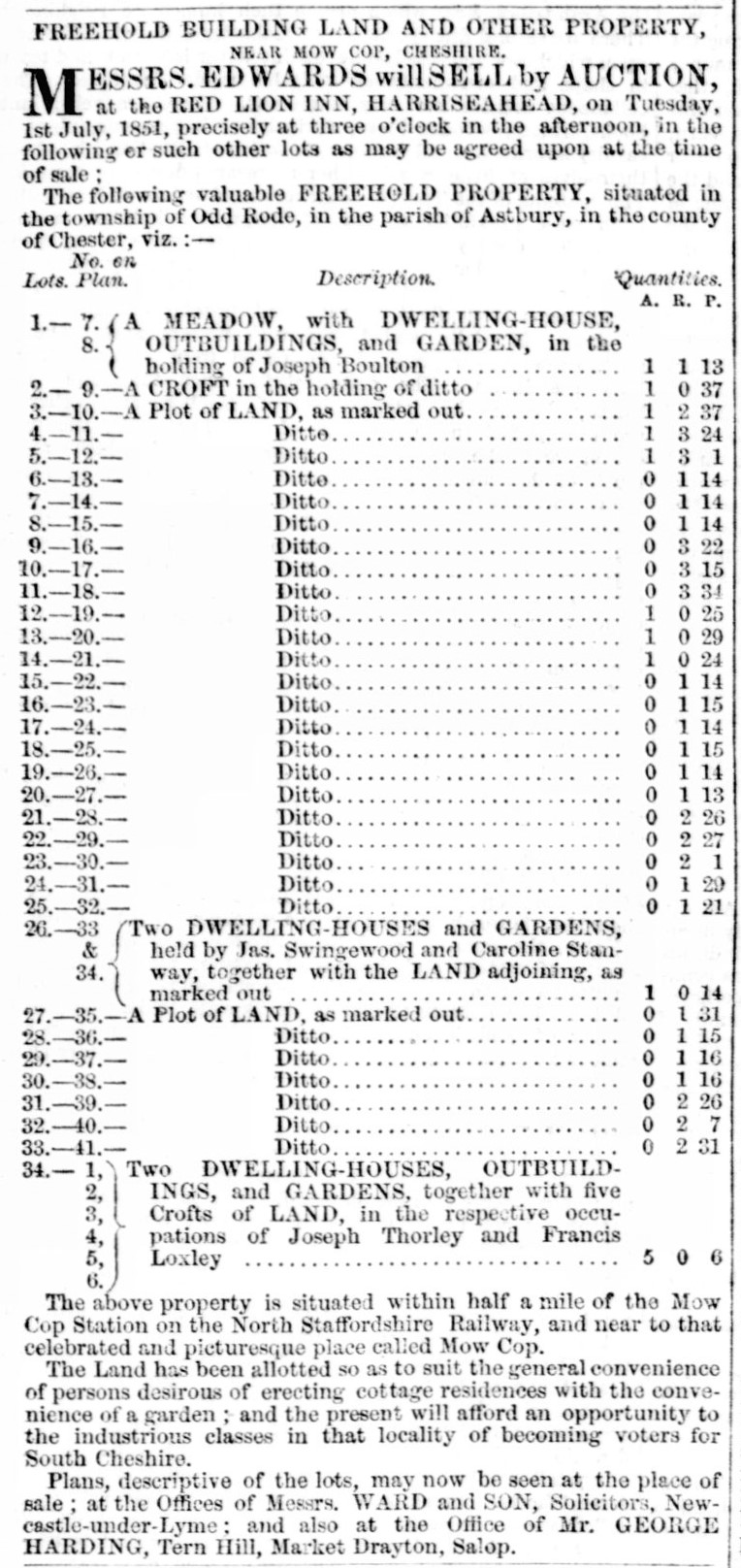
►1851—Mr. Bourne’s Sermon to Children Hugh Bourne’s journal, Sun March 9: ‘class at Mow Cop. Then preached to the children, and came home. But having happened to leave a red handkerchief in the chapel, I returned to Mow Cop, preached on the Pentecost, and got my handkerchief.’ § HB had renewed his close & regular association with MC about the time of the building of the 1841 chapel, & actually became a member of the MC society & class in 1849 § he’s at Harriseahead, Rookery, & Newchapel on Fri March 14th, & continuing his restless visiting locally & further afield for the next year, but March 9 seems to be the last record of him actually on the hill – he ceases keeping his journal in April 1852, & dies Oct 11 (see 1852—Death & Funeral) § for all his extensive writings & publications, HB’s famous sermon to children is preserved uniquely (as far as I know) in Revd John Simpson’s rare & quirky 1859 pamphlet Recollections and Characteristic Anecdotes of the late Rev. Hugh Bourne, taken down by Simpson from the horse’s mouth at some time in the years 1841-48, & printed under the title ‘Mr. Bourne’s Sermon to Children.’ § the text is Matthew 13:43: ‘Then shall the righteous shine forth as the sun in the kingdom of their Father.’ § ‘Now, my childer, this text tells us what we shall be like i’ heaven. And isn’t it grand? The text says we shall be like t’sun: now t’sun shines miles wide at once, I reckon; and if we are to shine like that, that will be a shine. When Moses came down from t’mount, where he had been talking with God, the children of Israel could not bear to look on his face, it shone so; and when the apostle Stephen was before his enemies, his face was as though it had been the face of an angel; so that you may see, from these cases of face-shining, something of what the text means. Now, my childer, you must all aim to get to that grand and happy place; and if you pray to god to bless you, and take you there, for Christ Jesus’ sake, he will bring you all up into heaven – every one. It is no matter where you pray, if you only pray i’ good manner; you can pray side of t’bed, side of t’chair, side of daddy, or side of mammy; it’s no matter where – the Lord can hear all your prayers up i’ heaven – every one. Now, my dear childer, when you get to heaven, you’ll all be clothed with fine robes; (you know what robes are, my childer – they are long garments, trailing on the ground, which kings and queens wear.) And you’ll have a crown on your head, finer and grander than Queen Victoria’s; and when your daddies and mammies see you they’ll scarcely know you. They’ll say – ‘Hay! is yon our Mary or our Tommy? why they look as nice as nice, and as grand as grand!’ And there’s tree o’ life in heaven, and nicer tasted fruit than it grows never was – it’s nicer and sweeter than sugar: and there’s t’river of water of life, too, clear as crystal: nicer and better tasted water never was. And you’ll have no sore eyes, nor aches and pains, nor sickness of any sort there – so that you must all strive to get there. When you get to heaven, my childer, you will, after a while, see this old world burning up, burning up; and you’ll say – “There goes t’old world on which we sinned so much, and suffered so much, and in which old sattin tempted us so much;’ but after all, you’ll say, ‘it sarved our purpose very well; for we heard of Jesus on it, got converted on it, said our prayers on it, and lived to God on it, and got to heaven from off it; so we have no fault to find with it.’ Now, my dear childer, you must n’t miss of heaven; for if you do, you’ll go to t’foul place, and that will never do, never do; nice childer like you must not go there, for old sattin’s there, and foul creatures are there, and bad people, and they skrike and skrike as never was; and it’s as black as black, and as ugly as ugly. You must n’t go there, my childer; and you have’na any need, for the Lord is waiting to bring you all up into heaven – every one. Say your prayers, my childer, look to the Lord, who died for you and rose again, and when you die the Lord will take you to himself. I think I can say no more to you at present, my childer. May God bless you all! Amen, and Amen.’ (John Simpson, Recollections and Characteristic Anecdotes of the late Rev. Hugh Bourne, 1859, pp.15-17) § note the dialect pronunciation of Satan implied by ‘old sattin’ § Simpson notes ‘the pleasure with which old and young always listened to it’, & that preaching to children is ‘his favourite employment’, also giving examples of his concern for their comfort in chapel eg that they get seats by the stove on cold days, & for services not to be tiring or off-putting to them eg through longwinded preaching or praying § his ministry to children dates from the time that he teaches school at Harriseahead chapel in the 1800s § Bourne has several standard sermons that he delivers regularly, inc the one on Pentecost that he gives on MC later the same day, another being ‘his remarkable temperance sermon, based on nine texts’ § his red handkerchief is also famous on the hill, not because of him leaving it in the chapel on this day but because he maintains to the end of his life the odd habit of shading his eyes from the audience when preaching, initially in the 1st formal sermon he ever gave (at Pointon’s Fm in 1801) with his hand but more famously by tying the red handkerchief round his forehead – as in David Oakes’s lines ‘I’ve heard Hugh Bourne preach at Mow Cop, | With a handkerchief round his head’ § xx
►1851—Death of Old Thorley James Thorley (‘Old Thorley’) dies (May 6), aged 68 in spite of his well-established nickname, & is buried at Newchapel (May 11) § one of the main purposes of his will (made 7 years earlier on Feb 17, 1844) is to provide 5s ‘every Lunar Month’ for his aged mother Alice, whom he is obviously supporting, but she d.Sept 1844 aged 88 § his wife is also provided for financially, otherwise everything goes to their only child James (?1807-1868) who lives at Norton, then to grandson James § son James is also executor § William Jamieson & Thorley’s lifelong friend James Hancock make a short inventory of his possessions 3 days after his death (May 9), one of the most recent inventories preserved in the probate archives, the valuation being £41-14s (inc £25 savings) plus real-estate worth £40 (his parents’ property at Harriseahead) § mostly routine household items & furniture, the inventory incs 11 chairs worth 5s [various explanations come to mind, from hospitality or Methodist class meetings to him being a secret chair maker or bottomer, perhaps using materials from the Plantation he’s custodian of; or did he hire them out to visitors to the hilltop?], horse & saddle, ‘Cages’, & a cot valued at £4 (evidently an error for 4s) § he describes himself in the will (archaically as well as inaccurately) as ‘Yeoman’; the 1841 census calls him ‘Labourer’, 1851 ‘Formerly Coal Miner’; in a later document (1863) his son calls him a ‘Wood-ranger’ § looking after Sneyd’s plantations (see 1831/32) is how his role is characterised in the 1850 court case, though presumably as ‘steward’ to squire Sneyd he also collects rent & sees to property repairs § in view of which it’s surprising that he signs the will with a mark § David Oakes’s poem (see c.1870) contains a verse caricature of Thorley lampooning him as an eccentric idler who patrols the summit pretending to be busy & official, buttonholing visitors & chasing children: ‘Old Thorley used to live at Mow, | Upon the rock he stood, | To watch the stranger round the mount, | It did his eyes much good. || He showed the stranger Sandbach town, | He showed him Burslem too. | The stranger asked, “What’s your employ?” | Said he, “I’ve plenty of work to do. || I’m employed by Squire Sneyd, | Build up these walls I add, | And chase the youngsters among these plants, | It’s enough to drive a fellow mad!” ’ [plants refers to young trees] § one assumes these are phrases or sayings actually associated with Thorley § William Jamieson succeeds Thorley as steward of Sneyd, moves (presumably after Thorley’s widow Mary’s death in Sept 1852) to The Cottage (site of Beacon House), a kind of official residence, & also about this time transfers his quarrying operations from Mount Pleasant to the hilltop
►1851—A Bigamous Marriage an innocuous seeming marriage record in Wolstanton marriage register records the marriage of Susannah Whitehurst, spinster, dtr of Ralph Whitehurst, to Abraham Rowley, bachelor, son of William (June 30) § married by banns by Revd xxxxx, he doubtless has no reason to be suspicious of the young couple & their witnesses, including her brother Jonathan Whitehurst, who say they’re living at Knutton Heath (the relatively new & rapidly growing colliery settlement of Silverdale, full of young colliers from who-knows-where) § xxxSusannah Whitehurst (née Harding, wife of Charles who is in prison awaiting transportation) bigamously marries Abraham Rowley at Wolstanton, giving her abode as Knutton Heath [now Silverdale], aided & abetted by her brother Jonathan Harding (witness under the pseudonym Jonathan Whitehurst) § they live at first at Smallthorne (where Abraham has been living as a lodger), moving back to MC c.1854 § xxx § xxxxxxxxx § xxx § the death penalty for bigamy, though rarely applied, is not abolished until xxx § § xx
►1851 the population of England at the census is 16·8 million, about double that in the 1st census 50 years earlier § ??ref to Bank Mill in operation, miller William Ford in census § Knypersley church completed & opened (inaugural service Aug 28) as a private or estate chapel for the Batemans § national school built at Knypersley at the same time § Wesleyan Methodist cemetery opened at Attwood Street, Kidsgrove § The Good Old Way published by PM minister Revd William Garner (1802-1881), the ‘good old way’ (an old Puritan phrase) being the way of ‘the traveller to Zion’ ie to heaven, Garner’s Preface a diatribe against ‘the paganish, fantastic, and picturesque mummeries of old apostate Rome’ [contrary to official PM policy of not speaking against other faiths] § more in the Primitive spirit is Gospel Victories or Missionary Anecdotes of Imprisonments, Labours and Persecutions Endured by Primitive Methodist Preachers between the years 1812 and 1844, compiled by Thomas Church § Hugh Bourne’s last recorded visit to MC (Sun March 9) sees him attending class there in the morning, preaching to the children (his famous sermon to children), going home to Bemersley, but them returning to MC when he realises he’s left his handkerchief in the chapel (his famous red handkerchief), & while he’s there preaching another sermon (his famous sermon on Pentecost) (see above) § Nathan Ball sues Luke Hancock jnr for unpaid maintenance for Luke’s daughter Martha (see 1838), & loses § James Thorley (‘Old Thorley’) dies (May 6; see above) § a week after Thorley’s death his counterpart as custodian of the summit John Stanyer makes his will, ‘being very sick, and weak of body’, tho he doesn’t die until 1853 (qv) – his designation of himself as ‘John Stanyer of Marefoot’ is one of the last uses of the ancient name of the Old Man of Mow § scarlet fever epidemics in spring & then autumn/winter (into 1852), its victims inc Mary Jane Tellwright aged 3 (Sept 3), dtr of William jnr & Mary of Bacon House § William Clowes (the Primitive Methodist) dies at Hull (March 2) & is buried in the town cemetery, in what becomes ‘Primitive Corner’ (his monument with obelisk dates from 1898) § John Washington of Congleton Edge dies § Phoebe Clare, widow of Thomas (1783-1837), dies at Chell Workhouse aged 64 § Ann Yates, wife of William of Limekilns, dies at Arclid Workhouse aged 78 § Ann Harding of Hurdsfield (b.MC 1792, dtr of John & Judith) dies, & is buried at Hurdsfield § Mary Hancock (nee Ford), wife of Samuel, dies of consumption aged 34 § Betty Hancock, Luke & Harriet’s daughter, dies of consumption aged 19 § Mary Mellor (nee Brereton), widow of George who d.1849, obtains administration of his estate supported by William Patrick & his step-son Philip Clarke § she then marries William Patrick, widower § & her dtr Elizabeth Mellor marries his son (her step-brother) James Patrick (Elizabeth d.1854) § William’s nephew David Patrick marries Frances Dabbs at Maer (they live at first at Moxley, nr Wednesbury in the Black Country, moving to Harriseahead in 1856/7 & to Fir Close 1868) § Martha Ford of Bank marries Matthew Thornicroft of Leek parish, farmer § Richard Clare marries Rachael Owen (who d.1856) § James Campbell marries Annice Whitehurst § 2 earliest Welsh Row marriages at St Thomas’s – William Shenton & Anne Hughes, English & Welsh but both of Welsh Row, & Thomas Jones & Sarah Hughes, both Welsh § Eliza Locksley, youngest child of Francis & Martha, marries Abraham Hancock, youngest surviving son of Luke & Harriet § her dtr Mary Locksley born shortly before is presumably Abraham’s § William & Ellen Turner baptise their 3 youngest children at Newchapel, & on the same occasion Ellen’s sister Harriet Clare baptises her illegitimate dtr Tamar (Feb 23; born 1845/6) § Tamar Harding, dtr of Thomas & Amy, born § Elijah Harding, son of Levi & Eliza, born § Matthew Leese, youngest child of Timothy & Margaret, baptised at St Thomas’s Jan 26 (born either Jan 1851 or Dec 1850 – aged 3m in 51 (March 30) census; no GRO fd) § Solomon Mellor born, son of Thomas & Ellen, named after Ellen’s brother Solomon Pointon § George Duckworth born at Ramsdell Lodge (& twin sister Mary who d.1853) § Leah Hackney, dtr of Charles & Lisha, born (see 1850) § Leah Bailey born at Congleton Edge (July 25; later Chaddock & Sherratt; d.1941 aged 89) § Annie Shallcross born (Sept 12; later Hancock & Copeland; d.1941 aged 89) § Charles Whittaker born at Rushton James
►1851-52—Square Chapel Wesleyan Methodist chapel rebuilt in grand style, with day-school on the ground floor & chapel above, opened 1852, John Broscombe builder & mason (from Yorkshire, later of Biddulph), Abraham Kirkham one of the stone masons, James Allman probably one of the building workers § John & Julia Broscombe live nearby during the project (March 30, 1851 census), & baptise daughters Emily (Sept 11, 1851) & Rosina (Dec 11, 1852; see 1886) at St Thomas’s church § the much larger new building is constructed around the existing (1842) chapel & the old chapel then dismantled & removed through the door (as recounted to W. J. Harper) – the rationale presumably that it can continue in use for as long as possible § it seems wasteful to demolish it at all, rather than extend it, though the stonework & style of the new one is entirely different; presumably the materials are reused, one possibility being that the adjacent Chapel House is built of them (it’s not certain whether the house dates from 1842 or 52 – the stonework suits the former while the very notion of having an associated house suits the grander 1852 scheme) § the house is attached at 1 corner, shares an entrance yard, & has to have an unusually tall chimney-stack to clear the taller chapel § it appears as though intended for a custodian or even a minister, though its occupants so far as is known have been ordinary folk § the grand portico from the yard leads into the chapel, the more modest one in the adjacent wall facing the street to the schoolroom below § George Harding (shopkeeper) is the leading figure among MC’s Wesleyans & promoter of the rebuilding (& see 1842, 1852 below) § with its ashlar masonry, distinctive shape, simple symmetry, tall windows spanning both floors, circular central window, chunky grand portico, & pyramidal roof, ‘Square Chapel’ is Mow Cop’s most elegant peice of formal architecture, & also has beautiful interior woodwork § John Walford (1855) speaks of ‘an elegant, newly-erected Wesleyan chapel, which has a very fine and commanding appearance’ § Sir Nikolaus Pevsner unfortunately gets it wrong in both his volumes (1971 & 1974), Cheshire dating it 1862 [= PM chapel] commenting ‘yet still with an ashlar façade in the Georgian tradition’, Staffs adjusting the date to 1865 ‘yet still adhering to the Georgian tradition’ (ie old-fashioned for its time, ‘Georgian’ ends 1830) § after Methodist union both Wesleyan & Primitive chapels continue in use for some decades, when it’s known as Hillside Methodist Church § pupils at the day school on the lower floor (1880s) put their ears to their desks to listen to the coal wagons rumbling through the tunnel immediately beneath § 1966 colour & bw photos showing Square Chapel in The Old Man of Mow pp.2 (frontispiece), 16; photos reproduced in Leese Living pp.66 upper (rear with group), 68, 126 lower, & Leese Working p.124
>copiedfr smwh else>In an extraordinary piece of ostentation (and engineering) the Wesleyan Chapel, built as recently as 1842, was replaced by a much larger building in 1851-52, which was constructed around the existing chapel, and the old chapel then demolished and removed through the door. The initiative and presumably some of the cost came from George Harding, who had been responsible for the first chapel; the builder and stone mason was John Broscombe, a Yorkshireman who lived on Mow Cop during the execution of this project, and later lived in Biddulph. The result, generally known as ‘Square Chapel’ from its distinctly cubic appearance, is undoubtedly Mow Cop’s most elegant peice of formal architecture. The two-storey building provided both a chapel, on the first floor, and a day school on the ground floor, which may have been the true impetus for enlarging the rebuilding<
►1852—Death & Funeral of Hugh Bourne Hugh Bourne dies at Bemersley aged 80 (Oct 11), & is buried by his own wish in the Primitive Methodist burial ground at Englesea Brook, nr Barthomley (Sun Oct 17) § James & Sarah Bourne are later buried with him, & a tomb or monument erected designed by their son-in-law Revd John Walford, who acquires Bourne’s papers from James & writes the official biography (see 1855-56) § the official obituary however is written for the Primitive Methodist Magazine (1853) – which Bourne founded – by Cheshire lay preacher Thomas Bateman (1799-1897) § Bourne’s last words are ‘Old companions! Old companions! My mother!’ § present at his death are Sarah Bourne (James’s wife, herself a revivalist; see 1853) & a maidservant named Jane, who give Walford a detailed account § the revivalist preacher Jane Brassington of Congleton dreams of his death before news of the event reaches her § the long slow journey of his funeral cortege (over 11 miles), lead by Pitts Hill Chapel choir singing ‘funeral hymns’, is watched or followed or partly followed by large numbers (estimated at 20,000 in total), joined at various points by contingents from local chapels or societies (inc ‘a vast multitude’ as it approaches Tunstall) & escorted poignantly by relays of children from the various Sunday Schools en route (Bourne’s preaching to children being a notable part of his ministry, especially perhaps in old age, see 1851) § ‘The friends in vehicles went slowly, and those on foot formed in files that filled the high road from hedge to hedge’ (Staffordshire Advertiser, Oct 23) § having passed through Brindley Ford & Pitts Hill the procession pauses at Tunstall for a funeral oration in the market square by Revd Henry Leech (1808-1881) § the route from Tunstall is via Clay Hills, Red Street, Audley, & presumably Balterley § some follow the whole distance but many, like the children, join for a section & can then say, with 10 year-old William Scarratt, ‘I walked in the mournful procession on Hugh Bourne’s burial day’ § one little boy from Tunstall refuses to turn back, declaring he wants to follow ‘father Bourne’ to the end, & is given a lift on one of the carriages § at Englesea Brook interment is preceded by an open-air service or ‘meeting’ in an adjacent field, addressed by Thomas Bateman, & viewing of the opened coffin in the chapel § latterly with William Clowes accorded the courtesy title ‘The Venerable’ by the PM Church, Bourne is already seen as ‘Chief Founder of the Primitive Methodists’ (tombstone), his own objection to this not being historiographical but because he considers ‘Jesus Christ is the founder’ § Bourne’s literary bent, obsessive self documenting, & sense of historical destiny, along with his longevity, mean that nearly all accounts of the origin of Primitive Methodism are not only derived from him but limited to events that he participated in, & thus excessively biographical & unavoidably biased – since neither Bourne nor Clowes are key speakers at the first camp meeting one wonders how different the story would be if we had accounts from (say) Thomas Cotton of MC, who is the officially appointed preacher that day (a protégé of Bourne), never mind Peter Bradburn from Knutsford who actually opens the proceedings (& is entirely independent of Bourne or the Harriseahead movement)
►1852 a PM chapel already in course of erection at Hull when he dies in 1851, opens under the name Clowes Memorial Chapel (Jan) (see 1878 for that at Burslem) § Hugh Bourne preaches his last sermon at Norton Green (Feb 22) from John 14:21 (according to Walford the same text that had been instrumental in converting him in 1799) § among the last few entries in his journal is ‘Mr. Broad, of Congleton, preached, – wonderful’ (at Brown Edge chapel, Feb 29) § later in the year he dies at Bemersley aged 80 (see above) § Kidsgrove church consecrated by the Bishop of Lichfield (Dec), preparatory to formation of the parish (Jan 1853) § auction sale at the Bleeding Wolf of about 10 acres of freehold building land nr to MC Station § Joseph Hedges of Rookery, schoolmaster, mentioned (where he teaches is unclear) § approx date that Charles & Sarah Yarwood leave Roe Park & the farming profession & move to Tunstall § sale of stock & equipment at Hay Hill Fm for John Tellwright ‘who is declining the farming business’ (Nov) – whether voluntarily or ousted by his older brother William, who moves from Bacon House to Hay Hill, we know not § JT later settles at Nettle Bank, Smallthorne as a colliery clerk § approx date that Robert Williamson supposedly retires from active management in favour of his sons § explosion at Trubshaw Colliery injures 2 men, one of them Charles Baddeley, the cause determined as ‘Baddeley going into the works with a naked candle’ (Dec; he later dies Jan 9, 1853) [exact date of explosion not fd—Jan 14 inquest report says ‘Some few weeks back’!] § John Mould dies, last survivor of the Mould brothers who settled on MC at the beginning of the century § John Ford of Bank (b.1776, uncle of John Ford of Bank) dies (Oct 12) § his will bequeathing everything to the 2 dtrs of William Burn of Shelton (nominally proved Oct 15) is afterwards effectively overturned by his nephew – see 1852-53 below § James Mountford dies, grandson of the 1st Isaac but from whom all the subsequent Mountford clan of MC is descended § James Bailey of Sands Fm dies, & is buried at St Thomas’s with the epitaph ‘Reader like him for death prepare, | A pious man is buried here’ § Noah Chaddock, stone mason, formerly of Congleton Edge, dies at Congleton § Mary Thorley, widow of James, dies, & is buried at Newchapel (Sept 22) § William Jamieson presumably moves into The Cottage § Solomon Oakes of Rookery (originally of Cob Moor) dies § Stephen Harding (son of Jesse & Hannah) killed at Trubshaw Colliery aged 20 § his sister Mary Harding dies two months later of consumption aged 23 § the continuing scarlet fever epidemic claims Eliza Machin aged 14 (illegitimate dtr of Elizabeth), who lives with Thomas & Jane Chaddock of Lane Ends (Biddulph parish) § John & Maria Hall’s son Matthew (alias Matthew Watts Henry) dies of ‘Inflammation of the Chest’ aged 7 (March 8), & later in the year their new baby Eliza dies after a few days (Sept) § Fanny Wilcox, wife of John (of Congleton Edge & later Limekilns, presently living at New Houses under Whitemore Wood), dies of ‘Accouch Ment’ (childbirth) aged 24 § Judith (Judy) Boon dies aged 35, shortly after her illegitimate baby James, the cause in her case given as consumption § her cousin Judith Boon (daughter of William & Hannah) marries Elias Kirkham § Lavinia Harding (illegitimate dtr of Martha & granddaughter of James & Sarah) marries Samuel Barlow § Jonathan Harding marries Sarah Jones § Levi Harding (son of James & Martha of Diamond Cottage) marries Betty Basnett Mottram of Endon, & they live there § William Bosson marries Hannah Maria Bowers at St Paul’s, Burslem (they come to live at Mount Pleasant 1860s; see 1874) § William Moors marries Harriet Fox of Haslington at Barthomley (May 30) § they’re living at Oakhanger Moss when son John Moors is born less than 3 months later (baptised in Sandbach Primitive Methodist circuit Aug 26), & return to Brake Village by 1854 § Samuel Hancock, widower, marries Rachel Church (nee Mayer), widow § Jemima Barlow, dtr of James & Fanny of Rookery, marries Isaiah Oakes at Wolstanton, their address given as ‘Near Mow cop’ § Henry Baddeley of Mount Pleasant, blacksmith, marries Ann Willcox § Mary Anne Rowley of White House End, aged 16 or 17, marries Jonathan Hopkin jnr of Gillow Heath § Anne Henshall of Henshalls Bank marries Samuel Triner, & later in the year her brother Joseph Henshall marries Samuel’s sister Emma, aged 16 § Reuben Yates of Congleton Edge marries his cousin Ann Yates § George Hales marries Sarah Mountford, dtr of James & Judith, at Astbury § John Jeffries marries Mary Ann Bishop in Aston registration district nr Birmingham (Dec 2), co-founders of the MC Jeffries or Jefferies family (see 1861) § George Harding (leading Wesleyan Methodist) & his wife Ann baptise son George (by his previous wife) & new baby Joyce at St Thomas’s § Abraham & Susannah Rowley, living at Smallthorne, have their 1st child Abraham, baptised & buried at Norton (Nov 14 & 23) § Samuel James Maxfield Dale born, named after his maternal grandfather James Maxfield (though he seldom uses the extra names) § Benjamin Lindop born (son of George & Hannah) § Joseph Potts born at Hulme Walfield, illegitimate son of Abigail (founders of the farming family of Limekilns, Brieryhurst, etc) § Hannah Mollart (or later Mollatt) born at Astbury, illegitimate dtr of Ann (seemingly not one of the MC family; see 1878—Mystery)
►1852-53—John Ford’s Will Overturned John Ford of Bank (b.1776, uncle of John Ford of Bank) dies (Oct 12, 1852), & his will (made May 24, 1847) is very quickly proved by executor William Burn (Oct 15) § being unmarried, eccentric, & embittered against his nephew & natural heir, he leaves everything to Mary & Ann Burn, the 2 pretty dtrs of his drinking companion Burn, an innkeeper or beerseller in Congleton & then the Potteries § unlike his nephew Ford isn’t a wealthy man, his only valuable asset is a property in Broad St, Shelton (Hanley) which he’s purchased after receiving a £1000 legacy in/about 1844 [probably from xxx?{sisterEllen made will 43 but d53}], allowing him to retire (he’s been a farm manager at Betchton for his sister Ellen) & live on the rents § rather than contesting the will in the normal way, the nephew John Ford evidently seizes the property & refuses to give possession to Burn, forcing him to initiate legal action & sue for possession, resulting in a queer case where instead of the nephew challenging the bequest Burn as plaintiff has to defend & validate it, which comes to hinge on whether the uncle was drunk or sober when he made the will! § Burn v. Ford is heard at Staffordshire Summer Assizes, Stafford on July 22, 1853 § on conclusion of the presentation of Burn’s case the jury forestalls the presentation of the defence by informing the judge that they’re unanimously of opinion that the uncle was so drunk when he made the will that he didn’t know what he was doing – in other words finding against the plaintiff on the basis of his own evidence, before even hearing the case against him! § the result is a ‘nonsuit’ rather than an outright finding for the defendant ie the judge stops the trial on the grounds that the plaintiff hasn’t made a case, though the outcome is that JF retains the property (proving the adage that possession is nine points of the law) & the pretty girls don’t get it § witnesses called inc MC publican John Wilding who ‘knew the testator well’, his wife Mary Wilding, Mary Patrick, & Ann Johnson § the background is that when they are aged 12 & 13 [c.1845] the old man takes an ‘affectionate’ fancy to the 2 pretty girls, ingratiating himself with them (& their father) by frequently promising to be their benefactor & (after making the will at their house in 1847) frequently alluding to & affirming its terms § he is admitted to be ‘a rather eccentric man’, but the initial portrayal of his relationship with the Burns as cosily familial changes as the evidence goes on & also under cross-examination to one revolving around drink § even so, the jury’s premature decision is baffling since drunk or not it’s clear that in the 5 years since making the will he has regularly confirmed that he stands by its contents & several times declined opportunities to change it, while multiple witnesses confirm that he wasn’t drunk when he signed the will, that when sober he was ‘business like’<ch, & that he has said ‘that his nephew John should never have anything of his’ (John Wilding) & ‘that he considered his nephew John and his wife had not behaved well to him’ (Ann Johnson etc) (Staffordshire Advertiser, July 23, 1853) § the signature on the surviving will is very scruffy & unsteady § in the interests of confusion note that there are 3 John Fords living at Bank at this time, the head of the family & wealthy one being the youngest, the nephew, both the others being his uncles, one by blood (1776-1852, this one) & one by marriage (1769-1855), both eccentric & both fond of pretty girls – for the other see 1855, 1839—Bank Chapel § xx
►c.1853—Hancock’s Shop (10 High Street) approx date of building of 10-12 High St & foundation of the shop at the former, long known as Hancock’s & for over 60 years (c.1900-c.1968) Mow Cop Post Office § the date is that of Hannah Hall, eldest child of John & Maria of nearby School Fm, marrying Joseph Hancock, one of the sons of Luke & Harriet, new homes & new businesses traditionally dating from the time of marriage § (1966 colour photo inc ‘Mow Cop Post Office’ sign, red PO paintwork, & pillar box in The Old Man of Mow p.22) § § in 1861 the property is called ‘Grocers Shop’ but Joseph is still a coal miner, Hannah (as usual with wives) has no occupation, & living with them is her sister Maria Hall aged 10; in 1871 Joseph is now a ‘Grocer’ & living with them as servant is Hannah’s sister Elizabeth aged 23 § clearly Hannah runs the shop, at least at first, & there’s reason to think she’s the one with prior experience in this area & it may have been built & established in collaboration with her father – John Hall lives at School Fm & is a coal miner & farmer throughout, but he’s shopkeeper in 1853 + 55 baptism entries & in 1857 & 1860 directories, while Joseph Hancock’s name doesn’t appear in directories until later (eg 1887) § the Halls play an important (but forgotten) part, along with the Hardings, in the development of this area of the village, another example being the 1st keeper & one of the builders of the Oddfellows John Wilding, whose wife is Mary Hall, John’s sister; Hall’s original shop project is in connection with the Wildings (pubs at this period often have attached grocery shops); the Hancocks meanwhile are only just beginning to take an interest in this part of the village § § xNEWx
►1853—Flesher’s Hymn Book The Primitive Methodist Hymn Book newly compiled by Revd John Flesher (1801-1874) replaces the existing PM hymnal consisting of Hugh Bourne’s 2 collections of 1821 & 1824 bound together, but dissatisfies many for its less revivalistic flavour & exclusion of some older material, inc the grass-roots favourite & original no.1 ‘Christ he sits on Zion’s hill’ & the beautiful ‘My soul is now united, | To Christ the living vine’ § in addition Conference is accused of insufficient consultation of the membership, & Flesher criticised for (among other things) taking liberties in amending existing hymns (eg ‘Camp Meetings with success are crown’d’ becomes ‘Camp Meetings God has richly own’d’) § the hymn book & the squabbles around it are symptomatic of a lay movement in process of being taken over by an educated clergy who think they know best (cf 1862—Superannuation) § ‘Hark! the gospel news is sounding’ is no.214 § no authors are given § 852 hymns, the over-all effect to reduce the distinctive if idiosyncratic ‘Primitiveness’ of its precursors to uninspired mediocrity § ‘the worst edited and most severely mutilated collection of hymns ever published’ (John Julian, Dictionary of Hymnology, 1892) § it nevertheless survives as the official PM hymnal until 1887, &, contents aside, is a compact, attractively bound book, early editions having the dumpy miniature format of its predecessor (when issued as a single vol)+dims+xxx § some of the excluded revivalist & outdoor material is revived in The Primitive Methodist Revival Hymn Book compiled by Revd William Harland, 1861 § xx
►1853—Last Days of William Clare ‘At the Hanley Police Court, on Monday [Jan 10, 1853], an old man named Wm. Clare, was committed to the house of correction [Stafford Prison] for 14 days, for absconding from the Wolstanton and Burslem Union Workhouse [Chell] with some of the parish clothing which he was wearing at the time.’ (Staffordshire Advertiser, Jan 15) § workhouse admissions have their clothes taken from them & are forced to wear workhouse uniform, which has the advantage that prosecutions for running away from the workhouse, common in this period, are routinely upgraded to the serious crime of theft because they have nothing to wear but the clothing that belongs to the ‘parish’, & the only available punishment for which is imprisonment (they cannot be fined as they have no money) – note that the old man’s sentence is more severe than that given to most of the able-bodied riotous drunkards & criminals who abscond in 1842 (qv) (& see 1840—Absconding) § having served his 2 weeks in prison poor William Clare, MC-born former ‘Jack of all Trades’, returns to Chell Workhouse & dies there (+DATExx; age given as 73 but in fact aged 67, b.1786, son of Thomas & Hannah who moved to the Potteries c.1793; see 1851—Census) § in the 1851 census he’s lodging at Hot Lane, Burslem & receiving out-relief, which after being all-but abolished in 1834 is being reintroduced about this time as both the inhumanity & inefficiency of the workhouse system become apparent; presumably either a deterioration in his health or in the attitude of those he’s lodging with (or being booted out altogether) accounts for his going into the workhouse § being unmarried he has no surviving close family, though even among the numerous Clares on MC there are several who end their lives at Chell Workhouse § xx
►1853—John Stanyer of Marefoot John Stanyer dies (Dec 1) aged 66, & is buried at Astbury (Dec 4, ‘Stanley’) § quarryman & sand dealer, Stanyer is one of the chief men in MC village in the 1st half of the 19thC, successor to Ralph Harding as representative of the Wilbrahams & keeper of the key to the Tower, witness in the 1850 court case § a week after the death of his counterpart as custodian of the summit on the Staffs side, James Thorley, in 1851 John Stanyer makes his will, ‘being very sick, and weak of body’, tho he doesn’t die until 1853 § his designation of himself in his will as ‘John Stanyer of Marefoot’ is one of the last uses of the ancient name of the Old Man of Mow – he lives in the cottage built on an ancient quarry refuse mound immediately S of the Old Man (in the same year the 1851 census gives his location/address as ‘Mare Foot’) § it’s possible he built the cottage on settling on the hilltop, perhaps c.1808, having been born at Brownlow, tho he’s directly descended from the Stonehewers who obtained their name in the MC millstone quarries in the 14thC § xxxre variations of namexxx § the short & simple will (made May 15, 1851, proved xxx, 1854) in fact leaves everything to his wife Lydia inc ‘all my lands, messuages and tenements’ (he has a lease for his cottage – see 1864 – & check what he got fr Josephxxx) & at her decease to be sold & the proceeds divided among ‘my Sons and Daughters’ § executor is wife Lydia; witnesses Job Shenton, Samuel Oakes, Henry Austin, all of whom sign § with the will is preserved a contemporary (1853/54) note to the effect that Austin in fact ‘was not present’ as a witness & added his signature later! tho it’s not clear what difference that makes § xxno occupnBUTwh does the listing as yeoman come fr?-?admin.doc § § § § xx
>spellgs of name>Stonier GROd53+?64, Stanley bur53, xxx
►1853—Death of Thomas & James Mellor of Mellors Bank father & son Thomas & James Mellor of Dales Green die within 2 weeks of one another § James Mellor of Dales Green, tailor, dies of consumption aged 42 (Aug 18, buried at Newchapel Aug 21) § he is nursed by his dtr Jane (marries John Hancock 1855, d.1857) § James has lived in Burslem, home of his wife Paulina (m.1831), returning to MC after her death in 1842 § so far as is known he leaves no will § his father Thomas Mellor of Mellors Bank dies suddenly 2 weeks later aged 76 (Aug 31, buried at Newchapel Sept 4) – he is ‘found dead in his garden, having a few minutes previously been seen in his usual state of health’ § he is looked after by unmarried dtr Hannah who lives with him as housekeeper § he is called Collier in his will, Labourer in the 1841 census, & ‘Gentleman’ in the 1851 census; he lives at least partly off the rent from his Dales Green property of Park Fm, living himself in a cottage on MC Rd, immediately adjacent to the property but on common land (ie paying a low rent to Sneyd) § his will (made July 26, proved Sept 24) is made a month earlier & before his son’s death, tho perhaps in anticipation of the son’s death as much as his own ?as it provides ?chiefly for his grandchildrenxx § § xxprovns-of-willxx § § xx
►1853 John Ford of Bank offers for sale ‘the whole of the Machinery in the Bank Steam Mill’ & (separately) advertises Bank Cottage to let § this indicates when his son William Ford leaves & the mill is converted to a flint mill (see 1854, when Joseph Dawson is operating it) – William moves to Burslem where 2 dtrs are born (1854 & 1857) but in the latter year disappears (in subsequent censuses his wife Annie is living comfortably at Waterloo Rd running her own business as wine merchant etc, ‘married’ but with no husband, & in his 1865 will John Ford records that William ‘left home’ in 1857 & has not been heard of since, a later phrase implying that he went abroad – see 1870) § ecclesiastical parish of Kidsgrove formed (Jan), mostly from Wolstanton but inc part of Audley § William Jamieson’s first surviving rent-book for Sneyd properties on MC commences § approx date that James & Mary Booth & children settle at Welsh Row (1851-54), he being shoemaker & saddler inc saddler to Tower Hill Colliery § Revd J. B. Dyson’s A Brief History of the Rise and Progress of Wesleyan Methodism in the Leek Circuit published § xx?morexx § The Primitive Methodist Hymn Book newly compiled by Revd John Flesher replaces the existing PM hymnal consisting of Hugh Bourne’s 2 collections of 1821 & 1824 bound together (see above) § another scarlatina (scarlet fever) epidemic kills 4 infant children of John & Mary Duckworth within days (Oct) – Edwin, Fanny, John, & Mary (aged 2) twin sister of George, who miraculously survives{are they still lvg at RamsdellLodge?1place I say they’re there till PotBnk,but there’s a MCvillBr ref 53=presly d.cert} § several pages of infants & young children constitute St Thomas’s burial register for 1853 – of the 38 entries only 2 are adults, the rest from newborn to 11, whether from this cause or less specific adversity (poverty & ?bad weather?ch for instance enhance endemic diseases like consumption & further weaken the weakest ie the very young) – though in fact the number is not particularly exceptional § xother families affected inc—William & Matilda Thorley’s Alfred (6) & baby Elizabeth (1) /John & Ellen Campbell’s George (reg gives 9 but he’s 11) & Elizabeth (5)/ Patrick[2 girls Sept—probly James&Eliz’s dtrs—Eliz herself d.Jan 3`54@21—tb]xxxxxxxseveral Welsh Row children inc Foulkes[Edwd ‘Fowks’ bur.Feb 22 is ?(1of)1st refs to Foulkes clan, tho not Thos&Eliz’s] ?Jones Williams /Edward & Alice Conway’s Miriam (6m or so, b.shortly after the couple came to WR ?1852)x § xx?Smith Egerton[sevl Eg couples at this date—but Hdg m not noted...]/John & Hannah Cope’s eldest Abel (9, named after John’s father) § John & Maria Hall’s premature penultimate child (of 15) baptised & dies aged 1 day (Nov 23), the baptism entry saying Eliza Jane but registered & buried (Nov 27) as Jane Ann (presumably a change of mind rather than an error, since their next child is called Eliza Jane (1855), though curiously they already have an Ann) § Hall family registrations before 1853 eg Matthew 52 {?Eliza52} are in Brieryhurst, Jane Ann in Odd Rode – mysteriously, as they’re at School Fm all along inc in all the censuses § brother & sister William & Mary Ann Hancock of Limekilns die of consumption aged 22 & 16, & are buried at Astbury on the same day (Sept 27) § Sarah Bourne of Bemersley, wife of James, dies less than 4 months after her brother-in-law Hugh Bourne § a devout Primitive Methodist & former revivalist herself, she dreams of ‘Clowes & Mr. Hugh’ shortly before her death – Clowes greets her warmly ‘and seemed much delighted that I was come’, while Bourne ‘appeared to take very little notice of me’ § John Stanyer of Marefoot dies (Dec 1; see above)xxx § James Mellor, tailor, dies of consumption aged 42 (Aug 18, buried at Newchapel Aug 21; nursed by his dtr Jane, who d.1857) § his father Thomas Mellor of Mellors Bank dies suddenly 2 weeks later aged 76 (Aug 31, buried Sept 4) – he is ‘found dead in his garden, having a few minutes previously been seen in his usual state of health’ (see above) § Ellen Beech (nee Ford) of Betchton dies at Arclid, where she’s been living latterly with her sister Elizabeth Twemlow (March 21) § William Clare dies at Chell Workhouse (+DATExx; age given as 73 but in fact he’s 67 – see above) § William Yates of Congleton Edge & Limekilns dies at Arclid Workhouse aged 76 (buried Congleton Jan 1, 1854) § Charles Baddeley dies aged 45 (Jan 9) as a result of his injuries in the Trubshaw Colliery explosion several weeks before, the inquest blaming him for causing the explosion by ‘going into the works with a naked candle’ § Hannah Oakes of Buckram Row, grocer & widow of William, dies aged 39, of phthisis (tuberculosis/consumption or other wasting disease) supposedly of 12 years duration, attended by her elderly father Thomas Dale § her dtrs Jane Oakes aged 13 & Hannah about 9 go to live with their widowed grandfather Thomas Dale, & spend the rest of their lives on his smallholding (site of brickworks & Porter’s shop) § Samuel Oakes (blacksmith, son of Sampson & Mary) marries Hannah Ford (nee Mollart), widow of James § Samuel Tellwright of Old House Green marries Mary Siddon at Astbury § Joseph Hancock marries Hannah Hall of Halls Close/School Fm, & they start a grocery business (or continue her father’s), building the shop & adjacent cottage at 10 High St (or possibly John Hall builds it – see above) § George Baddeley marries Hannah Taylor (daughter of William & Judith) § Edwin Webb marries Hannah Boon, grandtr of Thomas & Grace Baddeley § their son James Webb born (see 1875, 1922) § Isaac Harding of Hardings Row, widower, marries Ellen Ford alias Holland, illegitimate dtr of Harriet Ford of Bank (dtr of William & Martha) § James Conway marries Ann Hughes, both of Welsh Row § Ellen Yates jnr of Mow Hollow marries Samuel Yates, presumably a cousin, who has previously been living as a farm servant (with John Ford 1841) & lodger (with Thomas Sumner 1851) § Elizabeth Mould (daughter of John & Elizabeth) marries Thomas Knott § Timothy Booth of Moreton marries Mary Mellor (probably dtr of George & Mary), & they live at Harriseahead Lane § Revd John Seed marries Frances Manwaring at Manchester (she d.at MC 1881) § Ralph Proudman & Mary Kirkham (alias Morgan, common-law widow of Joseph Kirkham) have banns read at Biddulph church & live together, at first at Gillow Heath then at Sands, but never marry § their first child Ralph born at Gillow Heath (known as Proudman or Proudmore & as Morgan) § 16 year-old cripple Harriet Pointon has illegitimate son James, who lives for 6 or 7 weeks, cause of death given as ‘Atrophy from being Dry-nursed’ (cert) ie starvation [dry-nursed implies he’s put with a child minder, as babies of young girls often are, though it could perhaps mean that Harriet isn’t capable of breast feeding; she afterwards finds herself in Arclid Workhouse, see 1854, 1861, d.1862] § George Slack Tellwright, son of John & Hannah, born at Hay Hill § Hannah Stubbs born at White Hill (mother of Joseph Lovatt) § Mary Hales born, eldest child of George & Sarah, & baptised at St Thomas’s June 25 (according to 1939 register also b.June 25; later Cope; d.1943 aged 89) § George & Jane Harding of Dales Green Corner baptise dtr Planseeniah (Feb 17, & buried as Plancena 1854), 2nd example & 1st Harding with this unusual name that achieves a slight vogue on the hill (see 1845) § Noah Stanier born at Congleton § David & Sarah Oakes’s son Seth George Oakes born at Congleton, his middle name honouring David’s Methodist hero or mentor George Harding (see c.1870), though whether the uncommon 1st name derives straight from Genesis or refers to the nonconformist role-model Seth Bede in the novel Adam Bede we don’t know § Oliver Pointon born § Alfred Harding born § Dinah Harding, dtr of Thomas & Amy, born § Mary Harding, dtr of William & Alice, born § John Bowker born at Burwardsley, nr Peckforton, youngest of the Bowker brothers who come to MC in the 1860s § Primitive Methodist minister & historian Albert Allen Birchenough born at Congleton (contributor of historical articles to the PM & other magazines, & see 1907)
►1853-56 Crimean War 1853-56, xxxofficially ends March 30 § § § Crimean War / Florence Nightingale (1820-1910) 54-56 / gun ment’d+under JJR1856
►c.1854—Dog Fighting & Fancying local chronicler William Scarratt (1842-1909) writing in 1906 says: ‘Over 50 years ago, when dog fighting was on the decline, there were still many fighting dogs kept. The bull-terriers, or fighting dogs, differed from the present type ...’; ‘... pretty regularly on Mondays a large trap to hold ten or twelve men with their dogs would be seen leaving their rendezvous [in Tunstall], to some quiet and distant parish among the hills, far from policemen, to hold their combat undisturbed.’ § Scarratt, a dog fancier himself, gives a graphic account of a dog fight he witnessed at Newchapel one ‘school dinner time’ [say he’s 12, c.1854] § ‘both dogs were exhausted in several rounds, so that they could only crawl to each other to renew the combat. ... Lines were drawn so far apart ... the decision was to be that whichever dog failed to drag himself past the first line should be considered vanquished, for it was expected that neither combatant would yield to the other. I think the contest continued about one hour, and at the termination the men took up each dog, for they could not walk. I followed, with boyish curiosity, and saw the dogs taken to the Grapes Inn, and in an outhouse each one was then, and there weighed’ [proving it’s a formal fight] (Old Times in the Potteries, pp.xx xx xx) § dog fighting heads the list of Cheshire sports & amusements ‘in our forefathers’ days’ in Egerton Leigh’s verse about ‘Congleton Bear Town’ (Ballads & Legends of Cheshire, 1867 qv) § dog fancying [a fancier is understood as a dog man (or cock fighter, etc) long before it becomes normal to think of pigeons, & ‘the fancy’ the usual 18thC word for the followers of a particular sport] – keeping, breeding, dealing, & deploying (in their various capacities), whether or not their mettle is tested in combat – is deeply ingrained in the ordinary life/culture of Staffordshire working men, & dog ownership extremely common & extremely demotic – the Chester Chronicle in 1834 points out the irony that ‘all the vagabonds in the town, and many persons receiving parochial relief ... have their bull terriers and fighting dogs’ § as well as traditional working dogs such as sheepdogs, the local working man’s favourite dogs are the terrier for ratting, rabbitting etc, the whippet for racing & also rabitting, & the ordinary bulldog or Staffordshire Bull Terrier for fighting § the native Staffordshire Bull Terrier or ‘Staffy’ is the pre-eminent dog for fighting & baiting, & also useful for rabbiting etc, established by at least 1817 when it’s introduced to the USA (becoming breed ancestor of the American Pit Bull Terrier) § smallish but enormously strong, the Staffy is noted above all for its courage & tenacity, qualities that count above ferocity & aggression in dog fighting § ‘Possibly two breeds of dog would cover the choice of the large majority [of colliers] ... “rappit” dogs and bull terriers predominate. “Rappit-dog” includes greyhounds and whippets and, to a lesser degree, the lurcher. For some unaccountable reason the bull terriers were white. Brindles were not favoured as a general rule.’ (Ernald James, Unforgettable Countryfolk, 1947) § xxx § there is also a tradition – conceivably of the ‘urban myth’ type – of man/dog fights in Staffs § the 1835 act (qv) outlaws cruelty, so baiting with dogs becomes illegal but dog fighting only indirectly so – the new police forces clamp down on it but the charge is cruelty by encouraging dogs to fight or similar, encountered frequently from this time eg Samuel Colclough & William Brockley ‘convicted under the Act for preventing cruelty to animals ... for having encouraged a dog-fight in one of the streets of Tunstall’ (1836), ‘a man named Rowley, charged with cruelty for encouraging dogs to fight at Kidsgrove’ (1852), 2 men ‘inciting two dogs to fight’ nr Silverdale (1867) – driving dog fights underground (as per Scarratt) & some believe actually increasing their practice § MC is never as famous for its dogs as for its donkeys, though there are few informative refs to either – not surprisingly Scarratt’s is one of the few fight accounts, no explicit record of a dog fight on MC has been found § though there are other reports of fights at Newchapel, eg 1872 when several men are prosecuted for ‘encouraging’ 2 dogs to fight § § with the decline of fighting & poaching, pigeons & whippets become the working man’s typical sporting animals § MC dog fanciers who have entered the historical record include the deaf-&-dumb dog dealer Richard Colclough (1846-1920) – ‘He had always been passionately attached to dogs, and had kept dogs for 45 years’ [ie since c.1871] (Staffordshire Sentinel, Oct 6, 1916; & see 1881, 1886, 1916) – & prize-winning breeder Joseph Mould (see 1911) § an early 20thC posed photo of a suspicious-looking group of MC men with a sturdy white Staffs bull terrier is reproduced in Leese Working p.64 upper
►c.1854—Hardings Row Pump approx date that Sampson Oakes of Pump Fm, Isaac Harding of Hardings Row (son of the builder of the row Samuel), & his cousin William Harding of 24 Hardings Row sink the deep well & install the famous Hardings Row pump to supply water for Pump Farm, The Views, & Hardings Row § the pump is situated in the NE corner of the field behind The Views (tenanted by Isaac Harding), opposite the double-fronted end house of Hardings Row (also Isaac’s), & generally known as Hardings Row Pump or sometimes Harding’s Well § it’s increasingly resorted to from further afield as population & building increases & natural water supply diminishes, becoming one of the village’s best-known water sources § the well & pump are later taken over by the local authority (Wolstanton sanitary authority) as the basis of the 1st public (piped) water supply in the area (see 1877-79) & precursor of the nearby MC Waterworks of 1909 § the pump’s transfer to the local authority leads to reduced & slower supply to the public from the pump & later tap, & to a protracted dispute in the early 20thC arising partly from the reduced supply at the pump & partly from the successor authority (Kidsgrove Urban District Council) renaging on the understanding that the original proprietors & their successors are entitled to free water from this source, the council’s policy being to encourage all houses to connect to the water main & pay a water rate (see 1909-10, ?1911, 1922, 1924, 1929) § xx
►1854—Railway Inn Railway Inn (Cheshire View) built & opened, Mow Cop’s 2nd purpose-built pub, Samuel Mould (1800-1873) the original keeper, followed by his son Aaron Mould (1829-1878) (?1854/55, see 1854, 1858){Aaron m54, kpr by May58, but Saml in 57 dir, 54 ref xxxxx [+note 54 sale]} § also presumed date of formation of the lodge of the Ancient Order of Foresters there (see 1834, 1860, 1863) § 1860 directory states that the lodge of the Ancient Order of Foresters held at ‘the Railway Inn, Mowcop’ has about 50 members § listing in the 1857 PO directory of both Samuel Mole [an error for either Mould or Ball] & Samuel Mould as beersellers confirms Aaron’s father Samuel Mould (1800-1873) is actually 1st keeper § Moulds don’t appear on the early electoral registers after the sale of Fir Close (see 1851), so it’s not apparent who the owner of this plot is; James Booth of Church Lawton, a builder, father of the later keeper of the Railway Inn John Booth, is a purchaser at the Fir Close sale (either 1851 or 54) & listed for freehold house & land in the 1854 electoral register, though when John appears on the register in 1868 he’s a tenant rather than a freeholder – even so it’s an intriguing possibility that the pub may have been built by the Booth family firm; a stronger possibility is Robert Heathcote, who buys the adjacent Lion Cottage smallholding & also (presumably) the quarries which form the rest of the steep slope S of Station Bank (ie along Halls Rd), & perhaps more § as well as a varied career he has several links with the inn-keeping business – his brother William keeps the Church House, Biddulph; he’s party to the sale of a pub elsewhere xxplace+datexx; & his wife has been keeper of the Horse Shoe, Newbold, he joining her in this business on marriage § owner in 1891 is James Lucas of Church Lawton {??conn’n to Booths}, but the sale of Fir Close property inc Close Fm (Close Lane) in 1872, conducted at the Railway Inn, is almost certainly Heathcote § xxx § the building is of unusual design, one of its two wings being 3 storeys (like the Oddfellows), with overhanging eaves, unusual stone chimneys, & partly rusticated stonework; though nothing is known of its designer or builder § its situation on the newly created 1-in-3 gradient Station Bank (representing the scarp formed by the Mow Cop fault) is clearly chosen for deliberate effect, & has required some levelling work to create the ledge – perhaps a former quarry § the stone has been quarried if not on the site at least nearby, again favouring quarry owner Robert Heathcote as originator § xxx § Aaron & Hannah Mould leave in 1860/61 & establish the Church House Inn (more of a rough beerhouse) § subsequent keepers are John Poole, Samuel Ball, & from 1868 John Booth (d.1889) continued by his wife & dtrs (to c.1900); John Murray & Thomas P. Robson, both geordies, are keepers in 1901/03 & 1911 respectively, Henry Turner (of the family who later keep the Robin Hood) in 1906/07 between, in 1913 Peter Johnson (‘the Cosiest Hotel in Cheshire’), George William Chadwick (1877-1932) by 1925, continued by his widow Ada who is licensee in 1939 § the name is changed to the Cheshire View Inn in 1955 when Bert Birchall is landlord § photos reproduced in Leese Working pp.100 lower, 114 upper § xx
►1854—Ancient Order of Foresters approx/probable date of formation of the MC lodge of the Ancient Order of Foresters, known as ‘Court Man of Mow’, based at the newly-built Railway Inn (see above) § (Foresters have courts rather than lodges, supposedly referring to medieval forest administration, tho in more modern times they’ve adopted the term ‘branches’) § 1860 directory states that a lodge of the Ancient Order of Foresters, consisting of about 50 members, is held at ‘the Railway Inn, Mowcop’ § § later the Foresters move to the Ash Inn (Dec 1863) & then to the Primitive Methodist schoolroom (Feb 1869) after a dispute with landlord Daniel Oakes when he raises the rent, & impounds their regalia when they refuse to pay § the trend at 1st is to conform to the medieval tradition of affiliation to pubs, most of which have club or meeting rooms, but later to prefer chapels – whether from an increase in sobriety or in available chapels, which are fewer & smaller in the middle of the century; by the time the Shepherds lodge is formed in 1879 it meets at MP chapel from the outset § § the Royal Ancient Order of Foresters was founded in Yorkshire about 1790, & the Ancient Order to which the MC ‘court’ belongs formed at Rochdale in 1834, when most of the membership seceded from the Royal Order § it participates in the amalgamation for certain purposes of 1894 § (see above & 1834, 1860, 1863, 1866, 1869, 1894) § § xx
►1854 Revd John Davison’s The Life of the Venerable William Clowes published (on Davison see 1844; for Garner’s biography based on this see 1868) § xx?morexx § Staffordshire Sentinel newspaper founded (weekly until 1873) § with the opening of a private (ie fee-paying) asylum nr Stafford, Stafford Lunatic Asylum (& subsequently Burntwood & Cheddleton) accommodates ‘pauper lunatics’ § Hanley Deep Pit opens, at c.1500 feet the deepest coal mine on the N Staffs Coalfield (closes 1962, its site later Hanley Forest Park) § Robert Heath leaves Kidsgrove & becomes partner of Francis Stanier at Silverdale Colliery & ironworks (to 1856 when Stanier dies) § 7-9 Primitive St built, among the early cottages built since the sale of Fir Close (see 1851) § John Cope & family from Hardings Row are first tenants of no.9, & thus a founding family of Fir Close § approx date that Sampson Oakes of Pump Fm, Isaac Harding of Hardings Row (son of the builder of the row Samuel), & his cousin William Harding of 24 Hardings Row sink the deep well & install the famous Hardings Row pump to supply water for Pump Farm, The Views, & Hardings Row (see above) § ?probably therefore approx date (following completion of Square Chapel) that Isaac Harding builds The Views, next to the chapel which has been built partly on the edge of his meadow (but his location in 61 is his father’s house at the E end of Harding’s Row; he d.1867)xxmorexx § auction sale of ‘Leasehold Houses, near Mow’ held ‘at the house of Mr. John Wilding, known as the Odd Fellows Arms’ [houses & seller not known] § Mow Cop Brass Band leads the annual Oddfellows procession (July 25), their ‘anniversary’ meeting noting an unusually good year for recruitment, 40 ‘young members’ having been enrolled § sale of farm stock, implements, etc of John Cooper, leaving Lodge Farm, who must have followed the Yarwoods c.1852 § vicar of Biddulph Revd William Henry Holt (1804-1878) pays £15 a year rent for the Parish Stone Quarry on MC § unusually for a vicar Holt is also an industrialist who owns textile mills & quarries (in Biddulph parish), the Hurst & MC sand quarries remaining in his family until 1915 § Joseph Dawson, flint grinder, mentioned in St Thomas’s parish register (1854-57), evidently operating the newly-converted mill at Bank § James Harding fined for selling beer after hours & being abusive to the officer (July; not his first offence – he is regularly charged with similar matters; for his Christmas celebrations & prosecutions see 1854-55 below) § readers of the Staffordshire Advertiser (‘Isaac Harding will not be answerable for any Debt or Debts that his Wife, Ellen Harding, may contract after this notice’) may suspect that all is not well in the recent marriage at Hardings Row, in spite of new baby Edward James § James Beech of Sandyford, pottery manufacturer & owner of Mow House, dies at Spot Acre, Stone & his buried at Tunstall § his MC property isn’t mentioned in his will, but in 1856 Mow House is stated to belong to the Williamsons, who have evidently purchased it § Mary Lawton of Dales Green dies § Samuel Oakes of Oakes’s Bank dies § William Hughes dies (of the native Hugheses), his age given as 97 though he is 74 or 75 § William Booth dies at Biddulph Moor (Dec 2) § Elizabeth Twemlow (nee Ford) of Arclid dies § Thomas Hamlett killed at Trubshaw Colliery aged about 52 (Nov 17) § Francis Locksley jnr killed in an explosion at Trubshaw Colliery aged 35 (March 16) § Abraham Ledsom(e) or Ledsham, shoemaker, dies of asthma & pneumonia aged 38 (Dec 18), & is buried at St Thomas’s on Christmas Eve § Mary Burgess of Close Fm, Drumber Lane dies § Martha Blanton of Limekilns dies of ‘menorrhagia’ (menstrual haemorrhage), the death certificate giving her age as 45 § Jane Harding (nee Hancock), wife of George of Dales Green Corner, dies of haemorrhageQUO? (probably connected with miscarriage) aged 40 (Dec 31; buried Jan 3, 1855) § Judith Kirkham (nee Boon) dies following childbirth aged 30 (baby Sarah survives but dies in 1859) § local smallpox epidemic in the 1st 3 months of the year, its victims inc Esther dtr of George & Sarah Snape aged 17 months (Jan 14), xxxxx § Martha Clare & her husband Elijah die of cholera exactly a week apart (Sept 20 & 27; at Chell, though not at the workhouse) § their children are dispersed, some going to Chell Workhouse, the eldest Emma spending the rest of her life there (see 1861, 1881, 1885) § during an outbreak in London contaminated water is shown to be the cause or source of cholera § Jane Wright of Mount Pleasant, wife of Henry, dies aged 34 § Elizabeth Patrick (nee Mellor), 1st wife of James, dies of phthisis pulmonalis (tuberculosis) aged 21 (Jan 3) § Hannah Pointon (nee Stanyer), wife of Thomas, dies of phthisis (either tuberculosis or more likely, in view of her lifelong work as a sand punner & carrier, silicosis, as yet medically indistinguishable) aged 37 (death cert gives her age as 48, reported by Jane Mountford [unidentified]) § her daughter Harriet Pointon, a cripple, aged 17 or 18[bapAug`36, checkCert for date of Han’s d], goes to Arclid Workhouse (& dies there 1862) § Hannah’s widower Thomas Pointon marries Sarah Henshall, widow, his 3rd wife (Nov 25) § Thomas Mellor of Dales Green (later of The Views, aged about 18) marries Ann Hall of Halls Close/School Fm at Macclesfield, probably an elopement § Thomas Charles Clare of Biddulph Rd marries Elizabeth Leigh Cottrell of Biddulph § Harriet Hancock jnr marries Hugh Lionel Woolliscroft § William Jamieson marries school mistress Mary Elizabeth Beresford & his youngest sister Jane Jamieson marries Samuel Hulme (1830-1878, son of Jonathan & Ann) in a double wedding at St Thomas’s (Nov 20) § the Hulmes live at Mount Pleasant, & move to Congleton in the 1860s, in both places he’s a publican [not to be confused with Samuel & Jane Hulme of Harriseahead] § unusually the new Mrs Jamieson doesn’t resign her post on marriage, not leaving until nearly 10 months later (her leaving party Sept 18, 1855), by which time she’s heavily pregnant § Paul Barlow marries Anne Whitehurst & her brother Charles Whitehurst jnr (son of Charles & Rebecca) marries Ann Hancock in a double wedding at Wolstanton (June 10) § Aaron Mould marries Hannah Brereton at Astbury (Aug 19), his occupation as yet collier though soon they take over the Railway Inn from his father Samuel § Thomas Ford of Fords Lane marries Ann Durber, widow of John of Harriseahead (d.1853), & they continue his business as innkeeper or beerseller, moving the name Nag’s Head from the Royal Oak to the familiar Nag’s Head (hitherto the New Inn) nr the top of Chapel Lane § Ann is already married to TF & called a grocer when she proves her husband’s will § George Harding (son of William & Sarah) marries Emma Mollart at Newchapel (+date; she dies 1858, see 1858—Farewell Dear Emma) § Emma Boden, youngest child of Joseph & Mary, marries William Conway, son of John & Elizabeth of Welsh Row § John Shenton of Welsh Row marries Frances Cartwright of Congleton § Joseph Redfern (snr) marries Julia Podmore at Keele (see 1856) § George Turner of Drumber Lane marries Elizabeth Fryer (‘Freyer’ in marriage reg, representing the dialect pronunciation), & they live at Mount Pleasant until moving back to the Globe Inn § Henry Longshaw, of an old White Hill family, marries Jane Bosson of Trubshaw, & they live at Cob Moor (moving to Red Hall c.1878, & latterly to Longshaws Bank) § Robert Williamson (III) of Ramsdell Hall marries 17 year-old Maria Edwards of Lostock Gralam (she dies 1862) § Thomas Dale, aged 18 (8 years her junior), marries Emma Moores or Moors at Astbury (Dec 12; the marriage reg/cert gives her name as Morris, though her sister Hannah as witness is given correctly as Moores), & they live at Brake Village, where Emma’s parents Joseph & Mary have settled in the 1840s (founders of the Moors family of Bank) § Thomas is one of the Odd Rode/Smallwood Dales rather than their distant cousins of Dales Green § their son William is born before they marry & baptised at St Thomas’s shortly after as William Moors (GRO Moores) (Dec 17), but subsequently always known as William Dale (later the well-known MC grocer of Top Station Rd) § his future wife Emily Triner born, dtr of Samuel & Anne of Henshalls Bank (d.1949 aged 94) § Eli Harding, son of Levi & Eliza, born § Joseph Kirkham, son of Abraham & Lettice, born § Hannah Elizabeth Pointon (generally known as Hannah), dtr of Joel & Lydia, born at Fir Close (Dec 16; registered Jan 27, 1855, baptised St Thomas’s Nov 12, 1856; see 1869, 1870) § Hannah Longton (later Colclough), illegitimate dtr of Charlotte, born § Jacob Conway born at Welsh Row § George Booth (later of Top Station Rd), son of Timothy & Mary, born § James Paul Cottrell (school teacher) born at Gillow Heath § twins William & Mary Lawton (school teachers) born at Hall Green, shortly before their parents William & Mary move to MC as keepers of the Oddfellows Arms
►1854-55—Celebration Of Christmas At Mow Cop And Harriseahead about 10.30 pm on Christmas Eve Jane Thomas of Clarke’s Bank knocks at the vicargae door to fetch Revd J. J. Robinson to stop a fight involving her husband outside Harding’s beerhouse, where the combatants are watched & egged on by a large drunken crowd § he ‘quelled the disturbance with some difficulty’ § Robert Thomas & Thomas Lawler are charged with drunken fighting (bound over to keep the peace – the usual punishment for fighting) § Lawler is a regular brawler, subsequently imprisoned several times for serious crimes (ironically he is the son of the (late) police constable of Harriseahead) § the occasion suggests an impromptu drunken fight (or anyway part of the usual pattern of recreational fighting outside pubs characteristic of MC), though the character of the participants & large audience might lend itself to a more formal locally-arranged ‘prize fight’ (cf 1857) § beerseller James Harding is charged with permitting drunkenness, staying open late, & using threatening language to Jane Thomas – he ‘had threatened to “fall her clock,” or in other words, to knock her down’ § last charge dismissed, middle one withdrawn, but a hefty fine for the first (£5 plus costs = £6-11s), partly because it’s not his first offence indeed it’s his 3rd ; see 1854) § one of his defence witnesses swearing there was no drunkennes is identified by Jane Thomas as one of the drunken crown § when these events of Christmas Eve, along with ‘a drunken squabble’ at Harriseahead the following day involving Thomas Lawler, Samuel Kent & John Hughes, come to Tunstall magistrates court the Staffordshire Advertiser reports that ‘The magistrates ... were occupied a considerable time on Tuesday [Jan 9, 1855], in hearing cases arising out of the celebration of Christmas amongst a certain class at Mow Cop and Harriseahead’ § unusually Revd J. J. Robinson is called as a witness
►c.1855—Mow Cop Post Office approx date of opening of Mow Cop Post Office, Nehemiah Harding (1830-1904) first postmaster, & thus of his newly built grocer’s shop at Top Station Road (later Dale’s) § he or his family (father James, shopkeeper uncle George) have presumably purchased a plot in the 1851 or 54 Fir Close sales – Nehemiah’s name doesn’t appear on the electoral register until 1870, but James & 2 Georges appear in 1854 [the 1st register reflecting new Fir Close freeholders] § the PO’s 1st directory appearance is 1857 § Nehemiah is doubtless assisted in setting up his business by his uncle George Harding, founder of one of the 1st shops in MC village (later Sidebotham’s), to which another nephew William (an older brother of Nehemiah) succeeds (while oldest brother James became postmaster of Newchapel); it’s surprising the original post office isn’t at George’s shop, being in a more central position; its location is also a vote of confidence for the future of the developing Fir Close part of the village, albeit not terribly convenient for villagers in (say) the Mow Cop Rd area § Nehemiah Harding doesn’t appear on the electoral register until 1870, for ‘freehold house and shop’, so since he’s at this location in 1861 it’s previously belonged to someone else – his father James may be the James Harding who appears on the electoral roll in 1854 as owner of ‘freehold houses’ § § in 1860 letters arrive at Nehemiah Harding’s house from Stoke at 9 am (he is responsible for having them delivered) & letters posted at Mow Cop are dispatched to Stoke at 5 pm; by 1890 the routine is that letters arrive at 8.30 am, the wall box is emptied at 4.30 pm, & letters are sent on to Stoke at 5.10 pm (12 noon on Sundays) § a wall post-box is installed at Mount Pleasant in 1874, probably the 1st § other wall post-boxes are installed around Mow Cop c.1890, several of which, bearing the royal monogram VR, still survive § the post office becomes a Money Order Office 1874, a Savings Bank c.1880 § (the telegraph office is at the railway station) § >Directory descrns & trades: Nehemiah Harding first appears in directories in 1857 as Shopkeeper & Postmaster, and thereafter regularly until 1890, including in 1860 as Grocer & Provisions Dealer, the usual designation for a general village shop, and in 1864 (et seq) as Grocer & Postmaster; a wider range of services is indicated by his 1887 listing as ‘grocer, baker, provision dealer, and postmaster, The Post-office’ (baking is often done at small grocer’s shops at this period, & not infrequently other kinds of ‘provisions’ provided like drapery, hardware, & oil (for lamps)) § xxhe also sells tobacco & is a specialist supplier of/dealer in horse and cattle medicines and oilsxx § NH marries his uncle George’s step-dtr Jane Lindop in 1859, & their dtrs later assist in the shop, esp Adeline Ann (b.1870) § NH is postmaster for about 36 years, until 1891/92, when he retires & moves to Endon (see 1891/92, & for his tragic death see 1904) § subsequent postmasters/mistresses are Edwin Hancock at White House, Primitive St (1892 to c.1900) & from c.1900 Sarah Hancock at 10 High St, where the PO remains until c.1968 § xx
►c.1855 approx date of building & opening of Mow Cop Post Office, Nehemiah Harding first postmaster, & thus of his grocer’s shop at Top Station Road (later Dale’s), its 1st directory appearnce is 1857 (see above) § both post office & pub (the Railway Inn (Cheshire View) see 1854) are built as part of the development of Fir Close (see 1851, 54, 61, 72), providing amenities for an expanding village, & are also responses to the opening of the railway station (1849) & the expectation of increased numbers of visitors climbing the hill by Drumber Lane/Station Rd § approx date of building of Bank House, Mill Lane (‘Bank Villa’ in 1861 census, ‘Bank House, Mow Cop’ in 1857 advert & JF’s 1865 will) by John Ford, who lives there & lets Bank Farm to a tenant § approx date of last cottages built on Rock Side, such as no.23 [??why 55 rather than 45or50?/not on c.40 tithe-map/indiv hss unidentifiable in 51 census but...] § approx date of transfer of Astbury lime works from Hugh Henshall Williamson to William Minshull, its former manager (??or earlier – see 1848) § its period of prosperity is over & Minshull doesn’t appear to do very well out of it § approx date of William & Mary Lawton taking over the Oddfellows Arms from founding keepers John & Mary Wilding, who emigrate to Canada [the Lawton twins William & Mary are b.Hall Green early 1854, but the family is at the Oddfellows by 1857 directory] § approx date of Robert Heathcote’s move to Lion Cottage (??or earlier 51-54) § approx date of William Sidebotham snr, carpenter (from Glossop), & his wife Hannah Maria (nee Shallcross) settling on MC (see 1819, 1848, 1857) § approx date of Thomas & Elizabeth Foulkes & family coming to Welsh Row, & his brothers John & Robert (between 2nd quarter 53 & May 55) § approx date of Joseph & Julia Clarke & family (Methodist blacksmiths from Tunstall) coming to Mount Pleasant § 1855 is also the approx date that Enoch Bennett (1843-1902) & two friends walk from Burslem to Mow Cop to buy a donkey, as recorded later by his son (Enoch) Arnold Bennett (1867-1931) – donkey breeding being another of MC’s claims to fame, a by-product of the sand carrying industry that links the 2 places
►1855—Rookery Chapel Rookery Wesleyan Methodist chapel built, on land given by Charles Lawton (1809-1893), its other leading promoter being his half-brother Joseph Baddeley of Rookery (1794-1870), who in the great Methodist tradition has been holding meetings in his kitchen § they are both sons of Elizabeth Baddeley of Harriseahead (1773-1860) & nephews of Hannah Shubotham – hence Rookery is in a sense a daughter society of that formed by Daniel Shubotham & Hugh Bourne in Jan 1801 at the beginning of the Harriseahead Revivals § others involved at Rookery inc young enthusiasts William Stubbs (1838-1905), later choir master, & his future wife Thirza Lawton (1841-1883; only surviving child of Charles & Mary), recorded at her death as a devoted Methodist from the age of 14 ie this year! § this William Stubbs, incidentally, is Hannah Stubbs’s brother – the uncle-to-be of Joseph Lovatt § equally in the old tradition, they begin work on the chapel before it is sanctioned by the circuit – this local enthusiasm being the point of the anecdote preserved by W. J. Harper: ‘William Stubbs ... came down the lane, spade in hand, when a friend saw him and remarked – ‘Tha’rt ’a’ to be sharp, Will, or thou’rt be too late’ and sure enough when he got down to the chapel site there were so many busy digging that he could find no room to help’ § a day & Sunday school extension is built in 1863-64, but it’s not clear whether a day school is conducted before that; & a further extension 1872 § as well as representing the religious leanings of some of the village’s founders & founding families, a chapel of its own is a symbolic milestone in the identity of the new village of Rookery, & presumably influences the desire for a chapel at Mount Pleasant (see 1856)
►1855—James Mellor of Dukes Farm James Mellor of Dukes Fm, Dales Green, coal bailiff [manager] at Clough Hall Collieries, dies (Jan 27) aged 69, & is buried at Newchapel (Feb 1) § his gravestone at Newchapel, presumably donated by or on behalf of his employer, reads: ‘He was much respected by his Employer Thomas Kinnersly Esquire, For the integrity of his character and for the zeal and faithfullness with which during a period of 47 years he discharged his duties as Bailiff of the Clough Hall Collieries’ § a death notice in the Staffordshire Advertiser says similarly ‘a faithful and valued servant of Thos. Kinnersley, Esq, of Clough Hall Colliery, for 47 years’ § (the gravestone appears to say he d.Jan 25, but the will is dated Jan 26, & newspaper death notice & probate administration document both say 27th) § Thomas Kinnersley himself dies 10 days later (Feb 4) § a liketime connection with the Kinnersleys goes back to TK snr being owner of Dukes Fm when Marmaduke & Sarah & children inc baby James settling there c.1786 (TK sells it 1801, MM subsequently buys it) § as well as Dukes Fm, adjacent house, & James Ratcliff’s farm at Dales Green he owns a large property in Wedgwood township in the Pack Moor/Lane Ends area consisting of 5 farms, all of which, being unmarried, he distributes among his fairly numerous neices & nephews (21 I count, plus 4 great neices & nephews) [unmarried brother William Mellor & great-nephew Levi Wright aren’t mentioned] § transfer of these properties presumably kick-starts development of the new village of Pack Moor, a handful of houses with no separate identity in 1851 (several inhabited by MC families), over 20 inc side-streets by 61 & xxx in 71 (see ??1861) § he describes himself in his will (made Jan 26, proved March 19) as ‘James Mellor of Alderhay Lane in the liberty of Brerehurst ... Colliery Bailiff’ § all his moveable goods (value under £200) go with his house (Dukes Fm) to unmarried neice Hannah Mellor for life & then to nephews the Taylor brothers § 2 of the farms in Wedgwood go to sisters Jane Lawton & Sarah Ford for life & then to nephews the Lawton brothers & Martin Ford § the latter bequest is charged with paying an ‘Annuity’ of 5s weekly [sic] to great-neices Jane Hancock & Paulina Mellor § see also 1826—Marmaduke Mellor’s Will § xx
>TA>in the 1840/41 tithe apportionment the Dukes Fm hamlet belongs to James Mellor & consists of 3 residences – of JM, William Smith, farmer, & Thomas Hargreaves, farmer, at adjacent Blue Pot Fm
►1855 legislation allowing trade unions to register as friendly societies, a significant step in their normalisation § fall of Sebastopol (Sept 8-9) after an 11-month siege – the beginning of the end of the Crimean War – is widely celebrated throughout the country § Congleton & Macclesfield Mercury newspaper founded (later merged with the Congleton Chronicle, founded 1893) § Thomas Harding ‘alias Clogger’ fined £5 or 1 month’s imprisonment at Knutsford for a ‘very aggravated’ assault on Bridget Owen of Congleton (presumably Thomas (1836/7-1881) son of James the clogger)<NBprobly a dom vio/wf or mistress btg—[no Bridget Owen appears in Congleton in the 1851 or 61 census, tho she may be one of those at Stockport or Manchester in 51, both Irish]+more detls< § the Williamson Arms Lodge of Oddfellows starts its annual celebration at Ramsdell Hall, where it receives a new banner, the gift of Miss [Mary] Williamson, & then parades with it to MC church § John Baxter, ‘a notorious poacher’ on Ackers land, emerges from Knutsford prison after the latest of ‘about a dozen’ convictions, only to get caught again & return for another 3 months (cf 1845, 1857) § Enoch Hancock serves 1 month in prison for stealing coal from Stonetrough Colliery § James Mountford jnr assaulted by Thomas Harding of Tunstall, shoemaker [?b.1834 son of Elijah] § Mary Brereton (presumably snr b.1811) accuses Sarah Pointon (Thomas’s wife) of assault in Burslem magistrates court – continuing the tradition of squabbling between the neighbouring sand quarrying families (eg 1848, & cf 1863) § Thomas Chaddock of Congleton charged with ‘malicious trespass’ for breaking in the door of Isaac Mountford’s house on MC § Isaac Mountford of Macclesfield charged with absconding from the workhouse & stealing the clothing (on Aug 5; cf 1840): ‘The governor of the Macclesfield Workhouse, Mr. Moreton, swore the prisoner left without leave, having on the workhouse clothing, valued 15s. In defence, prisoner said he had got work at Mr. Roylance’s, near Middlewich, and that he applied to Mr. Moreton, who referred him to Mr. Froggett, who said he could do nothing for him, and having no clothes he went away. – The bench said they could not sanction paupers going away with the Union clothing, and they sentenced him to twenty-one days hard labour in Knutsford House of Correction.’ (Staffordshire Sentinel, Sept 15) § Robert Jamieson (son of John) emigrates to Australia § Mary Elizabeth Jamieson (nee Beresford), 1st headmistress of St Thomas’s National School, resigns almost 10 months after her marriage (& now heavily pregnant), the pupils presenting her with a tea service (Sept 18) § the report states ‘she had been mistress for thirteen years, during which time she devoted herself faithfully and indefatigably to instructing and training them up in the nurture and admonition of the Lord. [sic] It was pleasing to see the sincere regret with which the children parted with their late kind and devoted mistress.’ (Staffordshire Advertiser, Sept 22) § her son Robert Jamieson is born a few weeks later, & baptised at St Thomas’s on Nov 4[13yrs=42 tho the schl defly wasn’t blt when the ch was op’d...] § banker & industrialist Thomas Kinnersley of Clough Hall dies § Thomas Chaddock of Congleton (wine merchant) dies § his interesting will describes the various properties he owns or partly owns, inc his share of the ‘Bank Estate’ [Higher & Lower Bank Fms, derived from his wife Sarah Paddey d.1802]xx+?morexx § Ellen Clare (nee Bayley), widow of John, dies § Elizabeth Clare (nee Dale) dies § Sarah Brereton, widow of Randle, dies § Martha Locksley dies § John Ford of Bank (b.1769, uncle by marriage of John Ford of Bank & grandson of Isaac & Grace; founder of Bank Chapel – see 1839) dies (April 7), bequeathing ‘absolutely all’ his possessions to his (late wife’s) neice/housekeeper Maria Ford & her (or their) illegitimate son Francis John (will made Nov 10, 1853, proved May 10, 1855) § James Mellor of Dukes Fm, Dales Green, coal bailiff [manager] at Clough Hall Collieries, dies (Jan 27), his gravestone at Newchapel bearing a eulogy on behalf of his employer Thomas Kinnersley for whom he’s worked for 47 years (see above) § Thomas Kinnersley himself dies 10 days later (Feb 4) § Thomas Hankey of Grindlestone dies, forebear of the farming family which is in the MC area for several generations § Samuel Harding of Macclesfield dies, & is buried at Park St Methodist New Connexion chapel (widow Ann & children later move to Warrington) § Peter Stanier dies at Shelton Infirmary aged 42<dies of ...? § Jane Mellor (daughter of James & Paulina of Burslem & Dales Green) marries John Hancock (son of Luke & Harriet; she d.1857) § Thomas Oakes of Oakes’s Bank marries Anne Miller of Tunstall (born at Whitehaven, Cumberland) § Eunice Morris of Rookery Farm marries William Shufflebotham, & they live at Kidsgrove (he d.1872) § Eliza Baddeley marries Henry Whitehurst, both of Mount Pleasant (she dies 1861) § Sarah Baddeley, widow of Charles, marries Samuel Haywood, widower, & they live at Fir Close along with her 4 Baddeley children § Marmaduke Lawton marries Hannah Triner at St Paul’s, Burslem (June 18) – he is called carrier of Longport & signs ‘Marmer Duke Lawton’, witnesses are Luke Hancock [jnr] & Jane Willcox § Ann Sherratt jnr, dtr of Nancy & the late William, marries Peter Rathbone at Congleton, & they live at Dales Green § Phoebe Rowley of Congleton Edge marries Joseph Ash at Congleton Independent (Congregationalist) Chapel, & they live with her parents § Ann Hall (nee Harding), widow, marries Elias Kirkham, widower § Enoch Booth (b.1832 son of William & Hannah) marries Sarah Brearton or Brereton, dtr of John & Elizabeth, her age given as 18 though she’s 17 § Lydia Dale aged 16¾, dtr of William & Anne, has illegitimate dtr Harriet § George & Emma Harding have their only surviving child Thomas Harding (later of Bradley Green, d.1925) § Robert & Elizabeth Foulkes, recent arrivals at Welsh Row (via Wigan), baptise son Bennett (‘Bennit’) at St Thomas’s (May 20), 1st?ch of the Foulkes family to be born at MC § the source of the name Bennet(t) isn’t known, but it’s used at least 7 times in the immediate family § his cousin Catherine Foulkes born at Welsh Row, & baptised at St Thomas’s (Dec 30), 1st of Thomas & Elizabeth’s children to be born locally (the branch that remains on MC) § Eliza Jane Hall born (baptised at St Thomas’s July 1), last of the 15 children of John & Maria Hall of School Farm § Merinda Harding, dtr of Jonathan & Sarah, born § Mary Melinda (or Malinda; wife of William Sidebotham jnr) Moore born § Sarah Alice Baddeley born, dtr of Henry & Sarah of Rookery (wife of John Thomas Stanier) § Fanny Yates of Mow Hollow born (called ‘James’ in 61 census!) § Harriet Lindop (later Whittaker) born at Chapel Lane § Walter Mould born § Samuel Mould, eldest child of Aaron & Hannah, born (see 1924) § Smallbrook Rowbotham born at Harriseahead, son of John & Hannah & grandson of the original Smallbrook (d.1945 aged 89) § Thomas Warren & his twin brother James born at Hurdsfield, nr Macclesfield, & baptised at Prestbury (later of Rookery) § Emily Patrick born at Moxley in the Black Country, eldest dtr of David & Frances (Dec 30)
►1855-56—Walford’s Life of Hugh Bourne Revd John Walford’s Memoirs of the Life & Labours of the Late Venerable Hugh Bourne (1855-56, reprinted 1857) is the 2-vol official biography, altogether 908 pages & an engraved portrait frontispiece, richly detailed & with much personal & local colour, valuable in spite of Walford’s inevitably hagiographic (nay sycophantic) & propagandistic approach, his high-flown religious verbosity, & his irksome rewriting & over-explaining of quoted material § Bourne’s lengthy journal & many other writings are used & quoted (or adapted) extensively § the book also prints several of Bourne’s pamphlets inc his 1807 Observations on Camp Meetings ... (chiefly an account of the first, issued immediately after), The Great Scripture Catechism ... (also 1807), Remarks on the Ministry of Women (1808), & Rules for Holy Living (1808), xxxxx, & in the later parts extracts from his writings for the Primitive Methodist Magazine, which HB edited & largely wrote at 1st § John Walford (1798-1869) is a PM minister & son-in-law of James Bourne (usually not entirely accurately called HB’s nephew), & has received HB’s manuscripts from James § he is a relentless advocate of the ‘primitive’ aspects of Methodism esp outdoor preaching & camp meetings, taking every opportunity to editorialise this moral from his material & hold up HB as their champion § he gives an incredible description (along the lines of Isaiah’s wilderness blossoming, which he quotes) of the transformation wrought even to the appearance of MC never mind to the people by the Primitive Methodist movement, even seeming to attribute to it the layout of houses in recent developments such as Fir Close § he makes passing reference to ‘the ruins of an ancient observatory or tower’ § following & surpassing the convention of revivalist historiography, his vigorous denunciation of the fallen state of the community before its salvation reads like Emily Brontë unplugged § ‘Come with us, gentle reader, and we will show you an uncultivated mountain, – a moral wilderness, where the people are wholly given up to the imaginations of their own evil hearts, no man caring for their souls, as the scene where heaven designed the mighty movement referred to to commence, and where the blessed lever was first planted.’ (p.46) § ‘The craggy rocks, unsightly knobs, holes, sharp slopes, &c., on which here and there stood the rough, irregular, stone-built huts of the rustic colliers, who inhabited this hilly country, first meet the eye. The ignorance, indolence, and dissipated habits of the people, linked with the unproductive nature of the soil, gave to the scene a desolate and desert-like appearance, which had so existed from time immemorial. The moral aspect of the place was still worse than the physical. The soul-withering and pestilential blast of immorality had put its mark on the habits of the people in nearly every mountain-hut and home – the genius of sin and ungodliness every where reigned predominant – midnight marauders prowled about in search of plunder – blasphemy, profane mirth, cock-fighting, bull-baiting, and other scenes revolting to the feelings of humanity every where prevailed through the district – not a sanctuary, with the exception of one solitary chapel of ease, to be seen within miles of the southern and eastern declivities of Mow Cop – all was desolation and confusion, the people following the imagination of their own evil hearts, and no man caring for their souls’ welfare ...’ § ‘Happily for these natives and residents of the mountain, the day-star from on high had visited them: Hugh Bourne had lifted aloft the blazing torch of divine revelation among them in the open air ...’ (& so on) (p.xxx) § xxx § xxxxxmore-esp-morejuicyquotesxxxxx § xxx § a review in the Primitive Methodist Magazine 1856 (anon, probably by editor Revd John Petty) takes pains to stress it’s not an official ‘Connexional’ publication, agrees somewhat with Walford’s own disclaimer of his literary competence, & criticises its length, its excess of irrelevant personal detail, & its ‘numerous repetitions’ § xx
►1856—Mount Pleasant Chapel chapel for United Methodist Free Churches built at Mount Pleasant – one of the first chapels built by or for the newly-formed sect (which isn’t formally established until the following year! see 1857; other UMFC societies or proto-societies exist in 1856 eg Macclesfield; the initiative in chapel building is usually with the congregation, so a likely scenario is that they build the chapel & then decide to affiliate to the new Methodist body, xxxxx) § it’s a plain, unassuming brick building (later enhanced by an entrance-lobby type porch, 1903) § W. J. Harper provides a list of the pioneers of this movement, though no explanation of why they aren’t content (like their contemporaries at Rookery in 1855) to be ordinary Wesleyans (or Primitives) – perhaps the founders have divided loyalties & affiliation to the newly-formed church is a compromise (‘Free’ in the title implying either denomination is welcome) § the original leaders are friends George Viggers of Bank & William Stubbs of Mount Pleasant (not the WS connected with Rookery chapel), both recent newcomers & men of status (a colliery manager & a shopkeeper), together with James Triner, Joseph Boulton, William Blood, James Allman, Joseph & Anne Booth, Samuel Hamlet (of Mount Pleasant presumably), ?Robert Heathcote (or possibly his nephew Richard Frederick – Harper doesn’t know his Christian name), Joel & Betty Lawton § doubtless there is some connection both with developments at Rookery the previous year & with the revival further up the hill the same year (see next) § a chapel of its own is a symbolic milestone in the identity of the ‘new’ village of Mount Pleasant, which has only recently acquired a name & begun to seem distinct from the sprawling village of MC (see 1850—Mount Pleasant) § for porch see 1903; for use by Shepherds friendly society see 1879
>copiedfr1857>United Methodist Free Churches formed in London by union of 2 dissident Wesleyan groups, the Wesleyan Methodist Association & the Wesleyan Reformers – that they had decided to unite in 1855 presumably explains the anachronism of the Mount Pleasant Chapel (see 1856), though its timing is still intriguing – were the MP founders UMFCs all along or undecided until after they’d built their chapel? is it the 1st or oldest UMFC chapel in existence?<
►1856—Great Revival Among Primitives ‘great revival’ among Primitive Methodists on Mow Cop (according to Kendall quoting Charles Smallman), involving Samuel Oakes (1828-1864, blacksmith) & local preachers Jane Brassington (c.1810-1887) & James Broad (1815-1888), both from Congleton, perhaps in anticipation of the coming 1857 jubilee, though clearly some broader revivalistic spirit is in the air as witness Rookery & Mount Pleasant chapels, & events in Methodism in Congleton § perhaps indeed apprehensive anticipation, the MC PM community being embarrassingly small (see 1841) § Mottram (quoted in Wilkes & Lovatt) refers to ‘the 1859 revival’ in Staffs, ‘a time when the whole countryside was throbbing with glorious revival under the powerful ministry of Richard Weaver’, a S Staffs lay preacher – either a continuing period of revival or ?an incorrect date § publication of Walford’s life of Hugh Bourne (see above) also plays a part in arousing pride (or shame) & rekindling the primitive spirit on the hill, & at least (like the jubilee) reminding the wider church of its origins § Joseph Shenton & others of his family are among the converts (he becomes a trainee local preacher 1859 & later a PM minister, as does his nephew Revd John William Shenton (1873-1959)) {NB:acc bio Job a LP, Jos (by implicn) infl’d by jubilee & properly converted April following 57 jubilee!ie58} xxxxx § Jane’s son D. W. Brassington aged 10 forms his attachment to the sacred hill that leads to him marrying a hill-girl (Esther Lawton, dtr of Samuel Oakes’s widow) & settling there in 1876, & becoming a prominent preacher & activist under several banners (Primitive Methodism of course, but also the Salvation Army, etc) § {?QuoteKendallORfind other sources that mention it/?egNewsps?PMM?} § xx
►1856—Feting Mr Robinson presentation to Revd John James Robinson, seemingly intended to mark his 10 years as vicar, originated by a local committee headed by George Harding & Thomas Hargreaves (both Wesleyan Methodists) but made at a lavish ‘gala day’ & ‘tea party’ – 2 tents joined together to seat 800, arches, floral displays, flags & banners inc the Union Jack flying from ‘the Old Tower on the hill’ – attended by about 1000 inc a roll-call of clergy & gentry, & apparently ‘the hardworking colliers, quarrymen, and labourers’ too (Tues July 15, St Swithun’s Day – the weather beautiful) § venue is Mow House field behind the vicarage, the 3 ‘triumphal arches’ at the entrance bearing the mottoes ‘Unity and Concord’ flanked by ‘Peace’ & ‘Plenty’ § it’s organised & chaired by Robert Williamson, who with his family & cronies in some degree usurps the event, tho stressing in his speech that he is ‘deputed by the inhabitants of Mow Cop to make that handsome presentation ... as a memento of their esteem’ § the Red Cross [Knypersley] & Mow Cop Bands punctuate the proceedings, & ‘the Kidsgrove choir’ pops up at one point § toasts to the Queen & Prince Albert & the general flag-flying, jubilant mood suggest more is in the air – & sure enough more than one speaker alludes to ‘the late war’ & Edward Williamson calls for ‘three cheers for Colonel Wilbraham and the heroes of the Crimea’ [Richard, later General Sir Richard, brother of Randle jnr, Emily, & Frank, who are present] § while the end of the Crimean War (1853-56, officially ends March 30) & attendant triumphalism is an obvious external factor, the date is also that of Mow Wake, the traditional time for processions, feasts, & jollifications on the hill, lead in modern times by the Oddfellows friendly society of which the Williamsons are patrons (cf 1855) § as is the way at this period much of it consists of interminable speechifying & toasting, the speeches insufferably self-satisfied & patronising, only Robinson himself striking a note of personal humility § JJR ‘who quietly and unostentatiously, but unremittingly and laboriously, had been ministering among them and to them for the last twelve years ... had gained their adhesion without an hour of controversy, and had obtained an ascendancy among them which would have been refused to assumption of any kind, ecclesiastical or social’ (Macclesfield Courier, quoting or paraphrasing Williamson) [meaning he’s respected by the working-class populace in a way a more uppity chap wouldn’t be] § his response is appropriately modest, embodies the surprisingly self-effacing reflection ‘that many opportunities of doing good had been left undone, and many of those performed had been done imperfectly’, includes a joke about the tea in his parishioners’ cottages being better than he gets at home (Mrs Robinson sits nearby), & ends with a re-dedication to his pastoral work & his parish: ‘There might be richer pastures in England than the one he possessed, but he assured them that he had no wish to change from Mow Cop. ... To the latest hour of his life, be it long or short, he should never forget their uniform kindness to him, and he would promise them in return that his main energies should be devoted to their general interest and welfare. (Prolonged cheering.)’ § he also acknowledges particular forms of charitable generosity from several of the local gentry: Sir Philip de Gray Egerton, Admiral Mainwaring & John Bateman for contributing to ‘his school’; Mrs Kinnersley whose ‘larder ... was open to his poor and sick parishioners’; the Williamsons whose ‘order to him was, that if any man fell sick and required a little nourishment, he had nothing to do but send down to therm [sic] and wine and other essential requisites should be at their service’; Mr Ackers whose ‘noble domain ... was open to him for a supply of rabbits’ [one wonders how innocent the irony in the latter is, Ackers being a great hater & persecutor of his poor neighbours, dragging a neverending stream of rabbit poachers, bilberry pickers, & other trespassers upon his ‘noble domain’ before Congleton magistrates (who not infrequently dismiss his mean & unchristian prosecutions); the rest of course is charitable largesse typical of gentry, with the interesting inference (or caveat) that it’s operating through clergy (JJR being a genuinely dedicated visitor of the sick & poor); whether he includes these things in his speech as a veiled substitute for reminding the smug toffs about the eye of a needle is hard to decide!] § the actual presentation consists of ‘a beautiful and massive tea and coffee service’ of silver plate costing £62, bespoke decorated with JJR’s own arms, monogram, & motto, ‘and the purse, worked by Mrs. Kinnersley, of Clough Hall, containing £100 [in gold sovereigns], increased ere the evening was out to 100 guineas’ (by a £5 donation sent from Italy by Miss Kinnersley) § a plaque or inscription on the service refers to ‘their regard and esteem for him as a minister, friend, and neighbour’ & ‘the self-denying constancy and zeal with which he has devoted himself to their cause’ § reported in detail in several newspapers, the Macclesfield Courier (reprinted in Chester Chronicle, July 26) takes the opportunity to reflect on ‘that once wild and remote little region’ under the heading ‘Mow Cop – Past and Present’, including interesting historical allusions (some possibly taken from speeches at the event) § 50 years ago, it says, ‘A few quarrymen and grit sellers with their families, uncouth in manner, unique in attire, were the only children of the mountain’; ‘The large wages earnable under ground, which, large as they were, used to be chiefly spent in drink and debauchery, have now furnished the means, as improved education and manners have given the desire, to the inhabitants to buy and build many of them their own freehold houses ...’ [a curious delusion found in Walford & other such descriptions, that the cottages are mostly owner-occupied, which is far from the truth of course; as well as that drunkenness & debauchery are things of the past, also not true] § this event is the occasion referred to by David Oakes (see c.1870) when ‘George Harding was asked once to speak, | He did begin full soon; | He thanked the Lord for what Church had done, | Though late in the afternoon.’ – unfortunately the newspapers plead pressure of space when it comes the turn of Harding & Hargreaves, saying only that ‘They both, although Wesleyans, spoke in the most eulogistic terms of the services of Mr. Robinson to the entire district’, but we know from the poem that GH speaks of the beginnings of Methodism on MC, & concedes the religious & educational effects of the more recent Anglican presence § the food is presided over by ladies inc from MC Mrs Hawthorne, Mrs Wales, Miss Cartlidge, Mrs Lawton, Mrs Jamieson, Misses Hulme of Ashes, Mrs Woolliscroft of Harriseahead, Mrs Chaddock & Mrs Tellwright of Old House Green, & a good many others from Congleton & elsewhere § Mrs Chaddock is accompanied by the Misses Chaddock, Mrs Kinnersley by Miss Napier, & (by implication) wives of gents & clergy are there too; pretty much all Anglican clergy of the district attend; the strong Congleton contingent is headed by mayor James Pearson & town clerk Christopher Moorhouse; no Sneyds are present or mentioned § speakers, lengthy & brief including proposers of & responders to toasts, are Robert Williamson, J. Davenport (treasurer of the committee) [?Jonathan], W. S. Williamson, JJR, John Bateman, Revd F. Wade, Revd Offley Crewe (rector of Astbury), John Wilson (of Congleton) [sometime town clerk & a very influential political figure there], Edward Williamson, Revd J. Hughes (of Congleton), Thomas Hargreaves, George Harding, H. W. Williamson, Revd E. Wilson (no place), Revd W. Foster (of Horton), C. Davenport (of Tunstall), S. F. Gosling [of Biddulph, proprietor of Lee Forge], Mr Powell & Mr Wright (Staffordshire Advertiser & Staffordshire Sentinel respectively, responding to a final toast to ‘The Press’) [Josiah W. Powell, registrar of Burslem, local pioneer of choral singing & the tonic sol-fa system, reporter for the SA] § xx
►1856 Revd J. B. Dyson’s The History of Wesleyan Methodism in the Congleton Circuit published, containing unique information about early Methodist societies & local leaders, much of it obtained orally from agèd pioneers like Thomas Buckley & Charles Shaw jnr § xxmorexxegDyson shows considerable respect for the pioneering work of Thomas Moor of MC (see 1801)xx § xxx § Leek & Moorlands Permanent Benefit Building Society founded at Leek (Leek & Moorlands BS from 1879, Britannia BS from 1975) § letter published in the Staffordshire Sentinel from ‘A Ratepayer’ of MC complaining about the state of MC’s roads § large sale of standing timber from Roe Park, Quarry Wood, & Wood Farm, mainly oak, ‘well adapted for naval purposes, railway carriage builders, and carpenters’ § George Chadwick ‘of Lawton Park Farm’ withholds payment of poor rates because he’s been overcharged due to a clerical error – one of the last instances of the formal name Lawton Park § the Wolstanton guardians (poor law board) argue that past errors don’t affect present obligations to pay § the case also provides an opportunity for them to squabble about which parish the (old) Primitive Methodist Chapel is in (the law requiring notices of poor rates to be displayed at all churches & chapels – a survival of the ancient practice of notices on church doors) § Samuel Mould serves 2 months in prison in lieu of £3 plus costs fine for indecent assault of Judith Dutton at MC on Jan 2 (presumably the younger Samuel son of John, who marries in 1857) § Lewis Egerton, collier employed by Sutton & Co, imprisoned for 2 weeks for being absent from (or quitting) work without giving notice § John Foxley, ‘unpopular gamekeeper’ to Robert Williamson of Ramsdell Hall, & his assistant Thomas Foaden of MC, pop into the Red Lion, Harriseahead ‘for a glass or two of ale’ & are set upon by the company of about 40 men drinking there, who ‘awmost killed ’em’, tho only 2 end up in Burslem magistrates court – John Oakes [of Harriseahead, grandson of Sampson & Sarah] is dismissd when Harriseahead police constable Thomas Birch vouches for him, Henry Baxter [of the notorious Baxter brothers, see 1857] is fined 10s plus 19s costs § one of the magistrates N. P. Wood is more cross with the victims, having encountered ‘such affrays’ before, & ‘urged on the gamekeeper the importance of keeping out of public-houses’ § solicitor & industrialist Francis Stanier of Newcastle dies, descendant of the Stonehewers of MC & great-great grandson of Francis who d.1721 § Richard Sheldon of Gillow Heath (aged 67) killed by loaded coal wagons when crossing a tramway at or near Tower Hill Colliery § veteran farmer Joseph Woolliscroft dies at Gillow Heath (March 23), & is buried at Biddulph, his age given [?correctly] as ‘80 nearly’ (his sons & nephews now farming at various farms around MC; his 1st wife was Ellen Bourne, sister of Hugh, see 1800) § John Harding of Hurdsfield (b.MC 1784, son of John & Judith) dies, & is buried at Hurdsfield § John Hancock of Limekilns dies § James Maxfield dies § Anne Conway (nee Hughes) of Welsh Row, wife of Richard, dies § Sarah Ford, wife of William, dies § Mary Oakes, wife of Sampson of Pump Fm, dies (June 30) § Absalom Pointon dies at Congleton § Levi Cottrell or Cotterill drowned at MC Colliery, Odd Rode (owned by Robert Littler, one of the mines near Mount Pleasant) aged 38 § Joseph Clare of Biddulph Road killed by a fall of coals at Trubshaw Colliery aged 43 § Levi Clare dies at Stafford Lunatic Asylum aged 31 § Rachael Clare dies following childbirth aged 23, & her baby Joseph 3 weeks later § Harriet Brown, aged about 3, dies after falling into a pan or pail of boiling water § Joseph A. L. Littlewood marries Margaret Dagg(e) at Bellingham, Northumberland (both school teachers, they come to MC 1875) § Thomas Oakes of Cob Moor (David’s brother) marries Hannah Harding, widow, of Hall Green (nee Cartwright; widow of Nathaniel, no relation to the MC Hardings) § Ann Harding (daughter of Noah & Emma) marries Enoch Dale of Rookery (son of George jnr & Elizabeth) § Lydia Dale marries John Patrick § Matilda Kirkham marries John Green § Sarah Conway, dtr of Richard & Anne, marries John Williams, both of Welsh Row § Eliza Morris of Rookery Farm, aged 16, marries Martin Clare (June 28; see 1864) § Hannah Bailey of Rookery, widow of John (killed in 1846), marries Trubshaw Shufflebotham, widower (son of Daniel & Hannah) § Allen Belfield marries Sarah Titler § Samuel Webb marries Mary Anne Higginson of Kidsgrove, & they live at White Hill § John Proudmore (or Proudman), son of Samuel & Ann, marries Martha Holland at Church Lawton, & they live at Mount Pleasant § James Triner jnr marries his cousin Hannah Baddeley, shortly after the birth of their son James Baddeley or Triner § Lucilla (b.1853) & baby Alfred Whitehurst baptised together at Astbury, the baby as son of George & Harriet but Lucilla as dtr of Harriet wife of George (ie he’s not the father; see 1839) § John & Mary Ann Kirkham’s son John baptised at St Thomas’s (June 15; see 1858) § Richard Hughes, son of Thomas & Fanny, born, & baptised at St Thomas’s Jan 22 § Henry Turner of Rookery born (later landlord of the Railway Inn) § Enoch Dale born at Brake Village, son of Thomas & Emma § John George Steele born, only son of the station master § Paulina Jane Oakes Mellor born § Leah Vaughan Huntbatch born at Congleton (later Oakes) § Mary Webb born (see 1875, 1892) § Joseph Redfern born at Madeley Heath (his parents Joseph & Julia move about a good deal, but are at Brindley Ford 1861, Fir Close early 1870s, Chapel Lane 1881; see 1879) § Richard Wood Taylor born at White Hill (his family are on MC in 1861; later of Rookery Fm etc, see 1880) § George Stanier or Stanyer born at Congleton (great-grandson of Joseph Stanyer or Stonier, & one of the few locally-born Primitive Methodist ministers)
►1857—Jubilee Camp Meeting camp meeting jubilee celebrated by camp meetings in all Primitive Methodist circuits on May 31, which happens to fall on Sunday as in 1807 (also this year Whit Sunday), & chiefly a large camp meeting on MC (Sun May 31 & Mon June 1) § the Sunday meeting commences, like the first, at 6am, between 15,000 & 20,000 attending, the weather beautiful § the Weekly Sentinel gives a long report, estimating the attendance at a peak of 35,000 at one time & 45,000 to 50,000 altogether, commenting that ‘the Old Man of Mow never saw such a day on Mow’ § the elderly James Bourne attends, the only surviving original revivalist (James Nixon, who planned to attend, having died the previous month) § a new chapel replacing that of 1841 is mooted, the announcement made that an owner has promised to give the site & a collection raises over £15 towards building it (foundation stone laid 1860, completed 1862) § leaflet distributed containing the jubilee song or hymn ‘Wonders Done on Hills’ – ‘Upon the mossy brow | of the venerated Mow | there stands a chapel now | on a hill’ § Tunstall-born Revd Thomas Parr (1816-1866) delivers the Jubilee Sermon on Leviticus 25:10 (‘And ye shall hallow the fiftieth year ... it shall be a jubile unto you ...’) without, apparently, making any allusion to the history of Primitive Methodism § Revd William Garner’s Jubilee of the English Camp Meeting published xxxmorexxx § according to Wilkes & Lovatt the incumbent of St Peter’s, Congleton, Revd John Hughes (1812-1872), a familiar Anglican preacher on MC & friend of the vicar of MC, is ‘converted’ [ie born again] at the Jubilee Camp Meeting & thereafter, while retaining his position, holds weekly class meetings in his vestry! (& cf 1857 below) § the anniversary itself further stimulates Primitive Methodism on the hill, where the Primitive society has hitherto been small (cf 1856—Great Revival, 1841—Primitive Methodism on the Hill) § well-known Cheshire lay preacher Thomas Bateman (1799-1897), who preached at Hugh Bourne’s funeral, is elected president of the PM Conference that immediately follows, held at Cambridge (June 3-12)
>MOVEDfr abandoned chron>The anniversary itself probably stimulated something of a revival for Primitive Methodism on the hill, where the Primitive society and its chapel were both very small, since paradoxically (except for Thomas Cotton (1777-1813) who had been expelled along with Hugh and James Bourne) no one on Mow Cop, including those involved with the revivals and the camp meetings, belonged to the new sect on its formation or for quite some time after (there being no secession at the formation of the new sect apart from the Clowesites)<
►1857—A Good Year for Prize Fighting a prize fight ‘in a secluded part’ of Newbold on Jan 12 is a local derby for Mow Cop: the fighters being John Stanier & William Brereton, with over 40 spectators, the 26 identified & prosecuted at 3 different sessions of Congleton magistrates court being Martin Stanier (fined £2 for assaulting Sarah Hackney during the event, Jan 17); Thomas Harding, James Harding (beerseller), Ralph Barlow, Aaron Mould & his wife Hannah, Ralph Hackney & his wife Sarah, Samuel Mountford, David Lawton, Joel Lawton, James Mountford [jnr], James Hodgkinson, George Stanier, James Potts, Joseph Sanderson, William Dudley, Thomas Cookson, Enoch Worthington, William Mellor, Randle Brereton, Samuel Harding (the 2 women [who are sisters of Brereton], case dismissed, the rest bound over to keep the peace for 6 months ‘for aiding and abetting’, Jan 31); Oliver Mould, William Bower, Elijah Clark [jnr presumably], Joel Pointon (bound over likewise, Feb 14, along with Stanier & Cookson who have failed to appear before) § while younger rowdies predominate, it’s notable that the 26 inc not just women but ?leading citizens of MC such as Joel Lawton, James Hodgkinson, & Joel Pointon [there are younger candidates: Joel Lawton’s nephew Joel of Red Row, a younger Joel Pointon of Biddulph (?unrelated), James Hodgkinson jnr aged 16 or 17] § arrest warrants are issued for the fighters: William Brereton surrenders & is bound over (the usual punishment for fighting, formally or otherwise) but no record has been found re John Stanier § Brereton (1837-1905; not found in 61 census but latterly living at Welsh Row) is the son of William & Mary of Castle Rd, brother of the 2 women & of Randle; Stanier or Stonier (b.1835, not found in 1861 census but living on the hill again in 71) is the son of Thomas & Maria, brother of George & Martin, his family now living at Longton § of the ‘batch of pugilists’ at Harriseahead on July 5, Levi Turner [of Sands] & Joseph Baxter sound as though they are having an illegal arranged fight, while that which follows between Thomas Bolton [Boulton, of Dales Green] & Henry Baxter is described as ‘an affray’ when taken before Tunstall magistrates [these are the notorious Baxter brothers of Harriseahead & sometime of MC, twins John & Joseph, known as ‘the crooked-legged Baxters’, plus younger brother Henry] § fights at or following fights are normal & part-&-parcel of the event, whether between hot-blooded individual partisans (eg Martin Stanier & Sarah Hackney above) or the entire 2 crowds (as at Flash below) § MC aficianados of the bruising sport are doubtless in attendance at 2 other illegal fighting marathons later this year § on Sept 2 a match between ‘Black Joe’ Wright of Manchester & Alf Newton of the Potteries, already driven from ‘Graven-hunger Moss’ near Woore [just over the Shropshire boundary, police & magistrate jurisdictions being county-based], regroups at Woore, then Leek, & finally takes place at ‘the Flash Bar’ near Axe Edge [nr Three Shires Head, Derbyshire being traditionally un-policed], where the ‘umpire’ awards victory to Newton because of a foul blow, so that inevitably the Manchester & Potteries supporters are ‘at war among themselves’ by the time police arrive § on Oct 26 Henry Burgess of Tunstall & Jabez Cooper of Audley parish are to fight at ‘a secluded spot’ at Dimsdale until police attention forces them to adjourn to Woore, & thence ‘to the Black Bull’ [Brindley Ford] where the fight finally commences, until police arrive & arrest Burgess § 1857 is also the year that Staffordshire’s legendary ‘pugilist’ William Perry, the ‘Tipton Slasher’ (1819-1880), loses his status as ‘champion of England’ to Tom Sayers (June 16, in Kent) § while fighting is a well-attested MC pastime, & faction fights an ancient custom (ie a component of calendar customs, a kind of ritual), evidence of formally arranged fights & their following is rarer – that several come to light in the same year may be to do with the magistrates & their relatively new police forces being ‘determined to put a stop to these disgraceful scenes’ (as the Congleton court announces, chairman Randle Wilbraham) § they achieve some success, two nationally famous contests in 1860 & 1863 vying for the honour of being ‘the last great prize fight’ § the Queensberry rules of 1866, increasing use of gloves, & a more ‘managed’ venue mould the modern spectator sport of boxing out of the old brutality § the existence of a dedicated following (known as ‘the fancy’) willing to travel such distances, defy authority, & frequently end up in a melée of their own testifies to a well-established underground tradition, as does the recurrence of traditional venues (Woore, Flash, Knutton Heath (see 1827), etc) (much the same applies to dog fights xxx) § locally the Black Bull, the spot in Newbold (probably in the Limekilns/Horse Shoe area), & originally before it became built-up the old Wake site on MC, have doubtless been regular venues, the latter actually on the county boundary & precursor of the regular fighting outside the Oddfellows § the usual arranged ‘prize fight’ (winner takes a pool of money) is a bare-knuckle fist fight, wrestling having evolved a separate tradition (with another Staffs hero, Richard Trubshaw – see xxx)[no other ref=1689-1745=mason=grt gf of James 1777-1853 designer of the DeeBridge], while local & village fights of course are often ‘Oldham’ rules (as they say in Lancashire ie hardly any) § prize fighting has been on the agenda along with bull & bear baiting & cock fighting throughout the debates about banning barbaric sports in preceding decades, but paradoxically is harder to stamp out precisely because it has in fact been illegal all along – the authorities & toffs opposing it not on humanitarian grounds & not really because they find it ‘disgraceful’ but because of their dread of unruly crowds & resentment of unregulated gambling § (for other actual fights see 1827, 1843 xxx; & cf 1835, 1854-55)
>copiedfr 1835>MC’s favourite violent sport – man fighting – esp in the form of arranged bare-knuckle boxing matches (‘prize fights’)<
►1857—Post Office Directory Post Office Directory of Cheshire has both interesting & curious entries § landowners in Odd Rode inc Mow Cop Colliery Company [Bank], the Stonetrough Colliery Company, G. C. Antrobus, Mrs Chaddock, John Ford, & the 2 Randle Wilbrahams, while private residents inc Mrs Elizabeth Chaddock, Old House Green, Mr John Ford, Bank, Robert Williamson Esq, Ramsdell Hall § MC entries in the trade listing are: James Goodwin & Co, flint grinders, Bank; Luke Lawton & Co (‘Mow Cop colliery company’); George Viggers (of Luke Lawton & Co), coal master, Bank; Williamson Brothers (Stonetrough colliery company), ‘Kent green’ [see note below]; John Steele, station master; Samuel Hamlett, grocer, Bank; shopkeepers (MC) William E. Cartlidge [of MP], John Hall, Nehemiah Harding (& postmaster); beer retailers (MC) William Lawton, Samuel Mole [error, probably for Ball unless a duplication of next], Samuel Mould [see note below], George Verner [Vernon, of MP]; farmers William Burgess, ‘Ley farm’, John Gray & Robert Gray, Bank, Robert Heathcote, MC, Joseph Mould, MC [Mow House], Samuel Tellwright, OHG § Nehemiah Harding is his 1st directory appearance & the earliest mention of MC Post Office; while Samuel Mould is the only directory listing for the 1st keeper of the Railway Inn, who by May 1858 has passed it on to his son Aaron § ‘There are collieries and stone quarries in the vicinity’; ‘At Bank are a colliery and flint grinding mills’; the additional statement that there is a colliery at Kent Green is an error derived from the address given for Williamson Brothers, the office for Stonetrough/Tower Hill Colliery being either at KG Wharf or (as is usually said in local tradition) at Ramsdell Hall itself § John Scott listed as ‘police officer’, Hall Green is one of the earliest local bobbies on the Cheshire side (see 1857 below) § under Moreton-cum-Alcumlow are listed farmers Thomas Hulme, Lodge Fm, George Plant, Roe Park Fm, James Stonier, Wood Fm § under Astbury are listed Mrs Hannah Morris, ‘Lockett’s tenements’ [sic], & farmers William Cheshire, Limekiln Fm, William ‘Minchill’ [Minshull] § {no notes re Cong or ChL} § xx
►1857—Ash Inn Ash Inn founded by Daniel Oakes of Oakes’s Bank & his wife Ann, who marry at the beginning of this year (Jan 1) – she’s dtr of Kent Green publican Thomas Hulme, a native of Trubshaw, who doubtless assists them (cf c.1862—Millstone re her sister) § later keeper William Bailey cites this foundation date in 1880, seemingly confirmed by Daniel & Ann’s marriage, as new houses & collaborative businesses usually date from the time of marriage § does the fact that it’s founded by people named Oakes mean the name or inn sign is an in-joke? § the existing house on the site may have been a beerhouse, & was formerly occupied by George Dale (1785-1847) & perhaps earlier by ancestors of the Hulme family – old-timer Jonathan Hulme lives with Dale in 1841, & the site is called ‘Holmes croft’ in 1719 § the Foresters friendly society moves its home from the Railway Inn to the Ash Inn (Dec 1863) but transfers to the Primitive Methodist schoolroom (Feb 1869) during a dispute with Daniel Oakes after he raises the rent; when they refuse to pay he impounds their regalia § Ann Oakes continues the pub after Daniel’s death in 1874, marries blacksmith William Bailey 1878, & dies 1880, Bailey continuing as keeper (b.1842, f.1891) § subsequent keepers inc John Smethurst (1896 directory), Hannah Hassall (also recorded 1896), John H. Wood (1901 census), Frederick Jeavons (1905), Arthur Horne (1911 census) followed by his widow Sarah Horne (1921), Arthur Longshaw (1877-1945) who’s there in 1939 § 2 interesting old photos of the inn & its clientele reproduced in Leese Working p.112, showing licensees’ names Frederick W. Jeavons (mid 1900s; he’ll be the man in shirtsleeves sitting in the doorway with a dog) & James N. Brereton (c.1950) § xx
►1857 Cheshire Constabulary established after county police forces are made mandatory § John Scott listed in the 1857 directory as ‘police officer’, Hall Green (Odd Rode), may be the earliest local bobby on the Cheshire side (though the Congleton borough policeman Bohanna is living there in 1851+more+)---need to be disting’d fr those emanating frCong! +61census § (see police sect under 1842) § influenza epidemic across Europe & America 1857-59 § ‘matrimonial causes’ act makes divorce obtainable through civil court proceedings, adultery needing to be proved (or contrived) (though beyond the pocket of ordinary people until 1937) § United Methodist Free Churches formed in London by union of 2 dissident Wesleyan groups, the Wesleyan Methodist Association & the Wesleyan Reformers – that they had decided to unite in 1855 presumably explains the anachronism of the Mount Pleasant Chapel (see 1856), though its timing is still intriguing – were the MP founders UMFCs all along or undecided until after they’d built their chapel? is it the 1st or oldest UMFC chapel in existence? § Revd John Hughes’s sermon on Joshua 24:15 (‘choose you this day whom ye will serve’) preached ‘before the working men of Congleton’ & also printed § new town hall at Burslem completed & opened (built 1854-57, directly replacing on the same site that of 1761) § Hanley, by now (united with Shelton) the largest town of the Potteries, becomes a municipal borough (having pretended to be one & held a ‘mock mayor’ ceremony for some decades) § while directories record James Goodwin & Co, flint grinders, at Bank (1857) & ‘Bank & Kent Green Flint Mills’ (1860), a newspaper advert of 1857 shows George Goodwin at Bank Flint Mill & James [his father] living at Shelton § they are advertising for sale from Bank Mill ‘Barrels which, amongst other purposes, would answer for the carriage of night soil’ (Staffordshire Advertiser, Feb 14) § the owner of the mill John Ford of Bank House advertises a plot of land for building ‘with frontage to a good road, and a beautiful prospect towards Cheshire’ & ‘containing brick clay’ § his son William Ford disappears, or perhaps travels abroad & never returns (see 1853, 1870) § foundation of the Ash Inn (according to William Bailey in 1880 – see above & Daniel Oakes’s marriage below) § George Vernon of Mount Pleasant, beerseller, appears before Congleton magistrates for keeping his house open & selling alcohol outside legal hours on Sun April 26 § procession & ‘annual feast’ of MC’s Oddfellows, latter attended by more than 60 members & hosted by William Lawton at ‘the Williamson’s Arms Inn’ (Staffordshire Sentinel, July 25) § Robert Heath (1816-1893), formerly manager of Clough Hall Colliery & briefly partner of Francis Stanier at Silverdale, acquires Childerplay Colliery (forerunner of Black Bull) & begins to develop an ironworks there § industrial dispute at Trubshaw Colliery § MC Band wins third prize in the brass band contest at Congleton Wakes § approx date of Enoch & Hannah Shallcross settling on MC (1857/58), she having inherited cottages nr Corda Well from her father William Heathcote of the Church House Inn, nr Biddulph church (d.1850) § Rebecca Mountford & sister release two asses of their mother’s from the stray animal pound § Henry Burgess, Zilpah’s son, prosecuted for 2 counts of ‘trespassing in pursuit of hares’ § James Smith (probably from Kidsgrove) imprisoned for 6 months for separate indecent assaults upon Isabella Turner aged 13 & Louisa Dale aged 9, both of Rookery [dtrs of John & Hannah Turner, Thomas & Hannah Dale (Thomas sn of George & Martha of the Ash Inn site)] § two infant boys in unrelated incidents die at Rookery as a result of their clothes catching fire (the most common cause of domestic accidental death – the others, for children, being scalding & drowning) § Ann Blood, widow of William, dies aged 91 § Nathan Ball (V) dies at Shelton Infirmary as a result of a broken thigh § Samuel Taylor (son of William & Judith) killed at Trubshaw Colliery aged 27 § Samuel Mountford, son of James & Judith, dies of enteritis aged 22 § Stephen Dale, son of George jnr & Elizabeth of Rookery, killed at Clough Hall Collieries aged 17 § Mary Mollart dies at Lawton St, Congleton aged 41 (Nov 14; twin sister of William who d.1847), the cause given as ‘Disease of the Valves of the Heart 2 years Dropsy 6 weeks’ § she’s working there as a domestic servant § Eliza Dale (nee Maxfield), wife of Samuel, dies in childbirth aged 35, the dtr Mary Anne baptised a week later (& dies 1858) § Jane Hancock (nee Mellor), 1st wife of John (Luke’s son), dies of a ‘Diseased Uterus’ aged 24 (Feb 26) § Jemima Oakes (nee Barlow), wife of Isaiah, dies aged 24, 6 weeks after her 2-week old baby Mary § Maria Stanyer, widow of Thomas, dies at ?Dilhorne & is buried at Longton (Feb 11 – about the same time that her sons are in trouble over prize fighting, see above), where she has been keeping a lodging house which also acts as a home-from-home for relatives & friends from MC § James Nixon of Tunstall, pioneer Primitive Methodist, dies (April) § Thomas Ford (b.1794, son of Isaac & Mary) dies § Sarah Ford of Dales Green dies § Mary Harding of Hardings Row, widow of Samuel, the builder of the row, dies (Jan 1, bur.Jan 4) § Elizabeth Bailey, formerly of Sands Fm, dies at her dtr’s house at Rookery § Margaret Whitehurst of Well Cottage dies § Joseph Knott dies at Arclid Workhouse aged 58 (given in burial reg as 61) § Thomas Skelland or Skellern dies (Jan 11), the cause given as ‘Monomania’ (previously described as ‘a Lunatic’) § his widow Elizabeth (nee Bradshaw) loses no time in marrying John Boot, widower (Feb 2), presumed father of her adulterous/illegitimate child John (see 1844) § Luke Hancock (son of Samuel & Mary) marries Paulina Oakes Mellor (daughter of James & Paulina of Dales Green & Burslem) § Daniel Oakes of Oakes’s Bank marries Ann Hulme of Kent Green & her sister Ellen marries Charles Thorley in a double wedding at Astbury (Jan 1) § with Ann’s experience & presumably the help of her father, publican Thomas Hulme (jnr of Trubshaw, 1790-1865), they establish the Ash Inn (see above) § Caleb Henry Oakes marries Elizabeth Yates of Buglawton, & they live at Dales Green & later Mount Pleasant § Elijah Oakes marries Eliza Plant of Gillow Heath at Wolstanton (July 21) § Edna Clarke, youngest child of Elijah & Elizabeth of Clarke’s Bank (Clarke’s Well), marries George Hammond, who settles on MC § Thomas Stanier marries Peace Rider, widow (nee Chaddock) § his brother Jonah Stanier marries Sarah Whitehurst (dtr of Charles & Rebecca), & they live at the MC colony of Pack Moor § Caroline Stanier, widow, marries Thomas Holland of Bank § Thomas Harding (son of James & Maria) marries Harriet Turnock § his brother James Harding jnr marries Elizabeth Jones of Congleton (sister of Sarah who married his uncle Jonathan in 1852) § James Harding, son of William & Sarah, marries Mary Ann Carter of Biddulph § John Hodgkinson (marriage register says son of John, hence nephew not son of Joseph, in spite of the witnesses – unless it’s an error) marries Sarah Owen of Kidsgrove at Kidsgrove, witnessed by his ?cousin Eliza Ann Hodgkinson & Richard Minshull (engineer at the lime works) [Joseph’s dtr & lodger respectively] § (in 1861 John, Sarah & baby are living with the curate of Kidsgrove as servants) § Thomas Hughes marries Sarah Walker, widow, at Wolstanton, both called of Mow Cop, though they live at first at Hanley (moving to Fir Close c.1865) – 1st indication of this important Welsh settler § Martha Hancock, dtr of Luke jnr & Martha (who died when she was born), marries William Booth of Tank Lane, & they live at Mount Pleasant § William Baddeley jnr of Mount Pleasant marries Harriet Wright, dtr of Charles & Elizabeth, & his sister Fanny marries Ralph Barlow of Mow Hollow in a double wedding at Astbury § Samuel Eardley marries Mary Unwin of Golden Hill at Golden Hill § Adam & Hannah Whitehurst baptise dtr Mary (b.April 22) both at St Thomas’s (July 10) & at Biddulph during wakes week (Aug 16), as of Mole Cop (they have moved from Gillow Heath since their previous child in 1854) § Henry Brown born, at Tower Hill Fm according to 1911 census (his father Charles a farm labourer, they’re at Sands in 1861 & settle at Fir Close c.1867; footrail proprietor, choir master & PM local preacher) § William Sidebotham jnr born at Fir Close, & baptised at St Thomas’s § Edmund Baddeley born, & baptised at St Thomas’s May 5 § Marmaduke Mellor, son of Thomas & Ann, born § Sarah Ann Rowley, dtr of Abraham & Susannah, born in the Biddulph part of MC (Jan 27), & baptised at St Thomas’s June 25 (later Mountford – see 1870, 1873, 1913; d.1921) § Sarah Ann Blood, dtr of George & Rebecca, born (later Gallimore – see 1904) § Lizzie Patrick born at Harriseahead, dtr of David & Frances § local historian, printer & newspaper pioneer Robert Head born at Congleton
1858-1863
►1858—Woodcocks’ Well School Woodcocks’ Well School built & opened, the date-stone being dated June 5, Thomas Charlesworth (1836-1875) first headmaster, Elizabeth Mollatt (1836-1864) first head of infants (they marry in 1859) § it occupies the lower corner of a piece of land owned by Odd Rode Free Schools Trust since 1783, & the stone is obtained from quarries immediately behind the school (where the children later play), but the designer & builders are not known § it has characteristics of the work of John Broscombe, the Yorkshire-born stone mason & sculptor who builds Square Chapel in 1851-52, & later lives in Biddulph § instead of a foundation-stone laying ceremony a date-stone stone-laying ceremony is held during construction (June 5 is St Boniface’s Day[Boniface is June 5+1 of his emblems is a (gospel)book][Leese=June5], tho that’s probably not relevant!)xxx § xxx § it opens for business later in 1858, presumably for the new academic year starting in August, one of the 1st intake of pupils being William Gray of Bank (1849-1927) § a very early photograph captioned ‘Woodcocks’ Well Schools. 1858’, showing the original building (prior to extensions & repositioning of the porch) with many well-dressed personages on the elevated walkway across the front, is reproduced in Leese Living p.76 upper § it’s not the June 5 ?dedication ceremony as the buildings are fully complete, & no opening ceremony is recorded, tho it might be the actual opening ie a photo taken on the 1st day – on close examination the well-dressed personages are mostly small ones; a tall slim man standing in front of School House is Thomas Charlesworth; the woman with him might be holding a baby, tho the date in that case would have to be 1862 (or 1868, 1870) § as a ‘National’ or Church of England school it is governed & inspected by the parish clergy (until 1951), initially Revd James Losh, minister of Odd Rode, & his curates, who show a genuine interest in the school, Losh having himself been a teacher § the school is also licensed for divine service (Sunday services are held there until 1875) § the first two school log books are later destroyed because of a typhus epidemic, the 1st surviving log book commenced by TC on Mon Nov 17, 1862 (qv) § Thomas Charlesworth is appointed straight from the training college at Chester (aged 21 or 22; his parents live at Church Minshull where his father William (1814/15-1869) is a miller & his mother Betsy runs a ‘Bread Shop’), lives in the attached School House, his younger sister Mary Ann (b.1845) as housemaid (in 61 census), & in spite of his inexperience rapidly acquires for his new school a reputation superior to other schools in the area, illustrated not least by applications for admission, which always exceed places & come from both sides of the hill § Charlesworth’s sweet and kindly nature & earnest concern for the children’s well-being come across from his surviving log book & defy the stereotype of a Victorian schoolmaster (for examples see xxx, xx1874xx; see also 1865—Going A-Souling, 1867, 1875) § Frances M. Wilbraham’s historical novel For and Against, set in 1455-59 (first years of the Wars of the Roses) & published earlier in 1858, opens with horsemen appearing on the brow of MC, & includes several refs to ‘Woodcocks’ Well’ (see below) § the Wilbrahams take a close interest in the school & are regular visitors § Lady’s Well is built in the school’s back yard, funded by Mrs Wilbraham (see comments re Parsons Well under 1858 below) – either the elderly lady of the manor Sibylla (1780-1868), who retires to Chester after her husband Randle’s death in 1861, or her step-dtr-in-law Sibella (1813-1871) who’s definitely the one responsible for Parson’s Well also 1858 § early staff inc the very capable Ellen Steele (1843-1931), sewing mistress who also deputises for Charlesworth; her younger sister Ann (1847-1936), Charlesworth’s 2nd wife; Mary Ann Booth (1840-1907), unqualified but long-serving infant teacher; xxx § while the system at this period also relies heavily upon the brighter pupils staying on as paid monitors or pupil teachers – though Charlesworth’s constant & sincere lament is how frequently clever children are denied such opportunities for betterment by being compelled to leave & go to work § subsequent headmasters after Charlesworth’s untimely death are: Charles Llewellyn for 3 months in 1875, presumably acting, Joseph A. L. Littlewood 1875-76d, Edward Kelly 1876-79, Thomas Davies 1879-96d, Frederick Willmer 1896-1929, Charles Lowry 1930-51, Vernon Ball 1951-77 § the infants school is nominally separate 1875-1927, headmistresses Mary Ann Frost 1875, Mrs Margaret Littlewood 1875-78, Mary Ann Booth 1878-97, Mrs Amy Annie Willmer 1897-1927 § xx
►1858—For And Against ‘Towards the close of a bleak January day, in the year of grace 1455, a small party of horsemen rode slowly across the brow of a high hill, one of the range which divides Staffordshire from Cheshire.’; they proceed down the slope ‘through tufts of brown heather and stunted bilberry bushes’ until pausing ‘to drink at a little fountain called Woodcocks’ Well, remarkable then, as now, for its coolness and clearness.’ § so begins Frances M. Wilbraham’s historical novel For and Against or Queen Margaret’s Badge / A Domestic Chronicle of the Fifteenth Century (2 vols), published by John W. Parker & Son, London § set in 1455 (beginning of the Wars of the Roses), & part II in 1458-59 (centring on the battle of Blore Heath), it opens with 3 horsemen appearing on the brow of Mow Cop, & includes references throughout to ‘Woodcocks’ Well’, its heroine Lettice Done’s favourite spot – & we can reasonably assume its author’s too § (altho most of the characters are real people, Lettice appears to be fictitious) § one later scene has Lettice and her brother sitting on ‘a low grey rock, hard by, that projected its round head above the barren moor. It formed a centre, round which the lilac heather, the everflowing golden gorse and the delicate blue bell bloomed in sweet profusion. At this point the wild moor joined a copse of low but thick trees, the resort of many singing birds in summer, and still alive with the cheerful twitterings of autumn. A background of rock shut out the top of the hill, and at their feet lay the whole vale of Cheshire.’ [vol.II p.97] – a perfect description of the wild hillside playground behind the school § it’s notable that in an era of careless apostrophes Miss W’s spelling & apostrophisation of Woodcocks’ Well is that which is regarded as correct on MC & has been insisted on by headmaster of Woodcocks’ Well School Vernon Ball § § Frances Maria Wilbraham (1815-1905) of Rode Hall, one of the dtrs of squire Randle snr & his 2nd wife Sibylla, is an extremely well-read & knowledgeable historical novellist, listing her sources & providing footnotes, quotations, & historical comments, with the result that her re-creation of the mid 15thC (& other periods in other works) is rich & accurate, while her narrative is built around actual events; her aim she describes as to penetrate the dull record of the events to the lived experience & feelings of those involved & affected{quo}xxxxx...(hence the subtitle), influenced by her reading of The Paston Papers etc (zzzfind actual page"e!) § in addition to For and Against, which appears to be her 1st full-length publication, her other main historical novel is The Cheshire Pilgrims; or, Sketches of Crusading Life in the Thirteenth Century, 1862, & her other works inc: The Loyal Heart, and other Tales for Boys nd [c.1860, from the German tales of Hoffman], Not Clever and Other Stories nd [1870 or before, 3 stories], Hal, the Barge Boy nd [1883, in verse], What is Right Comes Right 1884, The Sere and Yellow Leaf, Thoughts and Recollections for Old and Young 1884 [personal & autobiographical], The Perfect Heart nd [c.1891] § she lived at Chester from 1861, where with her sister Emily & her friend Emily Ayckbowm (founder of the Sisters of the Church, an order of Anglican nuns renowned for its charitable work & its rejection of male supervision) she visited the poor & sick, not casually but on a systematic basis (philanthropic ‘district visiting’ will evolve into professional district nursing), & during the 1866 cholera outbreak at huge personal risk she & Ayckbowm staffed the temporary cholera hospital in Grosvenor Park, doing 12-hour day & night shifts, earning her the accolade of ‘the Florence Nightingale of Chester’ § unique among her writings, not least in appearing under a pseudonym (Amy Dutton), The Streets and Lanes of a City, 1871, documents these experiences xxx § xx
►1858—Defective Scales And Weights zealous inspector of weights & measures Mr Danks hauls a long trail of 36 shopkeepers, market traders & coal dealers from Tunstall, Kidsgrove & district (& some from further afield who stand market at Tunstall) before Tunstall magistrates ‘for having in their possession defective scales and weights’ (Oct 7) § the offending equipment is brought to court, tested before the magistrates, & confiscated (in addition to the fines) § among them are MC grocers James Smallwood of Harriseahead [Biddulph Rd] with 3 very slightly ‘unjust’ weights (fined £1 plus 9/6d costs), Samuel Mollart with 4 unjust & 1 ‘illegal’ weights (10s plus costs – ‘They were not very defective’), & star of the show George Harding with a pair of scales (£2 plus 9/6d costs – the standard fine) & 8 weights (£5 plus 9/6d – largest fine of the day) § ‘They were declared very bad; and Mr. Haywood [magistrate], on learning that the defendant kept a large shop, and was doing an extensive business – stated that his gains from the poor must have been very considerable. A worse case he never knew.’ (Staffordshire Sentinel, Oct 9) § the magistrates reduce the fines not only for the very slight cases but for the poorer tradesmen, & are expressly concerned (unlike their inspector) less with technical breaches of regulations than with traders intentionally ripping off their poor customers § for another weights & measures swoop, also inc George Harding, see 1864 § xxx § xx
►1858—Farewell Dear Emma Emma Harding (nee Mollart), wife of George, dies following childbirth aged 27 (Jan 31), & is buried at St Thomas’s (Feb 4) § her gravestone near the church door, with epitaph ‘Farewell dear Emma ...’, is one of the most beautiful & poignant in St Thomas’s churchyard § ‘Farewell dear Emma, yet not a long adieu, | For I if faithful soon may be with you; | In blissful regions, where no sin no pain, | Nor parting pangs shall sunder us again’ § her baby Maria Harding joins her 2 weeks later (Feb 14, bur.Feb 16) § son Thomas survives (1855-1925), mechanic & rate collector of Bradley Green § Emma is the dtr of James & Maria Mollart (hence the baby’s name) of Mollarts Row, born 1830; in 1851 she’s a servant with the curate of Horton § George is 2 years younger than her, son of William & Sarah Harding, William being youngest of the Harding brothers, sons of James, builders & ‘stone miners’; like most MC men of his generation George works as a coal miner § Emma & George are married at Newchapel +date, 1854 § they live in one of the new houses on Fir Close, George probably being one of the 2 GHs who buy freehold plots there in or before 1854; in 1861 he’s living there with new wife Harriet (nee Twigge), whom he marries at Tissington in 1860 § they both die in 1897, but are buried separately, Harriet with her father & 2 children who died in infancy, George with Emma – 39 years is probably not a long adieu in the face of eternity § § xx
►1858 some county boundary stones erected, inc the dated one immediately above the Old Man § construction of Biddulph Valley Railway commenced § Sutton & Co cease to operate the Lawton family’s coal mines at Trubshaw (followed by Bidder & Elliot, who abandon Trubshaw & concentrate on Moss; see 1864) § local government act establishes local boards, precursors of district councils § Kidsgrove church extended (1857-58) with a chancel designed by Sir George Gilbert Scott & built of stone – MC stone core & Hollington stone facing both outside & inside (see 1837) § hot summer (the summer of the ‘Great Stink’ in London!) § Frances M. Wilbraham’s historical novel For and Against or Queen Margaret’s Badge / A Domestic Chronicle of the Fifteenth Century (2 vols) published § set in 1455-59 (first years of the Wars of the Roses), it opens with horsemen appearing on the brow of MC, & includes refs to ‘Woodcocks’ Well’ xx?morexx § zealous inspector of weights & measures Mr Danks hauls a long trail of 36 shopkeepers, market traders & coal dealers from Tunstall, Kidsgrove & district before Tunstall magistrates ‘for having in their possession defective scales and weights’, among them MC grocers James Smallwood, Samuel Mollart, & George Harding (see above) § former shopkeeper George Vernon of Mount Pleasant goes bankrupt, the notice as usual rehearsing his successive failed careers of tailor, shopkeeper ‘and part of the time a beer-house keeper’, beerhouse keeper only, & latterly out of work; he’s discharged in June § Aaron Mould, who has recently taken over the pub from his father Samuel, advertises a ‘Pigeon Shooting’ event at the Railway Inn – ‘within five minutes’ walk of Mow Cop Station’! § Henry Jones, coachman at Ramsdell Hall, prosecuted for stealing a box of cash belonging to Williamson Brothers, the case dismissed by Congleton magistrates after a 3-hour hearing § Joseph Baddeley serves 14 days in prison in preference to paying 10s plus costs for punching Joseph Boulton § John Kirkham of Mow House & his mistress Rhoda Wagstaff, who lives with them, imprisoned for 6 months for beating his wife Mary Ann (April 14; no relation to the existing MC Kirkhams – he’s one of the farming family recently established at Stadmorslowxxxxx) § xxmorexx § curiously he is quitting the farm anyway & has advertised his farm stock & implements for sale the previous month § James Harding, a leading figure on Mow Cop & among MC Methodists & patriarch of the village’s largest family, dies aged 89 (+date+; see 1849 re his gravestone) § a pioneer local Methodist, the Congleton and Macclesfield Mercury describes him as ‘a consistent and ardent member of the Wesleyan society for upwards of 70 years’ [ie since before 1788] & David Oakes later calls him ‘a pious man’ § John & Phoebe Hamlett die § Joseph & Ellen Durber die, son-in-law & dtr of Thomas & Jane Dale, aged 52 & 49, both after long illnesses (Jan & June) § their children Jane Hall & William Durber both name their 1st child Joseph shortly after their father’s death § Martha Oakes, widow of John, dies § Joseph Hales snr, brickmaker, dies § Joseph Moore, formerly of Biddulph Road, tailor, dies at Newchapel § Mary Newton, formerly of Stafford House, Mow Hollow, dies in Wedgwood township (probably Pack Moor) § Mary Tellwright, wife of William jnr of Hay Hill, dies § James Hall, former coal & lime agent for the Henshalls & Williamsons at Limekilns & The Falls, dies § John Fleet dies aged 45 § Emma Harding, wife of George, dies following childbirth aged 27 (Jan 31), her gravestone near the church door, with epitaph ‘Farewell dear Emma ...’, one of the most beautiful & poignant in St Thomas’s churchyard (see above) § her baby Maria Harding joins her 2 weeks later (Feb 14) § Francis Henry Randle (Frank) Wilbraham marries Elizabeth Mary Barnard (1833-1918) at Kingston, Surrey, & they live at Old House Green § Miss Barnard’s diary of her 1st visit to the locality refers to the Tower as the ‘Cestaff Tower’ (cf Greenwood’s map 1819, Bryant’s map 1831) [from the stones in either side reading ‘CEST’ & ‘STAFF’] § Thomas Hall (butcher, son of John & Maria) marries Jane Durber (granddaughter of Thomas & Jane Dale) § William Triner jnr marries Ann Hancock § William Boot or Boote marries Ann Longton, dtr of Martha, at Astbury (Oct 25), & they live at Mount Pleasant § Joseph Henshall marries Sarah Stonier § Martha Stanier, dtr of Jonas & Ann, marries Thomas Lawton jnr of Dales Green at Wolstanton (Oct 18), witnessed by Noah Stanier & Rachel Lovatt [cf 1848] § Eliza Whitehurst, dtr of Henry & Charlotte, marries Isaac Copeland or Copland of Bradley Green, & they live at Mount Pleasant & then Rock Side (parents of George Copeland) § Richard Frederick Heathcote marries Thirza Machin of Harriseahead, aged 16 § Richard Conway of Welsh Row, widower, marries Susan Whitehead from Suffolk, a servant with Thomas Everett of Roe Park § his nephew Edward Conway (b.1823), widower, marries Sarah Jones, widow of Thomas (formerly of Welsh Row), at Burslem, & they live in Hanley where they have a grocer’s shop § Fanny Hancock has illegitimate son Ellis § Caroline Mould, dtr of Aaron & Hannah, born, her baptism at St Thomas’s (May 16) the earliest mention there of the ‘Railway-Inn’, her father’s occupation ‘Beer-house Keeper’ (she’s later waitress at the Church House Inn, marries James Bailey but they live next-door) § Plancina Harding (as she later signs, eg 1877), dtr of Thomas & Amy of Boundary Mark, baptised at Odd Rode as Plensena (Sept 29), registered as Plancenia (cf 1845) § Samuel Mountford, son of Isaac & Lydia, born § Sarah Eliza Jamieson born § Robert Boden born{RBs b55+58—check!} § Alick Bibby born § Richard Timmis born at Burslem, son of watchmaker John Wesley Timmis (1827-1891) & his wife Mary, grandson of Richard, a potter (school teacher on MC, master of the Wesleyan Day School & 1st headmaster of the Board School) § Joseph Hughes born at Harriseahead (living at Biddulph Rd in 39 aged nearly 81; d.1940), eldest child of Joseph & Elizabeth – neither native nor Welsh Hugheses, his grandfather being a farm labourer at Wall Hill Lane, nr Brownlow § Thomas Bunnagar born in Shropshire
►1858-59—Parson’s Well Parsons Well built, with name & date ‘The | Parson’s Well | A.S.1858’ on stone to side & double-edged motto ‘Keep Thyself Pure’ above, funded by Mrs Wilbraham, its dedication referring to Revd James Losh (1799-1869), minister of Odd Rode who regularly visits Mow Cop § ‘Mrs. Wilbraham is a lady born, | All other women she doth excel, | Twenty guineas she did lay down | For making the Parson’s Well. || Mr. Losh I must not forget, | He feared neither snow nor hail, | But often travelled up the hill, | To visit the Woodcock’s School.’ (David Oakes, c.1870) § the Wilbrahams are also behind Lady’s Well at Woodcocks’ Well School, & later Squire’s Well (1862 – immediately after the succession of the new squire) § the Mrs W in question is not the elderly lady of the manor Sibylla (1780-1868), who retires to Chester after her husband Randle’s death in 1861, but her step-dtr-in-law Sibella (1813-1871), who’s been around since marrying Randle jnr in 1833 – though note that David Oakes’s poem c.1870 speaks of her in the present tense, & it’s the younger Randle who pursues building projects, notably All Saints & St Luke’s churches (the ladies are both Egertons, the Christian name being used in that family from the 17thC, spelled variously, though these 2 consistently spell & sign their names as given) § while clearly inscribed with the date 1858 the well is formally opened or unveiled at a grand ceremony or celebration on July xx, 1859, inc well-dressing, speeches, & other jollifications typical of the period, with speeches by xxWilbraham Losh etcxx § § § like its sister well Squires Well the stone structure is originally free-standing, like a wayside shrine, incorporation into a stone wall coming later – sketches dated 1875 show them standing alone in the hedgebank & W. J. Harper says ‘Both these wells have now stone wall fencing joined up to them in line with their front and probably present a somewhat different appearance to that of 1875’ (“Mow Cop Wells”, Local Herald, Feb 1907) § § § the location of Parson’s Well at or adjacent to the ancient wake site suggests the spring has had considerable importance in the past, though no earlier ref or older name are known § the writer of the newspaper report of its formal opening describes the stream from running into Fir Closexxx § David Oakes refers to it as ‘a mighty slop’, but unlike the hill’s other famous springs it doesn’t usually have a very good reputation either for volume or quality of water, in living memory in the 1960s it’s never been very good & would dry up in the slightest drought, it’s also sometimes criticised for the water being dirty (eg xxx) § it certainly suffers from the sinking of a borehole close behind it for a pump c.xxx (xxx) § xmotto in the same spirit as that on the Squires Well (‘To Do Good Forget Not’), speaking to both the well/water & the userx
>ADDgrand opening ceremony & speechifying & welldressing 1859 fr newsp!
►1859 Recollections and Characteristic Anecdotes of the late Rev. Hugh Bourne by Revd John Simpson (1821-1897; PM minister who leaves 1871 to join a pseudo-Catholic sect), 24 pages, is an unusually interesting memoir, outside the normal run of biographies & with unique personal insights – his darned clothing, ‘his broad Staffordshire dialect’, his opinion of tobacco (‘tobacco was good for t’itch and t’scab i’t’sheep, but he could not tell what good it would do to burn it’), his ‘glorious smile’ [who would ever picture HB smiling? tho Walford refers to his ‘smile of triumph’ when he wins an argument] – making particular ref to ‘his favourite employment of preaching to children’ & containing his famous sermon to children obviously taken down by Simpson from the horse’s mouth (& which he preached during his last recorded visit to MC, March 9, 1851) § ‘Now, my childer, this text tells us what we shall be like i’ heaven. And isn’t it grand?’ (see 1851—Mr. Bourne’s Sermon to Children) § ‘The last time I saw Mr. Bourne [1848] ... He tried to recite his temperance sermon to Mrs. D. [Dodsworth], but fell asleep several times during the attempt.’ § notable Primitive Methodist revival in Staffs referred to by Revd William Mottram (quoted in Wilkes & Lovatt pp.91-2) & involving ironstone miner & preacher Richard Weaver (1827-1896) from S Staffs, who is also active in Cheshire & Merseyside § the 1859 revival seems to be a widespread phenomenon, & not confined to 1 denomination § George Eliot’s novel Adam Bede published, set in the Staffordshire Moorlands & containing authentic portrayals of characters, circumstances & attitudes, esp noted for its sympathetic view of dissenting or Methodist characters (the Methodist preacher Dinah Morris being based on Eliot’s aunt Elizabeth Evans, see 1809, 1905) & of the victims of misfortune § militias of Rifle Volunteers formed § mention of the Congleton, Biddulph, & Mow Cop ‘United’ Building & Investment Society – one of various small local building societies/savings banks arising at this period, originating as part of the friendly societies movement (see 1775, 1836) § MC (Brass) Band takes part in a procession escorting a Sevastopol gun from Congleton station into town (June 14), commemorating the Crimean War (1853-56) § large auction sale of stock, equipment, etc at ‘the Ley Farm’ [Close Fm, Drumber Lane] (Dec 21-23) signals the retirement of William Burgess, aged 78, who goes to live at Mount Pleasant § scarlet fever epidemic in spring, victims inc Arthur John son of Daniel & Hannah Hulme of Harriseahead aged 4 years 11 months § Samuel Oakes of Cob Moor dies § veteran farmers, Methodists, friends & brothers-in-law Charles Shaw & William Cheshire, of Limekilns, both die § James Clare of Alderhay Lane (b.1787, known as James Clare Collier) dies § George Owen of Rookery dies § Alexander Stonier or Stanier dies at Hurdsfield § Sarah Yates of Congleton Edge, widow of Enoch, dies § her son Elijah Yates dies at MC aged 26 (March 5), the death registered by John Hancock & cause given on the certificate as ‘Unknown | No Medical Attendant’ § Sarah Thompson (formerly Triner, nee Harding), wife of John of Welsh Row, dies (March 4) § Thomas Egerton of Mount Pleasant dies § Thomas McLoughlin of the New Inn (Woodcock Farm) found dead in Congleton, cause of death unknown § Thomas Charlesworth marries Elizabeth Mollatt at Astbury (Dec xx; school master & mistress/LIC Dec5) § John Blanton of Limekilns, widower, marries Emma Rathbone of Bunbury (where he originally came from) at Astbury (Dec 29) § her illegitimate dtr Margaret Rathbone lives with them at Limekilns, & later marries her step-brother Joseph (1871) § William Durber (son of Joseph & Ellen, grandson of Thomas & Jane Dale) marries Mary Owen of Rookery (dtr of Thomas & Anne of the Robin Hood) (July 5) § their son Joseph Durber born less than 3 months later (Sept 27; d.1947) § Edna Chaddock of Lane Ends (Biddulph parish) marries Philip Hancock ?of Gillow Heath § Nehemiah Harding marries Jane Lindop (1839-1888), his uncle George’s step-dtr, at Tunstall Wesleyan Chapel (mecca of the Lindop family) § George Harding of Dales Green Corner, widower, marries Hannah Stubbs of Buglawton § Samuel Harding, son of Noah & Emma, marries Ann Sutton of Congleton, formerly of Biddulph Moor (July 25) § Elijah Harding, shoemaker, son of Jesse & Hannah, marries Sarah Harding, dtr of James & Maria § James Rowley, son of Elijah & Anne{??}[also a JRxFrances simil age], marries Mary Triner, dtr of William & Sarah § William Skellern marries Mary Clutton § Job Shenton jnr marries Mary Ann Cartwright of Congleton § James Boon (carpenter, but called of Red Street, collier) marries Sarah Lawton, eldest child of William & Mary of the Oddfellows Arms, at Wolstanton on May Day (perhaps he learns carpentry from her father after marriage) § Sarah Oakes of Cob Moor (David’s sister) marries Samuel Challinor of Kidsgrove, widower, at St Thomas’s, witnessed by her illegitimate son Caleb & his wife Elizabeth § George Owen of Rookery (son of Thomas & Anne), under his birth-name Rawlinson, marries Nancy Foden § William Shepherd Williamson of Ramsdell Hall marries Maria Louisa Ward of South Kirkby, Yorks at South Kirkby (July 27), & they live at Mortlake House, Congleton § Francis Porter marries Ellen Plant at Uttoxeter § Rebecca Mountford marries John Mould § their 1st child Joseph born (later of Mount Pleasant, d.1935) § Fanny Hancock (Luke & Harriet’s youngest daughter) marries Charles Branson § sisters Mary & Sarah Hall (dtrs of John & Maria) marry John Smith & James Lawton in a double wedding at Wolstanton § James Whitehurst (son of Charles & Rebecca) marries Urinia or Urinah Davis § their son Thomas is born shortly after § James’s sister Louisa Whitehurst aged 16¼ has illegitimate baby George Edward – first of her 5 illegitimate children (also sister, paradoxically, of the Primitive Methodist preachers George & Paul Whitehurst) § the Whitehurst baby cousins are baptised at St Thomas’s on the same day (Sept 5) § first record of William & Mary Ann Warren & family on MC (subsequently of Trubshaw & Rookery) is birth of their youngest child Timothy (who d.1861 & is buried at Macclesfield) § Henry Dale of Rookery, son of George & his 3rd wife Emma, born (‘Shoppy’ Dale, shopkeeper & scrap dealer; d.1945 at Horton Lodge miners’ rest home nr Rudyard Lake) § Sarah Alice Harding born, dtr of William & Alice (later Cannam & latterly Colclough, see 1915) § William Turner of Mow Hollow born, son of George & Elizabeth § John Barlow of Mount Pleasant, son of John & Harriet, born (blacksmith etc; d.1947) § Frederick William Blood born § Edward Foulkes born at Welsh Row (d.1940 at Chapel Lane) § Robert Hughes born at Hanley, & named after his maternal grandfather Robert Jones (see 1865, 1924) § Ann Patrick born at Harriseahead, dtr of David & Frances
►1860—Primitive Methodist Church Jubilee Sun March 11 appointed ‘a day for united and special thanksgiving to God, and prayer for an outpouring of the Holy Spirit’ in connection with the Jubilee, & the last Sunday in May [27th] for camp meetings § Jubilee Chapel, Tunstall completed & opened, one of the grandest of all PM chapels (‘the Cathedral of Primitive Methodism’) with a capacity of c.1000, a conspicuous commemoration of the 50th anniversary of the formal foundation of the church at Tunstall, the ‘mother circuit’ § Jubilee Conference & services held there (June 6-15), president of conference Revd John Petty (1807-1868) § Petty’s The History of the Primitive Methodist Connexion from its Origin to the Conference of 1859 published to mark the jubilee, the most formal & systematic of the various histories & also the one that zips through the period of origin most briskly (new edition 1864 extended to 1860 & revised) § xx1860 addns inc obits of the last of the founding generation James Nixon & James Bournexx § it’s actually the 1st history except for Hugh Bourne’s of 1823, its coverage from c.1812 taking the form of reviews of ‘progress’ in chronological chunks § Petty’s dryness is balanced by his humanity & even-handedness, allowing his comparative assessment of Bourne & Clowes (for instance) – an exercise attempted by most PM historians – to be perhaps the most convincing (Kendall relieves himself of the task by quoting it verbatim) § The Consolidated Minutes of the Primitive Methodist Connexion also published, not in fact minutes but the rules of the church, replacing those of 1849 & accompanied by an appeal to the various committees etc ‘to refrain, as much as possible, from legislation’ [ie further rule-making!] § foundation stone of new Memorial Chapel at MC (mooted at the 1857 camp meeting jubilee) laid during the conference by James Meek (1815-1891, later Sir James), lay preacher & lord mayor of York (Sat June 9; completed 1862) § followed by tea in the old chapel & a meeting in the (larger) Wesleyan Chapel § no jubilee camp meeting is held on the hill (beyond the regular one in May), the Jubilee Conference camp meeting on Sun June 10 being at Tunstall, where heavy rain drives many indoors § official conference sermon preached by Revd Thomas King (1788-1874), the oldest minister in active service & at least 3 times President (June 11) § xx
►1860—White’s Directory Francis White’s directory (Cheshire) says ‘Several neat cottages have also been erected here within the last few years. On the Staffordshire side are the extensive stone quarries of Mr. Wm. Jamieson, from which superior millstones are got’ § it also mentions the Ancient Order of Foresters lodge at the Railway Inn, c.50 members § tradesmen listed under Odd Rode inc: Robert Heathcote, prominently listed thrice as sand merchants (& Co), stone merchant, & farmer; William Jamieson, ‘mill stone manufacturer’ at ‘Mow Cop Quarries’; Luke Lawton & Co, ‘coal proprietors’ at ‘Bank Farm Colliery’; Robert Williamson Esq, Ramsdell Hall; John Hall, Samuel Hamlett (‘The Bank’), Nehemiah Harding, Israel Yates, all grocers & provision dealers, Thomas Hall, butcher, William Lawton, joiner, William Burgess, farmer, Thomas Hulme, beerhouse [presumably TH of Kent Green d.1865, but see below where TH of MC is listed ie his nephew TH of Woodcock Fm d.1903], plus John Steele, station master & Thomas Charlesworth, head of the National School § Mr & Miss Ford’s ‘Academy’ (private school) in Odd Rode may be John P. & Annie of Bank § under Congleton are Congleton Edge farmers Adam Bayley & John Washington § xxx § {notes don’t specify nor on list but evidently a DIFFT Ches dir 1860} § here Mr Robert Heathcote is listed under residents, & John Ford Esq, Bank House § the trades listing for Odd Rode inc: James Goodwin & Co, flint grinders, ‘Bank & Kent Green Flint Mills’; John Perkin, managing clerk, Stonetrough Colliery [the office is presumably at KG Wharf]; shopkeepers John Beech, greengrocer, Mount Pleasant [Bank in 61 census], William Edward Cartlidge, druggist & manufacturer of confectionery, ‘Mount Pleasant Village’ [not in 61 census], Thomas Locksley, grocer & provision dealer, Mount Pleasant; butchers James Berrisford, MP, Thomas Hall, MC; beerhouses Thomas Hulme, MC [?Woodcock Fm, see above], Samuel Hulme, MP; farmers John Gray, Lowe[r] Bank Fm, Robert Gray § under ‘Woodcock Mill School’ [sic] it states ‘This school is licensed for divine service, which is regularly performed every Sunday afternoon’ § under Moreton, Newbold & Congleton are listed: William Minshul[l] & Co, lime burners, Astbury Lime Works; & farmers William Cheshire, Newport, Thomas Hulme, ‘Lodge’, George Plant, Roe Park, Charles Shaw, Newport, George Stonier, Wood Fm, John Washington, Congleton Edge
>‘ ‘Mole Cop,’ on which there is a summer house, for the convenience of parties who frequently ascend the hill, for the purpose of enjoying an extensive prospect of the surrounding country.’ White1860—cf.1851?//xx?+other dirs`60/61xx
►1860—Biddulph Valley Railway North Staffs Railway Co’s Biddulph Valley Railway, intended largely (?or entirely) for industrial traffic, is authorised by act of parliament 1854, commences construction 1858, opens (industrial) ?tho the line not fully complete 1860, ?fully completed 1863, & opens for passengers 1864(?or63) § ?1860/?63/4/?span/other § +GH station/halts later@Knypersley+Mossley § SEE:58constrn,60 opens+fatality[2½],63fully compl’d[2], 64passengers § Dearden says x3 openings: 58constrn,59Aug3 “a nominal opg” to comply with timelimit set by ActofP,60Aug29 fully open for min’l traffic 63Sept1 opened for pass & freight... checknewsps § Bidd.bk:54Act+NSR approval,58April27 1st sod JnBateman nrBB,59Aug3op (ptly min), 60Aug29 min thro’out/fully,sidings unf’d,64June1 1st reg pass train+op’g celebrns § § closes 1972 {plate}, the route converted to a footpath § xNEWx
►1860 Ralph Sneyd’s new Keele Hall (1855-60) completed § Charles Bourne Lawton (1770-1860) dies at Lawton Hall aged 89 (Feb 7) § his nephew John Lawton becomes squire, his arrival (with wife & children) to take up residence at Lawton Hall being met with a lavish celebration & procession including 40 tenants on horseback & the MC Band § Alton Towers gardens & pleasure grounds open to the public, becoming ‘the fairyland of Staffordshire’ (& later the most famous of English amusement parks) § Odd Rode township becomes an ecclesiastical parish § St Stephen’s church, Congleton completed & opened, serving the E side of the town § Congleton Equitable & Industrial Co-operative Society formed § Legends of the Moorlands and Forest in North Staffordshire published anonymously, a slim volume of 76pp retelling 4 folk tales in verse – ‘The Chieftain’, ‘Caster’s Bridge’, ‘The Heritage’, ‘Lud Church’ – plus ‘A Legend of Lud Church’ in prose § ‘Like ancient pilgrims to some favourite shrine, | But in a purer faith, our steps incline | To tread those rugged steeps, and onward haste | To thy old fane, hoar temple of the waste. | Mysterious Lud Church! eye has never gazed | On dome or tower of thine, by mortal raised; | ... | When thou wert formed, or how, is only known | To thy omniscient Architect alone!’ § the author is known to be ‘Miss Dakeyne’ (publisher’s advert), though which of the 3 school teacher dtrs of the mill owner at Gradbach she is hasn’t been discovered – by strict protocol ‘Miss D’ would be the eldest Hannah (1803-1879), the others being Miss Charlotte (1810-1895) & Miss Ann (1814-1895), who are buried at the same time; alternatively, as they live & teach together they may produce the book jointly, though the verse is coherent in style {StEnc says “Miss J Dakeyne, poet and folklorist, author of LMF” under Gradbach with refs Poole&Markland464=NO“J”+VFC34=yesJ-BUT-she may have got it from me!}CHECKshld be in Simms1894(Tim Cockin, The Staffordshire Encyclopaedia, 2000 following Rosemary Toeman 1994, probably following Tony Simcock, Poet’s England-8, 1987 give her the initial J, but no female J. Dakeyne exists in any records) § 2 houses & shop built at Millstone Corner with datestone ‘Mount Pleasant 1860’, soon afterwards converted into or opening as the Millstone Inn (see c.1860-61) § approx date that Aaron & Hannah Mould leave the Railway Inn & establish the Church House Inn (beerhouse) near St Thomas’s church (1860/61), where they remain for the rest of their lives § approx date that John & Mary Duckworth move to Pot Bank, where they remain § Job Shenton & family move from Welsh Row to Silverdale (May) § Thomas Mould & Joseph Williams are ‘found sleeping at a brick-yard near Mow Cop’ & are rewarded with a seemingly harsh 21 days in prison § John Stanier jnr, ‘Sand Getter and Dealer’, goes bankrupt, the published notice rehearsing his wanderings since he was last seen on MC (1851 census or after): Knutton Heath, Washerwall, Cellarhead, Cow Bank in Kingsley, & currently Whiston Eaves in Kingsley § Mary Oakley of Sands, wife of Caleb, prosecuted for stealing coal from Stonetrough, & ‘allowed to put 5s. into the poor box’ (a normal punishment for minor theft) § coal ‘stealing’ by poor people, often women & children, usually consists of picking up fragments from the ground eg spilled from railway trucks, or from refuse heaps; it’s a common charge in magistrates’ courts, & some cases of systematic or persistent coal taking & of instigating children to do so result in prison sentences, inc for mothers § measles epidemic in the early months of the year § Joseph Capper of Tunstall dies (Jan 10) § James Bourne of Bemersley dies aged 78 (Jan 15), & is buried with his wife & brother Hugh at Englesea Brook § his dtrs Mary Harding, Sarah Walford & Ann Salmon erect the monument over their grave, designed by son-in-law Revd John Walford § Hannah Bailey of Harriseahead, widow of Daniel Shubotham, dies aged 84, & is buried at Newchapel (Jan 12) (one of the last surviving participants in the Harriseahead Revivals of the 1800s) § Hannah Bason (‘Bayson’) of Bank dies § Ellen Yates snr of Mow Hollow dies § Charles Hackney dies § Ralph Hancock dies § Thomas Hargreaves snr dies § Michael Morris of Brake Village dies aged 33 § Mary Dale, wife of Samuel, dies at Newchapel (Packmoor) § Ann Dale, wife of Daniel (grandparents of Hannah), dies § Elizabeth Mould (nee Baddeley), wife of Samuel, dies § Hannah Tellwright, widow of William snr, dies at Bucknall, home of her son James § Anne Cottrell of Whitemoor Farm aged 39 killed by a coal train on the recently-completed Biddulph Valley goods line that cuts through their land (Aug 7) § official opening of the full line (Aug 29) § sisters-in-law Hannah Lawton (nee Triner, 1st wife of Marmaduke) & Martha Lawton (nee Stanier, 1st wife of Thomas) die 2 days apart aged 24 & 18 respectively (buried Sept 7 & 9) § infants William & Joseph Branson are buried together at St Thomas’s (Feb 28) § William Stanyer or Stonier (son of John & Lydia of Marefoot, aged 52) killed when the rope breaks as he is descending a shaft at Trubshaw Colliery, & is buried at St Thomas’s on Christmas Day § his friend Abraham Rowley & wife Mary Ann tell the inquest that he had complained about the state of the rope, as well as telling Abraham that ‘he had a very fow job; a fow place to work in’ § kinsman William Stanyer (son of Peter & Nancy) marries Emma Farrall on Christmas Day § Catherine Leese marries Thomas Sherratt at Biddulph § Jane Sherratt of Rock Side marries John Dale, widower § George Harding of Fir Close, widower (‘Farewell dear Emma ...’, see 1858), marries Harriet Twigge of Tissington at Tissington (April 12) § we don’t know how he came to know her, but an interesting speculation is prompted by the fact that Parsons Well is dressed for its ceremonial opening in July 1859 – Derbyshire style well dressing is a skilful craft & if there isn’t a (surviving) native tradition on MC perhaps they send to Tissington, the centre of Derbyshire well dressing, & either Harriet or her father William Twigge (c.1785-1867), of an old Tissington well dressing family, do the honours (WT is later buried on MC) § William Stubbs marries Thirza Lawton, both of Rookery § Samuel Mollart of Mollarts Row (grocer) marries Eliza Holdcroft of Stone Villas § Hannah Mellor (b.1823), dtr of Thomas & Mary, marries Timothy Hammond, widower & stone mason, at Biddulph, & they live on the Biddulph part of MC (nr or with her parents; parents of Thomas Hammond of Hardings Row) § Lois Harding (dtr of Noah & Emma) marries Reuben Swinnerton at Elworth, nr Sandbach (‘Lois Arden of Sandbach’ aged 21 according to the licence, 19 in the register (she’s 18) – uncertain if it’s an elopement or if she’s in service at Sandbach) § Reuben’s father’s name is blank, indicating that he didn’t know it (see 1833) § they live at Ettiley Heath, nr Elworth, where son Walter Swinnerton is born later in the year (afterwards comes to live with his Harding grandparents – pre-1871 – & stays on MC; see 1879) § William Jamieson jnr (III) born § George Copeland, son of Isaac & Eliza, born, & baptised at Odd Rode § Amanda Mountford, dtr of Isaac & Lydia, born at Congleton, & baptised at St Peter’s (May 6) together with older siblings Sarah Jane & Samuel (see 1875; no marriage or death & no census appearances after 71 – where she’s listed as Martha – found for Amanda) § Jabez Hancock jnr (later of Hardings Row) born § Joseph Rowley, son of Abraham & Susannah, born § Mary Cope (later Hughes) born § Esther Lawton (later Brassington) born (her mother Hannah dying about 6 months later, see above) § Clarinda Baddeley born, & baptised at St Thomas’s March 16 § Emily Kirkham born at Stadmorslow (wife of Richard Wood Taylor, see 1880) § John Millward born at Newport, Shropshire
►1860/61—Church House Inn Aaron & Hannah Mould move from the Railway Inn 1860/61 & establish the Church House Inn, at the beginning of Congleton Rd opposite St Thomas’s church § it’s not clear whether they build from scratch or convert an existing cottage (Aaron’s uncle Joseph Mould & family are responsible for several of the cottages in this area ie on the upper part of Mow Cop Rd) § in spite of its name & location, the Church House appears to be an unruly, somewhat disreputable beerhouse, both Aaron & Hannah (who continues the pub after his death in 1878) being frequently prosecuted for serving out of hours, permitting drunkenness, etc § originally also a coal miner, Aaron latterly is also called a butcher § dtr Caroline Mould (later Bailey) works as a waitress, & is later a friend or servant of Revd John Seed; their sons are the Mould Brothers who are later independent coal mine proprietors § Charles Wildblood is listed as keeper in 1912 (shortly before Hannah Mould’s death), but ?no further refs are found § Leesekprs: HanM`81 CWildblood 1912 § § xNEWx
►1860-61—Millstone Inn houses at Millstone Corner with datestone ‘Mount Pleasant 1860’ built, for many years consisting of house, shop, & pub § Millstone Inn founded either about 1861/62xxx or when the building is built in 1860 (datestone) – it’s not entirely clear whether the timelag or discrepancy represents a rapid change of purpose (ie built as houses, or houses & shop, but very soon after converted into pub) or just a tardy commencement (ie built as pub but not actually occupied & active until 1861/62 in spite of the datestone – datestones are often put in a while before a building is completed) § if John Hancock is 1st keeper the significant dates are 1861 April 7 census he’s living with his parents at Back Lane Fm after the death of his 1st wife Jane (d.1857) & Oct 16, 1861 he marries 2nd wife Fanny Hulme, dtr of innkeeper Thomas & sister of founder of the Ash Inn (1858) Ann Oakes – since marriages, new houses, & commencement of businesses usually coincide the marriage date is the most relevant, possibly suggesting he’s living at home & waiting for the building to be finished § JH is ‘Beer-house Keeper’ in bap of son Luke June 14, 1864 {NB:son John b64!GRO-check for bap+1stsnThos62}} § John & Fanny are on MC in 1871 & 72 but have moved to Goldenhill by the birth of youngest child William Hulme Hancock 1878 § § Millstone Inn & adjacent shop built at Millstone Corner, with datestone ‘Mount Pleasant 1860’ – the corner being essentially the entrance to the newly-developed village (see 1850) § the building is later converted back into 3 houses § § xxx>copiedfr 64>John Hancock (1828-1884), son of Luke & Harriet, mentioned as beerhouse keeper (the Millstone Inn – built 1860, he might have been the original keeper, see 1861*) § >copy>the legend or folk memory (usually transferred to his famous father Luke – though it may of course be that Luke is behind the enterprise) is that after a time he is approached by a wife who complains of him taking her family’s income through the husband’s drinking, & he resolves there & then to give up the trade § John’s 2nd wife (m’d Oct 16, 1861) is Fanny Hulme (1836-1882), dtr of Kent Green innkeeper Thomas & sister of Ann Oakes, founder of the Ash Inn {+early newsp report of its sale/lease? =Millstone}{NB:NObirth entry for Ann!} § Mrs Oakden believed her father Abraham Kirkham (d.1881, a stone mason) had once kept the Millstone, but no other ref or verification has been found § later keepers inc Frank Porter, moving from the Oddfellows in 1891/92 until his death 1910, succeeded briefly by Randle Walker 1910, Eli Dean (f.1911) § xx
>1st keeper may be John Hancock (1828-1884)(see 1861, 1864)/*since he’s not there in 61 either there’s an eier kpr briefly c60-61ORit’s not ashly finished & operational until 61 (c.date of m.Oct 16)ORit’s not a pub at 1st but converted c62-64
>MC tradition is that Luke Hancock (1788-1868) is the founder, builder & 1st keeper of the Millstone – he’s certainly not the latter, but since son John Hancock is the 1st known keeper it could be that Luke is behind it, he & his sons are active investors in property in the 1850s & 60s & the Hancocks have a long family tradition of being (amateur) builders
>brhs Kpr 64 65 69(Jan) § Mrs Oakden claimed or recollected that her father Abraham Kirkham (1828-1881) had been a keeper of the Millstone but no other evidence has been found for this (in 1861 census he’s living at Badkins Houses nr Mollarts Row, & from his 2nd marriage 1864 he’s though to have lived at Fir Close)
►1861—Census census taken on Sun April 7 shows a rapidly expanding population & influx of many newcomers, especially in the recently-developed Fir Close (see below) & the expanding villages of Mount Pleasant & Rookery § xxmorexx § individual newcomers inc schoolmasters Thomas Charlesworth & James Betson, innkeeper John Poole at the Railway Inn (recently, he’s only been there a few months, & is gone by 1865, probably by 1862), John Jefferies snr from Walsall living at Spring Bank (see 1861 below), Samuel Chappells [or Chappell, a relative of the Goodwins (see 1857)] the flint grinder from Etruria & George Viggers the coal master at the little industrial enclave on Mill Lane, Bank, Viggers’s friend William Stubbs of MP, grocer, Joseph Booth of Mount Pleasant, William Sidebotham snr from Glossop living at Fir Close, Caleb Oakley snr, brickmaker, & Enoch & Hannah Shallcross who have moved up from Biddulph § James & Mary Ann Bailey & family have replaced James & Mary Morris at Rookery Fm § John Ford has built & moved into Bank House (called ‘Bank Villa’) & swapped the occupation farmer for ‘Landed proprietor’, with Thomas Cotterill newly-arrived as tenant of Bank Farm § Enoch Lockett is at Mow House § Thomas & Amy (Emma) Harding are again (see 1851) listed twice at ‘Boundary Line’, their 10 (or 20) children distorting the national population statistics § baby Charles Whitehurst of Mount Pleasant appears aged just 1, but not his mother Eliza, census day falling mid-way between the mother’s death & the child’s (buried March 31 & April 17) § the last 4 pages of the upper MC, Brieryhurst section are missing due to damage, involving 21 households & 87 persons – missing households inc those of James & Maria Harding, Thomas & Esther Mollart, John & Rebecca Mould, Aaron & Hannah Mould, Elijah Clarke, & ironically the enumerator himself Henry Austin § Daniel Oakes isn’t missing but is mistakenly listed as Samuel § Charles Hawthorne, enumerator for Stadmorslow township, adds both interesting & irritable comments, including ‘The Colliers in this district are nearly all out on strike April 1861’ & ‘Some other enumerator been poaching here’ +snobbish comments re social status § MC people found in the workhouses inc Emma, Jonas, & Mary Ann Clare, 3 of the children of Elijah & Martha Clare (who died just a week apart in 1854), poor Sarah Hughes (see 1851, 1870), & 78 year-old Joshua Barnett, last remnant of an old Dales Green family, all at Chell, while at Arclid, as if to underline their dehumanisation, the enumerator lists all inmates by initials only, inc a family of 2 boys & a girl JS, AS, & ES aged 10, 7, & 8 born at MC § also published in 1861 are lists of all workhouse inmates who have been there for 5 years or more continuously, & why (see below) § inmates of Knutsford Prison are also listed by initials, inc MC-born T.E. aged 30 [probably Thomas Egerton jnr] & M.A.B. a girl aged 19 [unidentified], while in gaol at Stafford is Martin Ford (son of William & Sarah of Dales Green) § also in an unexpected place is Fanny Pool(e) (later Jepson), a kitchen maid at Day House Green, who on the census night sleeps in the ‘Open air’ & is the sole entry on the ‘List of Persons not in Houses’ for Smallwood township
>intg oddments>Sarah Locksley at MP Br gives her occupation as School Mistress; kinsman George McCall (at FC in 51) is living next door; a few doors away are fellow Scots John & Ellen Campbell, John interestingly now a Carter
►1861—Fir Close in the Census the largest & most rapid development since 1851 is Fir Close, this being the 1st census since the sales in 1851 (at which time there’s a pair of cottages nr the top end, a pair at the site of Lion Cottage, & the old house at the very bottom end) & 1854 § as usual the census gives no specific addresses & except at a couple of recognisable points the sequence is impossible to interpret, but as best one can do so there are 44 houses plus the 3 at the bottom end below Station Bank*; this is more than one might expect, while considerably less than the 100{?} claimed in the 1859 report of the opening of Parsons Well § only 8 householders among these 47 are recognisable from the electoral register (Peter Boon, William Boon, Robert Heathcote, Abraham Hancock, Henry Hancock, Luke Hancock, William Johnson, George Lindop), so that even allowing for family ownership (eg Nehemiah Harding doesn’t yet appear on the electoral reg, but his father James & uncles George & XWilliam? do) it confirms our misgivings regarding the supposed aim of working men becoming owner-occupiers (& thus electors) – by far the majority of the householders (over 85%) are tenants § about 15 of the householders are mature couples in their 40s or more, as usual with new development esp in areas of plentiful industrial employment the majority of the population (& nearly 70% of householders) consists of young couples in their 20s & 30s with (& still having) children § a high proportion of them represent immediate population growth/movement ie are MC people or the wives are MC girls (Boon, Hall, Hancock, Harding, Rowley, etc), & those that aren’t have mostly come from or via neighbouring places (in other words it’s not chiefly populated by an influx from further afield) § several of the youngest couples have babies not born at FC, in other words they’ve only just come to live here in recent months in 1860/61, while birth-places of other children show families moving here up to about 9 years ago (c.1852) & more often about 6 (c.1855), consistent with the building of houses after the 2 sales § William Conway is as yet the only representative of the Welsh Row Welsh, who will become a distinctive part of the Fir Close community (Hughes, Foulkes, Howell) § a distinctive new name is represented by carpenter William Sidebotham, living at Wood St; xxx § one might expect plenty of building work to be going on, but there are only 2 pairs of houses in process of being built, one nr the Post Office on Top Station Rd & one on Wood St; by 1871 there’s been some expansion – about 64 houses – but, more surprisingly, a lot of turnover § (see also esp 1851, 1854, 1872, xxx)
>*the count isn’t definitive because the census doesn’t specify Fir Close or street names but bungs them all under MC; Fir Close is defined historically, its northern boundary Wood St & its uphill boundary the line of Lower High St, so where poss houses above the latter line eg Castle Shop (Mountfords) & Hillside/34 High St & on upper Wood St & around the Old Man are excluded as well as in the Oddfellows vicinity; the list actually contains 50 as it’s not possible to identify all those that shld be excluded blaablaaa
>1861> Thomas & Elizabeth Turnock 34/37, Charlotte Jones wid 38 [marries Samuel Oakes later this year], George & Elizabeth Hancock 23/27, Peter & Lettice Boon 37/37 (freeholder) [brother of William below], James & Sarah Boon 26/21 [nephew of precdg], George & Harriet Harding 28/35 [son of William below], William & Jane Johnson 52/49 [nee Hall] (freeholder), Elias & Ann Kirkham 30/45 [nee Harding], Timothy & Hannah Sherratt 42/39, John & Sarah Harding 28/28, William & Anna Heath 28/38, recently widowed Elizabeth Morris 28 [nee Hodgkinson], Samuel & Sarah Haywood 41/47 [formerly Baddeley], Charles & Fanny Branson 21/20 [nee Hancock old Luke’s youngest], William & Sarah Harding 53/51 (plus sub-households son James Harding & son-in-law Henry Booth) [youngest of the Harding brothers, uncle of Nehemiah], John & Mary Smith 21/22 [nee Hall], Abraham & Elizabeth Hancock 29/29 (plus her father Francis Locksley 71 formerly of Lion Cottage site) (freeholder), ‘2 on a Visit’, James & Phebe Clulow 34/34, Charles & Mary Wildblood 34/32, William & Ann Boon 34/33 (freeholder) [brother of Peter above], Luke & Mary Hancock 46/39 [son of old Luke] (freeholder), Charles & Hannah Pickford 34/32, Hugh Hall 44 (wife not present, they’re separated), Joel & Lydia Pointon 40/38, Henry & Hannah Hancock 35/37 (freeholder), Emma E. Wardley 28 (husband not present), Samuel & Mary Painter 26/27 (plus sub-household brother George Painter), Luke & Paulina O. Hancock 25/22 [grandson of old Luke], James & Sarah Lawton 25/24 [nee Hall], Joseph & Abigail Thorley 67/60 (formerly of Lion Cottage site), Thomas & Sarah Trickett 49/31 [relative of precdg Abigail], Joseph & Hannah Bailey 35/36, Julia Duckworth 25 (husband not present), Thomas & Ann Morris 43/30, George & Ann Lindop 50/45 [he’s actually 40 & she’s Hannah] (freeholder), James & Mary Rowley 20/20 [nee Triner; he’s son of Elijah below], John & Edith Bailey 34/29 [nee Shallcross, sister of H. M. Sidebotham below], Nehemiah & Jane Harding 31/22 (‘Post Office’), 2 building, James & Jane Bibby 41/40 [nee Mollart], John & Ann Harding 40/36, Charles & Esther Bailey 31/28 [nee Harding sister of precdg John], Elijah & Ann Rowley 45/40, William & Emma Conway 28/28, 2 building, William & Hannah M. Sidebotham 42/31 [nee Shallcross], Thomas & Ellen Peacock 34/38 [from Welsh Row], John & Elizabeth Poole 30/26 (‘Railway Inn’), Robert & Mary Heathcote 54/62 [Lion Cottage] (freeholder), Richard Frederick Heathcote 30 (wife not present) [nephew, Lion Cottage], John & Mary Dale 53/51 [old cottage at bottom extremity of FC on Station Rd]; total 50 in “visit”
xnotesx § the men are all coal miners except: Thomas Turnock labourer Elias Kirkham labourer James Clulow labourer Charles Wildblood forge labourer Joseph Thorley (67) labourer Thomas Trickett labourer Thomas Morris carpenter John Bailey carpenter [elsewhere called blacksmith] Nehemiah Harding shopkeeper James Bibby farm labourer William Sidebotham carpenter John Poole innkeeper Robert Heathcote farmer R. F. Heathcote farm labourer John Dale farm labourer ... & 4 women {check they have no occs!}... =15+4women+1“visit” =30 CMs =60% (hshldrs only) § xx
►1861—Workhouse Inmates Census also published in 1861 in connection with the census are lists of all workhouse inmates who have been there for 5 years or more continuously, & why § MC contributes the aforementioned Joshua Barnett (6 years, aged & infirm), Emma Clare (6 years, ‘Of imbecile mind’), & poor Sarah Hughes (17 years, infirm) at Chell, & at Arclid poor Harriet Pointon (7 years, ‘A cripple’) & widow Fanny Stonier (11 years, ‘Idiotic’) § xx § § § § § § § xNEWx
►1861—Coal Miners’ Strike North Staffs coal miners strike over wage reduction but soon return to work except at Stonetrough & Tower Hill Collieries, where the strike lasts over 4 months [acc SA wch reports it over nr end Sept—implying 5/6months!since they were already on strike at the census date April7] (+see census above) § Charles Hawthorne of MC, as census enumerator for Stadmorslow township, notes that ‘The Colliers in this district are nearly all out on strike April 1861’ xx&etc?xx § Tower Hill meeting of about 200 (April 25) reported as showing ‘a manifest determination ... to resist the reduction’ § it’s not apparent why the Stonetrough & Tower Hill men feel more strongly nor what different circumstances there may be here § xxxmorexxx § xx § xxpres’ly fails?xx § xNEWx
►1861 The Primitive Methodist Revival Hymn Book compiled by Revd William Harland (1801-1880) in response to criticisms of Flesher’s (see 1853), reviving some older material from Hugh Bourne’s hymn books in order ‘to supply a lack for processionings, camp meetings, prayer meetings, &c’ § Primitive Methodist chapel built at Harriseahead § Post Office Savings Bank established § North Staffordshire Railway opens a short branch line from Etruria (on the main line) to Hanley (largest of the Potteries towns) which becomes the basis of the later Loop Line (see 1874) § James Betson (1832-1911) mentioned in St Thomas’s parish register as headmaster of the National School (St Thomas’s) – 1st ref is April 7 census, wife Sarah Anne, no children; baptisms Sept 8, 1861, April 5, 1863, & Dec 24, 1865 § approx date (late 1860/early 61) that John & Mary Ann Jeffries or Jefferies from Walsall settle in the area, living at Spring Bank – in the 61 census their youngest child Joseph aged 7 months is b.Bewdley (see 1861—Census) § they’re in the same house in 1871, hence when cited as occupier of 1 of Thomas Hulme’s cottages at Kent Green in 1864 it must refer to these houses on lower Spring Bank § he’s a coachman in 61, groom & gardener 71, thereafter a gardener, probably working for the Williamsons, as do many inhabitants of Bank § Peter Cotterill fined for being drunk ‘in the public road at the Rookery’ & threatening to ‘Raise the Devil’ (see 1862) § Thomas Lawton of Rookery charged with ‘committing an unnatural offence on Adderley farm’ [presumably Alderhay ie Rookery Fm] § squire Randle Wilbraham dies aged 88, succeeded by his son of the same name § Sampson Oakes of Harriseahead dies § Frank Locksley snr dies § Joseph Turnock of Mow Lane, Newbold dies § James Rowley of Congleton Edge dies (buried Jan 1, 1862) § William Washington of Congleton Edge killed at the lime works ‘by about half a ton of limestone falling on his back and another piece upon his head’ § Thomas Washington of Congleton Moss (see 1843) dies at Arclid Workhouse aged 88 § Henry Hancock (son of Samuel & Mary, grandson of Luke) killed in a coal mine at Black Bull aged 19 (July 6) § ‘If love or anxious care | could death prevent | his days on earth | would not so soon be spent’ § John Hancock, widower (son of Luke & Harriet), marries Fanny Hulme of Kent Green (dtr of innkeeper Thomas & Sarah) at St Thomas’s (Oct 16) § they are founding landlords of the Millstone Inn (built 1860, see 1860-61 above), & move to Golden Hill in the 1870s § John Hancock’s sister Lisha Hackney (nee Hancock), widow, marries William Sherratt, brother of her friend & neighbour Jane § Mary Ann Stanyer, widow of William, marries William Lancaster, a ‘Mug seller’ from Biddulph Moor, who comes to live at Marefoot § 52 year-old bachelor Samuel Oakes of 30 High St marries Charlotte Jones, widow (nee Sowter), at Wolstanton, witnessed by Samuel & Richard Oakes (presumably the parish clerk & his ?father, very distant cousins) § William Harding, son of James & Maria, marries Elizabeth Morris, widow (nee Hodgkinson) § his sister Caroline Harding marries Matthew Henshall § George Harding jnr (of Dales Green Corner) marries Rachel Stubbs of Buglawton at Buglawton, his step-mother Hannah’s sister (see 1859) § Leah Chaddock, dtr of Thomas & Jane, marries James Mellor (born Pointon), son of Thomas & Ellen § Eliza Pointon, dtr of Thomas & Hannah, marries Daniel Swingewood, son of James & Mary § William Bowker, from Burwardsley, nr Peckforton, marries Mary Booth, & is the 1st of the Bowker brothers to settle on MC (Nathaniel & John following in the 1870s) § John Henshall Williamson of Ramsdell Hall, aged 50, marries Mary Williams of Stapeley, nr Nantwich, at Wybunbury (Nov 14), & they live at Lark Hall (aka Colour Works House), Golden Hill § Louisa Mould (later Griffiths) born § Isaac Mountford, son of Isaac & Lydia, born § Edward Booth born, illegitimate son of 17 year-old Sarah Ann (1844-1905, afterwards Brereton) of Welsh Row, lately a live-in servant at the Cheshire Cheese, Congleton (with Ann Snelson & her 2 lusty sons aged 19 & 14, & plenty of lusty customers) (Edward d.1944) § John Thomas Stanier, son of Thomas & Peace, born (founder of Staniers bus company) § Lavina Mellor (later Swinnerton) born § Mary Steele born § Mercy Patrick born at Harriseahead, dtr of David & Frances (named after William & Sarah Patrick’s dtr b.1850) § Primitive Methodist minister & historian Arthur Wilkes born at Catshill, Worcestershire (co-author with Joseph Lovatt of Mow Cop & the Camp Meeting Movement (1942); d.1946)
►1862—Primitive Methodist Memorial Chapel new ‘Primitive Methodist Memorial Chapel’ (conceived in connection with the 1857 Jubilee, building commenced 1860) completed & opened, architect R. Gibson of Congleton, builder Samuel Booth of Red Bull (1821-1895; older brother of John Booth, soon to be of the Railway Inn, & heir to their father’s building & joinery business) § (no account has been found of any opening ceremonies/services) § the chapel seats 500 in box-style pews, with a Sunday school below, utilising the slope so that, like Square Chapel, the front door leads into the chapel & the side door into the basement schoolroom § it costs £700 plus £100 interior fittings plus £100 for the land (contradicting the 1857 announcement that the owner is giving the site) § James Broad (1886) refers to ‘the nice, modern chapel ... built at a cost of over £1,000’, perhaps including the extension or repairs of 1882 § date stone in front gable says ‘enlarged’ 1882, some sources say rebuilt due to storm damage (but no contemporary confirmation found); oral tradition says ‘a storm blew a lot of it down’ § an original matching porch is replaced by a non-matching one in 1953 § the chapel is still in use – when eventually the excess of chapels resulting from Methodist union comes to be rationalised the former PM ‘Memorial Chapel’ has to be retained for obvious reasons § by no means the architectural gem that Square Chapel is, & built in brick (with inconspicuous stone trimmings) which at the time is fashionable as well as cheap – the first & (with Board School 1890-91) only significant building in MC village not built of stone, its redeeming features include a beautiful cinquefoil rose window in the east front & the woodwork of the boxed pews, pulpit & organ-loft § a more modest PM chapel built at Pack Moor the same year (1862) has very similar box-style pews § (see also 1857—Jubilee Camp Meeting, 1860—PM Church Jubilee, 1882, 1903) § xx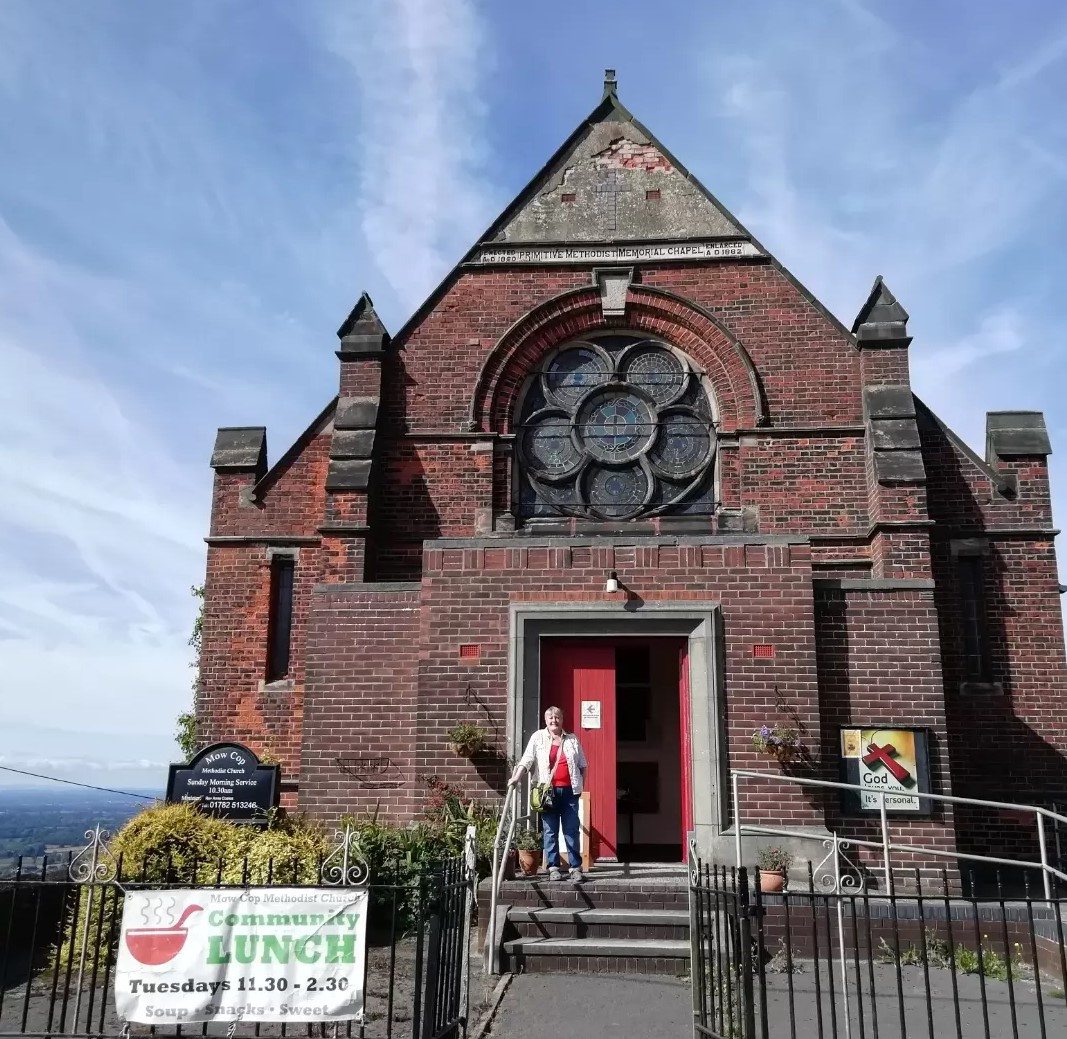
►1862—Free Trade Hall replaced by the new Memorial Chapel (completed 1862, see above), the small 1841 Primitive Methodist chapel becomes at some point the ‘Free Trade Hall’, a name by which it’s later remembered & which can be seen on a plaque on the gable in the well-known illustration (reproduced in various publications in 1907, & Leese Living p.55 lower) § the name is recorded in the 1881 census as ‘Trade Hall’ § it’s not certain however whether this name attaches to the building long-term ie for much of its remaining 40 years after 1862, or for a more limited period, its remembrance aided by the illustration, which is undated § the assumption is that ‘It was later sold and converted into a kind of Co-operative Stores, when it was known by the high sounding name of the ‘Free Trade Hall’, as can be seen in this sketch ...’ (Jill Barber, My Primitive Methodists web site, 2012) § in fact there’s little or no evidence of what it’s used for nor indeed of what a ‘Free Trade Hall’ actually is – it’s not a generic term for a recognised type of building or institution, being familiar in ref to the Free Trade Hall, Manchester, an assembly room & concert hall built & named in the 1850s to commemorate the repeal of the Corn Laws in 1846 (a notable triumph for the principle of free trade) § if our FTH were likewise a room for meetings, events, & entertainments, a kind of village hall, there would surely be refs to it – the period in question is the great age of public meetings & lectures & concerts & tea-parties, but when not out of doors the MC venues are nearly always the (active) chapels, schools or pubs, not a single ref has been found to an event in the FTH § when the friendly societies seek new venues the Foresters move to the Ash Inn & then the PM schoolroom (1863 & 69), the Oddfellows to the Wesleyan schoolroom (1878) § it might have been an idea for the PMs to retain the old building as a school, & curiously Wesleyan school teacher Albert J. Silvers is lodging there in 1881, but again there’s no evidence of such usage & no reason to suppose refs to the PM & WM schoolrooms mean anything but the rooms below the respective chapels § the co-operative movement is also in its heyday in this period, & there’s an earlier society at MC to that at Mount Pleasant which is wound up bankrupt in 1889, but no details of its date or location have been found § one thinks also of Eliza Oakes’s ‘Cheap Shop’ of 1873, but that’s a brief enterprise cut short by her untimely death § in the 1901 census Joseph Moss listed ‘Nr Odd Fellow’s Arms’ on the Staffs side is a grocer working ‘at home’, which could be the FTH (wch is next-door to the Oddfellows on the Staffs side) § another theory, purely hypothetical, is that an 18xx ref to an unidentified small fustian mill called ‘Harding’s Mill’ch might be the FTH – no purpose-built mill answering the description is known, but any large oblong room can be adapted for fustian cutting, which requires no power § a successful enterprise of the kind might lead into the ambitious & costly Coronation Mill, of whose origins little is known § the FTH building is demolished 1902 to make way for the building of Coronation Mill, tho stonework of its uphill gable may survive in the wall of the mill § for original PM Chapel building see 1841, 1902, 1902—Coronation Mill, 1903xxxcurrently no FTHrefs in chron exc 1841&1902+3xx § xx
►1862—Squire’s Well Squires Well built by the Wilbraham family, with name, date & double-edged motto ‘To Do Good Forget Not’ (in the same spirit as that on the Parsons Well, speaking to both the well/water & the user) § as with its sister well the stone structure is originally free-standing, like a wayside shrine, incorporation into a stone wall coming later – sketches dated 1875 show them standing alone in the hedgebank & W. J. Harper says ‘Both these wells have now stone wall fencing joined up to them in line with their front and probably present a somewhat different appearance to that of 1875’ (“Mow Cop Wells”, Local Herald, Feb 1907) (see 1858-59) § at about 1000ft it’s the highest formally built-around well on the hill, tho not the highest natural spring § it comes soon after the succession of the new squire Randle Wilbraham jnr (1861), tho he & wife Sibella have been officiating for his aged parents for some years & were responsible for the Parsons Well § it’s possible that the houses opposite, inc the small pub known at 1st as the Fir Tree (later the Castle Inn; see c.1868), are built about the same time § xNEWx
►1862—Superannuation of Elizabeth Bultitude superannuation of Elizabeth Bultitude (1809-1890), Primitive Methodism’s last remaining female travelling preacher (minister), is something of a watershed both in removing one of the most radical & ‘primitive’ elements from the constitution of the church & in completing the unspoken evolution of an educated & exclusively male clergy, allowing the PM church to court respectability & resemble what it originated as a rebellion against – a paternalist middle-class provider of salvation to ordinary working people, rather than a movement of the people § this rise of patriarchal sacerdotalism ie transition from an entirely lay church (like Quakers or Independent Methodists) to one run by reverend gentlemen in dog-collars is truly silent – there’s no formal rule or minute, no histories so much as mention it – so it’s impossible to date closer than sometime during the 1840s-50s: the 1842 superannuation of Bourne & Clowes begins it, at least symbolically; Flesher’s 1853 hymn book & Petty’s 1860 history are manifestations of the process; by the time of the superannuation of Elizabeth Bultitude at the conference of 1862 it’s a fait accompli & she’s an anachronism (cf 1867 re Thomas Bateman) § Miss Bultitude is a true Primitive, growing up in Norfolk in utter poverty & with no formal education, converted at a camp meeting aged 16, a travelling preacher from 1832, the longest serving female as well as the last; like the other pioneers she walks to all her engagements, & in 30 years only ever misses two due to adverse weather § in addition to her qualities as a preacher & in spite of her lack of education, she also exemplifies the strictly virtuous manners of dress & behaviour traditionally expected of female preachers by those sects (such as Quakers) which allow them – xxxcan’t find ref—try Graham’s pamph... § banned by Methodism in 1803, female preachers are robustly & cogently defended by Hugh Bourne (see 1808), so this is one of the issues on which the Harriseahead & Tunstall Revivalists diverge from the Methodist establishment – indeed the earliest talk of secession arises from their championing of Mary Dunnell when she is forbidden from preaching at Tunstall in 1807 § once organised, PMsm not only has female preachers but female ministers, the 1st generally regarded as Sarah Kirkland in 1813 [Dunnell has a claim but largely precedes the formal formation of the sect in 1811, separating from it that year]; however they belong entirely to the 1st few decades, no new ones are appointed after 1842 & after the retirement of Mary Buck in 1847 & emigration to Australia of Eleanor Brown in 1849 Bultitude is the only one remaining § in retirement she receives a pension as a supernumerary minister & continues as a local or lay preacher in her home town of Norwich § she is one of only 2 ‘Amazons’ commemorated (briefly) in Wilkes & Lovatt, Mow Cop and the Camp Meeting Movement, 1942 (p.146), though Barber, A Methodist Pageant, 1932, has a more respectable collection of ‘consecrated women’ (pp.101-114) plus a photo of Bultitude (p.109), also in Kendall 1905 plus a photo of her house (vol.II p.217, text p.216) § ‘This last of the Amazons of the Primitive Methodist Ministry’ (Arthur Wilkes) § in her modern study (published 1989) E. Dorothy Graham identifies 94 female ministers who hold formal post between 1820 (when the ‘stations’ of travelling preachers are 1st listed) & 1862 § noting Bultitude’s death the 1891 conference states as if deaf to its own hypocrisy that it serves ‘to remind us that the gifts of the Holy Spirit were without distinction of sex’ § xx
►1862—Typhus Fever ... And Inclement Weather ‘Opened School at 9. Number on Registers 92. Present 55. Absent 37. Typhus Fever (12 sick) and inclement weather. / John Cope admitted. (3rd. Class). / Pupil Teachers instructed from 5 O’clock till 7 P.M.’ <surviving Woodcocks’ Well School log books (kept by headmaster Thomas Charlesworth) begin, the opening entry (Mon Nov 17) § see below for what happens next § xxx=Quoxxx § xxxxxxx § § § xNEWx
►1862 Primitive Methodist Memorial Chapel completed & opened (see above), replacing the 1841 chapel which now or later becomes the Free Trade Hall (see above) § more modest PM chapel built at Pack Moor, with very similar box-style pews to those at the contemporary MC chapel § as well as its name-&-date stone in the gable the Pack Moor chapel has a foundation-type memorial stone dated Aug 11 laid by Mrs Thomas Allen of Tunstall § superannuation of Elizabeth Bultitude, PMsm’s last remaining & longest serving female travelling preacher (see above) § The Primitive Methodist Sunday School Hymnal published § Notes & Queries prints the lyrics of the North Staffs carol ‘All Bells in Paradise’ (aka ‘the Corpus Christi Carol’) as collected a few years before from a young morris dancer from N Staffs – one of the most ancient & mysterious English folk songs, 1st noted c.1504 (qv) § John Sleigh publishes A History of the Ancient Parish of Leek, in Staffordshire § Squires Well built by the Wilbraham family, with name, date & double-edged motto ‘To Do Good Forget Not’ (see above) § it’s possible that the houses opposite, inc the small pub known at 1st as the Fir Tree (later the Castle Inn; see xxx), are built about the same time § Mr & Mrs Wilbraham take a 6-month tour of the continent, & are welcomed home by a celebration featuring the Odd Rode & MC brass bands etc § Frances M. Wilbraham’s historical novel The Cheshire Pilgrims; or, Sketches of Crusading Life in the Thirteenth Century published § xxx § £20 ‘Proceeds of Mow Cop Bazaar’ listed among donations towards building Christ Church, Biddulph Moor (opens 1863) § Joseph C. Washington mayor of Congleton (1862-64) § Hannah Clarke prosecuted by James Hodgkinson ‘for trespassing on his land in search of bilberries’ § William Greatrex of Stoke loses his foot in a railway accident at MC Station § Thomas Lawler of Harriseahead (sometimes called of MC), the area’s leading ruffian (see 1854-55, 1863), is imprisoned for one year for assault & attempted rape of Emma Kirkham of Lower Stadmorslow – the victim is aged 10 (the farming family of Stadmorslow is not related to the contemporary MC Kirkhams, but her cousin Enoch Kirkham later founds another Kirkham family on the hill; Emma is b.Aug 25, 1851, dtr of Joseph & Sarah, & in 1868 aged 16 marries Joseph Hancock) § surviving Woodcocks’ Well School log books (kept by headmaster Thomas Charlesworth) begin, the opening entry (Mon Nov 17) recording an epidemic of typhus fever: ‘Opened School at 9 ... Typhus Fever (12 sick) and inclement weather’ § 10 days later the log book entry under Nov 28 (a Fri) reads ‘School closed for a week in consequence of the death of my little Son.’ § Thomas & Elizabeth Charlesworth’s baby son Harry dies, not of typhus but of ‘Pertussis’ [whooping cough] aged 8 months (Mon Dec 1), & is buried at St Thomas’s (Dec 4) (the Nov 28 entry evidently written retrospectively in ref to the week following) § Thomas Townley aged 8 is a victim of typhus mentioned in the log books (buried Dec 2) § but the epidemic has already claimed its most appalling victory in Sarah Anne Morris aged 7, followed some weeks later by both her parents Sarah & William (Sept 11, Oct 17 & 26<these are bur.dates —replace with d.dates fr certs) § the family has only recently moved to Mount Pleasant from Alma Cottage, Kent Green § >copies fr Charlesworth> The first surviving log book however does not begin until November 17, 1862///‘Opened School at 9. Number on Registers 92. Present 55. Absent 37. Typhus Fever (12 sick) and inclement weather. / John Cope admitted. (3rd. Class). / Pupil Teachers instructed from 5 O’clock till 7 P.M.’ § Sarah Oakes of Cob Moor, widow of Samuel (& mother of David), dies § Frances Harding, wife of Ralph (III), dies § Jesse Harding dies § Joseph Hopkin(s) dies § Charles Whitehurst (husband of Rebecca) dies § Thomas Whitehurst of Congleton dies (his age given as 76 but presumably TW of Canal St b.1791, son of Henry III & Mary) § Timothy Booth of Harriseahead Lane killed by a fall of coal in a mine at Harriseahead aged 33 (Jan 1), & buried at Astbury (being one of the Booths of Tank Lane) § his posthumous dtr Mary Jane Booth is born later in the year (& his widow Mary & children later move to Fir Close) § Edwin Webb killed while making some engineering repairs in a shaft at Trubshaw Colliery aged 31 (buried at St Thomas’s as Edward 32; his posthumous child Edwin is born Feb 1863 & lives for 6 days) § Elizabeth Shenton of Kent Green dies in childbirth aged 40 (buried at Astbury Dec 19), her son Edward surviving (baptised at Odd Rode Dec 20) § his father Thomas, a boatman, places him with child minder or foster mother Mary Ann Barlow of Rock Side, who is probably responsible for his 2nd baptism at St Thomas’s (July 19, 1863, recorded as Edwin) – it doesn’t do him any good as he ends up dismissed from the army for misconduct & imprisoned for bigamy (see 1889, 1890) § Maria Bailey of Mount Pleasant dies of haemorrhage following childbirth, her age given as 40 [not confirmed, she’s listed as 35 18 months earlier in the 61 census], the death registered by Hannah Maria Bailey, seemingly her 14 year-old dtr § the baby xxxxx{NOTDanielBailey who d!} § Lettice Boon (nee Harding) dies in or after childbirth aged 39 (the child Lettice dies a few months later in March 1863) § proving that the wealthy aren’t immune Maria Williamson, wife of Robert (III), dies at Rose Vale, The Brampton, Newcastle shortly after childbirth aged 25 (zzz), & is buried at Brown Edge § poor cripple Harriet Pointon dies of xxcertxx at Arclid Workhouse aged 25 (Jan xx), having lived there since her mother Hannah’s death in 1854 § 15 year-old James Booth jnr of Welsh Row dies of tuberculosis § baby George Betson, son of St Thomas’s schoolmaster James & Sarah Anne, dies of ‘Laryngismus Stridulus’ [spasm of the larynx causing difficulty breathing, an infants’ condition] aged 10 months (April 11) § Clarissa Barlow’s illegitimate baby Hannah dies of ‘Inanition’ [severe malnutrition or starvation] aged 1 month § baby Joseph Edward Hancock, son of shopkeepers Joseph & Hannah, dies of xxcan’t-make-out-cert?NOTtyphus (b.Feb 5 or 6 {grvst+GRO}, d.Dec 24), & is buried at St Thomas’s § 21 years later (1883) he’s commemorated by a stained-glass window in St Luke’s depicting St Luke § Samuel Ball marries Emily Lawton (dtr of William & Mary of the Oddfellows Arms) at Burslem, & now or soon after becomes landlord of the Railway Inn § his sister Elizabeth Ball marries Peter Minshull (Dec 31), & he settles on MC [Peter b.1840, not to be confused with the nearly contemporary native Peter b.1843/44] § Emma Cooper of Rookery marries Peter Cotterill of Mossley (called greengrocer of Nabs Wood, Kidsgrove) at Burslem Wesleyan Methodist Chapel, who comes to live on MC (parents of Samuel, Cephas, William, etc) § Jane MacKnight marries Joseph Cook of Kidsgrove – she signs Mcknight & her brother as witness signs William Gemieson Macknight § Hannah Booth of Welsh Row marries Edward Lloyd (not Welsh in spite of his name, he gives his birthplace as Bakewell, Derbyshire) § William Sherratt (son of Timothy & Hannah) marries Mary Dale (daughter of John & Martha) § approx date that George Hughes marries Charlotte Dale § George Harding of Fir Close, widower, marries Rhoda Mellor at St Thomas’s (Feb 18) § their son George Thomas Harding (later of Adderley Green) born, & baptised at St Thomas’s Dec 15 (GH’s will calls him Harding, codicil Mellor – a freudian slip suggesting he may have been born before they m’d, tho if so they wait 10 months to baptise him, & lack of GRO birth cert prevents confirmation!) § Thomas Hargreaves of Sands, joiner, marries Emma Sherratt § their son Thomas Hargreaves (school teacher) born § William Francis Porter born § Eleanor or Eleanora Harding born, dtr of George & Harriet § Elizabeth Dale born (see 1889) § Mary Ann Boote born (d.1946; see 1895) § Alice Maria Mellor born (Aug 2; later Jamieson; d.at Bournemouth Aug 12, 1951 aged 89) § Sarah Alice Taylor born at Rookery (later Hughes; d.1943) § Amos Bosson born at Kidsgrove (moves with parents William & Hannah Maria to Mount Pleasant before 1871) § Mary Jane Longshaw born at Cob Moor (her family moving to Red Hall c.1878) § her future husband John William Hastie born at Macclesfield Workhouse, illegitimate son of Agnes (later of Rookery, colliery overman; d.1953 aged 90) § James (Henry) Wright born at Stapeley, nr Nantwich (later of Mow House; see 1915, 1919) § his future wife Phoebe Arrowsmith born at Wrenbury or Acton, nr Nantwich
►1863—A Field Day At Mow Cop Brereton family of Castle Road – Mary Brereton & her 5 children Sarah Hackney (wife of Ralph jnr), Emma Brereton, Hannah Mould (wife of Aaron), Randle & Abraham Brereton – gang up on Michael Sutton (or Michal, nee Bailey, a native of Biddulph Moor, ?1831-1908; wife of Henry), beating her up & then stoning her house, because she’s been ‘living in adultery with the husband of the defendant Hackney’ § all 6 appear before Tunstall magistrates & are fined 40 shillings plus costs (each presumably) § Michael Sutton is in her house doing the washing when Sarah ‘came in, seized hold of her by the hair of the head and dragged her out into the road. Here the whole of the defendants set on her and beat and kicked her in a shameful manner, vociferating with oaths that they would murder her before they left the bank’; Ralph Hackney rescues her & takes her into his house (though denying the accusation of adultery); ‘They then commenced to throw [at Sutton’s house] and smashed the windows, throwing no less than a barrowful of stones in[to] the house, using the most violent, disgusting and filthy language all the time, and continued the row until the arrival of a police officer’ § to complicate matters there is also some dispute over ownership of the house, Henry Sutton renting it from William Brereton (husband & father of the malefactors) but Brereton has mortgaged it, defaulted, & the bank foreclosed & sold it to Charles Morris – Morris’s claims for the broken windows & for possession coming before the magistrates on the same occasion, though they decline to interfere § the Staffordshire Sentinel, as well as calling Mary Brereton ‘an old woman’ (she’s 52), reports the affair under the heading ‘A Field Day at Mow Cop’ § the Breretons are an unruly lot (cf 1857, 1869) & fond of a fight, but in view of the rationale given for their attack it’s tempting to see a kind of archaic mode of tribal rough justice playing itself out here, in response to an attack by an outsider on the traditional sanctity of marriage within a close-knit community (see comparable incident 1874—Carrying & Burning Effigies, & cf comment about stoning houses under 1926—The Mow Cop Dispute)
►1863 Biddulph Valley Railway completed from Fenton to Congleton, chiefly intended for goods traffic, station & goods yard at Gillow Heath (line closes 1968) § W. E. Gladstone, chancellor of the exchequer & future prime minister, lays foundation stone of the Wedgwood Memorial Institute, Burslem (Oct 26; opened 1869) § Ancient Order of Foresters lodge or court (known as ‘Court Man of Mow’) moves its meetings to the Ash Inn (Dec) § the move may be connected to Samuel Ball becoming landlord of the Railway Inn § Kelly’s directory includes Thomas Allcock, ‘farmer & cheesefactor’, Falls, & claims (under Biddulph) that ‘The Trent rises ... under the high rocky ridge called Mole Cop’ § marriage of the Prince of Wales & Princess Alexandra of Denmark celebrated by tea-parties at the National (St Thomas’s & Woodcock) & Wesleyan schools, followed by a beacon or bonfire on the hilltop by the Old Man, its material supplied by squire Ackers (March 10) § ‘wedding favours’ are given out to schoolchildren (probably a rosette or similar), while souvenir photographs & pottery are available § it’s the first popularly celebrated royal event for a generation, & helps lift the gloom associated with royalty since Prince Albert’s death (1861) § Alexandra begins to be used occasionally as a Christian name (eg Annie Alexandra Hancock 1868) § MC Band is part of the procession in Congleton marking the same event § & also in attendance when Mrs Wilbraham lays the ‘corner stone’ of the new church at Odd Rode (see 1864) § new Wesleyan day & Sunday school built at Rookery Chapel (opened Jan 24, 1864; it’s unclear if there’s been a day school previously, cf mention of schoolmaster 1852) § concert at Kidsgrove by the MC Tonic Sol-Fa Choir, conductor William Stubbs [of Rookery], to raise funds for it § to complete the musical landscape, a nightingale is heard near MC Station (April-May) § the MC Band (Charles Bailey & others) sues Alfred Mountford for the cost of its drum [this Alfred (1825-1905) isn’t one of the MC clan—he’s b.Endon parish, lives at Brindley Ford & then for a few years at Mount Pleasant] § George Owen of Rookery, a boy of about 11 (son of James & Harriet), fined for stealing 30 pounds of coal from ‘the Trubshaw colliery railroad’ (ie picking up spillings) § Enos Hancock fined for assaulting a bailiff who is trying to get into his house, in spite of witnesses claiming the bailiffs were drunk & assaulted him, & his employer & the parish clerk (Henry Austin) both giving him ‘a good character’ § the prosecuting solicitor tells the Tunstall magistrates ‘that assaults on the County Court bailiffs were very common in that end of the district, where, indeed, the unruly people of the district seemed to have congregated’ § speaking of whom, Harriet Lawler (nee Hulme) obtains a magistrates’ order protecting her income from her husband Thomas Lawler, called of MC (usually of Harriseahead), in case he returns, though he has not yet returned to her since leaving prison (see 1862) [until 1870 wives’ earnings technically belong to their husband, but magistrates readily grant protection orders under such circumstances] § Margaret Whitehurst (nee Heathcote), widow of William, dies at Bradley Green § John Ford of Fords Lane dies, a few weeks after his wife Hannah (Feb, Jan) § his brother William Ford of Dales Green dies at Congleton (June) § Theodosia Ford, wife of John Ford of Bank, dies § Betty Washington dies at Eardley End (widow of James of Puddle Bank d.1847) § John Skellern of Mow Lane, Newbold, quarryman (father of William), dies § Joseph Mould of Roe Park dies (Aug 24) § he’s living with dtr & son-in-law Dinah & Enoch Lockett at Lodge Fm where they’re recorded 1863-72 (as previously at Mow House 1861) § his will (made 2 days earlier, proved 1864 at Chester) xxx?morexxxrefers to 5 houses on leasehold land, 1 of them ‘at present unfinished’ (implying he has built them) [probably on MC Rd, top end between waterworks & church], bequeathed to children John, Samson, & Dinah (Lockett) § Abraham Rowley of Whitemore Village (formerly of Congleton Edge) dies § John Tellwright, formerly of Hay Hill, dies at Nettle Bank, Smallthorne § Thomas Hugh Williamson, formerly of Ramsdell Hall, dies at Liverpool, and is buried at Newchapel (Nov 5) § William Oakes of Oakes’s Bank dies § Thomas Lawton of Dales Green dies § Joseph Boulton of Red Hall dies as a result of an accident on his cart, aged 70 § Job Shenton, formerly of Welsh Row, killed at Silverdale Colliery aged 52, & buried with his 1st wife at Biddulph § his son Revd Joseph Shenton is ordained a PM minister, his 1st posting being Leek circuit § Thomas Rogers, a banksman at Trubshaw Colliery, killed by being crushed between two wagons, aged 33 (son of George & Ann) § Lettice Kirkham dies aged 37 of ‘Phthisis Pulmonalis’ (usually tuberculosis, though as a former sand girl married to a stone mason it could well be silicosis, as yet indistinguishable) § William Mould dies at Arclid Workhouse aged 19, & is buried at St Thomas’s [unidentified] § Joshua Barnett, last of the Alderhay Lane family, dies at Chell Workhouse aged 80 § Phoebe Baddeley (aged 65) marries James Thorley jnr, widower (56), for whom she’s been housekeeper for some years at Norton, & they return to live at Harriseahead § Hannah Baddeley of Rookery marries Enos Heath (1838-1866) § Annie Ford of Bank marries Thomas Sherratt of Talke, solicitor, at St Paul’s, Burslem (May 7) § James Wilson jnr of Bank marries Phillis Cork at Macclesfield § Joseph Hancock of Dales Green marries Mary Ellen Hulme (dtr of Jonathan & Ann) § George Dale (son of Daniel & Ann) marries Emma Brammer at Astbury – Emma gives Stephen Hancock as her father, who has evidently been a good step-father to her § William Jamieson MacKnight marries Elizabeth Lancaster, dtr of Charles of Gillow Heath, & they live at Rookery § Daniel Gater (son of Charles & Harriet of Sands) marries Ann Cottrill of Dane-in-Shaw & his cousin Ann Gater (dtr of William & Hannah of Congleton Edge) marries John Booth of MC in a double wedding at Congleton register office § Thomas Booth (later grocer of Mount Pleasant) marries Ellen Armitt or Armett at xxx § Mary Conway of Welsh Row (dtr of Evan) marries Lewis Heath (son of Charles & Hannah) at St Giles’s church, Durham (July 20) § their son Evan Conway Heath born 3 months or so later back in Wolstanton RD, probably at Buckram Row § Hannah Webb names her baby after her late husband Edwin, but he dies aged 6 days (Feb) § Edwin Blood born, youngest child of William & Ann of Bloods Quarry (d.1948) § Timothy Sherratt jnr born, youngest child of Timothy & Hannah of Fir Close (ruffian, see 1889, 1893, d.1907, not the one who d.1896) § Enoch Kirkham born at Upper Stadmorslow (July 15; later of MC) § Isaac Booth (later of Corda Well), son of Enoch & Sarah, born § Leah Mould born (later Booth; see 1918) § Stephen Triner of Spout House born § Alfred Moors born at Brake Village (d.1951) § John Clement Harding born § John Jervis Harding born § Wilmot Dale born (d.1942) § Frank Hughes born (music teacher in the Potteries) § George Shaw born at Congleton (PM preacher, fustian master & founder of Perseverance Mill; d.at Mow House Fm 1947) § Albert Snelgrove born at Cheddleton (Dec 30; station master of Biddulph then MC; d.at Bank 1948)
1864-1869
►1864—Staffordshire County Agricultural Show James Dale of Stonetrough Farm wins first prize at the Staffs County Agricultural Show at Uttoxeter in the category of ‘Farm Servants’, a prize offered or sponsored by Viscount Ingestre & specified thus: ‘To the carter or team-man, above the age of 18, not possessed of property, except gained by his own servitude, who shall have lived the longest time without intermission with the same master or mistress, and who produces satisfactorily testimonials that he has never returned home intoxicated when he has been sent to market or elsewhere with his team’ § 1st prize £2 James Dale (employer Stonetrough Colliery Company) 25 years [ie since 1839], 2nd prize £1 John Locker (Mr Henry Chawner) 23 years § any excuse for a prize, of which there seem to be hundreds, the categories of exhibitors & ‘awards’ being: cattle in 14 classes, sheep 12, pigs 5, horses 12, cheese 2 (thick & thin) with an over-all prize, corn 4, agricultural roots 5 (mangolds, turnips, cabbage, potatoes), poultry 17, implements (inc new mechanical inventions from cheese presses to threshing machines), farm servants (as above, just the one class), & a local category in this case ‘Uttoxeter District’ § Stonetrough Colliery Co also takes 2 prizes in the horses category: sub-category ‘For Agricultural Purposes’ [ie working horses] class 2 year-old geldings 2nd prize (of only 2 entries) £2 for a black gelding; sub-category ‘Hunting Horses’ class mares & foals 2nd prize £4 for an 11 year-old brown mare & foal; plus in the former sub-category, class mares & foals ‘A bay mare, “Flower,” and chesnut [sic] foal, belonging to the Stonetrough Colliery Company, Lawton, was highly commended’ [Lawton refers to the postal address of their office at Kent Green or Ramsdell] § William Key of Smallwood, cheese factor, is one of the judges for cheese § the annual agricultural shows are huge 2-day events organised by the Staffs Agricultural Society & held at different towns, this year Uttoxeter on Wed & Thurs Sept 21 & 22, the 1st at Stone 1844 (until 1958, since when they’re at the County Showground, Stafford, belonging to the successor society the Staffordshire & Birmingham Agricultural Society) § the Staffordshire Advertiser’s detailed report fills 2 broadsheet pages (Sept 24) § the whole thing is followed by a grand dinner with lots of speeches, dominated of course by the toffs & big landowners § the county shows are the apex of the fashion for such events in Victorian & Edwardian times, all of which whatever their purported emphasis (flower shows, dog shows, horse shows, gooseberry competitions, brass band contests, etc, or just non-specific ‘galas’, ‘fetes’, ‘bazaars’, ‘pageants’, ‘carnivals’, ‘tea-parties’, often for fund-raising purposes) contain a wide range of activities, entertainments, competitions, exhibitions, retail stands, etc, some derived from aspects of the old annual cattle sales, horse fairs, hiring fairs, etc as well as the festive fairs or wakes – on the hill the chief examples are Mow Cop Flower Show (see eg 1880 the 1st, 1885, 1905) & the Friendly Society annual jamborees (eg 1894), but cf also 1841, 1850, xx1924xx?21xx § xx
►1864—Odd Rode Church All Saints Church, Odd Rode, built (1863-64) with MC stone, completed & opened (consecrated Aug 30; saint’s day Nov 1) (cf 1865—Going A-Souling) § Odd Rode has already been made a separate ecclesiastical parish (1860), Revd James Losh existing minister or rector, though he leaves 1866, succeeded by Revd Horatio Walmisley (xxx) § James Oakes aged 2 is the first MC person buried there, xx?othersxx § xxx § the church replaces the chapel-of-ease at Kent Green & serves the most populous part of the Cheshire side of MC until St Luke’s church (see 1875), though most inhabitants of both Mount Pleasant & Fir Close use the nearer St Thomas’s § a new church is a project of the Wilbraham family, whose dedication to it is certainly sincere, tho it’s not actually clear why the existing building or site is unacceptable to them § situated at about the centre of the township/parish, All Saints is very convenient for Rode Hall & the new parsonage but otherwise in the middle of nowhere, the thinking presumably that it’s equally inconvenient for people from all the working-class population centres in the township, being over half a mile from Scholar Green & Kent Green, a mile from Rode Heath, Hall Green & Little Moss, over a mile from Thurlwood, Bank & Mount Pleasant, & 2 miles from Fir Close § xx
►1864 All Saints Church, Odd Rode, built with MC stone, completed & opened (consecrated Aug 30; saint’s day Nov 1) (see above) § new Wesleyan day & Sunday school at Rookery opened (Jan 24) § new edition of Revd John Petty’s The History of the Primitive Methodist Connexion ... extended to 1860 (originally published 1860 covering to 1859) & revised § Burntwood Lunatic Asylum opens nr Lichfield (Dec, original buildings completed 1868; closed 1995), located so as to serve South Staffs but in practice built to relieve the overcrowded Stafford asylum & takes patients from all over the county until 1899 (eg in 1869 the ‘lunatics’ for whom Wolstanton Board of Guardians is responsible are 32 at Stafford & 6 at Burntwood) § Potteries Examiner newspaper founded § passenger services commence on the Biddulph Valley Railway § Trubshaw mines cease to be worked as Bidder & Elliot concentrate on developing Moss Colliery § approx date of the first rows of houses for Robert Heath’s ironworkers at Dirty Lane, nr Newpool (71 households by 71 census; later known as Brown Lees) § MC ‘Garibaldi’ cricket club loses at home to Congleton ‘Kilkenny’, MC’s bowlers being John Beech, Alfred Locksley, & John Knight [Garibaldi becomes famous c.1860] § weights & measures officers prosecute 4 MC shopkeepers (Thomas Locksley of Mount Pleasant, Samuel Hamlett of Bank, George Harding of MC village, & Thomas Chadwick of Rookery), 2 coal dealers (Jesse Cottrell, Richard Burgess), & 1 beerseller (James Harding, of course) for inaccurate or unstamped weighing scales, weights, & liquid measures § long period of dry weather between April & Sept § a long-running dispute over the well at James & Hannah Blood’s farm, Dales Green (presumably re public access to or use of it) is resolved in their favour by an arbitrator appointed by the Court of Common Pleas (see 1864-68 below) (it isn’t over however – see 1868) § Mary Ann Booth begins working as a teaching assistant at Woodcocks’ Well School § Ralph & Ellen Proctor of Dales Green try Shotley Bridge, Durham for a short time (son Samuel being born there – bap’d Feb 1) & on returning live in the Black Cob/Mow End area (northern part of the ridge above Newbold) § James Rowley currently of Ashmore House, Biddulph Moor (formerly of Whitehouse End & Mow House) goes bankrupt voluntarily (June 18) § Thomas Blackhurst, ‘a carter from the neighbourhood of Mow Cop’, fined £2 & costs for wanton cruelty to a horse at Burslem – pulling a cart containing a heavy millstone the horse falls & he ‘flogged and goaded’ it up the hill, the magistrate telling him ‘he had acted with great inhumanity to his poor horse’ § John Mollart [presumably b.1841] imprisoned for a month for committing ‘a gross act of indecency in the highway at Mow Cop’, which the magistrates thought ‘of a most abominable character’ (the report gives no further details), the witness being Mary Hollins § John Hancock, son of Luke & Harriet, mentioned as beerhouse keeper (bap of son Luke at StThos June14+Sarah 1865 Oct 19) (Millstone Inn – built 1860, he might have been the original keeper, see 1860-61) § the legend or folk memory (usually transferred to his famous father Luke – though it may of course be that Luke is behind the enterprise) is that after a time he is approached by a wife who complains of him taking her family’s income through the husband’s drinking, & he resolves there & then to give up the trade § John’s 2nd wife (m’d 1861) is Fanny Hulme, dtr of Kent Green innkeeper Thomas & sister of Ann Oakes, founder of the Ash Inn § Elizabeth Rowley of Pump Farm (formerly of Whitehouse End) dies aged 89 (+date—cf SO’s d below) § Lydia Stanyer or Stonier, widow of John Stanyer of Marefoot & last of the Derbyshire-born settlers on Mow Cop, dies § xxher willxx § her son-in-law Joel Pointon advertises the lease of Marefoot house for sale § Thomas Holland of Drumber Head (Birch Tree Farm) dies § Benjamin Broad of Baytree Farm dies, last of the Broads of Limekilns § Daniel Davenport of Limekilns dies § Ralph Harding (III) dies § George Harding of Fir Close dies aged 40 § his will (made July 9, codicil Aug 22, proved June 26, 1865) refers to his freehold house on Fir Close & ‘my leasehold property on the Staffordshire side of Mow Cop’, provides for wife Rhoda & infant son George Thomas, & also mentions brothers James [the clogger & beerseller], Thomas, John & sister Mary Ann Egerton § a codicil beginning ‘My Dear Wife having told me that she is in the Family way ...’ adds provision for the unborn child [Mary Anne], & he dies 3 days later (Aug 25) § executors are brother John Harding & ‘Cousin’ Nehemiah Harding [they’re 2nd cousins]; witnesses to both parts Revd John J. Robinson & William Jamieson § Peter Smith of Rookery dies § Ann Owen of the Robin Hood, wife of Thomas, dies § Martin Clare of Rookery & his wife Eliza die in the same month, Eliza on Nov 5 supposedly of apoplexy (a stroke) aged 24 & Martin on Nov 22 of phthisis (tuberculosis or similar) aged 30 § their two children James & Mary Elizabeth (aged 1) are taken by their grandmother Mary Morris of Kidsgrove, formerly of Rookery Fm (who d.1875; see 1865) § Anne Farrall (nee Harding, eldest child of James & Sarah) dies at Chapel Lane § Thomas Alcock of The Falls dies § Sarah Yarwood, formerly of Roe Park, dies at Tunstall § her old friend John Hope Lowndes dies at Manchester § Elizabeth Conway of Welsh Row, wife of John, dies § Joseph Baddeley of Mount Pleasant (b.1809, son of Joseph & Elizabeth of Top of Dales Green & brother of Phoebe) dies, his will leaving small money bequests to his siblings & nephews & neices (inc George Baddeley, his executor), the residue (which isn’t much) divided between Caleb, John & Louisa Hackney (illegitimate children of Harriet, Ralph’s dtr) & Merinda Boon (illegitimate dtr of Judith), with obvious implications § Joseph Baddeley of Rookery (b.1840, son of Henry & Sarah) killed in an explosion at No.6 Pit, Clough Hall Collieries aged 23 (Jan 10), & on the gravestone he shares at Newchapel with his grandparents Joseph & Elizabeth Baddeley of Rookery (with whom he’s lived from early childhood, & who survive him) is called JB Jnr [Lumsden’s date Nov 10, 1863 is either wrong or a different JB] § Samuel Oakes of Pump Fm, blacksmith & leading local Primitive Methodist, dies aged 35 (Feb 19) {?cause—seeCert}, the epitaph on his gravestone at St Thomas’s the well-known passage from Revelation 14:13 ‘Blessed are the dead which die in the Lord from henceforth ...’ § his widow Hannah (nee Mollart) marries Marmaduke Lawton of Dales Green, widower, her 3rd husband, at St Thomas’s (July 4), witnessed by Aaron Lawton & Julia Chaddock § Samuel’s cousin Thomas Oakes of Oakes’s Bank, also a blacksmith, dies aged 31 {?cause-seeCert...} § his widow Ann(e) marries George Blood of nearby Dales Green Quarry § Elizabeth Charlesworth (school mistress) dies aged 28 (June 21), shortly after her baby son Arthur (+date?) § Richard Foulkes, eldest child of Thomas & Elizabeth of Welsh Row, dies aged 21 (buried St Thomas’s Dec 10){+cause?} § Thomas Ford, youngest child of John & Theodosia of Bank, marries Mary Buckley of Porthill at Wolstanton (July 19) § Thomas is described as ‘Manufacturer’ of Tunstall (Sandiford on licence), his father John as ‘Gentleman’, & witnesses are his brother John Pointon Ford, cousin George Beardmore Ford, & bride’s friends M. A. Wood & M. A. Till § Timothy Harding, son of William & Sarah, marries Ann Hobson of Tunstall (she dies 1871) § Simeon Mountford marries Emma Pickford of Congleton § Randle Brereton marries Sarah Ann Booth of Welsh Row § Hannah Mollart of Mollarts Row marries Aaron Holdcroft jnr of Stone Villas § Sarah Jane Warren (eldest child of William & Mary Ann) marries George Cooper jnr, both of Rookery § Mary Hulse marries William Stubbs at Church Lawton on Christmas Day, & they live at Kidsgrove & then Dales Green (see 1875) § Henry Samuel Clare marries Eliza Taylor § Levi Clare marries Ann(e) Coppinger at Manchester & they set up a grocer’s shop in Congleton § George Charles Clarke, blacksmith & Methodist, marries Jane Hancock § Abraham Kirkham, widower, marries Ellen Bayley or Bailey of Biddulph Moor (grandtr of the famous Biddulph Moor preacher & stone mason Richard Bayley, friend of Hugh Bourne, & his wife Timison) § Mary Anne Heathcote has illegitimate or pre-marital dtr Ellen, & shortly after marries Michael Knott (son of George & Ellen) § Revd J. J. Robinson conducts 8 baptisms on Christmas Day, inc 3 children of John & Mary Hollinshead of Rookery § Thomas Barlow born (later of Rookery, shopkeeper & coal merchant; d.1943) § Thomas Rathbone of Dales Green born § Thomas Hammond born, son of Timothy & Hannah (later of Hardings Row) § Arthur Duckworth born at Pot Bank (later of Congleton; d.1942) § William Henry Minshull born, son of Peter & Elizabeth § Emma Elizabeth Wilson born at Bank § Eliza Jeffries or Jefferies born (July 14; registered with no Christian name; bap’d with 2 younger sisters at St Thomas’s Oct 24, 1875; later Porter; d.1943) § Julia Booth, later of the Railway Inn, born at Kidsgrove § Lucy Patrick born at Harriseahead, dtr of David & Frances § George Sutton born at Dane-in-Shaw § James Bradbury (later Chilton) born at Stone, illegitimate son of Mary Ann Bradbury & James Chilton
►1864-68—Dispute Over Well at Blood’s Farm long-running & bitter dispute over the well at James & Hannah Blood’s farm, Dales Green [?Holly Fm] (evidently re public access to or use of it) illustrates importance of the increasingly limited public water sources available, & the tension or conflict between (the assertion of) private ownership & the traditions & needs of the community – control of & access to water supplies being one of the oldest sources of contention on the hill (see 1530) § § xxxxxis resolved in their favour by an arbitrator appointed by the Court of Common Pleas, the Congleton & Macclesfield Mercury commenting: ‘The action has caused considerable excitement at Mow Cop, and Harriseahead, and the inhabitants were very anxious to know the result’ (1864) § § (it isn’t over however – see 1868) § xxx § § xNEWx
►c.1865—Crown Inn approx date of foundation & building of the Crown Inn & adjacent shop – first mentioned as new 1869 but first keeper Thomas Locksley is moving out § Thomas ‘Loxley’ is listed in the electoral register from 1851-70 for freehold house & land in his own occupation § Locksley & wife Mary (nee Lawton, married 1843) live at or nr this site from c.1858,<wh’s this fr?they’re@MP51!< & in 1861 he is ‘Grocer & Miner’, so either they have a shop & perhaps a beerhouse before or the Crown itself is earlier § Locksley is evidently the original builder & owner, tho there’s some ambiguity as to whether the Crown as we know it is earlier, perhaps 1851, or dates from c.1865-69 with an earlier phase of building (no direct refs have been found before 1869) § an advert describes it as ‘old established’ch but then another/the 1869-70 advert describes it as ‘newly and substantially-erected’ § the Locksleys leave 1869/70, James Stewart may be keeper briefly (recorded as shopkeeper & beerseller 1869-70 only, see 1869), William Chaplin arrives in 1871, listed in the census simply as grocer, in 1874 directory as shopkeeper, & is there in 79, Thomas & Martha Cotton take over c.1880 (1879-81 inc) & remain for some years (f.1893, not 1901), also catering for outside events like the MC Flower Show & friendly society jamborees § the shop is separated from the pub & taken over by Thomas Booth (1840-1917) of Tank Lane & his wife Ellen, ?probably at the time the Cottons take over{check71-dtrAnn bMCChes70} § subsequent keepers inc George Dean from Talke (recorded 1901-07), John Billingham<ch—not-ton? (1908), Ernest Richardson & family (1911 etc), Alfred Bourne (from 1934, f.1939) § photos reproduced in Leese Working pp.114 lower, 116 § xx
>??possibility that Samuel & Jane Hulme start it before the Locksleys (f.61 MPCh ?exact-position)
►c.1865—Royal Oak Inn approx date that William Boon (1826-1895, son of James & Mary), owner of 1 of the earliest cottages on Fir Close (early 1850s), extends & converts it into a pub by adding a hipped-roofed extension on the west (gable) side of the original south-facing cottage, providing a new frontage facing Primitive St, with taproom, long club room on the 1st floor, plus an impressive view across the Cheshire Plain § Boon, a coal miner, never seems to appear in directories, but is ‘Collier & Beerseller’ at Rookery [the unnamed Rising Sun] in the 1871 census § he sells the Royal Oak by auction (on the premises – ‘the house of Mr. William Boon’) in June 1868, which is also the earliest ref found to it: ‘Valuable and Advantageous Freehold Investment ... all that Recently erected and substantially built Freehold Beer House, known by the name of the “Royal Oak Inn” with the Garden, Land and Skittle Alley belonging thereto ... The house, which is situated about three quarters of a mile from the Mow Cop Railway Station, faces the high road, and commands some of the most extensive views in the neighbourhood; the Welsh mountains being on a clear day discernible from the front windows thereof. It contains tap-room (with two windows), kitchen, parlour, and bar on the ground floor, with large club room extending over the whole front of the home, and two bed rooms upstairs. There is also excellent Cellerage capable of holding a large quantity of stores. There is also a newly-put up brick oven for baking; and a brewhouse with an outbuilding, which may be conveniently used for the stowage of empty barrels. The house has front, side, and back entrances, and there is an adjoining Field which can be had at a moderate rent if required.’ (Congleton & Macclesfield Mercury, June 20 & 27, 1868) § the purchaser isn’t known, the next occupant David Patrick is a tenant, tho he’s listed as owner by 1891 § David Patrick, wife Frances & their 7 daughters move to Fir Close from Harriseahead; their newest & last child Frances dies aged nearly 1 & is buried at St Thomas’s as of Fir Close (Oct 18, 1868) § he’s in trouble for ‘allowing gambling in his house’ on Jan 23, 1869, & by July is well enough established to refuse to serve further drink to a drunken William Chadwick, who serves 2 months in prison for injuring him in the head by ‘throwing a large stone’ § as usual Patrick continues to work as a coal miner, much of the work being done by his wife & opening hours being in the evenings § he & his wife run it until their deaths in 1901 & 1903, followed in 1903 by George Copeland (1860-1938) & his wife Jane (Jenny, nee Kirkham); Jane is licensee in 1939 § the development of housing on Fir Close esp Top Station Rd & Primitive St in the 1850s & 60s evidently justifies the opening of the Royal Oak & roughly contemporary Fir Tree Inn (1st mentioned 1869) so close to the 1854 Railway Inn & not much further from the Oddfellows & James Harding’s beerhouse, though it’s a surprising density § (for the historical origins of the pub sign/name see 1651) § 1908/09 photo of inn with entire Copeland family reproduced in Leese Working p.119
►1865—North Staffordshire Field Club North Staffordshire Naturalists’ Field Club founded (April), called ... & Archaeological Society 1877 & just NS Field Club from 1897 § one of its earliest excursions is to ‘Mole Cop’ (Sat June 10), the report in Staffordshire Advertiser (June 17) esp interesting for recording some rare plants, flora & geology seemingly the main interests § in the ‘extensive woods’ are ‘at one or two places remains of an ancient forest, never yet ploughed or planted’ (cf 1844); ‘The summit of the hill is now a good deal enclosed, with numerous cottages’; ‘the old tower on which the flag of Chester is sometimes raised’; ‘at the foot of the rock on which the tower is built, is a remarkable well – never dry’ [Sugar Well]; ‘another very strange-looking rock ... called the Old Man of Mow’; ‘There is a large quarry on the hill, which for ages has been celebrated for grindstones’ [millstones] § only a rump of ‘some half dozen’ members see the hilltop however, as having walked from Congleton station via Congleton Moss (‘Querns and other traces of ancient man have been exhumed here’) & dawdled some time at Limekilns (‘mountain limestone ... at the present time only got by tunnelling. This lime for many purposes is superior to that of Cauldon Low’), all the ladies & most of the men proceed to Mow Cop station (& home) in preference to ‘the quartzy sides of the hill’ § plants inc butterfly orchis, helleborine, & lysimachia nemorum [yellow pimpernel] at Limekilns, moonwort, crowberry, cowberry, & ‘several rare lichens’ at the hilltop, also mentioning henbane & dryas octopetala [mountain avens] as found there years ago § interest in MC esp its natural history & geology is high in the club’s early years (other egs 1873, 1875) § a typical Victorian amalgam of natural history & antiquarianism, the club proves a serious & enduring force in North Staffs local studies, & a forum for scholars of calibre like naturalist Robert Garner (1808-1890; one of the founders & very likely the guide on their 1st trek around Mole Cop), architect & archaeologist Charles Lynam (1829-1921), geologist J. D. Sainter (1805-1885), & 1st president James Bateman (1811-1897), whose gardens at Biddulph Grange provide the 1st excursion on May 13 § the 1st annual report 1866 records 127 members, inc female § other contributors over the years inc P. W. L. Adams, S. A. H. Burne, J. L. Cherry (1832-1911; for many years editor of the transactions; & see 1911), A. M. McAldowie (a doctor whose articles inc an early discussion of the astronomical alignment of stone circles), Thomas Pape, Sir Arthur Smith Woodward § its long-running journal contains historical articles & source material of great importance, inc a long series of transcripts/translations of Tunstall court rolls § sadly journal & then club cease to exist in the 2000s
►1865—Going A-Souling ‘Spoke to the children about staying away yesterday to go as they call it “a Soling.” I showed them the foolishness not to say sinfulness of the practice & expressed a hope, that I should not hear of them keeping up such a silly practice for the future.’ (Thomas Charlesworth, Woodcocks’ Well School log book, 1865) § xx § xx § part of ‘The Souler’s Song’ as printed by Egerton Leigh (Ballads & Legends of Cheshire, 1867, pp.128-9)---thoNBattrib’d to Ormerod’s Ches: ‘God bless the master of this house, and the mistress also; | And all the little children that round the table go; | Likewise your men and maidens, your cattle, and your store, | And all that lies within your gates, we wish you ten times more. | We wish you ten times more, with your apples and strong beer, | For we’ll come no more a souling until another year.’ – this is the more authentic sounding final stanza, preceded by 4 stanzas of a more contrived kind with variations on the refrain ‘I hope you will prove kind with your apples and strong beer, | We’ll come no more a souling until another year’ § Leigh’s introductory note reads: ‘The Soulers, on All Souls’ Eve, go from door to door ‘Souling,’ i.e. singing, drinking, and begging. It is a remnant of the popish superstition of praying at that particular season for departed souls. All Souls’ Day is set apart in many Roman Catholic countries for the living to visit the graves of their departed friends and relations.’ § xxx § § F. W. Hackwood (Staffordshire Customs ..., 1924, pp.45-6) quotes Brand’s Popular Antiquities, 1777: ‘on All Saints’ Day the poor people in Staffordshire, and perhaps in other country places, go from parish to parish ‘a-souling,’ as they call it; that is, begging and puling [or ‘singing small’] for ‘soul cakes,’ or any good thing to make them merry. This custom ... seems a remnant of Popish superstition to pray for departed souls ...’ [Revd John Brand (1744-1806) antiquary, origly a cordwainer in Newc upon Tyne] § describing similar customs on St Clement’s day (Nov 23) or eve, alias ‘Bite-Apple Day’, Hackwood adds ‘the custom of “Souling, or begging for apples,” on All Souls’ Eve is practised in the north of the county, and replaced in the south by that of Clementing on St. Clement’s Eve’ xxx § he quotes several versions of the Staffs souling song from the journal Folk Lore, the common one being: ‘Soul, soul, for an apple! | Pray, good Missis, a couple! | One for Peter, two for Paul, | And three for Him who made us all! | Allaby, allaby, eebyeer, | Soul-day comes but once a year. | When it’s gone it’s never the near, [sic] | For goodness’ sake, | A good Soul Cake. | Up with your kettle, and down with your pan, | Give me an apple and I’ll be gone!’ plus the neater version collected at Keele in 1880: ‘Soul, soul, for an apple or two, | If you’ve got no apples, pears’ll do. | Up with your kettles and down with your pans, | Pray, good Missis, a Soul Cake! | Peter stands at yonder gate | Waiting for a Soul Cake – | One for Peter, two for Paul, | Three for Him who made us all. | Souling-day comes once a year – | That’s the reason we come here!’ § a version from Eccleshall in 1884 includes the ‘come no more’ line from the Cheshire song: ‘We’ll have a jug of your best October beer, | And we’ll come no more a-souling till this time next year.’ etc § § xxNEWxx
>COPIEDfromCharlesworth>A custom that Charlesworth was not happy to make any concession to, and mentions virtually every year, was ‘souling’ on All Souls’ Day (November 2). The traditional souling rhymes were sung at people’s doors – especially the great houses of the neighbourhood – in appeal for an edible treat, anciently a ‘soul-cake’ but now traditionally apples. In spite of his stern disapproval of it Charlesworth has left us a unique if brief record of a folk custom which we would not otherwise have realised stood out as so uniquely important on Mow Cop, and of the strong hold it had upon local children, and adults.#
>‘Spoke to the children about staying away yesterday to go as they call it “a Soling.” I showed them the foolishness not to say sinfulness of the practice & expressed a hope, that I should not hear of them keeping up such a silly practice for the future.’ (1865). Typical of Charlesworth to try explanation and reason – I wonder if he really thought it would work. ‘There has been a great many absent to day. They have been what they call “a Soling”.’ (1870); ‘A considerable number of the Children have been away as they say for The purpose of going “a soling”.’ (1871); ‘There were a considerable number of children away this afternoon, who have been going about as is the Custom, singing for apples.’ (1873); ‘Being All Souls’ Day, I had to send after several children who were absent this Morning.’ (1874). As one of his successors, Thomas Davies, later wrote: ‘It is an old custom in this part of the country and it is useless to punish the children because the people all encourage it.’ (November 2, 1883).#
>It is hard now to see the sinfulness in such a custom – and almost shocking to hear such an extreme word used of it. That it caused absenteeism was, like Congleton Wakes, a consequence of not sanctioning it, not the root objection to it. Perhaps it was so much more wicked than following the Oddfellows because by implication it travestied a religious festival, or concept, whereas the ‘Mow Wakes’ event had become entirely secular. A deeper though almost contrary prejudice might be that All Souls was seen as a Roman Catholic observance, repudiated by Protestants, in particular its presumed original association with praying for the souls of the dead, wch Prots consider an abomination. Charlesworth’s pointed refusal to spell it correctly might betray either kind of distaste; or perhaps I am being too psychoanalytical. Likely as not he saw it in much simpler terms, and doubtless thought it irreligious (it was of course a precursor of some modern Hallowe’en customs).#
>The near coincidence with the dedication festival of Odd Rode church (All Saints, November 1) must obviously enter the picture. But since the new dedication was adopted as recently as 1864 (Odd Rode’s previous church having been another St Thomas’s, December 22) a folklorist might assume it was deliberately meant to syncretise with the prevailing local folk custom. It was with just such an intention – discouraging it by usurping or pre-empting it – presumably, that Revd Booker distributed apples at school on November 10, 1870. The coincidence however (of All Saints and All Souls) is referred to only once, for a mere pragmatic and coincidental reason: ‘Being All Saints’ Day The Curate did not come to give his Scripture Lesson this Morning there being service at the Church. A considerable number of the Children have been away as they say for The purpose of going “a soling”.’ (November 1, 1871).#
>The thing that more effectively eclipsed or usurped souling was of course the growing popularity of bonfire night and the preliminary traipsing round begging a ‘penny for the Guy’. It is curious (given that it is neither a religious festival – though it is meant to be virulently anti-Catholic – nor so relatively harmless) to see bonfire night being encouraged by school teachers at this time, though whether as a deliberate distraction from souling is not of course stated. ‘Being the Anniversary of the Gunpowder plot the first class read the History of that Event for their reading lesson this morning, and afterwards wrote me a letter about it.’ (November 5, 1869). But then the nemesis: ‘Being the Anniversary of Gunpowder Plot &c, I had to Caution some boys against having Gunpowder about the Schools.’ (1873).<all precdg frTCbio<
►1865 Simple Poems of George Heath of Gratton (1844-1869) published, including ‘Man o’ Mow’ (a poem dedicated to his friend George Hancock of Mount Pleasant, with reminiscences of visiting MC) & an excellent early illustration of the Tower (Staffs side) showing its flagpole (reproduced in Leese Living p.16) § ‘On the cragged sun-tinted summit | Of a mountain pile I stand, | Hugely grand, and wildly lovely | Visions rise on every hand. | ... | To the South a dusky turret | From the highest apex climbs, | Like a fragment of some giant | Bulwark of the feudal times; | ...’ {check=1870 in my PoetsEngland!ie posthumous vol?but his Rudyard poem 1865...Philip def’ly attribs picture to SimplePoems65} (a larger collection appears posthumously in 1870, 2nd edn 1880, together with a biographical memoir) § Cheshire-born mathematician & writer Charles Lutwidge Dodgson alias Lewis Carroll (1832-1898) publishes Alice’s Adventures in Wonderland § ‘ ‘Please, would you tell me,’ said Alice ... ‘why your cat grins like that?’ ‘It’s a Cheshire cat,’ said the Duchess.’ (see 1788) § first volume of The Life of Josiah Wedgwood ... by Eliza Meteyard (1816-1879) published, containing lengthy but very interesting background sections (& vol II in 1866) § Hugh Bourne’s An Ecclesiastical History, from the Creation to the 18th Century, A.D. published in book form, prepared from his series of Primitive Methodist Magazine articles (1825-42) by Revd William Antliff § it ends with the Moravians & the earliest beginnings of Methodism in 1738-39 § Commons Preservation Society formed (merging 1899 with National Footpaths Society as Commons & Footpaths Preservation Society – see 1923 – & now the Open Spaces Society) § severe winter with heavy snow (Jan) § at a meeting to discuss the possibility of a hospital for the Tunstall/Kidsgrove area, the statement that ‘only 26 cases of fever a year’ (all fatal) come to the North Staffs Infirmary provokes the rejoinder ‘that there were more fever cases at Mow Cop alone in the year’ – perhaps accurate but also illustrating the use of MC as a byword for a neglected district rife with poverty & disease § Charles Hawthorne assaulted in the Oddfellows Arms by James Harding & others, landlord William Lawton refusing to intervene saying ‘it serves the little devil right’ § ref to Samuel Ball as beerhouse keeper indicates that John & Elizabeth Poole have left the Railway Inn (they move to Mossley between 1862-65, probably 63) § Samuel & Emily’s dtr Mary Ball born there, & baptised at St Thomas’s (June 4) § approx date of Joseph & Ann Lovatt & family (grandparents of Joseph Lovatt) moving to Rookery (Ann nee Hulme being a native of Trubshaw, his mother Mary nee Mountford sometime of Alderhay Lane) § approx date of Thomas & Ann Hughes & family settling at Fir Close (Robert Hughes’s parents; not as might be expected from Welsh Row, though they are Welsh, but from the Welsh colony in Hanley) via a brief spell on the Staffs side of MC village, where dtr Margaret (later Mary Ann) is born March 14 § approx date of James & Sarah Bullock & children moving to MC from Bollington § approx date of farmers Samuel & Sarah Yates moving from Wall Hill to Wood Fm, Moreton (Quarry Wood) § Levi & Charlotte Morris of Pack Moor (son of James & Mary of Rookery Fm) baptise 3 children at Newchapel, & also orphaned neice Mary Elizabeth Clare (b.1863) (Aug 20) § Susannah Campbell dies, mother of the Campbells who followed the Jamiesons from Scotland in the 1840s § Agnes Jamieson, widow of the first William, dies at Mount Pleasant (in Brieryhurst), probably living with son George McCall though Ellen Campbell registers the death [Agnes is missing from the 1861 census] § Anne (Nancy) Sherratt dies § Mary Boden (nee Mellor) dies § Lettice or Letticia (gravestone) Whitehurst, wife of Charles of Well Cottage, dies aged 43 § Hannah Stanier, wife of William, formerly of Rookery & now living on the Cheshire side, dies in childbirth aged 26 or 27 § Thomas Hulme of Kent Green dies, innkeeper, grocer, & yeoman (originally of Trubshaw), whose influence on the hill incs 2 of his dtrs Anne & Fanny marrying MC men & helping found 2 of the hill’s best-known pubs, the Ash & the Millstone § Edward Conway of Welsh Row, oldest of the Conway brothers, dies § Thomas Turner, originally of Drumber Lane & one of the founding inhabitants of Brake Village, dies § Joseph Ball dies at Golden Hill § James Triner of Spout House dies § James Hancock dies § his nephew Henry Hancock (son of Luke & Harriet) killed at Tower Hill Colliery aged 38 (Feb 24) § explosion at Clough Hall Collieries kills 5 men, inc William Swinswood (Swingewood) of Harriseahead, formerly of MC, aged 26 (March 1) § the inquest, while finding it accidental as usual, establishes that the Bullhurst is ‘a very fiery mine’ & that the men were at fault for firing a shot there unnecessarily § Philip Clark of Dales Green killed in a separate explosion at Clough Hall Collieries aged 37 (illegitimate step-son of William Patrick; Sept 7) § Zilpah Hancock (nee Burgess), widow, marries James Hamlett § James’s widowed mother Mary Hamlett (nee Oakes) marries John Gray of Bank, widower § Hannah Locksley marries Oliver Leese (son of Timothy & Margaret) (later c.1870 they join her father in the MC enclave at Smallthorne) § Ann Dunning (related to the Yateses of Mow Hollow) marries John James Bowyer at St Thomas’s on Christmas Day (see 1873) § Daniel Boulton (termed ‘Lime burner’) marries Emma Morris of Marton at Prestbury § Jonathan Booth of Tank Lane marries Ann Whitehurst of Congleton Moss, dtr of George & Harriet, & they live in Congleton § William Booth marries Eliza Conway, both of Welsh Row, at Congleton<ch?register office § Thomas Lawton jnr, widower, marries Elizabeth Caroline Taylor at St Thomas’s (Oct 19) § John Wilson of Bank marries Anne Maria Turner at Wolstanton § Samuel Harding of Windy Bank marries Eliza Beresford (she dies 1870) § Solomon Pointon marries Rhoda Hancock § Thomas Rowley of Whitehouse End (called of Tunstall in the marriage register) marries Ellen Whitehurst, dtr of Charles & Rebecca, at Christ Church, Tunstall § Emma Henshall of Henshalls Bank (dtr of William & Sarah) marries John Ikin, & after living briefly at Chapel Lane, Harriseahead they return to Henshalls Bank (1867/68) & found the Ikin family of MC § Enoch Harding, son of George jnr & Rachel, born (d.1945) § James Clare, son of Joel & Mary, born (later of Harriseahead, see 1892; ?d.1918) § William Charles Billington born, illegitimate or pre-marital son of Emma (herself illegitimate or pre-marital dtr of Caroline Stanier nee Billington; he d.1945) § Annie Maria Chaddock born on the Biddulph side of Congleton Edge (Aug 18; GRO Anne Maria), illegitimate dtr of Sarah Chaddock (nee Holland), widow, who later marries Charles Hancock (see 1889, 1891) § Martha Sherratt born (d.1950) § Mary Elizabeth Jamieson jnr born § Elizabeth Belfield born (only child of James & Dinah; see 1888) § Fanny Hancock, youngest child of Luke jnr & Mary, born (later Mrs Mellor, see 1903, 1917; d.1941), named after her father’s youngest sister § Biblical scholar Arthur Samuel Peake born at Leek, son of Staffs-born PM minister Revd Samuel Peake (1830-1914) & Rosabella (PMism’s most renowned scholar, author of the famous Peake’s Commentary; see 1904, 1907, 1919)
►1865-66—Rinderpest Cattle Plague Rinderpest cattle plague (similar to foot & mouth disease) kills 52% of Cheshire’s cattle (over 70,000 animals), & similarly in Staffs, devastating the agricultural economy, esp in the former where dairy farming predominates § the plague exacerbates an already severe agricultural depression, landowners are forced to reduce rents, & expenditure such as the extension of Woodcocks’ Well School is cancelled § day of prayer for the halting of the plague appointed by the Bishop of Chester (Feb 28, 1866), though the government demur to do so & the Bishop of Lichfield leaves it to individual parish priests § Cattle Diseases Prevention Act (1866) provides for preventative slaughtering of entire herds (as in later cattle plagues), but that doesn’t become the norm on this occasion § mutual insurance associations set up to help farmers, the Congleton one chaired by Randle Wilbraham, its sanitary inspector Robert Heathcote of MC § the government steps in to ensure across-the-board compensation, the money paid back by a county rate levied until 1896 § the County Cattle Plague Relief Fund in Cheshire raises over £24,000 § at the final examination of claims in Aug 1866 immediate payment of all claims is authorised (at 18s a cow, 10s a yearling, 5s a calf) § similar arrangements are made in Staffs § John Atherton at Puddle Bank loses only one from his herd of 38, while from one of the largest herds of the area, the 55 belonging to Samuel Tellwright at Old House Green, only one survives § the Yateses, recently moved to Wood Fm (Moreton), lose 26 out of 31, & William Whitehurst 10 of his 13 § losses of smaller owners include 2 of the 3 cows of Thomas Astles of Lodge Farm, & the single cow of hilltop crofter James Machin of Black Cob § a reredos in Astbury church is installed in thanksgiving for the end of the plague § a cholera epidemic immediately following (July-Nov 1866) is perceived as linked to the cattle plague § Rinderpest is eventually eradicated, & the last surviving laboratory specimen formally destroyed in 2019
►1866 Talke o’th’ Hill Colliery Disaster – huge explosion of accumulated gas kills 91 men & boys & injures many (Dec 13), & casts a lasting shadow over the Talke/Butt Lane mining community (cf 1868—Bishop Selwyn) § (although hard to believe given the large number, none have been found to have MC origins or connections) § cottage hospital built at Congleton (replaced by Congleton War Memorial 1924) § cholera epidemic (July-Nov) xxxxx § in Chester Frances M. Wilbraham (‘the Florence Nightingale of Chester’) & her friend Emily Ayckbowm are chief nurses at a temporary hospital in Grosvenor Park § one of the Mountford brothers (probably Albert, not found in newspapers) prosecuted for bilberry picking, said to be the 1st such prosecution (though see 1862; Albert is part of the 1870 mass trespass too) & beginning of squire G. H. Ackers’s new clamp-down (see 1870 & cf 1808) – Congleton magistrates dismiss the charge § at the Peckforton Hills, the main bilberry-picking location in Cheshire, a prolific crop is expected from the spring blossom but is spoiled by late frosts & a snowfall in May § Thomas Lawler, the area’s leading ruffian (see 1854-55, 1862), sentenced to 5 years penal servitude for stealing a silver watch & other items from a man in a beerhouse in Tunstall in 1865 § Thomas Charles Clare, briefly a silk throwster in Congleton, goes bankrupt & returns to his native Biddulph Rd, some of his land there being sold as ‘valuable freehold building land’ that also ‘abounds with good Brick Clay’ (soon afterwards he moves to Golden Hill & establishes a pottery) § William Warren of Rookery, ‘late beer seller’, goes bankrupt with debts of £176-6-5 & assets of £12-4s; he is probably keeper of the Rising Sun (see 1836, 1879) § at the annual friendly societies’ processions the Foresters are led by the MC ‘Rifle Band’ & dine at the Ash Inn, the Oddfellows by the Compstall Bridge Band (one of the leading brass bands of the day) & dine at the Oddfellows Arms, on Mon & Tues respectively (July 23 & 24) § Ash Inn with grocer’s shop, stable, outbuildings, & 2 fields ‘well adapted for building’ sold at auction (Daniel Oakes remains tenant; the fields represent the adjacent row of houses & shops, which exists by 1881) § 2 adult dtrs of the late Joseph & Ellen Durber (both d.1858) baptised together at Newchapel (Nov 26) – Sarah Ann b.March 20, 1828 & Ellen Dale b.Nov 23, 1845 (& already baptised at St Thomas’s 1846), possibly prompted by the latter’s 21st birthday § Joseph James Warren, eldest son of William & Mary Ann of Rookery, injured in an explosion at Moss Colliery & dies a week later aged 20 (Oct 31, Nov 8) § William Burgess dies at Mount Pleasant, formerly of Close Farm, his age given as 89 (he’s 85) § Samuel Sherratt formerly of Higher Bank, another retired farmer, dies at Burslem, his wife Rebecca’s home town § William Baddeley of Mount Pleasant dies § Enos Heath dies aged 28, 6 weeks after his dtr Elizabeth Baddeley Heath (grandtr of Henry & Sarah Baddeley of Rookery) § Susannah Chaddock, wife of William, formerly of Edge Hill, dies at Bradley Green § Mary Brereton alias Mellor, wife of Thomas (V), dies § Martha Harding, wife of James of Diamond Cottage, dies § James Harding of Macclesfield (b.MC 1798, son of John & Judith) dies § Nancy Whitehurst of Congleton, pauper & washerwoman, dies (mother of Susannah Harding’s husband Charles who was transported to Australia) – in a manner of speaking the last of the famous Congleton clockmaking family (most other Whitehursts in Congleton by this date being descended from the MC branches) § Fanny Stonier or Stanyer, widow of Joseph, dies at Arclid Workhouse aged 69, after 16 years as an inmate § Sarah Snape (nee Mould) dies § Sarah Boot(e) of Mount Pleasant, wife of Thomas, dies aged 41, less than a month after her infant son William (buried Oct 10 & Sept 15 respectively) § Jemima Stubbs (nee Ball, illegitimate granddaughter of Nathan) dies in childbirth aged 24, her daughter surviving & being named Hannah after Jemima’s mother § Caroline Henshall (nee Harding) dies of phthisis (probably tuberculosis) aged 23 § Charles Sanderson marries Emma Munsler (or similar) at St James’s, Congleton, & after a few years they settle at Kent Green & establish a grocer’s shop & bakery (parents of 15 children inc James Sanderson, founder of the Dales Green family & shop – see 1900; Charles is also half-brother of George Hammond of MC) § Emma Billington (Caroline Stanier’s dtr) marries Lionel Boot of Mount Pleasant, Sarah Whitehurst’s son § Lettice Boote of Mount Pleasant, dtr of Thomas & the late Martha & servant with William Stubbs, marries Thomas Jepson (1844-?1922; brother of Charles, see 1867) at St Thomas’s (the clergyman writes ‘Lettus’ but she signs Lettice), & they live at Maxfields Bank (she d.1873) § Elizabeth Armstrong of Dales Green marries James Barber at St Thomas’s (Feb 21) & their brother & sister George Armstrong & Elizabeth Barber marry at Astbury (May 14) § Abraham Pointon Stanier marries Edna Barlow § Peter Minshull (b.1843/44) marries Mary Capewell of Fradswell, nr Stafford, at Fradswell, & they live at Rookery (but not found in 71 census; not to be confused with the nearly contemporary Peter b.1840 wife Elizabeth) § Enoch Booth of Mount Pleasant (b.1846 son of Joseph & Ann) marries Sarah Beech at Buglawton on Christmas Eve, & they live at Rainow nr Timbersbrook (& perhaps elsewhere) before returning to MP in the 1880s<check—I tht I est’d they were sep’d! § Thomas Brereton marries Emma Eliza Wardley, widow, at Wolstanton (see 1870 – an unhappy marriage, probably also a bigamous one) § schoolmaster Thomas Charlesworth, widower, marries Ann Steele at Odd Rode (Dec 13), one of the daughters of the station master & younger sister of his sewing mistress Ellen, who with his brother Samuel Charlesworth is witness § Enoch Lindop of Fir Close marries Susannah Rowley [unidentified], b.c.1843, father given in marriage reg as unknown ie she’s illegitimate § Henry Rowley of Whitehouse End marries Hannah Bailey of Harriseahead (granddtr of Hannah Bailey, the widow of Daniel Shubotham), & they live at Sands § Forbes Yates of Congleton Edge (aged 15, pronounced Forbəz) marries David Ball of Bradley Green § Ann(e) Shufflebotham of Biddulph Moor marries William Rogers at Norton (they live at Biddulph Moor & Brown Edge before moving to MC in the 1880s; she dies in the MC bungalow fire aged about 85, see 1927) § George Henry Harding (later of Station Bank), son of James & Elizabeth, born § Caroline Harding (later Patrick), dtr of Elijah & Sarah, born § Hannah Cotterill born, dtr of Peter & Emma (later wife of William Henry Minshull of Rock Side; she is deaf from about the age of 5; d.1954 aged 88) § Julia Whitehurst born, dtr of James & Urinah (later wife of Christopher Pointon) § Jane Lawton born, dtr of Thomas & Elizabeth Caroline of Dales Green (later Rathbone; d.1944) § Agnes Elizabeth MacKnight of Rookery born (Dec 28; later Ball; d.1946) § Mark Ball born (bricklayer; d.1950) § Christopher Hancock, illegitimate son of Mary, born (baptised March 30, 1867; see 1924; d.1945) § Fanny Dale, dtr of George & Emma (nee Brammer), born (baptised at Odd Rode Nov 27, 1868 aged 2 with new baby brother Walter) (later Mrs Wheat, known to everyone in Mount Pleasant as ‘Granny’; d.1956 aged 89) § Hannah Patrick born at Harriseahead, dtr of David & Frances § Arthur Morris born at MC (later headmaster of Stalybridge elementary school; d.?1941) § Amos Vincent Mollart born, son of shopkeepers Samuel & Eliza of Mollarts Row (druggist or chemist, variously of Crewe, Burslem, Batley, Hull; later emigrates to California, d.1936) § Daniel Boulton jnr born (quarry proprietor etc; d.1941) § Tom Brook Sanderson born at Sheffield (brickmaker & quarry proprietor or manager; see 1910, 1919) § Moses Bourne born at Donisthorpe, nr Ashby de la Zouch – leading PM layman who claims or is claimed to be a collateral descendant of Hugh Bourne (but in fact isn’t), partly on the strength of which he is greatly esteemed in local Methodism & represents PMism & the Bourne family at events such as the 1937 presentation to the National Trust (see also 1932; d.1941)
►1867—Ballads & Legends of Cheshire Ballads & Legends of Cheshire published, a compilation by Egerton Leigh (1815-1876) of 94 items from various sources inc by Leigh himself, all but 1 in verse, 20+314pp plus illustrations § they inc several versions of ‘Cheshire Cheese: An Old Song’, ‘Blessing the Brine’ (an Ascension Day custom like well-dressing at ‘the ‘Old Biat’ salt pit’, Nantwich), 2 versions of ‘The Iron Gates: a Legend of Alderley’, ‘The Original Predictions of Robert Nixon’ whom he calls ‘the Palatine Prophet’ (with sceptical notes re his identity/authenticity; see 1714), ‘The Dragon of Moston’ [ie the Thomas Venables legend] (see 1405 inc extracts), 2 versions of the ‘Jolly Miller’ of Dee song (‘I care for nobody, no not I, if nobody cares for me’), ‘Congleton Bear Town where they sold the Bible to buy a Bear’ (see 1601)*, ‘The Death Omen; or, Brereton’s Lake’ – these 2 being the nearest he comes to our corner of the county, apart from ‘the high-crowned Shutlingslaw | And Molcop be thy mounds’ among his extracts from Drayton (see 1612) § more authentically grass-roots are ‘The Souler’s Song ...’ (with interesting note; see 1865 inc extracts), ‘The Marler’s Song’, & 2 versions of a ‘Cheshire May Song’, still sung from house to house in Cheshire villages at this date (see 1628 inc extracts) § *his ‘Congleton Bear Town’ begins: ‘A long time ago, in our forefathers’ days, | They sought for amusement in all sorts of ways, | Dog fighting! bull baiting! or drawing the brock! | Or losing their broad lands by backing a cock! | Then ladies of all ages raced for a smock! | Scarce any man ever went sober to bed; | ’Tis quite dreadful to think the lives they all led! | At that time in Cheshire no fun could compare | With that sport of all sports – viz. baiting a bear; | ...’ § it’s good to see dog fighting heading the list; ‘drawing the brock’ (badger) isn’t elaborated upon, tho badgers were also baited; for female races see 1758—May Games § Leigh is of the West Hall, High Legh branch of the family; his other published work is A Glossary of Words Used in the Dialect of Cheshire (1877) § xx
►1867—Introduction of Fustian Cutting fustian & velvet cutting introduced to Congleton (& Biddulph soon after) during a depression in the silk industry & after decline in the face of French competition & changing fashions § the 1st fustian masters in Congleton are Thomas & John Shepherd, brothers from Royton, nr Oldham, the heartland of the industry § Biddulph has 2 fustian mills at Bradley Green by 1872 (Kelly’s Directory), their exact dates not known § 1st appearance of ‘Fustian Cutter’ in Biddulph marriage register is Ann Yates of Bradley Green aged 20 in 1870 (dtr of Thomas, shoemaker), others thereafter but very few at 1st (‘Silk Worker’ etc has long been common; ‘Factory hand’ occurs from 1867) § xxx § MC’s encounters with the new trade come surprisingly quickly, its 1st fustian cutters (teenage girls) at work by at least Oct 1869, working in Congleton & lodging there during the week (see 1869, 1870) – the 1st known are Hannah Pointon b.Dec 16, 1854, who has relatives in Congleton (a fustian cutter by the 1st week of Oct 1869 aged 14; in 1871 census she’s at Clarke’s Bank, MC called fustian cutter) & her friend Sarah Ann Rowley b.Jan 27, 1857 (a fustian cutter by Aug 1870 aged 13; in 1871 she’s with her parents who are living briefly at Smallthorne called ‘Fustian Worker’, tho I don’t think there are any fustian mills nearer than Congleton or ?Biddulph) § MC’s 1st mill is established at Bank by MC-born George Baddeley in the mid 1870s (see 1874) § Mount Pleasant Mill is built c.1890, Coronation Mill 1902, Perseverance Mill 1912 by George Shaw of Congleton; also one at Clare St, Harriseahead 1892 by Robert Shepherd § Robert Platt (1847-1934), a native of Crompton, nr Oldham, son of a small fustian master in the Crompton & Royton area, heartland of the fustian industry, moves to MC via Knutsford with wife Emma & family c.1890 (between 1888-90 inclusive), & is proprietor of MP Mill § a small fustian mill on MC called Harding’s Mill is advertised for sale in xxxx, but nothing is known of its history or whereabouts, nor which Harding it takes its name from; small might imply (all the purpose-built mills being large) that it’s in a converted building § ‘Herbert Bailey’s fustian mill, Mow Cop’ is referred to in 1896, but again which mill Congleton fustian master Bailey is operating isn’t known § fustian cutting comes to be particularly characteristic of MC, with (at least) 4 large mills & over 200 employees by 1912, mostly female § census 1881 info here?=57f+2bosses inc KGr&Hd § xx+?comments eg arduous, exploitative (1869, 1889), yet helpful to the village economy esp xxxxx (1881—Census, 1912), etc 1912 stat=205,c60 already 81+xxx § Robert Head (Congleton Past and Present, 1887) says good wages are paid at 1st, refers to ‘the rumour that the masters were amassing huge fortunes’, which & the capital required ‘being insignificant’ (fustian cutting requiring no power-source or machinery) leads many to set up as master cutters though usually short-lived, & concedes that ‘the ceaseless bodily exertions exercised in the operation of Fustian cutting must be somewhat prejudicial to health, particularly with females’ § similar criticisms plus in particular the exploitative nature of the trade, now paying derisory piece-work rates for ‘work little removed from slavery’, are voiced much less tolerantly by the writer of an 1889 article about ‘The Fustian Cutters of Congleton’, subtitled ‘Slavery in Cheshire. – A Shameful Industry’ (see 1889) § xx
►1867—Edwin Hancock’s Shop Edwin Hancock marries Hannah Jones at Congleton, & they come to MC & establish the grocer’s shop in Primitive Street (later Oakden’s, also known as the White House) § >copiedfr below>their move to the hill is prompted in part by their devotion to Primitive Methodism, Edwin being a local preacher & active chapel & circuit official, & his brother Revd John Hancock (1843-1927) recently ordained as a PM minister (& see 1903 re their son Lewis, the only native of MC ever to be a PM minister) § § xxx § § following Nehemiah Harding’s retirement Edwin Hancock takes on the role of postmaster, so his shop is MC’s 2nd Post Office 1892 to c.1900 (succeeded by Sarah Hancock of 10 High St, no relation; see c.1853, 1903) § Edwin probably retires as postmaster 1900/01; the shop is marked as PO on the 1898 OS map, & Sarah Hancock is postmistress in the 1901 census § that most work in the shop is done by Hannah (d.1903) is evident from Edwin Hancock’s other activities: he’s a colliery engine ??driver, presumably a full-time job, & later operates his own footrail; he’s not merely a devout & active Primitive Methodist but a local preacher, & one in considerable demand, his preaching engagements ranging from Congleton to the Potteries, a chapel & circuit official, organiser, & committee man, & one who’s always at the forefront when special tasks have to be done, eg a member of the local arrangements committee for the centenary camp meeting(?) & personally in charge of sanitary arrangements; in addition to which he becomes like many PM organisers & speakers active in the working-class politics of the time, not content just to join the MC lodge of the miners’ union but chairing & addressing some of its meetings & the larger rallies held on the hill in the 1870s § a profile in xxxxx describes him as xxxxx, & has a picture (huge beard) § photo of shop reproduced in Leese Working p.98 upper § xx
►1867 Waywarden’s Well built on the steep part of Drumber Lane just below Birch Tree Lane (the waywarden is probably Robert Heathcote; moved 1905 to its present position nr the Globe Inn) § Daniel & Joseph Boulton, partners in the Astbury Lime Works, having disagreed & dissolved the partnership, are still disagreeing over the arrangements for Joseph to purchase Daniel’s share, until the county court sorts them out § dog licences introduced, though level of compliance & enforcement is low until further legislation of 1959 (abolished 1988) (for an early prosecution see 1872) § date of Tunstall Wakes brought in line with Stoke (early Aug instead of mid July) – its original date being that of ‘Mow Wake’ § Thomas Bateman president of the Primitive Methodist Conference for the 2nd time, this year held at Luton (June 5-15), the last layman to hold the position (except Sir William P. Hartley in 1909) – representing in part the process of moving away from its early demotic or lay-lead character (see 1862—Superannuation of Elizabeth Bultitude) § Ballads & Legends of Cheshire published, a compilation by Egerton Leigh (1815-1876) of 94 items from various sources inc by Leigh himself, all but 1 in verse (see above) § § The English Dialect Dictionary, compiled by Joseph Wright (xxx; see xxx), records the custom of ‘lifting’ under this date: ‘In the parishes on and around a hill called Mow Cop, ... on Easter Monday men lift women in chairs, and carry them about; and on Easter Tuesday women treat men in the same manner. And this they do in remembrance of the resurrection.’ § Charles Dickens’s magazine All the Year Round carries a satirically critical article about a workhouse in North Staffs, unnamed but recognisable as Leek § Karl Marx’s Das Kapital (vol 1) formulates a new historical & political philosophy from the observation (long made by the likes of union pioneer John Gast, see 1836) that capitalism exploits labour in order to empower & enrich the rich & intentionally disadvantage the poor ie the labourers themselves (cf Joseph Arch’s speech 1877) § MC ‘Rifle band’, leader D. Pogson, wins 4th prize (£9) in a brass band contest at Belle Vue, nr Manchester (Daniel Pogson is living at Dukinfield in 1871, aged 53 – whether he lived on MC for a time isn’t known) § Thomas Charlesworth presented with an address & gift from the parents of the boys he teaches (given to him by William Lawton, George Baddeley, & George Hancock) congratulating him on his marriage (see 1866) & expressing ‘the esteem and respect felt towards him’ § fund commenced for a scheme he is championing of building an infants’ school & church at Woodcocks’ Well (see 1875) § approx date of Charles & Ellen Brown (1828-1901 & 1828-1911) & family settling at Fir Close, their children including Henry Brown (1857-1924) & Ann (1871-1954), wife of Frank Porter jnr & then Bertie Baxter § Charles is a farm labourer, originally from the Gawsworth area; they’re living at North Rode when they marry in 1848, are at Tower Hill Fm when Henry is born, Sands in the 1861 census § Alfred Osborne (& wife Emily) mentioned as schoolmaster, probably of the National School (St Thomas’s) § James Harding & Simon [Simeon] Mountford fined for drunkenness § Robert Williamson jnr (III), a merchant, goes bankrupt with debts of £51,183-10-10, his brother Hugh William being the largest of his 62 creditors & trustee of the ‘composition’ (settlement) (HW remains his principal creditor when he dies 1880) § their uncle industrialist Hugh Henshall Williamson of Greenway Bank dies (Dec 3), & is buried at the church he helped found at Brown Edge § Joel Lawton of Mow Hollow dies § Joseph Boden snr, joiner, dies § Charles Gater of Sands, tailor, former beerseller, & barrack-room lawyer, dies § William Twigge of Tissington dies at Mow Cop (Sept 12; father of Harriet Harding), & is buried at St Thomas’s § Richard Burgess of Mount Pleasant dies § Isaac Mountford dies at Macclesfield Workhouse (his age given as 71 suiting the illegitimate son of Hannah b.1796, though no death has been found for his cousin Isaac III b.1791 & the Macclesfield Isaac gives his birthplace as Odd Rode [xxx census]) § Ann Brereton (formerly Harding, nee Triner) dies § Isaac & Ellen Harding baptise son Arthur Francis aged 3 (March 20), perhaps because he’s ill as he dies a few days later § their dtr Annie Jane Harding dies of typhoid fever aged 8 (April 9) § Isaac Harding himself dies of consumption aged 45 (Aug 4) § if it’s correct that he’s the builder of The Views (see 1854), he cannot long have enjoyed it as he’s living in his father’s house at the E end of Hardings Row in 1861<OR>there’s no evidence he ever actually lives there § Louisa Belfield of Mow Hollow dies of tuberculosis aged 43, preceded a couple of weeks earlier by her son Edward (of ‘Diseased Lungs’ – probably also tuberculosis) aged 6 (March 31 & Feb 16; dtr Maria dies 1868) § Harriette Robinson (the vicar’s daughter, aged 19) marries Capel Wilson Hogg of Buglawton (1841-1909; son of a silk mill owner), the wedding performed at St Thomas’s by Revd Charles P. Wilbraham, vicar of Audley & Rural Dean (Sept 25) § George Snape, widower, marries Anne Turner, widow, at Mow Cop after banns at Biddulph § William Shaw marries Hannah Oakes at Kidsgrove, & they live at Cob Moor briefly before settling at Rookery (parents of the deaf-&-dumb blacksmiths) § Sarah Chaddock, widow, marries Charles Hancock of Limekilns, ?widower, & they live at Congleton Edge § Charles Jepson of Smallwood marries Fanny Poole at Odd Rode (Dec 30), & they settle on MC (following his younger brother Thomas, see 1866) § John Pointon, son of Thomas & Hannah, marries Sarah Rhuebotham or Rhubotham (Rowbotham), dtr of John & Hannah, grandtr of Smallbrook & Mary (she dies 1871) § Edwin Hancock marries Hannah Jones at Congleton, & they come to MC & establish the grocer’s shop in Primitive Street (later Oakden’s, also known as the White House, & MC’s Post Office 1892-c.1900) (see above) § another PM local preacher Paul Whitehurst marries Mary Holdcroft of Stone Villas, where they live § Sam(p)son Mould marries Ann Plant § Eliza Hodgkinson of Corda Well marries Abraham Sankey at Congleton § Hannah Maria Bailey marries Theophilus Fryer, both of Mount Pleasant § Henry Stanier, son of Charles & Caroline, marries Novella or Novelo Egerton, dtr of Thomas & Sarah § Thomas Hamlett jnr (called ‘Hamilton’) marries Fanny Minshull of Congleton at St Stephen’s, Congleton, & they live at Mount Pleasant § Selina Annie Clare, dtr of Thomas Charles & Elizabeth Leigh Clare, born at Biddulph Road between their return from Congleton & their move to Golden Hill (baptised St Thomas’s 1868; unmarried, d.1962 aged 94) § Jane Clare baptised at Kidsgrove, only known child of Henry Samuel & Eliza of Alderhay Lane § Barbara MacKnight, dtr of Alexander & Janet, has illegitimate baby named Agnes Jane Maxfield who dies (the Maxfield responsible is unidentified – the only remaining MC Maxfield is Robert the vet which seems unlikely) § Eliza Maud Mellor born (see 1901—Census; d.at Dimsdale Parade 1945) § Walter Ellis Minshull born, son of Peter & Elizabeth (d.1941) § Frederick William (Fred) Booth born at Kidsgrove (see 1924; d.1946) § William Bowker, son of William & Mary, born at MC (Dec 30; d.1959 at Langold, nr Worksop aged 91) § Edwin Clarke (blacksmith/boiler maker) born (d.1950) § James Maxwell born (later of Whitehouse End; d.1946) § Henry Barker born (caretaker of Board School; ?d.1945)
►c.1868—Fir Tree Inn (Castle Inn) group of houses at the top or NE corner of Fir Close, facing Squires Well, built between the mid 1850s & late 1860s, incs a small pub, the 1860s being the heyday of pub building on the hill § 1st ref is 1869, & it’s kept in 1871 by Joseph Brereton (coal miner) & his sister Mary Lea, who are probably the founders § Joseph Brereton is still keeper in 1878 (directory), Mary Lea in 1881 (Joseph not found), & she’s listed as owner in 1891 when Walter Mould is keeper § they are children of sandman Thomas Mellor (V), whose birth-name was Brereton, & his wife Mary (nee Harding): Joseph (1834-1918) is their youngest, listed like all the family as a sand carrier in 1851, thereafter a coal miner, marries Emma Woolrich 1872 (she d.1883); from the mid-1880s Joseph & Mary live next-door to each other around the corner in Wood St; Mary (1821-1896), a ‘Poultry Maid’ at Somerford Park Fm in 1851, marries Joseph Lea 1857 & they keep a pub at Spen Green where he’s ‘Publican & Farmer’ in 1861 but by 1871 he’s a live-in labourer at Diglake Fm nr Buglawton § while Joseph Lea’s situation is consistent with an economic separation, Mary’s going into business with her brother to establish a pub on MC & subsequently owning the property{see el roll!} sounds more like a marital breakdown; it’s also another example (see 1857—Ash Inn) of a woman with innkeeping experience being founder of a pub tho not its acual licensee (doubtless it’s easier to get a licence in a man’s name) § their father (except for his 1872 burial record) & siblings use the name Mellor, & Mary is listed & married as Mellor, but for some reason Joseph calls himself Brereton in the years 1871-83, though on Emma’s 1883 death certificate he’s Joseph Mellor Brereton § the pub is also mainly interesting for its names, originally called the Fir Tree Inn (refs inc 1869, 71 census, 72) in ref to the history of Fir Close, changed to Castle Inn (1887, 91, 1903, 06, 07), the earliest instance of that name in 1887 being also one of the earliest formal refs to the Tower as a or the ‘Castle’ § changing the pub’s name suggests a wish to appeal to visitors to the hilltop, but in fact it’s a fairly rough working-man’s beerhouse selling only strong drink, no other sorts of refreshment & no overnight accommodation § W. J. Harper writing in 1907 refers to it as ‘the ‘Tower Inn’ ’, presumably by mistake (cf c.1880—Mow Cop Inn) § subsequent keepers inc James Leech noted 1887 & 90, George Berry 1888 [sic], Walter Mould 1891 & 92 (d.1899), James Lancaster 1903 & 06 (a native of Biddulph Moor; by 1911 living in Wood St as a ‘Green Grocer’) § owner by 1903 is Edward Malan, brewer, Hanley § Walter Mould (1855-1899) dies at Arclid Workhouse; he’s a nephew of innkeeper Aaron Mould & marries 1878 Ann Brereton, no immediate relation to Joseph Brereton she’s the youngest of the children of William & Mary of Castle Rd (her oldest sister being Hannah wife of Aaron Mould) § xx
►c.1868—Willow Inn 1st ref to the Willow Inn is Dec 1868, the names Willow Row (1869) & Willow Cottage also occuring, the pub presumably evolving from a beerhouse in the 1860s, the heyday of pub building on the hill § it’s named ‘Willow Inn’ in the 1871 & 81 censuses, not identifiable or named in the 1887 or 96 directories § (the original cottage or decayed messuage, on the plot of land between the ancient hollow way linking Mow Cop Rd & the Hollow & the upper part of the Hollow, occupied in 1841 by Thomas Winkle) § it seems never to be more than a small pub or beerhouse, a fairly rough or disreputable one, characterised by frequent turnover of landlords – most refs give a different keeper, often unfamiliar names & the only ref to the person § those noted are Samuel Jackson 1868, William Wall 1869, James Skelland 1871 & 81 (d.1882), Moses Jenkinson 1873 [sic], Thomas Smith 1889, ??91??, {GSnape ref not in chron!>Mlst71} § Leese says Randle Walker (Porter’s successor at the nearby Millstone) is keeper of both Millstone & Willow in 1921, which seems unlikely § the only one of these keepers recorded more than fleetingly & of whom we know anything much is MC-born James Skelland (1811-1882), a shoemaker recorded also as beerseller in 1851, living at Rookery, not found in 61, & at the Willow in 71 (‘Licensed Victualler’) & 81 (‘Innkeeper andch Shoemaker’)publican in 1872{wh71?/nf61} xxx § +see71+91census,etc/check Skelland’s info(kpr81,also beerseller51) 81=eiestLeese § Leese thinks it may be SamlHulme publican&fmr2½acres`61[X=MPChes]+Porter`96-05+Walker`21[alsoMlst `12&21] § xx
►c.1868—Globe Inn Richard Turner of Drumber Lane (c.1806-1877) is usually considered the founder of the Globe Inn, but no ref has been found to it until 1870 (newspaper report of court case for assault), & in 1871 his younger son James Turner is living there alone as ‘Publican’ § so whether James is the true founder or Richard is behind it is hard to judge § both appear on the electoral register for ‘freehold house & garden’ nr MC Station from 1868 § James Turner dies of typhoid fever in 1873, his occupation still Publican, & his elderly father Richard takes over the Globe, older son George shortly afterwards moving back from Mount Pleasant to the original cottage § Richard Turner is landlord in the 1874 directory & ‘of the Globe Inn in Odd Rode ... innkeeper’ in his 1877 will & at his death (Oct 21, 1877) § it’s possible that Richard, an unskilled labourer who was born in the old Drumber Lane cottages, has also been a beerseller, the most likely time to have started being soon after the opening of the railway station 1849, which obviously provides the main raison d’etre § the original cottages (a pair in the tithe apportionment, probably a decayed messuage) are set back off the road behind it, the Globe itself being built at the roadside; but since the name post-dates the Railway Inn a mile uphill (1854) the Globe is later, 1860s, the heyday of pub building on the hill § in common with other purpose-built pubs of the time (eg the Crown) the adjacent house is probably a shop, & there’s also a stable § George Turner inherits it by Richard’s will & becomes keeper (1877) but ‘retires’ in 1886; Joseph Elkin is keeper briefly in 1886 & Charles Marlow 1887-90, when the licence is transferred back to George; after his death in 1893 (Dec 31) his 2nd wife Dinah continues, she & new husband John Williams keeping it for some years (f.1895, 1901 census) § it’s still listed as belonging to the executors of the late George Turner in 1903, keeper George Pierpoint § subsequent keepers inc Thomas Turner 1914 [not of the Drumber Lane Turners but TT of Rookery b.1858/59, who’s connected somehow to Dinah & John Williams & also cousin of Henry Turner, keeeper of the Railway Inn], Joseph Warren 1928-39 [also from Rookery b.1874, also connected with the Rookery Turners], Albert Thompson 1939 (his occupation listed in the national register as ‘Motor Driver Mechanic’)
►1868—Bishop Selwyn Consecrates a Church for the Colliers St Saviour’s ‘temporary iron church’ opened at Butt Lane, ‘intended for the collier population’ § consecrating it (April 1) the newly-appointed Bishop of Lichfield George Selwyn (1809-1878) – politically liberal, a friend of Gladstone, & recently returned from New Zealand, of which he is also bishop – surprises the ‘respectable’ ticket-only congregation by adjourning to the porch & preaching his sermon ‘bare-headed’ to the riffraff gathered outside, heightening his effect by alluding to the 1866 colliery disaster & the need to be prepared for sudden death § ‘He reminded them of the great catastrophe of 1866, and of the dangerous character of their occupation ... and pressed them to seek the only refuge from death eternal’ § several newspapers see the gesture as characteristic of Selwyn & ‘a silent reproof to those ministerially concerned in the ceremony’ § at least one however prints a correction, the Chester Courant (April 8 & 15) stating that it’s the ‘incumbent’ who requests him to preach outside, where a platform had been erected, but the Bishop chooses the porch so that the congregation inside can hear as well § when acquired by MC parish & moved to Rookery in 1879 the prefabricated corrugated iron building retains its consecrated status & its dedication to St Saviour (see 1879)
►1868—Jonah Harding Falls from the Old Man of Mow Jonah Harding aged 12 or 13, one of Thomas & Amy’s sons, dies after a terrible fall while playing with his friend Thomas Boden on Tues evening May 5 ‘on the rock by his father’s house’ [the Old Man of Mow] § ‘In attempting to get down his feet caught a stone and he fell two yards on a projecting peice of rock, and falling off that, he went four yards down to the ground, head foremost. He said, “I am killed,” and rolled about in great pain.’ § he’s carried home, Charles Hawthorne attends, but he dies the next day (May 6) § the inquest is held at the Oddfellows Arms, reported in the Northwich Guardian, & the actual cause of death is ‘ruptured bowels’ § he is buried at St Thomas’s May 9 § Jonah is ‘a horse driver in a coal pit’ (the usual role for young boys) § Jonah’s sister Hannah’s illegitimate son, born shortly after, is named after him (& dies 1869; another sister Tamar also names a son Jonah, in 1885) § ‘several nasty accidents’ are said (Birchenough/Chronicle, 1907) to have occurred on the Old Man (inc another fatal one in 1907) but this is the only one that specific details have been found of § xx
►1868—Death of Luke Hancock Luke Hancock dies aged 80 (Dec 4), one of the patriarchs of the village & father of MC’s largest nuclear family (Luke & Harriet’s 17 children born between 1812-40, 11 of whom are still living at the time of his death; see 1840) § he is buried at St Thomas’s (xxx) beneath the conspicuous family tomb on the west side of the church, nr the road (his age given incorrectly as 81 in the burial reg, 82 on the tombstone) § his son Joseph Hancock & William Jamieson are executors of his will (made xxx, proved 1870) § his probate valuation (movable effects) is under £100, but he also owns land at Fir Close purchased in xxx § § § § § one of the oddest things in the various memories & family traditions about Luke Hancock is the legend that he came from Buxton to work as manager of Stonetrough Colliery § he wasn’t a manager but a butty collier, a kind of foreman who nominally employed the men working under him (see 1843—Isaac Ford) § he was born on MC & baptised at Newchapel, as was his father Samuel before him (see 1746 for Samuel’s parents, & 1580 for the earliest known Hancock on the hill); he fathered an illegitimate child in 1810, married in 1811, & all 17 of his & Harriet’s children between 1812-40 are born on the hill – so where Buxton enters his story is hard to see, no link with the place has been found nor any alternative explanation (erroneous stories are sometimes transferred from another relative or from an ancestor in the female line, etc), so it’s a mystery why one of MC’s oldest families should cherish a bogus account of their origin § xx
►1868—Marriage of George Howell & Elizabeth Foulkes George Howell marries Elizabeth Foulkes jnr at St Thomas’s (March 14; as Howel & Faulkes), both of Welsh Row, founders of the Howell family of MC § witnesses are William Foulkes, Elizabeth’s brother, & Mary Gallimore, presumably her friend § all 4 sign with marks § George gives his father’s name as David Howel, collier [believed in fact to be his step-grandfather] § originally George Jones, Howell being the name of his step-grandfather David Howell, George grows up with his grandmother Mary at Gadlys Lane, Bagillt (one of the main villages from which the Welsh Row coal miners & mining families come) & comes alone or anyway not as part of a family to Welsh Row in the early or mid 60s, living as a lodger as single young men do, very probably with the Foulkes family § the first of their 12 children, Mary Elizabeth, is born at Welsh Row later in the year; they live next-door to Elizabeth’s family § xxthey have 12 children between 1868-91, all but 1 of whom survive to adulthoodxx § children’s birthplaces indicate their move to xxFir Closexx § uncommon Christian names used by the Howells of MC – Christopher, David, Hugh, Priscilla – are preserved by George from his original hotchpotch of a family § George’s parentage & precise birth date haven’t been established, nor whether he finds himself with his grandmother because he’s illegitimate, orphaned, etc; in both censuses he’s one of several grandchildren whose parentage isn’t apparent § Elizabeth’s origins in contrast are well documented: she is born April 3, 1850 at Wern Issa (birth cert) or Waen Isa (census) in the Flint Mountain area of Flint parish, mid-way between Flint & Northop, dtr of Thomas Foulkes & Elizabeth nee Ellis; the family comes to Welsh Row in 1853-55, & her father is killed at Tower Hill Colliery in 1875 § xxx § xx
>copiedfr fam tree>(1850-1939) d.June 27 (age 88 on gravestone but she was 89); (1844-1918) b.at Bagillt; George’s age varies wildly in successive censuses (from 1861 to 1911: 16, 27, 39, 51, 58, 67) and is given as 74 on his gravestone (d.Dec 29, 1918), the latter and the earliest (16 on census day April 7, 1861+) pointing to a birthdate of 1844. +He is listed as George Jones aged 7 in the 1851 census. No GRO birth registration has been identified for George Howell, & needless to say there are too many George Joneses to choose from
►1868 Revd William Garner (1802-1881) publishes The Life of the Reverend and Venerable William Clowes, conceived as a revision of Davison’s of 1854 & hereafter seen as the standard biography, though marred by tedious digressions § Sunderland Theological Institute opens as Primitive Methodism’s first dedicated ministerial training college § Trades Union Congress formed in Manchester as a national federation of trade unions § penal transportation abolished § xxdroughtxx‘extraordinary drought’ (Cheshire Observer, July 18) & ‘unprecedented drought’ (Hyde & Glossop Weekly News, Oct 10)xx § well on Tower Hill Road built § resurgence of dispute over the well on Blood’s farm, Dales Green (supposedly resolved by an official court arbitrator in 1864) with charges of affray & assault brought by Hannah, James, & [their son] John Blood against George Owen, Aaron Lawton, John Cooper, & Samuel Oakes (of Rookery) after ‘a very violent and uproarious scene’ § a special magistrates court convenes at Harriseahead & visits the site, the magistrates binding-over all parties on both sides to keep the peace (see1864-68) § Henry Longshaw, ‘said to be a coal carrier’ (of Cob Moor, later of MC), convicted of being drunk at Rookery & assaulting PC Ward § Arthur Dean aged 17 & John Foxley 14 break into the house of Samuel Jackson, the Willow Inn, & steal a gun (night of Dec 26-27, Sun am) [like many keepers of the Willow Jackson isn’t around very long, this is the only ref to him, by Sept 1869 the keeper is William Wall] § Tunstall magistrates fine William Harding, called grocer, 5s plus costs for ‘having a pair of unjust scales in his possession’ – indicating that WH (a stone mason) has already taken over his uncle George Harding’s shop [Sidebotham’s], in spite of the impression given by the 1871 census that GH is still in business § earliest record of name ‘Welsh Row’ (Biddulph parish register), hitherto nicknamed ‘Red Row’ § ecclesiastical parish of Congleton St Peter’s formed, ending the long subordination of Congleton to Astbury parish church § testimonial presentation by the MC Wesleyans to their leading stalwart George Harding of ‘a handsome Bible’, probably connected with his 70th birthday § Judith Mountford & Emma Brereton are ‘summoned for allowing their asses to stray on the highway’ § Aaron Mould fined 40s plus costs for permitting drunkenness at his beerhouse § Samuel Ball ‘late of the Railway Inn, Mow Cop’ obtaining transfer of licence for a pub in Congleton (Jan) is almost certainly the date of arrival of John Booth as keeper of the Railway Inn, with wife Mary & children (youngest Fred is b.Kidsgrove late 1867, they are at Railway Inn by Feb 1869) § he is also a butcher & small farmer, & including his wife & daughters who continue after his death (1889) the Booths are probably the longest-serving keepers (30 years or so) § David Patrick, wife Frances & their 7 daughters move to Fir Close from Harriseahead as tenant & landlord of the Royal Oak (see c.1865) § the Patricks’ newest & last child Frances dies aged nearly 1 & is buried at St Thomas’s as of Fir Close (Oct 18) § Luke Hancock dies (Dec 4), one of the patriarchs of the village & father of MC’s largest nuclear family (Luke & Harriet’s 17 children born between 1812-40, 11 of whom are still living at the time of his death) § his son Joseph Hancock & William Jamieson are executors of his will (proved 1870) § his probate valuation (movable effects) is under £100, but he also owns land at Fir Close § James Sutton of Shardlow Hall, Derbyshire dies (proprietor of James Sutton & Co) § Jane Boulton, widow of Joseph snr, dies at Limekilns, living with son Joseph jnr § Joseph Davenport of Limekilns dies § Joseph Whitehurst of Congleton dies at Arclid Workhouse aged 72 (son of Henry III & Mary) § Thomas Harding of Boundary Mark dies (Dec 30; buried Jan 3 1869, registered May 7) § Thomas Ford of Byefield House (b.1808, brother of John Ford of Bank) dies § James Thorley jnr of Harriseahead dies § Mary Kinnersley Williamson of Ramsdell Hall dies aged 54 (March 9) after a fall at Mortlake House, her brother William’s home in Congleton, when attending the inauguration of St Peter’s church bells – the new bells ring a mourning peal on the evening after her death § she is buried in the family grave at Newchapel § John Mould dies of heart disease (‘many years’) aged 34 (March 14; son of Joseph jnr & Hannah, husband of Rebecca nee Mountford) § his posthumous child James William Mould born later in the year (& cf 1871) § James Conway of Welsh Row killed at Stonetrough/Tower Hill Colliery aged 41 (March 31) [cert 41, burial reg 42, Lumsden list 44—41 is correct, he would have been 42 a few weeks later] § his widow Ann Conway & only child Elizabeth are at Welsh Row in 1871 & Hanley in 81, Ann a grocer § Sibylla Wilbraham snr, dowager lady of the manor of Rode, dies at Chester § Hannah Harding’s illegitimate son, born shortly after the tragic death of her brother Jonah (see above), is named after him (& dies 1869; another sister Tamar also names a son Jonah 1885) § Maria Belfield dies of pneumonia following dropsy (oedema) aged 4 (cf 1867) § Jane Baddeley (aged 15, daughter of Henry, blacksmith, & Anne) marries Edwin Clarke (blacksmith, uncle of Edwin the boiler maker), both of Mount Pleasant § Henry Wright of Mount Pleasant marries Lydia Matilda Dale of Congleton at St Stephen’s, Congleton on Boxing Day § Joseph Moors jnr of Bank marries Ann(e) Arrowsmith § Francis Wilkinson marries Hannah McCall (both grandchildren of 1825/26 Scottish settlers) § Thomas Hulme of Woodcock Fm, widower, marries Ellen Allman § George Burgess marries Emma Cook at Kidsgrove (March 4), & within 5 months is in court for assaulting her (July) § George Minshull marries Rachel Blood § George Howell marries Elizabeth Foulkes jnr at St Thomas’s (March 14; as Howel & Faulkes), both of Welsh Row, founders of the Howell family of MC (see above) § originally George Jones, Howell being the name of his step-grandfather, George grows up with his grandmother at Bagillt & comes alone or anyway not as part of a family to Welsh Row in the early or mid 60s, living as a lodger, perhaps with the Foulkes family § Mary Elizabeth Howell, first of their 12 children, born at Welsh Row § Ellen Clare has illegitimate son George, probably by George Blood whom she later marries (also known as George Clare Blood; d.1943) § John Joel Lawton born in Norton parish, illegitimate son of Elizabeth, Joel Lawton’s daughter § Ann or Annie Clare, only surviving child of Enoch & Martha of Harriseahead, born (see 1892; d.1939) § Herbert Charlesworth born, son of Thomas & Ann § Herbert Ikin, son of John & Emma, born (d.1949) § Fred Moses, son of Frederick & Martha, born at Church Lawton (d.1950) § Fred Durber of Rookery born (d.1953) § William Shaw jnr born, eldest child of William & Hannah (blacksmith; d.1940) § Walter Mellor, son of George & Sarah, born (baptised St Thomas’s 1869; d.1942) § James Arthur Mollart of Mollarts Row born (school teacher; d.1950) § John Edward Triner born (quarry proprietor; d.1948) § George Henry Hamlett of Mount Pleasant born (father of local footballer Jim & grandfather of the famous footballer & trainer Lol Hamlett; GH d.1947) § Alexander (Alick) Harding born (later of Congleton) § Caroline Ellen Harding born (later Mrs Dale; d.1959 aged 90) § Fanny Elizabeth Lawton, dtr of Joseph & Martha of Dales Green, born (later Mrs Jackson, school teacher; d.1937) § Annie Alexandra Hancock born, youngest dtr of Joseph & Hannah (& later wife of Joseph Lovatt; d.1955) § Minnie Lovatt born illegitimate at Chesterton (later of 24 Hardings Row, wife of Thomas Hammond; d.1950 at ## Bank St, Cheadle) [cf 1938; it’s poss this is the euphamistic address of Cheadle Workhouse!] § Herbert Theophilus Lambert (curate of St Luke’s 1909-13) born at Stowmarket, Suffolk
►1869—Feud with PC Bebbington Adam Whitehurst (1824-1891, son of William & Phoebe & brother of George – see 1834!) shoots PC William Bebbington with a shotgun, injuring him in the leg, & is tried for attempted murder, the charge reduced to grievous bodily harm, 10 years with hard labour – the culmination of a growing feud between the constable & not just Whitehurst’s rough & roguish family but others on the Cheshire side of Mow Cop, who are wondering how they can get rid of him (a petition, for instance) when Whitehurst comes up with a better idea § § Adam Whitehurst (1824-1891; son of William & Phoebe, & brother of George – see 1834!), running a beerhouse at Mount Pleasant called the Collier’s Arms (otherwise unrecorded), is fined for assaulting PC Bebbington (he ‘forcibly turned him out’), & prosecuted again a few weeks later by the irked constable for refusing him admittance (dismissed with costs; the constable was right though – in the 1871 census he’s a convict in prison – zzz) § xxneeds precisely dated sequence of buildup etcxx § xxx
>jury trial at Congleton hears claim ‘for assault and false imprisonment’ [wrongful arrest] brought by ?William Moody [presumably Jane’s illegitimate son of Brake Village] against police constable William Bebbington, after he is arrested but then discharged following an incident at Kent Green (evidently the usual rowdiness in & on the way home from the Rising Sun) where the main culprit is Levi Hall (elsewhere acquitted of theft but convicted of assault), Moody being a bystander § moved more by the solicitor’s argument for support of the police than by Moody’s that ‘the character of a poor working collier was as dear to him as it would be to any of the jurymen’, they find for Bebbington § that such an unusual charge has been brought however can be seen (in the context of subsequent events!) as clear evidence of the poor working colliers’ mounting exasperation with Bebbington’s persecution of them<
xxxxx ‘The Mow Cop Shooting Case’ xxxxx § xxxxx § xxx{?bring other incidents up fr below?}xxx § xxxxx § ?soon afterwards Bebbington is transferred to Hartford nr Northwich {71 census—found him!find notes...} § it’s hard not to sympathise in some measure with Adam Whitehurst & his cronies – the activities of the new locally-based police constables resemble nothing so much as an exercise in social engineering, targetting neither crime nor criminals but instead spying on & criminalising age-old aspects of the ordinary life-style of working-class men (drinking, whoring, rowdiness, brawling, street fighting, dog fighting, petty poaching, gambling, bilberry picking) & obsessively enforcing invented petty restrictions that have no logic or mandate (eg hours during which beer may be consumed or purchased, where & when one may play certain games, how one should behave in the street, etc)<
>another obsn is that a significant propn of the assaults taken before magistrates by the new policemen are upon themselves, meaning even by the kindest assessment that they’re not in fact reducing existing levels of crime & violence but increasing it & creating work for themselves & their masters to justify their existence; less kindly that they’re systematically confronting & provoking men in circumstances where, if left alone, they’d probably be harmless; scenarios leading to such (minor) assaults are repeatedly along the lines of confronting a drunk on his way home, prodding a sleeping drunk to move him on, telling boisterous youths to move on or go home, stopping & searching known poachers even when they’ve not been poaching, etc – all situations where no crime nor even much of a nuisance is occurring until the policeman provokes it!
>case at Chester Assizes reported in Chester Chronicle Dec 11: the judge intervenes part way through to rule that the evidence doesn’t justify the charge of attempted murder (Whitehurst having ample opportunity to murder the constable if that’s his intention), reducing it to intentional grievous bodily harm; he is sentenced to 10 years hard labour
►1869—Drunk & Disorderly while dealing with the zealous PC Bebbington (above) it’s not irrelevant to look at examples of criminalised drunkenness, long designated by the charge ‘drunk & disorderly’ tho actually at this date called ‘drunk & riotous’ (disorderly noted from 1885 onwards) – 1869 being a good year for it, not least thanks to the zeal of the same constable § x § see comments under 1873—Drunkenness at Mow Wake § x § title?...Riotous [lotsa=c14+? lines to be moved fr 69below]=biggest clump69(/70*) but needs crossreffing to others/+44=1st specific prosecn{or cf42notMC}, 54-55Chrstms, 85‘disorderly’, 88=another good yr!/few specific prosecns noted before1861/ BUT mainPROB with special sect is its overlap with PCBebb narr!<cf.policemen{42,69}/ public drunkenness ment’d1551, 1816,19, 23(NHeath), 35,42,57; disorderly conduct ment’d 1551, 1840(psh clothing),42,1874; eiest prosecns=1842,44, 54-5,61,etc; Quos: “drunk&riotous”1869+70, “Drunk and Mad”69, “drunk&disorderly”1885+88 § *x1 currently in 70, with Bebbington conn’n § § xxref back to Beerhouse Act 1830xx § § xxcommentaryxx § § xNEWx>1885 is 1st “drunk & disorderly” noted here...88
►1869—Hell Hath No Fury Congleton magistrates get several tastes of MC women in righteous anger § Emma Brereton [turns 22 in Aug/Sept] is prosecuted for mushroom gathering or rather ‘damaging the herbage’ to the value of 6d, & her married sister Sarah Hackney for damaging a fence (also worth 6d) while trespassing with 5 others (presumably not recognised or apprehended) (both on Aug 24, in court Sept 18) § Emma Brereton admits she ‘had a peck of mushrooms’ [c.2 gallons] but says ‘she gave up all the mushrooms to Everett ... and she could not read the notices’ § no less than 3 of squire Ackers’s bold henchmen – ‘a workman’, night watcher William Painter, & head gamekeeper Thomas Everett – have confronted this dread criminal mushroom gatherer § fined 1s plus 10s costs plus 6d damages, or 14 days in prison § (she’s also one of 3 prosecuted by Ackers for bilberry picking the previous month, July, case dismissed) § Sarah Hackney, who gives a false name on the day but is known to them, vehemently protests her innocence, calls Emma as a witness (not a good idea) & leaves the court claiming ‘she could bring six witnesses to prove that she was not there’ – the chairman of the magistrates (Randle Wilbraham) replying ‘pay the money or go to Knutsford’ [prison] § fined 5s plus 8/6 costs plus 6d damages, or 14 days § another Mow Cop virago, 14 year-old Hannah Pointon (Joel & Lydia’s dtr, the above Emma & Sarah’s cousin; cf 1870 & see 1867—Introduction of Fustian Cutting), working as a fustian cutter in Congleton, is prosecuted by her boss Harry Cooke ‘for that she unlawfully, and without any cause, openly and publicly called him a rogue and a scamp, contrary to the statute’ – believing she’s been under-paid she has come to the mill on Sat afternoon to demand 2s, he looks at his books & purports to find that she’s been over- rather than under-paid, telling her which ‘She then began to call him abusive names’ (Sat Oct 9, in court Oct 14) § an unusual charge (‘Unlawful Abuse’) & surely unmanly of the boss to bring it, but more importantly the earliest indication that MC girls are already working at the new fustian mills in Congleton (see 1867, 1870), as well as being paid derisory wages for it § the magistrates sympathise somewhat, not because of the absurdity of the charge but with the fact that the girl seems unaware that ‘she had committed so serious an offence’, & discharge her with payment of expenses only (meaning the charge is technically valid but they don’t really think it should have been brought) § Hannah Elizabeth Pointon (b.Dec 16, 1854) is thus MC’s 1st known fustian cutter (see 1870 for more of her feistiness)
►1869 North Staffordshire Infirmary opened at Hartshill, replacing the one at Shelton (later ‘Royal’; closed 2012) § North Staffordshire Miners’ Federation trade union established (12,000 members within 2 years) xxmorexx (for Mow Cop Lodge see 1871) § Wedgwood Memorial Institute opens at Burslem (April 21), incorporating a public library & museum & an art school, the building itself a showpiece of decorative terracotta inc panels illustrating the potter’s craft & beautifully modelled plaques representing the 12 months § unmarried women ratepayers (ie with property) allowed to vote in local elections – 1st extension of suffrage to women (cf 1894) § children let out of Astbury village school ‘to see the Prince of Wales pass’ (July 19) § cricket match between older boys of Woodcocks’ Well & Astbury schools (Aug 4; called ‘Mow School’ in Astbury log book) § newspaper report of the ‘annual camp meeting’ (May 30) estimates afternoon attendance of 4,000 to 6,000 (cf 1876, 1879) § fund-raising service at Dane-in-Shaw Primitive Methodist Chapel addressed by James Broad of Congleton, Paul Whitehurst of MC, Edwin Hancock of MC, Matthew Henshall of MC, James Pickford of Congleton, George Whitehurst of MC, & Abner Dale of Cloud – indicating how prominent lay preachers from MC have become in local Primitive Methodism in the Congleton circuit § collection at All Saints church, Odd Rode towards the fund (started 1867) for building a new church on MC (Jan) § Mary Ann Booth (teaching assistant) becomes an assistant teacher at Woodcocks’ Well School § xxx1st WWlogbk ref to bonfirenight-SEEsoulingxxx § Elijah Oakes suffers a nervous breakdown or similar at work: in his own typically overblown words ‘I was taken ill suddenly in the coal shafts, and like Nelson on the quarter deck, I fell at my duty exhausted’ (Potteries Examiner, June 7, 1873), ending up for a time in Chester Lunatic Asylum § Thomas Booth of Harriseahead, carter employed by Thursfield Colliery Co, appears before Tunstall magistrates (April 15) charged with ‘cruelly ill-treating a horse’: ‘the description of the condition of the horse given by P.C. [Henry] Deakin was sickening. It was said that the poor brute had been almost starved to death, and that its condition was so revolting that it had been found necessary to destroy it.’ (Staffordshire Sentinel, April 17) § Booth admits starving the horse & is fined 20s plus costs § Crown Inn & associated buildings (including grocer’s shop & rear cottage) offered for sale (& again in 1870), described as ‘newly and substantially-erected’ (see c.1865; note Chaplin there in 71) § founding keeper Thomas Locksley, grocer & beerseller, leaves, selling his stock-in-trade & equipment separately, & moves (1869/70) to Ford Green § dispute between the Foresters (secretary, John Williams) & their host Daniel Oakes, keeper of the Ash Inn – he doubles their rent & when they refuse to pay impounds their regalia etc § they move their meetings to the Primitive Methodist schoolroom (Feb) but only get their things back after 2 court appearances & paying him £2 (June) § separate ref to ‘their indefatigable secretary’ John Williams, also president this year [??unid’d—not the JW who’s later keeper of the Globe, & ?unlikely to be the Welsh JW d.1871 see 1871—Dirty Lane] § thanks to the relentless/equally indefatigable PC Bebbington, David Patrick’s 1st prosecution as a ‘beerhouse-keeper’ is for ‘allowing gambling in his house’ on the night of Sat Jan 23 § Thomas Hamlet described as ‘Drunk and Mad’ when he assaults Mrs Snelson & ‘an aged woman, named Hannah Hall’, both of Willow Row, MP (Jan) § Thomas Harding jnr aged 27 beats his youngest sister Plancina aged 11, & ends up in court for assault (xx) § James Harding [probably same as next, tho there are several] in trouble for causing a disturbance & using threats in the Fir Tree Inn (May 13) – probably the earliest ref to this pub, later the Castle Inn § brothers James & John Harding allegedly assault police constable William Bebbington by throwing stones & kicking, either outside the Railway Inn or the Royal Oak +datexx (see 1870 for trial; ??sons either of James of Beerhouse or Thomas of Boundary Mark) § William Chadwick fined & imprisoned (2 months) for ‘throwing a large stone at the head of David Patrick’ & injuring him after he refuses to serve him further drink & turfs him out of the Royal Oak (July 31) § these are among the earliest mention of the Royal Oak (see 1868) [but see Jan23 prosecn above!] § evidently a different William Chadwick of Fir Close dies (April 6) of phthisis (tuberculosis or possibly pneumoconiosis) of 4 months duration, aged 33 § James Hodgkinson & William Plant fined for being ‘drunk and riotous’ at Kent Green (xx) § John Dean fined for ‘drunken and riotous conduct’ in the Willow Inn & ‘wilfully damaging a table’ (landlord named as William Wall, otherwise unrecorded) (xx) § Abraham Rowley fined for being drunk at Mount Pleasant (xx) § Thomas Daley or Dailey, keeper of the Royal Oak, Harriseahead charged with ‘being drunk and disorderly’ on horseback (March), & with ‘cruelly ill-treating a horse at Tunstall’ (June), latter witnessed by the Tunstall market inspector (see below re his marriage) § Edwin or Edward Conway of Harriseahead, beerseller, appears in court at Burslem & Tunstall in the same week (xx) for opening outside legal hours – case dismissed & fined £2 plus costs respectively [Edward b.1823 is established at Hanley (via Welsh Row) as a grocer by 1861, so it must be a short-lived venture by one of the younger Edwards, b.1842 a mine weighing-machine clerk or b.1845 a collier] § Sarah Ann Snape, Emma Brereton, & Isaac Hancock (latter twice) prosecuted for bilberry picking on Ackers land (ostensibly for trespassing & causing damage to trees & fences), but the Congleton magistrates dismiss the charges (July; see above & 1870) § Emma Brereton prosecuted for mushroom gathering & her sister Sarah Hackney for damaging a fence while trespassing, likewise on Ackers land (Aug 24 – see above) § John Wedgwood, early Primitive Methodist preacher (though not active for many years), dies, & is buried in the PM burial ground at Brown Knowl, nr Bickerton § Revd James Losh dies at Long Newton, Durham § George Heath, the young poet of Gratton & friend of George Hancock of Mount Pleasant, dies of consumption aged 25 after 5 years of illness (see ??1865-or-1870) § Thomas Dale, the grand old man of the village & head of what remains of the original Dale family of Dales Green, one of the oldest families on the hill, dies aged 90 (xx) § he has been a blacksmith, thought to be apprentice & successor of Thomas Maxfield, & (in retirement perhaps) a beerseller, as well as a small farmer § his grandtrs Jane & Hannah Oakes inherit his property & live the rest of their lives, unmarried, on his smallholding (site of brickworks & Porter’s shop) § Robert Williamson of Ramsdell Hall dies (Aug 31), a few days before his 89th birthday, & is buried at Astbury (Sept 6; surprisingly, as his wife & dtr are bur’d in the Henshall/Williamson family grave at Newchapel, next to James Brindley) § Samuel Hancock of Harriseahead (Luke’s older brother) dies § John Campbell dies, first of the Campbells (with wife Ellen) to come to MC § John Proudman dies at Arclid Workhouse aged 73 § Timothy Sherratt of Fir Close dies, the cause given as ‘Diarrhoea and General Debility’ § Joshua Clare of Clares Row dies § James Clare of Hill Side Farm, Rookery, shoemaker, dies § Anne (Nancy) Clare, widow of Joseph of Red Hall, dies § Anne Hopkin(s), widow of Joseph, dies at Norton § Tabitha Baddeley of Mount Pleasant dies § Mary Ford (nee Harding) dies § Oliver Locksley dies aged 41, & 6 days later his only son George aged 21 (Feb 24 & March 2), both of typhus (‘fever’ in the newspaper) § death notices appear next to one another in the Sentinel (March 6), with an editorial comment about the tragedy § for the last few years he & wife Elizabeth (nee Hulme) have been keepers of the ?Royal Oak, Harriseahead, which she continues (marrying John Boon 1870) (newspaper states Red Lion Inn at least 3 times<??d.certs>, noting that the Harriseahead pub names are very confusing & swap aound for some reason) § Mary Booth (nee Mellor), widow of Timothy (killed 1862), marries Thomas Daley or Dailey, keeper of the Royal Oak, Harriseahead (+datexx) § he’s a rum character (in trouble before the magistrates several times this year alone) & what becomes of him hasn’t been discovered; no death has been found, but by 1871 Mary & the (Booth) children are in MC village, nr the Oddfellows, & she’s calling herself a widow {check if there’s a baby that explains why she ms him!} § John Lawton marries Elizabeth Bayley or Bailey at St Peter’s, Congleton, & they live at Bradley Green (until moving to Mow House c.1890; parents of the enterprising brothers John James, Frederick, Arthur, etc) § Aaron Lawton marries Mary Sutton of Biddulph § Agnes Elizabeth Tellwright of Hay Hill marries Edward Booth of Tunstall, corn merchant, at St Thomas’s § Elizabeth Conway, Richard’s dtr, marries James Boughey of Wistaston (1839-1903) at Wistaston, & they live at Crewe § John Blanton jnr of Limekilns marries 17 year-old Ellen Armstrong, & they live with her parents at Dales Green (but he d.1871) § Richard Ball marries Sarah Stanier at Odd Rode, & they live at Rookery § Leah Hackney marries George Chorlton § Maria Hall jnr marries Moses Lindop of Tunstall, & they live at Mount Pleasant § Moses Foulkes jnr marries Maria Williams at St Thomas’s, witnessed by Richard & Sarah Jones – a Welsh Row affair, though they subsequently live at Sands (see 1877) § Edward Clarke (illegitimate son of Hannah of Brownlow) marries Ann Alderson of Ackers Crossing (dtr of the crossing keeper) (Feb 8), & they live at MC for the short space of their marriage (Edward dies a year later 1870 aged 23) § in the meantime their son Thomas Clarke is born (baptised July 25; later of Bank; d.1949) § William Bowker (b.Dec 30, 1867) baptised at Astbury along with new sister Mary Jane, children of William & Mary § Rhoda Harding, widow, has illegitimate dtr Emma § Jane (Jennie) Kirkham born (Mrs Copeland of the Royal Oak; d.1952) § Rachael or Rachel Clare born (later Boulton; d.1942) § Richard Bennet (Ben) Foulkes born at Welsh Row (later of Primitive St; d.1955) § the source of the name Bennet(t) isn’t known, but it’s used at least 8 times in the immediate family & goes back to at least 1818 § Ellis Sumner born (later of Birch Tree Fm; d.1942) § David Savage born at Dudley or possibly Gornal (& brought to North Staffs as a baby in 1870/71) § Mary Elizabeth Biddulph born at or nr Lask Edge (Dec 5; later Poyser, Whittaker & Cotterill, proprietor of the Mow Cop Inn) [b.1869\4 LeekRD is correct, not 39reg which says 1868]
1870-1875
►c.1870—Mow Cop, It Is A Pleasant Place approx date of composition of David Oakes’s poem ‘Mow Cop’, or perhaps of its completion & printing – it has the appearance of having being cobbled together over a period, or alternatively having attracted several accretions after initial composition § ‘Mow Cop, it is a pleasant place, | The summer-house stands high, | Those rugged rocks have braved many blasts, | And the clouds floating in the sky. || And when I’m passing by that place, | The summer-house I can’t see o’er, | The year of our Lord when it was built | Was seventeen hundred and fifty four.’ § 35 such stanzas, varying (poetically) from the inexcusably dreadful (‘The summer-house stands there now Thorley’s gone, | He used to lie on the rock he must’) to the utterly if perhaps accidentally brilliant (‘Rattling of wagons on the incline plane | Breaks on the startled ear’ – vividly describing The Brake in operation) § a shortened (& metrically improved) version of 9 stanzas is learned by heart by MC children in the 1880s (along with ‘Every Girl Should Learn to Cook’!) [taken down Sept 1968 from the recitation of Mrs Mary Oakden, nee Kirkham, aged 93 (b.1875, attended Wesleyan Day School 1880s)] (it’s also possible that the shorter version represents an earlier state, if my theory that it’s a hotchpotch is correct; quotations are from the full printed version in Leese Living p.12) § amongst the important info it preserves are 2 significant dates: it’s the most authentic source of the date 1754 for the Tower, & the most precise record for the date of arrival of the Scottish millstone makers § ‘William Jamieson was but five weeks old | When out of Scotland brought, | And for to succeed old Thorley there, | No Mow man would have thought. || He’s like Nelson on the quarter-deck, | He neither good nor bad does hide, | He is the steward for Squire Sneyd | Upon the Staffordshire side.’ [WJ b.Nov 25, 1825 so 5 weeks old is Dec 30 or days following; ‘like Nelson on the quarter-deck’, referring to where Nelson was killed, is an aphorism for fearlessly doing one’s duty (though our poet’s follow-up line implies an edgy ambiguity)] § other events & institutions alluded to include the opening [re-opening] of Stonetrough/Tower Hill Colliery, ‘Mow tunnel’, the clearing & sale of ‘Fir Close Wood’, the ‘pretty Church’ [St Thomas’s, the poem pre-dates St Luke’s 1874-75], 2 schools & 2 chapels – ‘George Harding gave a piece of land, | And built a Wesleyan Chapel there’ (see 1842, 1851-52) § it’s not possible to tell if ‘a Primitive Chapel’ refers to that of 1841 or 1862, though 1754 & baby Jamieson aside all the other allusions belong to the 1840s & 50s § he introduces several people who are well-known on MC at this period – ‘Old Thorley’, William Jamieson, ‘a very good clergyman ... he labours very hard’ [albeit not naming Revd J. J. Robinson], Hugh Bourne – ‘I’ve heard Hugh Bourne preach at Mow Cop, | With a handkerchief round his head’ [HB had the quirk of tying a handkerchief round his brow when preaching], ‘Mrs. Wilbraham is a lady born, | All other women she doth excel, | Twenty guineas she did lay down | For making the Parson’s Well.’ [Sibella Wilbraham (1813-1871) wife of lord of the manor Randle jnr], ‘Mr. Losh I must not forget, | He feared neither snow nor hail, | But often travelled up the hill, | To visit the Woodcock’s School.’ [Revd James Losh, the other Anglican minister & the very parson for whom the well is named, left 1866 d.1869], George Harding & his father James Harding, ‘a pious man’ § of them Jamieson, Robinson & Mrs Wilbraham are still living & are referred to in the present tense – Mrs W’s unambiguous present tense justifies the date of c.1870 at the latest since she d.1871; George Harding also d.1871 but none of the sentences about him are tense-specific § James Thorley [d.1851] is lampooned as an eccentric & somewhat mystical idler cum busybody who patrolled the summit pretending to be busy & official, buttonholing visitors, probably in line with perceptions of him in the community, with quotations of his sayings (‘I’ve plenty of work to do’, ‘It’s enough to drive a fellow mad!’, etc; see 1851) § ‘Many millstones have been got at Mow, | Down in the millstone hole ...’ – in addition to which the poet mentions other stone products inc window-sills & heads, cisterns, engine-beds, gate-stumps, & ‘Ashler stones ... | For Burslem market-hall’ [1835-36 qv] § near repetition of the millstones line 7 stanzas apart – ‘Many millstones are got now at Mow’ – again suggests not so much carelessness as a later amplification § ‘... And straight across those smiling fields, | At Tower Hill they now get coal.’ § a nice vignette of the domesticity & camaraderie of ‘The christian collier’ setting out for work – ‘He leaves his wife, his children too, | And puts his flannel jacket on, | He calls for Bill, or Tom, or Jack: | Jack’s wife says, “Jack’s just gone.” ’ – leads immediately into the sombrely matter-of-fact: ‘Some are killed by the fire damp, | Some by a fall of coals, | And some are killed by break of ropes, | Down in those dismal holes.’ [‘break of ropes’ sounds a less obvious or common cause, though a notable instance occurs in 1860 & Oakes may well have known the victim William Stanyer] § the author’s concern for religion & education come across, & perhaps a somewhat Puritan leaning § the later stanzas referring to his Wesleyan Methodist hero George Harding might suggest the poem (or rather the final printed version of it with those accretions) dates either from about the time of Harding’s death (Dec 14, 1871) or from the occasion when fellow Wesleyans present a ‘testimonial’ to him in connection with his 70th birthday (1868) § he alludes to a speech Harding has given [identifiable as 1856 qv] referring to the beginnings of Methodism on the hill & pointing to the spot – ‘It’s more than seventy years ago | Since their first class-meeting met’; & he shares Harding’s grudging acknowledgment of the good done by the Anglican church ‘Though late in the afternoon’ § after Parsons Well he says: ‘... passing on | There is a beggar-making shop’ – the only italicised phrase in the poem – which one might assume refers to the Oddfellows Arms (shop as in beershop) since he’s an advocate of sobriety; but there’s an intriguing if paradoxical alternative § the next building after Parsons Well is Sidebotham’s shop, originally George Harding’s, the 1st large or purpose-built grocer’s shop on MC § it’s a working-class given that shopkeepers rip off customers in small increments by maladjusted scales, defective weights, fingers kept on the plate, etc; for all his credentials as leading Wesleyan George Harding is also MC’s most notorious crooked shopkeeper (see 1858), so in spite of his seeming admiration for GH it’s tempting to read this meaning into the deliberately italicised phrase, since beggar-making isn’t the main objection to excessive drinking & anyway the Oddfellows is one of over a dozen pubs on MC at the time § original single-sheet printed poem reproduced in Leese Living p.12 § in 1876 the left-wing, trade union affiliated Potteries Examiner advertises ‘a little tract containing two poetic effusions, named “A Trentham Legend,” and “Mow Cop” – a descriptive poem’ from the newspaper’s printing works, Hanley, price 2d – we don’t know if this is our effusion, but it seems very likely as no other poem of that title is known § ‘When the great archangel sounds his trump, | Dear Lord, remember Mow!’ § David Oakes (1820-1880) is born & lives much of his life at Cob Moor Cottage, at the foot of the hill nr Rookery, though his last years are spent on the hilltop & of course he belongs to one of the oldest MC families, a great-great-grandson of Samuel & Dorothy & cousin in some degree of many other old MC families, inc Hardings, Hancocks, Fords & Mellors § his mother Sarah Hargreaves is an older half-sister of the MC matriarch Harriet Hancock, Luke’s wife § the Oakeses are also one of the hill’s core early Methodist families, his father’s namesake, contemporary & cousin Samuel Oakes being at one time the MC class leader § DO marries Sarah Dooley (1819-1879) of Congleton at Gawsworth in 1846, & they have a son Seth George (1853-1882) & a grandson David (b.1875) § both bride & groom sign the marriage register with marks, implying our poet couldn’t write! § his occupation in the 1871 census is ‘Invalid’, but before that he’s a coal miner § his other printed poem ‘The Moss Colliery’ (where the poet himself evidently works) is a detailed & knowledgeable description of the mining activities in the Trubshaw, Moss, Hall o’ Lee area, with unique information about the peculiar chain haulage system (otherwise undocumented) & a surprisingly graphic impression of the attitudes & banter of the miners, using actual names, most of them identifiable MC men – inc Joseph Boden (engineman), Peter Boon, George Fryer, Tom Hulme, Joe Swift (from Kidsgrove) ‘As stupid as an ass’, together with Jack Tipper & Bill Speck which may be nicknames § the Moss Colliery poem is also datable to c.1870
►c.1870—Whetstone Mine approx date of commencement of the Whetstone Mine above Gillow Heath § it’s accessed & operated from Gillow Heath Pot Bank & Colliery, tho the mine itself lies further up the hillside § Samuel Peake either establishes or acquires GH Pot Bank c.1878-80 (1st appears 1881 census), but whether it’s Peake or someone else who discovers & pioneers the whetstone mining isn’t known § ‘whetstone’ is a rare compact stone (suitable for making whetstones ie sharpening stones) that occurs in a seam near the edge of the lower Coal Measures, running beneath the hillside from the vicinity of Beacon House to perhaps Dales Green{??}, later also worked from a small specialised mine at Church Lane in (& probably before) 1927/28 § the GH mine operates until 1936 § xxieGHeath,opens c1870,f1928-36/cf.ChLn1927/28xxx § § xNEWx
►1870—Education Becomes Compulsory Foster’s Education Act is passed by parliament xxx & its provisions phased in during the next 5 years or so § it’s not merely a shake-up of elementary education but the government taking control of education for the 1st time ie the introduction of ‘state’ education § it’s most famous for the dramatic innovation of making education compulsory between the ages of xxx § it also provides for the setting up (on the model of the boards of ‘guardians’ under the 1834 poor law) of elected school boards in districts where provision is inadequate, ++xxx § xxxAct:-compulsory educn / fines of parents / school boards—esp form’n of Wolst & avoidance of one for OR! / free educn—but needs more emphasis-see1891 § ?curriculum/ages/ phasing-in/etc § § xNEWx
>needs summary of LOCAL devlpmts! +SEE 1874—form’n of WolstSB
>MC prosecns for ‘neglecting to send’ fd fr 1876 see 1875—Neglecting to Send
>drawbacks to compulsory – mixed ability, excess emphasis on attdce, persecution of parents – not free too till 1891(qv) § among drawbacks to compulsory education are that poor working-class parents are subject to criminal prosecution; that school boards & schools place excessive & disproportionate emphasis on attendance as such (as against attainment), by definition disproportionate in that the non-attenders who are coerced & their parents criminalised are obviously the ones who’re going to gain the least benefit from the schooling anyway; & that the mixed-ability composition of the ordinary class in the majority of small schools (including the seriously mentally retarded as well as the coerced & unruly who are there unwillingly) is problematical for teachers & disadvantageous to the more able pupils § xx
►1870—Trial of the Mow Cop Bilberry Pickers squire George Holland Ackers’s gamekeeper Thomas Astles once again (see 1869) challenging Isaac Hancock for bilberry picking (& with him the Cope brothers, who run off) precipitates a defiant invasion of Hatching Close by 16 bilberry pickers (Fri July 8), mostly youngsters, & the show-trial at Congleton magistrates court (Sat July 30) of ‘the Mow Cop Bilberry Gatherers’: William Boot, Ralph Harding, Albert Sidebotham, Robert Thomas, James Bibby, Ann Harding, Rachel Morris, Jonas Stonier, Elizabeth Bibby, Thomas Cope, John Cope, Isaac Hancock, Ralph Hancock, Henry Hancock, Albert Mountford, Thomas Boden (order as listed) § the charge is that they ‘unlawfully did trespass in a certain wood ... and did then and there commit damage, injury, and spoil, to and upon the underwood therein, to the amount of one shilling’ § 3 days earlier Astles challenges & prosecutes veteran bilberry picker Jonas Stonier [or Stanier] (Tues July 5), his case heard Sat July 18 but the verdict postponed to be given with the others § Ackers henchmen Albert Cleminson, agent [ie estate manager], John Yates [no stated position], Thomas Astles, ‘employed by Mr. Ackers to watch his woods’ [ie gamekeeper], & MC’s own James Hodgkinson [an assistant keeper & MC representative] (traditionally lenient on bilberry picking) appear for the prosecution, stressing that the land is private, there is no public access or right of way, & no right to pick bilberries, tho Yates says ‘The people of Mow came every year to gather bilberries except when they were watched very close’ & Hodgkinson that ‘The people had always been let off when they were caught’ § a bevy of MC matriarchs appears as defence witnesses, each stressing how long she has gathered bilberries there: Judith Mountford (46 years) [Albert’s mother, aged 59], Ann Dale wife of William (since she was a little girl, now aged 64), Margaret Hancock (40 years, aged 51) [dtr of John & Lydia Stanyer, wife of Thomas, a cousin branch to the 3 Hancocks], Sarah Pointon (54 years, gives age as 66 [65?]), plus James Bibby [c.50, father of the accused James], Jane Thomas [44], Ann Bowden [Boden] giving ‘confirmatory testimony’ § ‘she had gathered bilberries there for 46 years and had never been molested. She had got over 60 quarts in the season in one week. She never heard of any interference until her son was summoned four years ago, and his case was dismissed on payment of costs.’ (Judith Mountdord) § ‘[she] had been born and reared close to the wood. When she was a little girl she went to gather bilberries, and had got [gone] every year since, when the bilberries have been in season. She had never been interfered with.’ (Ann Dale) § ‘[she] had gathered bilberries for 40 years and never been interfered with. Hodgkinson had come to her but had never ordered her off. ... She considered she had a right to be there.’ (Margaret Hancock) § ‘[she] had gathered bilberries in this wood 54 years without any interference.’ (Sarah Pointon) § in his earlier hearing Jonas Stonier (also aged 64) says he has gathered bilberries there for nearly 60 years § ‘he had gathered bilberries in the wood for 55 or 60 years, and was never ordered out before; he took it very hard that he should be summoned for he was only five yards in the wood, and had never been before the magistrates except on the present occasion. The keeper, Astles, laid hold of him by the breast and demanded the bilberries, but he had been at too much trouble in gathering them for him to deliver them up. ... I have gathered bilberries for nearly 60 years, and I consider I have a right there.’ § Jane Thomas (of Clarkes Bank) is loyally supporting her wayward husband Robert as ever [must be him as son Robert’s only 5] § the courtroom on both occasions is crowded with MC people § the MC sixteen are fined 6d each plus 1d damages but no costs (meaning the magistrates don’t really sympathise with the prosecution being brought – Ackers gets more than his shilling damages but has to pay his legal expenses) § questions of rights of way in the wood are also raised § persecution of bilberry pickers & harmless trespassers is a growing trend in the Moorlands & Peak at this period, & with it the erosion of traditional common rights & established local practices, & this is an early example of the defiant mass trespass as a response (cf 1808, 1932) § a charge of indecent exposure brought against James Hodgkinson by bystander Mary Whitehurst, wife of Charles, arising out of the same event & supported by witnesses Elizabeth Clark, Elizabeth Bibby, Hannah Hancock & James Stonier, & countered by Astles, John Critchlow (another Ackers henchman) & James Hodgkinson jnr, is dismissed on the grounds of conflicting evidence & witness bias § his defence is that his clothes became ‘disarranged’ while struggling with the trespassers – interesting not least in that a physical struggle hasn’t been alleged (because of course it’s on the other foot), they’re charged merely with unlawful trespass & damage to undergrowth § the Staffordshire Sentinel adds ‘The principal part of the evidence is unfit for publication’
►1870—Wife Beating Thomas Brereton, collier, charged at Tunstall with assaulting his wife: ‘The two had lived very unhappily together, and a few days ago, on the wife asking defendant for some money for household purposes, he pushed her down, and knelt upon her, injuring her somewhat seriously. Defendant was bound over to keep the peace, and it was arranged that he should part from his wife, and allow her 5s. per week.’ (Staffordshire Sentinel, Jan 22 under the heading ‘Wife Beating’) § they’re living at MC at this point, but in the 1871 census they’re listed together at Brewhouse Bank; she’s at Brewhouse Bank in 81 & 91 while Thomas is not found in 81 & in 91 living alone/rough in ‘Lime Kiln Cabin’ beside Daniel Boulton’s lime kilns by the canal in Church Lawton, evidently more-or-less destitute; he dies in Arclid Workhouse Dec 30, 1893 § she’s in business as a grocer in Congleton in 1901, latterly lives at Hindley nr Wigan, & dies Dec 7, 1910 at Wigan Workhouse Infirmary, in spite of which she leaves a will with high probate valuation of £1101-4-11 (moveable effects only, not real-estate) [TB b.1832 son of John & Elizabeth, m.1866@W(sheWid); Emma Eliza Wardley, widow (nee Cheese), who appears at Fir Close in 1861 married but without husband; suspicion that her 1866 m to Thomas is bigamous is raised by the fact that in 1870 she advertises for info about the whereabouts of Edward Wardley (m’d at her native Hereford 1849), implying he may have deserted her] § >copiedfr1910>Emma Eliza Brereton (formerly Wardley) dies in Wigan Workhouse Infirmary aged 77ch (latterly of Hindley nr Wigan) § in spite of being seemingly abandoned by her 1st husband & separated from her 2nd (Thomas Brereton of MC, a poor labourer, who dies at Arclid Workhouse 1893; see 1870), she had her own grocer’s shop in Mill St, Congleton (1901 census) & her probate valuation is an extremely healthy £1101-4-11 § xx28in61 =b32/3;77=b32/3xx § xxalt’ve for 1886+cf 1858xx § >genl blurb copiedfr1886reGHdg> contrary to modern presumptions, ‘domestic’ violence by men against their actual or de facto wives, & even threats, regularly come before Victorian police courts & are not treated tolerantly by the magistrates § ‘bound over to keep the peace’ sounds lenient but it’s the normal response to fighting & disturbances; breaching the order incurs a large penalty & repeat offences will get more severe punishment, frequently prison/10 shillings is equivalent to nearly £80 in the early 21stC, & might be a week’s wage for George Harding even supposing he isn’t an idle loafer § for other examples see 1855 (Thomas Harding, fined £5 or 1 month in prison), 1858 (John Kirkham, 6 months), 1868 (George Burgess, recently married), 1886 (George Harding, 10s or 14 days+James Shufflebotham) § cf1848 (a case of husb beating!) § xx
►1870—John Ford’s Will & Estate John Ford of Bank dies (Jan 23)+bur? § his long will (made 1865 with codicil xxx, 1870, proved May 9, 1870) calls him ‘of Bank House, Mow Cop’, includes mention that his son William has not been heard of since 1857, with provision for him should he ‘return to England’, finds time amidst all the legalistic rigmarole to leave each dtr ‘all the pictures or water colour drawings worked or painted by them respectively’, & having appointed as executors sons John Pointon Ford & Thomas Ford & son-in-law Thomas Sherratt of Talke (a solicitor) in the codicil revokes the appointment of John P. & all bequests to him § in spite of his wealth in business & real estate inc the beautiful mansion Bank House or Villa that he’s built, his probate valuation is within £600 (movable goods), indicating that he lives relatively modestly, as might be expected from his personality & Methodist principles § Bank House ‘late the residence of Mr. John Ford’ is advertised to be let or sold (Staffordshire Advertiser, July 23) § the valuable Bank estate is sold by auction in several lots, inc Bank House, flint mill & manager’s house, houses & building land at Bank & Mount Pleasant § the house doesn’t appear at all (not even as uninhabited) in the 1871 census; Henry Hargreaves (coal merchant or agent) is there in 1872-74, George Baddeley by 1878 (qv) § xx
►1870 additional classroom built at Woodcocks’ Well School § Education Act introduces compulsory education for ages 5-12ch & the School Board system to ensure adequate provision for the increased numbers, both implemented over the next few years (see above & 1874) § Leek Times founded by Matthew Henry Miller (xxx-1909), whose wide-ranging miscellanea of local history & folklore are later reprinted in 2 vols as Olde Leeke (1891 & 1900) § 1st sitting of a magistrates’ court at Kidsgrove (Oct 3) § severe drought made famous by James Broad’s 1886 talk ‘The Hill I Know’, when ‘cows were moaning in the fields, and sheep bleating on the mountains for want of water’, except for ‘a little well on Mow Hill ... which was never known to be dry, summer or winter’ § the ref is usually supposed to be to Corda Well, though the text says it’s near the PM chapel – over a mile away! (see discussion under 1886) § Tamworth Herald (June 18) & Runcorn Examiner (Aug 13) refer to the ‘intensity of the drought’ & ‘long continued drought’ (respectively), while Congleton & Macclesfield Mercury (July 9) reports ‘the severe drought which has prevailed for the last three months’ & ‘the consequent scarcity of food’ [probably meaning animal] – so there’s certainly a fairly severe & prolonged drought, though there’s no evidence that it’s one of the worst (of 19thC droughts the ‘great drought’ of 1893 seems to be the worst) § approx starting date of Whetstone Mine (above Gillow Heath) (see above) § first appearance of ‘Fustian Cutter’ in Biddulph marriage register – Ann Yates of Bradley Green aged 20 (dtr of Thomas shoemaker) § there are 2 mills at Bradley Green by 1872 (Kelly’s Directory), their exact dates not known § Arthur Osborne & Henry Hancock jnr [b.1852] prosecuted for assaulting Hannah Pointon by the canal on the evening of Aug 29, in fact she accuses them of attempted rape, though evidence imputes her reputation as well as implying she’s Henry’s girlfriend § her age is given as 16 but in fact she’s 15 – Hannah Elizabeth Pointon, Joel & Lydia’s dtr (again, see 1869—Hell Hath No Fury) [b.Dec 16, 1854], evidently a force of nature but more importantly MC’s 1st known fustian cutter § she & her friend Sarah Ann Rowley, 13 [b.Jan 27, 1857] (Abraham & Susannah’s dtr), walk to Congleton along the canal & lodge there during the week to work as fustian cutters – the first known on MC (see 1867—Introduction of Fustian Cutting, 1869—Hell Hath No Fury) {NB:29th is a Mon!} § Thomas Brereton, collier, charged at Tunstall with assaulting his wife, Emma Eliza (formerly Wardley), married in 1866, probably bigamously on her part (see above) § dauntless PC William Bebbington continues his crusade against petty misbehaviour in the early months of the year, as well as his feud with the sons of his would-be murderer Adam Whitehurst, before finally being transferred to Hartford nr Northwich § among his victims Paul Lawton is ‘drunk and riotous’ at ‘Stewart’s beerhouse’ (Feb) & xxx xxxneed-anotherxxx xxx § James Stewart of Mount Pleasant appears on the electoral register briefly in 1870 for ‘freehold house and shop’, & is mentioned as shopkeeper in 1869 (he sells shot & powder to Whitehurst to shoot the constable) & beerseller in 1870, but is not in the 1871census § this suggests he takes over the Crown & its attached shop briefly between Thomas Locksley & William Chaplin, who has recently arrived in 71 § James Harding fined £10 & (being unable to pay) imprisoned for 2 months for the assault on the police constable in 1869 § James Morris, Ralph Harding, Enoch Rowley, & John Whitehurst fined for poaching on squire G. H. Ackers’s land § Joseph Brough & Thomas Smith fined £1 each for trespassing in pursuit of game on land ‘at Brieryhurst’ occupied by John Chadwick § John Dale alias ‘Badger’ charged with indecent assault of Emily Patrick aged 14, eldest of the dtrs of David & Frances of the Royal Oak § William Boden, ‘engineman’, prosecuted by Williamsons on 2 counts: ‘absenting himself improperly from his work’, & when he returns ‘he performed his work so negligently that damage to the extent of £30 was done’ § James Hancock, working at the limeworks, gets stuck in an old working, & falls down the shaft while being rescued, but survives § Benjamin Hodgins (?or Hodgkins) mentioned as schoolmaster, probably of the National School (St Thomas’s) § approx date of brothers Frederick & James Moses, originally from Wheelock, & their wives Martha & Mary, settling at Mount Pleasant, founders of the Moses family of MC § William Rowley (grandson of Hannah of CE, father of Abraham) dies, & is buried at Astbury (Feb 17) as of Daneinshaw § squire Ralph Sneyd dies, succeeded by his brother Revd Walter Sneyd (1809-1888) § Jonah Andrew dies at Moseley nr Birmingham (Jan 1), formerly of Pasture Fields nr ??Stafford, owner or former owner of Dales Green Fm § a memorial plaque is installed in Church Lawton church (inc wife Mary Ann d.1854), tho his local connection isn’t apparent § Elizabeth Mould, widow of John, dies § Deborah Lawton (nee Thorley, sister of James) dies, & is buried at St Thomas’s § Theodosia Lancaster dies, & her unmarried daughter Louisa § poor Sarah Hughes, sand punner, daughter of William & Sarah, dies at Chell Workhouse aged 52, after 26 years (half her life) as an inmate (see 1851—Census, 1861—Census) § Ralph Hackney, sandman & beerseller, dies § Thomas Mollart dies § William Mellor of Dales Green, pot seller, dies § Joseph Baddeley, one of the founders of Rookery & leader of the Methodist society there, dies § James Morris dies at Kidsgrove (having retired from Rookery Fm) § Enoch Yates jnr of Congleton Edge dies § Mary Yates of Congleton Edge dies, wife or widow of John (whose death/burial has not been found) § Mary Moors of Brake Village dies § Thomas Hancock of Newchapel dies § George Lindop of Fir Close dies § Martin Lawton of Ford Green (formerly of Mow Hollow) killed at Norton Colliery aged 32 § Eliza Harding (nee Beresford), wife of Samuel of Windy Bank, dies ‘By visitation of God’ (death cert) aged 33, though the Staffordshire Advertiser reports that she dies ‘when in a state of insensibility. The rumour is that the deceased had taken some narcotic.’ § the uncommon coroner’s jury’s verdict represented on the certificate – straight out of the 17thC! – rules out suicide § Matilda Thorley, wife of William, dies aged 48 § Thomas Lawler, notorious criminal & thug, dies in Knutsford Prison of consumption aged about 36 (Dec 28; still serving the 5 yrs imposed in 1866; for his colourful career see 1854-55, 1862, 1863, 1866) § Richard Robinson, eldest son of the vicar & fellow of Queen’s College, Oxford, dies at Oxford aged 26 (Nov 13) § Dinah Boyson (nee Snape) dies of scarlet fever aged 23<check for chn egAlice b69/?James d70 who may have d of it! § Enoch Whitehurst (son of Susannah) marries Mary Hough at Odd Rode, witnessed by his father Abraham Kirkham § Paul Baddeley marries Elizabeth Dale, both of Rookery, at St Thomas’s § George Clarke, illegitimate son of Eliza (wife of Levi Harding), marries Hannah Harding, dtr of Thomas & Amy § Jacob Myatt marries Zillah Morris, dtr of Elizabeth Harding (nee Hodgkinson) by her 1st husband Michael Morris § William Foulkes of Welsh Row marries Frances Eleanor Brown § Isaac Ball marries Harriet Hancock of MC, Biddulph (dtr of John & Sarah) at Biddulph § Richard Ball jnr of Rock Side (called Dick Ball) marries Elizabeth Ball of Congleton at Kidsgrove § Elizabeth Locksley, widow of Oliver, marries John Boon, widower, & they continue keeping the Royal Oak, Harriseahead § John Francis Ford (usually Francis John, see 1845) marries Mary Moses at Haslington – she is a relative of the Moses family who settle on MC in or about the same year (see above), tho the 2 things seem to be coincidental § Robert Platt marries Emma Butterworth at Middleton, nr Oldham, both called fustian cutters & both sign with marks (founders of the Platt family of Mount Pleasant, proprietors of MP Mill, see 1890) § Elizabeth Lawton (daughter of Joel & Elizabeth) marries William Clewes or Clowes, who comes to live at the Hollow from Thurlwood § their son Martin Clowes born (d.1951), named after her brother who is killed in the pit this year (see above) § Mary Elizabeth (Cissie) Charlesworth born, daughter of Thomas & Ann, & baptised at Odd Rode (March 6) § Sarah Elizabeth Ashworth born (Mrs Hales; d.1962 aged 92) § Eliza Ann Harding born (later Triner; d.1947) § Sarah Jane Howell born (d.1958) § Enoch & Sarah Booth (nee Brereton) have twins James & Thomas, baptised at St Thomas’s Feb 22 § Abel Barlow born (baker & shopkeeper of Rookery; d.1957) § Samuel Cotterill born, son of Peter & Emma (d.1943) § Frank or Francis Porter jnr born (see 1902), & baptised at Odd Rode on Christmas Day, along with his sister Anne aged 2 (one of 8 baptisms on that day) § Joel Pointon born, son of Abraham & Edna (& grandson or step-grandson of Joel), & baptised at St Thomas’s under the name Stanier (d.1886 aged 15) § William Arthur Whitehurst, son of Paul & Mary, born at Stone Villas (school teacher; d.1964 at Ealing aged 93 [GRO 90 is incorrect]) § William Norton Howe (curate of St Luke’s c.1905-09; d.1945) born at Castleton Moor, Rochdale
►1871—Census census taken on Sun April 2 shows the high point of population on 19thC MC, the expansion of settlement & influx of outsiders continuing from the 1850s & 1860s (& into the 70s), before the reversal & decline that begins later in the 1870s & the catastrophic depression of the 80s § the impression is of full (male) employment, with coal mining as ever overwhelmingly dominant, & increasing?ch numbers of iron workers § the first few fustian cutters appear, inc Hannah Pointon living at Clarke’s Bank called FC § (I haven’t done a detailed analysis or statistical count of the 1871 census for the non-unitary area I define as MC – see 1841-51-61) § newcomers inc the Bullock family from Bollington, xxMosesxxIkinxxJepsonxx, Henry Hearson & family from Nottinghamshire at Bank, xxx § xxxmorexxx § James Wilson snr of Bank’s occupation is ‘Foreman of Tramway’ (originally farm labourer, in 1861 ‘Platelayer’ ie railway labourer) indicating that he’s in charge of the Brake § since the death of his wife Thomas Owen has passed responsibility for the Robin Hood to son-in-law & dtr William & Mary Durber, but is living with them with the occupation of ‘Labourer’ § after Robert Williamson’s death just unmarried brothers Hugh William & Edward (& 3 servants, led by long-serving housekeeper & cook Alice Goodman (1832-1903)) are left at Ramsdell Hall, Edward also having a house at Hulme Walfield (see 1877) § xxx § John Middleton Horsley (1819-1886), schoolmaster, is living as a lodger with Enoch & Martha Clare of Harriseahead, implying he may be master of St Thomas’s National School, though later refs don’t support this (in 1881 he’s living alone at Harding’s Fold ie in the vicinity of 28 High St, MC, & he dies at Mount Pleasant 1886; & see 1877) § xxx § MC people found in the workhouses inc 24 year-old Esther Sproston at Arclid, & possibly John Runcorn 78, given as b.Moreton [d.1874, bur.Congleton, his age then given as 84; no bap & no earlier census appearance found], & at Chell 20 year-old Catherine Hall (dtr of Hugh & Ellen; see 1891) & poor Emma Clare § Sarah Taylor (dtr of John & Maria) is resident at Macclesfield Workhouse in a different capacity, as Cook § Knutsford Prison has 1 MC-born resident, identified by initials only, 19 year-old collier A.D., while Adam Whitehurst is a convict on Portsea Island (after shooting the local policeman – see 1869) § Elijah Oakes (grandson of John & Martha) is an inmate of Chester Lunatic Asylum, classed as a ‘Lunatic’ (as distinct from an ‘Imbecile or Idiot’), his wife Eliza & 2 children staying with her brother James Plant at Gillow Heath § xxothers??xx § others in exile from the hill include inhabitants of the MC colonies or enclaves at Pack Moor[SDale d71 EDale, SMollart, JonahStanier ?NoahStanier], Smallthorne[BDale, Leeses, ?JnPatrick, Tellwrights, JnYarwood], & ?Chesterton[IDale, ?Hdgs later 70s]xxx § xx
>add smthg re new question re>Imbeciles, Idiots, & Lunatics/?the Feeble-Minded acc timeline-bk<ch?-my list says “Imbecile or Idiot”[ie1categ]&“Lunatic”-1st to ask for these–till01(deaf blind fr51)<>to the final column asking ‘Whether Blind, or Deaf-and-Dumb’ (since 1851) is added xxx § xx
>the name ‘Pack More’ makes its 1st census appearance (in Wedgwood township) (‘Packmoor’ in 1881), along with the street names Thomas St (Mount Pleasant (St) in 1861) & Samuel St (?Chapel Lanexx), a settlement partly pioneered by MC people from the 1840s (see 1851—Census) {?date of chapel}
►1871—Dirty Lane new village of Brown Lees makes its 1st appearance in the 1871 census, though still under its original name of Dirty Lane § this is used of the whole ‘village or hamlet’, its constituent streets, terraces, & areas being The Huts, Magpie Nest, Dirty Lane, Brook Street, & New Pool Villas [Newpool Terrace] § the name appears quite often {from...} in Mow Cop{...} parish register, being nearer than the official parish church of Biddulphxxxearly inhabitants mostly using the nearest church, St Thomas’s, MC § there’s also some exchange of population, esp with Welsh Row & Wain Lee § 1st mention & approx date of the 1st new houses is 1864 § the new village isn’t a mining but an iron-working village, consisting largely of terraced houses built for workers at Robert Heath’s ?new/expanding iron works at nearby Black Bull (Biddulph Valley Coal & Iron Works) § there are 71 households listed in the 71 census, excluding the several farms, not artificially but because they stand physically apart § analysis of occupations of heads of household or principal breadwinner only (giving a purer picture of their reason for being here) gives the following results: an overwhelming majority of 50 = 70% are iron workers (46 manual iron workers, a machine clerk, a ‘mercantile’ clerk, 2 managers); 6½ = 9% coal miners; 5 craftsmen (2 shoemakers, 2 carpenters, a blacksmith); 6½ retailers (4 grocers, 2½ beerhouse keepers) (the ½s represent a single individual who’s a coal miner & beerhouse keeper); plus a cleaner/charwoman, a farm labourer, & a police constable § the dedicated purpose of the settlement to serve the nearby ironworks is overwhelmingly clear, the proportion of coal miners incredibly low (lower even than Biddulph Moor), & hardly any slack at all – the others like the grocers & policeman service the community, shoemakers likewise are always in evidence where there are concentrations of industrial workers, 1 carpenter certainly & very probably the other & the blacksmith work at the coal & iron works too, & in fact even the charwoman does – Harriet Bibby initially gives her occupation as ‘Cleans Offices’, & where else would there be offices? § the statistic is extraordinary, & could only be found in housing purpose-built for a bespoke, imported workforce (like Welsh Row or the rows of Kidsgrove), & then only in the infancy of the development before a natural process of diversification begins § § the birth-places of heads of households give the following results: a majority of 41 = 58% are from Staffs, 30 from the N, 16 from the immediate vicinity, 10 = 14% from Biddulph parish; a significant minority – & significantly the only important minority group – is 9 from S Staffs, to which should be added 3 from adjacent parts of Worcestershire, making 12 = 17% from the Black Country, the iron working centre of the world (Kidsgrove & by a natural extension The Rookery & the Kidsgrove slopes of Mow Cop also welcome numerous iron workers from the Black Country at the same period); 13 = 18% are from Cheshire, 8 of those from the immediate vicinity; 24 = 33% are thus from the immediate vicinity (adjacent parts of Cheshire & Staffs); no other areas are significantly represented, next after the Black Country being Ireland 4, Wales 2, Derbyshire 2; both the Welshmen are from Bagillt, the coal-mining village nr Flint from which the core MC/Welsh Row Welsh come, probably landing at Dirty Lane via Welsh Row, which is barely half a mile up the road § birth-places of children show xxx xxx xxx § § § origin ment’d64=approx date of 1st hss=alt date for this/they use MCch! (cf.WainLee)//NB:stats fr tables—stats given in old draft text don’t exactly agree—check!<
>related characteristics are that the households are almost entirely those of youngish couples in their twenties & thirties, & almost entirely headed by men – only two of the 71 are female: ??recently widowed Judith Redfern, her sons all iron workers of course, & Harriet the cleaner xxxliving alonexxx<Check! likewise there are very few elderly people. Peter Copeland, one of the beerhouse keepers, is 68 & not just a native of Biddulph parish but very probably one of the few true natives of Dirty Lane itself, where the name Copeland has a longer history. his son of the same name (aged 46) runs a grocer’s shop next door, but is not immune to the pull of Black Bull, as he is the grocer & iron worker?? already mentioned. the only??other elderly couple is John & Phoebe Williams, aged 60, who came from Bagillt in the late 1840s to Welsh Row, then moved to the Welsh enclave at Hanley, & have come to Dirty Lane in the late 1860s. theirs is, not surprisingly, one of the coal-mining households, John being retired (‘Formerly Coal Miner’) but his 4 sons aged 14 to 27 all being colliers. in fact he’s probably sick; he dies later in 1871 & is buried at St Thomas’s. the other Bagillt family at Dirty Lane is a couple in their thirties, Hugh & Elizabeth Jones, who came to Hanley about ten years before, & were in Wolstanton parish when their 2 year-old daughter was born (most likely somewhere neighbouring like Harriseahead or Wain Lee), so they have only recently come to live at Dirty Lane at the time of the 1871 census, & in fact they move uphill to Welsh Row shortly after (Hugh d.1878 & Elizabeth is living there a widow in 1881)
►1871—Miners’ Union at Mow Mow Cop Lodge formed of the recently established trade union for coal miners the North Staffordshire Miners’ Federation § xxNB:union formed69,MC Lodge formed71xx § 69> North Staffordshire Miners’ Federation trade union established, affiliated to the Miners’ National Association § 1st full-time ‘agent’ or general secretary William Brown (1824/5-1900), a Yorkshireman sent from the National Association, an experienced organiser & public speaker, whose tireless efforts & eloquence recruit 12,000 members by 1871 § it’s a founding constituent of the Midland Miners’ Federation in 1886, affiliated to the Miners’ Federation of Great Britain (precursor of the National Union of Mineworkers 1945) § North Staffs, stretching from MC to Kingsley (Cheadle coalfield), is one of the largest coal miners’ trade unions, its membership peaking at 16,709 in 1907 § general secretaries: 1869 William Brown, ?1874 his former assistant James Hand, ?1877 Enoch Edwards (PM local preacher, afterwards MP), 1912 Samuel Finney (afterwards MP), 1930 Frederick James Hancock, 1941 MC’s own Hugh Leese of Rookery (to 1945; see 1930) § evolving out of friendly societies, the union is made up of lodges (hence the term ‘federation’) & initially barely distinguishable in its manner of operation from lodges like the Oddfellows, inheriting many of their characteristic organisational & identity features inc the term ‘brother’, the style of conducting meetings, processional marches, & love of regalia & banners § the MC Lodge flag depicts widows & orphans & has the generic motto or rather slogan ‘A fair day’s wage for a fair day’s work’ § regular meetings are held in the PM Schoolroom, & sometimes in the open air § leader William Brown & his assistant James Hand are regular speakers at MC in the early years, as well as Revd Thomas D. Matthias, xxx, with occasional guests from the wider world of unionism § the union arises out of a relatively peaceful & prosperous period around 1870, paradoxically perhaps, & Brown isn’t a militant but a moderate who favours negotiated resolution of disputes & arbitration, while when work is plentiful relatively well-paid miners can afford both union membership fees & the mutual financial support of distressed or striking miners elsewhere, in which the MC lodge is always prominent § downturn in coal prices & wages by 1874 makes this more difficult & reduces membership, a prelude to the destitution & depression of the 1880s onwards § MC’s prominence in the union or labour movement of the early 1870s, when trade unionism & organised labour politics 1st take hold??, foreshadows its involvement in post-war politics (see 1921) § The Potteries Examiner, A Journal of Local and General Intelligence, Devoted to the Interests of Labour is ‘The Official Organ of the Potters, Miners, Ironworkers’, a weekly newspaper printed at Hope St, Hanley, 1 of its editors 1867-xx William Owen (1844-1912; father of author Harold Owen); Matthias is later editor (eg 1876) § MC is frequently mentioned in its pages, from notices & reports of lodge meetings & from 1871 annual ‘demonstrations’ (gatherings in the Potteries to which all lodges march with their banners & bands, MC being always the 1st to set out!) to letters complaining or squabbling about things like bad roads or bad habits (eg xxx xxx xxx) § its columnist ‘xxx’ claims to live at MC (& moves to Biddulph Moor xxx), while MC controversialist Elijah Oakes is a regular contributor, & his wife Eliza – the hill’s 1st newsagent – local agent for the paper & for the Miner’s Advocate (until her early death in 1874) § xx
►1871—Death & Will of George Harding George Harding, shopkeeper & leading Wesleyan, dies aged 73 (Dec 14), & is buried at St Thomas’s (Dec 18) § he’s been a significant figure on the hill & in the developing hilltop village for 3 or more decades, inc one of its 1st shopkeepers & the founder or moving force behind the Wesleyan chapels of 1842 & 1852 § his will (made Dec 12, 1871, proved March 1, 1872) divides everything between wife Ann (his 3rd wife) & children George, Joyce, Matthew & Sarah Ann, its only other provision payment of £50 owed to Sarah Baddeley of Congleton [unidentified] § executors are nephew Nehemiah Harding (who renounces) & wife’s brother Joseph Sherratt (of Harriseahead) § probate valuation is under £100, surprisingly little considering the £50 debt & the expectation that it would include the profits & stock-in-trade of his large & successful grocery business, which isn’t mentioned except that he calls himself Grocer § the shop is continued by his nephew William, stone mason, & wife Alice, also not mentioned in the will – George still appears to be the proprietor in the 1871 census but William is called grocer & fined for unjust scales in 1868 so presumably the shop is passed on to them about that time § GH has earlier helped nephew Nehemiah, who marries George’s step-dtr Jane Lindop, set up his grocer’s shop which is also MC’s 1st post office, c.1855 § widow Ann subsequently lives in modest circumstances xx?with dtr Joycexx § as a Wesleyan Methodist he has continued his father James Harding’s role as the leading figure among MC’s Wesleyans, & is a local preacher & chapel trustee § he figures prominently in David Oakes’s poem (see c.1870); for other refs see esp xxshop/c.45xx, xxtunnel/stoneminerxx, 1842, 1851-52, 1856, 1858, 1868 § xx
►1871 celebrations of the marriage at St George’s Chapel, Windsor (March 21) of Queen Victoria’s daughter Princess Louise to the Marquess of Lorne, a grandson of the Duke of Sutherland (of Trentham), hence a popular event in Staffs § bank holidays invented – Easter Monday, Whitsunday, 1st Monday in Aug, Boxing Day in addition to the existing customarily recognised traditional public holidays of Good Friday & Christmas Day § Miss Wilbraham publishes The Streets and Lanes of the City under the pseudonym Amy Dutton, an account of her & her sister Emily’s experiences visiting the poor & sick since they moved to Chester in 1861 xxmorexx (2nd edn 1872) § Macclesfield Lunatic Asylum opened (later named Parkside Hospital; closed 1997) § in the census (April 2) the ‘Medical Superintendent’ (head) & his family are in residence but there’s no list of patients (see 1872 for its 1st MC inmate) § James Bateman issues a sale brochure describing his properties at Knypersley, Biddulph Grange, etc (see 1873) § memorial window in Astbury church dedicated to Robert Williamson ‘by those in the employment of himself and his sons’ § 1st Staffs convention of the Order of Good Templars, a teetotal organisation mimicking the friendly societies or Freemasons, with a ‘Pride of Mow Cop’ lodge [cf Pride of Mount Pleasant, name of the Shepherds lodge formed 1879] § Independent Order of Good Templars originates in the USA 1851, comes to Birmingham 1867/68, is thriving in England 1871, but has no mutual benefit aspect, is solely devoted to campaigning against alcohol or rather ‘anything that will intoxicate’, which doubtless limits its appeal § this period is the heyday of the friendly societies & of other working-class groups emulating their pseudo-masonic ceremonial & lodge structure, notably trade unions (eg 1869 & 1871 above), some more successful than others – ‘Good Templary’ being more of a flash in the pan, locally anyway (see 1873) § a Kidsgrove magistrate calls MC people ‘an unruly race’ (Evening Sentinel) <context/why <NB: no1871Sent on computer+Sent wkly not eve till 73!+cf the bailiff case 1863—use of “unruly” suggests this mt be a mistake for or reiter’n of that< § Charles Ferns, farmer [?of Mow House], appears before Burslem magistrates for neglecting to maintain his wife, an inmate of Stafford Lunatic Asylum (8s 9d per week) § Sarah Haycock of Mount Pleasant, widow, charges Alexander MacKnight with indecent assault, but the magistrates dismiss it as she’s previously settled a similar case for 25s damages & has also been in prison for neglecting her children § Nehemiah Harding falls on ice & breaks his leg § large boiler explosion at Biddulph Valley Ironworks (Black Bull) kills 8, 4 of them from Dirty Lane (Brown Lees), & injures a large number, its range of damage at least 200 yards; injured inc William Berrisford & James Booth of MC § Sibella Wilbraham jnr, lady of the manor of Rode, dies at Rode Hall (cf 1858, 1868, c.1870) – ‘Mrs. Wilbraham is a lady born, | All other women she doth excel’ § her unconventionally worded will (made 1866) says ‘may my blessing in death rest on those I have loved in my life’ § Phoebe Colclough (nee Hackney; widow of Samuel) dies at Newton Heath, Manchester & is buried at Astbury, her age given as 99 though she’s more probably c.85 [c.50 in 41, 77 in 61, 95 in 71, married 1806, youngest child b.1833] § Samuel Dale (b.1783) dies at Samuel Street, Packmoor (a settlement which he has helped found) § George Harding, shopkeeper & leading Wesleyan, dies (Dec 14) (see above) § his large & successful grocery business, which isn’t mentioned in his will except that he calls himself Grocer, is continued not by his wife Ann but by his nephew William, stone mason, & wife Alice § Enoch Booth of Limekilns dies § Mary Davenport (nee Hodgkinson) of Limekilns dies § Sarah Rowley (nee Whitehurst, wife of James, formerly of Mow House) dies at Biddulph Park § James Whitehurst jnr of Bent [ie Pack Moor] dies § James Willcock of Congleton Edge dies § James Barlow of Mow Hollow dies at Burslem, & is buried at Biddulph § Owen Washington of Fairfields dies § Joseph Moors of Brake Village dies § Jesse Pointon dies at Arclid Workhouse aged 65, & is buried at Buglawton (cf 1843) § Peter Rathbone of Dales Green dies § Elijah Clarke of Clarke’s Bank, builder of Clarke’s Well, dies § his son-in-law Levi Harding dies less than a week later of rheumatic fever & lung disease aged 42 § William Hughes of Welsh Row (Welsh collier, ?brother of Thomas of Fir Close) dies of typhoid fever aged 39 § John Blanton jnr of Dales Green, formerly of Limekilns, dies of typhoid fever aged 25 § John Bailey, quarryman, crushed to death in a quarry accident by a stone weighing about 3 tons, aged 24 § Nancy Owen, wife of George, dies aged 35 (death certificate) or 39 (Newchapel burial register) § Sarah Pointon (nee Rowbotham, wife of John) dies of phthisis (tuberculosis or other wasting disease) aged 22 (April 8) § Hannah Colclough, MC-born illegitimate dtr of Charlotte Longton (& dtr or step-dtr of Henry Colclough of Linley Lane), dies from scalding aged 17 after a horrific accident when she ‘falls headlong’ into a vat of boiling whey at Old House Green Fm, where she’s a servant of Samuel Tellwright § Tamar Harding, dtr of Thomas & Amy, marries Aaron Stonier, illegitimate son of Eliza Harding, who resumes his birth-name of Harding [Aaron is her father’s cousin] § Ralph Harding, son of John & Anne, marries Anne Oakes § Joyce Harding, George’s dtr, marries John Boon (he dies 1880) § Charles Wilson marries Mary Ann Gray, both of Spring Bank § Joseph Boyson, widower, marries Eliza Bentley at Buglawton, & they live at Bosley & later Kidsgrove § Isaac Dale (son of John & Martha) marries Ellen Birchall of Drayton at Drayton-in-Hales, Shropshire § Thomas Chaddock (later Chaddock Lowndes) marries Emilie Race Horner (1851-1918) at Baguley nr Altrincham, after banns are read at Biddulph § Hannah Tellwright (she signs ‘Hannah tell wright’) marries Thomas Parker at Smallthorne, one of the witnesses Elizabeth Till § Hannah’s brother George Slack Tellwright marries Elizabeth Till of Burslem at Sneyd (Dec 17) § seven children of Samuel & Anne Triner baptised together at St Thomas’s (May 14) § Rebecca Mould (nee Mountford), widowed in 1868 aged 30, continues having children regardless – her illegitimate son Thomas is born (see 1924; d.1948), 1st of 6 (their father presumably the lodger Thomas Hood, though they don’t marry until 1888) § Luke Rowley born at Sands, son of Henry & Hannah (d.1953) § Fred Minshull born, son of Peter & Elizabeth (d.1957) § Elliott Minshull born, son of George & Rachel § James Edward Lloyd born at Fir Close (later a prosperous coal merchant, d.Biddulph 1936) § Jabel Clare born – his name resembles the Biblical names Jabal & Jabez (his uncle) but is presumably in fact an amalgam of his father’s name Joel & his father’s twin brother Abel § his future wife Phoebe Olive Hulme born § Sarah Sidebotham, youngest child of William & Hannah Maria, born (later Booth; d.1950) § Frederick Willmer born at Byers Green, Durham (later headmaster of Woodcocks’ Well School; d.1949) § Thomas Meadowcroft born at Alsager (baker & property speculator, brother-in-law of Joseph Lovatt; d.at Knypersley Hall 1954) § Joseph William Casstles born at Bolton (Dec; quarry proprietor & sand merchant – see 1931; d.1943) § Sarah Leah Ashworth (also known as Triner, later Mrs Fletcher, grocer) born at Tunstall (from her age in censuses & at death – no actual record found)
►1872—Death at Clarke’s Well Hannah Maria Booth, ‘a bright little girl’, dies of internal injuries after an accident while playing on the stone pillars along the front of Clarke’s Well, aged 9 (+date+/evening of Aug 29 acc Harper[tho he has 1874]) § xxxquo-certxxx § she’s the dtr of Enoch & Hannah of MC Rd, granddtr of Enoch & Anne of Tank Lane § children esp those who attend St Thomas’s day school nearly opposite regularly play about the stone pillars – ‘the children coming along from school were accustomed to climb on the stones and would not infrequently jump from one stone top to another, and over them all’ – a kind of stepping-stones game, which sounds very dangerous, rather than leapfrog, for which they’re probably too close together § Hannah Maria falls flat on top of one of the pillars § the story of her tragic fate is still current when W. J. Harper is collecting anecdotal history more than 20 years later in the 1890s, perhaps having been reiterated as a warning to other children § one of the things that interests Harper is the pillars themselves, which are an unusual or unique feature, placed there – presumably by Elijah Clarke (1793-1871), builder of the well & nearby cottage, Clarke’s Bank c.1824 – supposedly to stop stray cattle from polluting the water § Harper describes them as ‘large stone uprights a little distance apart from each other’, tho they aren’t more than about 2 feet tall; one pillar still survives in the 1970s, to the right of the well § xx
►1872 Rookery Methodist chapel extended with a new school-room (cf 1863) § National Agricultural Labourers’ Union founded by Primitive Methodist preacher Joseph Arch (1826-1919) (& see 1877) § Primitive Methodist church decrees ‘Special Praying Services’ on April 3 & continuing for 10 days to mark the centenary of Hugh Bourne’s birth, as well as renewed ‘spiritual efforts’ & fund raising § Earnest Men: Sketches of Eminent Primitive Methodists, Ministers and Laymen published, with cover (binding) title ‘A Memorial of the Centenary of the Venerable Hugh Bourne’, containing biographies of Bourne, Clowes, & 14 others, some living, usually attributed to the authorship of Francis H. Hurd (1837-1919), its printer & publisher § one of its subjects, Revd William Antliff (1813-1884), publishes The Life of the Venerable Hugh Bourne (revised edn 1892), based on Walford’s (1855-56) from which he succeeds in distilling a more compact & readable account § MC PM Sunday school anniversary sermons preached by Revd James Macpherson, president of Conference (July 14) § William Salt Library opens at Stafford, dedicated to Staffs local history § auction sale at the Railway Inn (Sept 5) of Close Fm (Close Lane, Fir Close) & other properties, owner (as usual) not stated [?Heathcote], the 6 lots: 2 houses [top W side Primitive St] occupied by Peter Peacock & Joseph Potts (cf 1886); adjacent house occupied by Elijah Oakes; field opposite adjoining the Royal Oak; & the 3 fields {?acreage} of Close Fm/Rosalea [not named] inc ‘the Stone Building substantially erected thereon, and which with a small outlay may be converted into a dwelling-house’ § hence the house was originally built as a barn or the like, & the smallholding operated by someone living nearby – possibilities inc the owner or tenant of the Railway Inn, or Robert Heathcote § Lewis Egerton ordered to pay 5s per week towards maintenance of his wife Maria, an inmate of the new Macclesfield Lunatic Asylum (she dies there 1874) § Henry Hargreaves mentioned as a ‘Coalagent’ living at Bank House, evidently in connection with Bank Colliery (& agent 1873, coal merchant 1874) § squire G. H. Ackers dies (his widow remaining as lady of the manor of Great Moreton, & not pursuing the war against trespassers, poachers & bilberry pickers quite so ruthlessly) § Revd John Hughes, evangelical & crypto-Methodist vicar of Congleton for 30 years, dies § Thomas Mellor (V, of Biddulph parish, sandman) dies, & is buried at St Thomas’s (Jan 16) under his birth-name Thomas Brereton, his age given as 89 but he’s actually 85 (unless he was older than expected at baptism on July 30, 1786) § he seems to have used the name Mellor all his life so it’s odd that his ?deathch & burial record say Brereton, tho note that his youngest child Joseph, also usually Mellor, calls himself Brereton in the period 1871-83 (see c.1868—Fir Tree Inn) § George McCall dies, stone mason who accompanied the Jamiesons to Mow Cop in 1825/26, son of Agnes Jamieson by her 1st marriage § John Beresford (b.1790), William Jamieson’s father-in-law who has been living with them at The Cottage (Beacon House), dies, & is buried at Church Lawton § Mills Hancock, veteran brickmaker at various sites in Biddulph, dies at Arclid Workhouse aged 73 § Hugh Hall, formerly of Halls Close, dies at Silverdale, where he has been living as a lodger, separated from his wife Ellen § William Boon dies § his sister-in-law Mary Boon dies § Jane Lawton of Dales Green (nee Mellor) dies § Sarah Pointon, wife of Thomas (formerly Henshall, nee Holland), dies § Lydia Mountford, wife of Isaac (V), dies aged 38 after a prolonged fever [?typhoid—orif she’s had a baby puerperal<(none in tree)] § Hannah Bailey dies aged 32x?x< (1st wife of William, blacksmith & later landlord of the Ash Inn) § William Bainbridge dies § Ralph Proudman of Sands dies § Ralph Proctor killed at Stonetrough/Tower Hill Colliery aged 50 § Jonathan Harding (son of Ralph II & Elizabeth, brother of Susannah) killed at Stonetrough/Tower Hill Colliery aged 42 § William Machin killed at Stonetrough/Brown Lees Colliery aged 22 § Hannah Maria Booth, ‘a bright little girl’, dies of internal injuries after an accident while playing on the stone pillars at Clarke’s Well, aged 9 (see above) § xxx?quo-cert+date?xxx § Anne or Annie Maria Booth (no relation, dtr of John & Mary of the Railway Inn) marries James Barratt of Sandbach, & they live on MC § Nathaniel Bowker marries Emily Booth (distant relation of Hannah Maria, born at Arclid Workhouse, illegitimate dtr of Alice & grandtr of Isaac & Jane of Moreton), & they settle at Bank § initially he’s a coal miner before setting himself up as a farmer § John Mould jnr, a bachelor aged 59, marries Margaret Rowley, unmarried dtr of Thomas & Tracy Ann, currently of Biddulph Park § William Mountford marries Emma or Emily Barker § Sarah Taylor of Sugar Well Farm marries Timothy Harding, widower, now a grocer at Bradley Green § Dinah Harding, dtr of Thomas & Amy, marries Eli Harding, son of Levi & Eliza § his brother Elijah Harding marries Sarah Jane Mountford (later they emigrate to the USA) § a month after her son’s marriage (1871) Hannah Tellwright (nee Rowley), widow of John, marries James Cartlidge, widower, at Smallthorne (Jan 22) § Elizabeth Oakes of Oakes’s Bank marries Thomas Dale (son of Daniel & Ann; parents-to-be of Hannah Dale, see 1892) § Eliza Dale, dtr of Joseph & Tracey Ann, marries Jonathan Cotterill, widower, stone mason, of Biddulph & Congleton (later of Dales Green Farm & Birch Tree Lane) § Martha Blanton of Limekilns, lately a kitchen maid with Samuel Tellwright at Old House Green, marries Alfred Boughey at Odd Rode (Dec 30) § Michael Chaddock of Congleton Edge, widower, marries Hannah Poole of Biddulph Moor at Biddulph Moor, & they live there until returning to CE in the 1890s § Thomas Cope marries Jane Davies § Samuel Lovatt of Rookery marries Hannah Stubbs at Tunstall Wesleyan Methodist Chapel (parents-to-be of Joseph Lovatt) § they are both devout Methodists, Hannah the sister of William Stubbs, pioneer & choir master of Rookery Methodist chapel (see 1855, 1863) § Luke Pointon (III) marries Frances Sherratt at Congleton § George Whitehurst marries Elizabeth Cumberbatch of Brownlow § William Thorley, widower, marries Mary Hancock, widow § William Triner marries USA-born Amelia Binks at St Thomas’s on Christmas Eve § 3 weddings take place at St Thomas’s on Christmas Day, inc George Dale jnr [of Rookery] & Lettice Holland, the register curiously giving his father’s name as Samuel Mould! [no explanation occurs to me] § William Locksley marries Martha Baddeley (dtr of William & Tabitha) § they name their first child born a few months later Andrew Jamieson Locksley, & baptise him at St Thomas’s on Dec 22 § Sarah Ellen Stubbs (later Mrs George Cooper, of Lower Close Farm) born at Leek (March 11; d.June 4, 1972 aged 100 – the 1st person in the history of MC known to live to 100; for an earlier claimant see 1792) § Fredric Bartley Ellis born at Chelsea, London (later teacher at the Board School, Independent Labour Party activist, & leader of the Mow Cop Dispute; d.1967 aged 94) [his Christian name is usually given as Frederic & sometimes of course Frederick or Fredrick, but in the best sources inc 1911 census which he writes & signs himself it’s Fredric] § Aaron Mould jnr born (of Church Lane, footrail proprietor & haulage contractor; d.1953) § Joseph Hales born, illegitimate son of Mary (he d.1963 aged 91) § Herbert Hancock Shallcross born, illegitimate or pre-marital son of Annie Shallcross (baptised 1877 as Herbert son of Luke & Annie Hancock) (of Stone Villas, generally known as Herbert H. Shallcross; d.1949) § Catherine Hannah (later Annie) Maria Howell born (later Dale; d.1953) § James Sanderson born at Kent Green (founder of the Dales Green shop; d.1956) § Amy Annie Fisher (later Mrs Willmer, school teacher) born at Leeds (d.1944) § Sarah Ann Thursfield born at Gnosall (later of Tower Hill Farm; d.1952) § Frederick Mangnall Haughton born at Everton, Lancashire (vicar of Mow Cop 1900-14) § local historian & politician Josiah Clement Wedgwood born at Barlaston (Josiah IV, great-great grandson of the 1st Josiah; MP for Newcastle 1906-42, cabinet minister 1924, Lord Wedgwood 1942; d.1943)
►1873—Drunkenness at Mow Wake Potteries Examiner publishes a letter from an anonymous Mow Cop resident deploring its notoriety for drunkenness, esp at the wakes, & revealing the publicans’ effective neutralising of the police, dated July 21 (published Aug 2) § ‘It happened to be Mow Cop Wakes last Monday [July 14], and the drunkenness on the day before (Sunday) and on Monday was something fearful. On the Sunday drunken men were rolling up and down worse than pigs; even between two and three o’clock on Monday morning there were at least twenty young men rolling up and down, drunk. They had got a concertina, and a fiddler with them, and they were knocking at people’s doors and windows begging for money. Some will, perhaps, say – where was the policeman? Echo answers – where! Well, I was told that he was seen having his dinner on the Sunday at a certain notorious public-house on the Mow. Such a state of things is disgraceful for any place, much more for Mow, since it has lately become notorious for drunkenness. | I hope that the Superintendent of police will look after the policemen at Mow Cop, as it is well-known that the publicans at Mow give the policemen a glass or two of ale – for what purpose they know best. I could say much more, but this is enough for once.’ § note that the nocturnal drunkards are begging for money with musical accompaniment, so it’s not in fact random rowdiness, they’re continuing or emulating an age-old wake-time tradition like souling or wassailing § the date follows the peak period of proliferation of pubs & beerhouses, at least half of MC’s c.14 being established in the past 13 years § the usual impression is that local policemen have little to do except catch drunkards & rule-breaking landlords, & are so obsessed or bored they lie in wait watching for them (eg 1869, 1876, 1881; several typical cases this year in 1873 below), so it’s interesting to get a different perspective & surprising it’s not an overtly religious one – though there’s a strong temperance or teetotal movement at just this time, to which the writer is doubtless an adherent § suspects for our letter writer, who signs himself ‘A Mow Cop Inquirer’, include Elijah Oakes, a contributor to the Potteries Examiner, & his distant cousin David Oakes, who’s recently taken up residence at the heart of the village (in High St) after being immune to nocturnal revelry in his remote Cob Moor Cottage § drunkenness among working men is endemic ie normal & comes to be considered a problem in Victorian times, factors like addiction, peer pressure, a life of drudgery, proliferation of beerhouses, & improved spending power (coal & iron workers get comparatively good wages) certainly propagating & exacerbating it § on the other hand, criminalising a deep-rooted social or behavioural (arguably even cultural) characteristic of an entire class is an extreme form of authoritarian social engineering, to say nothing of the fact that it’s far from clear whether it’s the ‘problem’ or just the population that’s increasing, nor whether in a world before there were policemen to fuss about it & newspapers to report it drunks were less drunk or less numerous or less of a nuisance relative to population size than they are in 1873 § see esp xxx, 1830, 1869—Drunk & Disorderly, xxx § xx
►1873—Eliza Oakes’s Cheap Shop ‘Seeds, Shrubs, and Plants. Mrs. Eliza Oakes, Begs to inform the Inhabitants of Mow Cop and surrounding neighbourhood, that she has made arrangements with some of the best Seedsmen and Nursery-men, to be supplied with Garden and Vegetable Seeds, Plants, and Window Trees, at the most reasonable prices. The Best Onion Seed now selling at 3d. per ounce. Strawberry Plants, 2s. 6d. per Hundred Plants. Flower Seeds for Garden, Peas and Beans all supplied here. Mrs. Oakes Has also made arrangements with Messrs. Walker, Printers and Publishers, Otley, Yorkshire, to be supplied with Books at the Lowest Wholesale Prices. Her Books For Schools cannot be surpassed, direct from the Publisher. Funeral Cards Printed, on the Lowest Terms, at One Days’ Notice. Mourning Stationery In all its Branches, as Cheap as any House in the Trade. Good Note Paper 3d. per quire. The Best Slate Pencils 4d. per Thousand. All orders for Newspapers will be promptly attended to, on the best terms. To parties taking in the “Miners Advocate” (which is scarcely to be got here), can be supplied by an early train. All the other Local Papers, “Staffordshire Sentinel” and “Staffordshire Advertiser,” and all the London Papers. All orders entrusted to her will be strictly attended to, she having had some years experience in the trade. Remember the Address:– Mrs. Eliza Oakes, Mow Cop, Cheshire. Cheap! Cheap!! Cheap!!!’ (Potteries Examiner, Feb 15, 1873, front page) § § xxxxxxx advert 1st appears in the left-wing union-affiliated weekly newspaper Potteries Examiner Sat Feb 15, repeated over successive weeks until April 12 (ie 9 appearances), varied or expanded on subsequent dates (see below) § § § § zzbriefly ment’d in 74Library=after Elijah’s short-lived attempt to run a newsagent & bookshop at Bradley Green, it’s Eliza who becomes MC’s 1st newsagent in or before 1873, plus a wide range of other things from plants to cutlery, her enterprising ‘Cheap Shop’ cut short by her untimely death from ‘Fits’ aged 35 on June 12, 1874 § the location of the shop isn’t known – the advertised address is ‘Mow Cop, Cheshire’ & the Oakeses are living at Primitive St opposite the Royal Oak in 1872, but it’s hard to picture such a large & varied stock in a cottage front-room type of shop; one wonders if they might be renting somewhere appropriately spacious like Sidebotham’s shop or the Free Trade Hall, tho there’s no reason to think they have the financial resources § § xxmarries Eliza Plant of Gillow Heath (1838-1874) in 1857 & they have 2 childrenxx § § § ‘Cheap! Cheap!! Cheap!!! Seeds, Shrubs, and Plants. Mrs. Eliza Oakes, Begs to inform the Inhabitants of Mow Cop and surrounding neighbourhood, that she has made arrangements with some of the best Seedsmen and Nursery-men, to be supplied with Garden and Vegetable Seeds, Plants, and Window Trees, at the most reasonable prices. The Best Onion Seed now selling at 3d. per ounce. Flower Seeds for Garden, Peas and Beans all supplied here. Mourning Stationery In all its Branches, as Cheap as any House in the Trade. Good Note Paper, 8 Sheets One Penny. Slate Pencils, 17 One Penny. Envelopes, 2½d. for 25. Window Plants. Good Calceolaries, in Pots, 8d. each. Good Fuschia Plants, in Pots, 8d. each. Good Geranium (Best Plants), in Pots, 8d. each. Good Roses, in Pots, 8d. each. Mrs. Eliza Oakes, Agent for Samuel Yates’ German Paste for Larks. Mrs. Oakes agent for Birmingham And Sheffield Goods, Brooches, Necklaces, Ties of all descriptions, Watch Chains, Carpet Bags, Pocket Knives, Cutlery of all descriptions as Cheap as any Wholesale House in the Trade. Satchels, &c. Just Come and Visit the Cheap Shop, where you can have a Cheap, Good Article for your money. Agent for Potteries Examiner, Mow Cop, Cheshire.’ (Potteries Examiner, April 12, 1873, p.8) [German Paste is a food for caged birds; fuchsia is the correct spelling; note that the slate pencils have hugely increased in price] § xx
►1873 Staffordshire Sentinel becomes a daily newspaper (aka Evening Sentinel), the Weekly Sentinel continuing as a kind of illustrated supplement § Robert Heath purchases Biddulph Grange from James Bateman, who has gone to live in London § North Staffs & Manchester Field Clubs joint visit to MC § cricket match at Kidsgrove, Tower Hill Cricket Club beating Kidsgrove CC 73/72 runs; return match at Harriseahead same 67/66; Mow Cop’s bowlers are John Cope & T. Whitehurst § 1st of ?new series of annual ‘Festivals’ of MC’s Oddfellows (see 1875) § ‘Cheap! Cheap!! Cheap!!!’ – Eliza Oakes, wife of Elijah, advertises her enterprising ‘Cheap Shop’ with a wide range of goods & services inc flower & vegetable seeds, potted plants, books, stationery, printing, jewellery, cutlery, & newspapers (see above) § she’s thus inter alia MC’s 1st newsagent & stationer, albeit her innovative business is sadly short-lived (as she d.1874) § alterations to the Wesleyan day school (completed 1874), presumably internal alterations to increase capacity after introduction of compulsory school attendance by the 1870 Education Act § plans by Burslem builder & architect George B. Ford (of the Fords of Bank; later surveyor to Wolstanton School Board) ‘for an enlargement of the Wesleyan Chapel and the erection of new schools at Mow Cop’ are presumably abandoned or curtailed, as the 1852 Square Chapel has never been externally altered or extended (the school is not formally adopted by the School Board until 1882, & the Board School built 1890-91) § National School (St Thomas’s) listed as having 113 pupils § ‘Being the Anniversary of Gunpowder Plot &c, I had to Caution some boys against having Gunpowder about the Schools.’ (Thomas Charlesworth, Woodcocks’ Well School log book) § William Lawton jnr goes to Chester Teachers’ Training College from Woodcocks’ Well School § William Lea of MC, aged 10, runs away from Arclid Workhouse (Nov 6), is caught & hauled before Sandbach magistrates (chairman F. H. R. Wilbraham of Old House Green) charged with absconding from the workhouse ‘with a suit of clothes belonging to the Guardians’ [ie stealing the clothes they’ve made him wear – cf 1840] § the magistrates commit him to the Industrial School at Great Boughton, Chester until he’s 16 [an orphanage certified as a kind of reform school in lieu of prison] § Moses Jenkinson, keeper of the Willow Inn, fined 20s plus costs for being open outside legal hours, & Edward Wright, Alexander McKnight, John Turner, Ralph Hancock & Richard Leese 1s each plus costs for ‘being unlawfully present’, Kidsgrove magistrates rejecting the defence that they are friends having tea (xxx) § Aaron Mould of the Church House fined £4 plus costs after PC Austin finds about 50 men & women drinking there shortly before midnight (Wed July 23) § Abraham Brereton, John Harding, Robert Foulkes, Thomas Machin & James Morris summoned for ‘refusing to leave the Ash Inn’ (xxx), Brereton & Harding additionally for assaulting landlord Daniel Oakes & damaging a window & blind – Brereton 10s plus 40s plus 10/6d damages plus costs, Harding fails to appear § George Whitehurst, John Boot, & George Moss appear before Congleton magistrates for fighting – Moss, a Congleton butcher, claims they ‘interfered’ with his dog but it’s evident that he (Moss) attacked Whitehurst very brutally, costing him 5s plus costs, Whitehurst & Boot discharged with 2s 6d costs each (John Boot of Mount Pleasant & probably George Whitehurst of same, son of Adam) § Moss & his dog turn up in other cases with exactly the same pattern, the dog being the pretext & Moss being the worst aggressor § approx date that Charles & Betsy Millwood or Millward & their children come to North Staffs from Newport, Shropshire (initially to Norton parish – probably Smallthorne – briefly, then c.1875 Chapel Lane & 1880s Buckram Row) § further explosion at Talke o’ th’ Hill Colliery (see 1866) claims 18 lives (Feb 18) § Harriet Hancock, widow of Luke & matriarch of one of MC’s largest families (having had 17 children), dies § Elizabeth Harding dies, widow of Ralph (II) (called of Mount Pleasant aged 84, though she’s not quite as old as that, presumably living at MP with dtr Susannah Rowley)? ?where in 71/correct i.d [Susannah is at Smallthorne in 71, MC village ?nr OM in 81] § Frances Clare (nee Triner) of Hill Side Farm, Rookery dies § Grace Baddeley of Harriseahead (nee Hancock, Luke’s sister) dies § her son Richard Baddeley of Fawn Field Farm dies (Dec 10) § Maria Whitehurst of Bent (ie Pack Moor) dies § Sarah Critchley (or Critchlow) of Roe Park dies, & is buried at Congleton § Charles Yarwood, formerly of Roe Park, dies at Tunstall § another retired MC farmer Joseph Dykes, formerly of Rode Close, dies at Cobridge § Samuel Mould (b.1800) dies § Joseph Lovatt of Rookery (1822-1873) killed in a horrific machinery accident at work in Kidsgrove aged 51 (Dec), a few months after the birth of his grandson & namesake § James Turner of the Globe Inn dies of typhoid fever aged 36 (March 11) § his elderly father Richard Turner takes over the pub § George Boyson of Mount Pleasant dies of typhoid fever aged 25 (April 2; youngest child of Thomas & Hannah) § Sarah Ann Boyson (nee Smith, 1st wife of Charles, dies aged 26 or 27 § John James Bowyer dies aged 28 (29 on gravestone; Oct 18), cause unknown (no GRO) § his gravestone at St Thomas’s is ‘Erected in Affectionate Remembrance ... by the late, and present members of the Adult Class in Mowcop Church Sunday School, the Choir, and a few sympathising friends’ § Lettice (‘Letitia’) Jepson (nee Boote) dies of smallpox & premature labour at Halmer End aged 29, & is buried at Audley § one of the last European smallpox epidemics occurs 1870-75 (vaccination is already widespread & has largely eradicated it – tho cf 1886, 1896) § Emily Patrick, eldest dtr of David & Frances of the Royal Oak, marries Thomas Gidman, & 10 months later dies aged 17, presumably in childbirth (no GRO), & is buried at St Thomas’s on Christmas Day § 2 men named James Thomas marry at St Thomas’s on the same day (July 21, probably a double wedding, their relationship not known though obviously from Welsh Row), their brides being Harriet Gallimore & Harriet Mould § 3 weddings take place at St Thomas’s on Christmas Eve, inc Samuel Owen of Rookery to Mary Ann Wildblood (later of Kidsgrove), & 3 more on Christmas Day, inc Joseph Boon to 16 year-old Sarah Jane Copland or Copeland § Andrew Birchall marries Sarah Ann Grocott at Newchapel, both of White Hill & living subsequently at Newchapel (parents of at least 3 children who afterwards figure in the history of MC – Andrew of Edge Hill, Albert of the nearby gannister quarry, & Alfred, owner of Dales Green Colliery) § William Blood (b.1847, son of James & Hannah) marries Mary Ann Boon at St Thomas’s (May 6) § Walter Washington of Congleton Edge marries Lavinia Boon § Sarah Yates of Congleton Edge marries Thomas Rowley of Bradley Green (grandson of William of Whitehouse End), parents of Frederick Rowley (1876-1939) the Biddulph photographer, stationer, & newsagent § George Duckworth marries Mary Ann Mellor of Congleton § James Tomkinson of Dirty Lane (Brown Lees) marries Lucy Jane Smith at Newchapel, & they live at Sands § Edwin (Edward on certificate) Egerton marries Harriet Stanier, dtr of Charles & Caroline § George Owen of Rookery, widower, marries Henrietta Millward or Millwood § Mary Jane Sidebotham marries George Booth § their dtr Hannah Maria Booth born, & named after her grandmother Hannah Maria Sidebotham (she d.1960) § Jacob Conway marries Sarah Ann Jones § Charles Whittaker marries Harriet Lindop of Harriseahead at Burslem, & they live at Chapel Lane before moving to MC (c.1890) § John Harding Hall marries his cousin Mary Harding, dtr of William & Alice § Merinda Harding, dtr of Jonathan & Sarah, marries Thomas Griffiths, & they later move to Lancashire § Alfred Harding marries Martha Hough at Macclesfield § their son Ernest Harding born at Mount Pleasant (d.1953) § Joseph Lovatt born at Rookery (July 31; d.1945) § Harry Oakden born at Congleton (d.1957) § John Henry Boyson born (coal miner & local politician; d.1951) § John Holdcroft Mollart born (d.1954) § John James Lawton born at Bradley Green, son of John & Elizabeth (later of Mow House; bus proprietor; d.1946) § Spencer Boon born, son of James & Sarah § Rebecca Mould (nee Mountford), widow, has illegitimate son Wilson by her lodger Thomas Hood (see 1871; Wilson being a family name of the Hoods; baptised at St Thomas’s Feb 23, 1874 as son of Rebecca Mould, widow) § Albert Mountford & 16 year-old Sarah Ann Rowley (Abraham & Susannah’s dtr) have their first child James (of at least 11), but don’t marry until 1913! (baptised at St Thomas’s Jan 10, 1874 as son of Albert & Sarah Mumford of Fir Close){?cert for actual date+prts} § Albert’s nephew Samuel Mountford (snr), son of William & Emma, born (Oct 7 [Feb 7 in 1939 register is incorrect]; d.1945) (baptised at St Thomas’s Jan 7, 1874) § Charles William Hancock of Congleton Edge born § James Clare of Hill Side Fm, Rookery born (excluding Harriseahead the last person named Clare to live at MC or Rookery; d.at Longton 1958) § Joel & Mary Clare give their new baby the unusual Biblical name Agabus (but he dies 1874; they try again 1877 but again the baby dies) § Richard & Sarah Ball of Rookery try the equally uncommon Orlando on their new baby (& he survives the experience – d.1956) § John & Emma Blanton of Limekilns have a late child & give him the name of his older half-brother John who d.1871 aged 25 § Hannah Boote born (later Higgins, landlady of the Oddfellows) § Elizabeth Wright of Mount Pleasant born (later wife of Joseph Booth who d.1919; she d.1940) § Arthur Eardley born, son of Samuel & Mary (grocer of 1 Mow Cop Rd; d.1963 aged 90) § John William Shenton born at Silverdale, son of Job jnr & Mary Ann (later a PM minister; d.1959)
►1874—Wolstanton School Board Wolstanton School Board founded pursuant to the 1870 Education Act, the 1st members elected March 12 § zzzxx1st mtgxxzzz § xxxmakeupxxx § surveyor to the Board & architect of its ?early schools is George Beardmore Ford of Burslem (1833/34-1902), son of MC-born builder William Ford (of the Fords of Bank)<till...? § the initial requirements the Board identifies inc provision for 100 children at Rookery but none at MC § the need of Rookery is disputed by Revd Frederick Wade in 1875, & not mentioned again; subsequent such figures vary wildly while locations/areas appear & disappear – the impression over some years is that the Board has no coherent procedure for making such estimates or projections nor for deciding the most useful locations for new schools (while wasting a great deal of time & chatter demonstrating it) § early schools established at Chesterton & Silverdale are fairly obvious responses to large population concentrations that have recently come into existence (Silverdale is an entirely new settlement); while others such as Mow Cop Board School 1890-91 are more knee-jerk reactions to poor inspectors’ reports or dissatisfaction with existing ‘adopted’schools § § § another duty of the Board is enforcement of the Education Act’s most revolutionary provision, making school attendance compulsory, which robs the organisation of the benign aspect it might have had since it has to function as a policing authority, forcing poor parents to use a service which has hitherto been optional & for which (until 1891) they have to pay, hauling them into magistrates’ courts to be fined or potentially imprisoned if they don’t, as well as intruding into their private family & domestic lives to an unprecedented degree (see 1875—Neglecting To Send)xxhounding/stalkingxx § § xx
>needs>members/meetings/meets at Tunstall/sep Burslem bd/other activities/officers(see 1875—Neglecting To Send)/decision to enforce75
►1874—Mow Cop Library under the heading ‘A Public Library for Mow Cop’ the Potteries Examiner contains the rather surprising announcement that ‘The Wesleyans of this village purpose [sic] opening a public loan library in the Wesleyan Schoolroom’ (July 11), a committee of its ‘projectors’ having been formed & donations of money or books solicited from various influential figures inc local MPs § in addition ‘The Religious Tract Society has made a grant of £3. The Pure Literature Society has on the recommendation of Mr. W. H. Smith, M.P., made a grant of £10 worth of books on payment of £5.’ [ie £10’s worth at half price; Smith is the 2nd generation proprietor of the famous newsagent & bookseller, doubtless a wholesale supplier to Elijah & Eliza Oakes’s business; Elijah probably approached the great man & was fobbed off with this] § the prime-mover is Elijah Oakes, later described as ‘the well-known founder of the Mow Cop Library’, a would-be bookseller & newsagent whose most recent attempt to establish a viable business (under his wife Eliza’s name) has just at this very time been scuppered by her tragic death (she d.June 12 aged 35, only a month before the announcement of the library project) § the library’s opening ceremonies take place on Thursday evening Sept 24, consisting of speeches punctuated by recitations & music § the ‘inauguration address’ is by Revd D. Jones of Kidsgrove [?Wesleyan] ‘on the necessity of education and proper study of sound literature, with the beneficial results acquired thereby’, followed by T. Hickman of Kidsgrove (chairing the proceedings) ‘on “Knowledge:” its uses and abuses, with good advice as to the best modes of attainment’, & MC Methodists George Harding [probably jnr b.1845, son of the Wesleyan chapel’s founder] & Paul Whitehurst [a Primitive Mesthodist] § the library has over 400 books, donors of books or money to buy them inc (in order as listed) David Chadwick, MP [for Macclesfield, & founder of Macclesfield Free Library 1876], George Melly, MP [for Stoke], Colin M. Campbell, MP [for North Staffs, & a founding benefactor of the Public Free Library at Stoke 1878], Edward F. Bodley [accountant & pottery manufacturer], Enoch Wedgwood [potter & Methodist], William Woodall [founding secretary & chairman of the Wedgwood Memorial Institute, Burslem, & afterwards MP for Stoke & later Hanley], Harry T. Davenport [lawyer, afterwards chairman of Wolstanton School Board & MP for North Staffs & later Leek], Jabez J. Hancock [pottery manufacturer & Wesleyan], E. C. Challinor [xxx], Frederick Bishop [solicitor], James Bateman, J. Blackhurst [?error for Richard, pottery manufacturer & Wesleyan], O. W. Warrington [xxx], H. L. Reade [xxx], ‘and other gentlemen & friends’ § with the exception of Bateman the list bears no resemblance to the usual lists of benefactors for local causes (eg building St Thomas’s church) but consists almost entirely of politicians, urban professionals, & businessmen (mostly pottery manufacturers), mostly from the Potteries § the Potteries Examiner report of the opening begins: ‘Inauguration of a Public Library. – For some time past the inhabitants of Mow Cop have been in need of a good public library. To supply this necessity Mr. E. Oakes has persevered with commendable energy, and the result is now exceedingly gratifying to him, and very valuable as a literary acquirement to the village.’ (Sept 26) § there’s reason to suspect the report is contributed by Oakes himself, who is something of a self-promoter & has political ambitions, so that his soliciting of support from the roll-call of political & business grandees may have an ulterior motive § the absurdity of the opening sentence lies less in the fact that most inhabitants couldn’t give a fig for a library than in the fact that ‘Public Free Libraries’ (as they’re called) are in their infancy at this period, the idea of local authorities providing them funded by rates (authorised by act of parliament in 1850) applies as yet only to municipal boroughs & except for the Wedgwood Memorial Institute (opened 1869 incorporating a free library, Burslem having specially lobbied for the privilege) has only just begun to be discussed in our area – Stoke-upon-Trent adopts the act in 1875 § it’s thus intriguing & unexpected to find MC at the forefront of the movement & Elijah Oakes rubbing shoulders with the promoters & benefactors as a kind of self-appointed working-class spokesman for the idea § the refs to the MC Library stress that it’s ‘public’ & imply it’s free, though not explicitly saying so – subscription libraries have existed much longer but are not of course ‘public’ & presume an affluent clientele or serve small cliques – obviously a small group of literate Wesleyans can club together & sustain a small lending library, especially if there’s an enthusiastic volunteer librarian (no – Elijah Oakes moves to Chesterton shortly after!), but neither the operational aspects of a lending library nor the continued augmenting or updating of the stock will work without endowment & some form of corporate continuity § how long MC’s 1st & only library lasts & what becomes of it isn’t known – no further refs have been found § in 1875 Elijah Oakes moves to Chesterton & becomes involved in a copy-cat project for a library to be housed in the newly-built United Methodist Free Church chapel at Wood Lane (presumably seen as serving the working-class villages of Bignall End, Halmer End, etc), which opens on Jan 1, 1877 (see 1877) § Elijah Oakes (1832-1907) is the illegitimate son of Sarah, dtr of John & Martha of the cottage that straddles the county boundary on or about the site of 30 High St, & is brought up by his grandparents, always giving John Oakes’s name as his father; he marries Eliza Plant of Gillow Heath (1838-1874) in 1857 & they have 2 children; in 1871 he’s in Chester Lunatic Asylum, having had some kind of nervous breakdown while working in the pit § after Elijah’s short-lived attempt to run a newsagent & bookshop at Bradley Green, it’s Eliza who becomes MC’s 1st newsagent in or before 1873, plus a wide range of other things from plants to cutlery, her enterprising ‘Cheap Shop’ cut short by her untimely death aged 35 on June 12, 1874 § meanwhile Elijah has published a letter in the Potteries Examiner (June 7, written June 4, 1873) vigorously defending himself against some slander that includes references to his mental health, a defence that seems reasonable until it goes on (& on), suggesting both paranoia & delusions of self-importance, while his speeches in relation to the libraries reveal ambitions to change the world {+Quo?+} § sadly his ambitions don’t even succeed as far as improving his own lot, & after the 2 library ventures we lose track of him until he turns up in S Wales, a collier again (see 1886) § xx
►1874—Carrying & Burning Effigies in a curious if chilling specimen of community rough justice, naming-&-shaming, or scapegoating, prompted by rumours that Mr Bosson & Mrs Booth have ‘had an improper intimacy’, ‘effigies [of the 2] ... were constructed and carried round the village at Mow Cop, stump speeches made, the images placed in an indecent position, and burned’ (May 9) (Potteries Examiner, May 30) [probably in fact at Mount Pleasant village where those named reside] § in a community where high levels of pre-marital sex & illegitimacy are normal, the outrage or intolerance is presumably that the parties are both married, the sanctity of marriage & its centrality to the stable structure of a community being no mere Victorian affectation but a fundamental feature of traditional society (see c.1200—Households, Family, & Marriage; & note that double-adultery is also at the root of another instance of melodramatic tribal justice in 1863 qv) § on the other hand the rarity of such an event, when adultery is unlikely to be quite so rare, points to there being other factors or tensions in this particular case or within this group of participants § William Bosson (1832-1910), an iron puddler at Kidsgrove, born in Odd Rode, marries Hannah Maria Bowers in 1852, & they & young son Amos come to live at Mount Pleasant in the 1860s; the couple remain together & both die in 1910; they are grandparents of the well-known MC character Cissie Bosson (Emily, Mrs Osborne pronounced Osbyn) § that Bosson is later in altercations with Harriet Booth & her brothers (see 1881) reveals that the ‘Mrs Booth’ in question (a common name) is Harriet’s mother Martha (1838-1909), dtr of Luke Hancock jnr & Martha, who died when she was born; Martha & Harriet are both unruly characters themselves (see 1892); she marries William Booth of the Tank Lane Booths in 1857 & they live at Mount Pleasant, though they move back to the Pot Bank area later in the 1870s § Guy Fawkes has a virtual monopoly on being burnt in effigy by this date, though 2 effigies placed in an indecent position & burnt taps into something more feral & archaic; parading around the village or the hill is a normal part of ritual & post-ritual practice, whether it’s Oddfellows, soulers (wassailers), or ‘penny for the Guy’, part pseudo-pilgrimage & part displaying to the community the symbols (eg banners & regalia) or the scapegoat; ‘stump’ speeches are impromptu or mock speeches made from tree stumps, boxes, etc at stations along the way § in consequence George Barber, Joseph Booth [no relation, a leading Mount Pleasant Methodist], Harriet Osborne & Hannah Whitehurst, presumably the ring-leaders, are taken before Tunstall magistrates charged with disorderly conduct, their solicitor admitting ‘that the effigies were carried’ & adding oddly that it ‘was quite an unusual thing in a country village, though not so in a town’ § prosecution witnesses are Bosson’s wife, Mrs Booth herself, & according to the report Bosson’s dtr ‘a little girl’ [error for Booth’s dtr, the aforementioned Harriet Booth, aged 13] § the 2 women are dismissed with a caution after multiple defence witnesses say they took no part (which the magistrates don’t believe or there’d be no grounds for the caution, but magistrates are usually lenient on women in such cases, eg at the prize fight 1857) § the 2 men are bound over to keep the peace for 6 months & have to find sureties of £20 each (a large amount) § xx
►1874—George Baddeley & Bank Fustian Mill earliest reference to George Baddeley living at Bank House § hence this or (say) c.1875 is approx date of establishment of MC’s first fustian mill, on the site of the former Bank flint mill (originally a corn mill), proprietor George Baddeley (see 1881—Census) § it’s not clear whether the original building is replaced or adapted § it employs 60 hands, providing a sudden boost to female employment – 57 female fustian cutters are recorded at MC, Harriseahead & Kent Green in the 1881 census (some of course are not recorded, & some of the 57 work at Congleton or Biddulph) § George Baddeley is also listed in an 1890 directory as a colliery proprietor § whether he purchased Bank House & Mill (?& Colliery) when first advertised in 1870, after John Ford’s death, is not known (the house is omitted from the 71 census, though Henry Hargreaves is a ‘Coalagent’ at Bank House in 1872 & coal merchant 1874 [later of Congleton]) § nor is the source of GB’s sudden apparent wealth: born illegitimate & in poverty, his natural father James Maxfield will have contributed to his upbringing but d.1856 without mentioning him in his will, his childless but not particularly well-off uncle Joseph Baddeley d.1864 making him his executor & leaving him £20, his mother Phoebe who d.1877 can’t have had much to leave her 4 illegitimate children, & his father-in-law William Taylor in 1880 leaves him a share in the proceeds of his Dales Green property & his wife Hannah 3 cottages at Mount Pleasant – the last come too late (unless Taylor backed him) & none of it amounts to the capital or collateral needed to purchase the valuable Bank estate § rapid profits can be made by fustian masters for comparatively modest investment, but Baddeley, an ordinary coal miner living in an ordinary cottage at Mount Pleasant when last spotted (1861, ?1867), has in the last few years acquired the beautiful mansion of Bank House & established the mill, & will soon be sending his son Edmund to Cambridge university (see 1878) § since they can’t be found (anywhere) in the 1871 census a possibility is that GB made a rapid fortune in some enterprise overseas & invested it in the Bank property on return (though it’s purely hypothetical) § xx
►1874 Brunner Mond (later ICI) established at Winnington nr Northwich, the Cheshire chemical industry being derived from the salt industry § Potteries Loop Line (NSR) opened, a local branch line serving the northern towns by-passed by the original 1848 main line, with stations at Hanley, Burslem, Tunstall, Goldenhill (Newchapel) & Kidsgrove (line closes 1964; Kidsgrove’s separate main-line station is called Harecastle) {plate says B&T73 Ghill74 Kids75 ieCompletion75??} § improved or extended Wesleyan day school in Square Chapel re-opens, mistress Emily Birch § Wesleyan schoolroom is the venue of an unusually well-stocked & ambitious ‘Wesleyan Bazaar’ (Tues-Thurs June 30 & July 1 & 2) ‘replete with a Variety of Useful and Ornamental Articles, Curiosities, Earthenware, Pictures, &c., &c., ...’ § it has the sound of Elijah & Eliza Oakes & their ‘Cheap Shop’ about it, but if so it’s either hit by tragedy or rises from the ashes of tragedy, for MC’s most innovative & enterprising shopkeeper Eliza Oakes dies on June 12 aged 35 – in spite of the up-beat advert it’s possible it’s selling off her varied & unusual stock § building of new infants school as extension of Woodcocks’ Well School commences § Wolstanton School Board founded (elected March 12) (see above) § consecrating the new church at Knutton the Bishop of Lichfield summarises the recent surge of church building in ‘this great parish of Wolstanton’, which would now contain 42,000 souls had it not been divided, Knutton being the 10th inclusive after Christ Church Tunstall, Kidsgrove, Goldenhill, Mow Cop, St Mary’s Tunstall, Chesterton, & Silverdale have been added to the original Wolstanton & Newchapel § additional ‘free’ church opens at Goldenhill, largely at the expense of John Henshall Williamson (resulting from an Anglican breakaway after the appointment of a high church vicar, Revd Osmond Dobree, in 1873) § MC Post Office begins issuing money orders, & installs a wall post-box at Mount Pleasant, probably the 1st outlying post-box § PM Temperance Society (which has regular meetings at MC) holds an open-air meeting, but only about 40 people attend (Thurs July 16) § Thomas Charlesworth’s log book records an outbreak of ‘tatting’ at Woodcocks’ Well School [making a type of decorative lace tape of the sort used for hems etc], probably something their mothers do as a supplement to the family economy, but which he regards as misbehaviour: ‘I have had several times to caution girls about “Tatting” in School ... Elizabeth Fox has introduced the Nuisance’ § the medical officer’s monthly report (Aug-Sept) indicates that 80% of deaths in Wolstanton district (inc the most populous part of the Staffs side of MC) are children under 5, a typhoid fever epidemic helping (tho it will increase numbers more than percentages, as all ages are susceptible) § explosion in the Bullhurst seam at Bignall Hill Colliery claims 17 lives (Christmas Eve) § Hannah Turner of Drumber Lane, wife of Richard, dies, & her dtr Hannah aged 35 (buried at Astbury Feb 5 & 16) § Elizabeth Wilson of Bank dies § her daughter-in-law Phillis Wilson of Bank dies following childbirth aged 36 – the cause given on the death certificate as ‘Shock after Labour protracted the previous health having been bad 32 hours after delivery’ § the child is James Wilson, who survives (see 1880; d.1921) § a few weeks earlier in a typical entry Thomas Charlesworth writes in Woodcocks’ Well School log book ‘Elizabeth Wilson’s name was taken off the books this morning: her Mother [Phillis] who is unwell wants her at home. I am sorry to lose her, as she is a nice little girl.’ § Maria Egerton dies at Macclesfield Lunatic Asylum aged 36 § John Yarwood of Newchapel, son of Henry & Sarah, dies aged 37 § his son Charles (b.1873) is baptised privately 3 weeks after his death § Enoch Stanier of Harriseahead, son of Peter & Nancy, killed in a coal mine at Harriseahead aged 32 § Enoch Booth of Mow Cop Road dies of meningitis aged 42 § Daniel Oakes of the Ash Inn dies of chronic bronchitis & emphysema aged 41 (2 lung diseases now regarded as resulting from coal dust) § his widow Anne continues keeping the pub (& marries William Bailey 1878) § Mary Mellor, wife of James of Mainwaring Farm, dies § Jane Hancock (nee Lawton) dies § Margaret Hancock (nee Stanyer) dies § Elizabeth Conway of Welsh Row, widow of Edward, dies § Elizabeth Harding (wife of Matthew) dies § William Harding (son of James & Sarah) dies § John & Elizabeth Owen of Alderhay Lane die, & are buried at Church Lawton § Sarah Ball (nee Oakes) dies at Golden Hill § her daughter-in-law Eliza Oakes dies aged 35 after suffering ‘Fits’ during 2 years (probably epileptic, though it’s husband Elijah who’s in Chester Lunatic Asylum in the 1871 census; she d.June 12) § her untimely death puts an end to her enterprising ‘Cheap Shop’ on MC (see 1873), & may well lie behind the unusually well-stocked 3-day ‘Wesleyan Bazaar’ (see above) § Catherine Foulkes of Welsh Row marries Joseph Redfern (aged 19 & 18; Aug 17) § John Campbell jnr marries Sarah Moody § Emily Triner marries William Dale (later grocers of Top Station Rd) § Thomas Warren of Rookery marries Hannah Longshaw of Brewhouse Bank (1855-1934) § Joseph Cope marries Mary Hales § their dtr Elizabeth born about 3 months later § George Owen of Rookery baptises all 6 of his children at Newchapel (May 24, a fortnight after the birth of the latest George jnr on May 7; latter d.1956), the 2 youngest being by his 2nd wife Henrietta § George has previously sometimes used the name Rowlinson or Rawlinson (being born before his parents m’d) but is now Owen § Daniel Dale (Hannah’s bother) born (d.1946) § Hannah Lawton born at Bradley Green, dtr of John & Elizabeth (later of Mow House; sister of Arthur etc, later wife of Aaron Mould jnr; d.1947) § William Charles Machin born (d.1940) § Charles Lakin Jepson born (baptised at St Thomas’s 1875; d.1946) § George Bowker of Bank born § William Boardman born at Newchapel § Christopher Howell born (‘Old Chris’; d.1962) § Mabel Mellor (later Whitehurst), youngest child of Thomas & Ann of The Views, born (d.1951) § Charlotte Kirkham born at Kent Green (later Sanderson of Dales Green; d.1942)
►c.1875—Village of The Bank approx date of building development that links the upper & lower parts of Bank (Brake Village/Bank Corner & Spring Bank below Bank Chapel) & turns the linear settlement on & above Spring Bank into a recognisable village (see also 1839—Bank Chapel, c.1846—Brake Village, 1851—Census) § approx number of houses at Bank & Spring Bank in successive censuses is: 11 in 1841 (inc the farms & Mill Lane), 27 in 51 inc Brake Village, 29 in 61, 31 in 71, 51 in 81, 52 in 91 – indicating modest development on Spring Bank plus the separate Brake Village in the 40s & a burst of development in the 70s chiefly in the gap between Bank Chapel & Bank Corner (Smiths Row etc) § the 1875 OS map shows no houses in this gap § development is evidently accelerated by the sale of the estate of John Ford (d.1870), which includes building land at Bank & Mount Pleasant § Samuel Hamlett’s old-established grocer’s shop at the top end (nr the entrance to Brake Village), continued after his death in 1879 by his widow Sarah & in 91 by granddtr Alice Evans, has been joined by 81 by Mrs Charleworth’s shop (draper, seamstress & grocer) lower down, the corner shop next above the chapel § the local policeman is resident at Bank by 1881 – Robert Davidson – his ‘beat’ ranging from Kent Green to Fir Close & Mount Pleasant § the name (The) Bank has been in use since the 17thC, censuses consistently use Spring Bank only for the lowest 3 houses (nr the bend opposite Higher Bank Fm) & ‘Bank’ for the rest, but parish registers & civil registrations frequently use ‘Mow Bank’ from at least 1851 into the 20thC § the name Bank House is appropriated by John Ford for the mansion or ‘villa’ he builds at Mill Lane next to Bank Fm c.1855, but historically it refers to Higher Bank Fm, home of the Cartwrights (eg on Bryant’s 1831 map); note that confusion sometimes arises from historical records referring to other places of the same name (Bank, Bank House, Bank Fm), esp there is another Bank Fm elsewhere in Odd Rode township § xx
►c.1875—Newbold Infants School ?approx or probable date of the small infants school on Mow Lane, Newbold noted by Cartlidge & Astbury Women’s Institute § ‘A small infant school is still in existence at Newbold, but has been disused for a number of years, and is now in a very ruinous condition. For a time it was used by the late Rector, the Rev. R. A. Corbett, as a Mission Room.’ (Cartlidge, Newbold Astbury and its History, 1915) § ‘There was also a little school at Newbold ... on the left side of Ganny Bank going up from the Horseshoe. It held some 20 infants and was later used as a mission by the Astbury rector the rev. R.A. Corbett.’ (Astbury Women’s Institute, Astbury – Now and Then, 1980) § as an outlying annexe of the C of E National School it’s possible it’s built at the same time as the new school building in the village, 1852, but being ruinous as early as 1915 suggests it’s a wooden or prefabricated building, while the most likely time for such a venture is under pressure from the 1870 education act which requires all districts to provide school places for their population of children (the same impetus that brings about the infants school extension at Woodcocks’ Well) § Richard Alfred Corbett (1846-1912) – to whose memory Cartlidge’s book is dedicated – is rector 1888-1912 but presumably inherits the building § [AstNat’lSchl 1843(accWI) but JEGC lists tchrs fr 1840 (Saml+Miss Cartlidge), bldgs1852] § ?find onMAPs—not on 1898 1-inch (if left is correct)xxx § xx
►1875—Neglecting To Send Their Children To School with every seeming or intended improvement aimed at the poor or working class comes another stick to beat them with (like prosecutions for stealing workhouse clothing, see 1840) – no sooner does the new compulsory elementary education system kick in than huge numbers of parents begin to be hauled before magistrates on the criminal charge of failing to send their children to school § the more ironical since, where they have anything to say in their own defence, it’s usually that they can’t afford the school fees (‘school pence’) (abolished 1891), or can’t manage without the child bringing in income or helping in the home or business, or that their children have no shoes § (school teachers in fact send children home who are improperly dressed, or who arrive without the ‘pence’, two of several seemingly unanticipated vicious circles inherent in compulsory schooling) § school boards appoint ‘Attendance Officers’ whose job is to sniff out children (& parents), investigate non-compliance, serve notices enforcing attendance, & prosecute parents in the magistrates’ courts – Wolstanton has 2, Thomas Heath & William Adams, appointed July 2, 1874, the former ?responsible for the northern part of the large parish § school boards themselves decide when to begin enforcing compulsory attendance, since in principle they must first provide sufficient schools & places, but in spite of reporting a deficiency of over 3000 places at the same meeting Wolstanton School Board decides to begin enforcement on April 7, 1875 § the procedure after identifying them is to serve enforcement notices, & then to serve summons ie to prosecute § districts less tardy than Wolstanton in setting up school boards are at it from 1872 § some early examples of ‘neglecting to send’ prosecutions: 1872 Newcastle, 13 parents (ie at 1 magistrates court sitting) ‘for neglecting to send their children to school’, 5s each; 1872 Longton, 3 fathers ‘for neglecting to remove their children from an inefficient to an efficient school’, 5s each [school boards assume the power to approve or otherwise existing schools – they haughtily disapprove of most existing privately run schools – & treat attendance at non-approved ones as non-attendance]; 1873 Congleton, Henry Washington [?son of George of Astbury Lane Ends] ‘for neglecting to send his children to school’, his wife comes to court & pleads that she’s recently had twins & been unable to look after her older children, ‘she promised to see that they were kept regularly at school in future’, dismissed with costs only; 1874 Newcastle, attendance officer reports proudly that he’s summoned parents of 45 children who’ve been absent or irregular in attendance, fined 35 parents, & served 48 notices requiring attendance [in a month, presumably] (see below for a Wolstanton 1876 example of such numbers); 1874 Newcastle, 39 parents summoned (ie to 1 magistrates court sitting, Dec 31) ‘by order of the School Board for neglecting to send their children to school’ aka ‘non-compliance with the requirements of the Education Act’: 3 fined 10s for 2 children each, 31 fined 5s, 1 fined 2s 6d, 3 adjourned, 1 dismissed (23 are repeat offenders inc 2 for whom it’s their 5th time & 4 for whom it’s their 4th) § § Wolstanton examples: xxno-earlier-prosecn-report-fd/?early statistical reportxx; 1875 Sept Wolstanton, 5 fathers ‘for irregularity of attendance and non-attendance of their children at school’ inc 1st of multiple appearances by Henry Hancock of Long Row, Kidsgrove [not one of the MC HHs], ‘The usual fines’; 1875 Nov Wolstanton, 5 fathers ‘for neglecting to send their children to school’ inc Enoch Brindley of Kidsgrove whose excuse is that ‘his lad ... had an impediment in his speech, and was laughed at by the other boys’, 5s plus costs; 1876 Feb Wolstanton, 4 fathers from the Kidsgrove area (inc Brindley again) ‘for not sending their children to school’, 5s each; 1876 May Wolstanton, 5 ‘School Board Cases’ at Kidsgrove magistrates court: Henry Hancock again, 10s for 2, Enoch Brindley again, Rebecca Mould of MC, Maria Oakes of Cob Moor [she appears to be a grandmother], Joseph Mould of Chell [Pitts Hill, b.MC 1819], 5s each, & 3 charges withdrawn on payment of costs [probably those able to demonstrate they’ve since complied]; 1876 Oct Wolstanton, Hancock for the 3rd time & Brindley for the 5th ‘for neglecting to send their children regularly to school’, 5s each; 1876 Dec Wolstanton, Rebecca Mould again ‘for not sending her two children regularly to school’, 10s [this is the MC matriarch & former sand punner, nee Mountford, who has 6 children by her husband John Mould & after his untimely death in 1868 continues giving birth as normal & has another 6!]; 1877 xxx Wolstanton, 5 fathers, 5s each; 1879 xxx Wolstanton, Peter Minshull, called of Trubshaw [b.MC 1843/44, usually of Rookery], Thomas Kelly & John Rycroft of Rookery ‘for neglecting to send their children regularly to school’; xxxxx § some other boards: xxx; 1878 Norton, 26 parents at 1 sitting re 28 children, 4 adjourned & 24 fined ‘the usual fine of 5s. ... for each child’ [5 shillings is equivalent to about £35 in the early 21stC]; xxx
SS Apr10 75 Heath breakdown etc (others May Jly Aug)
§Heath’s monthly report to Wolstanton School Board at the meeting of May 3, 1876: ‘That he had looked up 379 absentees in Tunstall, Sandyford, Goldenhill, Kidsgrove, Cobmoor, Rookery, Mow Cop, Harriseahead, Whitehill, Newchapel, Packmoor, Brindley Ford, Pitts-hill, Chell, Fegg Hayes. The reasons assigned for absentees were: sick 114, home work 65, changed school 19, changed residence 3, want of shoes 9, half-time, no certificate 2 [there are arrangements for some children who work to attend half-time], late at school 24 [ie not absent but late, arriving after calling of the register], away from home 8, shortness of work 17 [presumably meaning the parent], began in pit 3, under age 2, over age 8, truants 20, half-timers in pot factories 3, scalded or burnt 6, sent back for fees 2 [ie not absent but penniless, sent home for money], in service 1, bad feet 12, father’s death 3, fever 5, left parish 4, parental neglect 48. He had served 35 notices as to 67 children, ten of which were not attending any school, 43 irregular, and 14 attending adventure schools [private – ‘adventure’ in the sense of speculative venture]. The schools in Tunstall and Kidsgrove had not been well attended during the last three weeks, for two reasons, one cause being the extremely cold weather that set in the week before Easter, and the other reason a many parents not working during Easter week.’; Adams’s similar report relates to 336 children plus ‘he had found 53 children in the streets during school hours’
§Heath’s more streamlined monthly report to the meeting of March 6, 1879: he ‘... had enquired after 721 absentees, and among the excuses offered were: sick 263, home duties 125, sent back for fees 56, parental neglect 43, late 31, truants 29, want of clothing 20’; while Adams ‘had made inquiries respecting 510 children ..., and among the excuses assigned 165 were sickness, {no home duties} 45 sent back for fees [], 36 parental neglect, 35 too late to be marked [], 26 truants, and 24 want of clothing’ § similarly on May 13, 1880 Heath reports enquiring after 783 with no breakdown, Adams 832 of whom ‘229 were absent through sickness, 143 from the pressure of home duties, 139 sent back for fees, 68 parental neglect, 56 truants, 53 too late to be marked, 27 recently come into the parish, 26 changed schools, 25 for want of shoes and clothing, 17 left the district, 14 gone to work full time, 12 of age, 10 away from home and half-time, and six under age’
§ there’s no school board for the Cheshire side of MC, but there is an attendance officer for the Congleton area, who in 1878 for instance prosecutes 3 men from Odd Rodexxxxx § xxlater odd exs see 1891xx § such prosecutions diminish with the 1891 abolition of fees (removing the best excuse as well as the worst actual impediment), yet are still going on in the mid 20thC – Frank Mould of (Top) Station Rd, for instance, is fined £1 in 1941 for not sending his 2 children regularly to school § xxeiestMC fd 76, eiestWolst fd 75 Sept><NB:Wolst decision to enforce compulsory attdce April 7`75xx
►1875—Woodcock Church & Infants School St Luke’s Church completed & opened (consecrated June 30; saint’s day Oct 18), known at first as the ‘School Church’ § datestone at east end dated 1874, the building’s completion & opening have been delayed § first baptism at St Luke’s Elizabeth Bigger (Oct 24), & first burial in the new churchyard Martha Bailey aged 5 weeks (Nov 13, who has died of starvation – an illegitimate child of Elizabeth, sister of Ellen Kirkham), the only burial in 1875 § first marriage is not known – no separate register, so either there are none at first or more likely they’re recorded in the Odd Rode register without distinction § xxx § the architect is John West Hugall of Oxford, the foreman & stone mason William Winstone of Chalford nr Stroud (1837-1900), whose dtr Sarah Jane attends the school briefly before being sent into ‘service’ ie as a maidservant (b.1862, m’d.1882), while a son Francis is born on the hill in 1876 before they return to Gloucestershire § unlike the existing school both infants school & church are of rubble (un-coursed) stonework § squire Wilbraham’s great-nephew & heir Wilbraham George Baker dies in infancy (March 16) & is commemorated by 2 windows in the new church § the 3rd original stained-glass window, present at the consecration, is presented by the architect but has no plaque or inscription § the Wilbrahams – squire Randle & his wife Sibella (d.1871), his brother Revd Charles, his neice & heiress Katherine & her husband George Baker – are the principal benefactors § when the squire dies he & his wife are commemorated with a row of three windows in 1887, the inscription recording that they ‘desired to be builders of the Ark of Christ’s Church and labourers together with God’ § George Hancock becomes first churchwarden of St Luke’s § built at the same time & in similar style, the new Woodcocks’ Well infants school is completed & opened first (May 24), with 2 large classrooms, Mary Ann Frost first mistress (Mary Ann Booth has to work under the inexperienced younger woman because she has no formal qualification, though see 1878) § now that attendance is compulsory for ages 5-12 the extension provides space for the increased number of younger children & (indirectly, by removing the existing infants) for more in what is now the ‘junior’ section § school provision in Odd Rode thus fulfills statistical requirements & consequently a School Board is not imposed, to the relief of the trustees & clergy § xxscheme (for both) started 1867, delays,+latter delays to churchxx! § ?add smthg re eiest grvestones/tombs eg Halls Littlewood
►1875—They That Are Teachers Shall Shine As The Brightness Of The Firmament having overseen the opening of the new infants school (May 24) headmaster Thomas Charlesworth is too ill to attend the consecration of the ‘School Church’ (June 30), both projects that have been dear to his heart § a month later he dies aged 38 (July 29), & is buried in St Thomas’s churchyard, with his first wife § an obituary attributes his illness [actually says brought on a recurrence of an illness of some yrs—cf eier!] to the ‘great exertions’ he made to bring these projects to fruition § § § a very wide range of local people subscribe to a Charlesworth Memorial Fund, & a west window in St Luke’s church is installed in his memory (1876) with an apt text from Daniel 12:3 below it § ‘They that are teachers shall shine as the Brightness of the Firmament and they that turn many to Righteousness as the Stars for ever and ever’ § Charles Llewellyn is acting headmaster of Woodcocks’ Well School for 3 months, followed by Joseph A. L. Littlewood (1827ch-1876), but dies a year later § xxxthe last entry in the Woodcocks’ Well School log book by Thomas Charlesworth is written on June 7, 1875 (a Monday): ‘My little boy, Herbert, has got Scarlet Fever, and Mrs Charlesworth, is going to stay in the house to nurse him, as well as to prevent bringing the infection into School. | Lucy Gray entered on her duties as paid Monitor to-day.’ (on the scarlet fever epidemic see 1875 below) § xxxmorexxx § xxx § xx
►1875—Enveloped In Death’s Mystery Mary Stubbs dies of bronchitis aged 28 (March 16), <add where! & is buried in Attwood Street Methodist burial ground § her gravestone (erected presumably some years later by her daughter) is one of the most beautiful in Attwood Street cemetery, carved with a leaf pattern & bearing a striking epitaph § ‘In Loving Remembrance | of | MARY STUBBS, | of Mow Cop; | who died March 16, 1875; | aged 28 years. | Erected by her loving daughter | Enveloped in death’s mystery, Her soul | hath fled to immortality – back to its maker, God.’ § Rhoda Stubbs was 8 when her mother died {NBcan’t find her after that!}xxx § >copiedfr 1864>Mary Hulse marries William Stubbs at Church Lawton on Christmas Day, & they live at Kidsgrove & then Dales Greenxxnee Hulse, m’d at Church Lawton 1864; wife of William Stubbs, b.Macclesfield xxx, one of several/at least 3? WSs living on MC at this time (not WS of MP or Rookery)][nthg re this WS in chron exc m]-he re-marries, living at MP... § xx § xx
►1875 legal age of consent/marriage raised from 12 to 13, so small an increase making no practical difference since marriages below 15 are virtually unknown & the presumed target, child prostitution/exploitation, is clandestine anyway (see 1885) § Anderton Lift (5 minutes) replaces a toilsome sequence of locks (90 minutes) for transferring barges between the Trent & Mersey Canal & River Weaver at Northwich, & rightly becomes one of the region’s most famous engineering wonders § J. D. Sainter’s paper ‘The Geology of Mow Cop, Congleton Edge and the Surrounding District’ published in Transactions of the North Staffordshire Field Club § >copied+revised fr 1877-9>tenders invited ‘for the erection of a residence at Mow Cop, for Mr. Samuel Colclough’ by George B. Ford, surveyor to the Wolstanton local authority, July 13, 1875, which is the earliest indication both of their interest in a waterworks at MC & of Colclough’s appointment as ‘waterman’ (listed as coal miner until 1901 census); the house is thought to be that (lost) within the 1909 waterworks compound, tho there’s no evidence of him actually living there (eg 1911 he’s living at 24 Hardings Row, prior to that at the Colclough smallholding on the site of the brickworks; cf also Colclough House built c.1890)< § Oddfellows celebration described as the 3rd annual ‘Festival’ of the ‘Loyal Williamson Lodge, Independent Order of Oddfellows MU’ (July) § Oddfellows processions, annual ‘feasts’ & ‘anniversaries’ have been going on much longer (eg 1854, 1857) so why this is the 3rd isn’t clear – ‘Independent Order’ implies it may be a new group different from the original Grand United Order (see c.1842), while ‘Williamson Lodge’ implies it’s the same § Elijah Oakes moves to Chesterton & immediately becomes involved in a project for a library (inspired by that on MC, see 1874) to be housed in the newly-built United Methodist Free Church chapel at Wood Lane (photo of chapel reproduced on Staffordshire Past Track web site) § Bunkers Hill Colliery Disaster (off Coalpit Hill, Talke) – explosion claims 43 lives (April 30) § James Mellor & Isaac Mountford appear before Congleton magistrates for fighting in Canal Rd, Mountford being bound over § Elizabeth MacKnight (wife of William) & Annie Johnson, both of Rookery, go on a shoplifting spree at 3 shops in Congleton, & are imprisoned for a month in spite of convincing testimony to their previous good character § Robert<ch Thomas imprisoned for assaulting Tunstall station master Lawrence Meadows & his ticket collector, having arrived by train ‘much the worse for drink’ § Noah Stanier charged with neglect of his wife & 2 children ‘whereby they became chargeable to the Wolstanton & Burslem Union’ [either poor relief or the workhouse], having been in prison for a similar offence a year previous § xxthis is his 1st wife Georgiana & family of whom we know little [same NS who’s father of Noahd1918 by 2nd wf]xx § approx date of George & Elizabeth Howell of Welsh Row moving to Fir Close § Thomas Turnock, formerly of MC, dies at Chapel Lane aged 90 § Ellen Price of Bank dies aged 89 § Peter Peacock & his wife Frances (of Primitive St) die a few days apart, in their 80s & after 62 years of marriage, & are buried together at Odd Rode § James Harding (II) of Diamond Cottage dies § Anne Harding (nee Pointon), wife of John, dies § Mary Whitehurst (formerly Triner, nee Baddeley) of Mount Pleasant, wife of Charles, dies § Mary Morris dies at Kidsgrove (formerly of Rookery Fm, widow of James) § John Hood of Welsh Row dies § Thomas Armstrong of Dales Green dies § Thomas Foulkes of Welsh Row, co-founder of the Foulkes family of MC, killed at Stonetrough/Tower Hill Colliery aged about 56 (April 13) § William Shenton, oldest of the Shenton brothers formerly of Welsh Row, dies after a coal mine accident at Shildon, nr Bishop Auckland, Durham, aged 43 – death certificate records ‘Accidentally burnt by an explosion of Powder while pitching his shot | Lived 43 Hours’ § later in the year his brother Thomas Shenton of Silverdale is killed in a coal mine accident at Apedale, aged 33 (cf 1863, 1878) § George Woodcock, a railway worker, killed by a ballast train at MC Station aged 43 § Elizabeth Turner (nee Fryer) of MP, wife of George, dies aged 45 or 46ch (given as 44, likewise she’s a year or 2 younger in censuses to bring her in line with George b.1831) § Hannah Hunt (formerly Webb, nee Boon) dies at Buglawton aged 42, precipitating the commital of her son James Webb to Arclid Workhouse soon after, & her dtr Mary sometime in the 1880s (see 1922, 1892) § Mary Stubbs dies of bronchitis aged 28 (March 16),<add where! her gravestone one of the most beautiful in Attwood Street cemetery & bearing a striking epitaph (see above) § Louisa Bailey or Bayley, dtr of Adam & Ann of Congleton Edge, dies of phthisis pulmonalis (tuberculosis) aged 28 § Sarah Newton dies of tuberculosis at Arclid Workhouse aged 22 § prolonged scarlet fever epidemic takes all 3 children of Edwin & Hannah Hancock of Primitive St – Hannah aged 2, Edwin James 4, & Samuel 7 (March, June, July) sparing only new baby Emma born Feb 21 who miraculously survives (later Mrs Fox; d.1958 aged 82) § other victims inc xxxxxxx Samuel Barber aged 6, George Amos Minshull aged 3 (?xxx, July, Oct)<add where! § headmaster’s son Herbert Charlesworth aged 7 – a classmate of Samuel Hancock – also has scarlet fever but recovers, though in the midst of his illness his father Thomas Charlesworth is taken ill & dies (June-July; see above), nominally of xxxseeCertxxx § William Thomas Pointon (son of Luke & Frances) meanwhile dies of measles aged 15 or 16 months (March 24), Arthur William Burgess of Mount Pleasant dies of bronchitis & ‘convulsions’ aged 1 year 5 months, Sarah Ann Lawton of Rookery dies of bronchitis aged 9 months, Mary Ann Ball of Alderhay Lane (dtr of Luke & Caroline) dies of ‘Marasmus’ [wasting away – presumably a ‘wasting’ disease like consumption, unless it’s starvation] aged 11 months, & Martha Bailey of Fir Close, an illegitimate child of Elizabeth, sister of Ellen Kirkham, dies of starvation<Quo aged 5 weeks (Nov 8), becoming the first person to be buried in the new St Luke’s churchyard (Nov 13; see 1875—Woodcock Church) § starvation is extremely rare on death certificates, while starvation of babies implies either extreme poverty or famine or neglect (eg through maternal inexperience or inability), but is surprising in the case of Martha since Elizabeth Bailey lives with her experienced & fertile sister Ellen who also has a new baby (Mary, Mrs Oakden, who lives to be 98, see below) § to what extent this miserable (& far from complete) catalogue of mortality esp among children is due to or assisted by other factors is impossible to determine, except for the scarlet fever epidemic & a long snowy winter mostly affecting the early months of 1876 none of the usual suspects (famine, foul weather, economic distress, etc) are particularly in evidence for 1875 § Alfred Edward Locksley marries Annggiee Adelie Jeanetta Frith at Smallthorne [sic—Annggiee is deliberately written thus by the clergyman or clerk, & she signs thus; her birth-certificate name however is Angelina, & she’s usually known as Angie] § Planseaniah or Plancina Hamlett marries John Thomas Harrop at Manchester, signing her name Plansananiah while the clergyman or clerk manages Planseanninaah (see 1845, 1882) § Rhoda Harding, widow (nee Mellor), marries George Brereton alias Mellor, her cousin § Hannah Baddeley, dtr of Richard & Maria of Fawn Field Fm, marries Thomas Hulme jnr of Ashes at Christ Church, Tunstall § Caleb Oakley jnr marries Jane Cottrell at St Thomas’s § Annie Shallcross & Luke Hancock (son of Harriet jnr), who already have a son Herbert, marry at St Thomas’s (Dec 27) § Enoch Dale of Brake Village marries Mary Ellen Bailey Washington of Congleton (1857-1940; illegitimate dtr of Sarah Bailey, who married Henry Washington 1860) § Samuel J. M. Dale marries Elizabeth Cooke of Congleton at Congleton, where he is currently living § James Wilson of Bank, widower, marries Sarah Ann Hough, widow (nee Fox), at Odd Rode or St Luke’s (Nov 16, the 1st anniversary of his wife Phillis’s funeral) § John Pointon, widower, marries Elizabeth Groom (they live at Chapel Lane, & in the 1880s move to Walkden, Lancashire) § Elizabeth Hall of School Farm marries Seth George Oakes, son of David (the poet) & Sarah, & they live at Mount Pleasant (he dies 1882) § their son David born, named after his grandfather § John & Mary Ann Jefferies of Spring Bank baptise their three youngest daughters at St Thomas’s (Oct 24, b.1860s) § Rebecca Mould (nee Mountford), widow, has illegitimate son Edwin, presumably by her lodger Thomas Hood (Feb 15; see 1871; Edwin d.1966 aged 91) § her neice Amanda Mountford, Isaac & Lydia’s dtr, aged 15 (probably about 15¾), has illegitimate dtr Lydia Ann(e), baptised at St Thomas’s (Dec 12; no GRO) § what becomes of Amanda hasn’t been discovered – no marriage, death, or further census appearance has been found (the baby lives with grandparents & marries cousin Edwin Mould 1895) § Hannah Cartlidge of Smallthorne (formerly Tellwright, nee Rowley) has a late child aged 48 [she’s bap’d April 1, 1827, the child b.1875\3=Jly-Sept] & names him James Luke, after her father Luke Rowley of Whitehouse End (James Luke d.1908) § Mary Kirkham born (March 21; Mrs Oakden; d.1973 aged 98), contemporary & childhood friend of the miraculous Emma Hancock (see above) & cousin of the unfortunate Martha Bailey, who is born & dies in the same house (see above) § Sarah Ann Lovatt born, sister of Joseph (wife of Thomas Meadowcroft; d.at Mossley 1960) § William Boyson of Mount Pleasant, son of John & Sarah, born (d.1953) § William Bertram Harding born (d.1951) § Thomas Marmaduke Lawton born, son of Thomas & Elizabeth Caroline (d.1951 at West View, Primitive St, home of his dtr Emmie Oakden) § Thomas James Redfern born § John Frederick Hood born (Town Crier of Congleton; d.1940) § Alfred (Fred) Whitehurst (school teacher) born (Jan 30) § Jacob Ball born at Bradeley, where his parents Isaac & Harriet live for a few years when first married before moving back to MC (he d.1955) § Charles Thomas (Tom) Mellor born at Reades Lane, Mossley (see 1903, 1917) § Daniel Pritchard born at Bucknall (see 1924; d.1953) § Philip Wilbraham Baker (later Sir Philip Baker Wilbraham) born (d.1957)
►1875-76 very long & snowy winter with significant snowfall each month Nov to May § 2 feet of snow falls in the midlands in April 1876
1876-1886
►1876—Another Commemorative Camp Meeting On Famed Mow Hill interesting report of the annual camp meeting (Sun May 28) in the Potteries Examiner describes a thriving, well-attended, & genuinely religious event, provides a typical outline of the day’s proceedings, & makes it clear it takes place on the Castle Banks [date of this becoming the normal venue isn’t known (see 1841) & accounts are often ambiguous or unspecific] § ‘It was a sublime and magnificent scene to witness the assembled thousands, who listened with a most profound attention to the lively, pathetic, and impressive utterances of the appointed speakers. The old beacon tower, now familiarly known as the Summer House, was thronged on the outside with interested auditors, the gorge beneath and the ridges above being crowded likewise with a densely-packed congregation. ... Nature and grace, creation and revelation, seemed blended together, the one constituting the fitting platform to the other. ... the venerable shades of Bourne, Clowes, and Lorenzo Dow seemed hovering about the sacred and ever-to-be-remembered spot. ... the quiet and devout attitude of the assembled thousands. Order and decorum prevailed throughout the whole of this well-spent and never-to-be-forgotten day.’ (Potteries Examiner, June 3, p.5) § the devout crowd is given as c.6000, indicating a thriving & surprisingly well-attended tradition; the figure matches estimates in other years at this period (eg 1869, 1879) § preachers mentioned are Revd Taylor & Mr [James] Broad, both of Congleton, & Mr [Revd Thomas D.] Matthias, editor of the paper [probably the writer; better known for his political speeches] § the programme is a prayer meeting in the schoolroom at 10am, procession to ‘the camping ground’, morning meeting or service with ‘addresses’ & ‘the customary prayer meeting’ [singing not mentioned! tho most other accounts of camp meetings give it a prominent place], ‘larger and more popular’ afternoon meeting with 2 preaching stands led by Taylor & Broad, evening love-feast in the chapel [Methodist equivalent to communion or mass] § ‘In the chapel, in the evening, a crowded love-feast was held, which was characterised by sacred fervour and hallowed joy, thus bringing to a close another commemorative camp meeting on famed Mow Hill’ § xx
►1876 shrine of St Werburgh at Chester Cathedral (destroyed c.1540) imperfectly reconstructed from surviving fragments § formation of Hayfield & Kinder Scout Ancient Footpaths Association signals the rise of interest in ‘rambling’ & beginning of concern re access to open country & moorland & the ‘right to roam’ (cf 1870—Trial, 1932) § coal miners’ strike § Wesley’s Hymns ... published, a new edition with supplement of the 1780 Methodist hymn book § ‘service of song’ at the Wesleyan School is ‘principally sustained’ by the Tonic Sol-fa Choir, conducted by Mr Whitehurst [?George], with additional singing by Miss Copeland of Burslem, humerous rhymes by Mr & Mrs J. Simmill of Tunstall [popular contributors to events at this period], & recitations by Mr Ball (Dec) § interesting report of the annual camp meeting (Sun May 28) in the Potteries Examiner describes a thriving, well-attended, & genuinely religious event, provides a typical outline of the day’s proceedings, & makes it clear it takes place on the Castle Banks [date of this becoming the normal venue isn’t known & accounts are often ambiguous] (see above) § Staffordshire Sentinel prints long letter from ‘T’Owd Man o’ Mow’ about MC’s water supply, partly in dialect & mixing jokes & criticism, inc of wastage eg from Triner’s Spout, dirtiness or pollution eg at Parsons Well, & attributing epidemics of ‘fever’ to ‘bad water’ eg at Harriseahead 6/7 years ago & Dales Green about 14 years ago (cf 1862, 1877-79-or-eiest ref to SColc?75) § Kelly’s Directory (Staffs) lists in Biddulph (old) parish: Thomas Chaddock, MC, Thomas Cotterill jnr, Falls Fm, John Evans, Hay Hill, John Holdcroft, Beacon House, William Wilshaw, Moody Street, all farmers; ?+zzzmorezzz § this is one of the few refs found to John Evans, father of William (see 1877 & next item) & ?probably of Sarah who marries Robert Heathcote – he isn’t at HH in either surrounding census § the same William Evans & William Lancaster, described as farm workers employed at Hay Hill, are in trouble for stealing 14 pigeons belonging to Edward Williamson (one of the Williamson brothers) – not clear whether they’re kept at Ramsdell Hall or more conveniently (for the thieves) at Tower Hill § Jonathan Blood & Henry Hulme assault PC Pearson when he finds them asleep in the road between MC & Mount Pleasant & wakes them up § Henry Hulme (son of Thomas of Sinder Bank & Woodcock Fm) enlists in the army § Richard Ball of Rookery takes neighbour Agnes Henshaw & her 2 sons to Kidsgrove magistrates court alleging assault, trespass, etc, but it all sounds very trivial – they fine one of the boys a shilling § Eliza Hughes wife of John, stated to be of Harriseahead, married 26 years & having borne 12 children, accuses James Rider of Harriseahead of indecently assaulting her in a 3rd class railway carriage between Tunstall & Goldenhill on May 27, but gets more than she bargains for in court when it’s revealed (or alleged) not merely that the accusation arises from a dispute between them re payment but that she’s a known & notorious prostitute, who routinely goes to Kidsgrove on Fridays for trade § it’s uncertain which of the 3 John & Eliza couples in the area this is (1 belonging to the native MC Hugheses, the others unrelated), none of whom can be shown to live at Harriseahead § army deserter Samuel Nadin is apprehended at MC after indecently assaulting ‘a little girl named Matilda Davis’ (variously called of MC or Kidsgrove), for which he gets 3 months with the military ready to drag him off on release § west window in St Luke’s church installed in memory of Thomas Charlesworth, beneath it the inscription: ‘They that are teachers shall shine as the Brightness of the Firmament and they that turn many to Righteousness as the Stars for ever and ever.’ (Daniel 12:3) § Revd John James Robinson is taken ill in May & dies (June 3) after 30½ years as vicar of St Thomas’s, Mow Cop (MC’s longest-serving vicar) § he is buried at Oxford with his eldest son Richard § memorial service at MC attended by ministers of other denominations & the 13th Staffs Rifle Volunteers (of whom he was chaplain) (June 25), while the same day at Kidsgrove Revd Frederick Wade delivers an emotional eulogy of his friend & brother-in-law incorporated into a sermon on the death of Moses (who saw the promised land from a mountain before he died; Deuteronomy 34) § as well as ‘officiating ministers’ from neighbouring parishes esp Odd Rode, Revd Charles Stockdale officiates as temporary ‘Priest in Charge’ of St Thomas’s (Aug-Nov) § Revd John Seed appears in a couple of parish register entries as ‘Vicar Elect’ (Dec), taking up his duties full-time in Jan 1877 § schoolmaster Joseph Littlewood dies aged 49 (Nov 12), & is buried at St Luke’s (Nov 16; the earliest gravestone in the new churchyard) § Edward Kelly succeeds him as headmaster of Woodcocks’ Well School § John Hargreaves Beare mentioned as schoolmaster, probably of the National School (St Thomas’s) (though called of Liverpool) § Wolstanton School Board notes a change of master at the National School (Jan) but doesn’t name names, & reports 90 to 100 children attending the Wesleyan day school § Alexander MacKnight dies (another early Scottish settler) § Henry Whitehurst (husband of Charlotte) dies § John Gray snr of Bank dies § Edward Evans of Welsh Row dies § Samuel Myatt dies § Trubshaw Shufflebotham dies at Bradley Green § Hannah Dykes, formerly of Rode Close, dies at Cobridge § Joseph Cotterill or Cottrell of Congleton Edge, stone mason, dies aged 48 § Thomas Conway dies of typhoid fever at Stadmorslow Lane aged 48 (his widow Ann subsequently moving back to Welsh Row, & then to Chapel Lane, Harriseahead; parents of Jacob) § William Warren jnr dies of phthisis (tuberculosis or similar) & pneumonia aged 27, & is buried at Odd Rode § Lois Campbell of Maxfields Bank dies aged 37 § Lizzie Patrick (dtr of David & Frances) marries John Sherratt (son of Timothy & Hannah), & dies 6 weeks later after a miscarriage aged 18 § William Anthony Marsden Tellwright marries Ann Jane Hopwood of Hanley (she d.1949 aged 97) § John Bowker marries Elizabeth or Eliza Withington (1857-1940), & they live at Bank nr his brother Nathaniel § John Wilson of Bank, widower, marries Ann Clarke, widow of Edward (see 1869), at Macclesfield § Smallbrook Rowbotham marries Eliza Manning § Matthew Leese of ‘Oldrey Lane’ marries Mary Foden of Congleton at St James’s, Congleton § James Dale, son of Daniel & Anne, marries Mary Whitehurst, dtr of Adam & Hannah § George Dale, son of Benjamin & Lois, marries Tabitha Guy (see 1891—Census) § Isaac Booth marries Louisa Harding, youngest child of James & Maria (she dies 1881) § James Booth of the Railway Inn marries Sarah Annie Jane Marshall (later listed as Annie or Annie J.) § Esther Lawton aged 16, dtr of Marmaduke & Hannah, marries David William Brassington of Congleton, Primitive Methodist lay preacher, & they live at Dales Green § Rebecca Mould (nee Mountford), widow, has illegitimate dtr Mary Ann by her lodger Thomas Hood (see 1871; both registered & baptised as dtr of Thomas & Rebecca Hood, though they don’t marry till 1888; baptised at St Thomas’s Sept 11, 1877 & buried Sept 30 aged 1) § John Mountford born (the legendary MC character Jack Mountford alias ‘Shirley’) § Joram Clarke born (d.1945) § John Howell born (d.1955) § Ralph Cotterill born (d.1941) § Roland Owen born at Rookery § Joseph Booth of Mount Pleasant born at Willow St, Congleton (April 9) – nominally son of Enoch & Sarah but in fact they are separated for most of their married life & father’s name is blank on the birth cert, so Joseph is illegitimate son of Sarah Booth (nee Beech) (see 1894, 1919) § Daniel Mitchell born Daniel Hibbert at Thurlwood (see 1915; his mother Sarah Ann dies in 1877 & Daniel & his older sister are left with uncle James Mitchell & his wife Mary, who later live at Mow Hollow) § Sarah Ann Cope born, dtr of Joseph & Mary (later Hancock; d.1948) § Ada Mary Chadwick born at Brieryhurst Fm, dtr of Thomas James & Elizabeth (wife of Charles Triner; d.1970 aged 94) § Frances Edith Cotton born at Knutton, dtr of Thomas & Martha, later of the Crown, Mount Pleasant (wife of Lewis Platt; d.1972 aged 95) § Clement Geoffrey Whitaker born at Axbridge, Somerset (curate of St Luke’s; d.1962)
►1876-77—Pigeon Fanciers earliest mentions of pigeon keeping & flying as MC hobbies are found in 1876 & 77, when several refs occur, 2 of them oddly relating to pigeon theft § xxx § xxx?or Pigeon Flying/Homing Pigeons/?etc // e mentions inc 1854, thefts1876-77, other ments+railway also 1877, & SeeScarratt 1906, but MC Social Flying Club not till 1919! also ment’d under several individuals inc ClockerGoodwin 1920, CharlesMountford 1887+1925 § § § ‘Wherever you find colliers, you’ll find pigeons. ... It was undeniably fascinating to sit in a garden facing south, scanning the distant horizon for specks that might materialize into birds which were competitors in the first race from Worcester. The next jump was to Gloucester, followed by Weymouth, the Channel Isles, several stages over France and to the final test – if you have any left – to San Sebastian.’ (Ernald James, Unforgettable Countryfolk, 1947) § § xNEWx
►1877—Like Moses Among His People adverts appear for a visit to industrial N Staffs by the most famous trade union & labour activist of the day, the founder & leader of the Agricultural Labourers’ Union, who is to deliver a ‘Lecture’ (it says) at Batty’s Circus, Tontine St, Hanley & ‘in the neighbourhood of Kidsgrove’ on successive evenings § in anticipation the Potteries Examiner runs a eulogistic profile of ‘Mr. Joseph Arch, The Peasant Orator’ – ‘We hail therefore his public appearance in our midst, next Tuesday and Wednesday’ (Potteries Examiner, Aug 25) § large open-air miners & trade union meeting or rally at or near Kidsgrove (Wed Aug 29) attracts over 4000, the various miners’ union lodges coming in 3 processions from Tunstall, Mow Cop, & Talke, that of the MC, Mount Pleasant & Harriseahead lodges headed by the MC Band § they hear talks by a roll-call of leading activists: G. M. Ball (Vice-President of the National Agricultural Labourers’ Union), the local miners’ union organiser William Brown (proud of ‘the great revival in unionism which has recently taken place amongst the miners of North Stafford’), Thomas D. Matthias (‘So Mr. Arch had come like Moses among his people, to be their deliverer’), James Hand, Enoch Edwards, Joseph Arch (the star-turn whom they’ve all come to see, or rather hear), & ‘Other addresses followed’ § Arch says ‘that he believed the interest of the man who laboured underground, and that of the man who laboured above ground were identical. (Applause.) Labour had one common cause, it had one common right, and that was a fair share in the capital that labour produced, – (Applause.) – whether it was in tilling the soil, or hewing the coal.’; ‘He had no objection to employers living in comfort and ease in their beautiful mansions ... But it was labour that built them all, and was there to be nothing but the merciless grip of pauperism and the Workhouse for those that had built them when their work was done?’ § his talk even on paper justifies his reputation as a political orator, not in rousing & provocative posturing, tho it’s both rousing & provocative, but by substantive & clear presentation of an agenda of relevant issues, seamlessly linked together & advocated or argued with clarity & succinctness: the need for combination in unions (the main theme of these meetings & rallies), the brotherhood of the workers whether under or above ground, the defining issue of the ‘fair share’ of the wealth their work produces (cf Wedgwood’s MC speech 1924), poverty, workhouses, education, self help, the vote (‘every working man should have the vote’), the delusion of government paternalism when all real improvements have had to be fought for, the unfairness of being ruled by landlords & employers, the iniquity of wage reductions & of how the effects of economic downturns are always borne by the workers not the employers (‘one donkey should never carry the load of two’), recent threats of drafting the poor & workhouse children into the army, pacifism, & for good measure (50 years before the Mow Cop Dispute) he throws in a swipe at ‘the “Landlord Parliaments” of this nation’ passing thousands of enclosure acts (3741 between 1760-1864, he says) by which ‘they had managed to filch from the people of England which our forefathers held as their right seven million acres of [common] land’ – it’s not a longwinded, flowery hotchpotch like so much speechifying in this era, it’s a neat & pursuasive synthesis of the driving issues at the dawn of modern socialism (Potteries Examiner, Sept 1, p.7) § it’s a pity the meeting isn’t held on Mow Cop, & being a Primitive Methodist surprising he doesn’t feel like paying his respects (assuming he hasn’t), tho the MC miners are there in force to pay theirs to him § xx
►1877 east window of St Thomas’s church installed in memory of Revd J. J. Robinson § Revd John Seed succeeds as vicar (Jan, formally instituted March 17) § he’s a graduate of St Bees Theological College, Cumberland (founded 1816, closes 1895), the 1st college other than the old universities for training Church of England clergy § he brings with him 2 carrier pigeons, which soon get stolen § a very outspoken pseudonymous letter about it appears in the Potteries Examiner (March 31), referring to the thieves as ‘such dastardly villains, such crawling vermin, such prowling wolves’ & comparing them to ‘the rabbit torturing and rabbit murdering fraternity’ [poachers presumably], though assuming they are ‘pigeon-flyers’ (see 1876-77) § the writer says he doesn’t know the new vicar but ‘he appears likely to be a worthy successor of the late vicar, who was always ready with practical sympathy to soothe the suffering in the hour of affliction, and who was neither an ecclesiastical mountebank, traitor, nor tyrant. Such a man nowadays is a treasure of no little worth ...’ § apart from the pigeons, the new vicar’s 1st innovation is to hold dancing classes § needless to say another pseudonymous letter in the Potteries Examiner (Feb 10) deplores the existence of ‘a dancing school’ at MC to which the working people send their children for ‘about 4d. per night’ in spite of their poverty, while a reply in defence points out that the class is held ‘in a schoolroom (not in a public house), the clergyman himself included’ § Joseph Arch addresses a large open-air meeting of miners & trade unionists at or near Kidsgrove (Aug 29) (see above) § Newchapel grammar school closes, doubtless unable to satisfy the exacting standards of the new School Board § its endowments are transferred to a new technical college in Tunstall § Wolstanton School Board takes over Harriseahead Wesleyan day school & immediately plans to build a board school for Harriseahead & Newchapel (see 1879) § Sandbach Naturalists’ Field Club visits MC, gathering wild flowers & observing the geology on the way up from the station § John Henshall Williamson’s ostentatious mansion Henshall Hall, Mossley completed (1873-77, demolished 1975), though he is still listed at Goldenhill in 1881 & dies 1883, so he enjoys it only briefly § Belle Vue Gaol (Manchester City Gaol, opened 1849) for short-stay prisoners is taken over by the government, at which point its notoriously low-standard facilities become available to MC customers for a brief period (until closure in 1888; see eg 1886) § North Staffordshire Railway commences carrying homing pigeons, a significant enabling factor in the rise of pigeon ‘fancying’ & flying to become the typical colliers’ hobby § Egerton Leigh’s A Glossary of Words Used in the Dialect of Cheshire published posthumously (see 1867 for his Ballads & Legends) § East Cheshire by J. P. Earwaker (1847-1895) published, dealing with the history of Macclesfield Hundred (not directly impinging on MC but having some material of interest) § ref to ‘Tower Hill brick bank’ [Caleb Oakley’s] § J. M. Horsley, schoolmaster, gives a talk in the PM schoolroom on ‘The Causes of Bad Trade’ (several newspaper reports of this one, but no other talks found; see 1871) § it’s not in fact, as the title might suggest, an economist’s analysis but a left-wing polemic § Elijah Oakes takes the lion’s share of credit & also speaks of the difficulties or opposition he’s encountered, in the opening ceremonies (Jan 1, 1877) of a public library to be housed in the United Methodist Free Church chapel at Wood Lane (presumably seen as serving the working-class villages of Bignall End, Halmer End, etc), inspired by the library he set up at MC (see 1874, 1875) § Aaron Mould fined £5 & costs (a high penalty) for permitting drunkenness in the Church House Inn, & the 6 men found drunk & 1 asleep there fined some shillings § Hannah Mould his wife asks the policeman to overlook it ‘as it was the wakes’ (July 16), & their dtr Caroline claims in court she was only serving ginger ale § William Brereton [Hannah Mould’s brother] charged with being ‘drunk and riotous’ & assaulting the policeman, his friend George Stonier with intervening in attempt to rescue him from the policeman (cf 1857) § Alfred Boote of MC charged at Kidsgrove magistrates’ court with assaulting Joseph Lawton ‘of Dale End’ – having quarrelled they are to settle it by means of a ‘ “fair fight” ’ when instead Boote suddenly punches him in the face – for which he’s fined 40s plus costs but serves 6 weeks in prison instead ‘being either unable, or indisposed to pay the money’ § James Clarke, blacksmith at Tower Hill Colliery, prosecuted for stealing brass from the colliery § James Bibbey, out poaching with 3 dogs & William George Morris on land occupied by Samuel Machin ‘on the Biddulph side of Mow Cop’ [Black Cob/Lane Ends area], encounters 10 year-old Sarah Machin & punches her in the eye, costing him £2-10s plus costs at Leek police court § a ‘desparate fight’ between gamekeepers & a gang of midnight poachers on the Moreton estate lands George, William, & John Whitehurst [presumably Adam’s sons] & William Birchall in 3 months hard labour § Henry Austin, described as grocer, prosecuted for having ‘unjust scales’ § Mary Kinnersley, widow & 2nd wife of Thomas, dies at Clough Hall (July 21), her probate valuation (moveable goods & money, not inc real-estate) a spectacular ‘under £90,000’ § Joel Pointon dies, and is buried at xxx (xxx) § Joseph Hancock follows him as Wilbraham’s representative on the hill & keeper of the key to the Tower § John Blood dies aged 91 (May 29) § William Brereton [snr] of Castle Rd dies, & is buried at Astbury § Elijah Rowley of Fir Close (originally from Congleton Edge) dies, & is buried in the new graveyard at St Luke’s § Ralph Whitehurst Rowley (originally of Whitehouse End) dies at Burslem & is buried at Endon § William Hodgkinson dies at Wain Lee & is buried at St Thomas’s § Hannah Durber (nee Rowley), wife of Enoch of Harriseahead, dies § Phoebe Thorley (nee Baddeley) dies § Margaret Dale, wife of Elijah, dies at Pack Moor § Margaret Leese, wife of Timothy, dies § Harriet Sutton (nee Clare) dies § Hannah Harding (nee Oakes), widow of Jesse, dies § Matthew Harding dies § Richard Turner of Drumber Lane dies (Oct 21), at the time of his death keeper of the Globe Inn (see c.1868) where he’s succeeded by eldest & only surviving child George § his will (made Aug 15, proved Nov 3) leaves the pub & half the value of the residue to George & the cottage & other half to illegitimate grandtr Martha, described as ‘my reputed natural Grandaughter Martha Turner the daughter of my daughter Emma Turner’ (see 1878) § executors are son George, & Matthew Hodgkinson of Congleton § Thomas Astles of Lodge Farm dies § James Mellor of The Views killed on board the ship ‘Lucy A. Nichols’ en route from Liverpool to Bombay (according to the large family tomb at St Thomas’s church) aged 17 § Rebecca Blood (nee Harding), wife of George of Harriseahead, dies § Tabitha Ford of Fords Lane dies aged 43 § Maria Foulkes of Sands dies in or soon after childbirth aged 39—cause-cert?[bur.Nov 3, son John Thomas bap.Nov 19 (& bur.June 29, 78), husband Moses re-marries xx 78 at Tunstall] § Mary Fanny Dale, wife of George, dies aged 34 (May 11){unid!cert?} § Mary Morris aged 44 & her baby daughter aged ‘3 minutes’ are buried together at St Thomas’s § Plancina Harding marries Thomas Hilton of Chesterton § Nehemiah Hancock marries Mary Jane Barlow (she dies 1883 aged 26) § Joseph Kirkham, son of Abraham & Lettice, marries his step-mother’s sister Elizabeth Bailey § Hugh William Williamson of Ramsdell Hall aged 60 years & 6 days marries Mary Selina Rowley of South Norwood, nr Croydon, at South Norwood (April 19), & they live at Ramsdell at first, the last Williamsons living there (moving to Dane Bank House, Congleton in the 1880s) § his unmarried brother Edward Williamson now lives permanently at Daisy Bank, Hulme Walfield § Mary Selina is eldest dtr of Thomas Rowley formerly of Overton, last of the wealthy Rowleys of Overton § Jabez Clare marries Elizabeth Kelsall of North Rode, widow § unusually the marriage licence is sworn by the bride, & Jabez is described as a widower (& also in the 1871 census), though he was unmarried in 1861 & no record of a previous marriage has been found § elderly widower William Tellwright, who has recently left Hay Hill, marries Sarah Pennell at Stone (spinster aged 68) & they live at Wolstanton village § xxxadd smthg re sale of his horses etcxxx § John Moors marries Elizabeth Cox, & they live briefly at Chapel Lane, Harriseahead before returning to Brake Village § Moses Doorbar marries Elizabeth Goodwin of Kidsgrove at Rushton, & they come to live at Rookery (parents of Hugh Doorbar) § Isaac Ball of Balls Bank marries Sarah Ann Harris, & they live at Rookery § Charles Triner marries Hannah Wright at Church Lawton § Emily Patrick’s widower Thomas Gidman marries Sarah Ann Webb aged 15 § William Brammer jnr marries Hannah Blanton, both of Limekilns § William Gray of Bank marries Catherine Lea, dtr of new tenant of Bank Fm (Mill Lane) Thomas Lea § his sister Elizabeth Gray marries farmer’s son Hiram Hankey of Church Lawton (later of Roe Park) § Joel Pointon, son of Luke & Frances & grandson of Joel & Lydia, born (d.1949) § Ernest Evans Shallcross born, illegitimate son of Mary Ellen Shallcross supposedly by William Evansxxxdatesxxx(see 1876) (who later marry & emigrate to Canada) § she is living at the time at Lion Cottage with her great-uncle Robert Heathcote as a maidservant, & Evans is a son & farm labourer of John Evans, tenant of Hay Hill § Arthur Longshaw born (March 2; keeper of the Ash Inn; d.1945) § his future wife Sarah Ann Hancock born § Abel Clare jnr of Hill Side Fm, Rookery born (d.1948) § Joseph Mould born (footrail proprietor & farmer; d.1953) § Walter Moors born at Brake Village, son of Joseph & Anne (& father of Second World War hero Leonard Moors; Walter d.1952) § Harriet Lawton Brassington born at Dales Green, eldest child of D. W. & Esther (nee Lawton), who is 17 § Emma Boyson, dtr of John & Sarah of Mount Pleasant, born (later Owen; see 1923) § Mary Hancock, dtr of Edwin & Hannah, born § Joseph Edwin Hancock of Dales Green born (see 1924; d.1948) § William Henry Warren born (see 1927) § his future wife Elizabeth Ann Keeling born (d.1942), dtr of Joseph & Sarah Ann (nee Ball) of Rookery
►1877-79—From Pump to Piped Water Wolstanton sanitary authority takes over the Hardings Row pump & deep well (?1877), draws up plans for its development as a fledgling waterworks (1878), installing a new pump, engine house, & tank (later a tap) & from it the first (partial) mains water supply (1879) § (court cases give the dates 1877 in 1922, 1879 in 1929; newspapers show waterworks plans 78, tenders 79, so the works are 79, takeover probably 77, BUT=>) § BUTNB:tenders invited ‘for the erection of a residence at Mow Cop, for Mr. Samuel Colclough’ by George B. Ford, surveyor to the local authority, July 13, 1875, which is the earliest indication both of their interest in a waterworks at MC & of Colclough’s appointment as ‘waterman’ (otherwise? 1901 census); the house is thought to be that (lost) within the 1909 waterworks compound, tho there’s no evidence of him actually living there (eg 1911 he’s living at 24 Hardings Row with his girlfriend Sarah Alice Cannam nee Harding, prior to which he’s ?always listed at the Colclough smallholding on the site of the brickworks; he also the supposed builder of Colclough House, Church Lane, but is never recorded living there either! tho curiously the Kidsgrove UD water & sanitary officer xxx does) § at the time of the takeover or new works, the original owners & intended beneficiaries (Pump Farm, Hardings Row, & The Views, whose occupants sunk the well & installed the original pump c.1854) are promised free water ‘for all time’ § as well as representing the beginnings of a public water supply on the hill & for Newchapel civil parish, & forerunner of the nearby waterworks of 1909-10, this is also the root of the later protracted dispute that continues from 1911 until 1929 & is remembered much longer, as the successor authority (Kidsgrove UDC) restricts the supply available for free at the public tap & predictably attempts to wriggle out of the free water forever promise & make everyone pay water rates – even those out of whose land they are pumping it! (see c.1854, xx, 1909-10, ?1911, xx, 1922, 1924, 1929—Final Showdown) § the site is marked as ‘Pumping Station’ on subsequent OS maps (eg 1898, 1910) § a resident of Hardings Row or vicinity – Jabez Hancock at one time – looks after the pump or fledgling waterworks § Hardings Row pump, esp after this upgrading to a council waterworks, is often confused with the new waterworks of 1909-10 which is close by § xx
►1877-81—Romance of Staffordshire & Up and Down the County Henry Allen Wedgwood (as Henry Wedgwood) publishes some of his historical articles in 6 small vols entitled Romance of Staffordshire (1877-78-79), focusing mostly on persons, & Staffordshire: Up and Down the County (1880-81-81), mostly places § the title of the 2nd series is consistent, with ‘Up and Down the County’ used as short title; the form of title of the 1st series varies, vol 1 being Romance of Staffordshire. | A Collection of Historical, Biographic, & Descriptive Sketches, Illustrated with Original Wood Engravings, vol 2 Romance of Staffordshire. | A Series of Sketches, vol 3 Romance of Staffordshire: A Series of Sketches with binding title ‘The Romance of Staffordshire’ § each vol of the 2nd series states they’re reprinted from the Staffordshire Sentinel, but the 1st series makes no mention of the source or that they’re reprints; John Thomas (1970) says they’re from the Staffordshire Times & Staffordshire Sentinel § publishers are: Romance vol 1 Manchester: John Heywood & Hanley: J. Hitchings (James, also printer), vols 2 & 3 London: Simpkin, Marshall & Co & Hanley: Allbut & Daniel (printer), Up and Down vol 1 Hanley: J. Bebbington (printer), vol 2 Hanley: J. Hitchings (printer), vol 3 Hanley: Atkinson Brothers (printer) § various sources of illustrations are acknowledged, principally William Scarratt (see 1906), named as illustrator on the title pages of U1 & U2 while the Preface of R2 says he has ‘executed all my sketches without any cost to myself’ [?implying HAW did initial sketches & Scarratt engraved them] § one illn (R2 p.3 in ‘Job Ridgway’) shows Newchapel church with MC in the background, captioned ‘A view of Newchapel, where Job went to school’ (though his schooling isn’t mentioned in the text & from age 9 he lived in Swansea!) § contents of particular interest inc ‘Molly Leigh’ R1 pp.17-29+plate, ‘Abraham Lindup, one of Wesley’s First Converts’ [Lindop, of Harriseahead] R1 pp.33-44, ‘Sauntering Ned’ [pot seller] R1 pp.53-62, ‘The Poet Pot-Seller’ [Thomas Holdcroft] R1 pp.63-67, ‘A Longton Man Wounded at Peterloo Massacre, 1819’ [Stoddard, another pot seller] R1 pp.73-76, ‘Burslem and the old Catholics’ R1 pp.93-102+plate, ‘Joseph Capper, the Chartist, of Tunstall’ R1 pp.111-126 inc illn, ‘Job Ridgway’ [& Methodist New Connexion] R2 pp.1-32 inc 4 illns, ‘John Burslem and Dalehall’ R2 pp.43-48 inc illn, ‘Noah Heath, and his Poetry’ R2 pp.101-123 inc 2 illns, ‘Battle of Hopton Heath’ R3 pp.60-69+2 plates; ‘Bemersley’ [Hugh Bourne etc] U1 pp.42-62 inc illn, ‘Hulton Abbey’ U1 pp.63-72+plate & frontispiece, ‘Sandyford’ [inc Charles Stanier, James Beech] U2 pp.3-16 inc illn, ‘Hill-Top’ [Burslem, inc John Mitchell] U2 pp.19-32 inc illn, ‘Leek Abbey’ [Dieulacres] U3 pp.1-14 & frontispiece, ‘Newfield Hall’ [Tunstall] U3 pp.17-30 inc illn, ‘Brownhills’ [Burslem] U3 pp.47-68 inc illn § 15 of the articles are reprinted in People of the Potteries (1970) with an appreciative intro by John Thomas § in addition they have been plundered & sometimes copied verbatim by a number of modern pseudo-authors § several are the locus classicus for well-known stories eg Molly Leigh, Joseph Capper; others contain valuable info that hasn’t received the attention it deserves § HAW’s factual details aren’t always reliable but his material preserves lost oral sources & personal knowledge, is rich in local insight & tradition, full of sympathy with his subjects, both places & people, all brought together by a readable style & a genius for storytelling – he is ‘a master of social observation and descriptive prose’ (Thomas, 1970) § a local writer with similar qualities is Arnold Bennett (1867-1931; see 1908), whose Potteries-based short stories it’s impossible to read without concluding that he was influenced by Henry Wedgwood
►1878—Mystery of the Disappearing Bride Oliver Pointon of Brake Village marries Hannah Mollatt or Mollart at St Peter’s, Congleton (b.Astbury village 1852; not one of the MC Mollarts), & she goes missing the very next day (Sun Oct 27 & Mon 28) aged 25 or 26 § he works at Podmore Hall Colliery, lodging there (presumably at Halmer End) during the week – when he sets off after dark on 28th she accompanies him part of the way, in spite of it being cold & wet, parting in the vicinity of Hall o’ Lee ‘on the best possible terms’ § several days later he learns she never returned home § under the heading ‘The Mow Cop Mystery’ newspapers report that her disappearance ‘has caused such intense excitement in Mow Cop and the neighbourhood’ § the search includes old pit shafts & the canal § a month later (Nov 24) her body is found floating in the canal at Kent Green, with no marks of violence, the inquest concluding it was accidental (being unfamiliar with the paths she lost her way in the dark & fell in, or the like), no suspicion being entertained against Oliver though her own misgivings about getting married are discussed, leaving a very slight hint that she may have committed suicide § she is buried at Astbury Nov 27 § Oliver re-marries in 1879 & goes to live at Alsager’s Bank
►1878 Lawton-Burslem Turnpike Trust wound up § Record Society of Lancashire & Cheshire founded, publishers of important local history material (see 1879 for Staffs equivalent) § Burslem becomes a borough (June 27) § fictional story printed in the Potteries Examiner (Jan 12) makes passing ref to ‘the stone man of Mow Cop’ (ie the Old Man) § Oddfellows lodge moves its meetings from the Oddfellows Arms to the Wesleyan schoolroom – probably for more space but also part of a trend of associating friendly societies with chapels instead of their traditional association with pubs (cf Shepherds 1879) § MC Band among those competing in the Brass Band Contest & Gala at Tunstall § Mary Ann Booth succeeds Mrs Margaret Littlewood as head of Woodcocks’ Well infants school (cf 1875—Woodcock Church) § Edmund Baddeley, son of George & Hannah of Bank House, a student at Cambridge, becomes hammer-throwing champion of England (98 feet 10 inches) (& again in 1882; & see 1874, 1928) § approx date that carter & farmer Henry Longshaw, wife Jane & family, move from Cob Moor to Red Hall, parents of Mary Jane & Arthur (etc) & grandparents of Ernest § explosion at Burley Pit, Apedale kills 23 coal miners, 18 of whom have to be left ‘entombed’ until June-July (March 27) § John Shenton of Silverdale, formerly of Mow Cop (1833-1917), head butty, is knocked unconscious, but then heroically joins the rescue effort & remains in the pit all afternoon § he tells the inquest (Aug) one of his duties is to inspect lamps & ensure they are locked & safe, which they were; the pit has a very safe reputation § Apedale belongs like Silverdale to Stanier & Co, & half or more of the workers live in Silverdale § James Lawton of Dales Green is in trouble for letting his house become dilapidated & unsanitary, & a few weeks later (Feb 22) is killed in a fall of sand while working his sand pit (aged 68, unmarried youngest son of John & Mary) § his older sister Mary Lawton, with whom he lived, dies later in the year § Mary Gray (formerly Hamlett, nee Oakes) dies at Chell § Mary Patrick (formerly Mellor, nee Brereton) dies § Rachel Stanier of Packmoor dies § Martha Dale (nee Harding), wife of John, dies § his brother George Dale of Rookery, grocer, dies (Jan 30), his 3rd wife Emma continuing the business § John Taylor of Sugar Well Farm dies § William Chaddock, formerly of Edge Hill, dies at Gillow Heath § Aaron Mould snr of the Church House Inn dies § his widow Hannah Mould continues to keep the pub § Samuel Hulme dies at Congleton, his widow Jane (nee Jamieson) continuing to keep their pub § Aaron Holdcroft snr dies § Thomas Locksley dies at Ford Green § Joshua Staton dies § Mary Wilson dies at Arclid Workhouse aged 61, & is buried at Congleton Edge<check??{?71=teacher lvg with attorney brother@Cong!} § Sarah Barlow of Mow Hollow dies, & is buried at Biddulph § Smallbrook Rowbotham, co-founder of the MC & Harriseahead family, dies § John Hall of School Farm dies, & is buried at St Luke’s (Oct 18) (see 1879) § John Broscombe, stone mason, dies, & is buried at Biddulph § Hugh Jones of Welsh Row (also sometime of Dirty Lane, see 1871) dies of xxcertxx aged 37{find cert!age in p/reg 38} § George Harding (b.1852, son of James & Maria) marries Sarah Jane Pass of Congleton § Sarah Ann Blood marries Albert Gallimore at Manchester § Martha Turner, grandtr & co-heir of Richard of the Globe Inn, marries John Whitehurst (b.1852), son of beerseller & criminal Adam & Hannah, & they live at Drumber Lane § Henry Turner marries Lavinia Ball, dtr of Luke & Caroline, on Christmas Day, both of Rookery § Joseph Machin jnr of Alderhay Lane marries Mary Louisa Nicklin at Newchapel, & they live at White Hill, later Rookery, & finally Kidsgrove (parents of John Machin, see 1916) § Walter Mould marries Ann Brereton § Anne Oakes of the Ash Inn, widow, marries William Bailey, widower & blacksmith, at St Thomas’s, & he becomes nominal landlord of the Ash Inn (she d.1880) § William Frederick Robinson, son of the late vicar, marries Eleanor Maria Stirling, dtr of Bishop Waite Hockin Stirling (1829-1923), Bishop of the Falkland Islands, at Long Crichel, Dorset, after banns at Lichfield, where they live at first (afterwards of Baker Street, London, where he’s manager of the National Provincial Bank) § Samuel Peake of Hanley marries Sarah Crompton of Congleton at Congleton, where they live (latterly of Congleton Edge) § he is a commecial traveller (probably for his father’s pottery firm) but soon after becomes an earthenware manufacturer himself, acquiring or establishing Gillow Heath Pot Bank (before 1881 census) § Joseph Rowbotham born (founder of the MC/Harriseahead based bus company; d.1973 aged 95) § Caroline Booth, dtr of Isaac & Louisa, born (later Cotterill & Harding; d.1949) § Malinda Hamlett born (later Pointon; d.1963) § Annie Wilson born at Bank (1st wife of William Boyson of MP) § George Dale born, son of William & Emily of (Top) Station Road (quarryman; see 1924; d.1959) § Charles Triner of Mount Pleasant born (d.1942) § Ernest Stone born (d.1953) § Jacob Ikin born (d.1958)
►1879—St Saviour’s Church new St Saviour’s church at Butt Lane built & consecrated (Sept 15, 1879), unusually of timberframe & brick, replacing the temporary corrugated iron building of 1868 § Lichfield Diocesan Church Extension Society grants £45 for a ‘temporary iron church’ at Mow Cop § the prefabricated iron building is removed from Butt Lane to what becomes Church St, Rookery (before July 1879, when the new Butt Lane church is reported as ‘now being completed’), retaining its consecrated status & its dedication to St Saviour, & opens in Sept 1879 as a chapel-of-ease or ‘mission church’ of Mow Cop parish, Rookery being over a mile from St Thomas’s church § no contemporary account of its re-erection or of opening services has been found, but a christening is conducted there by Revd John Seed on Wed Sept 3 when Elizabeth Ann, dtr of Andrew & Elizabeth Owen of Rookery (appropriately one of the village’s founding families), is baptised ‘At the Iron-Church Rookery’ (marginal note in St Thomas’s baptism register) § it’s mentioned in the 1881 census as ‘Iron Church of England’ § known routinely as the Iron Church, it’s also called the Tin Church & Rookery Mission Church § it nominally accommodates 120, provides a pleasanter environment than the reputation of such buildings implies, & is considerably more durable – temporary or not, it becomes a much-loved feature of Rookery village & is still in use over 130 years later (outlasting the permanent church that replaces it at Butt Lane, demolished 1971!) § sadly Rookery Church closes in Sept 2011 § visiting in 2011 Mark Righter finds the rows (not the original seating of course) are only 4 chairs long & estimates it will hold 40 people – ‘I’m willing to bet it’s the smallest in Staffordshire’ § photo (exterior) on Mark Righter’s web site, another in Leese Living p.72 lower; it’s the far-left building in the 1950s view of Rookery reproduced in Leese Working p.100 upper § prefabricated corrugated iron buildings for use as cheap temporary or auxiliary churches, schools, drill halls, etc are widely advertised in the 1870s § paradoxically it is Revd John Seed’s most notable achievement as vicar while also contributing to his difficulties by giving him more work to do (see 1881-82) § 12 ‘Iron Church’ baptisms are recorded in St Thomas’s parish register, Sept 3, 1879 to Oct 22, 1882 – Elizabeth Ann Owen, Elizabeth Annie Hinton, Leah Harrison, Harriet Goodwin, Harry James, Hannah Owen, Harriet Elizabeth Hooper (of Kidsgrove), Sarah Jane Grundy, Thomas Stephen Cooper, & on the last date Emma, William & Thomas Sugden – but no more are found (searched to 1900), whether baptisms here are discontinued, or simply the practice of writing ‘Iron Church’ in the margin, isn’t known § the Sugdens are children of Charles Sugden & his American wife Mary, who come to Rookery c.1875 as keepers of the ??Robin Hood<ch
►1879—Pride of Mount Pleasant ‘Pride of Mount Pleasant’ Lodge of the Loyal Order of Ancient Shepherds friendly society founded, meeting in the United Methodist Free Church schoolroom § the name of the society is found in various erroneous forms inc Loyal & Ancient Order of Shepherds & Ancient Order of Loyal Shepherds, the more confusing as there is an Ancient Order of Shepherds (originally Ancient Order of Loyal Shepherds) which is entirely unrelated; the correct full name is Loyal Order of Ancient Shepherds (Ashton Unity) § the order was founded at Ashton-under-Lyne on Christmas Day 1826 (qv), the ancient shepherds referred to being those who visited the baby Jesus, the ‘Great Shepherd’, while loyal was used because at the time the authorities suspected friendly societies of being the opposite § the chosen lodge name echoes that of the short-lived Pride of Mow Cop Lodge of the Independent Order of Good Templars, a teetotal movement organised along friendly society lines (see 1871) § § from late beginnings the Shepherds society becomes (as it is nationally) equally popular alongside the established Oddfellows & Foresters, particularly, as the lodge name implies, in the populous village of MP & also in Dales Green & Rookery § it participates in the amalgamation for certain purposes of 1894, & continues to be mentioned independently into the 1930s (eg 1920, 1925) § § (see 1826, 1894, 1920, 1925) § xx
►1879 William Salt Archaeological Society founded (renamed Staffordshire Record Society 1936), publishers of Collections for a History of Staffordshire (1880 onwards) containing important local history material § Clowes Memorial Chapel, Burslem completed & opened (Aug 24; built 1878-79; closes due to subsidence 1956, replacement Clowes Chapel opens 1959) § Revd Joseph Shenton’s article “Sammy, the Blacksmith” published in the Primitive Methodist Magazine – a version of a well-known PM sermon/story § Pride of Mount Pleasant Lodge of the Loyal Order of Ancient Shepherds founded, meeting in the United Methodist schoolroom (see above) § ‘Musical Festival’ at MC featuring ‘Choir of 100 Voices’, MC Brass Band, & a MC versus Bollington football match (July 28) § this is one of the earliest refs to organised football on MC, which is not much in evidence before the 20thC (cf 1906—Old Times, 1912-18) § Oddfellows Arms advertised to let (April), presumably on William & Mary Lawton moving to the Horse Shoe (see 1881—Census, when John & Elizabeth Wynne are there) § ‘that Old Established Beerhouse, known as the Rising Sun, Rookery ... capable of doing a good trade’ & ‘rent very low’ advertised to let (numerous repeat adverts Feb-June so it’s presumably not an error, though the name of Rookery’s other beerhouse, near the Robin Hood, has not otherwise been noted) § {ThosFarr in 61census; beersellers listed at Rookery other than the Robin Hood inc James Lloyd 1864 Joseph Handford 1867 dirs, an unkn/unloc’d Wm Millard 1879dir +WmBoon fr FirClose xxx + WmWarren’s a beerseller@Rky 1866 +ChSugden&JosHinton81=?this-or-RH?} § early adverts say apply to John Wright – this seems to be John b.1843/44, carpenter & beerseller, keeper of the Vine Inn, next to the Primitive Methodist Chapel in Primitive St, Brindley Ford in 1881, son of bricklayer William & Harriet, William’s 1st wife having been Jane Mellor of Dales Green (m.1825, d.1830) § also advertised for private sale at Rookery ‘that old established Grocers Shop’ which ‘has been in the present proprietor’s hands for upwards of thirty years’ [ie1840s] – presumably George Dale’s (who d.1878, continued for a while by widow Emma, ??perhaps eventually Barlow’s who arrive 1880s – see 1882) § Emma Dale is still running the shop in the 1881 census § newspaper adverts appear for The Astbury Hydraulic Lime [later & Stone] Co & ‘their celebrated Hydraulic Lime’ (continuing into 1890s), evidently the business of Joseph Boulton or the brothers Daniel & Josephxxx{cfxx} § xxxfor development of the Hardings Row Pump as a fledgling waterworks supplying Harriseahead & Newchapel see 1877-79 § St Saviour’s ‘temporary iron church’ removed from Butt Lane to Rookery as a chapel-of-ease or ‘mission church’ of Mow Cop parish (see 1879-80 below) § very snowy winter (1878-79), with snow-cover remaining for 3 months § Edward Williamson becomes owner of Clough Hall § Revd John Seed appointed chaplain to Chell Workhouse on a salary of £70 per year (confirmed at the board of guardians’ meeting of Nov 4; see 1881-82) § Thomas Davies succeeds Edward Kelly as headmaster of Woodcocks’ Well School § Harriseahead Board School built & opened (?or early 1880; no contemporary account or confirmation found, but usually listed as 1979), serving Harriseahead & Newchapel § in its continuing attempt to stamp out unofficial private schools Wolstanton School Board requests to inspect them – they’re mostly reluctant & ‘Miss Dale, of the Wesleyan School, Rookery, said she was not prepared to submit to any examination by the Board’ [official Wesleyan schools aren’t classed as private schools, though some dame schools are held in Sunday schoolrooms (cf 1863); Miss Dale unidentified, probably a dtr of George jnr or Benjamin] § Henry Wedgwood’s account of Kidsgrove & the Nabbs Wood hillside up to MC published in the Staffordshire Sentinel, part of his long series “Up and Down the County” (never reprinted) § 3rd vol of his Romance of Staffordshire published (completing the set, see 1877-81) § long letter in the Sentinel from ‘Ratepayer’ complaining about the state of the roads & drainage at MC, & proposing improvements & facilities for the benefit of tourists, inc a railway up the hill & turning the Tower into an observatory § ref to the Foresters’ ‘long-tried and indefatigable secretary, Bro. Abraham Pointon’ § William Taylor of Mount Pleasant aged 74 assaulted by 3 ‘lads’, Joseph Egerton, William Porter & William Hall § Hannah Mould, widow of Aaron, fined for selling beer during prohibited hours on Sun May 25, her excuse (found in similar cases at this period – eg 1880 & cf 1877) being that the customers were ‘travellers’ attending the camp meeting (licensing law allows people on long journeys to be served) § the Nantwich Guardian, noting that ‘This gathering excites considerable interest in the neighbourhood’, reports 6,000 or 7,000 people at the camp meeting by the end of the afternoon, in spite of fewer numbers at first because of rain the previous night § Henry Webb fined £5 & James Morris £3 (serving 1 month in prison in default of payment) for assaulting Moreton game watcher John Bailey after he challenges them for bilberry picking & ‘a struggle ensued’ § Thomas Holland sent to prison for a month after being found smoking in the ‘Hollow Lee’ or ‘Hall-o’-Shaw’ colliery [Hall o’ Lee] § Revd Charles Philip Wilbraham, latterly vicar of Penkridge, dies § James Mellor of Mainwaring Farm dies aged 89 § Maria Hall of School Fm, widow of John, dies almost a year after her husband, & is buried at St Luke’s (Oct 12) § theirs is the first large tombstone in the new St Luke’s churchyard – situated alongside Halls Rd on Halls Close, tenanted by the Halls for two generations § Elizabeth Leese, wife of Matthew, dies § Mary Booth of Welsh Row dies § Mary Heathcote, wife of Robert, dies § Tracy Ann Rowley (nee Durber) is buried at Biddulph (Jan 3, d.1878/79) § Ann Blood, wife of George of Dales Green Quarry, dies § Sarah Oakes, wife of David, dies, & is buried at St Luke’s (Sept 12) § Sarah Jamieson (nee Whitehurst), wife of James, dies at Burslem & is buried at Norton § her mother Charlotte Whitehurst (nee Harding), widow of Henry, dies § Charlotte’s sister Rebecca Whitehurst, widow of Charles, dies § William Whitehurst of Mount Pleasant dies § Samuel Hamlett of Bank, one of the founders of the village there, dies, his grocer’s shop continued by his widow Sarah § Samuel Yates of Wood Fm (Quarry Wood) dies § Samuel Cheshire of Limekilns dies § John Blanton of Limekilns, brickmaker & former lime worker, dies § John Cope, co-founder of the Cope family of MC, dies § William Patrick, 1 of the founders of another well-known MC family, dies § John Conway of Welsh Row dies § James Brough of Congleton, formerly of MC, dies at Arclid Workhouse aged 64 § Philip Clarke (b.1800s) dies at Arclid Workhouse, his age given as 77 § James Wilson jnr of Bank, carpenter, aged 39, is drowned in the Macclesfield Canal (Aug 30/31) § his body is found under Minshull’s Bridge, Newbold (Sept 2 acc death cert/Aug 31 acc newsp report), the inquest inconclusive so verdict & death certificate read ‘Found drowned’ – he’s walking back from Congleton slightly drunk late on Sat night & falls in § (his son Joseph John is born 8 or 9 months later 1880) § Elias Kirkham killed at Hall o’ Lee Colliery aged 49 § Joseph Redfern of Welsh Row killed at Stonetrough/Tower Hill Colliery aged 22 {BrownLees accnewsp!-checkCert} [formula St’tro/BrLees used elsewh] § in spite of his short life, he is the ancestor through his son Thomas James (1875-1928) of the Redferns of Rookery (while those of Fir Close & Mount Pleasant are the family of his widow’s subsequent illegitimate son William B. Redfern (1881-1958)) § Harriet Proctor (nee Yates) of Congleton Edge dies in childbirth aged 30, though her dtr Ellen survives (& is named after her grandmother Ellen Forbes Yates) § 3 months later her widower Aaron Proctor marries Elizabeth Warrilow or Warralow, widow, at Christ Church, Tunstall, & they live at Fegg Hayes § Sarah Jane Booth marries John George Steele – son of the station master & dtr of the keeper of the Railway Inn § Ann Patrick (dtr of David & Frances) marries William Baddeley of ?Mount Pleasant (grandson of William & Tabitha) § Lois Swinnerton marries Henry Wright of Congleton, widower, at Macclesfield, & they live at Congleton – she is recorded as a widow, though what has become of husband Reuben hasn’t been discovered (son Walter Swinnerton is living at MC with his grandparents Noah & Emma Harding) § Samuel Mountford (son of Isaac & Lydia) marries Mary Hancock, & they live in Congleton § John Skellern marries Maria Lawton § Lucy Gray of Bank marries George Lea (brother of Catherine, her brother William’s wife) § James Warren of Rookery marries Sarah Kelly or Kelley § William Oakes of Oakes’s Bank marries Leah Vaughan Huntbach (or -batch) of Congleton § Oliver Pointon, widower (see 1878), marries Mary Jane Madew at Audley, & they live at Alsager’s Bank (& latterly Etruria) § Francis & Hannah Wilkinson name their son Robert Jamieson Wilkinson after his grandfather Robert Jamieson § baptism of Elizabeth Ann Owen, dtr of Andrew & Elizabeth of Rookery, ‘At the Iron-Church Rookery’ represents the opening of St Saviour’s church (Sept 3; see above) § William & Ann Boot(e) baptise all 8 of their children together at St Luke’s, from Emma aged 19 to Harry 4 months (Aug 3) § Lewis Hancock, son of Edwin & Hannah, born (the only MC man ever to be ordained a PM minister – see 1903, 1907, etc) § George Howell jnr born (d.1950) § John Cope born, son of Joseph & Mary (May 2; later of Mellors Bank; d.April 5, 1970 aged 90) § Enoch Dale born, son of Enoch & Mary E. B. (d.1954) § Paul Chaddock born (d.1946) § Mark Stubbs Lovatt born, brother of Joseph, & named after an uncle who recently died aged 30 (d.at Knypersley Hall 1936) § Elizabeth Lawton born at Lane Ends nr Packmoor, youngest child of Thomas & Elizabeth Caroline (Jan 8; see 1908-09) § Mary (Polly) Booth born at Bath Vale, nr Buglawton (later Mountford; d.1962) § Kate Cooper born at Kidsgrove (Mrs Chadwick, d.1961; see 1895) § Albert Charles Crompton Peake born at Congleton (March 13; footrail proprietor etc, see 1923; d.not fd – perhaps the AP engineer 46 who sails for New Zealand 1925)
►c.1880—Mow Cop Inn earliest mention of the Mow Cop Inn is 1887 (directory) but whether under that name or as a nameless beerhouse it’s likely to have started earlier, perhaps even in the 1860s (the heyday for new pubs on the hill), 1880s seems unusually late § Leese’s statement that it’s kept in 1881 (census) by John Wynne under the name Tower Inn isn’t correct (in 81 Wynne is landlord of the Oddfellows, no Tower Inn is mentioned); MC web site says Tower Inn is an alternative name for Castle Inn but that’s not verified either [it may well be a ghost – the only ref I can find is W. J. Harper 1907 referring to the Castle Inn, probably a mistake] § the Mow Cop Inn building originates as a sand house belonging to Ralph Harding (III) shown in the Wolstanton tithe apportionment & map 1840/41; Ralph (1787-1864, m.1812) probably goes into the sand business in connection with his mother’s family the Breretons § subsequently an attached cottage is built beside it &/or the sand house converted to a cottage, then another creating a row of or equivalent to 3 cottages § doubtless one of these operates as a beerhouse & the pub later expands into the others § it’s not possible to identify the specific household(s) in censuses pre-1891, & all householders in the vicinity have normal occupations like collier or iron worker (as many innkeepers or beersellers did) § in 1891 John & Elizabeth Wynne are the occupants, Elizabeth listed as the keeper (‘Publican’) – as she is in the 1887 directory – while John is a forge labourer § in 1892 Charles Whittaker is landlord, the Whittaker family remaining at the Mow Cop Inn until c.1980, Charles’s widow Mary Elizabeth Cotterill purchasing it at the 1921 Sneyd sale (£915 – the most expensive & bidded-for lot) & being succeeded by her son Thomas Whittaker (1913-1996) § CW, called beerhouse keeper<Quo in St Thomas’s parish register, gives his occupation as carter in 1902, the business continued by his widow’s next husband Ralph Cotterill – given the history of the site as a sand depot carting may have been going on there all along § a John Duckworth is mentioned as keeper in 1890 but this seems likely to be a mistake for John Wynne [JD of MC, rather elderly by this time, is living in the Pot Bank area] § photo reproduced in Leese Working p.121 § xx
►1880 new church at Newchapel completed (1878-80) & opened (consecrated Feb 14) § Revd Frederick Wade leaves Kidsgrove § government inspector examines Congleton’s water supply scheme & views the 2 sources (one being Corda Well), approving the loan of £15,000 for the purpose (completed 1881) § Frederick Stonier (1852-1914) of Rode Mill advertises millstones ‘Made at the Old Millstone Quarries at Mow Cop’ § his location might suggest he’s selling a limited quantity of refurbished old stones, while such an advert implies commercial quantities – if the latter he’s either an agent for the only self-proclaimed millstone maker on the hill, William Jamieson, or he may be sourcing them from casual or even rogue quarrymen § one such may be Abraham Kirkham, stone mason, whose daughter’s recollection of him making a millstone by the Old Man belongs approx to this year (she b.1875, he d.1881) § unusually severe thunder storm with torrential rain (July 17), lightning striking the house of James Mountford § some men laid off at Stonetrough & Tower Hill Collieries – an early intimation of the decline of the Williamson coal & iron empire, & partial cause of the decimation of Welsh Row (see 1881—Census) § pursuant to the will of Matthew Harding (d.1877), his freehold property sold by auction at the Ash Inn (July) § first annual Mow Cop Flower Show organised by MC Floral & Horticultural Society & held ‘in a field near to Mow Cop railway station’ (quote from Aug 1890), opposite the Globe Inn § typical of the period it’s not just a gardening show/competition – though gooseberries figure prominently, as is traditional in this part of Cheshire – but an all-round fete inc children’s amusements & rides, brass bands & other musical entertainment, sports, sideshows, etc, & is still going in 1905 (see 1885, 1905 & cf 1864, 1894) § xx?morexx § James Wilson aged 6 loses his foot in an accident on The Brake, where children regularly play as well as using it as a footpath (son of James & Phillis of Bank, both recently deceased, see 1874, 1879) – Woodcock School log book reads: ‘James Wilson run over by waggon (down the brake) – foot taken off’ § (he survives the ordeal, is later apprenticed as a tailor, & finds his way to the village of Cwmgorse in S Wales; d.1921 aged 46) § approx date of William & Martha Locksley moving to Thornaby-on-Tees, N Yorkshire (effectively part of Stockton on the opposite Durham side of the river) § approx date of Thomas & Martha Cotton & family coming to Mount Pleasant from Knutton as keepers of the Crown (1879-81), succeeding William Chaplin § William Bailey summoned for keeping the Ash Inn open during prohibited hours on Sun May 31, his excuse (cf 1879) being that the customers were attending the camp meeting from a distance (licensing law allowing people on long journeys to be served) – charge dismissed, but the 6 men found in the taproom with ‘a gallon of beer and a jug’ are fined § Jacob Beard of Roe Park fined £1 for ‘being drunk while in charge of a horse and trap’ & ‘furious driving’ after a police chase in Congleton § Aaron & Tamar Harding, having toyed with Chesterton, move to Congleton, living at first with Tamar’s brother George Harding § Luke Lawton (retired proprietor of Luke Lawton & Co, former operators of Bank Colliery) dies at Longton § David Oakes, the Mow Cop poet, dies, & is buried at St Luke’s (March 20) § Sampson Oakes of Pump Farm dies (June 5) § Richard Conway, leader of the Welsh community in Welsh Row, dies at Crewe (having retired there in the 1870s to live with or near married daughter Elizabeth) § Thomas Hughes (native, not the Welsh variety) dies § Jane Vernon of Mount Pleasant dies § Ann Booth of Limekilns dies § Hannah Cheshire dies, last of the Cheshires of Limekiln Farm (buried Jan 15) § Hannah Hancock (nee Hall), pioneer shopkeeper & wife of Joseph, dies aged 50 (June 15) § Maria Harding, wife of James of Hardings Beerhouse, dies (buried Jan 3, 1881) § Mary Boon, wife of Thomas, dies § Ann or Annie Bailey (formerly Oakes, nee Hulme, founder of the Ash Inn) dies of bronchitis aged 46 (given as 42, probably due to her 2nd husband William being younger) § Sophia Shenton of Silverdale, widow of Job, dies § William Taylor of Mount Pleasant dies § his will (made 1876, proved 1880) shows that he owns 5 houses at Mount Pleasant & a moiety or share of a property at Alderhay Lane left by his uncle James Mellor [of Dukes Farm d.1855] § William Mountford dies § Josiah Thorley of Harriseahead dies, & is buried at St Thomas’s § Revd Richard Goldham (first vicar of MC 1842-45) dies at Lee, nr Lewisham § Robert Williamson (III), formerly of Ramsdell Hall, dies at Waterloo, nr Crosby, Lancashire (Feb 21) § administration of his estate is granted to his brother Hugh William, who is his principal creditor (see 1867) § John Boon dies of typhoid fever aged 32 § Julia Pointon, illegitimate dtr of Emma (dtr of Joel & Lydia), dies of typhoid fever aged 10 § William Sidebotham jnr, blacksmith, marries Mary Malinda Moore § Thomas Bunnagar marries Elizabeth Frances Bailey § Mary Booth, dtr of John & Mary of the Railway Inn, marries John Woodyer, bookkeeper § James Harding, son of John & Ann, marries Alice Marshall of Hanley, & they live at Alsagers Bank (& later Ashbourne) § Richard Wood Taylor marries Emily Kirkham, of the farming family, & they live at Rookery Fm (parents of farmers Hope, Jesse, Richard, & of Joseph Lovatt’s partner & son-in-law Reginald Wood Taylor) § Robert Hammond marries Rachel Ellen Holland § Robert Heathcote, widower aged 73, marries Sarah Evans aged 22 at St Luke’s (Feb 19) (see 1876) § their dtr & his only child Mary (Polly) Heathcote born at Lion Cottage (Dec 9), named after his childless 1st wife (baptised Jan 9, 1881) § ‘Polly Heathcote Lion Cottage Near Summerhouse Mow Cop Cheshire Girl’ (her mantra remembered many years later by childhood friend Mary (Polly) Kirkham, Mrs Oakden) § Thomas Goodwin or Harding born (son of Ann Goodwin & Thomas Harding jnr of Boundary Mark; baptised at Congleton 1882 as Thomas Harding, but subsequently known as Thomas Goodwin; d.1957) § Rebecca Mould (nee Mountford), widow, has illegitimate dtr Ellen, presumably by her lodger Thomas Hood (buried at St Thomas’s March 16, 1881 aged 4 months) § Albert Turner of Rookery born (keeper of the Robin Hood; d.1948) § Edward Warren of Rookery born (amateur footballer & football official; d.1946) § Hugh Leese born at Alderhay Lane, son of Matthew & Mary (collier, councillor, & trade union official, later president & last general secretary of the North Staffordshire Miners’ Federation; d.at Rookery 1972 aged 91) § he is baptised at St Thomas’s (May 16) along with sister Bertha Leese who is a year older § Elizabeth Annie Hinton, dtr of publican Joseph & Annie of Rookery, is the 2nd child ‘Baptized at the Iron Church’ ie St Saviour’s (June 20), as well as evidence that the Robin Hood has a new keeper § William Thomas Dale, son of William & Emily of (Top) Station Road, born (grocer; d.1967) § May Brassington born on May Day (Mrs Ball of Woodcock Fm, Rock Side; d.1960 at St Edward’s Hospital, Cheddleton), the day of her birth accounting for the fact that she’s the only child of D. W. & Esther Brassington not given 2 names § Isaac Ball jnr of Rock Side born § Joseph John Wilson (known as John) born 8 or 9 months after his father James’s death (his mother Sarah Ann, later Boyson) § Samuel Wilson born at Wolstanton village (later of The Views; d.1947) § Philip Wordley born at Burslem § Sydney Ernest Statham born at Brereton (coal merchant & haulage contractor, from whom Statham’s Wharf takes its name; d.1959) § Bertie Baxter born at Long Row, Kidsgrove, his name actually registered as Bertie (see 1904; d.1966 aged 85; 1966 photos in The Old Man of Mow pp.44-45) § Albert Percival (Percy) Whitehurst born at Stone Villas (see 1918) § Leonard Davies born at Alsager (see 1916)
►1880-81—Corda Well Water Scheme Congleton’s expensive town water supply scheme involves piping water by gravity from Corda Well via Corda Well Tank (Tank Lane) to serve the High Town part of Congleton & Mossley § it’s approved by the government inspectore in 1880, & completed in 1881 § § xxxxxxx § § add mention of James Broad’s famous 1886 talk, comments on the scheme, following the natural stream(s) from it, question of which wellxxx § § xNEWx
►1881—Census census taken on Sun April 3 shows first signs of an economically depressed community & the decline of local coal mining, eg 10 of Welsh Row’s 25 houses unoccupied & 6 of the occupied houses headed by widows (cf 1891) § for the 1st time since the beginning of the census era in 1841 there are plentiful unoccupied houses in all parts of the hill, perhaps esp those most dedicated to housing coal & iron workers such as Welsh Row & Rookery; & altho the empty houses are evidence of how men thrown out of work will move to where jobs can be found, there are also for the 1st time numerous men tagged ‘out of employment’ & similar § at the same time the census also illustrates the rapid rise of ‘Fustian Cutter’ as a significant occupation, 57 females being counted on MC as a whole plus Kent Green & Harriseahead – though oddly none of them at Bank, where the first mill on MC is situated! (though some of them work in the mills at Congleton, & female occupations are under-recorded of course) § proprietor George Baddeley of Bank House describes himself as ‘Fustian Cutter: 60 Hands’ & a few doors away Henry Goodall has just come to live here as ‘Mill-Manager’ (see 1878) § other newcomers include the Bowker brothers Nathaniel & John at Bank, Thomas Lea as tenant of Bank Fm (Mill Lane), xxx, insurance agent & Methodist local preacher Peter Sanderson of Dales Green (1846-1923, later of Biddulph) & his illegitimate nephew & namesake of Rookery & later Dales Green (1861-1929), unrelated to the later Sandersons of Dales Green, xxxxx § xxmorexxegMrsCharlesworthxx § the Free Trade Hall makes an unaccustomed appearance in the census, as ‘Trade Hall’, on account of Wesleyan school teacher Albert J. Silvers lodging there – he’s not there very long as he gets married at Aston (nr Birmingham) the following year, & returns to teaching in his native Walsall [Albert John Silvers (1857-1932) begins his career at Tipton, retires at Walsall 1922, d.at Pelsall nr Walsall; a profile in the Walsall Observer, Feb 25, 1922 mentions his stint at ‘Mow Cop Schools’] § William & Mary Lawton have recently left the Oddfellows Arms & become keepers of the Horse Shoe at Newbold, while their twin offspring of the same names are schoolmaster & sewing mistress at the village school of Woolhope, between Ledbury & Hereford (see 1884) § also off the hill, the widowed Mary Ann Barlow (though no record of George’s death or burial has been found) has gone to live with her widowed sister Hannah Goodwin, a milk seller, at Astbury Lane Ends, & William & Martha Locksley have recently moved to Thornaby, nr Stockton-on-Tees § MC people found in the workhouses inc James Lewis (b.1843), James Webb, & 65 year-old widow Ann Rowley at Arclid, & at Chell Reuben Proudman & poor Emma Clare (now listed as an ‘Imbecile’; see 1861, 1885), while MC-born John Mould (b.1812, son of Samuel & Anne) is ending his days in Leek Workhouse § another MC ‘Imbecile’ Charles Gater jnr is in Macclesfield Lunatic Asylum, along with ‘Lunatics’ Rosina Broscombe, the stone mason’s dtr born on the hill during the building of Square Chapel, aged 28 (given as 30; who dies there in 1886), & Harriet ‘Stanyard’, probably Charles & Caroline Stanier’s dtr though there are several roughly contemporary Harriets § 16 year-old Robert Thomas jnr, son of Robert & Jane of Clarke’s Bank, presumably a chip off the old block, turns up in Stafford Prison (& also in 1891 & 1911 – evidently he comes & goes as he’s in the army in 1884 & xxx?where1901xx) § one sequence in this census is surprisingly or confusingly addressed as High St, a name reflecting the recently-built houses & several shops there – the stretch of MC Rd between Skellerns Corner & the Ash Inn § some pages appear to be missing through damage from the section covering Dales Green
>for the 1st time since the commencement of the censuses there are noticeably lots of uninhabited houses in all parts of the hill
>enumerators...
►1881—Fustian Cutters a trawl of fustian cutters in the 1881 census finds 57 in the whole of the Mow Cop ridge plus Kent Green & Harriseahead § some of them are doubtless working at MC’s first fustian mill at Mill Lane, Bank – tho oddly none of them live at Bank – while others are employed in Congleton or Biddulph § see 1867 re introduction of fustian cutting to the area & the earlest fustian cutters at MC & Biddulph (1870) § xxwhat about71census?xx § § xxxSEEabovexxx § § xxxxx § xNEWx
►1881—Rambler’s Mow interesting little descriptive article headed ‘Mow Cop. By Rambler’ in Staffordshire Sentinel (Aug 20), inc the curious statement that ‘the tower was built as a resting place for mighty hunters after a chase through the thick woods running up from the Cheshire plains’, albeit ‘erroneously supposed by some persons to be the hoar ruins of a castle’ & ‘disappointing upon close inspection’ § now instead of hunters ‘gay parties who are in pursuit of pleasure clamber up the steep sides of Old Mow, and picnic on the stubly [sic] grass amongst the rocks’ or patronise its ‘well-appointed inns’ § ‘And a capital place it is, too, for those light of heart and feet, to assemble for pleasure on a fine day’ § ‘The walk up from the Mow Cop Station is the popular way’, drinking en route at Waywarden’s Well, ‘canopied with plumes of holly’, or at ‘the Railway Hotel, which is pleasantly and uninvitingly [sic] situated higher up’ § ‘the Old Man of Mow’ is curtly deglamourised as ‘simply a pillar of stone, and not a natural tor, the rock around it being cut away’ § at the time when Primitive Methodism ‘took its rise’ here ‘Mow was a rough place. The colliers loved dog-fighting and cock-fighting, and pugilism was a merry pastime’ [a version of the Walfordian cliché (see 1855-56) corrected to give due weight to dog & man fighting]
►1881—Whitfield Colliery Disaster fire followed by explosion at the Institute Pit, Whitfield (Chatterley Whitfield) kills 24 coal miners (Mon Feb 7, explosion 3.10 am) § victims inc brothers George & Joseph Dale of Bradeley, formerly of Rookery, aged 32 & 21 (would have been 22 on Feb 17), sons of Benjamin & Lois § 21 bodies remain in the mine for several weeks, & when attempts to recover them resume there’s a further explosion (April, no deaths) § the original explosion destroys the Laura shaft, & the Institute shaft has to be partly filled to extinguish the fire § the extraordinary arrangement of having a smithy in the underground workings is a ‘great error of judgement’ (coroner’s jury), but although immediately assumed to have caused the fire it does so not from being in use but from some boys lighting a fire in it because it’s a very cold night [Jan-Feb 1881 is a notable cold spell] § the inquest jury also censures manager Edward Thompson for not getting the men out in the time available between finding the fire to be out of control & the inevitable explosion, indeed he sends 2 further men in to rescue the horses (men & horses, & boys, die, one of Thompson’s sons among them); he is subsequently tried & acquitted for manslaughter (July) § ‘Thousands of people visited the Whitfield Colliery yesterday morning [Sun Feb 13], the roads ... being thronged from an early hour’ (Sentinel, Feb 14) – not chiefly from morbid curiosity but in an apparently spontaneous tribute to the 21 men still unrecovered (retrieving bodies is second only in urgency to rescuing survivors in mine rescue, & its postponement deeply disturbing to the sense of honour of a coal mining community) § relief fund set up for the 18 widows & 56 children ‘rendered Destitute by the Whitfield Colliery Explosion’ (Feb 15), & continues its fund-raising over several months § George Dale’s widow Tabitha later opens an oatcake shop in Harriseahead (see 1891—Census)
►1881 main Primitive Methodist theological & ministerial training college or ‘Theological Institute’ opened in Manchester (built 1878-81, named Hartley College from 1906, Hartley Victoria 1934, closed 1972) § Congleton Waterworks opened, piping water by gravity from Corda Well via Corda Well Tank (Tank Lane) to the High Town part of Congleton & Mossley § severe winter (1880-81, famously so in North America), with snow & extreme cold in Jan-Feb 81 inc 1 of the worst blizzards on record Jan 17-20 chiefly in southern England, with gale-force east winds, 3 or 4 feet of snow on Dartmoor & 3-foot drifts in central London, -12°C in Manchester & 4 inches of snow in Staffs [MC of course always several inches more & several degrees colder] § Oddfellows Arms advertises teas, dinners, refreshments & stabling for visitors to the hill § Thomas Cotton of the Crown prosecuted for selling beer outside legal hours, & fined £2 plus costs in spite of PC Davidson (who ‘concealed himself in a shed near the defendant’s public house’) presenting insufficient evidence § William Bosson prosecuted for ‘assaulting’ Harriet Booth by using ‘language ... unfit to be mentioned, and without provocation’ – bound over plus costs (x?datexesp in rln to next) (cf 1873) § brothers George & James Booth prosecuted for ‘violent assault’ upon William Bosson on Feb 25 § exhibitors of dogs in the mastiff category at Crewe Agricultural Show inc Richard Colclough § Nehemiah Harding advertises for an apprentice to ‘the drapery trade’ § John Taylor, collier & grocer, becomes first postmaster of Harriseahead § Frances Seed, the vicar’s wife, dies after a long illness (Jan 27) § Henry Austin, shoemaker & parish clerk, dies (buried Sept 27) § not clear whether his death has any bearing on the complaints against the vicar, first formally made in April of this year (see 1881-82 below) § Peter Martin, nearly the last original inhabitant of Welsh Row (see 1883), dies § Abraham Kirkham dies of bronchitis (probably related to his work as stone mason & quarryman ie silicosis) § Joseph Clulow Washington of Congleton, draper, banker, & former mayor, dies (youngest son of Jonathan & Ann of Puddle Bank) § David Lawton dies at Bradeley, nr Smallthorne § Martha Myatt (formerly Longton, nee Brereton) dies at Harriseahead § Maria Taylor, widow of John, dies at Bradley Green § Thomas Harding of Harriseahead (son of James & Maria) killed by ‘a fall of dirt’ in a coal mine at Harriseahead aged 44 or 45 (45 on d cert) [b.1836/37 from census ages, consistently 4/14/24, no b/bap fd] (+date?-fr.cert)buried at St Thomas’s Aug 9{not fd in newsps} § 7 year-old Lucy Hall (illegitimate dtr of Elizabeth, now Oakes) dies after a sudden unpleasant illness that sounds like food poisoning or an allergic reaction – the inquest & death certificate say ‘Convulsions’ (common in infants but unusual for older children) § she is buried at St Luke’s on Dec 14 § infant cousins Judith Mountford (dtr of William & Emma) & Bertha Mountford (dtr of Simeon & Emma) die of pneumonia aged 2½ & of convulsions aged 10 months on Feb 14 & 15 respectively, & are buried together at Astbury (Feb 19) § some deaths eg Judith’s might be connected to the severe winter § Robert Hughes marries Mary Cope at St Luke’s § Sarah Alice Taylor of Rookery marries Joseph Hughes of Harriseahead (neither native nor Welsh Hugheses) § Joseph Moors, son of William & Harriet, marries Jane Pierpoint, & they live at Scholar Green § Joseph Hancock, widower, marries Sarah Hawthorne § John Bishop Jeffries marries Mary Watts § William Edward Tellwright, son of Samuel & Mary, marries Elizabeth Hazel Forster at Golden Hill § Clarinda Baddeley (daughter of George & Hannah of Bank House) marries John Francis Maddock (1858-1945) of Alsager at Odd Rode (or St Luke’s) (Nov 23), the ceremony performed by her brother Revd Edmund Baddeley (according to the newspaper, though the register is signed by the rector Revd Horatio Walmisley) § Mercy Patrick (dtr of David & Frances) marries James Rowley jnr § Julia Ann Harding, dtr of James & Elizabeth, marries Thomas Hulme jnr of Woodcock Fm (he dies 1889) § Elizabeth Hulme marries Henry Brown, & they live at Primitive St § George Turner, widower, marries Dinah Agnes Hughes, who has been living with him at the Globe Inn as housekeeper § George Blood of Dales Green Quarry, widower, marries Esther Bosson § Joseph Mould, son of John & Rebecca, marries Margaret (Maggie) Hunt, & they live at Mount Pleasant § Frank Mitchell of Mount Pleasant marries Mary Blanton § Harvey Mould marries Hannah Triner of Biddulph Park § Walter Swinnerton marries Lavina Mellor at St Thomas’s on Boxing Day § Job Harding marries Jane Dodd, who is living in the Mow Cop ménage (brothers Thomas, John, & Job, of Boundary Mark) in the 81 census, before their marriage § Jesse Harding (son of Noah & Emma) marries Annie Maria Minshull § young widow Catherine Redfern (nee Foulkes) of Welsh Row has illegitimate son William Bennet (or Bennie) Redfern (see 1924; d.1958), & shortly after marries Francis White, also of Welsh Row, at St Thomas’s, witnessed by her brother Edward Foulkes & Sarah Jane Hughes, who later marry (see 1883) § Hannah Dale (Fat Hannah, ‘the child of wonder’) born at Oakes’s Bank (Feb 23; see 1885, 1892) § David Howell (‘Old Dave’) born (d.1972 aged 90, a few days before his 91st birthday) § Samuel Dale born (later of Mollarts Row, shopkeeper, sexton & caretaker of St Thomas’s; d.1972 aged 90) § Tangamulha Nada (William Harris) born in Madras (comes to MC 1902, d.1957) [1911 census implies he was b.1880 & 1939 register says Jan 1, 1882—family memory says Jan 1, 1881 & the death certificate age is consistent with this] § William Cotterill born (Feb 25; d.1960) § Hugh Doorbar of Rookery born (bap.at St Thomas’s Jan 28, 1883; see 1918—Minnie Pit Disaster) § Charles Lovatt born, brother of Joseph (d.1948) § Thomas Mountford born at Congleton (Nov 24) shortly after his parents Samuel & Mary move there (see 1914) § Joseph Thomas Peach born at Brereton (see 1917) § John Harding born at Stockton-on-Tees (d.1946) § James Arthur Boote born at Mount Pleasant (later of Dales Green; Wesleyan Methodist stalwart & Boys Brigade leader; d.1961) § William & Leah V. Oakes baptise dtr Ann at Mossley (later Sumner; d.1956) § Louisa Mould has illegitimate dtr Harriet (baptised at St Thomas’s twice, this year & 1885; wife of George Dale; she d.1958) § Eleathea Ball of Rookery born (no birth reg found, ‘Eleathea’ in censuses & marriage reg; Mrs Warren; d.1955) § Frederick Samuel Joseph Peake born at Congleton (manager of Gillow Heath Pot Bank; d.1962) § Thomas Gilbert born at Penkridge (later of Primitive St, see 1906, 1938) § Albert Edward Griffiths born at Brierley Hill (headmaster of Board School; d.1948) § Primitive Methodist minister & historian William Edward Farndale born (author of The Secret of Mow Cop (1950) & contributor to the 1957 anniversary commemorations; d.1966)
►1881-82—Vicar Accused of Neglect of Duties Revd John Seed becomes embroiled in a bitter & outspoken public row regarding his own competence § when the Bishop of Lichfield writes to the Wolstanton poor law guardians withdrawing his ‘sanction’ (permission) for Seed to be chaplain of their workhouse, effectively asking them to sack him (Jan 7, 1882), Seed mounts an embittered not to say paranoid public defence, openly calling the Bishop’s actions ‘wicked’, alleging that false allegations have been made against him by ‘an enemy’, & claiming (or threatening) that without the extra income he will have to close ‘our day schools, which contain 213 children’ § the guardians are persuaded by Seed & refuse to comply, referring to ‘the kind, Christian, attentive, and affectionate ministrations of the chaplain at the workhouse, and the respect in which he is held by the poor people among whom he labours’ § it turns out that Seed has already spoken out pre-emptively, prior to the Bishop’s letter, in a speech on Dec 30, 1881 § the inflammatory & public nature of Seed’s response prompts the archdeacon of Stoke-on-Trent, Revd Sir Lovelace Tomlinson Stamer (1829-1908), to issue an open letter of explanation & with it publish the (ordinarily confidential) report of a commission of inquiry (appointed Nov, report dated Dec 19, 1881) that has already unanimously (in spite of containing a member nominated by Seed himself) found him negligent of his duties (Staffordshire Advertiser, Jan 21, 1882) § the business originates in a ‘formal complaint by the churchwardens ... that the duties of the parish were being irregularly performed’ (April 1881) which Stamer initially seeks to deal with informally (May), the inquiry only occurring when ‘no improvement had taken place’ after 6 months (there are core compulsory duties re church services etc that a vicar is obliged to perform) § as far as the workhouse chaplaincy is concerned Stamer explains: ‘The question, you will see, is not whether Mr. Seed has discharged to the satisfaction of the Guardians his duties as chaplain to the Chell Workhouse, but whether he has, as Vicar of Mow Cop, adequately performed his duties appertaining to his office, which the parishioners are legally entitled to claim from him’{ref+date} § the report itemises its findings under 7 headings: (1) morning service not held on 3 Sundays during 1880-81 (2) Litany not said at all since Oct 1879 (Seed ‘alleges’ that it’s been said ‘in the Iron Church at the Rookery’) (3) services curtailed by omission of some appointed prayers (4) monthly administration of Holy Communion has ceased (Seed again uses Rookery as an excuse) (5) allegations of being ‘remiss in visiting the sick’ & in ‘pastoral visitation’ (6) ‘The Vicar pleads in his own behalf that he had been much distressed through the long and painful illness of his wife, which affected his memory ... and otherwise hindered him in his work in the parish’ [Frances Seed d.Jan 27, 1881] (7) his ‘irregular and inadequate performance of ecclesiastical duties’ dates from his taking on the additional role at the workhouse [1879 – & they could have added at Rookery] § to which one might add now his ‘very grave misrepresentation of the real facts of the case’ in his outspoken defence § it is also clear that the commissioners don’t believe his excuses, inc about memory loss due to emotional stress or grief § no more is heard of it in the short term & of course the church is predisposed to handle such matters quietly (only Seed’s belligerence & the involvement of the poor law board make it a public issue) – the matter however is not permanently resolved & resurfaces or reaches another showdown 16 years later when (under a different Bishop & archdeacon) he is deprived of his post in controversial circumstances (see 1898) § the unusualness of churchwardens making formal complaint of this kind suggests, whether or not it begins in 1879 & whether or not he has enemies, that the matter has been festering locally for some time § since he implicates the school one may surmise the disaffection of some of its head teachers (eg 1888) is connected with similar problems there or at least with Seed’s belligerent character
►1882 Wesleyan day school in Square Chapel adopted or taken over by Wolstanton School Board, with 200 places & serving as a Board School until the new school is built in 1890-91 § in consequence pupils from outside Wolstanton parish are ejected from the Wesleyan school & transferred to Woodcocks’ Well, where they are found comparatively backward (+date+), headmaster Thomas Davies recording that ‘the children that have been admitted from the Wesleyan School [are] still a great drag on the classes’, not only indicating a recognised standard of attainment but exposing a significant gap when comparison with a poorer quality school is thrust upon them § James P. Cottrell & his wife Ellen first recorded as teachers at the National School (St Thomas’s){?source }(see 1887, 1888) [m’d 1878, master of Langley Bd Schl nr Sutton nr Macc 81, son JmsAlf b.there 1882\3rdQu, next 2 both bap.MC Feb86(bOR) Apr88(bBidd), next b.Crewe late89—hence @MC 1882/3-1888/9>exact dates in post not known] § extension or repairs to Primitive Methodist chapel – some sources say rebuilt due to storm damage (but no contemporary confirmation found), oral tradition says ‘a storm blew a lot of it down’, date stone in front gable simply says ‘enlarged’ § perhaps storm damage provides an opportunity for enlargement (see 1862) § approx date (between 1881-87 inc, exact date not established) that John & Ellen Barlow come to live at Rookery & establish their shop & bakery, assisted by younger children Thomas (‘Assistant Grocer’), Naomi, & Abel (baker), later also including a post office (?probably the shop that was formerly George Dale’s, see 1879) § theirs is the first bread delivery service in the area (later copied by Lovatt), which soon replaces the custom of baking in communal ‘brick’ or ‘wayside’ ovens § JB (1828-1913), son of a lock-keeper, former iron worker, calls himself ‘Master Grocer’ in the 1891 census § he is no known relation to the contemporary Barlows of MC, nor seemingly to James & Fanny Barlow who are among the earliest residents of the new village of Rookery (f.1841) § photos of Barlow’s Rookery shop are reproduced in Leese Working pp.92 upper (with motor delivery van), 102 (front at 2 different times), 104 upper (interior), & of the bakery interior 103, 104 lower § Elizabeth Chaddock (nee Lowndes) of Old House Green dies (Oct 12) aged 80, & is buried at Astbury (Oct 16) as of ‘Old house Green’, the funeral conducted by Revd Horatio Walmisley, rector of Odd Rode – she’s thus buried with her parents, not with her husband (d.1850) whose tomb is a conspicuous feature in Congleton town churchyard § owner of both Ramsdell Hall & Old House Green & associated estates, Mrs Chaddock is one of the last of the lesser gentry to play a direct part in the Mow Cop community § her death prompts her children to install a memorial window in Astbury church in memory not of their mother but of their grandparents William & Elizabeth Lowndes (see 1883) – perhaps at Mrs Chaddock’s wish § John Steele, MC’s first station master, dies after 34 years in post (Oct 27), & is buried at Odd Rode § John Ratcliffe succeeds him as station master § John Steele’s widow Mary lives with her dtr Ann Charlesworth at Bank § Robert Heathcote of Lion Cottage, former waywarden, sanitary inspector, publican, gamekeeper, & latterly farmer, quarryman, & sand & stone merchant, dies (Dec 31) § he’s one of the purchasers at the Fir Close sale of 1851, & as well as the existing pair of cottages, smallholding & (presumably) quarries probably buys other plots (eg those sold in 1872) & is the best candidate for founder of the Railway Inn (1854), in the sense of projector & builder; although he & his 1st wife Mary had experience as innkeepers he was never the keeper § xxxhis will—esp provision for his young wife Sarah & dtr Pollyxxx § Sarah is a domestic servant at Eccles, Lancs in 1891, with Mary listed as visitor, but they can’t be found thereafter (no censuses, marriages, deaths) [Mary (Polly) Kirkham, Mrs Oakden, b.1875, remembered Polly as a little girl] § Sarah Locksley (nee Jamieson) dies at Congleton § Charles Hawthorne dies § James Rowley of Whitehouse End, formerly of Mow House, dies § Isaac Dale (b.1812, twin brother of Elijah) dies at Chesterton § Thomas Holland (b.1809, Caroline’s husband) dies § James Skelland dies, & is buried at Astbury (April 27) § John Mould (b.1813) dies § Fanny Hancock (nee Hulme), wife of John, dies of cancer & haemorrhage at Golden Hill aged 45 (Feb 5; gravestone age 41, burial reg & GRO 40) § [her gravestone at St Thomas’s gives birth-date May 24, 1840 but she’s definitely baptised July 3, 1836! it also gives John’s as March 19, 1830 & he’s baptised April 13, 1828, so either they’ve been pretending to be younger or their offspring who install the gravestone are ill-informed! (John’s census & death cert ages are correct but Fanny’s census ages are younger)] § Planseaniah or Plancina Harrop (nee Hamlett) dies of typhoid at Salford aged 36 (Jan 31; registered as ‘Planseanninaah’, 34) § Seth George Oakes (David’s son) dies aged 29, & is buried at St Luke’s § Frederick William Blood marries Beatrice Huntbatch of Congleton (sister of Leah V. Oakes; she d.1889) § Joyce Boon (nee Harding, dtr of George & Ann), widow, marries Isaac Booth, widower § Ellen Proctor (nee Boulton), 10 years a widow, marries William Nixon, ?widower § Sarah Elizabeth Mould, dtr of Aaron & Hannah, marries William Eardley of Macclesfield, surveyor, at Prestbury § Rebecca Mould (nee Mountford), widow, has illegitimate son Arthur by Thomas Hood (July 21), at 45 the last of her 6 children since being widowed (she finally marries Thomas Hood in 1888, though the surviving children retain the name Mould) § Abraham Mountford born, son of Albert & Sarah Ann, another common-law couple though unlike his older sister Albert pretends to be married & the children all use his surname (cf.1913; Abraham d.1960) § Charles Sugden of Rookery, keeper of the Robin Hood<ch—or other?, & his American wife Mary baptise 3 children at St Saviour’s, Emma, William & Thomas, last of the early baptisms annotated as ‘Iron Church’ in St Thomas’s parish register (Oct 22) § Walter Sidebotham born (d.1955) § Frederick Lawton born at Bradley Green, son of John & Elizabeth (later of Mow House; footrail proprietor, etc; see 1924; d.1955) § William Sambrook(s) born at Packmoor (see 1924; d.1957) § John Arthur Rowbotham born (later of Brown Lees; d.1963) § Isaac Harding (son of Jesse & Annie Maria) born (collier & Primitive Methodist preacher; d.1959) § Eli Harding, son of Eli & Dinah, born (blind from about 1908; d.1946) § Arthur Boote of Mount Pleasant born (d.1977) § Ernest Gallimore born at Harriseahead (later of Holly Fm, Dales Green; d.1949) § Myrick Bailey born on Christmas Day, probably at Bradley Green, his name a Biddulph Moor/Gypsy name used since c.1810 when his grandfather was born (later of Red Hall Fm; d.1952) § John Bertie Ecclestone born at Chesterton, illegitimate son of 15 year-old Sarah Ann (1866-1924; herself illegitimate, came to Chesteron from Whixall, Salop with her mother & step-father 1871) (Bertie grows up at Miles Green nr Halmer End as adopted son of Hugh & Bridget Bickerton, & comes to Mount Pleasant 1906) § Bertha Jane Blood born, dtr of William & Mary Ann (mother of Fred Thornton; d.at Manchester 1940) § Mary Alice Pemberton born (later Davies & Jinks; d.1962) § Olive Blanche Tittensor born at Burslem (Mrs Villiers; school teacher at Board School; d.1963) § Jane Webb born at Biddulph Moor (later Hancock, postwoman; d.1967) § local historian John Edward Gordon Cartlidge born at Congleton (d.1976 aged 94)
►1883 west window of Astbury church dedicated to ‘the pious memory of their Grandfather and Grandmother, William and Elizabeth Lowndes’ (of Old House Green) by Thomas Chaddock Lowndes & his 3 sisters, a memorial prompted by the recent death of their mother Mrs Chaddock (see 1882) § windows of the 4 evangelists installed at St Luke’s church, Matthew & Mark in memory of Revd James Losh & Luke & John paid for by George Hancock § the Salvation Army has a preaching stand at the camp meeting (May 27) § Frances M. Wilbraham’s verse novel or book-length poem Hal, the Barge Boy. A Sketch from Life published by SPCK, her only full-length work of verse so far as is known, a story of an ill-treated orphan saved by Christian kindness § ‘A freight of shining salt it brings, | The produce of our Cheshire springs.’ § Sandbach considers sourcing its proposed public water supply from Mow Cop, whether by sharing Corda Well with Congleton or otherwise § approx date that William Carman (1858-1932), his wife Ann & baby come to the Staffs side of MC (1882/83), then live at Bank for some years before settling at Scholar Green (see 1889) § approx date that widow Emma Statham & her 8 children move to Bank from Hillidge Green, Brereton after the death of her husband William, a farmer, of consumption (Dec 1, 1882) § George Whittaker seriously injured in a roof fall at Moss Colliery § John Henshall Williamson, formerly of Ramsdell Hall & Golden Hill, dies at Henshall Hall, Mossley, & is buried at Mossley (Nov 8; see 1877) § Ann Martin, the last original inhabitant of Welsh Row, dies § Sarah Hales, widow of William, brickmaker, dies at Chell Workhouse aged 71 § Elizabeth Staton (nee Dale) dies at Fegg Hayes § Caroline Holland (formerly Stanier, nee Billington) dies § Jonas Stanier or Stonier dies § William Minshull of Newbold, former manager & proprietor of the lime works, dies (buried Dec 28) § William Harding of Windy Bank (son of Samuel & Rebecca) dies § William Machin dies § William Sherratt (son of Timothy & Hannah) dies at Halmer End aged 41 § Judith Taylor dies at Sandbach § Thirza Stubbs (nee Lawton) dies at Fegg Hayes aged 42 § Revd John Seed, widower, marries Elizabeth Williamson of Macclesfield, formerly of Lichfield, widow § William Henry Harding (b.1862, son of William & Elizabeth) marries Emma Machin § Edward Foulkes marries Sarah Jane Hughes at St Thomas’s, both of Welsh Row § John Thomas Stanier marries Sarah Alice Baddeley, dtr of Henry & Sarah of Rookery § Joseph Jeffries or Jefferies marries Mary Hammond at St Thomas’s (see 1889) § James Moors marries Sarah Millward or Millwood, dtr of Charles & Elizabeth, & they live at Mount Pleasant § Jonah Hancock marries Edna Fryer § John William Hastie marries Mary Jane Longshaw of Red Hall, & they live at Rookery § Annie Maria MacKnight marries William Hollinshead, both of Rookery § Caroline Mould, dtr of Aaron & Hannah & waitress at the Church House Inn, marries James Bailey of Mount Pleasant § recently widowed Elizabeth Oakes (nee Hall) marries Levi Pierpoint (c.1849-1897), & they live at Radcliffe, Lancashire (1891 census) § Catherine Hall marries John Robinson, widower, at Prestbury, their abodes given as Poynton (he dies before 1891, & Catherine ends up in Macclesfield Workhouse) § Emma Blanton jnr has illegitimate dtr Rosa § Thomas Hughes, eldest child of Robert & Mary, born (collier, trade unionist, & Primitive Methodist; d.1979 aged 95) § William Albert Leeson born (d.1977 aged 94) § Joseph Bowker of Bank born (d.1944) § Thomas Howell born (d.1963) § Thomas William Lawton born at Kidsgrove (see 1915) § Thomas Josiah Osborne or Osbourne born § Gertrude Pointon born, daughter of Solomon & Rhoda (Dec 30; later Mrs Clarke; d.1977 aged 93) § Eveline Blanche (Eva) Hancock born on Boxing Day (postmistress; d.1957) § Minnie Tellwright born at Smallthorne, dtr of George S. & Elizabeth (later Wilson; d.1954) § (Mary) Hannah Williams born at Silverdale (Mrs Ecclestone, latterly Mrs Rawlinson; shopkeeper; d.1970; 1882 in 39reg is an error) § John William Cadogan Jones born at Llangathen (vicar of Mow Cop 1923-32; d.1959)
►1884—Death of William Jamieson William Jamieson, millstone maker, dies aged 58 (April 1), & is buried with his parents Robert & Sarah at Newchapel (April 4) § his son Robert Jamieson, currently living in Edinburgh, is present & registers the death § cause of death is chronic bronchitis, though in view of his lifelong profession it’s probably related to stone dust ie silicosis, alias ‘millstone maker’s phthisis’ (see 1727), which isn’t yet routinely distinguishable from the common lung diseases of bronchitis & tuberculosis (son & successor WJ also dies of chronic bronchitis at the same age (1919), while predecessor & uncle the 1st WJ dies of asthma aged 55, probably related to the same cause) § younger son William Jamieson jnr (III) continues the millstone business, succeeds as Steward or rent collector for squire Sneyd, & continues his father’s various roles as a pillar of the community (churchwarden, juryman, Oddfellow, etc) § his widow Mary Elizabeth Jamieson (1821-1892), Mow Cop’s 1st school mistress, leaves Beacon House & sets up home at Penkhull, along with school teacher dtr Sarah Eliza § WJ’s death more-or-less coincides with the rapid introduction of grinding by steel rollers & the consequent demise of the millstone making industry, which is thus already in decline when his son takes over – he gives it up c.1897 (see c.1897) § William Jamieson (1825-1884) is thus the last great MC millstone maker, as well as a leading figure in MC village, Sneyd’s Steward for over 30 years, ?master of the Oddfellows lodge, churchwarden, etc § for David Oakes’s description of him see c.1870; a photo with extremely long white beard is reproduced in Leese Working p.29 § xxx § >copiedfr c1897>the Jamiesons have had a virtual monopoly of millstone making on the hill since their arrival from Scotland about the New Year of 1826, & Robert Jamieson (d.1830) & the 3 Williams (Robert’s brother, son & grandson) are the only men explicitly referred to as millstone makers/manufacturers thereafter § for rare refs to other makers or suppliers in the period see 1880 § (for Jamieson family refs see esp 1825/26, 1830, 1848, 1850—Mount Pleasant, 1854, 1855, c.1870, 1884, c.1897, 1919) § xx
►1884 suffrage extended to all male house owners aged 21 plus, 1st of the several extensions of the franchise to have any real effect for the ordinary populace § ??is this the 1 that provokes disparaging comments re “MC colliers” voting etc?xxxsee newsp notesxxx § for new constituencies & general election see 1885 § earthquake felt in the area (April 22) § Nicholson Institute opens at Leek, containing library, museum, picture galleries, & art school § Frances M. Wilbraham’s The Sere and Yellow Leaf / Thoughts and Recollections for Old and Young published, a religious meditation on old age & death, with a touching final chapter about her friends Revd John Keble & his wife Charlotte § Primitive Methodist Conference at Tunstall (June 4-14), president Revd George Lamb (1809-1886), following the normal MC camp meeting & with a later event (June 7) in MC chapel § Robert Heath buys the ailing Tower Hill Colliery from the Williamson brothers{??or87acchist ofBidd!} § James P. Cottrell mentioned-where?? as headmaster of the National School (St Thomas’s) (& see 1882, 1887, 1888) § James ‘Cloddy’ Harding of Congleton imprisoned for 3 months for poaching (& caught at it again 1885) § approx date that Charles & Jane Mitchell, from Biddulph Moor, take over Moody Street Fm § William Jamieson, millstone maker, dies aged 58 (April 1), & is buried with his parents Robert & Sarah at Newchapel (April 4) (see above) § younger son William Jamieson jnr continues the millstone business (until c.1897 qv) & also succeeds as Steward or rent collector for squire Sneyd § Edward Wales, mining engineer, dies at Chesterton, & is buried at Newchapel where several infant children were buried in the 1840s § Revd Frederick Wade dies at Tatenhill, nr Burton-on-Trent (March 15), & is buried at Kidsgrove cemetery § James Bailey of Fir Close, blacksmith, dies (father of William) § William Lawton jnr, school teacher, dies suddenly in Herefordshire aged 30 – the death cert & inquest verdict read ‘Found dead (Natural Causes)’ § Aaron Holdcroft jnr dies (April 2; his gravestone at St Thomas’s says 1883 but 84 is correct) § Thomas Boon dies § John Hancock, son of Luke & Harriet, dies of apoplexy [a stroke] at Chell (May 23) [his gravestone at St Thomas’s gives birth-date March 19, 1830 but he’s definitely baptised April 13, 1828, it also gives wife Fanny’s as May 24, 1840 & she’s baptised July 3, 1836! so either they’ve been pretending to be younger or their offspring who install the gravestone are ill-informed! (John’s census & death cert ages are correct but Fanny’s census ages are younger)] § they’ve moved to Chell since her death in 1882 inc all 6 children, the youngest William Hulme Hancock (b.1878) finding himself in Chell Workhouse after his father’s death (f.1891) § Charles Hancock of Congleton Edge, formerly of Limekilns, dies, & is buried at Astbury § James Jamieson dies at Burslem & is buried at Norton § his only child Mary, an unmarried dressmaker, moves back to MC, presumably living with relatives (& d.1886) § Jane Rowley formerly of Whitehouse End, Luke’s widow, dies at Harriseahead or Sands § Esther Triner of Spout House dies § Ellen Harding (nee Triner) of Windy Bank dies § Noah Harding dies § Amos Taylor Harding dies § Daniel Dale (grandfather of Hannah) dies § Abel Clare of Hill Side Farm, Rookery dies § George Knott dies § Mary Ann Barlow dies, & is buried at St Thomas’s (a widow, tho no death or burial record has been found for George) § Hannah Shufflebotham (formerly Heath, nee Baddeley) dies aged 40 § Edward James Harding marries Hannah Maria Barlow, & they live at Talke (where the 1891 census calls him ‘Coal Miner & Bookseller’) § John Barlow jnr, blacksmith, marries Mary Hulme of Woodcock Farm § Fanny Yates of Mow Hollow marries Jonah Chadwick (originally Chaddock from Congleton Edge), witnessed by her siblings Charles & Eliza (Jonah is killed 1886) § James (Henry) Wright marries Phoebe Arrowsmith at Wrenbury (later of Mow House; adoptive parents of John Colin Preston) § Leah Mould marries Edward Booth § their son Edward Booth jnr born a few months later (?d.1955) § Emma Eleanor (or Ellen) Dale (later Harris) born (d.1958) § Frances Clare of Alderhay Lane born (Mrs Wheeldon; d.1956) § Mary Kate Baxter born (Mrs Harding; d.1970) § Lucy Ikin born (d.1969) § Emily Bosson(s) born at Mount Pleasant (‘Cissie’, Mrs Osborne, fustian cutter; d.1972) § Agnes Maud Ball born, dtr of shopkeepers Samuel & Emily of 1 Mow Cop Rd (shopkeeper, later Mrs Eardley; d.1953) § David William Brassington jnr born (later a school teacher) § Eli Dean born at Scholar Green (quarryman & beerseller, of the Millstone Inn; d.1968) § Amos Warren of Rookery born (d.1966) § Thomas Reginald Crake born (of Rookery Fm, see 1934; d.1962) § Thomas Lovatt born, brother of Joseph (d.1945) § Thomas Swinnerton born, & named after his grandfather Thomas Mellor (coal miner & band leader, see 1922; f.1933 but not fd in 39reg & d.not fd) § Sydney Moores born at Kent Green (or Sidney Moors & variations; see 1924; d.1958) § Frederick Henry (Harry) Shulver born at Hedenham, Norfolk (see 1908 & 1918)
►1885—Parliamentary Constituencies new parliamentary constituencies formed – the 1st reform of electoral districts of any relevance to the Mow Cop area – the old county constituencies of North Staffordshire & Mid Cheshire, with 2 MPs each, being abolished & replaced by Leek containing the Biddulph part of MC, North West Staffordshire containing the Wolstanton part (Newchapel civil parish), the most populous part of the hill, Crewe containing the whole Cheshire side except Congleton, & Macclesfield containing Congleton borough (the Cheshire side of Congleton Edge proper from Nick i’th’ Hill north) § Leek has proved the most sensible, coherent & enduring, & still exists, renamed Staffordshire Moorlands 1983; from 1918 it includes the whole Staffs side of MC (except for the 1983-97 experiment of sticking Newchapel CP in Stoke-on-Trent North) § NW Staffs proves the least satisfactory, essentially a mis-shapen leftover area around the W side of the 3 urban constituencies of Newcastle, Stoke-on-Trent, & Hanley, with no focal place or coherent identity; it’s abolished 1918 & the MC part moved to Leek § Crewe covers the most populous part of the Cheshire side until 1950 (see Knutsford below), the boundary review of 1918 moving Newbold Astbury CP to Macclesfield § Macclesfield gains Newbold Astbury CP (?inc Moreton) 1918-50; a new constituency of Congleton is formed 1983 § also created in 1885 is Hanley constituency, recognising the growth of the Potteries conurbation & Hanley’s status as its largest town; & also Knutsford, by any sane standard irrelevant to MC until the extraordinary boundary shenanigans of 1950 effectively disenfranchise the Cheshire (Crewe) half of the hill by annexing it to this remote, ultra-conservative constituency – its shape on the map has to be seen to be believed! § unlike Knutsford, Crewe makes an interestingly balanced constituency, its rural/industrial mix reflected in a history of alternation between Liberal/Labour MPs & Conservatives – a substantial area of traditional rural Cheshire being centred on the new railway town, its political impact reinforced by inclusion of ‘the poverty-stricken “Radical villages” of Wheelock and Mow Cop’ (W. H. Chaloner’s insightful & eminently quotable phrase in The Social and Economic Development of Crewe 1780-1923, 1950, p.158) § see 1885 below for 1885 general election which inaugurates these new electoral districts as well as the franchise extension of 1884, a large number of working-class men voting for the 1st time (& 1886 for another general election little more than 6 months later) § xNEWx
►1885 Leek, North West Staffordshire, Crewe, & Macclesfield parliamentary constituencies formed, containing the whole Staffs side of MC until 1983 & most of the Cheshire side of MC until 1950 respectively, the old county constituencies of North Staffordshire & Mid Cheshire, with 2 MPs each, being abolished § the Staffs side of MC is divided between Leek & NW Staffs until 1918, entirely in Leek since (except 1983-97; renamed Staffordshire Moorlands 1983) § most of the Cheshire side of MC is in Crewe until 1950, only Congleton borough (& from 1918 Newbold Astbury civil parish) being in Macclesfield (Congleton becomes a constituency in 1983) (see above) § general election, 1st since the new constituencies & the 1884 extension of the franchise (Nov-Dec – elections before 1918 take place over several weeks), returns Charles Crompton (Liberal) for Leek, George Leveson-Gower (Liberal) for NW Staffs, George William Latham (Liberal) for Crewe, & William Brocklehurst (Liberal) for Macclesfield § electoral meetings & electioneering have real relevance for the 1st time § one for the Liberals in the Primitive Methodist schoolroom (May) sees local working-class & trade union leader Enoch Edwards championing G. W. Latham; while a Conservative meeting (June) has General Sir Richard Wilbraham endorsing O. L. Stephen – Latham wins § § on the Staffs side an electors’ meeting at Wesleyan School lead by Samuel Mollart, attended by ‘the candidate’ Mr Leveson-Gower, other participants inc J. Hancock, Luke Hancock, & William Harding (+date/month); while his Conservative opponant Capt Justinian Edwards-Heathcote addresses an electoral meeting at Rookery (Sept) – Leveson-Gower wins § ironically both of these so-called Liberals pretending to represent the interests of ordinary working men are toffs, Latham belonging to a wealthy Sandbach gentry family & Leveson-Gower of course a thoroughbred aristocrat from the Duke of Sutherland’s family of Trentham § the Liberal party at this period embraces such left-wing alias ‘Radical’ politics as there is, & working-class & trade union affiliated candidates – who since the 1884 extension of the franchise have a voter base for the 1st time – stand as Liberals, Joseph Arch for instance becoming an MP at this election § however none of the 4 local MPs elected survives much more than 6 months & the Liberal clean sweep is short-lived: another general election in July 1886 reclaims 3 of the seats for the Conservatives, only Crewe remaining Liberal, where Latham retires due to a long-term illness (& dies later in 1886) & is replaced by Walter McLaren § 1st significant group of Primitive Methodists become MPs, inc Joseph Arch, Charles Fenwick, John Wilson (see 1906-07)—are theseTHE1st,or who is? § legal age of consent/marriage raised from 13 to 16 – ironically just at the period the average age of female puberty is falling in the opposite direction § its only effects in the immediate term are to prevent the occasional marriage at 15 & reinforce the insidious imposition of Victorian middle-class notions of shame & impropriety (cf 1875) § Tower Hill Colliery closes{??-see84+cf.87} § first mention & first public exhibition of Hannah Dale when she appears at the Mow Cop Flower Show aged 4½ & weighing 8 stone 10 pounds (122 lb) & ‘attracted considerable attention and created no little surprise’ (Staffordshire Advertiser, Aug 29) § her fame quickly spreads, as witness later in the year a poem ‘The Queen of Giantesses’ (giving her age as 4 years 9 months hence Nov/Dec) & an article headed ‘A Baby Giantess’ (latter Northwich Guardian, Dec 16 & probably other newspapers) (see 1892) § otherwise at the Flower Show ‘Gooseberries were largely exhibited, as they are extensively grown in the neighbourhood’, & a football match is played between teams from MC & Kidsgrove § Henry Wright fined for being ‘drunk and disorderly’ on July 20, his defence being that ‘it had been Mow Wakes and he had got a drop too much’ § Sarah Harding (married woman) & Annie Harding (young girl) prosecuted for (separately) ‘damaging young fir trees’ in the course of bilberry picking, Mrs Ackers (the court is informed) wishing to discourage trespassing rather than wanting a severe penalty (costs only) § local historian Henry Allen Wedgwood dies § Susannah Rowley (formerly Whitehurst, nee Harding) dies of bronchitis (Sept 1) § Ann Blood, widow of John, dies aged 94 § Joseph Hodgkinson of Corda Well dies § George Whitehurst (b.1812, youngest child of Henry (III) & Mary) dies § Joseph Clarke, co-founder of the family of Methodist blacksmiths, dies § James Wilson, co-founder of the Wilson family of Bank, dies at Alsager, & is buried there § William Tellwright jnr dies at Marsh Cottage, Wolstanton, having left Hay Hill c.1875 to live at Wolstanton village § Martha Triner (nee Harding) of Biddulph Park dies § Sarah Egerton (nee Triner) dies § Sarah Harding (nee Sherratt), widow of William, dies § Levi Harding of Endon (brother of Nehemiah) dies § Reuben Paul Harding, son of John & Anne, dies of heart disease & dropsy aged 22 § poor Emma Clare dies at Chell Workhouse aged 48, after 31 years as an inmate (see 1854, 1861—Census) § Daniel Dale jnr of Dales Green dies at sea (according to the family gravestone at Odd Rode; Oct 12) aged 34 § marine death indices list him under 1886 as dying on the Sherbro, a paddle steamer used by the British colonial government in Sierra Leone, W Africa, decommissioned 1892 – hence he dies on board (not in a disaster) § William Jamieson jnr marries Alice Maria Mellor of The Views (Dec 30) § Ellen Steele (former school teacher aged 42) marries her widowed cousin Albert Furnivall of Nantwich (1853-1928), 10 years her junior, & they live at Nantwich where he has a large grocer’s shop § Jonas Stanier marries Sarah Ann Turner § Lucy Harding marries William Thomas Swingewood § James Triner of Spout Farm, widower, marries Emily Hancock, widow § John Triner or Tryner, widower, marries Rose Annie Ashworth (nee Nixon) of Tunstall, widow, at Tunstall Wesleyan Chapel § Nathaniel Bowker jnr of Bank born (farmer & marl quarrier; d.1965) § Charles William Machin born (‘Cocker’, stone mason; d.1969; 1966 photo in The Old Man of Mow p.43 middle) § William Lovatt born (baker & smallholder, brother of Joseph; see 1911, 1922, 1924, 1929; d.1952) § Mary Bailey born (‘Granny’ Blood; d.1972) § Florence or Florrie White born (later Moses & Carter, d.1965) § Clara Blood, only (surviving) child of Frederick William & Beatrice, born § William Hancock, son of Joseph & Mary Ellen of Dales Green, born (music teacher & organist, music master of Newcastle High School; d.1952) § Hugh Howell born (d.1958)
►1886—The Hill I Know veteran Primitive Methodist preacher James Broad (1815-1888) of Congleton gives his famous talk about MC & its religious meaning, ‘The Hill I Know’, at Harriseahead PM chapel (Mon Sept 13, after preaching on Sun) § Kendall says it’s given at MC chapel – doubtless it’s given on multiple occasions at different venues § mixing chatty topography with the usual pride in PMsm’s history & achievement, it’s best known for developing or popularising the PMst tropes of hills & streams or springs, the former not new though the latter owes more to Broad’s elaboration of it § starting with the hills or mountains of the Bible, from Arrarat to Calvary, he says ‘there’s a “Hill that I know.” – Mow Hill’ where important religious events have also occurred ... etc § ‘The lecturer then spoke of a little well on Mow Hill, only a short distance from that chapel [MC PM Memorial], about two feet in diameter, which was never known to be dry, summer or winter ... He well remembered 16 years ago there was a drought of water, cows were moaning in the fields, and sheep bleating on the mountains for want of water. All this time this little well was supplying the inhabitants all round about, and as early as three o’clock in the morning people fetched water from five or six miles distant ... After supplying all, far and near, there was a surplus water flowed down the hill.’ § inspired by the quest for the source of the Nile he ‘followed the stream onward’ & describes the routes of 2 ‘portions’, one via ‘Moreton Hall mill’ to Sandbach & Middlewich [the River Wheelock, though he doesn’t say], the other to Loach Brook & the Dane [latter certainly consistent with Corda Well] § he ends by quoting the rhyme ‘For the little rill keeps running still, | Which first began upon Mow Hill’, which in spite of being preceded by a more materialist digression about the Manchester Ship Canal (about to begin construction) his audience understands as a religious metaphor § mentioning, between the hills & streams, ‘the nice, modern chapel on the hill’ [PM Memorial] he makes the intriguing remark that ‘from the doorstep could be seen the place where the old stone wall stood, under which a few men [sic] met on May 31st, 1807, at six o’clock on the Sunday morning ...’ – it sounds like a literal statement ie he recollects the very wall or knows exactly where it was, but it might be just a romantic presumption, a way of saying it must have been near this spot & thus neatly linking to the progress of PMsm which he goes on to speak of (Broad has attended MC camp meetings since 1840/41, see 1841—Primitive Methodism) § similarly ambiguous is his identification (or lack of) of the spring – ‘only a short distance from that chapel’ clearly implies Parsons Well, but the streams he follows don’t, & both Kendall & Harper identify it as Corda Well, which is actually over a mile from the chapel! Broad later mentions the recent Congleton water scheme ‘to tap the Corda Well, Mow Cop’, which might rather be taken to imply that’s not the well he’s been speaking of, though one of the streams he follows (Loach Brook) does originate from that vicinity § (quotations as per Congleton & Macclesfield Mercury, Sept 18, 1886) § several MC springs are traditionally noted for their voluminousness or for never drying up, inc Woodcocks’ Well & Sugar Well as well as Corda Wellxxhe speaks at length of a spring ‘that never ran dry’<KendallQuo (its location sounding in this account like Parsons Well, but identified by Kendall & Harper as ‘the famous Corda Well’<source?) & the waters flowing from it, which he has traced across Cheshirexx § Kendall (1905) also summarises this talk & its ‘parable’ of the waters, but says it is given at MC Chapel § xx>COPIEDfr1870>it’s actually ambiguous whether he’s talking about Corda Well – he mentions it after, in reference to the Congleton water supply, but introduces his drought story by referring to ‘a little well on Mow Hill, only a short distance from that chapel [PM Memorial], about two feet in diameter, which was never known to be dry, summer or winter’ which sounds as though he must mean Parsons Well – Corda Well is over a mile from the chapel! though part of his description of where the stream from it goes suits Corda Well, & subsequent writers who’ve made his story famous assume he means Corda Well</>metaphorical analogy with Biblical mountains goes back to the early days of Primitive Methodism, though it’s less clear how old the metaphor of the spring or stream is – the rhyme ‘The little rill keeps running still | that first arose upon Mow hill’ seems to originate as a variation on ‘The little cloud increaseth still ...’ § xx
►1886—Wife Beaters George Harding alias ‘Derry’ of Congleton ‘who has been frequently before the Bench’ fined 10s & costs for assaulting Sarah Cartledge ‘with whom he lives’ but instead serves 14 days in Belle Vue Gaol (Manchester; see 1877) upon refusing or being unable to pay § he’s one of Thomas & Amy of Boundary Mark’s unruly sons (1846-1918), a widower whose wife Emma d.1883 § both Sarah (a married woman who tells the 1891 census enumerator she’s a widow) & her dtr Elizabeth have illegitimate children § she takes him back, as battered women do, for he’s there in 1891 plus further babies aged 2 & 9 months (Sarah d.1897, after which George lives with an unmarried woman named Elizabeth Clowes, still in Congleton) § § James Shufflebotham of Newport [Newbold], bricklayer, bound over by Congleton magistrates for striking & threatening his wife Judith § the youngest of their 11 children b.1890 is named Thomas Shrigley Shufflebotham, from Judith’s maiden name, suggesting balance is restored § § contrary to modern presumptions, ‘domestic’ violence by men against their actual or de facto wives, & even threats, regularly come before Victorian police courts & are not treated tolerantly by the magistrates (‘bound over to keep the peace’ sounds lenient but it’s the normal response to fighting & disturbances; breaching the order incurs a large penalty & repeat offences will get more severe punishment, frequently prison; 10 shillings is equivalent to nearly £80 in the early 21stC, & might be a week’s wage for George Harding even supposing he isn’t an idle loafer) § for other examples see 1855 (Thomas Harding), 1858 (John Kirkham), 1868 (George Burgess), xxxxx, & cf 1848 (a case of husband beating!)SEE 1870 for best example
►1886 Williamson brothers go bankrupt (Nov) § strike & lock-out over pay reduction at Clough Hall Iron Works § appeal for donations to a fund to help ‘the distressed families of Kidsgrove’ § Midland Miners’ Federation founded, an umbrella organisation to which the regional trade unions are affiliated, North Staffs being by far the largest in membership § Robert Heath retires from active management of his industrial empire, handing over to his 4 sons § another general election (July), caused by the divisive issue of Irish home rule, reverses the results of that of 1885 & sets back any practical working-class influence in parliament, the brief Liberal government of 1886 – seeming beneficiaries of the electoral reforms of 1884-85 – being ousted (until 1892) § Gladstone’s support for the Irish cause earns him admiration as a politician of principle, but squanders not just his own party’s electoral gains but the 1st opportunity for the ordinary populace to make their voice heard § introduction of the petrol-fuelled internal-combustion-engine motor car by Karl Friedrich Benz – takes a while to catch on but eventually changes the world (see 1905, 1912—Madly Moting, 1920—Buses, 1936—Death on the Roads, 1939—National Register) § Bucknall Hospital founded as an isolation hospital for smallpox & afterwards other serious contagious diseases, later (20thC) becoming the main geriatric hospital in North Staffs (closes 2012) § Joseph Potts refused the licence of the Oddfellows Arms, in spite of testimonials from Robert Heath & Co & Revd John Seed, because he cohabits with a married woman [a different JP from the farmer of Limekilns (see below); he’s from Rainow nr Macclesfield, a coal miner living at PrimSt in 71 along with ?wife Martha A, their ages 29/22] § Francis or Frank Porter takes it over instead § Hannah Dale aged 5 now weighs 11 stone 10 lb & is the subject of an illustrated broadsheet ‘The North Staffordshire Infant Giant Child’, viewing at home 1d – reproduced in Leese Living p.28 § Richard Colclough mentioned as ‘a dealer in dogs’, esp mastiffs, who sells them to places as far away as Bury St Edmunds & Yorkshire (sending them by train) § dispute between brothers James & Samuel Hamlett of Mount Pleasant over boundary in a divided field they own half of each comes to court § George Mellor fined 10s & costs for poaching with a gun on Egerton land, & George Hammond & John Booth fined 2/6 each & reduced costs for setting rabbit traps on Egerton land near Corda Well § William Sidebotham fined 5s & costs (usual for first offence) for being drunk & disorderly in Congleton after the May fair, & promises it won’t happen again (see 1888) § George Turner retires from keeping the Globe Inn & lives at Bank § John Thorley of Old House Green Fm dies (May 13) § Annie Thorley of ‘Clapgate Farm’ (Old House Green), suffering from painful stomach ulcers & whose father John has recently died, commits suicide by drinking carbolic acid, a poisonous disinfectant, aged 25 (Sept 10) § the inquest is at the Globe Inn, Joseph Elkin landlord, George Baddeley foreman of the jury, whose verdict is ‘suicide whilst temporarily insane’ [this formula, which is usual, avoids criminalising the deceased or denying them Christian burial; she is buried with her father at Odd Rode] § Dr Greatrex who attended her says ‘she had taken sufficient poison to have killed everybody in the neighbourhood’ § Elizabeth Lawton of Mow Hollow, widow of Joel, dies § Julia Clarke of Mount Pleasant, widow of Joseph, dies § Mary Jamieson, only child of James & Sarah, dies aged 37 or 38 § Jonah Chadwick (originally Chaddock) of Mount Pleasant killed by ‘a fall of Coal’ at Talke o’th’ Hill Colliery aged 32 (Aug 12) § Thomas Boyson dies at Lower Withington (originally Bason, co-founder of the Boyson family of Bank & Mount Pleasant) § Thomas Mellor of The Views dies § Jabez Goodwin, formerly of Wood Farm, Moreton, dies at Arclid Workhouse aged 84 § MC-born John Mould (b.1812, son of Samuel & Anne) dies at Leek Workhouse aged 74 (given as 76), unmarried § John Dale (b.1812, son of George & Martha) dies § John Hancock dies (Jan 20), & is buried in the small burial ground at Congleton Edge Chapel, in one of the oldest graves there (3 dtrs having been buried there in 1871, 72 & 82ch?-or is she just on the stone?+inf son nd) § Noah Stanier of Packmoor dies § William Ikin, father of John, dies at Sands & is buried at St Thomas’s § John Middleton Horsley dies at Mount Pleasant (Cheshire part), still called schoolmaster [no refs clarify where, see 1871—Census] § Stephen Triner of Spout Farm marries Sarah Goodwin § Samuel Mould (b.1855, Aaron & Hannah’s son) marries Hannah Skellam, widow, & they live at Chesterton at first before returning to MC § Joseph Potts of Limekiln Fm marries Sarah Ellen Dale § Mary Ann (alias Margaret) Hughes of Fir Close marries Joseph Booth (son of Enoch & Anne) § Joseph Rowley (son of Abraham & Susannah) marries Alice Cotterill § Elijah Oakes, widower, marries Anne (known as Annie) Williams at St John the Baptist, Cardiff (Oct 24) § Elijah is currently living at Pontypridd, a coal miner, & once again gives his father’s name as John Oakes (see 1832) § William Francis Porter marries Eliza Jeffries or Jefferies § Fanny Dale marries George Wheat at Burslem (April 5), witnessed by Samuel & Harriet Dale § George Henry Harding marries Eliza Goodwin of Congleton, sister of Ann § Harry Goodwin born (collier & pigeon fancier; see 1920; d.1965) § William Chaddock born (later of Badkins Bank; d.1960) § Charles Hawthorne Hancock born (d.1955) § Felix Warren born at Rookery (haulage contractor, later of Sands; d.1955) § his future wife Rosa Turner born at Rookery (Feb 6) § Hope Taylor, son of Richard W. & Emily, born at Rookery Farm (for many years of Old House Green Fm; d.1971) § Ernest Longshaw born at White Hill, illegitimate son of Alice & grandson of Henry & Jane of Red Hall § Jonathan Bertie Chaddock born at Congleton Edge (see 1914)
1887-1899
►1887—Porter’s Directory Frank Porter’s trade directory (Staffs) has interesting entries re Mow Cop, inc an eye-catching advert for the Railway Inn – ‘This celebrated Inn is situated near the summit of Mow Cop, and commands extensive and magnificent views of the surrounding country for a radius of 30 miles’ § the text refers to ‘a ruined Tower or Observatory ... Historians differ as to whether it was at one time a Fortress or a Beacon, something like Penrith Beacon in Cumberland, erected for the purpose of communicating intelligence from one eminence to another in different parts of the North of England during the wars between the houses of York and Lancaster [ie Wars of the Roses]. It is well worth a visit, and excellent views of the neighbourhood may be had from Mr. Booth, of the Railway Inn, or from Mr. Porter, the Oddfellows’ Arms.’ § pubs are given some prominence, the publicans listed being William Bailey (Ash Inn), John Booth (Railway Inn – ‘Established upwards of a quarter of a century’), James Leech (Castle Inn), John Lester (Robin Hood), Charles Marlow (Globe Inn), David Patrick (Royal Oak), Francis Porter (Oddfellows Arms), Elizabeth Wynne (Mow Cop Inn), plus the Nag’s Head, Red Lion, & Royal Oak at Harriseahead [several are nevertheless omitted eg Church House, Crown, Millstone, Willow] § 11 grocer’s shops are listed in MC village & 2 in Rookery [none in Mount Pleasant – as with pubs it seems to be entirely omitted]: Samuel Ball, John Barlow, grocer & baker (Rookery), William Berks, grocer & provision dealer, George Brooks, grocer & tailor (Rookery), Peter Cottrill, ‘greengrocer’, George Hammond, grocer & provision dealer, Edwin Hancock, ‘draper, grocer and provision dealer’, Enos Hancock, Joseph Hancock, grocer & provision dealer, Nehemiah Harding, ‘grocer, baker, provision dealer, and postmaster’, Samuel Mollart, grocer & provision dealer, William Skellern, ‘carter, greengrocer and farmer’, George Whitehurst, ‘grocer, baker and provision dealer’ § grocers at Harriseahead inc MC-born Thomas Hall [usually a butcher], James Smallwood [Sands/Biddulph Rd], MC-born postmaster John Taylor, ‘draper, grocer and baker, post office, Harrisahead’ [as it’s spelled throughout] § other tradespeople inc John Booth, ‘licensed victualler and butcher’, Samuel Booth, joiner (‘Lyon cottage’) [son of John], Richard Harris, joiner, William Jamieson, ‘quarry master’, William Mellor, tailor, George Minshull, clogger (Harriseahead) [Buckram Row], John Ratcliffe, ‘stationmaster and goods agent, Mow Cop railway station’ § Thomas Taylor of Harriseahead describes himself as ‘shoeing and general smith and colliers’ tool maker’ § listed without a trade are MC-born Joseph Dale (Harriseahead) [blacksmith], Enoch Durber (Harriseahead) [carpenter], Ann Mellor (The Views) § two coal mines are listed: Harriseahead Colliery, proprietor George Blood, & Sparrowbrook Colliery Company, ‘Alderley lane’, manager Henry Bryan [?Brown]; plus John Shufflebotham of Harriseahead, ‘foreman collier’ § farmers inc John Barlow [different from Rookery], John Chadwick (‘Brearyhurst’), Thomas Chadwick, Mrs Clare (Rookery), Richard Colclough, George Holland, Thomas Lea (Bank Fm), George Plant (Close Fm) [Rode Close], Henry Proudlove (‘Rose Park farm’) [Roe], Mary Ratcliffe (Rookery), J. Roe (Mow House Fm), Richard Taylor (Rookery), [blank] Woodward (Close Fm) [probably Drumber Lane], Thomas Young (‘Ashes farm, Mow Cop’) § St Thomas’s church & vicar Revd John Seed are listed [but not St Luke’s] § James P. Cottrell is headmaster of St Thomas’s National School, & Richard Timmis master & Miss Lucy Simpson mistress of MC Board School [in the Wesleyan Chapel; but omitting Woodcocks’ Well] § William Lund also given as master of the Board School [refers to Harriseahead (1851-1888)] § as well as publican, David Patrick is also listed as secretary of MC Liberal Club (see 1890) § ‘Castle inn’ incidentally is the earliest ref to this pub name [formerly Fir Tree Inn] & thus the earliest known formal ref to the Tower as a ‘castle’ § the directory’s up-beat & thriving picture coincides with the collapse of MC’s economic prosperity & onset of a depression which characterises it until after the Second World War
►1887—Colliery Closures & the Great Depression multiple colliery closures in the mid-1880s devastate the Mow Cop community & economy – Hall o’ Lee closes in 1886 or 87; Tower Hill which has been winding down since c.1880 goes bankrupt in 1886 & finally closes in 1887, the rails of the Brake tramway being taken up in July; Clough Hall coal & ironworks winds down, Heath buying it with hostile intent 1887 & finally moving all the ironworks operations to Black Bull in 1894; xxxxx § xxxxx § economic historians debate the so-called ‘great depression’ of the 1880s or of 1873-96, & on balance conclude that there wasn’t one (The Myth of the Great Depression is S. B. Saul’s 1969 book title), in spite of factors like falling prices, foreign competition as other countries industrialise, & an end to the economic boom of the years around 1870 § locally however, as trends such as these coincide with specific changes on the ground eg of ownership or location, the term ‘great depression’ which is sometimes used at the time can seem all too real – Robert Heath (for example) is celebrated then & to this day in Biddulph as the founder of Biddulph’s industrial prosperity in the 1880s, the very time that he is reviled at MC & Kidsgrove for decimating the industrial empires of his great rivals the Williamsons & Kinnersleys, deliberately shutting down their mines & iron works & moving the business to Black Bull, throwing thousands of families into poverty § by 1901 Welsh Row is again almost fully inhabited, the great majority of menfolk employed at Heath’s Black Bull coal mine & iron works; but the few destitute widows & stragglers living there in utter poverty in 1891, when 20 of the 25 houses are empty, might be forgiven for feeling they are living through a Great Depression § the term is later usurped by the Great Depression of the 1930s § xx § xx
►1887 Tower Hill Colliery & its tramway (via the tunnel & the Brake) finally close, & the rails of the tramway are removed (July) § Robert Heath purchases Clough Hall coal & iron complex § Hall o’ Lee Colliery (finally) closes {??OR1885-6Leese—its loco forsale Sept86; but I think 87 is fr WWlogbk} § sources such as Woodcock School log book note the poverty & uncertainty caused by sudden mass unemployment in places where the majority of working men work for the same concern § with the colliery closures some small entrepreneurs/businessmen & even miners themselves open small footrails (& in years following), which become characteristic of coal mining around MC, remaining so beyond nationalisation (1945) & even as late as the 1960s § examples inc Edwin Hancock (Sands & xxxx), Foulkes brothers (Tower Hill), Mould brothers (Sands), George Blood (Harriseahead), Henry Brown & his sons (see 1919), Frederick Lawton (xxxx), Samuel Ball & Albert Booth (see 1895), Albert C. Peake (Vicarage Colliery), LawtonBros, etcxx, & see c.1938—Dales Green Colliery (Alfred Birchall) {see Mould’s list} § others seek work at greater distances, or move out of industrial labour – salesman or insurance agent being popular at the better-off, better-educated end, carter at the poorer end § Haywood Charity Hospital, Burslem built § low rainfall during the summer leads to drought conditions by Aug, with factories closing & fears that canal traffic will stop because of low levels in the canals & feeder reservoirs (Staffordshire Chronicle, Aug 6 & 20) § The Primitive Methodist Hymnal compiled by a Hymnal Committee (chief editor George Booth; preface dated Nov 1886, edn with tunes 1889, supplement 1912) replaces Flesher’s hymn book of 1853, & goes further in excluding older & idiosyncratic material eg that referring to camp meetings & revivals § 11 Sanders or Bourne & Sanders hymns are nevertheless still present, plus their ‘My soul is now united’ restored after being ditched by Flesher but attributed to ‘Unknown’, plus one under HB’s sole authorship , appropriately his touching prayer for children: ‘O righteous Father, Lord of all, | When parents for their children call, | Bow down Thy gracious ear’ § ‘Hark! the gospel news is sounding’ is no.262, attributed to Sanders (without Bourne) § 1052 hymns, the largest contributor by far Revd Charles Wesley § Congleton Past and Present by Robert Head (1857-1937) published, dedicated to the memory of Randle Wilbraham (High Steward of Congleton who has died shortly before publication) § subscribers inc Mrs Baddeley of Bank House, George Hancock of MP, Hugh Williamson of Ramsdell Hall, Mrs W. S. Williamson, J. H. Williamson [jnr presumably, his father d.1883] § he mentions ‘the craggy heights of Mow’ a few times but xxetcxxmorexx § beacons or bonfires on both Mow Cop & Congleton Edge in celebration of the jubilee of Queen Victoria’s reign (June 20) § the Leek Times (June 25) describes the view from Leek of the many beacons on surrounding hills, inc ‘the pale signal from the “Old Man of Mow” ’ § painting of the Tower done by a drunken stranger & purchased by William Bailey, landlord of the Ash Inn § ??John F. Hulme succeeds James P. Cottrell as headmaster of the National School (St Thomas’s) (Jan87, resigning June 1888—accLeeseBUTsee1888 &1887dir+JPC baps son at StThos Apr88!) § Jacob Beard leaves Roe Park Farm, his live & other stock & furniture sold § Thomas & Lydia Thursfield come from Gnosall to Tower Hill Fm, he & then dtr Sarah Ann farming there for 2 generations – long enough for Tower Hill Rd to become known colloquially as ‘Thursfield’s Rd’ § Jane Graham of Congleton, better known as Jane Brassington, PM revivalist & local preacher (see 1856) & mother of D. W. Brassington of MC, dies § Jane Baddeley (nee Tellwright) dies at Holly Cottage, West Heath, Congleton § Lydia Pointon (nee Stanyer) dies § her sister-in-law Ellen Mellor (nee Pointon) dies § Charlotte Hawthorne dies § Charlotte Holdcroft, widow of Aaron snr, dies § William Blood of Dales Green Quarry dies § Samuel Taylor of Harriseahead dies § Isaac Clare of Kidsgrove dies § Thomas Brammer dies § Mary Williamson of Henshall Hall, Mossley, dies § Henshall Hall is acquired by Alfred Meakin (1847-1904, pottery manufacturer) § William Shepherd Williamson, formerly of Ramsdell Hall, dies at Mortlake House, Congleton, & is buried at Astbury (Feb 15) § squire Randle Wilbraham dies, & is succeeded by his brother General Sir Richard Wilbraham (1811-1900) § row of 3 windows in St Luke’s church dedicated to the memory of RW & his wife Sibella (she d.1871), the inscription recording that they ‘desired to be builders of the Ark of Christ’s Church and labourers together with God’ § Frank Mould marries Rebecca Triner of Biddulph Park, & they live at Mount Pleasant § Thomas Hammond marries Minnie Lovatt at Audley (Aug 28; the birth-date of Aug 27, 1887 given for her in the 1939 register presumably results from a misunderstanding) § Elizabeth Belfield marries George Whittaker jnr, both of Mount Pleasant (see 1888) § Isaac Booth (b.1863) marries Mary Wilcox (see 1931) § their son James Booth born (d.1943) § Charles Boyson, widower, marries Sarah Ann Wilson, widow, both of Bank § their only child Lilian Roselle Boyson born a few weeks later on Feb 14 (see 1918; d.1982 aged 95) § James Patrick jnr marries Caroline Harding § George Thomas Harding, son of George & Rhoda, marries Elizabeth Ann Ollerhead of Talke, & they live at Adderley Green § George & Elizabeth Howell have baby Rebecca who dies, the only one of their 12 children not to survive to adulthood § Sarah Kirkham has illegitimate son William (later of Westfield Rd, d.1964) § Charles Mountford born (later of Beacon House, collier, quarryman, builder, & pigeon fancier; d.1964) § John Henry Blood (later of School Farm) born (d.1952) § John Francis Porter born (d.1950) § George Elliot(t) Jeffries or Jefferies born, son of Joseph & Mary (d.1967) § Thomas Holland jnr born at Drumber Lane (see 1916)
►1888 ??John F. Hulme resigns as headmaster of St Thomas’s day-school after only a year, recording his difficulties & dissatisfaction in the log book{<accLeese,butNOTacc to logbook sect of website!poss JPCottrell see1887BUThe’s been there longer—at least 5 yrs—see1882—& is still @MC in April88—see1887!} (June 9) § J. F. Hulme proves curiously immune to biographical identification [no such person found in b/m/d records or censuses, earliest John Fs are children at this date, a 65 bap seems to d.66, tho cf Fred Hulme school teacher (1868-1951) son of Martin of Harriseahead, but all records inc b&m(signed) call him “Fred” & he cld hardly be in charge of the schl aged under 21] § school inspector rates both ‘departments’ of ‘Mow Cop Board Schools’ – juniors under Mr Timmis & infants under Miss Simpson – ‘excellent’ (June 6; but cf 1889 inspection) § Home Office inspector Dr Hoffman finds St Thomas’s churchyard full & issues an order for it to be closed, allowing a year’s grace (to July 31, 1889) after discussion with the sexton & vestry (meaning they’ll have to extend it) § Miners’ Federation of Great Britain founded as national umbrella body for coal mining trade unions (becomes National Union of Mineworkers 1945) § ‘numerously attended meeting’ of electors of MC at Woodcocks’ Well School in support of General Sir Richard Wilbraham’s candidature for Cheshire County Council § as well as the annual camp meeting, Camp Meeting Sunday (May 27) is also observed by Anglican clergyman Revd Noel Wilkinson [unidentified – not found in 81 or 91 censuses], whose evening sermon at St Luke’s is on the theme of ‘Primitive Methodism’ § Revds Jesse Ashworth & Thomas Guttery produce short popular biographies of Hugh Bourne & William Clowes respectively § George Berry, keeper of the Castle Inn, refused a one-hour extension of licensing hours for the day of ‘a flower and vegetable show being held at his house’ – he tells the magistrates: ‘Other people can have extensions granted them; Cotton has two or three every year. I have to pay my licence and rates and taxes, same as he has’ [referring to Thomas Cotton of the Crown] § Joseph Booth & Alick Harding fined for being drunk & disorderly at Congleton, PC Wilson saying they ‘were a great nuisance in the town every Saturday and Sundays nights’ (cf 1889) § Arthur Harding fined for being drunk & disorderly ‘on the highway at Mow Cop’ – ‘He was like a madman’ § William Sidebotham fined twice for being drunk & disorderly on May 27 & July 21, court hearing for latter delayed to Oct 10 by him being in prison in the meantime – report doesn’t say why but probably for not paying the1st fine § James Mountford fined for allowing his horse to stray on the highway § John Machin in trouble for assaulting his father Samuel – coming home drunk he is about to hit his brother Arthur, his father says ‘Don’t hit him’ so instead he ‘took hold of a shovel from the fire-place, and struck his father with it on the side of the head’, his mother prevents him from striking again & PC Wynn arrests him at 2am § Joseph Mellor sentenced to 3 months hard labour after being found asleep in a shop in Congleton (evidently drunk – though the harsh penalty reflects the assumption of intent to rob the premises & several recent prosecutions for theft & drunkenness) § Revd Edmund Baddeley becomes rector of Long Marston, nr York (until 1924) § he marries Amy Frances Charlotte Thompson (1865-1952) § James Broad of Congleton dies (see 1889) § Robert Belfield of Hall o’ Lee dies aged 90 (given as 93), & is buried at Newchapel (Dec 29) § his son Adam Belfield, formerly of Mow Hollow, dies at Kidsgrove 5 months earlier (July 16) – his will is proved by dtr Rachel Knapper of Mow Hollow, valuation £22-10s § Robert Belfield’s grandtr Elizabeth Whittaker dies in childbirth aged 22 § the baby Annie Elizabeth Whittaker is brought up by maternal grandparents James & Dinah Belfield of Mount Pleasant (Elizabeth was their only child) § Judith Mountford dies, mother or grandmother of all the numerous Mountfords on Mow Cop § Rachel Hodgkinson of Fir Close dies § Ann Kirkham (formerly Hall, nee Harding) dies § Ellen Campbell dies, who with husband John was first of the Campbells to come to MC § James Mollart of Mollarts Row dies § Richard Colclough snr dies on Christmas Day § Thomas Chaddock of Lane Ends, Biddulph parish, dies § Timothy Rowley dies § Simeon Rowley dies at Pack Moor, where he’s living with his sister Phoebe Machin § Elizabeth Seed, the vicar’s second wife, dies § Maria Baddeley, formerly of Fawn Field Fm, dies § Maria (Dale) Ford, formerly of Bank, dies at Haslington § Thomas Ford of Fords Lane & Harriseahead dies § Eliza Jane Hall dies aged 32 (March 26; gravestone 34), & is buried with her parents at St Luke’s § Hannah Harding, wife of George of Dales Green Corner, dies § Jane Harding, wife of Nehemiah, dies § Planthelina Harding, dtr of George jnr & Rachel, dies aged 16 § Rebecca Mould (nee Mountford), widow, marries Thomas Hood, who has been living with her for some years (see 1871) § Louisa Mould marries Evangelist Griffiths of Knutton at St Thomas’s (Dec 31), & he settles on MC § Clara Whitehurst marries Samuel Forster § Richard Timmis, school teacher, marries Sarah Hancock of Newcastle (1858-1894), & they live at Rock Cottage, Fir Close § Rose Patrick born § Joseph Farrall born (see 1924; d.1982 aged 93) § Frederick Chaddock born (d.1945) § Ellis Shaw of Rookery, son of William & Hannah, born (wheelwright & blacksmith; d.1956) § Vernon Brown born (blacksmith etc; d.1954) § Arthur Lawton born at Bradley Green, son of John & Elizabeth (later of Mow House; coal merchant & operator of the Church Lane Whetstone Mine; d.1951) § Arthur Harold Stanier born at Little Lever, nr Bolton, where his parents John T. & Sarah Alice are living (bus proprietor of Newchapel; d.1983 at Manchester aged 94) § Albert Harding, son of George Thomas & Elizabeth Ann, born at MC shortly before they move to Adderley Green (d.1983 aged 94) § James William Skellern born at Crewe shortly after his parents John & Maria move there (see 1915) § John Colin Preston born (as Colin Corn Preston – Corn, presumably the father, is a surname common in the Wybunbury area) at Welsh Row, Nantwich (see 1916 & 1917), illegitimate son of Charlotte Preston (1859-1901), a cook, & adopted son of James & Phoebe Wright of Mow House § Beatrice Tunstall born (as Hilda Tunstall) at Warrington, Cheshire novelist, local historian & folklorist, & actress (lives in later life at the famous Chester address 1 City Walls; d.1966; see esp c.1200—Recreations, 1931, xxx)
►1889—The Most Diabolical Society Mow Cop Co-operative Society (treasurer James Dale, shopkeeper Miss Elizabeth Dale) compulsorily wound up after discovery that it’s been insolvent for 5 or 6 years, the principal debtors being its own committee members who have given themselves unlimited credit § in the County Court, Congleton the liquidator W. H. Procter, attempting to recover what he can for the society’s creditors, sues Lewis Egerton & John Barlow [both of Mount Pleasant] for debts to the society, his own solicitor T. A. Daniel nevertheless admitting to the judge ‘They are all over head and ears in debt. It is the most diabolical Society I ever heard of’ § the following week the newspaper reports that Daniel ‘asks us to correct a misprint’ – instead of the 2nd phrase he claims he said ‘ “The management of the society has been simply abominable,” no such word as diabolical being used’ (Congleton & Macclesfield Mercury, Jan 12 & 19) [hardly a misprint, nor much of an improvement!] § the judge adjourns the case & orders Procter to go through the books to verify the claim of £5-11-4d against Egerton; he finds it 10s too much & the judge rounds it down to £5 to be paid at 6s per month (report of Feb 9) § it’s not entirely clear if Egerton & Barlow are ordinary customers, or committee members who’ve refused to cough up [Barlow is the sort of man who’d be a committee member, Egerton less so] § date of the society’s formation isn’t known, probably 1870s as in the 1881 census 19 year-old Elizabeth Dale’s occupation is ‘Grocer’s Assistant’ § the only other ref found is 1888 when James Dale as treasurer of ‘The Second Mow Cop Co-operative Society’ sues Thomas Booth, formerly of MC now of Newtown nr Wigan, for debt (ie he’s moved away without settling up) (Congleton & Macclesfield Mercury, April 14, 1888), meaning there is or has been another MC society formed earlier § the shop is on the Cheshire part of Chapel St, Mount Pleasant § James Dale (1835-1894), a coal miner, is the illegitimate son of Elizabeth Dale of Street Lane & grows up there with his grandparents, not the MC Dales but the collateral Dales of the Smallwood & Rode Heath area; he comes to Mount Pleasant with his wife Jane & children in the 1860s § we don’t know if he’s partly culpable for the mismanagement of the society, or just a puppet of the other committee members in wilfully misinterpreting or perverting the ‘for the benefit of members’ principle of the co-operative movement § his eldest dtr Elizabeth Dale (1862-1935), called as a witness at the Jan hearing, marries coal miner John Davies later this year (1889), & they are caretakers as well as chapel officials & Sunday school workers for the United Methodist Free Church chapel; in 1895 she’s victim of a robbery where money she’s holding as treasurer of the chapel renovation fund is taken; ‘Mr. John Davies’ is one of the benefactors’ names on stones built into the 1903 chapel porch; they leave the village in 1907 to become full-time caretakers of the chapel & day school at Bignall End § Co-operative Societies owned & run for the benefit of members, retailing discounted groceries etc & sharing profits in the form of a ‘dividend’, are a widespread trend of the mid 19thC; the Co-operative Wholesale Society is formed in 1864 § MC may be ‘abominable’ if not ‘diabolical’ but isn’t alone in getting into financial difficulties & failing, nor in unsustainably ‘lavish’ credit being the cause – a Biddulph society collapses for this reason in 1897 § larger urban societies fare better than the little local ones (& are doubtless better run), & establish the 1st large, supermarket-like shops (known as ‘the co-op’ or ‘the stores’) § they also apply some of their profits to charitable educational work (eg 1911—Parish Room) § Congleton Co-operative Society (founded 1860) takes over the Biddulph premises, & later establishes shops both in MC village (MC Rd above the Ash Inn, 1927) & in Chapel St, Mount Pleasant § xx
►1889 Cheshire & Staffordshire county councils founded, with first elections in Jan § Congleton Edge chapel rebuilt, slightly larger than the 1833 original § memorial service at Primitive Methodist Chapel for veteran local preacher James Broad (1815-1888) of Congleton, lead by Paul Whitehurst, who reads a ‘long and deeply interesting’ memoir of his life (see 1840, 1841—Primitive Methodism, 1851—Census, 1886) § 18-20 Primitive Street built in the continuing development of Fir Close (see below, marriage of Richard Bennet Foulkes) § school inspector reports ‘the very unsatisfactory state of the present school’ (Wesleyan) in spite of a high 98-97-88 percent of passes in reading-writing-arithmetic & an infants department rated ‘Excellent’ (& after both sections are excellent in 1888) § since the criticism means the government grant for it will be withheld Wolstanton School Board is compelled to plan building a new school on MC to replace it (see 1890-91) § article in The Umpire (reprinted in the Congleton & Macclesfield Mercury, April 6) criticises the iniquities of the fustian & velvet cutting industry with special reference to ‘The Fustian Cutters of Congleton’, subtitled ‘Slavery in Cheshire. – A Shameful Industry’ § ‘huge profits’ encouraged a boom when 1st introduced in 1867, followed by a slump in prices resulting in very low pay for ‘work little removed from slavery’ § cutters walk over 20 miles a day at a rapid pace on piece-work rates averaging between 5s & 9s a week acccording to grade of material, out of which costs of damage ‘and other sundries’ are stopped; demands or strikes for better rates are pointless with the larger ‘masters’ – one who has mills in Cheshire, Staffs & Lancs [Shepherd presumably] merely ‘takes the pieces to another place, and leaves them to come to their senses, as he calls it. In other words, he starves them down to his price.’ (male interviewee speaking) § the writer speaks as if it’s a mixed rather than predominantly female job, the women paid about a third less [note zero male fustian cutters found on MC in 1881, except the owner & manager!] (see 1867, xxdisc’n-smwh+Head87xx) § 10th annual MC Flower Show put on by the MC & District Floral & Horticultural Society (Aug), advertised as containing ‘Plants and Flowers, Fruits and Vegetables, Bread and Butter, and the Gooseberry Show of the Season’ § an accompanying luncheon is presided over by Revd Cyril Hallet [or Hallett] standing in for the president, & the fact of it having been established 10 years ago is noted § George Turner advertises his freehold property the Globe Inn for sale (presumably failing to sell it, see 1890) § MC Co-operative Society compulsorily wound up after discovery that it’s been insolvent for 5 or 6 years, the principal debtors being its own committee members who have given themselves unlimited credit (see above) § Timothy Sherratt & Alick Harding prosecuted for ‘assisting to keep a brothel’ in Congleton in cahoots with Margaret & Julia Herrity § Edward Shenton of MC (see 1862), who has been dismissed from the army for bad conduct, marries Elizabeth Hannah Cooke at Crewe Green (Jan 7) & is prosecuted for bigamy (April) when she discovers he already has a wife, acquired whilst a soldier § he serves 3 months in prison awaiting trial, pleads guilty adding ‘My first wife committed adultery’, & is sentenced to 9 months with hard labour at Chester Assizes (July 27) (see 1890) § unable to pay his fine of 10s plus costs for being drunk & disorderly in Congleton James Brown serves 14 days in prison § shortly after Thomas Chaddock’s death (in 1888) his widow Jane, dtr Edna, & son-in-law Philip Hancock are involved in a disputed payment for a barrel of beer, indicating that both generations are running a beerhouse at Lane Ends Fm § Hannah Dale aged 8 weighs 22 stone § pioneering PM evangelist Revd Thomas Russell (1806-1889) dies at Dover (Jan 3) but is brought to Englesea Brook for burial, his wish to be buried there as near as possible to his mentor Hugh Bourne with whom he lived at Bemersley at the beginning of his career § his Autobiography completed (published 1892) § Samuel Oakes of Wolstanton village (b.1830), registrar & parish clerk of Wolstanton, dies, described by Adams as ‘the last of the old School’ (a native of Wolstanton but great-great-great-grandson of Samuel & Dorothy of Mole) § John Booth, butcher & landlord of the Railway Inn, dies suddenly, presumably of a heart attack § his widow Mary & their famously beautiful daughters continue to run the pub (in fact dtr Elizabeth is listed as keeper in 1890) § Thomas Rowley (son of Thomas & Elizabeth of Whitehouse End) dies at Brindley Ford, & is buried at Biddulph (July 1), his age given as 89 [though no baptism found & ages given for him in censuses vary] § John Kirkham (one time of Mow House, see 1858) dies at Milton § William Gater of Congleton Edge, tailor, dies, & is buried at Mossley § Charles Whitehurst dies in Western Australia § Robert Thomas, husband of Jane, dies at Longton § Edward Conway jnr of Hanley (b.1823) dies § Jane Turkington dies § Eunice Collinson (formerly Shufflebotham, nee Morris) dies at Kidsgrove § Joseph Moors jnr of Brake Village dies § Joseph Shufflebotham of Harriseahead dies, last surviving child of Daniel & Hannah Shubotham § Sarah Haywood (formerly Baddeley, nee Sicksmith) dies § Mary Jane Booth (nee Sidebotham) dies of puerperal fever following childbirth aged 37 (April 19) § her baby Thomas Booth (b.April 11) survives, the death & birth being registered on the same day (April 20) § Robert Boden dies of a heart attack at Dirty Lane (Brown Lees) aged 33 § Beatrice Blood dies aged 29 § Samuel Harding of Windy Bank dies § his dtr Annie Harding (d.1942) marries William Charles Billington § Thomas Hargreaves, school teacher (born at The Sands, later headmaster of Harriseahead Board School) marries Sarah Ellen Turner of Kidsgrove at St Thomas’s on Christmas Day § George Sutton marries Marian or Mary Ann Mottershead at St Stephen’s, Congleton (they move to MC c.1893) § Arthur Duckworth marries Ellen Gibson of Congleton § Christopher Pointon marries Julia Whitehurst, & they live in Lancashire for a few years before returning to the hill § Jonathan Hammond marries Anne Maria Jeffries (parents of Jonathan Arnold Hammond, the footballer) § Agnes Elizabeth MacKnight marries Richard Ball, both of Rookery § Elizabeth Dale of Mount Pleasant marries John Davies (see 1889—The Most Diabolical Society) § Hannah Patrick (dtr of David & Frances) marries William Hancock at St Luke’s, witnessed by Richard Bennet Foulkes & her sister Lucy Patrick § a month later Lucy Patrick marries Richard Bennet Foulkes of Welsh Row at St Thomas’s, & they live at newly-built 20 Primitive St § George Copeland marries Jane (Jennie) Kirkham at St Thomas’s (family group photo with their 6 children outside the Royal Oak c.1908 reproduced in Leese Working p.119) § Eliza Howell born (later Chaddock; d.1964) § Julia Ann Harding born (later Jones; d.1940) § William (Billy) Blood born (d.1970) § Arthur Potts, son of Joseph & Sarah Ellen, born at Limekiln Fm (continues there on his father’s death in 1920; d.1973) § John Foulkes born, son of Edward & Sarah Jane (colliery proprietor with brother William; d.1976) § Harry Kirkham born (Sept 2; d.1976), registered as Harry Chaddock, son of Annie (Maria) Chaddock & Enoch Kirkham (son of George & Elizabeth of Upper Stadmorslow & now Trubshaw Edge, of the farming family, no relation to the existing MC Kirkhams) who have banns read at Biddulph in Nov & Dec (after Harry’s birth) but don’t marry until 1891 (7 weeks before dtr Tracey’s birth), meantime living at Congleton Edge (Biddulph side) but evading the 1891 census (Annie appears with her brother Charles Hancock but no sign of Enoch or the baby!) § William Carman jnr born at Bank (later of Scholar Green, founder of the well-known haulage business; see 1920; d.1976) § Walter Swinnerton jnr born (d.1970) § John James Harris, grandson of Rebecca Hood (formerly Mould, nee Mountford), born at Fir Close (see 1918) § Frederick William Price born at Newchapel (see 1911, 1915) § Henry Ralph Dean born at Pilgrim’s Cottage, Hartshill (see 1916; what becomes of his parents hasn’t been discovered, but from babyhood he lives at Sands with his maternal great-uncle James Tomkinson & his wife Lucy Jane) § Frederick Over Bate born at Aston, Birmingham (see 1917)
►c.1890—Primitives & Mystics Revd Lewis Hancock’s 1907 article ‘Memories of Mow Cop’ (Primitive Methodist Magazine) is a rare snapshot of Primitive Methodism on the hill, with reminiscences of the small MC society & its leading characters – though he’s only in his 20s so his ‘memories’ aren’t taking us all that far back [b.1879 ordained 1903, hence 1880s & 90s] § he writes of ‘the second generation of Primitive Methodists’, many now dead, ‘with some of them I was privileged to worship from my youth’ § the core society of 10 members meets Sunday mornings in the chapel vestry § he mentions only 3 names, implying they are elderly: William Hulme the class leader [probably b.c.1831xxf61xx], Thomas Lawton a ‘mystic’ or visionary who makes predictions that often come true [?TL of Dales Green (1836-1926), one of the Lawton Brothers footrail owners], & ‘Old Sammy’ a great pray-er [presumably not Harper’s ‘Old Samuel’ ie Samuel Hancockxxx] § xxxmorexxx § he mentions annual camp meetings at ‘the top of the hill’ ie on the Castle Banks § he admires the mystical element, the tenacity in prayer, the spontaneity, & in particular the great enthusiasm of MC hymn singing – essentially some of the core Primitive/Pentecostal elements § he grows up esp close to life & worship in the PM Chapel as his father Edwin Hancock is a local preacher & circuit or chapel official, & the children’s play in their home is preaching & singing ‘Bringing in the Sheaves’ [later reminiscences of childhood family friend Mary Kirkham (Mrs Oakden)] § ‘so long as Mow Cop stands, and its people meet to worship the God of their fathers, the true spirit and passion of Primitive Methodism will not be dead’ § xx
►c.1890—Mount Pleasant Mill approx date of building of Mount Pleasant Mill § it seems to be in operation in 1891, & is certainly in the directory of 1896 & on the OS map of 1898xxx § often assumed to be established by fustian cutter Robert Platt, who is living not far away in the 1891 census, the alternative local account of its origin says it’s built by the owner [unidentified] of Willow Cottage adjacent (the Willow Inn) & then bought by Platt, in which case its date may be a little earlier § Robert Platt (1847-1934), a native of Crompton, nr Oldham, son of a small fustian master in the Crompton & Royton area, heartland of the fustian industry, moves to MC via Knutsford with his wife Emma & children (between 1888-90 inclusive) – though sons Ellis & (at first) Lewis are left with their grandparents at Royton § § the claim on the MC web site that one wing of Perseverance Mill dates from 1890, which isn’t correct (see 1912), either arises from confusion with Mount Pleasant Mill or means that 2 fustian mills are mooted about this time but only 1 built § § xx
►1890 approx date of the installation of ‘VR’ postboxes recessed in walls – the 1st 3 are ‘on Church’ (churchyard wall), Rookery & Mount Pleasant (as listed in Kelly’s 1896 directory); there’s presumably a pillar box at the post office § approx date of building of Mount Pleasant Mill (see above), either established by or purchased by fustian cutter Robert Platt, native of Crompton, nr Oldham, who moves to MC from Knutsford with his wife Emma & children (between 1888-90 inclusive) – though sons Ellis & (at first) Lewis are left with their grandparents at Royton § 1890 is also stated in some modern sources as the date of one wing of Perseverance Mill, incorrectly (see above & 1912) § approx date of building of Colclough House, Church Lane (1891 census refers to ‘two old and one new house opposite the Mow House Farm’), built by the Colclough family though so far as is known they never live there § ‘A grand miscellaneous concert’ at Woodcocks’ Well School on Easter Tuesday § J. P. Earwaker publishes The History of the Ancient Parish of Sandbach § approx date that Enoch & Mary Ellen Dale move from Brake Village to Congleton § approx date of John & Elizabeth Lawton & family moving from Albert St, Bradley Green to Mow House (cf 1891; latterly of Biddulph Rd; parents of the enterprising Lawton brothers John James, Frederick, Arthur, etc) § Arthur William Taylor, a native of Hawarden, comes to live at Spring Bank § licence of the Globe Inn transferred back from Charles Marlow to the owner George Turner, who ‘retired’ in 1886 & advertised the pub for sale in 1889, but now returns to live there as keeper § Thomas Cotton of the Crown inn granted an occasional licence for the MC Flower Show on Aug 12 § Slater’s 1890 directory lists George Booth as secretary of MC Liberal Club at North St, Mount Pleasant (hence presumably precursor of MC Trades & Labour Club, later MC Working Men’s Club) § Slater also lists George Baddeley of Bank among private residents & as both a colliery proprietor & fustian cutter § Hannah Dale aged 9 weighs 23 stone & is now regularly travelling about (by train) to be exhibited at fairs etc § Revd Cyril Hallett mentioned as curate of St Luke’s, living at Spring Bank Cottage § Clough Hall & gardens purchased by a firm for use as a commercial public pleasure grounds (see 1891) § last of the Sneyds Ralph (1863-1949) succeeds his father Revd Walter as lord of the manor of Tunstall § bigamist Edward Shenton, released from prison, returns to MC but soon enters Arclid Workhouse & dies there of phthisis pulmonalis (tuberculosis) on the 1st anniversary of his conviction (July 27), aged 27 § James Hodgkinson of Fir Close dies § David Mould dies § George Harding of Dales Green Corner, herbalist, dies § James Harding (III), postmaster of Newchapel, dies § Henry Whitehurst (b.1833) dies at Kidsgrove § Leah Thorley of Harriseahead dies, & is buried at St Thomas’s § Joseph Dale of Harriseahead, blacksmith (son of Thomas & Jane), dies § Benjamin Dale dies at Bradeley § Ralph Hackney jnr dies § Thomas Stanier dies at MC (a native who lived much of his life off the hill) § George Goodwin of Mount Pleasant, grocer, dies § veteran PM minister Elizabeth Bultitude of Norwich dies (see 1862) § Mary Ann Warren of Rookery dies, co-founder of the Warren family § Julia Redfern dies at Knutton § Charles Mitchell of Moody Street dies, the farm continued by his widow Jane & children Harriet, Charles, etc, who remain unmarried § Luke Hancock (illegitimate son of Harriet jnr) killed by a fall of about 3 tons of coal at Magpie Pit, Black Bull aged 36 § Fred Moses marries Harriet Ikin, aged 17 § William Whitehurst of Mount Pleasant marries Sarah Kirkham § William Rowley, son of Abraham & Susannah, marries Clara Booth (d.1950) § Frederick William Blood, widower, marries Caroline Jane Vickerstaff (1866-1947) § Sarah (Ann) Jepson, eldest child of Charles & Fanny, marries George Webb at Trentham & they live at Hanford (see 1921) § Amos Vincent Mollart marries Mary Elizabeth Duncan at Hull on Christmas Eve (she d.1899; they return to Burslem where he runs a duggist’s shop, but move to Yorkshire c.1898) § Tom Brook Sanderson marries Keziah Jackson at Oughtibridge, Sheffield § John Clement Harding marries Sarah Ann King at Congleton § David Savage marries Hannah Shallcross (alias Thorrington) of The Square, Biddulph & they live there until moving to Welsh Row in the 1900s § Joseph Lawton born, son & grandson of Joseph of Dales Green (killed in the Dales Green Colliery Disaster 1953) § Rebecca Mountford (later Hancock) born (d.1957) § Edward (Ned) Hughes born (see 1924; d.1968) § (Jonathan) Arnold Hammond born (Port Vale footballer; d.1980 aged 89) § Frederick William Morris born (pigeon fancier; d.1979) § Enos Cope born at Fir Close (see 1917) § George Armitt jnr born at Wood Cottage, Roe Park, & baptised at St Thomas’s (see 1918) § his future wife Elizabeth Julia Chilton born (April 6; d.1950) § Jesse Taylor, son of Richard W. & Emily, born at Rookery Farm (d.1982 aged 91) § George Sutton jnr born at Mossley (of Church Lane, MC, coal merchant & haulage contractor; d.1957) § Jane Booth born, dtr of Samuel & Elizabeth (later Lawton; d.1967) § Ruth Dale born, dtr of George & Lettice (June 1; later Longshaw & Sanders; d.1981 aged 91) § Mary (Polly) Bailey born at Welsh Row, dtr of Henry & Elizabeth (later of Whitehouse End), sister of Myrick Bailey of Red Hall (Polly later Shallcross, of Rookery, d.1963) § Florence Needs born at Nantwich (later of Ramsdell Hall, MBE; d.1986 aged 95) § Alfred Stanier born at Little Lever, nr Bolton, where his parents John T. & Sarah Alice live for several years (bus proprietor of Newchapel; d.1949) § Absalom Jinks born at the Red Lion, Hassall Green (later of Kidsgrove & Mow Hollow; d.1975) § Charles Hood born at Leeds (vicar of Mow Cop 1932-61; d.1962) § Ernald James born at Cheadle (later school teacher in Biddulph; author of Unforgettable Countryfolk: Midlands Reminiscences (Birmingham, 1947) with interesting passages re MC & Biddulph Moor; d.1963) § George Sutcliffe Bower born at Marsden, nr Huddersfield (engineer & rock climber, pioneer climber in the Lake & Peak Districts, who is the 1st serious or ‘professional’ climber to explore the Old Man of Mow, establishing the original or ‘Spiral’ route, 1920s/30s (cf 1930 for Harold Drasdo); d.1953)
►1890-91—Board School after operating the Wesleyan day school in Square Chapel as an adopted or interim board school from 1882, & being compelled to commit themselves to replacing it with an entirely new school by the inspector’s report of 1889, Wolstanton School Board build a new Board School at Mow Cop on land acquired from squire Sneyd, work commencing 1890, builder John Cope, architect presumably George Beardmore Ford (1833/34-1902) of Burslem, surveyor & architect to the School Board (descendant of the Fords of Bank){GBFord ‘surveyor’&arch 1874-xx} § it houses 200 ‘junior’ boys & girls plus 120 infants; actual average attendence is reported as 150 juniors & 86 infants in 1896 (Kelly’s directory, probably 1895 figures) § xxxmore re bldg/?op’gxxx {nthg fd in newsps exc reg mtg reports of WSchlBd} § with the PM Chapel it’s the only public building in MC village built of brick § completed & opened 1891 – just in time for attendance to become free! Richard Timmis (1858-1915) first headmaster (continuing from the Wesleyan school; still in post 1896), whether Lucy Simpson (f.1887) is still infants mistress not known, nor whether Mr Timmis’s wife Sarah (d.1894) is a teacher (as headmaster’s wives usually are); in 1896 it’s Miss Tittensor [cf1882—older sister presly] § 1st caretakers are John Wood & wife Elizabeth, appointed 1891, f.1901 § School House is not identifiable in 1891 census (presumably not yet built or completed) but in 1901 is called ‘Care taker’s House’ – whether intended for that purpose or for a head teacher isn’t known, though generally head teachers don’t live there; the Woods are there 1901, in 1911 & 1921 coal miner Thomas Marmaduke Lawton & wife (Mary) Alice are living at ‘Council School House’, her parents Ernest & Lucy Latham joining them (see 1918, 1922) – perhaps Alice was caretaker § the Board school’s precursor the Wesleyan day school (adopted as a Board School 1882) closes, as does St Thomas’s National School, their Staffs pupils transferring to the Board School (those from the Cheshire side at Wesleyan were booted out in 1882 & transferred to Woodcocks’ Well) § very little info survives re early Board School staff – apart from Mr Timmis the only ones identifiable in the 1891 census are pupil teachers J. Thomas Dale aged 20 & Spencer Boon 17 (son of the carpenter James & his wife Sarah), latter remaining on the hill & later teaching at Harriseahead Board School § xx[Miss Lucy Simpson is mistress (ie head of infants) in 1887—seek in 91+Miss Tittensor 1896—MissT b1882 is too yg, ?sister]xx § in the 1901 census living nearby are no less than 7 school teachers: Spencer Boon’s younger brother John aged 20 (Spencer now living at Fir Close), Fred Whitehurst 26, his sister Priscilla Whitehurst 28, Fanny E. Jackson (nee Lawton) 32, John Platt 22 & his sister Gertrude 20 (Robert & Emma’s children), & David W. Brassington jnr 16, a ‘Pupil Teacher. B.S.’ [Board School] § James A. Mollart is teaching there in 1903; Mrs Jackson is still there in 1911; Arthur Webster is head in 1912 (Kelly’s Directory) & Miss Nellie Lyon infants mistress (probably 1911 too: in the census he’s living at Tunstall but working as ‘Schoolmaster Head’ for the County [not the Borough ie not in Tunstall] & she’s with her parents at their home in Weston-super-Mare [census day April 2 being in the Easter holiday] occupation ‘Head Teacher’ working for Staffs County Council; Nellie Blanche Lyon, later Mrs Hood (1880-1972)) § xx
►1891—Census census taken on Sun April 5 shows an economically depressed community, characterised by empty houses, widows, absent spouses, unemployed men, & a greater variety of occupations, some of them menial or desperate ones (many more carters than usual, mostly elderly; tea dealers, hawkers, charwomen, etc) +??any ins agents & sewing machine salesmen yet? § coal mining still nevertheless predominates, & with iron working continues to draw in new population § the worst devastation is at Welsh Row, with 20 of its 25 houses unoccupied, Elizabeth Foulkes, widow of Thomas, the only Welsh person left (see 1915) § in the main part of the Staffordshire side of MC village (excluding Rookery, Sands, & Biddulph parish) there are 37 empty houses, & at Bank (with traditionally a wider range of occupations, but also many men working for the Williamsons) there are 9 empty houses § the population has decreased from its 1871 high pointxxx § at the same time large families are becoming less the norm & households consequently smaller: married couples with just 1 to 3 children (or none at all) are suddenly fairly common § the cause isn’t clear, it’s considerably earlier than the usually attributed specific causes – introduction of contraception, ‘family planning’ propaganda/advice, etc – except for the general principle that greater prosperity & better education, esp of women, reduce birthrates – so is elementary education responsible? § +xxmore/?statsxx+ § significant newcomers since 1881 inc John Barlow, founder of the shop & bakery at Rookery (no relation to the existing Barlows of MC & Mount Pleasant), fustian master Robert Platt, recently arrived from Knutsford, Charles Whittaker, not yet at the Mow Cop Inn (see 1873, 1892), Richard Timmis, schoolmaster, Arthur W. Taylor of Spring Bank, a carpenter, xxx & their wives & children{??}, the Statham family of Bank (represented in the census by widow Emma & 7 offspring aged between 24 & 9, who have moved here from Brereton after the death from consumption of the father of the family William Statham in 1882), & Elizabeth Williams, a single woman aged 36 living alone with a 4-month old daughter, her occupation given as ‘Own means’ § another interesting newcomer temporarily is William Carman, his wife Ann & children, who come to the Staffs side of MC 1882/83 & then live at Bank for some years before settling at Scholar Green (William jnr b.1889 founds the well-known haulage business) § at Harriseahead Tabitha Dale (widow of George, son of Benjamin & Lois, killed at Whitfield in 1881) gives her occupation as ‘Oatmeal Cake & Muffin Maker’ – the MC area’s first oatcake shop! § further off the hill David William & Esther Brassington & family are living for a short period at Verners Rd, Wood Green, London, his occupation given as ‘Salvation Army Officer’ § MC people found in the workhouses inc James Lewis, James Webb & his sister Mary Webb at Arclid, & at Chell Jonathan Clare, Elijah Dale, Fanny Wright (aged 15), & William Hulme Hancock (12, youngest child of John & Fanny who d.1884 & 82), while MC-born James Ratcliffe is in Stoke Workhouse at Penkhull & poor Catherine Robinson (nee Hall, now widowed, dtr of Hugh & Ellen) is back in the workhouse, this time at Macclesfield, where she remains for the rest of her days (see 1871, 1897) § Macclesfield Lunatic Asylum meanwhile accommodates 3 natives of MC: Peter Painter (b.1837, who dies there in 1904), John Triner (seemingly the shopkeeper & publican), & Sarah Ellen Whitehurst aged 20 or 21 (dtr of Henry & Ellen of Mount Pleasant, who spends most of her life there, classed as an ‘Imbecile’, & dies there in 1941) § Stafford Prison contains a good MC showing with William (Charles) Billington (1865-1945, Caroline’s grandson), Robert Thomas jnr again (see 1881 & 1911, erroneously listed as 36 actually 26), & surprisingly his married sister Elizabeth Bagnall (1860-1896) § 1891 is the last census to use the ancient townships of Brieryhurst & Stadmorslow (already given less prominence, but still the basis of the enumeration districts) & parish of Wolstanton, the introductory sheets actually crossing out Wolstanton & writing Newchapel, with the note ‘The whole of this Enumeration Dis now forms part of the new Civil Parish of Newchapel after the appointed day 1894 ...’
>+enumerators...
►1891—Signs of Destitution 1891 census presents a very different picture of the Mow Cop community from that implied by most preceding censuses, tho the beginnings of the decline are seen in 1881xxalways (in the census era) a poor community, censuses of 1851-71 show a prospering working-class community in the sense that plentiful employment is available, industrial wages are higher than agricultural or traditional labouring pay, new population is being drawn in in large numbers by that & the development of housing, native population is also growing, family households routinely have several breadwinners, blaablaa § § xxxfr-censusxxx § § xNEWx
►1891 ‘school pence’ abolished & school attendance becomes free – a significant milestone in the democratisation of education, since altho it’s been compulsory since 1870 requiring payment has not only been unfair (being compulsory) & a routine excuse for non-compliance but a dis-incentive to parents in supplying the compulsion & moral assent that compulsory education requires § survey of public houses (Cheshire) lists Castle Inn, owner Mary Lea of MC, keeper Walter Mould, providing no beds, 1 stable & stall, & only strong drink; Crown Inn, owner & keeper Thomas Cotton, providing 2 beds, 1 stable & stall, & general refreshments as well as alcohol; Globe Inn, owner & keeper George Turner, providing 2 beds, 1 stable & stall, & other refreshments; (Oddfellows not included); Railway Inn, owner James Lucas of Church Lawton, keeper Mary Booth, providing 1 bed, 1 stable & stall, & other refreshments; Royal Oak, owner & keeper David Patrick, providing no beds & only strong drink (cf 1903 list) § Matthew Henry Miller’s miscellany of Moorland history & folklore Olde Leeke published, reprinted from the Leek Times (for vol.2 see 1900) § Woodcocks’ Well (Brass) Band wins 2nd prize for quickstep at Biddulph Horticultural Show § Clough Hall gardens & pleasure grounds open (closes 1906), the entertainments on the opening day inc the famous French tightrope walker Charles Blondin § Congleton PM Chapel extended, with a grand new frontage on Kinsey St (1890-91) § Mow House Fm with land in Biddulph & Wolstanton parishes for sale by auction at the Ash Inn (Oct 8) § mention in a directory that the Royal Oak ‘provides only strong drink’ § Alexander & Jabez Harding prosecuted for being drunk on licensed premises, having retreated into the Oddfellows Arms when the policeman was fetched because they were fighting outside it § George Stonier & Abraham Rowley fined for being ‘drunk and disorderly’ at MC in Dec 1890 (Jan) § Walter Mould of the Castle Inn fined for assaulting Jane Boden, an attempted sexual assault § Joseph Williams of MC in trouble for not sending his son William aged 12 regularly to school § unusually virulent influenza epidemic (1891-92) § scarlet fever epidemic (Autumn 91, beginning Aug), the Congleton rural sanitary officer reporting ‘that this disease had spread largely in consequence of parents sending their children to school before they had properly recovered’ either because they feared prosecution [criminal prosecution of parents for their children’s non-attendance is commonplace since education became compulsory; see 1875—Neglecting To Send] or ‘simply to get them out of the way’ – while paradoxically the School Attendance Committee for the same area notes ‘a falling off in the attendance at Mow Cop, owing to sickness, which was very prevalent in that district’ § former mentions a child & a man of 20 from MC who die in Sept [unidentified – no records found; no burials entered in St Thomas’s reg between July & Dec, suggesting there probably were burials but the register was being neglected; zz?StLukes?zz; no flu or scarlet fever deaths known from certs] § Woodcocks’ Well School closes for a time due to a measles epidemic (May) § Ella Hughes, dtr of Robert & Mary, dies of measles & bronchitis aged 4 (May 22) § Benjamin Barlow dies § Samuel Cotterill (formerly of Congleton Moss, father of Peter) dies at MC § Thomas Owen of Rookery, former keeper of the Robin Hood, dies § Ralph Washington of Congleton dies (former farmer & tax collector, last surviving Washington of Puddle Bank) § James Blood, formerly of Dales Green, dies § Ann Blood of Dales Green Quarry dies § James Harding of Harding’s Beerhouse dies § Emma Harding (nee Brereton), widow of Noah, dies § Ann Harding, widow of George (shopkeeper & Wesleyan), dies § Ann Hodgkinson of Corda Well dies at Kidsgrove, & is buried at Astbury (Jan 31) § Hannah Cope (nee Boden), widow of John & co-founder of the Cope family of MC, dies, & is buried at Norton § Jane Hulme (nee Jamieson) dies at Congleton (Dec 23) § Jemima Matilda Robinson, widow of the late vicar, dies at Watford § William Sidebotham dies at Whitfield, nr Glossop (where they’re listed in the census of April 5), & is buried at Mottram-in-Longdendale (Nov 4), his wife Hannah Maria (nee Shallcross) & dtr Sarah returning to MC § James Tellwright dies at Bucknall § John Hancock jnr of Limekilns dies (Jan 1) § Luke Hancock jnr dies § Elijah Dale (b.1812) dies at Chell Workhouse aged 78, & is buried at Newchapel with his parents Samuel & Mary § his is perhaps the most surprising of MC’s workhouse deaths, representing as he does a family not just respectably ancient but relatively affluent by MC standards; having no children has doubtless placed him at a disadvantage § Jonathan Clare dies at Chell Workhouse aged 63, part of another old family of peasant freeholders plunged into destitution § Revd William Seed, son of the vicar, marries Mary Alice Sparling, dtr of the rector of Biddulph Moor – the groom is rector of Braithwell with Bramley, nr Rotherham § Edwin Clarke marries Jessie Wheeldon § Albert Sutton marries Elizabeth Cliff(e) § Thomas Mould (Rebecca’s son) marries Mary Ann Triner & they live at Primitive Street § Mercy Patrick marries James Boon jnr § Agnes Ikin marries Caleb Hulme (he dies 1892 aged 22) § Plancina Hilton (nee Harding), widow, marries John Machin § Lydia Ann Millwood or Millward (she & sister Charlotte as witness sign Millwood) marries Evan Heath at Christ Church, Tunstall, both of Buckram Row § Thomas Barlow of Rookery marries Kate Stanier, dtr of a butcher in Kidsgrove (she d.1901) § George Whittaker jnr of Mount Pleasant, widower, marries Jane Lawton § Fred Durber marries Hannah Ball (d.1962), both of Rookery § Hannah Cotterill, deaf dtr of Peter & Emma, marries William Henry Minshull & her sister Sarah Jane Cotterill marries Christopher Hancock in a double wedding at St Thomas’s (Jan 4) § Annie Hancock, widow (nee Shallcross), marries George Copeland of Bradley Green, widower § Annie (Maria) Chaddock of Congleton Edge marries Enoch Kirkham, formerly of Upper Stadmorslow or Trubshaw Edge, at Congleton register office (Nov 3), belatedly (parents of Harry b.1889) § their dtr Teresa Ellen (Tracey) Kirkham is born at Congleton Edge 7 weeks after the marriage (Dec 22; d.1972) § since Harry’s birth they have been lying low – in the 1891 census Annie is with her brother Charles Hancock on the Biddulph side of CE, but neither Enoch nor little Harry can be found (some time after which they move to MC village) § Frederick Mellor, son of James & Leah (James being illegitimate or pre-marital son of Ellen Mellor nee Pointon), marries Ann Booth (known as Annie), dtr of William & Martha, at Astbury (April 13), & they subsequently live at Pot Bank House § their son Walter Mellor born at Brick House Fm (his grandfather James Mellor’s house) 5 months later (Sept 15; see 1892—Rival Grandmothers, 1918) § Ernest Henry Davenport born at Townsend, nr Rode Heath (see 1917) § Stephen Triner jnr born (later of Mow Hollow; d.1959) § Nathaniel Harding, son of George Henry & Eliza of Station Bank, born (d.1983 aged 92) § Samuel Walter Rowbotham born (associated with his brother Joseph in founding Rowbothams bus company; d.1951) § William Leese born at Brown Lees (coal merchant & haulage contractor; d.1955), son of Ralph & Emma, not one of the DG Leeses § his future wife Lizzie Sutton born at Mossley (d.1952) § Lizzie Foulkes born (d.1978), dtr of R. B. & Lucy, named after Lucy’s sister Lizzie Patrick who died young § William Howell born, last of the 12 children of George & Elizabeth (d.1970; 1966 photo in The Old Man of Mow p.13) § Henry (Harry) Mountford born, son of Albert & Sarah Ann (collier & football coach; d.1966) (not to be confused with the Congleton Henry also b.1891, son of Samuel & Mary) § Ruth Hughes born (Oct 27; Mrs Price; d.1979 aged 87) § Hannah Hastie born (school teacher; d.1983 aged 91) § Florence Mary Timmis born, dtr of Richard & Sarah § George Potts, son of Joseph & Sarah Ellen, born at Limekiln Fm (later of Brieryhurst Fm; d.1972) § Enoch Ball, son of Isaac & Sarah Ann of Rookery, born (see 1918) § Bertram Atherton born at Newchapel (later of Primitive St, see 1920; d.1970) § Charles Henry Lowry born at Louth, Lincolnshire (headmaster of Woodcocks’ Well School; d.1955) § local historian Richard Biddulph born at West Bromwich (headmaster of Knypersley Council School; d.1949)
►1891/92—Nehemiah Harding Retires Nehemiah Harding (1830-1904) retires as Mow Cop’s 1st postmaster after about 36 years (see c.1855) § he moves to Endon, living with or near to his nephew & godson Nehemiah George Harding (1863-1922), son of Levi who moved to Endon on his marriage 1852 & d.1885 § Nehemiah’s unmarried dtrs accompany him, Martha Farrington Harding as housekeeper (she marries 1901) and Adeline Ann running a small tobacconist shop § Nehemiah meanwhile develops what has presumably been a feature of his MC shop as a specialist dealer in horse and cattle medicines and oils § his wife Jane d.1888, & their 3 sons have all entered professional careers: John Clement a teacher (from 1900 a clergyman), James Elliott a chemist, William Henry a trainee engineer § (for NH’s tragic death see 1904) § his shop on (Top) Station Rd is taken over by William & Emily Dale, & then their son William T. Dale (d.1967) § the 1892 directory lists J. Pennington as ‘clerk-in-charge’ of MC post office ie running it in the interim § the post office is taken on by Edwin & Hannah Hancock of White House, Primitive St (until c.1900), then by Sarah Hancock of 10 High St (where it remains until c.1968) § § xx
►1892—Rival Grandmothers & a Raffled Rabbit two queer cases from Mow Cop amuse & bemuse Congleton magistrates § in a falling out between ‘Rival Grandmothers’, Martha Booth (nee Hancock, b.1838, Luke jnr’s dtr whose mother died when she was born) & her married dtr Harriet Hancock (nee Booth, b.1860) are charged with assaulting Leah Mellor on June 17 when she visited her son & grandchildren at Booth’s house (Leah’s son Frederick Mellor having married Martha’s younger dtr Annie Booth) § their evidence & behaviour in Congleton magistrates court occasions much amusement (July 27) § ‘though cautioned to speak one at a time, [defendants] repeatedly spoke together. They continued at some length, and as both suffered from an impediment – stammering – in their speech, considerable laughter was caused in Court’ § even so the assault or fight itself sounds very nasty: Hancock ‘struck her in the face, making her nose bleed, kicked her and upset her basket’ & then while Booth held her ‘thrashed her with a mop stail’ § Booth counter-claims that Mellor threatened ‘to smash her head’ with a large stone, & produces the very stone as evidence § the magistrate ‘at last stopped her rambling’ & suggests they settle it out of court since ‘It was some old family grievance’, but they refuse § Hancock & Booth are bound over for 6 months in the amount of £10 & charged 6s each costs § Mrs Booth has the last word: ‘And will her be bound over too?’ § the grandchild innocently provoking this rivalry is 3 year-old Florence, while baby Walter hopefully sleeps through it (Walter Mellor (1891-1918) dies in the First World War) § an even more bizarre case heard by Congleton magistrates later this year (Dec 29) is about a rabbit raffled at both the Millstone Inn (c.2 months ago) & the Railway Inn (on Mon Dec 26), Charley Wright oddly winning it both times, though he doesn’t seem to want it § he sells it to Thomas Sherratt for 1s § late the same evening (Mon) Thomas Dale (probably Hannah’s father, see above) offers it for sale to a youth, James Washington of Mount Pleasant, encountered seemingly by chance in the lane near the Millstone, who recognises it as a rabbit that was stolen from him 3 days before on Fri 23rd & on the pretext of fetching the money to buy it (2/6d) fetches the constable instead § Sherratt appears on the scene & incriminates himself by claiming the rabbit is his, the zealous PC James arrests them both, & Dale who is slightly drunk ‘escaped and bolted away’ ... § when caught he claims he found the rabbit near the canal § on verifying Sherratt’s claim to have bought it the case against him is dismissed (leaving no explanation of what’s become of his rabbit or whether it actually is the same one Dale has for sale) § the rabbit (white with pink eyes) is present in court, & is formally identified as their rabbit in turn by James Washington, his mother Eliza Jane (who had ‘heard the rabbit cry out’ on Friday night when it was being stolen), his brother George & his father George (the nominal complainant & owner, James being under 21), as also by Charley Wright as his § the magistrates conclude ‘that there were undoubtedly two rabbits’ [3 by my count!] & dismiss the charge of rabbit theft against Dale, returning the exhibit to him (seemingly disregarding the fact that if he has found a pet rabbit by the canal then it’s not his to sell!)
►1892—The Child Of Wonder Hannah Dale dies aged 11¼ (June 8) after an attack of bronchitis § shortly before her death she weighs 32 stone 6½ pounds with a 68 inch waist, & a final figure of 33 st 6 lb is also given § she has been a local celebrity since the age of 4 when she is shown at the Mow Cop Flower Show, already weighing 8 st 10 lb, & described in poems & newspaper articles (see 1885) § she has been available to view at home at Oakes’s Bank for 1d from age 5, publicised by an illustrated broadsheet or flyer headed ‘The North Staffordshire Infant Giant Child’ – reproduced in Leese Living p.28 § aged 8 she passes 20 stone; measurements made at 9 years 9 months (1890) inc height 4 foot 11 inches, chest 55in, waist 55in, thigh 37in, calf 23in, vaccination mark 3½in diameter § in recent years she has been taken about the country by her parents by train for exhibition at fairs etc, most recently to Sheffield, where she is taken ill; at the time of her death she is about to embark on a trip to America § her father Thomas Dale (a collier) gives ‘Traveller’ as his occupation in the 1891 census § they live in a tiny cottage at Oakes’s Bank, her mother Elizabeth’s ancestral home § appellations inc ‘The Mow Cop Giantess’, ‘The Queen of Giantesses’, ‘A Baby Giantess’, ‘this Baby Leviathan’, ‘the giant child’, & more colloquially on MC Big Hannah & Fat Hannah § her coffin made by carpenter James Boon can accommodate 5 young men lying sideways, measures 6 foot 5 inches long, 2ft 8in wide, 2ft 1in deep, weighs 5 cwt (40 stone) occupied, & is lowered into the grave by 13 bearers § the funeral on Friday evening June 10 draws many mourners & sightseers, a procession from Oakes’s Bank being followed by service at St Thomas’s § the poignant epitaph on her gravestone (‘Here lies my dust, the child of wonder ...’) becomes locally famous & children learn it by heart § she is remembered with great affection, & continues to be spoken of on the hill over several generations; for many years her photograph hangs in the Ash Inn (xxLeese photosxx) § accounts of her personality indicate she is a bright, gentle, playful child, not greedy or self-indulgent (ie her condition is a biological defect), who delights in small things § ‘In Loving Memory of | Hannah, | the beloved daughter of | Thomas and Elizabeth Dale, | of Dales Green, Mow Cop, | who died June 8th, 1892, | aged 11 years and 3 months. | Here lies my dust, the child of wonder. | I bid farewell to all behind, | And now I dwell just over yonder, | In heaven with God so good and kind’
►1892 fustian mill built at Clare Street, Harriseahead by Robert Platt § approx date of post office moving to Edwin Hancock’s shop, Primitive Street § John Triner mentioned as landlord of the Oddfellows Arms, taking over from Francis Porter (1891/92; Porter is there in the 1891 census then moves to the Millstone) § Charles Whittaker first mentioned as landlord of the Mow Cop Inn, succeeding John & Elizabeth Wynne (also 1891/92; Wynnes are there in the 1891 census), where the Whittaker family remain for nearly a century § Kelly’s directory (Staffs) lists in Biddulph (old) parish: Thomas Cottrell, ‘The Falls farm’, farmer, miller (steam) & colliery proprietor; George Bostock, Hay Hill, Isaak Hancock, Beacon House, Enoch Shallcross, ‘Roe park’ [cottages on the Staffs side nr Corda Well], Thomas Thursfield, Tower Hill, farmers; +zzzmore{Bidd-only}zzz § William Machin (‘Meachin’ representing the dialect pronunciation) & Thomas Boden ‘alias “Red Tom” ’ appear at Congleton Police Court for poaching § 4 drunken rowdy colliers – James Morris, Abraham Millward, William Swingewood, Alexander Harding – are ejected from the Oddfellows Arms & engage in a fight outside, to an audience of 20 or 30 men & women, & attack PC James when he arrives § in court at Congleton<ch they deny it & are fined 15 shillings each & Swingewood & Morris 5s extra for assaulting the constable § Samuel Mould & Henry Harris are bound over for 6 months plus costs at Congleton for fighting at MC on June 27 § bazaar at Rode Hall in aid of the local schools includes ‘the Mow Cop stall’ run by Miss Charlesworth (oddly, as all other stalls are product-specific) plus MC ‘Prize Band’ § Charles Hall ‘of Newport’ is running the gannister works, somewhat ineptly as he is simultaneously in dispute with his supposed partner Henry Pointon & sued by at least 2 employees, John Hancock & Arthur Duckworth, for unpayed wages § influenza epidemic continues from 1891 § Matilda Hancock (nee Baddeley) of Mount Pleasant dies § as well as a fine stone in the churchyard her son George (her only child) dedicates a window in St Luke’s church to ‘a mother best and dearest’ § Marmaduke Lawton, eldest of Lawton Bros, colliery proprietors, dies § Robert Maxfield, veterinary surgeon, dies at Antrobus St, Congleton (May 27) § Robert Gray of Bank dies § Charles ‘Millwood’ dies at Buckram Row, co-founder of the Millward family § Samuel Oakes of Rookery dies § Elliott Randle Robinson of Watford, youngest son of the late vicar, dies in London aged 41 § Jane Pointon, wife of Solomon, dies § Emma Blanton of Limekilns dies § Mary Elizabeth Jamieson, MC’s 1st school mistress & widow of William Jamieson, dies at Hartshill, where she is living with her schoolteacher dtr, & is buried with her husband at Newchapel (July 7) § Prudence Astles, widow of Thomas, dies § Sarah Hancock (nee Yates) dies (Oct 25), & is buried at Congleton Edge § Anne Mould, wife of Sampson, dies § Jane Hall, wife of Thomas, dies § Mary Webb dies at Arclid Workhouse of influenza aged 36 {+date in conn’n with 91-2epidc!}, where she is listed as ‘Imbecile from birth’ (though she has worked in both fustian & silk mills; her brother James is at Arclid too – see 1922) § John Haycock, widower, marries Selina Hamlett (daughter of Thomas & Fanny) § Noah Stanier, widower, marries Elizabeth Leycett or Lycett of Chesterton, widow § Frank Porter jnr marries Ann Brown of Primitive St § Herbert Henry Statham marries Mary Elizabeth Lunt, both of Bank § Hannah Maria Whitehurst, dtr of George & Frances & gdtr of Adam & Hannah, marries Charles Heath (b.1868), grandson of Charles & Hannah of MC & Golden Hill, & they live at Rookery § after flirting with the Congleton whores (see 1889) Timothy Sherratt marries the much nicer Mary Jane Cliff or Cliffe of Congleton (see 1893) § James Mountford (son of Albert & Sarah) marries Annie Booth at Buglawton § James Clare (son of Joel & Mary of Alderhay Lane) marries Ann or Annie Clare (dtr of Enoch & Martha of Harriseahead) at Macclesfield, & they live at Harriseahead § the marriage register is signed by no less than 5 witnesses – Eleanor Harrap, Elizabeth Clare, Jabel Clare, Richard Boulton, & Rachel Clare (bride’s friend, groom’s sisters & brother, & a cousin who is also fiancee of one of the sisters) – so unlike some Macclesfield weddings it isn’t a clandestine marriage or an elopement, or if it is it’s a very democratic one & doubtless a jolly day out on the train § their first child Mary Clare is born soon after (who remains unmarried & keeps house for her several unmarried brothers, coal merchants; d.1962) § Herbert Ikin marries Mary Ellen Mountford (dtr of William & Emma), aged 16 § their son William John Ikin born (d.1969) § William & Mary Ellen Evans (nee Shallcross), visiting from Canada, baptise son John at St Thomas’s on Christmas Day § Sarah Blanton has illegitimate or pre-marital son Fred Cooper Blanton (Dec 10; d.1969) (in 1893 she marries Fred Cooper of Talke) § Joseph Percival Jeffries or Jefferies (blacksmith & waterworks engineer) born (d.1970) § Samuel Hancock, son of Christopher & Sarah Jane, born (see 1924; d.1951) § William Foulkes born, son of Edward & Sarah Jane (colliery proprietor with brother John; d.1974) § Benny Foulkes, son of Richard Bennet & Lucy, born (d.1963) § Frances Rowley born (see 1919; marries Walter Sidebotham 1945; d.1967) § Esrom Clarke born (Dec xx; d.1952) [1893 in the 39 register is a mistake] § Eliza Cope born, dtr of John & Thirza (later Sutton; caretaker of Harriseahead Board School; d.1975) § Ruth Mould, dtr of Thomas & Mary Ann, born (Dec 23; d.1957) § Annie Chaddock born at Congleton Edge, dtr of Michael & Hannah (later Lawton, of Dales Green; d.1977) § Jesse Lawton, son of John & Elizabeth, born at Mow House (later of Sands Fm; d.1972) § Samuel Lovatt born, youngest brother of Joseph (d.1960) § (Bertram) Ellis Barlow born at Mount Pleasant, son of John, blacksmith, & his first wife Mary (see 1915) § George Harold Clarke born at Bank (see 1917) § George Duckworth born at Congleton (see 1916) § Emily Wright born at Hurdsfield (April 11; wife of William Cotterill; d.1959) [93 in 39 register is error]
►1893—Coal Miners’ Strike coal miners’ strike or lock-out to resist the employers’ attempted 25% wage reduction continues for 16 weeks (July-Nov 7) § it’s probably the 1st national coal miners’ strike, co-ordinated by the recently formed Miners’ Federation of Great Britain (founded 1888, precursor of the National Union of Mineworkers 1945), over quarter of a million miners involved § most early strikes, unlike those from the 2nd half of the 20th century, aren’t demanding pay rises but resisting pay reductions (eg 1834, 1861, 1886, 1914 (fustian cutters), 1921, 1926) & they usually fail – this one unusually ends in apparent victory, though the interpretation is disputed, a change in economic conditions meaning the employersxxx<check § sometimes referred to as the ‘great strike’ of 1893 § the strike produces a rousing song entitled ‘Miners’ Lock-Out’: ‘Then let us be united, we never must give way, | uphold the Federation lads and we will win the day’ § as well as outcropping the strikers go poaching, as usual, inc a substantial raid on Roe Park (see 1893 below) § § xNEWx
►1893 Independent Labour Party founded, 1st leader Keir Hardie (1856-1915) (1st MPs 1900, affiliated to Labour Party 1906-32, wound up 1975; see 1921—Mow Cop & the Labour Movement) § Miners’ Hall opens at Burslem (April 3), headquarters & meeting hall for the North Staffs Miners’ Federation § Congleton Chronicle newspaper founded § earliest season for bilberries in living memory, bilberry picking on the Peckforton & Bickerton Hills already underway by May 24 (according to a ‘special telegram’ in that day’s Liverpool Echo) § lack of rainfall from Feb 28 however leads to drought conditions by May (reported in both Cheshire & Staffs newspapers), with a heatwave around midsummer & lack of hay for animals, continuing to July when the Runcorn Examiner refers to ‘the great drought’ (July 1) & the Northwich Guardian reports its end (July 15), the Congleton & Macclesfield Mercury (Oct 7) looking back on ‘the drought of 1893’ § repairs/restoration to Little Moreton Hall long gallery § approx date of George & Mary Ann Sutton & their 1st 2 children moving to MC, founders of the Church Lane family (son William b.at ?Sands 1894 & baptised at St Thomas’s) § Timothy Sherratt imprisoned for 3 months for ‘night poaching’ after a ‘gang’ of striking miners from MC carries out a huge nocturnal raid in Roe Park (110 rabbits, the report says!) & does battle with the gamekeepers, only Sherratt being caught (court case Aug 24) § his new wife Mary Jane, aged 19, applies to the Congleton magistrates to reconsider, offering to pay a fine of £5, but they decline § her boldness reminds us, even if it failed to remind the magistrates, that sending a breadwinner to prison sentences his innocent dependents to destitution § Thomas Rigby of Dales Green clouts his 12 year-old nephew Harold Walley for shooting at his pigeons with a catapult, & ends up in court over it § industrial tycoon Robert Heath of Biddulph Grange dies at Harrogate (Oct 7), his probate valuation over £320,000 (his wife Anne d.1894, less than 3 months later) § Charles Lawton, one of the founders of The Rookery, dies, & is buried at Attwood Street Methodist cemetery § William Warren of Rookery, formerly banksman at Trubshaw & co-founder of the Warren family, dies § his son, & Thomas’s twin brother (see 1909), James Warren is killed at Talke o’th’ Hill Colliery aged 37 § George Whitehurst of Mount Pleasant ‘Crushed by fall of Coal’ & killed at Moss Pit (?alias Harecastle Colliery) aged 46 (March 22) § Thomas Brereton dies at Arclid Workhouse aged 61 (Dec 30; bur.Church Lawton Jan 2) § George Turner of the Globe Inn dies (Dec 31), the pub continued by widow Dinah & her new husband John Williams § Jabez Clare, formerly of Dales Green & Congleton Edge, dies at Buglawton § Hannah Clare of Biddulph Road, widow of Joseph, dies § Frances or Fanny Hughes, widow of Thomas, dies § after which her son Richard Hughes marries Mary Ann Cross § Enoch Harding marries Sarah Hancock § after flirting with the Congleton whores (see 1889) Alexander (Alick) Harding marries Phoebe Slater of Congleton, & they live there § Abel Barlow of Rookery marries Hannah Walker (1870-1945) § Daniel & Maria Heath, living at Rose St, Hanley, baptise 4 of their children at Northwood church (Jan 1): Daniel b.1884, Mary b.1887, Maria b.1889, & baby Spencer b.1892 (3 older dtrs are presumably not needful) § James Lawrence (Jim) Hamlett born at Congleton Moss, but grows up in Mount Pleasant (footballer & father of the famous Thomas Lawrence (Lol) Hamlett (1917-1986); Jim d.1949) § Charles & Harriet Whittaker baptise 4 children at once at St Thomas’s (see 1892) § Ellis Hughes born (see 1924; d.1975) § Arthur William Taylor jnr born at Bank (later of Mount Pleasant; plumber & decorator, churchwarden of St Luke’s, scout leader, etc; d.1972) § Frank Bailey born at Mount Pleasant (see 1917) § James Arthur Casey born at Mow Hollow, illegitimate son of Sarah Ann, a servant girl (see 1915) § Shadrach Hollinshead born at Galleys Bank (see 1918) § John Machin born at White Hill (see 1916), living at Rookery in 1901 & Kidsgrove 1911 § John William Belfield born at Back Dane Fm in Heaton township, between Swythamley & Wincle (see 1914-18, 1918) § Percy Reddish born at Congleton (see 1915, 1916) § Frederick John Kettle born at or near Longton (see 1924; d.1979) § Arthur Ogden born at Biddulph (d.1971) § John William Sanders born at Newchapel (June 1; MC reporter for the Congleton Chronicle, local caretaker for the National Trust, etc; d.1973) § Primitive Methodist biographer John Thomas Wilkinson born (author of biographies of Bourne 1952 & Clowes 1951; d.1980)
►1894—Local Government Reform new district councils established covering all areas without existing municipal corporations, & subdivided into civil parishes § civil parish of Newchapel created (until 1974) & the ancient townships of Brieryhurst & Stadmorslow (the basic units of local government on the most populated part of MC for nearly a thousand years) abolished & quickly forgotten § Wolstanton Rural District created as part of the new system of local authorities & councils (abolished 1904, when Newchapel CP is added to Kidsgrove Urban District), along with the longer-lived (until 1974) Biddulph Urban District, Kidsgrove Urban District, & for most of the Cheshire side Congleton Rural District (based at Sandbach) § Biddulph parish is transferred from Congleton registration district to Leek (but remains in Congleton poor law union){other list says 1/10/93} § except for the term ‘civil parish’ the new system thus ends the thousand plus year tradition that local administration & affairs are conducted by parishes § suffrage extended slightly for local elections, ??all ratepayers – unmarried & some married women with property can now stand & vote in local elections, though not yet in parliamentary elections § at a public political meeting in the Wesleyan schoolroom organised by North Staffordshire Women’s Liberal Association, chairwoman Mrs [Ann] Wilcox Edge comments how unusual it is for a woman to preside over a public meeting & encourages women to stand for election as councillors, while guest speaker her husband Mr [John] Wilcox Edge (1844-1923; of Burslem, county councillor) encourages the formation of a parish council for the new civil parish § xx § matters like highway maintenance & water supply (both much discussed & complained of around the hill, & beyond the competency of the old parishes, sanitary boards, etc) now become the responsibility of the new district councils, & later other things such as education/schools
►1894—Amalgamation of Friendly Societies Mow Cop’s three friendly societies (Grand United Order of Oddfellows, Ancient Order of Foresters, Loyal Order of Ancient Shepherds) amalgamate for ceremonial/social purposes, John Barlow of Mount Pleasant (secretary of the Oddfellows) joint secretary & events organiser § they hold their first joint annual procession & fete on the traditional date (Mon July 16) § Hanley Mission & Woodcocks’ Well (Brass) Bands lead the procession, from the ‘Williamson’s Arms’ (Oddfellows) via Rookery & Harriseahead to St Thomas’s church for a short service § Thomas Hulme of Ashes Farm provides the field for afternoon & evening jollifications, & Thomas Cotton of the Crown the tea in 2 marquees § activities & entertainments inc various afternoon sports, ‘the chief being a prison-bar match between two local clubs’; a variety performance by ‘the Congleton troupe of minstrels’; an evening choir competition between 6 local choirs; & dancing to the 2 bands § ‘The usual accompaniments of a fete were there, swings, cocoanut shies, shooting galleries, Aunt Sallies [throwing balls at a dummy], &c., ... Towards evening the field was crowded with visitors who came from the neighbouring villages’ (Congleton & Macclesfield Mercury) § the ‘fete’ as it’s now called is typical of a village fair or ‘wakes’ & is open to the general public, & probably does more to eclipse – or perpetuate – the ancient wake than any number of camp meetings! § amalgamation is evidence of decline of the friendly societies, esp as social & ceremonial organisations (their role as insurance co-operatives survives longer), as well as of the burdensome expense of putting on their annual jamborees (cf xxx, 1908) § in some degree their relevance is eclipsed by the very things they’ve helped pioneer, inc working-class involvement in local politics (of which this year’s local government reform sees a notable milestone) & trade unions (which originate from friendly societies & are modelled on them, their love of banners, bands, marches & meeting-room formalities is inherited from them; see ??1869/71)
►1894 newly-formed Wolstanton Rural District authority immediately plans an extension of the MC water scheme (that based on the Hardings Row pump, see 1877-79) § Burke’s Landed Gentry gives a pedigree of the Sneyd family tracing them back to Aelfwyn, a gdtr of Alfred the Great § Primitive Methodist chapel built at Brown Lees § Clough Hall ironworks (Birchenwood) closes, the business transferred to Black Bull by the Robert Heath company § Mow Cop Colliery (Church Lane) commenced xxby?EHxx § PM Church has formal discussions with Bible Christians re possible union § with a warrent for the arrest of Henry Bratt, a fustian foreman from Bradley Green recently back from a month in prison for refusing to maintain his wife (who has had to go into the workhouse), Sergeant Broadhurst comes seeking him at MC & finds him ‘in bed with a woman named Lydia Pointon, at four o’clock in the afternoon’ [Lydia Sherratt Pointon, b.1871/2] § once again he refuses to pay [his wife, that is], & is sent back to prison for 2 months hard labour § Thomas Rogers prosecuted for being drunk at the Globe Inn, landlady Dinah A. Williams (widow of George Turner) § Albert Mitchell (of MC, formerly of Clough House, Newbold) imprisoned for 2 months with hard labour for assaulting Thomas Whitehurst (his brother-in-law) with a big stone § George Whitehurst snr of Canal St, Congleton (born at Bristol, according to the census) killed in a boiler explosion at the limeworks aged 61 or 62 § the Board of Trade inquiry finds the Astbury Hydraulic Lime & Stone Co to blame & its staff who inspect the 40 year-old boilers incompetent § series of explosions at Moss Colliery kills one man & 21 ponies, the fire & gas only contained by blocking the shafts, leading to a prolonged shut-down (Oct, to June 1895) § W. J. Harper’s booklet “Old Sandbach” and Neighbourhood (‘Revised, enlarged, and illustrated edition’) advertises his photographic postcards inc 4 views of MC – Cheshire side, Staffs side, ‘shewing Castle’, & ‘ “Old Man Rock.” ’ § as well as a newspaper publisher, printer & journalist he has a large shop or ‘Fancy Repository’, sells newspapers, stationery & books, advertises a ‘Musical Department’ selling everything from harp strings to pianos (& ‘The Harp Taught’, appropriately), while Mrs Harper has a dept selling ‘Baby Linen, Ladies’ Underclothing and hosiery’ § approx date of Revd H. B. Kendall’s short History of the Primitive Methodist Connexion (see 1902, 1905, 1919), often given as a Sunday School prize § Bibliotheca Staffordiensis published by bookseller & antiquary Rupert Simms (1853-1937), a huge bio-bibliography of Staffs & Staffs authors § William Anthony Marsden Tellwright purchases Horton Lodge, a grand house nr Rudyard Lake (see 1925), moves in & dies there (Dec 26) aged 44 § Anne Heath (nee Beech) dies at Southport (Jan 2), less than 3 months after her husband Robert § Thomas Stephen Rowley of Whitehouse End dies § Thomas Peacock dies at Biddulph Almshouses § Thomas Oakes of Hall Green (originally of Cob Moor, David’s brother) dies § Samuel Dale (jnr, b.1821) dies at Street Lane, nr Rode Heath (where he’s been a small farmer since 1861) § James Dale of Mount Pleasant dies § Ralph Barlow dies § John Lawton dies at Norton (son of Joel & Hannah) § Charles Hancock of Mount Pleasant dies § Charles Wildblood dies at Arclid Workhouse aged 63 § Sarah Burgess (formerly Porter, nee Ford) dies at her son William’s house at Halmer End § Hannah Blood (nee Dale), formerly of Dales Green, dies § William Sidebotham jnr dies after a fall aged 37 § Harriette Hogg of Buglawton (nee Robinson, dtr of the late vicar & wife of the silk manufacturer Capel Wilson Hogg) dies aged 46 § Sarah Timmis of Rock Cottage, Fir Close, wife of schoolmaster Richard, dies aged 36 (April 25), & is buried at St Luke’s § she’s pregnant & has been terribly ill for a month, attended by Richard’s mother Mary & Dr Greatrex of Kidsgrove, whose entry on her death certificate is typically thorough: ‘Diarhoea Typhoid (27 Days) Premature confinement Puerperal fever Exhaustion’ (the baby isn’t born alive; their dtr Florence Mary b.1891 survives however, & grows up to be a school teacher) § Plancina Machin (formerly Hilton, nee Harding), youngest child of Thomas & Amy, dies aged 35 § John Triner or Tryner, keeper of the Oddfellows Arms, dies, the business continued by his wife Rose Annie § her dtr Sarah Leah Ashworth or Triner marries James Benjamin Fletcher of Black Bull (Brindley Ford) at Tunstall Wesleyan Chapel, & they afterwards take over the Harding grocer’s shop (later Sidebotham’s) § Rosaline Blanche Chaddock Lowndes marries Francis Richard Cartlidge of Astbury at Southport (he dies 1898, she 1899) § Luke Rowley of Sands marries Mary Alice Durber (she d.1956) § Joseph Durber, son of William & Mary, marries Rachel Stubbs, dtr of Joseph & Hannah, both of Rookery, witnessed by her nephew Joseph Lovatt § Elizabeth Wright marries Joseph Booth, both of Mount Pleasant, aged 21 & 18, at the Wesleyan Methodist Chapel, Congleton (Dec 30; see 1919) § William Boardman settles at Mount Pleasant upon marrying Catherine Holland § Rufus Brown born, son of Henry & Elizabeth of Primitive St (engineer & choirmaster; d.1948) § Joseph Minshull born at Rock Side (d.1969) § William Sutton born shortly after his parents George & Mary Ann move to MC, baptised at St Thomas’s as of Harriseahead [?probably Sands] § Matthew Leese born, youngest of the 12 children of Matthew & Mary of Alderhay Lane (coal merchant of Harriseahead Lane, Rookery; d.1964) § Enoch Clare born, eldest of the 4 coal merchant brothers of Harriseahead (Enoch Joel Jabal William) who lived unmarried in the family home with their mother Ann (d.1939) & then older sister Mary as housekeepers (Enoch d.1951) § Harold Barlow of Rookery born (3rd-generation grocer; d.1988 aged 93) § Jane Ann Hughes born (Nov 23; ‘Gran Lowe’; d.at Arclid Hospital 1990 aged 95) § Martha Cope born (Mrs Harding; d.1975) § Aaron Moses born, 2nd illegitimate child of Emily (b.1870) & 1st holder on MC of this peculiar combination of names, though it occurs earlier in the same family (cousins Aaron Moses (1809-1896) & (1811-1880) both b.Haslington) (our Aaron d.1916; a 2nd MC Aaron 1920-1974) § Allen Pemberton born at Tank Lane, Newport (Limekilns), illegitimate son of Mary Ellen, growing up largely with his uncle and aunt John and Jane Pemberton, nee Brereton from MC village (see 1917) § Arthur Higginson born at Chapel Lane, Harriseahead, illegitimate son of Mary (see 1916) § Moses Boon born at Whitemoor Village (Whitemoor Wood on birth certificate), his mother Frances dying shortly after (see 1914)
►1895—Birth & Death of Little Frank Cooper Frank Cooper is born at Congleton Jan 7 & dies at Mount Pleasant Nov 22 in the care of Mary Ann Boote, his mother being 16 year-old Kate Cooper of Kidsgrove § coroner adjourns the inquest (at the Ash Inn, William Jamieson jnr foreman of the jury) for a post mortem, half-expecting it will find foul play, but when the conclusion (under contemporary definitions) is ‘natural causes’ he vents his horror to the effect that ‘when the child was begotten [conceived] the girl was 14 years of age, and the father of the child – her brother – was only 18 years old’, ‘a disgrace to humanity’, ‘words failed him to express his feelings’, adding ‘the Coopers would probably hear more of the matter’ § the Nantwich Guardian reports it under the heading ‘Mow Cop. Shocking Depravity’ while the Congleton & Macclesfield Mercury prefers ‘Shocking Immorality at Mow Cop’ – though in fact the immorality takes place at Kidsgrove, only the death at MC § in spite of the righteous fulminations & of placing the baby’s birth under as much scrutiny as his death, the truly shocking thing is that Kate & her step-mother Emma (nee Whitehurst, from Mount Pleasant) have given the baby up to child-minders aged 1 month & not seen or visited him in the 10 months since – passing through several hands he ends up with inexperienced 33 year-old spinster Mary Ann Boote of Mount Pleasant, whose testimony to her care of the baby sounds earnest but whom the coroner clearly considers incompetent & admonishes sharply § Dr Greatrex’s post mortem shows evidence of malnutrition & excessive sedation, but not of culpable ill treatment or murder, though his unusually lengthy cause-of-death statement is merciless: ‘gastral-intestinal catarrh (chronic) and congestion of the right lung, [exacerbated by] improper feeding, and want of due care and medical attendance, and exposure to cold most probably’ § clearly he is an undersized baby, & the minders feel he looks peculiar or unwell all along (which is why they pass him on), Boote claiming he feeds ravenously but fails to grow – perhaps suggesting some undetected underlying condition § even so, the empty stomach is hard to reconcile with Boote’s claim to have fed him amply, as is the sedation with her avowal that she has never given him narcotics until the night of his death, & then only ‘half a teaspoonful of “Mother’s friend,” ’ [a pernicious opium-based medicine widely used to stop babies crying] § it’s only fair to note that Greatrex’s grim list of secondary factors – malnutrition, want of care, hypothermia – might well apply in a great many cases, but usually there is no point in mentioning them (cf James Pointon 1853, Hannah Barlow 1862, Martha Bailey 1875) § the Coopers are no relation to the MC Coopers (of Rookery), Kate’s father Samuel being born at Long Row, Kidsgrove, son of an incomer from Cheshire § Kate seems unaware of her own age but the coroner & investigating policeman are correct – she is aged 15 years 4 months 3 weeks when her baby is born – as the age of female puberty drops she is one of our youngest mothers prior to the 20thC (cf 1806, 1840-41-42, 1847, 1850, 1853, 1855, 1859, 1873, 1875) § surprisingly perhaps, Kate Cooper later marries Albert Chadwick, of the respectable farming family, a grandson of George Chadwick of Brieryhurst Fm – they marry at Church Lawton on Boxing Day 1904, live at Bank, have several children, & she dies in 1961 at the age of 81 § Mary Ann Boote likewise may not be as despicable a character as the coroner thinks: she keeps house for many years for several unmarried brothers, later with the youngest Arthur establishing a grocer’s shop at Mount Pleasant, which does well, & dies two days after her 84th birthday in 1946
►1895 Knypersley church becomes a chapel of Bidduph parish § Robert Head’s article “Old Moreton Hall, and its Past and Present Owners” published in Transactions of the Lancashire & Cheshire Antiquarian Society (see 1900) § 77 men & boys drowned in the Diglake Colliery Disaster (nr Audley) (Jan 14), an inrush of water from old workings supplemented from recent wet weather § over 150 also survive, with many heroic rescues, rescuers giving urgent priority to the young boys § the mine is completely flooded & never re-opens § very severe frosts in Feb § Samuel Ball & Albert Booth acquire a small colliery at MC, but soon find themselves in Tunstall magistrates court fined £2 plus costs – having no weighing machine they sell coal on the basis of ‘three scoops being reckoned to the hundredweight’, not realising that selling ‘otherwise than by weight’ is illegal! § John Williams of the Globe Inn granted a one hour extension for the MC Flower Show on Aug 6 § Charles Whittaker’s licence comes up for renewal, described as ‘of the Mow Cop beerhouse, Mow Cop’, & as he hasn’t an entirely unblemished record the licensing magistrates caution him & then renew § £8-10s belonging to the United Methodist Free Church stolen from Mrs Davies of Mount Pleasant [Elizabeth Davies nee Dale, aged 33, chapel caretaker, see 1889—The Most Diabolical (not Elizabeth Davis aged about 70, living nearer the chapel in 1891)], treasurer of the renovation fund, by a stranger who comes to her door & uses a ‘chloroformed’ handkerchief to overcome her § Charles Whitehurst of Mount Pleasant dies aged 90 § Mary Ann Hodgkinson of Wain Lee dies, her age given as 90 [baptised Nov 22, 1805, buried Aug 21, hence 89/90] – she is buried at Newchapel (though her husband William d.1877 also at Wain Lee is bur.St Thomas’s) § George Hammond dies (buried as George Sanderson Hammond, John Sanderson of Smallwood (1808-1842) – ancestor of the Sandersons of Dales Green – being his step-father) § Ellen Yates of Mow Hollow (Stafford House) dies, & is buried at Church Lawton § Mary Steele, widow of the 1st station master, dies at Bank § Joseph & Ann Booth of Mount Pleasant die, & are buried at St Peter’s, Congleton (May 15 & Oct 27) § Benjamin Critchley (latterly Critchlow) of Roe Park dies § Peter Cotterill dies § Levi Turner of Sands dies § John Harding (b.1820, son of Thomas & Anne) dies § Samuel Harding (b.1839, son of Noah & Emma) dies § William Baddeley jnr, formerly of Mount Pleasant, dies at Bradeley § Mary Hall, wife of John Harding Hall & dtr of William & Alice Harding, dies at Biddulph § Revd Fred Mangnall Haughton, presently stationed in Burslem St Paul’s, marries Gertrude Mary Sant of Alsager at Barthomley § Mary Kirkham marries Harry Oakden at Manchester § Hannah Boote of Mount Pleasant marries John Thomas Higgins of Alsager at St Thomas’s (later keepers of the Oddfellows) § Daniel Dale (Hannah’s brother) marries Ellen Moors, witnessed by John Moors & Mary Dale (who marry in 1897; she d.1956) § Edwin Mould, son of Rebecca, marries his cousin Lydia Ann Mountford, illegitimate grandtr of Isaac & Lydia § Herbert H. Shallcross marries Mary Beech (1872-1959) § Thomas Mellor Hancock, son of Luke & Paulina, marries Bertha Harding, youngest dtr of George & Hannah of Dales Green Corner § his brother Marmaduke Hancock marries Martha Ellen Skellern, dtr of William & Mary of Skellern’s Corner § Jane Lawton marries Thomas Rathbone, widower, both of Dales Green, at St Thomas’s on Christmas Day, witnessed by her brother Thomas Marmaduke Lawton & Mary Alice Latham, who later marry § Thomas James Redfern marries Hannah Maria Booth of Fir Close, & they live at 1st at Top Station Rd (later moving to Rookery & populating it with Redferns) § William Thomas Mellor Jamieson born (June 29; see 1917), last of the Jamieson clan to be born on the hill (see c.1897) § John Gallimore born at Harriseahead (later of Blue Pot Farm; d.1971) § his future wife Caroline Harding, dtr of George & Sarah Jane, born (d.1963) § Hannah Ainsworth born (later Foulkes; d.1985 aged 90) § Fred Minshull born (d.1975) § Percy Woolrich born at Ravensdale Terrace, nr Tunstall (Dec 31; later of Daisy Bank; d.1953) § Noah Stanier jnr born at Chesterton (see 1918) § Thomas Rowley, son of Luke & Mary Alice, born at Sands (see 1917) § William Rowley, son of William & Clara & grandson of Abraham & Susannah, born (later of Hardings Row) § Mark Ball, son of Isaac & Sarah Ann of Rookery, born (see 1918) § Mark Rowbotham born (haulier; d.1976) § Levi Harding born, son of Eli & Dinah (d.1948)
►1896—Kelly’s Directory Kelly’s Directory of Staffordshire published by Kelly & Co Ltd, London, now the pre-eminent compiler of trade directories, the preface dated Feb 1896 so the info largely belongs to 1895 § it covers Mow Cop & Harriseahead under ‘Mowcop’ parish (plus some more under Biddulph), shopkeepers & farmers dominating the listings – 28 shopkeepers, 19 farmers, 13 publicans/beer retailers, 26 others § shopkeepers are Samuel Ball, John Barlow (grocer & draper, Rookery), his unrelated namesake John Barlow (Mount Pleasant), William Birks, William Boardman (Dales Green), Thomas Booth [Mount Pleasant], George Brookes (grocer, Rookery), Mrs Elizabeth Goodwin [Eliza, Mount Pleasant], George Hammond, Edwin Hancock (also sub-postmaster), Joseph Hancock, Harry Holland (grocer & draper), Samuel Lovatt (Rookery), Samuel Mollart, Mrs Hannah Tryner [sister of Stephen Triner of Spout Fm], George Whitehurst (grocer), Mrs Hannah Whitehurst (Mount Pleasant) [probably Adam’s widow, who dies later this year, tho there are other Hannahs], while those under Harriseahead inc Thomas Hall, George Minshull [Biddulph Rd], Christopher Owen [nephew of Thomas of Rookery], Henry Rowley, James Smallwood [Sands or Biddulph Rd] § MC’s monopoly on local post offices is illustrated by John Taylor, sub-postmaster of Harriseahead (also grocer & draper), & Mrs Mary Harding, sub-postmistress of Newchapel (also grocer) [widow of James who d.1890], to say nothing of John Thomas Oakes, postmaster of Biddulph [great-grandson of one of MC’s John Oakeses!] § public houses & beer retailers listed are Mrs Mary Booth (Railway Inn), James Broadhurst (beer retailer), Thomas Cotton (Crown Inn), John Lester (Robin Hood), David Patrick (beer retailer) [Royal Oak], Frank Porter (beer retailer) [Millstone], John Smethurst (Ash Inn), Mrs Rose Annie Tryner (Oddfellows’ Arms), George Whittaker (beer retailer) [?error for Charles, Mow Cop Inn], John Williams (Globe), plus the Nag’s Head, Red Lion, & Royal Oak at Harriseahead § other trades inc Mrs Annie Berrisford, carter, James Boon, joiner & builder, Samuel Booth, wheelwright (Harriseahead) [presumably son of John & Mary of the Railway Inn, listed as joiner in 1887], Jacob Conway, butcher (Harriseahead) [b.Welsh Row], William Jamieson, ‘millstone maker’ [probably the last directory listing of that trade, see c.1897], John Ratcliffe, station master, William Skellern, carter § small local industries are represented by two coal mine proprietors under Harriseahead: George Blood (also farmer) & Walker & Co. (Chapel Lane); Robert Platt is a fustian cutter at Mount Pleasant, & Robert Sheppard/Shepherd has fustian mills at Harriseahead, Gillow Heath, & Bradley Green; Samuel Peake is a ‘rockingham ware manufacturer’ at Gillow Heath; William Holt of Spring House, Biddulph is also listed as ‘potters’ sand merchant’ [proprietor of MC & Hurst sand quarries]; & see Daniel Boulton below § farmers inc Joseph Blenthorne [Blanton], George Bostock (Hay Hill), Thomas Chadwick (Brieryhurst), Mrs Abel Clare (Rookery) [Elizabeth, Abel d.1884], John Colclough [?error for Joseph], James Conway (under Harriseahead), William Cottrell (Rookery), James Dale, Isaac Hancock (Beacon House, Biddulph), John Hancock (‘Trubshawe’), Phillip Hancock, Thomas Hulme (under Harriseahead) [Ashes], John Lawton (Mow House Fm), Mrs Jane Mitchell (Moody Street), Enoch Shallcross (‘Roe park’, under Biddulph), Ralph Stanway (‘Redhall’), William Stoneyer (Dales Green) [Stonier, a native of Biddulph Moor, later at Cob Moor Fm & Bank Fm (Mill Lane)], Thomas Thursfield (Tower Hill), Mrs Elizabeth Webb (Stone Trough Fm) § residents listed separately from tradespeople (usually gentry & rich folk) are vicar, curate, & Mrs Mellor, The Views, & at Harriseahead Mrs Dale of Willow House & Enoch Durbar [retired carpenter aged 80] § vicar Revd John Seed is called ‘of St. Bees’ [theological college], curate Revd William Henry Harrison is listed [curate of St Luke’s, not of St Thomas’s as the directory listing implies], & sexton is Henry Proudlove § Richard Timmis is master of the Board School & Miss Tittensor ‘infants’ mistress’, while MC-born Thomas Hargreaves is master of Harriseahead Board School § elsewhere Daniel Boulton is listed as ‘lime burner & builder’s merchant’ at Red Bull (plus small display advert), James Clare is a picture frame maker in Kidsgrove [son of Martin & Eliza of Rookery who both died when he was an infant], MC-born John Hamlet a draper at Newchapel, MC-born James Mollart a boot maker at Packmoor, MC-born Jacob Myatt a farmer at Lane End [nr Packmoor], Mrs Tamar Whitehurst ‘beer retailer & shopkeeper’ at Attwood St, Kidsgrove [widow of Henry of Mount Pleasant] § Boulton’s small display advert reads: ‘D. Boulton, Kidsgrove, Stoke-on-Trent. Lime Burner, Building Material Merchant, Furniture Remover by Road or Rail, and Carrier by Canal.’ (p.80 of adverts section at end) § xx
►1896—Old Samuel journalist & local historian W. J. Harper interviews ‘Old Samuel’ aged 81, MC’s earliest example of oral history & reminiscence § this & other MC material appears (& in succeeding years) in contributions to Cheshire Notes and Queries, in Harper’s own periodical The Local Herald (1898-1912), based at Tunstall, & then in his History of Mow Cop and its Slopes (1907), the 1st history of the hill § Old Samuel is Samuel Hancock (1815-1899) of 16-18 High Street (datestone ‘SH 1848’ – see 1848), son of James & Mary (not to be confused with his cousin Samuel Hancock (1814-1896) son of Luke & Harriet) § considering that his father was a friend of Old Thorley, his wife Sarah Harding’s great-grandfather one of the builders of the Tower, & he himself (as Harper stresses) ‘had lived near the tower for the whole of his life’ we might expect him to wax knowledgeable § in fact he speaks with consummate vagueness & provides barely any factual info, at times rambling on as though out of touch with reality § ‘the tower was surrounded by a beautiful green turf, very velvet-like to the feet’; ‘I can remember well the top of the hill being completely covered with a wood, and you could have walked the whole day and not met a man’{Leese}; etc § ‘Thousands of persons{ch>Leese has people} have visited these slopes, and I have heard many brass and other bands discoursing music on the lofty hills. / Are there many visitors now? / No, very few. / How do you account for this? / Partly by the rough state of the summit, and partly because the summer-house is being allowed to go to ruin. At one time we were noted for our ‘Well Dressing’ on Mow Cop, but that has all been lost, and nothing but stray visitors come hither.’ § well dressing is one of the intriguing topics he touches upon all too briefly, that we should like to hear him say more about; others inc the bands discoursing music, xx?othersxx, Isaac Mountford, & the stabling of horses at the Tower (for well dressing see 1615, 1858-59; for Isaac Mountford see 1759, 1829) § he thinks the Tower was built about 180 years ago [c.1716!] but ‘can’t distinctly remember the names of any person living there’ § his best bit of factual info is about himself, that he was born about the time of the battle of Waterloo (June 18, 1815), which allows him to be identified as well as illustrating how iconic that event is throughout the 19thC § Harper clearly finds him engaging (as in his 1969 television documentary Brian Trueman does C. W. Machin) but perhaps is partly to blame (like Trueman) for presenting his talkative old-timer less as a mine of information than as a study in quaintness
►1896 Joseph Casstles writes a description or ?guide-book of Biddulph [not verified—quoted in Richard Biddulph’s articles but not located] § Tin Hospital constructed at bottom of Tower Hill Road as isolation hospital for smallpox & other serious contagious diseases § dispute & strike at ‘Herbert Bailey’s fustian mill, Mow Cop’ (according to the Staffordshire Advertiser), & when some girls return to work others picket & ‘called them knobsticks’ § Minnie zzz & Hannah Swingewood complain they’ve been attacked by their colleagues (also reported in the Nantwich Guardian) § Bailey is a fustian master living in Congleton, so either the several reports are in error, or he is operating one of the 2 known MC mills, or he has a mill we don’t know about eg makeshift or temporary use of an existing building, which is possible with fustian cutting as no power is required § Mrs Hannah Hassall fined for permitting drunkenness at the Ash Inn § schoolmaster Thomas Davies dies (Jan 22) § Frederick Willmer succeeds him as headmaster of Woodcocks’ Well School § he is said to have started at WW & got married the following week – Frederick Willmer & Amy Annie Fisher are married at St Luke’s church in her native Leeds on Wed July 8; so if he started about the beginning of July there’s a gap of 5 months or so [tho July 8 being a Wednesday it sounds suspiciously like the summer holiday] § Susan Conway, formerly of Welsh Row, widow of Richard, dies at Crewe, where she has been living with married step-dtr Elizabeth Boughey § Peter Boon dies § Francis Wilkinson dies at Fenton, called of MC on his gravestone at Newchapel § Thomas Pointon, veteran sandman, dies at his dtr Eliza Swingewood’s house at Brewhouse Bank § another sandman Thomas Mellor (VI) of MC, Biddulph parish dies, & is buried at Biddulph (though his wife Ellen who d.1887 is buried at St Thomas’s) § George Mellor, formerly of Mainwaring Fm, dies at Newcastle Workhouse aged 69 & is buried at Kidsgrove (July 24) – forgotten by his MC relatives the reason for Newcastle/Kidsgrove is that after being widowed he was latterly (1891 census) a farm servant at Harecastle Fm § Hannah Cartledge or Cartlidge (formerly Tellwright, nee Rowley, of the Whitehouse End Rowleys) dies at Nettle Bank, Smallthorne § Jonathan Blood (youngest son of John & Anne) dies at The Holden, Burslem § Harriet Barlow of Mount Pleasant (nee Baddeley) dies § Hannah Whitehurst, widow of Adam, dies § James Campbell dies at Arclid Workhouse aged 68 § Caleb Oakley snr of Tower Hill, brickmaker, dies § Samuel Hancock (son of Luke & Harriet) dies § George Chadwick formerly of Brieryhurst Farm dies § George Plant of Close Farm dies § Hannah Harris (nee Mould) dies aged 30, her children John James & Mary Ann living with their grandmother Rebecca Hood § Timothy Sherratt of Alderhay Lane dies of injuries caused by being crushed between trucks (presumably at Birchenwood, being a coke labourer) aged 27 [26 d.cert & 25 bur.reg are incorrect] (son of Thomas & Catherine, née Leese; not the naughty one) § Walter Hancock marries Elizabeth Holland & they live at first at Crewe (parents of Walter Wallace Hancock, see 1918; Walter snr d.at Chester 1937) § school master Richard Timmis, widower, marries Ellen Millard, a native of Liverpool, in Ormskirk RD § they live on MC at 1st, but move to Silverdale between 1898-1901 inc § Annie Alexandra Hancock, dtr of Joseph & Hannah, marries Joseph Lovatt at Tunstall Wesleyan Methodist Chapel, & perhaps with her father’s help they establish or take over a large grocer’s shop on the corner of Church St, Rookery (‘J. Lovatt Grocer And General Dealer’, photo reproduced in Leese Working p.34), nr where Lovatt’s father Samuel has started a bakery business § Lewis Platt (son of Robert, fustian master, & his wife Emma) marries Frances Edith Cotton (daughter of Thomas, landlord of the Crown, & Martha) § Sarah Hope Chaddock (sister of Thomas Chaddock Lowndes of Ramsdell Hall) marries Capel Wilson Hogg, widower, whose 1st wife was Harriet Robinson, dtr of the vicar of MC § Rachel Clare marries Richard Boulton, both of Rookery § Emily Moses marries Charles Henry Wright, both of Mount Pleasant § Charles Lakin Jepson marries Sarah Jane Minnie Wardle of Gillow Heath § their dtr Gertrude May born at Gillow Heath less than 3 months later, & they live there for a few years before moving back to MC c.1904 § Emma Elizabeth Wilson marries Thomas Clarke, both of Bank § Mary Elizabeth Howell marries Arthur Harding § William B. Harding marries Sarah Ann Beech (she d.1943) § John Jervis Harding marries Mary Jane Ellett, & they live at Brindley Ford § John James Lawton marries Mary Jane Stubbs § Samuel Cotterill marries Elizabeth Cooper (she d.1946) § Samuel Mountford marries Mary (Polly) Booth at Congleton register office (April 13; not Mary Booth of MC, she’s dtr of John & Catherine Booth of Bath Vale, nr Buglawton, aged 16, though the registration says 18 of course) § exactly 2 months later their dtr Florrie (registered as Florrie) is born (June 14; Mrs Rowley of Hardings Row; d.1966), still a month short of Polly’s 17th birthday § Annie Elizabeth Rathbone born on Boxing Day, dtr of Thomas & Jane of Dales Green (later Mrs Rowbotham of 37 Rock Side; d.1982) § Mary Edna Jeffries born (grocer of 71 Mow Cop Rd; unmarried, d.1984) § Violet Goodwin, youngest child of Ann Goodwin & Thomas Harding, born at Congleton (later Mrs Howell; d.1960) § Sarah Alice Atherton born at Newchapel (her family moving to Sands c.1910; Mrs Hughes; d.1977; 1966 colour photo in The Old Man of Mow p.27) § Elliott Hancock born (d.1969) § Clifford Oakden born (d.1977) § Charles Robert Morris born (listed as a shopkeeper in 1932, ‘coal & general dealer’ 1939; d.1974) § Richard Taylor, son of Richard W. & Emily formerly of Rookery Farm, born at Miles Green (d.at Little Moreton Hall Fm 1964) § James Arthur Mould born at Fir Close (see 1916) § Roland Turner born at Mow Hollow (see 1917) § Arthur John Duckworth born at Congleton (see 1917) § William Henry Biddulph born William Henry Poyser at Biddulph Moor (see 1918) § Frederick Charles Challinor born at Crewe, just before his parents move to Alsager (see 1918) § folklorist & social historian Christina Hole born at Rickmansworth (author of Traditions and Customs of Cheshire, etc; d.1985)
►c.1897—End of Millstone Making third-generation millstone maker William Jamieson (1860-1919) & his wife Alice Maria (nee Mellor) & children move from The Cottage (Beacon House) to Normacot, where he becomes manager of a pottery (between 1895-99 inc) – relinquishing the millstone business & ending the thousand-plus years of craftsman millstone making in the MC quarries, demand having slumped since the introduction of steel rollers c.1880 § the Jamiesons are living at Normacot in 1901, Longton 1911, & move to Northwood nr Hanley c.1916 (where his sister Sarah & eldest dtr Helen are already living), though he’s buried at Normacot § his dtrs continue the family tradition of school teaching, but eldest son William Thomas (1895-1917), the last Jamieson to be born on MC, is apprenticed as an electrician (1909/10) but killed in the war in 1917 § abandoned millstone blanks still attached to the quarry face in Hawk Hole, immediately S of Beacon House, probably represent the final phase § while quarrying of various kinds (rubble, roadstone, aggregate, sand, gannister, etc) continues & in the inter-war years of the 20thC even increases, there is no evidence of any further millstones being made on MC after the move of William Jamieson (III) § the Jamiesons have had a virtual monopoly of millstone making since their arrival from Scotland about the New Year of 1826, & Robert Jamieson (d.1830) & the 3 Williams (Robert’s brother, son & grandson) are the only men explicitly referred to as millstone makers/manufacturers thereafter (the other original brother John is a blacksmith) § for rare refs to other makers or suppliers in the period see 1880 § (for Jamieson family refs see esp 1825/26, 1830, 1848, 1850—Mount Pleasant, 1854, 1855, c.1870, 1884)
►1897 the Primitive Methodists’ Hartley Lecture founded by Manchester jam manufacturer W. P. Hartley, the 1st given by Revd Joseph Ferguson (1838-1904) on ‘The Holy Spirit’ § Mary Ann Booth retires, & the new headmaster’s wife Amy Annie Willmer becomes head of Woodcocks’ Well infants school (to 1927) § Revd G. R. Peak mentioned as assistant curate in Odd Rode parish § Moss Colliery closes{check} § Edwin Hancock purchases Mow Cop Colliery (Church Lane) § John & Emma Ikin baptise their youngest children Solomon & Lucy at St Thomas’s, aged 15 & 12 (see 1898) § Matthew Leese of Dales Green dies aged 89 § Mary Ann Jeffries, co-founder of the Jeffries or Jefferies family of MC, dies § Hannah Maria Sidebotham, co-founder of the Sidebotham family, dies § Thomas Hamlett jnr dies § William Locksley dies at Thornaby-on-Tees § George Harding (b.1832) & his wife Harriet (nee Twigge) die § he is buried with his first wife Emma (see 1858) § his brother James Harding (b.1836) dies at Biddulph Hall § Elizabeth Harding (formerly Morris, nee Hodgkinson), wife of William, dies § Enoch Harding, son of Samuel & Ann (‘Idiot’ according to the 1891 census), dies at Stafford Lunatic Asylum § Annie Ford of Waterloo Rd, Burslem (wife or widow of William of Bank, miller, who disappears in 1857) dies at Stafford Lunatic Asylum (surprisingly, she & her daughters seemingly coping well & thriving; but cf 1901 & 1925), & is buried at Endon with her brother Thomas Pinder § Elizabeth Camm dies (formerly Boon & Locksley, nee Hulme) § Mary Duckworth of Pot Bank dies § poor Catherine Robinson (nee Hall) dies at Macclesfield Workhouse aged 46 § John Edward Triner marries Eliza Ann Harding (1870-1947; dtr of Samuel & Ann) § Plancina Harding, Aaron & Tamar’s dtr aged 17, marries Arthur Machin at St Stephen’s, Congleton (April 18), & signs her unusual name very nicely § Joseph Edwin Hancock marries Sarah Ann Cope at St Thomas’s § Thomas Marmaduke Lawton marries Mary Alice Latham (cf 1918) § Charlie or Charley Platt (eldest son of Robert & Emma – he signs Charley) marries Annie Elizabeth Chadwick (daughter of Thomas J. & Elizabeth of Brieryhurst Farm) § Mary Alice Dale (Hannah’s sister) marries John Moors, witnessed by Albert Shaw, Emma Dale, & others (see 1899) § Arthur Longshaw marries Sarah Ann Hancock of Trubshaw, both aged 19 (she d.1941), & they live at Trubshaw Fm & later keep the Ash Inn § Sarah Ann Lovatt, Joseph’s sister, marries Thomas Meadowcroft § Agnes Hulme (nee Ikin), widow, marries Levi Harding (b.1871, son of James & Elizabeth) § Christopher Howell marries Hannah Hargreaves of Biddulph § William Boyson of Mount Pleasant (son of John & Sarah) marries Annie Wilson (dtr of James & Sarah Ann of Bank) § Alfred Moors marries Margaret Rawsthorne (1867-1941) at Wagg St Wesleyan Methodist Chapel, Congleton (July 11) § their first child Annie Moors born nearly 4 months later (Nov 5; wife of Cephas Cotterill; d.1955) § Annie Victoria Minshull, dtr of Walter Ellis & Annie, born (May 26, baptised at St Thomas’s June 27; d.at Tittensor 1995 aged 97) & Victoria May Cotterill or Cottrell, dtr of William & Clara, born at Rookery (May 29, baptised at Newchapel June 19; d.1978), both named in honour of the Queen’s ‘diamond jubilee’ (actual day of accession & ‘Jubilee Day’ June 20, main celebrations that day (a Sunday) & the week following, Queen’s birthday May 24) § the name is less common than might be expected – the latter, Victoria M. Plant (living at Hill Side Fm, Newbold with husband Allen), is the only explicit Victoria in the MC area in the 1939 register § James V. (for Vincent) Patrick born (d.1961) § Leonard Barlow of Rookery born (shop manager; d.1962) § Enoch Booth born (Nov 23, GRO 1898\1, d.1969), son of Enoch (hairdresser) & Elizabeth of Mount Pleasant [not to be confused with several other EBs of similar age] § James & Lucy Jane Tomkinson have their only known or surviving child Alfred James, though they’ve been married 24 years & she’s about 46 (later of Castle Rd, d.1964) § Reginald Farmer born at Fenton (newsagent of Mount Pleasant; d.1977) § Emmie Lawton born at Knutton, dtr of Thomas Marmaduke & Mary Alice (later Oakden; d.1971) § Edwin Egerton born (later of 30 High St; d.1982 on his late wife Florence’s birthday June 16) § Edward Clarke born at Spring Bank (see 1917), only child of Thomas & Emma Elizabeth § James Mellor jnr born at Fir Close, & baptised at St Thomas’s (see 1916) § William Edward Jones jnr of Congleton Edge born at John St, Biddulph (see 1916) § Abraham Millward & George Savage (friends & war heroes) born at High St, Harriseahead (July 5) & The Square, Biddulph (Sept 12) respectively, both later of Welsh Row (see 1914, 1916) § Harold Brammer born at Canal St, Congleton (see 1918) § Robert Arthur Burgess born at Tunstall (see 1916) § Elizabeth Ellerton born (later Rowbotham; d.1975) § Doris May Timmis born, dtr of Richard & Ellen § Annie Sabina Ball born at Caverswall (later of Rookery; unmarried, d.1973) § Thomas Noel Gunner born at Redhill, Surrey (curate of St Luke’s c.1932-34; d.1963)
►1898 Revd John Seed leaves or is deprived of his post in controversial circumstances, succeeded by Revd Frederick Mangnall Haughton as priest-in-charge (see below & 1900) § Revd H. B. Kendall publishes Primitive Methodist Church Principles, outlining the theological/doctrinal position of the sect § Victoria Hall, Kidsgrove (town hall & council offices) built § W. J. Harper commences publishing The Local Herald at Tunstall (until 1912), an illustrated periodical containing numerous snippets of local history, reminiscence, & folklore, MC being one of the places Harper takes a special interested in (see 1907, 1913, & also above) § date of the Francis Frith photographs of the Tower § Edward Williamson, formerly of Ramsdell Hall, dies at Daisy Bank, Hulme Walfield, & is buried at Astbury (Feb 26) § Janet MacKnight dies at Kidsgrove, widow of Alexander & last of the first-generation Scottish settlers § she is buried at St Thomas’s as ‘Janet Lockaby McKnight’ – the middle name not previously encountered, though Lockerbie is in the part of Dumfriesshire they hail from § Sarah Yates of Wood Fm (Quarry Wood) dies, leaving a household consisting of all 8 of her children, 4 sons & 4 dtrs, unmarried, their ages ranging from 50 to 30 § Ann(e) Conway, widow of Thomas, dies at Chapel Lane, Harriseahead § John Ikin, co-founder of MC’s Ikin family, dies § Frederick Moses dies § William Owen of Rookery dies, & is buried at Church Lawton with his older brother John, with whom he previously lived § Evan Conway of Buckram Row dies § John Pointon Ford dies at Chorlton, Lancs § Sarah Whitehurst (formerly Boot, nee Dean), widow of William, dies § Ann Harding (nee Sutton), widow of Samuel, dies § Mary Ann Kirkham (widow of John, formerly of Mow House, see 1858) dies at Chell Workhouse aged 75, & is buried at Milton (Nov30) § Mary Lawton, wife of William of the Horse Shoe, formerly of the Oddfellows Arms, dies, & is buried at Astbury § her elderly widower returns to the hill to live with his dtr & son-in-law Sarah & James Boon § Mary Hancock, widow of Luke jnr, dies § Thomas Hancock, husband of Tamar (nee Harding) of Hardings Row, dies § Thomas Hargreaves, joiner, dies § Cephas Cotterill marries Caroline Booth (April 11), & 8 months later is killed by a fall of coals at Brown Lees Colliery aged 23 (Dec 7 or 8), & buried at Attwood Street cemetery § his pregnant wife has her baby the following month (see 1899) § George Bowker marries Emily Eliza Statham at Christ Church, Macclesfield § Joseph Hales marries Sarah Elizabeth Ashworth § Joseph Kirkham, widower, marries Mary Ann Hollinshead of Scholar Green § Spencer Boon marries Annie Whitehurst § Fredric Bartley Ellis marries Sarah Hobson of Burslem § Catherine Annie Maria Howell marries Enoch Dale jnr of Mount Pleasant at St Luke’s, he’s aged 19 (21 on the registration of course) & she’s 26 & pregnant (Nov 14) § William Henry Warren marries Elizabeth Ann Keeling, both of Rookery (see 1927) § their only child Mary Elizabeth Warren born (Mrs Leighton; d.1960) § Wilmot Warren born, youngest of the 13 children of Thomas & Hannah of Rookery (d.1985) § Annie Durber of Rookery born (later Barlow; see 1922; d.1974) § Florence Hancock, dtr of Christopher & Sarah Jane, born (Mrs Egerton; d.1978) § Arthur Bailey born at Fir Close, son of George & Angelina (April 16; photographer; ?d.1963) § Peter Henry Moss born (May 21 [1889 in 39 register is a mistake]; councillor; d.1972) § John William Rowbotham born (later of 37 Rock Side; d.1992 aged 94) § George Henry Shaw born at Congleton, son of George & Jane (Jan 15; fustian master, proprietor of Perseverance Mill, & farmer; d.at Mow House Fm 1953) § Walter Wallace Hancock, son of Walter & Elizabeth & grandson of Luke & Paulina Oakes Hancock of Lilac Cottage, born at Crewe, where his father has moved to work in the locomotive sheds (he grows up at Lilac Cottage, Fir Close; see 1918) § Herbert Ernest Taylor born at Spring Bank (see 1918) § James William Yates born at Newpool Terrace, Brown Lees (but of the Yateses of Congleton Edge; see 1917), & baptised privately at home by Revd Ellmitt R. Browne, vicar/curate of Biddulph § Harry Rhodes Bullock born at Kent Green (see 1918), illegitimate son of Ethel Mary (though he seems to believe his grandfather Thomas Bullock, formerly of MC, is his father)
►1898-1900—Many Untoward Circumstances Revd John Seed leaves or is deprived of his post in controversial circumstances, succeeded by Revd Frederick Mangnall Haughton as priest-in-charge (1898) § Haughton (1872-1928), who signs his name Fred Mangnall Haughton, has been senior curate at Christ Church, Tunstall, & is looked upon by the Bishop of Lichfield as a kind of trouble-shooter – he ‘was sent to take charge of the parish by the Bishop amid many untoward circumstances, and for two years his work was both arduous and unpleasant’ (Harper, 1907) § details haven’t been found either of the ‘untoward circumstances’ nor of what makes it ‘unpleasant’, but evidently it’s a resurgence of Seed’s incompetence & belligerence that gave rise to the conflicts of 1881-82, combined now with old age & illness (or senility) § the fact that Haughton is not confirmed as vicar until Seed’s death in 1900 indicates that Seed has adopted the same uncooperative stance as in 1882 & not gone quietly, leaving a legal impediment to replacing him § whether or not this can quite be read between the lines of the Bishop’s speech upon finally instituting Haughton (April 21, 1900), it’s obvious enough that he’s putting a benign spin on it: ‘during the latter part of his life [Seed] was unable to take an active part in the work of the parish, and, finding his health failing so that he could not do his duty, the late vicar allowed application to be made for one to take up the work while he went to reside at a distance.’ § Seed’s last parish register entry is in June 1898, Haughton’s first Sept § Seed goes to live at Biddulph Moor at first, then Lower Heath, Congleton where he dies (March 8, 1900), the cause of death, ‘broncho-pneumonia’ of 5 days duration, not enlightening us as to his underlying or longer-term ailment, which some accounts imply was a terminal illness § interestingly his death is registered by Caroline Bailey (1858-1915; nee Mould) of Church Cottage, MC, opposite the church & next-door to her mother’s Church House Inn, where she was formerly a waitress – presumably she’s working for him as housekeeper or nurse, assuming she’s not herself an untoward circumstance (Seed’s 2nd wife Elizabeth d.1888) § his executor is unmarried dtr Ellen Ann Seed (b.1855, d.nf), the probate valuation an astonishingly small £21-7s-7d
►1899 abortive negotiations for repair of the Tower § Commons Preservation Society & National Footpaths Society merge as Commons & Footpaths Preservation Society (see 1865, 1923) § United Velvet Cutters Association founded, to which several of the local fustian mills become affiliated § Cheddleton Lunatic Asylum opened for housing & treating North Staffs ‘lunatics’ & ‘imbeciles’, with room for 600 (built 1895-99; renamed St Edward’s Hospital 1948, closed 2002) § already by the 1901 census it has 610 residents § for some Mow folk unfortunate enough to end up there (sometimes, like the workhouse, a life sentence) see 1901 & 1911 censuses & 1939 register § Hugh William Williamson, last of the Williamson brothers of Ramsdell Hall, dies at Dane Bank House, Congleton (July 14) § Samuel Hancock (‘Old Samuel’, see 1896) dies § Elizabeth Rowley of Whitehouse End dies, one of her heirs & executors being George Slack Tellwright, who later returns to MC to live at Whitehouse End (c.1908; living at Smallthorne in 1906) § Alice Harding, wife of William, stone mason & grocer, dies § William Harding of Warrington dies (b.MC 1838/39) § Thomas Hulme of Ashes Farm dies § Solomon Pointon dies § George Snape dies at Burslem § Thomas Charles Clare of Golden Hill dies § William Knott dies, & is buried at St Thomas’s on Christmas Day, an obituary in the Congleton Chronicle oddly calling him ‘one of the oldest residents of Mow Cop’ (he’s 65) § Walter Mould, former landlord of the Castle Inn, dies at Arclid Workhouse aged 43, & is buried at Congleton § MC-born Tom Boyson of Kidsgrove killed at Bunkers Hill Colliery, Talke aged 31 (Feb 18) § his son named Tom Fred is just a month old (born Jan 13; later known as Fred; d.1984), & father Joseph Boyson of Kidsgrove dies of bronchitis shortly before (Feb 5) § Rosaline (or Rosalind) Blanche Cartlidge, eldest daughter of Thomas & Emilie Chaddock Lowndes, drowned in the wreck of the ship ‘Loch Sloy’ aged 26, which hits rocks off Kangaroo Island, South Australia (early hours of April 24) § she’s apparently travelling alone, or perhaps as companion to the only other woman on board; it’s a cargo ship with only 7 passengers & 27 crew en route from Glasgow & Liverpool to Adelaide & Melbourne § they cling to the masts & rigging, which bit-by-bit collapse & plunge them into the water (3 survive) § Ernest Harding marries Fanny Yates at Congleton (she dies 1902) § Ernest Shallcross marries Christina Wood (1874-1922) § John Henry Boyson marries Eliza Ann Smith (1872-1949) at St Luke’s § Annie Patrick, aged 16, marries Joseph Lawton (b.1879, son of John & Elizabeth) § Fanny Elizabeth Lawton of Dales Green, school teacher, marries James Jackson from Brindley Ford, & they live at Dales Green § Emma Ann Dale (Hannah’s sister) marries Albert Shaw of Rookery § Emma Hancock, dtr of Edwin & Hannah, marries John Albert Fox, postmaster of Cheadle § William Mountford jnr marries Emma Blanton at St Thomas’s on Christmas Eve, aged 18 & 17 § Julia Booth, aged 34, one of the famously beautiful daughters of John & Mary Booth of the Railway Inn, marries Denton Smith Woolrich of Burslem, railway clerk (see 1905) § Ellen Elizabeth Porter of the Millstone Inn (dtr of Francis & Ellen) marries Thomas Leonard Hulme Clare of Rookery on Christmas Day § Jabel Clare marries Phoebe Olive Hulme of Woodcock Fm § Joram Clarke marries Ann Gertrude Betts at Normacot (she d.Dec 1945 after he d.Aug) § Joseph Triner of Spout Farm, son of Stephen & Sarah, born (d.1966) § Joseph Hodgkinson of Wood Farm born (d.1953) § John Arthur Redfern born (d.1980) § Arthur Snelgrove born at Biddulph Station (Nov 2; railway inspector & official of Bank Athletic football club; d.1956 in Ashton-under-Lyne RD) § George William Statham born (later of Mow Hollow, haulage contractor; d.1986) § Garner Sutton born (coal merchant; d.1988), Garner being his grandmother Ann’s maiden name § Enoch Harding born (d.1983) § Enoch Dale (III) born, son of Enoch & Catherine (March 13; d.1970) § Elliott Whitehurst born § Frank Brammer, son of Jonathan & Annie, born at Newport (Limekilns) (see 1918) § Edward Kitchen born at Retford, Nottinghamshire (see 1917) § two babies are born & named after Cephas Cotterill (see 1898) – his own posthumous son Cephas Myles Cotterill, son of Caroline (Jan 18; d.1981) & his nephew Cephas Cotterill, son of Samuel & Elizabeth (Feb 2; d.1989 aged 90) § Lydia Sherratt Pointon (illegitimate or pre-marital dtr of Frances Pointon) herself has illegitimate dtr Cissy (known as Cissy Sherratt Pointon & after marriage Cissy Sherratt Simmonite; d.2001 aged 101) § Albert Smith born at Coseley (comes to Welsh Row as a child c.1905, & see 1914, 1924, 1925; latterly a stalwart of the 1960s MC Pentecostal movement; d.1968)
►1899-1902 Boer War (sometimes called the 2nd because there’s a little one in 1880-81) commences Oct 11, 1899, ends May 31, 1902 § the Afrikaner or Boer nationalists in South Africa, after initial successes against existing garrisons, are ruthlessly defeated by the force sent from England in Jan 1900 under Lords Roberts & Kitchener § the war is followed with patriotic interest by the public eg the relief of Mafeking, May 1900, marked by a public holiday § a number of MC men are involved, either already serving or newly enlisting: John Thomas Baxter (b.1875), James Arthur Boote (1881-1961, later MC Boys Brigade leader), John Thomas Boulton (b.1881, of Mount Pleasant), George Gallimore, Frank Goodwin (1881/82-1961), Daniel Heath (b.1884), Arthur William Stubbs (b.1881, of Mount Pleasant), Fred Turner
1900-1913
►1900 Labour Representation Committee founded (Feb), precursor of the Labour Party, its approach to obtain labour/working-class representation by fielding candidates by arrangement with the Liberal Party § some or most of the Primitive Methodists & trade unionists who enter politics & parliament in this period (eg Enoch Edwards, see 1906) benefit from this system, but radicals & the ILP dislike it § 1st Independent Labour Party MPs (2) elected to parliament at general election (Oct), nicknamed the ‘khaki election’ because the Boer War creates a jingoistic, patriotic atmosphere § vol 2 of Matthew Henry Miller’s miscellany of Moorland history & folklore Olde Leeke contains a curiously disappointing poem entitled ‘The Man of Mow Cop’, unattributed, perhaps written by Miller as a filler § ‘On darkest night I’ve climbed the rocks | Where high the Man of Mow Cop mocks; | I’ve pressed my way through deepest snow, | And scaled the heights of Shulin’s Lough; | I’ve safely pass’d o’er Dane’s Moss bog | At dead of night and thickest fog.’ (p.27) § sounds like a riddle, tho I don’t know the answer, moon being scuppered by the final words [Matthew Henry Miller (1843-1909), Olde Leeke, 2 vols, 1891 & 1900, reprinted from the Leek Times] § xxx?other stuffxxx § Robert Head issues Old Moreton Hall and its Past and Present Owners as a pamphlet (see 1895), the 1st history/guide-book of the famous house § George & Katherine Baker inherit the manor of Rode & adopt the surname Wilbraham & the Wilbraham coat of arms on the death of her father General Sir Richard Wilbraham § Revd John Seed dies at Hill View, Lower Heath, Congleton (March 8) (see 1898-1900 for more details), allowing priest-in-charge Revd F. M. Haughton to be confirmed & formally instituted (April 21) as vicar of St Thomas’s § the Bishop of Lichfield performs the ceremony; T. Hargreaves & E. Eardley, churchwardens, J. Mould, organist § ‘Sale of Work’ to raise funds for St Thomas’s, being £113 in debt in connection with the extension of the graveyard § Birch Tree Fm for sale § John Clement Harding, Nehemiah’s eldest son, formerly a music teacher, ordained as an Anglican clergyman in Jamaica § approx date that the post office transfers from Edwin Hancock to Joseph & Sarah Hancock’s shop, Sarah Hancock (1850-1914, nee Hawthorne) becoming postmistress (in her own right, not her elderly husband Joseph as often stated) § this shop (10 High Street) remains the post office for over 60 years, until c.1968 § Edwin Hancock is now described as a colliery proprietor (1901 census & 1903 wife’s probate), but they continue living at Primitive St so whether they close the shop is uncertain § approx date of Joseph W. Casstles becoming manager of the Hurst & MC Sand Quarries for Holt Brothers § prizes & group photos of ‘Perfect Attenders’ are among Mr Willmer’s ploys to discourage absenteeism & lateness among schoolchildren, one of the most persistent misdemeanours (or anyway one that most troubles the teachers) – photos from 1900, 1905, & 1906 reproduced in Leese Living pp.86 & 84 § brothers Thomas James & William Redfern in Congleton magistrates court for assaulting Thomas Hughes § George Hancock of Mount Pleasant (churchwarden & friend of the poet George Heath) dies § St Luke’s vestry built in his memory § John Bishop Jeffries succeeds him as churchwarden of St Luke’s § his father John Jeffries, co-founder of the Jeffries or Jefferies family of MC, dies § Alfred Edward Locksley dies at Smallthorne § James Newton of Mow Hollow dies § John Morris of Bank dies, & is buried at Church Lawton § Luke Hancock (son of Samuel & Mary) dies § George Blood of Harriseahead, footrail owner, dies § Enoch Durber of Harriseahead, veteran carpenter & publican, dies (Jan 9) § Paul Chaddock of Edge Hill dies § Jane Chaddock, widow of Thomas of Lane Ends, Biddulph parish, dies § Francis Henry Randle Wilbraham dies at Old House Green (Jan 29) § Elizabeth Harding (nee Jones), wife of James jnr, dies § Mary Elizabeth Taylor of Kidsgrove (nee Clare, dtr of Martin & Eliza who both died when she was 1) dies in childbirth aged 36 (March 4) § James Harding, son of George & Sarah Jane, dies at Bradwell Sanatorium aged 22 § Sarah Platt, dtr of Robert & Emma, dies aged 15 § James Sanderson of Kent Green marries Charlotte Kirkham & they settle at Dales Green, establishing a grocer’s shop & bakery that continues for several generations § Alfred (Fred) Whitehurst marries Mabel Mellor § Edward Warren of Rookery marries Eleathea Ball, dtr of Richard & Sarah, of Alderhay Lane (Eleathea in census & marriage registration) § Jesse Mitchell jnr of Clough House, Newbold marries Mary Jane Cartwright of Hall Green § Fred Minshull marries Mary Elizabeth Oakley § Margaret Redfern marries William Rogers or Rodgers jnr § Ernest Stone marries Hannah Jane Cope (she d.1945) § Albert Harding marries Eliza Stonier Harding, dtr of Aaron & Tamar of Congleton § Norah Harding born, only child of Ernest & Fanny (later Mrs Brown, usually Nora; d.1996 aged 96) § she is baptised by Primitive Methodist lay preacher D. W. Brassington, recorded & received into the (Anglican) church at St James’s, Congleton (presumably her mother Fanny’s home parish) (Aug 5) § Revd F. M. Haughton & wife Gertrude Mary baptise their 1st son Geoffrey Thomas Heald at St Thomas’s (Aug 22, b.July 11) § Hannah Shallcross, oldest surviving child of Ernest & Christina, born § Samuel Mountford jnr born (d.1971) § David Savage jnr born at Biddulph § George Thomas Platt born at Mow Hollow, son of Charley & Annie E. (later of Rookery Fm, see 1934, & latterly of Coneygreaves Fm, Little Budworth; d.1972) § Walter Moors born at Brake Village, son of Alfred & Margaret (chairman of Bank Athletic Football Club for 30 years; d.1975) § Ewart Bartley Ellis born at High Lane, eldest child of Fredric B. & Sarah (Jan 6; d.1993 aged 93) § Joseph Henry Howe born at Moulton, nr Northampton (PM minister in charge of MC Memorial Chapel 1952-58, organiser of 1957 anniversary celebrations & editor of the ‘souvenir handbook’ The Mow Cop Story; d.1965)
►1901—Census census taken on Sun March 31 coincides not only with the beginning of a new century but, after Queen Victoria dies (Jan 22), with the end of an era § xxx xxmorexxgeneralisations/statistics/economic picture/etcxx § Revd Maurice Ransom[e] is curate of St Luke’s & living at Mount Pleasant {??notatParsonage—cf1911+Howe} § xxxmore-chapsxxx § John Murray, a geordie, is landlord of the Railway Inn, successor to Mary Booth who has retired to The Sands § xxx § MC matriarch & former sand girl Rebecca Hood (formerly Mould, nee Mountford), now living in Welsh Row, may be telling us something about her redoubtable personality when in defiance of the usual sequence she is listed as ‘Head’ of her household with Thomas Hood listed second as ‘Husband’ § another quirky household at Wood Fm (Quarry Wood) consists of the 8 unmarried Yates siblings, 4 brothers & 4 sisters, their ages ranging from 52 to 32 – an extreme example of the tendency in farming families for offspring/siblings to remain unmarried & live & work together on the farm § William Skellern’s occupation is given as ‘Carter & Sexton’ § xxx § (for school teachers clustering in the Board School & Dales Green area see 1890-91) § among much else the census reveals that sisters Mary Hollins, widow of George, & Jane Thomas, widow of Robert, both dtrs of Elijah Clarke of Clarke’s Bank (Clarke’s Well), after hard but dignified lives, are spending their twilight years forgotten & in penury in Chell Workhouse (for justification of ‘forgotten’ see 1905 & 1906), not to mention 2 year-old Phoebe Dale (who dies there shortly after the census – April 27), while MC people languishing at Arclid Workhouse inc James Lewis, James Webb, & Charles Charlesworth § Eliza Maud Mellor is resident at Chell Workhouse in a different capacity, as Superintendent Nurse, while her widowed mother Ann Mellor (of The Views) & sister Henrietta (1865-1940) are at Headingley, Leeds § Macclesfield Lunatic Asylum accommodates 3 long-term MC patients: Peter Painter (who dies there in 1904), Albert Burgess (a grandson of Richard & Sarah, b.1876, who dies there in 1915), & widow Sarah Shufflebotham (unidentified, b.c.1856, her birthplace given as Congleton here but MC in 1911) § Annie Boulton (nee MacKnight) of Mount Pleasant is one of 610 patients of recently-established (1899) Cheddleton Lunatic Asylum (b.1855, recently admitted & dies there in 1936 aged 80), along with Harriet Smith who gives her birth-place as MC, Staffs (b.c.1842, who dies there in 1907) § Stafford Prison provides temporary accommodation for Evan Heath (son of Lewis & Mary of Buckram Row, grandson of Evan Conway formerly of Welsh Row) & for the Biddulph Moor murderer James Arthur Shufflebotham (1861-1901, waiting to be hanged for murdering his wife; illegitimate son of Stephen Rowley of MC) § in Congleton Samuel Dale (b.1852), hitherto a draper’s assistant, is listed as a veterinary surgeon – presumably having taken over the business of his uncle Robert Maxfield (who d.1892) § xxxothersxxx § further off the hill in Hope St, Hanley Randle & Sarah Ann Brereton have moved from MC (via Kidsgrove) to establish a fish & chip shop – his occupation recorded as ‘Shopkeeper – “Fried Fish” etc’ § while in Longton one of MC’s leading Methodists, George Charles Clarke, & his wife Jane & daughters, are living in 2 separate households for some unknown reason § xx
>enumerators...
►1901 population of England at the census is 30·5 million, nearly 10 times what it’s estimated as c.1200 & (after the decline of the 14th & 15th centuries) c.1550 § Astbury Hydraulic Lime & Stone Co reopens limeworks from Baytree Farm site, mining the lime via adits, & takes 21 year lease from landlord Sir Philip Egerton § Edwin Hancock sells Mow Cop Colliery (Church Lane) ?to the Mould brothers (Aaron & Joseph) § Revd H. B. Kendall gives the Hartley Lecture on ‘Christ’s Kingdom and Church in the Nineteenth Century’ § Kendall is also president of the PM Conference, this year held at Sheffield (June 12-21) § Revd John William Chappell (1868-1937; stationed at Tunstall & Burslem 1897-1901)xxxChappell booklet re Tunstall PMsmxxx+see1903 & cf 1910 Langham § posthumous publication of A Dictionary of English and Welsh Surnames by Revd C. W. Bardsley (1843-1898), the greatest book on the history of nomenclature & the 1st to be based upon historical examples, inc many from Cheshire & Staffs § riot in Birmingham when Lloyd George attempts to make a speech critical of the Boer War (Nov 18) § David Patrick, keeper of the Royal Oak, dies § William Lawton, carpenter & former keeper of the Oddfellows Arms & Horse Shoe, dies (April 28) § William Mellor of The Views, tailor, dies § Henry Rowley of Harriseahead dies § George Owen of Rookery (alias Rawlinson, b.1831) dies § George Baddeley of Bank House dies (May 19), & is buried at St Luke’s, his gravestone a conspicuous tall stone cross surrounded by iron railings § Thomas Harding jnr (b.1841, son of Thomas & Amy) dies at Congleton, where he has lived with his common-law wife Ann Goodwin § Edna Hammond dies § Kate Barlow of Rookery dies, & is buried at Attwood St § Catherine White (formerly Redfern, nee Foulkes) dies aged 45 § her sister-in-law Sarah Jane Foulkes, wife of Edward, dies aged 43 § Susan Edith Ford, one of the dtrs of William (the miller, who disappears in 1857) & Annie, dies at Cheddleton Lunatic Asylum (cf.1897, 1925) § William Turner of Mow Hollow killed in a roof fall at xxxxx Colliery aged 42 (43 on cert, which also indicates he dies at home) (Sept 20) § George Howell jnr marries Elizabeth Dale, dtr of Enoch & Mary Ellen (she d.1953) § Ada Mary Chadwick of Brieryhurst Fm marries Charles Triner of Mount Pleasant § Albert Turner of Rookery marries Dinah Mould § Walter Mould marries Maria Harding § Thomas Harding, son of George & Sarah Jane, marries Sarah Ann Hackney § Walter Moors marries Annie Cotterill, dtr of Peter & Emma (she d.1946) § Annie Whittaker of the Mow Cop Inn marries Joseph Richard Ikin § Sarah Duckworth of Pot Bank marries James Hancock of Astbury Lane End (she’s remained unmarried & living with her parents to the age of 54, variously called domestic servant, laundress, & charwoman) § Mary Booth, dtr of George & Mary Jane of Fir Close, marries Daniel Pritchard, witnessed by her brother George William & cousin Hannah Maria Sidebotham, & they live at (Top) Station Road amidst a growing colony of Booths § Joseph Clowes born (d.1966) § George Dale (‘Judder’) born (d.1972) § John Boon (Jackie) Oakley born (Aug 27; ‘hermit-artist’; d.1986) § Frederick James Whitehurst born, son of William Henry & Emma (butcher; d.1962) § Frank Potts, youngest son of Joseph & Sarah Ellen, born at Limekiln Fm (later of Roe Park Fm; d.1975) § Frank Biddulph born (later of Sands; d.1995 aged 93) § Reginald Wood Taylor born at Hanley, son of Richard W. & Emily formerly of Rookery Fm, youngest brother of Hope Taylor etc (grows up at Dales Green Fm; business partner & son-in-law of Joseph Lovatt; d.at Colwyn Bay 1997 aged 96) § Charles Sanderson, 1st child of James & Charlotte of Dales Green, born § Sydney Barlow of Rookery born (shop manager; d.1990 aged 89) § Annie Turner of Rookery born (Mrs Redfern; d.1982) § Lavina Ball born (wife of fustian master & farmer George Henry Shaw; d.2003 aged 101) § Amelia May Beech born (Mrs Hanks; d.1987)
►1902—Coronation Mill Coronation Mill built, MC’s most distinctive fustian mill & largest stone building, oddly shaped to fit on a long narrow sloping plot of land (though long narrow rooms suit fustian cutting) & xxkind of trapezoidal shapexx2 storeys on the uphill front & 3 at the backxx § the site was previously partly occupied by the Free Trade Hall (first Primitive Methodist chapel of 1841, replaced 1862), demolished to make way for the mill – tho some ?anomalous stonework in the long uphill side may be part of the gable wall of the chapel, which shared the line of the long side wall § the plot of land was originally a croft ?tenanted by James Harding<ch § the mill is named for the coronation of King Edward VII (Aug 9, delayed from June 26 because of illness) § xx § xxhardly anything is known of its origin, founders, early proprietors & early history, strangelyxx xxsurprisingly little is known of the origin or of the founders, builders, & early owners of MC’s largest stone building & most distinctive fustian mill § designed § § refs exist to an unidentified & otherwise unknown small fustian mill called ‘Harding’s Mill’ +dates+ – its location isn’t known, nor which Harding it belongs to, & nothing identifies it with any of the known mills, its date being ?earlier than any except Bank, suggesting the possibility (tho it’s odd that it would be totally forgotten) that the disused Free Trade Hall building is converted to this use in the ?1880s & is thus the direct predecessor of Coronation Mill ie the new mill built by its proprietors (fustian cutting is a hand process simply requiring a long room but little specialist machinery & no power source, so altho most mills are purpose built in principal an existing building with rooms of oblong or elongated shape can easily be adapted)+date it’s up for sale+[this wld preclude the 1901 grocer hypoth] § +see also refs to HerbertBailey’s f mill 1896+ § photos of or showing Coronation Mill (the building) reproduced in Leese Working inc pp.9 lower, 18, 44, 50, 90; Leese Living p.126; photos of interiors & groups of workers reproduced in Leese Working pp.87 upper, 88, 89 & front cover, 91; 1966 photos showing the building in The Old Man of Mow pp.29 (laterally reversed!), 39, 41 § xx
►1902 Free Trade Hall (first Primitive Methodist chapel of 1841, replaced 1862) demolished, though the original name/date stone from above the doorway is preserved (see 1903, & also above) § Coronation Mill built on the site, MC’s most distinctive fustian mill & largest stone building (see above), named for the coronation of King Edward VII (Aug 9, delayed from June 26 because of illness) § Boer War ended by the Treaty of Vereeniging (May 31) § a pen-&-ink drawing of ‘Mow Cop Castle’ exhibited by the North Staffordshire Arts Society & Sketching Club is one of the earliest refs to it by that name (except for the Castle Inn – see 1887) § Joseph Lovatt buys land on Fir Close & establishes a bakehouse at Well Street (Bakehouse Lane) (photo of it reproduced in Leese Working p.95 upper) § school boards abolished, control of board schools passing to local councils (hence the term Council School) § 2nd edition of Revd H. B. Kendall’s short History of the Primitive Methodist Connexion published § Felicia Sherratt (nee Lisha Hancock, eldest dtr of Luke & Harriet) dies at her daughter’s home at Smallthorne aged 82 (Oct 14) § Mary (Ann) Morgan of Sands dies (also known as Kirkham & Proudman or Proudmore, common-law widow of Joseph Kirkham & Ralph Proudman) § Sarah Harding, wife of Elijah & dtr of James & Maria, dies § her son Jabez Harding dies aged 40 § Benjamin Lunt formerly of Bank dies at Kidsgrove § Francis John Ford of Haslington dies § Richard Clare of Rookery dies § Charles Boyson of Bank dies § Abraham Sankey of Pot Bank, proprietor of the gannister quarry, dies § Albert Gallimore dies at Harriseahead, his widow Sarah Ann shortly afterwards moving to Hardings Row (see 1904) § George Duckworth dies at Chell Workhouse aged 51 § Sarah Elizabeth Eardley (nee Mould) dies at Gorton, Manchester aged 42 § Frank Porter jnr dies aged 31 § he makes a will to the effect that when his wife Ann re-marries the value of his assets be divided equally between her, MC PM chapel, MC Wesleyan chapel, & ‘Wrights Orphan Home’ (she marries Bertie Baxter in 1904) § Jonathan Brammer & his son James die of suffocation in a disused part of Falls Colliery, aged 39 & 14 – the boy has gone into a footrail or adit in playful exploration & not returned, & the father is fetched & goes searching for him (the unventilated workings are full of deadly gas, probably carbon monoxide or carbon dioxide, which cause almost instant loss of consciousness) § Harriet Whittaker of the Mow Cop Inn dies aged 46 (Feb 4) [GRO age 50 isn’t correct, tho it’s her husband’s age] § her widower Charles Whittaker marries Mary Elizabeth Poyser, widow (nee Biddulph) of Biddulph Moor at Wolstanton Register Office [?presumably in Tunstall] (June 3) § 2 interesting features of the marriage certificate are that Mary signs her name whereas Charles signs with a mark, & that his occupation is given as ‘Carter’ (as is her father’s, William Biddulph of Biddulph Moor), rather than beerseller or publican § their 1st child Mary Ann Whittaker is born 4 months later (Oct 3; d.1978) – 8 months after Harriet’s death [possibly suggesting hanky-panky but more probably she wasn’t Charles’s: Mary Elizabeth is long separated from her husband, whose death hasn’t been found, so it’s not certain she’s a real widow, & her 2 existing children certainly aren’t Poyser’s (one of them is First World War hero William Henry Biddulph d.1918)] § this may partly explain the unusualness of using the same name (Mary) for 2 living children, tho to some extent Mary Ann & Mary Jane are considered separate names § Charles & Harriet’s dtr Mary Jane Whittaker marries Charles William Corbishley § Emma Ellen Dale (dtr of William & Emily, grocers of Top Station Rd) marries William (Willie) Harris at Sandbach Wesleyan Chapel, & he settles on MC, known as ‘the first black man on Mow’ (though he’s Indian, see 1881) § Emma Boyson marries Roland Owen of Rookery, & they live at Mount Pleasant (see 1923) § Minnie Tellwright, dtr of George Slack & Elizabeth, marries her cousin Samuel Wilson at Hartshill, & after a few years they settle on MC, presumably in connection with her father’s return to the hill (see 1908) § Eliza Mountford, dtr of Albert & Sarah Ann (Rowley), marries Andrew Birchall of Newchapel (1881-1953) (they later live at White House, Edge Hill, joined or followed there by dtr & son-in-law Gladys May & Enos Lovatt snr) § Mary Hancock, dtr of Edwin & Hannah, marries John Irvin Jones § elderly widower James Patrick marries Annie Hancock of Golden Hill (1876-1941), his 3rd wife § William B. Redfern marries Sarah Jane Triner § Thomas Knott marries Ellen Turnock § James Arthur Boote marries Mary Jane Cope (1880-1965), dtr of John & Thurza, & they live at Dales Green § James Arthur Mollart marries Annie Elizabeth Bennett at Stone (she d.1972 aged 98) § Ernest Gallimore marries Hannah Mitchell, dtr of Frank & Mary § Joseph Rowbotham of Harriseahead marries Mary Dorothy R. Ford § Mercy Pamela Chadwick (1882-1954) marries William Bibby § their 1st son Charles William Bibby born a few weeks later (April 23; 1901 on death cert is incorrect/?39reg-not fd!+?ofDB; d.1979) § Elizabeth Ann Blease born (wife of Joe Jeffries; d.1980) § Bertram Birchall born at Newchapel (keeper of the Railway Inn from 1948, renaming it the Cheshire View in 1955; d.1982) § William Sanderson of Dales Green born (grocer & baker; d.1980) § George Henry Harding born (d.1980) § George Edward Painter born at Macclesfield (d.1977) § his future wife Alice Rogers born (see 1927) § William Henry Ward born at xxx (newsagent of Mount Pleasant; d.1985) § Jessie Elaine Brooke born at Wolstanton (Mrs Hallen, also known as Jessie van Hallen, ceramic designer, known locally for her community hospitality at Bank House & her ceramic models of Mow Cop Castle; see 1924; d.1983)
►1903—Lewis Hancock, Primitive Methodist Minister Revd Lewis Hancock (1879-1933) ordained a Primitive Methodist minister & posted initially to the Burslem circuit – the only native of Mow Cop ever to be a PM minister [Revd Joseph Shenton (1840-1928) grew up at Welsh Row 1848-60 but wasn’t actually born on MC] § son of Edwin & Hannah Hancock, founders of the shop on Primitive St, Lewis grows up in a dedicated PM family, Edwin being a leading lay figure in local PMsm & his brother Revd John Hancock a PM minister (see 1867, c.1890, xxx, ?sevl refs 1907, 1909) § § before training for the ministry he considers a career in school teaching, & in the 1901 census (still at home in Primitive St) he’s an ‘Assistant School Master’ § § xx>copied>Revd John Hancock (1843-1927) b.CongMoss—br of Edwin&uncle of Lewis! at 1857JubileeCMaet14, began to preach aet17, 1st ministry Southport cct 1865, m’d Mary Taylor Cong1870 / more on LewisHancock...& family, more on Edwin’s PM activities, bringing in the sheaves etc!>copiedfr 1905>PM preacher & former postmaster Edwin Hancock, widower, marries Ada Cotterill (1875-1932) of Whitemoor, where they live>copiedfr 1909 below>§ Primitive Methodist Magazine contains profile & portrait (with big bushy beard) of Edwin Hancock, senior steward of Congleton PM Circuit, describing him as ‘Urbane, kindly, and tactful’ as well as ‘healthy, active and strong’>fr 1906>Revd Lewis Hancock’s picture appears in the Christian Messenger magazine, subtitled ‘Junior Minister’>fr 1903>Revd Lewis Hancock ordained a Primitive Methodist minister (see above) § his mother Hannah Hancock dies=1903 § & see refs 1907 § xx
►1903 name & date stone from above doorway of recently demolished first Primitive Methodist chapel (Free Trade Hall) built into wall of PM Memorial Chapel at the expense of John Shenton (1833-1917) of Silverdale (who lived on MC in the 1850s, & whose brother Joseph & nephew John William are PM ministers) § Revd T. H. Hunt (see 1907) president of the PM Conference, this year held at Newcastle-upon-Tyne (June 10-19) § list of public houses (Cheshire) gives Castle Inn, owner Edward Malan, brewer, Hanley, keeper James Lancaster; Crown Inn, owner Brindley & Co, Burton-on-Trent, keeper George Dean; Globe Inn, owner executors of George Turner, keeper George Pierpoint; Railway Inn, owner W. A. Smith & Sons, Crown Brewery, Macclesfield, keeper John Murray; Royal Oak, owner Bunting & Co, Uttoxeter, keeper George Copeland § it’s noteworthy how in little more than a decade (cf 1891 list) 4 of the 5 have been taken over by breweries § porch added to Mount Pleasant chapel – 25 local worthies pay 2s 6d to have their names on bricks built into it § Sycamore Cottages (Westfield Road) built by Joseph Lovatt, originally as 1 house which he later converts to 2 § Christopher Pointon (son of Abraham & grandson of Lydia Stanyer jnr) builds Moreton View in an impressive but windswept position at the top of Wood Street, on a croft adjacent to the old Stanyer cottage at Marefoot, possibly the highest house on the hill § it has the Moretons’ wolf’s-head crest on its datestone § xxxsuffrage & suffragettes1903xxx § approx date that Fredric Bartley Ellis becomes assistant teacher at Board School & moves with his family to MC (1903/04; they’re living at Tunstall in 1911 & return to MC between 1915-19) § Enoch Brown punches Board School teacher James A. Mollart for caning his daughter (‘for inattention’), & gets fined for the pleasure (cf 1919) § Thomas Mountford of Congleton enlists in the Cheshire Regiment (see 1914) § Revd Charles Shaw (1832-1906) formerly of Tunstall publishes his autobiography When I Was a Child (first printed in the Staffordshire Sentinel in 1892-93), including insights into local life c.1840, an appreciation of Joseph Capper, & harrowing accounts of his experience as a child factory worker & as an inmate of Chell Workhouse (see 1834—New Poor Law) § biographical article about James Steele in Primitive Methodist Magazine by Revd John William Chappell (1868-1937; stationed at Tunstall & Burslem 1897-1901) § Revd Lewis Hancock ordained a Primitive Methodist minister (see above) § his mother Hannah Hancock dies (June 5) § Alice Goodman, long-serving housekeeper & cook of the Williamson family, first at Ramsdell Hall then at Dane Bank House, dies at Congleton § Thomas Tellwright (b.1823) dies at Congleton after a peripatetic existence as a draper & commercial traveller § Thomas Hulme of Woodcock Farm dies (Sept 27) § his will (made 1899, proved 1903) makes dtrs Phoebe Olive & Alice Maria executors & indicates Phoebe Olive (Clare from later in 1899) as preferred heir to the tenancy § Moses Lindop of Mount Pleasant dies § William Clowes of Mow Hollow dies, & is buried at Odd Rode § William Moors of Brake Village dies § his son John Moors of BV dies later in the year § William Jamieson MacKnight dies § Sampson Mould dies § George Clare of Tunstall dies § George Charles Clarke, blacksmith & leading MC Methodist, dies at Florence, Longton § Paul Barlow dies § Peace Stanier dies § Frances Patrick, widow of David of the Royal Oak, dies § George & Jane Copeland take over the Royal Oak § Enoch Kirkham dies of pneumonia aged 40 [gravestone 39, death cert 40, d.July 17, b.July 15], two months after the birth of his son Enoch James (or James Enoch, known as Enoch) (d.1988) § Leah Ann Booth, dtr of Edward & Leah, dies aged 17 of phthisis [tuberculosis] & asthma (April 13) § Mary Elizabeth Charlesworth (daughter of Thomas & Ann) marries MC-born Arthur Morris (1866-?1941), schoolmaster of Stalybridge (she d.1905) § about this time her mother Ann Charlesworth closes her shop at Bank & goes to live with younger sister Mary Steele, headmistress at Willaston nr Nantwich § Joseph Cotterill, son of Peter & Emma, marries Ellen Bailey § George Dale, son of William & Emily of (Top) Station Road, marries Harriet Mould, dtr of Louisa, witnessed by Harriet’s step-father Evangelist Griffiths § Aaron Mould jnr marries Hannah Lawton, dtr of John & Elizabeth § Isaac Ball jnr of Rock Side marries Florence Proudlove, & they live at Dales Green § Hugh Leese marries Esther Lingham (1879-1951) § John Bertie Ecclestone marries Mary Hannah Williams (1883-1970; see 1906) § approx date that Edward Foulkes, widower, marries Elizabeth Hancock (1868-1939) (1903/04, no record found) § Edwin James Hancock marries Jane Webb (Jane Hancock, the Rookery & Dales Green postwoman) § Fanny Hancock (aged 38, cook at Mortlake House, Congleton, home of Maria Louisa widow of William Shepherd Williamson) marries Charles Thomas Mellor (27) of Congleton at St Peter’s, Congleton (see 1917) § their only child Frances born § Harry Wilson born at Smallthorne (hero of the Harriseahead Colliery rescue, see 1924, 1925; d.1986) § Arnold Lawton born, son of J. J. & Mary J. (later of Mainwaring Fm, bus driver & farmer; d.1969) § Abraham Mountford born (d.1961) § William Mountford, son of Samuel & Polly, born (Nov 11; d.1974) § Percy Bowker born (d.1976 at Langold, nr Worksop) § Laura Copeland born, youngest of the 5 dtrs of George & Jane of the Royal Oak (see family group photo c.1908 reproduced in Leese Working p.119) (later Foulkes & Painter; d.1981) § Hilda Patrick born (marries Cephas Cotterill, widower, 1959; she d.1987)
►1904 Wolstanton Rural District abolished, local part incorporated into Kidsgrove Urban District (until 1974) § among the council’s extended responsibilities are roads & drainage (both frequently complained of), & water supply, Kidsgrove taking over the Hardings Row pump (see 1877-79) & planning a new waterworks & borehole nearby (see 1909-10, 1914) § iron railings erected along the raised platform/walkway at Woodcocks’ Well School, which has seen many spillages over the years (eg xxnf-1875xx) § John Walker & his sons of ‘Mow Cop Farm’ prosecuted by the RSPCA for cruelty to 2 horses by working them while unfit § murdered baby found in a pool at rear of Red Lion, Harriseahead – Hannah Shufflebotham of Welsh Row & others point the finger of suspicion at ‘a neighbour’ Mary Nixon, but she denies it & the police do not proceed § Jonathan Bertie Chaddock of Congleton (formerly of Congleton Edge) enlists in the Scots Guards (see 1914) § Arthur Samuel Peake, Biblical scholar & tutor at the PM ministerial training college (named Hartley College from 1906), becomes Professor of Biblical Exegesis at Manchester University (formerly Owens College) & a founder of the Theology Faculty there § Peake gives this year’s Hartley Lecture, published in expanded form as The Problem of Suffering in the Old Testament § The Methodist Hymn Book published, a joint venture between the Wesleyan Methodists & Methodist New Connexion, replacing the later edns & supplements of that of 1780 § Percy Thorley of Kent Green killed by an express train on the (closed) level crossing at Mow Cop Station – he is attempting to cross from the station in order to steady his horse & milk float, & is literally smashed to pieces § Nehemiah Harding, MC’s first postmaster, now living at Endon, killed by a coal train on a level crossing at Whitfield Colliery aged 74 (May 18) § ‘On Eighteenth May 1904 deceased whilst crossing the Whitfield Colliery Company’s private level crossing at Whitfield Colliery was accidentally knocked down and run over sustaining injuries to the lower part of his body and feet of which he then and there died’ (death cert) § Zilpah Hamlett (formerly Hancock, nee Burgess) dies aged 89 § Tamar Hancock (nee Harding, dtr of the builder of Hardings Row) dies § Anne Mellor of The Views dies § the Mellor properties, including The Views, houses in Hardings Row, Mellors Bank, & several cottages & smallholdings, sold by auction in 12 lots (May 17), though the 4 lots at Dales Green are withdrawn for private sale § xxlong-lease fieldxx (see c.1730) § Paul Whitehurst buys The Views, Sarah Ann Gallimore (nee Blood) the large end-house in Hardings Row § Elizabeth Tellwright dies at Smallthorne, her husband George S. subsequently moving back to Whitehouse End (c.1908) § Jane Oakes dies, unmarried grandtr & heiress of Thomas Dale, & her tombstone at Newchapel somehow proclaims by its scale & bold lettering her status as matriarch of the two great old MC families of Oakes & Dale § Emma Cotterill dies § Enoch & Hannah Shallcross die § Joseph Moss, grocer, dies § William Rogers or Rodgers dies, & is buried at his native Biddulph Moor § Ernest Harding, widower, marries Eleanora Harding (daughter of George & Harriet), unmarried school teacher who has been left living alone since both her parents died in 1897 § Thomas Barlow of Rookery, widower, marries Hannah Turner (she d.1977 aged 99) § Mary Alice Pemberton marries Leonard Davies, & they live at Mow Hollow (see 1916) § William A. Leeson marries Sarah Ann Bowker (dtr of John & Elizabeth, neice of Nathaniel; she d.1909) § Albert Chadwick marries Kate Cooper at Church Lawton on Boxing Day, & they live at Bank (see 1895) § David Howell marries Edna Hancock of Beacon House Farm (she d.1952) § Orlando Ball marries Edith Wheeldon § Clara Jane Ball marries Omri Stanier (1883-1956), & they live at Rookery § Ann Porter (nee Brown), widow of Frank jnr, marries Bertie Baxter of Kidsgrove, & they live in her house on Primitive St § Violet Whittaker born (d.1990) § Leah Foulkes born (Mrs Whitley of Harriseahead; d.1980), dtr of Edward & his 2nd wife Elizabeth Hancock § Annie Alexandra Lovatt, dtr of Joseph & Annie A., born (Mrs Taylor; d.1975 at Colwyn Bay) § Amy Annie Platt, dtr of Charley & Annie E., born (Mrs Clowes; d.1973), presumably named after school teacher Mrs Willmer § Florence Redfern, dtr of William B. & Sarah Jane, born (wife of Joseph Triner of Spout Fm; d.2002 aged 98) § Eleanor Williams born (later Biddulph, of Sands; d.1997 aged 92) § Donald Harrison born (cabinet maker, business partner of Fred Thornton; d.1992) § Leonard Savage born (d.1966) § John or John Thomas (Jack) Bibby born (d.1985) § John Sanderson of Dales Green born (d.1996 aged 91) § Harold Osborne of Mow Hollow born (footballer etc; d.1975) § Horace Hoskins born (builder, & owner of the Millstone Hole; d.1977)
►1905—Kendall’s Origin and History of the Primitive Methodist Church Revd H. B. Kendall’s two-volume The Origin and History of the Primitive Methodist Church is by far the most substantial history, & also well illustrated § 559+552 = 1111 pages § Kendall attempts to write in a more modern, critical historical style than his predecessors (without abandoning the underlying religious & providential messages, nor a tendency to Victorian longwindedness), seeks out evidence from diverse sources, & at the outset in an interesting ‘Introductory’ takes issue with the prevailing Hugh Bourne narrative of the origin – agreeing with William Clowes that the PM Church originates in the amalgamation of the Clowesites & Camp Meeting Methodists in April/May 1811 (not in the formation of Stanley class March 1810 as favoured by Bourne & officially celebrated, nor in the personal history or biography of any one founder as usually narrated; cf 1860) § in spite of which he then commences the first chapter entirely conventionally, as Bourne himself did (see 1823), with the birth & early life of Hugh Bourne! § ‘Hugh Bourne first saw the light at Fordhays Farm, in the parish of Stoke-upon-Trent, Staffordshire, April 3rd, 1772; his second birth took place in the summer of 1799. ... If the bleak Yorkshire fells are needed to account for the sombre genius of the Brontë sisters, so it needs Fordhays Farm fully to account for Hugh Bourne. To the very last his moorland origin stood confessed. His native environment had its counterpart in his strong, rugged nature, and especially in that bashfulness which was so marked a feature of the man.’ § the main disadvantage of Kendall’s longwindedness is that, monumental as it appears, on closer reading it’s not the comprehensive history or detailed reference work it looks to be, the rambling not infrequently taking precedence over empirical facts § the work is sweeping in its geographical scope, & – as befits the PM ethos – manages to give balanced coverage & local colour to every locality, featuring their minor pioneers & early cottage meetings, with many little portraits & photos § the large number of illustrations is one of its distinctive features, inc rare photos of MC & of early PM chapels, cottages & camp meeting sites everywhere § the MC photos inc a unique photo of ‘Mow Cop Stone Quarry’ (Millstone Hole with building at entrance, presumably the smithy), ‘Mow Cop Tower’ (showing stonework fallen away beneath the west upstairs window – not the one that later collapses!), Red Hall Farm (with visible timberwork), ‘The Old Class Meeting House’, ‘Harding’s House’, ‘Mow’s Highest Point ...’ (Old Man & upper Wood St), ‘The Mow Cop Source of the Trent’ (Mainwaring Fm, with 2 men ploughing the field opposite), though note the 2 photos of ‘Stonetrough Colliery’ (pp.23, 138) are of Stonetrough’s later successor Tower Hill Colliery; local portraits inc Samuel Oakes (p.543); documents illustrated inc the first 2 handwritten preaching plans of 1811 – the 2nd being the only one known to contain ‘Mow’ (see 1811-12) § xx
►1905—Mow Cop Flower Show 27th annual Mow Cop Flower Show organised by the MC Floral & Horticultural Society & held in the field opposite the Globe Inn (Tues Aug 8) § [since the 1st is 1880 it should be the 26th! the count seems to go astray in 1888, described as 10th, while in 1889 (also described as 10th, correctly) talk of it being established 10 years ago probably leads to future shows being counted from 1879 rather than inclusively] § now well-established & typical of the period, it’s not just a gardening show/competition but an all-round fete inc children’s amusements & rides, brass bands & other musical entertainment, sports, sideshows, etc § ‘this popular little country festival had once again every appearance of that measure of success which it always seems to enjoy’, helped by good weather § ‘As is usual at this show, there were a few country races, as for instance the ladies’ race, in which the prize was a pig, and another in which the principal implement was a wheel-barrow’ § & for the children a ‘roundabout ... with its steam driven organ’ § plus ‘the customary band and the usual dancing’ § as always gooseberries, the traditional Cheshire competition fruit, figure prominently § an innovation this year is ‘a sheep-dog trial’ inc well-known owners from Ashbourne, etc § secretary W. J. Lawton ‘was one of the principal prize-winners’ § (quotes from Staffordshire Sentinel, Aug 12) § (for other refs see 1880, 1885, xxx, & cf 1864, 1894)
►1905 Waywarden’s Well moved from steep part of Drumber Lane to nearly opposite Globe Inn § Revd John Clement Harding returns from Jamaica & becomes a curate in Yorkshire § Revd William Mottram (1836-1921) publishes The True Story of George Eliot In relation to “Adam Bede,” giving the real life history of the more prominent characters, describing himself as ‘Grand nephew of Adam and Seth Bede and cousin of the Author’ (his great-uncle Samuel Evans, prototype of Seth Bede, was uncle of both Mary Ann Evans (George Eliot; 1819-1880) & Mottram’s mother, & husband of the revivalist preacher Elizabeth Evans (1775-1849, nee Tomlinson), prototype of Dinah Morris) – a charmingly idiosyncratic & surprisingly substantial (307pp) account of his relatives in the eastern Staffs Moorlands & Derbyshire & the nonconformist culture of that area, which intersects with the early expansion of the Harriseahead Revivals & Camp Meeting Movement § A Short History of Independent Methodism by Arthur Mounfield & others published for the 100th annual meeting (1st 1806) § Frederick William Hackwood’s Staffordshire Curiosities & Antiquities published (see 1924) § The English Dialect Dictionary completed in 6 vols (1898-1905), compiled by Joseph Wright (1855-1930) (see 1867 for a curious entry referring to MC) § ?approx date of Frederick Willmer reputedly owning the first motor car on MC, a 5 horse-power ‘Baby’ Peugeot, said to be ‘not long after they became available’ (Peugeot 1st exhibit the ‘bébé’ 1901 & it’s popular in France & Britain until 1912; see 1914 & cf 1912) § its top speed is 28 mph § approx date of Edward & Eliza Smith from Coseley coming to live at Welsh Row, their children inc Albert (1899-1968) § like most migrants from South Staffs he’s an iron worker (a puddler) & works at Black Bull § Robert Oswald dies at Talke, formerly of Cob Moor & manager of Moss Colliery (b.1825, native of co Durham) § aged brothers Enoch & Adam Baddeley of Milton, natives of Rookery, die (Jan 16 & Nov 28) § Timothy Harding dies at Salford § John Harding Hall dies at Biddulph § William Brereton, former pugilist, dies § William Stubbs of Rookery dies § John Duckworth of Pot Bank dies § Alfred Mountford (who lived at Mount Pleasant for a few years, though not one of the MC Mountfords; see 1863) dies at Leek Workhouse aged 80 § Mary Hollins (nee Clarke) dies at Chell Workhouse, at 81 seemingly forgotten by her family (‘other particulars unknown late of Kidsgrove’; cf 1906) § Rebecca Hood (formerly Mould, nee Mountford) dies, one of MC’s most interesting & formidable women of the 19thC § Sarah Ann Brereton (nee Booth) dies at Hanley § Julia Woolrich (nee Booth, dtr of John & Mary of the Railway Inn) dies in childbirth at Burslem aged 41 (Oct 8), the death certificate giving the cause as ‘Brights disease Childbirth Puerperal Eclampsia’ (her widower Denton Smith Woolrich, formerly a station master, is living on MC in 1911) § Mary Elizabeth (Cissie) Morris (nee Charlesworth) dies in childbirth at Stalybridge aged 35 (March 13), & is buried at St Thomas’s with her father § the dtr Marjorie survives & is baptised at Stalybridge on March 15 § novelist & fond friend of the hill Frances Maria Wilbraham dies at Chester aged 89 (June 26, 4 days before her 90th birthday) § Hannah Oakes dies ‘at Alder-Hay Lane’ (according to the gravestone) 11 months after her sister Jane § Sarah Ann Beech of Sands, aged 3, dies after being burnt in the kitchen § Enoch Booth of Mount Pleasant, widower & hairdresser, marries Hannah Triner (nee Wright), widow § Eli Dean marries Bertha Mountford (d.1957) § Isaac Harding marries Fanny Downes § Fred Harding marries Mary Kate Baxter, & they live at Church Lane § Frederick Lawton marries Sarah Ann Foulkes, uniting 2 footrail owning families (both d.1955) § Arthur Mould, youngest child of Rebecca Mould (nee Mountford, afterwards Hood, Thomas Hood presumably being his father), marries Alice Elizabeth Meakin § Albert Minshull marries Emily Eliza Chadwick at Church Lawton § Ann Oakes marries Ernest Charles Sumner, & they live at Oakes’s Bank (he d.1945) § PM preacher & former postmaster Edwin Hancock, widower, marries Ada Cotterill (1875-1932) of Whitemoor, where they live, attending the nearby Dane-in-Shaw PM chapel § he sells his property at Fir Close § Joel Pointon, son of Luke & Frances, marries Malinda Hamlett, & they live at North St, MP § their dtr Doris Pointon born shortly after (Dec 23; see 1930; d.unmarried at her son’s home in Nottinghamshire 1989) § Ruth Washington born (Mrs Thornton; d.1983) § Ernest Stone jnr born (latterly of South St, MP; d.1975) § Philip Boardman born (d.1978) § Tom Russell Barlow of Rookery born (coal merchant; d.1987) § Charles Wardle Jepson born (d.1990) § Herbert Bourne Edge born at Biddulph Moor (later of Rose Lea, the bungalow nr the top of Tower Hill Rd; sexton of St Thomas’s; d.1982) § John Hugh Ecclestone born at Miles Green (d.1983)
►1906—Old Times in the Potteries William Scarratt’s Old Times in the Potteries published, mostly reprinted from the Weekly Sentinel earlier the same year, containing valuable if rather scrappy & disorderly reminiscences of Tunstall & district in his childhood in the mid 19thC – he went to Tunstall church school (c.1848) & then Newchapel grammar school, ‘walked in the mournful procession on Hugh Bourne’s burial day’ aged 10 (1852), & was familiar in 1856 with the last of ‘the rude pottery [works] of ancient times’ operated by William Collinson at Golden Hill (with illustration) § another interesting illustration shows a large horse-gin at a coal pit (as described by Plot in 1686 – who paradoxically comments that they’re such a common sight it’s not worth including an illustration!) § other topics broached (mostly briefly) inc dog fighting & breeding (see c.1854—Dog Fighting), pigeon keeping & flying, running & other sports (‘The chief sports were men races, prison bars, and also men boxing and fighting ... Rabbit racing and cock fighting, also dog fighting, prevailed ... Football was unknown’), bull-baiting at Burslem Wakes, the Easter custom of ‘lifting’, ale or beer brewing, Gypsy tents in the Colclough valley, dialect, theatre, inns, clothing, as well as the obvious larger topics such as the pottery industry § earlier in life William Scarratt (1842-1909) is associated with Henry Allen Wedgwood & makes illustrations for his articles (see 1877-81), re-using them in his own book, but although inspired by Wedgwood’s example his writing has none of the master’s literary & storytelling genius
►1906 after getting 29 MPs at the general election the Labour Representation Committee adopts the name The Labour Party, the Independent Labour Party continuing as an affiliated body (until 1932) § there are also several independent MPs inc 1 ILP standing independently § one of the new MPs is local trade unionist Enoch Edwards (1852-1912), for Hanley, who is also president of the Miners’ Federation of Great Britain & a Primitive Methodist lay preacher § xxxisn’t this the eln with a LibLab pact to get LabMPs eld?xxx § the bigger picture is a Liberal landslide producing the worst Conservative result ever (until 2024), with 156 MPs § museum opens at the Wedgwood factory, Etruria § PM ‘Theological Institute’ or ministerial training college in Manchester re-named Hartley College § MC’s leading PM lay preacher D. W. Brassington preaches at the Methodist New Connexion harvest thanksgiving in Hanley § concert in St Thomas’s schoolroom (the former day school) in aid of the parish’s ‘sick and poor fund’ § Clough Hall gardens & pleasure grounds closes down § Joseph Lovatt moves from Rookery to his newly-built house ‘West View’ on Fir Close, built for him by Lovatts the builders of Biddulph Moor (no relation; hence the stone chimneys, a Moorland characteristic), along with a coach house for his bread-delivery dray § ??approx date of Philip Wordley coming to live at MC (later of Beacon House), after his son Philip Millington Wordley is born at Hanley earlier in the year § John Bertie & Mary Hannah Ecclestone move to Mount Pleasant & he becomes organist & choir-master at the Methodist chapel, while she at some point becomes a shopkeeper § his widowed foster mother Bridget Bickerton (1851-1923) lives with them § Revd Lewis Hancock’s picture appears in the Christian Messenger magazine, subtitled ‘Junior Minister’ § Revd William Norton Howe is living at St Luke’s Parsonage when he marries Dora Finchett at Chester, the 1st curate to inhabit the recently-built 9-room house § Harriott Susan Ackers, lady of the manor of Great Moreton, dies at Great Moreton Hall aged 87, the manor passing via her older dtr Georgiana, Lady Shakerley (who d.1907) to her younger son George Herbert Shakerley (1863-1945), who for a time uses the name Shakerley-Ackers § Mary Ann Brook (nee Tellwright – 2nd person to be married at St Thomas’s church, 1844) dies at Congleton § Samuel Mollart of Mollarts Row, grocer, dies § Joseph Hancock of Dales Green dies § Martha Locksley dies at Thornaby-on-Tees § Rachel Harding, wife of George jnr, dies § Jane Thomas (nee Clarke) dies at Chell Workhouse, at 79 seemingly forgotten by her family (‘other particulars unknown late of Burslem U.D.’; cf 1905) § station master Peter Spilsbury is found drowned in the canal at Kent Green aged 46, obviously having committed suicide, though the inquest records an open verdict after considering his financial worries & accusing his wife Annie of extravagance (which she denies) § the coroner H. C. Yates knows him personally, ‘and always found him a thoroughly civil, obliging, and respectable man’ § Clara Hughes marries Harry Goodwin § Clara Blood marries Francis Turner & they live at Mount Pleasant § Thomas Swinnerton marries Alice Beatrice Minshull at St Luke’s § Thomas Gilbert marries Zipporah Barber, & they live at 1st at Baddeley Green (moving to Primitive St 1942 – see 1938; Zipporah (1886-1966) is named after the wife of Moses) § Joseph Bowker marries Violet May Clarke (1886-1975, d.aged 88) § Joseph Mould (footrail proprietor, brother of Aaron) marries Agnes Ellen Oakley (1879-1962) § Hannah Elizabeth Mould born (school teacher; d.unmarried 2005 aged 98) § Florence White has illegitimate dtr Catherine, named after her late mother § 2 Lily Whittakers born, dtrs of Charles & Mary Elizabeth of the Mow Cop Inn & Joseph & Sarah Ann of Mount Pleasant (seemingly unrelated) § Louis Howell, son of George & Elizabeth jnr, born (moves to Buxton, & is killed in the Second World War in 1944) § Enoch Edwin Hancock born, son of Joseph E. & Sarah A. of Dales Green (organist at PM Chapel etc; d.1977) § geographer & historian Dorothy Sylvester born at Crewe (author of A History of Cheshire (1971) & “Significance of Mow Cop’s Past and Future”, Chester Chronicle, Oct 8, 1960, an unusually insightful article in response to the Ministry of Housing & Local Government’s insane decision that MC Castle ‘has no architectural value’; d.1995) § ‘the hill that history crowds’ (Chester Chronicle, 1960)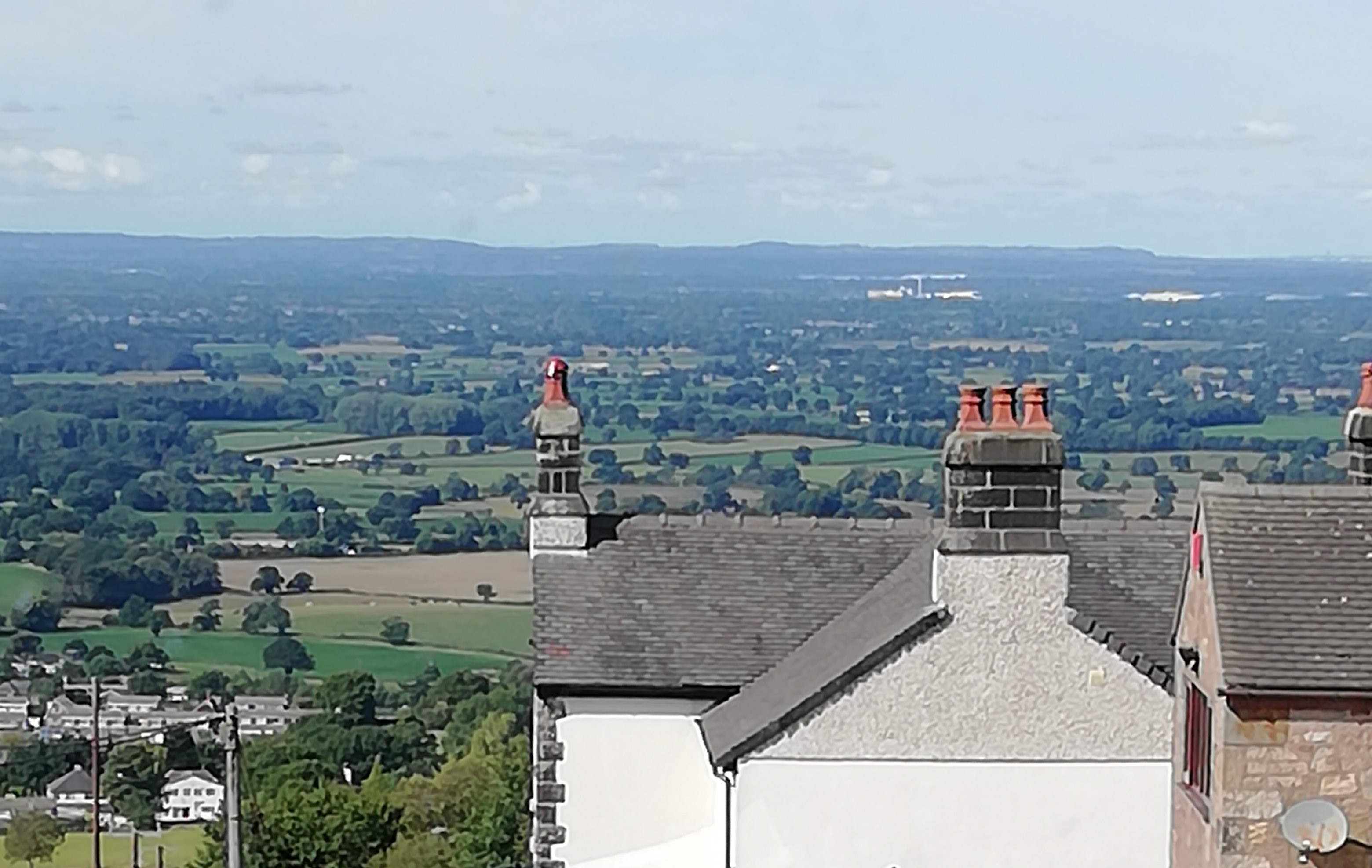
►1906-07—Ten Primitive Methodist MPs 1906 general election & a by-election at the beginning of 1907 allow Primitive Methodists at their centenary to boast ten Members of Parliament, some?/?all being at MC in 07 § 1st significant group of PMs become MPs in 1885 after extension of the franchise & reform of constituencies...inc Arch (1826-1919) MP 1885... BUTare theseTHE1st or...? § the ten all win the 1906 election except Harvey; earliest Fenwick & Wilson 1885, longest continuous (up to 07) Fenwick (not 1st presly, eg Joseph Arch); 6 spoke @Hanley on Sat accJDThompson, sevl{??} preach at MC on Sun{see prog} § the following list gives their constituency, former occupation (half being coal miners), plus other notes of interest, but omits political affiliation
• Enoch Edwards (1852-1912) Hanley, collier, union official; b.Butt Lane; elected 1906
• Charles Fenwick (1850-1918) Wansbeck (Nthbld), collier, union official; elected 1885; actually a working miner until elected, a unique distinction at the time
• William Edwin Harvey (1852-1914) North East Derbyshire, collier, union official; elected in by-election Jan 30, 1907
• John Johnson (1850-1910) Gateshead, collier, union official
• Horace Rendall Mansfield (1863-1914) Spalding, tile manufacturer
• Levi Lapper Morse (1853-1913) Wilton (Wilts), ‘businessman’ & owner of shops
• Arthur Richardson (1860-1936) South Nottingham, wholesale grocer & tea merchant
• David James Shackleton (1863-1938) Clitheroe, cotton worker, union official; knighted xxx
• John Wilkinson Taylor (1855-1934) Chester-le-Street, colliery blacksmith turned printer, union official
• John Wilson (1837-1915) Mid Durham, collier, union official; 1st elected 1885
political party affiliations aren’t given because they’re in flux & not very meaningful at this period – early working-class MPs are all Libs, early Lab MPs are helped in by a pact with the Libs, some term themselves Lib-Lab, the radical ILP fields candidates but doesn’t like the Lib-Lab pact, union-backed MPs are sometimes instructed to join Lab whether they want to or not, etc § most or all have been local preachers, & learned or honed their public speaking & organisational skills in the religious forum; most have been political speakers & officials in the trade union movement; one thing they all have in common is the gift of persuasive public speaking not to say oratory § an article in the Primitive Methodist Magazine, 1906, profiles the 9 PM MPs returned at the ‘recent marvellous General Election’ § ‘They have all been P.M.’s for years, and are proud of it, but the transposition of these expressive letters into M.P.’s is significant of much.’ § xx
►1907—Centenary Camp Meeting Primitive Methodist Centenary Camp Meeting, a huge event attended by about 100,000 people over three days (Saturday-Monday, May 25-27) § 80 or 90,000 people attend on the Sunday, & 70 trains pass through Mow Cop Station, where the platform has been extended for the event & the Manchester-London express makes a special stop § ‘At the little wayside station, the unusual spectacle was seen of great expresses stopping in order that the thousands of visitors might alight and make their way to the hallowed spot’ (W. M. Patterson) § large numbers of motor cars are seen on the hill for the first time, inc a motor charabanc that ‘attracted considerable attention’ on Sun afternoon § 68 preachers or speakers attend, inc such renowned preaching orators as Revds Arthur Thomas Guttery (1862-1920), Robert Hind (1851-1909), Joseph Pearce (1862-1945), & Henry Yooll (see below) § the main local organisers Revd Thomas Hankey Hunt (1842-1921) & Revd George Armitage (1856-1948) stay at Joseph Lovatt’s newly-built house West View, alongside the main camp meeting field § Lewis Irvin Hancock Jones (1906-1988) from Birmingham, described as ‘a centenary baby’, is christened by his uncle MC-born Revd Lewis Hancock during the meeting (Sunday) § an unofficial centenary baby, born April 26, is given the name Hugh Bourne Jepson (d.1978) by proud parents Charles & Sarah § Albert Shakesby (1873-1949) is miraculously cured of his crippled leg, which makes a strong impression on witnesses & becomes legendary but is not entirely credible, Shakesby being a born-again showman-type evangelist & former athlete who later works as an osteopath § a local arrangements committee of MC & district Methodists (Wesleyan as well as Primitive) sees to practical arrangements, from accommodation to sanitation, its secretary Revd George Lee (1851-1919) of Congleton circuit, its officers inc Revd G. G. Martindale (1856-1931; railway arrangements), Edwin Hancock of MC (sanitary arrangements), T. I. Nicklin (catering) [Thomas Isaac Nicklin of Butt Lane (1862-1932)], & Paul Whitehurst of MC (treasurer) § a press room & a special post office are set up in the vestries of the PM chapel, telegraphic address (for telegrams) ‘Camp, Mow Cop, Staffs.’ § Mr Jones from Oswestry povides lunches for a shilling or 8d, & several local & Potteries councils send ‘water-carts’ to supply the tea tents § local residents offer accomodation, stabling, refreshments, etc § ‘The people of Mow are the most excellent and hospitable people possible to meet. Good tempered, smiling and jovial and always willing to oblige visitors. Their courtesy was much admired and appreciated.’ (Chronicle) §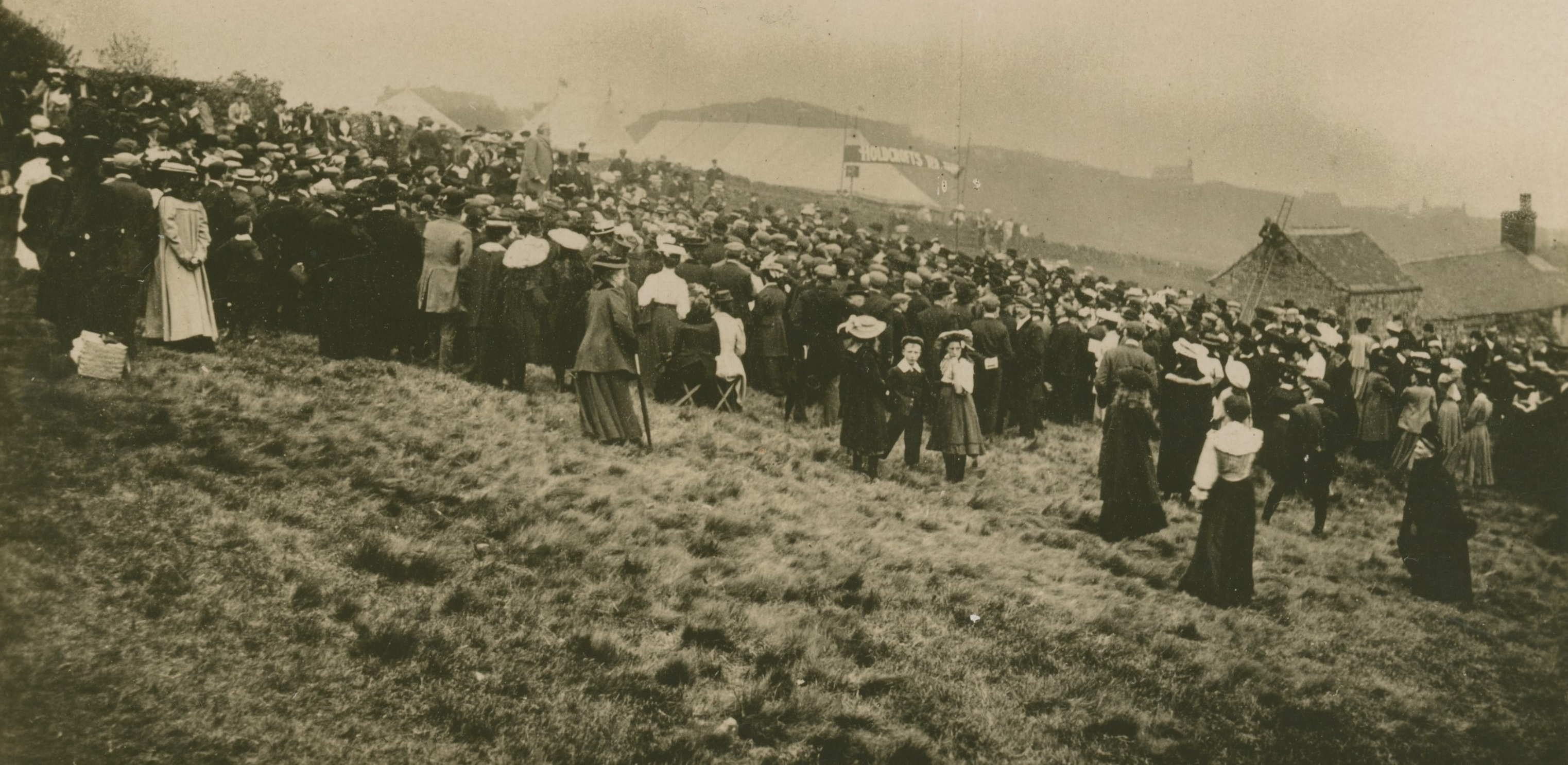
§ Sunday’s proceedings commence with ‘a sunrise devotional meeting at Mow Cop’ at 7 amxxxxx § § in addition to activities on the hill there is a ‘Great Mass Meeting’ at the Victoria Hall, Hanley addressed by ‘Primitive Methodist Members of Parliament’, of whom there are 10* (see 1906-07; 6 present & speak), chaired by Potteries MP & trade unionist Enoch Edwards (1852-1912; currently also president of the Miners’ Federation of Great Britain) (Sat evening; several MPs also preach at the camp meeting on Sun); processions to MC from Congleton, Bradley Green, Tunstall & Kidsgrove (Sun morning) – ‘All roads led to Mow Cop and all of them were crowded with pilgrims on whom the Mount of Beginnings had cast its magic spell. The procession that left Tunstall for Mow at 8 o’clock was a mile long and numbered over five thousand people.’ (Arthur Wilkes) ‘The largest concourse started from Tunstall, and was joined en route by contingents from every village through which they passed, until the huge procession numbered five thousand strong. Enthusiasm intensified as we ascended the slopes. The hill-side rang with the song of gathering multitudes ...’ (B. Aquila Barber); & a meeting at the Jubilee Chapel, Tunstall led by PMism’s 2 greatest laymen W. P. Hartley & A. S. Peake, so crowded that the huge chapel is ‘packed to the doors’ half an hour before the official start & an ‘overflow’ meeting is being held in a neighbouring building by Stephen Hilton (1845-1914), vice-president of conference (Mon evening) § ‘Never before, so far as history relates, have such vast audiences foregathered for religious worship’ except perhaps ‘when the tribes came up from the remotest corners of their land to the great religious feasts on Mount Zion’ (Arthur Wilkes) § ‘a religious gathering that for numbers, motive, and enthusiasm has been scarcely paralleled in history ... It was a joyous pilgrimage, a gathering of the tribes on Mount Zion’ (Thomas Graham) § ‘said by some to be the greatest religious gathering in the history of the Church of Christ’ (Hunt & Armitage) § centenary Souvenir and Programme ... published, edited by Revd T. H. Hunt, with brief historical sections & many photographs, mostly portraits; full programme & lists of organisers, committee members, speakers, chairmen, conductors, prayer leaders & precentors; various words to the wise like ‘Preachers at the Camp Meetings must not exceed 15 minutes each’ & ‘All our Visitors are urgently requested to assist the Committee by preventing trespassing, and by protecting fences, walls and trees from injury’; ending with 23 ‘Hymns & Tunes of Ye Olden Time’ which replace hymn books for the event (see section below) § the membership statistic reported in the handbook is 210,173 (for 1906), the figure for 1907 211,673 § journalist & local historian W. J. Harper publishes his History of Mow Cop and its Slopes in time for the event (see below) § locally born minister Revd Albert A. Birchenough writes Mow Cop: The Birthplace of British Camp Meetings, published by the PM London publishing house (Edwin Dalton); & collaborates with the Congleton Chronicle’s publisher Heads in compiling a historical booklet The Centenary of Primitive Methodism, partly written by Birchenough & partly compiled in-house (see below) § photographer & stationer Frederick Rowley’s Photographic Souvenir of Historic Mow Cop & Early Primitive Methodist Associations is a hardback ‘Album’ reproducing his excellent photos, some also available as prints & postcards (see below) § also issued for the event are postcards, pottery figures, commemorative pottery from various manufacturers, frequently featuring depictions of the Tower as representative of MC (oddly making the Tower rather than the hill a symbolic icon of Primitive Methodism, even though it’s neither featured nor barely been mentioned in PMism hitherto) § ‘Primitive Methodists, if they had sought all the kingdom for a meeting place that should symbolize their bluff and rugged faith, would have had to come to Mow Cop at last. It is the very hill. ... It is Rome, Canterbury, and Mecca to them, and more also.’ (Morning Leader) § many historical articles appear in the Primitive Methodist Magazine & elsewhere in 1907-08, inc by Revds Lewis Hancock (with unique reminiscences of the little-documented MC society), Thomas Graham (1867-1959), Ernest Lucas (1870-1950; a series called ‘Storming the Villages’), William Mottram (1836-1921; b.Waterfall, member of a well-known PM family in that area & great-nephew of Samuel Evans, husband of the great revivalist Elizabeth Evans aka ‘Dinah Morris’) § Revd Joseph Pearce delivers his famous sermon on the Transfiguration, which took place on a mountain, his powers of oratory making MC seem like that mountain & evoking ‘a vivid realisation of God’s presence and power’ (Primitive Methodist Leader) (see 1937) § ‘Now it is for us, if only we are so disposed, to climb this holy hill, to gaze upon the face of the transfigured Christ, ... yes, and enter into the cloud of glory and hear the great God speaking to ourselves’ (Pearce) § another great orator, flamboyant & peculiarly-dressed lay preacher Abner Dale of Bridestones (1834-1907; for about 50 years ‘the most attractive preacher, and the most arresting figure, at the Annual Camp Meeting on Mow Cop’ according to Wilkes & Lovatt) is pictured in the programme & ‘received quite an ovation as he alighted from his trap’ on arrival at MC § a few months later he dies (July) & Paul Whitehurst conducts a memorial service for him at Congleton PM Chapel, & reads a memoir of his life § xxx § Revd George Parkin (1846-1933) is president of the PM Conference during the centenary camp meeting (ie for 1906-07), Revd Henry Yooll (1846-1926) becoming the new president at the ensuing conference, held at Leicester a fortnight after the MC event (June 12-21) § many newspapers local & national cover the event – ‘London dailies placarded the attendance ... as anything from 70,000 to 100,000; great journalists vied with each other in reporting the reverent hilariousness of the worshippers, the tumultuous melodies they sang, the loud Hallelujahs uttered, the powerful Evangel proclaimed, and the changing of lives which took place. One reporter remarked that an unhappy face he encountered not on the hill ...’ (Joseph Pearce) § while among magazine articles Revd Arthur Wilkes’s ‘pen picture’ is reprinted in Wilkes & Lovatt’s 1942 book pp.202-207, & Revd Thomas Graham’s ‘The Centenary Camp Meeting’ is the official account in the Primitive Methodist Magazine, beginning ‘Mow Cop was wonderful. The coming of the people was wonderful ...’ § Scottish evangelist & hymn writer William Leslie (1862-1950) contributes a ‘Mow Cop Song’ to the Primitive Methodist Magazine (presumably witten after the event) referring to ‘This sacred spot – this hallowed ground’ & deploying the surprising image ‘Jacob’s Ladder fades away’ [ie the distance between earth & heaven disappears] in a remarkable statement of the philosophy of holy mountains: ‘A cloud of witnesses surround | Our “Hill of God” this old Camp Ground, | And Jacob’s Ladder fades away | In brighter glory here to-day. | For God Himself is drawing near | And Heaven and earth are blended here.’ § subsequently 2 separate books are inspired by the MC camp meeting & contain descriptions of it: The Mount of Blessing (xxnfxx/hence not in chron/preDayThomps) by Revd J. Dodd Jackson (1861-1918) & The Church That Found Herself (1912) by Revd J. Day Thompson (1849-1919), as well as Revd Joseph Pearce’s later On the Holy Mount (1937) § the centenary camp meeting is so historic & memorable that as early as 1914 W. M. Patterson is already giving talks about it, & as long after as 1969 it figures prominently in Brian Trueman’s television documentary about MC, several interviewees recollecting it vividly § one of them, Charles William Machin, sums it up laconically with the phrase ‘There was plenty of paple, there was plenty of paple’
►1907—We Beheld Again The Rugged Summit ‘We beheld again the rugged summit of the sacred mountain, and saw the gathering of the tribes of Israel. We felt the breezes blowing on our brow and heard the swelling music of the crowd; we heard men pleading with God and with their brethren ...’ – William P. Hartley (1846-1922, knighted 1908, president of Conference 1909) speaking at the Leicester conference following the centenary camp meeting (as reported in the Leader, as quoted by J. D. Thompson) § in spite of risking a surfeit of hyperbole it's hard to resist gathering further expressions of & responses to the experience of the 1907 centenary camp meeting § xxx § xxx § section (mainly) of Quos re 07cm/?alt title suitable Quo of “IWasThere” kind/All Roads Led To Mow Cop/A Gathering Of The Tribes On Mount Zion/The Gathering ...(x2 difft!)etc/ I’ve Preached At Mow Cop, Exclaimed An Aged Brother(anon in JDJackson)/fullQuo:We Beheld Again The Rugged Summit Of The Sacred Mountain(Hartley@Conf) § § § xNEWx
►1907—Handbook Hymns ‘The Handbook Hymns will be used at all the services and meetings’ states the centenary camp meeting handbook or Souvenir and Programme ..., which ends with 23 ‘Hymns & Tunes of Ye Olden Time’ [numbered to 24 but 22 is omitted, a printer’s error], also available separately § they’re rousing revivalist & devotional hymns chosen to evoke the old Primitive tradition, though only 4 (the 1st 4) are not in the current Primitive Methodist Hymnal & too many (8) are by Revd Charles Wesley § 8 are from the 1st proper PM hymn book of 1821, 4 of them not in the 1887 ie current hymnal; 11 are from the 1824 ‘Large’ hymn book & also in 1887 § ‘Christ now sits on Zion’s Hill, | He receives poor sinners still’ [no 1 here as in 1821, an old favourite]; ‘Stop, poor sinner, stop and think, | Before you further go’ [John Newton’s hymn beloved of the Prims, & known to have been sung on MC in 1807]; ‘Come and taste, along with me, | Glory, glory, glory!’ [any excuse to sing or shout ‘Glory, glory, glory’ – see 1821]; ‘My soul’s full of glory, which inspires my tongue; | Could I meet with angels, I’d sing them a song’ (‘There’s a better day’); ‘Come, O come, thou vilest sinner, | Christ is ready to receive’; ‘Thou Shepherd of Israel, and mine’ [CW]; ‘Hark! the Gospel news is sounding, | Christ hath suffered on the tree’ with variant chorus; ‘All hail the power of Jesu’s name! | Let angels prostrate fall’ (‘Crown Him Lord of all’); ‘Hark! the Gospel news is sounding’ again, with the usual wording (‘Now, poor sinner’) [see 1824]; ‘Come, ye sinners, poor and wretched, | Weak and wounded, sick and sore’; ‘Jesus! the name high over all’ [CW]; ‘Would Jesus have the sinner die? | Why hangs He then on yonder tree?’ [CW]; ‘I’ll praise my Maker with my breath, | And when my voice is lost in death’ [Isaac Watts; altered from ‘while I’ve breath’]; ‘Arise, my soul, arise’ [CW]; ‘O happy day that fixed my choice | On thee my Saviour and my God!’; ‘And can it be, that I should gain | An interest in the Saviour’s blood!’ [CW]; ‘Come ye that love the Lord, | And let your joys be known! | Join in a song with sweet accord, | While we surround the throne’ [Watts]; ‘O Lord of heaven and earth and sea, | To thee all praise and glory be; | How shall we show our love to Thee, | Giver of all?’; ‘Spirit of faith, come down’ [CW]; ‘I lift my heart to Thee | Saviour Divine!’; ‘O that in me the sacred fire | Might now begin to glow’ (containing the lines ‘Come, Holy Ghost, for Thee I call, | Spirit of burning, come!’) [CW anticipating or providing the Pentecostal language of the Harriseahead Revivals – cf 1805]; ‘Dismiss me not Thy service, Lord’; ‘See how great a flame aspires, | Kindled by a spark of grace!’ [CW] § no authors are given; the 1st 7 have tunes § xx
►1907—Birchenough’s Booklets locally born PM minister Revd Albert A. Birchenough writes Mow Cop: The Birthplace of British Camp Meetings, a small pamphlet published by the PM London publishing house (Edwin Dalton); & collaborates with the Congleton Chronicle’s publisher Heads in compiling a historical booklet The Centenary of Primitive Methodism § xxxxx
<former PM/Dalton pamph=16pp+pink pictorial covers
>existing>locally born minister Revd Albert A. Birchenough collaborates with the Congleton Chronicle in producing a historical booklet The Centenary of Primitive Methodism, 64 pages, 6d § partly written by Birchenough & partly compiled in-house § its 2 sections are ‘The Centenary of Primitive Methodism’ written by Birchenough pp.7-40 & ‘A Short Description and Guide To the District and Neighbourhood of Mow Cop’ pp.41-64 compiled in-house (mainly historical in spite of the title) § the photographic illustrations are 2 of ‘Mow Cop Tower’ by Frith & Co (with ‘CEST’ stone visible), Squire’s Well & Parson’s Well by P. J. Gater, & 5 rarely-seen photographs by Frederick Willmer: ‘Mow Cop Village’ general view from top of Rock Side [as in Leese Working p.18 lower], the Primitive, Wesleyan & United chapels, & ‘The Old Man of Mow’ § Birchenough’s is a lively & mostly conventional account, with unnecessarily long list of imprisonments & persecutions & interesting remarks re its political implications & effects, noting its connections with trade unionism – PMism saved England from revolution in the 19thC: ‘They taught the half-starved and miserable wage-earner that reforms would come, not by their destruction and burning of property, but by the reformation of their own lives and the ennobling of their own manhood’ § ‘Mow Cop has become an honoured landmark in Ecclesiastical History. Its traditions cannot be ignored.’ § the descriptive/historical section incs the usual topics of Tower (called both Summer House & Castle, both in quotation marks), wells, chapels, Old Man, etc § ‘Tradition asserts that the workmen employed in building the “Summer House” were the ancestors of the Hardings, who were engaged at a shilling per day, and their wages were paid in “lether” money.’ § ‘Carder Well’ is ‘never known to have been dry winter or summer’ § ‘For many years it was the custom to hold an annual Well-dressing, when the principal Wells were gaily dressed with moss and floral designs.’ § the Old Man, it says oddly (not the Tower), ‘in troublous times was used as one of the beacons of Mid-England ... Many people try to climb the rock, but this is most dangerous, and several nasty accidents have been the result.’ § xx
►1907—Rowley’s Photographic Souvenir photographer, stationer & newsagent Frederick Rowley publishes his Photographic Souvenir of Historic Mow Cop & Early Primitive Methodist Associations (aka ‘The Rowley Photographic Souvenir ...’), an oblong hardback ‘Album’ of high quality reproductions of his excellent photos, some also available as prints & postcards § 16 leaves (17 pictures): Hugh Bourne, William Clowes, Castle Staffs side (‘erected as a Summer Observatory in 1754’), Castle Cheshire side (Marefoot House & Old Man in background), Pointon’s Fm (PM Chapel in background), Old Man (‘A block of solid rock near the top of Mow Cop left as a landmark’), PM Chapel (rear of West View in background), Harriseahead Chapel, PM Chapel interior, Cloud Chapel, Bemersley Book Room (‘Mrs. Hall, in front, an old apprentice to folding and stitching in the above room’), Englesea Brook Chapel, HB’s tombstone, Englesea Brook graveyard, Tunstall Jubilee Chapel, old prints of first Tunstall PM Chapel & first MC PM Chapel (on 1 leaf) § no text except title page & captions § a leaflet advertises ‘Rowley’s Photographic Centenary Souvenirs’ – the ‘Album’ 1/3d, ‘Large Pictures of Mow Cop Castle’ both sides 2/3d, ‘Photographs mounted on Plush Stands’ from 1s to 4s § Frederick Rowley (1876-1939), founder of one of Biddulph’s best-known shops which continues long after his death, is a descendant of the Rowleys of Whitehouse End & his mother a Yates from Congleton Edge § xx
►1907—Harper’s History of Mow Cop and its Slopes journalist & local historian W. J. Harper (1850-1923) publishes his History of Mow Cop and its Slopes in good time for the event (March 20), 96 pages & 27 illustrations (some also available as postcards), 6d § it contains material gathered by Harper over the previous 12 years, much of it reprinted from his Tunstall-based periodical The Local Herald (begun 1898), including authentic oral evidence, reminiscence, & tradition from ‘Old Samuel’ (see 1896) & others, sympathetic engagement with the place & its traditional life by Harper himself (who is very familiar with the hill & alert to curious historical detail), as well as a slight tendancy to ludicrous speculation § he thinks the concave roof of the Tower is evidence that beacons were lit upon it, for instance, as if an inaccessible lead roof could be a suitable support for a bonfire! & worries imaginery mysteries re the opening of the church out of apparent date discrepancies that have a prosaic explanation § but as well as the only history of MC before the 21stC, it also provides a refreshing departure (esp at this date) from the approach to MC dominated by the Primitive Methodist story & its stereotype of locals who’ve been saved from their ‘ignorance, indolence, and dissipated habits’ by saintly outsiders (cf 1855-56) § instead Harper offers (for instance) precious anecdotal histories of the various chapels which would otherwise have gone unrecorded, & notes on interesting aspects of the real everyday life of the community like wayside bread-baking ovens & water supply § he is the source (among much else) of the anecdote of young William Stubbs being too late to help dig the foundations for Rookery chapel (illustrating the community’s enthusiasm for it, see 1855), & of the tragic cautionary tale of the little girl killed at Clarke’s Well (see 1872) § not that Harper is immune to the propensity of his age to wax lyrical & say nothing (& cf 1896—Old Samuel) – the Old Man of Mow he says was ‘left intact by quarrymen of a former age ... Why it was so left is ... a matter for conjecture ... sombre and black with the years of weather it has seen; a curio unexplained for ages’ [he fails even to take up his own challenge – no conjectures are offered!] § § Miss Hancock sells the book at the Post Office, & doubtless the postcards too § by 1913 it’s in its ‘third thousand’ or 2nd reprint ie over 2000 copies have sold, when it’s advertised in Harper’s By-Gone Tunstall (title given as ‘Mow Cop &<ch Its Slopes’) § (see also 1894, 1896, ?1898, 1913) § xxxxxmore!xxxxx § xx
►1907—The White Slaves of England Mow Cop branch of the Independent Labour Party formed, its moving spirit presumably Fredric Bartley Ellis (1872-1967), though the more moderate Frederick Willmer (1871-1949) is 1st president of the branch & its early public meetings or events take place at Woodcocks’ Well School (both men are school teachers) § xxx § its 1st public event, billed as ‘Under the auspices of the newly-formed branch of the I. L. P. at Mow Cop’, is a lantern lecture at Woodcocks’ Well School entitled ‘The White Slaves of England’, a keynote address by the North Staffs ‘District Organiser’ C. D. Drysdale (Sat Feb 16 at 7 pm) – going on to Silverdale on 17th, etc § it’s advertised not only locally but in the London-based political newspaper the Labour Leader § the speaker is Charles Douglas Drysdale (1878-1963), political lecturer & organiser on the staff of the ILP § ‘Under the auspices of the newly-formed branch of the I.L.P. at Mow Cop, a lantern lecture entitled, “The White Slaves of England,” was given in the Woodcocks’ Wells Schools, Mow Cop, on Saturday evening last, by Mr. G. Drysdale, the official organiser to the I.L.P. in North Staffordshire. The lecture[r] was introduced by Mr. F. Wilmer, president of the local branch, who manipulated the lantern, and he [Drysdale] at once proceeded to explain to a good attendance the significance of a number of clear and striking slides, which certainly served to show that in some trades in this country the conditions of labour are such as to be easily capable of considerable improvement. A small charge for admission was made in order to cover the cost of the exhibition, which was fully justified by the educational value of the pictures shown.’ (Staffordshire Sentinel, Tues March 5; implied date is 2 weeks adrift, advertised date was definitely Sat Feb 16!) § the provocative title alone encapsulates the core political stance & attitude of the radical left wing of the infant Labour Movement § The White Slaves of England is the title of 2 books published in 1853 & 1897, by John C. Cobden (no biographical info found, seemingly an American) & Robert Harborough Sherard (1861-1943, best-known as a friend & defender of Oscar Wilde) respectively, both outspoken exposées of the exploitation, poverty, appalling conditions, health hazards, etc of industrial workers; the 1st is more substantial, takes a broader view & uses extensive quotations from official reports & other documents; the 2nd (over 40 years later) focuses on 6 particularly problematical trades based on actual visits & conversations, in the manner of investigative journalism, originally appearing as a series of 6 illustrated articles in Pearson’s Magazine, 1896 § the inference from the understated Sentinel report is that the ‘clear and striking slides’ are the illustrations from Sherard’s book, which are drawings stressing industrial sickness, poor conditions, etc § xx
>copiedfr 03+11>Fredric Bartley Ellis becomes assistant teacher at Board School & moves with his family to MC (1903/04; they’re living at Tunstall in 1911 & return to MC between 1915-19) § 1911census: Fredric Bartley Ellis & family are living at the Independent Labour Party Institute in Tunstall in connection with his being secretary of the N Staffs branch (returning to MC sometime between 1915-19)<
►1907 United Methodist Church formed by union of the Methodist New Connexion, Bible Christians, & United Methodist Free Churches in a meeting at Wesley’s Chapel (Sept 17) § marriage to a deceased wife’s sister legalised § a boy climbing the Old Man of Mow during the centenary weekend falls & is killed [no details found] § an excellent photo of the Tower (Ches side), with people, taken by Jesse Allen shows the stonework in unusually good detail, in particular the ‘CEST’ stone (the only known photo where the lettering can be read) (Aug 5) – reproduced in Leese Living p.25 § Mary Booth, formerly keeper of the Railway Inn, dies § Mary Ann Booth, school teacher, dies, living latterly at Bank Cottages with Ambrose & Alice Painter § her will (made Sept 17, proved Nov 2) leaves modest money bequests to Alice, several female friends, her Moores neices & nephews, & the residue to Congleton Cottage Hospital & the Benevolent & Orphan Fund of the National Union of Teachers; executors Frederick Willmer & Thomas Clarke § Mary Minshull, wife of Peter, dies § Elijah Oakes dies at Cardiff (June 23) where he’s been living since at least 1886, his occupation given as coal miner § Charles Charlesworth dies at Arclid Workhouse aged 75 § Timothy Sherratt dies aged 43 or 44 § George Bowker dies aged 33 § Revd Lewis Hancock marries Minnie Timmis (1874-1954), dtr of a Burslem pottery manufacturer § William Hancock, music teacher, marries Elizabeth Baddeley Heath of Newchapel (1888-1969) § three of Joseph Lovatt’s brothers marry – Thomas Lovatt marries Beatrice Leese at Harriseahead Wesleyan Methodist Chapel, Charles Lovatt marries Eleanor Haydock at Goldenhill Church, & William Lovatt marries Ada Shaw at Jubilee Chapel, Tunstall (Primitive Methodist) (she d.1955) § Thomas Mountford, step-grandson of James jnr, marries Elizabeth Fryer of Mount Pleasant (April 29), giving James Mountford, coal carter as his father in the marriage register § Thomas Mountford of Congleton, grandson of Isaac & Lydia, marries Mary Jane Phillips (Nov 11; see 1914) § Abraham Mountford marries Mary Ann Mainwaring (d.1952) § Edwin Harding marries Leah Mellor § Thomas Hughes marries Beatrice Judd (1884-1962) § John Howell marries Hannah Bailey (they both d.1955) § Bertha Jane Blood marries Harry Thornton in Stockport RD § their son Fred Thornton born a few weeks later (April 1; joiner, cabinet maker, & undertaker; d.1987) & grows up on MC with his grandparents William & Mary Ann Blood of Rock Cottage, Rock Side § Margaret Perpetua Howe born at St Luke’s Parsonage, dtr of the curate (d.1956) § Elsie Mould born (later Mrs Porter, see 1927; d.1965) § Helena Clare, dtr of James & Ann of Harriseahead, born (Mrs Williscroft; d.1998 aged 90)
►1908—A Hill Famous For Its Religious Orgies Arnold Bennett’s most popular novel The Old Wives’ Tale published, ‘the acknowledged masterpiece’ (John Wain, 1983) § he refers to Mow Cop in the opening lines, albeit not by name: on page 1 the 3rd sentence speaks of ‘a hill famous for its religious orgies’ § the recent centenary camp meeting in May 1907 won’t have escaped his attention § the book is written in France commencing autumn 1907, completed July 1908 § several pages at the beginning are devoted to an unconventional but stylistically characteristic description of the area in which his 2 heroines live, beginning with the sneaky ref to MC: ‘A little way to the north of them, in the creases of a hill famous for its religious orgies, rose the river Trent, the calm and characteristic stream of middle England. Somewhat farther northwards, in the near neighbourhood of the highest public-house in the realm, rose two lesser rivers, the Dane and the Dove, which, quarrelling in early infancy, turned their back on each other, and, the one by favour of the Weaver and the other by favour of the Trent, watered between them the whole width of England, and poured themselves respectively into the Irish Sea and the German Ocean. What a county of modest, unnoticed rivers! What a natural, simple county, content to fix its boundaries by these tortuous island brooks, with their comfortable names – Trent, Mease, Dove, Tern, Dane, Mees, Stour, Tame, and even hasty Severn! ... [sounds like a latter-day Michael Drayton, tho Jacobean chorography isn’t usually accounted a major influence on him; he goes on] ... England can show nothing more beautiful and nothing uglier than the works of nature and the works of man to be seen within the limits of the county. It is England in little, lost in the midst of England ... The Five Towns ... are unique and indispensable because you cannot drink tea out of a teacup without the aid of the Five Towns; because you cannot eat a meal in decency without the aid of the Five Towns. For this the architecture of the Five Towns is an architecture of ovens and chimneys; for this its atmosphere is as black as its mud; for this it burns and smokes all night ... Bursley has the honours of antiquity in the Five Towns. ... the time will never come when the other towns – let them swell and bluster as they may – will not pronounce the name of Bursley as one pronounces the name of one’s mother. ... There you have it, embedded in the district, and the district embedded in the county, and the county lost and dreaming in the heart of England!’ § it bears out the comment that he portrays the area ‘with an ironic but affectionate detachment’ (Margaret Drabble in The Oxford Companion to English Literature, 2000 edn) – tho we might feel ‘orgies’ more biting than merely ironic; John Wain describes his ref to MC as ‘cool’ § the novel’s story begins in 1863 (when the 2 old wives are sisters of 15 & 16) & chronicles their lives § one of its characters is the upwardly mobile Burslem draper’s assistant Samuel Povey, who signals his sense of improved status by changing from being a Primitive Methodist to being a Wesleyan! § the draper’s shop is that of Bennett’s maternal grandparents, which he knew well as a child (in fact his 1911 preface says he lived there) § the early phase of the book also includes an interesting description of ‘Bursley Wakes’ § Enoch Arnold Bennett (1867-1931) is a prolific writer of fiction & journalism, best known for his novels & short stories ‘set in the Potteries of his youth’: Anna of the Five Towns 1902, The Old Wives’ Tale 1908, Clayhanger 1910 plus sequels, The Card 1911; vols of short stories: Tales of the Five Towns 1905, The Grim Smile of ... 1907, The Matador of ... 1912 § ‘The novels portray the district with an ironic but affectionate detachment, describing provincial life and culture in documentary detail ...’ (Drabble) § see c.1855 for his father coming to MC for a donkey, & 1877-81 for comments comparing him with Henry Allen Wedgwood
►1908 first old age pensions introduced § Arnold Bennett’s most popular novel The Old Wives’ Tale published, mentioning Mow Cop on the 1st page as ‘a hill famous for its religious orgies’ (see above) § Josiah C. Wedgwood’s monumental A History of the Wedgwood Family published, exploring their MC ancestry & providing detailed family trees of the different branches § xxx § xxxxxxx § xxx § Percy W. L. Adams (1875-1952) publishes Wolstanton: (Wolstan’s Town) ..., a history of the church & parish, inc some interesting MC snippets § J. L. Cherry & Karl Cherry (his son) publish Historical Studies Relating Chiefly to Staffordshire, a collection of essays or articles § North Staffordshire Railway Co publishes Picturesque Staffordshire and Surrounding Districts, ‘The Official Illustrated Guide to the District Adjacent to the North Staffordshire Railway’, with maps, exploiting & encouraging the recreational use of the railway § 1st Stoke Company of the Boys’ Brigade visits MC ‘under the command of Captain Deaville’, numbering about 80, inc having their photo taken ‘in sight of the “Owd Mon of Mow” ’ § Hanley YMCA Field Club takes a trip to Astbury & MC inc ‘the old limestone quarry at Astbury’ § centenary camp meeting on The Wrekin, partly spoiled by rain, plus evening meeting in Oakengates chapel (May 4, 1st Mon in May) § Kidsgrove Urban District Council sueing Harriseahead Colliery for damage to roads by its vehicles prompts an anonymous letter to xxx pointing out that there are up to 20 collieries along the length of the road from MC to Turnhurst, & speaking of the many other kinds of heavy industrial traffic that have long used the road xxxQUOxxx (part of the council’s case being that it’s an ‘agricultural’ area where the roads aren’t suitable for such use) § MC Lodge of Miners (ie trade union) holds a tea-party & concert to raise funds for the lodge § ‘Liberal Meeting at Mow Cop’ chaired by Joseph Lovatt, one of the officials Thomas Hughes – ‘A number of Socialists attended the meeting and asked several questions ...’ (Staffordshire Sentinel, May 16) § MC branch of the Independent Labour Party hosts a lecture by Mrs Bruce Glasier at Woodcocks’ Well School, entitled ‘Socialism and the Home’ (Dec) § Katharine Bruce Glasier (1867-1950), pioneer socialist & founder member of the ILP, wife of John Bruce Glasier (on whom see 1924—First Labour Government) § a historical pageant of Saint George, ‘invented and written’ by Revd W. N. Howe, curate of St Luke’s, enacted at Woodcocks’ Well School & then at Old House Green by the congregation of St Luke’s assisted by a children’s choir, MC Brass Band, & musicians William Hancock & Frank Furnivall – ‘Strict archaeological exactness in details was not aimed at ...’ (2 photos reproduced in Leese Living p.107, including fearsome dragon) § Oddfellows friendly society holds a concert, ‘the first of its kind’, in the Wesleyan schoolroom to raise funds for their ‘parade, &c., next Whitsuntide’ – Woodcocks’ Well Brass Band Quartette & Biddulph Prize Glee Party (singers) are among the attractions § Elizabeth Lawton goes missing on Christmas Eve (see 1908-09) § approx date of George Slack Tellwright & some of his children moving back from Smallthorne to Whitehouse End (his mother Hannah’s ancestral home on MC) § Isaac Mountford (V b.1830) dies § Samuel Lovatt of Rookery (father of Joseph) dies § Samuel Yates of Mow Hollow (Stafford House) dies, & is buried at Church Lawton § Allen Belfield or Belford of Hall o’ Lee, formerly of Mount Pleasant, dies, his widow going into Arclid Workhouse (see 1909) § Elijah Harding, shoemaker, dies § Oliver Pointon dies at Etruria, where he & Mary Jane are keepers of the Vine Inn § John Rowbotham of Harriseahead dies § Mary Tellwright, wife of Samuel, dies § James Luke Cartlidge of Smallthorne dies aged 33 § Eliza Swingewood (nee Pointon, dtr of Thomas & Hannah) dies § Frederick William Harris of Primitive St killed at MC Colliery (Church Lane) aged 26 (May 2) § Ann Dale (nee Harding) of Shelton dies § Sarah Booth of Mount Pleasant, wife of Enoch, dies § her widower Enoch Booth of Mount Pleasant (b.1846 son of Joseph & Ann) loses little time in marrying Emma Stubbs, widow (nee Sherratt), both aged 62 (Dec 26) § Rebecca Mountford marries Charles Hawthorne Hancock § John Francis Porter marries Rose Patrick, eldest dtr of waterworks engineer James Patrick § Edwin Clarke, widower, marries Gertrude Pointon, daughter of Solomon & Rhoda § Yorkshire-born Alfred Marsh marries Adeline Johnson, & they live at Wood St (later at Manor Rd) (he d.1958, she d.at Arclid Hospital 1952) § Sydney Ernest Statham marries Ellen Proudlove (she dies less than a year later 1909) § Ellis Sumner of Birch Tree Fm, widower, marries Ellen Yates of Wood Fm (Quarry Wood), 43 year-old spinster, the only one of the Yates siblings to marry (he d.1942, she d.1949) § Florence White marries Herbert Moses of Mount Pleasant § Lilian Roselle Boyson of Bank marries Frederick Henry (Harry) Shulver at Shipmeadow church, near Beccles, Suffolk on Christmas Day, & they live at 1st at Shipmeadow, returning to the area by 1914 (see 1918) § William Smallbrook Rowbotham born (bus proprietor; d.1979) § Jack Ward (vicar of Mow Cop 1961-79) born at xx?xx (d.1999 aged 90) § Joseph Norton Hancock born (musician & music teacher; d.1971) § Evelyn Hannah Lovatt, dtr of Joseph & Annie A., born (Mrs Hough; d.2002 aged 93) § Grace Howell born (Mrs Proctor; d.1997 aged 89) § Miriam Emma Dale born (Mrs Knott of Alderhay Lane; d.1992) § Aaron Mould jnr born (haulage contractor & coal merchant; d.1998 aged 90) § Reginald Bibby born (d.1977) § Victor Ball born at Alderhay Lane, son of Orlando & Edith (d.1982) § twins Leslie & James Sanderson of Dales Green born (Jan 10; James d.1938, Leslie d.1974) § William (Billy) Fitzgerald born at Biddulph (later of Dales Green, marrying Alice Sanderson in 1947; d.1979) § local historian William George Hoskins born at Exeter (who features MC prominently in Chilterns to Black Country (1951) & illustrates it as cover & frontispiece of his seminal book The Making of the English Landscape (1955); d.1992) § ‘Ahead of us, two or three miles to the north, rises a bold hill, its sides concealed by little brick houses and its top crowned by a ruined Gothic tower. This is the famous Mow Cop, a gritstone escarpment rising to over 1,000 feet and a massive landmark for many miles around; and it is one of the holy places of the Methodist movement.’ (Chilterns to Black Country, 1951)
►1908-09—Lost And Found an unusual lost item appears in the ‘Lost and Found’ column of the Staffordshire Sentinel of Fri Jan 1, 1909: ‘Missing, from home at Mow Cop, since December 24th, Elizabeth Lawton. Height 5ft. 3in., sandy hair, stout, fair complexion, age about 27. Had on, grey skirt, black jacket (with grey collar), and boy’s cap. – Information to, Mr. Thomas Lawton, 17 Alderhay-lane, Harriseahead.’ § Thomas & Elizabeth Caroline’s youngest child is actually 29, nearly 30 (b.Jan 8, 1879) § Harriseahead is the postal address, they live at Dales Green § Christmas Eve sounds a bit like an elopement or, depending on state of mind, a glum walk down to the canal – but what becomes of her hasn’t been discovered, she disappears from the records as well § she’s not been identified in the 1911 census (she’s not with her parents in 1911 or 1921) nor in the 1939 register; the only 1909 marriage can’t be verified, the only 1910 marriage doesn’t appear to be her (John & Elizabeth Craddock of Wolstanton village); there’s no 1909 death registration, while of many later EL deaths (it’s a very common name in N Staffs of course) the only local one that coincides in age (1920 aged 40) isn’t her § note that the other lost items in the column – gold safety pin, pair of spectacles, fawn sheep dog named Mick – all offer a reward! § xx
►1909 Revd William Beresford of Leek (1844-1922) publishes Memorials of Old Staffordshire § Revd Joseph Ritson (1852-1932) gives the Hartley Lecture, published in expanded form as The Romance of Primitive Methodism, which becomes a best seller in PM circles & remains one of the best known PM books § millionaire jam manufacturer, philanthropist, & benefactor of Primitive Methodism Sir William Pickles Hartley (1846-1922, knighted 1908) is president of the PM Conference, this year held at Southport (June 16-25) – the only layman since Thomas Bateman in 1867 to hold the position § A New History of Methodism published, edited by Revds W. J. Townsend, H. B. Workman, & George Eayrs, 2 vols covering all the main divisions, the chapter on Primitive Methodism & Independent Methodism written by Revd H. B. Kendall § Primitive Methodist Magazine contains profile & portrait (with big bushy beard) of Edwin Hancock, senior steward of Congleton PM Circuit, describing him as ‘Urbane, kindly, and tactful’ as well as ‘healthy, active and strong’ § Revd Herbert Theophilus Lambert becomes curate of St Luke’s church in succession to Revd W. N. Howe § Thomas Swinnerton plays violin solos with the Kent Green String Band when they perform at Biddulph (for his own band see 1922) § xxx?‘riots’ by minersxxx § xx § advert in the ‘Lost and Found’ column of the Sentinel (Fri Jan 1) reporting Elizabeth Lawton as ‘Missing, from home at Mow Cop, since December 24th’ [1908], placed by her father Thomas Lawton (see 1908-09 above) § Mary Barlow (nee Blood), widow of Benjamin, dies aged 96, the Staffordshire Sentinel reporting her ‘remarkably vigorous health’ & eyesight & that for 72 years since her marriage she has lived in just 2 houses ‘on the ridge of Mow hill’ overlooking the Biddulph valley § Sarah Belfield or Belford, widow of Allen, dies at Arclid Workhouse aged 72 § Sarah Baddeley of Rookery, widow of Henry, dies § Hannah Baddeley of Bank House, widow of George, dies (May 11) § Hannah Holdcroft, widow of Aaron jnr, dies § Lavinia Barlow (nee Harding) dies at Crowborough § Joseph Hancock (shopkeeper) dies (Aug 21) § Joel Clare of Alderhay Lane dies § Levi Clare of Congleton dies § Joseph Booth of (Top) Station Rd dies of heart disease & pneumonia aged 45 § Sarah Ann Leeson dies aged 26 § recently married Ellen Statham (nee Proudlove) dies aged 25 § Emma Ann Shaw of Rookery (nee Dale, Hannah’s sister) dies aged 30 § her father-in-law William Shaw of Rookery killed ‘through being run over by a passenger train at Chell Sidings’ (Fegg Hayes) aged 63 (Dec 11) § Thomas Warren of Rookery suffocates on fire-damp (methane) at Birchenwood Colliery, aged 53 – he is actually making preparations for the removal of the gas (see 1866 & 1893 for deaths of his eldest brother & his twin brother) § his son Felix Warren of Rookery marries Rosa Turner (Dec 30) § Hugh Doorbar of Rookery marries Alice Honeyble [sic] of Congleton at East Crompton, nr Manchester (see 1918—Minnie Pit; she d.1965) § John Tellwright marries Martha Sidwell at Chester, & they run a grocer’s shop at Smallthorne (& later move to Slough) § Thomas (Josiah) Osborne marries Emily (‘Cissie’) Bosson(s) (she d.1972) § Sarah Ellen Lawton of Mount Pleasant marries George Edward Snape at St Luke’s (see 1921—Sale) § Elliot Hancock, son of Nehemiah & Mary Jane, marries Annie Ellerton of Mow House Farm § Joseph Mould jnr, son of Joseph & Agnes Ellen, born (d.1990) § Percy Barlow of Rookery born (d.1999 aged 90) § Bert Boyson born at Mount Pleasant (later of Congleton; d.1989) § Winifred Mary Hancock born, eldest child of Charles H. & Rebecca (later postmistress; d.1974) § Lucy Moses born (Mrs Birchall; d.1980) § Hannah Swinnerton born (Mrs Stone; d.1967) § Harry Gilbert born at Baddeley Green (later of Primitive St; ?d.1988) § Kenneth Arthur Whiston born at Biddulph (later of Chapel Side Fm alias Whiston’s Fm; d.1974)
►1909-10—Mow Cop Waterworks plans mooted when the councils changed in 1904 come to fruition as several deep boreholes into solid millstone grit are sunk at the new waterworks for Kidsgrove Urban District Council (1909) § approx date of waterworks brick engine house, built by Mark Ball of Rookery, large new concrete reservoir (capacity 136,000 gallons) into which the water is pumped, & extension of the piped domestic water supply to the whole of Newchapel civil parish (Kidsgrove CP & town obtains its water from Stoke-on-Trent) § elderly Samuel Colclough is the first engineer in charge (‘Water-man & Engine Tenter’ in 1911 census, aged 72) & Welsh-born Edward Jones (‘Engine worker (pumping water)’) his young assistant aged 67, both living at Hardings Row § Colclough has presumably overseen the development of the works, as he describes himself as ‘Waterman’ as early as the 1901 census (the checker annotating it ‘Barge’ so he goes into the canal boatmen statistic!) § James Patrick has succeeded him by 1915, & Joseph P. Jeffries succeeds him c.1930, his title ‘Water Engineer & Plumber-in-Charge’ § (in 1935 James Lingard of Kidsgrove turns down the post of ‘Water Inspector at Mow Cop Waterworks’) § Fred Moses is also remembered as looking after the waterworks &/or living at the house adjacent, which is approx his location in 1911, but his occupation is coal miner & there’s no evidence he has a formal position at the waterworks § the most famous & distinctive feature of the scheme, the windpump (alias ‘waterwheel’), a long-remembered MC landmark, is an afterthought installed in 1914, presumably to reduce the cost of pumping – see 1914 (& done away with when Staffordshire Potteries Water Board takes over 1948)
►1909-14—Picture Palaces ‘Barber’s Palace’ opens in Station Rd, Tunstall (1909), the 1st purpose-built cinema in North Staffs & the beginning of the great mass entertainment of the 20thC § extended in 1912, with stage & organ (played by George Enoch Longshaw of Pack Moor (1875-1961) [‘unemployed musician’ in 1939 register]), & re-modelled c.1930 into the magnificent art-deco building with ‘BP’ monogram known affectionately as ‘the Barbers’ (demolished 1999) § a Barber’s Picture Palace opens in Biddulph (1910) & further ‘picture halls’ in the Potteries & Buckinghamshire (1911-13), while other proprietors quickly follow the trend, from Burslem’s huge ‘Picture Palace’ (1911) to a little one at Smallthorne (1913-14) § by 1914 there are c.25 cinemas in N Staffs § in Congleton an ‘Electric Picture Palace’ or ‘Electric Theatre’ is converted from a fustian mill (1911) & a purpose-built cinema follows in 1912 § before going to war in 1915 Percy Reddish (1893-1916) is ‘Operator’ ie projectionist at the former § ‘Picture Palace’ becomes a colloquial generic term in the region for a cinema § George Herbert Joseph Barber (1860-1946) is born at Buglawton, his mother dying when he is 6; at 7 he & his infant brother spend time in Chell Workhouse; he works as a farm labourer, coal miner, gasworks stoker, & chemical works (coal by-products) manager, while being a Wesleyan local preacher & giving magic lantern shows on religious & temperance themes, leading to his interest in the new moving pictures § his 1911 census occupation is ‘Public Entertainment Caterer’ § he becomes a councillor in that year, chairs the 1922 ‘Socialist Rally’ on Mow Cop, & that of 1924, & in 1929-30 is 1st Labour Lord Mayor of Stoke-on-Trent – his 1937 autobiography is called From Workhouse to Lord Mayor § moving pictures are 1st shown in existing premises & in tents or booths at fairs (from 1896), building of dedicated cinemas being prompted by licensing introduced in 1909 because of the fire risk
►1910—Primitive Methodist Church Centenary another large Primitive Methodist Centenary Camp Meeting, sometimes referred to as the Centenary Conference Camp Meeting, celebrates the centenary of the actual foundation of the church (June 18-20, Saturday pm to Monday), once again an estimated 80 to 100,000 people attending – it seems surprising that it would be as many as 1907, but in fact the official PM line is that it’s even morexxxxQuoxxxx § rather like the 2 camp meetings in 1807, the 2 centenary meetings tend to become conflated esp in memory – people on the hill later speak of & recollect ‘the Centenary Camp Meeting’ but never mention there being 2; & note Leese’s caption to an excellent photo of the 1910 meeting seemingly correcting the photo’s own caption (Living p.59 upper) § the Centenary Conference (June 15-24) is held at the Jubilee Chapel, Tunstall either side of the camp meeting, outgoing president Sir William P. Hartley, president Revd Samuel S. Henshaw (1847-1926) § xxx?more?xxx § conference & camp meeting handbook & programme or Centenary Souvenir published, introduction by Revd James P. Langham, with brief historical sections, recent progress reports inc on centenary events & fund-raisingxxx?etc, & photographs, inc of the 1907 camp meeting & the ‘Mow Cop Chapel Trustees’ (unfortunately not named) § it ends as usual with a section of ‘Conference Hymns’, expanded from the 1907 selection to 75 § marking the anniversary from the ‘mother circuit’ Revd James Peck Langham (1850-1928) also publishes The Tunstall Book: A Souvenir of a Hundred Years of Grace, 1810-1910 § an attractive commemorative plate by Royal Doulton incs portraits of James Bourne & James Steel [sic] as well as the usual 2 founders, MC Castle in the centre – ‘Mow Cop | The Mount of Beginnings’ § other centenary events in 1910 inc a Centenary Cattle Sale at Wootton Bassett, Wiltshire which raises £200 for the centenary fund (April 6); xxxxx § the centenary fund or ‘thanksgiving fund’ is extended for 2 more years to give a better chance of raising the ambitious target of £250,000; the fundraising spirit is marred by squabbles over its purpose both at & between central & grass-roots levels, with widespread reluctance at local level to commit funds raised locally to non-local uses § [see explanation of date 1910 for centenary under 1860!]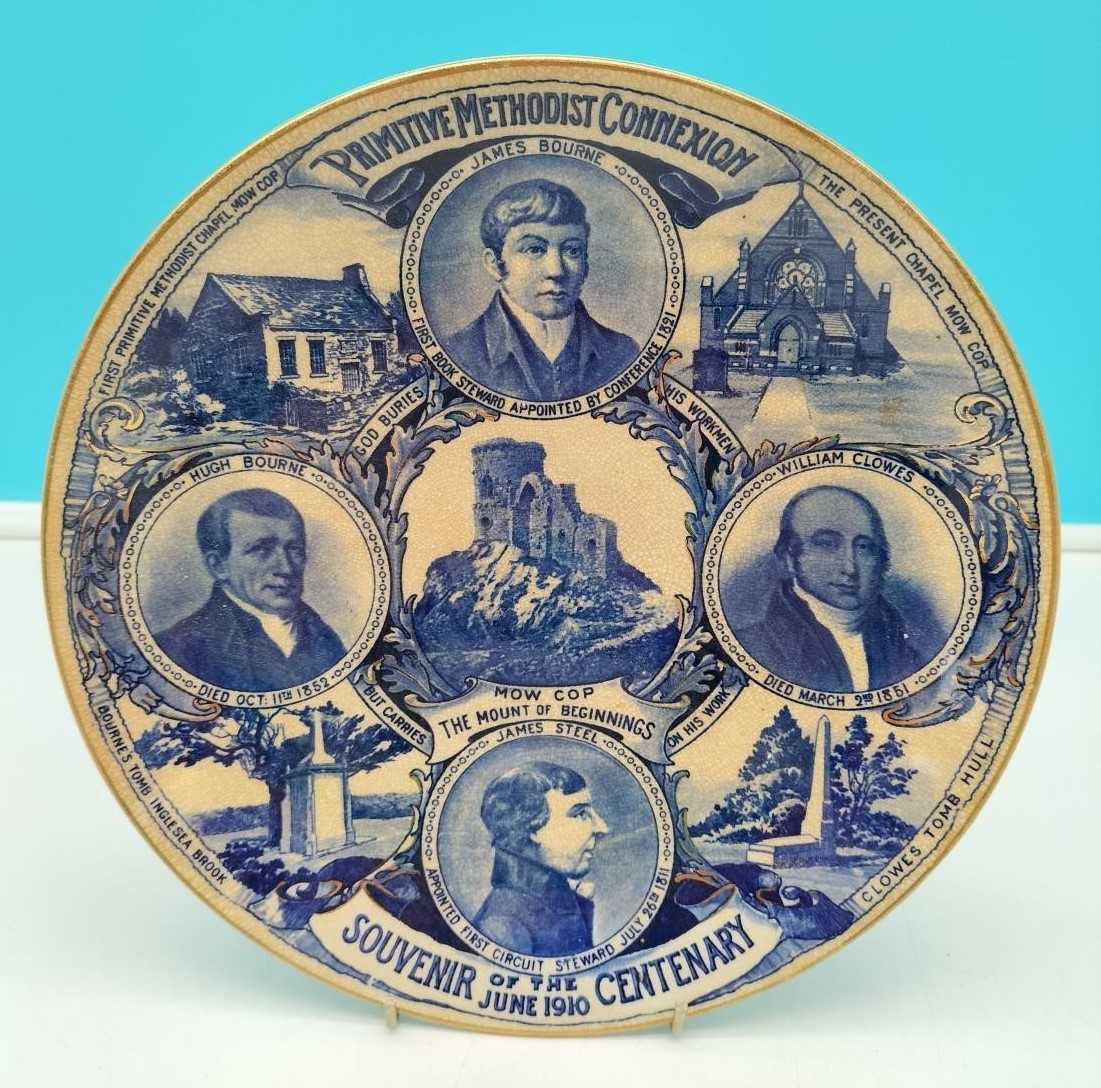
►1910 the 6 pottery towns federate as the new borough of Stoke-on-Trent (March 31; becoming a city 1925), the boundary coming as close to MC as Pack Moor § the Potteries by this date are by population the 12th largest conurbation in England § 2 general elections (Jan & Dec) return 40 & 42 Labour MPs § The Twemlows | Their Wives and Their Homes by Francis Randle Twemlow published at Wolverhampton, a substantial family history by a descendant of the Twemlows of Sandbach, tho with only fragmentary mentions of early Twemlows in Odd Rode & neighbourhood, inc our George Twemlow & his father George of Talke (p.13; but not aware of the MC dynasty) § approx date of Tom Brook Sanderson’s brickworks & quarrying business at Halls Road, the brick kilns & chimneys occupying the Halls Rd/Station Rd triangle (see 1919; he & wife Keziah come from Yorkshire, no relation to the Sandersons of Kent Green & Dales Green) § approx/probable date that Bertram Ellis Barlow of Mount Pleasant enlists in the Royal Engineers (in 1911 he’s in the barracks of the RE Training Depot at Aldershot; see 1915) § Percy Bibby of Welsh Row dies in hospital the same evening after sustaining a fractured skull in a roof fall at Black Bull, aged 23 § Sarah Sidebotham, daughter of William (deceased) & Mary Melinda, dies at Arclid Workhouse aged 24, & is buried at St Luke’s § Emma Eliza Brereton (formerly Wardley) dies in Wigan Workhouse Infirmary aged 77ch (latterly of Hindley nr Wigan) § in spite of being seemingly abandoned by her 1st husband & separated from her 2nd (Thomas Brereton of MC, a poor labourer, who dies at Arclid Workhouse 1893; see 1870), she had her own grocer’s shop in Mill St, Congleton (1901 census) & her probate valuation is an extremely healthy £1101-4-11 § Samuel Tellwright, formerly of Hay Hill & Old House Green, dies § William Harding, stone mason & grocer, dies § James Boon, carpenter & undertaker, dies § Enoch Dale of Shelton (formerly of Rookery) dies § John Hancock of Dales Green dies § Hugh Lionel Woolliscroft & his wife Harriet (née Hancock) die § Hannah Maria Bosson & her husband William die § Francis or Frank Porter, collier & publican (landlord of the Millstone), dies § Randle Walker takes over the Millstone § John Haycock of Mount Pleasant, widower, marries Ann Blood (spinster aged 40, dtr of John & Ann) at St Luke’s (Jan 3), the 1st marriage performed by Revd. Herbert T. Lambert & 1st occurrence of the title ‘Curate of St Luke’s’ in the Odd Rode marriage register § Caroline Cotterill (nee Booth), widow of Cephas, marries Elliot Harding, widower § Beatrice Ellen Chadwick of Brieryhurst Fm marries Thomas Reginald Crake of Rookery Fm § widow Emily Eliza Bowker (nee Statham) marries her late husband’s cousin William Bowker § Tracey or Teresa Ellen Kirkham (dtr of Enoch & Annie Maria) marries Samuel Swinscoe jnr § Alice Oakden born (Mrs Kirkham, shopkeeper; d.1995) § Alice Sanderson of Dales Green born (later Fitzgerald; d.1979) § William (Billy) Lovatt jnr born (d.1998) § Joseph Hancock born, eldest son of Charles H. & Rebecca (carpenter; d.1979) § Denis (or Dennis) Harding, youngest child of George Henry & Eliza of Station Bank, born (d.1985) § Alfred Marsh jnr born (d.1974)
►1911—Census census taken on Sun April 2 is the first in which householders are expected to enter their own information & consequently the first in the form of separate sheets for each household (rather than the previous list format) § results are less consistent & more prone to error, many householders (even literate ones) struggling to understand or comply with the complicated or anyway highly specific requirements § useful new info includes number of years married, number of children living & dead, number of rooms in the house, & nature or business of employer § George Copeland of the Royal Oak thus calls himself a ‘Labourer’ [not a beerseller or innkeeper – his wife Jennie does that, invisibly] & in the next column writes ‘Ganister Com[pany]’ which is more enlightening, as is ‘Black Bull’ to clarify Henry Bailey’s job of ‘Plate layer’ [ie railway work, but he works for the private colliery railway] § irksome errors include instances of people listing themselves as (eg) ‘Mr. Harding’ or ‘Mr. Booth’, or ‘J. Jones’, inconsistent terminology, & vague & inconsistent birthplaces & current addresses, the latter compounding the disadvantage to the local historian in abandoning the geographically clearer list format (eg ‘Scholar Green’ only, as the address on forms for houses at Birch Tree Lane & Drumber Lane) § some errors can however be a bonus – years married & number of children are almost invariably given even when not required (eg for widows or men), & not a few householders think they have to list all their children, living & dead, rather than just those who are living & living with them, which is useful to the historian & genealogist & also boosts the resulting population statistics, as the enumerators who vet the forms frequently fail to cross the excess entries out § Joseph Lovatt is at his new house West View (1910/11 photo of family group at front of house reproduced in Leese Working p.32 lower), but his brother William Lovatt is a coal man in the Harriseahead Lane area (not quite yet at Pump Fm, see 1911 below); Revd H. T. Lambert is comfortably settled in another house built since the previous census, St Luke’s Parsonage; John Bertie Ecclestone & wife Mary Hannah have settled as a young couple in Mount Pleasant; less permanently the keeper of the ‘Railway Hotel’ is a geordie, as in 1901 but a different one, Thomas P. Robson, who probably doesn’t stay long, likewise keeper of the Oddfellows Arms Henry Robinson; also of fairly short duration Tom Brook Sanderson from Yorkshire is living at Station Rd operating a brickworks & quarry (locals later remember ‘Sanderson’s brickworks’ but his census occuption is ‘Stone Quarry foreman’); another small industrialist Samuel Peake & his son Albert (as in Peake’s Pot Bank & Footrail) previously living at High Town, Congleton are now at Congleton Edge; Enoch Booth of Mount Pleasant (b.1858) is described as ‘Hairdresser & Newsagent’, an early occurrence of either occupation on the hill (though cf 1873, xxxx, 1939); aged Sammy Colclough (72) is ‘Water-man & Engine Tenter’ in charge of Kidsgrove UDC’s new waterworks (though living with Sarah Alice Cannam nee Harding, whom he later marries, at 24 Hardings Row, the beautiful cottage built by her father when he got married in 1846, rather than beside the waterworks as might be expected) & his young assistant from Flintshire Edward Jones (67) is ‘Engine worker (pumping water)’ (living next door in the 1st house of Hardings Row proper); George Slack Tellwright (born at Hay Hill but his parents left when he was a baby) has come to spend his last years at his mother’s ancestral home Whitehouse End § Welsh Row will never shake off its reputation as slums inhabited by the rough & destitute end of the community, but in population & prosperity has revived from its parlous state in the 1880s-90s, only 3 of the 25 houses being unoccupied, only 6 headed by widows, & all the men having employment as colliers or iron workers (many more of the latter than formerly), most or all working at Black Bull, the only male householder who isn’t being John Millward, a ‘Bricklayer (Jobbing)’ § nearly all the WR families are local (from the MC, Harriseahead & Biddulph area), excepting only the senior Millwards (from Newport, Shropshire indirectly), the Savages (from the Black Country via Brindley Ford & Bradley Green) & the Smith family, Edward & Eliza & children, who have come to WR directly from the Black Country c.1905 § MC people found in the workhouses inc David Mellor, Abraham Rowley, Daniel Mitchell (from Biddulph Moor, but living with his mother at Bank from the 1870s) & as usual James Lewis & James Webb (now tagged as ‘Imbecile’) all at Arclid, & at Chell (among a huge list of over 600 inmates) Joseph Owen of the old Rookery family § George Henshall & James Turner (son of George & Elizabeth of Mount Pleasant & the Globe) are to be found in Cheddleton Lunatic Asylum, together with long-term resident poor Annie Boulton (nee MacKnight, who dies there in 1936 aged 80), & in Macclesfield Lunatic Asylum Albert Burgess (who dies there in 1915), widow Sarah Shufflebotham (see 1901), & poor Sarah Ellen Whitehurst (see 1891), plus in a different capacity one of the resident nurses Prudence Whitehurst (1890-1963) § in Stafford Prison are to be found John Mountford (the legendary MC character ‘Shirley’ (1876-1936); cf 1918) & Robert Thomas jnr again (see 1881, 1891) § Fredric Bartley Ellis & family are living at the Independent Labour Party Institute in Tunstall in connection with his being secretary of the N Staffs branch (returning to MC sometime between 1915-19) § new-unf:the wider MC diaspora includes: James Harding aged 63 & family living at Ashbourne [(1847-1929) son of John & Anne], Stephen Harding 50 & family at Beighton, nr Sheffield [son of Samuel & Ann], Thomas Foulkes 48 & family at Overseal, nr Ashby-de-la-Zouch [jnr, son of Thomas & Elizabeth of Welsh Row], James Hughes 66 & his 2nd wife at Creswell, nr Mansfield, Notts [son of Thomas & Fanny, older brother of Richard, of the non-Welsh Hugheses], Arthur Edward Hancock 48 & wife & dtr at Bakewell (where he’s a ‘Sorting Clerk & Telegraphist’ for the Post Office), xxx, Alfred Armstrong 39 & wife & son at Aston, nr Birmingham (via Burton-on-Trent, working as a ‘Brewers Drayman’ at Aston Brewery), unmarried Mary Ball 44 a live-in servant with a grocer in Rhyl [dtr of Samuel & Emily, born at the Railway Inn 1865], Henry Baddeley 49 & family at Hay-on-Wye (giving his birthplace as ‘St Lukes, Mow Cop, Cheshire’) [son of Henry, blacksmith, & Anne of Mount Pleasant], xxx+lots in Lancs!+xxx [done:Db Salop Bgm Wales .....] xxx § xx
>info required by the form is: name of every resident, relationship to head of family, age, sex, marital status, years married (married women only, current marriage only), number of children (ie offspring) born alive/still alive/born alive but died (married women only, current marriage only), occupation, business of employer, whether employer/‘worker’ (ie employee)/‘own account’ (ie sole trader), if working at home, birthplace (county plus town or parish), ‘nationality’ (ie citizenship, people born abroad only), ‘infirmity’ (specific ones only: deaf, deaf & dumb, blind, lunatic, imbecile, feeble-minded, plus age at which they became so), number of rooms, signature, postal address § xx
►1911—Fertility Census an ambitious & interesting new group of questions unique to the 1911 census asks how many years married, & number of children born alive, still living, & died (an unnecessary duplication, presumably intended as a check), earning it the nickname the ‘fertility census’ § women’s groups are critical of it, & militant suffragettes protest & boycott it – though coming at the height of suffragette militancy the census is an obvious target for boycott or sabotage anyway (Emily Davison for instance, the suffragette later killed at the Derby, hides in the Houses of Parliament on census night, compelling the census to show her as resident there!) § locally there’s no evidence the questions are resented or boycotted, indeed the info is frequently provided by men & widows, from whom it isn’t required (it’s intended to apply only to existing marriages) § it is however one of the features of the census that causes most confusion or error in completing the forms, including numerical errors (eg Ann Goodwin xxx, Higginsons xxx), & the misunderstanding that all these children have to be listed (rather than just those living & living with them, eg xxx) § the info is extremely useful in historical & genealogical research § xNEWx
►1911—Parish Room Parish Room opened at Mount Pleasant, a wooden building on Church St belonging to St Luke’s church/Odd Rode parish but functioning to all intents & purposes as a village hall § it hosts among other things lectures, political meetings, concerts, dances, tea parties, youth clubs & children’s activities, some of which would formerly have taken place at Woodcocks’ Well School § it’s also used by scouts & various clubs § another immediate if temporary role is as an auxiliary classroom of Woodcocks’ Well School – Charles Lowry becomes an assistant teacher this year & teaches in the Parish Room due to overcrowding until 2 new classrooms are built at WW in 1914 § public educational events inc lantern lectures under the auspices of the Congleton Co-operative Society’s Education Committee (the larger Co-operative Societies devote some of their profits to charitable educational work) § political meetings & talks are a common feature, esp in the run-up to local & national elections – xxearly-example-with-gustoxx, while that of Cyril Hamnett the Labour candidate in 1955 is poorly attended, the 1950 boundary gymnastics placing MC in Knutsford constituency rendering him irrelevant § examples of public entertainments inc ‘Pirates of Penzance’ by St Luke’s Operatic Society 1914, dance organised by Mount Pleasant (Mow Cop) Hospital Committee with music provided by Thomas Swinnerton [?without or before his band, see 1922] & Miss Jeffries 1928, the Verdi opera ‘Il Trovatore’ by Woodcocks’ Well Old Scholars Association 1936, an entertainment by the boys’ troupe of Macclesfield Players 1938 § there’s a parish room at Scholar Green too, & Rode Heath Institute is another under a grander name, sometimes criticised for competing or clashing with the others § the MC Parish Room closes 1965, replaced by MC Village Hall between MP & Bank
►1911 Parish Room built at Mount Pleasant (see above) § mention of MC St Luke’s Recreation Club, an adult cricket club, members inc Mr Willmer § to build an extension to Sandbach School (brick with stone trimmings) apparently ‘The stone quarries at Mow Cop ... were specially reopened’ – presumably referring to squire Egerton’s quarries along the ridge in Newbold manor (see 1848 & cf 1847-49) § beacon or bonfire near the Old Man to mark the coronation of King George V (June 22) § photo reproduced in Leese Working p.62 shows a very substantial structure of hefty logs, pit props & similar timbers with an interior of twigs or brushwood, plus the 7 men who’ve built it § Methodist Central Hall (church, offices & conference centre) opened in London § national insurance introduced to provide unemployment & sickness benefits, operating at 1st through ‘authorised institutions’ eg friendly societies, trade unions § period of strikes & unrest nationally (1911-13) commences with the ‘great transport workers’ strike’ in Liverpool (June-Aug) & a brief national railway strike (Aug 17-19, the 1st national one), representing the growing organisational confidence & frustration of the trade unions xxxperhaps also inspired by the current phase of militant protest by suffragettes (1905 onwards) (see 1912 coal miners, 1913 fustian cutters) [NB>no signif strikes noted since `93...cf unsucc’l strike for min wage `94<ch] § Miners’ Federation & government propose outlawing women working at the pit head, though the women’s movement & suffragettes object because it will limit employment for poor women (cf 1842) § William Lovatt (Joseph’s brother) moves to Pump Farm, & commences his protracted dispute with Kidsgrove council re water supply (see 1922, 1924, 1929) § Charles Lowry becomes an assistant teacher at Woodcocks’ Well School (see 1930) § Ernest Harding purchases cottages from squire Sneyd § Joseph Mould’s dog ‘Mow Cop Rockstone’ wins in the class for collies & sheep dogs at Rugeley Dog Show § J. L. Cherry (1832-1911) reads a paper to the North Staffordshire Field Club on the 1642 ‘Strange Newes’ pamphlet alleging a meeting of Papists on MC (published in 1911-12 transactions) § he & his advisor, well-known Catholic historian Joseph Gillow (1850-1921), are sceptical about the incident (see 1642), though the analysis offered is slight, the paper is actually preoccupied with lurid descriptions of earlier Catholic persecution which has no relevance § later in the year J. L. Cherry dies at Bournemouth (Nov 17) § Sarah Hancock (nee Harding), widow of ‘Old Samuel’, dies § Sarah Boon (nee Lawton), widow of James, dies § Paulina Oakes Hancock dies § her daughter-in-law Bertha Hancock (nee Harding), wife of Thomas M., dies § George Blood dies, his gravestone stating that he ‘met with an Accident in the Stone Quarry at Mow Cop’ aged 73 § Samuel Wood of Stone Villas, formerly of Hardings Row, dies § Henry Yates, eldest of the farming brothers & sisters of Wood Fm (Quarry Wood), dies § James Hamlett dies § Abraham Rowley dies at Arclid Workhouse aged 80 § George Slack Tellwright jnr of Whitehouse End dies aged 34 § John Henry Blood marries Mary Bailey (Dec 28) § Nathaniel Bowker jnr of Bank marries Olive Sanderson of Dales Green (1887-1964), dtr of Peter & Emily, at Saddleworth § Sydney Ernest Statham of Bank, widower, marries Emma Whitehurst (1881-1963) § Walter Swinnerton jnr marries Alice White (1890-1959), dtr of Francis & Catherine § Vernon Brown marries Alice Booth (d.1950) § Edward Booth jnr marries Mary Ann Goodwin (1888-1970) § Harry Mountford marries Prudence Sarah Peach (1892-1966), maid or waitress at the Millstone Inn § Thomas Howell marries Mary E. Lee (she d.1954) § Edward Foulkes jnr marries Ellen McLaren § Henry Ralph Dean of Sands marries Alice Maud Townley of Congleton, & they live at Congleton (see 1916) § sisters Annie & Mary Platt, dtrs of Robert & Emma, marry Fred Schofield & Thomas Lear in a double wedding at St Thomas’s (Lear is a fustian works foreman working for her father, probably at Harriseahead; Mary dies in 1912) § A. E. Griffiths marries Mabel Annie Wood at Kingswinford (later coming to MC as headmaster of the Board School, though living at Kidsgrove) § Ruth Hughes marries Frederick William Price of Harriseahead at Kinsey St PM Chapel, Congleton (see 1915) § their dtr Ella Price born a few weeks later (Mrs Yorke; d.1985) § her future husband William Ellis Yorke born (d.1995) § Ruth Machin born (wife of the younger David Howell; d.2008 aged 96) § Priscilla Howell born, youngest child of Christopher & Hannah (Nov 20; d.2002 aged 90) § Albert Turner jnr born at Rookery (Jan 9; d.2003 aged 92)
►1912—Madly Moting On The Rocks Arthur Brown claims to be one of the first motor car owners on MC with his ‘Wolseley Twin’ – he’s a mechanical engineer & later sets up a motor garage at Rood Hill, Congleton (1931) § schoolmaster Frederick Willmer & his ‘Baby Peugeot’ certainly come earlier ?c.1905, reputedly MC’s earliest, & might also claim the honour of the 1st car crash (1914) § internal combustion engine motor vehicles, invented c.1885 (see 1886), begin to be seen on English roads in the 2nd half of the 1890s but remain a rare sight until about this time c.1912-14 § the 1st occasion that brings multiple motor cars to the hill is the 1907 centenary camp meeting, inc a motor charabanc that ‘attracted considerable attention’ on the Sun afternoon (May 26, 1907) § by 1920 (qv) motor buses & lorries (& chassis with interchangeable bus & lorry bodies) are becoming a distinctive feature of the hill’s haulage industry § Joseph Lovatt in 1923 uses steam wagons provided by James Warburton of Sandbach, but their enomous hauling power isn’t a sufficient advantage to fend off the faster, lighter, more versatile, more easily started, driven & maintained motor lorry § motorbikes also become common in the 1920s, & along with buses (many services specially provided as ‘workers’ buses’) have significant impact on travel to & from work & thus on employment as such § xx § an early but undated comical postcard headed ‘ “Motoring” at Mow Cop.’ depicts a car come to grief on the rocks & its ejected driver in mid air, with comical verse – the car is an early type [similar to Mr Willmer’s Peugeot] consistent with the postcard boom of 1907 if not before (reproduced in Hatcher Centenary p.36) § ‘To bask in summer sunshine, | and whiff the fragrant woodbine | t’were better far, | than madly moting on the rocks | getting nasty horrid shocks | in a motor car. || Youll feel the force of what I say | when you motor out some day | on the cop. | You may say you like the view | but wont it biff it out of you | when you drop.’ § ‘moting’ isn’t a misprint: between the 1880s-1900s mote/moting competes with motor/motoring as the new word for driving or travelling by car, & loses § a photo postcard sent in 1913 (Hatcher p.35) shows a similarly early car on Station Bank, seemingly stationary – it’s already a common practice, whether privately or commercially, to test or demonstrate vehicles on the steep roads of the hill & esp the one-in-three slope of Station Bank § judging by Leese’s illustrations photos of early motor vehicles on the hill aren’t common: another car on Station Bank outside the Railway Inn is the only interesting one (Leese Working p.100 lower), tho the back of Barlow’s delivery van outside the Rookery shop is cute (p.92 upper) § the famous photo of Lovatt & probably Warburton with 3 steam wagons & workmen/drivers at the Castle Banks is Leese Working p.36 upper & the same 3 steam wagons negotiating the hairpin junction at Tunnel End p.71 § hauliers & bus proprietors have their own pumps & repair shops but the 1st public petrol & service station on the hill seems to be William Leeson’s at Mount Pleasant c.1932 § for 1 of the down-sides of motoring see 1936—Death on the Roads § see also 1886 Benz, 1905 Willmer, 1907—Centenary, 1912 Brown, 1914 Willmer’s crash, ?1914 buses, 1920—Buses , 1922 (etc) motorbikes, 1931 Brown, 1932 Leeson’s garage § xx
>Peter Johnson’s 1913 advert for the Railway Inn offers stabling and a garage for cars
►1912—Perseverance Mill Perseverance Mill built, last of the fustian mills, George Shaw (1863-1947) from Congleton its proprietor & manager, & after his retirement his son George Henry Shaw (1898-1953) § George Shaw snr, founder of the mill, is a Primitive Methodist preacher, well-known at camp meetings on the hill & regarded (like a number of popular camp meeting orators) as colourfully idiosyncratic § he is profiled briefly in Wilkes & Lovatt, Mow Cop and the Camp Meeting Movement (1942), p.180: ‘He has an original and ingenious way of reproducing Bible facts and characters that captivates his hearers.’ § George jnr (as he’s known) also becomes a PM preacher, & later also a farmer at neighbouring Mow House Fm § the site of the mill is one of the original fields of Mow House, tho it seems the Shaws don’t own the farm until later (various other occupants are known down to 1939 & it’s for sale in 1921) § in 1939 George snr & wife Jane are still living at Park Lane, Congleton, George jnr at 4 Church Lane, MC (fustian mill manager), Mow House Fm being occupied by dairy farmer Edward Wilson; but both Shaws are living at Mow House Fm at the time of their deaths (1947 & 1953) § note that the claim (eg Leese Working p.86, & see c.1890) that the rear or off-road wing of the building is older, built in 1890, is not correct – maps eg OS 1910 & 1898 (which shows the c.1890 Mount Pleasant Mill) clearly show an empty field § the mill’s L shape plan is deliberately designed to maximise the profitability of the plot of land by giving a roadside access/frontage to the mill (with 1912 name-&-date stone) while allowing houses to be built along the rest of the road § xx
►1912 coal miners’ strike (Feb-April 6)xxx § xxxmorexxx § Staffordshire Sentinel reports (March 19) that ‘Owing to the working of the fustian mills, at which some 205 hands are employed, the distress at Mow Cop is not so acute as in other parts of the district’ § Perseverance Mill, last of the fustian mills, built (see above), George Shaw (1863-1947) from Congleton its proprietor & manager (he is also a Primitive Methodist preacher, well-known at camp meetings on the hill) § Herbert G. Hoover’s translation of Agricola’s De Re Metallica published (see 1556) § PM church publishes The Church That Found Herself: The Story of our Centenary Commemoration, 1907-1911 by Revd J. Day Thompson (1849-1919), a book-length account of the centenary camp meeting & other events, 96pp + photographs § extending the centenary even further (1812 being the year the name was adopted), the Primitive Methodist Magazine publishes a series of article by Revd H. B. Kendall under the title ‘One Hundred Years Ago’ § supplement to the PM hymn book published § Working Men’s Club founded at Mount Pleasant, originally called MC Trades & Labour Club § Fredric Bartley Ellis gives a talk at the ILP Institute, Tunstall on ‘The Need for Socialism’ § approx date that Trentham Gardens become routinely open to the public, following demolition of Trentham Hall § Arthur Brown claims to be one of the first motor car owners on MC with his ‘Wolseley Twin’ (see above, & cf 1905 & 1914 for Mr Willmer) – Brown is a mechanical engineer & later sets up a motor garage at Rood Hill, Congleton (1931) § approx date of Albert Snelgrove, station master of Biddulph, becoming station master of MC (d.at Bank 1948) § EnochEdwards, Primitive Methodist, trade unionist & 1st Labour MP in the region (for Hanley), dies (see 1906) § Primitive Methodist minister & historian Revd Albert A. Birchenough dies § Sir George Baker Wilbraham dies § Elizabeth Moreton (1821-1912), last of the Moreton family, dies & bequeaths the estate or sub-manor of Little Moreton to her 2nd cousin Charles Thomas Abraham, Bishop of Derby (1857-1945) § Thomas Chaddock Lowndes of Ramsdell Hall dies § Thomas Mellor (b.1834, son of George & Mary) dies at his dtr Lavina Swinnerton’s house, Top Station Rd § John Lawton of Biddulph Rd dies (formerly of Mow House, father of John James, Arthur, etc) § James Patrick snr dies § George Harding jnr (son of George & Jane of Dales Green Corner) dies § Alexander (Alick) Harding dies at Congleton § Ellen Forbes Yates of Congleton Edge dies § Hannah Shaw, widow, of Rookery dies § Sarah Ann Ball of Rookery dies § Lois Dale, widow of Benjamin, dies § Hannah Mould, widow, of Mount Pleasant dies § Lydia Ann Mould (nee Mountford) dies during childbirth aged 36 (she has previously had 11 children, only 5 of whom have survived, an unusually high mortality rate by this period) § recently-married Mary Lear (nee Platt) dies aged 25 of eclampsia [a convulsive condition affecting pregnant women] followed by heart failure (Dec 15) § William Albert Leeson, widower, marries Mary Ellen Lycett § John Foulkes marries Annie Elizabeth Austin of Tunstall (1891-1956) § Charles Mountford marries Elizabeth Whitehurst § Ruth Harding, dtr of Alfred & Martha of Mount Pleasant, marries Charles William Chilton § George E. Jeffries marries Alice Beatrice Stonier of Lask Edge (she d.1963) § Esrom Clarke marries Clara Hammond (1891-1978) § their dtr Lilian Clarke born shortly after (May 27; Mrs Roberts; d.2001 aged 89) § Esrom’s youngest sister Mabel Clarke born (school teacher; Mrs Lockett; no d fd) § Beatrice Mary Irene Bowker born, dtr of Nathaniel jnr & Olive (Mrs Ball; d.1991) § Eva Hawthorne Hancock born, dtr of Charles H. & Rebecca (Mrs Baddeley; d.1984) § Elsie Chadwick born (wife of Leslie Sanderson; d.2004 aged 92) § Walter Swinnerton (III) born (d.1968)
►1912-18—Football the pre-war beginnings of the golden age of MC football are represented by various team photographs & other recollections § 1912-13 team photo of St Luke’s Lads Football Club consists of older youths, with Revd Lambert in his clerical hat – reproduced in Leese Living p.100 upper § the picture presumably incs star player Jim Hamlett & captain George Whitehurst § 1913-14 team photo of Mow Cop United FC posing on Close Lane with Castle beyond, mostly younger boys plus adult trainer – Leese Living p.100 lower § this photo is incidentally interesting for showing in the background the Castle Banks in their original state, with the high banks or ancient refuse heaps later removed by Lovatt coming abruptly up to the roadside § Harriseahead Junior FC in the 1914-15 season incs players Fred Minshull & Jonah Hales § 1917-18 team photo of United Methodist Sunday School FC, older youths again, with trainer, shows that the enterprise isn’t entirely interrupted by the War – Leese Working p.64 § teachers & clergy encourage football at this period, presumably as a more acceptable outlet for the energies & competitive instincts of working-class youths than poaching, dog fighting, or the favourite MC pastime of ‘fistycuffs’ § organised team sports are not much in evidence before the 20thC – for the earliest refs to football on MC see 1879 & 1885+?others, & note Scarratt’s comment that ‘Football was unknown’ (1906 referring to 1850s) § but during these pre-war & following years Mow Cop St Luke’s, MC Junior, MC United, & MC Federation are frequently met with in reports of football matches, before the better-known MC Prims (see 1927) & Bank Wesleyans (Bank Athletic) emerge in the 1920s § several star footballers emerge from the MC game at this period: Arnold Hammond (1890-1980) of the St Luke’s team & then Port Vale & Ebbw Vale (see 1914, 1921, 1923), Jim Hamlett (1893-1949) of St Luke’s, & his famous son Lol Hamlett (1917-1986), associated for many years with Port Vale, latterly as trainer
►1913 discussions or negotiations commence re Methodist union § Josiah C. Wedgwood’s Staffordshire Pottery and Its History published, mentioning Mow Cop a number of times § he takes it for-granted that the historical importance of MC sand is an accepted fact (which subsequent historians of the pottery industry have forgotten) § W. J. Harper’s By-Gone Tunstall published, his usual mix of history, anecdote, & oral recollection, mostly reprinted or expanded from his magazine The Local Herald (1898-1912) § it incs transcription of the 1307-08 list of tenants of Tunstall manor, much re local churches & vicars, ‘funny characters’, & sections re Jubilee Chapel & its famous annual sermons, the ‘Kidcrew Buggett’, Newchapel church & churchyard, ‘Old Moreton Hall’ (oddly), etc § date of colour postcard of Kidsgrove including picture of ‘Mow Cop Castle’ § colliery plant & machinery advertised for sale from Lily Rose Colliery, Mount Pleasant, belonging to Booth & Turner § Peter Johnson’s advert for the Railway Inn – ‘the Cosiest Hotel in Cheshire’ – offers stabling and a garage for cars § short strike at the fustian mills over a pay rise given in Congleton but not in the Biddulph & MC area, the owners conceding § at ‘the Mow Cop Mill’ (which not specified) ‘owing to the alleged rough treatment of one of the girls, the strikers smashed a large number of the mill windows’ (Staffordshire Sentinel) – window smashing is a fashionable form of militant protest specifically associated with women, pioneered in recent years by the suffragettes § William Patrick prosecuted for wounding Arthur Harding after a vicious fight outside the Mow Cop Inn § Moses Boon of Congleton Edge enlists in the Cheshire regiment (see 1914) – probably the worst year in history to enlist in the British army § Revd Joseph Ritson president of the PM Conference, this year held at Derby (June 11-19) § Revd John Clement Harding becomes vicar of High Dean, nr Huddersfield § Revd Herbert Theophilus Lambert dies aged 45 (Nov 30), & is buried on the south side of St Luke’s church, the only curate to be buried at St Luke’s § John Barlow, founder of the shop & bakery at Rookery, dies (Oct 2), & is buried at Church Lawton § he has been retired at least 12 years, the business being continued by his sons Thomas & Abel Barlow (though Thomas is later listed as a coal merchant) § Hannah Mould (nee Brereton), widow of Aaron & former keeper of the Church House Inn, dies § Ellen Porter, widow of Frank, formerly of the Millstone Inn, dies § Ellen Nixon (formerly Proctor, nee Boulton) dies § Charles Branson dies § Evangelist Griffiths dies § 15 year-old Herbert Ikin jnr dies on Christmas Eve at Hartshill Infirmary after a horrific accident at Brown Lees Colliery, the cogwheels of the screen (mechanical coal-sorting sieve) at which he works catching his clothing & drawing him into the machinery, crushing his left thigh (a newspaper report in the new year calls him ‘a boy named Ikin’ of MC) § Richard Hughes, widower, marries Elizabeth Smith, widow, at Jubilee Chapel, Tunstall § Jacob Ball marries May Brassington § Ruth Dale marries Ernest Longshaw § Albert Mountford (1852-1914) marries Sarah Ann Rowley (1857-1921) at Congleton?>cert register office, somewhat belatedly (see 1873; they have at least 11 children!) § Eliza Howell marries William Chaddock § Paul Chaddock marries Ada Hulme (she d.1965) § Joseph Lawton of Dales Green marries Annie Chaddock of Congleton Edge at Biddulph § Jonathan B. Chaddock marries Ethel May Hesketh (1892-1986) at Caterham, Surrey, where he is stationed as a sergeant in the Scots Guards (see 1914) § their son Albert John Chaddock born a few months later (d.1974) § Arthur Ogden of Biddulph marries Gertrude Lawton of Kent Green at St Luke’s (they move to MC c.1919) § their son William Arthur (Bill) Ogden born at Biddulph (coal merchant & wrestler; d.1992) § Charles Hawthorne Hancock jnr born (d.1986) § Thomas Whittaker of the Mow Cop Inn born (d.1996), youngest of the 15 known children of Charles (by his 2nd wife Mary Elizabeth) § Frederick (Freddy) Leeson born (garage proprietor; d.1992) § Harry Blood born (d.1975) § May Harding born, dtr of Fred & Mary Kate (Mrs Dean, gravestone at St Thomas’s says May Harding Dean; d.2006 aged 93) § (Eric) Norman Ellis born at Tunstall, son of Fredric Bartley & Sarah Ethel (later poultry farmer & smallholder of Halls Rd; d.1979)
1914-1922
►1914—Well Done, Welsh Row a characteristic of the beginning of the First World War is the willingness not to say enthusiasm with which young, occasionally not so young, & sometimes too young men volunteer to enlist xxx copiedFROM BELOW> voluntary recruitment drive or ‘call to arms’ launched (Aug 5), fronted by war minister Lord Kitchener, its initial target of 100,000 reached within 2 weeks § some dozens of Mow Cop men & youths volunteer to serve their country, joining over a million who have enlisted by the year’s end § 2 friends from Welsh Row, Abraham Millward & George Savage, go to Macclesfield to enlist (Aug 31), aged 17 & 16, lying about their ages (see 1916)///a piece in the Weekly Sentinel (Nov 17) headed ‘Well Done, Welsh Row’ lists 8 young men from this one row of houses who are serving by this date – James Barlow, Albert Cliffe, Joseph Higginson, James Maxwell, Abraham Millward, George Savage, Albert Smith & his older brother John Henry Smith (there are more in the years following, & 4 sons of Welsh Row die – Millward (kia 1916 aged 18), Savage (kia 1916 aged 19), John James Harris (nk 1918 aged 28) & Joseph Thomas Peach (dow recd in action 1917 aged 35)) § Albert Smith (b.Jan 12, 1899) may be the youngest at 15, though boys under 18 lying about their ages figure commonly in the first wave of volunteers <§ plus early recruitment generally (pre-consc or just 1914) § (none of them are Welsh, by the way) § § xx
>Barlow >not in chron<[a Jms jnr aet33 (bc1867) is at WR 01]
>Cliffe >not in chron< (1890-1944)
>Higginson >not in chron< {?rel’d to Arthur of Hd killed1916}
>Maxwell ><[X1867-1946 must be snr; later of WHE]
>ASmith (1899-1968) came to WR c05
>JHSmith >not in chron<
>...encouraged by the prevailing notion that ‘it’ll all be over by Christmas’<
►1914 Percy W. L. Adams publishes A History of the Adams Family of North Staffordshire, containing much interesting material & more refs to Mow Cop than would be expected from the title § Percy W. L. Adams also prepares or edits a printed transcript of Wolstanton Parish Register published by the Staffordshire Parish Registers Society, 2 vols covering 1624-1812 (see 1624), with an introduction inc a history & description of the parish § MC fustian cutters strike at all 4 mills against a reduction in pay rates § William M. Patterson (1842-1918), vice-president of the Primitive Methodist Conference (1913-14) & historian of PMism in the north-east, gives a talk called ‘Recollections of Mow Cop’ at Widnes (& doubtless elsewhere) re the 1907 & 1910 centenary camp meetings § approx date of the earliest motor buses in the region—seems too early—PMT bk says 1919! (see 1920, 1924, 1925) § Frederick Willmer, one of the earliest motor car drivers on MC, collides with a horse-&-trap on Moreton Level § St Luke’s Operatic Society performs ‘Pirates of Penzance’ in the Parish Room (Feb) § Revd Clement Geoffrey Whitaker succeeds Mr Lambert as curate of St Luke’s § Revd F. M. Haughton resigns as vicar of Mow Cop (July 22) to become vicar of Abbots Bromley, & is succeeded by Revd Guy Heathman Parkhouse (1914-17) § George Fryer listed as caretaker of the Trades & Labour Hall, North St § Arnold Hammond joins Port Vale football team (to 1921) § approx date of the portrait photo of MC Boys Brigade leader & Boer War veteran James Arthur Boote with his son Arthur in full uniform & his brother-in-law Fred Cope – reproduced in Leese Living p.102 upper § Noah Stanier enlists in the Cheshire Regiment (March 3) 5 months before the outbreak of war (see 1918, 1919) § Biddulph Urban District Council has several discussions about supplying piped water to the Biddulph part of MC, & decides not to (see 1933) § medical officer for Kidsgrove Urban District reports that Newchapel civil parish now has comprehensive & satisfactory water supply from their MC Waterworks (see 1909-10) § windpump (waterwheel) erected at the Waterworks (presumably to cut the cost of pumping), quickly becoming one of the iconic landmarks of MC – postcards & photos reproduced in Leese Working p.124 & Leese Living pp.40, 41, & back cover (removed c.1948) § carpenter Charles Hawthorne Hancock makes the sails, German engineers install it & are still working on it when war is declared (Tues Aug 4 at 11 pm – midnight Berlin time – announced Aug 5) § police attend to ensure their safety § voluntary recruitment drive or ‘call to arms’ launched (Aug 5), fronted by war minister Lord Kitchener, its initial target of 100,000 reached within 2 weeks § some dozens of Mow Cop men & youths volunteer to serve their country, joining over a million who have enlisted by the year’s end § 2 friends from Welsh Row, Abraham Millward & George Savage, go to Macclesfield to enlist (Aug 31), aged 17 & 16, lying about their ages (see 1916) § a piece in the Weekly Sentinel (Nov 17) headed ‘Well Done, Welsh Row’ lists them among 8 young men from this one row of houses who’ve joined up by this date (see above) § Albert Smith (b.Jan 12, 1899) may be the youngest of the WR brigade at 15, though boys under 18 lying about their ages figure commonly in the first wave of volunteers § the first British soldiers to go to war in August 1914 are already serving or reservists, & soon adopt the nickname ‘Old Contemptibles’ in proud defiance of the ‘contemptible little army’ insult attributed to the Kaiser in Sept 1914 § 3 fatalities affecting MC families occur in the first months of war, all of existing regular or reserve soldiers: Thomas Mountford of Buglawton (grandson of Isaac & Lydia), a former soldier in the Cheshire Regiment (1903-xxx) recalled to serve in the British Expeditionary Force, is killed in action on Aug 24 aged 32, only 10 days after disembarking & on the first day of the Retreat from Mons, in which his battalion, the 1st Cheshires, is virtually wiped out; Jonathan Bertie Chaddock, formerly of Congleton Edge, a sergeant in the Scots Guards who enlisted in 1904, dies less than a month after arriving in France in a military hospital in Boulogne on Nov 2 aged 28, of wounds received in action in the First Battle of Ypres; & Moses Boon of Congleton Edge, who enlisted in 1913, also in the Cheshire Regiment, is killed in action on Nov 16 aged 20, shortly after the nominal end of the First Battle of Ypres § at only 20 days after the outbreak of war & 3 days after the 1st actual engagement between British & Germans, Thomas Mountford is the first fatality with a Mow Cop connection § he is buried at the Audregnies Communal Cemetery in Belgium, & his name is on the war memorial at Buglawton § ?ch?as well as a devastating defeat of an outnumbered & inferior force, the Battle of Mons & ensuing retreat prove a logistical/support disaster, not least on the medical side, such incomplete arrangements as are in place for the care of the wounded being instantly overwhelmed by the scale of the casualties & the speed & ruthlessness of the German advance?ch? § Jonathan Chaddock is buried in the Boulogne Eastern Cemetery in France, & is commemorated on 3 local war memorials: Congleton town, Mossley (churchyard), & Congleton Edge, in the burial ground of the small Wesleyan Methodist Chapel where he had been a Sunday school pupil; he is also on the impressive brass and wood roll of honour plaque in St Augustine’s church, South Croydon, where he and his wife & baby have made their home shortly before he has to go to war (‘They Desire A Better Country’) § in common with vast numbers of those slaughtered, Moses Boon has no known grave, but his name is with over 54,000 others on the famous Menin Gate Memorial, unveiled in 1927 at Ypres in Belgium, as well as on 3 local war memorials – Congleton town, Mossley (his home parish), & Congleton Edge § Thomas Mountford’s widow Mary Jane (nee Phillips) is left with 3 little children: Harry Mountford (1908-1973), Alice May (Mrs Cox; 1909-1995) & Gladys (Mrs Jackson; 1913-2004, aged 91); Mary Jane re-marries in 1917 & dies in 1949 aged 64 § Jonathan Chaddock’s widow Ethel May (nee Hesketh) re-marries in 1916, & lives to be 93 (d.at Lambeth, South London 1986); their son is Albert John Chaddock (1913-1974) § 2 other regular soldiers from MC are already serving at the start of the war: Ellis Barlow (enlists c.1910, killed in action 1915) & Noah Stanier (enlists March 3, 1914, killed in action 1918) § the survival chances of all the original regulars and reservists are very slim § Sarah Hancock (nee Hawthorne), postmistress, dies (Nov 19), succeeded by her daughter Eveline Blanche (Eva) § Fanny Branson (Luke & Harriet Hancock’s youngest daughter) dies § Hannah Hodgkinson of Sands dies, unmarried mother of several children (& whose youngest dtr Sarah Hodgkinson of Sands also has several illegitimate children) § Albert Mountford dies, only a year after marrying his longstanding common-law wife Sarah Ann Rowley (see 1913) § Theophilus Fryer dies § Luke Pointon (III) dies § Eli Harding dies § Lewis Platt of Mount Pleasant dies aged 38 § George Whitehurst, son of John & Martha of Drumber Lane, killed at Mary Hill (aka Hunger Hill) Colliery aged 20 (April 16) § Arthur Farr of Kidsgrove aged about 20, carting stone from Mow Cop for Daniel Boulton, is killed near Grindlestone by a kick from the horse he is leading § 6 year-old Teddie Beech of Wood St falls from the Castle/Sugar Well rock & dies later at the North Staffs Infirmary (May 4) – death cert reads ‘Meningitis from injuries through accidentally falling off certain rocks at Mow Cop’ § Charles Cope marries Nellie Minton of Golden Hill at St Luke’s (May 25) § 13 days later (June 7) the death after 2 hours of their unnamed baby dtr, from asphyxiation, is attributed by the coroner to their use of Mrs Moses of Maxfield’s Bank, an uncertificated midwife, since a trained midwife could have diagnosed the problem & either saved the child or sent for a doctor [Arthur Cope in newspaper report is an error; Mrs Moses is either elderly Mary (1842-1934), wife of James, or her eldest dtr-in-law Sarah Jane, wife of John] § Frederick Tellwright of Whitehouse End marries Elizabeth Hargreaves § Joseph Albert Hancock marries Clara Ann Foster § Hope Taylor marries Alice Hulme § Frances Clare of Alderhay Lane marries Harold Wheeldon § Jane Booth marries Jesse Lawton, now or later of Sands Fm § their son John Lawton born, first of 7 sons (& lastly 1 dtr) § William Kirkham marries Lizzie Foulkes § her brother Benny Foulkes marries William’s cousin Emily Copeland of the Royal Oak (1894-1980) § George Armitt jnr of Roe Park marries Elizabeth Julia Chilton of Lion Cottage, & they live at Bank (see 1918) § Thomas William Lawton of Kidsgrove marries Rachel Ann Wilson (see 1915) § Albert Percival Whitehurst marries Mary Alice Anderson at St George’s, Newcastle, both school teachers, & they set up home at Dimsdale View, Porthill (see 1918) § Arthur William Taylor marries Lucy Price, & they live at Mount Pleasant (see 1914-18) (she d.1982 aged 89) § William Tagell of Hardings Row marries Emma Ikin § Jacob Ikin marries Annie Patrick, widow of James, & they live at Snowdrop Cottage (1876-1941) § (William) John Ikin marries Sarah Hannah (Sally) Pass of Biddulph § their son Herbert (Bert) Ikin born at Sands (wrestler, engineer & publican; d.at Paignton 1981) § Leonard Moors born (Sept 20; bus conductor; serves as ground crew in the RAF in the Second World War & is killed in the Battle of Britain in 1940 aged 25, & buried at St Thomas’s) § George Thomas Lindop of Mount Pleasant born (d.1976) § George Howell (III) born (d.1975) § William Chaddock jnr of Badkins Bank born (d.2001) § William Whitehurst Mountford born, son of Charles & Elizabeth (d.at Clare St 1988)
►1914-18—The Great War at least 57 men from or in some way connected with the MC ridge fall during the Great War, also known as the ‘Great European War’ (they are all mentioned under the appropriate year, with one exception as follows) § unfortunately one of the fallen heroes, Thomas Jones (from the St Thomas’s roll of honour), cannot be identified either in civil or in military records & even the year of his death is unknown – no obvious local TJ emerges from the 1911 census while military records of course contain hundreds of them § a few of the 57 have only slight connections with Mow Cop, being included on MC’s rolls of honour by virtue of their next of kin or other family members living there (eg Frederick Over Bate, William Henry Biddulph, Edward Kitchen, Daniel Mitchell, Joseph Thomas Peach) or added by me on a similarly generous basis (eg Harold Brammer, Thomas William Lawton, Thomas Mountford, Percy Reddish) – a reminder that it is the families & community that are affected by these tragedies – & in 1 case no connection to MC can be established (John William Belfield spends all his life, until going to war, in the vicinity of his birthplace at Back Dane, between Wincle & Swythamley, in Heaton township, neither personal nor family connection to MC can be found, & since his family can be traced back several generations in that area he isn’t related to the Belfield family of MC; investigation of other possible JWBs finds no better candidates) § in addition to brothers Enoch & Mark Ball (see 1918) many of those who die are related or acquainted, inc first cousins Frank & Harold Brammer, Arthur John & George Duckworth, & John James Harris & James Arthur Mould, distant cousins Edward & Harold Clarke, & the two best friends from Welsh Row Abraham Millward & George Savage (see 1914, 1916) § this one row of houses alone loses 4 of its sons § many more serve & survive, inc at least 6 other young men from Welsh Row (James Barlow, Albert Cliffe, Joseph Higginson, James Maxwell, Albert Smith (1899-1968) & his older brother John Henry Smith; see 1914), Rufus Brown who is awarded the Military Medal??-confirm!, all 4 brothers of Moses Boon of Congleton Edge – Joseph, James Henry, Ernest & Arthur, & Herbert E. Taylor’s 2 older brothers Thomas Roland & Arthur William (1893-1972) § others known to have served are Lewis Bailey {nf}, Rufus Brown, James Chadwick {nf}, (Albert Cliff=WR), Charles Heath {?}, William Hodgkinson (1898-1974), Robert Jones {nf}, John Moses (1892-1978; enlists Sept 3 & deserts Dec 19, 1914), Peter Henry Moss (1898-1972), Hugh O’Grady {?}, Arnold Osborne (1891-1931), John Bailey Poole (1899-1970), Elliott Whitehurst (1899-1932; enlists April 19, 1918) § George Booth (1885-1943) serves in the navy 1903-23, & is a medical technician at Chatham RN Hospital for much of the war § over 5·7 million British men serve in the armed forces (volunteers & conscripts), 745,000 die, in total about 20 million die § meanwhile civilians also play a part & find their lives affected as never before in previous conflicts, particularly women, large numbers of whom temporarily replace men in traditionally male jobs, from farm & factory work to bus conductors & the 1st female police constables (1915-19) § suffragettes immediately suspend their campaign & dedicate themselves to war work, esp in medicine & nursing § Quakers & other pacifists (inc many Methodists & socialists, who at this period are predominantly pacifist) face difficulties once conscription is introduced, but again many wish to serve in non-combat roles eg as clerks, ambulance crew, medics or padrés § children go ‘salvaging’ for metal & other useful materials; boy scouts guard potential targets such as bridges, railways, reservoirs, & participate in air raid watches; girl guides learn first-aid, help in hospitals, & work allotments § apart from the appalling death toll, the impact incs press & postal censorship, reduction of pub opening times, re-deployment of factories & workforce to munitions production, conscription (Jan 1916), altering the clocks (May 21, 1916), silencing church bells, food shortages & bread rationing (Feb 1917), subsequent rationing of other staples inc butter & meat on a regional basis (Jan 1918 onwards), widespread cigarette addiction among servicemen, state control of coal mines (Feb 22, 1917), & the first experience of air raids by aeroplanes & zeppelin airships (1st air raid is Jan 19, 1915 in Norfolk) § zeppelins are seen over MC, some people even attributing the partial collapse of the Tower to them (see 1916, c.1918) § extension of suffrage to all male adults & some women (1918) is also in some measure a consequence of the war, which unleashes new social & political aspirations, not least through disaffection as the post-war ‘land fit for heroes’ not merely fails to materialise but is beset by economic hardship etc § after the end of the war plaques recording the ‘roll of honour’ are installed in the two churches, but the only actual public war memorial on the MC ridge is in the little Methodist burial ground at Congleton Edge (see 1917)
> war is declared (Tues Aug 4 at 11 pm – midnight Berlin time – announced Aug 5)
>1st detachment of the BEF lands at Boulogne Aug 16 <NB:doesn’t agree with table!
>1st Chrstms Day truce
>Lusitania torpedoed May 7,`15
>women’s protest march in L demanding right to take part
>coalition govt formed May 25,`15
>1st use (by Gms) of flame throwers Jly 30 `15 at Hooge
>Nurse EC executed—news reaches Eng Oct 16 `15
>evacuation of Gallipoli begins Dec 16 `15
>(Irish rising begins Dublin April 24 `16)
>naval btl Jutland May 31
>Ld Kitchener, his staff & crew killed when their ship hits a mine
>Somme offensive begins Jly 1/tanks used for 1st time Sept 15 (Somme)
>LlG succs Asquith as PM “beg’g” Dec `16
>Gm U-boat campaign begins with announcement of ‘unrestricted naval warfare’ Jan `17
>(Russ rev’n Mch 12)
>LCC School at Poplar bombed killing 18 chn June 13 `17
>US declares war on Gm Apr 5/1st contingent of Am troops in L Aug 15
>Gen Allenby enters Jerusalem Dec 11 (after exploits of Lawrence)
>(photos of women wkg as traction engine & tram drivers, munitions factory wkrs, road menders/tarmaccers, coalmen, navvies/excavators; list also says postmen, porters, motor drivers)
>sugar meat & bread ration cards `18 + pics of queues
>Gms begin grt offensive Mch 21 `18
>Royal Naval Air Service becomes RAF April`18
>Gm & Fr officers meet to arrange an armistice Nov 2/Kaiser abdicates Nov 9 [doct in pic actually dates 28]
>Anzac Day Apr 25 `19 / Gm crews scuttle their surrendered fleet at Scapa Flow June 21
>peace treaty signed at Versailles June 28 / Peace Procession in L Jly 19 & peace formally proclaimed / 1st 2min silence Nov 11 `19 (& ceremony) at new cenotaph & throughout cntry
>1st crossings of Atlantic by planes + airship R34 `19 / 1st commercial L-Paris service
>rly strike Sept `19 § brief chronology of the war:
1914 Aug 4 – Britain declares war on Germany
Britain declares war on Germany Aug 4, 1914
Dec 25 – 1st Christmas Day truce on western front
Jan 19, 1915 – 1st zeppelin air raid on Britain, east coast
Jan 1916 – conscription introduced
2 Feb 1917 – bread rationing introduced
1918 3 March – German peace treaty with Russia
June 28, 1919 – Treaty of Versailles
>>>table copiedfr WarHeroes file>Brief chronology of the War: year date event:
1914 4 August Germany invades Belgium & France, Britain declares war on Germany
8 August 1st Br troops (‘Br Expeditionary Force’) land in Fr
21 August 1st Br new army raised (volunteers)
24 Aug-7 Sept Retreat from Mons in face of initial Gm victories
5-10 Sept Battle of the Marne, followed by Gm retreat to fixed line
15-18 Sept Battle of the Aisne, 1st trenches dug
17 Sept-18 Oct ‘race to the sea’ establishes ‘western front’
12 Oct-11 Nov 1st Battle of Ypres on western front
17-30 Oct Battle of Yser keeps Gms from channel ports Calais & Dunkirk
5 Nov Br declares war on Gm ally Turkey
21 Dec 1st Gm aeroplane air raid on Br, south coast
1915 19 Jan 1st zeppelin air raid on Br, east coast
4 Feb Gm submarine blockade of Br begins; Suez Canal secured from Turks
22 April 1st effective use of poison gas (Ypres)
22 April-27 May 2nd Battle of Ypres
25 April 1st landings at Gallipoli, Turkey (Br, Fr, & ‘Anzacs’ = Au & NZ)
7 May Gm submarine sinks Br passenger ship ‘Lusitania’
1 June 1st zeppelin attack on London
6 Aug Suvla Bay Landing & Battle of Lone Pine, Gallipoli, but fails
25 Sept-4 Nov 3rd Battle of Artois, Br attack Gm line at Loos
6 Oct-12 Dec army recruitment campaign
12 Oct Gms execute Nurse Edith Cavell in Brussels
18-19 Dec withdrawal from Suvla & Anzac, Gallipoli
1916 Jan conscription introduced
21 Feb-18 Dec Battle of Verdun, massive Gm & Fr casualties
29 April Turks recapture Kut-al-Imara (main Br gain in Mesopotamia)
21 May ‘daylight saving’ (British Summer Time) 1st applied
31 May Battle of Jutland, only major naval engagement of the war
1 July-19 Nov Battle of the Somme, 20,000 Br dead on 1st day, massive casualties
15 Sept 1st Br use of tanks (Somme)
7 Dec Lloyd George becomes Prime Minister in coalition govt
1917 2 Feb bread rationing introduced
22 Feb state control of coal mines introduced
24 Feb Br recapture Kut-al-Imara, Mesopotamia
6 April USA declares war on Germany
9-16 April Battle of Arras
April acute food shortages
7-14 June Battle of Messines Ridge, preparatory to major offensive
14 June US troops arrive in Fr
19 July zeppelins attack Br industrial areas
31 July-10 Nov 3rd Battle of Ypres (Passchendaele), massive casualties
6 Nov Br & Canadian forces capture Passchendaele Ridge
20 Nov-7 Dec Battle of Cambrai, 1st major use of tanks
21 Nov Egyptian Expeditionary Force reaches Jerusalem, desists from attacking
8 Dec Turkish forces relinquish Jerusalem
1918 3 March Treaty of Brest-Litovsk, Gm-Russian peace treaty
????? full food rationing introduced
21 March-17 July Gm ‘spring offensive’ makes large advances into Fr, massive casualties
1 April RAF founded
15-17 July 2nd Battle of the Marne, halting Gm advance
18 July-10 Nov final counter-offensive or ‘advance to victory’
xx Aug xxxxx
22 July Allies cross river Marne
8 Aug Br forces break Gm line, counter-offensive moves forward
4 Sept Gms retreat to ‘Siegfried line’
12 Oct Germany & Austria agree to President Wilson’s peace terms
4 Nov Allies agree to peace terms
11 Nov armistice
1919 28 June Treaty of Versailles formally ends the war
11 Nov annual armistice day commemoration & 2-minute silence 1st observed
<<<copied for ref
►1915 Revd J. E. Gordon Cartlidge’s Newbold Astbury and its History published § dispute between James Wright of Mow House Fm & Walley Bros, proprietors of a footrail (?Vicarage Colliery), the water pumped from which pollutes his stream & his cattle’s drinking water (analysis finds it contains a large quantity of iron); he applies in court for ‘nominal damages’ & an injunction to stop them § James Patrick, engineer at the waterworks, installs a device to regulate flow of water at Hardings Row pump (ostensibly to ensure a supply to the waterworks boilers), noticeably reducing the public flow & extending waiting times (from 15 seconds to an hour to fill a bucket, it is later claimed) & thus exacerbating William Lovatt’s complaint against the council § deliberate sinking of the passenger ship Lusitania (May 7, 1198 souls) causes widespread public outrage & anti-German feeling, often expressed in acts of petty persecution against people with German connections or German-sounding names § the Germans execute Nurse Edith Cavell (1865-1915) in Brussels (Oct 12), another atrocity that resonates with ordinary folk & provides a heroine whose name becomes known to all § poison gas is used for the 1st time (1st effective use Ypres April 22) § men from or connected with MC killed in the war are: Bertram Ellis Barlow (of Mount Pleasant, Sept 30, aged 23), James Arthur Casey (of Brown Lees, Oct 13, 22), Thomas William Lawton (of Kidsgrove, Sept 30, 31), Daniel Mitchell (originally Daniel Hibbert, of Thurlwood, Aug 22, 39), Frederick William Price (of Fir Close, Aug 18, 26), James William Skellern (of Crewe, who had emigrated to Australia in 1912, & is mortally wounded at the disastrous Aug 6 Suvla Bay landings and storming of Lone Pine in Gallipoli while serving with the Australian Army (the Anzacs), aged 27) § with no securely established bridgehead, the wounded from these actions are taken to hospital ships anchored off-shore, & James W. Skellern dies on the HS Sicilia the following day (Aug 7) & is buried at sea, as is the custom § his parents John & Maria later add a commemorative inscription to the family gravestone at St Thomas’s, where his grandfather William Skellern was sexton § Thomas Lawton, ?Ellis Barlowch, & ??James Caseych fall in the 3rd battle of Artois, a bold Franco-British attack on the focal point of the German line on the western front, but as usual in this war the territorial gains are minimal and the losses of life terrible § Daniel Mitchell serves with the North Staffords in Egypt (an important theatre of war early on because of the Suez Canal & the Turkish involvement on the German side), but unfortunately dies of dysentery in a military hospital in Alexandria § T. W. Lawton’s widow Rachel Ann (nee Wilson) never re-marries, becomes a shopkeeper in Kidsgrove, & dies in 1955 aged 73; they have no children § F. W. Price’s widow Ruth (nee Hughes) never re-marries & dies in 1979 aged 87; their only child is Ella (Mrs Yorke; 1911-1985) § Elizabeth Foulkes dies aged 93, widow of Thomas & last of the first generation of Welsh Row settlers (living during her last years at High Street, near the Post Office, having left Welsh Row in the 1890s) § Ellen Barlow of Rookery, widow of John, dies (May 15) § Emily Taylor of Dales Green Fm dies § Emma Booth of Mount Pleasant, wife of Enoch, dies § Harriet Baddeley, formerly of Mount Pleasant, dies at Smallthorne, where she is living with dtr & son-in-law Annie & Henry Brockhurst § Rhoda Pointon (nee Hancock) dies § Caroline Bailey (nee Mould) dies § Richard Timmis, 1st headmaster of the Board School, dies at Silverdale § John Boyson of Mount Pleasant, sexton of St Luke’s, dies § Samuel Eardley of Stone Villas dies § Daniel Boulton snr dies at Kidsgrove § William Frederick Robinson, son of the late vicar, dies at Radipole, nr Weymouth, Dorset § Robert Alfred Holt of Cheltenham dies, last of the Holt Brothers (sons of Revd W. H. Holt), proprietors of Hurst & MC Sand Quarries § probable date of Joseph W. Casstles acquiring the MC quarry (see 1931) § Howard Sankey of Corda Well dies of tuberculosis aged 34, & is buried at Astbury § Samuel Colclough, a bachelor aged 75 or 76 (b.1838/9), marries Sarah Alice Cannam (nee Harding, dtr of William & Alice), 20 years younger & presumably a widow, though what’s become of her husband is uncertain, she’s lived separately from him for many years & for several past at 24 Hardings Row (built by her father) with Colclough as ‘lodger’ § Sarah Sidebotham marries her sister Mary Jane’s widower George Booth of Top Station Rd, with whom she’s been living as housekeeper since the 1890s § Lizzie Sutton marries William Leese of Brown Lees (not one of the Dales Green Leeses, in spite of being a coal merchant!), & he joins the Sutton coal merchant business § Violet Goodwin, youngest dtr of Anne Goodwin of Congleton and MC-born Thomas Harding jnr, marries Percy Reddish at Congleton Register Office (May 31), shortly after his enlistment into the Manchester Regiment (see 1916, 1918) § Gertrude Moors of Mount Pleasant (dtr of John & Elizabeth) marries Absalom Jinks of Kidsgrove, & they live at MP § Frances Patrick marries James William Copeland of Stone Villas, step-son of Annie Copeland (nee Shallcross) § Abraham Millward of Biddulph Rd, widower (uncle of the namesake who’s gone to war), marries Ellen Kelly, ?widow (1868-1954) § Harry Kirkham marries Ethel May Bailey (she d.1971) § their son Reginald Kirkham born (d.2008 aged 92) § George Armitt born, son of George (killed in 1918) & Elizabeth Julia (he lives at MC Rd & d.1973) § another serviceman’s baby Arthur William Taylor jnr born (Jan 11; of West St, electrician; d.1984) § Dennis Corke born (d.1989) § Jesse Lawton jnr of Sands Fm born (d.2003) § John Lyon Keeling born at Market Bosworth, Leicestershire (rector of Odd Rode 1950-68, who takes a genial interest in St Luke’s Church & Woodcocks’ Well School; d.1977)
►1916—Ancient Mystery Towers Samuel Smallwood’s booklet Some Ancient Mystery Towers Remaining in England published (covering towers at Kidsgrove, Mow Cop, Bradgate, Plessey, Rottley, & Perranzabuloe), his theory being that they were constructed for the performance of ‘mystery’ plays (medieval religious dramas re-telling Bible stories; see 1422) § it also contains a text of the Chester mystery play of Noah’s flood § aside from the awkwardness of viewing (& hearing) such performances, his thesis falls down at the hurdle that most of the towers cannot possibly be so old § but at least it recognises that strange, tower-like buildings on hilltops form a distinct class, not entirely explained by existing theories, & makes a neat pun of the category ‘mystery towers’ § also a mystery is the identity of the author, who is evidently an erudite crank – none of the Samuel Smallwoods found in censuses seem to fit the bill, no such person is recorded at Hitchin (where the booklet is printed), & the Samuel Smallwood (1853-1929) buried at Attwood Street, the obvious local candidate, is a Kidsgrove coal miner § he’s also a chapel caretaker (?probably Butt Lane), writes a hymn, & may be the SS who speaks in favour of republicanism in 1881, so it could be him § coincidentally local historian & Kidsgrove council official Norman Roche (1916-1997) is born at Manchester the same year, & later discovers Smallwood’s booklet & revives the ‘medieval mystery towers’ idea along with the theory of an earlier tower on MC (aired in the 1955 Weekly Sentinel feature on MC, where it’s also sensibly dismissed by Arthur Ogden)
►1916 John Barlow chairman of Congleton Rural District Council (1916-17) § lantern lecture under the auspices of the Congleton Co-operative Society’s Education Committee in the Parish Room § MC Male Voice Choir mentioned, conductor Thomas Swinnerton (cf 1919) § a mastiff of Richard Colclough’s attacks 5 year-old Cissy Mould, seizing her by the head & neck – she is lucky not to be killed (June 14) § the elderly deaf-&-dumb dog dealer goes to her home immediately to apologise, has the dog destroyed in the presence of the local policeman, & pays the doctor’s bill, but her father Walter Mould sues him for damages anyway; Colclough states ‘he would not have let the dog loose if he had known the children were at the well’, & Tunstall county court awards 2 guineas to the father & 10 to the child (not the £10 & £40 Walter Mould is asking for) § ‘daylight saving’ (British Summer Time ie clocks go forward 1 hr) 1st applied (May 21 to Oct 1), ostensibly to save fuel & encourage longer working days § a zeppelin airship bombs Tunstall xxx+xxx § xxxxx+concerted air raids on the Black Country +Burton&Derby +with civilian casualties+xxx § conscription introduced at the beginning of the year for men aged 18-41 (1st time ever except for press-gangs) § factors such as conscription & news of the enormous casualties & atrocious conditions on the western front alter popular attitudes to the war, dampening the patriotic enthusiasm that has characterised the 1st year or so § men from or connected with MC killed in the war are: Robert Arthur Burgess (of Mossley, April 13, aged 19), Leonard Davies (of Mow Hollow, July 10, 36), Henry Ralph Dean (of Sands & then Congleton, March 20, 26), George Duckworth (of Congleton, Feb 19, 23), Arthur Higginson (of Harriseahead, Nov 19, 22), Thomas Holland (of Drumber Lane, Aug 16, 29), William Edward Jones (of Congleton Edge, June 16, 19), John Machin (of White Hill & then Kidsgrove, March 18, 23), James Mellor (of Wood Street, Nov 18, 19), Abraham Millward (of Welsh Row, July 1, 18), James Arthur Mould (of Fir Close, Sept 14, 20), Percy Reddish (of Congleton, July 1, 22), George Savage (of Welsh Row, Oct 1, 19) § Abraham Millward dies on the first day of the Battle of the Somme (July 1), one of 20,000 British fatalities on that day alone § aged 18, just 4 days before his 19th birthday, Abraham Millward is the youngest Mow Cop hero to die in the war (Edward Kitchen in 1917 being the youngest on our list, but his connection with MC is slight) § later in the same protracted action Abraham’s best friend George Savage is reported to have died whilst rescuing a wounded comrade (Oct 1), but later attempts to recommend him for a posthumous gallantry medal meet with no success § Percy Reddish is also killed on the notorious July 1, & although buried on the battlefield as is the custom the grave cannot subsequently be identified, as is often the case under circumstances of such massive slaughter § he is thus commemorated, along with George Savage & Arthur Higginson, on the Thiepval Memorial, erected near the battlefield in 1932, which honours the barely credible figure of 72,316 British and Commonwealth soldiers who fell in the Somme sector of operations, mostly in the 1916 offensive, who have no known grave § James Arthur Mould & James Mellor, also contemporaries & neighbours, & both Grenadier Guardsmen though in different battalions, also die at the Somme later in the year & are buried at the Guards’ Cemetery at Lesboeufs, on the Somme battlefield § Leonard Davies’s widow (Mary) Alice (nee Pemberton) is left with 5 little children: Phyllis Ivy (1906-1918, she dies aged 11), Blanche Mary (Mrs Brindley; 1907-1988), Leonard Joseph Davies (1910-2000, aged 90), Gilbert Norman Davies (1913-2002) & baby Elizabeth Ann (Mrs Hancock; 1915-xnfx); Alice re-marries in 1925 to Absalom Jinks, continues living at Mow Hollow & has 2 more dtrs (in her forties), dying in 1962 aged 79 § Henry Ralph Dean’s widow Alice Maud (nee Townley) never re-marries & lives to be 93 (d.1982); their only child is Alice (b.1912, later details not found) § Percy Reddish’s widow Violet (nee Goodwin), married for little more than a year, re-marries in 1918 to William Howell of MC & returns to her father’s native village, becoming the mother of Fred Howell (1928-2016) & siblings; she dies in 1960 aged 64 § Nathaniel Bowker snr of Bank View Farm dies § Michael Chaddock of Congleton Edge, collier & Wesleyan local preacher, dies § John Taylor, postmaster of Harriseahead, dies, succeeded by his 2nd wife Elizabeth § Thurza Cope dies § Sarah Ann Stanier, wife of Jonas of Rookery, dies aged 47 § Maria Woodall of Newcastle (nee Pointon or Harding) dies § Aaron Moses of Mount Pleasant dies of lung disease aged 22 (Dec 9) § Phoebe Wright of Mow House Farm dies of bronchitis (Feb 18) § probably precipitating her husband James Wright leaving the farm & living for some years at the Ash Inn (he commits suicide 1919) § their adopted son John Colin Preston marries Jessie Bailey at Bridgnorth (Jan 22), where they live, though he’s on Mow Cop at his mother’s death & signs the death cert, & enlists in the army also at Bridgnorth just over 4 months later (May 31), shipping to France & the front-line trenches near Ypres after 4 months of training (Oct 18; see 1917) § Alice Tellwright marries Allan J. Goodall § Stephen Triner jnr marries Emily Boote (1890-1966) § Levi Harding (b.1895, son of Eli & Dinah) marries Mary Ann Aimson § Samuel Lovatt, youngest brother of Joseph, marries Gertrude Annie Hargreaves § William Sutton Leese born (coal merchant; d.1997) § Violet May Warren born (Mrs Turner; d.2010 aged 93) § Harold Bibby born, ?youngest of the sons of William & Mercy Pamela (1917 in 39 register is incorrect; later of Daisy Bank; d.1998) § Sydney Mountford born, son of Abraham & Mary Ann of Rookery (d.2007 aged 91) § Sidney Holland born at Biddulph (d.2010 aged 94)
>ZEPPELINS---more on 1916 / +more date details
►1917 the Mould brothers’ Mow Cop Colliery (Church Lane) closes § Burton-on-Trent brewery Allsopp leases the Mow Cop Inn from Sneyd{+date/?conn’d with ChWh’s d-Dec11} (expires 1922) § 3 men fall 16 feet when scaffold collapses at Black Bull ironworks, Esrom Clarke of MC & Alfred Cooper of Brindley Ford being injured & Thomas Green of Congleton killed (Tues Oct 16; cf 1920) § William Dale of Mount Pleasant, grocer (not WD of Top Station Rd), retires & returns to his native Congleton § Revd Guy Heathman Parkhouse becomes vicar of Wednesfield, Revd George Percival Jones (vicar of Wednesbury) succeeding him as vicar of Mow Cop (1917-19) § W. H. Beechener of Hanley (see 1922) presides at a ‘Celebration Meeting’ in Hanley to welcome the Russian Revolution (April 20) § bread rationing introduced (Feb 2), & sugar (Dec 31) § acute food shortages, partly resulting from the German U-boat blockade, & giving rise to huge queues, protests, price controls, ‘government bread’ made of inferior flour (because of the shortage of wheat), subsidised ‘national kitchen’ cafeterias, etc § the king calls for voluntary reduction in bread consumption (May 29), & amid continuing anti-German feeling changes his family or dynastic name to Windsor (July 17) § Women’s Land Army (farm workers) established (March) § government takes direct control of coal mines (Feb 22; until 1921), prompted as much by the frequency of strikes & pay disputes as by the war § pottery bearing cartoons of the war by Bruce Bairnsfather produced by Grimwades, Stoke, with the poignant backstamp or inscription ‘made by the Girls of Staffordshire during the winter of 1917 when the boys were in the trenches fighting for liberty and civilization’ [winter = 1917-18] § USA joins the war (April 6) § men from or connected with MC killed in the war are: Frank Bailey (of Birkenhead, formerly of Mount Pleasant, June 16, aged 23), Edward Clarke (of Spring Bank, Oct 12, 20), George Harold Clarke (of Wood Cottage, Aug 1, 24), Enos Cope (of Rock Side ??& then Congleton, Aug 13, 27), Ernest Henry Davenport (of Bank, Sept 20, 25), Arthur John Duckworth (of Congleton, April 25, 20), William Thomas Mellor Jamieson (Nov 23, 22), Edward Kitchen (of Retford, Notts, Sept 26, 18), Charles Thomas Mellor (of Harriseahead & then Brown Lees, Feb 25, 41), Joseph Thomas Peach (of Biddulph, Sept 8, 35), Allen Pemberton (of Tank Lane & then Biddulph, Aug 11, 23), John Colin Preston (of Bridgnorth, formerly of Mow House Fm, July 3, 29), Thomas Rowley (of Sands, Nov 30, 22), Roland Turner (of Mow Hollow & then Kidsgrove, March 26, 20), Able Seaman James William Yates (of Congleton Edge, the only seaman among the MC fallen, who dies in hospital on Dec 31 of wounds received in action, aged 19) § additionally, commemorated on the war memorial in the Methodist burial ground at Congleton Edge is Frederick Over Bate (Sept 25 aged 28), a temporary Lieutenant in the Machine Gun Corps, formerly a school teacher & at the start of the war a student at Bristol University, whose parents Joseph & Mary Jane Bate move to Congleton Edge about this time & donate the monument (made of stone quarried on their own property) ‘to the memory of all those who were lost in the Great War’ – the only public war memorial (excluding plaques & rolls-of-honour) on the MC ridge § F. Over Bate (as he liked to be known), Harold Clarke & Ernest H. Davenport both of the Cheshire Regiment, & several others die in the notorious Third Battle of Ypres (Passchendaele) § as often happens, Ernest Davenport is initially listed as missing (Sept 20) & not confirmed as killed until nearly a year later (Aug 16, 1918), a delay due less to heartless incompetence – army records staff are very efficient – than to difficulty in verifying or eliminating possibilities (such as taken prisoner) after one of the bloodiest and most futile military actions in the history of warfare § Thomas Rowley of the Coldstream Guards (& of the Rowleys of Whitehouse End, one of MC’s oldest families) dies at the Battle of Cambrai, which sees the first large-scale use of tanks, a strategy that has little effect on the high level of infantry casualties as the men are still expected to follow on foot into the thick of battle § at 18 years 2 months Edward Kitchen is the youngest Great War hero on our list, though his connection with MC is slight (Abraham Millward also 18 is the youngest actual MC resident) § Tom Mellor’s widow Fanny (nee Hancock, of the great old MC family) never re-marries, later living at Halls Road, Biddulph, home of their only child Frances (Mrs Gibson; 1903-?1967-nf:onlyL’pool67); Fanny dies there in 1941 aged 76 § Colin Preston’s widow Jessie (nee Bailey) installs a memorial plaque to him in St Thomas’s church (see 1916), & re-marries at Bridgnorth in 1921 § George Whitehurst, grocer & Primitive Methodist preacher, dies § except for William Ford, the Burslem builder, he is the only MC person featured in the 1985 biographical dictionary People of the Potteries, his entry based on a manuscript autobiography ‘My Recollections’, plus photo, though as an excuse for his inclusion the book falsely locates him at Tunstall! § Thomas Booth, retired grocer from Mount Pleasant, dies at his son Thomas jnr’s house at Hobson St, Macclesfield (June 18) (his properties at Mount Pleasant are sold off in 1918) § Henry Longshaw of Longshaws Bank dies § John Bowker of Bank dies § John Shenton of Silverdale dies § Jacob Myatt dies at Lane Ends, nr Packmoor § William Harding (b.1838, son of James & Maria) dies § Lucy Swingewood (nee Harding) dies § Spencer Boon, school teacher, dies at School House, Harriseahead (Sept 12, though he lives on MC) aged 44 § Charles Whittaker, landlord of the Mow Cop Inn & coal carter, dies (Dec 11) § his widow Mary Elizabeth continues to run the pub (purchases it in 1921, & in 1919 marries Ralph Cotterill who continues Whittaker’s carting business) § John Gallimore marries Caroline Harding, dtr of George & Sarah Jane, & they live at Blue Pot Farm § Julia Ann Harding marries Welsh coal miner Percy James Jones at St Thomas’s (see 1920; he d.1965) § Hugh Howell marries Ada Kirkham, dtr of Enoch & Annie (she d.1952) § Frances White marries Joel Whittaker § Frances Egerton of Mount Pleasant marries Levi Mountford, son of Albert & Sarah Ann § Ruth Mould marries Yorkshire-born Gilbert Sanderson (1896-1947), who thus becomes the only member of Tom Brook Sanderson’s family to remain on MC § footballer Jonathan Arnold Hammond marries Ruth Annie McDermott (divorced 1949) § Thomas Lawrence (Lol) Hamlett born at Norton (footballer; d.1986) § Reginald Tellwright born (d.1994) § Vernon Ball born, son of Jacob & May (headmaster of Woodcocks’ Well School 1951-77; d.1995) § Jesse Ikin born, illegitimate son of Irene (Herbert & Mary Ellen’s dtr) (d.1979) § Nellie Millicent Copeland born (Oct 28; marries Jesse Lawton jnr 1940; d.2011 aged 94) § William James Mulholland born (later of Sugar Well Fm; d.1990) § Vladislav Andjelkovic born in Poland (comes to England in the Second World War, marries May Booth 1952 & settles on MC; d.1980)
►c.1918—Partial Collapse of the Tower approx date of partial collapse of Tower, the stonework above & around the south-west upstairs window collapsing – the aspect that faces the prevailing wind § some say it has been badly shaken though not directly hit by zeppelins (zeppelins certainly pass over as there are attacks on Manchester this year – & see 1916), others inc Joseph Lovatt & Enoch Harding say it has been struck by lightning § local superstition (or wit) claims it as a sign or portent of victory because the collapsed part is roughly V shaped § the ‘CEST’ stone, at the edge of the collapsed portion, is presumably lost at this stage § an early photo after the collapse is in a newspaper photo of 1923 {+detlsxx?+others}, another on a multiple-view postcard (undated) reproduced in Leese Working p.124, with children sitting under the collapsed part § the straight wall is intact in both photos, but has partly collapsed across the dummy window in another multiple-view postcard reproduced in Leese Living p.4, usually attributed to MC photographer Arthur Bailey (active from 1924) § the building remains in a precarious state & in danger of further collapse until 1936 (see 1935, 1936), when the so-called restoration does not restore but merely stabilises & squares off the collapsed parts & the arch
►1918—Minnie Pit Disaster huge explosion at the Minnie Pit, part of Podmore Hall Colliery, Halmer End (Sat Jan 12) kills 155 coal miners & subsequently 1 rescue worker – the Minnie Pit Disaster is the worst accident that ever occurred on the North Staffs Coalfield § the explosion of gas & coal dust occurs in the notoriously ‘fiery’ Bullhurst seam, & creates high concentrations of carbon monoxide, which is the cause of the majority of deaths (144) § 40 of the victims are aged under 16 § rescue teams attend from all collieries in the region & work with desperate urgency in the first days, before the possibility of trapped or injured survivors recedes, their task made appallingly difficult not only by the scale of destruction but because the seat of the explosion is over a mile from the pit entrance & the affected area is filled with deadly gas (mostly carbon monoxide & smoke) § the rescue worker who loses his life, suffocating when his respirator fails or is broken, is Hugh Doorbar of Rookery, aged 36, captain of the Birchenwood Colliery rescue brigade (Jan 14) § early on Mon morning as the 6-man team advances through the poisonous atmosphere the other members ‘heard a sharp report and Doorbar say, “Oh! My apparatus.” ... [they] tried to help him but he struggled violently ...’ & becoming affected by the foul air themselves they have to leave his body, which is recovered by Birchenwood No.2 team the next day § a 1913 photo of the Birchenwood rescue brigade appears on the Staffordshire Past Track web site, though the men aren’t named § Hugh Doorbar is a native of Rookery, with a wife & several young children § his widow Alice Doorbar (1883-1965) never re-marries, & dies in 1965 aged 81 at her dtr Elizabeth Ann Holland’s house on Newpool Rd § their eldest child Frank is killed in a surface accident at Birchenwood in 1935 (qv) § Hugh’s 72 year-old father Moses Doorbar of Rookery dies 7 weeks after the disaster § the mining community at Halmer End has many links with MC (see eg 1879, 1882, 1883, 1894) § victims inc Mount Pleasant-born George Burgess aged 41 (b.1876, son of William & Harriet nee Baddeley) & his son Jabez 20, & James Wilcox 21 whose father George (1853-1927) is from Congleton Edge § it’s over a year before the last body is recovered (Aug 19, 1919) & 2 years before the Home Office inspector’s report is issued, following the inquest Oct 1919 & inspector’s inquiry in Stoke Town Hall Dec 1919 (see 1919, 1920) § except for the Bullhurst’s well-known propensity for combustion the actual igniting cause is impossible to determine, though the inspector thinks it most likely a defective miner’s lamp § hearing news of the disaster, a soldier waiting to return to France after recovering from shell-shock is moved to write a poem, mixing thoughts of death in the trenches & death in the pit, sending it to the anti-war weekly newspaper The Nation, which prints it on Jan 26 § ‘There was a whispering in my hearth, | A sigh of the coal ... | the coals were murmuring of their mine, | And moans down there | Of boys that slept wry sleep, and men | Writhing for air. || I saw white bones in the cinder-shard, | Bones without number. | For many hearts with coal are charred, | And few remember. || I thought of all that worked dark pits | Of war ...’ § Wilfred Owen (1893-1918), killed in action later in the year just 1 week before the armistice aged 25, is now regarded not just as the best First World War poet but as the most authentic & influential anti-war poet (‘What passing-bells for these who die as cattle?’) – ‘Miners’ being 1 of only 5 poems published in his lifetime
►1918—Great Sell-Off Begins in common with a national trend yet surprising in its swiftness & simultaneity (& dire in some of its unintended consequences) the ancient manors of Tunstall, Rode, & Newbold begin to consider selling off their land & houses, effectively ending what remains of the ancient manorial system § for squire Sneyd & Tunstall manor see 1911, 1921, 1922-24 § Joseph Lovatt makes his first purchase of part of the summit common this year – 1 acre called Smithy Banks from squire Sir Philip Baker Wilbraham of Rode, site of an earlier smithy & afterwards of the wooden bungalow-cum-tearoom behind Squires Well (see 1923, 1927) § which establishes his relationship with Wilbraham & commences a process with momentous consequences for the history of MC (see 1922-24, 1923—The Mow Cop Dispute, etc) § some time between 1918-22 negotiations & agreements occur to buy more of the summit from both Wilbraham & Sneyd, Wilbraham making a couple of conditions or restrictions (not to build in front of the Tower & not to use it for commercial purposes), verbally or by gentleman’s agreement, but no one seemingly anticipating the difficulties that might follow from transferring ancient common land from paternalist manorial gentry to a bluff local businessman interested in building & quarrying § also in 1918 the eastern part of the manor of Newbold is divided into lots & sold off by squire Sir Philip Grey Egerton, mostly by private sale ?to ?tenants leaving 7 lots to be auctioned on Oct 29, inc Hill Farm (occupied by G. Davenport), 2 fields (Isaac Booth of Corda Well), Lockett’s Tenement (J. Board), Limekiln Farm & the Astbury Lime Works together (Joseph Potts & Daniel Boulton) § whether by design or coincidence or something in the post-war air, various smaller properties also come onto the market § auction sale of Higher & Lower Bank Farms & associated properties & land (inc Bank View land, Kent Green Wharf, & Claphatch Cottage; the former Cartwright Chaddock Shufflebotham estate derived from the Cartwrights of Bank) § auction sale of a smallholding & various houses at Mount Pleasant, formerly belonging to Thomas Booth snr [(1840-1917) the grocer] § Mellors Bank houses advertised for sale (cf 1903) § advert in Chester Chronicle for Hall Green Fm & other houses, cottages & building land at Hall Green, Scholar Green, & Mow Cop § xx
►1918 food rationing extended (from bread) to other staples inc butter & meat (from Jan on a regional basis) § school leaving age raised to 14 § suffrage extended to all men aged 21 &, for the 1st time in parliamentary voting, to women, but limited to those aged 30 or more owning property (June 10; see 1928) § 1st reform of parliamentary constituencies & boundaries since 1885 abolishes the constituency of North West Staffordshire & places that part of MC in Leek, so that the whole Staffs side of the hill is in one constituency; the main part of Cheshire side of MC ie Odd Rode & ?Moreton townships remains in Crewe (until 1950), Newbold Astbury township/?CP & Congleton borough remaining in Macclesfield § a new constituency of Burslem is created (until 1950), to which the existing Labour MP for NW Staffs Samuel Finney transfers as candidate & MP (retires 1922) § general election (Sat Dec 14 – 1st to be held on a single day) follows, 1st for 8 years because of the war, returning 57 Labour MPs (Lloyd-George remains coalition Prime Minister, though Conservatives win majority) § all Labour MPs who have opposed the war (the ILP & many other early socialists being pacifists) lose their seats, but over-all the number of Labour MPs increases – inevitably given the huge number of working men now voting for the 1st time, tho this makes it difficult to tell whether it also reflects post-war aspirations &/or disaffection (as in 1945) § William Bromfield, a native of Leek & official of the main silk workers’ trade union, addresses a political/electoral meeting on MC (June), & becomes ??1st Labour MP for Leek inc the whole Staffs side of MC (Bromfield serves 1918-31 & 1935-45; see xxxxx) § Crewe’s existing Conservative MP Ernest Craig doesn’t stand, opening the door for Sir Joseph Davies standing as a ‘Coalition Liberal’ & postponing the 1st Labour victory in Crewe constituency in spite of its working-class hot spots (see 1885) § Maccxxx?? § Burslem also elects a Labour MP Samuel Finney, while Newcastle’s Liberal MP J. C. Wedgwood defects to Labour soon after (see 1919) § former Prime Minister of Australia Sir Joseph Cook (1860-1947; born Silverdale, a Primitive Methodist lay preacher & passionate trade unionist, emigrated 1885) re-visits MC privately (Oct 2) § John Mountford (‘a man who is not able to stand much drink’) fined 10s for being drunk at the Royal Oak, Harriseahead, having staggered out & said to PC Mallen ‘Are you a [expletive] German or a [expletive] Englishman?’ (June 30) [presumably this is the legendary MC character Jack Mountford alias ‘Shirley’ (1876-1936); cf 1911—Census] § the constable’s bent however is to prosecute the new landlord for permitting drunkenness (convicted but overturned on appeal) § Hugh Howell ordered by Sandbach magistrates to contribute to the maintenance of his mother Elizabeth, who has been dependent on poor relief since Oct 4 § so-called ‘Spanish flu’ worldwide influenza epidemic (1918-19) provides a fittingly miserable end to the war, affecting a quarter of the population & claiming over 200,000 lives in the UK* (over 20 million worldwide) § its peak mortality occurs towards the end of Oct, the 2nd of 3 waves being the most deadly § armistice comes into effect at 11am on Nov 11, ending the war § men from or connected with MC killed in the final year of the war are: George Armitt (of Wood Cottage & then Bank, June 6, aged 28), brothers Enoch Ball & Mark Ball (of Rookery, killed 14 days apart on Sept 18 aged 26 & Sept 4 aged 22), John William Belfield (of Back Dane, Swythamley, March 21, 25), William Henry Biddulph (originally Poyser, of Biddulph Moor, Aug 30, 22), cousins Frank Brammer (of Gillow Heath, killed in action on Oct 8 aged 19) & Harold Brammer (of Congleton Moss, dies in hospital 5 days earlier on Oct 3 aged 20), Henry Rhodes (Harry) Bullock (of Kent Green & then Kidsgrove, Oct 11, 19), Frederick Charles Challinor (of Alsager, who works at Mow Cop Station, March 21, 21), Walter Wallace Hancock (of Fir Close, Sept 14, 20), John James Harris (of Wood Street, March 25, 28), Shadrach Hollinshead (of Galleys Bank, March 27, 24), Walter Mellor (of Pot Bank, April 20, 26), Frederick Henry (Harry) Shulver (of Little Moss, formerly of Shipmeadow, Suffolk, March 21, 33), Noah Stanier jnr (of Mount Pleasant, April 10, 22), Herbert Ernest Taylor (of Spring Bank, Oct 14, 20), Albert Percival (Percy) Whitehurst (recently moved to Porthill, March 25, 37) § ironically the death toll, locally & generally, is highest during the final year of the war § John Belfield & Harry Shulver, both with the North Staffords, & F. C. Challinor with the King’s Shropshire Light Infantry die on the first day of the German Spring Offensive (March 21), which breaks the stalemate of the trenches & makes large advances, threatening to turn the tide of the War, exacting a heavy toll of life § 6 others in our list fall during the 4 months of this onslaught, finally halted at the 2nd Battle of the Marne of July 15-17, followed immediately by the final Allied counter-offensive or ‘advance to victory’ (the French counter-attack on the Marne July 18, the British at Amiens Aug 8) § Harry Bullock & Herbert Taylor die during the last month of fighting (Oct 11 & 14), the more tragic as by early October Germany is defeated & suing for peace § poet Wilfred Owen (see 1918—Minnie Pit Disaster) is killed just a week before the armistice, the telegram reaching his mother in Shrewsbury as the church bells are ringing in celebration on Armistice Day § Harry Bullock & Noah Stanier are among those initially listed as missing, in the latter’s case a delay of over a year ensuing before he is confirmed as killed (Aug 1919) § Sergeant Walter W. Hancock of the North Staffords, son of Walter & Elizabeth & grandson of Luke & Paulina Oakes Hancock of Lilac Cottage, dies from wounds received in action & is buried at St Thomas’s but commemorated on a brass plaque in the Primitive Methodist Chapel, where he has been a Sunday School pupil (though oddly he’s on neither St Luke’s nor St Thomas’s roll of honour) § George Armitt’s widow Elizabeth Julia (nee Chilton) is left with 2 baby sons: George Armitt jnr (1915-1973) & William Armitt (1917-1996); she never re-marries, & dies in 1950 aged 60 § Harry Shulver’s widow Lilian Roselle (nee Boyson), having moved back to the area shortly before the war, is left with 3 little girls: Margaret Rosemary (Mrs Worrall; 1911-1977), Olive Minnie (Mrs Taylor; 1914-1976) & Barbara (Mrs Thorley; 1917-2003); Lilian re-marries in 1924 & lives to be 95 (d.1982) § Percy Whitehurst’s widow Mary Alice (nee Anderson), a school teacher, never re-marries, & dies at Newcastle in 1950 aged 74; they have no children § Mary Selina Williamson, widow of Hugh William, dies at Dane Bank House, Congleton § Elizabeth Mary Wilbraham (nee Barnard), widow of Frank, dies § Sarah Ann Boyson dies § Sarah Ann Pointon (unmarried dtr of Solomon & Rhoda, recorded in 1911 as suffering from ‘Fits’, probably epileptic) dies of dysentery at Cheddleton Lunatic Asylum aged 47 § Leah Booth (nee Mould), wife of Edward, dies (Jan 6), & he donates a memorial plaque to the Primitive Chapel recording that she had been a member for 30 years § Elizabeth Boughey dies at Crewe (nee Conway, b.1846 the 1st child of Welsh parents to be born at Welsh Row) § Elizabeth Minshull, wife of Peter, dies § her son William Henry Minshull of Rock Side, master joiner, dies of influenza on top of his existing bronchitis, aged 54 (July 4) § James Benjamin Fletcher, iron worker & shopkeeper, dies suddenly, the shop continued by his wife Sarah Leah § retired warehouseman Edwin Latham dies (March 18), according to his gravestone of School House (Board School) – he & wife Lucy have come to MC in their old age to live with dtr Mary Alice Lawton, wife of Thomas Marmaduke, who are probably school caretakers § David Mellor (youngest child of George & Mary) dies at Arclid Workhouse aged 70/71>check +cause § Herbert Charlesworth (son of Thomas & Ann) dies at Southampton § Levi Harding (b.1871, son of James jnr & Elizabeth) dies § Abraham Pointon (alias Stanier) dies § George Howell dies, co-founder of the Howell family of MC § his youngest child William Howell marries Violet Reddish of Congleton, widow (nee Goodwin, youngest child of Ann Goodwin & Thomas Harding), whose husband Percy Reddish of Congleton was killed on the first day of the Battle of the Somme (July 1, 1916) aged 22 § Jesse Harding marries Martha Cope § Catherine Mountford marries David Savage jnr at Oldham § Samuel Hancock (b.1892, son of Christopher & Sarah Jane) marries Lydia Matilda Booth (1895-1961, dtr of Joseph & Elizabeth of Mount Pleasant) § Peter Henry Moss marries Ethel Cliff (1897-1941, she dies aged 43; he re-marries 1941 Lily Williamson) § Frederick Chaddock marries Mary Ann Robotham (sic; 1895-1973) § Enoch Booth of Mount Pleasant (b.Nov 23, 1897 son of Enoch & Elizabeth, d.1969) marries Eva Virginia Mary Chandler (1896-1983) § their son Enoch William born shortly after (d.1978) § James Vincent Patrick marries Ruth Manning (d.1973) § their dtr Ida Mary Patrick born (Mrs Sutton; d.2003) § Lavina Swinnerton born (Mrs Mellor; d.2009 aged 91) § Joan A. Bailey born, dtr of Capt. Philip & Doris (actress, teacher, & ambulance driver; Mrs Merrett; no d fd) § Albert Mountford of Mount Pleasant, son of Levi & Frances, born (d.1978) § Clifford Leese born (coal merchant; d.1989) § Myrick Bailey jnr born at Red Hall Fm (d.1989) § Nathaniel Bowker (III) born (d.at Manchester 1977)
►1918-19—Victory Celebrations & War Memorials victory or peace celebrations & commemorations include the compilation of rolls of honour, installation & dedication of memorials & plaques in churches, erection of public war memorials – the only one on the Mow Cop ridge being the war memorial at Congleton Edge (see 1917), & distribution of commemorative pottery § plaques recording the ‘roll of honour’ are installed in the two churches, but the only actual public war memorial on the MC ridge is erected in the little Methodist burial ground at Congleton Edge by the grieving father of F. Over Bate (see 1917) § individual memorials or monuments inc the brass plaque in the PM Chapel to Walter Wallace Hancock (who oddly is on neither roll of honour, though living at Fir Close in St Luke’s district & buried at St Thomas’s), a handsome tablet to John Colin Preston presented by his widow in St Thomas’s (see 1916), & several inscriptions on family gravestones § the beautiful white marble roll-of-honour tablet in Kidsgrove church is probably the last to be installed, in 1928, 4 of its heroes {?+“Herbert” Bullock} having connections with MC or the Rookery area (‘Pro Deo et Patria’) § peace celebrations are mostly held in 1919, inc ‘Peace Day’ (July), consisting of tea parties & entertainments – for instance a tea party at Woodcocks’ Well School for little children, over 65s & widows, inc a display by ‘the St. Luke’s Morris Dancers’ directed by Mr Willmer & accompanied by Mrs & then an evening dance in the Parish Room, or a party for ‘returned service men’ at Bank Chapel § treaty of Versailles formally ends the war (June 28, 1919) § annual Armistice Day commemoration & two-minute silence 1st observed (Nov 11, 1919; formal ceremonies moved to ‘Remembrance Sunday’ 1946) § Cenotaph in London completed as national war memorial (1920, replacing temporary structure of 1919), funeral of the ‘unknown soldier’ or ‘unknown warrior’ at the Cenotaph (Nov 11, 1920) § artificial poppies introduced (1921) – many soldiers having noticed how they grow in profusion in the disturbed battlefields & burial grounds § letter in the Staffordshire Sentinel (May 14, 1919) from H.T. adds to the current discussion of war memorials the proposal of ‘a Tower or Column at the summit of Mow Cop’ or ‘a Watch Tower ... with the names inscribed therein’ (by implication, of all Cheshire & N Staffs fallen!) – ‘no doubt arrangements could be made with the landowners. / It would be a good opportunity to remove the “eye sore” at present standing in ruins, which I understand has no historical value’ § it seems far-fetched to suggest that ‘H.T.’ might be Joseph Lovatt on the basis that they are his inverse initials, yet he cares little for the Tower, refuses to repair it, threatens to demolish it for spite when his ownership is challenged, & later proposes to give it as a war memorial! (he isn’t yet the owner but has begun the process) § another, less triumphalistic way of commemorating the war is the concerted raising of funds for hospitals, inc the re-dedication of events like annual parades & carnivals (inc MC’s – see 1924) to this purpose under the auspices of local hospital fund-raising committees § at Congleton a new cottage hospital is built & named the Congleton War Memorial (opened & dedicated by the Duke of York in 1924)<?+QUO:I remember rdg smthg intg/apt sd in his speech... § Biddulph’s 2 war memorials—churchyard Celtic cross 1921, beautiful town-centre war memorial or ‘cenotaph’ with statue of soldier 1922xxunveiledxxBiddulph’s beautiful town centre ‘Cenotaph’ (war memorial) completed & unveiled (April 29, 1922)qv § xx
>Continental memorials+dates—a programme of grand architectural memorials on or near the foreign battlefields, chiefly to record the vast number of servicemen who have no known grave, comes to fruition in the later 1920s & early 1930s eg the famous Menin Gate at Ypres, designed by architect Sir Reginald Blomfield & unveiled 1927, the Arras Memorial at Arras designed by Sir Edwin Lutyens & unveiled 1932, the impressive tall archway of the Thiepval Memorial or ‘Memorial to the Missing of the Somme’, also by Lutyens, constructed 1928-32 & unveiled by the Prince of Wales 1932, with over 72,000 names, where the notorious 1st day of the Battle of the Somme (1916), the most dreadful slaughter in the history of warfare, is commemorated in an annual ceremony on July 1, & in the Middle East the Jerusalem Memorial (Egypt & Palestine) unveiled 1927 & the Basra Memorial (Mesopotamia) unveiled 1929 (moved 1997)
>StThos roh StLuke roh CE wm + indiv’l plaques graves & grstones
>Biddulph x2 wms – chyd 1921, Cenotaph 1922 SEE1922 x11 lines!
>Congleton huge 14 on our list inc all 5 fr Mossley & all 5 fr CE plus Yates [but not TMf] ?+others? / Astbury ?3 (HClarke WMellor EHD [noPemberton] Odd Rode—all 13 StL’s plus Joseph Booth xx Brindley Ford ??
>Brown Lees ?roh / Newch ?none / BM 1 (WHBiddulph)
>Mossley x5 in chronological order, meaning the 1st is J. B. Chaddock (mis-spelled ‘Johnathan’)
>Kidsgrove x4 + note re Bullock [‘Herbert’ Bullock may be an error for Henry Rhodes Bullock, who should really be on it – no Herbert who dies in the war is local, while the nearest local Herbert, of Tunstall, serves but isn’t killed]
>Alsager 1 Buglawton 1 Crewe 1 (Skellern) Tunstall no names Kidsgrove outdoor no names Kidsgrove catholic ?? Talke ?? etc ??Bridgnorth Shipmeadow 1(Shulver) Birkenhead 1(Bailey)
>Armistice, peace celebr’ns, war memorials /commemor’ns—more systematic! § xx
►1919 A Commentary on the Bible (Peake’s Commentary) by Arthur Samuel Peake (1865-1929) published – the standard Bible commentary ever since & the greatest achievement of Primitive Methodist scholarship & exegesis § 1st female magistrates appointed § Col Josiah C. Wedgwood, sitting MP for Newcastle, leaves the Liberal Party & joins the (radical) Independent Labour Party, leaving that after a few months for the (ordinary) Labour Party (see 1924) § MC Social Flying Club (homing pigeons) founded § ‘Rookery Social Club & Reading Room’ established § Woodcocks’ Well School choir prize winners at Kidsgrove Eisteddfod (Nov 29) – photo reproduced in Leese Living p.91 § ‘the Mow Cop Male Choir’ (cf 1916) appears as part of the musical entertainment at a talk in Tunstall by veteran trade unionist & labour orator Tom Mann (1856-1941) organised by the Independent Labour Party, North Staffs Federation [ie F. B. Ellis] § such events are part of the background to the open-air political ‘labour demonstrations’ or rallies on MC, with distinguished guest speakers from the political left, organised by Ellis & the local ILP (annually 1921-25) § Dickens recital at Primitive Methodist Chapel by F. Harrison Slater of Derby, ‘the well-known dramatic elocutionist’ § Mrs Tellwright of ‘Abbey Green’ (Whitehouse End) is a poultry farmer keeping special breeds & advertises eggs for sale [Frederick’s wife Elizabeth] § Moreton View ‘on the summit of Mow Cop’ sold to Mr Hughes [?error for Hulse] § brick-making plant, machinery, etc of the Mow Cop Brick & Ganister Co auctioned off (Jan 29) – Tom Brook Sanderson’s brickworks on the Station Rd/Halls Rd triangle (see 1910) § approx date of Arthur Ogden’s move to MC, later quarry & colliery owner (see 1913) § Henry Brown & his son Vernon operating a footrail on land leased from Samuel Colclough [vicinity of Moorland Rd housing estate] § Thomas Wardle comes to the Board School & assaults Fredric B. Ellis for caning his son, paying Tunstall stipendiary magistrate’s court 30s for the privilege (cf 1903) § George Gallimore, Joseph Walmsley, & Frank & Albert Brooks are fined for disorderly conduct at Harriseahead, where they are ‘shouting and using bad language, and challenging people to fight’ surrounded by a large crowd § memorial service at Audley Church for the victims of the Minnie Pit Disaster, following recovery of the last body on Aug 19, the vicar of Audley making special mention of Hugh Doorbar ‘who gave his life for his fellows’ & noting that 673 coal miners had died in North Staffs since 1866 § delayed inquest & inquiry into the disaster (Oct & Dec; see 1920) § Noah Stanier officially listed as ‘Killed in action (formerly missing)’ after a delay of over a year in verifying his fate – having enlisted shortly before the war & served the entire war he was shot by a sniper on April 10, 1918 aged 22 § memorial service held for him at St Luke’s Church (Aug 24), & his name added to the family gravestone in the churchyard § Joseph Booth of Mount Pleasant dies on Nov 2 aged 43 (44 on gravestone, see 1894, b.1876), his gravestone at St Luke’s reading ‘Who Gave His Life For King and Country’ – though in what sense is a mystery: no military records have been traced to confirm it & his death certificate gives ‘Aorteae Disease’ [it seems unlikely that disease of the aorta – main artery – would be directly connected to war wounds or poison gas] § he is included on the Odd Rode war memorial but not the St Luke’s roll of honour, which is probably drawn up earlier § the former seems to rule out a stone mason’s error, & also (one would have thought) an ironical conceit – along the lines that a coal miner is working & sacrificing for king & country too – tho it’s tempting to suggest an answer to the mystery along those lines ie that his redoubtable widow Elizabeth Booth (nee Wright) is responsible for the wording of the gravestone as an instance of black political humour! (she does not re-marry & d.1940 aged 67) § the youngest of their 5 children, Sarah Elizabeth, is 16 at the time of her father’s death § while records are lacking & they are not on the war memorials, there will certainly be former soldiers whose deaths in the years following the war may be attributable (officially or not) to injuries, gassing, or other long-term effects from war service (eg Jack Gibson of Biddulph d.1932 see 1922, ?possibly Elliott Whitehurst d.1932 of pneumonia (tho working as a coal miner so not long-term disabled) xx?others>who serve & die early) § there are also deaths even more indirectly related to the tragedy of war § James Wright, formerly of Mow House Fm, adoptive father of Colin Preston (killed 1917), who has been lodging at the Ash Inn c.3 years (cf 1915, 1916), commits suicide by blowing his head off with a shotgun near Oakhanger (body found Aug 18) § having struggled from poverty to make himself a respectable farmer, it’s hard not to suppose that the successive deaths of his wife Phoebe (1916) & the son they adopted as a baby were responsible for his state of despair – giving added poignance to the memorial which Colin’s widow places in St Thomas’s church § Thomas Hughes of Fir Close dies, co-founder of the Welsh Hugheses of MC § Aaron Lawton, colliery proprietor, dies § William Francis Porter dies § Jonah Hancock dies (July 15), & is buried at Congleton Edge § Thomas Hargreaves of Sands Villa, school teacher, dies only weeks after his wife Sarah Ellen (May 10 & April 14) § Thomas Hall, butcher, dies § Thomas Cottrell of Falls, corn merchant & farmer, dies § he owns a corn mill on the Gillowshaw Brook, near Biddulph Gasworks § William Jamieson (III) dies at Northwood nr Hanley (Jan 6), & is buried at Normacot § cause of death is chronic bronchitis & heart disease, his father also dying of the former at the same age (58), probably related to stone dust from millstone making (see 1884) § George Edward Whitehurst dies at High Town, Congleton § Enoch Dale dies at Spragg St, Congleton, where he’s lived since c.1890 (b.1856 at Brake Village, 1st of the 3 generations of EDs) § Samuel Mountford of Congleton (b.MC 1858) dies § Jane Longshaw of Longshaws Bank dies § Mary Ellen Hancock of Dales Green, widow of Joseph, dies § Mercy Rowley (nee Patrick) dies § historian of Primitive Methodism Revd H. B. Kendall dies § enlarged edition of his short history of Primitive Methodism published § Mark Rowbotham marries Elizabeth Ellerton of Mow House (embodying the business partnership of Rowbotham & Ellerton, hauliers & quarrymen, who take over the quarries & stone crusher from Lovatts c.1940) § Mary Elizabeth Warren, only child of William Henry & Elizabeth Ann, marries Ernest Leighton § Mary Elizabeth Whittaker of the Mow Cop Inn, widow, marries her 3rd husband Ralph Cotterill, who continues Charles Whittaker’s carting business § Jane Ann Hughes marries Edward Lowe (see 1939) § Florrie Mountford marries William Rowley, & they live at Hardings Row § Percy Woolrich marries Gertrude Lydia Gadd (later of Daisy Bank; she d.1978) § Jonas Stanier of Rookery, widower, marries Bertha Smith, ?widow (she d.1941) § Enoch Statham marries Beatrice Jebb (d.1959) § Walter Sidebotham jnr born (electrician; d.2000), first of 4 children of Frances Rowley and Walter Sidebotham snr born out of wedlock (they marry in 1945) § Frederick Oswald (Fred) Swingewood born (his reminiscences of “A Mow Cop Boyhood” published in the Congleton Chronicle in the 1990s; d.1997)
►1920—Buses having made their 1st appearance in small numbers before the war, motor lorries and buses become common on the roads in 1919 & the early 1920s § having previously only a handful to augment their urban tram system, the Potteries Electric Traction Co (PET) begins acquiring motor buses in earnest in 1920, has a fleet of 34 by the end of 1922 (far fewer than the ??over 80 small independent operators already in competition with them), & by 192xx has accepted that the motor bus will oust the tram § the famous Potteries ‘main line’ from Longton to Golden Hill via Hanley, opened 1899, closes in 1927, the remaining tram lines the following year, the last tram running July 11, 1928 § operators/routes had to be licenced in the borough/city of Stoke-on-Trent, & large numbers of such licences are issued in xxx, most early independent operators being individuals or small fmily firms, usually with background in motor mechanics or haulage xxx //eiest c14?? or 19(PMTbk), Stanier1920, Kirkham24, Rowbie+Adams25, Stonier??, Lawton30, Leeson (garagec32,newsp36), ?anotherStanier??, Wells, NorthWestern, Crosville, Browns(Tunst/Burs), Berresford, ...PMT= PElectricTractionCoLtd1898 renamed1933,etc??x § § § xNEWx
1914 eiest date in pmt bk t/o chron = FE Goodwin t/o by Wells B
1914 Mch 1st Bidd bus service PMT to Tunst i of its sm no auxiliary motor buses)
1914 E Wells commences B >Wells Motor Services Ltd B t/o byPMT1953,ran as subsid till 58
1919 xxx
1920 PET 1st acquires motor buses in earnest (prevly a handful)
1920 Stanier JT >Staniers Ltd N t/o byPMT1965 (but see 1966 photo)
1924 Kirkham >Kirkham MC t/o by Rowb1947
1925 Rowbotham >WS Rowbotham Hd t/o byPMT1959
1925 pmt bk says Swann Smallthorne t/o by Rowb25
1925 Adams >St1930
1927 ‘main line’ pet tramway Longton-Hanley-Ghill closes <opens1899
1928 last Potts tramways close (triumph of motor bus; last electric tram Jly 11)
1929 ? JF{?error} Stanier N t/o? by Assoc’d Bus Cos {?} wch becs afild to pmt 44
1930 Adams N t/o by Staniers
1930 Lawton JJ
1932 H Clark Packmoor t/o by C Knight Hanley (t/o by PMT34)
1932(c) Leeson’s garage
1933 PET renamed PMT
1936 Leeson bus mentd
1936 Bidd&Dist [?bus co] t/o by North Western Road Car Co (& sm pt to PMT)
1951 Browns (Tunstall) Ltd t/o by PMT
early bus photos Leese Working pp.70 upper (Rowbotham nos.1 & 2 at MC Garage), 74 upper (Harry Kirkham, his staff & 2 buses), 74 lower (G. Adams, staff & bus)+PMT bkxxx
►1920 Mow Cop-born J. T. Stanier commences bus services between MC & Tunstall, based at Newchapel (afterwards Staniers Ltd, most successful of the small local bus cos; continued by sons Arthur H. & Alfred, taken over by PMT 1965) § they pioneer the double-decker bus service to MC Castle (1966 photo of a Staniers double-decker for Tunstall at MC Castle in The Old Man of Mow p.42) § approx date that William Carman of Scholar Green (born at Bank) begins his well-known haulage business with a horse & cart, hauling Mow Cop stone for road building § approx date that Albert C. Peake is operating Vicarage Colliery & also Gillow Heath Pot Bank & colliery (Peake’s Pot Bank) § local children’s rhyme ‘Peake Pike and Pinner | Dish washer and sinner’ supposedly refers to Albert Peake, Dick Pike & Nanny Pinner § Revd George Harry Legge becomes vicar of Mow Cop (1920-22) § John Barlow retires as councillor for Odd Rode ward, Frederick Willmer being elected to replace him by 182 votes to Fredric B. Ellis’s 111 (‘Only a very small percentage of electors took the trouble to vote’) [Willmer & Ellis are or were originally (see 1907) both members of the ILP, the radical wing of the Labour movement, so it’s interesting that they’re standing against one another; Willmer is the more moderate] § Harry ‘Clocker’ Goodwin of Rookery becomes secretary & timekeeper of MC Social Flying Club (a post he still holds in the 1950s) § Hope & Jesse Taylor take over Old House Green Farm as tenants § Frank Chilton appointed probationer police constable § Home Office inspector’s report on the Minnie Pit Disaster (1918) issued, inc a brief but harrowing account of Hugh Doorbar’s death § Ernest Longshaw of Longshaw’s Bank aged 34 is one of two men killed in the bridge collapse disaster at Black Bull (Oct 9) § he is sent home at first, but rushed to hospital later in the day, dying the same evening of internal injuries § the other victim is Reginald Brown of Slater St, Biddulph, aged 25, who is killed instantly § the bridge in question is an elevated structure on which the morning shift waits to go down the mine xxxheight?xxx § the 30 or so injured, mostly head injuries or broken legs, include 4 MC youths: Percy Bowker, George Hodgkinson (critical), Amos Stanway, John Whitehurst § Ernest Longshaw’s funeral procession to St Thomas’s is lead by the committee of the Loyal Order of Ancient Shepherds & miners’ representatives § George Holland of Drumber Lane seriously injured jumping from a moving train at or near MC Station, & dies in hospital the following day aged 31 § he works at Harecastle goods yard & steals lifts home on the engines of goods trains – the inquest hears that he asked the driver to let him off but ‘Witness strongly objected to Holland’s presence on the engine, and declined to stop except at the proper place. He had to slow down near Mow Cop, however, and when he turned round ...’ (Staffordshire Advertiser, April 24) § he’s the son of Thomas & Eliza & younger brother of Thomas Holland who was killed in the war in 1916 § Nehemiah Harding dies, retired colliery weighman latterly living at Cornsay Colliery, Durham, formerly of Warrington & Gateshead (b.MC 1840) § Richard Colclough the deaf-&-dumb dog dealer & fancier dies § Joseph Potts of Limekiln Fm (Potts’s Fm) dies § Paul Whitehurst, Primitive Methodist lay preacher, dies at Harriseahead § Solomon Pointon dies at Stockport § Richard Wood Taylor of Dales Green Fm (formerly of Rookery Fm) dies § Edwin James Hancock dies aged 44 (his widow Jane later becomes the Rookery & Dales Green postwoman, & is still pounding the beat aged 72 in the 1955 Weekly Sentinel feature on MC) § Catherine Dale, formerly school teacher of Biddulph Moor, dies at Chester Asylum § Phoebe Olive Clare (nee Hulme) dies § Elizabeth Leigh Clare (nee Cottrell) of Golden Hill dies (widow of Thomas Charles, she had 13 children, 11 of whom were living at the 1911 census) § James Paul Cottrell, former school teacher, dies at Crewe § Cephas Myles Cotterill marries Mary E. Ryder § William Henry Savage marries Bridget Martha Gater (see 1922) § Ellis Hughes marries Sarah Alice Atherton at Congleton § his sister Ethel May Hughes marries Sarah’s brother Bertram Atherton (they have no children but in 1939 become foster parents of evacuee Joe Agnew) § Emmie Lawton marries Clifford Oakden § Frank Chilton marries Florence Annie Goodwin § Rufus Brown marries Olive Dale, dtr of William & Emily of Top Station Rd § Enoch Harding of Rose Cottage marries Elizabeth Booth (1901-1980) § Enoch Dale marries Edith Bowker (1900-1974), grandtr of Nathaniel & Emily § their dtr Edith Doreen Dale born a few months later (marries Matthew Goodwin 1943; she d.1999) § William Foulkes marries Hannah Ainsworth § their dtr Ruth Foulkes born a few months later (July 21; marries Jack Blood 1949; she d.1998) § Harriet Mountford, daughter of Charles & Elizabeth, born (Private in the ATS; dies & is buried in Jerusalem during post-war service 1947 aged 26) § Hilda Marguerite Jones born at Bargoed, in the South Wales mining valleys, dtr of Percy J. & Julia Ann (nee Harding), who later return to her mother’s native hill (Mrs Hackney aka ‘Auntie Hilda’, stalwart of the Primitive Methodist chapel & Sunday school; d.1980) § Marjorie Whitehouse born (marries Harold Bibby 1941 & they live at Daisy Bank; d.2011 aged 90) § Christopher Joseph Hancock born, named after his respective grandfathers Christopher Hancock & Joseph Booth (d.2006) § Aaron Moses (II) of Mount Pleasant born (d.1974), son of Herbert & Florence or Florrie (nee White, later Mrs Carter)
►1921—Census census taken on Sun April 24 § xxxsimilar to that of 1911, differences inc xxxxx § info required by the form is: xxxxx § postal address is on back added by enumerator § some of the confusions or sources of error in 1911 are ironed out by some of these changes (eg consistent addresses because the enumerator writes them); some info of more absolute & lasting historical or demographic value is dropped (esp years married & number of children) in favour of curiously incomplete info of little long-term value presumably required for immediate policy making (number of children under 16 only, while the orphan question reflects temporary concerns arising from the war); on balance for the historian the 1921 form avoids much of the inaccuracy & idiosyncracy generated by the 1911 form but slightly reduces the number of interesting historical facts recorded § § xx
►1921—Sale of Sneyd Manorial Properties Sneyd cottages & land on Mow Cop sold off by auction (March 23, first announced in Jan) – virtually all the houses & associated enclosed land in the upper part of MC village in Tunstall manor, inc the Mow Cop Inn, The Cottage (Beacon House), Porter’s [original] shop, Chapel Side Farm, Back Lane Farm (Hancocks’), Woodcock Farm (Mrs Ball’s), etc § (unenclosed land & the summit area aren’t included, mostly being sold to Lovatt c.1922-24) § a few ‘very old tenants’ are ‘given the privilege of buying before the sale’, leaving 83 lots, all of which sell, nearly 500 people attending the auction § apparently the most desirable & expensive lot is the Mow Cop Inn (currently under lease to Allsopp’s Brewery Co), sold to the tenant Mrs Mary E. Cotterill (formerly Whittaker) for £915 § some occupants purchase their cottage (tho some occupants are surprised to learn they don’t already own their cottage), the rest are bought by thrifty miners like ??Ernest Harding (see x1911x) or by local small businessmen like Joseph Lovatt (see 1922-24) – tho in fact Lovatt is more interested in building & quarrying land & behind-the-scenes wheelerdealing—tho he does subsequently own quite a few hss § a Mr Snape buys several – this is George Edward Snape (1886-1962) of Church St, MP [f.1909-19 tho not found in 1911 census, marries MP girl Sarah Ellen Lawton 1909, in Potteries by 1921, not one of the MC Snapes, b.Trentham as was his father George] § Lovatt, probably separately, buys much of the ‘leftover’ land, the unenclosed waste or rough ground & quarries in between the cottages, & negotiates the purchase of the Staffordshire part of the summit (see 1922-24 & also 1927) § William Lovatt, Joseph’s brother, purchases Pump Farm § xx
►1921—Mow Cop & the Labour Movement North Staffs Independent Labour Party Federation rally at Mow Cop, ‘near the top’ (Sun July 24) appears to be the 1st of the series of open-air rallies on the Castle Banks organised in the name of the ILP by Fredric Bartley Ellis (1872-1967) & his son Ewart Bartley Ellis (1900-1993), who live at ‘Hillside’ [34 High St], the cottage under the rocks adjacent – ‘(tea at a quarter to five)’ § speakers are Andrew Maclaren (1883-1975), Labour candidate & later MP for Burslem, & Stoke-on-Trent councillor W. H. Beechener (1868-1951), chairman, plus the Clarion Vocal Union [a choir] § Maclaren speaks of international political matters, inc the danger of another war [ILP is pacifist] § c.500 people attend § {see below}more conventional indoor talks & meetings which Ellis has organised or participated in (eg xxx, 1912, 1919) form the background to these hilltop ‘rallies’ or ‘demonstrations’, which occur annually 1921-25, inc the spectacular revolutionary meeting (2000 people & 3 MPs) & subsequent direct action of 1923 & ending/the last one (so far as is known) in 1925 addressed by Oswald Mosley (1896-1980) in the run-up to the General Strike § <c/refs-to>1919=talk with FBE’s involvement†/1912=FBE’s talk@Tunstall/?1906=1st Labour MPs/?1905= FBE et al pol’l mtg—see newsp[NB-no entry-eiest?]/+cf FBEin1911—Census § xx
†adaptedfr 1919events such as the talk at Tunstall by veteran trade unionist & labour orator Tom Mann (1856-1941) organised by the Independent Labour Party, North Staffs Federation [ie F. B. Ellis] & brightened by ‘the Mow Cop Male Choir’ § such events merge with the camp meeting tradition to inspire the idea of open-air political ‘labour demonstrations’ or rallies on MC, with distinguished guest speakers, organised by Ellis & the local ILP (?1st known 1921, annually to 1925)>BUTcf also simil open-air mtgs & ‘demonstrations’ 1870s—union, temperance, etc<
►1921 census taken on Sun April 24 (see above) § marriage to a deceased husband’s brother legalised, bringing it in line with deceased wife’s sister (1907) but largely in response to the surfeit of young war widows § coal mines return to their private owners, who reduce wages from the rates maintained during the period of government control (since 1917) § consequent coal miners’ strike (April-July), together with dispute among the strikers over outcropping – MC miners outcrop as usual § local schools organise free meals for striking miners’ children § severity of post-war unemployment prompts formation of National Unemployed Workers Movement, whose campaigns inc organising ‘hunger marches’ (though from 1926 it loses support & official recognition from being seen as a facet of the Communist Party) § left wingers stage rate strikes in various parts of the country – it’s probably at this time that MC’s leading political activist Fredric Bartley Ellis goes to prison for non-payment of rates § ‘Mr. Ellis of Mow Cop’ (F. B. Ellis) gives a talk on ‘Industrial Unionism’ to the monthly meeting of the National Union of Clerks & Administrative Workers, Stoke-on-Trent branch at Hanley (Nov 1) § first mention of Porter’s shop (Staffs trade directory), referring to the original wooden building on the opposite side of Mow Cop Rd from the later shop (see 1937) § other tradespeople listed inc Enoch Booth, hairdresser, & Percy Stubbs, herbalist, both of Mount Pleasant § several properties around Scholar Green & MC for sale at auction or othewise by different owners, inc Sands Fm (occupied by Jesse Lawton) & Mow House Fm (Joseph Mould, with only 9 acres), both inc mineral rights, & Bank Fm with about 68 acres § Arnold Hammond, the footballer, signs for Ebbw Vale § Harry Kirkham begins business as a haulage contractor (see 1924) § matriarch Ellen Kirkham dies § Sarah Ann Mountford (nee Rowley) dies § Elizabeth Caroline Lawton of Alderhay Lane dies (Nov 29) § Emma Platt, wife of Robert, dies (Nov 24) § Elizabeth Moors of Brake Village, widow of John, dies § Thomas Rowley of Diamond Cottage (originally of Whitehouse End) dies § Charles Jepson, co-founder of the MC family & 1st of the 3 successive Charlie Jepsons, dies at his dtr Sarah Webb’s house at Hanford (Jan 8), & his wife Fanny dies there a few months later § Randle Brereton dies at Hanley, last holder of this historic MC name (see xxx) § Revd William Mottram dies § John Thomas Higgins, landlord of the Oddfellows, dies aged 46 or 47, his widow Hannah continuing to keep the pub for a time (she re-marries 1924, d.at Clare St, Harriseahead 1949) § James Wilson, formerly of Bank (see 1874, 1880), dies in South Wales aged 46 § Herbert Moses of Mount Pleasant dies aged 38 § (William) Frederick Tellwright formerly of White House End dies at Biddulph Rd aged 28 § William Cotterill of School Fm marries Emily Whittaker, widow, at St Luke’s, & they live at her house, Manor View (she’s from Hurdsfield nr Macclesfield & appears to be unconnected to the MC Whittakers) § William Cotterill extends Manor View (datestone 1923) & subsequently takes over the old Mountford homestead in front of the Castle Banks, naming it Castle Mount & running a grocery & refreshments shop (generally known as Castle Shop) § Lucy Ikin (b.1901) marries Harry Mellor § George Sutton jnr marries Eliza Cope § their son Kenneth Sutton born a few months later (coal merchant; d.2006) § Joel Walmsley born, a lifelong cripple (d.1969) § Muriel Hughes born, only child of Ellis & Sarah Alice (marries Eric Peter McGarry 1954; d.1998) § Elsie Bentley born nr Werrington (Mrs Mulholland of Sugar Well Fm, m’d 1945; d.2005)
►1922—Advent of the Bungalow Joseph Lovatt advertises for private sale a house on Station Rd & ‘Several Plots of Suitable Sites for Bungalows, ten minutes from station, good water’ (Feb 16, 1922; similar adverts follow from time to time) § by c.1930 bungalows are routinely advertised for sale, esp near MC Station § contrary to the usual assumption that they are introduced from India (though the word is) early bungalows in Britain are usually prefabricated homes (or holiday cabins) of wood, asbestos, or iron marketed in the wake of the fashion for iron public buildings such as St Saviour’s Church (see 1879-80), though they become common as permanent homes only after the First World War § permanent brick-built bungalows follow on from the 1920s boom in prefabricated bungalows, sometimes directly replacing a wooden bungalow or prefab § these latter are particularly attractive to property speculators, turning a vacant piece of land into a quick profit at little expense (or indeed, in Lovatt’s case, none at all, his added value deriving from mere suitability) § mainly a phenomenon of the Cheshire side (at this period), the Fir Close & Bank areas receive a smattering of them while Drumber Lane becomes a veritable colony, many of the latter occupied by better-off in-comers § the 1939 national register incs ‘Hillcrest Bungalow’ (the first house to be built on Woodcock Lane), ‘The Bungalow’ (Primitive St), ‘Brake Side Bungalow’ & ‘Nook Bungalow, Brake Side’ (Halls Rd), ‘The Bungalow’ & ‘Brake Bungalow’ (Brake Village), ‘Brook Side Bungalow’ (Bank), ‘Asbestos Bungalow’ & ‘The Bungalow’ again (Drumber Ln) – to mention only some of those that employ the word (see 1939) § very few are stone built, but a splendid example is the one built for Joseph Lovatt next to his house West View c.1925, intended for his dtr Mrs Taylor § in the long run brick bungalows become the blight of MC, from a scenic & historical point of view, even Sir Nikolaus Pevsner concluding his entry on the Tower with the remark ‘If only the bungalows were not so near’ (1971)
►1922—The Mow Cop Nightingale word spreads among bird-watchers that a nightingale is to be heard on MC, apparently near the southern edge of Roe Park or adjacent woods – a rare visitor so far north § by the time it hits the newspapers (June 3) hundreds of people are coming to hear it ‘filling the night with its lovely song’ § a knowledgeable but perhaps already rather sceptical Sentinel reporter duly makes his ‘pilgrimage’ on June 8, but files a disappointed report § ‘The Mow Cop “nightingale” has either disappeared or has been abashed by the number and conduct of its auditors’ § locals he speaks to seem confused about what it sounds like – from an owl to an alarm clock – none of them describing the actual song of a nightingale, & guided to the spot by various dodgy boys the intrepid journalist hears nothing § ‘All birds that sing at night are nightingales to some people ...’, he writes: ‘Mow Cop is an exceedingly unlikely place for the genuine nightingale ...’ § however, cf 1863 for another sighting § xx
►1922 North Staffs Independent Labour Party Federation ‘Socialist Rally at Mow Cop’ (Sun June 11) is now described as ‘an annual event’ though only the 2nd known (see 1921), held on the Castle Banks & organised by F. B. Ellis § speakers are F. W. (Fred) Jowett of Bradford (1864-1944), a founder of the labour movement, chairman of the Labour Party & former & future MP, C. Austin Brook (1881-1963; a Labour councillor in the Potteries), & G. H. Barber (1860-1946; see 1909-14), chairman; local MP William Bromfield is advertised but prevented by ‘indisposition’ § Jowett defends the ILP’s pacifism & speaks of ‘the present financial straits’, advocating a large ‘capital levy’ § ‘Tea was provided at Hillside, near the top of Mow’ [Ellis’s house 34 High St] § although a Conservative victory, the general election (Nov 15) sees Labour MPs (a combination of Labour Party & Independent Labour Party) with approx a quarter of seats (142) overtake Liberals as the second-largest party for 1st time (& permanently), becoming the official opposition § Jowett regains his seat, Andrew Maclaren becomes Labour MP for Burslem, Bromfield remains Labour MP for Leek (whole Staffs side of MC), & Edward Hemmerde (see 1923—The MC Dispute) is elected 1st Labour MP for Crewe (most of Cheshire side) § British Broadcasting Company formed, & 1st (essentially experimental) radio broadcasts from station ‘2LO’ London § Wolstanton & Burslem registration district & poor law union merge with Stoke to become Stoke & Wolstanton (July 1; until 1935) § Biddulph’s beautiful town-centre ‘Cenotaph’, the district’s finest war memorial, completed & unveiled (April 29), the unveiling poignantly done from a wheelchair by disabled Somme veteran Corporal J. J. (Jack) Gibson (1891-1932), who lives at one of the adjacent shops (son of Ralph & Sarah Ellen, who were married at St Thomas’s, MC in 1881, oddly, as neither lived there – probably a clandestine marriage as Ralph was under-age) § the monument is a life-size statue of a young soldier in mourning, head everso slightly bowed & leaning on a reversed rifle, carved in white Carrara marble (the same material as Michelangelo’s David), sculptor Jonah Cottrell (1880-1966) of Biddulph, monumental mason, of the long-established local family of stone masons (son of Cephas & Harriet of Biddulph Moor, apprentice & successor of his uncle Alfred Cottrell of Gillow Heath) § the soldier immediately attracts the nickname Albert, the monument being situated in Albert Square at the foot of Albert Street § Knypersley civil & ecclesiastical parishes formed, & Knypersley church transferred to church ownership (consecrated May 13; dedication St John the Evangelist), first vicar Revd. C. A. Wood § the Heath family leave Biddulph Grange (afterwards selling it for use as a hospital) § school teacher Albert J. Silvers retires at Walsall, the local newspaper mentioning his stint at ‘Mow Cop Schools’ (see 1881—Census) § William Lovatt’s dispute with Kidsgrove Urban District Council over water supply comes to court & he loses, but does not give up (see 1924, 1929) § xxxxxxx § William Cotterill purchases School Farm § approx date that he & his brother Joseph Cotterill explore the tunnel from the entrance adjacent to School Fm § Six Days Trial motorbiking event includes the steep ascent of MC § mentions of the ‘Elite String Band’ (Rode Hall garden party) or ‘Mow Cop Elite Orchestra’ (Linley Hall garden party), conducted by Thomas Swinnerton – photo of approx this date reproduced in Leese Living p.109 § influenza epidemic closes Woodcocks’ Well School for 3 weeks (Jan) § foot-&-mouth disease outbreak, with restrictions on movement of cattle § Congleton Rural District medical officer of health reports a case of overcrowded & unsanitary accommodation at MC, 5 people living in a shed that was formerly a poultry house (cf 1922—Advent of the Bungalow) § Arnold Hammond, the footballer, returns to the district from Ebbw Vale & joins Congleton Town § William Henry Savage tells wife Martha to ‘clear out’ so she complies, & applies for a maintenance order against him § Maria Louisa Williamson, widow of William Shepherd, dies at Mortlake House, Congleton (May 9) § John Olliver of Sands (‘Old Olliver’) dies § John Millward of Welsh Row dies § James Harding jnr (b.1835, son of James & Maria) dies § Agnes Harding (formerly Hulme, nee Ikin) dies § Harriet Ball ‘formerly’ of Rock Side, widow of Isaac, dies § Sarah Alice Stanier, wife of J. T. of Newchapel, dies § Lucy Latham, widow of Edwin, dies at the Council School, MC [ie Board School House; mother-in-law of Thomas Marmaduke Lawton] § James Belfield of Mount Pleasant dies (except for his wife, the last of the Belfields) § James Webb dies at ‘Holme Croft’, code for Arclid Workhouse, aged 68/9ch->cert! {bap53Aug4/d...3rdQu-age given as 70}, after over 4 decades as an inmate (see 1875, 1892) § Forbes Ball (nee Yates) dies at Rochdale § Christina Shallcross (nee Wood) dies at Braddocks Hay aged 48, & is buried at Biddulph with an epitaph as if from her 8 children § ‘Dear Mother | In your home you are fondly remembered | Without you it is not the same | Our loving thoughts do often wander | To the sacred spot where you are laid’ § Dinah Turner, wife of Albert of Rookery, dies aged 43 § John William Sanders marries Ruth Longshaw (nee Dale), widow of Ernest (see 1920), at St Paul’s, Macclesfield (Dec 30), & moves to MC from Brown Lees § they share a birthday on June 1 (1893 & 1890 respectively) § Norah Harding (daughter of Ernest & Fanny) marries Harry Brown § George Henry Shaw, fustian master, marries Lavina Ball § Richard Taylor, farmer, marries Mary Gertrude Clowes § Elliott Hancock marries Annie Victoria Minshull (see 1897) § Annie Elizabeth Rathbone of Dales Green (dtr of Thomas & Jane, gdtr of Thomas & Elizabeth Caroline Lawton) marries John William Rowbotham, & they later live at Rock Side § Leonard Barlow of Rookery marries Annie Durber (their wedding group photo reproduced in Leese Living p.125), allying the Barlows with one of the old Rookery retail families, Annie (1898-1974), dtr of Fred & Hannah, being great-grandtr of Joseph & Ellen Durber (nee Dale) & of Thomas & Anne Owen of the Robin Hood § May Hackney born (Mrs Wright; d.1987) § Fred Harding jnr of Church Lane born (d.1984) § Harold Foulkes born, son of John & Annie E. (later a policeman at Warrington; d.there 2002)
►1922-24—Ownership of the Hilltop Joseph Lovatt purchases the Tower, Old Man, & summit of MC, & other properties (see also 1918, 1921), from the old manorial owners Ralph Sneyd (1863-1949), Sir Philip Baker Wilbraham (1875-1957; also representing his mother Lady Katherine), & Bishop Charles Abraham (heir of the Moretons; see 1912) § the process begins in 1918, representing a widespread trend for manorial gentry to divest themselves both of less profitable tenanted property & of common & waste land § in 1922, though arranged earlier, the deed is drawn up for 5 acres on the Cheshire side inc the Tower & Old Man, & afterwards 7½ acres on the Staffs side inc ‘such interest as he [Sneyd] possessed in the castle’, forming by Aug 1923 (with the 1 acre of Smithy Banks (nr Squires Well) purchased in 1918) a single piece of 13½ acres at the summit, the first time in recorded history that both sides of the hilltop have been in single ownership § further purchases are made in 1923 & 24 § Lovatt undertakes verbally with Sir Philip not to use the ‘summer-house’ for business purposes & not to build in front of it, & he recognises one public right of way (the access road to Beacon House), otherwise no restrictions or covenants are placed on his freehold (in spite of solicitors’ cryptic references to ‘the public rights thereon, if any’) & his stated intention from the outset is to remove ‘spoil heaps’ (from earlier quarrying), quarry stone, & build houses § he is proud to own the summit & unite it under single ownership (& to be referred to as ‘the owner of Mow Cop’), but his business-oriented approach is uncompromising & he has no comprehension of the contraints on private ownership that accompany manorial common land & are second-nature to the hereditary squires § he is keen to preserve the Old Man but takes no steps to repair the Tower (which is in a dangerously dilapidated state & has recently partially collapsed – see c.1918), denying intending to demolish it even though he cannot deny having verbally threatened to do so if his ownership of it is challenged § from his first formal public statement (July 7, 1923, a public notice insensitively addressed from ‘Mow Cop Castle’) he takes the view that ‘the public’ should repair ‘The Castle’ (even while asserting his ownership of it) & maintains this condition right through to the arrangements for giving it to the National Trust in 1935-37 § in common with those attempting to moderate or resolve the ensuing dispute (see below), he underestimates the degree to which it is not the Tower alone but the concept of the summit as common land that lies open & cannot be treated as private property that matters to the MC people (& indeed to the political agitators who to some degree hijack the dispute), as well as understating the effect of his quarrying – what he refers to as ‘spoil heaps’ are in fact massive ancient earthworks covered with established vegetation, removal of which dramatically alters the topography of the hilltop § the scale of the operation in the 1st phase 1923 can be seen in the photo of 3 steam lorries against the backdrop of the abrupt high banks or refuse heaps below the Tower, with workmen & at front (centre) Lovatt & (right of centre) ?probably James Warburton – reproduced in Leese Working p.36 upper – & also from a distance in the football team photo – Leese Living p.100 lower § xx
1923-1931
►1923—The Mow Cop Dispute Joseph Lovatt fences off the Castle Banks, installs a stone crusher, & begins quarrying operations on the Cheshire side in collaboration with James Warburton of Sandbach, proprietor of a fleet of steam wagons (see above, & photos reproduced in Leese Working pp.36 upper & 71) § in response to protests, claims of common rights & rights of way, & fears for the survival of the Tower inc his rumoured threat to demolish it, he offers to give ‘The Castle’ & half an acre to any public body as a war memorial on conditions inc that ‘the public’ pay for its repair (July 7) § a hilltop protest meeting on Aug 11 allows local leaders Fredric B. Ellis, Philip Wordley, & Frederick Willmer to state their position (Odd Rode Parish Council & Congleton Rural District Council, of both of which Willmer is a member, & Kidsgove Urban District Council, of which Wordley is chairman, regard it as common land), notices are distributed announcing a further meeting on 26th at which the MP Hemmerde will speak, & the Crewe Chronicle reporter already detects (& deplores) both the bitterness & the politicisation – ‘it is to be regretted that so much personal feeling has been allowed to enter into the question’ & likewise ‘the propaganda of some of the followers of the Labour Party, including the attempt to convert the main issue into a political case’ § central events of the Mow Cop Dispute are the ensuing huge outdoor public protest meeting of Aug 26, & subsequent violence against Lovatt’s quarrying operation (week of Aug 27), followed by similar events on a smaller scale in 1924 § the large rally/demonstration on the hilltop attended by nearly 2000 people (Sun Aug 26) is organised by Leek Division [sometimes Divisional] Labour Party (as the continuation of an annual series – see 1921; in practice largely organised by F. B. Ellis) & addressed by no less than 3 MPs – Crewe’s Edward G. Hemmerde (1871-1948), Leek’s William Bromfield (1868-1950; a native of Leek), & ill-advisedly jumping on the bandwagon Burslem’s Andrew Maclaren (1883-1975; MP for Burslem 1922-23, 1924-31, 1935-45), all Labour MPs – Hemmerde in particular explicitly encouraging the crowd to take direct action &, being a barrister, promising to represent them in any legal proceedings (see 1926) § Mow Cop Preservation Committee is formed the following day (Mon Aug 27), its leading figures initially stated as being F. B. Ellis, J. H. Boyson, William Redfern, Edward Triner, & Thomas Hughes (in Sept the officers are given as Ellis, chairman, Wordley, secretary, & Willmer, treasurer; Boyson & Hughes, both political activists, aren’t mentioned subsequently, though Hughes’s brothers & father are among the men sued) § the same day the ‘Mow Cop Mob’ follows Hemmerde’s advice & attacks the Castle Banks, overthrows walls & fences, supposedly destroys a large wooden building (belonging to William Johnson, ‘intended for a tearoom’; though cf 1927 – presumably the same building), digs a trench across the quarry entrance, overturns the stone crusher, & disrupts quarrying & stone removal (Mon Aug 27, with further unrest or picketing on 28 & 29) § a ‘truce’ is called on Thurs Aug 30 on the understanding the matter is to be settled in court § names are taken of those involved or identified as the ‘mob’ (& subsequently 24 men are sued – see 1924 for list & 1926 for trial) § ‘Definite steps have been taken to bring before the High Court as early as possible the dispute between Mr. Joseph Lovatt and the inhabitants of Mow Cop’ (Staffordshire Sentinel, Sept 8) § local newspapers the Staffordshire Sentinel & Congleton Chronicle give prominence to the story, & publish candid interviews with Lovatt § charabanc trips to MC to see the scene of the dispute are advertised § the Commons & Footpaths Preservation Society (of which paradoxically Lovatt is a member!) attempts to broker a solution, & the MC Castle Restoration Committee (more moderate, with more limited aims than the MC Preservation Committee, & including men friendly to Lovatt) is formed, led by W. J. Lawton, its efforts to achieve a compromise failing, though the idea of giving the Tower to the National Trust is mooted by them § on Aug 28 the Preservation Committee is tellingly referred to as ‘The Committee for the Preservation of the Summerhouse and Old Man Banks, Mow Cop’ § the Preservation Committee starts a ‘Fighting Fund’ & advertises for donations in inflammatory & war-inspired terms: ‘The Fight to Preserve Public Rights on Mow Cop is now in Progress. We Need Munitions of War. You Can Help ...’ § school teacher Fredric Bartley Ellis, a political extremist, rates protestor, labour movement activist & local official of the radical Independent Labour Party, is president or chairman of the Preservation Committee & the leading figure & spokesman among the protesters (& lives immediately adjacent to the quarrying operations) § the Primitive Methodist Church holds a special meeting at its London headquarters to consider ‘the matter of the enclosures which have taken place on the top of Mow Cop’, issues a brief statement affirming that ‘The hill as a whole is of the highest historic and religious interest to the members of the Primitive Methodist community’, but wisely steers clear of involvement (see 1927) § a somewhat cagey account of the dispute from Lovatt’s point of view appears in the Wilkes & Lovatt book Mow Cop & the Camp Meeting Movement (1942) pp.6-7 § trouble erupts again 8 months later (see 1924), & the aftermath drags on (see 1926, 1927, 1937)
►1923 heat-wave (July), P.T. or drill (now a prominent part of the curriculum) going on undeterred at Woodcocks’ Well School even though teacher Mrs Mary Wainwright collapses § general election (Dec 6) returns 191 Labour MPs, leading to a brief minority Conservative government followed (Jan-Nov 1924) by a minority Labour government (see 1924) § English Place-Name Society founded § serious epidemic of foot & mouth disease (1923-24) § tuberculosis isolation hospital known as Cheshire Joint Sanatorium established at Loggerheads, nr Ashley (closed 1969) § North Staffordshire Railway Co absorbed into London Midland & Scottish (‘amalgamation’), many regretting the loss of the local character & ethos of the ‘Knotty’ (railways nationalised 1948) § approx publication date of the last Primitive Methodist hymn book, The Mission Hymnal for use in Evangelistic Services § remains of prehistoric dugout canoe (c.500 BC) found in the bed of the Dairy Brook at Ciss Green, Newbold (a stream fed by Corda Well & the spring nr Nick i’ th’ Hill), evidence either of the former navigability of the stream or perhaps of a wider area of marsh (the original meaning of ‘mor’ in Moreton, immediately to the S) § unusual & interesting photograph of the Old Man by Templeman of Stoke published in the Staffordshire Advertiser (Sept 1), with brief comment re the dispute & small inset mugshot of ‘Mr. Lovatt, the owner of Mow Cop.’ § photo of Arnold Hammond in Staffordshire Sentinel, with summary of his football career § Manor View, Wood Street extended by William Cotterill (datestone; see 1921) § Macclesfield Women’s Co-operative Guild visits MC for its ‘outing’ – ‘The party visited the old castle ruins [&] excellent tea was provided by Mrs Cotterill’ (Macclesfield Times, May 11) [Emily, of Castle Shop] § MC Workingmen’s Band wins 2nd prize in a brass band quartet contest at Newchapel village festival § Vicarage Colliery closes § Levi Harding & Ewart Bartley Ellis unsuccessfully sue its owner Albert C. Peake for a fortnight’s wages in lieu of notice § Ernest Stone jnr suffers head injuries in a non-fatal accident at Black Bull § Revd John William Cadogan Jones becomes vicar of Mow Cop (formally instituted Feb 13) § journalist & local historian W. J. Harper, author of the only published history of MC to date, dies at Hanley § Tom Brook Sanderson dies in Wrexham RD § Sarah Hope Hogg (nee Chaddock) dies § Elizabeth Clowes (nee Lawton), widow of William, dies § Elizabeth Minshull, widow of MC-born James of Lawton Junction [brother of Peter (b.1843/44)], dies at Machine Houses, an inquest exposing details of quarrels & an actual fight she had with her son Albert’s mother-in-law{ch?} in Hanley, before concluding they’re not the cause § unrelated Peter Minshull (b.1840) dies § George Wheat of Mount Pleasant dies § Enoch Booth of Mount Pleasant (b.1846 son of Joseph & Ann) dies § Roland Owen of Mount Pleasant dies aged 47, his widow Emma supporting herself as a fried fish dealer – probably MC’s 1st fish & chip shop § invalid Thomas Evelyn Oakes of Oakes’s Bank dies aged 31 § John Cope of Rock Side dies § Lucy Mellor, wife of Walter, dies § Jane Clarke, widow of George, dies § Gertrude Jinks dies in childbirth aged 38 § Winifred Ellis, dtr of F. B. & Sarah E. & ‘well-known as an elocutionist’, marries fellow labour movement activist Frederick John Kettle § Florence Moses, widow, marries Horace D. Carter § Arnold Lawton marries Bertha Ann Whitehurst (1904-1987) § Arthur Lawton marries Matilda Bailey (she d.1979 aged 94) § Arthur Bailey marries Mary Elizabeth Twemlow (1901-1982) at Odd Rode on Christmas Day § Elliot Taylor of Tunnel Fm, ‘Motor Contractor’, marries Jane Darlington of Moss House Fm at Church Lawton § Abraham Mountford marries May Morris (she dies 1932; see 1936) § Mary Ann Whittaker of the Mow Cop Inn marries Percy Brammer § Laura Copeland (dtr of George & Jane of the Royal Oak) marries Ellis Foulkes (he dies 1926) § George Edward Painter marries Alice Rodgers or Rogers (see 1927) § William (Billy) Blood marries Annie Booth (she d.1953) § Jack Blood of School Farm born (d.1993) § Percy Woolrich jnr born (see c.1938—Dales Green Colliery; d.1990) § Gladys Melvena Potts born (see 1939-45)
►1923-24—The Mow Cop Mob prompted by the renewed protests of April 1924 (see below), Joseph Lovatt serves writs on 24 members of the ‘Mow Cop Mob’ & Preservation Committee (June 1924) including those involved in 1923 § he is granted an injunction restraining them from further action against his property (Aug 13, 1924), pending resolution in court § having reached an interim understanding at the peak of the troubles on Aug 30, 1923 that the matter will be settled in court, it’s not clear why Lovatt has delayed taking the appropriate action; several 1923 reports state that he has commenced legal action, tho it’s noticeable that the writs are served fairly soon after the renewed 1924 protests (see further comments under 1924—The Mow Cop Dispute Resumes) § the action is to be taken in the High Court of Chancery, London, one of the slowest & most expensive law courts, & takes nearly 2 years to come up (March 8-9, 1926; see 1926—The Mow Cop Dispute Comes to the High Court of Chancery, 1927—Awaiting Payment) § the 24 defendants on whom writs are served in June 1924, known since 1923 & in MC tradition as the ‘MC Mob’, are (in alphabetical order):
• Fred Booth (1867-1946) Frederick William, of the Railway Inn Booths, of Top Station Rd
• Cephas Cottrell of The Sands (1899-1989) nephew of the Cephas killed in the pit, not his son
• George Dale (1878-1959) son of shopkeeper William, of Top Station Rd
• F. B. Ellis (1872-1967) school teacher, chairman of the Preservation Committee & leading figure in the dispute
• Joseph Farrall of Church St (1888-1982) xx, xx
• Christopher Hancock (1866-1945) xx, xx
• Joseph Hancock of Dales Green (1877-1948) Joseph Edwin, xx
• Samuel Hancock (1892-1951) son of Christopher, xx
• Edward Hughes (1890-1968) of Fir Close
• Ellis Hughes (1893-1975) of Fir Close
• Robert Hughes (1859-1924) father of Edward & Ellis, of Close Lane
• Frederick J. Kettle of The Bank (1893-1979) F. B. Ellis’s son-in-law, xx
• Frederick Lawton of Church Lane (1882-1955) xx, xx
• Sidney Moores of Mount Pleasant (1884-1958) or Sydney Moors, xx
• Fred Moses (1868-1950) xx, xx
• Aaron Mould of Sands House (1872-1953) xx, xx
• Samuel Mould of ‘near the Pump’ (1855-1929) presumably, older brother of Aaron, xx
• Thomas Mould snr (1871-1948) of Primitive St
• Harry Oakden (1873-1957) of Primitive St, councillor
• Daniel Pritchard (1875-1953) of Top Station Rd
• William Redfern (1881-1958) of Primitive St
• William Sambrook of Turnhurst Rd (1882-1957) xx, xx
• John Edward Triner of High Street (1889-1968) nephew of the other JET, xx
• Philip Wordley of Beacon House (1880-1938) councillor
Samuel Mould is the oldest (68 in 1923), Robert Hughes next (64) & dies before the case comes to court; Cephas Cottrell at 24 is the youngest § usually a high proportion of rioters are youthful, but the great majority of the MC Mob are men in the 30s to 50s age group ie mature working & family men, suggesting their actions were not impetuous but arose from real grievance or principle (plus the incitement & advice of their leaders & Mr Hemmerde) § Oakden & Wordley are councillors, & Ellis, the de facto leader of the Mob, is a political activist who holds office in the Independent Labour Party & has stood for council elections § 14 of the 24 reside at Fir Close or adjacent, & only one off the hill § Frederick Willmer, member of the Preservation Committee & leading local political activist, also a member of the ILP tho more moderate than Ellis, is conspicuously absent from the list § +other names arising eg Thos Hughesxxx>copiedfr 1923 sltly alt’d>Mow Cop Preservation Committee formed (Aug 27, 1923), its leading figures initially stated as being F. B. Ellis, J. H. Boyson, William Redfern, Edward Triner, & Thomas Hughes (in Sept the officers are given as Ellis, chairman, Wordley, secretary, & Frederick Willmer, treasurer; Boyson & Thomas Hughes, both political activists, aren’t mentioned subsequently & aren’t among the men sued, nor is Willmer, who remains treasurer throughout (see 1927—Awaiting Payment), though Hughes’s father & 2 brothers are)<>+?others< § § xx
►1924—Hackwood’s Staffordshire Customs, Superstitions & Folklore Frederick William Hackwood’s Staffordshire Customs, Superstitions & Folklore published at Lichfield, containing articles reprinted from the Lichfield Mercury covering a wide range of folklore, calendar customs, social conventions & curiosities, its richness of coverage in some measure compensating for the writer’s South Staffs bias § as well as all the usual calendar customs, topics inc ‘heaving’ or ‘lifting’ (cf 1867), maypoles & May Day customs (see 1628), beating the bounds, well dressing, Tutbury minstrels & bull-running, ‘souling’ (quoting 4 versions of Staffs souling songs; see 1865), Christmas carols (inc ‘A North Staffordshire Carol’ ie ‘All the Bells in Paradise’; see c.1504), mumming plays (with full text of that performed at Wednesbury 1879; ‘In the north of the county the Mummers were usually known as Guisers’), birth & christening customs, marriage customs (inc the claim that Norton was ‘a sort of local Gretna Green’ that performed ‘irregular marriages’ without banns or licence; p64 cf xx), wife selling (‘About most of them the noteworthy feature is the apparent indifference and easy acquiescence of the woman ...’; ?see xx), burial customs, markets & fairs (with lists; ?see xx), wakes, punishments, plagues, holy wells, superstitions & omens, folk medicine, witchcraft, place rhymes, children’s games & rhymes § (some famous Staffs traditions like Abbots Bromley horn dance are covered more fully in his other books – tho the ‘Wednesbury Cocking’ is conspicuous by its absence) § schoolmaster & native of Wednesbury, Frederick William Hackwood (1851-1926) is a prolific writer on the history of Wednesbury & the Black Country § many of his over 30 books consist of articles reprinted from local newspapers issued in very small print-runs, Staffordshire Customs ... for instance 75 copies (until the 1974 facsimile reprint) & Staffordshire Sketches (1916) only 25! § he embraces folklore as part of a broader interest in ‘The Romance of Humble Life in England’, which is the subtitle of one of his general books (The Good Old Times, 1910), a unique history of poor people & social outcasts; he also writes books about inns & drinking, food & feasting, hunting, dragon slaying, & a biography of his hero William Hone (1780-1842), the radical political writer & folklorist § his titles re Staffs as a whole are Staffordshire Curiosities & Antiquities (1905), Staffordshire Stories: Historical and Legendary (1906), Staffordshire Worthies (1911), Staffordshire Sketches: Historical, Literary, Topographical (1916), Staffordshire Gleanings (1922), Staffordshire Customs ... (1924), Glimpses of Bygone Staffordshire (1925), A Staffordshire Miscellany (1927)
►1924—The Mow Cop Dispute Resumes Joseph Lovatt blocks paths, installs a stone crusher, & begins quarrying operations on the Staffordshire side in the vicinity of the Millstone Hole (April) § protest meeting held in the Millstone Hole (Easter Monday, April 21) attended by about 700 & addressed by Philip Wordley (the other leaders being F. B. Ellis, F. J. Kettle, & Frederick Lawton), followed once again by direct action against Lovatt’s works & fences, probably on a smaller scale than that on the Cheshire side in 1923 § prompted by the renewed protests Joseph Lovatt serves writs on 24 members of the ‘Mow Cop Mob’ & Preservation Committee (June) including those involved or whose names were taken in 1923 – for list & comments see 1923-24—The Mow Cop Mob § Lovatt is granted an injunction restraining them from further action against his property (Aug 13) § having reached an interim understanding last year that the matter will be settled in court, which was the basis of both the mob’s action & the quarrying being suspended, it’s not clear why Lovatt has delayed taking the appropriate steps – there’s no evidence that either side has sought informal resolution or softened its position, so it’s presumably the expense of court proceedings & an expectation that it will fizzle out (or advice to that effect from his solicitors or his friends on the moderate MC Castle Restoration Committee) § resumed quarrying in a different but still contentious location proves that local opposition hasn’t fizzled out § the legal action is to be taken in the High Court of Chancery, London, one of the slowest & most expensive law courts, & takes nearly 2 years to come up (March 8-9, 1926) § the Stone Crusher on Stony Road nr Hardings Row dates from this time tho doubtless expanded later (used by Joseph Lovatt then his nephew William Lovatt jnr, then leased to Rowbotham & Ellerton), remaining a conspicuous & familiar feature, with its machinery still in situ, long after falling out of use (see below) § for this year’s ‘labour demonstration’ (July 27) see below § xx
►1924—The Stone Crusher the Stone Crusher on Stony Road nr Hardings Row dates from the time of Joseph Lovatt commencing quarrying operations on the Staffs side of the Castle Banks, in the vicinity of the Millstone Hole, tho doubtless expanded later § it’s used successively by Joseph Lovatt then his nephew William Lovatt jnr, then leased to Rowbotham & Ellerton § it remains a conspicuous & familiar feature of the hill, with its machinery still in situ, long after falling out of use, until destroyed in the 1970s § (1966 colour photos in The Old Man of Mow pp.38-39) (the infrastructure of some sort of crushing plant in the same vicinity is visible in a photo reproduced in Leese Working p.38 upper) § uses of MC stone in the early 20thC inc ballast (traditionally for railway sleepers but also used for example for wartime barrage balloons), aggregate in concrete, road-surfacing gravel, & sand used in the pottery industry for both placing & as an ingredient – each requiring crushing to a progressively finer grade or mesh § much of Lovatt’s stone is obtained not by quarrying virgin rock but by removal of refuse heaps, some of great antiquity, consisting of miscellaneous rock debris created in the course of traditional quarrying esp millstone making § in 1933, presumably trying to reach a different clientele, Lovatt advertises stones for garden rockeries & crazy paving § xx
►1924—First Labour Government & Colonel Wedgwood this year’s ‘labour demonstration’ or rally on the Castle Banks??arranged by F. B. Ellis & the ILP (Sun July 27) & chaired by G. H. Barber (see 1909-14) goes ahead largely untainted by the Mow Cop Dispute, though Andrew Maclaren (currently out of parliament, Labour candidate for Burslem) speaks of it – no reports of what he says, just ‘dealt with the Mow Cop dispute’ § the star speaker is Colonel Josiah C. Wedgwood, a true friend of the hill, MP for Newcastle (1906-42) & currently a cabinet minister in the first ever Labour government, who after looking at the view & remarking that ‘it appeared as though the meeting was being held on the top of the world’, begins his speech with an analogy between the original Primitive Methodist revival & the present Labour Movement. § ‘Mow Cop was, as it were, sacred ground. In old days the natural love, inborn in every man, for widening his soul and spirit, took shape in religious movements. ... So it was that on Mow Cop, 120 years ago, the last great religious movement, that of Primitive Methodism, was born, and spread throughout the length and breadth of the country. To-day, he believed, they were seeing the birth of another religious movement, the effect of which would be as widespread, and the inspiration as noble, as that of Primitive Methodism. ... They were realising the social duties of mankind, and were endeavouring, through the Labour Movement, to give expression to those social duties. The missionary spirit, latent in all men, was being directed towards political channels ... If Hugh Bourne and William Clowes were inspired, so were Bruce Glazier [John Bruce Glasier (1859-1920) early ILP leader, friend of Keir Hardie; his wife visits MC in 1908 qv], William Morris and Keir Hardie. (Applause.) ... There is work for the Labour Party to do to-day, but let us make quite certain that the Labour Movement is moved by inspiration. Let us have nothing to do with dogma, doctrine, or hero-worship, but keep our movement a wide one. As soon as you tell me that only in the name of Karl Marx can you be saved, I go out of that movement, and I start a new one, saying that only in the love of freedom can men be saved. ... [he is pointedly distancing himself from the Russian model, hitherto looked upon as the ideal by British socialists; he then refers back to the progress made in working conditions, ‘social standards’, education & literacy] ... It was the duty of the present generation to see that the progress was much quicker in the future, and to see that the principles of the Labour Party were kept pure, and not watered down by faddists, or by new converts, or by the acquisition of power. (Hear, hear.) ... What we are out for is the abolition of wage slavery. ... [he mentions a few current measures going through parliament, inc] a Bill which will become an Act, and on the Statute Book before the end of the year ... I refer to the Bill which is to compel mine-owners to provide pithead baths. ... [see below; but these are just] minor measures for making the present state of affairs a bit more tolerable. We are missionaries to-day ... The mission I have to bring before you is that it is not the duty of Labour to spend its time making the results of social injustice tolerable, but to get to the root of the evils, and put an end to the injustices. (Applause.) ... The injustice is simply this. At present, the workers produce the wealth of the world, and other people enjoy a great part of that wealth which is so produced. That is wrong. ... and I say those who do the work ought to enjoy the benefits of the work that they do. It may be difficult to see how it can be done; it may be true that, throughout centuries, other people have benefited from the work of others, but it does not alter the fact that it is unjust. Therefore, it is Labour’s duty to put an end to that injustice, if it can be done. Not only is it unjust that workers produce the wealth of the world, and other people enjoy it, but it is unjust that, when a worker wants a job and is bargaining with a master for a job, that the man should not be bargaining on equal terms with the master. (Hear, hear.) ... [then he speaks of ‘the heavy unemployment’ & its effect in worsening that bargaining position & keeping wages low, & leads from that into the more radical question of the private ownership of raw materials & land (which without being specific he presumably intends to resonate in respect of the disputed land on which they’re standing)] ... they were shut off from the raw materials from which the goods could be made. ... The Almighty had given us the globe, stocked with raw materials ready to hand, and if there seemed a scarcity, want, and thousands of people tramping the streets in search of work, was it not because what He had intended for all, had been made the private property of the few? (Applause.) That was why they had enclosed the whole world – so that land might be peddled out at a price, the worker remain unemployed, and unemployment keep down wages. But Labour was now in politics, and could break down the enclosures by taxing land and mineral values, and by making it expensive to keep idle the raw material of all productions. Next year the squeeze would begin. (Applause.)’ (actual end; Staffordshire Sentinel, Mon July 28, 1924) § this remarkable, radical speech contains the most explicit & succinct statement of what the new politics is about, to come from any frontline, in-government politician: ‘What we are out for is the abolition of wage slavery. ... The injustice is simply this. At present, the workers produce the wealth of the world, and other people enjoy a great part of that wealth which is so produced. That is wrong. ... it is Labour’s duty to put an end to that injustice’ § Wedgwood’s speech is widely reported in newspapers eg Aberdeen Press & Journal, Birmingham Daily Gazette, Hartlepool Northern Daily Mail, Hull Daily Mail, all July 28, as well as Staffordshire Sentinel, July 28 & Staffordshire Advertiser, Aug 2 § William Bromfield, MP for Leek inc the Staffs side of MC, is the evening speaker, by which time it’s raining & the crowd is ‘mainly under umbrellas’ § he offers a lacklustre & somewhat apologetic review of the ‘several steps in the right direction’ being taken by the government, spiced with his own criticisms while emphasising that ‘the Labour Party were not in power’ § as Bromfield says, Labout is in government but not in power & the short-lived minority government under Prime Minister James Ramsay MacDonald (1866-1937) lasts from Jan 23 to Nov 4, losing the Oct 29 general election (151 MPs, down from 191, tho the significant result is a landslide Conservative victory at the expence of the Liberals, who are reduced to 40 seats & the status of a minor party) § Labour’s 1st experience of government disappoints the radical wing of the movement, as well as doing nothing to right the injustice spoken of by Wedgwood § among measures that bite the dust on Nov 4 is the one he so confidently refers to, the Coal Mines (Washing & Drying Accommodation) Bill introduced by Secretary for Mines Emanuel Shinwell (1884-1986) in July § the campaign for pit-head baths is continued by unions & the Miners Welfare Fund (see xxx) § on the positive side the short-lived 1st Labour government increases old age pension, unemployment benefit, & child allowance, extends eligibility for pensions, & launches a programme of council house building § JCW is Chancellor of the Duchy of Lancaster, a kind of honorary cabinet position without portfolio – but not without responsibilities & influence, while as at MC he’s a commanding speaker whose words are widely reported § his own chosen title for his posthumous biography, written by neice C. V. Wedgwood, is The Last of the Radicals (1951) § among wider activities during this crucial year for the Labour movement F. B. Ellis organises & chairs an ILP ‘demonstration’ in Hanley Market Square, addressed by ILP members George Horwill & F. J. Kettle (Sept 21)
►1924 Staffordshire Customs, Superstitions & Folklore by Frederick William Hackwood (1851-1926) published, containing articles reprinted from the Lichfield Mercury covering a wide range of folklore, calendar customs, social conventions & curiosities, its richness of coverage in some measure compensating for the writer’s South Staffs bias (see above) § Sunday school added to Congleton Edge chapel § Primitive Methodist Memorial chapel built at Harriseahead § Congleton War Memorial Hospital completed & opened, serving the Biddulph & MC areas as well as Congleton § ceremonially opened by the Duke of York (later King George VI) on May 22 § his brother the Prince of Wales opens the Staffordshire Orthopaedic Hospital at Biddulph Grange, crowds thronging Biddulph (Bradley Green) High St & Albert Square to see him pass (June 12) § BBC broadcasts 1st Greenwich Time Signal or ‘pips’ (Feb), & 1st radio broadcast from station ‘6ST’ Stoke-on-Trent, bringing ‘wireless’ to our area – a licence is required to use receiving equipment (until 1971) but doesn’t greatly impede the rise to popularity of wireless broadcasts for both entertainment & news § inrush of water at Harriseahead Colliery traps several men (March 10), inc Isaac Harding, but they are eventually rescued § one of the rescuers, Harry Wilson (see 1925), & his sister Dolly (Elizabeth Doris b.1906) are King & Queen of the MC Pageant (a carnival, promoted by the MC & District Hospital Saturday Committee to raise funds for the North Staffordshire Infirmary), which is partly spoiled by heavy rain § Kidsgrove YMCA Silver Band heads the procession & ‘The Mow Cop “Crasher” Band’ brings up the rear, leader Arthur Dale § prizes for floats, costumes, etc include one for ‘Decorated Donkey’, won by Master L. Booth § political meeting in the Parish Room addressed by Scottish miner & MP J. C. Welsh (April 6) § approx date of Arthur Bailey beginning to take photographs – his well-known 5-view postcard of MC is sold over several decades, & reproduced in Leese Living p.4 § Harry Kirkham, haulage contractor, begins operating his bus service between MC & Congleton (until 1947), which prospers & also proves timely, making employment in Congleton esp for women more accessibl during the prolonged period of economic depression & unemployment (see 1927, 1933) § later photo of Harry Kirkham (far left), his uniformed staff & 2 buses outside his new house (left) on Mow Cop Rd reproduced in Leese Working p.74 upper § Leonard Savage, William Savage, Leonard Millward, James Bibby, Henry Barlow, Albert Smith, all of Welsh Row, & Charles Sutton of Sands fined for ‘gaming with coins on the highway at Mow Cop on Sunday, August 31st’ (they’re playing pitch & toss on the track behind Welsh Row) § William Lovatt fined £1 plus £2 damages plus costs for damaging the water tank at Hardings Row pump in exasperation at sthe lowness of flow of the public supply (see 1915), Jabez Hancock, ‘pumpman’ & James Patrick, ‘water inspector and engineer’ among witnesses called § Thomas Thursfield of Tower Hill Farm dies, the farm continued by his daughter Sarah Ann Thursfield (later Mrs Giblett) § Sarah Elizabeth Clare, small farmer of Hill Side Farm, Rookery, dies § Sarah Ann Conway of Harriseahead dies § Sarah Hancock (nee Duckworth) dies at Congleton § Mary Alice Moors of Alderhay Lane dies (nee Dale, Hannah’s sister) § Elizabeth Lawton of Biddulph Rd dies (mother of John James, Arthur, etc) § Emma Statham of Bank dies, founder of the Statham family of MC (see 1883) § Lucy Jane Tomkinson of Sands dies, widower James subsequently living with son Alfred James at Castle Rd (see 1939—National Register) § Lucy Elizabeth Chaddock of Congleton, last of the Chaddock/Lowndes family, dies (April 5) § her will (made in 1887, proved 1925) stipulates that no member of her family is to have ‘one farthing’ nor ‘a single article of mine’ – her probate valuation is £17,295-4-6 [not inc real estate, a spectacular amount for the time], tho paradoxically she is or has been a Sister of Mercy (a non-cloistered RC religious order sworn to poverty etc) § Dinah Belfield of Mount Pleasant dies § Dinah Harding, widow of Eli & dtr of Thomas & Amy, dies § Hannah Wilkinson (nee McCall) dies § Henry Brown of Primitive St, footrail proprietor, choir master & PM local preacher, dies (Nov 24), only 3 weeks after his wife Elizabeth (Nov 2) § Robert & Mary Hughes die (he is one of the most senior members of the Mow Cop Mob sued by Lovatt) § under his will (proved 1926) the house & smallholding off Station Rd (Rosalea, Close Lane) are offered for sale to the 3 sons in reverse order, the youngest Ellis taking it (1966 colour photo in The Old Man of Mow p.27) § Annie Boyson (nee Wilson) dies aged 45 § later in the year her widower William Boyson of Chapel St, Mount Pleasant marries his cousin & Annie’s half-sister, war widow Lilian Roselle Shulver (nee Boyson) § Walter Moors of Bank marries Gladys May Moss (1902-1979) § Joseph Minshull marries Maud Rhodes (she d.1972) § Edwin Egerton marries Florence Hancock, & they live at 30 High St (see 1897) § Herbert Bourne Edge marries Ann Lawton (1902-1955; he marries 2ndly 1959 Annie Patrick (1908-1982)) § 51 year-old bachelor Arthur Eardley of Stone Villas marries 40 year-old spinster shopkeeper Agnes Maud Ball, & they live at 1 Mow Cop Rd where she runs a grocer’s shop continued from her father Samuel Ball (she d.1953; the business is continued by their only son Arthur jnr (1925-1995)) § Arthur Potts marries Martha Ellen Gray (she d.1990 aged 94) § Frank Biddulph marries Eleanor or Ellen Williams § Annie Turner of the Robin Hood marries John A. Redfern § Hannah Higgins of the Oddfellows Arms, widow, marries Jesse Simpson, & they live at Harriseahead § Victoria May Cottrell or Cotterill marries Allen Plant § Jessie E. Brooke (ceramic designer, also known as Jessie van Hallen) marries Harry George Hallen of Burslem, & by 1939 they are living at Bank House § Francis Porter, son of John Francis & Rose, born (d.1993)
►1925—Mosley on Mow this year’s labour ‘demonstration’ or rally on the Castle Banks (Sun Aug 2) organised by Leek Division Labour Party is addressed by Oswald Mosley (1896-1980), one of the greatest orators of the labour movement & a proponent of radical left-wing policies § aged 28 & belonging to a wealthy Staffs gentry family, he is not yet a fascist or sympathiser with Hitlerism, as he is best remembered – at this stage he’s a champion of the working class & of the post-war notion of a ‘better world’ or ‘land fit for heroes’, as well as a pacifist & a political high-flyer, widely seen as a future leader of the Labour Party, even tho he’s only recently joined it (1924)//originally a Conservative MP he’s currently out of parliament since joining the Labour Party in 1924, & *gets back in at the Smethwick by-election 1926//(he serves in the 2nd Labour government 1929 but finds his radical agenda sidelined & soon after leaves the labour movement) § his appearance on the hill makes an impression & later in the month it’s reported that MC ‘Labourites’ think he’d be a good candidate for Crewe (which Labour has lost to the Conservatives in 1924) while it’s also rumoured that he might run for Stoke xx*xx § his radical socialist economic policy or manifesto has been presented at the Independent Labour Party conference in April, & is published as Revolution by Reason (based upon a speech of Aug 11) later in the year – doubtless he alludes to it & employs some of the same rhetoric on MC § his main enemies are the Conservative government & the banks, his policies inc nationalisation of the latter & workers’ pay rises subsidised by state credit, in contrast to Prime Minister Baldwin’s endorsement as recently as July 30 of a universal wage reduction § ‘Time presses in the turmoil of war’s aftermath. The year 1925 holds not the atmosphere of a secluded study where pedants may stroll their way through go-slow philosophies. Events move with ever-gathering momentum to conclusions of ever-darkening shadows. Crisis after crisis sends capitalist society staggering ever nearer to abysses of inconceivable catastrophe to suffering millions.’ & ‘Let us now brace ourselves with fierce and unflinching resolution to face undaunted the shock of great events so that, from the final turmoil of a bankrupt and brutal epoch, we may wrest the supreme sceptre of economic power. Let us, then, repose that mighty trust for evermore in the safe hands of the workers of our land, that with it they may save themselves and by their example save the world.’ are examples of his oratory § Staffordshire Advertiser (Aug 8) publishes a brilliant photo that captures Mosley actually speaking & in oratorical posture, closely surrounded by people both sitting & standing on the hillside, nearly all wearing hats, taken by Priest of Endon (other photos appear in the Weekly Sentinel) § presumably he is to speak anyway, but becomes the star attraction when the widely-advertised & much-anticipated main speaker fails to turn up § A. J. Cook (1883-1931), the miners’ union leader, ‘disappointed thousands of people who journeyed to Mow Cop on Sunday’ to hear him, interest being esp acute as this is in the midst of the growing coal miners’ dispute re reduced wages that leads to the miners’ strike & general strike of 1926 § in fact the timing of the MC rally for Aug 2 (by design or coincidence) is spectacularly apt as the original strikes have been planned for Fri July 31 but are averted at the last minute when the government grants a 9-month subsidy to the coal industry, hailed by some this weekend as a victory but in the event a postponement § apparently Cook (an unscrupulous agitator & crypto Communist of a much less principled sort than Mosley, albeit the hero of the moment) sends neither word nor apology
►1925—Birchenwood Colliery Explosion explosion & fire at Birchenwood Colliery (Dec 18) kills 7 men, inc Daniel Swingewood of Goldenhill aged 31 or 32 (formerly of Harriseahead, grandson of Daniel & Eliza née Pointon of MC), brothers William & John Owen of Kidsgrove (b.Rookery sons of Samuel & Mary Ann) aged 35 & 32, & Isaac Ball of Brook Cottage, Dales Green/Rookery, aged 45 § Isaac Ball is the first to call ‘Fire’ & having recovered from the explosion goes in search of the other men but finds them dead; he is brought out suffering severe burns & dies of burns & shock 9 days later (Sun Dec 27) § xxwifexx5chn,eldest sn Elliottxx § his funeral procession (Wed Dec 30 at 3 pm) is led by the Mount Pleasant lodge of the Loyal Order of Ancient Shepherds & followed by many miners, inc at least 2 just recovering from their injuries in the same explosion § the service conducted by Revd J. W. C. Jones at ‘the gaunt Parish Church of Mow Cop’, still decorated for Christmas, is movingly described in a press report § ‘The plain funeral cortege passed slowly up the narrow roads that wind steeply from The Rookery to the height on which the church stands. All along the route, and in the cottages clustering around the church, blinds were drawn, and people stood bareheaded in the roads as the sad procession passed by. / ... After a spell of bright sunshine, rain began to fall, and as the body was followed into the church by the mourners a heavy rain storm broke over the district. / ... The calm solemnity and impressiveness of the service were emphasised by the contrast with the wildness of the elements, a gale driving torrential rain noisily against the church windows until midway through the service. Then, during the reading of the Lesson, the rain ceased temporarily, and through a rift in the clouds the lowering winter sun flooded the church with a pale golden light. The slanting rays of the sunlight caught the flower-covered coffin, and the rites of Christian burial were given an added and striking impressiveness.’ (Staffordshire Sentinel, Dec 30, 1925, p.3) § the flowers are white chrysanthemums in the form of a large cross § 5 of the 6 bodies in the pit have to be left & sealed in to contain the fire, the operation to recover them commencing Jan 4, 1926, recovering Swingewood’s body Feb 23 but the rest not until March 31 – ‘The recovery work ... was probably the most hazardous and arduous recorded in the annals of mining in this country’ (inspector’s report) § this operation & then the 1926 strike cause the inquest to be adjourned & the inspector’s inquiry delayed, until finally held together at Kidsgrove April 20-22, 1927 § the incident occurs in the Seven-Foot Banbury seam which, like the adjacent Eight-Foot & the notoriously combustible Bullhurst (the only 3 seams now worked at Birchenwood), has already been noted as subject to spontanious heating; but the actual igniting cause is difficult to establish, most ordinary causes being more-or-less eliminated the inspector falls back on ‘spontaneous combustion’ through heat build-up
►1925 Horton Lodge, Rudyard (briefly W. A. M. Tellwright’s home) becomes a convalescent home for coal miners (until 1948) § formal proposals for Methodist union approved in principal by PM & UM Conferences, their leading advocate & negotiator on the PM side being the much respected A. S. Peake, whose ecumenicalism is influential in overcoming others’ misgivings but doesn’t actually reflect grassroots Primitive attitudes § long wave transmitting station at Daventry is 1st to achieve nearly national coverage, heralding the era of ‘wireless’ broadcasting § borough of Stoke-on-Trent containing the 6 towns of the Potteries becomes a city (June 5) § Josiah C. Wedgwood publishes Wedgwood Pedigrees in collaboration with J. G. E. Wedgwood § brothers Joseph & S. W. Rowbotham commence bus service between Dales Green & Packmoor, the beginning of the family’s well-known bus company based at Mow Cop Garage, Church Hollow (taken over by PMT 1959) § approx date of another early MC bus service by George Adams (G. Adams & Son) of Newchapel (taken over by Staniers 1930; photo reproduced in Leese Working p.74 lower, probably the earliest MC bus photo) § Harry Kirkham becomes a Labour councillor (see 1933) § Harry Wilson of The Views awarded Edward Medal for his part in the 1924 Harriseahead Colliery rescue § Charles Mountford & his brother win national pigeon racing award § Annie Ensor, one of the dtrs of William Ford (miller, who disappears in 1857) & Annie, latterly of Ramsgate, dies at Kent County Mental Hospital (cf 1897, 1901) § Esther Blood of Bloods’ Quarry, widow of George, dies § Tamar Harding dies at Congleton § Thomas Harding, only surviving child of George & Emma, dies at Bradley Green § Charlie Platt of Mount Pleasant dies § Charles Henry Wright of Mount Pleasant dies § Samuel Peake of Congleton Edge (proprietor of Gillow Heath Pot Bank) dies at Congleton War Memorial Hospital, his executor his younger son Frederick § Ernest Shallcross, widower, marries Mary (Polly) Bailey, widow (of John (1891-1921) but also nee Bailey, dtr of Henry & Elizabeth of Whitehouse End; Polly’s dates (1890-1963)) § Simeon Hughes marries the interestingly named Gwenllian A. Goodall (though their dtr b.1926 they name Gwendoline) § Alfred James Tomkinson marries Ethel Cliffe (1900-1974) § Albert Smith of Welsh Row marries Winifred Lilley (she d.?1949) § George Henry Harding marries Lily Maud Hanson (1899-1968) § Eleanor Chilton marries Matthew Humphreys, widower (1880-1952), & they live at MC at first before moving to Station House, Kidsgrove (parents of Alex Humphreys) § war widow Mary Alice Davies of Mow Hollow marries Absalom Jinks, widower § although in her forties they have 2 dtrs, the 1st Alice Brenda born later in the year (Brenda Williams; d.1950 aged 24) § Amelia May Beech marries William Francis Hanks (1902-1971) § their son John W. Hanks born (d.1997) § Albert Mountford marries Ellen May Baxter (1905-1991) § their son William Bertram Mountford born (d.1969 aged 43) § Howard Redfern born, grandson of Albert & Dinah Turner of the Robin Hood (later keeper of the Robin Hood; d.2017 aged 92) § Arthur Eardley jnr born, only child of Arthur & Agnes Maud (shopkeeper at 1 Mow Cop Rd; d.1995) § Herbert Edge jnr born (sexton of St Thomas’s; d.1986) § Jean Rowbotham born (Mrs Edwards, of 37 Rock Side; d.1998)
►1926—The Mow Cop Dispute Comes to the High Court of Chancery court case between Joseph Lovatt & 24 men (‘the Mow Cop Mob’) following the Mow Cop dispute (see 1923 & 1924), a two-day hearing in the High Court of Chancery, London (Monday & Tuesday, March 8-9) before judge Sir John Meir Astbury (1860-1939) § George Painter & Fred Minshull appear as witnesses for Lovatt (quarry workers in 1923 & 24 respectively), & F. B. Ellis for the defence § the defence admits the damage but claims justification, admits that ‘most’ of the named defendants participated, inexplicably withdraws the claim of common land made at the time [historically, politically, & legally their strongest justification], & with little left to argue with says limply ‘the case came down to one of footpaths’ § lawyer Edward Hemmerde’s pusilanimous defence is ridiculed by the judge, who also scalds him for inciting the riot in the first place § the judge seems baffled that it has come to court, commenting even after the opening statements that ‘there did not seem to be much to try’ § the defendants accept a mutual undertaking (amounting to defeat) & are ordered to pay £150 damages & costs (no amount stated – certainly vastly more, Chancery proceedings being notoriously expensive; see 1927—Awaiting Payment) § the undertaking embodies Lovatt’s existing offer to give half an acre but continue quarrying, conditional on the damages payment, so the disputants have gained nothing § local councils (whom Lovatt intends as recipients of the summit) have already declined it (at least partly on the grounds that, like the Mob, they regard it as common land in the first place – their logical dilemma being that any deal with Lovatt amounts to an acknowledgement of his right) & the Primitive Methodist Connexion declines it in Feb 1927, so in the short term his part of the bargain is not kept § he resumes or continues quarrying, & doggedly refrains from repairing the Tower, nearly a decade passing before the idea of vesting the building or the summit in public ownership re-emerges (see 1935-36-37) § a legend that the Mow Cop mob at some point gangs up on Lovatt’s house West View, & even stones it, may be more symbolic than literally true (though house stoning would not be unprecedented as a MC expression of tribal hostility – see 1863—A Field Day) § nevertheless in an atmosphere of bitter hostility Joseph Lovatt leaves Mow Cop, moving to The Mount, Kidsgrove (& then c.1933 to Harecastle House (The Avenue), which he renames Mow Cop House) § ironically he has just built a beautiful stone bungalow (15 Primitive St) for his dtr Annie, who marries Reginald W. Taylor this year (they live at West View briefly, & by 1939 they too are living at Kidsgrove) § Lovatt sells his bakery to William Henry Warren in partnership with Taylor (Sept; see 1927), & also sells off some of his houses on MC (1926-30) § the distress & humiliation (& resentment) of members of the ‘Mob’, & of the community generally, are exacerbated by the post-war economic depression & social discontent, & in particular by the long national coal miners’ strike that follows (May to Nov), which breaks the spirit of post-war radicalism on the hill if the court case & its costs haven’t § while hatred of Lovatt is legendary & understandable,* one wonders how far the participants feel let down by their own leaders – not just Hemmerde, whose spineless performance in court is a shocking betrayal, having (as both their MP & legal advisor) encouraged them to act, assured them they were in the right, & promised he’d defend them, but the local leader Ellis, who certainly felt strongly about the issue but arguably also misled his followers – & led them into financial ruination – in order to serve a ‘higher’ political agenda § *Lovatt has his defenders, at the time & since, whether based on his legal rights, his love of MC & its history, or his redeeming personal qualities as a devout Methodist or a loving father (his dtr Mrs Hough adored him & believed he was terribly misunderstood); but he plays the ruthless businessman, landlord, employer so well that it’s impossible to find a single chink of benevolence, empathy or concession in any of his dealings – his greatest claim to benevolence being that he finally gives the summit to the National Trust, at the end of his career, a year after retiring from business, hedged about with conditions, limited to a few acres, 10 years after agreeing to in court, after a protracted dispute of 14 years, after humiliating & financially ruining his opponants, after removing all the quarry material he wants & altering the landscape of the summit, without lifting a finger or spending a farthing to restore or preserve the Tower, xxx ... hardly the benevolent or redeeming act that it’s usually portrayed as § tho it should be added that the squires who sell it to him in the 1st place, fail to brief him about the peculiar status of manorial common land, & then wash their hands of responsibilities & consequences, esp Wilbraham who’s involved in person & himself a lawyer, are the background villains § the aftermath of the dispute continues (see 1927)
►1926—Coal Miners’ Strike & General Strike general strike (May 4-12 inclusive, 9 days, technically commencing at 1 minute to midnight on May 3) & prolonged national coal miners’ strike (May 1 to Nov 19) § the only British general strike ever is called in support of the coal miners, but is not very effective, trade union leaders being irresolute as well as suspicious of the radical political or revolutionary motives of the miners’ leaders (justifiably in some cases), while government efforts to keep essential services going are effective, contingency plans being in place well in advance § xxxcause as usu is employers’ reduction of wagesxxx xxmorexx xxx § the 6½ month coal strike brings ?no benefits{check} & greatly exacerbates the already poverty-stricken & depressed state of the MC community (& see comments under 1926—The MC Dispute above)xxx § xxx § termed ‘National Strike’ at the time
>origly called for July 31, 1925 (qv)
>endApril 9-m govt subsidy ends
>May 1 ‘national’ strike called
>May 3/4-12 General Strike
>May 9 martial law (to Dec) check
>called off under pretence of a settlemt
>miners trickle back to work
>Nov miners strike ends in ‘crushing defeat’ / ‘were starved back to work’
>miners’ leader A. J. Cook (cf 1925—Mosley) does turn up to address & lead a march of miners in the Potteries & Newcastle, alongside local politician Fanny Deakin (1883-1968) ‘Red Fanny’ widely perceived as de facto leader of the local (ie Potteries) mining community xxmore-re-her!xx
>prolonged national coal miners’ strike-needs more / +more date details +more incidents
>Miners’ Relief Fund obtains a boost when the Prince of Wales (later King Edward VIII) makes a donation
>photo of striking miners outcropping at Tower Hill in 1926 reproduced in Leese Working p.63, others either 1926 or other dates thereabouts p.54 § xx
>note1926 is also the time when disillusionment with communism sets in in the Labour Movement, ?partly from the events of this year ?& ?partly from ?the growing awareness of the unacceptable aspects of Russian communism wch had been adulated at 1st & remained for a while the ideal to wch Br communists lookedxxrise of Stalin this yrxx
►1926 difficult mine rescue operation at Birchenwood to recover the 5 bodies that had to be left after the Dec 18, 1925 explosion (Jan 4 to March 31) § 1st demonstration of television by John Logie Baird (though it won’t reach most homes until the 1950s & 60s) § Elizabeth of York (Queen Elizabeth II) born in London (April 21) § greyhound racing (‘the dogs’) becomes the new sport of the working man, the 1st track opening in Manchester § new law introduces procedures & regulations for child adoption, hitherto entirely informal, unregulated & unrecorded (official registration of adoptions beginning 1927) § Mow Cop Six-Days Trial motorbiking event § Bank Athletic (MC Bank Wesleyans FC) wins the Congleton & District Football League & the Grosvenor Cup § players this season inc Harold Osborne, ‘Jocka’ Madden, Jack Healey § Enoch Nixon & wife Hannah E. move from Alders Fm, Biddulph Moor to become landlord of the Oddfellows Arms (he d.1946) § Thomas Lawton of Alderhay Lane, colliery proprietor, dies aged 90 § Emma Ikin (nee Henshall), last of the Henshalls of Henshalls Bank & co-founder of MC’s Ikin family, dies § Emily Bowker of Bank, widow of Nathaniel, dies § Anne or Annie Maria Barratt (nee Booth, dtr of John & Mary of the Railway Inn) dies § Elizabeth Pierpoint (formerly Oakes, nee Hall) dies at Salford § Hannah Maria Fryer dies § Caroline Patrick (nee Harding) dies § Noah Stanier snr of Mount Pleasant dies § his distant cousin Revd George Stanyer, PM minister, dies § David William Brassington dies, one of MC’s most renowned Primitive Methodist orators who also preached at Wesleyan, New Connexion, & Congregational churches, was a member of the Salvation Army, & spoke at political meetings, son of the PM preacher & revivalist Jane Brassington § William Dale of (Top) Station Road dies § his tartly-worded will (made in 1921) admonishes his wife & children to carry out his expressed wishes & not squabble amongst themselves – though the probate valuation of £281-10s suggests there isn’t much to squabble over § William Oakes of Oakes’s Bank (grandson of WO 1809-1863) dies § Stephen Triner of Spout Farm dies § Joseph Holland of Lodge Farm dies § Henry Turner of Rookery dies § John George Steele dies nr Manchester § Charles Sanderson, eldest child of James & Charlotte of Dales Green, dies aged 25 § Jacob Conway dies at Harriseahead § John Stanmore Wilson Harding of Newchapel dies at the NSRI § Ernest Shallcross dies at Dales Green Farm aged 49 (April 11) § his only child by his 2nd wife Polly is just a month old, William Henry (Billy) Shallcross (b.March 10, d.1977) – Polly & the younger children live at Rookery § Ellis Foulkes dies aged 30 after an operation for gastric ulcer § Percy Bowker marries Rhoda Hammond § Arthur Snelgrove marries Blanche Hill § John Harding marries May Hopwood, widow, nee Durose (1889-1953) § Violet Whittaker of the Mow Cop Inn marries Roy Forster § Annie Alexandra Lovatt marries Reginald Wood Taylor (1901-1997), of the farming family of Rookery & Dales Green, her father Joseph Lovatt’s partner in the bakery business § Joseph Clowes marries Amy Annie Platt, both of Mow Hollow § their son Joel Clowes born shortly after (d.2016 aged 90) § William Bailey Lawton born, son of Arthur & Matilda (quantity surveyor; d.at Madeley 1979) § Ronald Swinnerton born (d.2002) § James Alexander Matthew (Alex) Humphreys born at MC (May 12; later of Ramsdell Hall, pioneer of discount supermarkets & director & vice-president of Stoke City FC; d.2015 aged 89) § Elsie Rushton born in Lancashire (marries George Harding, son of George Henry & Lily Maud, 1948; d.2017 aged 90)
►1927—Death of Bill Warren William Henry Warren, proprietor of the bakery established by Joseph Lovatt, commits suicide by drowning himself in the Ganny Hole quarry (belonging to Lovatt), with a note in his pocket saying ‘Murdered by Jos. Lovatt on 6th June, 1927’ (Tues June 7) § the body is found by 12 year-old George Howell while walking his dog, & pulled out by Josiah Lowe Boulton § having purchased half the business in Sept 1926 & operated it in partnership with Reginald W. Taylor, Lovatt’s son-in-law, Warren has just bought Taylor out & seems to believe Taylor & Lovatt are sabotaging the business &/or have sold him a white elephant § there has been a quarrel with Lovatt about some goods at the bakery, Taylor (the driver) has left the van in defective state (deliberately, Warren believes), & the bakehouse machiney has broken down several times, including on the morning of June 7 § a tradition that Warren argues with Lovatt at West View that morning & goes straight from there to his death is untrue (Lovatt having moved out the year before, though Taylor is living there at the time) – he leaves the bakery that morning ostensibly to get new tyres for the van § if the date on Warren’s note is not an error it implies some confrontation or revelation occurs the previous day, Mon June 6, but nothing emerges at the inquest, except that he spoke of his troubles with the business that day; Lovatt states several times that he hasn’t seen him since May 28 & Taylor says he last saw him on Sat June 4 (the day he allegedly damaged the van) § the inquest held in the Primitive Methodist schoolroom (June 10) considers the suicide note, & subjects Joseph Lovatt (who brings his solicitor) to detailed questioning, Lovatt giving the impression he’s been helping Warren with the business tho admitting there have been quarrels § neither Lovatt nor Taylor claim they’re owed money by him § his brother Felix Warren & son-in-law Ernest Leighton give evidence xxxxx neither believing he had financial worries nor was suicidal, tho he’s told both that Taylor is ‘working against him’ & Lovatt through Taylor § the verdict is ‘Suicide during temporary insanity, brought about by business worries’, the coroner commenting insensitively that ‘deceased was a man who, unfortunately, brooded over small troubles, and “made mountains out of mole-hills.” ’ § Bill Warren, aged 49, is ‘thoroughly respectable’, an active member of the Primitive Methodist Chapel, & has not been involved in the recent dispute or ill-feeling against Lovatt § Lovatt’s name, the note & much of the detailed examination are suppressed in the Staffordshire Sentinel reports (& to some extent in MC legend or collective memory) but a very detailed account appears in the Crewe Chronicle (June 18) under the heading ‘A Mow Cop Sensation’ § before even the inquest is held, Elizabeth Ann Warren, the widow, publishes a notice stating that she will continue the business (June 9), which she does (she d.1942) § administration of the estate is granted to her on Nov 1, his assets (excluding real-estate) valued at £737-10s, which is hardly compatible with serious financial worries
►1927—Fatal Bungalow Fire fire destroys a wooden bungalow & attached shop & tearoom (at Squire’s Well) killing Alice Painter aged 24 & her grandmother Ann Rogers or Rodgers aged about 85, though George Painter rescues their 3 children before several failed attempts to rescue his wife (early hours of Sun Sept 11) § the fire starts about 2 amxxx § the heat is so great that it scorches the paintwork of the houses opposite § the building belongs to Joseph Lovatt, for whom George Painter has worked (though he currently works for Mrs Warren) & for whom he appeared as a prosecution witness in the 1926 court case § but in spite of the intense bitterness left by the dispute & court case arson is mentioned only briefly at the inquest in order to be summarily ruled out, the cause being judged to be inadequate protection of the wooden structure from the heating stove or stove-pipe § in spite of his heroism & his terrible loss, Painter is criticised by the inquest for his initial actions or inactions in the emergency § to some extent however the tragedy unifies the community, who rally to support Painter & the children, Mr Willmer, Arthur Ogden & Arthur Bailey (who lives opposite) leading an immediate appeal for funds – in fact a collecting box is placed ‘in front of the smouldering ruins’ the same morning, & by the evening of the same day the ‘Relief Fund’ already has £4 § xxx § the tragedy is reported in various newspapers, the Stockport County Express (Sept 15) editorialising that ‘The burning tragedy at Mow Cop’ is a warning for people living in wooden or makeshift housing § George (Edward) Painter (1902-1977) re-marries in 1928, & later is landlord of the Ash Inn & one of the friendliest & best-liked men on the hill § Mrs Rogers (nee Shufflebotham, widow of William who d.1904) is buried at Biddulph Moor, from where (via Brown Edge) she’d come to MC with her husband in the 1880s (she had 9 children – inc a girl who was blind – & also brought up 3 grandchildren, inc Alice, whose mother seems to have deserted them)
►1927—Lovatt Versus Louisa Griffiths court case between Joseph Lovatt (with Daniel Boulton) & veteran quarrywoman Louisa Griffiths (nee Mould, widow, aged 66) re possession of her quarry near 14 Mow Cop Rd, Lovatt winning (Nov 18) § like his action against the Mow Cop Mob, the case is brought in the notoriously slow & expensive High Court of Chancery, London, the judge Mr Justice Clauson (+xxx) § he obtains both possession of the land & an injunction restraining her from taking stone § the case is an example not only of Lovatt’s ruthlessness – the more so in view of the various circumstances of 1926-27 – but also of the awkward situations inherent in the sale of ancient manorial property & its transfer to owners who have neither understanding of nor sympathy for the old relationship between squire & tenant § Mrs Griffiths has bought her house at the 1921 Sneyd sale, but doesn’t quite grasp that she can no longer continue (as her family have for several generations) using the adjacent quarry, situated on manorial common land which Lovatt has bought (& leased to Boulton) § indeed she claims she has been advised by Sneyd’s agent or representative that she is still entitled to do so § she has been quarrying & selling stone on a modest scale to Kidsgrove council (90 tons according to Lovatt’s submission, period not specified) § her ancestors the Moulds have quarried stone & built cottages along this stretch of MC Rd for over 120 years; she’s the great grandtr of Joseph who settled on the hill in 1799 § it also illustrates the interconnectedness & complex motives or allegiances of Lovatt’s opponents – Mrs Griffiths’s illegitimate dtr Harriet Mould is married to quarryman George Dale, member of the Mow Cop Mob, while mobsters Samuel & Aaron Mould are her cousins & J. E. Triner is George Dale’s cousin
►1927—Awaiting Payment the following letter is printed in the Staffordshire Sentinel, Sat July 2 under the heading ‘The Mow Cop Dispute’ § ‘Dear Sir, – We should be greatly obliged if you will publish the following in your valuable paper as soon as possible. | We wish to appeal to the public on behalf of the members of the Mow Cop Preservation Committee. The Sheriff’s officer has been in the house of one member since Thursday last, awaiting payment of £816 costs plus other law charges, of Mr. Joseph Lovatt, in the recent Mow Cop Castle dispute. The committee had no money in hand, having paid over £380 (with money still owing) in defence of the case. During the last week, the members have subscribed and collected £128, and an arrangement has now been made with Mr. Lovatts solicitors whereby the whole costs have to be paid within twelve months. | It is felt that the members of the Preservation Committee were defending what they regarded as the rights and privileges of the public, and therefore we confidently appeal to the public for their financial support. | We may say that Mr. Lovatt has agreed to forego his claim for damages if the Preservation Committee carries out the arrangements mentioned above. | Will you help them to do so and finally close this unhappy chapter of local history? | Donations will be gratefully acknowledged by:- | Rev. J. W. C. Jones, St. Thomas’ Vicarage, Mow Cop; | Rev. W. M. Penfold, The Parsonage, Mount Pleasant, Mow Cop; | F. Wilmer, Hon. Treasurer, Mow Cop. | Mow Cop, Stoke-on-Trent, 1st July, 1927.’ § modern money equivalents are often meaningless or misleading & different ways of calculating them give disparate results, but it’s important to form a ballpark idea of the enormity of sums of money that sound modest a century later – equivalents for 2023 based on the Bank of England inflation calculator & the Measuring Worth purchasing power comparator (Official Data Foundation composite price index inflation calculator results resemble the latter, fractionally higher) are as follows: £128 collected among the members approximates to £6,653~£9,651; £380 already paid out for their own legal costs £19,753~£28,650 (& more still owing); £816 for Lovatt’s costs awarded him by the court £42,417~£61,520; £150 damages claimed by Lovatt & awarded him by the court £7,797~£11,310 (which he’s offering to forego if they pay the costs within a year) § a cottage can be purchased on the hill for perhaps £150, though some members of the MC Mob don’t expect ever to be able to afford to buy their own house; successful shopkeeper William Dale who d.1926 left a probate valuation of £281-10s; see above for the probate valuation of thrifty collier turned businessman Bill Warren, who came up against Lovatt’s hardboiled, rapacious business world with tragic consequences § § whether the £816 gets paid within the 12 months I know not – 16 months have already elapsed since the court case & they’ve not yet paid all their own expenses, the bailiff is squatting in one of their houses (doubtless Ellis’s), & all they can scrape together is £128, so ‘the public’ will need to respond generously or in large numbers to make it happen § (noting that ‘the public’ is also a Lovatt fall-back – one of his provocative attitudes being to insist ‘the public’ pay to repair the Tower even while asserting his outright ownership of it!) § it’s interesting that rather than plead poverty (except by saying they have no money) the letter appeals to the public on the grounds that what they did was for the public; likewise it’s not from the Preservation Committee but from the local Anglican clergymen, presumed to be impartial, tho Frederick Willmer is treasurer of the Preservation Committee & one of the original leaders of the Dispute (though not one of the Mob who took direct action & thus not one of those sued personally) § as well as a nicely-turned phrase, ‘this unhappy chapter of local history’ reveals a sense of the historic nature of the Mow Cop Dispute, in evidence not only now but at the outset in 1923 when participants & observers alike see it as a momentous, overturn-the-tables moment § xx
►1927 Joseph Lovatt offers the Tower & summit to the Primitive Methodist Church, but they decline it (Jan-Feb) § fund commenced & public appeal published to help pay the costs consequent on the 1926 court defeat (see above), prompted by the arrival of a court bailiff to collect over a year after the court ruling & spearheaded from a position of neutrality by the 2 local Anglican clergymen, who hope to ‘finally close this unhappy chapter of local history’ § Joseph Lovatt (through his solicitors) offers to forego the £150 damages he has doggedly claimed & been awarded by the court on condition the £816 costs also awarded him are paid within a year § William Lovatt writes to Kidsgrove Urban District Council ‘threatening to take possession of the well at Mow Cop Waterworks’, keeping alive his long-running dispute over water supply (see 1911, 1922, 1924, 1929) § Revd George Armitage (see 1907) president of the PM Conference, this year held at Leicester (June 6-16) § general strikes made illegal § Cheshire Cheese Foundation formed to uphold or enforce standards § adjourned inquest & long delayed Home Office inspector’s inquiry on the 1925 Birchenwood Colliery explosion, delayed because of the 1926 strike, held together at Kidsgrove (April 20-22) § the inspector’s & coroner’s joint report has some difficulty determining the cause (see 1925) § Bunkers Hill Colliery, Talke closes § Clough Hall demolished (May) § Congleton Co-operative Society co-op opens at MC § controversy at Biddulph re MC-to-Congleton buses picking up passengers in Biddulph, not just because they’re poaching from the Biddulph-based operators but because ‘the Mow Cop ’bus owners’ don’t run to a timetable, which greatly assists their poaching § group photo of Board School girls with a shield & cup, plus teachers A. E. Griffiths, Miss Edith Holgate, & Miss Hannah Hastie – reproduced in Leese Living p.87 lower § Mrs Willmer retires as infants headmistress & Woodcocks’ Well infant & junior schools are amalgamated under Frederick Willmer § recently-founded MC Prims football team wins the highly competitive Grosvenor Cup, their first success, trainer Harry Mountford, captain Leslie Sanderson, players this season (1926-27) H. Machin, H. Porter, Art Wharton, Leslie Sanderson, H. Cope, L. Cope, William Fitzgerald, C. Whitehurst, Sid Horne, G. Stone, A. Carter § their David-&-Goliath victory is the more impressive for being against Biddulph FC, a more experienced team in their most successful season, the score 4:0 § Harriet Harding dies aged 90, widow of Thomas of Harriseahead & dtr of Thomas Turnock (who also lived to be 90) § Mary Melinda Sidebotham, widow of William jnr, dies § Mary Alice Lawton, wife of Thomas Marmaduke, dies § Margaret Chaddock of Well House, wife of William, dies (Nov 8) § Samuel Colclough dies (Sept 22), & his wife Sarah Alice (formerly Cannam, nee Harding) less than three weeks later (Oct 9) § Nehemiah Fryer dies, after 80 years saddled with the name § Elliott Minshull of Sands commits suicide aged 55 (Oct 19), shortly after the death of his son Richard (who d.at Bentley nr Doncaster aged 29) § William Gray of Bank dies § Frederick Mellor of Pot Bank dies § Annie Oakes, widow of Elijah, dies at Elm House, Cardiff (part of Cardiff Workhouse) § Eliza Sankey (nee Hodgkinson), widow of Abraham, dies § Joyce Booth (formerly Boon, nee Harding, dtr of George, grocer & Methodist, & Ann) dies § Ann Goodwin of Congleton (common-law widow of Thomas Harding) dies § Albert Turner of Rookery, widower, marries Annie Matilda Ball, widow (nee Hallam; d.1947) § Jonas Stanier jnr of Rookery marries Martha McLaren, & they live at Chapel Lane § Tom Russell Barlow of Rookery marries May Copeland (1905-1989) § Lily Whittaker of Mount Pleasant marries John Hollinshead of Kent Green (1903-1989, bus proprietor & councillor; her dates 1906-1989) § Elsie Mould marries Terence Padin of Newchapel (1907-1980; afterwards divorced, ?probably the earliest case of divorce on MC after the new divorce law of 1937; she marries John Francis Porter, widower, in 1940, though they are already living together as early as 1934 – see 1934, 1939) § (William) Albert Hancock born (d.2025 aged 98) § Iris Joan Shaw born at Dales Green (Mrs Beckensall, school teacher & local historian; d.2017 aged 89)
►1928 universal adult suffrage & franchise equality finally achieved with extension of the vote to all adult women (ie aged 21) § the next general election (May 30, 1929) is thus the first truly democratic election, & duly returns the first majority Labour government (see 1928-29 below) § Bradgate Park inc Old John given to the city of Leicester § the Robert Heath coal & iron empire goes bankrupt & Black Bull ironworks closes (Aug) § Talke o’th’ Hill Colliery closes § MC whetstone mine (Church Lane), operated by Arthur Lawton, closes (operative in 1927, date of origin not known) § Whalley Brothers (of Biddulph) operate the Whetstone Mine above Gillow Heath (1928-36), & approx date of Ralph Whalley operating the nearby Sand Hole & associated tramway at the top of Mow Lane § approx date of one of Lovatt’s steam lorries carrying stone causing the road to collapse into the old tunnel at Tunnel End (cf photo reproduced in Leese Working p.71) § dance in the Parish Room organised by Mount Pleasant (Mow Cop) Hospital Committee, the music provided by Thomas Swinnerton [& his band, presumably] & Miss Jeffries of Mount Pleasant § a 6 year-old child at MC reported as having a ‘strange illness’ which doctors suspect is foot-&-mouth disease § Revd Edmund Baddeley dies at Cheltenham (Jan 19) § an obituary in the Cheltenham Chronicle says his father lived at Turnhurst Hall & claims they are descended from the Baddeleys of Newfield, Tunstall (see 1471, 1686), omitting to mention that his father George Baddeley was 1 of 4 illegitimate children & grew up in poverty § Revd Joseph Shenton (PM minister who grew up on MC) dies at Coventry (Sept 8) § Revd F. M. Haughton dies at Uttoxeter § John Thomas Stanier dies (May 23), his bus company continued by sons Arthur Harold & Alfred (see 1920) § Samuel James Maxfield Dale dies § Thomas James Redfern of Rookery dies § Peter Minshull (b.1843/44) dies § George Booth of Top Station Rd dies § George Harding (b.1852, son of James & Maria) dies at Packmoor § Julia Ann Hulme (nee Harding) dies § Annie Maria Kirkham (nee Chaddock, widow of Enoch) dies § Mary Mitchell of Mow Hollow dies § Rachel Durber dies § Ellen Owen (formerly Blanton, nee Armstrong) dies § Emily Wright (nee Moses) dies § Susannah Rodgers or Rogers (formerly Moss) dies at Congleton § Laura Foulkes (nee Copeland, see 1903), widow of Ellis, marries George Edward Painter, widower § William Mountford marries Emma Hammond (1901-1979), both of Hardings Row § Sydney Barlow of Rookery marries Mary E. Ball § Fred Howell born (Pentecostal revivalist & pastor; d.2016) § his future wife (Ethel) Barbara Lowe born § Harry Hancock born (d.2005), youngest son of Charles H. & Rebecca § George Harding born, son of George Henry & Lily Maud (d.2005) § Dorothy Sanders born (see 1937; d.1963 aged 34) § local historian & journalist (Albert) John Condliffe born at Kidsgrove (editor of the Congleton Chronicle; d.2004) § Michael Kenneth Paffard born in Maidstone RD (lecturer in education at Keele university, author of “A Hill Above the Cheshire Plain”, Country Life, 1966; d.2000) § ‘It is a curious place with a curious history ...’ (Country Life, 1966)
►1928-29—Universal Suffrage & the Second Labour Government franchise finally extended to all adult women (1928), meaning that the general election of May 30, 1929 is the 1st ever truly democratic general election § § xxxfranch extd’d to women 1928, gen el’n May30, 1929[4+ lines there], 2nd Lab govt 29(1st maj)=see 1928above +1929below § >1st held under univl adult suff/Lab 287 Con 260 Lib 59 Oth 9< § § but advantage/opportunity effectively wiped out by great depression of 30s & 2ndWW, postponing socialist measures or any significant infl till 45 (& ptly explaining the seemingly queer/unexpected landslide at the end of the war – in effect the democratic aspirations of 1928 were postponed to 45/ocratic revolution of 45 was postponed from 28)xxx § unlike 1924 J. C. Wedgwood isn’t a minister in this government § § xNEWx
►1929—Final Showdown in the Hardings Row Water Dispute William Lovatt’s dogged pursuit of his water dispute against Kidsgrove Urban District Council (commencing 1911) reaches its final showdown in xxx court (xxx) § xxxxxxx § less momentous but almost as well remembered as the dispute against Joe Lovatt, the protracted dispute lead by his younger brother Billy Lovattxxx § xxx § xNEWx
►1929 general election (May 30) returns 287 Labour MPs & the 2nd Labour government under Ramsay MacDonald (June 5), its policies as usual disappointing the radicals & doing little to improve the lot of the working class, even before a catastrophic economic & financial crisis scuppers any such expectations (see above) § onset of the ‘Great Depression’ with the Wall Street Crash or collapse of share prices on the New York stock market (Oct; & see 1931) § idea of creating ‘national parks’ 1st seriously proposed (see 1931; world’s 1st being Yellowstone, USA, 1872; Peak District is eventually UK’s 1st, 1951) § Fenton motor dealer Tom Byatt arranges a demonstration of the 30cwt Chevrolet truck laden with 33cwt of sand (& 2 persons) not just on Station Bank (regularly used for such trials) but on the Castle Banks, where it successfully if precariously reaches the summit near the Tower ‘in the presence of a large gathering’ (July 11) § ‘Mow Cop Climbed By Laden Lorry. | Potteries Man Performs Daring Feat. | A motoring performance which, of its kind, was as remarkable as any on record ...’ (Staffordshire Sentinel, July 12) § later in the year the ‘vehicle which carried a load of two tons up and down the famous Mow Cop hill’ can be purchased for ‘less than £250’ (Sentinel, Nov 5) § Hygienic Bakery (formerly Joseph Lovatt’s) advertised for sale or let, presumably by Mrs Warren § Turnhurst Hall demolished, though some of the model canal locks dating from Brindley’s time remain § group photo of Woodcocks’ Well School ‘courtly dancers’ (girls) at Rode Fete, with Mr & Mrs Willmer – reproduced in Leese Living p.90 upper § MC Prims runners-up in the Congleton & District Football League (Thurlwood win) § PM Conference at Tunstall (June 12-20), president Revd James H. Saxton (1863-1929), the handbook & programme featuring a rather poor depiction of the Tower on the coverxxx § xxetc/morexx § Frederick Willmer retires as headmaster of Woodcocks’ Well School at the end of the year, after 34 years, the longest serving head (or 33½ if it’s true that he started a week before his marriage on July 8 – see 1896) § his assistant Charles Lowry succeeds him in the new year § Catholic priest & martyr Blessed Thomas Maxfield (c.1590-1616) beatified by Pope Pius XI (feast day July 1) § inrush of water at Mary Hill Colliery (aka Harecastle Colliery) kills 3 men, inc Leonard Archer of Rookery aged 35 (Jan 17) § the mine remains flooded & doesn’t re-open § Professor Arthur Samuel Peake dies at Manchester § Samuel Smallwood of Kidsgrove dies (see 1916) § Samuel Mould (b.1855, eldest child of Aaron & Hannah) dies, oldest member of the Mow Cop Mob § John Pointon, only surviving son of Thomas, dies at Walkden, Lancashire § William Chaddock of Well House dies (April 24), & is buried at Congleton Edge § Isaac Booth (b.1856, son of Timothy & Mary) dies § Isaac Dale of Talke (son of John & Martha) dies § his nephew Frank Hughes of Shelton, ‘Professor of Music’, dies § Ralph Proudman jnr, also known as Ralph Morgan, dies § Edward Smith of Welsh Row dies (his wife Eliza d.1945) § Jesse Harding snr dies § James (Henry) Harding of Ashbourne dies § Thomas (Josiah) Osborne dies of myocarditis [heart disease] exacerbated by influenza, aged 46 § Clara Turner (nee Blood) dies aged 43 § her father Frederick William Blood dies § his widow Caroline Jane & brother Edwin, who lives with them, continue living together at 90 Mow Cop Rd § Jane Oakley, widow of Caleb, dies § Sarah J. M. Jepson dies § Leah Chorlton, only surviving child of Lisha Hancock, dies at Smallthorne § Joseph Triner of Spout Farm marries Florence Redfern, dtr of William B. & Sarah Jane § Joseph P. Jeffries or Jefferies marries Elizabeth Ann Blease § George William Statham marries Mary Whitehurst (1896-1980), dtr of William & Sarah of Mow Hollow, & they live at the Hollow § Ewart Bartley Ellis marries Emma M. Phillips § James Mountford (son of William & Emma jnr) marries Edith Jessie Walton (see 1936) § Fred Thornton marries Ruth Washington § Thomas Knott jnr marries Miriam Emma Dale, & they live at 1 of the new houses on the curve of Alderhay Lane § Elizabeth Doris (Dolly) Wilson marries William Pointon § Colleen Patrick born (Mrs Bourne; d.2006) § Samuel Hancock jnr born (of 28 High St; d.1967 aged 37) § Cedric Donald Copeland born at Biddulph, grandson of James & Annie Patrick (caretaker of Woodcocks’ Well School; d.1997) § Joseph (Joe) Agnew born at Manchester (evacuee, shopkeeper, postmaster, choir master, youth club leader, pop group manager, etc; d.2015) § Jack Simcock born at Biddulph (‘the Mow Cop artist’; comes to the hill 1958, d.2012) § approx birth date of Elizabeth Gwendoline (Gwen) Massey (of Rudyard, opera singer & murderer, aged 34 when convicted of the so-called ‘Mow Cop Murder’ of Feb 8, 1963; no GROs found)
►1930—Hugh Leese, President of the North Staffordshire Miners’ Federation Hugh Leese (1880-1972) of Rookery becomes president of the North Staffordshire Miners’ Federation, the largest coal miners’ trade union in the midlands, & lives at the official residence, Miner’s Hall House, Burslem § he is also treasurer (from at least 1923, continuing while president), & from Oct 4, 1941 general secretary, also called secretary & agent, the most important post in the union, until it merges into the National Union of Mineworkers upon nationalisation of the coal industry in 1945 § his predecessor in both posts is Frederick James Hancock (1873-1963; b.Butt Lane, Methodist lay preacher), his successor as president & treasurer is Arthur Baddeley (xxnfxx) § § § born at Alderhay Lane, one of the 12 children of iron worker Matthew Leese & his wife Mary (nee Foden) & great-grandson of the 1st Matthew Leese of Dales Green, he has been coal miner, lifelong member of Rookery Methodist Chapel, councillor on Kidsgrove Urban District Council (from 1915), magistrate, & trade union officialxxx § he serves as Chairman of Kidsgrove Urban District Council for the year 1931-32 § § xxx+add some cncl/pol’l/ union/civic/charitably,etc activities from newsps+xxx § xx § his youngest brother is the Harriseahead Lane coal merchant Matthew Leese § after 1945 he continues in post for a year or so as secretary & agent to what is now the North Staffs area of the National Union of Mineworkers, overseeing the transition, & retires towards the end of 1946 § at his retirement party & presentation at Stoke he’s described as ‘One of the best-known miners’ leaders in the Midlands’; his successor Arthur Baddeley pays tribute to Mrs Leese xxx & ‘the sacrifices that had to be made by the wife of a trade union official’ § they return to live quietly at Lawton St, Rookery & Hugh Leese dies in 1972 aged 91 § x § xx<>pit-head baths, district nursing & other nursing, ambulance & hospital charities, unemployment, disasters & inquests, clough hall park, strikes, <>shortly after taking post as president he presides over a presentation at Burslem (Sept 29) paying tribute to one of his predecessors, veteran trade unionist & MP Samuel Finney, now retired, the Evening Sentinel (Sep 30, 1930, p.8) printing a group photo, Hugh Leese 4th from left = 1st left in back row
►1930 Minnie Pit, Halmer End closes § Percy W. L. Adams publishes Notes on Some North Staffordshire Families, a supplement to his 1914 book on the Adams family, inc interesting material re the Astbury & Heath families etc § G. Adams & Son (Newchapel-based) bus service taken over by Staniers § Charles Lowry, assistant teacher since 1911, succeeds Frederick Willmer as headmaster of Woodcocks’ Well School (retires 1951, followed by Vernon Ball) § Mr & Mrs Willmer live in Mount Pleasant, where later the new street Willmer Crescent is named after them § Harry Oakden (1873-1957) appointed a JP § Cheshire Observer newspaper prints a short biographical profile of the new magistrate (Nov 29) § he is claimed to be ‘Mow Cop’s first Justice of the Peace’, tho this isn’t verified – Hugh Leese becomes one about the same time (see above), & council chairmen automatically serve as magistrates so John Barlow (1916) & Philip Wordley (1923) have done so ex officio § the appointment is part of a deliberate move by the Labour government to represent Labour & working people, a significant shift away from the 6 centuries old tradition (see 1327) of justice being dispensed by gentry § a Labour parish councillor for 10 years, & a member of the ‘Mow Cop Mob’, one of those sued for violent direct action during the MC Dispute (see 1924; a civil not a criminal prosecution), Oakden is nevertheless a questionable representative for MC’s poor & working-class in an era of destitution, being a relatively well-off self-employed artisan, a painter & decorator & grocer’s shop proprietor § workhouses, boards of guardians, & the old poor law system abolished (April 1), both Arclid & Chell becoming hospitals or ‘institutions’ mainly for the elderly poor (inc their existing population of mostly elderly inmates err I mean patients) § MC Band takes part in Kidsgrove Carnival § approx date that Bank Wesleyan football club changes its name to Bank Athletic § John James Lawton begins operating a bus service § Bertram Rhodes of Church Lawton charged ‘with having driven a motor lorry that made an excessive noise’ – the zealous PC Marsh who brings the charge claims he heard it 10 minutes before it reached him! § Paulina Jane Oakes Mellor dies § Elizabeth Frances Bunnagar dies § Catherine Gray of Bank, widow of William, dies § Thomas Rathbone of Dales Green dies § Joseph Hodgkinson of Wood Farm marries Elizabeth Harding § Cephas Cotterill marries Annie Moors, eldest dtr of Alfred & Margaret of Brake Village (she d.1955; his 2nd wife is Hilda Patrick m’d 1959) § Winifred Mary Hancock marries William Ernest Barnett (1901-1981), & now or soon afterwards she takes over the post office from her aunt Eva Hancock § John Hugh Ecclestone marries Nellie Dale of Mossley (1907-1967; she is killed in a car crash) § his brother Sidney Ecclestone marries Nellie Brookes (1908-2004; later Mrs Stone, d.aged 96) § Harold Drasdo born at Bradford (poet & rock climber, who in 1953 & 1957 leads formal ascents of the Old Man of Mow, establishing 4 recognised routes (cf 1890 for George Bower); d.2015) § Doris Pointon, dtr of Joel & Malinda, has illegitimate son Ronald (d.2001)
►1931—The Shiny Night Beatrice Tunstall (1888-1966) publishes her 1st novel, The Shiny Night (Heinemann, London), set in mid Cheshire in the Beeston/Peckforton area during the period 1830-97 § xxit’s the love- & life-story of Seth & Elizabeth Shone bookended by the beacons on Beeston Crag celebrating Queen Victoria’s coronation (1838) & her diamond jubilee, ‘making this glorious night all shiny’ § the original ‘shiny night’ is not this however but the moonlit night ideal for poaching, her epigraph being the folk song usually known as ‘The Lincolnshire Poacher’ but found in other areas too zzzzz – Mercia (Western Mercia in The Dark Lady, 1939) being the name she adopts for her region, copying Thomas Hardy § § § one of her characters is a wonderful portrayal of a wise woman or ‘witch-wemp’, in constant demand to cure warts & sick cows & predict the future – ‘There are to-day, in those parts, witches, and wizards, too, who, to the casual eye, look little else than ordinary, work-a-day folk.’ § § dialect words & expressions such as a-back-o’-behind, a-tit-back [on horseback], a two-thry, chayney from over the moor [china], clemmed [starved], house-place [living room], lazy as Larriman’s dog that laid it down for to bark [the local version is ‘idle as Dane’s dog at Biddle Wakes’], powfagging [wearisome], rather more than market-pert [drunk], sparrowfarts [very early in the day], witch-wemp § § § xNEWx
>copied fr1838>(Tunstall is also a local historian & folklorist so the rich detail in her historical novels is generally authentic; see eg c.1200—Recreations, 1931)
> Beatrice Tunstall (1888-1966) publishes the 1st of her Cheshire novels The Shiny Night, set in the Bunbury area in the 19thC & incorporating genuine social history (her main character a poacher), folklore & dialect zzz § the blurb refers to ‘The author’s love of the Cheshire and Shropshire countryside, her sympathy with its rural types, speech and thoughts’ (see also 1933, 1939)
►1931 census taken on April 26, but entirely destroyed in a fire in 1942 § financial crisis reaches its height in the UK (Aug), at least as far as politics & the national economy are concerned (cf 1929) § general election (Oct 27) devastates Labour representation & returns enormous majority for so-called ‘National’ coalition, predominantly Conservative but led at 1st by Ramsay MacDonald, socialist principles in abeyance § xx?localMPsxx § disillusioned former hero of the MC Labour Movement Sir Oswald Mosley (see 1925) stands for Stoke-on-Trent & comes bottom, his proto-fascist ‘New’ party wiped out (& see 1932) § Dovedale proposed as 1st national park (see 1929) § Chester Zoo opens § vestry added to Congleton Edge chapel § J. W. Casstles (calling himself ‘The Sandman’) runs newspaper adverts for ‘... “Mow Cop” Placing Sand | As supplied since 1690’ § Brake Village & related properties sold by auction in lots § Great Moreton Hall sold to Manchester City Council for use as a boarding school § Beatrice Tunstall (1888-1966) publishes the 1st of her Cheshire novels The Shiny Night, set in the Bunbury area in the 19thC & incorporating genuine social history (her main character a poacher), folklore & dialect (see above) § Lion Cottage & 5 acres sold by auction (April 14), the Ogdens presumably buying it § John Jones of Hardings Row bound over at Tunstall magistrates court for (attempted) assault on Joseph Lovatt, occasioned by Lovatt increasing his rent, offering him work at 4/- a day (below the going rate), & informing the labour exchange when he refuses it so that his dole (unemployment benefit) is stopped § mechanic Arthur Brown moves to Congleton & sets up a motor garage at Rood Hill (see 1912; retiring 1946) § Arnold Bennett dies § James Moses of Mount Pleasant dies aged 91[b40\1, d31\1@91,not verifiable without ordering both certs] § Lois Wright dies at Congleton aged 89 (Jan 4) – formerly Swinnerton (mother of Walter snr) & dtr of Noah & Emma Harding § Alice Beatrice Swinnerton (wife of Thomas) dies aged 47 § Ellen Furnivall (nee Steele, school teacher) dies at Nantwich aged 88 (Dec 11) § Elizabeth Dale of Oakes’s Bank (mother of Hannah) dies § Maria Lindop (nee Hall) of Mount Pleasant dies § Mary Jane Hastie of Rookery dies, & is buried at Attwood St § John Bishop Jefferies, churchwarden of St Luke’s for 31 years, dies § Ernest Davenport Richardson, keeper of the Crown, dies § Abraham C. Millward dies § Aaron Stonier Harding dies at Congleton § Edward James Harding of Talke dies § Martha Harding, wife of Alfred & mother of Ernest, dies § Mary Elizabeth Harding (nee Howell) dies § Emma Snelgrove, wife of retired station master Albert, dies at Bank (June 6) § Mary Tellwright, unmarried dtr of Samuel & Mary, dies § Edwin Hancock dies at Dane-in-Shaw (July 31) § Joseph Albert Hancock dies aged 44 (Nov 1) § James Chilton, founder of timber & quarrying businesses, dies § Isaac Booth of near Corda Well (b.1863, son of Enoch & Sarah) dies, his widow Mary continung to farm their smallholding (she d.1955 aged 92) § Arnold Osborne, latterly of Congleton, dies of tuberculosis at the Tuberculosis Pavilion, Hyde (nr Stockport) aged 39 (Hyde Isolation Hospital or Sanatorium established 1886; TB remains a major endemic disease, but treatment in isolation hospitals has become the norm & significantly reduces contagion, prior to introduction of antibiotics in the 1940s) § Thomas Bunnagar, widower, marries Mary Ellen Ball, ?widow § Harold Smith marries Nancy Barker, darlings of the dance floor in the Parish Room § Matthew Leese marries Violet Elsie Wrighte [sic] (she d.at Hungerford 1974) § Kenneth A. Whiston marries Gladys Grindey or Grindy (1907-1982), & they are living at Roe Park in 1939 (later for many years at Chapel Side Fm alias Whiston’s Fm) § Lucy Moses marries Bertram Birchall, & they live in a wooden bungalow at Primitive Street (until moving to the Railway Inn) § their future son-in-law Raymond Hodgkinson born, son of Joseph & Elizabeth (later keeper of the Cheshire View; d.2003) § James Derek Hammond born (motor body builder of Church Lane; d.2017)
►1931-32 Mow Cop Prims football team draws 2:2 against Dane-in-Shaw, then loses a dramatic replay 5:2, blaming Herbert Porter being sent off
1932-1939
►1932—Methodist Union Methodist union reunites the Wesleyan, Primitive, & United Methodist churches at a special assembly in the Albert Hall, London (Sept 20) § to mark the occasion a new history of Primitive Methodism is published, pointedly entitled A Methodist Pageant, by Revd Benjamin Aquila Barber (1876-1946) § final PM Conference held at Middlesbrough (June 15-22), its main venue ironically the huge United Methodist chapel there § final president Revd William Younger (1869-1956), final vice-president A. Victor Murray (1890-1967; educationalist & religious philosopher), general secretary Revd Jacob Walton (1869-1944) § final PM membership is 222,021 § the generous section of ‘conference hymns’ in the handbook/programme (actually much the same selection as in 1929) is thoroughly conformist, not even ‘Hark! the gospel news is sounding’ § the last Hartley Lecture is given by Revd Henry G. Meecham (1886-1955; Peake’s successor as lecturer at Hartley College) on ‘The First Version of the Bible’, Miss Christiana Hartley presiding, & the Wesleyan & Primitive lecturerships are then amalgamated as the Fernley-Hartley Lecture § likewise the PM & UM ministerial training colleges are amalgamated as Hartley Victoria College, Manchester (1934) § for new hymn book see 1933 § 1st president & vice-president elected at the Sept assembly are both Wesleyans, though the PM practice of having a lay VP is adopted § Moses Bourne (1866-1941) is 1st PM VP the following year (1933) & Revd William Younger 1st PM president (1934) § for a significant public statement re Primitive Methodism by Methodist grandee Revd F. Luke Wiseman prompted by union see 1937—National Trust § amidst all the self-congratulatory idealism union is widely experienced as a failure at grassroots level, at least in the short term, not just from a hearts-&-minds perspective (it’s the intellectuals & high officials who are enthusiastic for it, not the membership) but in practical terms, no plans being made to deal with practicalities like circuit boundaries, multiple chapels often in close proximity, nor even so fundamental a theological question as administration of sacraments, which PMism uniquely allows lay people to do § in some places, not least Mow Cop, the congregations of the 2 chapels remain distinct & a strong sense of separate identity survives among ‘Primitives’ for some decades § on MC the old revivalist spirit, to which in spite of assurances to the contrary the newly united Methodism is no more conducive or hospitable than it ever was, eventually channels itself into a vibrant (& ironically, like PMism itself, American influenced) Pentecostal movement in the 1960s, led by Fred Howell & Roy Ecclestone § a PM Church in the USA remains in existence (to this day), as does a small Independent Methodist Church
►1932 coal extraction ceases at Birchenwood, but the works continues manufacturing coke, tar, & other by-products (until 1973) § Independent Labour Party dis-affiliates from the Labour Party, & although it continues in existence until 1975 has no further influence; many ILP activists likewise step back from active politics, disappointed at the official & parliamentary party’s rejection of their radical agenda & betrayed by Labour’s participation in the current coalition with the Conservatives § mass trespass on Kinder Scout (Sun April 24) has resonances of the MC Dispute of 1923 onwards & addresses issues raised on MC then & much earlier (eg 1870—Trial, 1808—Warning, & see 1876) § hundreds of ramblers asserting their right of access or ‘right to roam’ are confronted by gamekeepers & auxiliary henchmen employed to preserve the moors exclusively for grouse shooting by toffs; 5 men are imprisoned (the Peak District becomes the 1st ‘national park’ in 1951) § Rights of Way Actxxx § T. A. Coward, Cheshire Traditions and History, has more to say about Mow Cop than his more famous earlier book Picturesque Cheshire (1903, 1926), inc re wells: ‘the Parson’s Well, the Squire’s Well, and the Carder Well are the three best known ... Doubtless these wells are [sic] originally blessed, and the annual ceremony of well-dressing was observed until late in the 18th century’ § Mow Cop Prims reach the final of the Sentinel Cup but lose the hard-fought match to Sneyd Colliery 3:2 § the team is Davies, Fradley, Lowe, Knapper, Moore, Palin, Hulme, Goodwin, Nicklin (who scores both goals), Morris, Brandreth § Revd John William Cadogan Jones resigns as vicar of St Thomas’s, Mow Cop (May 6), succeeded by Revd Charles Hood, curate of St Paul’s, Wolverhampton & previously at West Bromwich (formally instituted Sept 19, retiring in 1961, followed by Revd Jack Ward) § Herbert Edge jnr, aged 7, begins assisting his father as sexton & gravedigger at St Thomas’s (& thus counts his period of service as 53 years upon retiring as sexton in 1985!) § Revd Thomas Noel Gunner mentioned as curate or priest-in-charge of St Luke’s (also 1933 & 34) § approx date of William Leeson’s motor garage at Mount Pleasant (photo reproduced in Leese Working p.75) (see also 1936) § William Carman snr of Scholar Green (sometime of MC) dies § Thomas Dale (father of Hannah) dies § Merinda or Marinda Griffiths (nee Harding, dtr of Jonathan & Sarah) dies in Lancashire § Sarah Triner of Spout Farm dies § Rose Annie Triner or Tryner, former keeper of the Oddfellows Arms & mother of Sarah Leah Fletcher, dies § George William Chadwick, landlord of the Railway Inn, dies, his widow Ada continuing to run the pub for a few years § Jabez Hancock diesch § Joseph Jeffries, blacksmith & colliery engineer, dies (July 2) § Isaac Ball of Rookery dies § Walter Swinnerton snr dies § Solomon Mellor dies, unmarried aged 80, last of the traditional MC ‘sandmen’ whose forebears have been involved in the trade for over 2 centuries, his house at Lane Ends, Biddulph parish being abandoned & falling into ruin § Elliott Whitehurst, latterly of Red Row, dies of pneumonia at Kidsgrove aged 33 § Albert J. Silvers, teacher at the Wesleyan day school (see 1881—Census), dies at Pelsall nr Walsall § Alice Oakden marries Enoch James Kirkham § Eva Hawthorne Hancock marries Cyril Baddeley of Smallthorne (1910-1978; grandson of William (III) & Ann of MP), & they live on MC § Audrey Elizabeth Chilton born at Bank (Mrs Peach; d.2015) § John Burndred born (marries Valerie Pye 1957, they later live in 1 of the new bungalows on Well St which they name ‘Valmont’; he d.1985) § Brian Trueman born at Manchester (television broadcaster & journalist, whose 1969 documentary about MC is particularly interesting & evocative; d.2024)
►1933—Waterworks near Mow Cop Station Congleton Rural District Waterworks or Pumping Station near Mow Cop Station completed & opened, with deep boreholes & associated buildings inc engineer’s residence ‘Waterworks House’, Thomas Peter Chadwick (1887-1953) first resident engineer or ‘Pumping Station Attendant’ § he remains until his death in 1953, when his widow Clara moves to Bank (d.1975) § xxboreholeSEEgeology bookxx § the water comes from 2 boreholes about 400ft deep sunk in 1926 & 1931, the pumping station built over them in 1931-33 § buildings & house are in a modern, somewhat art deco style § the machinery consists of borehole pumps 10ft below the floor, force pumps & booster pumps, operated by electric motors using current generated by dynamos driven by diesel engines; the machinery is duplicated in case of breakdowns § the 3 covered reservoirs are Bank at Spring Bank (315,000 gallons), from which the main gravity feed runs to Holmes Chapel with branches to the rest of the rural district, Drumber Lane about half-way up Station Rd (155,000 gallons), serving the Bank & Mount Pleasant area also by gravity, & Fir Close at the hilltop nr the Old Man of Mow (?15,000 gallons), serving Fir Close & ‘Higher Mow Cop’ § Drumber Lane is also the booster pumping station, sending the supply to the hilltop plus a supplementary supply to Kidsgrove Urban District’s reservoir at the existing MC Waterworks § 25,000 gallons per hour are pumped directly to Bank, 12,500 gallons per hour via the force pumps to Drumber Lane § the whole is operated from a control panel at the pumping station, incorporating level gauges for the 3 reservoirs & controls for the remote booster pumps § this no-expense-spared, state-of-the-art scheme is designed to some extent as a showpiece by the country’s leading authority on water supply Herbert Lapworth (1875-1933), London based consulting water & geological engineer, who is taken ill & dies during construction, his assistant Rupert C. S. Walters (1888-1980) stepping in § actual construction/installation is supervised by water engineer R. B. Winton of W. H. Allen, Son & Co, of Bedford, contractors for the machinery, who is resident engineer until hand-over; the other contractors being John Thom of Manchester, boreholes, Stanton Pipes & T. Coates, pipes & pipe laying respectively, Cooper Bros of Macclesfield, construction of pumping station, residemce, & reservoirs § total cost is over £80,000 – an astonishing amount in the midst of the depression § Congleton & Macclesfield Mercury (Dec 2) carries a special feature on the newly finished waterworks with photo of the buildings with the solid rock core from one of the boreholes laid out in the foreground, & another of the engine room interior with diesel engines & dynamoes & the tops of the 2 borehole pumps § opening ceremony is Fri Dec 15 performed by Sir Philip Baker Wilbraham § after attending the opening the mayor of Macclesfield ‘said that Macclesfield looked with envy on the success of that scheme which assured the district of a plentiful supply’ (Alderley & Wilmslow Advertiser, Dec 22, 1933) § it serves a large rural area between Congleton & Sandbach, inc the difficult uphill area of MC, making Congleton Rural District self-sufficient (a few less populous parts, inc Moreton immediately adjacent, aren’t linked to the mains yet but are intended to be brought in) § ironically a prolonged drought in 1933-34 causes ‘water famine’ in areas without mains supply, such as the Biddulph part of MC (see 1933 below), & on the Cheshire side of the hill in the summer before completion § it’s reported that the MC wells which used to supply local needs ‘are now more or less dry’, & slow queues form at those that still have a trickle – partly the current drought but evidently also a long-term trend § the mayor of Macclesfield’s judgement is borne out, Congleton RDC in 1936 reporting the ‘wonderfully efficient supply from Mow Cop’ not only minimises the effects of drought but places them in the ‘happy position’ of being independent of outside supplies from other authoriries, unlike Macclesfield & indeed Kidsgrove, which uses its MC Waterworks to supply Newchapel civil parish but is dependent on Stoke-on-Trent for Kidsgrove town § a ‘water-softening plant’ housed in a newly-built engine house (1936-37) is introduced in 1937, perhaps less with water quality to the consumer in mind than to avoid furring of the pipes § it leads to applications for a pay rise from ‘the attendant and his assistant’ because they have to work longer hours § in 1938 Congleton RDC notes that ‘consumption of water has increased enormously’ since the opening of its MC waterworks, but the ‘level’ at MC is always maintained & the supply robust § so soon as 1940 however the picture (or mood) has changed, whether from rising demand or falling levels in the boreholes, & a supplementary supply is being sought: ‘The Council’s water supply from Mow Cop has been causing some grave concern for some time’ § xx
►1933 prolonged drought causes ‘water famine’ in areas without mains supply (1933-34) § pictures published in the Evening Sentinel +DATE+ of mainly women & children [from Welsh Row] queueing with tin buckets at a virtually dry well shame Biddulph Urban District Council, which has prevaricated over a promised main for over 2 years (or in fact a great deal longer – cf 1914), into sending the ‘water cart’ § the Mercury’s feature on the new waterworks for Congleton Rural District refers to MC people this summer queueing ‘for hours at a time to obtain one bucketful at a wayside spring’, prior to completion & opening of the ambitious & expensive new waterworks (Dec 15; see above) § earlier in the year (late Feb) a great blizzard brings significant snowfall, 28 inches recorded at Buxton § Beatrice Tunstall takes part in a radio broadcast of Cheshire songs & folklore (Jan) § her booklet The Story of Beeston Castle published § The Methodist Hymn Book replaces previous denominational hymnals, but is criticised by former Primitives for how little it retains of their rich musical tradition § ‘Hark! the gospel news is sounding’ is still in (no.315), attributed to Sanders (without Bourne), plus ‘My heart is fixed Eternal God’ (aka ‘Christ for me’) by Richard Jukes (1804-1867), the other prolific early PM hymn writer – but they alone survive from the early PM repertoire, & Jukes’s stanza disparaging ‘heaps of gold’ & ‘honours’ is omitted, censoring class & politics even tho ‘It is good poetry and Scriptural truth’ (Arthur Wilkes, 1942) § (the modern Methodist hymn book, Singing the Faith (2011), has nothing at all from the Primitive or revivalist heritage, though ‘Hark!’ is still in The Song Book of the Salvation Army (1986 & current), no.239) § TUC organises demonstrations againt unemployment § ‘Old Companions’ Concert Party’ from Congleton (singing, recitation, ‘clean and wholesome’ sketches, comedy), which ‘always receives an enthusiastic welcome at Mow Cop’, performs at ‘Primitive Street Sunday School’ [diplomatic name for PM schoolroom following Methodist union] (Congleton & Macclesfield Mercury) § Harry Kirkham chairman of Kidsgrove Urban District Council (1933-34) § economic depression & unemployment mean bus services retain the iconic role they gained during the General Strike, when public transport was politicised, Kirkham’s Mow Cop to Congleton buses being projected as ‘for workpeople’, enabling MC ‘mill girls’ to hold down jobs in Congleton § approx date of Joseph Lovatt’s removal to Harecastle House, The Avenue, Kidsgrove, which he renames Mow Cop House, & of the removal of a large single-piece millstone from the Millstone Hole thither – it breaks when unloaded & Lovatt is furious § newspaper adverts seek a wider market for products of the Mow Cop Stone Quarry Co Ltd, Director: Joseph Lovatt, Kidsgrove, offering stones for garden rockeries, crazy paving, concrete (aggregate), etc § several further MC properties (smallholdings, cottages, & building land) sold by Lovatt § his mother Hannah Lovatt (nee Stubbs), widow of Samuel, dies at Alexandra Villa, Church Lane (March 12) § Joseph Stubbs of MC goes missing, & nearly 2 weeks later his body is found in the canal near Astbury, having apparently committed suicide § Jabel Clare of Rock Side dies § Elijah Brookes of Old House Green dies § George Slack Tellwright of Whitehouse End dies § Lavina Swinnerton (nee Mellor) dies § Sarah Ann Gallimore (nee Blood) of Hardings Row dies § Sarah Jane Harding of Packmoor, widow of George, dies § her son Thomas Harding (b.1880) dies at Long Lane § Alfred Harding of Mount Pleasant dies § Revd Lewis Hancock dies at Portsmouth aged 54 § Emma Mountford (nee Blanton) dies § Rose Porter, wife of John Francis, dies aged 44 § Sarah Ann Thursfield of Tower Hill Farm (aged 61) marries Arthur W. Giblett § Evelyn Hannah Lovatt, dtr of Joseph & Annie A., marries Horace Hough (1908-1972), & they live at Harecastle House, Kidsgrove (the rear part of Lovatt’s Mow Cop House) § Hannah Swinnerton marries Ernest Stone jnr § Aaron Mould jnr marries Mary Barker (1913-1974) § Eric Norman Ellis marries Elsie Brookes (1914-1986) § William Sanderson marries Alice Mary Byrne (she d.1985) § his brother John Sanderson marries Nancy Whitehurst (she d.1963) § Roy Ecclestone born (grandson of John Bertie & Mary Hannah, later pastor of MC Pentecostal Church; ?fl.) § Eric Peter (Pete) McGarry born (d.2004)
►1934 dry weather & drought continue § PM & UM ministerial training colleges, both in Manchester, amalgamated as Hartley Victoria College (closes 1972) § music hall comedian George Formby’s first film ‘Boots! Boots!’ premiered at Burslem, & enjoys great success § Sandbach & Congleton Education Sub-Committee monthly meeting (March 2) hears from its school attendance officer of ‘a great amount of sickness in the whole of the area’ in Jan-Feb, gastric influenza being ‘prevalent’, plus mumps, chicken pox, ‘fever’, & some cases of diphtheria § the same meeting also discusses ‘school gardening’: ‘Mow Cop school [Woodcocks’ Well] came in for special mention in the report of the H.M.I. [inspector] relative to school gardens, of which there were 100 in the county. It was stated that the garden at Mow Cop was 785 feet above the sea level, and it had been reclaimed from rock and gravel. It was first rate in quality, and exposed, and was an experimental garden for the cultivation of trees and shrubs.’ (reported in Alderley & Wilmslow Advertiser, March 9) § gardening remains a distinctive feature of the school until at least the 1960s § Tommy Sherlock becomes captain of Bank Athletic (until its discontinuance after 1939) § MC Orchestra mentioned, ?probably Thomas Swinnerton’s § William Hughes of 23 High St, MC fined 30s at Burslem magistrates court for exceeding 30 miles-per-hour in a lorry, reported in the Sentinel (Jan 31) under the shock headline ‘Mow Cop Driver Said to Have Reached 42 m.p.h. Down Hill’ (cf 1935, 1936) § police conduct an afternoon raid on the Railway Inn to catch out-of-hours drinking, reported in the Crewe Chronicle under the headline ‘Illicit Drinking at Mow Cop’ (July 14), the licensee apparently permitting this being widow Ada Chadwick § having set up as poultry farmers trading as F. B. Ellis & Son, Fredric Bartley Ellis passes the business to his son Norman (called ‘Farm Produce & Fish Dealer’ in 1939) § licence of the Crown Inn transferred to Alfred Bourne of Congleton § Ernest Barnett listed in directory as shopkeeper & sub-postmaster – presumably representing his wife Winifred (nee Hancock, see 1930) § Mary Moses of Mount Pleasant dies aged 91 § Hannah Warren of Rookery, widow of Thomas, dies § Mary Ann Findlow, youngest of the tragically orphaned children of Elijah & Martha Clare (in 1854), dies at Congleton § Sarah Jane Hancock, wife of Christopher, dies § Robert Platt of Dales Green, fustian master & founder or early proprietor of Mount Pleasant Mill, dies at the North Staffs Royal Infirmary (Jan 11) § while never ostentatiously wealthy, his probate valuation is £12,885-14-3 (effects only, not real-estate) § John Joel Lawton dies § John Bertie Ecclestone dies § James Mellor of Wood Street dies (Jan 11) § Marmaduke Mellor of Burslem (son of Thomas & Ann of The Views) dies § Caleb Oakley jnr of Tower Hill dies § Arthur Harding dies § George Thomas Harding of Adderley Green dies § Frank Doorbar marries Florrie Birchall of Kidsgrove (see 1935) § George Thomas Platt marries Frances Minshull (1904-1959), dtr of Fred & Mary Elizabeth, & they take over Rookery Fm from his aunt & uncle Beatrice E. (nee Chadwick) & Thomas R. Crake § Crake is said to have made ‘a good deal of money’ by leasing parts of his farm for small-scale coal mining during or after the 1926 strike, seemingly borne out by a probate valuation of nearly £11,000 (effects only, not real-estate) when he dies in 1962 as well as by the long retirement they spend at Rookery Farm Cottage § Clive Porter born, son of John Francis Porter & Elsie Padin (see 1939; d.2022) § Alan Garner born at Congleton (novelist, author of The Old Man of Mow (1967) & Red Shift (1973); fl.) § ‘Why and how | Was the village of Mow | Built on top | Of a blooming big Cop?’ (The Old Man of Mow, 1967)
►1935—Silver Jubilee celebrations of the silver jubilee of King George V inc a beacon or bonfire above the Old Man (Mon May 6) § the day is a bank holiday, with formal processions, parties, pageants, & other civic & community events, & a radio broadcast by the king in the evening § while platitudes for the most part, like all royal speeches, it contains a pointed reference to the economic distress of the working class (a concern more usually associated with his son): ‘In the midst of this day’s rejoicing I grieve to think of the numbers of my people who are still without work. We owe to them ... all the sympathy and help that we can give. I hope that during this Jubilee Year all who can will do their utmost to find them work and bring them hope.’ § in the wake of the Great Depression & with 3 million unemployed, the austerity of the times finds relief in a genuine mass jubilation, fed with picture books, commemorative pottery, other souvenirs, popular songs, & eagerly-consumed propaganda casting the stiff old couple as lovable grandparents of the nation & empire – a pitch started with the king’s 1934 Christmas broadcast on the theme of being ‘one great family’ with himself as ‘the head’ § the commemorative crown (5 shilling coin) has an unusual obverse illustrating his namesake St George on horseback trampling a dragon § ‘jubilee chicken’ is invented, & at least 2 trains given the name ‘Silver Jubilee’ inc Britain’s 1st aerodynamically streamlined locomotive, a design icon of the period § in fact the concept of ‘silver jubilee’ is more or less invented for the occasion as it’s the 1st ever such royal celebration (until Queen Victoria’s ‘diamond jubilee’ ie 60th, ‘jubilee’ is a stand-alone word meaning 50th anniversary exclusively) § as well as the king’s life (& family), a number of the commemorative publications consist of pictorial resumées of the period eg Associated Newspapers’ The Royal Jubilee Book 1910-1935 ‘telling in pictures the story of 25 momentous years ...’, & Odhams’ The Story of 25 Eventful Years in Pictures – 512 pages of press photographs depicting years that are indeed momentous & eventful (war, revolution, aviation, broadcasting, suffragettes, South Pole, Titanic, Irish Free State, ‘National Strike’, etc) but that also differ from any previous quarter century in history in being so comprehensively documented in photographs § northern entertainer Betty Driver’s 1st gramophone record (aged 14) is the song ‘Jubilee Baby’: ‘What an age to be alive in | What a world to live and thrive in | Jubilee year, the Jubilee’s here ... | [chorus] Jubilee baby, wearing a smile | Greeting the world in the Jubilee style | Lovable baby, a bundle of joy | The future’s before you, the big world’s your toy ...’ § jubilee babies inc Prince Edward of Kent (a grandson of the king), Julie Andrews (actress & singer), Jack Charlton (footballer), Dudley Moore (comedian), David Nobbs (author of the Reginald Perrin & Ted Simcock novels), Lester Piggott (jockey), Dennis Potter (playwright), in America Elvis Presley (singer), & locally poor little Mavis Doorbar (d.1938), Charles Stuart Whittaker of the Mow Cop Inn, June Potts of Brieryhurst Fm, etc (for more see 1935 below)
►1935 Joseph Lovatt offers the Tower & summit to the National Trust, who are not willing to accept it until the building has been repaired § Lovatt has made it clear from the outset (even while insisting on his outright ownership) that ‘the public’ must pay for its repair, so a fund is launched for restoration of the Tower (April), sometimes referred to as ‘the Mow Cop Castle Jubilee Restoration Fund’, the leading local organiser being J. W. Sanders (see 1936, 1937) § Sir Philip Baker Wilbraham is president of the fund & gives 10 guineas § Congleton Chronicle reports the appeal etc under the spooneristically misprinted headline ‘In Danger of Collaple’ (April 13) § as with Lovatt’s original suggestion that it form a war memorial, & with equal inappropriateness, the spirit of the moment leads it to be mooted as a ‘jubilee’ commemoration (mercifully forgotten by the time it comes to fruition in 1937) § reporting that it’s to be given to the National Trust the Chester Chronicle calls it ‘the rendezvous of picnic parties from all over Cheshire’ (May 4) § celebrations of the silver jubilee of King George V inc a beacon or bonfire above the Old Man (May 6) (for more silver jubilee stuff see above) § veteran socialist George Lansbury (1859-1940) resigns leadership of the Labour Party on the issue of pacifism, being a campaigner for disarmament (& women’s suffrage & true social justice) – even Labour now supporting the arms race in response to German re-armament § his departure from frontline politics is the end of Labour as a radical working-class movement; his successor is solidly middle-class Clement Attlee § general election (Nov 14) restores Labour representation somewhat (154 MPs) after the devastation of 1931, but still endorses continuation of the Conservative dominated ‘National’ coalition, arch-Conservative Stanley Baldwin having already succeeded Ramsay MacDonald as Prime Minister (June 7) § in the election MacDonald is humiliated by losing his seat to Labour rebel Emanuel Shinwell § Leek-born William Bromfield regains his seat for Labour in Leek constituency, but the 2 Cheshire constituencies Crewe & Macclesfield remain Conservative (sitting MPs Sir Donald Somervell & John Remer respectively) § due to the Second World War it turns out to be the last general election for 10 years (see 1939-45) § 30 miles-per-hour speed limits & compulsory driving tests introduced § Ramblers’ Association founded § Staffordshire Bull Terrier Club founded, its 1st show at Cradley Heath § Wolstanton part of Stoke & Wolstanton registration district moved to Newcastle RD (Jan 1; until 2008) § Revd F. G. Llewellin (1879-1941), vicar of Kidsgrove, publishes A History of Kidsgrove with Some Chapters on the History of Staffordshire Ancient and Modern § Mow Cop Prims beaten 8:0 by Butt Lane § Hope Taylor purchases Old House Green Farm § Edward Warren of Rookery awarded a bronze medal & certificate by the RSPCA for rescuing a dog from drowning in a disused pit shaft (Moss area) – ‘Mr. Warren ran grave personal risk when he allowed himself to be suspended over the shaft in order to place a rope round the dog and bring it to safety’ § Frank Doorbar, eldest child of Hugh (d.1918) & Alice, killed at Birchenwood Colliery aged 24 (June 21) – he is buried in roof debris ‘in an accident during the demolition of a building’ on the surface § he leaves young wife Florrie (nee Birchall) & new baby Mavis (who d.1938; Florrie re-marries in 1939, d.1999) § Frank’s grandmother Elizabeth Doorbar, of Back St, Rookery, dies the previous month § her youngest son, Hugh’s brother, Moses Isaac Doorbar dies aged 41 § later in the year Frank’s sister, Hugh’s dtr Elizabeth Ann Doorbar (1911-1998) marries Frederick Holland, & her mother Alice, Hugh Doorbar’s widow, lives with them at Newpool Rd § Esther Brassington (nee Lawton) of Meadow Cottage, Dales Green dies (Aug 30) § Elizabeth Davies (nee Dale) of Bignall End, formerly of Mount Pleasant, dies § Elizabeth Booth, unmarried dtr of John & Mary of the Railway Inn, dies § her sister Sarah Jane Steele dies near Manchester § Rosa Blanton of Congleton dies unmarried, her probate valuation a surprisingly high £1154-2-5 § Eleanor or Eleanora Harding, wife of Ernest, dies § Ellen Cottrell, former school teacher & widow of James Paul, dies at Crewe § Nehemiah Hancock dies (son of ‘Old Samuel’, named after his maternal uncle Nehemiah Harding) § Joseph Mould of Mount Pleasant dies (John & Rebecca’s firstborn, b.1859) § James Bailey of Church Cottage (Caroline’s widower) dies § John Haycock of Mount Pleasant, boot repairer, dies § Amos Bosson of Mount Pleasant dies § Evan Conway Heath dies § George Sutton snr of Church Lane dies § his son Garner Sutton marries Agnes Redfern (1901-1977), dtr of Hannah Maria & the late Thomas James § Gladys May Birchall of White House nr Pot Bank marries Enos Lovatt of Gillow Heath, widower § Ella Price marries William E. Yorke § Frederick J. Whitehurst of Mount Pleasant marries Annie Dean (she d.1977) § Joseph Norton Hancock marries Hilda D. Woodhill § Thomas Whittaker of the Mow Cop Inn marries Elizabeth Hancock (she d.1979) § their son (Charles) Stuart Whittaker born (Aug 21; d.2002 in Wales) § Reginald Tellwright marries Millicent Oultram (1915-1970), he is aged 17, unusually young for a groom § their son Reginald Tellwright jnr born (Aug 12; d.1977 aged 41) § Betty Driver’s song ‘Jubilee Baby’ is popular (see above): ‘Jubilee baby, wearing a smile | Greeting the world in the Jubilee style | Lovable baby, a bundle of joy | The future’s before you, the big world’s your toy ...’ § further jubilee babies inc Malcolm Sydney Dale of Mollarts Row (d.1996), xxmorexx, Frank Mould of Top Station Rd (d.1996), Reginald Mountford of Hardings Row, later of Moorland Rd, son of William & Emma (d.1999), June Potts, born June 7 at Brieryhurst Fm (Mrs Turner; d.1989), Leonard Savage jnr of Sands (d.1994), Keith Stone, son of Ernest jnr & Hannah (d.1991), Norah E. Williams (Mrs Ashmore; d.1966 aged only 30)
►1936—Death on the Roads spate of fatal collisions (or ‘accidents’ as it becomes normal to call them) demonstrates the extreme & increasing danger of motoring as the roads become busier & vehicles move faster § xxxRedfern, Hancock, Mountfordxxx § xxx § xNEWx
►1936 Tower restored or repaired by John Oakes (1882-1949) of Kidsgrove, stone mason & builder, at a cost of £229-14-4 (commencing April 14, completed Nov) § the collapsed parts are not rebuilt, merely squared off, as is the top of the archway & wall, previously rugged or rusticated & perhaps intentionally mock-ruinous from the start – the practical effect is to protect the structure from further decay & intrusive weathering, but to significantly change its appearance, esp in respect of the sloping end given to the wall, the built-up, flat, square-cornered top of the arch, & the failure to restore the tower part to its original completeness & beauty § from hereon the notion of the building as a fake ruin largely takes its cue from the unintended incompleteness of the tower § the fund raises the full £230, while the (former) Primitive Methodists raise £400 separately & give it to the National Trust towards future upkeep § even at this late juncture the Trust & County Councils (both of which have formed Mow Cop sub-committees to monitor & broker the arrangement) are finding negotiating with Joseph Lovatt difficult as he attempts to reserve quarrying rights & make other stipulations eg about boundary fencing; they also have the task of persuading him that half-an-acre is impractical! § Joseph Lovatt’s quarrying business passes to his nephew William Lovatt jnr, of Sugar Well Fm, who continues quarrying operations § having carried the nation with him in celebrating his silver jubilee, King George V dies (Jan 20) & is succeeded by King Edward VIII, who in spite of being a self-indulgent playboy has acquired a man-of-the-people image & continues to show concern for social issues § ‘Something must be done’ he is famously quoted as saying during a visit to the officially-designated ‘South Wales Distressed Area’ (Merthyr Tydfil, Dowlais etc; Nov 18-19) [in fact his father had said much the same in his Silver Jubilee broadcast] § he remains popular with the ordinary populace as Duke of Windsor after his shocking & unprecedented abdication (Dec 11), the constitutional crisis & scandal leading up to which is largely suppressed from the news media until a week before § Jarrow March (Oct 5-31) to London protesting against & drawing attention to unemployment & poverty in the NE § other such ‘hunger marches’ from other depressed areas take place § The Concise Oxford Dictionary of English Place-Names by Swedish etymologist Eilert Ekwall (1877-1964) introduces the derivation ‘mūga’ for Mow that place-name scholars still accept, albeit based on the erroneous 1280 reading ‘Mowa’ – ‘Mow is OE mūga ‘heap’ and probably refers to a boundary cairn’ (see c.1200) § Thomas Graham’s Mow Cop – and After | The Story of Primitive Methodism published in the Epworth Press’s Little Books of the Kindly Light series § present Bleeding Wolf at Hall Green built by Robinson’s Brewery (Stockport), replacing the earlier pub & with the novel feature of a car park, one of a new concept of picturesque roadside inns aimed at passing motorists as well as locals § Walter Sidebotham , cobbler of 28 High St, prosecuted for failing to maintain the brakes of his car – specimen of a new heap of offences coming in with increasing regulation of motoring (see 1935) § Norman Howell of 30 High St, MC prosecuted for riding a bicycle without a front light § mention of motor garage proprietors Leeson & Sons of Mount Pleasant running a service bus, their driver Arthur Lawton § Woodcocks’ Well Old Scholars Association performs Verdi’s opera ‘Il Trovatore’ in the Parish Room § George Fryer of Mount Pleasant, organist & choir master, composes the 10 tunes sung around the village by the choir at the chapel anniversary § Methodist Memorial Junior Choir perform ‘a demonstrative cantata’ entitled ‘The Lighthouse’ at Rood Lane Methodist Schoolroom, Congleton, arranged & conducted by Rufus Brown, accompanist Enoch Hancock § probably the same concert performed on another occasion at Mossley Methodist Sunday school by ‘the children of Mow Cop’ under the leadership of Rufus Brown § reopening services at Methodist Memorial Chapel after extensive redecoration § referring to Bank Athletic FC the Sentinel notes: ‘The club has the unique distinction of having a lady, Mrs. Arthur Snelgrove, as President’, her husband being secretary & a former player, Walter Moors chairman [Blanche Snelgrove nee Hill (b.1897, d.nf)] § Richard Bennet Foulkes profiled (as Benjamin, an error arising from the fact that he’s generally known as Benny) in Congleton Chronicle § 16 year-old Aaron Moses injured by a motor van on the narrow part of the Hollow § (Amos) Vincent Mollart (variouly called herbalist, druggist, chemist) dies at Alameda, California, a naturalised US citizen since 1919 (son of shopkeepers Samuel & Eliza of Mollarts Row) § an obituary in the Crewe Chronicle (June 13) says he qualified as a druggist at Cambridge, managed ‘drug stores’ at Crewe & Burslem, then opened his own business; he’s at Burslem 1896, Batley 1899, Hull 1911 § John Mountford (‘Shirley’) dies § Thomas Bunnagar (‘Old Bunnyger’) of Bank dies § Mark Stubbs Lovatt dies at Knypersley Hall § school teacher Alfred (Fred) Whitehurst dies at Watlands Avenue, Wolstanton § Sarah Eliza Jamieson, retired school teacher, dies at Sutton, Surrey § retired school teacher sisters Mary Steele & Ann Charlesworth (aged 88, widow of Thomas; dtrs of MC’s 1st station master) die at Willaston, nr Nantwich (Jan 6 & 14), where they’ve lived together since Ann left her shop at Bank c.1903 § poor Annie Boulton (nee MacKnight) dies at Cheddleton Lunatic Asylum aged 80 after many years of incarceration § Emma Owen of Chapel St, Mount Pleasant, fried fish dealer, dies (Jan 12) § Louisa Griffiths (nee Mould), veteran quarrywoman, dies § Keziah Sanderson, widow of Tom Brook Sanderson, dies at MC, presumably living with son Gilbert, & is buried at Alsager § Annie Maria Harding, widow of Jesse, dies § John Jervis Harding dies § George Henry Harding of Station Bank dies § Thomas Hammond of 24 Hardings Row dies § William Redfern jnr killed in a traffic accident on his motorbike at Macclesfield aged 30 (July 3) § the inquest jury finds ‘Criminal negligence ... but not amounting to manslaughter’ against the car driver, who was going too fast to stop at a cross-roads § William Hancock of Meadow Cottage, Church St dies at the North Staffs Royal Infirmary aged 31 (Oct 18), after a collision on his motorbike with a bus at Harriseahead on 16th § the inquest finds it wasn’t the bus driver’s fault, & records accidental death § James Mountford (son of William & Emma jnr) dies aged 30 xxxxx (in 1940 his wife Edith Jessie marries his second-cousin Abraham) § Harry Blood marries Flossie Bailey of Biddulph Moor, & they live there § Leslie Sanderson marries Elsie Chadwick § Percy Barlow of Rookery marries Marjorie Woolley § Enoch E. Hancock, organist, marries Hannah Howell (she d.1975) § George Howell (III) marries Doris Maxwell of Whitehouse End (1914-2000) § Hugh Bourne Jepson marries Eliza Barlow, widow (nee Booth, 1908-1983) § his brother Charles Wardle Jepson marries Ellen Hancock (1906-1976), dtr of Joel & Lily (nee Cope) of Primitive St § Annie May Hancock (1918-1990) marries Leonard Malpass § Beatrice Mary Irene Bowker marries Victor Ball, & they live nr her family at Birch Tree Lane § Doreen Parker, dtr of George & Ellen of Colclough House, born (d.1950 aged 13 of nephritis (inflammation of the kidney), now living at the newly built 19 Moorland Rd)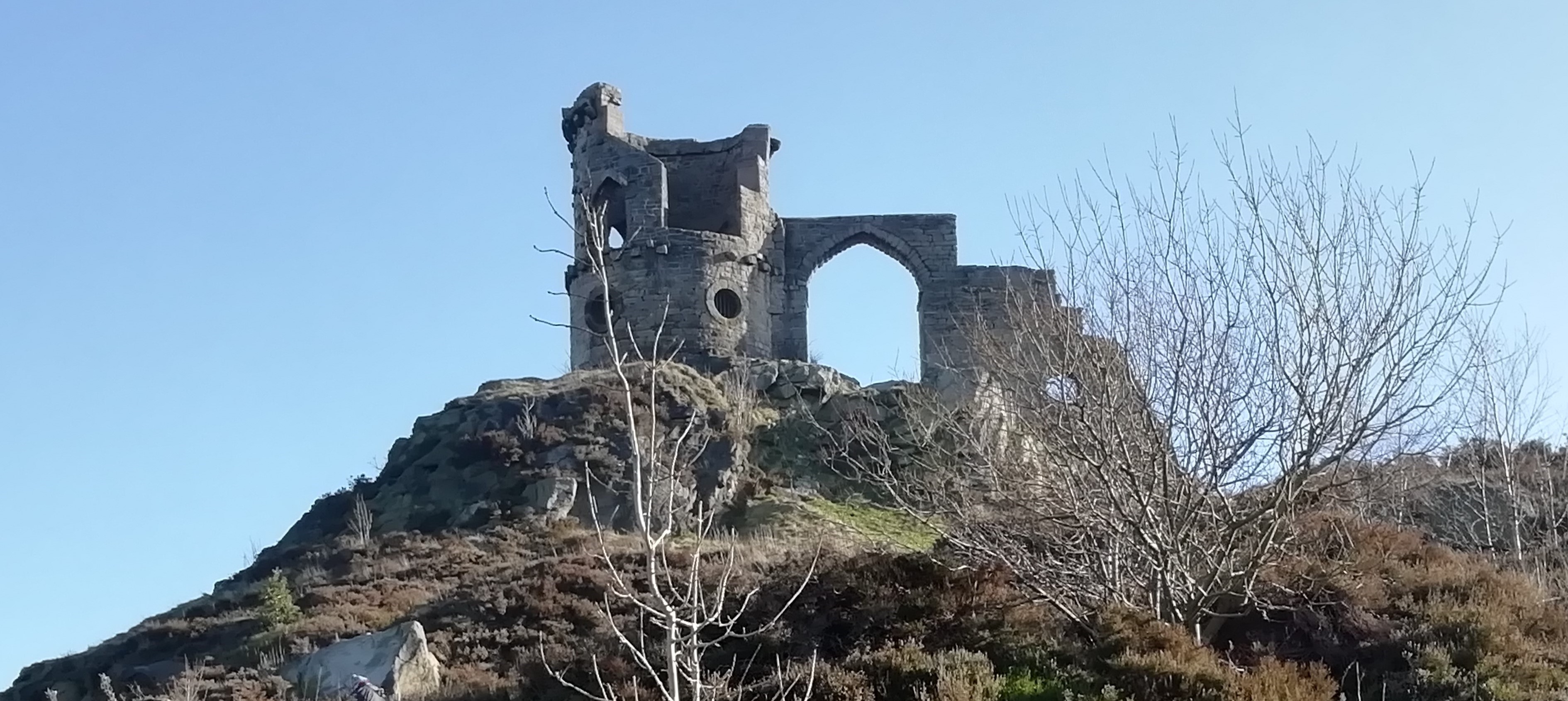
►1937—National Trust Ceremony Tower, Old Man, & 6 acres given to the National Trust by Joseph Lovatt § ceremonial handing over of the deeds by Mrs Lovatt to D. M. Matheson (1896-1979), secretary of the Trust, the event attended by about 4 or 5,000 people (Sun May 29 – Camp Meeting Sunday) § speeches are made by Sir Philip Baker Wilbraham, chairing the proceedings, Lovatt, (Mrs Lovatt then handing over the deeds with a few words), Matheson (who ‘spoke of Mow Cop as a time-old shrine to which from a dim antiquity people have resorted on great occasions for demonstration and worship as men are wont to resort to nature’s high places’), Moses Bourne (see 1932), Revd Jacob Walton (see 1932), F. A. Holmes of Buxton (a NT representative), S. H. Lee (local secretary of the NT, who has organised the event) § a bouquet is presented to Mrs Lovatt by Dorothy Sanders, dtr of one of the local organisers & the prettiest 8 year-old on MC (she marries Frederick Bamford in 1951, has 8 children, & tragically dies aged 34 in 1963 following a miscarriage) § a special guest on the platform is Christiana Hartley (1872-1948, social reformer & philanthropist), her presence acknowledged by Mr Holmes who also pays tribute to her father (see 1909) § the ‘civic’ ceremony is followed by a camp meeting ‘in Pointon’s field’ whither everyone marches singing ‘Hark! the Gospel news is sounding’ § under the direction of Revd William Upright (1882-1970; chairman of Stoke & Macclesfield District) the camp meeting includes further speechifying mercifully punctuated by singing – ‘Mr. James Smith led the singing, except when he mated a popular hymn to an unfamiliar tune, upon which the audience clamoured for the favourite and got it’ (Wilkes) § several speakers seem to be thinking more about Methodist union than about the National Trust or the preservation of MC’s historic summit, in particular Methodist grandee Revd F. Luke Wiseman (1858-1944; former President of Conference – Wesleyan 1912 & United 1933 – one of the most senior & respected Methodists of the day), who delivers a verbal atonement on behalf of his church: ‘He was proud to be a Wesleyan, but if he had lived in 1807 he would have gone to Mow Cop in spite of the fulminations of the Burslem Methodist Superintendent Minister and the interdict of the Wesleyan Conference. For they were wrong.’ § Revd Arthur Wilkes’s account in the Methodist Times & Leader is reprinted in Wilkes & Lovatt (1942) pp.221-8, though in spite of fine weather & a strong turn-out by Methodists & ramblers, the estimated crowd of 10 to 15,000 is no more credible than the claim that the Tower has been restored to its original state § a report or press release before the event says ‘About 20,000 people are expected to gather at Mow Cop ...’ (eg Birmingham Weekly Mercury, April 25), tho most newspaper reports after say several thousand § several papers refer to it as an ‘opening ceremony’, & the Alderley & Wilmslow Advertiser announces it under the slightly unexpected heading ‘Preserving the Old Man of Mow’ § the photograph of the actual handing over of the deeds shows Matheson, Sir Philip, Mrs Lovatt, & Lovatt, but is stolen by Miss Sanders & her bouquet – reproduced in Leese Living p.26 § her father J. W. Sanders becomes caretaker for the National Trust
►1937—Porter’s Shop & Brickworks John Francis Porter builds Coronation House (from the coronation of King George VI, May 12), better known as Porter’s Shop, a new house & shop on the opposite side of the road from the original Porter’s shop (a wooden building, existing in or before 1921), on or nearly on the site of the house & beerhouse of Thomas Dale (1778-1869), which may have been recently demolished (it’s on the 1910 OS map) § in the era of many small shops, some carrying little stock or limited range, Porter’s like Sidebotham’s & Barlow’s is one of the best-stocked & busiest § by 2009, inappropriately renamed Castle Stores, it is said to be the only remaining shop on the hill § (photo of house/shop reproduced in Leese Working p.97) § approx date of commencement of Porter’s brickworks (‘brick bank’ or dialect ‘brickyll’ ie brick kiln(s)) & its quarry (‘clay pit’ or ‘marl hole’), situated on Thomas Dale’s former smallholding, behind the newly-built shop § begun during the depression when less skilled workers need work & more entrepreneurial types are venturing into quarrying, footrails, or haulage businesses, it proves one of the hill’s most enduring works of its type (brickworks more often being short-lived or intentionally temporary), closing about 1972 § the quarry penetrates the lower coal measures, exposing the Crabtree seam, & becomes famous for fossils, nearly all the coal shales & mudstones bearing friable fern-type fossils § eventually it’s one of the largest deep quarries (as distinct from hillside workings like the gannister quarries at Halls Rd) on the hill, & quickly fills with water after closure § the claim that it’s been dug entirely by hand isn’t strictly true as blasting is used at some periods § ‘ “This hole has taken thirty years to dig,” said the foreman. “All by hand. Men digging with shovels: no machinery.” | “They’ve got a long way in a long time, then,” said John.’ (Alan Garner, The Old Man of Mow, 1967) § (valuable 1966 colour & bw photos of brick ruck, kilns, quarry & aforementioned foreman in The Old Man of Mow pp.23, 30-33, plus bonus technical description of brickmaking p.33) (photo of a kiln reproduced in Leese Working p.39) § John Francis Porter (1887-1950) is listed as engine fitter at the brickworks in the 1939 national register & called brick works manager in 1943, the shop being run by the 2nd Mrs Porter (1907-1965; Elsie Padin, nee Mould; they live together from 1933/34, marry 1940), & then by their son Clive Porter (1934-2022) § being an engineer & his 1st wife Rose (1888-1933) the eldest dtr of waterworks engineer James Patrick, J. F. Porter is presumably the latter’s pupil or apprentice § xx
►1937 Richard Biddulph’s series of historical articles in the Biddulph Chronicle contains much material about MC, both directly & indirectly, including extracts from manor & parish records, & an account of the 1642 ‘Strange Newes’ pamphlet with inaccurately transcribed quotations § Sandbach Urban District Council places Sandbach Crosses in the care of the state § the great Primitive Methodist orator & preacher Revd Joseph Pearce (1862-1945) publishes the sermons he gave at the 2 centenary camp meetings on MC as On The Holy Mount | Addresses delivered at Mow Cop, with an introduction entitled ‘Mow Cop – A Mount of Blessing’ which is mainly a kind of sermon on the ‘wonderful’-ness of the 1st camp meeting, plus references to the recent National Trust gift & a photographic plate showing Pearce preaching in 1907 (see quotes under 1907) § he prefaces his book ‘With gratitude to God for one’s association with this hill of blessing’ § Revd Robert F. Wearmouth’s Methodism and the Working-Class Movements in England 1800-1850 is the classic historical study of the political impact of Methodism & of how public speaking & organisational skills used in politics & trade unionism were learnt through involvement in Methodism, esp Primitive Methodism (sequels extending his original study beyond 1850 are Methodism and the Struggle of the Working Classes 1850-1900 (1954) & The Social and Political Influence of Methodism in the Twentieth Century (1957); Robert Featherstone Wearmouth (1882-1963) is a Durham coal miner turned PM minister) § Staffordshire vol published in ‘The King’s England’ series by Arthur Mee (1875-1943; series inaugurated 1936, 41 vols altogether inc general intro vol) § Christina Hole’s 1st folklore book Traditions and Customs of Cheshire makes several mentions of MC, inc: ‘In Mow Cop, an engaged couple was said to ‘hang i’ th’ bell ropes’ from the third reading of the banns until the day of the marriage’ § Congleton registration district abolished & divided between Crewe (Church Lawton, Odd Rode, Moreton) & Macclesfield (Congleton, Newbold Astbury) (April 1; until 1974, when all the Chesire side of MC moves into a new Congleton & Crewe RD, later renamed South Cheshire, until 1998) § new divorce law expands grounds & brings it within reach of the less well-off (see 1927) § ‘water-softening plant’ introduced at Congleton RDC’s MC Waterworks, leading to applications for a pay rise from ‘the attendant and his assistant’ because they have to work longer hours § Macclesfield Field Naturalists’ Society visits MC under the leadership of its president J. Potts § Bank Athletic admitted to the Cheshire Football Association, trainer J. E. Whittaker, Arthur Snelgrove president & for many years treasurer & secretary (cf 1936) § 5 Mount Pleasant youths – Geoffrey Fryer, Aaron Moses, Albert Dale, Charles Morris, & another – prosecuted for stealing turnips from a field at Brieryhurst Farm belonging to Harold Warburton (they have pulled a turnip each near to a public footpath & sat down to eat them) § bus driver Arnold Lawton (son of proprietor J. J. Lawton) summoned at Biddulph magistrates court ‘for driving a motor service vehicle without wearing a badge. His explanation was that he lost the badge ...’ (Crewe Chronicle, Aug 14) § William Owen Jones takes over Tower Hill Colliery from the Foulkes Brothers § John Francis Porter builds Coronation House (from the coronation of King George VI, May 12), better known as Porter’s Shop, on the opposite side of the road from the original Porter’s shop (see above) § likewise approx date of commencement of Porter’s brickworks & quarry (see above & 1939) § Sarah Leah Fletcher, shopkeeper, dies at Well St, Biddulph (May 22), her shop purchased from her executors & continued by Walter Sidebotham, becoming one of MC’s busiest & best-stocked shops § at some stage he enhances its status as one of the hill’s landmarks by emblazoning the name Sidebotham in large lettering across the front between the upstairs windows (1966 colour photo in The Old Man of Mow p.22) § Esther Rawlins, formerly of the ‘Rifle Volunteer Inn’, Acres Nook dies at 7 Rock Side aged 82 (June 1) § Lavinia Turner, widow of Henry, dies § Clarinda Maddock (nee Baddeley) of Alsager dies (Feb 22) § David Savage snr of Welsh Row dies § Francis White dies (March 28) § Wilson Mould dies § Walter Hancock dies at Newton, a suburb of Chester (Nov 26), where he’s been a baker & confectioner (seemingly having abandoned his son Walter Wallace Hancock (1898-1918) who grows up at Lilac Cottage) § local historian & newspaper founder Robert Head of Congleton dies at Rhyl § Charles Hawthorne Hancock jnr marries Charlotte Hulme (she d.1973) § Philip Boardman marries Doris Moors (1909-1994), & they live at Sands § Enos Lovatt born at Congleton Edge (June 29; later of White House, Mow Lane, Newbold, until moving to Wolstanton 1972; artist, d.2018) § Jean Ecclestone born (sister of Roy, grandtr of John Bertie & Mary Hannah; later Mrs McLellan, school teacher; fl.; publishes her autobiography When All This Is Over, 2022)
►c.1938—Dales Green Colliery approx date of opening of Dales Green Colliery, alias Birchall’s Colliery, a footrail owned & managed by Alfred Birchall (1891-1957), one of those which continue to operate as private ‘licensed mines’ after nationalisation in 1945 § c.26 men are employed getting c.300 tons a week § access is by a steeply sloping drift § in many ways typical of the small mines peppered around the hill, Dales Green Colliery is notable as the scene of one of the worst fatal accidents to occur in such a small mine, 6 men being killed on Feb 2, 1953, only one surviving from the evening shift § an explosion of gas or firedamp fills the pit with dense foul gas which does not escape because of an undetected blockage of a ventilation shaft, the cause of death being not the violence of the explosion but carbon monoxide poisoning § Birchall himself rescues the surviver, but the NCB rescue teams find conditions so bad that, unusually, they postpone bringing out the bodies until they have restored ventilation § subsequent inspection compiles a catalogue of safety failings or violations – both relevant to the incident & additional – for some of which Birchall is fined, though the penalties are paltry § the victims of the 1953 Dales Green Colliery Disaster, all married men except Hancock, are: Joseph Bailey of White Hill aged 54, Dennis Hancock of Harriseahead 20, Joseph Lawton of Dales Green 62, William Mansell of White Hill 47, Thomas William Lawrence Meakin of Tower Hill (presumably Welsh Row) 45, James Henry Oakes of Galleys Bank 48 § Percy Woolrich aged 29, son of Percy & Gertrude of Daisy Bank, is the survivor (d.1990) § Leslie Keeling of Moorland Rd, aged 24, is the engine man on the surface, who raises the alarm when the men haven’t contacted him by the end of the shift
►1938 dispute at Tower Hill Colliery, the only mine not conforming to the newly-introduced minimum wage for coal miners § proprietors of Coronation Mill go bankrupt (cf comments re fustian mills under 1939—National Register) § new Wedgwood factory at Barlaston (though Etruria continues production to 1950) § Cheshire vol published in ‘The King’s England’ series by Arthur Mee (see 1937) § Bishop Charles Abraham gives Little Moreton Hall to the National Trust § entertainment in the Parish Room by the boys’ troupe of the Macclesfield Players § Joseph Bate leaves Congleton Edge, presenting the ancient querns he has excavated to the town of Congleton § Joseph Lovatt advertises various of his properties for sale: Tower Hill Cottages 25 houses [ie the whole of Welsh Row], Harding’s Row, 4 cottages at Fir Close, ‘All good investments’, together with a shop & a house at Bank, & 2 shops & 6 houses at Kidsgrove (Sentinel, July 1) § Joseph Lovatt sells his house on MC, West View, to Charles Hawthorne Hancock jnr (his nephew, who occupies it jointly with his father CHH snr) (though when he is unable to continue mortgage repayments Lovatt buys it back in 1940, pays off the mortgage, and sells it in 1942 to Thomas Gilbert (1881-1968), who lives in the adjacent bungalow & builds the new bungalow ‘South View’) § Harry Oakden is involved in an altercation with 2 burglars, Heath & Douglas, whom he spots apparently tampering with the door of his recently widowed sister-in-law Jennie Copeland’s house the Royal Oak – he intervenes & Heath ‘took hold of Mr. Oakden’s coat, used abusive language, raised his fist, and pushed him down against the door’ xxxxx § Henry or Harry Parker of Mow House Farm, son of George & the late Ellen, killed by a fall of earth at Chatterley-Whitfield Colliery aged 31 (March) § James Sanderson jnr, twin brother of Leslie, dies aged 29 § Philip Wordley, formerly of Beacon House, dies at Kidsgrove § Charles W. Hancock of Congleton Edge dies (Jan 2) § Fred Harding of Church Lane dies § George Copeland, keeper of the Royal Oak, dies, his widow Jane (Jennie) continuing the business § Thomas Booth of 21 off Castle Rd dies (b.1870 one of the twin boys of Enoch & Sarah, husband of Harriet, father-in-law of Enoch Harding) § Paul Brough dies in Cannock RD, a retired sergeant in the Staffs police in which he served 32 years § an obituary in the Staffordshire Advertiser (Dec 10) calls him a native of MC, tho he was actually b.at Newpool, illegitimate son of Hannah Brough, who marries Ralph Lear & they live variously at Harriseahead & Alderhay Lane § Emma Elizabeth Clarke of Bank (nee Wilson) dies § Sarah Ann Bason (nee Casey, mother of James Arthur Casey & widow of James Bason or Boyson) of 19 High St, Harriseahead dies at 41 Bank St, Cheadle [house next door to Cheadle Workhouse (now a hospital/‘institution’ for the elderly poor) tho it’s not clear if that’s relevant or why she’s there; I suspect it’s the euphemistic code address for the workhouse, cf 1868 re Minnie Hammond who d.at BankSt 1950] § Rosa Warren of Sands Villa, wife of Felix, dies (June 20; he re-marries 1944 Doris May Booth (1903-1982)) § Maggie Mould of Mount Pleasant, widow of Joseph, dies § George Thomas Lindop of Mount Pleasant marries Nancy Mitchell § David Howell (son of George & Elizabeth jnr) marries Ruth Machin (1911-2008, d.aged 96) § Joseph P. & Elizabeth Ann Jeffries have twin dtrs Nellie Vida (Mrs Page; d.1994) & Marian Elizabeth (Mrs Higginbottom; fl.), born July 2
►1939—National Register ‘national register’ compiled on Fri Sept 29 – essentially a census but taken for war related purposes (identity cards, ration books, conscription & civilian war service) rather than for population statistics § all residents are listed by street address & household, with date of birth, marital status, & occupation § subsequent annotation includes surname changes (mostly marriages) & war-related affiliations or appointments eg of air raid wardens § the register’s historical importance is the greater because no census is taken in 1941 while that of 1931 is accidentally destroyed in 1942 § birth years need to be checked (people remember their birthday but are evidently inclined to misremember or miscalculate the year), but on the whole are more accurate than census ages which are notoriously unreliable § a 92 year-old widow Ann Clare is listed at Newchapel (recorded as b.April 12, 1847, d.1940; unidentified), while former Mount Pleasant grocer William Dale is living with a married dtr at Winterley, nr Sandbach aged 91 (b.Sept 20, 1848 at Congleton, d.later in 1939) § MC itself has 23 octogenarians plus 2 in Arclid workhouse (& 3? at Harriseahead)<check—table has just 1 plus AClare@Newch! table total is 22 (inc Robo@Hd, JosHughes@BiddRd) +Leah@Arclid +AClare<>note 1940\1stQu ds cld be late39<, the oldest being former iron puddler James Tomkinson of Castle Rd who turns 89 two days before the register (b.Sept 27, 1850, d.Jan 4, 1940 aged 89), Leah Sherratt at Arclid who is 88 (formerly Chaddock, nee Bailey of Congleton Edge, b.July 25, 1851, d.1941 aged 89), & Annie Copeland of Tower Hill Rd, also 88 (formerly Hancock, nee Shallcross, b.Sept 12, 1851, d.1941 aged 89) § without counting exact numbers, Mountford, Hancock, Booth & Dale appear to be the commonest surnames, with Bailey, Boote (esp in Mount Pleasant), Harding (reduced from its 19thC dominance), Howell, Jones, Lawton, Mellor (5 houses full of them on Wood St!) & Mould showing strongly, while several venerable old MC names have all-but disappeared, the last 2 Clares, unmarried brothers James & Abel, living together at Rookery (a few more at Harriseahead, inc the 4 unmarried coal merchant brothers Enoch, Joel, Jabal & William with their unmarried older sister Mary as housekeeper, their mother Ann having recently died) & widow Leah V. Oakes aged 83 at Oakes’s Bank § a whole new crop of Christian names is in fashion, many of them making their 1st appearance with those born in the 1890s – Doris wins easily (it’s not known what’s made this name suddenly so popular), followed by Hilda, Gladys, Leonard, Reginald, & others inc Phyllis, Ethel, Elsie, Lilian, Sidney, Philip, Harold (not counting Harry which is much more common but represents the traditional pet form of Henry), & catching up strongly from a more recent start Joan & Eric § aside from personal data, the listing presents an interesting picture of the development of housing, & also of house names § bungalows are suddenly in evidence yet sufficiently novel often to be named as such, eg ‘The Bungalow’ on Primitive St, ‘Brake Side Bungalow’ & ‘Nook Bungalow, Brake Side’ (Halls Rd), ‘The Bungalow’ & ‘Brake Bungalow’ lower down at Brake Village, ‘Asbestos Bungalow’ & ‘The Bungalow’ again on Drumber Lane, ‘The Bungalow’ yet again on West St, ‘Woodside Bungalow’ on High St, ‘Hillcrest Bungalow’ on Woodcock Lane – the first house to be built there (see c.1922) § other bungalows & recently-built houses frequently follow the novel fashion for fanciful house names, eg the 4 new houses on the curve in the middle of Alderhay Lane ‘Lynden’, ‘Glenholme’, ‘Clovelly’ & ‘Rosemead’, the 3 new bungalows on Church St opposite Spout Fm ‘Alysdale’, ‘Sunny Bank’ & ‘High View’ (latter vacant, perhaps just built), & a veritable colony of them on Drumber Lane (often housing middle-class newcomers) inc ‘Sunny Ridge’, ‘Sunny View’, ‘Ingleside’, ‘Norbury’, ‘Lynwood’ & ‘Rose Wood’, other specimens of the silliness being ‘Rosemary’, ‘Rosary’, ‘Holm Lea’, ‘Ormleigh’, ‘Inglenook’, ‘Colwyn’, & ‘Trefonen’ the retired station master Albert Snelgrove’s house on Birch Tree Lane – his son Arthur’s next-door being the more traditional-sounding ‘Orpington House’, named after the breed of prize-winning rabbits that he keeps! § Woodcock Lane is called Woodcock Rd, Drumber Lane is Station Rd, Scholar Green, & the Mount Pleasant & Rookery cul-de-sacs now have their names, but not those around Primitive St § coal mining dominates occupations of course, but quarrying (esp ‘roadstone quarrier’) is more common than it was in the 19thC, surprisingly, while the really noticeable revolution is in motor transport – MC (where industrial transport has always if often invisibly been important) has become a hub of haulage contractors, lorry drivers, bus proprietors, bus drivers & conductors, coal merchants, delivery drivers, & motor mechanics § bus services facilitate work in textile mills, engineering works, & potteries, the latter more common than previously for both genders § most women who are not housewives now have jobs, predominantly in textile manufacturing inc silk, ‘artificial silk’, towell, hosiery, & underwear or ‘women’s light clothing’ as well as the established fustian or velvet cutting [that some of MC’s fustian mills have at this stage converted to other products is strongly suggested by the frequency of those just mentioned – even tho existing accounts date such changes to the time of the war or after, not before], while office or accounts clerk & shorthand typist are becoming common women’s jobs § more unique or novel occupations inc a ladies’ outfitter (Phyllis Oakden, presumably at her parents’ grocery shop), a salesman of ‘Better Wear Products’ (the checker adds ‘Mops, Brushes’ – William Davies of Mount Pleasant), an enterprising ‘private motor car cleaner’ (Gladys Shaw of Rookery), postwoman (Mary Mountford) [postwoman Jane Hancock (1882-1967) isn’t found, see 1920], night soil carter (Wilmot Harding), window cleaner (future councillor Peter H. Moss), refrigerator service engineer (James F. Hancock of Rookery – commercial probably, domestic fridges barely exist yet), aircraft fitter (Reginald P. Taylor of Brake Village), & university student (Violet May Warren, later Mrs Turner), while a new sort of shop has appeared, in fact there are 2 of them in Mount Pleasant – newsagents (Reginald Farmer & William H. Ward) (for earlier newsagents see 1873, 1911)
►1939—From Cloud to Mow Revd J. E. Gordon Cartlidge’s series of historical articles “From Cloud to Mow” begins in the Congleton Chronicle, running for 22 parts, +start-date+ the ‘Finale’ (Feb 23, 1940) a long poem § ‘Defiant stand the hills of Cloud and Mow. | Twin guardians of some erstwhile realm long past, | Grim outposts reared to check invaders haste, | Their forts enveloped oft in cloudy haze, | Guarded by spirits of men in cairn-like graves; | And twixt the two, an eerie ridge path ran, | Worn by the footprints of every age of man; | ...’ § a history of the 2 hills is built around the concept of a long-distance ‘ancient trackway’ that links the Peak District & Shropshire in prehistoric times & remains a factor in later history § using another antiquarian fashion of the time Cartlidge attempts to ground MC in antiquity by cod etymologies – unfortunately ancient Celtic allt maen (hill stone) for Old Man would be more convincing if the name could be shown to be much older than 1822, as would cawr dwr (giant’s well) for Corda Well if a field downstream wasn’t called Cord Hay § latterday traipsers along Cartlidge’s track include Primitive Methodist evangelists, but also non-existant ‘nomads’ or ‘gypsies’ from Edgmond (Shropshire) – publication of the parish registers containing people ‘of Mole Cop’ leads him to assume they are living an itinerant existence between the 2 places, 40 miles apart (in fact there’s a place called Mole Cop or Mow Cop on the edge of Edgmond parish, near Pickstock; see 1700) § in spite of such errors & valiant misses, Cartlidge is unusually sensitive to the hill’s mystique, to its place in a wider geographical & social context, as well as to a history that extends beyond where local historians usually venture, vividly picturing Romans & ‘early man’ brought to the hill by the old trackway § John Edward Gordon Cartlidge (1882-1976), member of an old family in Astbury village, is better known for his 1915 book Newbold Astbury and its History, & for the standard history & guide booklet to Astbury church § a 4-part tribute to Cartlidge’s vision of MC, with appropriate corrections & criticisms, is published by Tony Simcock in the same newspaper in 1980-81 under the title “Mow Cop and the Erstwhile Realm”
►1939 historical article on “Welsh Religious Activities in the Potteries” in Evening Sentinel, with refs to the MC Welsh as well as the wider influx of Welsh industrial workers & their arrangements for worship, inc in ‘churches’ in private houses as at Welsh Row § Beatrice Tunstall’s Cheshire novel The Dark Lady published, set in Gawsworth & also at ‘Silverpit’ (Big Fenton, Buglawton) below ‘the great hill known as Bosley Cloud’ § Revd J. E. Gordon Cartlidge’s series of historical articles “From Cloud to Mow” begins in the Congleton Chronicle (xxx, 1939 to Feb 23, 1940; see above) § peculiar cloud formation seen from MC (April 18), resembling successively a column of smoke, a scythe, & a man’s face in profile, some onlookers wondering if it is ‘a portent of events to come’ § windows of Congleton RDC’s well-lit modern waterworks buildings fitted with blinds in preparation for wartime black-outs § various other preparations for war continue from early in the year § xxxWARxxx (see 1939-45 below) § fires once more rage through woodland & undergrowth on the Cheshire side, creating smoke visible for many miles (June) § William Owen Jones opens another footrail, Winpenny Colliery, in conjunction with Tower Hill, but a prolonged ‘surface outcrop fire’ interrupts coal getting § Joseph Lovatt sells ‘The Stone Quarries, Dales Green’ § goods & mineral depot at MC Station closes down (June 1) § new road built between Bank & Mount Pleasant § approx date sometimes given for commencement of Porter’s brickworks & quarry (see 1937) § in the national register John F. Porter is an engine fitter at the brickworks (called brick works manager in 1943), & Elsie Padin is listed as ‘Living as wife pending Divorce / Shop and Household duties’ (they marry in 1940; see 1927, 1934) § curiously his brother is also living with a woman who isn’t his wife – William Porter & Laura Wilson of Rookery (they subsequently marry 1947) & so is MCs other large shopkeeper Walter Sidebotham & Frances Rowley (seexxx) § future postmaster & choir master Joe Agnew is evacuated from Manchester to MC at the start of the war, aged 10 § 12 year-old Barbara Harper of Biddulph is taken to hospital after being injured while playing on the rocks, precisely which not known – she ‘jumped on to a piece of rock at Mow Cop last night, then slipped and fell 30 feet’ injuring both feet (Sentinel, Oct 16) § Leonard Howell of Primitive St (son of George & Elizabeth jnr) sustains spinal injury from a roof fall at Black Bull § William Dale, formerly grocer of Mount Pleasant, dies at Winterley, nr Sandbach aged 91 (Dec 23) (b.Congleton, not one of the MC Dales) § Elizabeth Howell dies (June 27), co-founder of the well-known MC family, 11 of her 12 children surviving to adulthood, her age given as 88 on her gravestone but she is actually 89 (nee Foulkes, b.April 3, 1850 at Flint Mountain) § Matthew Leese snr of Alderhay Lane/Harriseahead Lane dies aged 88 (March 31), probate being granted to his sons Harold, a miner, & Hugh Leese, ‘president of miners union’ § Paul Lawton of Bradeley, formerly of Mow Hollow, dies aged 88 § Elizabeth Whitehurst, widow of George (grocer & Primitive Methodist preacher), dies at Hassam Parade, Newcastle aged 87 § Benjamin Lindop of Rookery, virtuoso on the old tin whistle, dies aged 87 § Frederick Gallimore of Harriseahead, co-founder of the local Gallimore family, dies aged 84 § Mary Woodyer (nee Booth, dtr of John & Mary of the Railway Inn) dies in Lancashire aged 83 § Richard Hughes (‘Old Rick’) dies aged 83, last of the native (non-Welsh) Hugheses § James Gordon, formerly of Kidsgrove, dies at Roe Park Fm aged 78 § Revd John Clement Harding dies at Greetland, nr Halifax aged 76 (Sept 18) § Frances Clare (nee Newton), widow of Jabel of Rock Side, dies aged 75 § Sarah Harding (nee Hancock, dtr of John & Fanny), wife of Enoch, dies aged 73 § Elizabeth Foulkes, 2nd wife of Edward, latterly of Chapel Lane, dies aged 71 § Ann or Annie Clare (nee Clare, dtr of Enoch & Martha) of Harriseahead, widow of James & mother of Mary & the 4 unmarried coal merchant brothers, dies aged 70 § Mary Elizabeth Cotterill (formerly Whittaker & Poyser, nee Biddulph) of the Mow Cop Inn dies aged 69 (Oct 19), & is buried at her native Biddulph Moor § Emily Eliza Bowker (nee Statham) dies at Langold, nr Worksop aged 65 § William Boardman of West St, Mount Pleasant, steward of MC Working Men’s Club, dies at Arclid Institution (hospital) after a fall in his yard on Dec 11, 1938, fracturing 3 ribs, aged 64 (Jan 6) § Biddulph photographer, stationer, & newsagent Frederick Rowley dies aged 63 (Nov 17) § Francis Turner of Mount Pleasant dies aged 56 § Arthur Scragg of Mount Pleasant dies aged 56 (Oct 23) § Edward Lowe of Station Bank dies suddenly aged 50 (his widow Jane Ann ‘Gran Lowe’ lives another 51 years) § David Savage jnr dies at Oldham aged 38 § Mary Ellen Hargreaves of Dales Green, wife of Thomas, dies aged 35 (March 11) § Olive Irene Shallcross of Stone Villas dies on Christmas Day aged 23 § Bert Boyson of Mount Pleasant marries May Brown (1912-1970, dtr of Vernon & Alice), & they live in Congleton (his 2nd wife 1975 is Louie Farrall, widow, nee Boote, from Mow Hollow) § Mary Chaddock of Badkins Bank marries Norman Micklewright at the Primitive Chapel § the youngest person on MC in the 1939 national register (compiled Sept 29, available in a redacted version that blanks out some names) is John Howard Smith, son of Harold & Nancy, the ballroom dancers of Church St, Mount Pleasant, born Sept 1 (d.2000) § Roy Mountford born at Hardings Row (May 19; d.2017) § John Trevor Tellwright born, son of Reginald & Millicent (March 26; d.1969 aged 30)
►1939-45—Another War outbreak of the Second World War (Sept 3) finds preparations well advanced, including inculcation of air-raid precautions & procedures, black-out preparations, widespread recruitment to civilian ARP & support roles, distribution or construction of air-raid shelters, evacuation of towns (begins Aug 31), & conscription (begins Sept 2) § 1st evacuees arrive on MC from Manchester on Sept 1, including 10 year-old Joe Agnew, who will be an important figure on the hill (shopkeeper, postmaster, choir master, youth club leader, pop group manager) § in addition to domestic shelters, the long narrow brick-built concrete-roofed community air-raid shelters become a conspicuous feature of the village, & indeed remain so for many decades § many people are quickly or already signed up to ‘civil defence’ roles – air-raid wardens mentioned in the 1939 national register (others serve later) are Harold Allcock, Alan Boon, Sydney Hancock, William T. Holdcroft, Arthur Lawton, Colin Leese snr, Charles H. Lowry, James Mitchell, John W. Moss, Aaron Mould jnr, Harry Oakden, George C. Owens, John W. Sanders, Arthur W. Taylor, Hope Taylor, Joseph Walmsley, some of them veterans of the previous war, while Capt. Philip Bailey of Ramsdell Hall is Divisional Chief Warden for the Northwich division (& his 21 year-old dtr Joan a full-time ambulance driver at Tunstall Depot); volunteers for the auxiliary fire service inc Victor Ball, Albert Hughes, John Mitchell, & John E. Whittaker; Dennis Corke & Fred Thornton (both joiners) are in the specialist Rescue & Demolition Squad (Kidsgrove), Enoch Harding (b.1899) & Thomas F. Tyler (of Tank Lane) in Decontamination Squads; George Parker (of Colclough House, Church Lane) is a special constable; Winifred M. Barnett (postmistress), Elizabeth Ann Carr (Lizzie, sister of Great War hero Noah Stanier), Evelyn G. & Hilda M. Ogden, & Nellie Triner are in the Red Cross, Marion Oakden & Bessie Wright in the Women’s Voluntary Service (formed 1938, later the WRVS), Annie S. Ball (of the Robin Hood) in the St John’s Ambulance Brigade; several MC men inc Enoch Booth (b.1896 son of Joseph & Elizabeth), his brother James Henry Booth, & James Bourne are attached to the ARP service for one of the region’s most vulnerable targets, the LMS Railway Works at Crewe; 19 year-old Ronald Chadwick & Eric Chilton are dispatch riders; while Gladys Melvena Potts of Brieryhurst Fm aged 16 is MC’s first ‘Land Girl’ (later Mrs Lunt, of Foxholes Fm, Talke; d.1979) § if fewer local military casualties occur in the Second World War than in the First it may be the result of these arrangements for utilising such a wide range of people in civilian roles, together with the more effective protection of ‘reserved’ occupations such as mining & engineering § such participation is extended still further with the rapid growth of the WVS & in 1940 the establishment of the Home Guard, which quickly attracts over a million volunteers, far more than there are plans to uniform & arm – giving rise to the perennial joke of men training to defend the country against invasion with mops & brooms § little else seems to happen on the ‘home front’ at first, & referring to the ‘phoney war’ becomes commonplace; but the true horror of modern warfare is brought home when the Battle of Britain (summer 1940, with at least one MC man among the fallen) is followed by the intense bombing of the Blitz – on the night of Nov 14-15, 1940 Lichfield’s historic sister cathedral at Coventry is destroyed & in that month alone over 4,500 British civilians are killed in air raids § in connection with which a top-secret RAF installation in a commandeered field on the hilltop nr Daisy Bank (Oct 1940) is part of a network of ‘jamming’ or ‘beam-bending’ stations interfering with the German bombers’ radio-navigation systems (its purpose remaining a mystery for several decades) § a Royal Ordnance Factory is established at Radway Green, nr Alsager (1940) to manufacture ammunition, & immediately becomes (& long remains) a major employer of MC people § a list of the fallen of the Second World War for the whole of MC has not been compiled – to mention a few will have to suffice to honour them all § one of the many support crew who make victory possible in the Battle of Britain is former bus conductor aircraftman Leonard Moors of the RAF Volunteer Reserve, killed on Aug 30, 1940 aged 25, & buried at St Thomas’s § able seaman & air mechanic Alroy Jones of the Fleet Air Arm, aged 18 or 19, is among those who, in the words of the FAA Memorial at Lee-on-Solent, ‘have no grave but the sea’, being one of 307 men lost with the famous HMS Hermes, the world’s first purpose-built aircraft carrier, sunk by the Japanese on April 9, 1942 § guardsman Edwin Buckley Jones, serving with the élite Grenadier Guards, dies in Italy on July 15, 1944 aged 23, & is buried in the Arezzo War Cemetery § lance-corporal William Jesse John (Bill) Wise of the King’s Shropshire Light Infantry arrives in the D-Day landings of June 6, 1944 &, continuing in war the job he did in peacetime, drives a Bren-gun carrier during the final invasion of Germany – he is killed on Feb 27, 1945 aged 25, & buried in the Reichswald Forest War Cemetery § like the First, the Second World War unleashes a new social & political atmosphere that expresses itself at the July 5, 1945 general election (counted July 26), the 1st for 10 years, a landslide Labour victory (393 MPs) representing the coming-of-age of a movement to which MC has directly contributed in a number of important ways § to complete the sense that the end of the war (May 8, 1945 in Europe, Sept 2 in the Pacific) is also the end of an era, Joseph Lovatt dies at Mow Cop House, Kidsgrove on July 6, 1945